I love dogs and people. I want living creatures to thrive. I love to cook, and share the food, but ya gotta get in line in front of the dog, and greatest good luck with that!
July 13, 1863 Massive New York City protests decrying the first-ever wartime draft lottery led to bloody rioting over five days as a mob of 50,000 burned buildings (including looting and torching the Colored Orphan Asylum on Fifth Avenue, though the 200+ children were unharmed), stores and draft offices, and attacked police. Some clubbed, lynched, and shot large numbers of blacks, whom they blamed for the war.By the time troops returning from the Battle of Gettysburg finally restored order, 1200 had died over five days. New Yorkers, spurred on by the Democratic leadership of Tammany Hall and tired of the seemingly endless war, had been angered by President Abraham Lincoln’s recent call for 300,000 more troops. In the Shadow of Slavery: African Americans in New York City, 1626-1863 by Leslie M. Harris They especially resented the legal provision allowing a cash payment ($300 commutation fee) as a way for those with the means to avoid military service in the Union Army. Read more about the 1863 draft riots
July 13, 1905 A Declaration of Principles was issued by the Niagara Movement (the precursor to the National Association for the Advancement of Colored People) following their conference in Buffalo, New York. Matters of concern included: realization of suffrage for all black men, as well as other civil liberties; economic opportunities for black Americans, especially in the South; access to education, especially high schools, trade and technical schools, and colleges; fair treatment in the courts and an end to the convict-lease system; fair treatment in employment wherein employers brought in black workers temporarily to keep down wages, and labor unions refused membership to blacks; an end to the color line, particularly in public transporation; fair treatment for black soldiers and access to military training schools; enforcement of the 13th, 14th and 15th amendments to the U.S. Constitution passed in the wake of the Civil War. “The Negro race in America, stolen, ravished and degraded, struggling up through difficulties and oppression, needs sympathy and receives criticism; needs help and is given hindrance, needs protection and is given mob-violence, needs justice and is given charity, needs leadership and is given cowardice and apology, needs bread and is given a stone. This nation will never stand justified before God until these things are changed.” Additionally, they urged upon the African-American community: The duty to vote. The duty to respect the rights of others. The duty to work. The duty to obey the laws. The duty to be clean and orderly. The duty to send our children to school. The duty to respect ourselves, even as we respect others.
July 13, 1985 The first Live Aid concert raised $75 million for agricultural and technical assistance to Africa, many times what was expected. Described as the Woodstock of the ‘80s, the world’s biggest rock festival (in London, Philadelphia, Moscow and Sydney, Australia, simultaneously and linked by satellite) was organized by Boomtown Rats singer Bob Geldof to raise money for famine relief in Ethiopia. Bob Geldof The Republic of Ireland (Éire) gave the most donations per capita, despite being in the throes of a serious economic depression at the time. The single largest donation (£1m) came from the ruling family of Dubai (Al Maktoum). More about Live Aid ’85 Watch a video about the concert
The Canadian province of Manitoba is suffering through its worst wildfire season in its history, and to add insult to injury, several U.S. lawmakers are complaining that smoke wafting south is making it difficult for Americans to enjoy summer.
Six Republican Congress members shared their concerns in a letter addressed to Canadian Ambassador Kirsten Hillman on Monday, July 7, asking for more information about how the government plans to mitigate wildfires and the smoke that travels south. Since January, over 3,000 wildfires have consumed more than 5 million acres, killed two people, and displaced tens of thousands more in Canada. The lawmakers explain that resulting poor air quality in the U.S. has prevented Americans from partaking in outdoor summer activities. Compared to the devastation Canadians have faced this year, these issues are glaringly trivial.
“This is what turns people off politics. When you’ve got a group of congresspeople trying to trivialise and make hay out of a wildfire season where we’ve lost lives in our province,” Wab Kinew, premier of Manitoba, said during a press conference Thursday, July 10. Manitoba had just declared a state of emergency for the second time this year due to unprecedented wildfire activity. The province’s wildfire service reported 105 active fires burning on Thursday, including 14 that were listed as “out of control” across the eastern, western, and northern parts of the province. (snip-MORE on the page)
And, well-informed Canadians have opinions! We should be aware of this. The comments thread is fine. Go. Read. Comment, if you will.
John Ehrlichman, former top aide to President Richard Nixon, and three others were convicted of conspiring to violate a citizen’s civil rights. Ehrlichman had approved a recommendation for a covert investigation of Daniel Ellsberg in 1971 by writing on a memo: “If done under your assurance that it is not traceable.” Looking for information to discredit Ellsberg, agents of President Nixon’s re-election campaign broke into the office of his psychiatrist.
John Ehrlichman
Ellsberg, a former Defense Department analyst, had been responsible for public release of The Pentagon Papers, a collection of documents outlining the U.S. history and strategy in Vietnam, that had been classified as secret to avoid public scrutiny.The world’s most famous filing cabinet
I see that our recycling center has closed until further notice. International Paper, downsizing, has closed its recycling plant in Wichita, laying off all those employees, I saw on the newscast from the station I linked. Their story links a release from IP about all their closures and their plans for the year. The release is dated Feb. 13, of 2025. There’s another release from the Wichita Business Journal about the Wichita plant, but it says little to nothing. (No link from them; they’re mostly Kansans and Americans For Prosperity, anyway.)
Earlier, I got the idea to search if IP’s downsizing is due to recission of tax cuts and to tariffs. Gemini (who always volunteers though I never ask, preferring to find a link to a known source) says that while it cannot state that those things cause the downsizing in full, it also cannot state that those aren’t in the mix. (Because I do skim Gemini’s stuff.)
So, this hurts a bit: the closing of our recycling facility, as well as the Wichita one. During the first Trump admin, when POTUS began that trade war with China, China reciprocated by, possibly among other things, refusing anymore plastic recycling from the US. Our facility couldn’t find a place that did the recycling; no one else does it. China does it very economically though of course there is the question of what it’s really doing with the plastic, but another story for another time.
Anyway, in those days, I was an active BPW member. One of the things we worked hard on was getting a recycling collection facility here in town. We lobbied hard, both the public and the council, for use of an unused building (the former firehouse,) and possibly the use of a big truck for hauling the recycling collected to the recycler. We asked for no funding, we had willing volunteers; all the civic organizations set up volunteer schedules. We just needed the facility and a way to haul. Before the facility came about, I became a member of the city Planning Commission, so I couldn’t continue in that effort until after it was decided by the council. But, it was a happy circumstance that there was a plan for recycling in the existing Strategic Plan, even then! That’s always a big help, when something’s in the Strat Plan.
So, this was not a thing that came before the Planning Commission. I was not on Zoning Appeals at that time, so I have no idea if they got it, but as it came to reality, that wouldn’t have been necessary. It was decided that that firehouse building would become the collection facility, it would be staffed with volunteers but with a city worker or two there because it’s city property and insurance insists on that, and a city worker would do the hauling. Yay! It was open each Saturday from 9 until noon, and people needed to bring their recycling, preferably sorted, to the facility where volunteers then helped getting things where they went.
Eventually it grew, and there weren’t enough volunteers every Saturday to keep the lines moving reasonably. It went before the council to staff another one or two. There would still be volunteers there to keep things moving without too much staff. (People here in town like nice things, but don’t like paying for them.) The council approved, and the facility also opened on Mondays from 11 AM to 1 PM. That way, downtown business, who go through a lot of corrugated cardboard and bubble wrap, could get theirs done without as many of the public. Also, the staffers could actually get the stuff loaded in time for it to go to the recycler.
I just went there last week to drop recycling. We usually accrue enough corrugated cardboard and chipboard to unload at least once per month. We’ve cut paper back a lot, and again, plastic hasn’t been accepted since Trump p.o.’d China last term, so that’s not so much. Even so, where we usually have a single trash bag to go out for pickup, I think we’re going to have more that now has to go to the landfill.
I may be taking it too seriously, but I feel the way I did when the SCOTUS overturned their own decision in Roe v. Wade. We worked hard for it, we had it, it was good for all, and now it’s gone.
I hope this hasn’t bored anyone very much. It’s more sentimental than I usually am when posting such stuff. Still, our recycling collection facilities closing, or really, any big companies downsizing, is happening everywhere, and is affecting many, many people. I feel for all the Wichita workers who will have no jobs just in time for school shopping. So, I thought I’d post, because we all have to keep our eyes open for this happening around us everywhere. Thanks for your time! 🌞
When Jason Collins came out in a 2013 Sports Illustrated cover story, he broke down the long-sealed closet in men’s sports by becoming the first openly gay active player in any major league sport. President Barack Obama called him to offer his support, saying he “couldn’t be prouder,” and Oprah Winfrey called him “a pioneer.”
“By not having to hide who I am, just being able to live an authentic life, there’s something powerful about being the one to out yourself and step forward and speak your truth,” Collins told Uncloseted Media. “There’s no greater feeling.”
Many thought that Collins’ announcement would lead to a slew of men coming out in professional sports; commentators called it a “tipping point” and the moment “when things really changed.” But 12 years later, the silence is deafening. Today, there are zero active openly gay or bisexual players in the NFL, NBA, NHL, MLB, MLS, PGA and ATP.
What makes these numbers particularly shocking is that more than 1 in 5 Gen Z adults in the United States identify as LGBTQ+. “It is a legit claim that the last closet for men is sports, especially in the North American context,” says Charlene Weaving, a professor of gender studies at St. Francis Xavier University. “If you look at sport[s], it’s as if what’s happening in society is amplified. Sports is the worst place for sexism and homophobia. … There’s so much pressure to adhere to a heterosexual persona.”
So what’s keeping the closet door shut?
Coaching can help or hurt
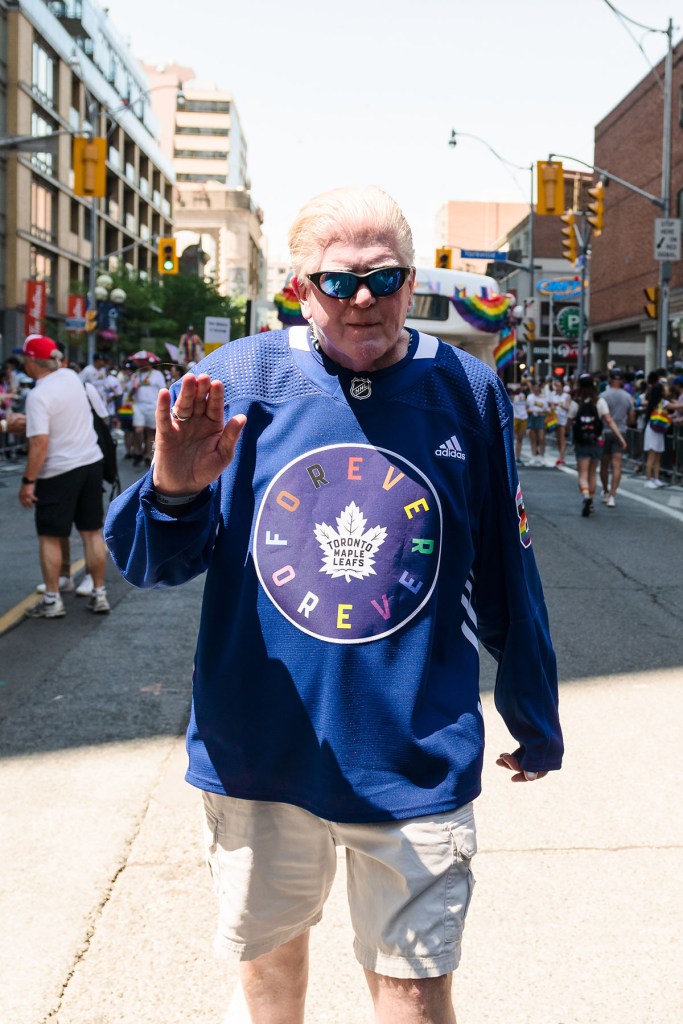
Brian Burke participates in the 2025 Toronto Pride Parade on June 29, 2025 in Toronto, Ontario. (Harold Feng/Getty Images)
One key element in men’s sports that can help or hinder someone from coming out is the mentors who surround them.
“The coaches create the culture, right? What you say, what you allow [in] your locker room, that’s all on us,” says Anthony Nicodemo, a gay high school basketball coach in Westchester, New York.
He says he intentionally uses LGBTQ-inclusive language with his team to signal that there’s nothing wrong with being gay. “If we had a game on Saturday morning and it’s Friday night, I’d say, ‘Hey go home with your boyfriend or girlfriend tonight, stay in.’ My kids would laugh, of course, but then after I said it a couple times, they didn’t even blink,” he says. “If there was a gay kid on my team, that gay kid knows that he’s welcome.”
A 2016 study by the Journal of Sport and Health Science found that gay and bisexual male teen athletes feel particularly unwelcome when playing in formal sporting environments where there are coaches. The study also found that they were more likely to play on an informal team without a coach, which would lessen their chances of becoming a professional athlete.
“The hope is that you’re going to create inclusive environments that are ultimately going to allow those kids to get to the point in society where we feel comfortable with them coming out and eventually playing at the professional level,” says Nicodemo, who worked with Collins at the Pride Center’s LGBTQ+ inclusion basketball clinic in San Antonio this March.
Nicodemo says we need more role models like Brian Burke, the former president of hockey operations for the Pittsburgh Penguins. After Burke’s gay son passed away in a car accident in 2010, he made it his mission to explicitly advocate for gay men competing in pro hockey. “If you’re a member of the LGBTQ+ community, you are welcome with the Pittsburgh Penguins,” he said at a 2021 Pittsburgh Pride Revolution March. “You’re welcome to come to our games, you’re welcome to play for our team, you’re welcome to work on our staff. You are welcome.”
Research suggests all players want to participate in more inclusive environments. A 2021 study evaluated college coaches who identified as LGBTQ+, as allies, or as anti-LGBTQ+. In every context, students preferred coaches who embraced nondiscrimination, choosing the ally and the LGBTQ+ coach over the anti-LGBTQ+ coach.
Despite this, Nicodemo says he may be an anomaly when it comes to LGBTQ-inclusive coaches. In fact, a 2015 study concluded that the United States was the most homophobic country in the world when it comes to sports and 80 percent of the study’s participants reported witnessing or experiencing homophobia in U.S. sports.
Just this week, the Wake Forest men’s baseball coach Tom Walter issued an apology after cameras caught him using an apparent homophobic slur during an NCAA game.
“There’s a lot of homophobia in our society. There is a lot of homophobia still in sports, in particular, male sports,” says Collins. “We still have a lot of work to do as far as creating those environments that those athletes do feel comfortable to step forward [in] and share who they are. It’s about education and letting them know it’s okay to say, ‘I am gay,’ ‘I am bisexual.’ You know, you name it, but it’s okay. It’s okay to speak your truth.”
Are the leagues pulling their weight?
Beyond the coaches are the leagues. While some of them have taken steps to create inclusive environments, others have gone in a different direction by rolling back their LGBTQ-inclusive policies amid attacks on Diversity, Equity and Inclusion (DEI). In March, the MLB removed references to their “Diversity Pipeline Program,” which outlined their diversity-focused hiring initiatives, from their website.
This may have been in response to external pressure. In October 2023, the conservative public interest organization America First Legal, which was founded by Trump’s Deputy Chief of Staff Stephen Miller, filed a formal complaint against the MLB, blasting the league’s diversity pipeline and related initiatives as blatant examples of racial and sexist discrimination against white men.
And in 2023, the NHL banned all LGBTQ+ symbols from uniforms after a handful of players refused to participate in Pride Nights.
While the ban was lifted after pushback from sponsors, players and fans, Nicodemo believes it sent the wrong message to young male players. “I believe wholeheartedly that Pride nights save lives. I think [about] a gay kid that is watching hockey at home and seeing the rainbow flag and how important that is,” he says. “Gay kids need to see people representing pride. When I was coaching before COVID, when we used to actually wear suits when we coached, I wore a rainbow lapel in every game just to show it was okay.”
Some men’s leagues have done more to promote inclusivity. NBA Cares, the social justice arm of the league’s charitable programming, has prioritized including gay youth and men in their initiatives. Nicodemo has worked with NBA Cares, and Collins has contributed as an ambassador.
“This is very important for coaches, for those people in leadership positions, to think about as far as, ‘How do I get the best possible version of my athlete?’ … One way you do that is by creating a team environment where everyone feels safe,” says Collins.
Homophobia and misogyny in the men’s locker room
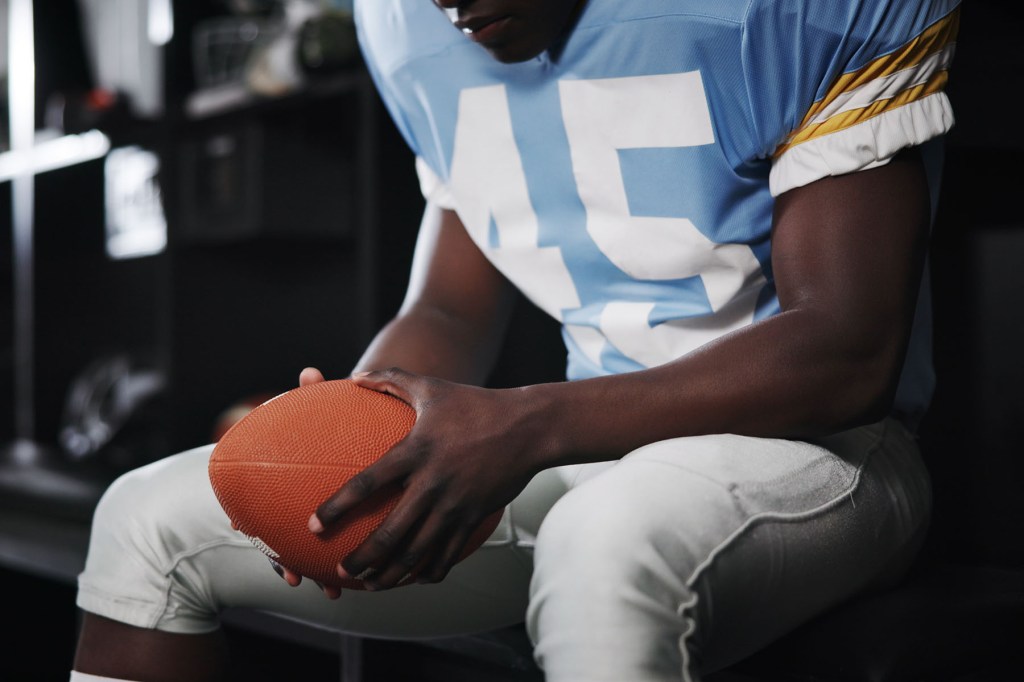
A player with a ball his hand sits in a locker room. (Jacob Wackerhausen/Getty Images)
Unlike men’s leagues, women’s leagues are more accepting of LGBTQ+ players. Billie Jean King, Brittney Griner and Abby Wambach are some of the many women who have thrived while competing as openly gay athletes.
Homophobia is more common among men. And in the locker room, it isn’t always easy to spot, as it often masks itself in homoeroticism.
“Two male athletes will kiss each other on the lips. And that’s considered to be love and appreciation that you scored that big goal. ‘I’m gonna kiss you and it’s not at all viewed to be perceived to be gay and the grabbing of the bums or the testicle area.’ This idea of showering together, slapping towels, that’s all considered to be like part of men’s sport,” says Weaving. “So it’s this idea where players can be as ‘gay’ as they want and in the context of the field or the locker room, they’re not perceived to be gay. But if they were to act that way outside of that sporting context, then they’re considered to be.”
Collins says this gender divide may be because of sexism and toxic masculinity. This kind of performative homoeroticism is only socially acceptable because it’s understood to be ironic—a joke that relies on not actually being gay. When the behavior slips beyond the bounds of “just joking,” it exposes an undercurrent of homophobia masked as camaraderie.
The financial cost of coming out: something to gain or lose?
Beyond all these pressures lies a monetary component for athletes who are considering opening the closet door while still in uniform. Cyd Zeigler, the cofounder of Outsports, wrote in a 2024 article that he knows “for a fact that agents have told gay athletes to stay in the closet” and that his “best answer has pointed to the agents and managers whose livelihoods depend on athletes maximizing their earning potential in just a few years.”
Weaving agrees. “The general managers and the owners have more traditionally homophobic, sexist thinking. They believe [LGBTQ+ players] will harm viewership,” she says. “It’s still taboo where athletes fear repercussions, predominantly, around sponsorships.”
The fear of losing out on money may be misguided. The first day Jason Collins’ number 98 jersey became available on the NBA website, one year after he came out, it was the top seller of all active NBA players. Carl Nassib’s jersey became a top seller on the NFL’s official online marketplace when he came out in 2021. And Michael Sam, the first gay NFL player, had the second-highest selling jersey in his 2014 rookie class of more than 250 draftees.
The Trump effect on the last closet
Perhaps the biggest factor keeping men in the closet is America’s current political climate, where the Trump administration and corporate America have abandoned DEI and so-called “woke” initiatives.
“The Trump administration asks districts to sign attestations to say that they’re not going to do DEI work in schools. That could be a pride flag hanging in the classroom,” says Nicodemo. “If you’re not creating an inclusive environment for these kids, then these kids are never going to feel comfortable coming out.”
What can be done?
As all these factors create a challenging environment for men to feel safe coming out in sports.
Collins says what could move the needle the most is an increase in role models who will make young athletes feel like they’re competing in a safe environment. “It definitely got to very dark, lonely places because I felt like I was going through this alone,” he says. “When I was younger, I was constantly looking for those role models, of people who have sort of been down this path,” he says.
Weaving agrees and says that a lack of LGBTQ-inclusive coaches can be more than just a deterrent for student-athletes seeking to grow their career.
“For many children, it doesn’t only make things uncomfortable, it can push them out of sports altogether,” she says. “Coaches play a big role. Youth sport is the starting point. If you can create positive environments, inclusive cultures at that level, it continues and helps to shift the pro culture.”
Collins remains hopeful that there will be more visibility of gay men in professional sports but underscores the need for role models to step up.
“If you’re a coach or if you’re an athletic director or even a headmaster out of school, you have to seek out help. You have to bring other organizations who have expertise. And it can be as simple as a 30- to 60-minute conversation, but at least you’re laying the groundwork down for educating those players, educating those athletes,” says Collins, a two-time NBA championship finalist who married his partner last month.
We did not record a podcast last week because Donna was traveling to Austin, where her family was celebrating Fourth of July AND the arrival of a new baby (her grand-niece!).
She expected hot, humid weather. What she got was four days of torrential rain, and the specter of over one hundred deaths from flooding in the nearby hill counties – including children at a sleep away camp that was overcome by the deluge.
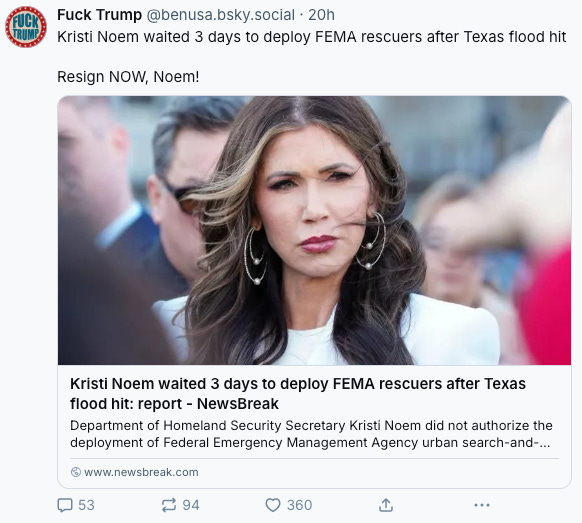
One week later, this tragedy is ongoing. People are wondering how much DOGE’s cuts to the National Weather Service and NOAA factored into it. Journalist Marisa Kabas has reported that as of Monday, only 86 FEMA employees were on the ground in Texas (they usually deploy hundreds of people to disaster zones like this). “We are doing a lot less than normal,” a FEMA staffer told her.
No shit.
In the meantime, $450 million from FEMA’s budget has been allocated to that concentration camp in the swamps of Florida. And Trump’s big, ugly budget bill allocates billions to expand ICE and build more “detention centers” throughout the country.
ICE continues to terrorize immigrant communities, kidnapping law-abiding parents, gardeners, day laborers, and others who just happen to have brown skin (including US citizens).Donna returned home to Los Angeles in time for a show of military cosplay in MacArthur Park. No one got hurt in that one – but it felt like a dress rehearsal for something worse.
We talked about that and more in this week’s podcast.
We are living through history and it really sucks. Aliza says that the best way to deal with the continual onslaught of terrible events is to DO something. Anything. Volunteer in the community. Participate in events. Write postcards for candidates, donate to good causes.
And allow yourself the down time you need to muster up the energy to do it again.
We talked about some of the everyday heroes who are helping us all muster through this.
Like Joshua Aaron, the developer of the ICEBlock app that alerts people of ICE activity in their area. (Currently just for iPhones; we are anxiously awaiting news that this app will become available to Android users.)
The ACLU has done heroic work for over a century. After recording this week’s podcast, we were dismayed to learn that their Mobile Justice app Aliza has relied upon for years is no longer available.
To ensure compliance with a growing number of consumer privacy laws and the ACLU’s own privacy policies and to minimize risk with surveillance technologies currently used by law enforcement, the national office has made the decision not to renew our contract with Quadrant 2, the vendor behind Mobile Justice, and shut down the app on February 28, 2025.
But the ACLU is still a source of valuable information. Here are a couple of pages that you may want to bookmark:
There are things you can do as a bystander, too. This Yahoo article talks about New York City, but much of it applies anywhere in the U.S. It’s completely legal to film an ICE encounter, and the article has great suggestions for how to narrate and what details to include. There is advice on how your video can help, but it’s also important not to post your videos online without the consent of the person being detained.
The National Immigrant Justice Center is just one of many organizations with so much information on how to handle encounters with ICE or DHS, whether you are the target or a bystander.
The coalition of anti-authoritarian groups that has risen since the start of this regime continue to organize. The next big nationwide gathering is “Good Trouble Lives On,” which will be held in honor of the late John Lewis, around the July 17 anniversary of his death. Find an event near you here.
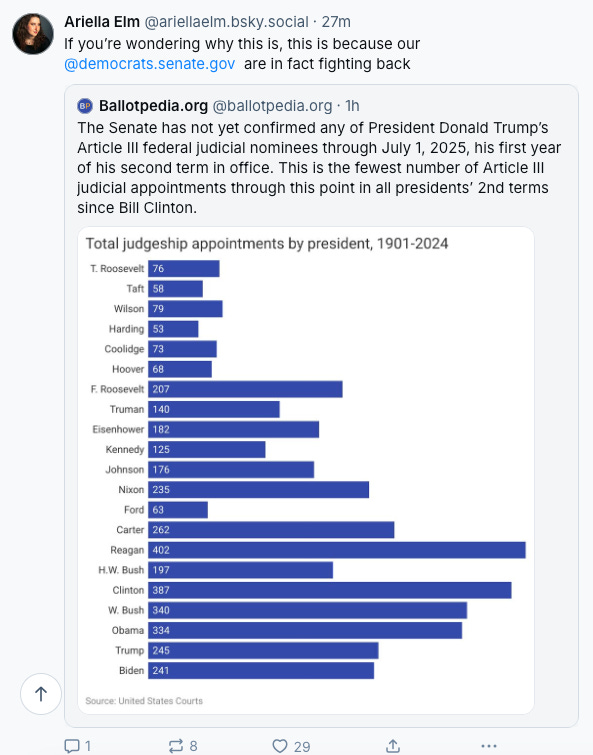
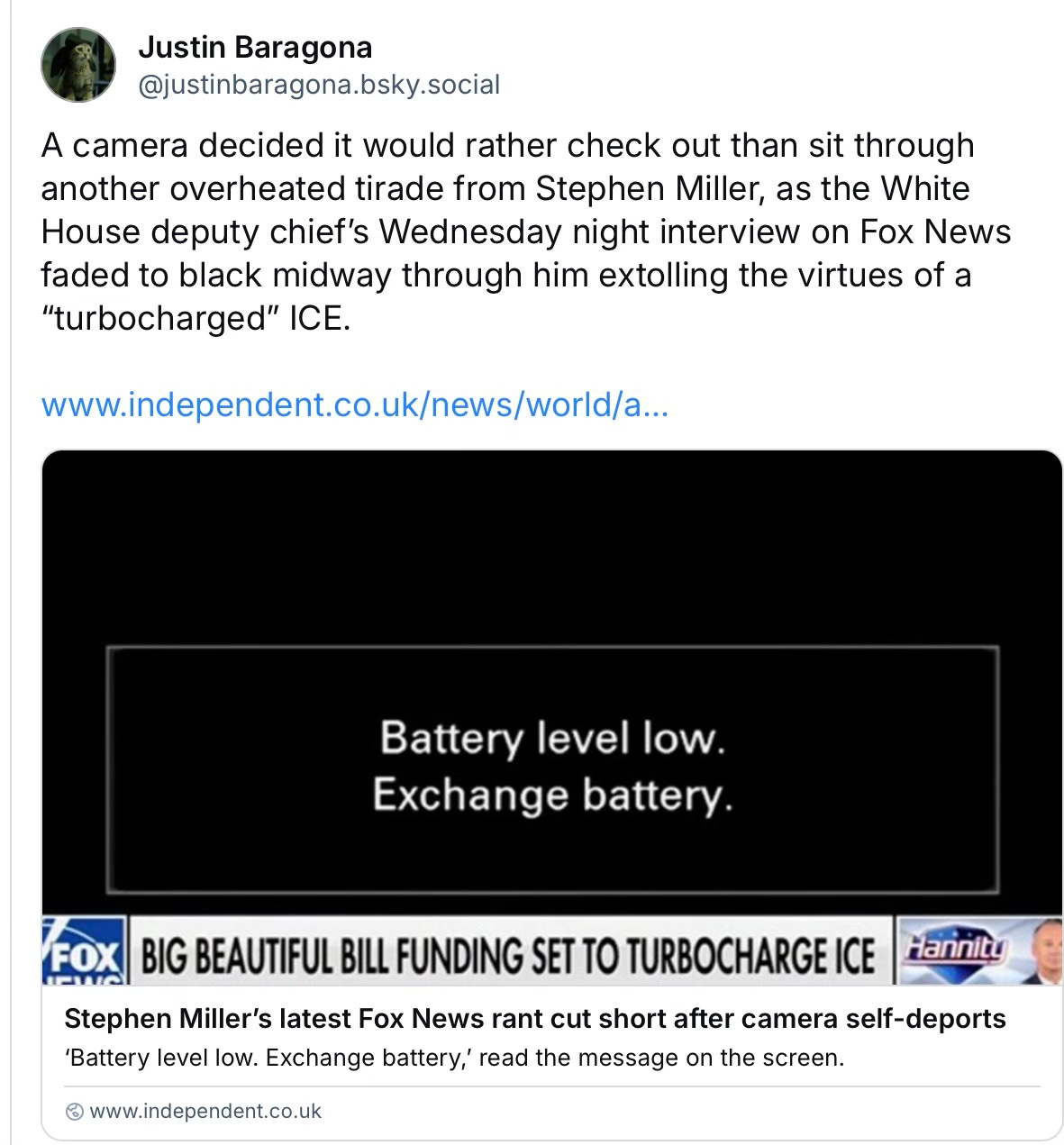
And in case you’re one of those “DO SOMETHING” people who love to bash Democrats, remember that they ARE doing something. A LOT. If you want to know what, you should follow Ariella Elm on any of the socials. She makes posts like the ones below, and daily posts like this one that list the wins for democracy and actions all over the country that are helping stem the tide of fascism, and we need to thank and elevate these soldiers for democracy.
18,000 individual donors, Instagram and TikTok views have kept Deja Foxx — a once long-shot Gen Z candidate — competitive in the race for a congressional seat in Arizona.
TUCSON, ARIZ. — On a Saturday afternoon, Deja Foxx is staging a TikTok Live in her living room. A phone tripod is set up in front of her kitchen table. The frame is centered on a slouchy sofa against an adobe wall, where a chile ristra hangs on one side.
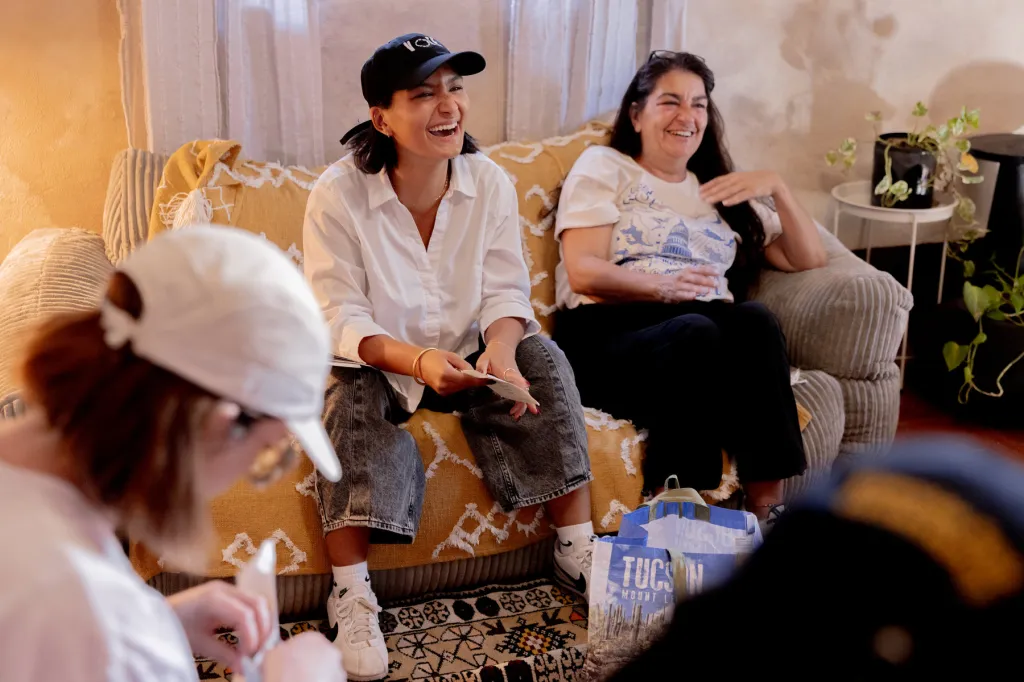
“All right, everybody, take your seats,” she tells the mix of young volunteers, family members and campaign staff who are gathered to help her. “You have some really great mail to open, and I’m so excited because usually it’s just me and my mom that do this.”
She goes live and takes a seat next to her mom on the couch.
One volunteer reads a letter from a 19-year-old named Henry from California: “Even though I can’t vote for you, I adore your campaign,” he wrote. “We need more young leaders and new, fresh ideas from us, Gen Z. As someone who grew up on MediCal, and free public school lunch, who currently is uninsured, I enjoy your background and fighting for us.”
Another volunteer read a note from 20-year-old Julie, who wrote that while she’s been frustrated and overwhelmed by the state of politics, following Foxx’s campaign gave her hope. “I’ve been writing to my officials, but wanted to write something positive for a change. Keep doing what you’re doing.”
Other letter writers included a 22-year-old activist who started organizing after the Parkland shooting, a college student in Phoenix who offered to work for Foxx’s political office in the future, a 23-year-old from Chicago who started following her social media years ago, a North Carolina dad of a daughter moving to Arizona, and a Kentucky woman worried about Medicaid coverage. Volunteers spent 30 minutes reading that day’s mail. During the weekly segment, the audience is usually in the thousands.
Deja Foxx opens mail from her campaign post office box during a TikTok LIVE with her mother, Lisa Foxx, and close friends at her home in Tucson, Arizona. (Courtney Pedroza for The 19th)
Most of the notes included a donation, with the amounts ranging from $20 to $2,000. By the end of the read out Foxx had raised $4,000, mostly from people located outside Arizona. Just two days before, she announced she hit $500,000 in campaign donations, raised through 18,000 individual donors.
Just two months ago, Foxx wrote on Substack about the difficulties of running her campaign for Congress as a Gen Z candidate. She made a plea directly to her online followers: “Our biggest challenge and the only one that really matters: You haven’t invested in us yet.”
At the time, a slow trickle of donations was keeping afloat her campaign to fill the seat left by U.S. Rep Raúl Grijalva, who represented the southern Arizona district for over 20 years.
Shortly after the lawmaker’s death in March, his daughter Adelita Grijalva — who has served for decades in local politics on Tucson’s school board and more recently on the Pima County Board of Supervisors — tossed her hat in the ring for the Democratic primary. Then came the endorsements: Arizona U.S. Sens. Mark Kelly and Ruben Gallego, and progressive politicians like Bernie Sanders and Alexandria Ocasio-Cortez. The winner of that primary, which takes place July 15 and includes former state Rep. Daniel Hernandez, will almost certainly go on to win the September special election in this solidly Democratic district.
Foxx announced that she would take on Grijalva in early April. Most of her short political life — at 25, she would be the youngest woman elected to Congress — has focused on reproductive rights. She served on the board of Planned Parenthood in Arizona at age 17, worked in Tucson health clinics as a sex educator in high school, and more recently worked on the Prop 139 Ballot Initiative campaign in 2024, which enshrined the right to abortion in the state’s constitution.
If we want to win in 2028, I promise you that it is going to require electing leaders in this party who can be effective messengers.”Deja Foxx
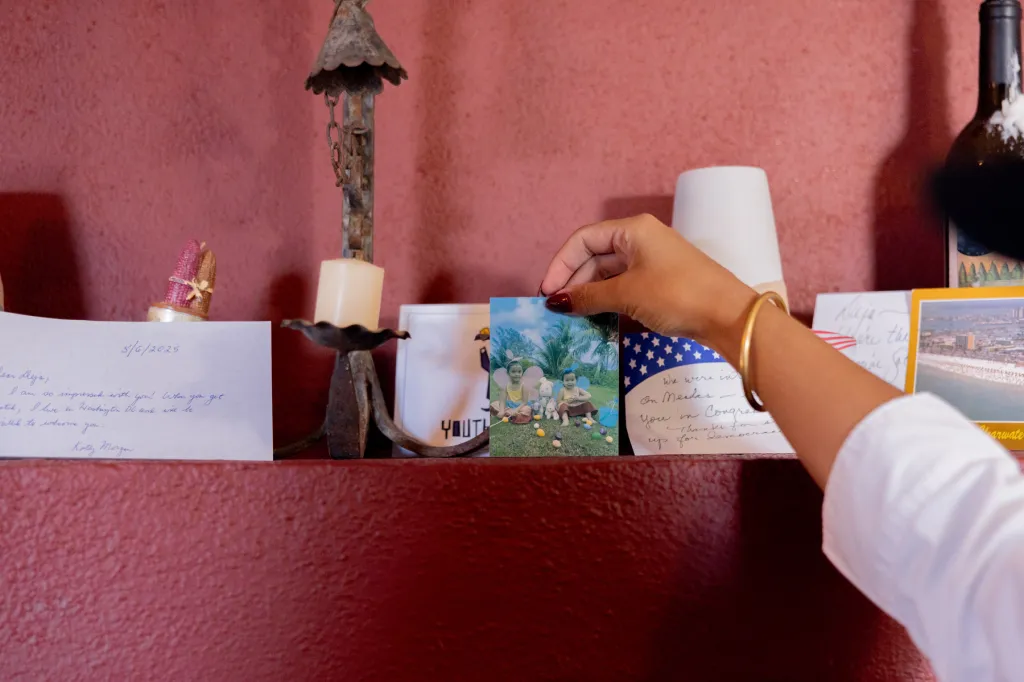
Deja Foxx reaches for mail she received from her campaign post office box on Saturday, June 21, 2025, at her home in Tucson, Arizona. (Courtney Pedroza for The 19th)
But while Foxx doesn’t have the backing of “the establishment,” as she refers to it, or the name recognition of Grijalva, she’s created her own buzz by using her social media platforms to speak directly to her generation. Over the past month, her stories have been viewed almost 30 million times on TikTok, Facebook and Instagram. She also has thousands of followers on Substack. That support and the donations that followed afforded her television advertisements, something that was out of reach when she started.
Her social media savvy has allowed her to bypass the need for big donors, build her own following, and capitalize on national support that’s percolated from the ground up. Along the way she’s making the argument that her social media skills aren’t just part of a campaign strategy, but necessary to communicate the politics of the party as the electorate grows younger and more disillusioned.
“We saw people in the party, in the traditional media, wringing their hands, ‘How did we lose young people in this last election? Why did they move toward apathy and the other side? … And it’s because we’re failing to compete in social media and new media spaces,” Foxx said. “If we want to win in 2028, I promise you that it is going to require electing leaders in this party who can be effective messengers.”
Foxx learned the power of a viral moment when she was a 16-year-old activist for Planned Parenthood. At a town hall in 2017, she asked former Arizona Sen. Jeff Flake (R) why he would deny her the American dream by voting against funding that made birth control accessible to people who grew up in poverty. Foxx, who was insured through Medicaid at the time, got her birth control from Planned Parenthood.
A clip of the exchange went viral. “I woke up the next day and millions had seen the video,” she said. It’s a moment that changed how she thought about activism. The fact that millions of people watched her on their phones and computers put her on equal footing in public discourse with the United States senator, she said. “As a 16-year-old girl working at a gas station … that is remarkable.”
In the nine years since, the political world has grown to recognize the necessity of social media in campaigns, and politicians have turned to Foxx for her expertise. At the same time she was becoming a prominent reproductive rights activist, she used Instagram to build community among her peers through her organization Gen Z Girl Gang. She worked as an influencer and digital strategist for the Kamala Harris campaign in 2019 and later as a social media director at a political action committee. In 2024, she was invited to speak at the Democratic National Convention in support of Harris as an activist and content creator.
But it’s in her own run for Congress where she has been able to test these communication strategies herself. On her TikTok and Instagram accounts, soundbites from her debates have racked up millions of views. More personal reels, like when she surprised her mom with her first batch of campaign literature, have gone viral. She’s embraced being interviewed by independent journalists with followings on places like Substack and YouTube.
She’s using communication styles and platforms that are meeting people where they’re at.”Jessica Maddox
“She’s using communication styles and platforms that are meeting people where they’re at. That style may turn off some older voters, but it’s going to excite younger voters who are particularly disaffected or disenfranchised or disheartened by American politics and even the Democratic party,” said Jessica Maddox, an associate professor of digital media at the University of Alabama. “I’ve been particularly impressed with her TikTok presence, because it feels very authentic.”
That authenticity is the main ingredient in connecting with young voters online, experts say. Maddox and others pointed to the success of Zohran Mamdani’s mayoral campaign in New York as an example of how young politicians are tapping into social media to drum up real support at the polls. Both candidates utilized platforms to engage with people, like Gen Z, who are likely to sit out primaries where voters tend to be older.
The strategy puts lesser known candidates on a more equal playing field, allowing them to subvert the traditional hierarchies that fuel campaigns. “There’s always been a tight relationship between legacy media and politics, and social media kind of upends that,” Maddox said. “[Foxx] can kind of bypass more traditional outlets and get the message out herself.”
Social media has also turned a local race into a national fundraiser, which has helped her stay competitive. Candidates like Grijalva and Hernandez have benefited from deeper donor pockets, and outside support from political action committees. By early May, both candidates had already raised hundreds of thousands of dollars, according to the Arizona Republic. Their latest campaign finance numbers are expected to be released soon. Foxx announced she had hit $600,000 in donations at the end of June.
“It’s an interesting social media element that someone these days could have supporters kind of all over the country, even though they’re running for a very specific seat,” said Kathryn Coduto, a professor of media science at Boston University.
While there is a scarcity of polls in the race, a recent one commissioned by Foxx’s campaign shows her name recognition has risen significantly since May, when half of likely voters hadn’t heard of her. And, on Wednesday, David Hogg’s political action committee announced it would be endorsing her in the race. Hogg, who became famous for his activism after the Parkland mass shooting, now runs a political organization called Leaders We Deserve, aimed at building generational change for Democrats.
“If we replace one of the oldest members of Congress with the youngest — Deja is just 25 years old — we could send an incredibly strong message about which direction the Democratic Party is heading in, and show people how we are dramatically changing to meet this moment,” Hogg said in an Instagram Reel.
While Foxx has worked as an influencer in the past, now that she’s running for office that label has been used to undercut her years of political work and activism. At her first debate, Foxx also pointed out that some of her opponents have belittled her influencer experience. In recent news articles, people associated with Grijalva’s campaign have questioned whether Foxx’s national reach is the same as in-district community support.
The label “influencer” carries a lot of baggage, experts say. It’s still seen as superficial or trivial despite its power in activism and politics. It’s also another way of writing off young people, particularly women, as unserious.
“It’s seen as like little girls playing instead of actually utilizing this tool to accomplish something and talk to constituents,” Coduto said.
Deja Foxx poses for a portrait on at her home in Tucson, Arizona. (Courtney Pedroza for The 19th)
Jade Larson, who wrote her doctoral dissertation on political fandom and social media, said it’s also not surprising that there is such a stigma around being a politician-influencer.
“Every time media is used in a new way in politics, it’s this scandalous thing,” she said. “You can track it all the way back to Bill Clinton going on the ‘Late Night Show’ and playing saxophone, to Obama starting POTUS on Twitter, to Trump making his own social media [network]. It’s always something that’s scandalous, and people push back against it until it kind of becomes the mainstream and the norm.”
Arguably it is the mainstream now. The power of social media that Foxx tapped into nearly a decade ago has only grown more influential in politics and the media — two industries that are closely intertwined. A report from Pew Research Center found that over half of U.S. adults get some of their news from social media, with women and Democrats making up greater regular news consumers on apps like TikTok and Instagram. These users also skew younger, with those between the ages of 18 to 40 making up the bulk of social media news consumers. In a separate poll by Pew Research, 48 percent of TikTok users ages 18 to 29 say keeping up with politics is one of the reasons they are on the platform.
“A whole lot of congresspeople can give a very solid MSNBC interview,” Foxx said. But as someone who interviewed them as a content creator at the State of the Union, “I’m telling you that when they are put in front of an iPhone, there are so many members that fail to communicate. They don’t think the way that our generation thinks. They fail to understand sound bites and algorithms, and youth or even meme culture.”
At the same time that these social media strategies are taking off, voting power is also starting to shift to the very people that use them. Soon, Gen Z and Millennials will have just as much political sway as Gen X and the Baby Boomers — if they go out and vote, Coduto said.
“If you can cultivate enough excitement and you can find a way to really break through and get people to the polls by using social media, then I think it’s going to be an unstoppable strategy.”
Feeling overwhelmed by the news? The 19th is considering new ways to keep you informed. But we need your input. Fill out this quick survey to share your thoughts.