I love dogs and people. I want living creatures to thrive. I love to cook, and share the food, but ya gotta get in line in front of the dog, and greatest good luck with that!
April 11, 1916 Annie Besant, founder of the India Home Rule League and publisher of New India. Annie Besant, a Briton and active suffragist who moved to India, established the Home Rule League with autonomy for India from British colonial rule as its goal. Head of the Theosophical Society of India, she was also the publisher of the newspaper, New India, and CommonWeal. More on Annie Besant
April 11, 1961 The trial of Nazi war criminal Adolf Eichmann began in Israel. The man accused of leading Hitler’s effort to exterminate the Jewish people and others faced 15 charges, including crimes against humanity, crimes against the Jewish people, and war crimes, all of which took more than an hour to enumerate. Adolf Eichmann The charges against Eichmann
April 11, 1968 The Civil Rights Act of 1968 was signed into law by President Lyndon Johnson just one week after the assassination of Reverend Martin Luther King, Jr. Known as the Fair Housing Act, it first outlawed discrimination in the sale, rental or financing of housing and now bans it for reasons of race, color, national origin, religion, sex, familial status, or handicap. The struggle for Fair Housing
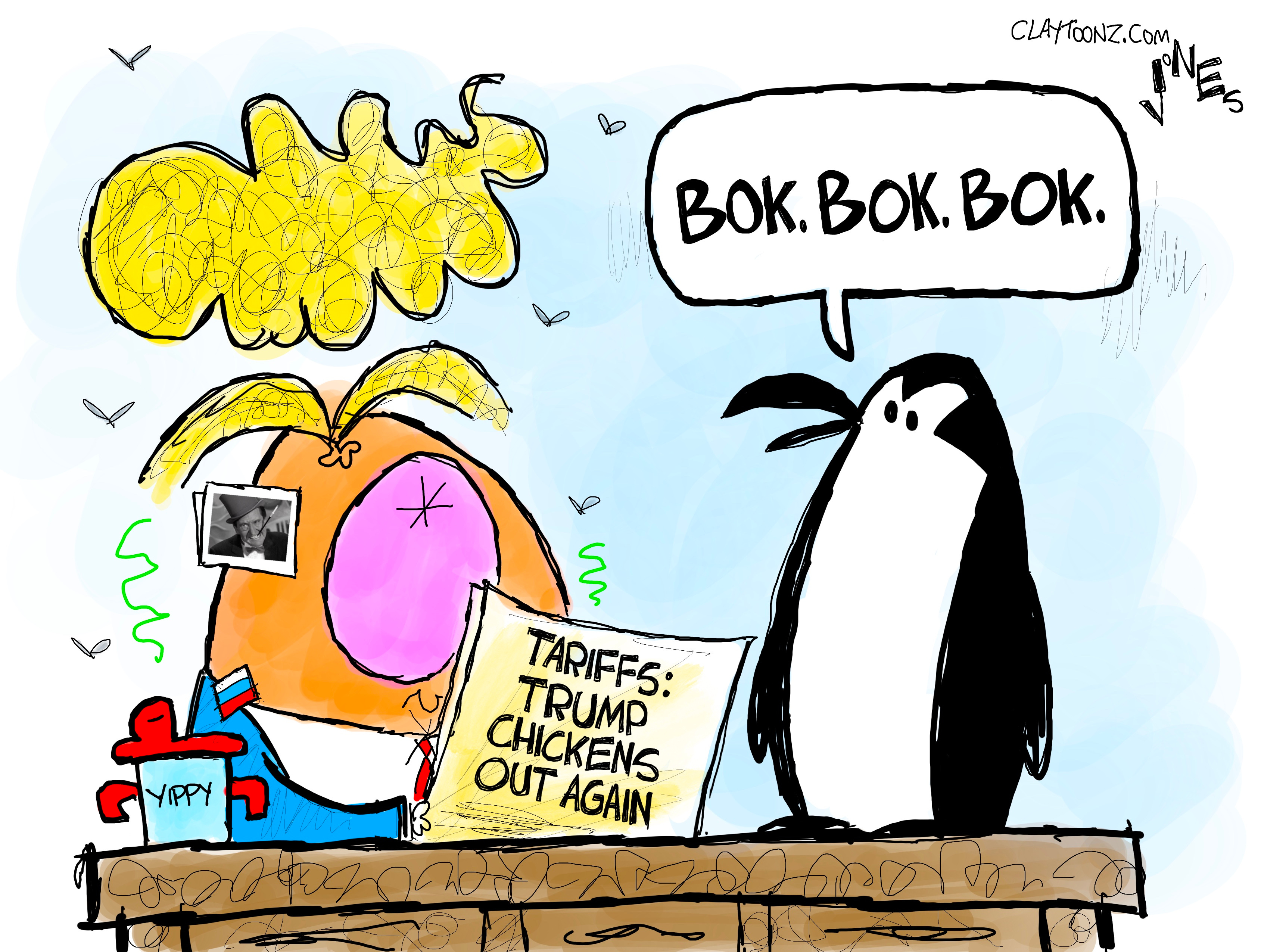
This is not a conspiracy theory, but it’s something to watch out for: Trump declares “Liberation Day” and raises tariffs on every nation in the world except Belarus and Russia. Stocks plummet, and Wall Street loses nearly $6 trillion. Then, after all sorts of promises from him and his goons about being tough, Trump chickens out and delays the tariffs for 90 days, and Wall Street rebounds. What needs to be questioned is if Trump gave any insider information to his friends that he was going to delay the tariffs, thus making Wall Street rebound. Can I get a “hmmm?”
Trump said, “I’m telling you, these countries are calling us up, kissing my ass. They are dying to make a deal. “Please, please, sir, make a deal. I’ll do anything, I’ll do anything, sir.” And then, Trump chickened out again without making any deals. Not one.
One nation that did NOT kiss Trump’s ass is China, who retaliated by raising their tariffs on us to 84 percent. Trump retaliated by raising tariffs against China to 145 percent. China is the only nation not spared by Trump’s 90-day delay.
China threatens to stop buying our products and even stop watching our movies. This is bad news because not only will that hurt Hollywood’s revenue but also make our Chinese competitors smarter because they won’t be sitting around all day watching shit like Dude, Where’s My Car?.
Trump is mad at China for retaliating. In his feeble, twisted little mind, he believes it’s personal. How dare they retaliate, which the European Union did too. The EU is now delaying their retaliatory tariffs.
So, what happened to “Liberation Day?” There was a giant dog and pony show for “Liberation Day,” and now it’s “never mind?”
Trump claims 75 nations called to negotiate, but as we’ve learned over the years, Trump lies. I’m pretty positive nobody told him, “I’ll make a deal. I’ll do anything.” But, of course, other nations are willing to negotiate. That’s what diplomacy is. Diplomacy is NOT attacking an ally by saying they should stop being a country and join yours. Diplomacy is not demanding that it give you parts of its territory. Diplomacy is not attacking your friends with tariffs to make them negotiate. You could negotiate without the attack.
Trump is making every one of his policies personal, which is how a narcissistic toddler governs. This is bullying. I would not be surprised if this entire thing is only about Trump getting more people to kiss his ass.
Attacking the entire planet with tariffs, then backing down a few days later, isn’t strength; it’s cowardice. It also shows the world that Trump is indecisive, suffers from mood swings, and can’t be trusted.
Trump’s National Economic Council Director Kevin Hassett said, “This was Trump’s plan all along.” Secretary of the Treasury Scott Bessent said this was Trump’s “strategy all along.” White House spokesgoon Karoline Leavitt said, “Many of you in the media clearly missed the art of the deal.”
I did miss “Art of the Deal,” Karoline, which Trump did NOT write and probably hasn’t even read. But do you know what I didn’t miss, Karoline? I didn’t miss Trump’s “art of the deal” when he negotiated ending a government shutdown with Nancy Pelosi. I didn’t miss that Trump walked into those negotiations with a little bit of something for his border wall and walked out of the negotiations with the government reopening and getting nothing for his stupid, racist border wall. Was that his strategy all along?
I also didn’t miss that Trump negotiated a new NAFTA with Canada and Mexico during his first term (sic) and broke those promises in his second term (sic).
I’m sure other nations didn’t miss those “arts of the deals,” nor did they miss that when Trump starts chaos, he’s impatient and will back down quickly. When push comes to shove, it’s easy to push Trump down. If you’re playing chicken with Trump, he’ll swerve first.
Every nation that negotiates with Trump on tariffs will start with the upper hand. Just like Obi-Wan Kenobi, they have the high ground.
Trump’s post about other nations kissing his ass is him showing his cards. All they have to do is kiss his ass by appealing to his giant ego, and they will out-negotiate him. It also helps them that our president (sic) is a dunderhead.
Fascist bloggerCurtis Yarvin(anti-democracy, pro-slavery, says Whites have higher IQs than Blacks, cited by JD Vance as an “influence,” attended Trump’s inauguration), talked about Trump’s “confidence” in 2.0 in an interview with The New York Times, saying, “It’s almost like he actually feels like he knows what he’s doing.”
Isn’t that exactly what we want in a president, for him to “almost feel like he knows what he’s doing?” That should have been one of the campaign messages.
What happened to make Trump chicken out with the tariffs wasn’t because he got 75 phone calls from nations ready to negotiate, but phone calls from oligarchs freaking out about the stock market. Trump says they got “yippy,” but nobody was saying, “Yippee.” Maybe something more like, “Yippee-ki-yay, Motherfucker.”
Cartooning colleagues, do NOT steal “yippee-ki-yay, Motherfucker” from me.
Trump gave himself credit for Wall Street’s rebound yesterday, but today, it’s going “yippy” again. But I’m sure Trump almost knows what he’s doing.
Creative note: I wanted to do something with “yippy,” but I couldn’t resist this penguin idea after it landed in my brain. I may do “yippee ki-yay” later if it’s not stolen from me.
Music note: I listened to the Red Hot Chili Peppers, but only for a few minutes because this cartoon didn’t take long to color.
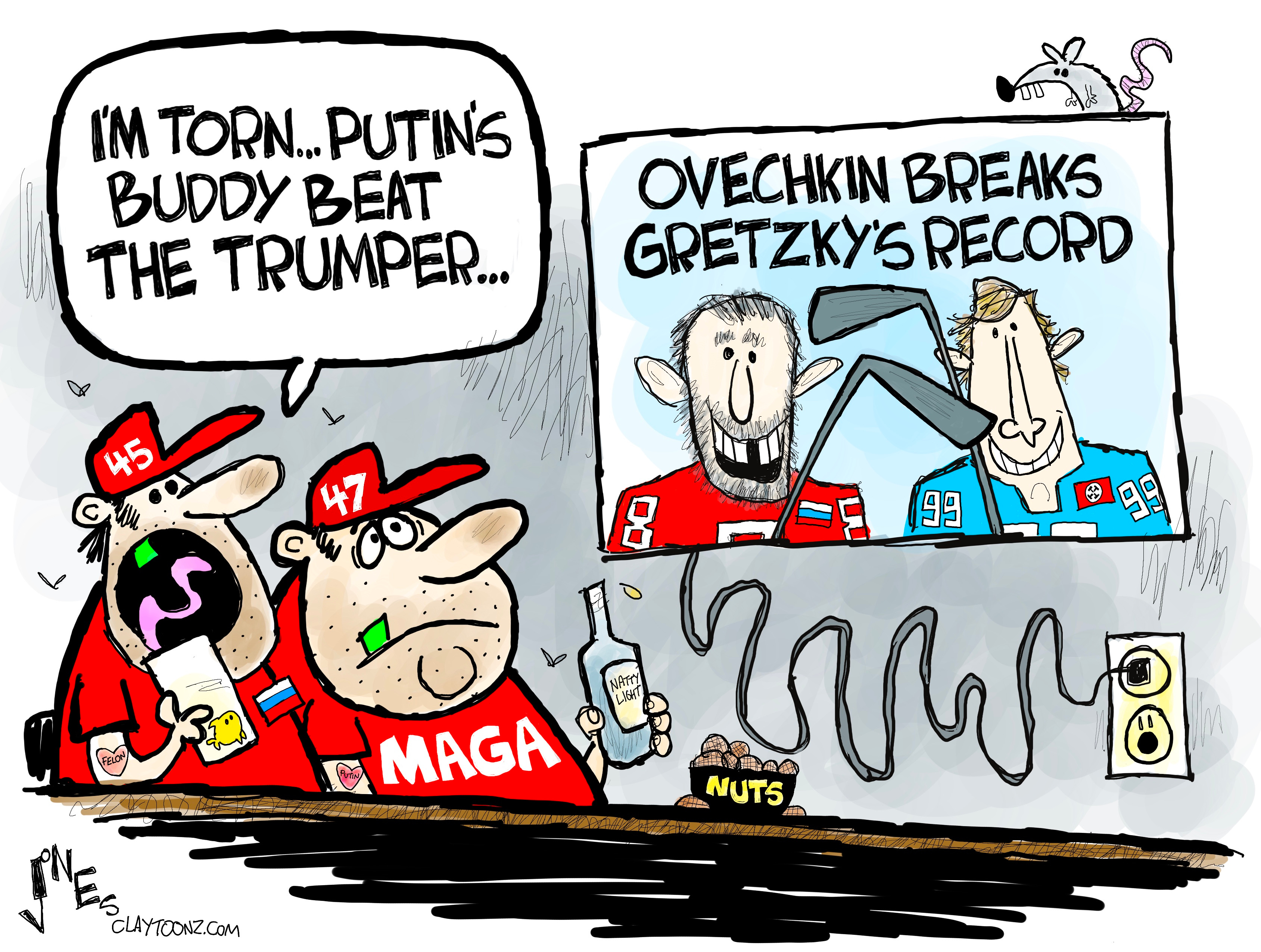
I suspect a lot of people are not going to like today’s cartoon, especially in my area. I live in Caps country.
The Washington Capitals’ Alexander Ovechkin scored his 895th NHL career goal on Sunday, breaking the record set by “The Great One,” Wayne Gretzky, which has stood unchallenged since 1999. The NHL is celebrating Ovechkin’s achievement, which he accomplished with only five games remaining in the regular season. The Caps will be the number-seed in the playoffs (which means they’ll probably lose in the first round).
Another person celebrating Ovi’s accomplishment is Russian President Vladimir Putin, who congratulated Ovi, saying, “You’ve surprised legendary masters. Without a doubt, this achievement is not only your personal success but a true celebration for fans in Russia and abroad.”
There’s nothing wrong with that, right? Even if Putin is a monster, it’s expected that he would congratulate a Russian for such a great historic accomplishment, and Ovechkin should be proud to be Russian, just as you should be proud of your nationality, even if you’re not always proud of your nation’s actions. What’s wrong here is that Alexander Ovechkin is a Putin supporter.
Ovechkin is a Putin supporter to the point that his profile image on his Instagram page is of him with Putin.
Ovechkin played on the Russian Olympic team in 2014, when the games were hosted in Sochi, Russia. The Russians were defeated by Team USA and then lost to Finland in the quarterfinals, but they came back later in the year and won the World Championship in Belarus (when most nations didn’t send their best). Putin celebrated with the team in the locker room, where the Great Eight poured champagne into Putin’s glass from the championship trophy.
Later, Ovi visited Putin at the Kremlin, where he asked Putin to give him and each of his teammates a car, a Mercedes GL, to be specific. It was a request Putin granted.
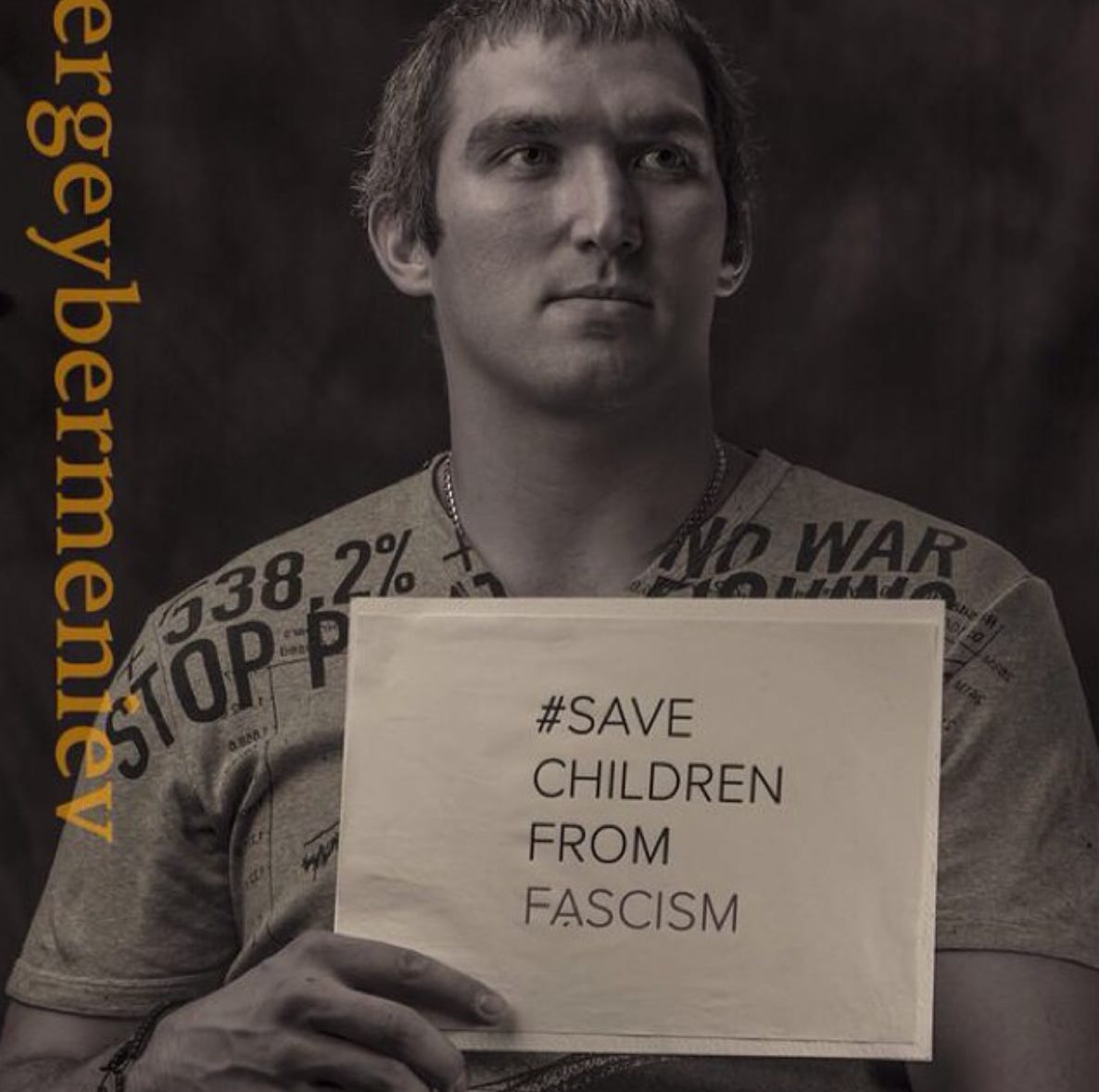
Putin and Ovi have played hockey together, and when Ovi got married, Putin sent a wedding gift, a tea set, but I’d be careful about drinking anything Putin serves. When Russia annexed Crimea and started its war on Ukraine, Ovi expressed his support with a photo on Instagram.
GR8 forgets that there aren’t free elections in his nation, that Putin murders his critics and enemies, that a free press and political opposition are prohibited, and that Putin has been in power for 25 years. “#SaveChildrenFromFascism” is a hashtag used by Russian media to support Russia’s war against Ukraine. Here, Alexander Ovechkin is a stooge.
Asked by ESPN about the post, Ovi said, “I don’t try to make a statement. Right now, as a Russian, I have lots of friends from Ukraine. I just don’t want a war. Nobody wants a war.” That was a weak response full of bullshit. You made a statement, Ovi, and it was one supporting Putin’s war that’s killing people in Ukraine. Ovi, you want to “save children from fascism,” but how about saving them from Putin’s bombs?
In 2017, Ovechkin created the Putin Team, a social movement in support of Putin, and issued a statement saying, “I’m sure there are many of us who support Vladimir Putin! So let’s unite and show everyone a strong and united Russia!”
After Putin illegally invaded Ukraine in 2022, Ovi said, “Obviously, it’s a hard situation. I have lots of friends in Russia and Ukraine, and it’s hard to see the war. I hope soon it’s going to be over and there’s going to be peace in the whole world.”
When asked if he still supports Putin, Ovi said, “Well, he is my president, but I am not in politics. I am an athlete, and you know, how I said, I hope everything is going to be done soon. It’s [a] hard situation right now for both sides … I’m not in control of this situation,” but that photo’s still his profile image on Instagram.
This isn’t a case of left or right-wing politics. Putin is a monster. He’s a murderer. He’s a liar. He’s tampered with other nations’ elections, including ours. He’s worked to put his puppets in power, puppets like Donald Trump. Putin is a dictator who’s bombed children’s hospitals and has never expressed remorse.
“I’m sure there are many of us who support Vladimir Putin! So let’s unite and show everyone a strong and united Russia!” Ovechkin said in a statement when he created Putin Team.
If that’s disappointing for Caps fans, imagine how Canadians feel about The Great One, a national icon for Canada, being a Trumper.
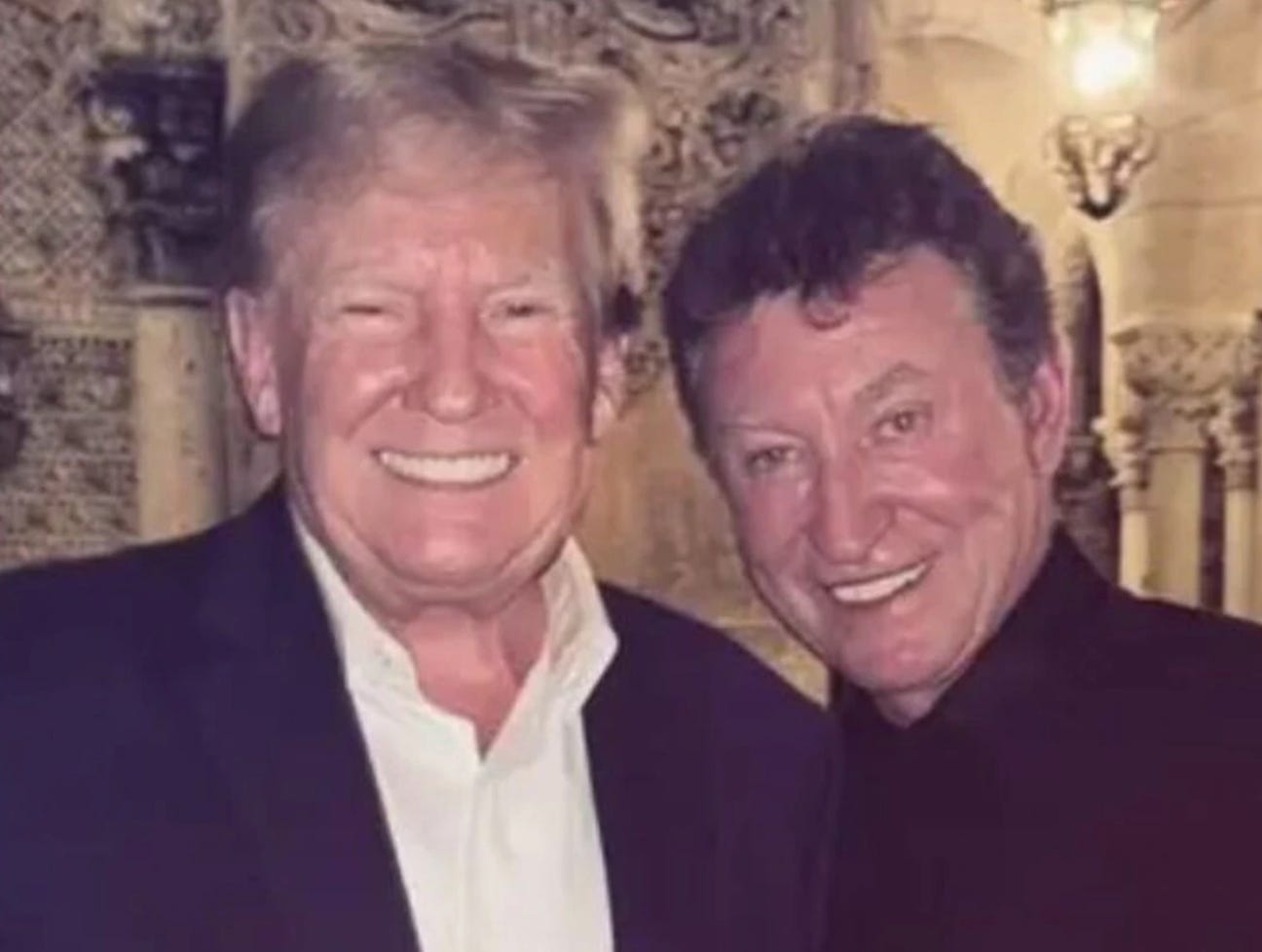
Yes, hockey fans, I’m sorry to report that Wayne Gretzky is a MAGAt.
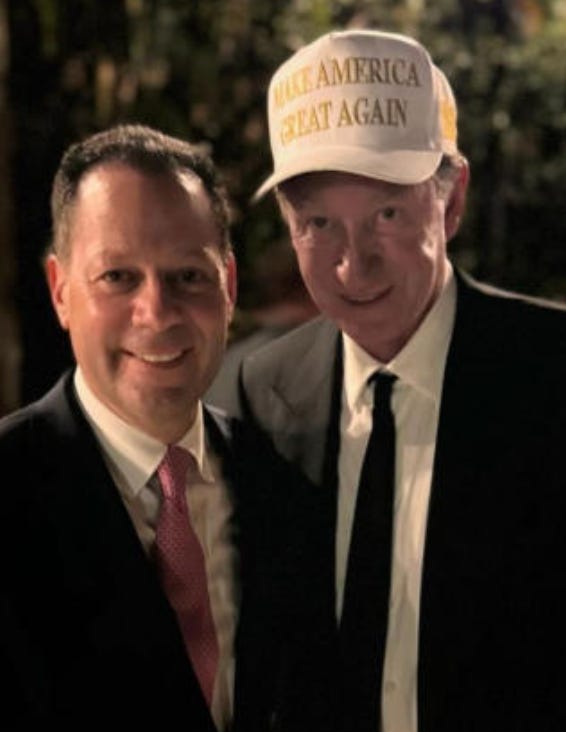
Look. Here’s a photo taken at MAGA-Lardo on election, where The Great One (not Trump) was in attendance.
Here he is in a MAGAt cap.
Last February, Trump praised Gretzky in a rambling post on ShitSocial, saying, “Wayne Gretzky is a fantastic guy! They call him, “The Great One,” and he is. He could run for any political office in Canada, and win. Wayne is my friend, and he wants to make me happy, and is therefore somewhat “low key” about Canada remaining a separate Country, rather than becoming a cherished and beautiful 51st State, paying much Lower Taxes, a Free and Powerful Military, NO TARIFFS, and having a Booming Economy. Wayne and Janet, his wonderful wife, love Canada, and they should only support Canada, and whatever else makes the Canadian People, and Governor Justin Trudeau, happy. He’s the Greatest Canadian of them all, and I am therefore making him a “free agent,” because I don’t want anyone in Canada to say anything bad about him. He supports Canada the way it is, as he should, even though it’s not nearly as good as it could be as part of the Greatest and Most Powerful Country in the World, the Good Ole’ U.S.A.!”
Gretzky was a Canadian hero who led the Edmonton Oilers to four Stanley Cup victories. He was a symbol of national pride, but that started to wane once he was traded to the Los Angeles Kings. Now, his nation is disappointed in him as he won’t defend them against Trump’s insults, suggesting they become our 51st state, and attacking them with tariffs. He hasn’t even downplayed Trump’s comments that Gretzky could be governor of that 51st state. Talk about installing puppets.
Gretzky tried to defend his MAGAness by saying, “We always, believe it or not, really never talk politics in the locker room…we watch basketball, we watch baseball, we talk about the Blue Jays, we talk about the New York Yankees. (For) hockey players, that’s never on the docket. It’s just something that we stay in our lane. The prime minister and the president don’t tell us how to play hockey. We don’t tell them how to do politics, right?”
Gretzky said hockey players don’t talk politics and stay in their lane, yet it looks like Gretzky’s lane took him to MAGA-Lardo on election night, and it also took him to Washington, DC, to attend Trump’s inauguration (sic) last January.
Gretzky’s hometown of Brantford, Ontario, will take a major hit from Trump’s trade war as 80 percent of its production is sold to the United States. Yet Gretzky has yet to comment on Trump’s tariffs hitting not just his home nation but his hometown.
Many Canadians feel like Gretzky has abandoned Canada and chosen the United States over it. He’s married to an American and has made the USA his home. Recently, someone smeared poo on the statue of Gretzky at Edmonton’s Rogers Place, probably upset over him turning his back on Canada or they mistook it for a Tesla.
In 2009, Gretzky was awarded Canada’s highest civilian honour, Companion of the Order of Canada. Gretzky still hasn’t picked the award up. With him now being a fully-pledged MAGAt, it might be wise for him not to pick it up.
Creative note: This is NOT my most popular cartoon. It only has one like after three hours on Twitter/X, and only 13 shares on Facebook (but 72 likes).
Note about nothing: I almost choked to death on a salad yesterday. I was watching 30 Rock during lunch and Pete Hornberger had shaved his head only to discover a birthmark that looked like a Swastika made out of penises. I did survive…obviously.
April 10, 1516 In what was the first ghetto, Jews in Venice, Italy, were forced to live in a specific, restricted area of the city known as Campo del Ghetto Nuovo. The word “ghetto” comes from the Venetian word “geto,” meaning foundry. Prior to becoming an exclusively Jewish neighborhood, the Venice ghetto was the site of a foundry. After its establishment the city’s Jews, who were allowed to attend to their business during the day (though required to wear a yellow badge or scarf indicating their religion), were forced to return to the ghetto where gates were locked to keep them inside overnight. Venice also restricted the living quarters of Germans and Turks, all to satisfy the demands of the Roman Catholic Church. The site of the Ghetto Nouvo today
April 10, 1971 Ninety-year-old Jeannette Rankin, the first female member of Congress (R-Montana), and the only one to vote against U.S. entry into both World Wars, led 8000 in protest of the Vietnam War in a women’s peace march on the Pentagon.
April 10, 1972 Charlie Chaplin received an honorary Oscar for “the incalculable effect he has had in making motion pictures the art form of this century.” The British native’s political views had previously been criticized, as had been his failure to apply for U.S. citizenship. Pressed for back taxes and accused of supporting subversive causes during the McCarthy era, Chaplin left the United States in 1952.Informed that he would not be welcomed back, he retorted, “I wouldn’t go back there if Jesus Christ were president.” He returned briefly from exile, however, to accept this award and received the longest standing ovation in Academy Award history, lasting a full five minutes. Charlie Chaplin, one of PBS’s American Masters
April 10, 1981 The United Nations Convention on Certain Conventional Weapons (also known as the Inhumane Weapons Convention) started gathering signatures of nations willing to abide by its limitations. Currently, 109 countries have agreed to ban or limit munitions that cause unnecessary or unjustifiable suffering to combatants, or affect civilians indiscriminately. So far the restrictions cover mines, booby traps, incendiary weapons (such as Napalm) and blinding laser weapons. This Life photograph of a naked child running down a street in Vietnam screaming in agony captures the effects of Napalm. Nick Ut’s photograph of Kim Phuk, taken in 1972, won the Pulitzer Prize ( Associated Press). Not all country signatories have agreed to all its provisions How militaries think about incendiary weapons
April 10, 1994 France, Belgium, the U.S., among other countries airlifted their nationals out of Rwanda as the wholesale slaughter of Tutsis at the hands of the Hutu majority proceeded. Rwandan employees of Western governments were left behind. The International Red Cross was already estimating the death toll in the tens of thousands.
April 10, 1998 The Northern Ireland peace talks ended with an historic accord—called the Good Friday Agreement—reached after nearly two years of talks and 30 years of conflict. Former U.S. Sen. George Mitchell (D-Maine) was chair of the talks which established a Northern Irish Assembly for both the Irish Catholic republicans and the British Anglican unionists. Senator George Mitchell
I ran across this over the weekend, and emailed it to myself in case I thought I ought to post it. I’m not sure it’s a great post, but it’s cool if you turn the volume down a bit at the beginning. It’s one of those little shorts that is somehow satisfying and a little cleansing to watch. I know it’s morning, and I do not work for any pastry providers. It’s just a neat little vid.
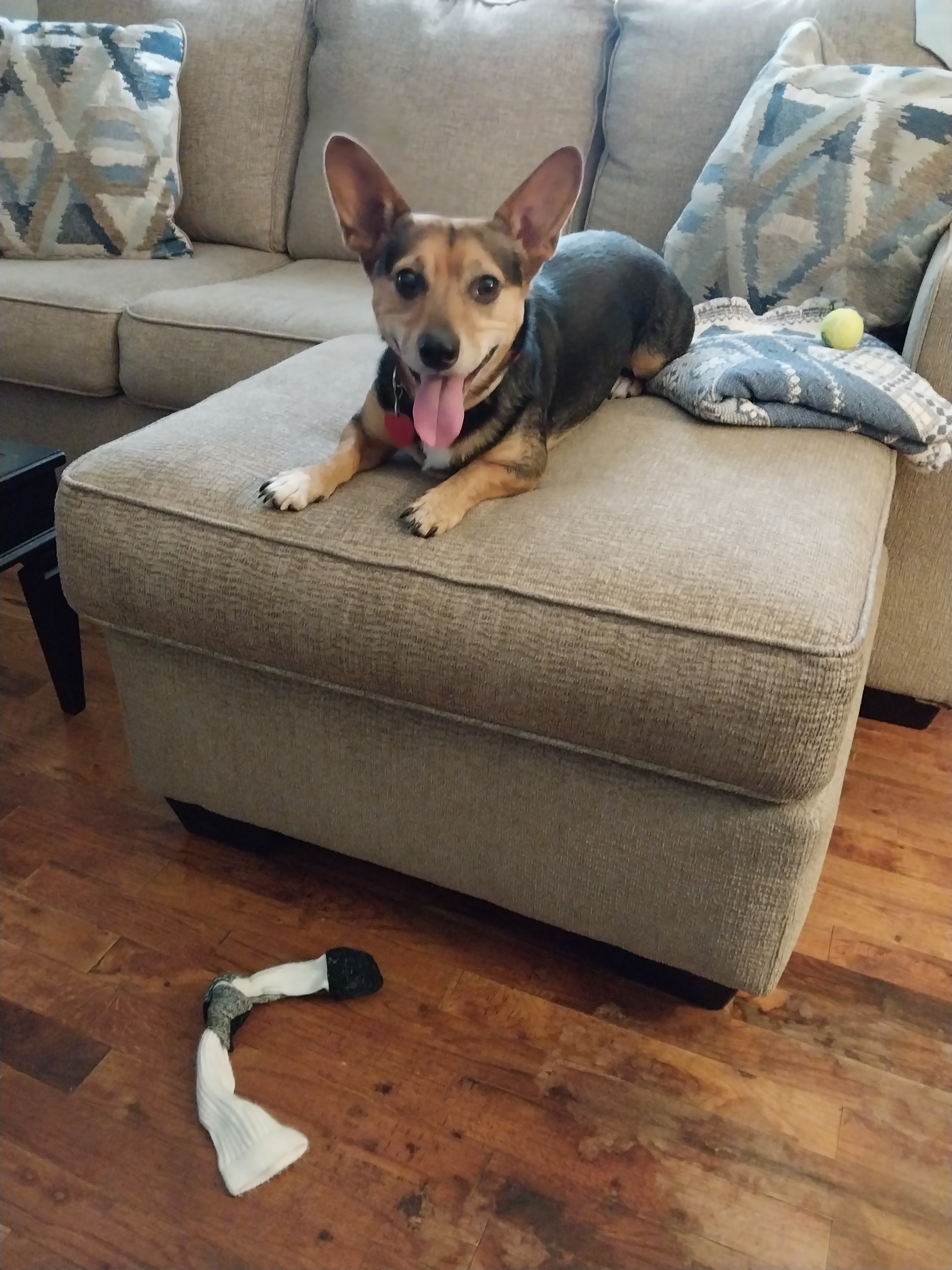
So, things with Ollie are progressing nicely. He’s a very good boy, he’s hilarious, and he’s made a good difference here in the house. Anyway. He was a little bit broken when he came; the wonderful family who gave him to me had rescued him from a kill shelter, where he was dropped for biting. They got him in 2020, everybody was pretty sure he was not older than a year, and he’d been abused and left with one or both rear legs that get sore. So, while Corgis are naturally snappy and usually are trained out of that, Ollie’s instincts are distrust and biting. The family who gave him to me were working with him, but he bit their toddler for reasons but still, so he had to move away. They think he’s around 5 now. I’ve been working with him more on trust and behavior. He has never demonstrated thinking of biting me, nor our son who lives here, and they play hard together! It really only takes a little time and a lot of consistency. And positive attention. Turns out, Ollie knows just how to behave himself, is a superlative watchdog (so now we’re working on barking after I’ve said something’s OK,) and is fun to play with. I wouldn’t want to be a stranger who just reached out to pet him, or to break in the house, but if I’m there, he’s not going to bite unless he sees that things are not right. I do worry he’ll never enjoy riding in a car; he gets really agitated and frightened in the car; it takes him some time to get past it once we’re home.
So yesterday (I’m scheduling this for early AM posting,) we went for our morning jaunt. He’s just hilarious on walks! Even though he’s been altered most of his life, he marks. Most of our doggies continued to mark after being spayed or neutered; even Corky, who was female. Anyway, I usually call walks “taking Ollie to check and reply to his messages,” since of course that’s what it is for doggies; they sniff, then mark (or not) then along comes the next reader-sniffer. Today, we stopped at a buried fiber optic marker, and he sniffed and sniffed and sniffed. He was very thorough, like individual bits of blades of grass thorough. Suddenly, he lifted his head, and turned to look at a house behind us. Then he glanced up at me, then sniffed the same spot again, but not as long. He then turned bodily to look at that house (I have no idea if they have a dog there,) then turned and sniffed again, then zoooomm we were off to the end of the block, Ollie apparently airborne. I’m still dying to know what on earth he learned there! I know we should be careful what we wish for, but I wish he could talk.
April 9, 1898 Ida Wells-Barnett, a journalist, speaker and advocate for suffrage, wrote to President William McKinley requesting federal action against those who lynched the U.S. Postmaster of Lake City, South Carolina. Ida Wells-Barnett Though the federal government had previously refused to involve itself with the thousands of lynchings, leaving them to be dealt with at the state level, Ms. Wells-Barnett insisted that a postmaster’s murder was a federal matter. “We most earnestly desire that national legislation be enacted for the suppression of the national crime of lynching . . . . Her open letter to President McKinley ============================================= April 9, 1947 The first freedom ride, the “Journey of Reconciliation,” left Washington, D.C. to travel through four states of the upper South.In response to a Supreme Court decision (Morgan v. Virginia) outlawing segregation on interstate busses, the group of both black and white Americans rode together despite “Jim Crow” state laws making it illegal. Together on the bus, and arrested several times for being so, were George Houser, Bayard Rustin, James Peck, Igal Roodenko, Nathan Wright, Conrad Lynn, Wallace Nelson, Andrew Johnson, Eugene Stanley, Dennis Banks, William Worthy, Louis Adams, Joseph Felmet, Worth Randle and Homer Jack. Two African-American members of the group, Rustin and Johnson, served on a chain gang for 30 days after their conviction in North Carolina. The integrated bus tour was sponsored by CORE (Congress for Racial Equality) and FOR (Fellowship of Reconciliation) Read more about the freedom rides ============================================== April 9, 1981 Members of the Bigstone Cree band of indigenous people ended a 250-mile march to the capital, Edmonton, to highlight their economic plight in northern Alberta, Canada. ============================================== April 9, 1995 Former Secretary of Defense Robert McNamara first publicly acknowledged error in prosecution of the war in Vietnam. “Yet we were wrong, terribly wrong. We owe it to future generations to explain why.” Robert McNamara, Fog of War ============================================== April 9, 2000 Jubilee 2000 National Mobilization Day in Washington, D.C. brought together individuals and groups demanding cancellation of third world debt. “Every child in Africa is born with a financial burden which a lifetime’s work cannot repay. The debt is a new form of slavery as vicious as the slave trade.” Jubilee USA Network