
Author: ali redford
I love dogs and people. I want living creatures to thrive. I love to cook, and share the food, but ya gotta get in line in front of the dog, and greatest good luck with that!
Peace & Justice History for 10/17:
| October 17, 1898 The U.S. took control of Puerto Rico. One year after Spain granted Puerto Rican self-rule, following their rout in the Spanish-American War, troops raised the U.S. flag over the Caribbean island nation, formalizing American authority over the island’s one million inhabitants. Puerto Rico became a self-governing commonwealth, though the U.S. controls all aspects of its military, trade, media, banking and international affairs. Though Puerto Ricans are citizens, they don’t pay income taxes, nor are they represented in Congress or able to vote for president.  Timeline: Puerto Rico |
| October 17th, every year International Day for the Eradication of Poverty was designated by the United Nations in 1992. It began in 1987 when 100,000 people gathered in Paris and declared poverty a violation of human rights. This year’s theme “Building a sustainable future: Coming together to end poverty and discrimination” |
https://www.peacebuttons.info/E-News/peacehistoryoctober.htm#october17
My Personal Voting Post
It’s been a day, really, but that can be a day-in-the-life post some other time. Meanwhile, I have a tab up that I intend to use in my voting post, and it’s still there because I haven’t gotten it done. Here I am at 1 til 5 PM, but I am doing it now. 🌞🤯🌞
So my mission for today was to vote this morning. I got around and fixed my hair, and went to vote. There’s a jury trial, so parking was short. There was a spot, and I fit, but it was tough getting out of the car, as the person to my left had parked just barely on their righthand, my lefthand, line. But it got done. I figured they’d leave and make me look like the a-hole, even though I did have 3 in. of space between my car and my righthand line. Then, I figured they probably pulled in the best they could, and maybe/probably the person they pulled in next to had parked too far over, making this person look like the a-hole. So, all’s well, I got in, got signed in, and voted. There was not a line, but each machine was kept in use; there was a steady flow of voters. Awesome!
It was smooth as silk, and I actually got to vote for Dems all the way down the ticket except one office, where I wrote in a good friend of mine who I admire, and who would be a superlative state rep. Else, I voted Dem all the way. It was good. I usually post a pic of my pen and my sticker, but county costs are up, and there are no stickers today, and no free stylus pens, either. So, big whoop, but it got done! I expect to hear (read) that everyone who reads here votes this season; look at my WP handle!
Anyway, here’s a great post about another voter who votes Blue:
http://vixenstrangelymakesuncommonsense.blogspot.com/2024/10/heres-bit-of-history.html#more
Wednesday, October 16, 2024
Here’s a Bit of History
This is the first president whose inauguration I can remember. Now, if you know my age, you might think that is improbable, but 1976 was a big year in Philadelphia with the Bicentennial and all. And I guess I imbibed political sensibility a bit from my mom. In 1977 I had a turntable, a Kiss album alongside my Sesame Street records and was a fan of Happy Days and watched some documentary about the 25th anniversary of rock and roll on PBS about a dozen times, it felt like.
I remember the 1970s. I was already me by the time I was a toddler cleaning up shot glasses after parties (the taste of blackberry brandy and the sound of Steppenwolf) and listening to the Midnight Special. when I definitely wasn’t supposed to still be awake and turning on the sole tv in the house and was lifting cold pizza out of the fridge. Mom finding me zonked on the floor with the farm report or Chief Halftown on in the morning.
He reminded me of Mr. Rogers then, and that was all right by me. He still does, and I don’t have a greater compliment. He cares, and he acts on his sense of caring. It’s the best thing you can say anyone ever does.
Kamala Harris is a lot closer to my age than Jimmy Carter and is a woman, like me. I am still mad about the women in their 100’s and their 90’s in 2016, who finally got to vote for a woman for president and she never broke through the ceiling she most certainly dented.
But maybe me and the first president I can remember as a girl, who talked so appreciatively of his own daughter, Amy, when I was a little girl myself and wanted grownups to believe in girls, can see Kamala Harris win together.
Maybe this is just a sentimental, schmaltzy departure from me busting on Trump’s mental decline or whatever–but I would like to see this. She is so ready, and I am so ready. and we are so ready.
So here is Harris calling Trump a weak bitch who loves dictators because of his weak bitchness. Because I am sentimental, but this is business and Trump needs a boot in the ass.
I’m not saying “we’ve come a long way, baby” or “she can bring home the bacon” or whatever passed for 1970s feminism. I am saying this candidate is herself outstanding and can do the damn job. Not because she’s a woman, but because she is a boss.
And the miserable misogynist she is running against is an echo of the past that a 100 year old man knows should be left to history. Because he has fought against that bigotry in his own life and in his own faith.
Saving the world-a reblog
Kamala Harris Has a Great Plan for Rural America by Charlotte Clymer
And you should know it. Read on Substack
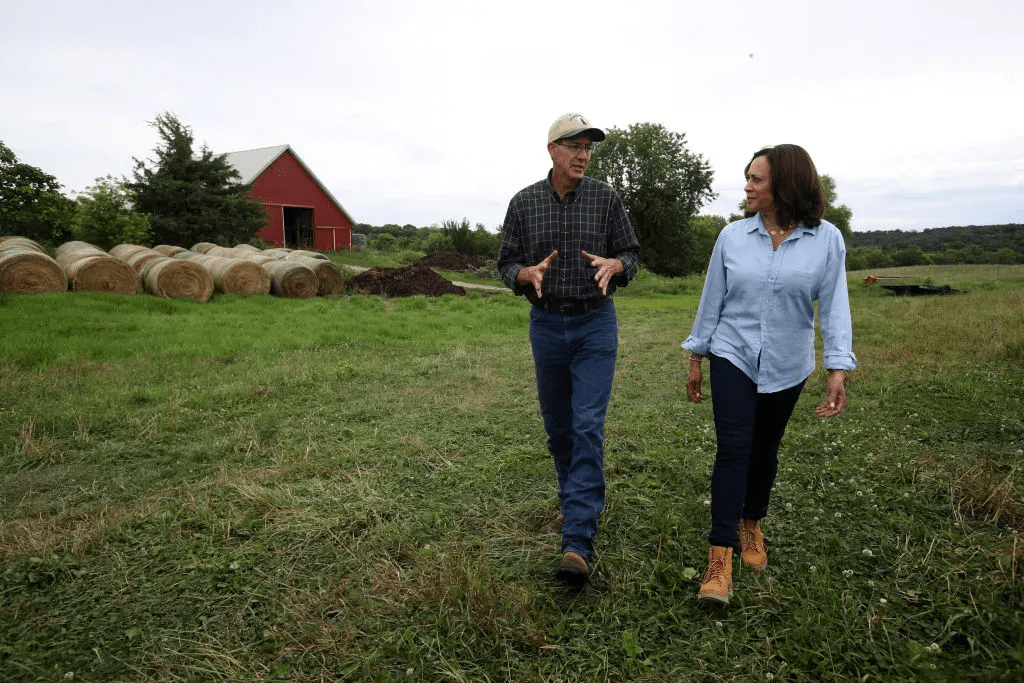
This morning, the Harris-Walz campaign announced an extensive economic plan for rural communities. It’s a deeply impressive vision for working class families in these parts of the country.
Given that much—perhaps, most—of political media will not adequately report on this and inform voters of what Vice President Harris plans to do for Rural America, I’m gonna take the rare step of publishing her plan, in full, as a blog post.
I’m doing this because Lord knows we’re all more likely to see an intellectually dishonest column in The New York Times about Vice President Harris ignoring rural voters than we are to see significant reporting and analysis on her proposed policies for rural voters.
So, here it is. Just to confirm, all of the below text was written by the campaign. Please share with your friends and family in rural areas of the country:
FOR IMMEDIATE RELEASE
October 15, 2024
Vice President Harris and Governor Walz’s Plan for Rural Communities
New Initiative Will Strengthen Rural Health Care by Adding 10,000 Health Care Professionals, Expanding Telemedicine, Cutting the Number of Ambulance Deserts in Half, and Keeping Rural Hospitals and Pharmacies Open
Supporting the Next Generation of Small- and Mid-sized Farmers and Ranchers
Strengthening the Backbone of the Rural Economy with Investments in Housing, Child Care, and Senior Care
Vice President Harris and Governor Walz believe in rural communities and understand that supporting locally led solutions is key to rural prosperity. Their administration will make it a priority to equip the nearly 50 million rural Americans with the tools and resources they need not just to get by, but get ahead.
Today, Vice President Harris and Governor Walz are announcing a plan for rural America. The key elements will:
- Increase access to affordable and high-quality health care in rural communities—by adding 10,000 health care professionals, expanding telemedicine, cutting the number of ambulance deserts in half.
- Support the sandwich generation to care for elders at home, lowering the cost of childcare and increasing the number of providers, and expanding the Child Tax Credit to provide tax cuts up to $6,000 for families with newborns.
- Lower the costs of buying a home, starting and expanding a business, and raising a family—by sparking the construction of 3 million new housing units, providing up to $25,000 in down payment assistance for first-time homebuyers, increasing the small business tax deduction for startup expenses 10-fold to $50,000.
- Invest in the future of American agriculture by boosting access to credit, land, and markets, building new markets and streams of income for small- and mid-sized farmers and producers, and supporting the rise of the next generation of American farmers and ranchers.
Donald Trump will turn back the hard-earned progress that rural communities are making. As President, he tried to repeal the Affordable Care Act and vows to terminate it if reelected, stripping protections from people with pre-existing conditions and devastating rural hospitals and care services. He will ban abortion nationwide, threaten access to contraception and IVF, and force states to monitor women’s pregnancies and report women’s miscarriages and abortions to the federal government.
He already took overtime pay away from millions of Americans while giving tax breaks to billionaires and big corporations – at the same time that he tried to cut funding that supports rural housing and creates rural jobs. If Trump returns to office, he promises to give more tax cuts to the super-rich and big corporations while hiking taxes on rural families by $4,000 a year – as estimated by the conservative leaning American Action Forum, and putting Social Security and Medicare on the chopping block.
Independent analysis from Goldman Sachs, Moody’s Analytics, and other top economists – including those surveyed by the Financial Times and Wall Street Journal – and more also agree that Vice President Harris’ plans are better for the U.S. economy than Donald Trump’s. For example, an analysis by Moody’s Analytics shows that, under a Harris presidency, more than a million new jobs would be added to the economy than under a second Trump Administration. Meanwhile, Moody’s finds that Trump’s plan would cause a recession by mid-2025, cost 3.2 million jobs, and add over 1 percent to inflation. And, a survey of nearly 40 top economists by the Financial Times and University of Chicago found that 70 percent agree that Vice President Harris would be better on the deficit than Trump, while only 11 percent believe that Trump would be better on the deficit than Harris.
Trump’s Project 2025 agenda will slash the federal crop insurance program, gut protections for clean water and air, and repeal the Bipartisan Infrastructure Law and Inflation Reduction Act, which will roll back historic investments in small businesses and rural infrastructure including broadband, and clean energy. Under a Harris-Walz administration, rural America is not going back.
EXPANDING RURAL HEALTH CARE
Vice President Harris and Governor Walz believe quality health care is a right, not a privilege. That’s why they are announcing new initiatives to improve and expand affordable health care in rural areas. Their plan will recruit 10,000 additional rural health care professionals and protect and expand access to care from telemedicine to local independent pharmacies.
- Recruiting 10,000 Rural Health Care Professionals, including doctors, nurses, community health workers, and EMS professionals to provide health services to Americans in rural and tribal areas—while working to protect our health workforce from burnout. This initiative will include:
- Expanding Scholarships, Loan Forgiveness, and Other Pipeline Programs for Doctors and Nurses Who Will Provide Health Care in Rural and Tribal Areas: They will expand funding to recruit and retain doctors, nurses, pharmacists, public health professionals, and other health care providers through scholarships, loan repayment programs including the National Health Service Corps Loan Repayment Program, the Indian Health Service Loan Repayment Program, and the Public Service Loan Forgiveness Programs. Their plan to build 3 million new homes nationwide, including in rural and tribal areas, and to provide $25,000 in downpayment assistance will further lower costs of buying a home in rural America, creating incentives for health professionals to buy homes and stay in rural America. They will invest in programs that introduce rural youth to careers in medicine, and provide the necessary support for them to pursue that career path. This plan builds on Vice President Harris’s leadership in investing in programs to train more nurses and doctors who will live and work in rural and underserved communities, including funding an additional 1,000 residency slots in hospitals. When a provider trains in a rural area, they’re more likely to remain, living and working there.
- Providing a Major Grant Program To Train and Fund Rural Community Health Workers: They will launch a new permanent grant program to train and fund Rural Community Health Workers; make it easier for Medicaid to cover Community Health Workers; and expand grants to Community Health Centers and Rural Health Centers.
- Expanding Rural Telehealth Services: Americans living in rural areas are around 17 times more likely to use telehealth than those in cities, but half of all people living in rural areas lack access to the broadband speeds needed to support telehealth.
- Permanently extend Medicare coverage of telemedicine benefits, currently set to expire, by working with Congress to pass the Preserving Telehealth, Hospital, and Ambulance Act.
- Double federal funding for telehealth equipment and technologies. They will double the U.S. Department of Agriculture’s (USDA) Distance Learning and Telemedicine Grant Program for Rural Communities to $120 million. This will give rural and tribal communities more resources for telehealth equipment—including at rural health clinics, hospitals, and schools–and support innovative new technologies like tele-medically equipped ambulances.
- Slashing the Number of Ambulance Deserts in Half: At least 2.3 million rural Americans live in ambulance deserts—meaning they live at least 25 minutes away from an ambulance—and in 14 states more than 10% of the population lives in such an area. Volunteer squads—which provide the majority of rural EMS staff—struggle to survive due to a lack of sustainable funding sources and difficulty recruiting new volunteers. Vice President Harris and Governor Walz will take action to cut the number of rural Americans in ambulance deserts in half by the end of the decade:
- Expanding EMTs and Paramedics in Rural Areas: They will dramatically increase financial and technical support to rural and tribal communities to train, equip, and employ first responders, and provide resources for ambulances, lifesaving equipment, and the construction and maintenance of first responder stations.
- Increasing Funding and Support for Volunteer EMS Programs: They will provide grants to small volunteer ambulance and EMS programs to help them survive and thrive. These extra resources will support innovative uses of technology like telehealth and explore solutions to low reimbursement levels for both public and private insurers.
- Keep Independent Pharmacies Open and Increase the Number by 3,000. Independent pharmacies make up more than three-quarters of pharmacies in rural areas, and their pharmacists are a critical and trusted health care resource. But nationally the number of independent pharmacies has decreased—by nearly 50% since 1980, leveling off at about 20,000 locations, with 1 in 10 independent retail pharmacies in rural America closing over the last decade.
- A Harris-Walz Administration will set a goal of enabling 23,000 independent pharmacies to either launch or stay open by working to enact legislation that would prevent pharmaceutical middlemen known as pharmacy benefit managers from shortchanging rural independent pharmacies and steering orders of the most profitable drugs away from independent rural pharmacies and to chains. This would be a 15% increase in the number of independent pharmacies – restoring the rural independent pharmacies that have closed over the last decade and increasing their number by 5%.
- Keeping Rural Hospital Doors Open To Ensure Access to Emergency Services. Since 2010, nearly 150 rural hospitals have either shuttered or ceased providing inpatient hospital services. A Harris-Walz Administration will work to strengthen Medicare’s Rural Emergency Hospital Designation – which helps facilities offer medical services in areas that may not be able to sustain a full-service hospital, while protecting the Affordable Care Act and supporting Medicaid expansion, which has helped to reduce uncompensated care in expansion states and improves the financial health of rural hospitals. This will also help support improvement in maternal health, which Vice President Harris has long advocated for, by increasing access to options for obstetric care.
- Lowering Health Care Costs. Vice President Harris and Governor Walz will also lower health care and prescription drug costs for Americans. They will work to cap the cost of insulin at $35 and out-of-pocket expenses for prescription drugs at $2,000 for everyone. They will also fight to keep helping millions of Americans save $800 a year on their health insurance and accelerate Medicare negotiations over prescription drugs to help bring drug prices down more quickly and cover more drugs.
- Restoring and Protecting Reproductive Freedoms. They will also keep fighting for womens’ rights to make decisions about their own bodies. The Vice President will, if elected, never allow a national abortion ban to become law. And when Congress passes a bill to restore reproductive freedom nationwide, she will sign it.
- Supporting Veterinary Care in Rural Areas and address the increasing shortage of veterinarians by encouraging providers to work in areas with too few veterinarians by strengthening USDA’s Veterinary Medicine Loan Repayment Program, which reduces debt for physicians working in high-need areas for the food supply, and increasing grants for starting and expanding veterinary practices in critical areas.
Trump meanwhile tried to end the Affordable Care Act and has promised to terminate it if reelected — over 500 rural hospitals at risk of closure could close. He sought to make significant cuts to both Medicare and Medicaid in every single one of his budgets. His Project 2025 agenda will reverse the caps on insulin and other prescription drugs, raising the prices on life-saving Medications.
A HISTORIC PLAN TO EXPAND ACCESS TO CARE AND SUPPORT THE SANDWICH GENERATION
Vice President Harris cared for her aging mother and knows that when families cannot find affordable care for their elderly parents or children, it is not just a big financial strain, but also a source of severe emotional stress that takes a big toll on families. Nearly a quarter of American adults are part of the sandwich generation providing intergenerational care to both their children and a parent or a loved one with disabilities.
- Protect and Strengthen Medicare, Help Rural Seniors Live Independently, and Support Family Caregivers. Vice President Harris and Governor Walz will protect Medicare and strengthen it with a historic Medicare at Home plan, which will cover robust home care for seniors under Medicare for the first time ever. This will help both seniors and their caregivers, who often shoulder the financial and emotional burden of caring for aging loved ones. Vice President Harris and Governor Walz will also expand Medicare to cover hearing and vision benefits to support the millions of seniors who rely on glasses and hearing aids.
These plans are common sense. They can help family caregivers work and save both families and the federal government money by allowing seniors to stay in their homes instead of being sent to nursing homes, which are often more expensive. Medicare at Home will also reduce hospitalizations. These new benefits will be fully paid for and extend the life of the Medicare Trust Fund by expanding Medicare drug price negotiations and more.
- Make Quality, Affordable Child Care Accessible and Expand the Child Tax Credit. Vice President Harris and Governor Walz know that millions of Americans are balancing both care for their children and care for aging loved ones. Too many rural families struggle to access affordable child care near them. One survey found that only 38 percent of rural parents could easily find childcare within their budget, compared to over half of urban parents. Vice President Harris and Governor Walz will bring down child care costs for American families to help save thousands of dollars on child care and expand access to good child care options by building a robust child care supply. Vice President Harris is also proposing to expand and make permanent the Child Tax Credit, including giving families with newborns a tax cut of $6,000 per child. This will help families cover expenses early on in life. After Vice President Harris cast the tie-breaking vote on the legislation that temporarily expanded the Child Tax Credit in 2021, it helped the families of over 9 million children in rural areas.
As president, Trump tried to cut Medicare and Medicaid in every single one of his budgets, has called for raising the retirement age to 70, and said privatizing Medicare will create a “stronger system.” He denied millions of families the full child tax credit and tried to cut federal child care funding by nearly $100 million. His Project 2025 agenda will actually raise costs on families by $4,000 a year.
STRENGTHENING THE BACKBONE OF THE RURAL ECONOMY
Vice President Harris and Governor Walz are committed to helping rural communities grow and thrive economically. They are fighting to lower prices for Americans including through tax cuts for 100 million working and middle-class families and policies to lower the price of housing, groceries, and health care. They are also supporting small businesses by cutting red tape and proposing a ten-fold increase in the tax deduction for new businesses starting up.
Vice President Harris has fought for landmark investments in rural communities: high-speed internet access to every corner of rural and tribal America, as well as projects to build and fix roads and bridges in rural and tribal communities across America, and to support transit vehicles and infrastructure for thousands of rural and tribal transit systems. Rural communities stand to benefit from up to 45% of the total funding—or more than $450 billion—provided by the Bipartisan Infrastructure Law, the Inflation Reduction Act, and the CHIPS and Science Act is, and almost 30% of the IRA funding announced so far will flow to rural communities. Governor Walz has long championed rural communities. He spent 12 years representing a rural district in Congress, and as Governor, he spearheaded the largest single investment in broadband infrastructure in state history to help thousands of Minnesotans—including those in rural areas—connect to jobs, education, health care, and their communities.
But they know it is not enough—too many rural communities still do not have the tools they need to get ahead.
- Supporting Small Businesses by Increasing Capital and Access to Resources. Vice President Harris has set an ambitious goal of 25 million new business applications by the end of her first term. She plans to encourage businesses to start and grow by increasing the small business deduction 10-fold to $50,000, providing low- to zero-interest loans to small businesses that grow and create jobs, allocating one-third of federal contract dollars to small businesses, and providing other financing for rural and tribal entrepreneurs through the Treasury Department’s State Small Business Credit Initiative—which lifts up entrepreneurs and founders in rural America, middle America, and underserved communities.
- Create New Jobs and Opportunities Through:
- New America Forward Tax Credits to promote investment in the industries of the future, including greater credits for companies investing in agricultural, manufacturing, and energy communities. This includes modernizing steel and iron production, developing biotechnology, building new data centers for AI and supporting AI innovation, further developing clean energy manufacturing, revitalizing America’s semiconductor industry, and investing in aerospace, autos, and other forms of transportation. These tax credits will provide significant additional benefits to investments made in longstanding manufacturing, energy, and agricultural communities and reward companies that work with unions and communities to support workers and protect jobs.
- New Opportunities for Those Without Four-Year College Degrees including promoting meaningful pathways for those without college degrees to federal jobs and working with businesses to do the same in the private sector. Vice President Harris and Governor Walz have also set a goal of doubling the number of registered apprenticeships during their first term. This will include partnerships with community colleges on high-quality, evidence-based training programs.
- Cutting Red Tape so that America Can Build More Housing, Manufacturing, and Energy Projects Faster while also ensuring community engagement and adequate protections for the environment and public health. This will build Vice President Harris’s work through the Inflation Reduction Act to speed permitting review, and her work to finalize a rule to modernize environmental reviews.
- Keeping Rural Schools Open and Thriving. Vice President Harris knows that a great teacher can have a life-long impact on children. But teacher shortages disproportionately impact rural communities throughout the country. That’s why she will double down on programs that prepare and train teachers in rural and tribal areas in an effort to support new teachers and increase retention rates in rural communities—all of which will improve student outcomes like academic achievement and high school graduation rates, resulting in higher long-term earnings, job creation, and a boost to the economy. She will also build on federal transportation programs that help get children to school where bus routes or vehicle maintenance costs put additional strain on already limited budgets.
- Protect and Strengthen Social Security while Making the Super Wealthy Pay their Fair Share. Vice President Harris and Governor Walz will protect and strengthen Social Security and Medicare by making the super-wealthy pay their fair share. Trump, by contrast, once called for raising the retirement age to 70, and he tried to cut Social Security and Medicare every year of his presidency. Now, on the campaign trail, Trump is continuing to talk up cuts to Social Security and Medicare, saying “there is a lot you can do…in terms of cutting.”
- Lowering Costs:
- Lower Costs of Buying and Renting a Home Across Rural America by sparking the construction of 3 million new affordable rental and owner-occupied homes, providing up to $25,000 in down payment assistance for first-time homebuyers, and cracking down on predatory investors. Vice President Harris and Governor Walz will also work to strengthen USDA’s programs for rural and tribal communities, especially in housing, and as part of their proposal to strengthen the Low Income Housing Tax Credit program to create more homes that are affordable for renters, they will work to ensure that rural states receive a fair allocation of these credits to address the unique challenges that rural communities face when dealing with housing challenges, including higher construction costs and lower housing density.
- Providing Rural and Tribal Families with Reliable, Low-Cost Internet Access, by reenacting the Affordable Connectivity Program. The Bipartisan Infrastructure Law’s Affordable Connectivity Program provided 23 million households with up to $30 off of their monthly internet bills and a one-time discount of up to $100 to buy a laptop, desktop computer, or tablet. Over 3 million people who benefited from ACP live in rural and tribal areas. Vice President Harris will reenact this popular program, which ended in June of this year, to ensure that rural and tribal families can connect to the internet and obtain the financial, educational, and health opportunities that come from reliable internet access. She will also take common-sense steps to speed up the construction of new internet for rural and tribal communities.
- Provide Funding and Support to Local Communities, Tailored to Address Local Needs.
- Vice President Harris and Governor Walz will work with Congress to pass the bipartisan Rural Partnership and Prosperity Act, led by Senators Casey and Fischer. This will provide new grants to every state that will support locally led solutions to address rural and tribal communities’ needs—including for child care, housing, job training, and economic development.
- Vice President Harris and Governor Walz will expand the Rural Partners Network nationwide by partnering with rural communities to help them navigate and access existing federal funding opportunities.
Trump neglected rural communities. He failed to address the housing supply crisis during this presidency, and now his Project 2025 agenda will increase mortgage premiums on federally backed loans, and drive up mortgage rates by around $1,200 by privatizing Fannie Mae and Freddie Mac. He also tried to eliminate the Economic Development Administration, and wants to repeal investments in infrastructure, clean energy, and more that have been strengthening the economies of rural communities. He will also raise costs by nearly $4,000 per family with a “Trump Sales Tax” on imported items that families rely on.
He also has no plan to support families and seniors. He has called for raising the retirement age to 70 years old. His Project 2025 agenda would slash funding for child care, abolish Head Start, and cut more than $20 billion in federal support for the nation’s most vulnerable students.
HARVESTING THE FUTURE OF AMERICAN AGRICULTURE
Vice President Harris and Governor Walz know that America’s farmers, farmworkers, and ranchers feed our nation, drive our economic growth, and enhance our security and resilience. That’s why Vice President Harris helped secure nearly $20 billion in investments to help hundreds of thousands of farmers and ranchers adopt voluntary innovative conservation practices, promote sustainable agriculture, and increase resilience against extreme weather. She also directed $1 billion to increase meat and poultry processing capacity, up to $900 million to boost domestic fertilizer production, and funding to strengthen food supply chains and give farmers more choices. Governor Walz—who grew up spending time on the family farm—has stood by farmers and ranchers throughout his time in public service. In Congress, Governor Walz worked across the aisle to pass three Farm Bills to expand veterans’ access to crop insurance, farm education, and job training and enacted legislation to improve veterans’ health care. And as Governor, he championed efforts to support new farmers and to build new markets and revenue streams.
But Vice President Harris and Governor Walz know that today too many small farmers and ranchers still face barriers to success or are getting ripped off by big corporations. Vice President Harris and Governor Walz have a plan to invest in the future of America’s agricultural industry. They will combat consolidation and other barriers that make it more difficult for small farmers to get ahead, and support the next generation of American farming by:
- Making it Easier for Beginning Farmers and Ranchers to Get Started by improving access to credit for beginning farmers—including by reducing barriers to receive USDA’s farm ownership and operating loans—and supporting training and technical assistance including for military veterans and young farmers. This builds on Vice President Harris and Governor Walz’s proposals to provide one million forgivable loans to entrepreneurs who have historically faced barriers to accessing credit as well as low- to zero-interest loans to small businesses that create jobs.
- Expanding Farmland Protection Programs including supporting working farm easements that ensure farmland remains farmland and isn’t lost to non-agricultural buyers.
- Doubling Down on Partnerships with Farmers and Producers to Build New Markets and Streams of Incomes. That’s why Vice President Harris fought tirelessly for the Inflation Reduction Act, which included a $20 billion investment to help the agricultural community voluntarily adopt and expand conservation and climate smart agricultural strategies—all while saving money, creating new income streams, ensuring the wealthy pay their fair share in taxes, and increasing productivity. If elected, Vice President Harris and Governor Walz will double down on this work.
- Ensuring America’s Farmers Have the Right to Repair Their Equipment. Currently, equipment manufacturers put in place restrictions, such as software blocks on tractors and other farm equipment, that make it difficult if not impossible for farmers to repair their own equipment. Vice President Harris and Governor Walz will require manufacturers of electronics-enabled agricultural equipment to share documents, parts, software, and tools with owners and independent repair shops by working with Congress to enact the Agricultural Right to Repair Act.
- Boost Competition to Create Opportunities for Small Farmers and Ranchers. Vice President Harris and Governor Walz will support small businesses in the agricultural industry, including continuing successful efforts to block excessive consolidation by working with Congress to pass bipartisan legislation to increase antitrust enforcement in agriculture and help ensure poultry growers and ranchers get a fair price. They will also focus on expanding production among new suppliers and small farms, growers, and processors to create broad-based, resilient local and regional food supply chains and spur competition with large conglomerates.
- Ensuring Crop Insurance Works for All Farmers and Ranchers. Vice President Harris and Governor Walz will strengthen the Federal Crop Insurance Program by directing the USDA to study whether the program should cover additional crops and working with Congress to ensure the program protects against more threats like natural disasters and extreme climate events – risks that raise costs and disrupt supply chains.
- Growing Opportunities and Small and Mid-Size Farms and Small Businesses in Rural and Tribal Communities to Sell to Customers Around the Globe. Research shows that agricultural export losses due to retaliatory tariffs from Trump’s trade wars totaled more than $27 billion in 2018 and 2019. The impact on small farmers and rural communities was devastating: agricultural jobs fell, U.S. farm bankruptcies surged, and net farm income plummeted. Vice President Harris and Governor Walz will provide technical assistance to small and mid-sized farmers and businesses so that they have more opportunity to sell their products.
Donald Trump will make the challenges that American farmers face worse. As President, he bailed out the largest 10% of farmers, while sacrificing smaller family farms in his trade wars. Between September 2018 and September 2019, farm bankruptcy filings rose 24% nationally. He also enabled big meatpackers and agribusinesses to run family farms out of business. As his own Secretary of Agriculture said, “In America, the big get bigger and the small go out.” Now, if Trump is elected again, his Project 2025 agenda will hurt rural America, including making crop insurance for family farmers even more expensive and risking another slew of retaliatory tariffs.
Vice President Harris and Governor Walz believe in rural America and pledge to support rural Americans to create a New Way Forward.
Peace & Justice History for 10/16:
It is World Food Day. (Among other things; this is a busy date!)
| October 16, 1649 The British colony of Maine granted religious freedom to all citizens the same year that King Charles I was excommunicated from the Roman Catholic church. |
| October 16, 1859 Abolitionist John Brown led a group of 21 other men, five black and sixteen white, in a raid on the U.S. arsenal at Harper’s Ferry, Virginia. They had hoped to set off a slave revolt — throughout the south — with the weapons they had planned to seize.  John Brown John BrownVirtually all his compatriots were killed or captured by General Robert E. Lee’s troops; Brown was wounded and arrested, and hanged for treason within two months. Read more  The Tragic Prelude (John Brown)mural by John Steuart Curry (1937-1942) Former slave and abolitionist leader Frederick Douglass said of Brown that he was a white man “in sympathy a black man, as deeply interested in our cause as though his own soul had been pierced with the iron of slavery.” |
October 16, 1901 President Theodore Roosevelt President Theodore RooseveltPresident Theodore Roosevelt invited Booker T. Washington, founder of the Tuskegee Institute and the most prominent African American of his time, to a meeting in the White House. The meeting went long and the president asked Washington to stay for dinner, the first black person ever to do so. Newspapers in the both the South and North were critical, but the South with more venom. The Memphis “Scimiter” said that it was “the most damnable outrage that has ever been perpetrated by any citizen of the United States.” Roosevelt claimed he had invited a friend to dinner with his family and it was no one else’s business.  Booker T. Washington Booker T. Washington |
| October 16, 1934 Dick Sheppard, who volunteered and joined the Army as a chaplain in World War I, started the Peace Pledge Union in England. In a letter published in The Guardian newspaper and elsewhere, Sheppard, a well-known priest in the Church of England, invited those who would be willing to join a public demonstration against war to send him a postcard. Within a few weeks he had received 30,000 replies. Members of the Peace Pledge Union vowed to “renounce war and never again to support another.”   Reverend Sheppard had been the first ever to broadcast religious services on the radio and, when Vicar of St. Martin-in-the Fields, Trafalgar Square, he had opened the building to the homeless of London.“Up to now the peace movement has received its main support from women, but it seems high time now that men should throw their weight into the scales against war.” -Dick Sheppard Read more about the Peace Pledge Union |
| October 16, 1964 China detonated its first atomic bomb, becoming the fifth nuclear-armed nation. The 20-kiloton fission device (equivalent to 20,000 tons of TNT) was detonated in the vicinity of Lop Nor, a lake in a remote region of the Central Asian province of Sinkiang. ” To defend oneself is the inalienable right of every sovereign State. And to safeguard world peace is the common task of all peace-loving countries. China cannot remain idle and do nothing in the face of the ever-increasing nuclear threat posed by the United States.China is forced to conduct nuclear tests and develop nuclear weapons . . . In developing nuclear weapons, China’s aim is to break the nuclear monopoly of the nuclear Powers and to eliminate nuclear weapons.” Chou En-lai, the Chinese Prime Minister, sent messages to all heads of government for a world summit conference on nuclear disarmament. U.S. Secretary of State Dean Rusk told a news conference that the United States did not regard Communist China’s proposal “as having any practical value.”  Deng Jiaxian. The father of the chinese bomb. Deng Jiaxian. The father of the chinese bomb.TRINITY AND BEYOND™ (The Atomic Bomb Movie), a documentary by Peter Kuran |
October 16, 1967 Joan Baez the day after the arrest Folksinger Joan Baez was arrested in a peace demonstration as rallies took place across America during “Stop the Draft Week.” 1158 young men returned their draft cards in eighteen U.S. cities. Baez was among 122 anti-draft protesters arrested for sitting down at the entrance of the Armed Forces Induction Center in Oakland, California; she was sentenced to 10 days in prison. Read more |
| October 16, 1968 During medal presentations at the 1968 Summer Olympic Games in Mexico City, winning sprinters Tommie Smith (Gold) and John Carlos (Bronze) raised their black-gloved fists while the U.S. national anthem was played. They were suspended from the team at the insistence of the International Olympic Committee, and expelled from the Games two days later. Smith later told the media that he raised his right fist in the air to represent black power in America while Carlos’s left fist represented unity in black America. They were wearing just socks to represent world poverty.  Peter Norman (silver medalist, left) from Australia also wears an OPHR (Olympic Project for Human Rights) badge in solidarity with Smith and Carlos. He was castigated upon return to Australia and throughout his life for his support of these two brave athletes. Read more |
October 16, 1973 Henry Kissinger Henry KissingerU.S. Secretary of State Henry Kissinger, though accused of war crimes by some for the massive bombing of Laos and Cambodia, was awarded the Nobel Peace Prize jointly with North Vietnam’s Le Duc Tho (who refused the honor) for the cease-fire agreement they had negotiated. This occurred just a month after the bloody military coup, fully supported by the Nixon administration and aided by the CIA, that overturned the democratically elected government of Chile, and installed General Augusto Pinochet as military dictator for the next 17 years. |
October 16, 1984 Desmond Tutu, the archbishop of South Africa, was awarded the Nobel Peace Prize for his work in fighting apartheid. He has gone on to be a relentless advocate for justice around the world. Desmond Tutu – Nobel peace prize recipient |
| October 16, 1998 In a human rights and international law breakthrough, British authorities, after receiving an extradition request from Spanish Judge Baltasar Garzon, placed former Chilean dictator, and senator-for-life, General Augusto Pinochet under arrest for “crimes of genocide and terrorism that include murder.” Augusto Pinochet and Margaret Thatcher  Chronology of Pinochet’s rule |
| October 16th every year United Nations’ World Food Day is recognized every year. About the annual day of hunger awareness |
https://www.peacebuttons.info/E-News/peacehistoryoctober.htm#october16
Lay Lines by Carol Lay
I enjoy this artist’s comics every week. This one is particularly topical; the ones I see more often are in regard to mental health. I guess this one is, in its fashion, also. Enjoy! If you go to the comic page, you can go back through the other work, too.
Lay Lines by Carol Lay for October 14, 2024

Bye-Bye, Russian Gas!
A funny bit; I pasted in the link to see if it would embed the story, and it did! Sort of. It put the title as a hyperlink, as you can see below. I was sorely tempted to just leave it there like that, because what a witty title on its own! Then everyone could either be curious enough to click (it’s not too long to read,) or go ahead and post it all.
Here’s a snippet, because the photo should be seen on the page, and JSTOR is generous and deserves a click now and then:
By: Aissa Dearing and Michaela Rychetska October 10, 2024 4 minutes
Russia’s invasion of Ukraine has fundamentally altered Europe’s geopolitical landscape, with profound implications for its energy security. The invasion exposed Europe’s vulnerabilities, particularly its heavy reliance on Russian oil and natural gas. This has repositioned energy security as a central concern, with Russia seen as a significant threat to the stability and reliability of Europe’s energy supply chains. In response, Europe has taken decisive action to reduce its energy imports from Russia. In May 2022, the European Council agreed to ban almost 90 percent of Russian oil imports—with the notable exception of pipeline crude oil—complemented by stringent sanctions aimed at weakening Russia’s economic leverage. Does this shift suggest that the European Union’s transition to renewable energy is accelerating, not solely for climate reasons, but to achieve energy sovereignty amidst a geopolitical crisis?
The ongoing conflict in Ukraine has indeed catalyzed a unified European reassessment of energy dependence on Russia, prompting collective efforts to diversify energy sources and bolster energy security. As security studies scholar Marc Ozawa notes, Western European countries historically framed their reliance on Russian energy within the context of market transactions and economic interests, a legacy of the oil shocks during the 1970s OPEC crisis. In this light, reliance on Russian energy was, in some respects, a strategic response to earlier crises. (snip)
The transition to an energy sovereign economy cannot solely focus on implementing renewable energy—it requires more than technological advancements—it necessitates profound socioeconomic shifts and a reevaluation of the traditional monopolistic energy business model. A just transition, as scholars Elianor Gerrard and Peter Westoby emphasize, is “the idea that the burdens of decarbonization—such as job losses from the closing of the fossil fuel industry or the high costs of clean technologies—should not unfairly impact any one group.” Achieving this transition involves developing policies that are both pragmatic and ethically sound, ensuring that the shift to a low-carbon economy goes beyond labor market adjustments. At its core, a just transition seeks to reconcile environmental protection with the need to protect vulnerable communities long reliant on fossil fuels. The decarbonization process cannot succeed without prioritizing these communities, providing workforce development for fossil fuel workers, and supporting decentralized, community-owned renewable technologies with adequate storage capacities. Existing electric technologies and grid infrastructure shouldn’t become stranded in this process but be retrofitted to ensure efficiency and multilateral grid cooperation.
Weird but true history: Why the calendar skipped from October 4th to the 15th in 1582
Those 10 days simply don’t exist…sort of.
If you think crossing time zones and navigating Daylight Savings Time can be confusing, imagine losing or gaining multiple days just by crossing a border.
That was life for Europeans in the late 16th century after 10 days were eliminated from the Gregorian calendar. In 1582, if you lived in a Catholic country, the calendar went from October 4 to October 15—the dates in between just didn’t exist. As a result, you could find yourself going back or forward in time simply by entering or exiting a non-Catholic country.
What happened to the missing 10 days in October of 1582?
The mystery of the missing days isn’t so much a mystery as a miscalculation. For nearly 1,600 years, the Julian calendar had been used by people across Europe, and on the surface it wasn’t a whole lot different than the Gregorian calendar we use today—365 days in a year with a leap year every 4 years and the spring equinox being placed on March 21.
But there was one problem: It was off on how long a solar year is by 11 minutes and 14 seconds.
That may not seem like much, but after over 1,000 years, it added up. Placing a leap year every four years without exception meant that the equinox was slowly pushed back on the calendar. By the mid-1500s, the equinox fell on March 11 instead of March 21. As a result, the calculations for Easter were thrown off.
How the Gregorian calendar recalibrated the spring equinox
After years of consultations among church leaders about how to fix the problem, Pope Gregory XIII signed an edict implementing a new calendar system—the Gregorian calendar we use today—in February of 1582. As part of the implementation, 10 days were removed from October during weeks that wouldn’t affect any of the Christian holidays to get the equinox back to March 21.
But losing those days wasn’t seamless. For one, since the change came from the pope, non-Catholic countries weren’t too keen on taking up the new calendar. Austria, Spain, Portugal, Italy, Poland, and the Catholic states of Germany switched to the Gregorian calendar, but Protestant and Orthodox countries of Europe resisted. They all came around eventually, but it took more than 100 years for the British Empire to jump on board, and some countries, including Russia, Turkey, Greece, Albania, Lithuania, and Estonia, didn’t make the switch until the 20th century.
In the meantime, the removal of October 5 to 14 meant that dates were different in different countries—and in some cases even within the same country. Germany was split by Catholic and Protestant regions, so the two different calendars made travel between those regions really weird date-wise. (Imagine trying to navigate that kind of chaos in today’s global neighborhood. Good thing they didn’t have airplanes then.)
Leap year calculations in the Gregorian calendar are a little more complicated
Now, one might ask, “If the Julian calendar had a leap year every four years, didn’t that account for the length of time in a solar year? How is that different than the leap years we have in the Gregorian calendar?”
The answer is that the way leap years work in the Gregorian calendar is a bit more complex than many of us realize. Most of us were taught that we have a leap year every four years, which is generally true, but with some regularly scheduled exceptions. We don’t hear about these exceptions because they happen so infrequently and won’t happen within our lifetime, but they make all the difference mathematically.
In the Gregorian calendar, we add a day to the calendar (February 29th) every four years except on years that can be divided by 100, which are not leap years, unless the year can also be divided by 400, in which case it is a leap year. That might sound confusing, but essentially, 1700, 1800, 1900 were not leap years, but 2000 was. The years 2100, 2200 and 2300 will not be leap years, but 2400 will be.
Removing those leap years every 100 years but not every 400 years accounts for the miscalculation in the Julian calendar, just as removing the 10 days from October of 1582 fixed the drift that had occured over millennia because of it. There are still different calendars used in different places for different purposes, but the Gregorian calendar has gradually become the international standard for dates and times.
Time may be a construct, but humans have managed to construct quite a detailed system of measuring it, even with some quirky bumps along the way.
https://www.upworthy.com/why-the-calendar-skipped-from-october-4th-to-the-15th-in-1582
Peace & Justice History for 10/15:
| October 15, 1965 In demonstrations organized by the student-run National Coordinating Committee to End the War in Vietnam, the first public burning of a draft card in the United States took place.  David Miller burning his draft card, 1965. These demonstrations drew 100,000 people in 40 cities across the country. In New York City, David Miller, a young Catholic pacifist, became the first U.S. war protester to burn his draft card, doing so in direct violation of a recently passed federal law forbidding such acts. Agents from the Federal Bureau of Investigation later arrested him; he was tried, found guilty, and sentenced to two years’ imprisonment. Memoirs of a Draft-Card Burner |
October 15, 1966 Huey Newton and Bobby Seale formed the Black Panther Party for Self-Defense in Oakland, California. Its revolutionary agenda, and the fact that its members, all U.S. citizens, were armed, prompted FBI chief J. Edgar Hoover to refer to it as as “the greatest threat to the internal security of the United States.”  First 6 members – Top Left to Right: Elbert “Big Man” Howard; Huey P. Newton, Sherman Forte, Chairman, Bobby Seale. Read the Panthers’ Ten Point Platform and Program:  Bobby Seale(L) and Huey Newton(R) Black Panther Party Legacy and Alumni Black Panther Party pin |
| October 15, 1966 The “Endangered Species Preservation Act” became law. It allowed the U.S. Fish and Wildlife Service to identify plant and animal varieties threatened with extinction, and to acquire land to preserve their habitats. How the law has evolved |
| October 15, 1969 22 million took part in the National Moratorium, a protest against the continuing war in Vietnam. This was an effort by David Hawk and Sam Brown, two anti-war activists, to forge a broad-based movement against the war.The organization initially focused its effort on 300 college campuses, but the idea soon grew and spread beyond colleges and universities. Hawk and Brown were assisted by the New Mobilization Committee to End the War in Vietnam, which was instrumental in organizing the nationally coordinated demonstrations.   One of the largest of the many events involved 100,000 people converging on Boston Common, but activities nationwide also included smaller rallies, marches, and prayer vigils. The demonstrations involved a broad spectrum of the population, including many who had never before raised their voices against the war. This was considered unprecedented: Walter Cronkite (then CBS news anchor) called it “historic in its scope. Never before had so many demonstrated their hope for peace.” Later, a declassified Kissinger (then Nixon’s National Security Advisor) file revealed that these protests discouraged a plan by Nixon to use nuclear weapons in Vietnam. Read more Reissued: The original Vietnam Moratoium Peace Dove button |
https://www.peacebuttons.info/E-News/peacehistoryoctober.htm#october15

