Brain drain could undermine the country’s hi-tech economy as liberal families conclude social contract has been broken
This summer, the Nobel laureate Prof Aaron Ciechanover joined a group of prominent Israelis gathered in the ruins of the Nir Oz kibbutz to demand a hostage release and ceasefire deal.
Nir Oz was the worst hit of all the communities targeted by Hamas on 7 October, with a quarter of its residents kidnapped or killed. Twenty-nine are still in Gaza.
If the hostages were not brought back, the basic social contract that underpinned Israeli society would unravel, the 77-year-old professor of medicine warned – with catastrophic consequences for the entire country.
He cited an accelerating “brain drain” of doctors and other professionals as a worrying sign that some of Israel’s elite already feel they no longer have a future in the country. And without them, Israel itself might struggle to have a future.
Ciechanover is a long-term critic of Benjamin Netanyahu and joined protests against his government before the war. But concern about this trend is not limited to political opponents of the Israeli leader. Earlier this year, Netanyahu’s former chair of the National Economic Council, Eugene Kandel, joined forces with the administrative expert Ron Tzur to warn that Israel faces an existential threat.
In a paper calling for a new political settlement, they warned that under a business-as-usual scenario “there is a considerable likelihood that Israel will not be able to exist as a sovereign Jewish state in the coming decades”. (snip)
The problem precedes the 7 Octoberattacks and the war that followed, as demographic and political shifts have prompted some secular, liberal Israelis to question their future in a state increasingly dominated by religious traditionalists.
Noam is a father of three with businesses that include a PR consultancy and a cannabis pharmacy. He expected that his 40s would be a time of “less doing, more enjoying”, after decades of hard work.
Instead, he and his wife spend evenings poring over school options in European countries as they weigh up where to start a new life. The war increased the urgency of the search, but it has been a decision born out of longstanding concerns.
“The main reason we are leaving is that we are seeking a better future for our children. Even if peace can be brokered tomorrow, we still can’t see a future we want to be a part of,” Noam said. “The demographics speak for themselves.”
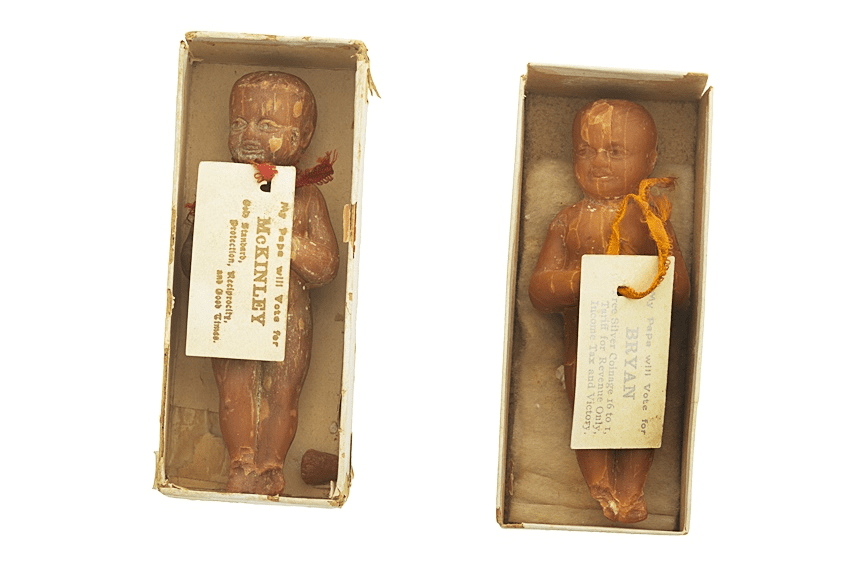
William McKinley is having a moment (which I confess is a sentence I never expected to write).
Republican presidential nominee Donald Trump is elevating McKinley, representative from Ohio from 1877 to 1891 and president from 1897 to 1901, to justify his plan to impose new high tariffs.
Trump’s call for tariffs is not an economic plan; it is a worldview. Trump claims that foreign countries pay tariff duties and thus putting new tariffs of 20% on all imports, and as much as 60% on Chinese imports, will bring enough foreign money into the country to fund things like childcare, end federal budget deficits, and pay for the tax cuts he wants to give to the wealthy and corporations.
This is a deliberate lie. Tariffs are essentially taxes on imported products, and they are paid not by foreign countries but by American consumers. Economists warn that Trump’s tariff plan would cost a typical family an average of more than $2,600 a year, with poorer families hardest hit; spike inflation as high as 20%; result in 50,000 to 70,000 fewer jobs created each month; slow economic growth; and add about $5.8 trillion in deficits over ten years. It would tank an economy that under the Biden administration, which has used tariffs selectively to protect new industries and stop unfair trade practices, has boomed.
Trump simply denies this economic success. He promises to make the economy great with a tariff wall. On September 27, he told rally attendees in Warren, Michigan: “You know, our country In the 1890s was probably…the wealthiest it ever was because it was a system of tariffs and we had a president, you know McKinley, right?… He was really a very good businessman, and he took in billions of dollars at the time, which today it’s always trillions but then it was billions and probably hundreds of millions, but we were a very wealthy country and we’re gonna be doing that now….”
By pointing to McKinley’s presidency to justify his economic plan, Trump gives away the game. The McKinley years were those of the Gilded Age, in which industrialists amassed fortunes that they spent in spectacular displays. Cornelius and Alva Vanderbilt’s home on New York’s Fifth Avenue cost more than $44 million in today’s dollars, with stables finished in black walnut, cherry, and ash, with sterling silver metalwork, and in cities across the country, the wealthy dressed their horses and coachmen in expensive livery, threw costly dinners, built seaside mansions they called “cottages,” and wore diamonds, rubies, and emeralds. When the daughter of a former senator married, she wore a $10,000 dress and a diamond tiara, and well-wishers sent “necklaces of diamonds [and] bracelets of diamonds, sapphires, and rubies.”
Americans believed those fortunes were possible because of the tariff walls the Republicans had begun to build in 1861. Before the Civil War, Congress levied limited U.S. tariffs to fund the federal government, a system southerners liked because it kept prices low, but northerners disliked because established industries in foreign countries could deliver manufactured goods more cheaply than fledgling U.S. industries could produce them, thus hampering industrial development.
So, when the Republican Party organized in the North in the 1850s, it called for a tariff wall that would protect U.S. manufacturing. And as soon as Republicans took control of the government, they put tariffs on everything, including agricultural products, to develop American industry.
The system worked. The United States emerged from the Civil War with a booming economy.
But after the war, that same tariff wall served big business by protecting it from the competition of cheaper foreign products. That protection permitted manufacturers to collude to keep prices high. Businessmen developed first informal organizations called “pools” in which members carved up markets and set prices, and then “trusts” that eliminated competition and fixed consumer prices at artificially high levels. By the 1880s, tariffs had come to represent almost half a product’s value.
Buoyed by protection, trusts controlled most of the nation’s industries, including sugar, meat, salt, gas, copper, transportation, steel, and the jute that made up both the burlap sacks workers used to harvest cotton and the twine that tied ripe wheat sheaves. Workers, farmers, and entrepreneurs hated the trusts that controlled their lives, but Republicans in Congress worked with the trusts to keep tariffs high. So, in 1884, voters elected Democrat Grover Cleveland, who promised to lower tariffs.
Republicans panicked. They insisted that the nation’s economic system depended on tariffs and that anyone trying to lower them was trying to destroy the nation. They flooded the country with pamphlets defending high tariffs. Cleveland won the popular vote in 1888, but Republican Benjamin Harrison won the electoral votes to become president.
After the election, steel magnate Andrew Carnegie explained that the huge fortunes of the new industrialists were good for society. The wealthy were stewards of the nation’s money, he wrote in what became known as The Gospel of Wealth, gathering it together so it could be used for the common good. Indeed, Carnegie wrote, modern American industrialism was the highest form of civilization.
But low wages, dangerous conditions, and seasonal factory closings and lock-outs meant that injury, hunger, and homelessness haunted urban wage workers. Soaring shipping costs meant that farmers spent the price of two bushels of corn to get one bushel to market. Monopolies meant that entrepreneurs couldn’t survive. And high tariffs meant that the little money that did go into their pockets didn’t go far. By 1888 the U.S. Treasury ran an annual surplus of almost $120 million thanks to tariffs, seeming to prove that their point was to enable wealthy men to control the economy.
“Wall Street owns the country,” western organizer Mary Elizabeth Lease told farmers in summer 1890. “It is no longer a government of the people, by the people, and for the people, but a government of Wall Street, by Wall Street, and for Wall Street.” As the midterm elections of 1890 approached, nervous congressional Republicans, led by Ohio’s William McKinley, promised to lower tariff rates.
Instead, the tariff “revision” raised them, especially on household items—the rate for horseshoe nails jumped from 47% to 76%—sending the price of industrial stocks rocketing upward. And yet McKinley insisted that high tariff walls were “indispensable to the safety, purity, and permanence of the Republic.”
In a chaotic congressional session with members shouting amendments, yelling objections, and talking over each other, Republicans passed the McKinley Tariff in May 1890 without any Democratic votes. They cheered and clapped at their victory. “You may rejoice now,” a Democrat yelled across the aisle, “but next November you’ll mourn.”
Democrats were right. In the November 1890 midterm elections, angry voters repudiated the Republican Party. They gave the Democrats a two-to-one majority in the House; McKinley himself lost his seat. Even Republicans thought their party had gone too far, and in 1892, voters gave Democrats control of the House, Senate, and White House for the first time since before the Civil War.
Republican stalwarts promptly insisted that Democrats would destroy the economy by cutting tariff rates, and their warnings crashed the economy ten days before Cleveland took office. Democrats slightly lowered the tariff, replacing the lost income with an income tax on those who made more than $4,000 a year. Republicans promptly insisted the Democrats were instituting socialism.
As the nation recovered from the economic panic of 1893, Republicans doubled down on their economic ideology. In 1896 they nominated McKinley for president. While he stayed home and kept his mouth shut, the party flooded the country with speakers and newspaper articles paid for with the corporate money that flowed into the Republicans’ war chest, all touting the protective tariff. Warned that the Democrats were trying “to create a red welter of lawlessness as fantastic and as vicious as the dream of a European communist,” voters elected McKinley.
And then the Republicans had a stroke of luck. After the election, the discovery of gold on Bonanza Creek near the Klondike River in Canada’s Yukon Territory brought enough gold into the U.S. to ease the money supply, letting up pressure on both farmers and workers, and the fight over the tariff eased.
It reemerged in 1913 when Democratic president Woodrow Wilson challenged the ideology behind Republican tariffs. A Democratic Congress cut tariff rates almost in half, from close to 50% to 25%, and to make up for lost revenue, Democrats put a tax on incomes over $3,000. Republicans complained that the measure was socialistic and discriminated against capitalists, especially the Wall Street community.
As soon as Republicans regained control of the government, they slashed taxes and restored the tariff rates the Democrats had cut. This laid the groundwork for World War II by making it difficult for foreign governments to export to the United States and thus earn dollars to pay their debts from World War I.
It also recreated the domestic economy of the 1890s. Congress gave the president power to raise or lower the tariffs at will, and in the 1920s, Republican presidents Harding and Coolidge changed tariff rates thirty-seven times; thirty-two times they moved rates upward. (They dropped the rates on paintbrush handles and bobwhite quails.) Business profits rose but wages did not, and wealth moved upward dramatically. By 1929, 5% of the population received one third of the nation’s income, and more than 60% of American families earned less than they needed for basic necessities.
When the bottom fell out of the stock market in 1929, ordinary Americans had too little purchasing power to fuel the economy. In June 1930, Republicans fell back on their faith in tariffs once again when they passed the Smoot-Hawley Tariff,* raising rates to protect American business. Other countries promptly retaliated, and the resulting trade war dramatically reduced foreign trade, exacerbating the Great Depression.
When Smoot-Hawley failed, it took with it Americans’ faith that tariffs were the key to a strong economy. After World War II, ideological fights over the structure of the economy would be waged over taxes rather than tariffs.
Trump’s insistence that a tariff wall will make America rich is not based in economics; indeed, it would destroy the current system, which is so strong that modern economists are marveling. Trump is fantasizing about a world without regulations or taxes, where high tariffs permit the wealthy to collude to raise prices on ordinary Americans and to use that money to live like kings while workers, farmers, and entrepreneurs barely scrape by… a world like McKinley’s.
…..
*In 2009, then-representative Michele Bachmann (R-MN) made history by referring to this as the “Hoot-Smalley” tariff and blaming FDR for passing it (FDR didn’t take office until 1933).
—
Notes: (on the page; some links don’t embed properly.) (snip)
The windows were approved following legal counsel from Independence Law Center, a subsidiary of the Pennsylvania Family Institute, which has been designated as an anti-LGBTQ+ hate group. BY SAMANTHA RIEDEL
(I don’t like this. Aside from the important and actual reasons, how’re the kids gonna smoke in the bathroom? Or buy tampons? Or trade clothes? Now, I realize kids likely don’t do two of those things at school anymore, anyway. But people need their privacy in restrooms. This from the people who are so worried about their own privacy in bathrooms? -A)
A Pennsylvania school district is under fire for installing windows looking into middle-school bathrooms, seemingly at the recommendation of a conservative anti-LGBTQ+ advocacy group.
Gender-neutral bathrooms at Emory H. Markle Middle School in Hanover now have large windows on their outer walls, which allow those outside to see the bathrooms’ sink area, but not inside the stalls, as seen in photos shared with local news outlets. The windows have reportedly not been installed in gendered multi-user bathrooms or in changing rooms — and according to South Western School District (SWSD) board president Matthew Gelazela, that means privacy isn’t an issue.
Our students should not consider the space outside of our stalls as private within the multiuser restrooms,” Gelazela said in a statement to PennLive this week, highlighting a district policy that specifically requires “private changing areas” be provided to students. “Areas between our stalls and sinks in multiuser restrooms are not private changing areas under that policy.” Gelazela further claimed that the district is in the process of adding higher stall walls to gender-neutral bathrooms to increase privacy.
According to district board records, SWSD board members approved the bathroom windows — the installation of which has already cost the district $8,700 — after receiving a recommendation earlier this year from the Independence Law Center (ILC), which the district contracted as an outside legal counsel in March.
Around the same time, the board adopted an ILC-recommended policy that restricted teachers from using anything but a student’s pronouns based on “biological sex” and legal name, or a nickname commonly associated with their legal name, at school. They also adopted a plan to allow parents to restrict their children from specific categories of books, another ILC recommendation.
At an August 14 meeting, one board member noted that demolition for the bathroom windows had begun before the board officially approved their installation or knew the costs associated; the board then voted to go forward with the windows by a vote of 6-3.
ILC is a subsidiary of the Pennsylvania Family Institute (PFI), itself tied to the far-right Family Research Council, both of which have been designated as anti-LGBTQ+ hate groups by the Southern Poverty Law Center. ILC’s website claims it acts to “secure the blessings of liberty,” which it apparently seeks to accomplish by filing amicus briefs in numerous anti-LGBTQ+ legal cases like 303 Creative v Elenis and Masterpiece Cakeshop v Colorado.
ILC chief counsel Randall Wenger appeared to distance his organization from the SWSD policy this week, however, telling NBC affiliate WGAL that it was “not our recommendation to create a line of sight into a restroom that lacks adequate privacy” and that ILC believes “privacy in multi-user facilities starts at the door of the room, not the door of stalls,” but that if stalls were made more “like the bathrooms on airplanes,” bathrooms may “open to a public area” where staff can monitor students for drug use or loitering. It was not clear whether SWSD’s policy extended beyond what ILC originally recommended, or if the district had simply not implemented stalls with greater wall-to-ceiling coverage before installing the windows.
Them reached out to ILC for further comment, and received the following statement from Wenger, further denying ILC’s responsibility for the policy: “Independence Law Center always recommends privacy, including increasing privacy within existing facilities. We never suggest putting a window into restrooms with stalls. Facilities with full privacy, like bathrooms on airplanes can open to a public area just as we are all used to on airplanes and coffee shops.” Them also reached out to Gelazela for comment, but did not receive a reply before publication.
According to mission statements and case examples on its website, ILC primarily acts to curtail LGBTQ+ rights and advance Christian ideals and policy goals under the auspices of protecting “liberty,” including what it terms “marriage and the family” and the “protect[ion of] human life” — i.e., opposing abortion, a major goal of the PFI. The organization also has ties to past fundamentalist Christian groups. Prior to his work with the ILC, Wegner was employed by the Foundation for Thought and Ethics, an “intelligent design” advocacy group that published and distributed the creationist textbook Of Pandas and People. The distribution of Pandas in a Pennsylvania public school district led to a 2005 district court decision that determined the school board had violated the Establishment Clause of the First Amendment.
Parents of students at Markle Middle School told local outlets they were shocked to learn that the district had installed windows in bathrooms, pushing back against Gelazela’s claim that students’ privacy rights were not affected. “It just raised a ton of concerns for me: privacy concerns, safety concerns, concerns for the kids who need those facilities. I feel like this is a deterrent to keep them from using them,” parent Jennifer Holahan told WGAL. “I can understand needing to have supervision [….] But I also think windows aren’t a solution. I think if it was a real issue, it wouldn’t just be [in the] gender-inclusive restrooms.”
Eric Stiles, executive director of the LGBTQ+ advocacy group Rainbow Rose Center in York, PA, told PennLive he believes the windows may likely be used to harass and intimidate LGBTQ+ youth in school.
“They’ve done book banning and not using pronouns and outing students to their parents, and now this latest attempt is these bathroom windows that really call into concern the safety of students,” Stiles said. “There will be other students that use the windows, which means they can track each other [….] What does it mean for victims of violence that haven’t been able to come forward? Now you have a big window there. Are they going to have to plan their day on how and when to use the bathroom?”
(Peace History’s links were misdirected for a few days, but the links are back now.)
October 6, 1683 Thirteen Mennonite families from the German town of Krefeld arrived in Philadelphia on the ship Concord. Having endured religious warfare in Europe, the Mennonites were pacifists, similar to the Society of Friends (often known as Quakers) who opposed all forms of violence. The first Germans in North America, they established Germantown which still exists as part of Philadelphia. Modern Mennonite peace activism:
October 6, 1955 Poet Allen Ginsberg read his poem “Howl” for the first time at Six Gallery in San Francisco. The poem was an immediate success that rocked the Beat literary world and set the tone for confessional poetry of the 1960s and later. “Howl and Other Poems” was printed in England, but its second edition was seized by customs officials as it entered the U.S. City Lights, a San Francisco bookstore, published the book itself to avoid customs problems, and storeowner (and poet) Lawrence Ferlinghetti was arrested and tried for obscenity, but defended by the American Civil Liberties Union (ACLU). Working on Howl in San Francisco, circa June, 1956 Following testimony from nine literary experts on the merits of the book, Ferlinghetti was found not guilty. Lawrence Ferlinghetti outside City Lights More about City Lights Read Howl Read more about Allen Ginsberg
October 6, 1976 An airliner, Cubana Airlines Flight 455, exploded in midair, killing 73 mostly young passengers including the entire Cuban youth fencing team. The plot was engineered by Orlando Bosch and Luis Posada Carriles, a Cuban former CIA agent, who was based in Venezuela at the time. The Posada Carriles file from the National Security Archive
October 6, 1978 346 protestors were arrested at the site of the proposed Black Fox Nuclear Power Plant in Inola, Oklahoma. In 1973 Public Service of Oklahoma announced plans to build the Black Fox plant about 15 miles from Tulsa. It was also near Carrie Barefoot Dickerson’s family farm. She became concerned as a nurse and a citizen about the potential health hazards. Carrie Barefoot Dickerson Through her group, Citizens’ Action for Safe Energy (CASE), and the consistent opposition of informed and persistent allies, the project was canceled in 1982. There are no nuclear plants in the state of Oklahoma, and no nuclear plant has been built in the U.S. since then. Carrie Dickerson Foundation
October 6, 1979 Seabrook Nuclear Power Plant protest – late 1970s Over 1400 were arrested at Seabrook, New Hampshire, the construction site of two new nuclear power plants. The occupation was organized by the Clamshell Alliance. Clamshell history
Before internet memes, postcards offered a popular, accessible, shareable means to combine image and word. Messages could be as simple as “wish you were here,” but in their “golden age” (circa 1898–1917), postcards provided a powerful way to promote political agendas, writes scholar Kenneth Florey. The golden age neatly coincided with the height of the women’s suffrage movement in the United States and Britain. More than a thousand varieties of pro- and anti-suffrage-themed postcards were produced then, 200 of which are included in “Votes and Petticoats,” a Johns Hopkins University digital collection available on JSTOR. Of these, a significant number, curiously, depict cats—both as women’s pets and as women.
Associations between ladies, cats, and cat ladies—childless and otherwise—are rooted in a long, complicated cultural history. In Edwardian times, cats were linked to women as creatures of the domestic domain: woman was Angel of the House, the cat her companion, both of them sweet, warm, helpful, and cute. At the same time, animal lovers, “spinsters,” and suffragists represented overlapping, suspect categories of womanhood. It’s the perennial paradox in which women find themselves: somehow looked down upon while also placed on a pedestal.
I Want My Vote! Courtesy Votes and Petticoats: Postcards, The Sheridan Libraries, Johns Hopkins University.
This postcard captures many of the themes that recur across the collection: it suggests that a woman demanding the vote is as silly as a kitten so doing, their protests as ineffective as the kitten’s mewls. The green, white, and purple stripes behind the kitten were the colors of the Women’s Social and Political Union (WSPU), one of the more militant British suffrage societies. Historian Krista Cowman interprets the sexism in this postcard as infantilizing though not especially cruel. Similarly, Florey describes the use of cats in suffrage postcards as softening a message that might otherwise seem harsh.
We Demand the Vote: An Advocate for Women’s Rights. Courtesy Votes and Petticoats: Postcards, The Sheridan Libraries, Johns Hopkins University.
In a similar vein, this cat is draped in the colors of the WSPU and wearing a fashionably magnificent hat. The message is ambiguous: Larissa Schulte Nordholt contends that it’s probably meant to satirize the concept of women participating in politics, the well-groomed, fat feline playing on the perception of suffragists as spoiled. It was published by a company that produced other, more clearly anti-suffrage postcards. But there’s a certain dignity in the cat’s determined forward gaze and assertive paw that perhaps suffragists could have embraced, regardless of the creator’s intention. Then again, that seriousness can also be interpreted as the very thing an anti-suffragist postcard maker was mocking by attaching it to a fluffy house cat.
Less whimsically, other postcards feature cats as pets in human scenes.
Courtesy Votes and Petticoats: Postcards, The Sheridan Libraries, Johns Hopkins University.
Here, the suffragists portrayed are mannish and middle-aged, typical of many negative suffragist depictions, stereotyping them as unsexed spinsters. While the housewife they address isn’t an idealized Angel of the House, she has a traditionally “motherly” figure and wears more feminine clothing. The suffragists, the viewer thus understands, are out of touch with what “real” working women want. If the suffragists had families to occupy them, they wouldn’t worry about the vote. And if lower-class women had the vote, they wouldn’t care to exercise it.
The cat in this postcard is outside the house and thus linked to the suffragists (it sits slightly apart, but arguably that positioning is dictated by compositional rather than symbolic reasons). The suffragists are “outdoor cats,” less benign and more feral—less feminine—than their indoor counterparts. It’s also worth noting that the cat is black, which taints it, and thus the suffragists, with associations of witchcraft and bad luck.
I’m a Purrfect Lady. Courtesy Votes and Petticoats: Postcards, The Sheridan Libraries, Johns Hopkins University.
Here too the suffragist is associated with a black cat, to unflattering, ridiculous effect. Although it was considered appropriately feminine for women to care for animals, women and femininity were also considered weaker, sillier, and more frivolous than men and masculinity; caring too much for other creatures came was considered a sign of fragility and triviality.
Tobias Menely has traced the disparagement of animal welfare through the evolution of gender norms in the modern period. As an early example, he cites a 1786 Scottish magazine story about a “Mrs. Sensitive” who dotes on a menagerie of pets yet cares little for “poor Christians.” In Menely’s analysis, Mrs. Sensitive is “immoral and unnatural, an ancestor of our own crazy cat ladies, women whose maternal instincts, we are led to believe, have been attenuated by an affinity for animals.”
By 1909, around the time these postcards were produced, sensitivity to animals was fully pathologized, as Menely relates: one doctor, Charles Dana, called it “zoöphilpsychosis” and published an article about it in the Medical Record. A case study pronounced a “childless woman who transformed her house into a hospital for sick felines” as “beyond medical redemption.” Sufferers of “zoöphilpsychosis” were described as “sentimental,” “weak,” and “hysterical”—terms loaded with sexist connotations.
These stereotypes are further repeated in conversations surrounding the anti-vivisection movement, another woman-dominated cause that reached its height in the Victorian and Edwardian eras.
The Girls All Vote in This Town. May the Best Man Win. Courtesy Votes and Petticoats: Postcards, The Sheridan Libraries, Johns Hopkins University.
This is one of several suffrage postcards that feature photographs of live and presumably taxidermized kittens dressed up and posed. Although this postcard’s message could be interpreted multiple ways, Nordholt points out that the use of taxidermy speaks to the “synchronous oppressions of women and cats.”
Indeed, Susan Hamilton quotes a contemporary critic of anti-vivisection using misogyny to defend animal cruelty:
Is it necessary to repeat that women—or rather, old maids—form the most numerous contingent of [antivivisectionists]? Let my adversaries contradict me, if they can show among the leaders of the agitation one young girl, rich, beautiful, and beloved, or some young wife who has found in her home the full satisfaction of her affections!
Although suffragettes and antivivisectionists didn’t always align, the two movements had much in common, including the consistent stereotyping of their members as spinsters. And as we have seen in “But Surely My Good Woman…,” spinsters were objects of mistrust and derision.
Courtesy Votes and Petticoats: Postcards, The Sheridan Libraries, Johns Hopkins University.
It wasn’t always that way. For a time in the nineteenth century, single women could claim feminine power through the “Single Blessedness” movement. Where women had long been shamed or pitied for not marrying, they began to frame their singleness as reflective of a higher calling: still nurturing, still Christian, but outside of marriage. Harriet Tubman, for example, spent eighteen of her most productive and prominent years without a husband. As a Black woman, Tubman faced extra scrutiny for being unmarried. She leveraged the concept of Single Blessedness for respectability.
As women began to agitate more for equal rights, however, Single Blessedness fell out of favor. Lee Chambers-Schiller provides an overview, writing that
[a]s the century wore on, spinsters were increasingly defined as unacceptable childcare providers, guardians, or even teachers of children. Their spinsterhood took on an ominous cast, their celibacy no longer evidence of pure, Christian love, but now suggestive of physical, emotional, and intellectual degeneracy.
It wasn’t just that spinsters lacked the feminine graces needed to attract a man—their “degeneracy” was a result of their childlessness:
The woman whose reproductive organs went unused would experience their atrophy and derangement, together with a painful menopause and general physical and mental deterioration. A spinster could look forward to a shortened life span and quite possibly insanity.
Courtesy Votes and Petticoats: Postcards, The Sheridan Libraries, Johns Hopkins University.
The suffragist in this postcard is marked as a spinster; her masculine features, hat, and clothing tell us as much. Wild-eyed and staring off the page, she’s so out of touch with reality and with her maternal instincts that she doesn’t even realize her audience of “Citizens” consists only of confused children.
Opponents of women’s suffrage argued that banning women from voting was actually a way of protecting them and preserving their angelic femininity. Politics, they claimed, was a nasty business that would take women away from their divine calling in the home, to the detriment of the race.
The Queen of the Polls. Courtesy Votes and Petticoats: Postcards, The Sheridan Libraries, Johns Hopkins University.
This woman represents anti-suffragists’ fears of what society would look like if women gained the vote. In contrast to the depictions of suffragists as dowdy old maids, the woman portrayed in this postcard is conventionally attractive and fashionably dressed. But her decadent New Woman status is given away by her cigarette—proper women didn’t smoke!—and her “District Leaderess” sash. The pole behind her is covered in campaign signs for mostly female candidates, including “Miss Spinster” for justice of the children’s court, which viewers are of course meant to interpret as an outrageous irony.
The role-reversal that women’s suffrage would supposedly bring about is communicated in several postcards, once again, through cat imagery.
The Suffragette Not at Home. Courtesy Votes and Petticoats: Postcards, The Sheridan Libraries, Johns Hopkins University.Courtesy Votes and Petticoats: Postcards, The Sheridan Libraries, Johns Hopkins University.
Here, the man of the house is substituting for the absent woman by staying home, caring for the children, and making tea. The cat suffers the consequences of his ineptitude in the unnatural role.
Suffragette Madonna Crop of 1910. Courtesy Votes and Petticoats: Postcards, The Sheridan Libraries, Johns Hopkins University.
Alternately, this man is taking good care of the home and family for his suffragist wife, but he’s thus emasculated. The halo of the golden plate, evoking the Virgin Mary, as well as the cat on the hearth behind him, emphasize his domesticity.
The absurdity of men in the women’s/cats’ sphere is surpassed by the absurdity of women/cats in the men’s sphere.
A Raid on the House. Courtesy Votes and Petticoats: Postcards, The Sheridan Libraries, Johns Hopkins University.
This British postcard seems to reference suffragists’ “raids” on the Houses of Parliament, during which women attempted to occupy the legislative chambers to protest their exclusion from them. The symbolism of this image is a striking echo of how the Daily Express described a suffrage raid in 1907: “[T]he sight reminded one very much of the removal of naughty kittens from a room in which they had been disporting themselves freely.” Cowman cites this description as example of voices in the press that often made light of the women’s suffrage movement, thus “making it appear over-feminine and consequently somewhat frivolous.”
Like “I Want My Vote!”, both this postcard and the Daily Express article infantilize women by portraying them as kittens. Viewers are meant to chuckle at the silly kittens’ attempt to infiltrate the doghouse—the kittens are cute, but they’ll never displace or even disturb the dog, who sleeps through their efforts.
“A Raid on the House” is particularly insulting when contrasted with the reality of the women’s suffrage movement, in which participants faced violent attacks. One march on the House of Commons in 1910 became known as “Black Friday” when suffragists were brutally beaten by police.
I’m A Suffer Yet. Courtesy Votes and Petticoats: Postcards, The Sheridan Libraries, Johns Hopkins University.
Bandaged and bruised, this bedraggled cat seems to represent a suffragist who has been beaten but is still dedicated to the cause. Whether the cat’s determination makes it sympathetic or stupid is a matter of interpretation.
Cats, as it turns out, are difficult to pigeonhole. So are women. According to Alleyn Diesel, the association between cats and women goes back at least as far as Ancient Egypt. Goddesses in ancient and contemporary religions have frequently been portrayed as either part-cat or accompanied by cats. And when it comes to goddesses, being catlike doesn’t mean being sweet and domestic. On the contrary, feline-linked deities are known for “self-reliance, elegance, and… willingness to be tamed strictly on their own terms”: powerful qualities that patriarchal societies mistrust in women.
When JD Vance questioned why a childless person would want to be a teacher or a leader, infamously calling Kamala Harris and her ilk “miserable” and “childless cat ladies,” he was invoking old, sexist stereotypes. The Harris campaign responded by selling “childless cat lady” merch. This tactic of reclaiming an insult and turning it into a badge of honor also has rich historical precedent.
The Suffragette Down with the Tom Cats. Courtesy Votes and Petticoats: Postcards, The Sheridan Libraries, Johns Hopkins University.
The intention behind this final postcard may have been, yet again, to paint the fight for suffrage as absurd, to make suffragists seem like willful, unfeminine animals.
But the sender of the postcard wrote on the back, “See the expression: In town for the fight. Have used my night off for training my guns in the new campaign. Ha! Ha! You will see the signs soon.” We can’t be sure, but the writer seems to have been a suffragist, claws out.
Editor’s Note: Harry Whittier Frees, the likely photographer of the image depicting clothed kittens in line to vote, used live animals in his work, not taxidermy. The text has been amended to account for this fact.
October’s a big month for seasonal/vibe readers, because if there are three things you can count on filling shelves, it’s spooky season reads, Hallmark vibes, and, despite Christmas and Hanukkah being months away, winter holiday romances. This month’s roundup’s got all three, and they are a delight.
Best Hex Ever
Author: Nadia El-Fassi Released: October 1, 2024 by Dell Genre:LGBTQIA, Paranormal, RomanceA kitchen witch with a penchant for baking and a (literally) cursed love life meets someone who’s worth breaking a hex for in this sweet and spicy debut romance.As a skilled kitchen witch, Dina Whitlock knows her way around a pastry recipe. In fact, she runs her very own London café serving magic-infused pastries for her loyal customers. But only a select few friends know about her magical abilities or the hex that has plagued her love life. It’s hard to fall in love when your partner is guaranteed to have a string of bad luck the second they start to have feelings for you.Scott Mason is back from traveling the world and is excited to begin his new job as a curator at the British Museum. After leaving London to heal from a brutal breakup two years ago, Scott only now realizes how much he missed out on. Now that his best friend’s wedding is right around the corner, Scott is determined to be the most amazing best man ever, but he doesn’t expect to be bewitched by the maid of honor, who also happens to be the owner of his new favorite café and, more surprisingly, a witch?!After a weekend in the countryside full of peculiar hedge mazes, palm readings by candlelight, and a midnight Halloween ritual, there’s no denying the chemistry between them. But there’s just one problem: The hex still holds, and Dina knows that Scott is in danger. In the past, she’s always cut her losses, but this time is different. Scott could be the one. Will Dina be able to undo the hex, before it’s too late?Neither this blurb nor this cover gave away to me that this was a queer romance, but in addition to Dina being the first main character of Moroccan descent I’ve read, she is indeed bisexual, which is pretty central to the story. If you love reading cozy, witchy romances in fall, especially with spice (literal and figurative), this one’s got all the delicious autumnal vibes.Add to Goodreads To-Read List → (snip-MORE)
We Could Be So Good RECOMMENDED: We Could Be So Good by Cat Sebastian is $1.99! Thanks to everyone who let us know about this deal; fingers crossed it’s still active! Lara gave this one an A: TL;DR: Read this book if you’d like to be swept along safely in a rising tide of emotion, predominantly love. Nick Russo has worked his way from a rough Brooklyn neighborhood to a reporting job at one of the city’s biggest newspapers. But the late 1950s are a hostile time for gay men, and Nick knows that he can’t let anyone into his life. He just never counted on meeting someone as impossible to say no to as Andy. Andy Fleming’s newspaper-tycoon father wants him to take over the family business. Andy, though, has no intention of running the paper. He’s barely able to run his life—he’s never paid a bill on time, routinely gets lost on the way to work, and would rather gouge out his own eyes than deal with office politics. Andy agrees to work for a year in the newsroom, knowing he’ll make an ass of himself and hate every second of it. Except, Nick Russo keeps rescuing Andy: showing him the ropes, tracking down his keys, freeing his tie when it gets stuck in the ancient filing cabinets. Their unlikely friendship soon sharpens into feelings they can’t deny. But what feels possible in secret—this fragile, tender thing between them—seems doomed in the light of day. Now Nick and Andy have to decide if, for the first time, they’re willing to fight. Add to Goodreads To-Read List →
(I did not find this bit in there, so here it is from my email. It’s a start! There are a few more, all interesting and totally off topic.)
The Times introduces your favorite (?) typeface, Times New Roman.
What font do you write in? People may argue all day on the internet about their favorite typefaces, but it’s a fair wager that the most ubiquitous font of all, whether it’s your personal go-to or not, is Times New Roman.
Whence this towering behemoth, you may wonder? It was invented in the 1930s by type designer Stanley Morison, who, after criticizing the London Times for their dated font, was asked to make them a new one. “Morison enlisted the help of draftsman Victor Lardent and began conceptualizing a new typeface with two goals in mind: efficiency—maximizing the amount of type that would fit on a line and thus on a page—and readability,” writes Meredith Mann, Assistant Curator of Manuscripts at the New York Public Library. Morison’s new font was taller and narrower, but the letterforms were weighted in a new way that made them easier to read, despite the cramped spacing. (The weighting meant that the font also required more ink, which meant more money—a main reason that the font wasn’t immediately picked up by other papers.)
Once the new font was approved, The Times published a pamphlet explaining the switch. “It is evident that there must be changes in typography as long as our social habits are open to variation,” the editors explained. “When it was founded, The Times was largely read in coffee-houses; in the nineteenth century it came to be read in trains; today it is largely read in cars and airliners. Reading habits, dependent on social habits, will not remain constant. Neither must newspaper typography remain constant.”
Indeed not, especially when you’ve got such a splashy new font to brag about. “The new [font] will be employed on and after October 3, 1932,” the notice declares. “The Times, for generations the best printed paper, will, by present-day optical standards, be the most comfortably readable journal in the world.”
The paper held onto the exclusive rights to Times New Roman for a year, and after that, other publications—once they’d decided it was worth shelling out for—began to follow suit. By now, it’s trickled down into just about everybody’s personal computers and for many, simply become the default.
“Times New Roman is a workhorse font that’s been successful for a reason,” writes Matthew Butterick, author of the impressively niche Typography for Lawyers. “Yet it’s an open question whether its longevity is attributable to its quality or merely its ubiquity. Helvetica still inspires enough affection to have been the subject of a 2007 documentary feature. Times New Roman, meanwhile, has not attracted similar acts of homage.”
Why not? “Fame has a dark side,” Butterick writes. “When Times New Roman appears in a book, document, or advertisement, it connotes apathy. It says, ‘I submitted to the font of least resistance.’ Times New Roman is not a font choice so much as the absence of a font choice, like the blackness of deep space is not a color. To look at Times New Roman is to gaze into the void.”
(Or perhaps you are merely a novelist, who knows that if your paragraph looks good in Times New Roman, it will look good in anything. Too often have we been fooled by the slender affections of Garamond!)
By the way, Butterick points out, lawyers should beware: though it’s as much the standard font for them as everyone, the highest court in the land (such as it is) forbids its use. Something to remember for when you get there.
(This is a good thing; read a little farther to see why. The system is working; the prosecutor will make a case where one can be made under law. -A)
Haitian Bridge Alliance seeks charges vs. Republican candidates; judges point toward strong constitutional protections afforded to political speech
A panel of local judges referred the citizen-initiated criminal case against former President Donald Trump and his running mate U.S. Sen. JD Vance to Clark County prosecutor Dan Driscoll for investigation.
The case filed by the Haitian Bridge Alliance requests charges of felony inducing panic, disrupting public services, making false alarms, two counts of complicity, two counts of telecommunications harassment and aggravated menacing.
Those requests reference comments made by Trump and Vance about the Haitian community in Springfield killing and eating residents pets. Shortly after those claims were amplified by Trump, Vance and thousands of others online, the community was hit by a wave of bomb and safety threats.
“The conclusion of whether the evidence and causation necessary for probable cause exists to commence a prosecution of the alleged offenses is best left in the investigatory hands of the prosecution,” the judges wrote in their decision.
The judges said particular consideration should be given to “the strong constitutional protections afforded to speech, and political speech in particular.”
“The presidential election is less than 35 days away. The issue of immigration is contentious,” the ruling states. “Due to the proximity of the election, and the contentiousness concerning the immigration policies of both candidates, the Court cannot automatically presume the good faith nature of the affidavits.”
The court ruling states that this does not mean HBA executive director Guerline Jozef does not believe what she alleges, but brings into question whether her conclusions that Trump and Vance’s “political speech” are criminal are influenced by her personal experiences, “as opposed to an objective analysis of the alleged speech, the constitutional protections afforded to that speech, the alleged conduct occurring within the community, and a claimed nexus between the speech and that conduct.”
Under Ohio law, a private citizen seeking to “cause an arrest or prosecution” can file an affidavit with “a reviewing official” — a judge, prosecuting attorney or magistrate — to have them review the facts and decide if a complaint should be filed.
The Haitian Bridge Alliance asked the court to find probable cause for the charges and issue arrest warrants for Trump and Vance.
According to the document, in a felony case, if the court questions good faith or probable cause, it will refer the case to the prosecutor for further investigation. Unless it issues a warrant for Vance and Trump’s arrests, the court must refer the case to the prosecutor.
The HBA’s updated filing alleges that free speech cannot be used as a defense, as Trump and Vance’s actions disrupted public service.
“Trump and Vance engaged in a purposeful pattern of conduct to impede public services in Springfield. Despite seeing that Springfield was suffering from repeated bomb threats, evacuations, hospital lockdowns, necessity of state-trooper deployment, and closures of government buildings, they continued to double, triple, and quadruple down on their false claims,” the affidavit stated. ” … Trump’s and Vance’s refusals to stop, despite serious chaos they were inflicting and the governor’s and mayor’s pleas, highlights their criminal purpose in spreading these lies. The chaos caused was the purpose, and the First Amendment affords no protection for that campaign of criminal conduct.”
The affidavit alleges that Trump and Vance’s actions “were not just hateful, they were calculated to stir alarm and emotional distress in the community.”
The court ruling also raised the concern of strong constitutional protections of free and political speech.
According to a concurring opinion by Judge Stephen Schumaker, the case does not require a hearing. Schumaker’s opinion went further into the question of proving certain actions.
“The Court acknowledges the difficulties of proving a negative. There is significant difference however, between stating that there are no verifiable reports that a statement is true and proof and/or probable cause that a statement is false,” Schumaker wrote. “This Judge has tremendous respect for the officials making the above and similar statements but if any of the officials voiced the opinion that the statements at issue were false, those statements are in the form of opinion.”
Benny Briolly beams as she strides through the concrete favela alleyway of Brazil’s city of Niteroi in a snow-white ball gown, onlookers proudly wave campaign flags emblazoned with her face. The city councilwoman and nearly 1,000 other transgender politicians are running Sunday in every one of Brazil’s 26 states, where the number of transgender politicians has tripled since the last elections four years ago.
When an asteroid slammed into Earth 66 million years ago, it caused a mass extinction. Now researchers have evidence that this catastrophe ushered in the invention of agriculture by ants.
“Extinction events can be huge disasters for most organisms, but it can actually be positive for others,” says Ted Schultz, curator of ants at the Smithsonian National Museum of Natural History and senior author of the paper. “At the end of the Cretaceous, dinosaurs did not do very well, but fungi experienced a heyday.”
What’s the link between fungi and ants?
A worker ant of a fungus-farming species in Brazil. Credit: Don Parsons
The researchers propose this anti-culture heyday began with a cataclysmic collision that filled the atmosphere with debris and blocked out the sun, halting photosynthesis for years. As plants died en masse, they littered the ground with organic matter.
Fungi proliferated and ants ate the fungi for food. Some ants continued to eat fungi after Earth’s ecosystems rebounded and today more than 250 ant species have adapted and actively create conditions for fungus to thrive.
“Ants have been practicing agriculture and fungus farming for much longer than humans have existed,” says Schultz.
To pinpoint when this symbiotic interaction began, Schultz and colleagues amassed the largest genetic dataset of fungus-farming ants.
They also analysed the genetics of hundreds of fungi species, including those that are farmed by ants and their wild relatives.
Next, the team assembled evolutionary trees for both ants and fungi which revealed that farming ants and their fungus crops have been intertwined for 66 million years.
The data also revealed that “higher” forms of agriculture, where ants and fungi are completely reliant on one another, evolved around 27 million years ago. This coincided with a rapid global cooling event that fractured tropical environments. These changes led to ants cultivating a fungus outside its natural habitat.
“The ants domesticated these fungi in the same way that humans domesticated crops,” says Schultz. “What’s extraordinary is now we can date when the higher ants originally cultivated the higher fungi.”