
Author: Scottie
I am an older gay guy in a long-term wonderful relationship. My spouse and I are in our 36th year together. I love politics and news. I enjoy civil discussions and have no taboo subjects. My pronouns are he / him / his and my email is Scottiestoybox@gmail.com
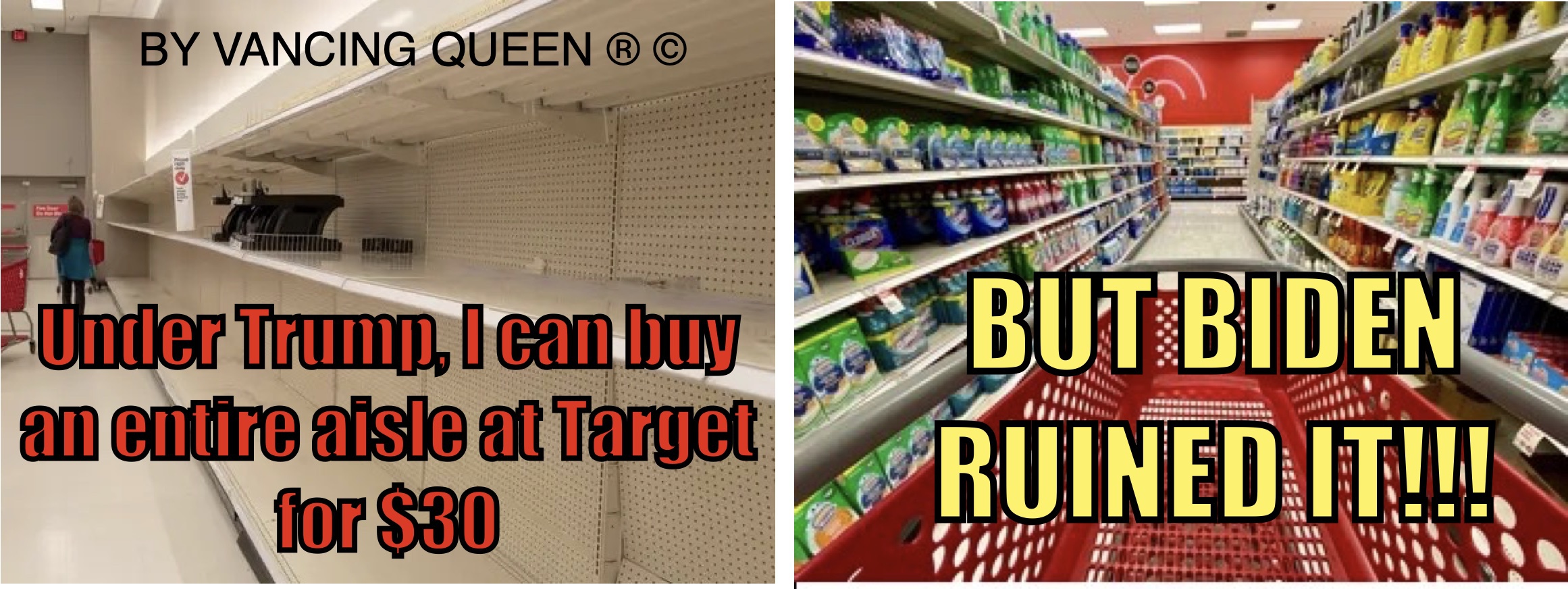
Let’s talk about Trump’s zero percent inflation promise….
Not many this week, but a few good ones. Hugs















THE GUARDIAN: Opinion | Why are chilling testimonies from doctors who have visited Gaza being ignored?
Opinion | Why are chilling testimonies from doctors who have visited Gaza being ignored?
People claim the foreign doctors coming back from Gaza are lying. I wish that were the case, because the truth is beyond horrific
Read in The Guardian: https://apple.news/AqHo_wEfhTiy9YPf3ZTdk6A
Shared from Apple News
Best Wishes and Hugs,Scottie
A TV station stopped playing pro-abortion rights ads after state’s threats, lawsuit says
The lawsuit is asking the federal courts for an injunction.One Fort Myers TV station acquiesced and stopped playing pro-abortion rights ads after a Department of Health (DOH) lawyer threatened Florida TV stations with criminal prosecution.
It’s a revelation in a new First Amendment lawsuit as the political committee supporting the Amendment 4 abortion rights initiative sued a pair of state officials Wednesday in federal court.
Floridians Protecting Freedom (FPF) is currently negotiating with CBS affiliate WINK-TV to get the ads back on air, but representatives for the PC say it has lost valuable time to reach voters in that market with the election just three weeks away.
FPF is suing Surgeon General Joseph Ladapo, who is also the head of DOH, and John Wilson, the Department’s former General Counsel who wrote the letters, in the U.S. District Court’s Tallahassee Division.
“The State’s threatened sanctions against third-party media organizations that host the advertisement — in a heavy-handed effort to silence FPF’s speech — is a classic and deeply disturbing example of unconstitutional coercion,” the lawsuit said. “Defendants’ threat is an escalation of a broader State campaign to attack Amendment 4 using public resources and government authority to advance the State’s preferred characterization of its anti-abortion laws as the ‘truth’ and denigrate opposing viewpoints as ‘lies.’”
The lawsuit is asking the federal courts for an injunction to stop the state from threatening or intimidating more TV stations over the ads, aimed at supporting a ballot measure that would protect abortion rights in Florida’s Constitution and overturn the state’s current six-week abortion ban. FPF is also asking for compensatory and punitive damages as well as attorneys fees.
“CBS affiliate WINK News, a leading local news station in Southwest Florida, has stopped airing a false advertisement created by a dark money group to push Amendment 4,” the Vote No On 4 Florida opposition group said in a Wednesday afternoon statement. “The ad was removed for making a patently inaccurate and harmful claim about Florida law: That it prohibits abortion even when the pregnancy is a threat to the mother’s life.”
The ad at the heart of the controversy is about a Tampa woman who found out she was diagnosed with terminal brain cancer when she was 20 weeks pregnant with her second child. Before Florida’s current abortion law, she was able to get an abortion to get chemotherapy that extended her life for her family.
“Florida has now banned abortion even in cases like mine. Amendment 4 is going to protect women like me. We have to vote ‘yes,’” the woman identified as Caroline says in the ad.
But in his cease and desist letters to Florida TV stations, Wilson argued, “The advertisement is not only false; it is dangerous. Women faced with pregnancy complications posing a serious risk of death or substantial and irreversible physical impairment may and should seek medical treatment in Florida.”
Wilson wrote that TV stations playing the ad were violating sanitary nuisance laws that were punishable as a second-degree misdemeanor.
FPF’s lawsuit countered that examples of health sanitary nuisances are things like garbage and dead animals — not “political advertising that contradicts state officials’ political beliefs.”
Wilson’s Oct. 3 letters caused the Federal Communications Commission (FCC) Chair to issue a reprimand.
“The right of broadcasters to speak freely is rooted in the First Amendment,” FCC Chair Jessica Rosenworcel said in a statement. “Threats against broadcast stations for airing content that conflicts with the government’s views are dangerous and undermine the fundamental principle of free speech.”
Wilson left DOH a short time later, according to the Miami Herald, which reported that the reason for his departure was unclear.
FPF also stood by the Caroline ad and called it an accurate depiction of the state’s abortion law.
“Suffice to say, FPF disagrees with the State of Florida’s narrative about its current law, which bans most abortions after six weeks’ gestation,” the lawsuit said. “FPF sponsored Amendment 4 precisely because current Florida law does not protect women and instead runs roughshod over their rights and imperils their health by substituting the government’s judgments for those of women and their healthcare providers.”
FPF plans to keep running more ads, the lawsuit added.
Voting rights groups say Wisconsin students got texts that could scare them away from voting, call for investigation
https://www.cnn.com/2024/10/15/politics/wisconsin-voter-intimidation-text/index.html
The outer envelope containing official absentee balloting material for the Wisconsin November 2024 General Election ballot is photographed in Madison, September 21, 2024.Jon Elswick/AP
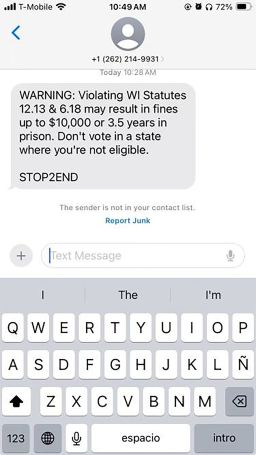
A text message last week to young voters in Wisconsin is stirring new concerns in the battleground state about a messaging campaign that could intimidate college students from casting ballots this election, according to a letter from voter protection groups released Tuesday.
The unsolicited text, sent from at least one 262- number to cell phones of people in their early 20s on University of Wisconsin campuses and elsewhere, says: “WARNING: Violating WI Statutes 12.13 & 6.18 may result in fines up to $10,000 or 3.5 years in prison. Don’t vote in a state where you’re not eligible.”
The two state codes that the text message cites refer to laws that govern former Wisconsin residents who vote absentee and the consequences of committing election fraud in the state.
But it’s the text message’s warning and wording of “don’t vote” that are causing much of the alarm among the voter protection groups who call the message “threatening” and warn the message could “frighten eligible young voters into not voting.”
“It’s trying to convince students living in Wisconsin they don’t have a right to vote there,” Courtney Hostetler, the legal director of the non-profit group Free Speech for People, said on Tuesday.
Hostetler’s group and the League of Women Voters of Wisconsin alerted investigators and the public of the text message and their concerns about it on Tuesday, in a letter to Attorney General Merrick Garland and Wisconsin Attorney General Josh Kaul that the groups released publicly online. The letter urges Garland and Kaul to investigate.
The League said it had learned about the text message from some of its own staff members who are in their 20s and from a community outreach center at the University of Wisconsin-Madison.
Mark Pitsch, the university system’s spokesman, said the Universities of Wisconsin “have no indication how many students may have received such texts, which also may have been received by members of the general public.” Pitsch added that his office hadn’t received specific reports about the text message as of Tuesday.
Hostetler said her group fears voter intimidation campaigns could be effective if they go undetected.
“If it’s successful, people won’t report it. They’ll just believe it,” she said. “It’s scary, and it makes people really think [that] the safest thing may be for me to not vote.”
College students may be susceptible to the text messages, Hostetler added, given that students may not know where they are eligible to vote and if they can vote while living on their college campus away from home.
In Wisconsin, students who have lived in one voting area for 28 consecutive days and plan to continue staying there can vote in those places, according to the state’s election commission. Even if a college student returns to his or her parent’s house on weekends temporarily, they can still vote where they primarily live, such as on a college campus, the Wisconsin Election Commission’s guide for students says.
“Once a student has established residency at a campus address, the student may vote using the student’s campus address until the student establishes a new voting residence,” the WEC guide says. “This is the case even if the student is temporarily away from campus and does not know their campus address for the following school year.”
Meagan Wolfe, the administrator of the Wisconsin Elections Commission, said Wednesday that “a couple of voters” had contacted the commission with concerns about the text.
“Our best guidance to folks is, again, if you’re getting these concerning or questionable contacts from third-party groups, I wouldn’t trust that information, I would go right to the official source – I’d call your election official,” Wolfe said. “And of course, if a voter feels like something that they’ve received constitutes as voter intimidation, they should also report it to their law enforcement as well, so that they can look into it.”
Free Speech for the People and the League’s letter on Tuesday specifically asks for law enforcement authorities to identify who sent the text and investigate it further.
The organizations said they haven’t heard back yet from the authorities they wrote to seeking help, and the Wisconsin attorney general’s office didn’t immediately respond to an inquiry from CNN.
“We want a larger investigative engine than any of our little nonprofits to figure out who is behind this text message,” Debra Cronmiller, president of the League of Women Voters of Wisconsin, told CNN on Tuesday.
She said the text message is the type of intimidation tactic her organization had envisioned could happen this election cycle — though significant situations of widespread voter intimidation in the past have been spread more often via robocall or AI-generated voice recordings.
This story has been updated with additional reaction.
CNN’s Casey Tolan contributed to this report.

ADVOCATE: Texas AG Ken Paxton sues doctor for providing transition care to youth; first such suit in nation
Texas AG Ken Paxton sues doctor for providing transition care to youth; first such suit in nation
May C. Lau, a doctor in Dallas, is being sued for violating Texas’s law against gender-affirming care to trans minors.
Read in Advocate: https://apple.news/ARVRr1ifeRpW3NNEql-9shQ
Shared from Apple News
Best Wishes and Hugs,Scottie
THE GUARDIAN: Opinion | In its assault on northern Gaza, Israel has taken its depraved campaign to new depths
Opinion | In its assault on northern Gaza, Israel has taken its depraved campaign to new depths
Healthcare facilities burn, food and water are blocked and drones shoot their fleeing targets. Yet we cannot say we were not warned, says Guardian columnist Owen Jones
Read in The Guardian: https://apple.news/AMxfpIImySiGpT7fPG7CgyA
Shared from Apple News
Best Wishes and Hugs,Scottie
THE HILL: Baier says he made ‘a mistake’ with Trump clip during Harris interview
Baier says he made ‘a mistake’ with Trump clip during Harris interview
Fox News anchor Bret Baier said Thursday that he made “a mistake” in not including a specific clip of former President Trump during his interview with Vice President Harris on Wednesday.
Read in The Hill: https://apple.news/AjsP3PWOOTc-Rm6Uc1wH49A
Shared from Apple News
Best Wishes and Hugs,Scottie
USA TODAY: 6-year-old boy accidentally shoots younger brother, killing him; great-grandfather charged
6-year-old boy accidentally shoots younger brother, killing him; great-grandfather charged
A boy shot and killed his younger brother in an accidental shooting in North Carolina, police say. The owner of the gun, Rayfield Ruffin, is being charged.
Read in USA TODAY: https://apple.news/AR9HcuRhzRmaPnqOrRSSaJA
Shared from Apple News
Best Wishes and Hugs,Scottie

