China-linked ‘Spamouflage’ network mimics Americans online to sway US political debate

This seems important.

By  DAVID KLEPPER Updated 11:56 AM CDT, September 3, 2024

WASHINGTON (AP) — When he first emerged on social media, the user known as Harlan claimed to be a New Yorker and an Army veteran who supported Donald Trump for president. Harlan said he was 29, and his profile picture showed a smiling, handsome young man.

A few months later, Harlan underwent a transformation. Now, he claimed to be 31 and from Florida.

New research into Chinese disinformation networks targeting American voters shows Harlan’s claims were as fictitious as his profile picture, which analysts think was created using artificial intelligence.

As voters prepare to cast their ballots this fall, China has been making its own plans, cultivating networks of fake social media users designed to mimic Americans. Whoever or wherever he really is, Harlan is a small part of a larger effort by U.S. adversaries to use social media to influence and upend America’s political debate.

The account was traced back to Spamouflage, a Chinese disinformation group, by analysts at Graphika, a New York-based firm that tracks online networks. Known to online researchers for several years, Spamouflage earned its moniker through its habit of spreading large amounts of seemingly unrelated content alongside disinformation.

“One of the world’s largest covert online influence operations — an operation run by Chinese state actors — has become more aggressive in its efforts to infiltrate and to sway U.S. political conversations ahead of the election,” Jack Stubbs, Graphika’s chief intelligence officer, told The Associated Press.

Intelligence and national security officials have said that RussiaChina and Iran have all mounted online influence operations targeting U.S. voters ahead of the November election. Russia remains the top threat, intelligence officials say, even as Iran has become more aggressive in recent months, covertly supporting U.S. protests against the war in Gaza and attempting to hack into the email systems of the two presidential candidates. (snip-More)

https://apnews.com/article/china-disinformation-network-foreign-influence-us-election-a2b396518bafd8e36635a3796c8271d7

Letters from an American-September 3, 2024

So much information today!

September 3, 2024 by Heather Cox Richardson Read on Substack

Last night the Boston Globe published a leaked email from a top volunteer with the Trump campaign, former Massachusetts Republican Party vice chair Tom Mountain, telling volunteers that the Trump campaign “no longer thinks New Hampshire is winnable” and is “pulling back” from that important swing state. He urged volunteers to turn their attention instead to Pennsylvania. After the story dropped, the Trump campaign cut ties with Mountain. 

Stephen Collinson of CNN and Isaac Arnsdorf, Josh Dawsey, and Marianne LeVine of the Washington Post reported today that Trump’s team has given up on trying to get Trump to talk about the economy and other issues voters care about. The former president has decided to spend the rest of the campaign attacking Vice President Harris to destroy her popularity and drive voters away from her, rather than trying to attract them to himself. The Washington Post reporters noted that likely voters view Trump unfavorably and his team has concluded that while he can’t improve his own standing, he can damage hers. 

Collinson dubbed Trump’s plans a “feral political offensive.”

It is not clear that this will work. As Collinson notes, Harris has refused to get dragged into the gutter with Trump, and Sarah Longwell of The Bulwark, who studies focus groups, notes that voters appear to want to put the nastiness of the past several years behind them. Still, the media-tracking company AdImpact reported that between August 23 and August 29, 57% of the total television spending for political ads was on Republican attacks on Harris.

Trump also continues to demand that Republicans support his attempt to suppress voting. Having failed to pass any of the necessary appropriations bills before going on August recess, Congress will be in a rush when it comes back into session next week. It needs to fund the government before the end of the fiscal year on September 30 in order to prevent a partial shutdown. Last Thursday, Trump told right-wing podcast host Monica Crowley that he would “shut down the government in a heartbeat” unless the government funding package includes the Safeguard American Voter Eligibility (SAVE) Act—which would give credence to the idea that noncitizens are voting in national elections despite the fact it is already illegal—and a bill restricting legal immigration.

Zeeshan Aleem of MSNBC today took public notice of Trump’s “deteriorating ability to clearly communicate.” His speeches “seem to be growing more discursive and difficult to comprehend by the day,” Aleem wrote. “Those speeches are making it hard, if not impossible, for people listening to them to understand what he wants to do with his power in office, and they’re reportedly turning off voters.” A reporter for The Guardian pointed out that attendees at Trump’s rallies are leaving as he rambles for nearly two hours, and complaining that he is “babbling.”

For his part, Trump says his wandering speech is deliberate. He calls it “the weave.” I’ll talk about, like, nine different things, and they all come back brilliantly together, and it’s like, and friends of mine that are, like, English professors, they say, ‘It’s the most brilliant thing I’ve ever seen.’”

Aleem notes that this less-focused, less-capable Trump would be exceptionally dangerous in office a second time. And yet, he was dangerous enough the first time. Today Adam Klasfeld and Ryan Goodman of Just Security released a study showing at least twelve times that Trump used the power of the presidency to retaliate against his political enemies. They note that there is no evidence that President Joe Biden or anyone else at the Biden White House ever took similar actions.  

John McCain’s son Jimmy today announced that he has switched his voter registration from Republican to Democrat and will work to elect Vice President Harris and Minnesota governor Tim Walz in 2024. The younger McCain enlisted in the Marine Corps at 17 and is now an intelligence officer in the 158th Infantry Regiment of the Arizona Army National Guard. He said he is speaking out because Trump’s conduct at Arlington National Cemetery was a “violation.” 

Last Friday, just before the long weekend, Trump announced that he would vote against a Florida ballot measure that would essentially enshrine in the Florida state constitution the abortion rights formerly protected by the 1973 Roe v. Wade decision. When Trump had bowed to popular support for abortion rights and expressed uneasiness at the state’s current six-week ban—a cutoff reached before most women know they’re pregnant—antiabortion activists launched fierce attacks on him. So, on Friday, Trump switched his position and announced he would vote against restoring access to abortion in Florida. 

That announcement has given wings to the Democrats’ messaging about Republicans’ determination to end abortion rights. It did not help the Republicans that more videos have been unearthed in which Republican vice presidential nominee J.D. Vance said that “a childless elite” is ruling the country. He went on to excoriate this elite for what he claimed was their pride that they didn’t have children and that they had abortions, and said “they look down on people who invest their time and their future in their children. And that is a dangerous place to live as a country.” Even a right-wing Newsmax interviewer suggested that he was “painting this group with perhaps a broad brush?”

On October 1, in Louisiana, a law will go into effect that reclassified the drug misoprostol as a controlled dangerous substance. Misoprostol can be used for abortion. It is also used for routine reproductive care and during medical emergencies to treat postpartum hemorrhage. It is on the World Health Organization’s list of essential medications, a list containing those medications that are the most effective and safe to meet a health care system’s most important needs. After antiabortion activists targeted the drug, Louisiana governor Jeff Landry signed a law reclassifying it as a controlled dangerous substance. The reclassification means that the drug will no longer be easily available on obstetric hemorrhage carts. 

“Take it off the carts?” one doctor said to Lorena O’Neil of the Louisiana Illuminator. “That’s death. That’s a matter of life or death.”

The Harris campaign said: “Let’s be clear: Donald Trump is the reason Louisiana women who are suffering from miscarriages or bleeding out after birth can no longer receive the critical care they would have received before Trump overturned Roe. Because of Trump, doctors are scrambling to find solutions to save their patients and are left at the whims of politicians who think they know better. Trump is proud of what he’s done. He brags about it. And if he wins, he will threaten to bring the crisis he created for Louisiana women to all 50 states.”

Vice President Harris’s campaign started its “Fighting for Reproductive Freedom” bus tour today in Palm Beach, Florida, where it drove past the Trump Organization’s Mar-a-Lago club. The bus will make at least 50 stops across the country. 

Pollster Tom Bonier today continued his examination of new registrants to vote. This time his focus was North Carolina. The pattern he has found across the country continues: “surges in registration are being driven by women.” In North Carolina, he writes, the number of registrants was almost 50% higher during the week of July 21 than in the same week in 2020, and the gender gap was +12 women, compared to +6 women in 2020. The new registrants were +6 Democratic, and 43% were younger than 30. 

The Harris-Walz campaign today joined the Democratic National Committee in announcing a transfer of nearly $25 million to support Democratic candidates in down-ballot state and federal races. The Democratic Congressional Campaign Committee and the Democratic Senatorial Campaign Committee will get $10 million each in hopes of supporting a Democratic majority in each chamber of Congress in the new administration. 

The Democratic Legislative Campaign Committee, the organization devoted to winning state legislatures, will receive $2.5 million. The Democratic Governors Association and the Democratic Attorneys General Association will get $1 million each. 

Finally, today, a federal judge issued a preliminary injunction to stop the Trump campaign from playing the song he likes to dance to at his rallies: “Hold On, I’m Coming.” The estate of Isaac Hayes Jr., the artist who co-wrote the song, filed a copyright infringement lawsuit against Trump, his campaign, and a number of his allies, noting that they have never obtained a public performance license for the song although they have used it at least 133 times.

Notes:

https://www.independent.co.uk/news/world/americas/us-politics/trump-campaign-new-hampshire-battleground-state-volunteer-email-b2606104.html

https://www.cnn.com/2024/09/03/politics/trump-quest-destroy-harris-momentum/index.html

https://www.washingtonpost.com/politics/2024/09/02/trump-strategy-campaign-harris/

https://www.huffpost.com/entry/donald-trump-government-shutdown_n_66d21e56e4b013957161cd53

https://www.msnbc.com/opinion/msnbc-opinion/trump-age-harris-ramble-rcna168979

https://www.cnn.com/2024/09/03/politics/jimmy-mccain-decries-trump-arlington-appearance/index.html

https://www.mediamatters.org/newsmax/unearthed-video-jd-vance-said-childless-elites-make-us-dangerous-it-was-too-much-newsmax

https://www.nbcnews.com/politics/2024-election/trump-damage-control-abortion-backlash-conservatives-rcna168922

https://www.firstcoastnews.com/article/news/politics/national-politics/kamala-harris-campaign-bus-will-tour-florida-this-week-heres-what-cities-it-will-travel-to/77-1dbe6154-e2c5-4acc-8352-4b876e377136

https://www.washingtonpost.com/elections/2024/09/03/harris-25-million-transfer/

https://www.npr.org/2024/08/29/g-s1-20187/trump-abortion-amendment-4-florida-ivf-funding-reproductive-rights

https://www.cbsnews.com/news/trump-isaac-hayes-hold-on-im-coming-lawsuit/

https://www.who.int/data/gho/indicator-metadata-registry/imr-details/essential-medicines-list-includes-misoprostol-tablets-for-use-during-pregnancy-childbirth-and-postpartum-care

https://www.theguardian.com/us-news/article/2024/sep/03/mccain-trump-arlington-democrat

X:

AudreyWSBTV/status/1830996525499011242

tbonier/status/1831139736477430080

cwebbonline/status/1830967329297178761

lorenaoneil/status/1831123870507552901

Morning_Joe/status/1830952788408295527

​​FBSaunders/status/1831041727676940632

X gets banned in Brazil

For once, Elon Musk has a case worth fighting — but he has to do it in the courts

Casey Newton

Starlink, the satellite broadband company led by Elon Musk, said on Tuesday that it would comply with a court order and block access to X in Brazil. It marked yet another surprising twist in a wild saga that has been simmering all year but boiled over this weekend when a Brazilian judge single-handedly moved to ban X in the country.

Today let’s talk about how a personality clash between two powerful men led to tens of millions of Brazilians being prevented from accessing X — and how the move could be used to justify further restrictions on internet freedom around the world.  

In April, I wrote here about how Musk had decided to risk a ban of X in Brazil over a court’s order that the platform ban a number of accounts belonging to right-wing users. Musk decided to restore the accounts in defiance of a powerful Supreme Court justice named Alexandre de Moraes, who subsequently opened an inquiry into the billionaire.

Musk, who has said he bought Twitter to turn the platform into a bulwark of free speech, positioned the move as a defense of liberty against an extremist government. Moraes, for his part, called Musk an “outlaw” whose X would “allow the massive spread of disinformation, hate speech and attacks on the democratic rule of law, violating the free choice of the electorate, by keeping voters away from real and accurate information.”

After Musk’s April outburst, X quickly reversed course, and said it would comply with the judge’s order. But the accounts that Moraes sought to terminate remained active, and last month X said he threatened to arrest a local employee for the platform’s failure to comply with his order. (The court wouldn’t comment, but threatening platform employees with jail time is an increasingly common and typically quite effective means of allowing government agents to moderate content as they see fit.)

Typically, threatening an employee with jail is all it takes to get a company to reverse course. Musk, on the other hand, said X would close its offices in Brazil.

On Friday, Moraes met that dramatic escalation with one of his own. Here are Jack Nicas and Kate Conger in the New York Times:

In a highly unusual move, Justice Moraes also said that any person in Brazil who tried to still use X via common privacy software called a virtual private network, or VPN, could be fined nearly $9,000 a day.

Justice Moraes also froze the finances of a second Musk business in Brazil, SpaceX’s Starlink satellite-internet service, to try to collect $3 million in fines he has levied against X. Starlink — which has recently exploded in popularity in Brazil, with more than 250,000 customers — said that it planned to fight the order and would make its service free in Brazil if necessary.

Moreover, while he quickly reversed course, Moraes initially ordered Apple and Google to block X at the level of the app store in Brazil, as well as blocking VPN apps that let users circumvent geographic barriers to app usage.

While moves like these are common in authoritarian countries such as Russia or China, they are extraordinary to see in democracies, which typically place a higher value on free expression.

In any case, the fallout from Moraes’ ban was swift. Countless fan and meme pages went silent. Bluesky added 2 million users, and Threads saw some lift as well. (They are currently the No. 1 and 2 apps respectively in the Brazilian App Store, per Similarweb.) 

And depending on how long the ban lasts, it will likely degrade even further the value of X, which a new analysis over the weekend found had lost an estimated $24 billion in value since Musk acquired Twitter in 2022.

What makes the story of Brazil and X such an unusual tech policy story is the way it has been driven almost entirely by two people. 

On one side is Musk, who has often claimed the mantle of free speech warrior in public while capitulating to government requests in private. One analysis last year found that under Musk, X had given into 83 percent of requests from authoritarian governments to remove content. And he appears more willing to accede to the requests of right-wing governments, such as India’s.

In 2021, it seemed possible that India would be the first democracy to ban Twitter, after the company fought court orders to remove political dissent — including from left-wing opponents to the government of Narendra Modi. But relations have warmed between Musk and the Modi government since he stopped fighting those battles.

“The rules in India for what can appear on social media are quite strict, and we can’t go beyond the laws of a country,” Musk told the BBC last year. “If we have a choice of either our people go to prison or we comply with the laws, we will comply with the laws.” At another point in the interview, Musk said: “If people of a given country are against a certain type of speech, they should talk to their elected representatives and pass a law to prevent it.”

Brazil once again gave Musk the choice of sending an employee to prison or complying with its laws. This time, he chose not to comply.

Musk’s defiance likely would have sparked a backlash in most countries where X operates. But he has found a particularly pugnacious opponent in Moraes, a hugely powerful and controversial figure within Brazilian politics who came to prominence during the tenure of former president Jair Bolsonaro. Bolsonaro, a Trump-like figure who threatened to undermine Brazil’s democracy, lost the 2022 election and left office after a violent riot at the capitol by his supporters last year.

Both during and since Bolsonaro’s presidency, Moraes has used the unusual powers of his office to order people arrested over their social media posts, account bans on the platforms where they posted, and even temporarily removing a governor from office. At X, he has sought the removal of at least 140 accounts, the Times reported, and often delivers his orders in sealed documents that do not specify any rationale for his decision.

Moraes is not the first government agent to make overbroad legal requests of a tech platform. GoogleMeta, and other companies receive thousands of requests like these every year, and disclose them in aggregate in annual transparency reports. The reason they publish those reports is to serve as a check on governments that seek to abuse their power by seeking information from platforms for surveillance and other potentially problematic uses.

Crucially, Google and Meta also fight against overbroad requests in court. Sometimes, they win. The result is a kind of dance between platforms and governments that leaves everyone at least somewhat disappointed but is also the reason that so many people around the world can speak freely online.

I don’t post on X any more myself, and I will not lament its passing when it disappears. But whatever role the 140 X accounts in question in Brazil may have played in threatening Brazil’s democracy, they cannot have threatened it more than silencing the 20 million or so Brazilians who have been using it regularly. Particularly when Brazil’s move will be seen by autocracies as justification to enact ever more onerous speech restrictions of their own.

Like Pavel Durov before him, Musk appears to have thought he could escape the reach of regulators indefinitely. This weekend, he began to learn the same lesson Durov has: you can’t outrun the legal system forever. Had Musk fought for his users in court earlier, he might have avoided a ban. Instead, as he has before in so many other things, Musk chose to do it the hard way.

https://www.platformer.news/x-ban-brazil-musk-moraes/?ref=platformer-newsletter

Pop up the popcorn!

Federal judge rejects Donald Trump’s request to intervene in wake of hush money conviction

By  MICHAEL R. SISAK Updated 6:47 PM CDT, September 3, 2024

NEW YORK (AP) — A federal judge on Tuesday swiftly rejected Donald Trump’s request to intervene in his New York hush money criminal case, spurning the former president’s attempt at an end-run around the state court where he was convicted and is set to be sentenced in two weeks.

U.S. District Judge Alvin Hellerstein’s ruling — just hours after Trump’s lawyers asked him to weigh the move — upends the Republican presidential nominee’s plan to move the case to federal court so that he could seek to have his conviction overturned in the wake of the U.S. Supreme Court’s presidential immunity ruling.

Hellerstein, echoing his denial of Trump’s pretrial bid to move the case, said the defense failed to meet the high burden of proof for changing jurisdiction and that Trump’s conviction for falsifying business records involved his personal life, not official actions that the Supreme Court ruled are immune from prosecution. (snip-more on the page, but this is the news.)

https://apnews.com/article/trump-hush-money-sentencing-new-york-immunity-a905207c7db9fc48d022d68ac6cc12e1

Monday at the Movies on Tuesday

Some things of interest I caught up over the weekend-

This guy used to write a Substack that I’d read as I had time, but usually always got to his Links writeup. You can see this week’s here; all the bits are choice, but I’m snipping one into this post. It’s a varied lot, but there’s at least something for everyone. When you need something to read, take a look!

Here are snippets of the piece I mentioned just above.

I’m on my hols right now.

Breakfast from the supermarket and bakery, for three people, costs a shade over 7 euros. Two fancy-pants coffees to-go costs a shade over 8 euros.

That seems like the right kind of gearing? Essentials are easily within reach; luxury items you have to think about.

Essentials are like: basic groceries, broadband/phone, roads, education, healthcare, energy, water, rent up to a certain amount etc. “Normal” coffee, house wine, that kind of thing.

It’s very hard to justify, in my head, why these should be the province of profit-seeking companies. Given we all have to have them, why should some people get to leach on that? Yes the profits are taxed but that’s an inefficient way to collect extra money from citizens.

We all form a government which is a kind of enlarged co-operative really. Why don’t we make a basket of essentials, democratically argued about and iterated over time, then nationalise not-for-profits to run supply chains and shops for them?

Just… take essentials out of the for-profit bit of the economy.

Our priorities have lost their way somewhere along the line.

And good for for-profit companies too, right? People without broadband can’t buy from Shein; can’t receive deliveries from Amazon. People without their health, without education can’t staff them. Remove the friction by making essentials work. (snip)

Come to Europe and get low-key radicalised haha

The EU may (or may not) be making technology policy missteps, but they are gently and patiently promoting a certain way of life which feels globally very, very special, and fundamentally counter to the hypercapitalism found elsewhere. (emph. mine-Ali)

Honestly I’d like to see serious economic papers that compare the two approaches. Why not do it this way? Why not go further and, as I suggested, choose radical nationalised businesses for essentials? Genuinely what is the problem with that? Why isn’t it simply obvious that we should live our lives in comfort, with room to participate and be kind to each other, and knock off early to go to the beach early on sunny days? And that’s not compatible with profit-extracting water suppliers etc, and shops run by people not just on minimum wage but without any kind of employment protection?

Why can’t politicians propose these kind of ideas, even as a generational directional plan rather than an election promise, without getting yelled at? (snip)

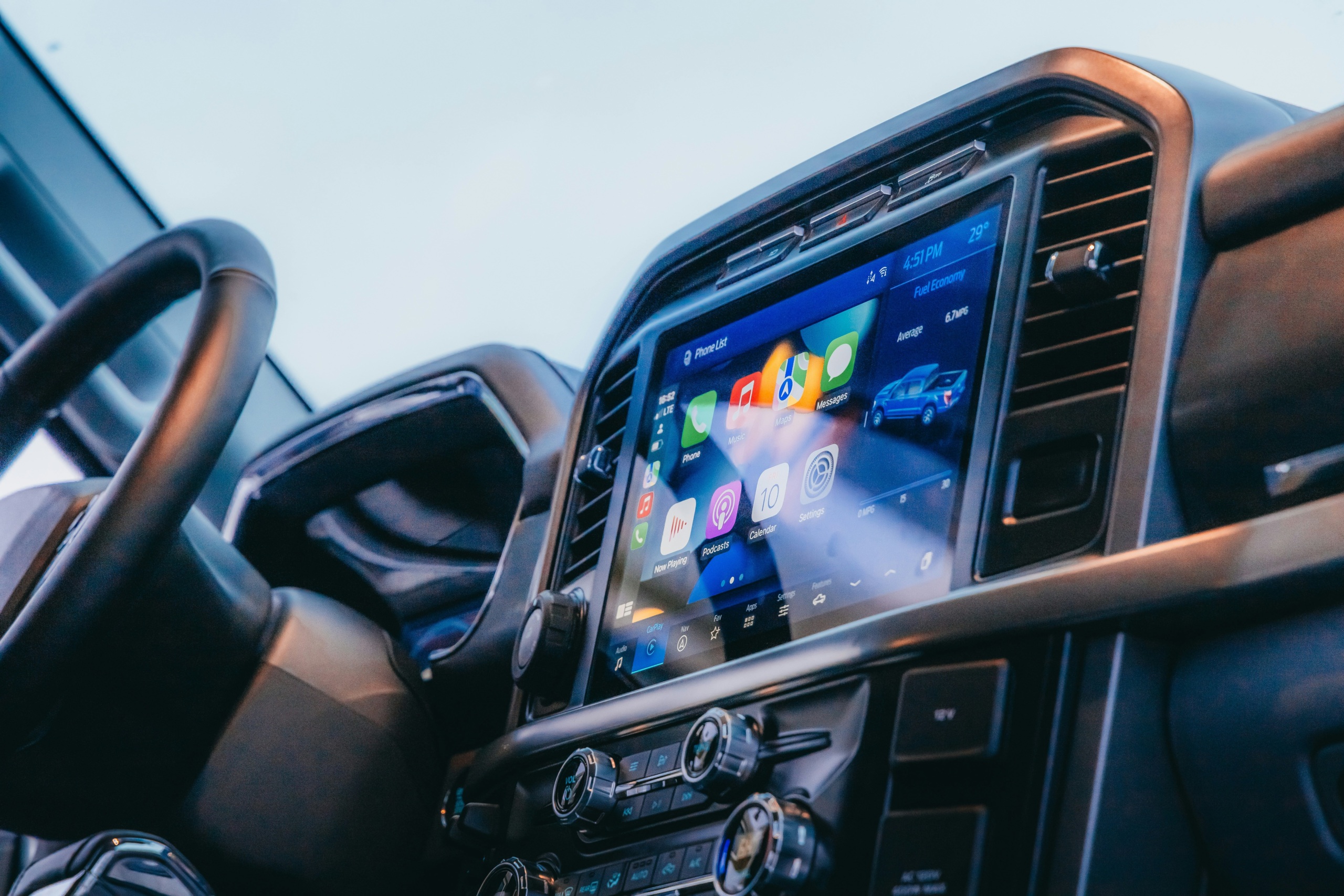
Car companies are sneakily selling your driving data

Car companies are tracking drivers’ data and selling it to third-party data brokers — leaving their customers to suffer the consequences.

R.J. Cross

Director, Don’t Sell My Data Campaign, PIRG

new investigation found that GM, Honda, Kia, Subaru, Hyundai and Mitsubishi are tracking drivers’ data on everything from when they drive to how hard they hit their brakes.

At least they’re guarding that data and only using it to make their cars safer, right?

Wrong.

Right now, some of the biggest car companies are tracking millions of drivers’ data, sneakily selling it to third-party brokers, and leaving their customers to suffer the consequences.

The consequences we’ve seen so far are scary, such as insurance companies jacking up rates with no explanation. But the secretive wheeling and dealing of consumers’ personal data means that there’s a world of data breaches, identity theft and targeted scams right around the corner.

What information does your car computer track?

Cars and their connected apps know a lot about their drivers. They know how far you go, the start and end time of your trips, how hard you brake, how quickly you accelerate — and they may be tracking that information without drivers’ knowledge. 

One data broker has detailed driving data on more than 10 million drivers

Overnight and without explanation, one of these drivers found that his insurance had spiked by 21%. Why? Because GM had sold his driving data to a third-party broker, which compiled 130 pages of his driving behavior and sold it to his insurance company.

What does it mean when a company sells your data?

After automakers collect the data, third-party brokers sell that data to other companies — in this case, insurance companies — that use it against consumers without them knowing it.

The consequences could span far beyond insurance rates, though. With every secret handoff from data broker to buyer, we’re more at risk for data breaches, identity theft or targeted scams.

Your data includes personal information about you, your habits, behavior and preferences. If that information — your identity — gets into the wrong hands, it can be used against you.

How do I opt out of car data collection?

Unfortunately, much of the data-collecting technology that your vehicle uses can’t be opted out of. Most new cars today will have some type of location-tracking technology included.

Consumers shouldn’t have to worry that their car’s computers or connected apps are sharing their data with other entities. It’s time for car companies to reverse course by committing to not sharing or selling consumer data for anything other than what consumers are expecting — a functional car and safe driving experience.

Sign our petition to tell automakers to stop sharing your data.

 
Topics

Remembering Metrosexuality, the Trend That Taught Straight Men It’s OK to Be a Little Gay

From David Beckham’s poreless skin to the tastes of Queer Eye’s original Fab Five, metrosexuality marked an essential step toward a more open masculinity.

(This came from a magazine Janet linked a few days ago. I’m sitting and reading around in it today, and this struck me, especially in light of certain dark comments made over the past few years by the Republican VP nom. So I’m posting for juju. Or mojo. Mostly humorous spite, on my part. NVM me and enjoy the story.)

By Chris Erik Thomas

2004 Was So Gay is Them’s look back at a pivotal year for queer history and pop culture. Read more from the series here.

“Precise, smooth, and powerful:” the sexual energy rippling through Gillette’s 2004 ad campaign nearly leaps from the page — not because razors were suddenly sexy, but because its star, David Beckham, was known at the time as “the biggest metrosexual in Britain.” With a freshly shaved head, glistening muscles, and a green-tipped razor in hand, the image cemented what the world already knew, by way of a £40 million global ad campaign. This British soccer star — this man who wore pink nail polish and, occasionally, his wife’s panties — was seen as the peak of masculinity that year, and nobody else came close. As Gillette’s tagline went, Beckham was “the best a man can get.”

Beckham may have been the gold standard for The Metrosexual, a “type” of man that entered the popular consciousness in the mid-2000s, but really the inspiration for the movement looked more like Stefon from Saturday Night Live. The character, played by Bill Hader, stopped by Weekend Update with highlights in his side-swept hair and Ed Hardy’s rhinestone regalia covering his body to let viewers in on the hottest new spots in nightlife. Stefon’s outfits were modeled after 2000s nightlife looks, a fitting visual metaphor for the chaotic, homoerotic overtones of the early 2000s.

Much like the fictitious clubs Stefon gushed over, metrosexuality had everything. There were the menswear bibles you had to subscribe to (DetailsEsquire, and GQ); must-have fashion labels (from Paul Smith and Hugo Boss to Dolce & Gabbana); and, of course, grooming brands like Axe body spray, which launched in the U.S. in 2002. On TV, the metrosexual movement was dominated by the likes of Queer Eye’s “Fab Five,” who burst into straight men’s homes like a glitterati SWAT team, and by Stacy London and Clinton Kelly on What Not to Wear, the more composed (but equally bitchy) spiritual sister in the makeover reality show genre.

Men had been Yassified, remade in His image; “His” being, if it weren’t clear by now, a fashion-conscious, grooming-obsessed gay man. Yes, the homoerotic undertones of metrosexuality weren’t exactly subtle, but it was the 2000s, damnit, and men were allowed to be a little fruity and high maintenance as a treat. For those caught in the metrosexualmania, the fad might’ve felt like a flash of lightning: suddenly there, lighting up every follicle and pore. Google search results for the phrase exploded from 25,000 in mid-2002 to nearly a million by the end of 2005. But the term had roots far beyond its early 2000s heyday, first entering the cultural lexicon via the self-proclaimed “daddy” of metrosexuality, Mark Simpson, and his seminal 1994 essay, “Here Come the Mirror Men: Why the Future is Metrosexual.”

Written as a taxonomy on fascinating, capitalist animals who’d just discovered oil-free moisturizer and form-fitting pants, Simpson’s essay announced the arrival of the “[m]etrosexual man, the single young man with a high disposable income, living or working in the city (because that’s where all the best shops are), is perhaps the most promising consumer market of the decade […] he’s everywhere, and he’s going shopping.” Or put more succinctly: “Metrosexual man is a commodity fetishist: a collector of fantasies about the male sold to him by advertising.”

The notion that you should spend more time and money on clothes, grooming, and fitness wasn’t exactly reinventing the wheel. What made metrosexuality unique wasn’t its deep roots in capitalism, but rather its flirtation with queering masculinity in a way that felt fundamentally new. This was a tectonic vibe shift that democratized desire, cracking open the door for straight men to edge into femininity. Metrosexuality’s origin was also fundamentally shaped by the HIV pandemic, which spawned its own obsession with self-image. LGBTQ+ people — and particularly gay men — idolized gym-hardened bodies and obsessed over looking affluent and “healthy.”

The rise of the “metrosexual” may have been a straight thing, but the through lines of these two movements ran concurrently, separated more by who you wanted to sleep with and less by what designer brand you went shopping for. We may feel trapped today in a timeline that’s more metro than ever, but the newness and, frankly, the edginess of metrosexuality 20 years ago was historic — especially as it grew from that tiny 1994-era seedling into a blossoming flower.

Like Simpson’s read of heterosexuality in 90s menswear magazines being “so self-conscious, so studied, that it’s actually rather camp,” it was the self-serious, studied, and camp character of Patrick Bateman in 2000’s American Psycho that finally put the nail in the coffin of the 1990s’ dominant, grungy aesthetic. The film about full-time Wall Street hotshot and part-time murderer, played perfectly by a svelte and smug Christian Bale, rewrote the codes of the New Man for a new decade within its first 10 minutes. In an opening monologue that feels created in a lab for future metrosexuals to studiously replicate, Bateman walks through a morning routine that includes ice-pack facials, a thousand stomach crunches, deep pore cleanser lotion, water-activated gel cleanser, honey almond body scrub, exfoliating gel scrub, herb-mint facial masque (leave on for 10 minutes), moisturizer, anti-aging eye balm, and aftershave lotion with no alcohol (“because alcohol dries your face out and makes you look older.”) By the time the film shows him studying himself in a mirror, flexing his muscles as he mindlessly fucks a woman, the codes of this new kind of man were crystallized.

By 2004, “metrosexual” had been crowned “Word of the Year” by the American Dialect Society. Naturally, culture was flooded with glistening bodies, clouds of cologne, hardened hair gel, and at least five pairs of queer eyes regularly dissecting and rebuilding straight guys. These habits and inclinations toward presenting health and wealth have hardened with the passing of time, like a particularly sculpted torso. To put this in more Shakespearean terms: Metrosexuality by any other name (say, a looksmaxxing alpha male, or muscle gay) smells just as strongly of whatever scent we’re being marketed that day. Just like in 2004, turn on the TV or open a fashion publication’s homepage, and you’ll be knocked on your ass by capitalism’s consumptive frenzy; the major difference now is the somehow more relentless push to sculpt, shop and spend, driven into hyperdrive by our social media feeds. No matter if you’re gay, straight, femme, or them, we’re bombarded by messaging that tells us to work out, dress better, and start an 84-step skincare routine. My algorithm seems to hit me with a barrage of perfectly toned, sexually ambiguous guys every time I doomscroll.

It doesn’t take an armchair anthropologist to tell you that every trend, no matter how culturally ingrained it seems, will fade out over time. See “demure,” “Brat,” and whatever microtrend TikTok’s algorithms push today. As culture shifted and economics crashed, so did the desire to spend exorbitantly on grooming. The word “metrosexual” now feels as dated as Carson Kressley and the other original Fab Five members I simply cannot remember, but its cultural impact has lived on; every subsequent movement owes a debt to the metrosexual — from hipsters and their gallons of beard oil all the way to streetwear bros with sneaker collections rivaling even Carrie Bradshaw.

Metrosexuality’s chokehold on the 2000s taught men to be more comfortable in their femininity, but in the 20 years that have passed, our cultural understanding of manhood has splintered. There is the darker side, filtering metrosexuality’s obsessive grooming into a toxic, warped worldview dominated by obsessively coiffed, overly buff, and deeply insecure influencers. This is the side where young men are breaking their legs to be taller and smashing their jaws to be more “alpha.”

But luckily, it’s not all broken bones and toxic trauma. There’s a more healthy, nuanced exploration of modern masculinity that leans into the queerer side of our metrosexual forefathers. One that has allowed rockstars like Harry Styles to grace magazine covers in womenswear, release a gender-neutral beauty brand (Pleasing), and say, “I think there’s so much masculinity in being vulnerable and allowing yourself to be feminine” in a 2018 interview with fellow softboy Timothée Chalamet. You can see it during a night out as you spot straight men with painted nails and crop tops dancing with their girlfriends. You can see it in the celebrity role models of Steve Lacy, Paul Mescal, and Josh O’Connor — the latter helping launch both the “rat boy” and “fruity boy” micro-trends. This particular flavor of New Man is united in an embrace of and comfort with the duality of their feminine and masculine sides — and, notably, not separated by sexuality. Omar Apollo, Steve Lacy, Frank Ocean, and Tyler, the Creator meld effortlessly with the likes of Jaden Smith and the airbrushed perfection of K-pop supergroup BTS.

It has been thirty years since the “metrosexual” emerged and twenty years since its cultural reign. As we continue to navigate this modern era, redefining what it means to be a man, we’d do well to remember just how many boundaries metrosexuality broke down. Sure, it may be responsible for the poisonous clouds of Axe body spray we endured and ushered in a new era of hyper-commodification, but it also brought newfound sexual confidence and liberation to masculinity that taught us that it’s okay to be a little gay. Had it not been for our metrosexual forefathers (and the queers that guided them), who knows what rigid sartorial hellscape we’d all be living in today.

https://www.them.us/story/metrosexuality-retrospective-history-2000s-david-beckham-fab-five

Got a Republican State Legislature? Watch out carefully for this…

This is an opinion piece that contains news, and cites. Also, all Republicans are not Magas, but they’re still Republicans. This is important.

Snippet (it’s not a long piece, and it’s full of info.)

Let’s be clear about what Kansas Republican legislative leaders are doing with their planned overhaul of budgeting: They are launching a personal and political power grab against Gov. Laura Kelly.

They have never accepted or respected her mandate. Despite Kelly winning a second term and having two years left to go, they have continually attempted to usurp the executive branch’s authority. They have tried a constitutional amendment and prohibiting her ability to negotiate Medicaid contracts. Now they’re going after her yearly state budget proposal.

Usually, the Legislature begins its yearly budget process with a proposal from the governor. Her office submits it when lawmakers arrive for the annual session, in January. Now an interim committee wants to start the process earlier, as soon as October of the previous year.

In this new process, the governor’s budget would be a suggestion, not a starting point.

And never mind that it’s a direct attack on Kelly. House Speaker Dan Hawkins, R-Wichita, assured the audience that these changes had nothing to do with the governor.

“This process has nothing to do with the governor,” he said at the meeting earlier this month, according to Kansas Reflector reporter Tim Carpenter. “If you’re going to focus on the governor, probably not the wisest thing to do, because this process has happened over time with many, many different governors.”

He was contradicted by Senate President Ty Masterson, R-Andover, who let the proverbial cat out of the figurative bag.

“You’ll have a Republican governor, for example, or somebody you trust, and you trust the administration to build the budgets, and then you kind of rubber stamp stuff,” Masterson said. “And, then, you switch, and you have (the) opposition party and then there’s all that same power.”

Oh. So it’s like that, then.

(snip-More; also a vid of the sausage becoming sausage)