These white men won’t quit until the US is a Christian theocracy policed by Christian Taliban moral police thugs. Some important quotes that show their mindset. Regardless of the legislative strategy, the panelists agreed changing the culture of America to take on a Christian biblical worldview, which will require all pastors to take the same position on abortion as their own. Also week-long series of events hosted by Operation Save America, an anti-abortion, anti-LGBTQ and anti-Muslim religious group that wants all Americans to follow “God’s law” and their interpretation of the Christian gospel. The panel was part of a week-long series of events hosted by Operation Save America, an anti-abortion, anti-LGBTQ and anti-Muslim religious group that wants all Americans to follow “God’s law” and their interpretation of the Christian gospel. The moderator of the panel, Derin Stidd, opened by asking, “Why do you all hate women?” to which the men laughed. Hugs
Florida's new African American history standards include a requirement that middle schoolers learn "how slaves developed skills which, in some instances, could be applied for their personal benefit." @goni_lessanhttps://t.co/DCjauBVLbV
Enslavers defended slavery by claiming it was a “positive good” for Black people. Today Florida’s Board of Education approved new Black history standards that note enslaved Black people developed skills that “could be applied for their personal benefit.”https://t.co/xNEIZoK4o3
^ That captures it in a nutshell. The education of slaves was to benefit the people holding them in bondage as property.
Some of his fans are disappointed they don’t get to see him in action.
So DeSantis and his followers trash talk and urge boycotts against a company in which the trust fund HE oversees invests; and when his followers boycott the company and crash the sales, he threatens to sue the company. What a maroon.https://t.co/UcBeyANmTL
If I’m understanding this correctly, DeSantis praised the Bud Light boycott, claimed he’d never drink the beer again, and now wants to sue because … the boycott he endorsed and engaged in had consequences? https://t.co/cKJyHkvZVB
It seems entirely premature, but the looming Oct. 1 deadline for state parties to submit delegate changes to the RNC has the Trump team moving to lock down their support now—and know where they might stand if there’s a 2nd ballot on the floor. https://t.co/E4LE7i5we6
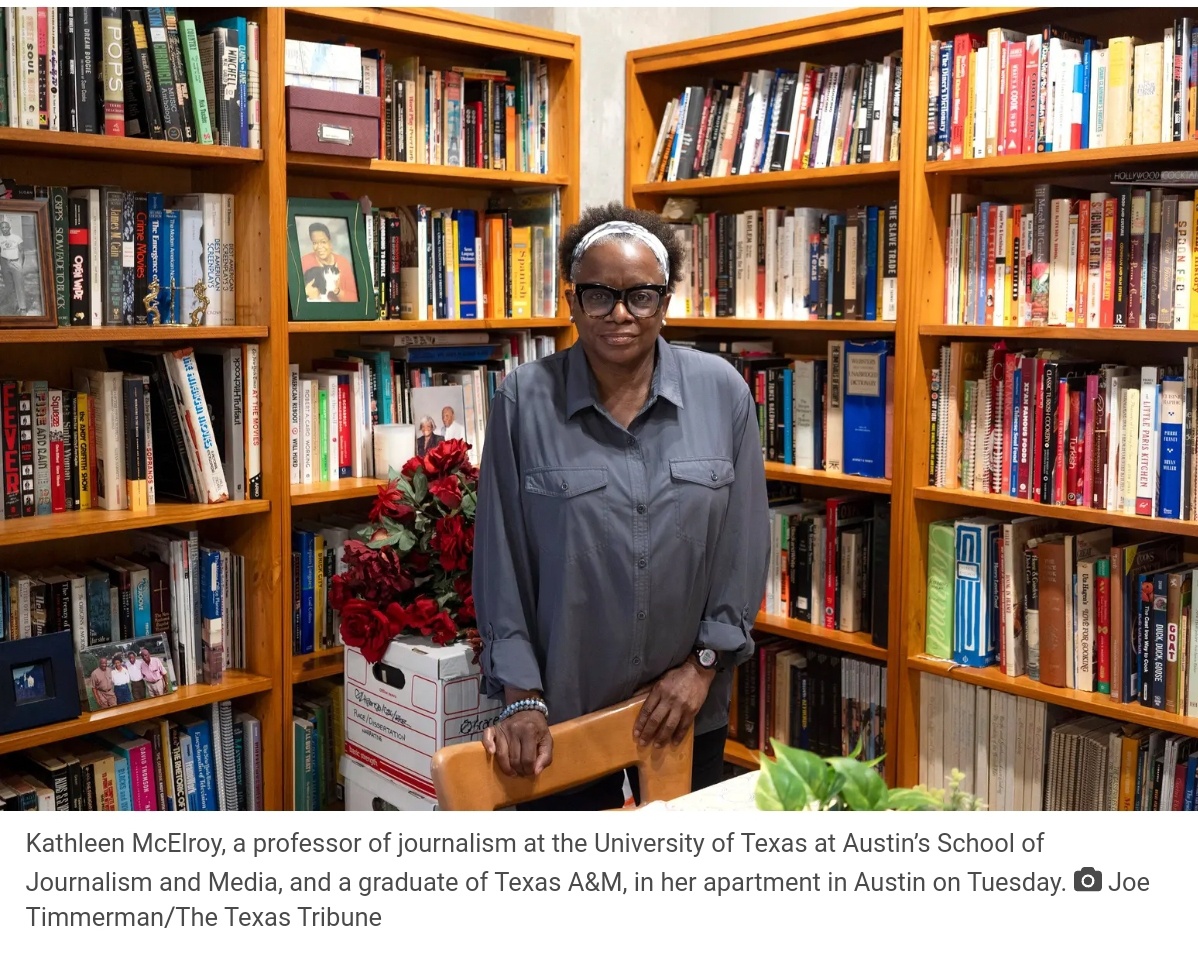
Texas A&M University said on Friday that its president would retire “immediately” after fallout surrounding political pushback of a new director of its journalism program because of her work promoting diversity, equity and inclusion.
Germany’s 1933 civil service law applied to university professors as well as elementary and secondary-school teachers. … Scholars who were Jewish or supported left-leaning parties struggled to find research and teaching positions in public, government-supported German universities and often worked in private ones instead. With the passage of the new law, the Nazis attempted to root out any dissent to their policies and ideology that remained in German higher education.
They call it other things, like “Protecting Children” or “Academic Freedom”. None of which is their actual goal, but it’s just bigotry and racism repackaged to make it more palatable.
Honestly, who would be against diversity? Racists… that’s who.
🚨BREAKING: Alabama Gov. Kay Ivey (R) signs new congressional map that does NOT contain the second majority-Black district that the U.S. Supreme Court required.
Ten Bears post is really good and seriously important. This is something that everyone needs to understand. The big money and fossil fuel industry desperately wants to rake every last dollar they can, no matter the cost to the world, before their deep investments in a vanishing substance is worthless. It is another example of the way the wealthy have been forcing the US government using greedy politicians to fuck over the public, the people, the environment, other public needs, basically the entire country to gain more wealth. Please go to Ten Bears post and read it.
Not to distract from that but again WordPress decided to fuck up something that worked really well. When reblogging someone’s content you got a comment box to add your thoughts. That would post your comment to the person’s blog and sent the comment plus a snippet of the other post with their title to your blog, so your readers would know what it was about and click on it to read the person’s post on their site. It worked so well! It was so simple. It did so many functions automatically.
So of course WordPress screwed with it, changed it, and made it harder. They made it the same as their “press this” button. Now you get a new window with a snippet in the body box, you need to add a title, add your comment, and more stuff. Then add your comment to the original post! Just how in the many layers of hell that WordPress inhabits makes this an improvement? It is just making the reblog button the same as the press this button, which people were not using. Hugs
When you think about LGBTQ representation, you probably don’t immediately picture the southern states of America. In this episode, @TraeCrowderLiberalRedneck examines the contradictions and challenges of being gay in the South. Original Air Date: 6/1/2020
The American South is a complicated place, and we know a lot less about it than we think we do. And many things about the South that seem to make no sense are less confounding in context. The reality is the history of many Southern things has been manipulated, hidden, or just plain ignored. Trae Crowder guides us through the pride points, failures, and contradictions in “Southin’ Off.”
Conservative consumers are more likely than their liberal counterparts to complain across various service contexts, according to new research published in the Journal of Consumer Psychology. The findings provide evidence for the role of entitlement in explaining ideological differences in complaining behavior.
Previous research suggested that conservatives complain less than liberals due to their higher level of system justification motivation (SJM), which involves defending institutions and perceiving policies as fair. However, this account may not apply to service contexts where self-interested motivations are prioritized over system justification. Therefore, the researchers aimed to investigate whether conservatives would complain more than liberals due to their higher sense of entitlement.
“I have always been interested in political ideology as an area of research,” said study author Steven Shepherd, an associate professor and William S. Spears Chair in Marketing and International Business at Oklahoma State University.
“Some recent research in marketing finds that liberal consumers are more inclined to complain that conservatives, and although their theorizing makes sense, a lot of political ideology theory and research suggests that conservatives might in fact complain more than liberals. So we wanted to explore that side of things and provide a more complete account of how political ideology relates to consumer complaining.”
The researchers conducted a series of three studies to explore the relationship between political ideology and complaining behavior.
In Study 1, the researchers recruited 301 American participants from Amazon Mechanical Turk (MTurk). The participants rated their likelihood of complaining across six scenarios (e.g., “Imagine you are getting a takeout order from a restaurant and it is taking much longer than usual for it to be ready. How likely are you to give a smaller tip because of this?”). They also completed measures of political ideology, consumer entitlement, and SJM.
Political ideology was measured using a single item, where participants indicated their position on a spectrum ranging from “very liberal” to “very conservative.” This allowed the researchers to categorize participants as either liberal or conservative based on their responses.
To measure consumer entitlement, participants responded to an 11-item scale developed by Butori (2010). The scale assessed participants’ beliefs about their deservingness of special treatment or benefits as consumers. Participants indicated their level of agreement or disagreement with statements such as “I deserve better treatment than the average customer.”
Finally, participants completed an eight-item scale to measure their level of system justification motivation. The SJM scale captured participants’ tendencies to defend and view overarching institutions, organizations, and norms as fair and just. Participants rated their agreement or disagreement with statements such as “Most of the time, the system works well and is fair.”
The results showed that political ideology, consumer entitlement, SJM, and complaining intentions were positively correlated. The researchers found that conservatives had higher consumer entitlement, which predicted increased complaining intentions. This relationship held even when controlling for demographic variables.
To further explore the findings, Study 2 focused on the influence of social comparison and the perception of deservingness. The researchers recruited 791 American participants from MTurk. They presented participants with a scenario in which they overheard another customer receiving a special discount due to their status as a student or a police officer.
The researchers predicted that conservatives would feel less entitled and show lower complaining intentions when a police officer received a discount, as conservatives tend to view the police as a fair authority. The results supported this hypothesis, revealing that conservatives showed higher entitlement in the student condition and lower entitlement in the police officer condition. Moreover, conservatives exhibited higher complaining intentions in the student condition but not in the police officer condition.
In Study 3, the researchers extended their investigation to service recoveries. They recruited 594 American participants from MTurk and presented them with a scenario where they experienced a delay in a restaurant delivery. Participants were assigned to either a control condition, where they received an apology and a standard discount, or a special treatment condition, where they were told their situation was unique and received a special discount. In line with the previous studies, conservatives showed higher complaining intentions in the control condition but not in the special treatment condition.
“We consistently found that conservative consumers expressed an increased willingness to complain about various service experiences. This was due to conservatives on average being higher in consumer entitlement; that is, feeling that they are not just ‘any other customer’ and are more deserving of special treatment and consideration than other customers.”
These results contribute to a better understanding of ideological differences in complaining behavior and highlight the role of consumer entitlement as a novel mechanism and predictor in consumer political ideology research. However, the researchers note that future research utilizing behavioral data from different sources and exploring potential moderating factors can provide further insights into the relationship between ideology and complaining behavior.
“The predicted effect was quite robust across a range of different everyday service situations. Throughout the research we didn’t find evidence to the contrary; that is, that liberals complain more than conservatives. In the paper we propose a number of contextual factors, either individually or in combination, that might play a role, and future research might be able to more precisely pin down exactly when and why conservatives vs. liberals complain more vs. less.”
If the @HouseGOP took away earmarks from the NAACP or the Urban League because they serve the Black community, they'd rightfully be called racist bigots.
Stripping funding from LGBTQI+ groups, however, is just another day in Congress for these extremists.
On the chopping block is funding for housing for queer seniors and homeless youth. Not even $2M in total but that's still too much for the avowed Christians. https://t.co/TZqHqKyFhY
WTF. These people are not coming to hurt anyone, they are not coming to destroy the US, but to share the dream of a wonderful country. Abbott is proving to be the destroyer and despicable person, as is anyone who would follow these orders. Hey think how we look at the guards at concentration camps, Texas will be thought of in the same way. Scottie
This week Rep. Angie King and I introduced a bill that would ban adult performances that are obscene from public parks, parades and other places children are present. When this bill becomes law it will be unlawful, and potentially a felony. Protect OHIO.🇺🇸 https://t.co/NPHbV6UAVg
— JoshWilliamsForOhio (@Williams4ohio) July 18, 2023
— Northwest Ohio Trans Advocacy (@OHTransAdvocacy) June 25, 2023
Drag performances in Ohio could be banned from public parks, parades and other places children might be if a bill introduced by House Republicans becomes law. House Bill 245 expands the definition of adult cabaret performers from strippers and topless dancers to include “entertainers who exhibit a gender identity that is different from the performer’s or entertainer’s gender assigned at birth.”
Diversity or diversity and inclusion programs are just words for let others than white males have a seat at the table. Seriously, this is what the republicans and MG are fighting. Why would they want to block others than whites / at one time only white males, from having a chance to be included? Racism and misogyny.
NEW: Mississippi Attorney General Lynn Fitch is demanding access to information about Mississippi residents who obtain abortions or gender-affirming care in other states.
She and 18 other GOP AGs say investigators need it to enforce their states' laws.https://t.co/r31ix6rnjr
The decision comes less than a week after the Republican-controlled Legislature passed new abortion restrictions during a special session.https://t.co/gcSyMJuyyL
Dear Media: There's no such thing as a fetal heartbeat at six weeks. Fetuses don't have hearts at 6 weeks.
Stop calling it a "fetal heartbeat bill." Stop spreading their narrative. Stop calling pols who who fight against the *actual* teachings of Jesus "Christian."
Prison rights advocates and lawmakers urge Gov. Abbott to call a special session to install air conditioning in Texas prisons amid a deadly heatwave. https://t.co/6XEZDBNJ0D
Texans are being cooked alive in our prisons! They were NOT sentenced to death & should not be subject to #Cruel&UnusualPunishment. Staff and incarcerated individuals are dying and suffering daily. It is not about comfort, but life or death. #TXPrisons#TXLegepic.twitter.com/bfLtOCg6G2
— Representative Ana-Maria Ramos (@Ramos4Texas) July 18, 2023
This time tomorrow, I will be stepping into a mock prison cell on the Capitol grounds to experience just a fraction of what the people living and working in Texas jails and prisons go through daily. Join me on the grounds or watch online at 12 noon! #txlege#85tostayalivepic.twitter.com/m1Kh7mvlXA
"In Texas, the Republican-controlled House this year proposed spending $545 million to install air-conditioning in the majority of state prisons that do not have it…The bill died in the [Republican-controlled State Senate]." https://t.co/pyjdZLKSwH
U.S. District Judge Gregory Presnell on Wednesday denied a motion asking that his injunction blocking the law apply only to the plaintiff in the case, the Hamburger Mary’s restaurant in downtown Orlando.
“This injunction protects Plaintiff’s interests, but because the statute is facially unconstitutional, the injunction necessarily must extend to protect all Floridians,” Presnell wrote in his order.
At issue is a new Florida law that contains penalties for any venue allowing children into a sexually explicit “adult live performance.” The law includes potential first-degree misdemeanor charges for violators.
Hamburger Mary’s filed a lawsuit in May against Gov. Ron DeSantis, the state, and Melanie Griffin, secretary of Florida’s Department of Business and Professional Regulation. DeSantis, who signed the measure into law, and the state have since been dropped as defendants, with Griffin remaining.
The downtown Orlando restaurant, which opened in 2008, has held drag performances that include bingo, trivia and comedy.
Presnell in June issued an order preventing Griffin’s agency from enforcing the law pending the outcome of a trial. He also denied the state’s motion to dismiss the lawsuit.
In that ruling, Presnell, an appointee of President Bill Clinton, questioned what the line in the law about “prosthetic or imitation genitals or breasts” would mean for cancer survivors.
“It is this vague language — dangerously susceptible to standardless, overbroad enforcement which could sweep up substantial protected speech — which distinguishes [the new Florida law] and renders Plaintiff’s claim likely to succeed on the merits,” Presnell wrote.
State attorneys representing Griffin then requested a stay to Presnell’s order for parties other than Hamburger Mary’s. The state also has filed an appeal to Presnell’s ruling.
“The Court’s injunction also sweeps beyond Plaintiff to nonparties who may wish to expose children to live obscene performances in violation of the statute,” lawyers for the state agency argued in requesting the stay. “The portion of the injunction that applies to nonparties threatens Florida, and the children Florida enacted the law to protect, with irreparable harm, and is beyond the Court’s remedial authority.”
But Presnell on Wednesday denied that request, writing: “By her motion, Defendant seeks to neuter the Court’s injunction, restricting her enforcement only as to Plaintiff and leaving every other Floridian exposed to the chilling effect of this facially unconstitutional statute.”
Texas doctors fear a new era of government intrusion into medicine as lawmakers ban transition care for kids following prohibitions on abortion.
By William Melhado,The Texas TribuneJuly 17, 2023
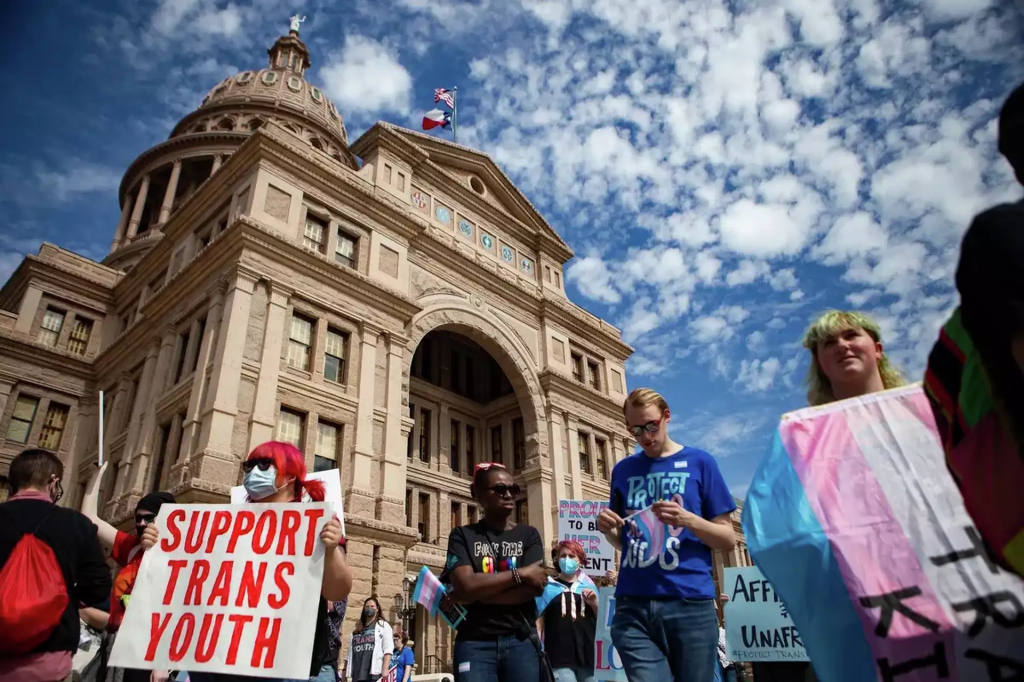
People gather in front of the Texas Capitol during a protest against bills limiting transgender kids’ access to puberty blockers and hormone treatments in March.
Lauren Witte/The Texas Tribune
At least once a day Dr. Ximena Lopez sees a parent crying in her clinic. They’re crying because Lopez just told them they need to find a new way to get transition-related care for their children — by leaving Texas or sourcing treatments outside the state — because the state outlawed these treatments for trans youth.
After a yearslong barrage by activists and lawmakers, the state has won the battle against the use of transition-related care, like puberty blockers and hormone therapies, for transgender youth. While the war over this health care remains in question — and a legal fight to block the new law begins in Texas — clinics have closed and some doctors have stopped providing this care.
“The reason why I’m leaving Texas is that it’s unbearable for me,” Lopez said. “It’s so devastating that I just can’t bear living in a state where I feel oppressed and where I’m just seeing my patients suffer.”
Lopez formerly provided gender-affirming care to trans youth as the director of the GENder Education and Care, Interdisciplinary Support (GENECIS) program, which was jointly run by the Children’s Medical Center and the University of Texas Southwestern Medical Center in Dallas. By the end of July, she’ll no longer practice at the Dallas hospital and plans to move out of Texas.
In light of the state’s ban on gender-affirming care for kids, The Texas Tribune spoke with over half a dozen doctors who practice this type of medicine about the fear of losing their jobs, scaring away medical providers from working in Texas and — most importantly — revoking this critical health care for transgender children.
From state-launched investigations into the families of trans youth, to threats of actual violence, doctors are fearful to speak out against the attacks on transgender health care. Physicians raised concerns that the state is driving physicians away from Texas and inadequately training the next generation of medical professionals.
Many said Texas was treading into a new era of medicine — marked by restrictions to gender-affirming care and reproductive health care — one in which the government tells doctors how and who they can treat.
Many doctors the Tribune spoke with declined to share their names for fear of harassment. Some likened the conversations with parents informing them that they can no longer provide this type of care to their children to cancer diagnoses or impending hospice care.
Medical providers say this type of care is lifesaving for transgender youth who face higher rates of suicide attempts and mental health problems than their cisgender peers. One in five trans and nonbinary young people attempted suicide in the past year, according to a 2023 survey conducted by The Trevor Project, a suicide prevention organization that focuses on LGBTQ+ youth.
Last month Gov. Greg Abbott signed legislation that restricts transgender youth from accessing puberty blockers and hormone therapy, two treatments used to address gender dysphoria, the medical term for the distress someone experiences when their gender identity doesn’t match their body.
“In Texas we must protect children from making permanent, life-altering decisions before they have the mental capacity to do so, and Senate Bill 14 does just that,” Andrew Mahaleris, a spokesperson for Abbott, said in a statement to the Tribune. Medical providers say puberty blockers are reversible and hormone therapy is partially reversible.
Mahaleris pointed to a recent survey from the Washington Post and the Kaiser Family Foundation that found a majority of the Americans surveyed oppose the use of puberty blockers and hormone therapy to treat transgender youth.
Senate Bill 14 was the forerunner in a broad swath of bills, aimed at reshaping the lives of LGBTQ+ Texans, that lawmakers pushed through this legislative session. Republican politicians also passed restrictions on drag shows and transgender athletes this session, but the implications of SB 14 are long reaching and profoundly affecting the lives of Texas families, said doctors who practice gender-affirming medicine. Families of trans youth have already fled Texas, but those who remain in the state must grapple with the consequences of losing health care access.
In recent months, many patients — including adults — have lost access to care as providers have left the state, a spokesperson for Texas Health Action, a nonprofit health care provider with clinics in Dallas, San Antonio and Austin, told the Tribune.
Dr. Anita Vasudevan, a primary care physician from Texas who chose to continue practicing in California instead of returning to her home state because of the ban on gender-affirming care and abortion, said the loss of Lopez and the GENECIS program highlights the issue of specialized providers leaving the state. This translates to missed learning opportunities for medical professionals in training, which will result in worse care for patients, she said.
“We’re building a generation of providers that just, unfortunately, won’t receive the level of training that they need in order to take care of patients in the ways that they need to be taken care of,” Vasudevan told the Tribune. “That’s a hard pill to swallow.”
An onslaught of interventions
For children already receiving puberty blockers and hormone therapy under the guidance of their medical team, SB 14 taking effect presents a daunting transition.
Lawmakers decided doctors must “wean” their patients under 18 of these treatments “in a manner that is safe and medically appropriate.”
But doctors who administer gender-affirming medical treatments say there is no such thing.
“This is comparable to asking a medical professional to wean a Type 1 diabetic off of their insulin — you would never do that,” Brett Cooper, an adolescent medicine physician from Dallas, said in a statement to the Tribune.
Cooper said SB 14 prohibits medical professionals from providing evidence-based, best-practice care to their patients. Including evidence that supports the use of these treatments and the recommendations of major medical groups like the American Medical Association.
He added that, like the state’s ban on abortions, this legislation will make it more difficult to recruit medical professionals to do business in Texas.
“There has been a chilling effect of the Legislature getting involved in the doctor-patient relationship and attempting to prevent physicians from providing the evidence-based and medically necessary care to their patients,” Cooper said. “Physicians know best how to care for their patients, not the Legislature.”
Texas Republicans’ effort to regulate the lives of transgender youth started long before Abbott signed SB 14 in June. Six years ago, the Legislature unsuccessfully tried to pass a bill requiring transgender people to use restrooms in public schools and governmental buildings that aligned with their sex assigned at birth.
In the years since, Republicans in the state have mounted a multipronged attack on gender-affirming care, in part, because issues like restrictions to medical care for LGBTQ+ people and drag shows had strong support from Republican voters.
In 2021, after the Legislature failed to restrict gender-affirming care, activists turned their attention to Lopez’s GENECIS program, targeting hospital board members and accusing the program of committing child abuse. Shortly after Children’s Health quietly closed the clinic, which was jointly run by UT Southwestern, Lopez was prompted to sue the hospital for shutting down operations to new patients.
The following year, Abbott directed the state’s Department of Family and Protective Services to investigate parents providing this type of care to their trans children for child abuse, terrifying families that they might be separated from one another.
More recently, suspended Attorney General Ken Paxton launched investigations against both Texas Children’s Hospital in Houston and Dell Children’s Medical Center of Central Texas for providing this type of care — even before SB 14 became law. Doctors working at Dell Children’s parted ways with the hospital after Paxton’s announcement, which left patients and their families scrambling to find specialty care, some of the needed treatments were unrelated to the gender-affirming treatments the state targeted.
Other states that have passed laws forbidding trans youth from taking puberty blockers and hormone therapy have encountered legal challenges. In Arkansas, a similar restriction to gender-affirming care was struck down as unconstitutional on the basis that it violated the due process and equal protection rights of transgender children and families. Legal groups in Texas have already committed to challenging SB 14.
Despite the rebukes of these laws in the courts across the country, the quiet closures of clinics and doctor departures in Texas have left medical professionals feeling alone in the fight for their patients’ best interests. Evidence shows access to gender-affirming care for young people improves the mental health of trans minors. Doctors said hospitals facilitating this type of health care are aware of its benefits, but are fearful of pushback from politicians.
“Many hospitals in these states, like Texas, I think are against these politicians and extremists and legislators, [but] they’re afraid of financial risks, they’re afraid of retaliation and they’re taking the easy way out which is to abandon their doctors and their patients and just subdue to this political pressure,” Lopez said.
Her employer, UT Southwestern, did not return requests for comment for this story.
While large hospital systems are not the only providers who treat trans youth, advocates say it’s evident that a chilling effect has reached physicians who prescribe gender-affirming care across the state.
In San Antonio, a city of nearly 1.5 million, only one doctor was administering gender-affirming care to trans youth in recent years, said Andrea Segovia, senior field and policy adviser for the Transgender Education Network of Texas. But after Abbott leveraged DFPS to investigate Texas families, the provider stopped providing these treatments, Segovia said.
She’s watched the number of providers who care for trans patients shrink. She said parents of trans youth are struggling to find pediatricians for their trans kids even for non-gender affirming care purposes, like routine vaccinations and physicals.
“People are being treated like they have a scarlet letter,” Segovia said.
De facto elimination of care
Prior to his graduation from UT Southwestern Medical School this spring, Antonio García was deliberating where to pursue his residency training in family medicine.
He could stay in Texas, where he grew up and his family lives, by leveraging his existing geographic connections to ”match” into a residency — a competitive process in which medical students are placed at specialized programs in hospitals or clinics for further medical training after graduating.
During medical school, García worked with providers in the GENECIS program, including Lopez, where he saw the positive impact the clinic had on patients and their families. He wanted to continue doing that important work, by providing gender-affirming care to trans people.
To do that García has decided to leave Texas.
“I also saw that as an opportunity to leave all of this behind and go somewhere where I knew that I was going to be able to get gender-affirming-care training, where I was going to be able to live my life openly, freely and not have to have all of these kind of concerns,” García told the Tribune. As a gay man, García said the state’s increasing hostility to the LGBTQ+ community prompted his decision to leave Texas.
Seeing the backlash against individual providers and clinics has been devastating, García said. Noting Lopez’s departure, he said the animosity toward medical professionals and trans people is driving doctors away.
“[The doctors are] doing the right thing for these families, for these kids, and seeing that work be stifled and impeded has been just really unfortunate,” he said.
One area of particular concern, doctors said, is the worsening of an existing pediatric specialists shortage. In Texas, an estimated 17.4% of children have special health care needs that require attention from specialized pediatricians, according to the American Academy of Pediatrics. These shortages mean patients have to travel longer distances and wait for weeks or months to see subspecialists, which can result in delaying or forgoing treatment.
Lauren Wilson, a pediatric hospitalist and the president of the AAP Montana chapter, partially attributes this shortage of doctors for children to the disparity in pay between adult and pediatric specialists. According to a 2023 compensation report from the healthcare-related companies Doximity and Curative, endocrinologists make nearly $60,000 more annually than their pediatric specialist peers, who undergo commensurate levels of training.
Shortages in this speciality — pediatric endocrinology — is of particular concern to Wilson because these doctors treat a wide range of children. This area of medicine deals with hormones and associated issues and mostly treats children with diabetes or growth problems. But these physicians also often specialize in gender-affirming care treatments like puberty blockers and hormone therapies for trans children (less specialized physicians can also administer gender-affirming care.)
Wilson said these laws targeting pediatric health care — which could criminalize medical practices not even related to gender-affirming care — are unprecedented. In April, Montana became one of 20 states to ban trans youth from accessing gender-affirming care. It’s also the state that barred a transgender lawmaker from the Montana House floor for violating “decorum” rules after she told colleagues that voted in favor of restricting gender-affirming care would have blood on their hands.
Wilson also noted the de facto elimination of care by targeting clinics, by state leaders and extremists, has forced hospitals to stop this care.
“We’re in a position as physicians where we want to do what’s best for our patients, we want to follow all relevant guidelines. But we also want to not go to jail or lose our license to practice medicine,” Wilson said.
The Tribune asked Abbott’s office about the prospect of Texas losing medical providers because of the new law.
“Passed by a bipartisan majority in the Texas Legislature, SB 14 ensures access to appropriate and medically necessary services, with parental or legal guardian’s consent. Endocrinology treatments and procedures that are not intended to change the biological sex of a minor are unaffected by this law,” Mahaleris, Abbott’s spokesperson, said.
It’s not clear how many doctors have left or will leave Texas in response to restrictions on gender-affirming treatments, but states that have enacted other health care restrictions offer some clues.
States with abortion bans saw a 10.5% decrease in applications for obstetrics and gynecology residencies in 2023 compared to the previous year, according to data from the Association of American Medical Colleges.
Doctors, including Lopez, said they have already seen the effects with candidates deciding after the interview process not to accept positions in Texas “because of the politics.”
“Living in a medical dictatorship”
Treating gender dysphoria in Texas is not new. In 1965, the UT Medical Branch opened a gender clinic, providing treatment for hundreds of transgender people in the decades that followed.
Most major hospitals in Texas have been providing this type of care for over a decade. It only became widely controversial after lawmakers sought to criminalize doctors for providing this care, Lopez said.
Doctors lamented the spread of misinformation by lawmakers advocating against gender-affirming care during the most recent legislative session. Experts say this has further contributed to distrust between the public and the medical community, which worsened during the COVID-19 pandemic because of vaccine misinformation.
Hospitals across the country, including Children’s National Hospital in Washington, D.C. and Boston Children’s Hospital, have received bomb threats and violent messages after far-right harassment campaigns falsely accused the hospitals of performing genital surgery on minors.
Doctors say while transition-related surgeries are rarely performed on people under the age of 18, these procedures were also banned by SB 14. Conservative activists have incorrectly cast gender-affirming care as irreversible “genital mutilation” in an effort to restrict access to these treatments.
Several doctors declined to share their names publicly, citing a fear that false allegations would be directed at them. Doctors suspect threats of violence and harassment are why some Texas hospitals targeted by far-right activists chose to quietly stop providing these medical treatments, instead of standing with patients and doctors.
“No one feels particularly safe,” said one doctor who spoke with the Tribune on the condition that their name would not be published.
Lawmakers who oppose this type of care feel emboldened, Lopez said.
“It’s just also, again, a dangerous precedent because if politicians can tell hospitals what to do, then they can do that for so many things,” she said. “And then where is the patient’s autonomy? Where’s the voice of science and medicine at that point?”
Doctors pointed to an example of a trial court in 2021 that ordered doctors to administer the drug ivermectin, commonly used to treat parasitic worms in horses, after a patient’s relative sued the Fort Worth hospital to compel physicians to administer it. The treatment gained notoriety as a false cure for COVID-19 in right-wing circles, including from then President Donald Trump. The 2nd Court of Appeals reversed the lower court’s decision, but the attempt to supersede the doctor’s expertise was clear.
Doctors worry that the latest health care restriction for trans youth is a dangerous precedent with an uncertain future. While much of the attention around gender-affirming care was aimed at children, bills limiting this type of care for adults have also gained traction in the Texas Legislature.
“I can compare this with living in a medical dictatorship, in which you are told what treatment you can and can’t do,” Lopez said. “But it’s not based on reason. It’s based on whatever the person in power is saying is best.”






































 Scottie's Playtime