Despite passing in the Senate earlier this week, the Kid’s Online Safety Act (KOSA) is reportedly dead in the U.S. House after progressives, like Rep. Alexandria Ocasio-Cortez (D-NY), worried that it would possible censor LGBTQ+ content. Some Republicans also opposed the bill, stating that it would violate free speech protections for social media platforms and their users.
KOSA would have mandated that social media companies take measures to prevent recommending any content that promotes mental health disorders (like eating disorders, drug use, self-harm, sexual abuse, and bullying) unless minors specifically search for such content. Opponents worried that Republican attorneys general who see LGBTQ+ identities as harmful forms of mental illness would use KOSA’s provisions to censor queer web content and prosecute platforms that provide access to it.
“KOSA was a poorly written bill that would have made kids less safe,” said one of the bill’s most vocal opponents, Evan Greer, director of Fight for the Future, a nonprofit that protects human rights in the digital age. “It’s good that this unconstitutional censorship bill is dead for now, but I am not breathing a sigh of relief.”
“KOSA was always too controversial to succeed, and divided our coalition,” Greer added. “If we want to take on Big Tech and win, we have to quickly regroup and make a plan for next Congress. We need strong privacy, antitrust, and algorithmic justice legislation that address the harms of Big Tech without endangering free expression and human rights.”
Many other groups opposed the bill, including the American Civil Liberties Union (ACLU), the Woodhull Freedom Foundation, the LGBT Technology Partnership, as well as LGBTQ+ advocacy organizations in six states.
While KOSA passed in the Senate earlier this week in a 93-1 vote, three senators voted against the bills: Ron Wyden (D-OR), Mike Lee (R-UT), and Rand Paul (R-KY) — all three made statements explaining why.
Wyden specifically said he voted against the bills because he worried a future administration could use the legislation to “pressure companies to censor gay, trans, and reproductive health information,” The Hill reported.
Lee said, “This legislation empowers the [Federal Trade Commission (FTC)] to censor any content it deems to cause ‘harm,’ ‘anxiety,’ or ‘depression,’ in a way that could (and most likely would) be used to censor the expression of political, religious, and other viewpoints disfavored by the FTC.”
Paul wrote in a recent Louisville Courier Journal opinion article, “KOSA would impose an unprecedented duty of care on internet platforms to design their sites to mitigate and prevent harms…. This requirement will not only stifle free speech, but it will deprive Americans of the benefits of our technological advancements.”
KOSA was introduced by anti-LGBTQ+ Sen. Marsha Blackburn (R-TN), who said that one of the bill’s top priorities is to protect children from “the transgender in this culture.” Blackburn’s office told LGBTQ Nation that her comment had been “taken out of context” and wasn’t related to KOSA. Nevertheless, the anti-LGBTQ+ conservative think tank Heritage Foundation has also said it wishes to use the law to “guard” kids against the “harms of… transgender content.”
Jenna Leventoff, senior policy counsel at the ACLU, said, “KOSA compounds nationwide attacks on young peoples’ right to learn and access information, on and offline. As state legislatures and school boards across the country impose book bans and classroom censorship laws, the last thing students and parents need is another act of government censorship deciding which educational resources are appropriate for their families.”
One of the guys on the MS blog shared this with all of this. Hugs. Scottie
Pastor Seth Shelley takes us on an emotional and at times difficult journey about male sexual violence. He brings forward his own story of sexual assault to ask men to open up about their personal stories too. Recorded at TEDxUNBC in Prince George, BC.
Seth speaks to an issue common around the world, sexual assault. However, it is men who also need to share their stories of abuse. Far too many men are silent about their own stories of trauma and eventual healing. It is our society’s ideas around masculinity which prevent men from opening up, and steal their narratives from them. Only through sharing with friends and family do we reclaim our stories for ourselves.
Idaho’s recently enacted bill encourages parents and children to bring legal action against schools and libraries that refuse to move certain material into “adult only” sections.
Books are displayed at the Banned Book Library at American Stage in St. Petersburg, Fla., on Feb. 18, 2023. (Jefferee Woo/Tampa Bay Times via AP)
A recently enacted law requiring Idaho schools and libraries to remove materials that are “harmful” to minors infringes on the First Amendment rights of private entities, a group of private schools, privately-funded libraries, parents and schoolchildren say in a Thursday lawsuit.
House Bill 710 — which took effect July 1 after Governor Brad Little signed it into law in April — allows citizens and the government to file a lawsuit against any school or library that doesn’t move certain material into designated “adult only” sections within 60 days of a complaint.
“H.B. 710 is the product of a social climate in Idaho (and elsewhere) in which schools and libraries have been inaccurately and unfairly castigated and villainized for using and making available constitutionally protected materials with content that the state and some Idahoans disapprove of,” the plaintiffs say in the 57-page complaint.
The suit was brought by private schools Sun Valley Community School and Foothills School of Arts and Sciences, along with the Community Library Association, a privately funded public library, and Collister United Methodist Church, which operates a lending library.
The groups are also joined by a set of parents and two high school-age students, who say that they want access to these reportedly “harmful” books and other materials to further their education.
The plaintiffs say the law violates their First Amendment free speech rights and their Fourteenth Amendment rights to due process. They ask the court to block enforcement of the law and to declare HB 710 unconstitutional.
“The act’s vague and overbroad definition of ‘harmful to minors’ conflicts with decades of settled constitutional law and extends well beyond the state’s limited authority to restrict the materials that private parties, like the private entity plaintiffs, may provide to minors,” they write.
Under the act’s definitions, the plaintiffs say, materials like health and sex education textbooks, literary works like Maya Angelou’s “I Know Why the Caged Bird Sings” and artworks like Michelangelo’s David would all be subject to removal, possibly based on arbitrary and subjective reasons.
“Even the Bible, if a defendant or citizen complainant subjectively believes members of their community would find them offensive,” could be targeted, the plaintiffs note.
The plaintiffs also take specific aim with a clause of the act that restricts materials that depict or represent “sexual conduct” — a definition that includes “any act of … homosexuality.”
Beyond the “vague and overbroad” definition of what constitutes “harmful for minors,” the plaintiffs also take issue with what they called the “incoherent” enforcement provisions outlined in HB 710. The act “fails to provide constitutionally meaningful guardrails on enforcement,” plaintiffs say.
“If a private entity plaintiff disagrees with the content-based assessment of the parent or minor and declines to segregate the challenged material, the parent or minor is authorized to file a civil suit against the private entity plaintiff and incentivized to do so by a cash reward and the availability of ‘actual damages,’” the plaintiffs write, referring to a provision in HB 710 that allows for a possible recovery of $250 and statutory and actual damages, if the complainant prevails in the case.
The government itself is also permitted under HB 710 to seek an injunction against any of the plaintiffs, who say this could lead to financial and reputational harm.
The plaintiffs name Idaho Attorney General Raúl Labrador as a defendant, alongside Jan Bennetts, prosecuting attorney for Ada County, and Matt Fredrick, prosecuting attorney for Blaine County.
HB 710 is not the first attempt Idaho legislators have made to restrict library access in the state. A version of the measure made it through the 2023 session but was rejected by Little.
In a letter after he signed HB 710, the governor commended the 2024 bill for having tighter definitions for restricted material and for lowering the recovery from $2,500.
“I share the co-sponsors’ desire to keep truly inappropriate materials out of the hands of minors,” Little wrote in April.
Libraries initially pushed back on the bill, citing free speech concerns and the financial burden it could levy, particularly on smaller libraries, but legislators stood by the measure.
“I can assure you that there is no book banning and there’s no book burning and there’s no book removal anywhere in this legislation. What we have to look at when you look at these libraries is that you have differing viewpoints and different opinions from taxpayers,” Representative Jaron Crane, a Nampa Republican and bill co-sponsor, said in committee, the Idaho Capital Sun reported in March.
I have followed Gronda for a long time, before she took her long break. But she is back and her writtings while in debth and a bit long are so very interesting and well researched that they are more than worth the time to read. I love them. I hope everyone here will. Hugs. Scottie
“Let’s say Roe vs. Wade is overruled, Ohio bans abortion, you know, in 2022, let’s say 2024, and then every day George Soros sends a 747 to Columbus to load up disproportionately black women to get them to go have abortions in California.
“Of course, the left will celebrate this as a victory for diversity. That’s kind of creepy, right? If that happens, do you need some federal response to prevent it from happening because it’s really creepy?
“And, you know, I’m pretty sympathetic to that, actually.” – J.D. Vance, appearing on the podcast of far-right activist Aimee Terese during his 2022 campaign for the US Senate.
JD Vance said this on a podcast hosted by a Twitter user he follows who calls for putting “misogynists back in the Oval Office” and says “we need to stop normalising consent” https://t.co/ElrkbAf5VJpic.twitter.com/BEwX61QfpB

 Photo: Shutterstock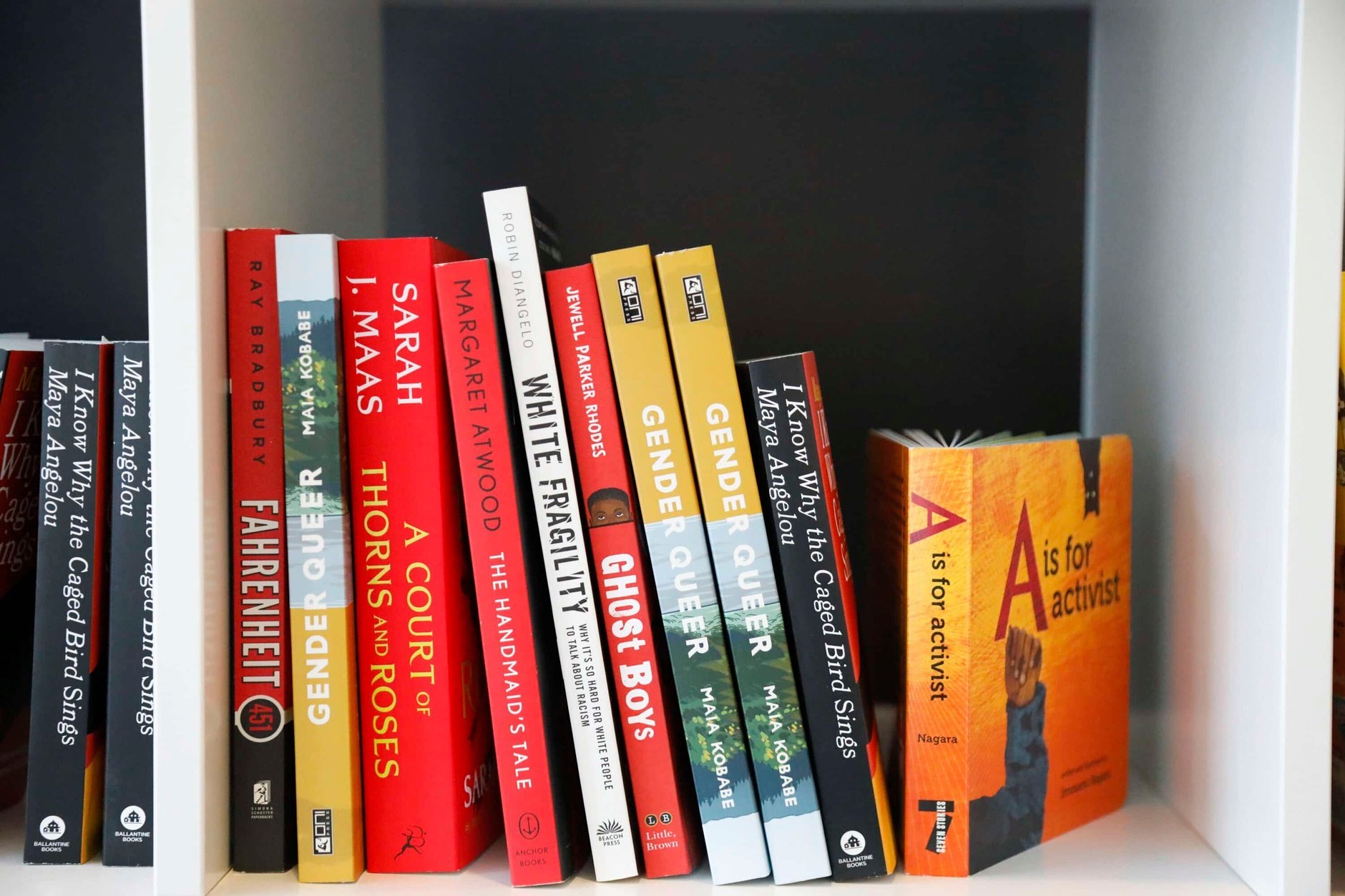
 Scottie's Playtime