Peace & Justice History for 1/10

TGIF? ☮

January 10, 1776

Thomas Paine
Thomas Paine anonymously published his influential pamphlet, “Common Sense”. In it Paine questioned the fundamental legitimacy of the rule of kings, and advocated the doctrine of independence for Americans, and the rights of mankind.
The entire text: 
January 10, 1908 
A prominent young Indian lawyer, Mohandas Gandhi, was jailed for the first time. He had refused to register as an Asian in Johannesburg, South Africa.
He was released three weeks later.


Gandhi, 1906
Gandhi and how his time in South Africa affected his life 
January 10, 1917
The National Women’s Party began regular picketing of the White House, advocating the right to vote for women.


The first suffrage picket line leaving Congressional Union headquarters to march to the White House gates.
January 10, 1920
The League of Nations formally came into being when its Covenant (part of the Treaty of Versailles), ratified by 42 nations in 1919, took effect.
In 1914, a political assassination in Sarajevo set off a chain of events that led to the outbreak of the most costly war ever fought to that date. As more and more young men were sent down into the trenches, influential voices in the United States and Britain began calling for the establishment of a permanent international body to promote international cooperation and to achieve international peace and security.
Though strongly supported by President Woodrow Wilson (who served as Chairman of the Committee that developed the Covenant), the U.S. never joined.
January 10, 1930
In December 1928, Mohandas Gandhi attended a session of the Indian National Congress Party in Calcutta where it called for complete Indian independence from Great Britain. This was to be achieved through peaceful means, specifically complete noncooperation with the governmental apparatus of colonial British rule, known as the Raj.
On this day, Gandhi drafted the declaration, which stated, in part:

“The British government in India has not only deprived the Indian people of their freedom but has based itself on the exploitation of the masses, and has ruined India economically, politically, culturally and spiritually. . . . Therefore . . . India must sever the British connection and attain Purna Swaraj, or complete independence.”
January 10, 1940
Members of the Brethren, Mennonites and Friends religious groups sent a message to Presidend Franklin Roosevelt requesting alternative service in the event of war.

Civilian Public Service workers Clark and Kriebel in the Duke University’s hospital sterilizer room.
The Selective Training and Service Act of 1940 proclaimed that all persons who “by reason of religious training and belief were conscientiously opposed to all forms of military service, should, if conscripted for service, be assigned to work of national importance under civilian direction.”
More on those who refused to serve in the “good war” 

January 10, 1946

The first General Assembly of the United Nations convened at Westminster Central Hall in London, England, and included 51 nations. On January 24, the General Assembly adopted its first resolution, a measure calling for the peaceful uses of atomic energy and the elimination of atomic and other weapons of mass destruction.
January 10, 1966
Vernon Dahmer, a businessman and farmer in Hattiesburg, Mississippi, offered to pay the poll tax for those who couldn’t afford the fee that was then required before a citizen could vote (and which was made unconstitutional in federal elections by the 24th Amendment).
Vernon Dahmer (foreground)

former home of Vernon Dahmer
Dahmer was known for saying, “If you don’t vote, you don’t count.” 
The night after a radio station broadcasted Dahmer’s offer, his home and store were firebombed. Dahmer died later from severe burns. The man responsible for the arson attack, Ku Klux Klan Wizard Sam Bowers, was not tried and convicted until 32 years later.

The poll tax and other means of disenfranchising African Americans 
January 10, 1971
The Peoples’ Peace Treaty between the citizens of the U.S. and Vietnam was endorsed by 130 organizations.
Several million North Americans later signed it.


Peoples’ Peace Treaty organizers
The treaty had been signed in December by leaders from the South Vietnam National Student Union, South Vietnam Liberation Student Union, North Vietnam Student Union, and the (U.S.) National Student Association in Saigon, Hanoi and Paris. It was adopted this day by the New University Conference and Chicago Movement meeting.
Text of the treaty 
The People Make the Peace book
Article from New York Review of Books by the National Student Association with the text of the Treaty
January 10, 1994
Guatemalan government officials and leftist guerilla movement leaders agreed to negotiate to end 36 years of violent conflict.

https://www.peacebuttons.info/E-News/peacehistoryjanuary.htm#january10
Some The Majority Report clips

The queer people who are buying guns to prepare for Trump’s America

https://www.inquirer.com/identity/guns-trump-lgbt-philadelphia-20250105.html

“We’re not looking to arm up and storm the Capitol,” one gun owner said. “We just don’t want to be put in concentration camps.”

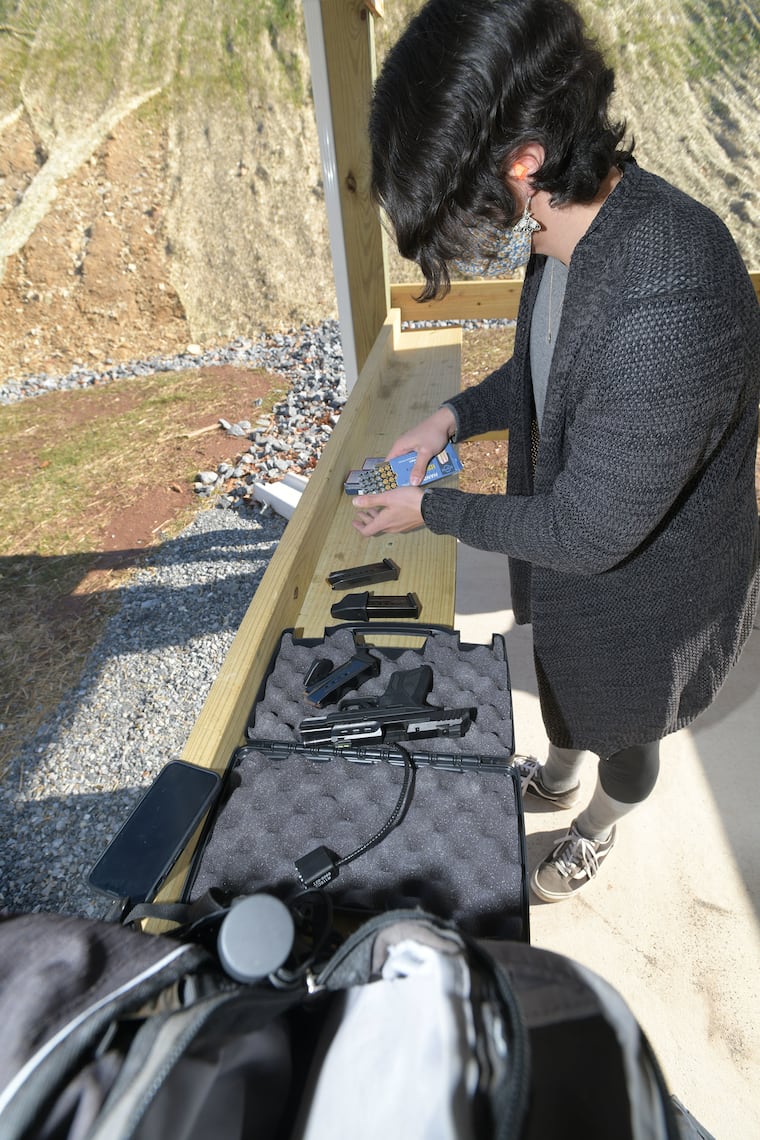
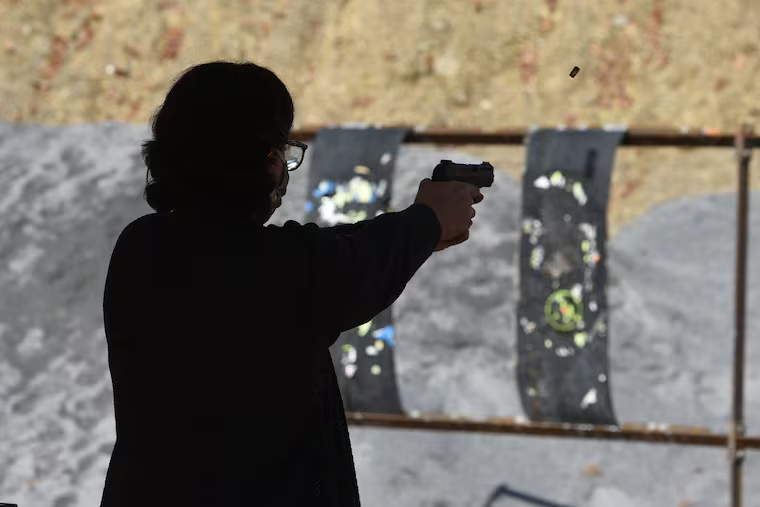
A., who the Inquirer is identifying by the first letter of her first name for safety reasons, stapled two paper plates to the range for her target practice.
A., who the Inquirer is identifying by the first letter of her first name for safety reasons, stapled two paper plates to the range for her target practice.Bradley C Bower / For The Inquirer
 

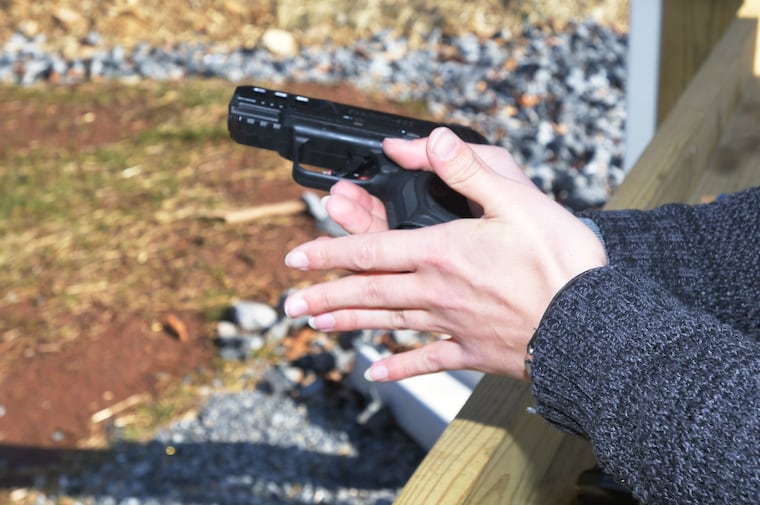
On a brisk Saturday afternoon, A. crouched in a boxer’s stance, knees bent, one hip forward, raised her new Ruger Security-380 pistol aloft with both hands, and pulled the trigger. Spent gold casings clinked to the ground as a paper plate across the range filled with bullet holes. Next to her, a row of men in sweatshirts and earmuffs affably shot their own marks.

A., who The Inquirer is identifying by the first letter of her first name because of safety concerns, is new to the world of shooting ranges and target practice. As a trans woman who lives in Philadelphia, she began seriously considering armed self-defense this summer, as she saw Texas uphold a ban on gender-affirming care for minors and Florida prohibit nurse practitioners from prescribing hormones to transgender people. She watched with increasing dread as Republicans spent nearly $215 million on network TV ads portraying people like her as a dangerous threat to the country.

“Three months before the election, that’s when the alarm bells started to ring,” A., who is 24 and speaks carefully and thoughtfully, said recently. When she mentioned wanting to learn how to fire a gun to friends, they stared at her blankly.

But she felt she couldn’t have been more rational. On Nov. 2, she bought her first gun, at Delia’s Gun Shop in Northeast Philly.


“Minorities that are armed are more difficult to legally oppress,” she said. She was reassured by the idea that “in the event of hate crimes or terrorist attacks, knowing that, ‘OK, I’m personally armed and I can protect my property and people that are close to me.’” She is applying for a concealed carry permit in Pennsylvania, though she doesn’t plan to carry the gun with her every day.

By the end of her practice at the outdoor range at French Creek State Park, bullet casings littered the ground near her backpack and water bottle, which was decorated with rainbow hearts and a “Protect Trans Kids” sticker.

A. prepared to shoot at the French Creek State Park outdoor range.
A. prepared to shoot at the French Creek State Park outdoor range.Bradley C Bower / For The Inquirer

‘If I can’t protect myself, who will?’

Since Donald Trump’s reelection in November, nontraditional gun groups across the city and country have seen a flood of interest. The national Liberal Gun Club said it has received thousands of training requests since the election, more than in all of 2023. A spokesperson for the group estimated that roughly a quarter were from LGBTQ people.

In Philadelphia, in the waning weeks of the year, residents peppered local queer Facebook groups with questions about guns and training. The local chapter of the Socialist Rifle Association, a leftist analogue to the National Rifle Association, said it saw a surge in paid memberships; its regular classes about gun safety filled up immediately, so they added more. The head of the Delaware Valley chapter of the Pink Pistols, a longtime gay gun group with the slogan “Armed Gays Don’t Get Bashed,” said he received a sudden flurry of emails inquiring about gun training.


“There’s definitely a feeling among a lot of LGBT individuals: ‘If I can’t protect myself, who will?’” said Madeline Shearman, a trans woman based in Glen Mills who runs a casual and growing “2A social group” in Pennsylvania. “I feel that way myself.”

In Pennsylvania, overall gun sales were down in 2024, according to figures from the State Police: 666,759 firearms were lawfully purchased or privately transferred through the end of October, a drop from the 2020 record high of 1.1 million.

It’s difficult to track rises and falls in LGBTQ gun ownership because there are few published studies about the relatively small population, said David Yamane, a professor of sociology at Wake Forest University and author of the book Gun Curious.

» READ MORE: Gun sales and permits surged during the pandemic in Philly and Pennsylvania


But in general, Yamane argues that American gun culture has dramatically shifted in recent years, away from a focus on hunting and recreation and toward a focus on self-defense, the core of what he calls “Gun Culture 2.0.” As the culture has shifted, people who own guns have become far more diverse. He pointed to 2020 as a pivotal year.

“It was a period of tremendous social unrest and social uncertainty. And a large number of people in the United States, under those conditions, look to firearms to reestablish some sense of safety and security,” Yamane said. He added that racial and gender minorities “led the way” in terms of new gun ownership rates in 2020 and afterward.

A. purchased her gun on November 2, 2024.
A. purchased her gun on November 2, 2024.Bradley C Bower / For The Inquirer

» READ MORE: Gun ownership boomed during the pandemic. Meet some of the reluctant firearm owners.

Yamane also pointed to other political moments that have fueled gun interest in the LGBTQ community. Pink Pistols, which has more than two dozen chapters across the country, was originally founded in 2000 after the writer Jonathan Rauch proposed in a Salon article that “homosexuals should embark on organized efforts to become comfortable with guns, learn to use them safely and carry them. They should set up Pink Pistols task forces, sponsor shooting courses and help homosexuals get licensed to carry.”

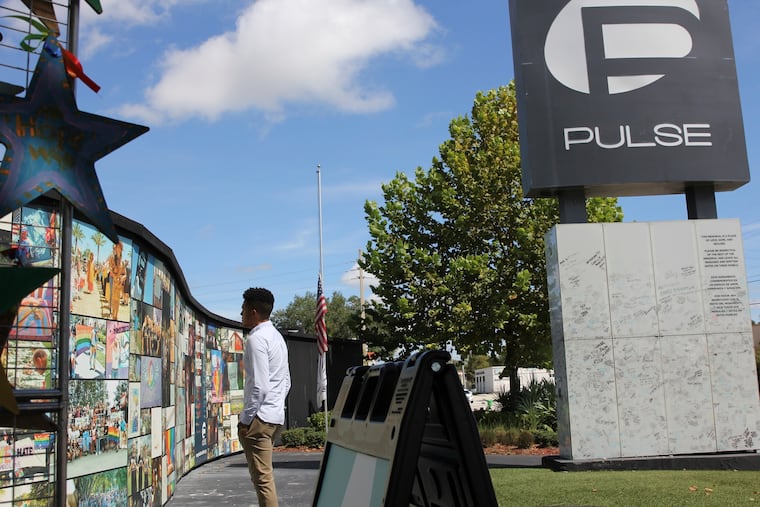
Brandon Wolf, a survivor of the Pulse nightclub shooting and activist, looks at the photos that were part of a Pulse memorial in Orlando, Fla., in 2022.
Brandon Wolf, a survivor of the Pulse nightclub shooting and activist, looks at the photos that were part of a Pulse memorial in Orlando, Fla., in 2022.Cody Jackson / AP

The devastating mass shooting at the Pulse nightclub in Florida in 2016 was another catalyst. That’s when Matthew Thompson, who lives in Oakland, N.J., purchased his first gun. A gay man and custom leather worker, Thompson often travels to leather and bear events on the weekends, and feared what might happen. He began practicing drills at home — setting a timer on his phone, wearing his unloaded gun around the house, and drawing it quickly when the timer went off.

Days after the presidential election, he began pursuing his concealed carry permit in New Jersey. He is also organizing other LGBTQ people to practice at a local gun range.


“The people I’ve been seeing on the left and the gay people who are out purchasing guns for the first time, it’s all about self-defense and fear,” said Thompson, who is 36. “We’re not looking to arm up and storm the Capitol. We just don’t want to be put in concentration camps.”

Gun safety with the Socialist Rifle Association

In mid-December, the Socialist Rifle Association’s local chapter held its monthly “Gun-damentals” class. A dozen people gathered in a ramshackle room at the Lava Community Center in West Philadelphia, where a range of unloaded firearms were displayed on the front table. Many of the attendees said they had little or no experience with guns.

The organization, founded nationally in 2018, tries to take a community-based approach to defense, organizers said. Once a month, its volunteers distribute food and medical supplies to people living on the street in Kensington, and the group also leads first aid and de-escalation training classes.


The recent gun-safety class was earnest and efficient: two organizers led the group through an information-packed PowerPoint presentation, explaining the legal landscape in Pennsylvania, the process of purchasing a gun, and basic safety tips, using a laser pointer to emphasize certain points.

Despite people’s hopes about increasing their safety, researchers have found that higher rates of gun ownership and access is correlated with higher rates of gun-related homicides, suicides, accidental deaths, and injuries. In an effort to reduce that danger, the SRA said it focuses on teaching responsible firearm ownership and safe storage.

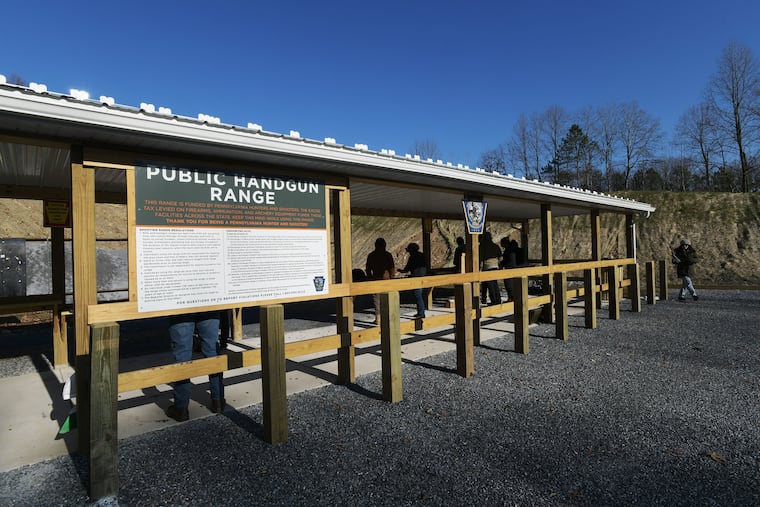
The public handgun range at French Creek State Park.
The public handgun range at French Creek State Park.Bradley C Bower / For The Inquirer

An organizer wearing an Eagles cap and a black sweatshirt lingered on a slide about mental health.

“So guns are weapons, and they’re really good at what they do, which is killing things,” he said, as some attendees nodded and took notes. “85% of suicides attempted with firearms lead to death. … So you have to be mindful, if this is something that you do want to bring into your life, that you’re aware of your own mental health going into it.”

Doug, a therapist who asked to be identified solely by their first name to maintain professional privacy, joined the SRA after the election. They had been in the Boy Scouts growing up, had shot BB guns at camp, and gone to the shooting range occasionally with friends. But they had never owned a gun.

They attended the gun-safety class. Then in early December, they purchased their first gun, an AR-15. Doug was partly motivated by the fact that their official identifications are gender nonspecific, which could alert authorities to the fact that they are nonbinary. They feared they might not be able to buy a gun in the future.

“This country is not, I wouldn’t say, on very solid footing,” Doug said. “As a Boy Scout, I’d rather be prepared.”

Zoe Greenberg
I write about gender, sexuality, and how people make money and meaning.

Peace & Justice History for 1/7

January 7, 1953
 
President Harry S. Truman announced in his State of the Union address that the United States had developed a hydrogen (fusion) bomb.
January 7, 1971
The U.S. District Court of Appeals ordered William Ruckelshaus, the Environmental Protection Agency’s first administrator, to begin the de-registration procedure for DDT so that it could no longer be used.

DDT being sprayed next to livestock
It was a widely used pesticide in agriculture (principally cotton).
This happened nine years after the publication of Rachel Carson’s “Silent Spring”, a book which cautioned about the dangers of excessive use of pesticides and other industrial chemicals to plants and animals, and humans.

 
Rachel Carson
Read more about Rachel Carson
January 7, 1979
Vietnamese troops seized the Cambodian capital of Phnom Penh, toppling the regime of Pol Pot and his Khmer Rouge, the Cambodian Communist party. Pol Pot and his allies had been directly responsible for the death of 25% of Cambodia’s population.
When he seized power in 1975, capitalism, Western culture, city life, religion, and all foreign influences were to be extinguished in favor of an extreme form of peasant Communism.

All foreigners were thus expelled, embassies closed, and any foreign economic or medical assistance was refused. The use of foreign languages was banned. Newspapers and television stations were shut down, radios and bicycles confiscated, and mail and telephone usage curtailed. Money was forbidden. All businesses were shuttered, religion banned, education halted, health care eliminated, and parental authority revoked. Thus Cambodia was sealed off from the outside world.All of Cambodia’s cities were then forcibly evacuated. At Phnom Penh, two million inhabitants were evacuated on foot into the countryside at gunpoint. As many as 20,000 died along the way.

Pol Pot’s legacy: Skulls of the killing fields

https://www.peacebuttons.info/E-News/peacehistoryjanuary.htm#january7

The women reliving January 6 while preparing for Trump’s return

Jan 06, 2025 Mariel Padilla Originally published by The 19th

Rep. Becca Balint of Vermont, who was elected to the 118th Congress in 2022, said she was shaped and largely motivated by January 6, 2021 —  the day a mob of President Donald Trump’s supporters stormed the U.S. Capitol and temporarily halted the certification of the legitimate results of the 2020 election. 

“A lot of the members who ran in the 118th and 119th Congress understood that we were running towards a house on fire and that being honestly democracy itself,” Balint said.

Balint said she vividly remembers January 6, 2021, because it was supposed to be one of the happiest days of her life: She was being sworn in as the first woman to lead the Vermont Senate. When her security team popped into her office to tell her that the U.S. Capitol was under attack, Balint said the footage “shook me to my core.” 

The attack, which the Federal Bureau of Investigation called an act of domestic terrorism, sparked the Department of Justice’s largest criminal investigation in the country’s history and led to more than 1,500 people being federally charged. Rioters brought firearms, knives, hatchets, pepper spray, baseball bats, stun guns and explosive devices to fight Capitol Police officers and storm the building where lawmakers were actively voting to certify the 2020 election. Five people died during or soon after the riot, approximately 140 law enforcement officers were injured and $2.9 million worth of damage was done to the Capitol. 

The day after the Capitol riot, Trump referred to the event as a “heinous attack” but has since promised to pardon those who were arrested in connection with the insurrection. Trump himself was indicted on felony charges in 2023 for attempting to overturn the results of the 2020 election —  a criminal case that was dismissed shortly after he won the 2024 presidential election. The president-elect has since started describing January 6 as a “day of love,” as he did on the campaign trail. 

As Congress votes again to certify the results of the 2024 presidential election, the country prepares to welcome back to the Oval Office the same man who denied his loss four years ago and threatened the country’s tradition of a peaceful transfer of power. 

“It always sends a shiver down my spine when I hear people say ‘Americans don’t care about January 6 anymore — move on,’” Balint said. “I’m not moving on. It was a dark day in our history, and I’m not moving on.” 

The 19th reached out to every woman in Congress — just as it did in 2021 and 2022 — to collect reflections on how January 6 continues to impact them and the country. Seventeen Democratic congresswomen and one senator responded and talked about their remaining trauma, their concern about the normalization of violence and their strong sense of duty to combat any efforts to whitewash that day.


‘There’s a record of this.’ 

Here’s what they said about how the spread of misinformation and disinformation surrounding that day has downplayed the severity of violence and the gravity of what was almost destroyed.

Rep. Suzanne Bonamici of Oregon: I still have seared in my memory the images of Capitol Police officers and other people being beaten. People lost their lives. … It’s not like somebody made this up. There are videos. There are pictures. There are statements. There’s a record of this. And there were people that were convicted by juries of their peers.

Rep. Deborah Ross of North Carolina: I think the most important thing is to be brutally honest about what happened that day. Many of us were there to witness, and we’re here to testify. We cannot allow Donald Trump and his cronies to deny what needs to be preserved for history. The next generation should know how fragile our democracy is and march forward, clear-eyed and ready to fight.

Balint: My grandfather was killed in the Holocaust and so I was raised in a family in which we were taught to be vigilant when people start eroding rights, upending norms, scapegoating people. When up is down and black is white and we can’t agree on basic facts, that is all an indication that we are headed in a very scary direction as a country.

Rep. LaMonica McIver of New Jersey: I think [Trump] is going to do whatever he can to make January 6 be remembered like it’s July 4. In his mind, I think it’s going to be put in the highest regard and glorify the day as much as he can. And he’s going to have four years to try and get the rest of the country to do the same.

Rep. Chellie Pingree of Maine: I think it’s very troubling that this incoming president could convince people that he either wasn’t responsible or that somehow all that didn’t matter. But sometimes it takes us a while to process big, complicated changes like this. Maybe there will be a time when we can reflect back and say that this was a mistake, that we overlooked it, that it took us time to realize how serious that movement was.

Rep. Jill Tokuda of Hawaii: As we approach January 6 once again, we all have a responsibility to stand up against the normalization of political violence and disinformation. We cannot forget what happened that day and as Americans, it is incumbent on us to reject violence in any form from infecting our politics and our democracy.


‘Deeply, deeply disappointed.’ 

Many of the lawmakers said they are still processing what it means about the state of our country that the same man who incited an insurrection could be re-elected four years later. Several emphasized that those involved in planning, executing or inciting the riot still need to be held accountable before the country can heal and move forward.

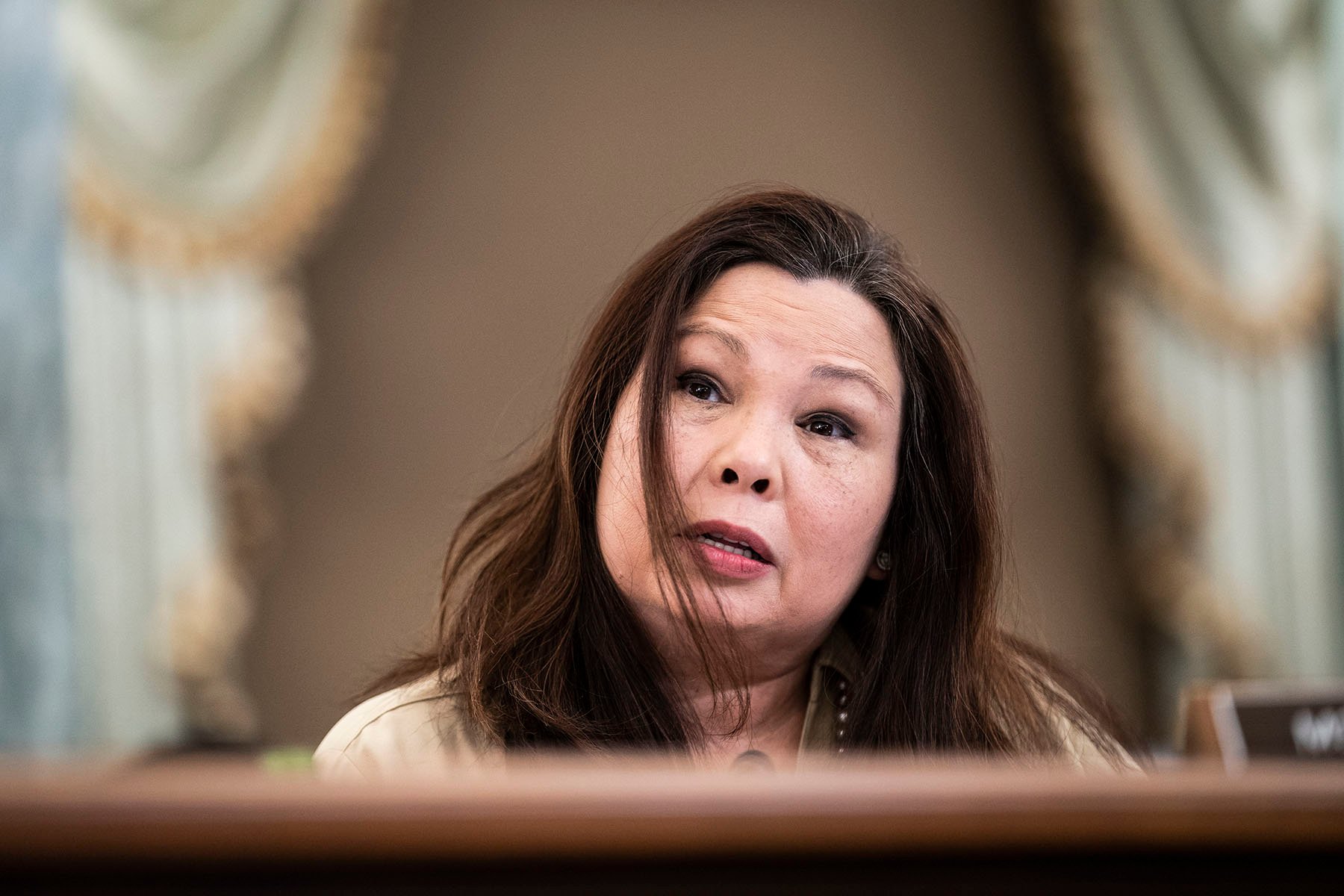
Sen. Tammy Duckworth speaks on Capitol Hill on in February 2023, in Washington D.C.
Sen. Tammy Duckworth speaks on Capitol Hill on in February 2023, in Washington D.C. (Jabin Botsford/The Washington Post/Getty Images)

Sen. Tammy Duckworth of Illinois: As deeply, deeply disappointed as I am that that same twice-impeached president who led a coup against our government is headed back to the Oval Office, make no mistake: My Democratic colleagues and I, unlike many Republicans after the 2020 election, will uphold the will of the American people, fulfill our constitutional duty and do our part to ensure a peaceful transfer of power.

Rep. Rosa DeLauro of Connecticut: As Donald Trump returns to the presidency, I feel an even greater responsibility to ensure that we do not let an election outcome diminish the gravity of what happened that day. His re-election does not change the reality of the insurrection or absolve those who incited and participated in it. It does not erase the trauma experienced by Capitol staff and Capitol Police officers who defended our democracy at great personal risk. 

Rep. Gwen Moore of Wisconsin: Donald Trump, a convicted felon and aspiring autocrat, is promising to let loose dangerous rioters into our communities and threatening lawmakers and journalists with imprisonment. Trump’s lawlessness and thirst for political revenge is why I have repeatedly said he is unfit for office. 

Rep. Lois Frankel of Florida: People have short memories. People are more consumed with their own lives [when they go to the polls]. And I’m not saying that’s a bad thing; it’s just an observation. What was probably on people’s minds? Their bank account, their rent, price of food, right? 

Rep. Joyce Beatty of Ohio: We learned a lot of lessons through this last election. The American people know what they want to hear, whether it’s true or not. 

Rep. Judy Chu of California: No matter what happens during Trump’s second term, the events of January 6, 2021, will forever be his legacy. He refused to concede or even acknowledge that there was a free and fair election in 2020, and he is still pressuring the Justice Department and intends to continue to pressure the Justice Department.

Rep. Ayanna Pressley of Massachusetts: Trump’s return to the highest office in the land, despite his central role in the insurrection, is a gut punch to anyone who cares about our democracy. But it does not absolve us of our responsibility to pursue accountability and continue telling the story of what happened that day.

Rep. Pramila Jayapal of Washington: I still put the onus on the Republicans in the Senate who refused to convict him. That’s something I think about all the time being on the Judiciary Committee. I think our founding fathers assumed that perhaps there would be a dictator as president — that’s envisioned in the Constitution. But they also assumed that an entire party would not just enter into a cult and follow that dictator. They assumed that there would be enough people on both sides of the aisle willing to do what it takes to preserve democracy, and that is clearly not the case. 


‘I still tremble at the mere mention of the date.’ 

For many of the women, there is lingering trauma. 

Jayapal: It will always be a day that is very, very tough emotionally. I started a gallery group after, a very close support group to process the trauma — it’s something that none of us will ever forget. 

Rep. Frederica Wilson of Florida: I still tremble at the mere mention of the date January 6, a day that is forever tainted with fear, violence and terror. To have lived it is to never ever forget it. America can never fathom what we experienced. It was like playing a role in a horror movie and hoping that it would soon come to an end. 

Rep. Teresa Leger Fernandez of New Mexico: It makes me sick to my stomach that the people who desecrated our democracy will be pardoned and potentially invited back into the Capitol. It makes me incredibly sad to think that there will be Capitol Police — police who were brutalized and beaten by the mob — who will just have to stand there.

Rep. Sara Jacobs of California: I’ve been very nervous thinking about and leading up to January 6. I still have lingering trauma from the first one. I don’t like big crowds and loud noises. And I just keep thinking that they have no incentive to be violent this time, right? But it still makes me very nervous because we haven’t actually done the sort of reconciliation and hard work and accountability work that we need to do as a country. … I know that people’s trust and faith in institutions is a key part of addressing political violence because political violence only happens when people don’t feel like the nonviolent, institutional way of doing things is actually going to create the effect they want. 


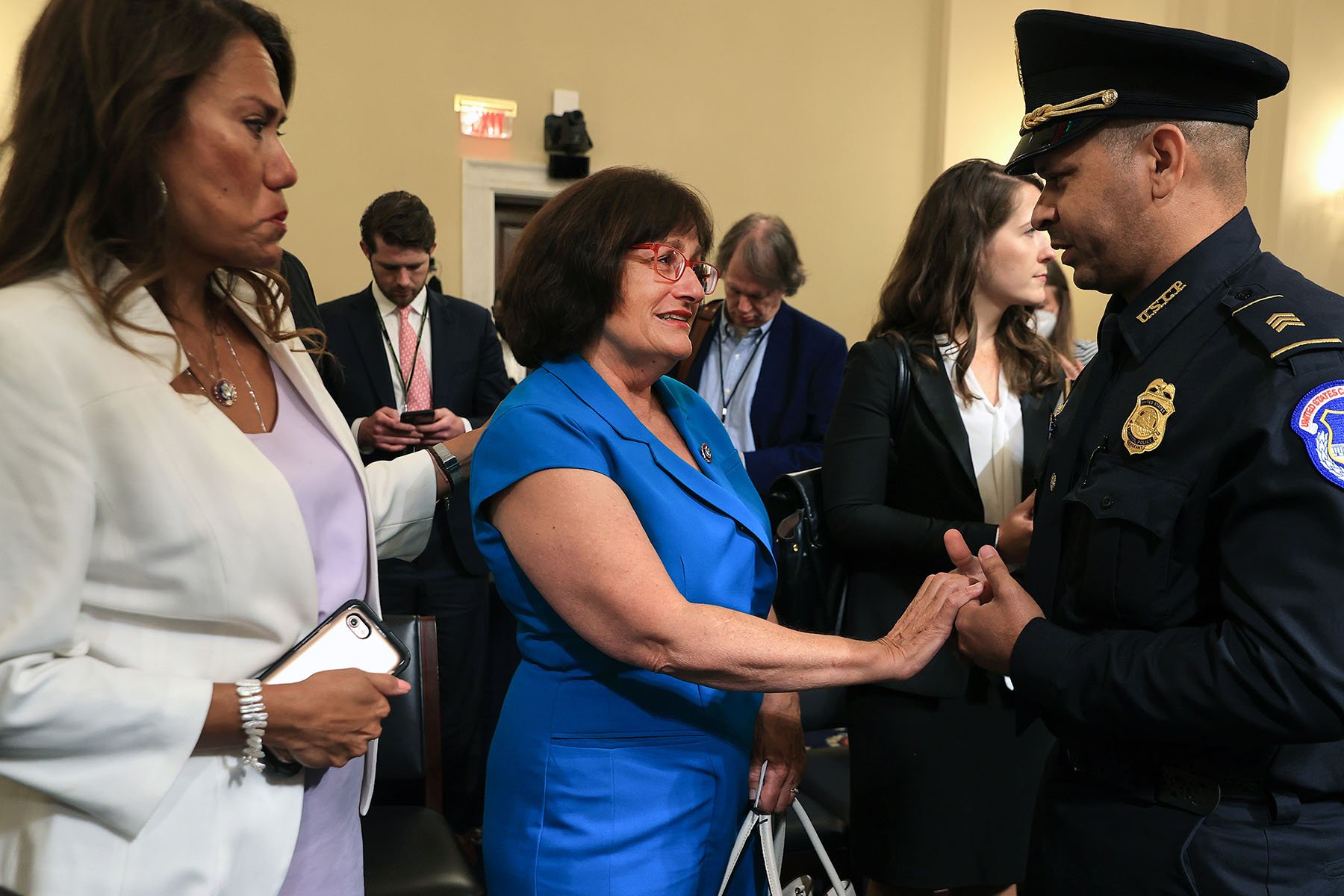
Rep. Ann McLane Kuster talks to Capitol Police officer Sgt. Aquilino Gonell after he testified before the House Select Committee investigating the January 6 attack on the Capitol.
Rep. Ann McLane Kuster talks to Capitol Police officer Sgt. Aquilino Gonell after he testified before the House Select Committee investigating the January 6 attack on the Capitol on July 27, 2021, in Washington, D.C.
(Chip Somodevilla/Getty Images)

Rep. Ann McLane Kuster of New Hampshire said she is still dealing with lasting post-traumatic stress disorder from January 6, one the “most impactful events” in her life. Kuster was also one of the last five lawmakers to be evacuated from the House floor. She could hear the thundering crowds and pounding on the doors and experienced a panic attack as officers snuck them into an elevator and rushed them through an underground tunnel to safety. Kuster later saw security footage of insurrectionists with backpacks, bear mace and zip ties entering the same hallway she had just evacuated 30 seconds earlier.

“I’m haunted by the idea that if the police hadn’t pushed back five seconds here, five seconds there, pushing back on the bicycle racks, pushing back on the people who were crushed in the doors — that the five of us would have been kidnapped, murdered or maimed,” Kuster said. “It was only a five-vote majority and if we hadn’t been there, America might not have woken up to Joe Biden as the lawfully elected president of the United States.” 

Kuster decided to retire this year before Trump is sworn in as the 47th President of the United States and attributes January 6 as one of the reasons for that decision. In addition to the lingering trauma, Kuster said she’s received more and more death threats and has noticed a marked increase of violent rhetoric in public discourse. 

“He tried to kill me once,” Kuster said. “I’m not available for it again.”

Only 2 days into 2025 & already multiple terrorist attacks in the U.S.

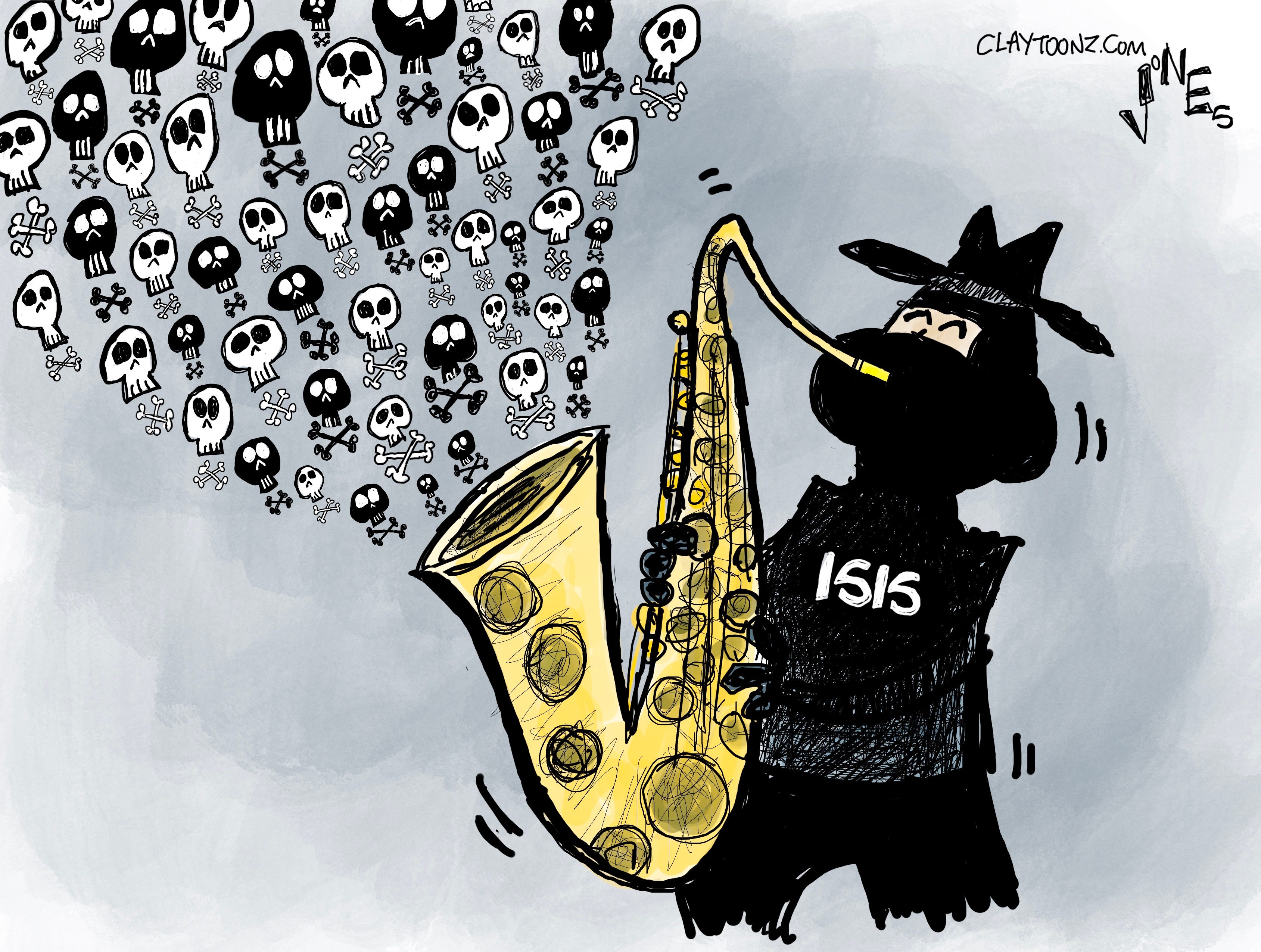
New Orleans Attack by Clay Jones

Attacks in Las Vegas and New Orleans Read on Substack

I’m from Louisiana, mostly. But I always tell people I’m from the part of the state that’s not fun, which means I’m not from New Orleans because that’s the impression most people get when I say I’m from Louisiana. Yes, I am a Saints fan. Who dat?

It breaks my heart to see New Orleans suffer. While I haven’t been there in over two decades, it’s a city I love. While every city is different and has its own character, New Orleans is special. I read somewhere a long time ago that the four most distinctive cities in this nation are Boston, Austin, San Francisco, and New Orleans. I don’t know if I believe that because I’d throw New York City and Chicago into that mix.

But like New York City, New Orleans knows how to rebound after a disaster. While 9/11 was hard, it didn’t destroy NYC. Katrina nearly destroyed New Orleans and the city was down for the count, but it’s back. And I assure you that an ISIS-inspired terrorist from Texas isn’t going to take the city out either.

And now I want an oyster po’boy.

What New Orleans nor the nation needs right now is Donald Trump.

Trump has blamed this attack on President Biden, open “border’s,” and immigrants. He also trashed law enforcement. But the thing is, this attack wasn’t perpetuated by an immigrant but by a U.S.-born citizen who’s in the military.

Donald Trump probably followed a false news report by Fox News, which they quickly corrected, but Trump doubled down on his lies.

But Trump isn’t just any American citizen. He’s the president-elect. He is receiving an intelligence briefing daily which means he knows he’s lying.

The election is over, so what the hell is Trump campaigning for? He’s scaring America so it’ll go along with his hate agenda, especially when he starts rounding up immigrants along with his enemies.

Creative note: I thought I had my idea for this in my head yesterday. But I went north to Northern Virginia last night and when I started work this morning in a different location, I decided I didn’t like my original idea. But then this hit me.

Drawn in 30 seconds: (snip-go watch)

Closure of northern Minnesota camp is ‘the greatest story.’ Here’s why.

https://www.startribune.com/closure-of-northern-minnesota-camp-is-the-greatest-story-heres-why/601199362

I know I posted a link to the story via email as I was reading on my phone at the time.   But here I am reposting the story in full as it is a grand reason while the camp is being closed.  I am so happy for the reason.   Hugs.

============================================================

Willow River, Minn., camp One Heartland is for sale after serving kids there for nearly three decades.

By Jana Hollingsworth

The Minnesota Star Tribune
December 27, 2024 at 7:00AM
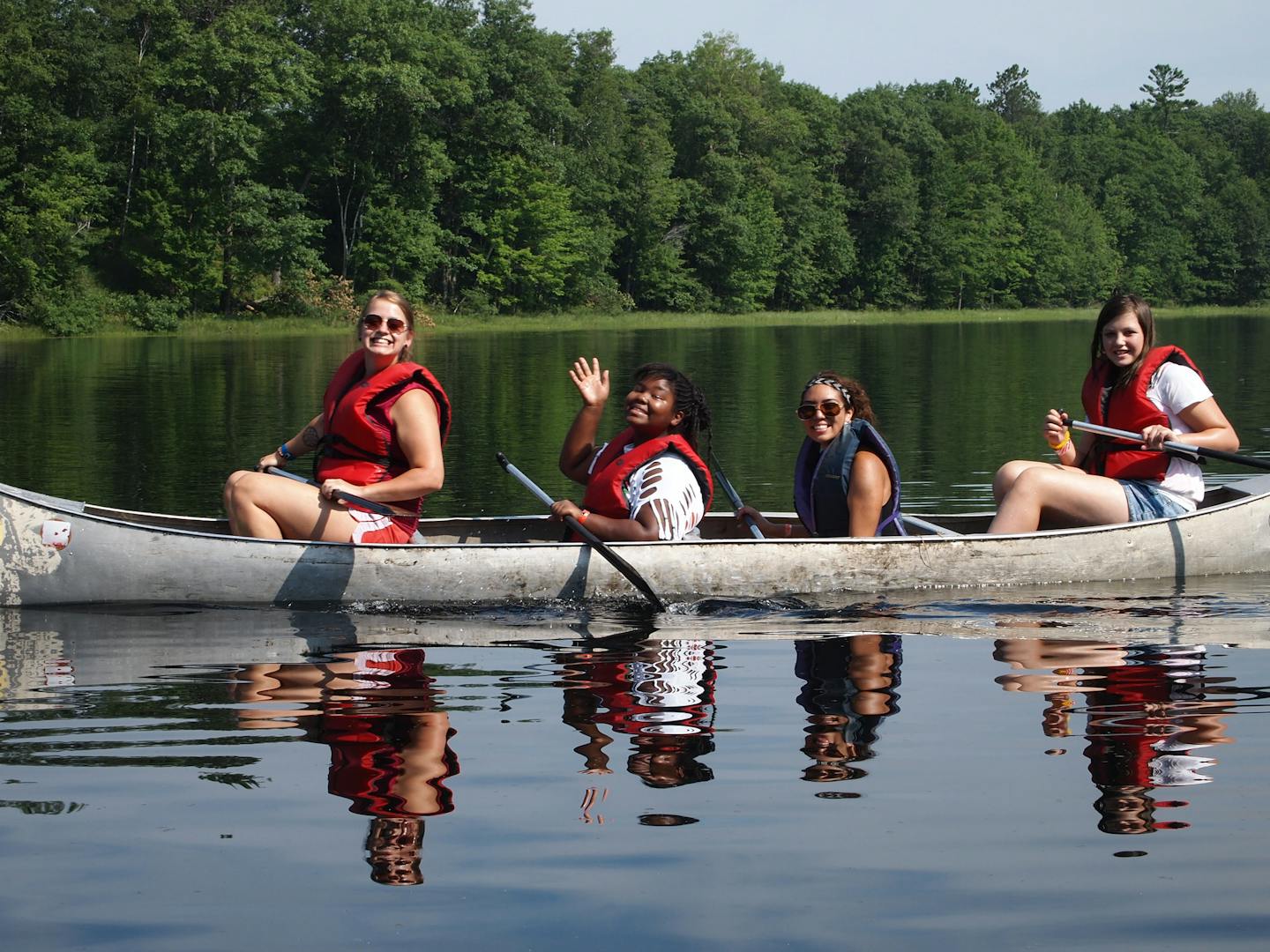
Campers paddle on a Willow River lake at One Heartland, a camp for kids affected by HIV/AIDS. (Submitted by One Heartland)
 

The ashes of 12-year-old Chris Edwards are buried on the grounds of a Pine County camp, where his mother insisted his memorial service be held after his HIV-related death in 1999.

It’s one of the reasons former campers are saddened by the news that One Heartland in Willow River, Minn., about 40 minutes southwest of Duluth, is for sale. The 80-acre site is home to a camp that has served kids living with or affected by HIV/AIDS for more than 30 years. But the number of babies contracting the virus through their mothers has declined to the point where such a camp no longer needs to exist.

“It’s a heartbreaker,” said Chris’ brother, Dylan Edwards, who attended the camp with Chris for years.

“But the purpose of the camp was for sick kids,” he said, and if there are so few that a camp isn’t feasible, “it’s hard to feel bad about that.”

In the United States, the perinatal HIV transmission rate, or the rate of a mother passing the virus on to a child through pregnancy, birth or breastfeeding, is now less than 1% thanks to antiretroviral medications, according to the Centers for Disease Control and Prevention. The World Health Organization says that globally, new HIV infections among children up to age 14 have declined by 38% since 2015 and AIDS-related deaths have fallen by 43%.

As a Wisconsin college student, founder Neil Willenson read about a 5-year-old boy in the Milwaukee area living with HIV who faced isolationism and discrimination at his school. Willenson reached out to the family and got to know them, learning the virus’s deep effects on each member.

He founded One Heartland in 1993 when he was 22, intending it to be a short project. Now 53, he often marvels at how quickly his college-age dreams of working in Hollywood as an actor and producer diverged to running a nonprofit.

“The impact was so transformative the first summer in 1993 that during the week the children were already saying ‘When can we come back?’ ” Willenson said.


They rented camps around the country the first few summers. Because knowledge of the virus was still minimal at the time, at least one camp didn’t want kids with HIV swimming in its pool, said Edwards, who attended the camp its first year. One Heartland was forced to go elsewhere the next year.

Willenson bought the Willow River property from an Optimist Club in 1997. Former Minnesota Twins player and manager Paul Molitor donated money for the purchase and was a spokesman for the camp for several years.

“We wanted to create a safe haven where children affected by the disease, perhaps for the first time in their young lives, could speak openly about it and be in an environment of unconditional love and acceptance,” said Willenson, who is the president of Big Brothers Big Sisters of Metro Milwaukee, as well as a public speaker and founder of other camps. He stepped away from One Heartland leadership in 2010.

With referrals from the National Institutes of Health, children were flown to Minnesota from around the country at no cost to their families; expenses were paid by donors.

Nile Sandeen was the boy who inspired the camp. Now 38, he is a married pastor and doctoral student living in South Carolina. His mother, a nurse who died from the virus in 2010, had tried to provide AIDS education to parents and others concerned about Sandeen attending school. He recalled one student backing off and throwing his hands in the air when he got near him, and one friendship a boy kept a secret from fearful parents.

Sandeen attended camp for several years and traveled the country with the nonprofit, speaking at schools. One Heartland was an outsized presence in his life, giving him a place to “let go and be a kid” and be among others feeling the same isolation, sorrow and pain, he said. It fostered a community created among kids living “radically different” lives than most.


“It was a level of camaraderie and commiseration that is hard to put into words,” Sandeen said.

Chris Edwards was Sandeen’s first close camp friend, and Sandeen reeled from his death, recognizing his own mortality at age 13. Campers and staff members united during those dark periods, a support system Sandeen continues to feel.

For more news about Duluth/Superior, the North Shore and the Iron Range, sign up for the free North Report newsletter.

The camp “is still part of the tide pushing you forward in life,” he said. “And so many people had that.”

The Edwards brothers are from the Atlanta area and had never had a northwoods experience, Edwards said. The volunteers and medical staff there helped quell some of the cynicism campers had from living with HIV or AIDS, he said, and when kids wanted to talk about death, they led those conversations with grace. The Edwardses lost their father to the virus when they were small children. Their mother died from it when Dylan was 20.

During the first several years of One Heartland’s existence, death was common. Now, many of the thousands who swam and hiked and made crafts at the camp have married and had children, Willenson said. He noted a documentary is being filmed about the camp, which eventually broadened its reach to serve different campers, including those with diabetes and LGBTQ youth. It was largely serving the latter group last summer. The nonprofit hopes to sell the camp to another group that will serve kids.


That there’s no longer a need for the camp’s original purpose “is the greatest story that I ever could have imagined,” Willenson said. “It’s something I never could have predicted.”

Some Poetry on New Year’s Morning

It is about war. It is a beautiful piece of work about war. Click the title to get the background.

All I can see is nothing Sahar Muradi

If nothing that can be seen can either be God or represent Him to us as He is, then to find God we must pass beyond everything that can be seen and enter into darkness.
Since nothing that can be heard is God, to find Him we must enter into silence.
—Thomas Merton, from “New Seeds of Contemplation,” 1961

I swear to God, mom, I am exhausted, but praise be to God in all circumstances.
—writing, translated from the Arabic, on the Al-Shifa Hospital walls, April 2024

All I can see is nothing
Fields of

Hollow
The O that escapes

A pasture of
Mouths

An apartment building
Of locked jaws

The silent weeping
Of rocks

I hear nothing
In the bags of soft limbs sighing

Milk teeth
Sharpening a father’s heart

The cone hat on the small head
Singing to plumes

Iftar in the tents
Flapping pages off the moon

But Your name over and over
On the hospital walls

But Your name stilling
The fire that does not cease

But Your name everywhere
Everything all at once

I see nothing
From this distance

This deepest night
This longest darkness

Fumble at fajr
To loosen my gasps

I repeat Your name
Over and over

Then bow to Your wisdom
To the terror of Your liberation

O that I may not see anything
More

Copyright © 2024 by Sahar Muradi. Originally published in Poem-a-Day on December 31, 2024, by the Academy of American Poets.

Peace & Justice History for 1/1

January 1, 1831

William Lloyd Garrison first published The Liberator (four hundred copies printed in the middle of the night using borrowed type), which became the leading abolitionist paper in the United States. He labeled slave-holding a crime and called for immediate abolition.
From the first issue: “I will be harsh as truth, and uncompromising as justice. On this subject, I do not wish to think, or speak, or write with moderation.
“Assenting to the ‘self-evident truth’ maintained in the American Declaration of Independence, ‘that all men are created equal, and endowed by their Creator with certain unalienable rights—among which are life, liberty, and the pursuit of happiness,’ I shall strenuously contend for the immediate enfranchisement of our slave population.”
Selections from The Liberator 
January 1, 1847
Michigan became the first state – the first government in the English-speaking world – to abolish capital punishment (for all crimes except treason). This was done by a vote of the legislature, and was not a part of the state’s constitution until 1964.
How it happened (it’s a .pdf)
January 1, 1959
32-year-old lawyer Fidel Castro led Cuban revolutionaries to victory over the corrupt government of Fulgencio Batista who had fled the island the day before. Batista, a former army sergeant, had seized power in a coup, canceling an election, in 1952.
 
Fidel Castro
More on pre-Castro Cuba
The news at the time
Perspective of a U.S. intelligence agent
January 1, 1983
44 women scaled a 12-foot fence at dawn, breaking into a cruise missile base at Greenham Common in Great Britain, and danced on a missile silo.
The lyrics to their “Silo Song”  
January 1, 1987
Ten anti-nuclear activists were arrested for trespassing at the Nevada Test Site, the culmination of a 54-day encampment at the main Test Site gate. The camp established momentum for what became a movement ultimately involving over 10,000 arrests in numerous Test Site protests over the following years in the campaign to achieve a freeze of all nuclear weapons testing.

Nevada test site landscape
The Nevada site includes more than 14,000 sq. km. (nearly 6000 sq. miles, larger than the state of Connecticut) of uninhabited land where atmospheric, and later underground, nuclear testing had been conducted since the 1950s.
About the the Nevada Test Site 
January 1, 1989

Kees Koning
Kees Koning, a former army chaplain and priest, and Co van Melle, a medical doctor working with homeless people and illegal refugees, entered the Woensdrecht airbase (for a second time), and began the “conversion” of NF-5B fighter airplanes by beating them with sledgehammers into ploughshares. The Dutch planned to sell the NF-5B to Turkey, for use against the Kurdish nationalists as part of a NATO aid program which involved shipping 60 fighter planes to Turkey. Koning and van Melle were charged with trespass, sabotage and $350,000 damage; they were convicted, and both sentenced to a few months in jail.
Read more about the plowshares movement
January 1, 1991
Early in the morning Moana Cole, a Catholic Worker from New Zealand, Ciaron O’Reilly, a Catholic Worker from Australia, and Susan Frankel and Bill Streit, members of the Dorothy Day Catholic Worker community in Washington, D.C., calling themselves the ANZUS (Australia, New Zealand and U.S.) Peace Force Plowshares, entered the Griffiss Air Force Base in Rome, New York.

Moana Cole
After cutting through several fences, Frankel and Streit entered a deadly force area, and hammered and poured blood on a KC-135 (a refueling plane for B-52s), and then hammered and poured blood on the engine of a nearby cruise missile-armed B-52 bomber. They presented their action statement to base security who encircled them moments later. 
About Moana Cole 
January 1, 1994
The North American Free Trade Agreement (NAFTA) took effect. A treaty among Canada, the U.S. and Mexico, it called for all three countries to follow similar policies for environmental, safety and investment regulation, apart from laws passed by their respective legislatures.
January 1, 1994
On the day NAFTA (see above) took effect, more than 2,000 native Mayans in Mexico’s Chiapas state marched into the state capital, San Cristóbal de las Casas, and five neighboring towns, and seized control. Calling themselves Zapatistas, or the Zapatista Army of National Liberation (EZLN), a “declaration of war” was issued.
Chiapas is among the poorest parts of Mexico. The indigenous peoples of Mexico long suffered as second-class citizens due to the dominance of the Roman Catholic church and the traditional Mestizo (mixed Spanish and Indian ancestry) political leadership of the country. The EZLN was certain that NAFTA would permanently lock in the top-down economic situation in Mexico. The Zapatistas’ slogan was !Ya basta! (“Enough is enough”).
Employees at the Mexican stock exchange were evacuated by riot police. 25,000 Mexican soldiers arrived in Chiapas equipped with automatic weapons, tanks, helicopters and airplanes. 145 deaths were reported, mostly civilians. Massive arrests and subsequent torture of prisoners by the government took place.

https://www.peacebuttons.info/E-News/peacehistoryjanuary.htm#january1