
Category: Misogyny
Haters are going to hate, Republicans are going to try to spark hate everywhere. Lies are not a bad thing to them as long as they win so they can continue to hate.
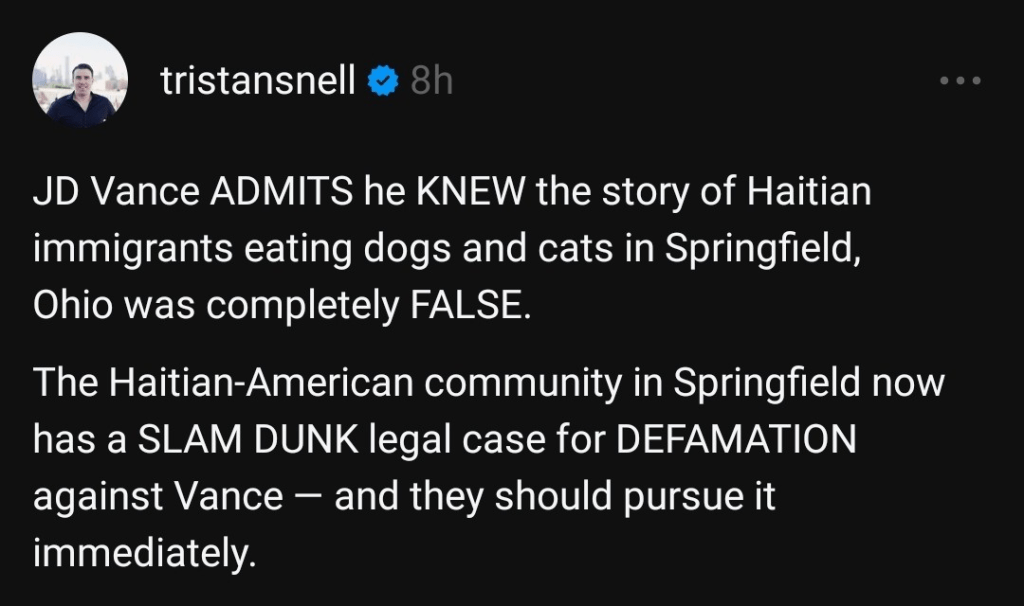
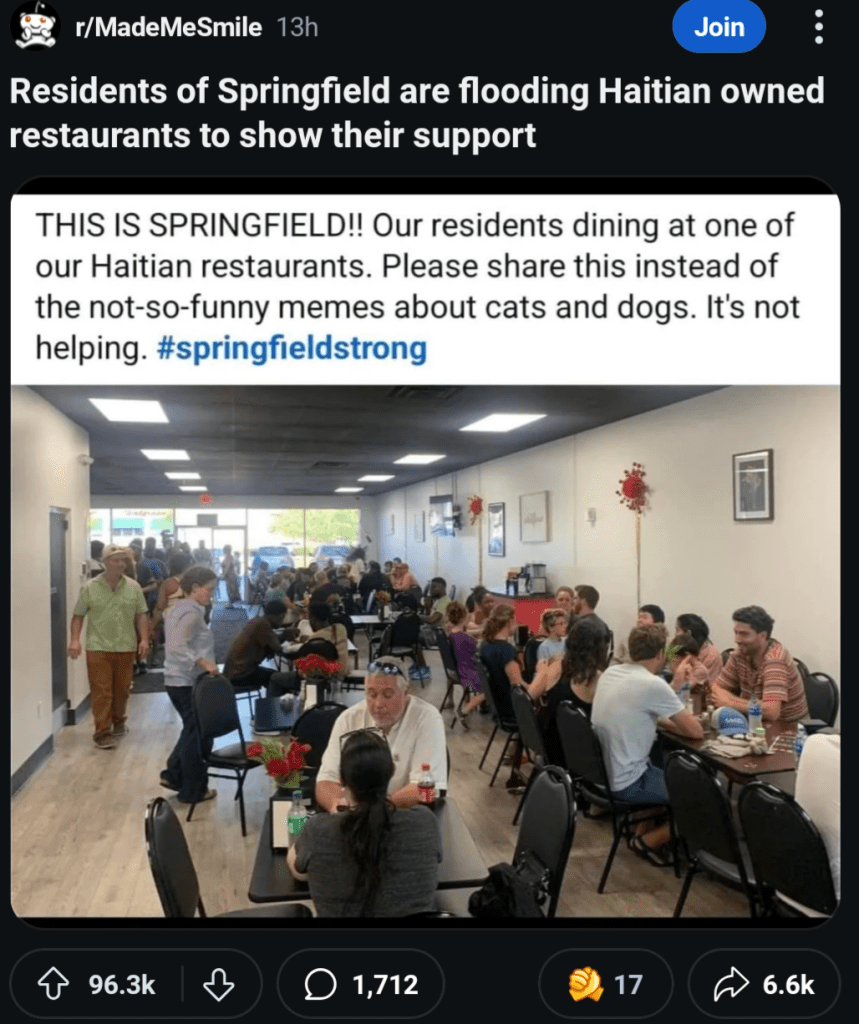
A day after a Springfield school and other public buildings were evacuated and closed due to bomb threats, and the same day that two other Springfield elementary schools were evacuated and one middle school closed due to a new, separate bomb threat, Husted posted a photo of two geese on X Friday morning with the comment, “Most Americans agree that these migrants should be deported.” Husted’s spox has refused to comment. He first appeared here in 2012 when as Ohio secretary of state he eliminated extended hours for early voting.
“When people ask me…What’s gonna happen if the Flip – Flopping, Laughing Hyena Wins?? I say…write down all the addresses of the people who had her signs in their yards! Sooo…when the Illegal human ‘Locust’ (which she supports!) Need places to live…We’ll already have the addresses of the their New families…who supported their arrival!” Zuchowski wrote.
Read the full article. Replies to his post are turned off. Zuchowski made news several years ago for a rant about the name change for the Cleveland Indians, which he claimed was “erasing our heritage.”
“I’ve seen the guns myself and all, and, yeah, they had a lot of guns and stuff over there, and, yeah, a lot of people were afraid of him back in the day,” she said.
“These are people that want to destroy our country. It is called the enemy from within. They are the real threat. They do it with a combination of rhetoric and lawsuits they wrap me up in.
Ugh. This is awful.
It’s about the Vances. A commenter on MPS posted the link. I was fighting with myself about posting it because it’s awful, but I’m going to because it’s information to be used to determine a vote. But I’m only putting a snippet and the link, so people can decide if they want to read (and see) all of it.
JD Vance’s wife, lawyer Usha Vance, has been conspicuously absent from the campaign trail thus far except for a few brief appearances, prompting speculation and concern. But after a recent campaign appearance, folks who were previously sympathetic to Usha Vance’s plight (marrying a guy who may or may not have f*cked a couch) are thinking twice.
Last week, Usha Vance was seen with her husband at the stalwart Erie, Pennsylvania butcher shop Gordon’s Butcher & Market, where the owners talked to the couple about the shop’s importance in the community.
There are just a few problems with this. Usha Vance is a vegetarian and a practicing Hindu. In Hinduism, the figure of the cow is not only celebrated, but sacred. Cows represent the divine and as such are associated with multiple deities, such as the Lord of Cattle and fertility god Shiva, Krishna, and the bull god Indra. (snip-MORE)
Taylor Swift and immigrants drive right wing men to madness
Elon Musk, JD Vance and others are fighting a losing battle to put them in their place.
Marisa Kabas September 12, 2024

Aubrey Plaza, Taylor Swift, Linda Rondstadt
In the flurry of post-debate spin and endorsements you may have missed what is, to my eye, one of the most disgusting things a man has ever said to a woman.
Despite a dominant performance by Vice President Harris followed by the ringing endorsement of Taylor Swift to her 283 million Instagram followers, we were quickly reminded that misogyny will always try to win the day. Elon Musk, a scumbag who needs no introduction, took to his cesspool of a platform in the moments following Swift’s post in an attempt to put her in her place.
(The tweet embed code doesn’t work here; I’m not on Twitter, so I can’t do much. You can see it on Marisa’s page, linked below, or I transcribed it; it is from Mr. Musk, who says, “Fine Taylor … you win … I will give you a child and guard your cats with my life” )
Understanding these 17 words requires a bit of context which I’m loath to repeat but feel duty-bound to explain. (Swift has not made any public comment regarding the tweet so far.)
First, let’s look at Swift’s endorsement of the Harris/Walz campaign. After explaining her process of researching and watching the presidential debate, she wrote:
“I will be casting my vote for Kamala Harris and Tim Walz in the 2024 Presidential Election. I’m voting for @kamalaharris because she fights for the rights and causes I believe need a warrior to champion them. I think she is a steady-handed, gifted leader and I believe we can accomplish so much more in this country if we are led by calm and not chaos. I was so heartened and impressed by her selection of running mate @timwalz, who has been standing up for LGBTQ+ rights, IVF, and a woman’s right to her own body for decades.

She then reminded people to register to vote and to vote early if possible, providing links to resources in her Instagram story. And she signed it “With love and hope, Taylor Swift, Childless Cat Lady.” This was, of course, a reference to Trump’s veep candidate JD Vance saying the Democratic party is run by these sorts of women—meaning they couldn’t possibly care about the future of [white] children in this country.
Swift’s endorsement was a seminal moment in the too-close-for-comfort-and-sanity race between Harris and Trump, and one many have been breathlessly waiting for. While a Swift endorsement doesn’t mean everything, it certainly means something to a lot of people: In the 24 hours following her post, 406,000 people had visited Vote.gov via Swift’s custom link.
Now let’s break down Musk’s disgusting tweet piece by piece:
“Fine Taylor”
Right off the bat, I’m pissed. The Taylor in question is obviously Swift, arguably the most famous celebrity in the world. She’s an artist, a brand and an economy all at once. I may not be a Swiftie but I’ll be damned if the most divorced man of all time doesn’t show her a little respect. You’re not on a first name basis with her, you creep. She does not know you. But we’ll get back to that later.
“you win”
Winning implies that Swift willingly entered into some sort of bet or game with Musk, one in which he’s been forced to concede. As far as we know, Swift and Musk have never communicated in any capacity. In fact, as one Twitter user pointed out, Musk has replied to her a number of times over the years to no avail. Nevertheless, he persisted.

“I will give you a child”
This is where things get really dark. As established in the first two points, these two people do not know each other. Yet Musk is offering to impregnate Swift which, again, is not something she has ever expressed wanting. In fact, impregnating someone against their will is a heinous crime.
Musk has long shown that the rules don’t apply to him, and so far he’s right. From tanking the value of every company he’s touched to saying heinous things about immigrants, he remains a free man and a billionaire with no consequences to speak of. He’s the father of at least 12 children with at least three women, one of whom is an executive at Neuralink, his company that creates chips to be implanted in the brains of humans.
(There is a tweet here on the page; the embed code doesn’t work. See below, or here it is transcribed. “Doing my best to help the underpopulation crisis. A collapsing birth rate is the biggest danger civilization faces by far.” )
He quite literally thinks spreading his seed will save humanity, and Musk thinks he’d be doing Swift a favor—saving her life and giving it meaning, even!—by getting her pregnant. For any man to presume such a thing is vile; for a deadbeat dad with a white supremacy problem, it’s unconscionable.
“and guard your cats with my life”
As if being a predatory misogynist wasn’t enough, Musk decided to throw in some casual racism which also served as a callback to one of Trump’s most unhinged moments in the debate. Trump, echoing claims first trumpeted by Vance, furthered the total and complete lie that Haitian migrants in Springfield, Ohio are eating white people’s pets. It started with an accident last year wherein a Haitian migrant drove into a school bus and killed an 11-year-old white boy, sparking a racist backlash against the migrant community that has rapidly grown in Springfield since 2020. The boy’s parents have told Trump and Vance to stop using their son to spread “incessant hate.”
In Musk’s telling, not only does Swift need to be impregnated to fight against a non-existent population crisis, but her beloved pet cats need protection from the non-existent cat-hungry migrants.
Dave Rubin, a far-right media personality who works for Tenet Media (the company that it was revealed unwittingly worked for the Russian government) managed to somehow take Musk’s threat a step further.
(The tweet embed code doesn’t work. It’s awful, but transcribed, it says, “Dave Rubin asks Taylor Swift to reconsider her endorsement: ‘Taylor Swift, you are a young pretty girl, do you know what the gang members from Venezuela do to young pretty girls? It ain’t pretty!'”. Or, go to Marisa’s page to read; it’s all there.)
The mention of Venezuela was a reference to another anti-immigrant remark Trump made during the debate. Here Rubin deftly combines racism with a rape fantasy, though a different one than Musk had in mind. These are the minds of deeply troubled men.
Following Musk’s post, his estranged daughter Vivian Jenna Wilson bravely posted on Threads about it.

Wilson has recently started speaking out against her father who claimed his child was, in his view, “dead, killed by the woke mind virus,” because she’s transgender. In her first-ever public interview, Wilson told NBC News of Musk in late July, “He was cold. He’s very quick to anger. He is uncaring and narcissistic.”
That narcissism reared its ugly head this week, making even his most fervent supporters uneasy.

While far right zealots have the luxury of laughing off Trump, Vance and Musk’s cruelty, the migrant community in Springfield remains at active risk. On Thursday multiple city buildings and schools were forced to shut down after receiving a bomb threat. The Haitian Times reports that some families have been afraid to send their kids to school since they became caught in the racist crosshairs, with cars being vandalized and Haitian residents considering moving elsewhere. This is all despite the fact that, as a PBS Newshour report demonstrated, Springfield’s businesses are thriving thanks to the town’s newest residents.
Meanwhile, the childless cat (and dog) ladies are assembling: From Swift to Stevie Nicks, Linda Rondsadt and Aubrey Plaza, famous women are using their platforms to tell the wannabe dictators of the Republican ticket that they have no control over us or our bodies. Not now, not ever.
And in the coming days as conservatives continue to direct hate at immigrants in Springfield and beyond, it’s incumbent upon those with large followings to stand in solidarity with them—because we’re all fighting the same monsters.
https://www.thehandbasket.co/p/cat-ladies-immigrants-taylor-swift-elon-musk
Charlie Kirk Absolutely HUMILIATED By College Student
Let’s talk about Trump, Vance, vetoes, and a lack of discussion….
Monday at the Movies on Tuesday
reblog from hecatedemeter:
Barbara Gittings: Mother of the Gay Rights Movement
(From the link on Peace History.)
Day 2 of the Pride 30 Project for Pride Month, 2018.
Jeffry J. Iovannone published in Queer History For the People Jun 2, 2018
Barbara Gittings was a lover of books. She realized, from a young age, that she also loved girls. So when, in 1949, she left Wilmington, Delaware to attend Northwestern University, she did what any bookish young lesbian would do: research homosexuality in the school’s library. What Gittings found was not comforting. The vast majority of sources were written by medical professionals and described homosexuality as an illness or a perversion. She became so consumed with spending time in various Chicago libraries that she neglected her coursework and flunked out of school. But as a result of the discouraging information she found, an activist was born. With passion, determination, and what she would come to refer to as “gay gumption,” Gittings would spend the rest of her life working, in various ways, to correct those lies she found in the pages of books and scientific journals on the library shelves.
Gittings moved to Philadelphia in 1950 and supported herself with part-time clerical work. She continued to read everything she could find on homosexuality and, as part of her search, discovered Donald Webster Cory’s The Homosexual in America: A Subjective Approach, originally published in 1951. Gittings was particularly impressed with Cory’s arguments that gays and lesbians constituted a large unrecognized minority who deserved civil rights and his attempts to cultivate empathy in his readers by outlining the difficulties faced by American homosexuals. She wrote to Cory’s publisher and discovered he lived in New York City. The two met on several occasions, and Cory informed Gittings of a newly-formed gay organization in Los Angeles: the Mattachine Society, founded in 1950 by Harry Hay.
In the summer of 1956, when she was on vacation from her office job, Gittings boarded a plane to Los Angeles and visited the office of ONE, Inc., a homophile organization who had amicably split from the Mattachine Society in 1952. The members of ONE, Inc. informed her of the existence of a San Francisco-based organization for lesbians, the Daughters of Bilitis (DOB), founded in 1955 by lesbian partners Del Martin and Phyllis Lyon.
Gittings once again boarded a plane, this time bound for San Francisco. The DOB were, fatefully, having a meeting that very evening in a member’s apartment. The meeting was the first time in her life Gittings would interact with a group of lesbians outside of a bar setting. Two years later, in 1958, Gittings officially joined the DOB and was tapped by Martin and Lyon to start an East Coast chapter of the organization based in New York City. With her co-founder, Marion Glass, Gittings built the chapter into the largest in the country.
In 1963, Gittings, whose enthusiasm and knowledge of literature left an impression on Martin and Lyon, was tapped to be the editor of The Ladder, the DOB’s national magazine for gay women. Gittings transformed The Ladder from what was essentially a newsletter to a national magazine respected within gay circles. With the help of her partner, Kay “Tobin” Lahusen, whom she met in 1961 at a DOB picnic in Rhode Island, Gittings replaced the amateurish illustrations that typically adorned the cover of The Ladder with photographs taken by Lahusen of actual lesbians who appeared confident and happy.
Gittings began to take The Ladder in an increasingly militant direction, reporting on protests, questioning the merits of various activist strategies such as picketing, and engaging in debates with so-called “experts,” arguing that homosexuality was a social and cultural problem, not a psychological problem. The activist bent of The Ladder under Gittings’ editorship alarmed the West Coast leadership of the DOB. When Gittings, amidst her many activities on behalf of gay rights, was late with the August 1966 issue, Martin and Lyon used her tardiness as an excuse to oust her as editor.
Gittings would also find a kindred spirit in Frank Kameny, who she credited as the first person to articulate a fully coherent philosophy of gay rights. She and Lahusen partnered with Mattachine Washington, of which Kameny was a co-founder, working alongside other lesbians and gay men to directly challenge the federal government. Gittings participated in the first picket of the White House for homosexual rights on April 17th of 1965.
Gittings worked with Kameny and other activists to lobby the American Psychiatric Association (APA) to remove homosexuality as a diagnostic category from the Diagnostic and Statistical Manual (DSM). At the APA’s 1972 conference, held in Dallas, Texas, Gittings, Kameny, and Lahusen created a display entitled “Gay, Proud, and Healthy: The Homosexual Community Speaks.” The exhibit, which featured photographs of gay couples taken by Lahusen, was adorned with the word “LOVE” in bold letters and portrayed gay people as healthy and happy, not as patients who were tormented and in need of a cure. In December of 1973, the APA board of trustees voted to pass a resolution to remove homosexuality from the DSM, effectively declassifying it as a mental illness.
Gittings was a lifelong bibliophile, and though she recognized the importance of taking on the federal government and institutions such as the APA, she never lost sight of the “lies in the libraries” she discovered as a college freshman and the importance of gay representation. In 1970, she joined the American Library Association’s (ALA) newly-formed Task Force on Gay Liberation (TFGL). The TFGL, whose mission was to provide support for gay librarians within the profession and increase gay representation in libraries, was glad to have a veteran activist like Gittings join their ranks.
With the help of Israel Fishman, the first coordinator of the TFGL, Gittings organized a gay kissing booth — titled “Hug-a-Homosexual: Free Kisses” — for the 1971 ALA conference in Dallas, Texas. While the group could have created a nice display featuring gay books, periodicals, and their bibliography, they instead decided to make their presence known by showing gay love live. The publicity was better than Gittings and the TFGL could have imagined, and continued to spark discussions within the ALA over the next year.
In 1999, in honor of her contributions to create more visibility for gays and lesbians in libraries and in the profession, Gittings was awarded a lifetime membership at the annual ALA conference, held that year in New Orleans, Louisiana. The ALA also named an award after Gittings as part of their Stonewall Book Awards, sponsored by the Gay, Lesbian, Bisexual, and Transgender Round Table (GLBTRT), the contemporary iteration of the TFGL. The Stonewall Book Award-Barbara Gittings Literature Award is given annually for works of fiction that exhibit “exceptional merit relating to the LGBT experience.”
Barbara Gittings died on February 18th, 2007 at the age of 74 after a long battle with breast cancer. In a 1999 interview with American Libraries magazine, she summarized her career as a gay activist with the wit and wisdom she was known for:
“As a teenager, I had to struggle alone to learn about myself and what it meant to be gay. Now for 48 years I’ve had the satisfaction of working with other gay people all across the country to get the bigots off our backs, to oil the closet door hinges, to change prejudiced hearts and minds, and to show that gay love is good for us and for the rest of the world too. It’s hard work — but it’s vital, and it’s gratifying, and it’s often fun!”
Trump deputy campaign manager identified in Arlington National Cemetery dustup
September 5, 20246:47 PM ET By Stephen Fowler, Quil Lawrence, Tom Bowman
One of two staffers involved in the altercation at Arlington National Cemetery is a deputy campaign manager for Donald Trump’s reelection bid, NPR has learned. The former president insisted this week the incident did not happen, highlighting a growing disconnect between the messaging of the candidate and his campaign. NPR is identifying both staffers after the campaign’s conflicting responses to the incident last week outside Section 60 of the cemetery, where many casualties of Iraq and Afghanistan are buried.
The two staffers, according to a source with knowledge of the incident, are deputy campaign manager Justin Caporale and Michel Picard, a member of Trump’s advance team.
Caporale is a one time aide to former first lady Melania Trump who left the White House to work for Florida Gov. Ron DeSantis before returning to the Trump campaign. He was also listed as the on-site contact and project manager for the Women for America First rally in Washington, D.C. on Jan. 6, 2021 where Trump urged the crowd to “stop the steal” before some of them stormed the U.S. Capitol.
After Trump participated in a wreath laying ceremony on the third anniversary of the deadly bombing at Abbey Gate in Afghanistan that killed 13 U.S. service members, Trump visited Section 60 at the invitation of some family members and friends of the fallen soldiers.
ANC rules, that had been made clear to the Trump campaign in advance, say that only an official Arlington photographer can take pictures or film in Section 60. When an ANC employee tried to enforce the rules, she was verbally abused by the two Trump campaign operatives, according to a source with knowledge of the incident. Picard then pushed her out of the way according to two Pentagon officials. (snip-More)
https://www.npr.org/2024/09/05/nx-s1-5101991/trump-campaign-arlington-national-cemetery-staff-debate
Some Awesome Ladies Of The Labor Movement
Happy Labor Day! Let’s Talk About Some Awesome Ladies Of The Labor Movement by Rebecca Schoenkopf Read on Substack
Because it was not actually just a bunch of flannel-wearing white dudes.
A version of this article was initially published on May 1, 2019. Happy Labor Day, we’re taking the day off!
When we talk about the history of feminism, we tend to think about the causes and struggles of middle class white women. When we talk about labor history, we tend to think about the causes and struggles of white working class men.
And that is some absolute bullshit.
Working class women, very often women of color and immigrant women, were, are and always have been the backbone of the labor movement. They were working and organizing well before Second Wave Feminism “made it possible” for women to enter the workforce. They’re the ones who first fought for equal pay, and they’re the ones who were doing the bulk of feminist work and activism during the years in between getting the right to vote and The Feminine Mystique. They are still fighting today.
So, since it’s Labor Day, let’s celebrate the hell out of them, starting with the woman who started it all.
Lucy Parsons
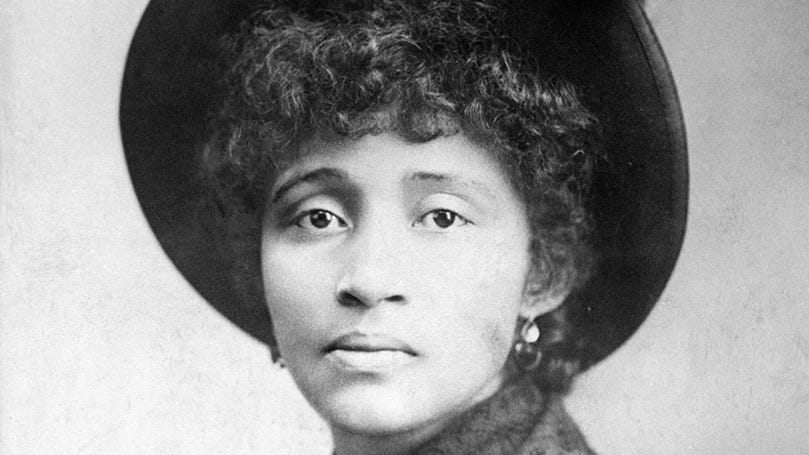
“More dangerous than a thousand rioters,” anarchist Lucy Eldine Gonzalez Parsons was a writer, orator, one of the founders of the Industrial Workers of the World, and tireless campaigner for the rights of people of color, all women, and all workers. Her husband, Albert Parsons, was one of the Haymarket martyrs.
We, the women of this country, have no ballot even if we wished to use it … but we have our labor. We are exploited more ruthlessly than men. Wherever wages are to be reduced, the capitalist class uses women to reduce them, and if there is anything that you men should do in the future, it is to organize the women.
Though Parsons and Emma Goldman were widely regarded as the most prominent female anarchists of the day, they very notably did not get along so well. Parsons believed that oppression based on gender and race was a function of capitalism and would be eliminated when capitalism was eliminated, whereas Goldman believed such oppression was inherent in all things. Parsons was all class struggle all the time, and felt that the “intellectual anarchists” like Goldman spent too much time bothering with appealing to the middle class.
One of her most important contributions to the labor movement was the concept of factory takeovers.
“My conception of the strike of the future is not to strike and go out and starve, but to strike and remain in, and take possession of the necessary property of production.”
Parsons is best known for being the woman who really started the celebration of May Day as a day for workers’ rights — leading a parade to commemorate the anniversary of the Haymarket Affair. Soon, nearly every other country in the world followed suit and proclaimed this day International Worker’s Day. Alas, here in America, we go with the less radical and more picnic-y Labor Day that we are celebrating today, because Grover Cleveland thought a federal holiday commemorating the Haymarket Affair would encourage people to become anarchists and socialists, and no thank you, he did not want that.
Anna LoPizzo

Not much is known about Anna LoPizzo, other than that she was a 34-year-old mill worker who was murdered by police officer Oscar Benoit during the 1912 Lawrence Textile Strike — also known as the Bread and Roses Strike. Initially, police tried to charge two IWW organizers who were miles away for her murder, even though literally everyone there had seen Benoit shoot her.
The reason for the strike in the first place was that the textile mills of Lawrence, Massachusetts, cut worker pay after the state cut the number of hours women could legally work from 56 down to 54. The Industrial Workers of the World, led by Elizabeth Gurley Flynn (we’ll get to her in a minute), organized more than 20,000 workers of more than 40 different nationalities to demand they get their fair wages. One of the primary tactics used in the strike was sending the starving families of the mill workers on a tour to New York City so that people there could see for themselves what these low wages were doing to children. Between that and LoPizzo’s death, sympathy was on the side of the workers. Congressional hearings into the conditions of the mills were held, and the mills themselves ended up settling the strike by giving all workers across New England a 20 percent raise.
Lillian Wald

Susan B. Anthony isn’t the only important feminist buried in the Mount Hope Cemetery in my hometown of Rochester, New York. There is another. Her name was Lillian Wald, and she was a total fucking bad ass. She wasn’t just a suffragist — she was also an early advocate for healthcare for all people regardless of economic class or citizenship, a founding member of the NAACP, lobbied against child labor, advocated for the rights of immigrants, helped to found the Women’s Trade Union League, and was an anti-war activist. Wald also founded the Henry Street Settlement House in New York City, which provides — to this day — social services, education, and health care to the impoverished. And she was active in the ACLU.
WHY THE HELL IS SHE NOT MORE FAMOUS? I am legitimately bothered by this and bring it up often.
Elizabeth Gurley Flynn
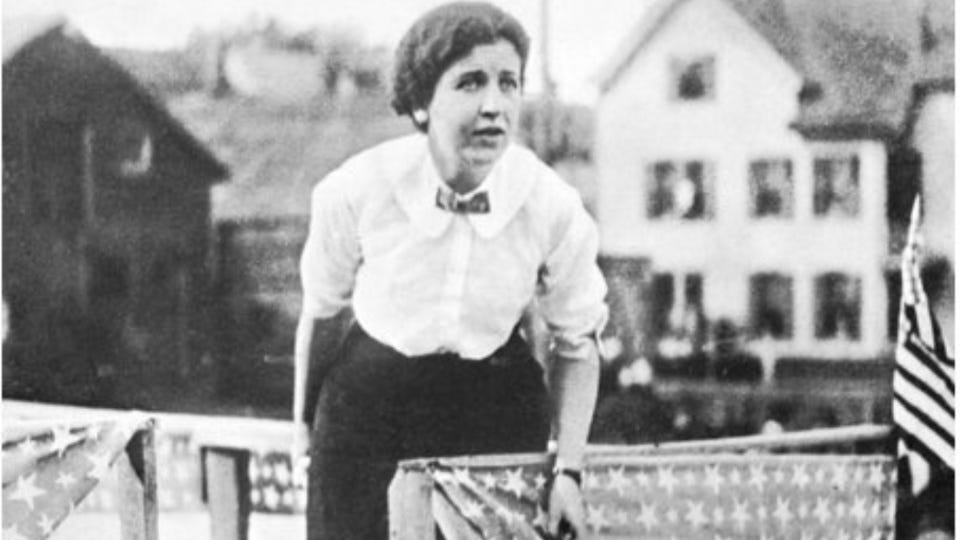
Hey! You know who was super freaking awesome? Elizabeth Gurley Flynn. As previously mentioned, she was an organizer with Industrial Workers of the World who helped organize the Lawrence Textile Strike. She also organized a hell of a lot of other strikes across the country, helped found the ACLU, and was known for the creative tactics she used to elicit sympathy and support for the American worker.
Hattie Canty
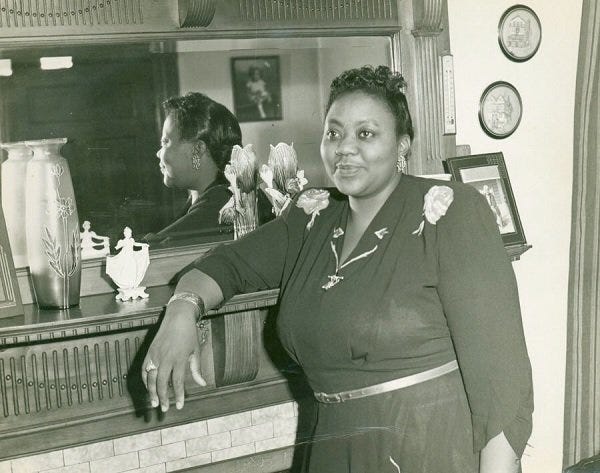
When Hattie Canty’s husband died in 1972, she found herself supporting eight children on her own. She found work as a maid at a Las Vegas hotel where she joined the Las Vegas Hotel and Culinary Workers Union Local 226. By 1990, she was president of that union, leading one of the longest strikes in American history — a six year strike of hospitality workers which, happily, ended in victory.
The Women of The Atlanta Washerwomen’s Strike
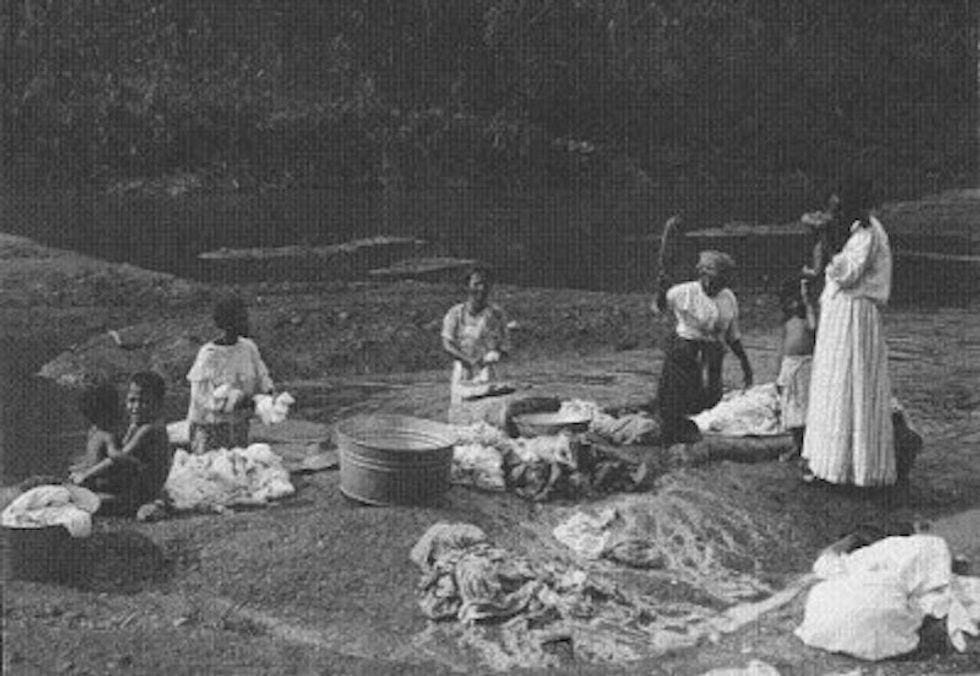
Back in the 1880s, only two decades after the Civil War ended, the most common occupation for Black women was as laundresses — this was largely because if poor white families were going to hire anyone to do chores for them at all, they were going to hire someone to do their laundry. These women were independent workers, often working from their own homes and making their own soap, and they only made about $4 a month. (Average non-Black-woman laborers earned about $35 a month in 1880.)
One day in 1881, about 20 of them got together and decided that $4 a month was some bullshit for all the work they were doing and decided to go on strike and demand wages of $1 for every 12 pounds of washing. Three weeks later, 3,000 other women joined them. Unsurprisingly, the city freaked out. They fined any participants $25 — which was a lot of money when you only made $4 a month — and they offered tax breaks to any corporation that would come down there to start a commercial steam cleaning business. Still, the women did not back down.
Eventually, people got really sick of doing their own laundry, and the city decided to back down on the fines, and accede to their demands for fear that the unrest would spread to other industries.
Dolores Huerta

Dolores Huerta, along with Cesar Chavez, helped to organize the National Farmworkers Association, which later became United Farm Workers. She wasn’t a farmworker herself — rather, she was an elementary school teacher who was tired of seeing the children she taught living in poverty because their parents were not making enough money as farmworkers.
I couldn’t tolerate seeing kids come to class hungry and needing shoes. I thought I could do more by organizing farm workers than by trying to teach their hungry children.
Together with Chavez, Huerta organized the successful Delano Grape Strike (or as your mom calls it, “that time we couldn’t eat grapes for five years” or as Rebecca’s mom calls it “serious people don’t care if a boycott ‘ends'”), which led to better wages and working conditions for farmworkers, and she has continued working as an activist and an organizer ever since.
Angela Bambace
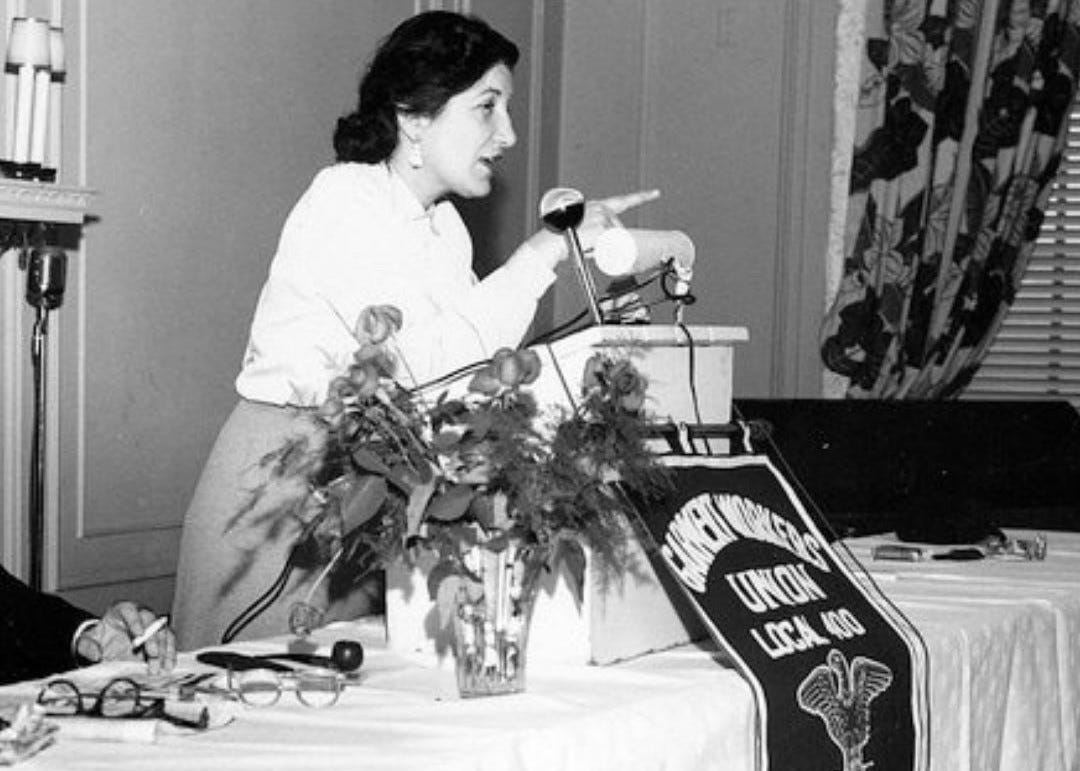
Though she’s not as well known as some of the other women on here, Angela Bambace, an organizer for the International Ladies Garment Worker’s Union who started unionizing her fellow shirtwaist factory workers at age 18, is a personal hero of mine, along with her sister Maria. Angela was known to punch strikebreakers in the nose, which was pretty freaking badass.
She also left her husband and a traditional marriage in which she was confined to “making tomato sauce and homemade gnocchi” — and lost her parental rights in doing so, because back then, women didn’t have any — to fight for workers’ rights on the front lines. She was the first woman woman elected Vice-President of the ILGWU, which previously only had male leadership, where she worked from 1936 until 1972.
May Chen

May Chen, also of the International Ladies Garment Worker’s Union, led the New York Chinatown strike of 1982 — 20,000 workers strong and one of the largest strikes in American history. As a result of the strike, employers cut back on wage cuts, gave workers time off for holidays and hired bilingual interpreters in order to accommodate the needs of immigrant workers.
Lucy Randolph Mason
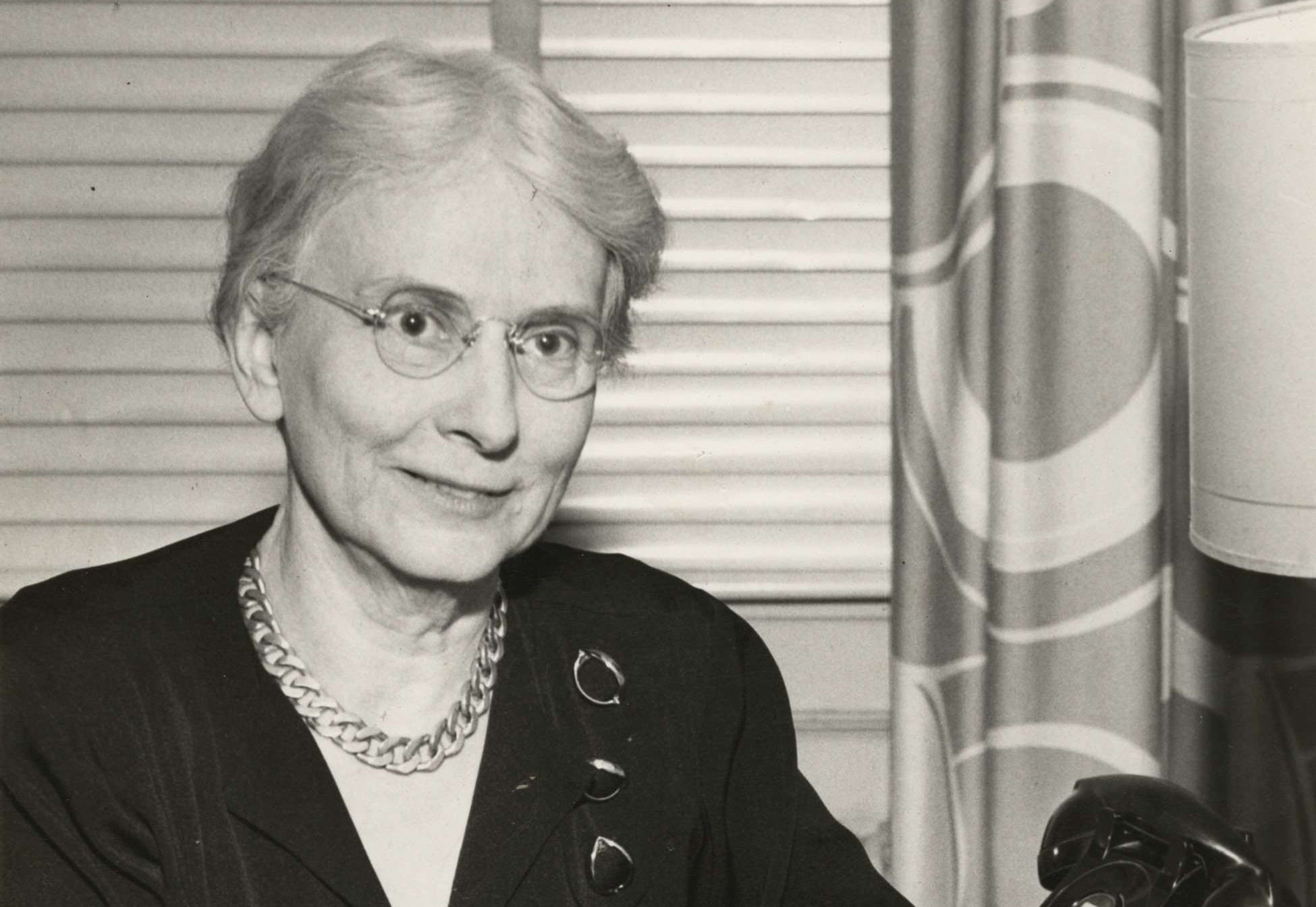
Lucy Randolph Mason was an interesting one. She was a well-off Southern lady from Virginia, related to George Mason (author of the Virginia Declaration of Rights), Supreme Court Justice John Marshall, and, uh, Robert E. Lee. So, you know, you might have an idea in your head about what her deal might be. And you would be so wrong.
So, despite being from this very fancy family, Lucy goes and gets a job as a secretary for the YWCA at 20. In 1918, she gets into the whole suffragette thing. Women get the vote, but Lucy’s not done. She starts organizing for labor rights and integration and ending white supremacy in the South. She organizes interfaith, integrated unions in the South, which you can imagine was a pretty big deal at that time. She does it through the YWCA. She writes a pamphlet telling consumers to boycott companies that don’t treat their workers well. Eventually, she becomes the CIO’s ambassador to the South and spends the next 16 years of her life going to all these small towns where bad things would happen to anyone who tried to unionize, and explaining workers’ rights and why integration is good and racism is bad to pretty much anyone with any kind of power. Neat!
Emma Goldman
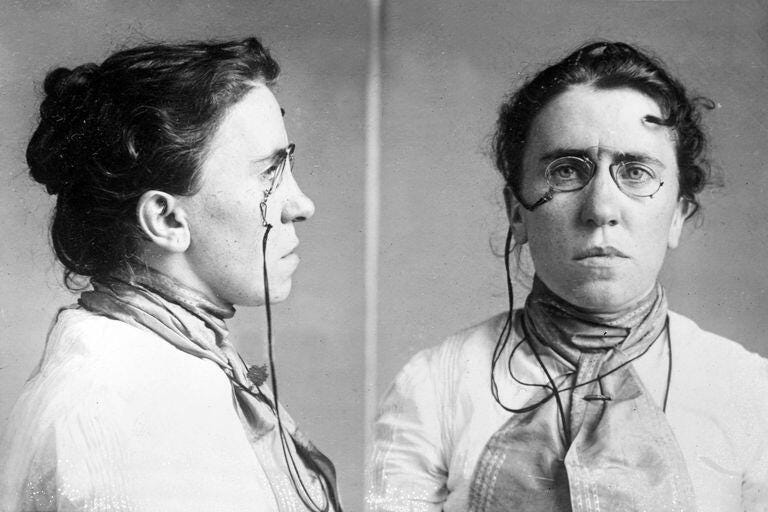
Though not a union organizer by trade, anarcha-feminist Emma Goldman’s advocacy for workers’ rights and human dignity and freedom empowered workers and organizers throughout the country, and motivated them to stand up for their own rights. She was considered the most dangerous woman in America for a reason.
She was a feminist, an anti-racist, an atheist, an advocate of free love, an opposer of the institution of marriage and — very unusually for the time (she pretty much started right after Haymarket, which was 1886, and continued until her death in 1940) — one of the first advocates of gay rights.
“It is a tragedy, I feel, that people of a different sexual type are caught in a world which shows so little understanding for homosexuals and is so crassly indifferent to the various gradations and variations of gender and their great significance in life.”
I could probably go on about Emma Goldman forever, but I have to get to other people and also this is not my sophomore year in college.
Rosina Tucker
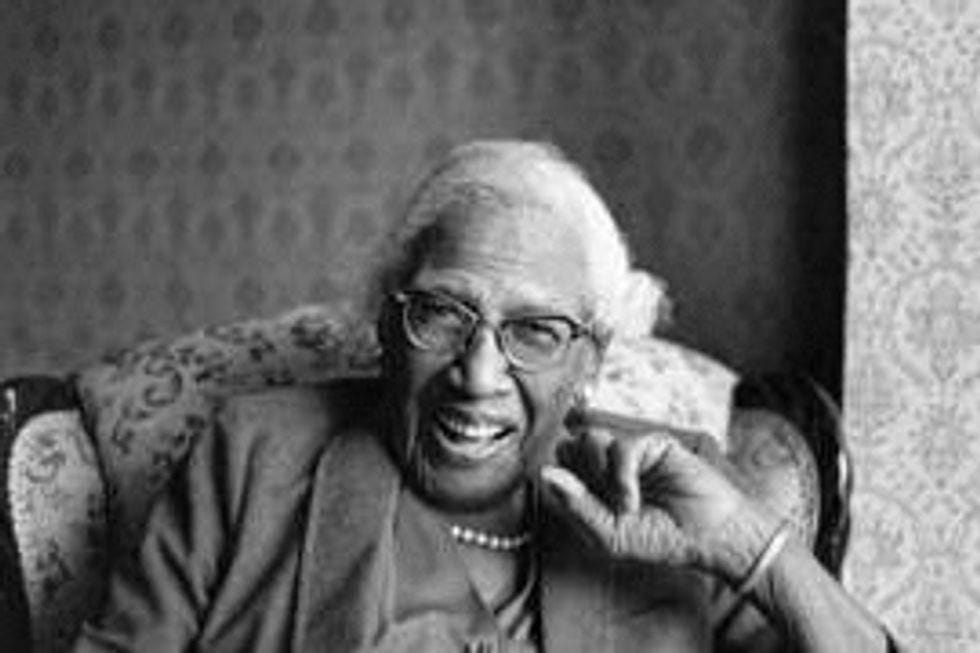
Rosina Tucker is best-known for helping to organize the first Black labor union, The Brotherhood of Sleeping Car Porters, started by A. Philip Randolph in 1925. A Brotherhood? But she was a woman, you say! Well, the Pullman porters wanted to organize, but they were afraid of losing their jobs — with good reason, because their bosses kept trying to fire them for trying to unionize. So Rosina and other wives of the porters got together and started the Ladies Auxiliary of the Brotherhood of Sleeping Car Porters in order to raise funds to start the union.
In 1963, along with A. Philip Randolph of the BSCP, she helped organize the March on Washington for Jobs and Freedom, and continued to be active in civil rights and labor rights until she passed away in 1987, at the age of 105.
The women on this list, along with the many others who also fought for labor rights in this country and others, didn’t only fight a fight for workers. They fought a feminist fight, they fought for civil rights, they fought for human rights — they understood the interconnectedness of it all, they understood that without economic justice there is no social justice and without social justice there is no economic justice. They understood the way that the labor movement could be used as a catalyst for making social change possible at a time when they didn’t have any political support or power — and that’s a thing we could all do well to remember ourselves.
Happy Labor Day!
 Scottie's Playtime