Not taking this personally, but: I do not read every link in every post every time. I do read at least one link from each post with a link, as soon as I get there. I admire that you can do that! And if you’re ready to quit, I don’t blame you. Do as you will, but you are not unappreciated, FWIW. 🖖 ☮ 🌞 I hope we still get to see ya around!
In the last few decades, we have been witness to systematic failures in American life. Time and time again the guardrails we believed existed turned out to be illusions, or at best, guardrails without any teeth. The courts, the financial institutions, the legislators, and especially the media – entrusted as the watchdogs of democracy – have absolutely failed.
There is only one group that, more often than not, has been up to the task: The people. The people keep showing up and at the very least, voting to put people in charge to clean up the messes. Of course, once those people are in office they too often respond with timidity and reluctance and don’t go as far as necessary to exercise the mandate they have been given, but the people did their jobs.
In every presidential election since 1988, with the exception of 2004, a plurality or majority of the public voted for the Democratic candidate. That is a data point you rarely see repeated and I am quite certain that if it was Republicans with such a popular vote winning streak both the party and the media would never shut up about it. That is a triumph of decency. It would be easy for voters to be snowed under by the right’s avalanche of lies and hate, ably amplified by their buck-chasing friends in the press, but the voters keep seeing through it.
To be certain, there are structural barriers. Neither Al Gore nor Hillary Clinton became president even though the will of the American people said they should have been. And the presidencies of Bill Clinton, Obama, and Biden have had too many missed opportunities to push the ball forward, even though all three of these men had mandates to go quite far.
But what matters is that enough voters saw through the haze of absolute bullshit to send a message to do the right thing.
Here we are again. The Republican Party has always glowed bright with a hateful intensity, but Trump has allowed them to move that hate from Mitt Romney’s “quiet rooms” to spotlights like Madison Square Garden. The press and the oligarchs that own it at institutions like The New York Times, the Washington Post, the L.A. Times, CNN and others, are quite happy to make billions of dollars from GOP fueled hate, as long as they can make a buck. They just don’t care about the consequences.
Voters still care. It may be naïve or cringe, or corny, but they believe. Voters have shown us that a majority of them are opposed to hate, opposed to racism, opposed to misogyny, opposed to treating people as second class based on their orientation. And a majority of them are pro-decency.
Yes, most of the pro-decency vote has a liberal ideology but it is more than that. There are people who just don’t like being crude bigots that spend all of their time shoving the faces of the vulnerable into the dirt. There are more of us than there are of them, and they have to effectively cheat or rig the rules to overcome our numbers.
Decency is on the march, but we are at a breaking point, again. Election day or week is not a “fever break” moment. No matter the outcome, but especially if decency is victorious again, we cannot go to sleep. The bad boss at the end of the game has not been defeated. 2004 showed us that. 2008 showed us that. 2012. 2016. 2020. The forces of darkness and depravity do not respect the will of the people and if you retreat, expecting that everyone will finally accept the supremacy of decency – the other side will see that as an opening.
The decent people need to stand up for what they believe in and then keep standing, keep pushing back, until the other people are broken – and then decency most continue to advance and remain forever vigilant.
I voted for decency, and I always will. I know I’m not alone.
If you like this newsletter, please consider becoming a paying subscriber by clicking here to join. I won’t be putting any of my regular columns behind a paywall and they will always be free. Thanks to everyone who has subscribed so far!
(Honestly, the entire Don-Madison Square Garden “event” idea sickened me, but I didn’t think his campaign could afford to do it. Anyway, it happened, and the fact that there was any crowd at all nauseates me. One of my great grandfathers immigrated to the US before the 1st World War, earning his citizenship in part by fighting for the US and allies in that war. The other side of the family immigrated between the wars, as they could see what may have been coming, and did. I’m fairly certain all their spirits, including each and every US veteran in my family living or dead, are also nauseated and maybe angry about this “event.” I’m happy there are people like Heather Cox Richardson, who put sensible light onto historic events. So everybody do all you can to Get Out The Vote! The facts are all on our side. -A)
I stand corrected. I thought this year’s October surprise was the reality that Trump’s mental state had slipped so badly he could not campaign in any coherent way.
It turns out that the 2024 October surprise was the Trump campaign’s fascist rally at Madison Square Garden, a rally so extreme that Republicans running for office have been denouncing it all over social media tonight.
There was never any question that this rally was going to be anything but an attempt to inflame Trump’s base. The plan for a rally at Madison Square Garden itself deliberately evoked its predecessor: a Nazi rally at the old Madison Square Garden on February 20, 1939. About 18,000 people showed up for that “true Americanism” event, held on a stage that featured a huge portrait of George Washington in his Continental Army uniform flanked by swastikas.
Like that earlier event, Trump’s rally was supposed to demonstrate power and inspire his base to violence.
Apparently in anticipation of the rally, Trump on Friday night replaced his signature blue suit and red tie with the black and gold of the neofascist Proud Boys. That extremist group was central to the January 6, 2021, attack on the U.S. Capitol and has been rebuilding to support Trump again in 2024.
On Saturday the Trump campaign released a list of 29 people set to be on the stage at the rally. Notably, the list was all MAGA Republicans, including vice presidential nominee Ohio senator J.D. Vance, House speaker Mike Johnson (LA), Representative Elise Stefanik (NY), Representative Byron Donalds (FL), Trump backer Elon Musk, Trump ally Rudy Giuliani, Robert F. Kennedy Jr., right-wing host Tucker Carlson, Trump sons Don Jr. and Eric, and Eric’s wife, Republican National Committee co-chair Lara Trump.
Libbey Dean of NewsNation noted that none of the seven Republicans running in New York’s competitive House races were on the list. When asked why not, according to Dean, Trump senior advisor Jason Miller said: “The demand, the request for people to speak, is quite extensive.” Asked if the campaign had turned down anyone who asked to speak, Miller said no.
Meanwhile, the decision of the owners of the Los Angeles Times and the Washington Post not to endorse Democratic presidential candidate Vice President Kamala Harris seems to have sparked a backlash. As Will Bunch of the Philadelphia Inquirer noted, “in a strange way the papers did perform a public service: showing American voters what life under a dictator would feel like.”
Early on October 26, the Washington Post itself went after Trump backer billionaire Elon Musk with a major story highlighting the information that Musk, an immigrant from South Africa, had worked illegally when he started his career in the U.S. Musk “did not have the legal right to work” in the U.S. when he started his first successful company. As part of the Trump campaign, Musk has emphasized his opposition to undocumented immigrants.
The New York Times has tended to downplay Trump’s outrageous statements, but on Saturday it ran a round-up of Trump’s threats in the center of the front page, above the fold. It noted that Trump has vowed to expand presidential power, prosecute his political opponents, and crack down on immigration with mass deportations and detention camps. It went on to list his determination to undermine the North Atlantic Treaty Organization (NATO), use the U.S. military against Mexican drug cartels “in potential violation of international law,” and use federal troops against U.S. citizens. It added that he plans to “upend trade” with sweeping new tariffs that will raise consumer prices, and to rein in regulatory agencies.
“To help achieve these and other goals,” the paper concluded, “his advisers are vetting lawyers seen as more likely to embrace aggressive legal theories about the scope of his power.”
On Sunday the front page of the New York Times opinion section read, in giant capital letters: “DONALD TRUMP/ SAYS HE WILL PROSECUTE HIS ENEMIES/ ORDER MASS DEPORTATIONS/ USE SOLDIERS AGAINST CITIZENS/ ABANDON ALLIES/ PLAY POLITICS WITH DISASTERS/ BELIEVE HIM.” And then, inside the section, the paper provided the receipts: Trump’s own words outlining his fascist plans. “BELIEVE HIM,” the paper said.
On CNN’s State of the Union this morning, host Jake Tapper refused to permit Trump’s running mate, Ohio senator J.D. Vance, to gaslight viewers. Vance angrily denied that Trump has repeatedly called for using the U.S. military against Americans, but Tapper came with receipts that proved the very things Vance denied.
Trump’s rally at Madison Square Garden began in the early afternoon. The hateful performances of the early participants set the tone for the rally. Early on, comedian Tony Hinchcliffe, who goes by Kill Tony, delivered a steamingly racist set. He said, for example: “There’s literally a floating island of garbage in the middle of the ocean right now. I think it’s called Puerto Rico.” He went on: “And these Latinos, they love making babies too. Just know that. They do. They do. There’s no pulling out. They don’t do that. They come inside. Just like they did to our country.” Hinchcliffe also talked about Black people carving watermelons instead of pumpkins.
The speakers who followed Hinchcliffe called Vice President Kamala Harris “the Antichrist” and “the devil.” They called former secretary of state Hillary Clinton “a sick son of a b*tch,” and they railed against “f*cking illegals.” They insulted Latinos generally, Black Americans, Palestinians and Jews. Trump advisor Stephen Miller’s claim that “America is for Americans and Americans only” directly echoed the statement of Adolf Hitler that “Germany is for Germans and Germans only.”
Trump took the stage about two hours late, prompting people to stream toward the exits before he finished speaking. He hit his usual highlights, notably undermining Vance’s argument from earlier in the day by saying that, indeed, he believes fellow Americans are “the enemy within.”
But Trump perhaps gave away the game with his inflammatory language and with an aside, seemingly aimed at House speaker Johnson. “I think with our little secret we are gonna do really well with the House, right? Our little secret is having a big impact, he and I have a secret, we will tell you what it is when the race is over,” Trump said.
It seems possible—probable, even—that Trump was alluding to putting in play the plan his people tried in 2020. That plan was to create enough chaos over the certification of electoral votes in the states to throw the election into the House of Representatives. There, each state delegation gets a single vote, so if the Republicans have control of more states than the Democrats, Trump could pull out a victory even if he had dramatically lost the popular vote.
Since he has made virtually no effort to win votes in 2024, this seems his likely plan.
But to do that, he needs at least a plausibly close election, or at least to convince his supporters that the election has been stolen from him. Tonight’s rally badly hurt that plan.
As Hinchcliffe was talking about Puerto Rico as a floating island of garbage, Democratic presidential nominee Vice President Kamala Harris was at a Puerto Rican restaurant in Philadelphia talking about her plan to spread her opportunity economy to Puerto Rico. She has called for strengthening Puerto Rico’s energy grid and making it easier to get permits to build there.
After the “floating island of garbage” comment, Puerto Rican superstar musician Bad Bunny, who has more than 45 million followers on Instagram, posted Harris’s plan for Puerto Rico, and his spokesperson said he is endorsing Harris.
Puerto Rican singer and actor Ricky Martin shared a clip from Hinchcliffe’s set with his 16 million followers. His caption read: “This is what they think of us.” Singer and actress Jennifer Lopez, who has 250 million Instagram followers, posted Harris’s plan. Later, singer-songwriter and actress Ariana Grande posted that she had voted for Harris. Grande has 376 million followers on Instagram. Singer Luis Fonsi, who has 16 million followers, also called out the “constant hate.”
The headlines were brutal. “MAGA speakers unleash ugly rhetoric at Trump’s MSG rally,” read Axios. Politico wrote: “Trump’s New York homecoming sparks backlash over racist and vulgar remarks.” “Racist Remarks and Insults Mark Trump’s Madison Square Garden Rally,” the New York Times announced. “Speakers at Trump rally make racist comments, hurl insults,” read CNN.
But the biggest sign of the damage the rally did was the frantic backpedaling from Republicans in tight elections, who distanced themselves as fast as they could from the insults against Puerto Ricans, especially. The Trump campaign itself tried to distance itself from the “floating island of garbage” quotation, only to be met with comments pointing out that Hinchcliffe’s set had been vetted and uploaded to the teleprompters.
As the clips spread like wildfire, political writer Charlotte Clymer pointed out that almost 6 million Puerto Ricans live in the states—about a million in Florida, half a million in Pennsylvania, 100,000 in Georgia, 100,000 in Michigan, 100,000 in North Carolina, 45,000 in Arizona, and 40,000 in Nevada—and that over half of them voted in 2020.
In 1939, as about 18,000 American Nazis rallied inside Madison Square Garden, newspapers reported that a crowd of about 100,000 anti-Nazis gathered outside to protest. It took 1,700 police officers, the largest number of officers ever before detailed for a single event, to hold them back from storming the venue.
(Way to go-run for office! Especially in and as opposition to people like Steve Scalise-A)
A trans nonbinary Louisiana candidate for the U.S. House released a defiant campaign video this week, showing themself injecting testosterone to defend bodily autonomy.
Mel Manuel, who is running to unseat far-right House Majority Leader Steve Scalise, released the video on social media platforms on Tuesday. In the video, Manuel called on voters to “take a stand” while performing a routine testosterone injection.
“I believe that you, not the government, own your own body,” Manuel told viewers, wearing a “My Body My Choice” T-shirt. “LGBTQ+ rights are human rights.”
Manuel, who is running on a platform of abortion rights, universal healthcare, and gun control, highlighted a recent analysis that found Republicans had spent more than $65 million in anti-trans advertisements since the start of August. They also promoted Louisiana’s “Geaux Vote” app, which allows voters to find their polling location and get ballot information.
“To my LGBTQ+ family and our allies… No one is coming to save us,” Manuel wrote in the video description. “We have to show up at the polls for ourselves and for those we love. I’ve spent the last year and a half campaigning because we need to speak up and be represented before it’s too late. You can speak up now with your vote.”
Manuel is the cofounder of Queer Northshore, an LGBTQ+ activist organization based in St. Tammany Parish, and has previously organized against conservative book bans and anti-trans laws in the state. In contrast, Scalise has earned a reputation as a staunchly anti-LGBTQ+ Republican since first taking office in 2008, voting against the Byrd-Shepard Hate Crime Prevention Act, the repeal of Don’t Ask, Don’t Tell, and the Respect for Marriage Act; he is also firmly anti-trans, condemning “the left’s radical gender ideology” in a 2022 statement calling for trans girls to be banned from school sports. Scalise even once described himself as “David Duke without the baggage,” referring to the infamous former leader of the Ku Klux Klan.
Given that Manuel is running in opposition to all that, injecting T on camera is a pretty big flex. Still, that doesn’t necessarily mean they expect to win; as their campaign website notes, Manuel’s goal is simply to get 35% of the vote. “Even if your candidate doesn’t win, if we can move the needle to 35 percent or 40 percent of the vote, that means the next progressive candidate will get more funding,” they explained to The Nation last year. “There’s a very, very small chance at winning, and I understand that, but we can still use the role of candidacy as a platform in and of itself.”
(More good news, after Scottie’s video, as to the early voting news! Blue language alert, so no reading until you’re not somewhere the f-word is not acceptable. Else scroll just a bit, because of course the first sentence is joyous and contains the f-word. Also, italicized script beneath the suns are by the author, Jeff Tiedrich.)
A majority of voters (80%) say they made up their minds about which candidate to support over a month ago, while 11% made up their minds in the last month, 6% made up their minds in the past week, and 3% still have not made up their mind.
“Voters who made their decision on who to support over a month ago break for Trump, 52% to 48%, while voters who made up their mind in the last month or week break for Harris, 60% to 36%,” Kimball said. “The three percent of voters who said they could still change their mind currently favor Harris, 48% to 43%.”
but there are huge swaths of votes who just don’t pay attention to politics until the very last minute — and now that they’re finally tuned in, it’s dawning on them that wait, one of the candidates is ass-spraying mayhem?oh, fuck that shit.
Kamala leads dong-obsessed fry chef Donny Convict in favorability by 11 percentage points, while 58% of registered voters fucking loathe Donny.
The nationwide poll, conducted last week, found Harris’s favorability to be significantly higher than Trump’s, with 51 percent of registered voters viewing Harris as a favorable candidate compared to just 40 percent who felt the same about Trump. Independent voters, notably, were equally split on their opinions of Harris, while the majority of independent voters—58 percent—felt negatively about Trump.
don’t forget that this is going to be the first post-Roe national election.
But perhaps no Democratic stance resonated more with voters than abortion, which saw Harris lead Trump by 23 percent.
reproductive rights continues to be a losing issue for Donny, and he’s still bragging about being the guy who shitcanned Roe.
Donny is being abandoned by his base.
white folks who never went to college have long been Donny’s most hardcore cultists — but this year they seem to be suffering from Dear Leader Fatigue.
“it’s been a key demographic for him — his base. and this is what’s so interesting … in fact, it’s moving away from him. this is Trump’s margin with non-college white voters. this group is not moving towards him. it’s moving slightly away. go back eight years ago, he won it by 33. you go back four years ago, he won it be 31. now we see he’s only up by 27.”
Donny’s losing the people who have been filing out of his hate-rallies early.
after a half hour of listening to him drone on about sharks and batteries and Hannibal Lecter wants to have you for dinner, they turn to their spouse and say Lurleen, let’s go home and see if NASCAR’s on TV.
plus-27 is still a fuck-ton of support from Donny’s base — but in a close election, he can’t afford to lose the additional 6% who voted for him in 2016. these people may never vote for Komrade Kamala, but enough of them may stay home on election day to make a difference.
we’re all worried about post-election fuckery, but let’s not forget that nearly all swing state governors are Democrats.
Constitutional expert Richard H. Pildes reminded us that scenarios involving mischief by governors are unlikely. “In nearly all the swing states, the governors are Democrats, who are hardly going to be receptive to any entreaties by Trump,” he wrote. Even in Georgia, Gov. Brian Kemp and Secretary of State Brad Raffensperger, both Republicans, “have done as much under fire as any political officials to prove their commitment to certifying an accurate, lawful count.” And although a few local boards might refuse to certify, there are remedies in court. (A Georgia court recently rejected the notion that officials could refuse to certify results.)
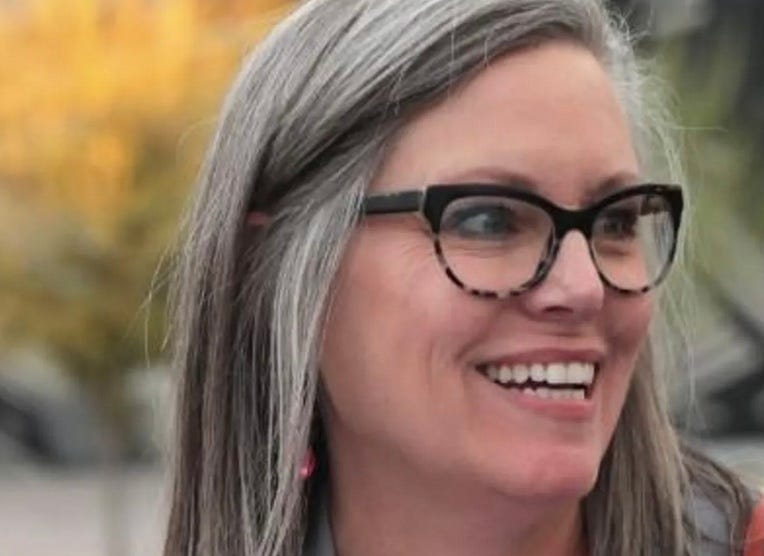
An Arizona County elections official has agreed to plead guilty after she refused to certify the 2022 election in which Kari Lake lost to Katie Hobbs.
The Washington Post reported Monday that Peggy Judd, who helps lead Cochise County southeast of Phoenix, was indicted last year for allegedly “flouting the state’s deadlines” for the 2022 election certification.
actions, consequences. it’s nice when things work out in that order.
Jill Stein might be hurting Donny this year.
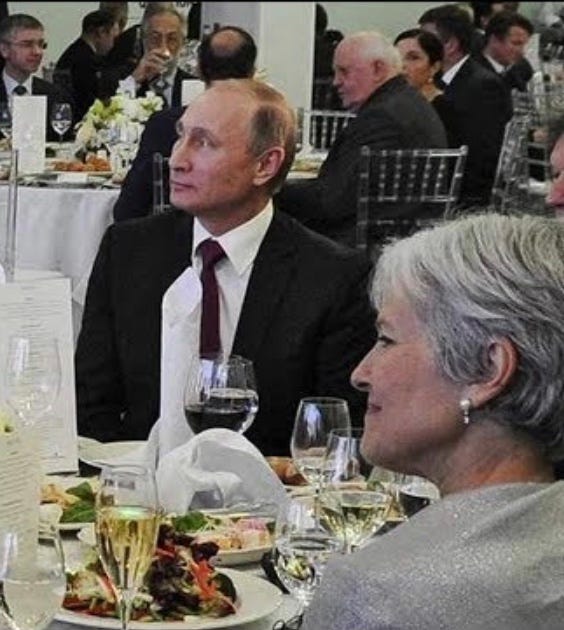
perpetual Kremlin dinner guest Jill Stein is like some fucked-up asteroid. every four years, her weird-ass orbit swings her too close to the Earth, and she ends up dicking with the tides and screwing with our electoral magnetic field.
A new poll suggests that Green Party presidential candidate Jill Stein is drawing more voters from former President Donald Trump than from Vice President Kamala Harris.
The poll shows Harris leading Trump 49 percent to 47 percent. However, with Stein in the race, Trump’s support dips to 46 percent, while Harris maintains her 49 percent backing, suggesting that Stein draws more support from Trump than from Harris. Though Stein’s voter base remains relatively small, at about 1 percent, it could prove crucial in an election that hinges on tight margins in swing states.
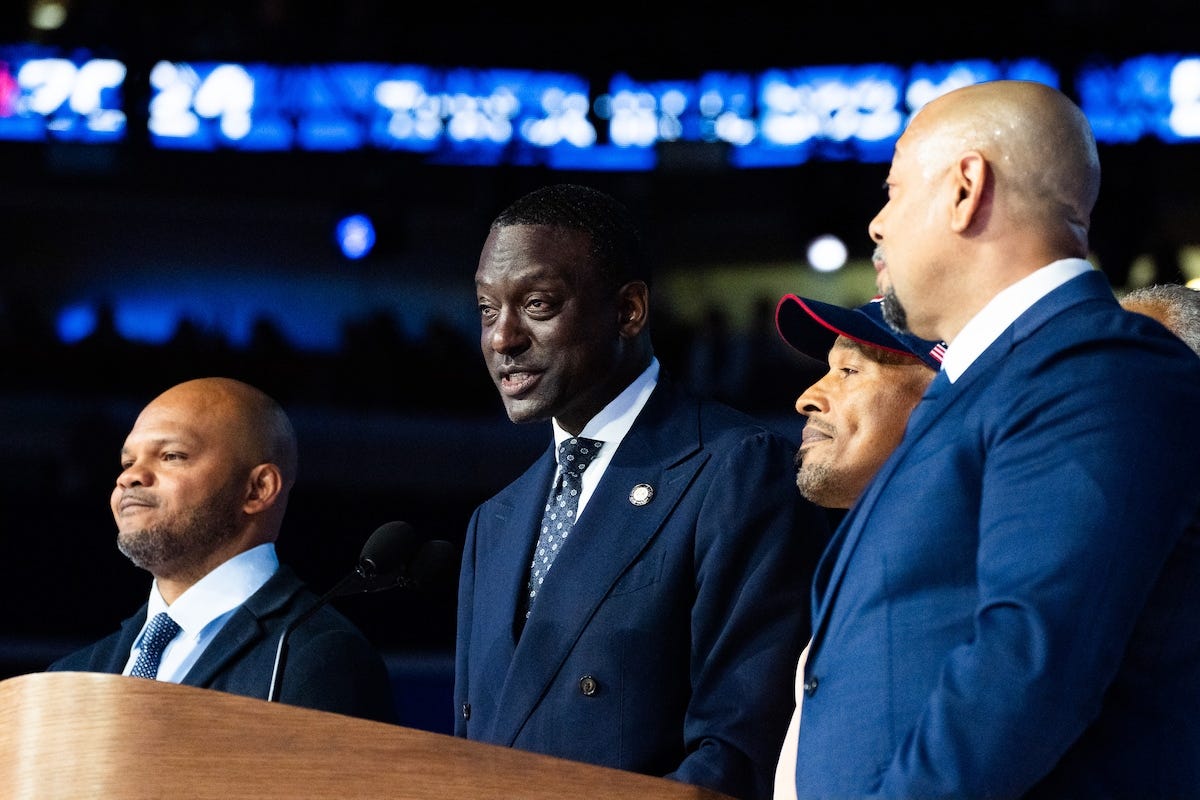
The five men who make up the Central Park Five and now call themselves the Exonerated Five have filed a defamation lawsuit against Donald Trump over his remarks during the presidential debate last month.
During the debate he said: “They admitted — they said, they pled guilty. And I said, well, if they pled guilty they badly hurt a person, killed a person ultimately. And if they pled guilty — then they pled we’re not guilty.”
At the time of the trials, each had pleaded not guilty, and the victim of the attack survived.
ok, this one is not election-related news — but it still makes me laugh to see Donny get served another big, fat slice of Justice Pie.
Aphasia is a language disorder that affects how you communicate. It’s caused by damage in the area of the brain that controls language expression and comprehension. Aphasia leaves a person unable to communicate effectively with others.
Alexa, can aphasia be a sign of dementia?
what the fuck do you think?
so, there’s lots of good news all around — but as a commenter under yesterday’s post said, “we still have to fight like we’re ten points down.” that person is exactly right. we don’t have the luxury of complacency. that’s how we fucked it up in 2016 — we all thought Hillary’s got this in the bag, and so we blew up the balloons and popped the champagne way too early, and too many of us decided it was totes okay stay home on election day. after all, Nate Silver promised us that Hillary had a 99% chance of victory, right? but polls don’t vote — people do.
this year, we all understand the assignment.
Kamala understands the assignment, too. unlike the email lady in 2016, Kamala and Uncle Tim are hitting all the swing states. meanwhile, Donny Convict is squandering his time doing vanity rallies in places like California and New York — states he hasn’t a snowball’s chance of winning.
Marine biologists have challenged the claim that lack of food is driving a population crash in killer whales in the Pacific Ocean saying boat noise may be the issue.
Killer whales (Orcinus orca) frequent the waters of British Columbia and feed on Chinook salmon.
Killer whale pod in Johnstone Strait, British Columbia. Credit: Francois Gohier/VW Pics/Universal Images Group via Getty Images.
Researchers from the University of British Columbia in Canada used echosounder data to determine prey salmon densities, as well as discussions with local anglers and whale watching crews in British Columbia, Canada.
There are 2 different populations. One population is local to northern waters. These killer whales have tripled their numbers to about 300 individuals since monitoring began in the 1970s.
The other population inhabits the waters between British Columbia and California to the south. Their numbers fluctuated between 66 and 98 individuals with the latest census putting their numbers at just 73.
“The differing trajectories of these two populations of fish-eating killer whales have been attributed to ecological and biological differences between regions such as prey availability, diet breadth, competition, physical disturbance, underwater noise, contaminants and inbreeding,” the authors write. “However, food availability likely plays the greatest role in limiting their carrying capacities.”
Previous research has shown a correlation between salmon numbers and killer whale population health. But the authors say these studies have never been able to show why the southern population was struggling.
In fact, the southern population of killer whale is the only marine mammal that is struggling in the region. Harbour seals, sea lions, other types of whale and porpoises are all thriving.
Nevertheless lack of access to the Chinook salmon was always put down as the reason for the killer whales’ woes.
But sport anglers told the researchers that they have noticed no drop in salmon numbers. And whale watchers have reported that they have regularly seen the endangered orcas swimming among salmon.
The researchers suggest that the issue isn’t lack of salmon, but that the southern population of killer whales are having trouble catching their prey. This, they say, is likely due to noise from boats. The area where the southern orca population lives has far higher sea traffic than the regions further north.
It’s also possible the orca struggle to hunt at different times of year. They may find enough salmon in summer, but have trouble during spring.
The findings are presented in a paper published in PLOS ONE.
Many Australians now sell solar power generated on their rooftops into the grid on sunny days. In a handful of years, it may be possible to do the same thing when it’s dark – with the help of an electric vehicle (EV).
Nascent vehicle-to-grid (V2G) technology operates around the idea of EVs with bi-directional chargers: they can charge from power sources, but they can also be used to provide power. EVs could be used as mobile grid storage, with owners charging them on rooftop solar and then either using the power themselves later in the evening, or selling it back to the grid.
At the moment, the technology is rare in Australia, with both technological and economic research still needed to figure out how it will best fit into our energy mix.
Some of that research has just started at a model house in Port Macquarie, on the Mid-North Coast of New South Wales.
“If we can get the energy optimisation answer right with vehicle-to-grid technologies, we can avoid unnecessary expansion on the network, and we can help customers minimise their energy bills,” Brad Trethewey, manager of innovation at energy company Essential Energy, tells Cosmos.
Essential Energy has partnered with the CSIRO to trial V2G technology. The trial is running at a mock-home, fitted out with solar panels, batteries, a hot water system, and appliances including a fridge, a dishwasher, a TV and a pool pump.
Some of the devices at the Innovation Hub in Port Macquarie. Credit: Essential Energy
“In this first phase, we’re looking at how vehicle-to-grid can be technically integrated into the home of the future. We’re doing tests where the vehicle powers a lab for periods of time, and we’re doing scheduled discharge and charge cycles with the vehicle,” says Trethewey.
“The second phase of the test is how we can coordinate the vehicle-to-grid technology, in a more integrated sense, with customers’ appliances and their flexible loads to minimise bills and maximise the use of their renewable energy resources – so, solar.”
The team expects the first phase to finish in late March next year.
“I don’t have an end date for second phase, because we expect the emergence of V2G to have ongoing research needs, even after it’s technically available,” says Trethewey.
While there are currently EVs being made with V2G technology, they’re not yet much use in Australia. Many EVs aren’t sold here with the right hardware or software, and regulations and standards around electricity can’t yet accommodate it.
Part of the work in the trial will be helping to assess how EV and solar owners might best use V2G.
“What is the value proposition? Does the market need to change as a result of vehicle-to-grid capability, or is most of the value in self-consumption – using it for your own energy consumption and needs?” says Trethewey.
The Innovation Hub trialling vehicle-to-grid technology at Port Macquarie. Credit: Essential Energy
Once the second phase of the trial has wrapped, Trethewey says that the team will be interested in seeing how V2G plays out at scale – and in different areas, with different energy mixes.
One way or another, though, he expects bi-directional chargers and energy-storing EVs to become commonplace – soon.
“I think that there’s an inevitability about this. Once vehicle manufacturers produce vehicle-to-grid capability in their cars, cars are going to come with it, and when customers realise the value of that in terms of reducing their energy bills in their house, it’s going to become widespread.”
When might this happen? Trethewey thinks it’s possible before the end of the decade.
“Most vehicle manufacturers are saying they’re going to have some vehicle-to-grid capability in Australia, they’re talking late 2025, early 2026. Now, that doesn’t mean they’ll have it switched on – it just means that they’ll have the vehicles capable for it.
“So the next five years, I think, is probably well within reason.”





 Scottie's Playtime