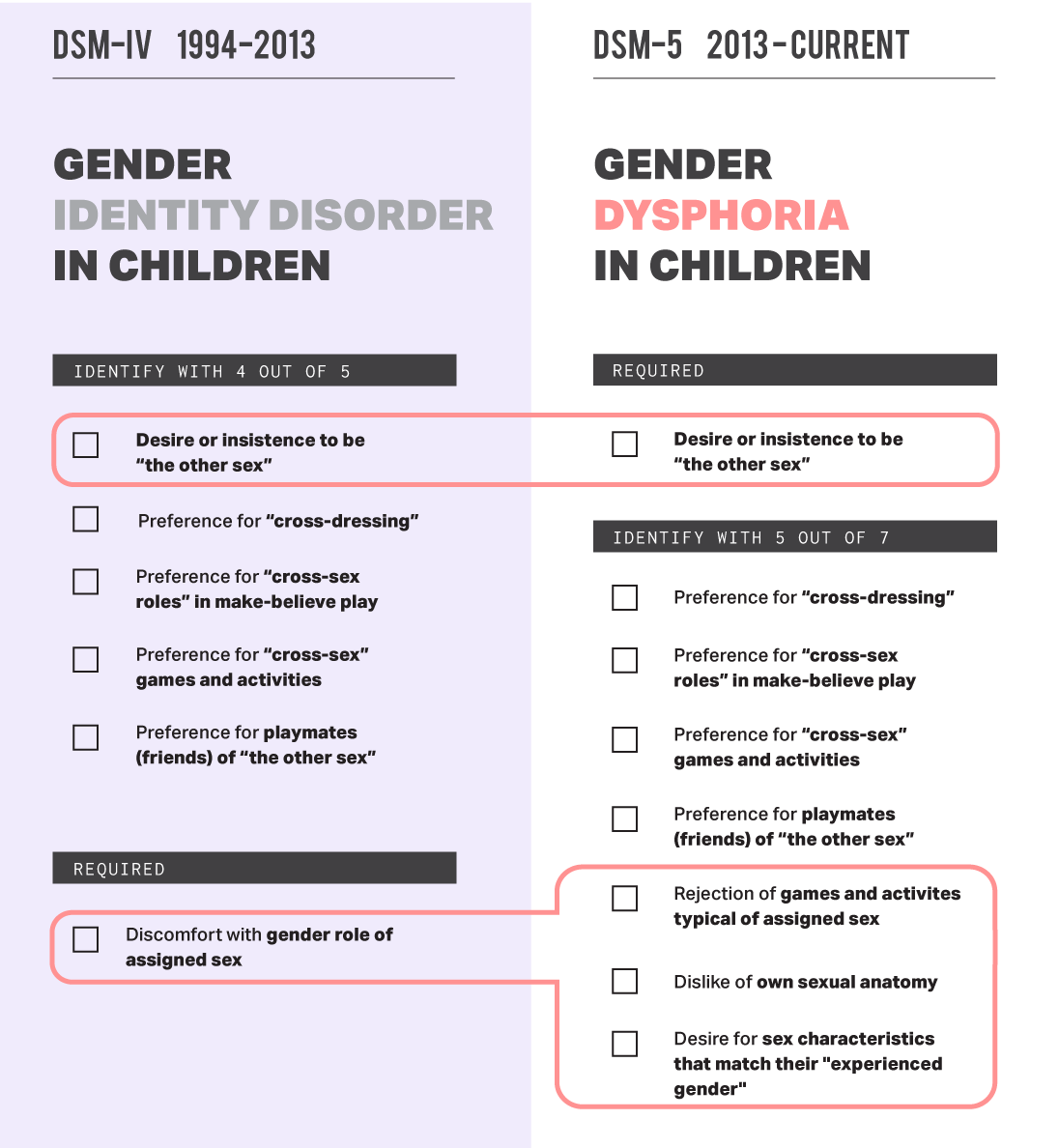
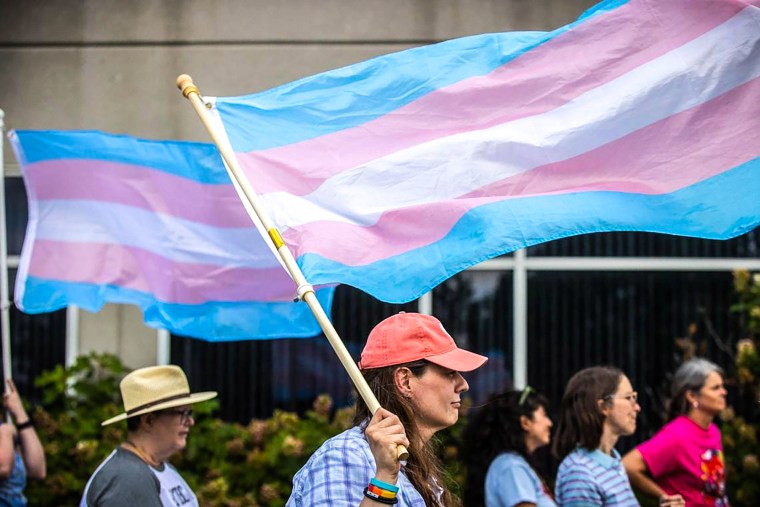
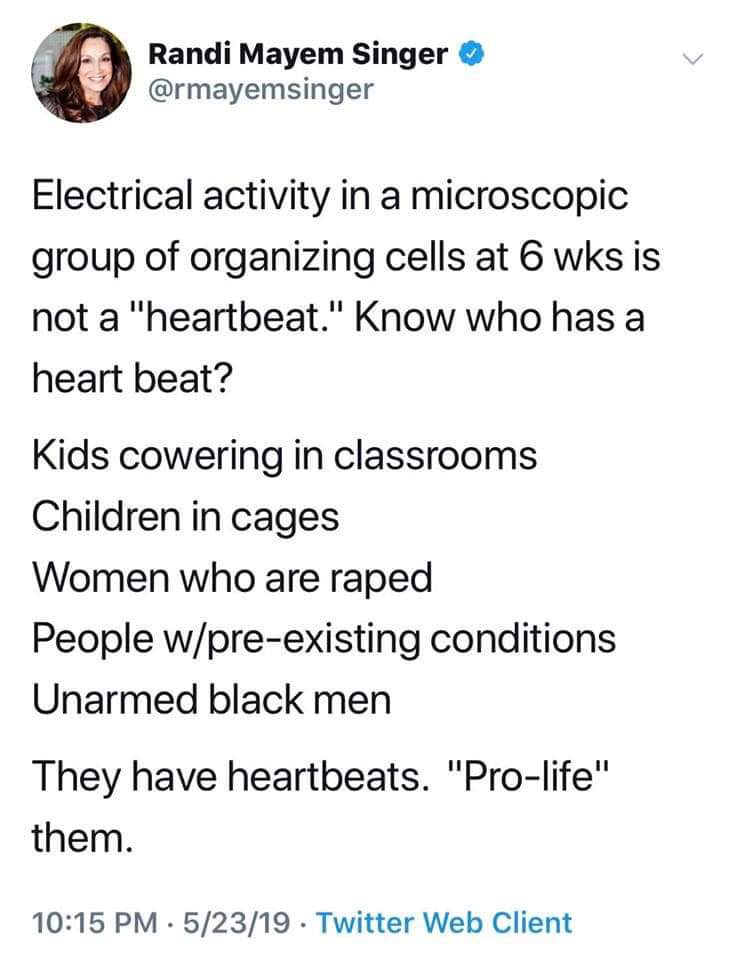
Trans sex worker & ACLU sue Tennessee over HIV criminalization law

https://www.lgbtqnation.com/2023/10/trans-sex-worker-aclu-sue-tennessee-over-hiv-criminalization-law/

HIV criminalization laws
HIV criminalization lawsPhoto: Shutterstock

The American Civil Liberties Union (ACLU) and the Transgender Law Center have filed a federal lawsuit against a Tennessee law that requires HIV-positive sex workers to register for life as a “violent sex offender.”

The aforementioned advocacy organizations filed the lawsuit on behalf of the state LGBTQ+ advocacy groups OUTMemphis and four “Jane Doe” plaintiffs who were convicted under the law. The plaintiffs, which include a transgender woman, allege that they have faced discrimination and life struggles because of their violent sex offender status. These struggles have forced the trans woman to continue doing sex work, since finding a job can be difficult for someone on the registry.

Another plaintiff said that they were sent back to jail after violating the registry’s requirements. The plaintiffs allege that the law violates the Americans with Disabilities Act (ADA) by handing harsher punishments to people with HIV, a chronic disease covered by the ADA’s anti-discrimination statutes. Tennessee is the only state with this law, according to the Edge Media Network.

“This statute solely targets people because of their HIV status and keeps them in cycles of poverty while posing absolutely zero benefit to public health and safety,” said Molly Quinn, executive director of OUTMemphis. “HIV stigma is becoming a thing of the past, and it’s time for state law to catch up.”

The lawsuit lists Gov. Bill Lee (R-TN), Attorney General Jonathan Skrmetti, Tennessee Bureau of Investigation Director David Rausch, and Department of Correction Commissioner Frank Strada as defendants.

While sex work is a misdemeanor crime in Tennessee, the HIV criminalization law turns the crime into a felony. An estimated 83 Tennesseeans are currently in the registry because of it. Tennessee legislators passed the law in 1991 near the height of the AIDS epidemic when over 100,000 Americans had died from the illness, and scientists were still trying to find effective medical treatments against it.

In 2021, Illinois, New Jersey, and Virginia repealed their felony HIV criminalization laws. However, in 2022, Pennsylvania signed a law making it a felony to pass on a communicable disease when they “should have known” that they had it — the law included HIV.

As of 2022, 35 states have laws that criminalize HIV exposure, according to the Centers for Disease Control and Prevention (CDC). Many of the laws were passed at a time when little was known about HIV and millions were dying from the virus.

Medical professionals have said that HIV criminalization laws do nothing to stop the spread of the virus and may even encourage people not to get tested for fear that the knowledge could subject them to criminal penalties.

“Many of these state laws criminalize actions that cannot transmit HIV – such as biting or spitting – and apply regardless of actual transmission, or intent,” the CDC wrote. “After more than 40 years of HIV research and significant biomedical advancements to treat and prevent HIV transmission, many state laws are now outdated and do not reflect our current understanding of HIV.”

A 2018 Williams Institute study on HIV criminalization in Georgia found that “Black men and Black women were more likely to be arrested for HIV-related offenses than their white counterparts.” While 26% of HIV-related arrests were of white males, 46% of HIV-related arrests were of Black males. Additionally, 11 % of those arrested were white females, while 16% were Black females.

Fake medical group tells moms to submit to their husbands to keep their kids from being transgender

https://www.lgbtqnation.com/2023/10/fake-medical-group-tells-moms-to-submit-to-their-husbands-to-keep-their-kids-from-being-transgender/

Wow, really pushing the religious idea a woman’s place is to obey the men in her life, she is owned by her husband, and along with the misogyny of strict 1950s gender role there is the long debunked idea of what makes kids gay, only now just pushed on to trans kids also.  These people simply refuse to accept modern science which has shown that kids are born with their sexual orientation and their view of their gender identity.  Regardless of how often, how forceful, how authoritarian the person telling them they are not gay, gay kids know they are.  Same with trans kids, despite the same people telling them they are the gender they were assigned at birth, they KNOW who they really are inside.   But this is what we face with the religious Nationalist right wing take over and push to return to the 1950s.  These are the same people that deny other science because their bibles / really their preachers / priest / pastors tell them that science is wrong because the bible is right.   These same people claim there was a worldwide flood and that an ark built by a 600-year-old man held every creature on earth, and also the world is only 6000 years old so that same family had a lot of fucking / child birthing to do to get to the number of humans alive today.  None of it makes sense if you try to take it literally.  But they don’t care, their feelings / beliefs are more important than reality or facts.  They feel the same on sexual / gender issues.   Yet in at least 26 US states these people have the majority in government.  Can the US afford this?   Hugs.  Scottie.

 
woman, wife, husband, family
Photo: Shutterstock

The American College of Pediatricians (ACPeds) — a Christian anti-LGBTQ+ hate group that uses its professional-sounding name to push transphobic and anti-abortion propaganda — has unveiled a new website encouraging parents to send their trans kids to conversion therapy. The website tells mothers not to be “dominant” and not to be “critical” of nor “display hurt or angry emotions” towards their husbands.

The website, called the “Biological Integrity Initiative,” offers outdated and non-clinically backed “resources” for parents, teens, physicians, schools, and policymakers, all geared towards denying the identities of trans youth, particularly those of trans girls. It introduces gender-questioning teens to the tale of right-wing de-transitioner Chloe Cole, tells teachers to oppose trans-inclusive school policies (referred to as “gender interventions”), and tells policymakers that they must pass bans on gender-affirming healthcare to “protect civilization” and “human dignity.”

The website’s advice to parents is especially concerning.

It tells mothers not to be critical of their husbands or “overly sensitive” to their sons. Mothers are advised to frequently “compliment the father” and to refrain from showing their children any “angry emotions” towards their husbands. It also tells mothers to “set a good example of womanhood” for their daughters because, if they don’t, their daughters may “develop a wrong perception… and may resist embracing a female identity.”

“A mother who is not emotionally connected to her daughter may leave her daughter craving motherly love. Likewise, a father who is not closely connected to his son may leave a son craving fatherly love,” the site’s handout on “Affirming Your Daughter’s and Son’s Sexual Identity” states.

“Mothers should not favor a son over his father, even if the son is more responsive and compassionate than the husband,” the handout continues. “If mothers make this mistake, the son may identify with the mother and fail to bond with the father.”

This concept — that emotionally distant and physically unaffectionate parents create gay or “gender-confused” children — is a popular but widely debunked concept from 19th-century Freudian psychology. While psychologists have observed that neglected and abused children may risk their personal safety to find support and affection from other sources, there’s zero proof that parental distance causes homosexuality or trans identity.

Similarly, the handout says that molestation, sexual abuse, and graphic pornography can cause trans identity. The same has been said of homosexuality, and there is no proof to back up either claim.

The group tells fathers to be “physically active” and “wrestle on the floor” with their sons, “play tackle and praise him for being tough when he is knocked down,” and also to go on “man time” dates with the boy. It also tells dads to have their sons help mow the lawn, fix the toilet, shovel snow, build model cars and benches, go hunting to kill animals, and “throw, kick and dribble a ball… even if he chooses not to play sports.”

Under the website’s “Teen FAQ,” it states, “There is no evidence that opposite-sex hormones make you feel better,” even though a large-scale 2023 study in The New England Journal of Medicine found that hormone therapy improves mental health for trans youth. The FAQ also claims that “opposite sex hormones can increase thoughts of hurting yourself,” “increase unhealthiness,” “may cause permanent infertility,” and “will make teens ‘a medical patient for life.’”

The site backs up some of its claims by referring to a 12-year-old Swedish study of data on 324 trans people collected from 1973 to 2003. The study found higher rates of suicide and criminal convictions among trans individuals, but such actions may be explained by transphobia and the fewer economic opportunities and social support resources for trans people.

As for “infertility,” trans journalist Erin Reed noted that fertility counseling is a regular part of any medical care for trans youth. Reed said that the ACPeds site pushes gender exploratory therapy, “a new type of conversion therapy which seeks to persuade transgender individuals that their gender identity stems from anything but authentic transness.” The ACPeds website’s “Find a Therapist” section links to numerous Christian and Catholic conversion therapy groups.

In her newsletter, Reed wrote, “The Gender Exploratory Therapy Association frequently denies that it engages in conversion therapy. They assert that their therapeutic approach is ‘neutral in nature’ and ‘does not prejudge outcomes.’ Yet, this association opposes bans on conversion therapy, submits public comments in favor of blocking Title IX protections against gender discrimination for trans students, and its official account has been observed endorsing tweets like ‘trans healthcare is the latest in a long line of medical fads.’ Such actions hardly mirror the claims of a ‘neutral, non-prejudiced’ entity.”

Erin In The Morning

I love this substack and the effort the author goes to in presenting the facts.   I wanted to share the titles of a few posts to show you what is going on.   Hugs.  Scottie


https://www.erininthemorning.com/


https://www.erininthemorning.com/p/rapid-onset-gender-dysphoria-republished

A paper about “Rapid Onset Gender Dysphoria,” retracted in March, was republished in a journal with a shady record. Major anti-trans accounts celebrated this as a “victory.”


https://www.erininthemorning.com/p/right-wing-american-college-of-pediatricians

The website leans heavily on religious therapy and “gender exploratory therapy” a misleadingly named type of therapy meant to convince trans people they are not truly transgender.


https://www.erininthemorning.com/p/19-republican-ags-sign-letter-citing

Republican Attorneys General representing 18 states have filed a brief in Dekker v. Weida, a case in which trans people in Florida have been denied Medicaid coverage for gender affirming care.


https://www.erininthemorning.com/p/looking-to-2024-whats-next-the-fight

It has been a difficult year for transgender people in the US. Looking ahead, the battle lines are becoming clearer, as 2024 promises to be a decision point for the future of trans people in America.


https://www.erininthemorning.com/p/family-of-missouri-trans-kid-jamie

Explosive allegations have emerged about Jamie Reed’s allegations against a gender affirming care clinic in Missouri. One family alleges Reed lied about the cause of their child’s liver damage.


https://www.erininthemorning.com/p/11th-circuit-court-upholds-ruling

In a major ruling released Wednesday, the 11th Circuit Court of Appeals in the United States ruled that Florida’s ban on drag will continue to be blocked from enforcement statewide.

RFK Jr. spent years stoking fear and mistrust of vaccines. These people were hurt by his work

https://apnews.com/article/rfk-kennedy-election-vaccines-2ccde2df146f57b5e8c26e8494f0a16a


Updated 9:48 PM EDT, October 18, 2023
 

When 12-year-old Braden Fahey collapsed during football practice and died, it was just the beginning of his parents’ nightmare.

Deep in their grief a few months later, Gina and Padrig Fahey received news that shocked them to their core: A favorite photo of their beloved son was plastered on the cover of a book that falsely argues COVID-19 vaccines caused a spike of sudden deaths among healthy young people.

The book, called “Cause Unknown,” was co-published by an anti-vaccine group led by Robert F. Kennedy Jr., President John F. Kennedy’s nephew, who is now running for president. Kennedy wrote the foreword and promoted the book, tweeting that it details data showing “ COVID shots are a crime against humanity.”

The Faheys couldn’t understand how Braden’s face appeared on the book’s cover, or why his name appeared inside it.

Braden never received the vaccine. His death in August 2022 was due to a malformed blood vessel in his brain. No one ever contacted them to ask about their son’s death, or for permission to use the photo. No one asked to confirm the date of his death — which the book misdated by a year. When the Faheys and residents of their town in California tried to contact the publisher and author to get Braden and his picture taken out of the book, no one responded.


“We reached out in every way possible,” Gina Fahey told The Associated Press in an emotional interview. “We waited months and months to hear back, and nothing.”

How could a member of one of the most influential political dynasties in American history be involved in such a shoddy, irresponsible project, the Faheys wondered?

Braden’s story is just one example of how Kennedy, son of the late Sen. Robert F. Kennedy, has used his famous name to disseminate false information about vaccines and other topics in a time when spreading conspiracy theories has become a powerful way to grow a constituency. An AP examination of his work and its impact found Kennedy has earned money, fame and political clout while leaving people like the Faheys suffering.

Now, Kennedy’s decision to drop his Democratic bid for president and run as an independent gives him a new spotlight in an election that’s currently heading toward a rematch between President Joe Biden and former President Donald Trump. There’s concern in both parties that he could emerge as a spoiler who could affect the outcome of the campaign in unexpected ways. And at a time when Republicans in the 2024 race also are sowing doubt about vaccine effectiveness, it threatens to further promote harmful misinformation that already has cost lives.

One mom told AP about how she had delayed important care for her child because she believed Kennedy’s vaccine falsehoods. A former elected leader described being harassed by Kennedy’s followers. Doctors and nurses recounted how his work has hurt people in the U.S. and abroad.

Kennedy’s campaign did not respond to several emails seeking comment for this article, but after AP contacted Kennedy and others involved in the book last week, the president of Skyhorse Publishing, which co-published it, texted the Faheys, offering to talk. Gina Fahey told AP she felt he reached out only after it became clear the situation could harm his reputation.

“There’s still that lack of compassion that was always there from the beginning,” she said, adding that she is hesitant to engage with them now because she doesn’t trust their intentions. “It’s only now that they’re reaching out, days prior to knowing this story is going to be released.”

Braden’s parents have read vicious comments from people who falsely blame vaccines for their son’s death. They say seeing Braden’s memory being misrepresented by Kennedy and others has been deeply painful.

“When you barely feel like you can even come up for air, you just get smacked back down again by this,” Gina Fahey said.

“It’s very manipulative. And you know, he’s making money off of our tragedies,” she said, adding, “How could you want somebody running our country that operates like that?”

___

Many years before anti-vaccine activists exploited the pandemic to bring their ideas to the American mainstream, Kennedy, an environmental lawyer, was among the most influential spreaders of fear and distrust around vaccines. He has long advanced the debunked idea that vaccines cause autism. He has said vaccines had caused a “holocaust,” and has traveled the world spreading false information about the pandemic.

In recent years, Kennedy has used his name and rhetorical skills to build his anti-vaccine group, Children’s Health Defense, or CHD, into an influential force that spreads false and misleading information. An AP investigation previously revealed how Kennedy had capitalized on the pandemic to build CHD into a multimillion-dollar misinformation engine.

One of the ways Kennedy and CHD have made money is through the sale of books. Kennedy’s longtime publisher, Skyhorse, joined with CHD to create a book series that has published titles including “Vax-Unvax,” “Profiles of the Vaccine Injured,” and the book that included Braden Fahey, “Cause Unknown.”

Written by Edward Dowd, a former executive at BlackRock, that book is built on the false premise that sudden deaths of young, healthy people are spiking. Experts say these rare medical emergencies are not new and have not become more prevalent.

“We are just not seeing anything that suggests that,” said Dr. Matthew Martinez, of Atlantic Health System in Morristown Medical Center, who researches cardiac events among professional athletes.

The AP found dozens of individuals included in the book died of known causes not related to vaccines, including suicide, choking while intoxicated, overdose and allergic reaction. One person died in 2019.

AP asked Kennedy’s campaign, CHD, Dowd and Skyhorse president Tony Lyons several questions about the book, including why they chose to feature Braden, why they didn’t speak to his family first and what steps they took to fact check.

The only person to respond was Lyons, who also co-chairs the Kennedy Super PAC American Values 2024.

In emails, Lyons did not address why Braden specifically was chosen for the cover but defended his inclusion by saying that news stories and his obituary did not mention his cause of death.

Hundreds of deaths are cited in the book, though Lyons said it only attributes nine of them to the vaccine. Lyons said Braden’s death and others are never explicitly attributed to the vaccine, and that the book explores many possible reasons for deaths that have appeared in headlines since 2021.

Still, the book several times refers to its “thesis” that mass administration of COVID-19 vaccines caused a spike in deaths. Braden’s parents said his appearance in the context of the book implies he died of the vaccine, putting his death in a false light.

Lyons said he was unaware of the Faheys’ efforts to contact his company and asked AP to share with them his contact information. He said he would make some corrections in future editions, including to Braden’s date of death, but said they were studying whether to remove him from the book or the cover.

Lyons told the AP that Children’s Health Defense has a publishing deal with Skyhorse, though he would not say how much money CHD has received through it.

Kennedy also has a consulting deal with Skyhorse that personally paid him $125,000 since August 2022 for scouting out books for the company, according to a financial disclosure he filed. Lyons said that deal has so far resulted in 27 books of different genres including children’s books, mysteries and cookbooks, but declined to name them.

Lyons also praised Kennedy’s record of environmental work, such as protecting New York’s Hudson River, and other work he’s done to take on powerful corporate interests and what Kennedy sees as government corruption. Those are also topics Kennedy has focused on during his presidential campaign.

The platform Kennedy built for himself has an impact. In a study of verified Twitter accounts from 2021, researchers Francesco Pierri, Matthew DeVerna and others working with Indiana University’s Observatory on Social Media found Kennedy’s personal Twitter account was the top “superspreader” of vaccine misinformation on Twitter, responsible for 13 percent of all reshares of misinformation, more than three times the second most-retweeted account.

The messages Kennedy shares have convinced a significant slice of the public, some of whom attend his campaign events proudly wearing pins with crossed-out syringes or repeating Kennedy’s talking points about vaccine ingredients.

Kennedy’s anti-vaccine organization has a lawsuit pending against a number of news organizations, among them The Associated Press, accusing them of violating antitrust laws by taking action to identify misinformation, including about COVID-19 and COVID-19 vaccines. Kennedy took leave from the group when he announced his run for president but is listed as one of its attorneys in the lawsuit.

___

Many people have staked their lives and the lives of their families on the views espoused by Kennedy and others who oppose vaccines.

The AP spoke to mothers who once identified as anti-vaccine and counted themselves among Kennedy’s most devoted followers.

“I thought he was heroic, because he was saying the things publicly that other people were too afraid to say,” said Lydia Greene.

Greene, who lives in the Canadian province of Alberta, declined all vaccines for her son after buying into the claims by Kennedy and other anti-vaccine “gurus” that vaccines cause autism. When her son started to show signs of autism, Greene discounted it out of hand.

“I couldn’t even see his autism because in the anti-vax movement, autism is the worst outcome that can happen to a child. And when they talk about their vaccinated autistic kids, it’s often with a tone of resentment and how they talk about how their life is ruined, their marriage is ruined, and it’s just this kid is damaged,” Greene said. “And so when my son was different, I couldn’t see that stuff about him.”

She said she did not recognize his condition until she “came out of the rabbit hole of anti-vax.”

“I realized I had wasted so much valuable time where he should have been in occupational therapy, speech therapy, evidence-based therapy for autism,” Greene said.

Kennedy’s Children’s Health Defense produces articles, newsletters, books, podcasts, even TV shows on its own CHD.TV. Greene said those articles often validate anxious parents’ fears – no matter how irrational – while making them feel like someone powerful is listening.

Today, Greene believes the group exploited her.

“That’s what CHD does,” Greene said. “They find parents when they’re vulnerable. And hack into that.”

Because of his national profile, Kennedy’s work has ripple effects beyond the most devoted anti-vaccine activists.

Medical professionals told the AP that vaccine disinformation spread by Kennedy and other influencers makes the patients they serve wary about lifesaving vaccinations.

Sharon Goldfarb, is a family nurse practitioner in Berkeley, California, who spent the worst of the pandemic caring for people on society’s margins: people with no homes; people who were living in the country illegally; people with serious mental health needs. She has seen firsthand the consequences of vaccine misinformation and refusal.

“It’s disturbing because he has a huge family name,” Goldfarb said. “When you’re a trusted public figure and you have a trusted family name, you have to answer to a higher authority. … I just don’t get it.”

Dr. Todd Wolynn, a Pittsburgh pediatrician who works to clarify the facts about vaccines on social media, said despite Kennedy’s lack of clinical experience, he has an outsized influence on his followers.

“He uses a very big platform to amplify disinformation that leads people down a path to make a decision that’s not evidence based,” Wolynn said. “And as a result, it puts their own lives, the lives of their children, the lives of their family, in harm’s way.”

Though Kennedy did not respond for this story, he has long said that he is not anti-vaccine, and only wants vaccines to be rigorously tested. The Centers for Disease Control and Prevention explains that vaccines undergo thorough testing before they are authorized or approved in the U.S. and they are monitored for safety after they are introduced to the public.

COVID-19 vaccines were initially developed under the Trump administration, through the program Operation Warp Speed. But what his Republican-led administration viewed at the time as a point of pride has since become a topic of criticism in Republican circles, including among GOP presidential candidates who have expressed skepticism about the immunizations.

The Republican candidate and biotech entrepreneur Vivek Ramaswamy said in a July podcast interview that if he’d had the facts he would not have gotten vaccinated against COVID-19. The administration of fellow GOP candidate Florida Gov. Ron DeSantis has broken with CDC guidance to advise Floridians under 65 not to get the latest COVID-19 booster.

That kind of rhetoric, along with the conspiracy beliefs that Kennedy has shared about other subjects, like 5G, “can impact the smooth running of societies,” said Daniel Jolley, a University of Nottingham social psychology professor, who has published several papers on conspiracy thinking and its impacts.

While skepticism is important, proper evaluation of the evidence is key, Jolley said. Anyone pushing conspiracy theories while running for president makes the theories seem normal.

“It’s that kind of rhetoric that I think is really damaging,” Jolley said. “You worry when you think about the next pandemic or the next event or the next issue that’s going to come our way.”

Jolley wonders: Will people listen to doctors or experts next time?

___

Kennedy’s role in legitimizing anti-vaccine activism has not been limited to the U.S. Perhaps the most well-known example was in 2019 on the Pacific island nation of Samoa.

That year, dozens of children died of measles. Many factors led to the wave of deaths, including medical mistakes and poor decisions by government authorities. But people involved in the response who spoke to AP said Kennedy and the anti-vaccine activists he supported made things worse.

In June 2019, Kennedy and his wife, the actress Cheryl Hines, visited Samoa, a trip Kennedy later wrote was arranged by Edwin Tamasese, a Samoan local anti-vaccine influencer.

Vaccine rates had plummeted after two children died in 2018 from a measles vaccine that a nurse had incorrectly mixed with a muscle relaxant. The government suspended the vaccine program for months. By the time Kennedy arrived, health authorities were trying to get back on track.

He was treated as a distinguished guest, traveling in a government vehicle, meeting with the prime minister and, according to Kennedy, many health officials and the health minister.

He also met with anti-vaccine activists, including Tamasese and another well-known influencer, Taylor Winterstein, who posted a photograph of herself and Kennedy on her Instagram.

“The past few days have been profoundly monumental for me, my family and for this movement to date,” she wrote, adding hashtags including #investigatebeforeyouvaccinate.

A few months later, a measles epidemic broke out in Samoa, killing 83 people, mostly infants and children in a population of about 200,000.

Public health officials said at the time that anti-vaccine misinformation had made the nation vulnerable.

The crisis of low vaccination rates and skepticism created an environment that was “ripe for the picking for someone like RFK to come in and in assist with the promotion of those views,” said Helen Petousis-Harris, a vaccinologist from New Zealand who worked on the effort to build back trust in the measles vaccine in Samoa.

Petousis-Harris recalled that local and regional anti-vaccine activists took their cues from Kennedy, whom she said “sits at the top of the food chain as a disinformation source.”

“They amplified the fear and mistrust, which resulted in the amplification of the epidemic and an increased number of children dying. Children were being brought for care too late,” she said.

Kennedy’s campaign did not respond to emails seeking comment about Samoa, though he says on his campaign website that he had no role in the outbreak. He also said in an interview for a forthcoming documentary, “ Shot in the Arm,” that he bears no responsibility for the outcome.

“I had nothing to do with people not vaccinating in Samoa. I never told anybody not to vaccinate. I didn’t, you know, go there for any reason to do with that.”

But people who worked on the Samoan measles response told AP the credibility he gave to anti-vaccine forces when he met with them had an impact.

Moelagi Leilani Jackson, a Samoan nurse who worked on the vaccination campaign to stem the scourge of measles, said she remembered that after Kennedy’s visit, the anti-vaccine influencers “got louder.”

“I feel like they felt they had the support of Kennedy. But I also think that Kennedy was very – well, he came in and he left,” she recalled. “And other people picked up the pieces.”

___

A few weeks after his trip to Samoa, Kennedy appeared in Sacramento, California, where lawmakers were debating a bill to make it more difficult to get a vaccine exemption. The bill was sponsored by Democratic state Sen. Richard Pan, a pediatrician.

As a crowd gathered outside the capitol, Kennedy stood to speak. Two large posters behind him featured Pan’s image, with the word “LIAR” stamped across his face in blood-red paint. Pan told AP he felt the staging was intended to incite the crowd against him.

“So he’s rallying to have people attack me, essentially, personally,” said Pan, who is no longer in office.

Within months, one anti-vaccine extremist assaulted Pan, streaming it live on Facebook. Another threw blood at Pan and other lawmakers.

Kennedy has repeatedly brought up the Holocaust when discussing vaccines and public health mandates, comparisons that Pan said amount to an “indirect call to violence” against health advocates.

“Who creates an atmosphere where they think what’s appropriate is to actually physically assault a legislator? It’s people like Robert F. Kennedy Jr.” Pan said.

Pan said it’s one of many instances when Kennedy has whipped people up against public health advocates. Kennedy also wrote a bestselling book attacking infectious disease expert and former top government scientist Dr. Anthony Fauci, who has received death threats.

Those attacks have prompted criticism from Kennedy’s sister Kerry Kennedy, who invoked the Kennedy family history of political violence – their father and uncle were both assassinated – when she told the AP in 2021: “Attacking doctors and scientists is irresponsible because many have received death threats. This can deter people from those professions. Our family knows that a death threat should be taken seriously.”

Kerry Kennedy and three other siblings on Oct. 9 issued a statement denouncing Kennedy’s independent candidacy, calling it “dangerous” and “perilous” to the country.

Pan said that Kennedy’s rhetoric, which often demonizes scientists and health care professionals, is part of a strategy to intimidate and silence them.

“When you call something a holocaust, it is incitement to violence,” Pan said.

“The real consequence of Robert F. Kennedy Jr. is we have dead children, and we have people who are in good faith doing their best to try to protect people, including children, who are basically being threatened and even assaulted because of his rhetoric and his lies,” said Pan, who is now running for mayor of Sacramento, a nonpartisan position. “That harms America.”

___

Associated Press video journalist Terry Chea contributed to this report.


The abortion pill “safety” lawsuit continues to be bullsh*t

The mifepristone (abortion medication) legal case continues to be asinine propaganda bullsh*t. It was propaganda nonsense when it was originally filed and it still is, because in what world should a bunch of non-medical experts be allowed to review the safety of a medication that’s been proven TIME AND TIME AGAIN to be EXTREMELY SAFE?! Safer than literal Tylenol. It makes me so angry and the only way to vent that anger is to tell you all about it, so here it is: an update on the mifepristone lawsuit.

It just doesn’t get simpler than this

Inside The Cottage Industry Of ‘Experts’ Paid To Defend Anti-Trans Laws

https://www.huffpost.com/entry/paid-experts-defending-anti-trans-law_n_65021a7ee4b01df7c3b6d513

When you read the article, you see the first person to object was a doctor and why did he object?  Because the bible told him to!  Yes he kept telling the mother of a trans child that god had a plan and made her child the gender they were and that was that.  When the mother told him a lot of trans kids are suicidal without gender affirming care, he replied, “Some children are born into this world to suffer and die.”  Would you want this man treating anyone in your family?  Horrible junk studies, lies, and myths some people spread to stop and prevent a well documented best medical practice on the issue of gender care.  The best medical practice agreed to by the majority of medical associations.  It is long but if you want the truth read it.  If you want to see the lies, distortions, and lack of qualification of the anti-trans experts, then read it.   It took me a day and a half to color it and digest it.   Read it, especially if you are a bigot, you will see your heroes are frauds.    Hugs

For years, these experts have struggled to establish their credibility in court. Judges have found their testimony to be “biased,” “illogical,” “conspiratorial” or based on fabrication, or tossed their testimony in its entirety for having no basis in research. More than a dozen major U.S. medical associations have endorsed gender-affirming care as medically necessary, including for adolescents.

But in reality, none of those countries have imposed outright bans. In the U.K., the National Health Service is limiting the future use of puberty blockers to adolescents enrolled in a research study, and puberty blockers and hormone therapies remain available through private care. In Finland, transgender adolescents who meet certain criteria can receive puberty blockers and hormones at the country’s two major research hospitals. Reports of Norway banning gender-affirming care are simply false and propagated by websites known for spreading misinformation. Sweden’s medical board urged clinicians to use “caution” with puberty blockers and hormones for adolescents but did not call for a ban, and specialized providers continue to offer the treatment.


Their purpose is to convince judges that gender-affirming care is scientifically controversial, unnecessary and dangerous — and they’re increasingly having an impact.
 
|


ZOE VAN DIJK FOR HUFFPOST; GETTY

Kim Hutton was leading a charge to bring gender-affirming care to the Washington University School of Medicine in St. Louis when she agreed to get lunch with a skeptic. She met Dr. Paul Hruz, a pediatric endocrinologist at the university, in October 2013 at a cafe near campus, hoping that if she shared her struggles to find suitable health care for her young trans son, he would change his mind.

But Hruz was not there to listen.

No sooner did she sit down than he launched into a breathless lecture on “God’s plan” for her son. “I can’t begin to count the number of times he said, ‘If only you will read the writings of Pope John Paul II on gender, you will understand,’” she recalled.

Hruz made it clear he would try everything in his power to stop the medical school’s new gender clinic. When Hutton pleaded that trans kids were more likely to have suicidal thoughts without affirming care, he replied, “Some children are born into this world to suffer and die.”

Washington University started the gender clinic despite Hruz’s efforts. But as the assault on trans rights intensifies nationwide, he has come to play a pivotal role, and a lucrative one.


ZOE VAN DIJK FOR HUFFPOST

Hruz is part of a small but prolific roster of expert witnesses who crisscross the country to testify in defense of anti-trans laws and policies facing a legal challenge. Pulling ideas from the fringes of medicine, their purpose is to convince judges that gender-affirming care is scientifically controversial, unnecessary and dangerous.

Most, like Hruz, practice medicine in a field related to gender-affirming care — such as psychiatry or endocrinology — but have treated only a handful of adolescent patients for gender dysphoria, if that, and haven’t published relevant research. Several belong to openly anti-trans groups and have urged state legislatures to pass the very laws they get paid to defend.

Some of the most prominent witnesses were recruited by the Alliance Defending Freedom, a conservative legal powerhouse whose mission is to realize a country governed by far-right Christian values. And many share ADF’s extreme antipathy toward LGBTQ+ people.

“They’re hired guns,” said Omar Gonzalez-Pagan, a lawyer for the LGBTQ+ rights group Lambda Legal who has faced Hruz and his cohorts in several cases. “These are not real experts. They’re manufactured as experts by the opponents of transgender rights.”

Still, for a rate of hundreds of dollars an hour, they can lend a sheen of scientific rigor to school bathroom restrictions and bans on gender-affirming care.

And they are increasingly having an impact. On Aug. 25, a Missouri judge temporarily upheld the state’s four-year ban on most gender-affirming treatments for minors, writing, “The science and medical evidence is conflicting and unclear.”


“These are not real experts. They’re manufactured as experts by the opponents of transgender rights.”

– Omar Gonzalez-Pagan, a lawyer for the LGBTQ+ rights group Lambda Legal

HuffPost scoured thousands of pages of court filings and dozens of state vendor databases and filed more than 40 public records requests to get a full picture of their growing cottage industry. The search revealed that these expert witnesses routinely pull down five figures in return for just a few weeks of work. Since 2016, state and local governments have spent more than $1.1 million on expert testimony, much of it going to just six go-to witnesses.

Some states also hired high-priced outside legal teams, at a cost of another $6.6 million. The University of North Carolina hired the conservative legal giant Jones Day for up to $1,075 an hour after becoming embroiled in the state’s 2016 bathroom ban.

All these figures likely undercount the true cost by at least half: Out of more than three dozen state and local agencies that defended anti-trans laws in court, fewer than 20 disclosed their spending.

For years, these experts have struggled to establish their credibility in court. Judges have found their testimony to be “biased,” “illogical,” “conspiratorial” or based on fabrication, or tossed their testimony in its entirety for having no basis in research. More than a dozen major U.S. medical associations have endorsed gender-affirming care as medically necessary, including for adolescents.

Florida Gov. Ron DeSantis’ administration enlisted nearly every expert witness of note to craft and defend a 2022 state ban on Medicaid coverage for transition care. Yet all the witnesses combined, in the words of U.S. District Judge Robert Hinkle, could muster “no evidence that these treatments have caused substantial adverse clinical results in properly screened and treated patients.” Hinkle struck the ban down in June.

But for the first time, other courts have begun to buy their arguments. Fortified by a belief that attacking trans people is “a political winner,” in 2023, state lawmakers, mostly Republicans, have introduced more than 550 new bills assailing trans health care and legal recognition. Not only are the experts having their busiest year as a result, but they have notched several critical successes.

In July, a 6th U.S. Circuit Court of Appeals panel allowed Tennessee’s ban on gender-affirming care to remain in place while a legal challenge proceeds. In August, an 11th U.S. Circuit Court of Appeals panel reinstated Alabama’s ban on puberty blockers and hormone therapy for trans youth.

The courts, applying the same reasoning the Supreme Court used to overturn Roe v. Wade, ruled transgender care is not constitutionally protected and that states only need some rationale to regulate it. The expert witnesses were key to cultivating the impression that the medical community is divided. “The medical and regulatory authorities are not of one mind about using hormone therapy to treat gender dysphoria,” wrote the 6th Circuit panel.

The rulings increase the odds of a split among the circuit courts and the likelihood that the Supreme Court will eventually take up the issue of gender-affirming care.

And in the meantime, these experts have helped block medically necessary care for thousands of trans people around the country.

“They’re wasting their time and their energy and money trying to convince me and people like me we aren’t who we say we are, and we aren’t who we feel we are,” said Dylan Brandt, a high school senior and the lead plaintiff challenging Arkansas’ first-in-the-nation ban on gender-affirming care for trans minors.

“I’ve known for a long time exactly who I am, and I am so much happier now that I can express and show who I am. For people to be trying so hard and using so much time and effort to stop me — that’s hard.”

Dylan Brandt at Bell Park in Greenwood, Arkansas. Brandt, his mother and several other families challenged the state's ban on gender-affirming care for minors. "They’re wasting their time and their energy and money trying to convince me and people like me we aren’t who we say we are, and we aren’t who we feel we are,” he said.
 
 
Dylan Brandt at Bell Park in Greenwood, Arkansas. Brandt, his mother and several other families challenged the state’s ban on gender-affirming care for minors. “They’re wasting their time and their energy and money trying to convince me and people like me we aren’t who we say we are, and we aren’t who we feel we are,” he said.
SHANE BROWN FOR HUFFPOST

A Group Of Outliers

Besides Hruz, the core group of experts includes James Cantor, a Canadian psychologist; Stephen Levine, a clinical psychiatrist whom prisons often enlist when they are facing pressure to provide gender-affirming care; Patrick Lappert, a former plastic surgeon, who has said he considers gender-affirming surgery “diabolical in every sense of the word”; Michael Laidlaw, an endocrinologist who has urged lawmakers to criminalize gender-affirming care; and Quentin Van Meter, a pediatric endocrinologist and the former head of the anti-LGBTQ+ American College of Pediatricians.

This ragtag group of outliers did not find their way into the courtroom at random. Dismayed at the “poverty of people who are willing to testify” in defense of anti-trans laws, according to Lappert, the Alliance Defending Freedom, one of the most formidable forces on the religious right, held a conference in Arizona in 2017 to identify potential recruits. Lappert, who later described the conference in a deposition, Hruz, Van Meter and a California family physician named Andre Van Mol all attended and became go-to witnesses soon afterward. A few years later, the ADF enlisted Cantor to his first case — a lawsuit brought by another expert witness who claimed his university fired him for his courtroom work.

ADF’s recruitment effort paid off right away. Around the same time as the conference, Ashton Whitaker, a 16-year-old transgender boy, became one of the first students to sue over his school’s bathroom ban. An administrator at his high school, part of Wisconsin’s Kenosha Unified School District, had gone so far as to suggest he wear a bright green wristband so teachers could monitor his restroom use, the lawsuit said.


“They’re wasting their time and their energy and money trying to convince me and people like me we aren’t who we say we are, and we aren’t who we feel we are.”

– Dylan Brandt, the lead plaintiff challenging Arkansas’ ban on gender-affirming care for adolescents

The legal team Kenosha hired spent months poring over past cases and medical journals for potential expert witnesses, according to records obtained by HuffPost — a search that produced little more than several thousands in legal bills and a list of people who seemed “likely favorable” toward the ban. Then a lawyer reached out to the Alliance Defending Freedom, and Kenosha finally retained an expert: Hruz.

ADF plays a central role in the mounting backlash to LGBTQ+ rights — the witness roster is just one piece. The group, envisioned by its founder as a “Christian legal army,” has a $104 million annual budget and drives impact litigation around the country. On gender issues, it has helped organize a diffuse group of reactionary and religious-right lawmakers, lawyers and activists into a sprawling working group that trades model legislation, coordinates PR campaigns and fine-tunes bills to withstand legal challenges, a recent Mother Jones investigation found.

Several of the expert witnesses are active members of the working group, such as Laidlaw. Emails leaked to Mother Jones show he told lawmakers that gender-affirming surgical procedures are “crimes waiting to be recognized and codified into law.”


ZOE VAN DIJK FOR HUFFPOST

Kenosha lost its trial and a subsequent appeal. After that, ADF began closely coordinating with Kenosha’s legal team to try to appeal the case before the U.S. Supreme Court. They spent weeks strategizing on the legal approach and amicus briefs before the district ultimately chose to settle.

Opponents of trans rights lost most of their early legal battles in the late 2010s and early 2020s — Kenosha was just one. But the new cadre of experts has no shortage of work. Although their No. 1 assignment today is to defend bans on gender-affirming care for minors — these target puberty blockers and hormone therapy — the core group of experts has defended every variety of anti-trans policy under the sun, from school sports and bathroom bans to orders to investigate parents for child abuse if they support their child’s transition, to bans on gender-affirming care for adults.

The most prolific is Cantor, the Canadian psychologist, who has been a witness in 24 cases total, 11 this year alone. Close behind are Levine, who has been a witness in at least a dozen challenges to anti-trans laws and is the only defense witness with substantial experience treating transgender people, and Hruz.

Most of them bill between $200 and $650 an hour — which is standard for an expert trial witness — for writing reports, giving depositions and trial testimony, and traveling. When Cantor testifies in person versus over video, he said in an interview, he usually earns an extra $10,000 for traveling and waiting his turn in the courtroom.

In Brandt v. Rutledge, the case in which Dylan Brandt is the plaintiff, Arkansas paid Hruz, Lappert and Levine more than $40,000 apiece, records show. (“Yes, I find it pays well, but not nearly as well as your information suggests,” Levine said in an email.)

Mark Regnerus, a sociologist who testified, pocketed $57,062. Regnerus is a veteran of the expert witness circuit, having previously testified that children of same-sex couples grow up at a disadvantage in defense of bans on same-sex marriage. Hruz, a few months after he submitted his expert report to Arkansas, sold a “nearly identical” version to North Carolina, court records show.

“It’s not a difficult job for $200, $300, $400 an hour,” said Carl Charles, a senior attorney at Lambda Legal. But few are willing to do it, he speculated, because “These bills do real harm to young people and to their families, and I think doctors take that pretty seriously.”


ZOE VAN DIJK FOR HUFFPOST

Cantor, the Canadian psychologist, does not share the religious mission of groups like ADF. He credits “his inner Vulcan” for his ability to testify in cases that involve banning a 10-year-old trans girl from playing on the girls’ softball team or stopping adults from correcting their gender on their government documents, to name two recent examples.

“When I first started getting contacted by these groups, it was a long, hard conversation I had to have with myself,” he said. “It’s not up to me, I ultimately decided, what society does. That’s up to society.”

Although he has defended more policies involving trans kids than any other expert, Cantor has never counseled a transgender child or teenager. He has never carried out original research involving trans people, either. His expertise is in paraphilia: abnormal sexual desires, such as pedophilia. And he has acknowledged in court that gender dysphoria — the distress a person feels when they don’t identify as their sex assigned at birth — is not a form of paraphilia.

In a 2022 deposition over West Virginia’s ban on trans girls playing in school sports, Cantor failed to recall the names of any puberty-blocking drugs: “Oh, I couldn’t tell them to you by name so much as by function,” he said. “I’ve always been bad with names,” Cantor told me. “These drugs have had different names in different countries at different times.”

Cantor believes his lack of direct experience allows him to evaluate the field dispassionately.

“The best analogy I have is that, if you want to know if fortunetelling is valid, you’re not going to find that out by just asking the fortunetellers,” he said.

A deposition he gave last summer defending Indiana’s ban on trans girls playing girls’ sports suggests he does not believe trans adolescents are really trans, but are primarily either gay, young and “mistak[ing] the emotions that they’re having” for gender dysphoria, or have autogynephilia, an outlier theory holding that some trans women are merely aroused by the thought of themselves as a woman.

“It’s just a different phenomenon that only looks similar superficially” in children, he said in our interview.

He also argues that studies “consistently, even unanimously” find that the majority of youth who identify as trans stop doing so after a few years. But many of the sources he has cited aren’t studies of trans kids: In multiple examples, the researchers didn’t differentiate between kids who consistently and persistently identified as trans and kids who just behaved in ways associated with the opposite gender. Several studies are decades old and have research topics like “the sissy boy syndrome.”

More recent research finds very low rates of detransitioning among children who socially transitioned, and for reasons that include social pressure and a lack of parental support.

Cantor earned $23,400, he said, defending Texas Gov. Greg Abbott’s notorious directive to investigate the parents of children who receive gender-affirming care for child abuse. In the case over Alabama’s ban on gender-affirming care for minors, he earned $52,400. Because of his lack of experience treating trans youth, the judge in that case, Liles C. Burke, a Trump appointee, ruled that Cantor’s testimony held “very little weight” and blocked the ban from taking effect. A dozen states have nevertheless asked him to be an expert witness since that May 2022 ruling. The 11th Circuit Court of Appeals reversed Burke’s ruling a few days after we spoke.

“The question in the back of people’s heads is, is he only saying this for the money?” Cantor said in our interview. “If my assessment of the literature was the other way around, I’d be working from the other side. It wouldn’t make a difference. So it’s good that I’m getting paid, right?”


ZOE VAN DIJK FOR HUFFPOST

Levine declined to be interviewed because he is an expert witness in at least one ongoing case. (HuffPost contacted all the experts named in this story and was unable to reach Lappert despite multiple attempts.) In response to specific questions, Levine wrote, “Your questions illuminate how information can be dysinformation [sic] or simply wrong. Like delusions that often contain a kernel of truth, it is the distortions of reality that enable the label delusion.”

In 1997, he chaired a committee of the organization known today as WPATH, which develops the best practices for treating gender dysphoria. He cut his ties, however, after WPATH became too responsive, in his view, to trans advocacy.

Before he started defending anti-trans laws as an expert witness, Levine provided expert testimony for prisons seeking to block trans inmates from socially transitioning or receiving gender-affirming care, which prisons often oppose for cost reasons.


“The question in the back of people’s heads is, is he only saying this for the money?”

– James Cantor, the top expert witness for states defending anti-trans policies

In that role, Levine has also questioned whether trans people are genuinely trans or if their gender dysphoria is actually an expression of deviant desires or something unresolved from childhood, like “excessively symbiotic” mothering. Of one trans inmate, he wrote that her “transgenderism is tied very much up to her narcissistic character, her demanding character.”


ZOE VAN DIJK FOR HUFFPOST

Van Meter, the former president of the American College of Pediatricians, or ACPeds, has appeared in at least six cases. Like ACPeds’ original founders, he became disillusioned with the American Academy of Pediatrics and sought an alternative because the AAP would not endorse the superiority of the “intact, married family” over same-sex parents and single mothers, he said in an interview.

Van Meter has seen a very small number of adolescent patients with gender dysphoria but says he believes the root cause in “100%” of cases is their family environment. “Divorce is probably the most common thread in all of these cases,” he said. He refers these patients to counseling for depression and anxiety, believing it will resolve their gender dysphoria — an approach with roots in gay conversion therapy that research has linked to an increased risk of suicide attempts.

“You basically ruin their lives” by allowing adolescents to transition, Van Meter said, and so at every opportunity, he pressures them to abandon the idea. To one of his current patients, “I have said it a bazillion times … You will always be a biological female.”

“You have a group of people who say they exist, and what they are saying is, ‘No you don’t. You’re not real, you’re sick,’” said Michelle Forcier, a professor of pediatrics at Brown University and a clinician specializing in gender-affirming care. “Let’s be clear: These are adults who are bullying children.”


Dylan with his mother, Joanna Brandt, who sat through expert testimony that minimized the harms of eradicating medically necessary care. “Actual lives are being saved by affirming care, and nobody on the state side cared," she said.


Dylan with his mother, Joanna Brandt, who sat through expert testimony that minimized the harms of eradicating medically necessary care. “Actual lives are being saved by affirming care, and nobody on the state side cared,” she said.
SHANE BROWN FOR HUFFPOST

Dylan Brandt decided not to be in the courtroom on the days that Arkansas presented its case, but his mother, Joanna Brandt, was. The hardest moment for her was when Regnerus, the sociologist opposed to same-sex parenting, minimized the risk of suicide among trans youth, saying researchers had “document[ed] fairly small numbers of actually completed suicides.”

“If we distinguish suicidality from actual suicides — completed suicides — we see a much more narrow story validated,” he said.

Joanna thought about Dylan and felt the sting of tears.

“I was afraid I would start loud, ugly crying, so I got up and left,” she recalled. “How could you come here and talk about these people that you’ve never spoken to, that you don’t know anything about, in such a way? Actual lives are being saved by affirming care, and nobody on the state side cared about that.”


“God Is With Us!”

Hutton never forgot her lunch with Hruz. And in the years that followed, as Hruz developed his side hustle as an expert, she began to testify at some of the same trials that he did.

In a 2017 case where Hruz was defending the St. Johns County School District’s bathroom ban, she recalled before a court in central Florida how Hruz had said her child might be “born to suffer and die.” This summer, she flew down to Tallahassee to face off against Hruz again, this time over the state’s Medicaid ban. (She was only reimbursed for travel.)

Her goal is for the courts to understand his true motives. “I know he’s wrapping his whole presentation up in court now as based on science, but that is not what is driving Paul Hruz,” Hutton said. “It is religion.”

Hruz is not the only expert who appears to have religious motivations.


ZOE VAN DIJK FOR HUFFPOST

Lappert, the former plastic surgeon, is a chaplain in Alabama for a Catholic organization called Courage, which, according to its website, counsels “men and women with same-sex attractions in living chaste lives.” In a 2018 presentation titled “Transgender Surgery & Christian Anthropology,” he said “the challenge” at hand was “evangelizing people who are being relentlessly [misled] concerning human sexuality.” They needed “catechesis” and “the sacraments.”

Van Meter, on learning that Gov. Brad Little of Idaho had signed two bills the group supported, boasted, “God is with us!”

“It’s not that I’m driven by a religious ideology,” Van Meter said in an interview. “I do use that as a battery pack, during the weary times, to say, don’t give up, there is a reason you are here.”

Courts place few restrictions on who can serve as an expert witness, as long as their testimony is relevant and soundly reasoned. The bar is low enough that groups suing to overturn anti-trans laws rarely challenge these experts’ ability to testify. But when they do, courts have discounted their testimony in about half of cases.

“Hruz fended and parried questions and generally testified as a deeply biased advocate, not as an expert sharing relevant evidence-based information and opinions,” Judge Hinkle wrote when he blocked Florida’s Medicaid ban. Another judge called his testimony “conspiratorial.”

Levine has had parts of his testimony struck several times, including for relying on a fabricated anecdote.

There are moments in the courtroom when the lack of qualification on the defense side is obvious. During a deposition defending Florida’s Medicaid ban, G. Kevin Donovan, who recently retired as the director of Georgetown University’s center for clinical bioethics, claimed that most transgender girls eventually “revert in their self-perception.” But when pressed for his sources, he flailed.

Q: “What is your evidence of that statement?”
A: “Oh, that — that’s been widely published and repeatedly published.”
Q: “Can you name the study that that information comes from?”
A: “I’m sure I could. It’s more than one source, but, yeah.”
Q: “Can you name those studies?”
A: “Not right now, no.”

Records show the Florida Agency for Health Care Administration paid Donovan $34,650. He did not respond to questions about his testimony.

The other side has its experts, too. Typically, they are clinicians who have provided gender-affirming care to hundreds of trans people or published substantial research on gender-affirming care, or both.

The expert witnesses for the defense, lacking the same breadth of experience, typically try to poke holes in the research supporting gender-affirming care, largely by nitpicking and misrepresenting the evidence or ignoring newer studies in favor of dated ones. “Their way of operating is to look at each study, say it has limitations, and because it has limitations, to disregard it entirely,” said Gonzalez-Pagan, the Lambda Legal attorney. “And the pile of evidence never grows because they keep finding reasons to disregard studies.”

Many have seized on the fact that there were no long-term, randomized controlled trials to test the efficacy of puberty blockers and hormone therapy for treating gender dysphoria.

Framing randomized trials as the only valid form of evidence lets them ignore the large body of observational and clinical data that does support gender-affirming care. Nearly 20 studies with components of randomized trials — that follow trans adolescents receiving gender-affirming care over a long period of time, or compare outcomes for trans people who accessed gender-affirming care with those who didn’t — have associated gender-affirming care with better mental health outcomes, such as reductions in depression, anxiety or thoughts of suicide.

Those positive associations make it unethical to run a randomized trial over the long term, especially one involving adolescents. “You wouldn’t randomly assign people to smoke a pack a day,” said Briana Last, a research psychologist at Stony Brook University, adding that scores of common medical practices were established without randomized trials.

And, in the past few weeks, researchers have published a randomized trial of 64 transmasculine adults showing that suicidality declined by more than half for the participants who received treatment right away.

The research that expert witnesses for the defense don’t ignore, they often distort. Many, especially Levine, have argued that transition care is potentially harmful by pointing to a 2011 Swedish study that found that trans people who had gender-affirming surgery still had a 19.1% higher suicide rate than the general population.

But the lead author, Cecilia Dhejne, says that is a blatant misrepresentation of the study, which actually showed that providing medical care is not enough without also fighting societal discrimination.

When he deposed Levine in 2022, Charles, the Lambda Legal attorney, read Dhejne’s critique of how Levine misused her research out loud. Undeterred, Levine cited Dhejne again this year in support of Florida’s Medicaid ban.

Several of these experts have argued that other countries, such as the U.K., Finland, Norway and Sweden, have severely restricted puberty blockers and hormone therapy for adolescents. “They’ve decided that in all, it’s experimental and does more harm than good, and they’re stopping,” Kristopher Kaliebe, who has testified in three cases, said in an interview.

But in reality, none of those countries have imposed outright bans. In the U.K., the National Health Service is limiting the future use of puberty blockers to adolescents enrolled in a research study, and puberty blockers and hormone therapies remain available through private care. In Finland, transgender adolescents who meet certain criteria can receive puberty blockers and hormones at the country’s two major research hospitals. Reports of Norway banning gender-affirming care are simply false and propagated by websites known for spreading misinformation. Sweden’s medical board urged clinicians to use “caution” with puberty blockers and hormones for adolescents but did not call for a ban, and specialized providers continue to offer the treatment.

Gender-affirming care providers acknowledge their field faces unanswered questions and that people’s understanding of their gender identity can deepen over time.

Before puberty, Forcier noted, gender-affirming care consists mostly of supporting children if they want to dress or cut their hair differently or go by a new name. “The vast, vast majority will say, this is what I need and where I want to be,” she said, but “it’s OK to change your mind if you’re more gender fluid, it’s OK to change your plan.”

Opponents of gender-affirming care, she argued, aren’t bent on studying and improving care but on eradicating it. Recently, a former employee, Jamie Reed, accused Washington University’s gender clinic of rushing adolescents on to puberty blockers and hormones. While her core claims appear to be proving false or alarmist — one parent said Reed “twisted” her child’s medical history; out of nearly 1,200 patients who sought care at the clinic, Reed claims 16 detransitioned — the main challenge the clinic appears to face is overwhelming demand. Missouri’s response has not been to increase funding for adolescent trans care, but to pass a ban.

“I’m not seeing these people say, ‘This is such an important problem, let’s shift money from white male cardiovascular research to gender care,’” Forcier said. “They are making these arguments in favor of a ban.”

Out of all the government offices asked to justify their hiring of these experts, only the Florida Agency for Health Care Administration, which wrote the state’s Medicaid ban, responded.

“Our process has been transparent and based on factual evidence that we put out for the world to see,” said Bailey Smith, the agency’s spokesperson, hyperlinking to a webpage containing the expert reports from Hruz, Laidlaw, Levine, Van Meter, Lappert and others. “Maybe you just fear the evidence will challenge your biased view of the world.”


Netball Amateurs

The spike in anti-trans legislation means states need even more experts to defend it. And in order to deepen the bench, states have started enlisting academics who aren’t in health care or don’t even primarily research humans.

One is a Manchester University professor named Emma Hilton, who mainly studies a particular species of frog and how it offers an understanding of inherited human genetic disorders.

Hilton is a founder of a British group, Sex Matters, that advocates for legally segregating spaces by sex. She earned $300 an hour last year defending bans on trans girls playing on girls’ sports teams in Utah and Indiana. By way of explaining why she was qualified to weigh in on school sports, she told one court, “I participate keenly in sports at an amateur level, playing netball recreationally.”

“Our understanding of human biology is in part a result of the study of animal models,” Hilton said in an email. She declined to address the relevance of netball, which is like basketball without dribbling.

Another is Michael Biggs, an Oxford sociology professor who admitted in court to writing transphobic tweets under the pseudonymous handle @MrHenryWimbush and described himself as a “teenage shitlord [turned] Oxford professor.” “Transphobia is a word created by fascists, and used by cowards, to manipulate morons,” reads one representative post.

Florida paid Biggs $400 an hour to defend its Medicaid ban. But he plays another, more important role in the expert pantheon: churning out publications that question the efficacy of gender-affirming care. One of his oft-cited critiques of puberty-blocking hormones relied on a questionable reading of hormone trials in sheep, in which the sheep appeared to have anxiety. The other experts have cited Biggs scores of times.

“I’ve known for a long time exactly who I am, and I am so much happier now that I can express and show who I am," Dylan said.
 
 
“I’ve known for a long time exactly who I am, and I am so much happier now that I can express and show who I am,” Dylan said.
SHANE BROWN FOR HUFFPOST

Dylan, the teenager challenging Arkansas’ ban on gender-affirming care, avoids thinking about a future in which these people’s arguments carry the day. Instead, he thinks about going to college in a state that isn’t hostile and studying education. “I’ve dealt with a lot of bullying, but I’ve had some pretty amazing teachers [who’ve] given me a safe place,” he said. “I want to be that for somebody else.”

His lawsuit has already made a temporary shelter for other trans teenagers. In June, a judge struck down Arkansas’ ban. The state had assembled a who’s-who of experts — Lappert, Hruz, Levine and Regnerus — but “failed to prove that gender-affirming care for minors with gender dysphoria is ineffective or riskier than other medical care provided to minors,” in the words of U.S. District Judge James M. Moody.

“He knows better than any of these people, better than I do, who he is, and none of them have any right to tell him any differently,” Joanna said of her son.

“When I started testosterone, I felt like I could breathe normally for the first time,” said Dylan. “In the past three years, I have been able to look at myself in the mirror and smile. It’s changed my life — it’s saved my life — in so many ways.”

Our 10-point scale will help you rate the biggest misinformation purveyors

https://arstechnica.com/staff/2023/09/our-new-ladapo-scale-rates-misinformation-merchants/

I got this like from a blog that Ali introduced me to.  She left the comment with the link and I checked it out.   I like the content so I decided to follow the blog.  Yes it stretches my time a bit more but also broadens my knowledge level.   The blog can be found here.    Hugs.

About


A convenient rating system to evaluate the threat posed by misinformation sources.

Our new Ladapo scale rates misinformation merchants
Aurich Lawson | Getty Images

The world has been flooded with misinformation. Falsehoods and conspiracy theories bubble up on everything from the weather to vaccines to the shape of the Earth. Purveyors of this garbage may be motivated by attention, money, or simply the appeal of sticking it to the educated elite. For people who try to keep both feet planted in the real world, it’s enough to make you want to scream. Even if you spend 24 hours a day pushing back against the wrongness on the Internet, it seems impossible to make a dent in it.

I’ve been pondering this, and I’ve decided that we need a way to target the worst sources of misinformation—a way to identify the people who are both the most wrong and the most dangerous. So, as a bit of a thought experiment, I started playing with a simplified scoring system for misinformation merchants.

I’m calling it the 10-point Ladapo scale in honor of the surgeon general of Florida, for reasons I hope are obvious. Any person can be given a score of zero or one (fractions are discouraged) for each of the following questions; scores are then totaled to provide a composite picture of just how bad any source is. To help you understand how to use it, we’ll go through the questions and provide a sense of how each should be scored. We’ll then apply the Ladapo scale to a couple of real-world examples.

Is the person spreading misinformation where anyone will see it? A zero score here, representing a completely harmless individual, might be the person who keeps ranting to bots in an IRC channel that the last human left in 2012. Anybody who gives a press conference that the national media attends earns a one, as do people who find their place as talking heads or on the op-ed pages of The New York Times.

Does anyone care about the topic of the misinformation? If your conspiracy du jour somehow links the color of orange used on traffic cones to the sale of balsa wood model aircraft, congratulations, you pose no threat and rate a zero. If it involves who won the presidential election, you’re looking at a one here.

Is the subject easy to understand? Misunderstanding quantum chromodynamics, a subject many physicists fear, is not at all surprising. Getting things wrong about evolution, which is simple enough that textbooks explain its basics to pre-teens, is far less excusable and would thus get a one.

Is accurate information easy to find? Self-correction is only a possibility if the correct information is available. One can kind of understand holding false beliefs about a top-secret military technology. But when any search engine will pull up a dozen accurate FAQs on the topic you’re misinforming people about, you have earned your one.

Just how badly wrong is the argument? It continues to astonish me that there are people who apparently believe the greenhouse effect doesn’t exist. That level of detachment from reality should set the high end of the scale for wrongness. To get a zero (which is good here!), I’d allow even being mostly right but wrong about some details.

Is the misinformer promoting fake experts? Nobody can be an expert in everything, so we all find ourselves deferring to the expertise of others on some complicated topics. That makes assessing a source’s credibility critical. Unless you can tell an expert from a crackpot, you’re likely to find yourself relying on a climate “expert” who can’t reason scientifically. Like one who thinks dowsing works or one who happens to be a creationist or a former coal lobbyist. If so, you’ll have earned a point for relying on unreliable expertise—and increasing the reach of other serial misinformers.

Will people be harmed by the confusion created? If it turns out we’re living in a false quantum vacuum, everyone will die when the Universe finds a new ground state, and there would be nothing anyone could do about it. Misinforming people about the topic would have no influence on their ultimate fate, so you could lie to your heart’s content here and still earn a zero. That is very much not the case when it comes to issues like climate change or the pandemic. Putting people in danger earns you a one.

Should the individual know better? Anyone who is actually in the field they’re misinforming about, like Ladapo himself, obviously earns a one. But high scores also go to people who could easily access better information. It’s safe to say that every op-ed columnist at a major newspaper could easily call up scientists or other experts and have complicated topics explained to them. If someone refused to talk to experts because their feelings were hurt by people telling them they’re wrong, well, their score of one is probably best presented by a middle finger. Only the person who would struggle to access quality information truly earns their zero.


Florida Surgeon General Joseph Ladapo speaks at a press conference in Rockledge, Florida, on August 3, 2022.
Enlarge / Florida Surgeon General Joseph Ladapo speaks at a press conference in Rockledge, Florida, on August 3, 2022.

Is the person using their own authority to mislead? It’s one thing to rely on a fake expert like Nils-Axel Mörner to make bad arguments. It’s a different thing entirely to be Nils-Axel Mörner. Or Joseph Ladapo (who, if we allowed bonus points, would earn them for dragging down all the credentialed scientists at his agency with him). A point also goes to people who try to use their PhD in physics or similar subjects to intimidate anyone who disagrees with them. “I’ve done a lot of Googling” earns a score that is equal to the amount of respect it deserves: zero.

Is the misinformation effective? In Florida, COVID death rates were higher among Republicans after vaccines became available, which suggests that the anti-vaccine messaging from the state’s Republican leadership is doing exactly what it’s expected to do. Misinformation about the climate has been so pervasive that it took until the Biden administration for the US to have a climate policy that wasn’t predicated on making things worse. These are signs that the misinformation is working, and its purveyors deserve their ones.

Let’s look at how this works in practice. Ladapo earns a point for spewing misinformation in nationally televised press conferences, enabled by his credentials as a Surgeon General (+1 there). He gets another point for misinforming about vaccines, which people care about. Both vaccines and the protection offered by the COVID vaccines are easy to understand (“not dead” is a pretty clear concept) and easy to find, so two more points there. His argument is wrong enough that he may have violated his university’s research ethics guidelines, so another point there, plus one more for him being able to know better. Dead Floridians attest to the harm and effectiveness of his misinformation. About the only thing I haven’t seen him do is use fake experts.

A near-perfect 9 out of 10 tells us that Ladapo demonstrates an impressive combination of wrongness and risk. It raises so many questions about his judgment that he probably shouldn’t be trusted about any subject. (You may nitpick naming the scale after someone who doesn’t achieve a perfect score on it, but remember, the issue here is misinformation—it would be inappropriate for the name to be completely accurate.)

A test case

To get a better sense for the use of the scale, I’ll use it on a less obvious candidate: Washington Post opinion columnist George Will. Will is an interesting case because he has a reputation as an intellectual and deep thinker, and he remains generally popular within the establishment of what you might call traditional conservatives in the post-Trump environment. And he generally reserves his arguments for policy matters, which are more opinion-based than fact-based.

But Will has had a thing for climate change, revisiting it semi-regularly for over a decade and invariably spouting blatant misinformation when he has. Here he is back in 2009, belittling scientists for saying that an apparent pause in warming was something that’s both temporary and inevitable when you superimpose short-term randomness on a long-term trend. Despite Will claiming that “evidence of warming becomes more elusive,” it is now obvious that the scientists were right. And he was still going on in 2021, suggesting we can’t even manage to establish basic facts. “Science has limited ability to disentangle human and natural influences on climate changes,” he said at the time. He’s published a number of very stupid things in between.

But is that enough to qualify Will as laughably wrong and dangerous? Let’s find out.


First, a focus on climate change guarantees someone a substantial number of points. It’s a subject people care about, accurate information is just about everywhere, people will clearly be harmed as a result of the misinformation, and it’s painfully clear that the misinformation has helped delay any action to limit the damage. That’s four points right there.

But Will doesn’t stop grabbing points. He has published his errors in places like the Washington Post and Newsweek, ensuring that it will be widely read (another point). He’s relied on fake experts like Steve Koonin and Bjorn Lomborg, who have had their arguments widely criticized in places Will could easily find if he chose to. He could easily get scientists to explain where he’s making errors, but as noted above, he seems to be comfortable simply dismissing their statements—and apparently hasn’t learned anything from the fact that the scientists turned out to be right. So there’s another point for being in a position where he clearly should know better but can’t be bothered to learn. We’re up to seven.

How badly wrong is Will? He devoted an entire column to the idea that the climate has changed in the past without human influence, so we can’t be confident that it’s changing now because of human influence. That is mind-numbingly ignorant. It’s the equivalent of arguing that, since lakes have formed free from human intervention, we can’t be certain that dams are doing anything.

I wish I could award him more than one point for just how awful that argument is, but rules are rules. Still, it does lead to another point: it’s not difficult to understand that the argument is wrong. Nobody is likely to have any problem recognizing that some things can happen due to either natural or human causes and that we can generally tell the two apart. It should be easy to understand this, so Will earns the point for failing to do so.

That’s nine points. The only thing that keeps him from outscoring Ladapo himself is the fact that Will doesn’t seem to have any special credentials he’s using to give his misinformation added weight. He may have a reputation as an intellectual—although, given all this evidence, it astonishes me that he’s retained it—but there are no formal credentials for intellectualism.

Still, in the end, it’s hard to escape the conclusion that, like Ladapo, Will is spreading blatant misinformation about a topic that poses a great deal of danger to many people and that his arguments are so laughably bad that we should question whether he can provide quality information about anything. Yet people still give him a pass and treat his opinions as worthy of attention. It mystifies me.

There are limits

The fact that Ladapo and Will achieve the same score highlights the limits of this scale. It’s about misinformation alone, and there are factors beyond that that can be critical to understanding the threat someone poses. Ladapo is actually in a position where he can set policy, and for most people, the risks posed by COVID are more immediate than those from our changing climate. Will is just one voice in a large chorus of climate misinformers. So Ladapo is a much more dangerous figure at the moment.

Despite its limits, I think the scale is a helpful way to think about how context makes some sources of misinformation far more dangerous than others. And it reflects the finding that, in some cases, the most widely disseminated misinformation comes from a limited number of sources.

Still, I have little doubt this scoring system could be improved. Please feel free to suggest additional factors that should be considered in the comments.

Lately I have had several scary Hypoglycemia episodes

My endocrinologist switched me from Janumet, a diabetic medication that got too expensive, to metformin which is basically the same drug without the new part that lets the drug company charge way more.  I take one in the morning and one at night.  This change plus my eating less these days has for the last several months caused my blood sugar to go too low.  This week it has happened three times.  Normally in the morning, because at night I normally take 25 units of long acting Lantus insulin.  During the day I take a fast acting insulin with meals.  That I adjust on a sliding scale, and my last prescription lasted almost a year instead of three months because I am keeping my blood sugar low by cutting out sweets and sugary breakfasts.  And again I eat a lot less, and a lot more salads. 

The reason I had to go on to insulin was my blood sugar was high when it was being taken care of by my primary care who seemed clueless about diabetes.  Plus I was not serious about my diet and ate too much.  When I started seeing the endocrinologist as soon as I told him I take steroid injections every few months, he informed me that pills won’t work against steroids, that takes insulin itself.  And for the first week after getting the injections I have very high blood sugars, but not as high as they used to go.  In the past I had 300 and 400 blood sugars.  My doctor wants it no higher than 178 and no lower than 80.  Now that first week I am in the 170 or 180s normally.  

Now to the low blood sugars.  For over a week I have not had to take any fast acting insulin or only 2 units.  I eat and before the next meal check my blood sugar again and it is still low.  Yesterday I did not have lunch, which is normal.  I prefer to eat mid-morning and late afternoon.  But before supper I got really shaky so I checked my blood sugar and it was below 80.  I was going to have some chips, but Ron had my salad ready and was working on the burgers.  I decided to have the salad.  It tasted good, I used a mixture of Ranch and Red Wine Vinaigrette.  I recently learned it was almost like Creamy Caesar.   It was a medium size salad, and was not taking me long to eat it, and as I got near the end I went into Hypoglycemia .

Some of the symptoms of low blood sugar are below.  There is one I did not see but happens to me, I get very tired and sleepy.  I am unable to stay awake and will pass out.  

How you react to low blood sugar may not be the same as how someone else with low blood sugar reacts. It’s important to know your signs. Common symptoms may include:

  • Fast heartbeat
  • Shaking
  • Sweating
  • Nervousness or anxiety
  • Irritability or confusion
  • Dizziness
  • Hunger

As I was near the end of my salad, I got the above, except I was not irritable but was very confused.  I struggled to my feet, I knew I had to get to my bed right away.  As I left the Playtime Pink Palace, I said to Ron I was going to lay down for a while, maybe a half hour.  He saw I was diaphoretic, but did not realize it was so bad.   I got to the bed, struggled up on it (we have a storage bed with a very thick / large Purple mattress.  Between the height of the bed plus mattress, it is 35 inches high.  It comes up to my hip bone.  I normally have no difficulty getting in but Ron is short and he uses a single step stool to get into bed.)  I slept for hours, waking about 9:30 pm.  I remember Ron coming in once to ask if I was OK, but I don’t remember what I said.  Ron told me last night and again this morning he goofed, he missed how bad I was.  How low my blood sugar was and I was too confused to understand or tell him.  I should have taken sugar or a glucose tablet.  So yesterday I had taken no insulin during the day and last night after talking with Ron he told me not to take my nighttime insulin nor my nighttime metformin.   This morning, my blood sugar was only 91.  It is acceptable but remember I am not to go lower than 80.  So I won’t take insulin this morning, as we are having hard-boiled eggs.  I should have had pancakes but that I would have to cover so I will stick with the eggs and toast.  Hugs


Some more family values anti-LGBTQIA hating hypocrites

My heart weeps for all the beautiful trans folks out there, especially the younger ones, just trying to live their lives with some dignity and respect and maybe a little joy, and they’re constantly barraged by crap like this from crap like this.

Thumbnail


In 12 countries around the world, people can be put to death for having a same-sex relationship, while in 66 states private, consensual same-sex sexual activity is criminalised, according to the Human Dignity Trust.
The New York Times has a fact check:

“Transgenderism, especially in kids, is a mental health disorder.” — Vivek Ramaswamy. This is false. Being transgender is not a mental health disorder.


Many transgender people experience gender dysphoria, or psychological distress as a result of the incongruence between their sex and their gender identity.


Gender dysphoria is a diagnosis in the psychiatric Diagnostic and Statistical Manual of Mental Disorders and can be given to children, adolescents or adults.

House Rejects Bid To Defund Pentagon Diversity Efforts

Well, sorry that the US military doesn’t match up to the standards of your ideological allies.

Thumbnail