
Category: Science / Medical Information
Dr. AI Will See You Now
The integration of artificial intelligence into public health could have revolutionary implications for the global south—if only it can get online.
(Whew! It’s a long one. Maybe read it in part, then come back and read some more. Or read it all at once, it’s not insurmountable. I’m interested what people here think about this.)
By: Dr. Ebele Mogo August 21, 2024
The transformative potential of digital connectivity became a global game changer more than two decades ago. Mobile phones reshaped telecommunications, enabling connectivity even in homes without landlines. Digital health quickly leveraged these innovations, making remote patient-doctor communication, digital payments, care coordination, and online peer support networks possible.
Artificial intelligence (AI) has undoubtedly sparked another phase of digital innovation. Although the field’s origins date to the mid-twentieth century, recent advancements in large language models (LLMs) have thrust it into the spotlight. Reflecting this growing relevance, the World Health Organization (WHO) dedicated a session at its World Health Assembly (WHA) in early 2024 to AI’s implications for global health, convening regional, national, academic, and international health organizations and actors to examine this matter.
AI Applications in Global Health
The literature generally presents four key use cases for artificial intelligence in health in low- and middle-income countries: disease diagnosis, risk assessment, outbreak preparation and response, and planning and policy-making. As the 2021 WHO report on AI in healthcare indicates, several AI applications are already in use or in development for diagnosis and assessment, such as in India for rapidly creating encephalograms in six minutes; in Rwanda and Pakistan for patient navigation; in Uganda, for malaria diagnosis; and in Nigeria for monitoring vital signs in mothers and children, and detecting infant asphyxia. On a broader scale, the advancement of DeepMind’s AlphaFold system in predicting the three-dimensional shape of proteins holds promise for enhancing our understanding of diseases and accelerating treatments.
Use cases in outbreak surveillance and response are also prominent. Google Flu Trends used search engine queries to predict influenza activity, but its overestimation of flu prevalence demonstrated the need for continuous algorithm updates. Tools like HealthMap have also proven valuable, detecting early signs of vaping-related lung disease and issuing an early bulletin about the novel coronavirus in Wuhan.
AI is also being used in planning and policy making, such as in South Africa where machine-learning (ML) models were used to predict how long recruited health workers’ would commit to their placements in rural communities; and in Brazil where artificial neural networks were used to create a method to geographically optimize resources based on population health needs.
Could AI Represent a Sea-Change in Global Health?
The integration of AI in public health is still evolving and being cautiously assessed in some cases, but it’s poised to transform key health functions. Evidence generation, the foundation of health policies and practices, is undergoing significant change. Traditionally, systematic reviews, a cornerstone of evidence synthesis, may take months or even years to complete. Now tools like Eppi-Reviewer use ML for more efficient screening, while platforms like Open Evidence are able to summarize existing studies rapidly. As AI becomes capable of handling technical aspects such as quality appraisal, meta-analysis, and synthesis with high rigor and fidelity, its role in evidence generation will expand. This advancement will enable more cost-effective and timely production of health guidelines, with leading bodies already creating guidelines for AI use in evidence synthesis.
Data collection and analysis are also experiencing transformative changes. AI-powered tools enable rapid analysis of both structured and unstructured data, marking a significant shift from traditional paper-based methods and conventional fieldwork. This capability has a remarkable impact on public health strategies centered on behavior change. AI can allow for the creation of highly targeted health promotion campaigns with unprecedented speed and precision. Moreover, sentiment analysis tools can assess public perceptions in real-time, enabling agile adjustments to ongoing health campaigns.
The healthcare workforce is also expected to evolve as AI-human partnerships are normalized. For instance, Hippocratic AI’s generative models can perform certain care management functions, while Google’s Med-Gemini provides real-time feedback on medical procedures, including surgeries. As they improve and are adopted by practitioners, these tools will have the potential to enhance the cost-effectiveness and precision of healthcare delivery.
As of May 2024, the FDA had authorized 882 AI- and ML-enabled medical devices. The rising volume of such AI-enabled devices as well as the rise in registered clinical trials related to their use underscores how much the field has embraced such tools.
A Changing Actor Landscape
The integration of AI in healthcare is not only transforming practices but also reshaping the landscape of global health actors. Historically, global health was a multilateral activity, dominated by international non-governmental organizations and national governments alike. The early twenty-first century saw the emergence of influential philanthropic actors like the Gates Foundation. Now, we are entering a phase where private-sector AI companies are poised to become increasingly influential in this arena.
While open-source models and government-developed AI systems exist, the predominance of private-sector AI models, such as OpenAI’s ChatGPT and Google’s Gemini, raises critical questions about data governance in global health. Unlike existing cross-national commercial influences on health such as the fast food or tobacco industries, AI systems present more nuanced concerns. For instance, if private models become integrated into existing multilateral health initiatives, how can we ensure their compliance with global health objectives? How do we address potential conflicts of interest when companies hold influence over health data and decision-making?
Regional and national guidelines are emerging to govern this evolving landscape. The European Health Data Space, discussed at the World Health Assembly, offers one such example. This initiative aims to create a single data space across the twenty-seven EU member states, empowering patients to control their health data while establishing a framework for safe data reuse and AI deployment. It also includes provisions for rigorous evaluation of high-risk AI systems in healthcare.
Similarly, the African Union recently launched its Continental AI Strategy, with a stated aim “to harness artificial intelligence to meet Africa’s development aspirations and the well-being of its people, while promoting ethical use, minimizing potential risks, and leveraging opportunities.” Monitoring measures like this as they develop will be instructive for the future deployment of AI in global health initiatives.
Building Foundational Infrastructure
Another factor to consider is that advances in AI mean little for health systems at an insufficient level of maturity. Progress in AI depends heavily on a strong foundation of digital health architecture, which encompasses secure data management, interoperability between health information systems, and comprehensive digital strategies. While most countries have digital health strategies, their implementation varies widely, with progress in resource-limited settings often lagging. Several countries have neither sufficient health workers to regularly input data nor dependable electricity and Wi-Fi to support a transition from paper to digital records. The lack of foundational infrastructure presents a significant barrier to AI implementation.
Initiatives like the Precision Public Health Initiative, led by the Rockefeller Foundation in collaboration with the WHO, UNICEF, global health funding agencies, ministries of health, and technology companies aim to strengthen AI use in low- and middle-income countries (LMICs). With initial funding of US$100 million, it aims to extend the use of AI and data science in LMICs, providing the latest technology to under-resourced parts of the world. Initiatives like this will need to concentrate resources on foundational health system strengthening functions such as the training and supportive supervision of staff and resource management.
Ethical Implications
As AI advances, ethical considerations must keep pace. These challenges can be broadly categorized into privacy and surveillance concerns, data misuse, algorithmic biases, and issues of transparency and liability. Recent cases highlight the urgency of addressing these matters proactively.
As the research report Ethics and Governance of Artificial Intelligence for Health: WHO Guidance explains, during the COVID-19 pandemic, China’s Alipay introduced a “Health Code” that used collected data to determine exposure risks. This system, which determined individuals’ mobility based on their assigned color codes, raised concerns about privacy, rights, and the potential for mass surveillance. Another case discussed in the WHO guidance report is Dinerstein vs. Google, in which the University of Chicago shared patient records stripped of identifying information with Google to develop machine-learning tools for predicting medical events. A class action complaint was filed, alleging that records could be re-identified, threatening patient privacy.
Several cases other cases in the WHO guidance report highlight the critical issue of bias in AI systems. In Argentina, an AI system designed to predict adolescent pregnancy faced criticism when it was found to have flawed methodology and to violate the privacy of adolescents. Similarly, a study in the US revealed racial biases in an algorithm that resulted in Black patients receiving less medical attention than equally sick white patients.
Additionally, an AI technology designed to detect potentially cancerous skin lesions was trained primarily on data from lighter-toned individuals in Australia, Europe, and the US, highlighting its inadequacy for darker-skinned populations.
The “black box” nature of many AI algorithms also raises critical questions about informed consent and liability. If an AI system recommends a specific drug dosage, but the underlying algorithm is opaque to the physician, who bears responsibility for adverse outcomes?
A Case Study
To illustrate how the various considerations of AI in global health converge, the WHO’s Smart AI Resource Assistant for Health (S.A.R.A.H.) project provides a recent and relevant case study. Launched in April 2024, S.A.R.A.H. is a video-based generative AI assistant designed to address gaps in health information accessibility. Developed in partnership with Soul Machines Biological AI, this initiative represents, in the words of WHO Director-General Dr. Tedros Adhanom Ghebreyesus, “how artificial intelligence could be used in future to improve access to health information in a more interactive way.”
The potential for LLMs in health promotion must be viewed against the backdrop of the burden placed on health systems. For example, Sub-Saharan Africa and South Asia have an estimated 0.2 and 0.8 doctors per 1000 people, respectively, compared to 4.3 in the European Union and 3.4 in North America. A map of travel time to health facilities reveals that it’s not uncommon to spend a day traveling to see a doctor in several regions such as North Africa. Even when they can see a doctor, more than a billion people are driven into poverty each year because of exorbitant health care costs. In such contexts, LLMs can complement the health promotion efforts currently being provided by community health workers. They can also enhance supervision and training.
S.A.R.A.H. stands out for its efforts to tailor recommendations to local contexts. For example, it offers meal recommendations based on regional dietary habits. It also uses visual emotional cues to display empathy. Like its WhatsApp-based chatbot predecessor for sharing COVID-19 information, S.A.R.A.H.’s reach will probably expand through partnerships with telecommunications providers and social networks, supporting its broad dissemination.
However, S.A.R.A.H. faces some challenges that mirror broader issues in AI for global health. Users have noticed errors in the information S.A.R.A.H. has provided; it incorrectly stated, for example, that a drug for Alzheimer’s was still in clinical trials when the drug had been approved in 2023. This highlights the critical need for AI systems to keep pace with rapidly evolving medical knowledge.
While S.A.R.A.H. offers a wider range of languages than many existing tools (including French, Russian, English, Spanish, Hindi, Portuguese, Arabic, and Chinese), this still represents only a fraction of global languages, potentially limiting its reach. Also, the success of video-based tools like S.A.R.A.H. depends on robust digital infrastructure and access to smartphones with video capabilities, which are hardly universally available.
The processing of users’ video data also raises important privacy considerations. While not yet available, the WHO has committed to making the training materials and the evidence base for S.A.R.A.H. publicly accessible, aligning with its principles on LLM use. Transparency in how S.A.R.A.H. processes and uses data will be crucial in maintaining trust and offering insights for this emerging space.
Conclusion
As noted by WHO Director-General Dr. Tedros at the WHA, AI represents a transformative advancement in global health akin to past innovations such as the introduction of vaccines, penicillin, MRI machines, and human genome mapping, all of which revolutionized the field. As reported in the above-linked 2021 WHO report on AI in healthcare, the integration of AI into health systems presents immense potential with projections noting that the top ten AI applications in health could result in an estimated US$150 billion in savings by 2026.
While the potential of AI is undeniable, the critical question remains: can it fulfill the promise of improving health outcomes worldwide? This hinges on several factors, including building foundational infrastructure, addressing ethical considerations, and effectively governing the evolving landscape of actors, which are no small feats.
First accurate simulation of a supermassive black hole destroying a star
(And of course you should listen to “Supermassive Black Hole” by Muse while enjoying this article. It’s the real only way. 😉)
August 21, 2024 Evrim Yazgin
Astrophysicists at Melbourne’s Monash University have generated the first simulation which accurately depicts what happens when a star ventures too close to a supermassive black hole.
The research, published in Astrophysical Journal Letters, is a technical milestone in our attempts to understand these mysterious cosmic giants.
Video on the page, or here on YouTube.
First author Daniel Price, a professor at Monash, tells Cosmos that there are about 100 events which have been observed over the past decade-and-a-half which astronomers believe fit the bill to be a star being destroyed by a supermassive black hole, also called a tidal disruption event (TDE).
Not X-ray vision
But these observations have thrown up some odd measurements which haven’t been explained until now.
“If you dump a bunch of material close to black hole and form an accretion disk around that black hole, there’s a prediction for where the material should land,” Price says. “The material at that location should be more than a million degrees in temperature. It should generate X-rays.
“So, if you have unobscured stuff feeding a black hole, you get X-ray emission. For example, the black hole sources in the galaxy, they’re all X-ray emitters.”
Stars falling into supermassive black holes, however, do not result in emission of X-rays. They emit light in the visible, or optical, spectrum.
Current theories can only speculate why such events lead to material being flung toward us at 20,000km per second – about one-fifteenth the speed of light.
An eating analogy – but not in the way you think
Price explains that the simulation illuminates why it is optical light, not X-rays, which we observe when our telescopes pick up stars falling into supermassive black holes.
“The analogy with me eating is that you don’t see my stomach. You’re not seeing the thing that’s generating the energy, you’re seeing it reprocessed through my skin,” Price says. “If you look at my light curve, you see that I’m a constant temperature of 38°C all day.
“My light curve is very much like a disruption event. The temperatures are pretty much constant. Luminosity changes a bit, but you infer that’s because the size of the objects changing, but the temperature evolution is very flat. So, it looks like exactly like me, just a lot warmer and a lot bigger.”
In fact, this size of the photosphere – the object which emits the optical rays – itself is surprising, says Price.
The photosphere in the simulation, which matches observations, is about 100 astronomical units (AU), where 1 AU is the distance from the Earth to the Sun (roughly 150 million kilometres).
Video on the page, or here on YouTube
“No one knows what it is,” Price laughs.
What we see is muffled
Price says the simulations confirm a theoretical explanation for these unexpected observations called the Eddington envelope.
“That’s the concept that you’re stuffing material down towards the black hole faster than it can process it,” Price says. “By process, I mean like the sun processes the energy from its core – it just kind of gently radiates it away. So the black hole can’t radiate away the stuff that you’re trying to feed it. And, so, it has to literally blow it away.”
This material “smothers” the black hole, absorbing the X-rays that the black hole emits and re-emitting it as optical light.
Price extends the eating analogy to an unpleasant place.
“Basically, it’s like stuffing your stomach. You’re going to vomit eventually. That’s pretty much what happens.”
The power of a simulation
“That’s the exciting thing in simulations. People have speculated for a long time and drawn illustrations and this kind of thing, but there’s no physics in that. That’s just what we call phenomenology. That’s how it must be to explain this phenomena. But we don’t know what produces that kind of envelope or layer, or reprocessing layer,” Price says.
The simulation, Price says, just requires the initial conditions – the star – the fluid mechanics governing the star, and the rules of general relativity.
“Then it’s just a technical challenge,” he says.
“In a lot of simulation work, you’re kind of guessing what might have happened,” he adds. “But in this case, we’re pretty sure what happens. It’s really nice to get that connection to the observations of transients from just chucking a star at a computer.”
Price explains that the simulation will set astrophysicists and astronomers up to be able to understand such phenomena much better as more observations are expected to be made soon.
“The first optical transient was only detected in 2010, but what’s coming is the Rubins observatory being built in Chile. That’s expected to boost the population of these things into the thousands.
“Having a good theoretical understanding of what the kind of phenomena is sets us up really well for that future flood of observations. It’s not just some theoretical speculation. There’s really something we can go after and understand by looking at it.”
News for people who pay attention to storms
Hailstone library improves predictions of damaging storms
August 19, 2024 Imma Perfetto
Scientists have compiled a library of hailstones to help fine-tune hailstorm simulations and make weather forecasts more accurate.
To make calculations more simple, conventional scientific hailstorm modelling assumes all hailstones are perfectly spherical. In reality, they’re a little more complicated than that.

“Hail can be all sorts of weird shapes, from oblong to a flat disc or have spikes coming out – no two pieces of hail are the same,” says Dr Joshua Soderholm, honorary senior research fellow at University of Queensland and research scientist at the Bureau of Meteorology in Australia.
In their new study in the Journal of the Atmospheric Sciences, Soderholm and collaborators explored whether compiling a reference library of non-spherical, natural hail shapes could change the outcomes of hailstorm modelling.
“Our study used data from 217 hail samples, which were 3-D scanned and then sliced in half, to tell us more about how the hailstone formed,” says Soderholm.
“This is effectively a dataset to represent the many and varied shapes of hailstones.”
According to lead researcher Yuzhu Lin, a PhD candidate at Pennsylvania State University in the US, the differences were dramatic.
“Modelling of the more naturally shaped hail showed it took different pathways through the storm, experienced different growth and landed in different places,” she says.

“It also affected the speed and impact the hail had on the ground. This way of modelling had never been done before, so it’s exciting science.”
While the modelling is currently only used by scientists studying storms, Soderholm says the end game is to be able to predict how big hail will be and where it will fall in real-time.
“More accurate forecasts would of course warn the public so they can stay safe during hailstorms and mitigate damage,” he says.
“But it could also significantly benefit industries such as insurance, agriculture and solar farming which are all sensitive to hail.”
Uterus transplant trial ends with bundles of joy
August 18, 2024 Ellen Phiddian
https://cosmosmagazine.com/health/medicine/uterus-transplant-trial-dallas/
(This piqued my interest for a number of reasons. It also made me think of Sen. Vance, very briefly. But it is news-y.)
A US study of 20 people who received uterus transplants has found the process feasible, with 14 recipients going on to have live births.
Researchers said there were no abnormalities in the children born via transplanted uterus, but they highlight risks from surgery that affected both recipients and donors.
The study, which is published in the Journal of the American Medical Association, reports on a clinical trial run at the Baylor University Medical Center in Dallas, USA.
Since the first successful uterus transplant in 2011, there have been about 100 transplants worldwide, from both living and deceased donors.
Recipients are generally women with “absolute uterine infertility” – that is, problems with their uterus that make them unable to have a successful pregnancy.
In the USA, there have been 48 uterus transplants since they began in 2016, with 33 of the recipients going on to have live births.
In this trial, researchers enrolled 20 people, aged between 20-36 years old, all of whom had absolute uterine infertility but at least 1 working ovary.
Participants received uterus transplants from 18 living and 2 deceased donors between 2016 and 2019.
Of the 20 participants, 6 had graft failures within a fortnight and lost the transplanted organ.
“During the study period, the technical success of graft survival improved with time and experience,” write the researchers in their paper.
All 14 of the successful transplant recipients went on to become pregnant via IVF, and give birth via caesarean.
Two of the recipients gave birth twice, resulting in 16 total live births. Some of the recipients had miscarriages, mostly early in their pregnancy, as well as having full-term pregnancies.
None of the 16 babies had congenital abnormalities, and none show any notable developmental delays to date (the oldest child the researchers have followed up with is 6). One child was diagnosed with autism at age 2 after missing communication milestones, and the researchers note his younger sister shows no signs of developmental delays.
Transplanted uteruses are typically removed again after 1 or 2 successful pregnancies, and this is the case with these 14 recipients. At the moment, 13 have had hysterectomies, while 1 still has the transplanted uterus in place for a second pregnancy.
Some of the surgeries in the trial – transplant donation, transplant reception, caesarean section, and graft hysterectomy – had complications.
Four of the living uterus donors had grade 3 complications – that is, they required surgery to fix – but none of them had experienced any long-term illness when they were followed up roughly 4 years later.
None of the successful graft recipients had severe complications from their transplant surgery, and while graft loss is a grade 3 complication, none of the 6 unsuccessful recipients had experienced long-term effects when they were followed up.
The researchers also point out that all recipients needed immunosuppression treatment to accept the donated organs, and the “long-term impact of immunosuppression in these otherwise healthy women remains unknown”.
In their paper, the researchers conclude that uterus transplants are technically feasible, but the surgeries involved carry risks for donors and recipients.
“The live birth success rate in this study suggests that a successfully transplanted uterus is capable of functioning at least on par with a native, in situ uterus,” they write.
But they also point out that the “currently prohibitive cost of uterus transplant” makes it difficult to tell how generalisable their results are.
Scientists saved crocs from cane toads by making them sick
August 17, 2024 Imma Perfetto
https://cosmosmagazine.com/australia/scientists-saved-crocs-from-cane-toads-by-making-them-sick/
(I know cane toads are an abhorrent, invasive species, being moved [by humans!] from their original place on the planet to another place, to try to control another species. However, there is a YA novel about cane toads that ended up being a “banned book” one year. The then-kid was really into banned books, so we bought it, and it was a bit of a tear-jerker and I have a tiny soft spot for them, since it wasn’t their faults they got transplanted; they were only doing the best they could. Anyway, here’s this.)
Scientists have successfully saved freshwater crocodiles from toxic cane toads invading northern Australia with an unusual new tactic – doctored cane toad carcases.
By teaching freshwater crocodiles (Crocodylus johnstoni) to associate cane toads (Rhinella marina) with a bout of food poisoning, they reduced death rates by at least 95%.
Across the dry season (May to October) between 2019 and 2022, Macquarie University scientists worked on the project with Bunuba Indigenous rangers and the Department of Biodiversity, Conservation and Attractions (DBCA) in Western Australia.
They collected cane toads, removed the poisonous parts, and injected the bodies with a nausea-inducing chemical that caused the crocs eating them to feel temporarily sick.

It’s a behavioural ecology method known as conditioned taste aversion, and it worked remarkably well.
“The first three days we noticed the crocodiles were taking the cane toads, then they would go away,” says Bunuba ranger coordinator Paul Bin Busu, whose team set up hundreds of bait stations across 4 large gorge systems in the Kimberley region of north-western Australia.
The doctored cane toads were deployed alongside chicken meat control baits to monitor the effectiveness of the training.
“Then we noticed they would smell the cane toad before eating, and on the last day we noticed that it was mostly the chicken necks getting eaten,” says Bin Busu.
The team used nocturnal ‘spotlighting’ surveys and remotely triggered wildlife cameras to monitor crocodile and toad numbers following the intervention.
“Our baiting completely prevented deaths in areas where cane toads were arriving and decreased deaths by 95% in areas where toads had been for a couple of years,” says Macquarie’s Dr Georgia Ward-Fear, who is lead author of the report detailing the findings in Proceedings of the Royal Society B.

Ward-Fear says these effects continued in the years following.
Some populations of freshwater crocodiles in tropical Australia have fallen by more than 70% due to ingesting cane toads.
“Freshwater crocs can be heavily impacted as their river systems dry out during the late dry season,” says Ward-Fear.
“They end up congregating in large numbers with very little food, and as toads begin to use these waterbodies for rehydration, the two come into contact and we see large numbers of crocodile deaths over a few months.”
Now, conditioned taste aversion interventions can be planned both ahead of and behind the cane toad invasion front in areas with similar ecology.
3 For Science
Stonehenge’s 6-tonne Altar Stone was transported from Scotland
August 15, 2024 Evrim Yazgin
How was Stonehenge built in ancient Britain 5,000 years ago?
New evidence suggests the Late Stone Age people who made the colossal structure would have to have used advanced transport methods to move the stones even further than previously thought.

According to English Heritage, the largest stones – called sarsens and weighing up to 30 tonnes – are believed to have been transported from Marlborough Downs, about 32 kilometres away from the site.
The smaller stones weigh less than 10 tonnes. They were thought to have all come from the Preseli Hills in Wales more than 200km away. Transporting these gigantic stones this far would have been a monumental feat for ancient people in Britain.
But new research published in the journal Nature suggests that one stone, the 6-tonne Altar Stone, has its origins even further afield in Scotland.

https://cosmosmagazine.com/history/archaeology/stonehenge-altar-stone-scotland-transport/
=====
New liquids can safely extract nanoplastics from water
August 14, 2024 Ellen Phiddian Cosmos science journalist

US researchers have made substances that can extract nanoplastics from water.
The solvents, made from non-toxic components, could remove 98% of the tiny plastic particles from water in a lab environment.
The team has published its research in ACS Applied Engineering Materials.
“Our strategy uses a small amount of designer solvent to absorb plastic particles from a large volume of water,” says corresponding author Gary Baker, an associate professor at the department of chemistry in the University of Missouri-Columbia. (snip-More)
https://cosmosmagazine.com/science/chemistry/nanoplastic-solvent-extraction/
=====
Elite woman’s grave dates from before Genghis Khan’s Mongolian Empire
August 14, 2024 Evrim Yazgin
Scientists have made an unexpected discovery in a thousand-year-old abandoned fortress in Mongolia.
Buried in the walls of the fortress is the grave of an elite woman who pre-dates the rise of the founder of the Mongolian Empire, Genghis Khan (also known as Chinggis Khan). The frontier fortress is about 1.4 km west of Khar Nuur lake in eastern Dornod province of Mongolia, only kilometres from the Chinese border.

Genghis Khan rose to prominence in 1206 CE. Before that, the Kitan-Liao Empire controlled great swaths of land between 916 and 1125 CE.
The period between these great dynasties is poorly understood as very few records survive. (snip-More)
https://cosmosmagazine.com/history/archaeology/mongolia-elite-woman-grave/
Gene linked to life-threatening respiratory viral infections
August 13, 2024 Imma Perfetto
https://cosmosmagazine.com/australia/gene-linked-to-life-threatening-respiratory-viral-infections/
Doctors may soon be able to predict whether your influenza infection will become life-threatening, or if you’ll recover quickly.
Scientists have identified a gene associated with whether patients hospitalised with respiratory viral infections experience mild disease or life-threatening complications.
According to the new study published in Cell, expression levels of the gene, OLAH, is critical in determining disease severity.
The University of Melbourne’s Dr Brendon Chua, a viral and translational immunologist at the Doherty Institute for Infection and Immunity and co-senior author of the paper, says: “Our first ‘aha’ moment occurred during our analysis of patients hospitalised with A(H7N9) [avian] influenza, where we discovered a consistent association between high expression levels of OLAH and fatal outcomes.
“Conversely, patients who recovered exhibited very low OLAH expression throughout their hospital stay.
Patients severely infected with seasonal influenza virus, SARS-CoV-2, respiratory syncytial virus (RSV) and children experiencing multisystem inflammatory syndrome, a rare but serious complication of COVID-19, also show elevated levels of OLAH expression.

The OLAH gene encodes an enzyme, oleoyl-acyl-carrier-protein hydrolase (OLAH), which mediates the production of a fatty acid. Higher expression of the gene results in higher levels of fatty acids, which exacerbates viral infections.
“Further investigation using animal models and cell cultures revealed that OLAH is pivotal in driving life-threatening inflammation associated with respiratory viruses,” says Chua.
“What’s interesting is that we all have this gene, but its expression varies during the early phases of a respiratory infection, which is why some of us recover faster while others experience severe complications.”
The research team is now working to develop OLAH-based diagnostic methods to screen hospitalised patients. They are also exploring how OLAH can inform the development of therapeutic treatments for viral pathogens.
The University of Melbourne’s Professor Katherine Kedzierska, head of the Human T cell Laboratory at the Doherty Institute and co-senior author of the paper, says: “We’re really excited about the potential of the OLAH gene to serve as a universal indicator of disease severity across different respiratory infections.
“Imagine if your doctor could predict whether your respiratory infection will become life-threatening or if you’ll recover quickly? Our findings suggest that OLAH expression levels could be used as a cutting-edge tool in assessing patients’ prognosis, empowering clinicians with crucial insights for early risk assessment and personalised treatment strategies.”
Egyptians of Old Could Have Used Hydraulic Lifts for Work
Saving an Underwater World
Michael Goldberg and his team of volunteer divers are resurrecting reefs, one coral at a time.
Ken Budd https://www.saturdayeveningpost.com/2024/08/saving-and-underwater-world/
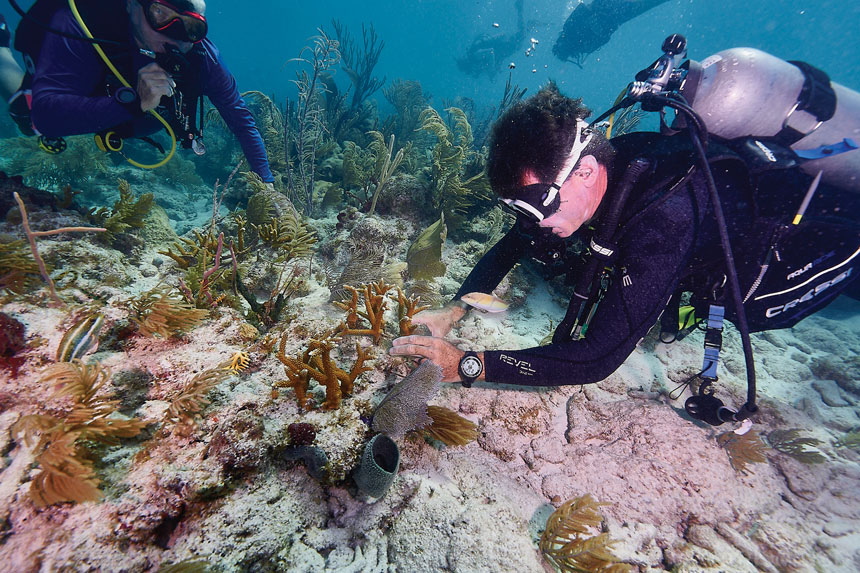
Thirty years ago, when Michael Goldberg would dive in the glimmering blue water of the British Virgin Islands, the reefs were teeming with life. “The expanse of these reefs was astounding,” says Goldberg, a cofounder of I.CARE, a Florida-based reef restoration organization. “The corals were so thick and lush.”
Today those reefs are dying. In much of the Atlantic Ocean, including the Florida Keys, where the 61-year-old Goldberg lives, roughly 70-95 percent of the coral is gone, devastated by disease, rising sea temperatures, and other existential threats.
By 2015, as the reefs declined, Goldberg faced a decision. He would either leave the scuba industry — since 2004, he has owned Key Dives, which provides diving and snorkeling on the Keys’ Islamorada reefs — or take action to restore the coral. Fortunately for Florida, the ocean, and humanity, he chose the latter.
In 2019, Goldberg cofounded I.CARE (Islamorada Conservation and Restoration Education). The mission: To restore and maintain Islamorada’s reefs by teaming with local businesses, residents, and visitors, including local dive shops and recreational divers. Activities range from underwater trash clean-ups — since 2021, divers have lugged 20,000 pounds of debris to the surface — to coral transplants. Over the past three years, I.CARE has planted over 15,000 corals on six different reefs.
The need is urgent. Coral reefs provide food and shelter to thousands of organisms — crustaceans, fish, anemones, sponges — and protect shorelines from storms and erosion. The reefs’ economic benefits include tourism and commercial and recreational fishing. Coral has even been used in medical technologies such as “bone grafting techniques and possible treatments for diseases including Alzheimer’s and cancer,” I.CARE notes.
“I love educating people about the importance of this, but the most gratifying thing for me is seeing the coral grow,” Goldberg says. “I love seeing little baby corals thrive in a harsher environment than I ever imagined, and knowing that despite all the challenges, we’re seeing success.”
Goldberg’s career initially focused on money management rather than ocean management. His love of the water began when he was a boy in Los Angeles, but his family moved to Chicago when he was 10, and he later studied finance at Northern Illinois University. On a summer trip to Acapulco, he dove for the first time, purely, he says, “as a lark.”
“Someone got me some gear, and I wasn’t certified, and I didn’t know what I was doing,” he says. Acapulco is not known for stellar diving experiences, but he loved it: “I was just so enamored with being underwater.”
After that, he was hooked. He earned his diving certification and then moved back to one of L.A.’s beach communities and became an instructor. Before long, he and his wife decided to move to the British Virgin Islands. Eight years later, the couple returned to the United States and opened Key Dives in Islamorada.

Goldberg has made over 10,000 dives, swimming not only with dolphins and schooling sharks, but within 15 feet of a humpback whale as it breached. And yet the vast coral reefs have always intrigued him most, whether diving alone or taking clients off the island of Virgin Gorda in the British Virgin Islands.
“There was this one unique piece of coral that I would swim underneath — it was like a tree,” he says. “Most people want to see fish, but to me, that coral was always the highlight of the dive.”
In 2017, Goldberg met Kylie Smith, who was working on her Ph.D. at Clemson University and studying coral in the Florida Keys. Smith would fill her tank at Key Dives, and Goldberg, who was “already shifting my business toward conservation,” would tap into her aquatic expertise.
“When I met Dr. Smith, I would pepper her with questions — she couldn’t walk in my store and leave in quick fashion,” Goldberg says. Their discussions eventually moved from the dive shop to a beer garden at The Florida Keys Brewing Company. “We would sit and chat, and I kept saying to her, I’ve got an idea to empower recreational divers so that they can become citizen scientists — not only because they want to be part of the solution, but because they need to be a part of the solution. That’s the largest potential boots-on-the-ground army that can enact so much of what we do.”
Those discussions led them to co-launch I.CARE. By January 2021, volunteer divers had transplanted I.CARE’s first corals.
For the coral restoration, divers use coral raised in nurseries. Once it’s planted on the reefs, the coral will, hopefully, reproduce into a coral colony — but the process is slow. It can take 20-50 years for coral to grow large enough to spawn.
To speed up reproduction, I.CARE uses a process called micro-fragmentation. Larger corals are cut into thumbnail-size pieces and grown in a nursery. When those pieces grow to about the size of a 50-cent piece, they are planted edge to edge on a living coral structure. After a few years, the coral fuse to become one larger coral, and they’ll start to spawn in about 7 to 10 years.
For the micro-fragmentation work, I.CARE rescues coral that has broken free from the main reef structure due to storms and substrate erosion.
“What is cool about these corals is that these are the survivors. They are the most resilient, the ones that have persisted despite all the disease and heat,” says Goldberg. “It’s survival of the fittest in the truest sense, and the ones we are using to rebuild our precious reefs.”
Despite the advances, the challenges are huge, both for I.CARE and the planet. During the intense heat of summer 2023, most of I.CARE’s seemingly healthy coral fragments died at one of Goldberg’s favorite reefs. “I cried underwater,” he admits. But he prefers to focus on the organization’s victories. Seventy-seven of the fragments survived and are thriving.
“If I wasn’t optimistic, I wouldn’t keep doing this,” he says. “We’ve had successes, and we can build on those successes.”
When it comes to restoring the reefs for future generations, he offers a simple vow: “We’re not gonna give up.”
Ken Budd has written for The Washington Post, The Atlantic, The New York Times, National Geographic Traveler, and many more. He is the author of an award-winning memoir, The Voluntourist.
This article is featured in the July/August 2024 issue of The Saturday Evening Post.

