
Pride, Birds, And The Beauty Of Survival
Everything beautiful survived something to get here.
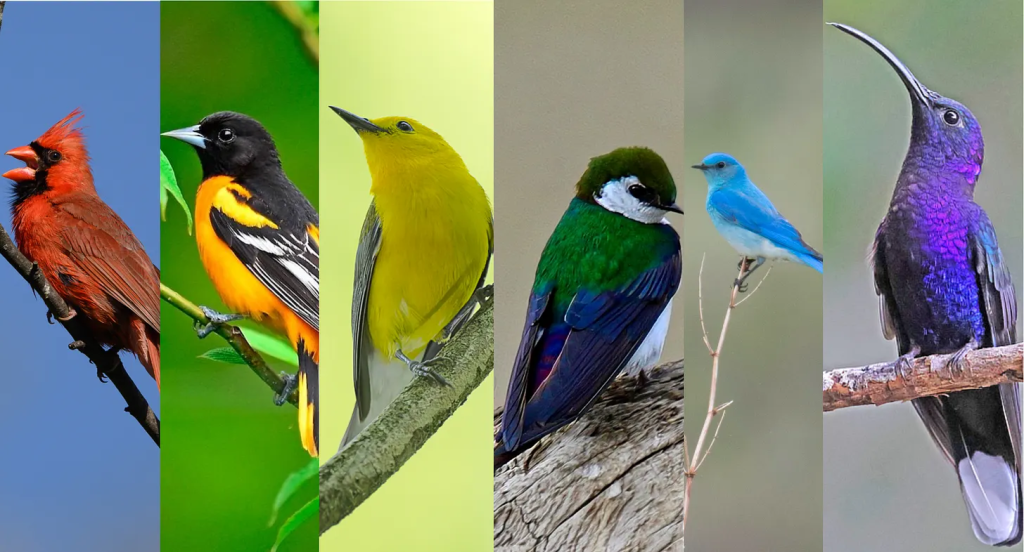
Birds (Sources: Birdsandblooms, Blair Benson, Bill Duncan, Blair Benson, JM Arment, Hummingbird centarl)
It’s June 1, which means Pride Month begins again today. It’s my seventh Pride. I remember my first one, seven years ago—terrified and excited, going out dressed in the clothes I felt best in, using the name I wanted to use for the first time in public. I had people with me that day, people I found safety with, people who helped me grow into the person I am now. Seven years later, so sure of myself and so comfortable in my skin, I look back on those moments as some of the best of my life. And now, this year, as I have every year, I watch the new flock—countless in number—who are wearing rainbow colors and joining a family that will show them more love than they have ever known. They are arriving even after a political winter that was, by any measure, cold and brutal to all of us. It is watching them that has me thinking about the beauty of what we witness starting today.
This year, I took up birding. I always thought it was a silly hobby, but my wife Zooey encouraged me to point my camera at a new subject. I first did so on the Pattee Canyon trail up in Missoula—and caught, soaring in place, a single red-tailed hawk, just hovering, watching the ground below. I stared at it for a while in awe. That was all it took. And the timing was perfect, because in the weeks that followed I stumbled into the best time to be a birder: spring migration. Wave after wave of orioles, tanagers, flycatchers, and warblers of every different color and size came pouring through. I didn’t even know there were so many birds. It made me realize that for most of my life I had been walking through the world completely unaware of the beauty around me—that there was this entire world that had always been there, just waiting for me to lay eyes on it.
What I also didn’t know was the incredible journeys so many of these birds had taken just to be here—how far they had traveled to find the flocks they’d spend the season with, to build nests, to raise families, to simply exist in a place that could sustain them. The Prothonotary Warbler I spotted in the marsh? It spent the winter in the mangrove swamps of Central America, then crossed the entire Gulf of Mexico in a single flight—more than 600 miles of open water, eighteen hours in the air with nowhere to land. It had to travel that far just to find its family. And the most stunning thing about a bird like that—one that has gone through so much, that has flapped its wings until it has exhausted itself and left everything behind? It arrived here in the most brilliant gold you’ve ever seen, and began to sing. The Prothonotary Warbler isn’t nearly the only species that does this. Ruby throated hummingbirds, blackpoll warblers, bobolinks… all take incredible journeys.
I was unaware of all of this before I took up birding. It makes me wonder how much else I walk right past without seeing. I remember before I came out, I didn’t know how rich this chosen family was, how many different people were also queer like me. I had no idea that once I came out, I’d find so many of them had been here all along. They were just waiting for me, and all I had to do was stop and look and embrace something new. And I did, and an entire world opened up. I love moments like this, where life teaches you something about itself, and you realize that diversity and surprise might just be the best things it has to offer.
Today, as Pride begins, I am reminded that every single person who has made it here, put on their colors, and found their family has survived something difficult. Every one of them has just lasted through a winter where our rights were systematically stripped away. Politicians who hate us have spent the year dismantling everything we built—healthcare ripped from hospitals, identities stripped from documents. Corporations that once draped themselves in rainbows every June are nowhere to be found. Some of us have quite literally migrated to entirely new states looking for safety. And our gulf crossing this year was met with heavy headwinds.
And yet, so many of us still made it. This year, you will see your city streets filled with rainbows. This year, countless new people will celebrate their first Prides. People will put on the clothes that fit them best. People will love in ways they didn’t know how to before. People will dance and sing, and others will have no choice but to acknowledge our existence, because when we arrive, we do not do so quietly. Every single person you see in the streets this month is a testament to our resilience, and a reminder to the fact that this is a journey we have been making since the beginning of human existence. We call it something different now. We carve out a specific month for it. But we have always been here, and we have always had to search for ways to express ourselves, be ourselves, and find our kin.
Maybe birding is a silly hobby. Maybe dragging myself out of bed before dawn—and I am not a morning person, I might add—is more trouble than it’s worth. Birders look ridiculous. We stuff our pants into our socks so the ticks don’t climb up our legs. We carry binoculars and absurdly large cameras into places where everyone else is just taking a walk. But I think there is something more to it than that, something that opened my eyes to the way the world moves around me—something I wasn’t expecting to find when I first pointed a camera at a hawk and couldn’t look away. I think I understand something about this month that I didn’t understand before because of it. Pride isn’t just a celebration, it’s a testament to survival and a refusal to be quiet even after the journey. It’s putting on your most brilliant colors after the longest winter of your life. And I’m so glad we made it one more year.
Happy Pride.

 Scottie's Playtime