The co-founder of Mom’s for Liberty which is fighting to remove the LGBTQIA from all aspects of society, schools, libraries, movies, and even in private businesses was having lesbian sex with a woman that her family values republican husband was having three-way sex trysts with. You know, the very people pushing the family values biblical model of marriage and sex only were violating what they want to mandate for everyone else but enjoying sex out of marriage, having same sex relations, having sex with a woman not your wife. Hypocrites and dangerous ones. When the wife was not available to have sex, the second woman wanted to wait until she was. That is when the married man raped her, because a white Christian man shall not be denied the right to have sex when and where he demands it. And in his mind, women have no right to complain or say no. Hugs. Scottie
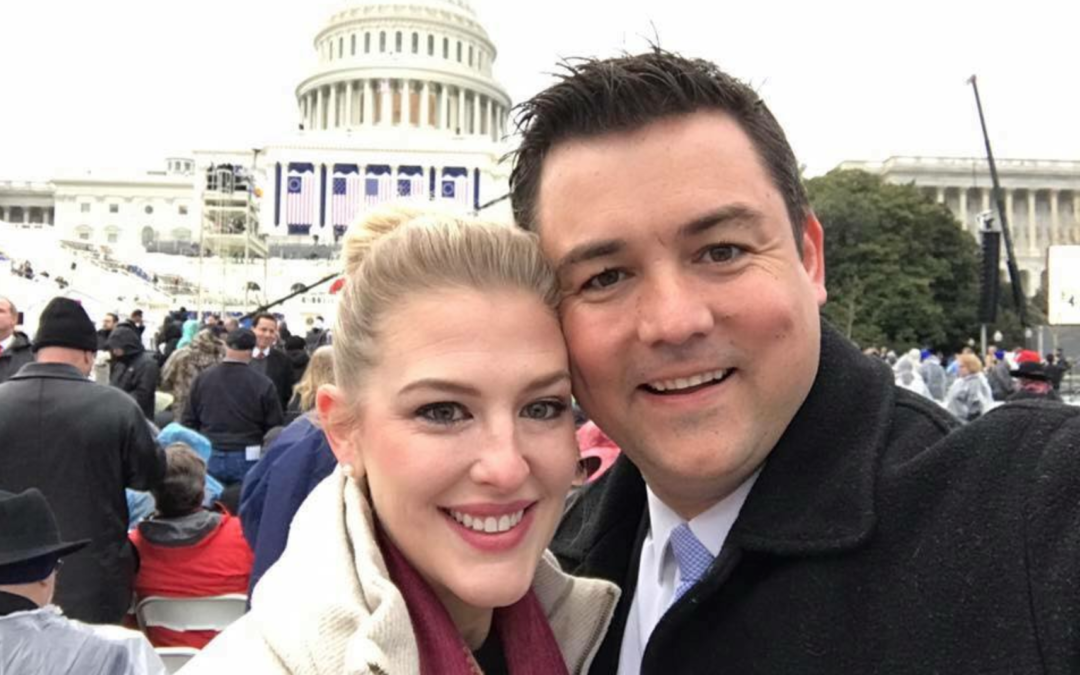
Christian Ziegler with his wife Bridget at Donald Trump’s 2017 inauguration.
The sexual battery investigation of Florida GOP chairman Christian Ziegler began with a 911 call from a friend of the alleged victim who was worried about her well-being, according to a recording of the call obtained by the Florida Trident.
The 911 call, made on October 4 at 2:46 p.m., reveals the caller was concerned about the mental health of the woman, who isn’t being identified due to the nature of the investigation.
“I was hoping to do a wellness on a friend of mine,” the caller began. “She hasn’t shown up for work the past two days and I just got off the phone with her and she sounds drunk and I know she has pain medication on her and she told me that she doesn’t think she can do it anymore.”
The dispatcher then asked questions about the victim’s address, which was redacted, before the caller said the alleged victim had been struggling with addiction that had “gotten worse and worse the last couple of months.” Then she relayed the information that kicked off a criminal investigation that is ongoing.
“She won’t answer anyone else at work except for me but she told me she was raped yesterday and that she’s scared to leave her house,” said the caller. “… She’s saying she’s scared that — the person that raped her came to her house — that she’s scared to leave.”
The caller then told the dispatcher, “I’m worried about her right now.”
“I have units en route,” said the dispatcher.
The alleged perpetrator is Ziegler, who has yet to publicly comment on the investigation first reported by the Trident on Thursday morning. His attorney, Derek Byrd, said in a written statement Ziegler would be fully exonerated in the investigation.
Sources close to the investigation told the Trident that Ziegler and his wife, Sarasota County School Board Member Bridget Ziegler, who is also an appointee of Gov. Ron DeSantis and cofounder of the right-wing group Moms For Liberty, had a three-way sexual relationship with the woman prior to the alleged October 2 sexual assault.
A copy of the search warrant involved in the case was released late Friday that substantiated much of the Trident’s earlier reporting and added a wealth of new information.
Ziegler, according to the affidavit, had known the woman for 20 years and they had agreed to a tryst at the woman’s home on October 2 with Ziegler’s wife. When Bridget Ziegler wasn’t able to make it, the woman canceled via text to Christian Ziegler, writing that she had been “more in for her,” meaning Bridget. She told police that Christian Ziegler came to her home anyway and entered uninvited as she opened the door to walk her dog. Inside, she said he raped her.
In an interview with detectives attended by his attorney, Christian Ziegler admitted he had sex with her that day but said it was consensual sex with the woman. He also admitted that he shot video of the incident, which he said he initially deleted, but later uploaded to a Google Drive. When the affidavit was filed with the court on November 15, police had yet located the video. The contents of the Google Drive was among items seized by police under the warrant, along with his Gmail and iPhone.
According to the affidavit, Bridget Ziegler told detectives she was involved in a sexual encounter with her husband and the woman once over a year ago.
News of the criminal investigation led DeSantis to publicly call for Ziegler to step down from his role at the top of Florida’s Republican Party shortly after the presidential candidate’s debate with California Gov. Gavin Newsom Thursday night on the Fox News Channel.
“I don’t see how he can continue with that investigation ongoing, given the gravity of those situations,” DeSantis told reporters. “And so, I think he should step aside. I think he should tend to that. He’s innocent until proven guilty, but we just can’t have a party chair that is under that type of scrutiny. And so, I hope that — I hope the charges aren’t true. I’ve known him, I’ve known Bridget; they’ve been friends. But the mission is more important,”
The criminal investigation, which sources tell the Trident involves video recordings and the seizure of Christian Ziegler’s phone, is ongoing.
Florida Center for Government Accountability public access director Michael Barfield contributed to the reporting of this story.
About the Author: Bob Norman is an award-winning investigative reporter who serves as Editor-in-Chief of the Florida Trident and journalism program director for the Florida Center for Government Accountability. He can be reached at journalism@flcga.org or by phone at 954-632-4343.
Breaking news: 911 tape released in criminal investigation of Florida GOP chairman Christian Ziegler. “She told me she was raped yesterday and she’s scared to leave her house.” #DefendDemocracyhttps://t.co/IdkLS4nGKD
— Florida Center for Government Accountability (@FLCTRGA) December 1, 2023
Florida GOP Chair Accused of Sexually Assaulting Threesome Partner
Police are investigating Christian Ziegler, husband of Moms for Liberty co-founder Bridget Ziegler, over accusations that he sexually assaulted the couple's alleged partner.
I hope the unidentified victim gets the help and support she needs, and I also hope Zeigler ends up serving time, and I especially hope the whole Mom’s for Liberty crumbles as it’s revealed what kind of fraud group they really are
The “alleged” rapist Zeigler demeaned a gay school board member after he departed the meeting under baseless accusations of being a groomer. Zeigler’s bisexual wife, chair of the board, did nothing to stop the abuse. In the “alleged” rapist Zeigler’s own words: “He may not like the public being informed and being held accountable, but both are on the way.”
That 911 call is wrenching. The woman she was talking about was obviously made to suffer horribly. I’m glad that she didn’t end her life or hurt herself over the unbearable pain that was inflicted on her. I hope she can return to some semblance of a normal life with sufficient time.
The virulent homophobes are closeted self hating gays in denial who need someone else punished for what they’ve been told and buy into what they’ve been told is wrong about themselves.
She’ll do a “redemption” tour in which she explains that the Devil possessed her husband and he forced her into terrible, sinful situations. She, as a loving Christian woman, struggled with how to serve him and do her wifely duties and remain true to her faith. Either they’ll get divorced and she’ll become a RW cause celeb, or they’ll stay married, he will “repent” and they will continue the grift together.
I hope the victim gets the help she needs, not just for the attack on her but the hate coming her way from “loving” Christians angry that she dared to blow the whistle on them.
I don’t really know how to write this. It has been so upsetting to me, yet he needed to know, and his not knowing was also becoming a problem. I was trying so hard to hide it all from him that it was causing him to wonder why some things were causing me to have issues.
Yesterday I arranged for each of us to get three vaccines from our local Walgreens pharmacy. We both got the covid, the flu, and the RSV vaccine shot. Then today I went and got my three allergy shots.
When I got home I started doing dishes, Ron talked about not wanting me to work so hard in the house, as he was trying to get a door up between our living room and the rest of the house that the Hurricane Ian ripped off. But then we started talking. And my world went South, East, North, West, and all over the map.
I don’t know how the conversation came up, but it had something to do with my adoptive family and the hell spawn that abused me. Ron said something about one of the hell spawn siblings, and it just slipped out. I really never wanted to tell him, I told myself I wouldn’t. But dogs that love gravy I did.
I told him how the hell spawn knew I was adopted, and because there was an ambiguity over if I was really a member of the family or not. Because the adoptive mother wanted me, but it became clear fast the adoptive father did not. He made it clear I was not a member of the family. But when I stopped being a cute toddler, she lost interest in me also.
But back to today. Ron mentioned something from the hell spawn, and I just started to tell him. As I have said in 2007 on our way home I told him I had been abused but never told him more details and he said he had figured that out. But then he has lived with me having terrible nightmares where I relive being raped or beaten. So really I understood he would understand. He has woken me when I was begging or screaming in my sleep.
I am not sure how it started now, my mind is trying hard to bury it. But I started by telling him of the Vet across the street that was fucking me at 4, then I told him the worst of it, starting with how the hell spawn daughter / sister who was in charge of us at night would get her boyfriend sexual excited and then let him have me to satisfy his need. She got pregnant at 14 like her mother, married by 15. Three marriages, two of her husbands would molest / rape me. One of her husbands loved to play with little boys wieners, especially when he was inside me. I told him how each of the male hell spawn of the family who were teens used me repeatedly. And how they let their friends have me. I told him one of their fun games was forcing me to the top of the staircase, then pushing / throwing me down it. Betting on how far I would go, how many times I would bounce, stuff like that. And then the most painful, I told him parts, but not all of the abuse by the adoptive father. He more than any others enjoyed hurting me. Maybe because he never wanted me at all, but regardless, the things he enjoyed doing to me, I still can not face today.
Once I started, I just couldn’t stop. I told him of the beatings, the sexual assaults, the fear of them all, the time the one hell spawn I thought I could trust to be my friend lay on top of me hitting me saying admit your gay, admit your gay. I was 5 years old and she was 10, and had no idea what she was hitting me for. Then she said because guys fuck you, you play with their dicks. What, why is that wrong? It is not like I had a choice! I told him of the beatings, and other attempts to break my bones, and how the hell spawn used me sexually. I nearly broke when I told him how one of then raped me so badly, I described to him how I was then beaten for soiling my sheets. One of the hell spawn like to pee on me at night to get me into trouble, and when I finally got a bed I would wake up to him peeing on me and I knew in the morning I would again be blamed for wetting the bed. The adoptive parents either did not believe me or thought it funny.
He already knew how until I was like 7 or more, I slept in a hallway, because as my adoptive mother told me I did not need or deserve a bedroom / bed like the other kids. Often they would take me to their beds, and I knew the price for the privilege and yes I willingly paid it. Wouldn’t you? I told him parts of my summer in Canada, and he said it explained why I wouldn’t have anything to do with the adoptive father’s mother when I was an adult and she would be visiting. I refused to be in the same room with her. He always wondered about that.
I could go on, but I got a lot of stuff out that I had hidden from him. Then suddenly after I was done explaining everything to him, or at least a lot that he did not know, I suddenly had the fear I always have had all my life. I suddenly worried he wouldn’t love me, I was damaged, I had been fucked by a lot of boys / men not him. I was less than, used and … Hell and shit, why did I tell him so much I had kept hidden! Why now damn it! 34 years I had kept it hidden … yet today I exploded with the sexual and physical abuse information. I know that is stupid to think that way, but he never knew the details. I had kept them from him, leaving it vague. He knew I was abused, but not the details, now he knows details.
I did not even tell him about the court ordered visits to doctors or therapist. And how the cop that escorted me used it to have a tryst with his mistress, with me listening through the open door, seeing some of it. Thankfully I don’t remember him telling me to join them, but as conditioned as I was, I would have.
But as I was getting to the worst of it he sat next to me, and then as I was starting to falter and feel I did the very wrong thing, he slowly reached out to me. I realize now that he did not want to trigger me. He stood up, came over closer and gently hugged me. I was trying to say I was sorry, I did not mean to tell him, but he just held me. Then after he let me go he suggested I go wash my face but he told me as I turned away. “I love you, I have always loved you. This changes nothing how I feel about you.” He said a lot of comforting things, things like they can’t hurt you and you won’t ever have to see them again, some are dead. But he knows they still hurt me, they haunt me. The memories are always there somewhere, waiting to pop back up.
He made me a small supper but I was so upset I hardly ate. Then he suggested I go to bed for a while. But I struggled to sleep. He came down to check on me and then rubbed my back and arms until I fell asleep.
All that happened yesterday. We got up about 3:45 am because Tupac wanted food and then out to do what cats do outside. I am fixing errors, stuff that needed reworking, then I will post it. Ron is treating me really softly this morning, he knows I got very little sleep. My emotions are all over the place, my nerves are raw. Maybe getting it out, letting him know the details, maybe the memories will let me rest, let me be for a while. I have a doctor’s appointment this morning. Oh well. Hugs to all.
Ali sent me the link to this and I admit I have been holding on to it for a while. It is important to read and understand, and so I present it here. As you can see, the question becomes what is sexually explicit. The world says just dressing up in the clothing different from the gender assigned at birth is OK, it is just a costume. But what republicans want to do is cement gender-specific rules into secular laws. Only females can wear dresses or skirts, only men can wear pants. Think of that, think how weird it is to judge people on clothing. If every actor who wears a costume must be what the costume represents? Are these people really trying to get to the Handmaids tale, the Taliban enforcement level of female dress.
Think about what these religious haters are against. Men dressed up as women, reading stories to kids! Did any of these people disrupting these events volunteer to read to those same kids? Really they can not be bothered to read to kids so they have to spend their time attacking people who do? What is so important to them, the joy of reading being inspired to kids, or creating fear of being attacked for how you dress if it is a bit differently from what others may accept. Talk about narrowing one’s ability of acceptance.
And then once they get rid of drag queens, which are just men in costumes, what next? Forcing females to stop wearing pants? Dear dogs that love gravy, if you think that is where they will stop you are not paying attention, are you!
So understand once they get rid of the drag queens, once they get rid of the others who are a different faith, they will come for you.
Thank you, Ali. Hugs. Scottie
The law makes it a crime to admit minors to shows that the state deems too sexually explicit.
Drag queens ride on a float during the Stonewall Pride parade in Wilton Manors, Fla., in June. Joe Raedle / Getty Images
WASHINGTON — The U.S. Supreme Court on Thursday rejected Florida’s bid to enforce a state law that targets drag show performances that, challengers say, imposes unlawful restrictions on free speech.
The court, divided 6-3, with three conservatives dissenting, turned away an emergency request from Florida officials after lower courts blocked the law statewide. The majority did not explain its reasoning.
The measure, widely seen as part of a conservative campaign against LGBTQ rights, was passed this year by the Florida Legislature. Florida Gov. Ron DeSantis, who is seeking the Republican presidential nomination and has frequently leaned into culture war issues, signed the bill into law. DeSantis this year also signed into law a bill that restricts transgender health care.
Officially dubbed the Protection of Children Act, the law makes it a crime to admit a child to an “adult live performance” that the state deems sexually explicit.
The three justices who would have granted the state’s request were Clarence Thomas, Samuel Alito and Neil Gorsuch.
A district court judge blocked the law under the First Amendment in part because it was too vaguely written, with key terms such as “lewd conduct” not defined. The Atlanta-based 11th U.S. Circuit Court of Appeals left that ruling in place.
The legal challenge was brought by an Orlando bar and restaurant called Hamburger Mary’s, which hosts what it calls family friendly drag shows.
The restaurant’s lawyers said in court papers that the shows “are not harmful to minors but likely still run afoul of the act due to its overbreadth and vagueness.”
The district court prevented the state from enforcing the law not just against Hamburger Mary’s but also statewide. The state argued that the judge did not have authority to do so.
In its application to the Supreme Court, the state asked the justices to narrow the injunction so it applied only to the restaurant.
Justice Brett Kavanaugh, another conservative, wrote a brief opinion explaining why he voted against the state, saying the narrow issue the state was raising was not one the court would normally hear. Fellow conservative Justice Amy Coney Barrett joined most of Kavanaugh’s opinion.
“This case is therefore an imperfect vehicle for considering the general question of whether a district court may enjoin a government from enforcing a law against non-parties to the litigation,” he wrote.
Again because people were not paying attention, the religious fanatics moved into positions of power. Now they want to enforce their own personal way of life on everyone and are willing to destroy democracy to do it. The public should take these people as a warning of how they want to erase our personal liberties to eased their religious fears. Think of it, if you read both this post and the article you see that he is claiming that his god will not give good things to our country, which to be honest has really been so far his god giving good things to white people, but will now be mean to … again white people because the very people Mike Johnson thinks are bad have gained more equality in the cis hetero world. He really thinks we are inventing new ways to be “evil”. Hell’s bells and my dogs that love gravy how weird is this guy to think that people only started to do bad stuff now that gays have the right to marry and kids can come out at school? Really what about slavery, what about the atrocities all through history including the Holocaust and the dark ages, Spanish Inquisition, and the horrible things Columbus and his people did. But gay kids are where his god draws the line???? Think of the things being done in Gaza, but his god is more upset that a boy finds another boy sexually attractive so that is why he will destroy the country? Think about where and why these people focus on. Worth the read for both. Hugs
Talking to pastor Jim Garlow on a broadcast of the World Prayer Network, Johnson spoke ominously of America facing a “civilizational moment.” He said, “The only question is: Is God going to allow our nation to enter a time of judgment for our collective sins? Or is he going to give us one more chance to restore the foundations and return to Him?”
The segment was filmed Oct. 3, just weeks before Johnson’s unexpected rise to become speaker of the House. Garlow pressed the clean-cut Louisiana congressman to say “more about this ‘time of judgment’ for America.” Johnson replied: “The culture is so dark and depraved that it almost seems irredeemable.” He cited, as supposed evidence, the decline of national church attendance and the rise of LGBTQ youth — the fact, Johnson lamented, that “one-in-four high school students identifies as something other than straight.”
Discussing the risk of divine retribution, Johnson invoked Sodom, the Old Testament city destroyed by God for its wickedness with a rain of burning sulfur. Johnson is a polished orator, but in a closing prayer with Garlow he grew tearful. Johnson intoned, “We repent for our sins individually and collectively. And we ask that You not give us the judgment that we clearly deserve.”
Read the full article. Longtime JMG readers may recall that Jim Garlow appeared here many times starting around 15 years ago, usually for “gays are satanic” type rants.
In 2010, Garlow declared that God passed Proposition 8 in California because Christians nationwide had fasted against same-sex marriage.
In 2017, we heard from Garlow when he called for a national tax to be given to churches for them to provide healthcare to congregants, as “health is God’s issue.”
In 2021, Garlow led a group of evangelicals in marching around the Georgia Capitol building seven times to prevent Democrats from winning.
Garlow is the co-author of the so-called Manhattan Declaration, which calls on Christians to disobey all pro-LGBTQ ordinances and laws.
"We’re violating His commands. We’re inventing new ways to do evil.”
House Speaker Mike Johnson: “Depraved” America Deserves God’s Wrath
PREVIOUSLY ON JMG: Pastor Jim Garlow calls for an armed uprising against the nation’s LGBTQ people. Pastor Jim Garlow claims that Christians who hate homosexuals will be rewarded with an eternal celestial orgy when they reach heaven. Pastor Jim Garlow says Satan is a gay activist. Pastor Jim Garlow says God has forgiven Newt Gingrich for his serial adultery.
I cannot emphasize enough that that man is dangerous. He believes that he has been placed there by God to claim the united states government for his narrow radical view of Christianity. Him + Trump represent an existential threat to the republic.
In its early days, our “Christian” nation wiped out most of the indigenous people and brutally enslaved millions of Africans. More recently, it fabricated excuses to start two bloody and futile wars in Iraq and Afghanistan, in which untold innocent civilians and children died.
If those and other atrocities didn’t piss off the Christian god, then he either doesn’t exist or has very warped priorities.
These people are gleefully watching whats happening in Israel because, to them, it means Baby Jesus is returning any day now so he’s trying to “save” as many Americans as possible before the end.
Absolutely. Their doctrine says the Jerusalem Temple must be rebuilt before Jesus can return. And when he does, all Jews who have not accepted him as Savior will be obliterated. Which is all of them.
What’s appallingly cynical is that while most Jews probably don’t know this, the Israeli government certainly does, and is happy to accept evangelicals’ support even knowing what’s supposed to happen to them.
This guy’s really dangerous. They really managed to sneak the guy in there without any proper due diligence, didn’t they? I recall that screaming shrew shouting down the reporter who asked the question about election denial. “How *dare* you apply scrutiny to us?!!”
Every Republican supported him, and none of those Republicans are facing angry constituents calling for their removal from office any time soon… so this is apparently what Republican voters want from DC.
I fully expect the dark money’d interests already knew how twisted and perverted this miserable piece of shit is before they insisted on his installation.
It’s right there in the book of Ezekiel: Sodom and Gomorrah were not destroyed due to gay people living in them. They were destroyed because violent residents violated their cultural guest laws, harassing and robbing visitors and migrants asking for help.
You can always tell what kind of Xtian you’re dealing with depending whether they actually understand the lesson in their own book or if they simply apply whatever interpretations they want in order to justify their own appalling, hateful behavior.
Lot offered his own four daughters to appease the soldiers to prevent them from killing the two angels he was saving in his house. For his protection from the angry mob and the soldiers, the angles made everyone who protest to become blind. This made the soldiers angry, and they raped Lot as punishment for protecting those angels, which was commonly done to control their victims. Angels then told Lot to run away with his daughters because they were going to destroy those two mythical cities for their inhospitality and cruelty. For one thing, there is no ancient archeological evidence that Sodom and Gomorrah ever existed. They are not on any ancient maps. As typical with most Biblical stories, they are parables to learn from except for those Christian apologists who take everything out of context to justify their bigotry and ignorance.
Christians ignore what the Bible actually says about Sodom and Gomorrah. We weren’t the cause, we were the punishment, at least the first level of punishment.
Frankly, it’s pretty insulting, but the way THEY act is what’s raising the threat level…
Looking back, if I had a safe and supportive environment when first realized I was Trans at age 15 I believe my life would have been much easier. Not perfect but easier.
This religious fanatic needs to mind his own freaking business.
And that is why it is so important that all trans and non-binary come out. To find each other so they can comfort and support each other and show that this is ok and part of normal life. That’s the reason christStains are so against any kind of equality and normalization of all genders. Because it goes against their hate and deludes opportunities to grift money. The only reason growing up trans was hard for you and growing up gay was hard for me is because of hateful religion.
Johnson is quite delusional and hiding a deep dark secret about himself, as we’re all quite aware. NO ONE ever goes that deep into how to ‘eliminate’ our clan than those who are deep DEEEEPPPP in a violent and sad closet.
Yeah, there’s seriously something off about this guy, beyond the usual bigotry. The prissy zealotry is extremely creepy. (Along with those other signs like the weird youthful adoption and the porn monitoring with his son.)
Some of them just seem ignorant, blind cultists. But this guy is full-on creepster culty since he’s clearly intelligent enough, or should be, to have some grounding in the real world. If I had children, I wouldn’t let him anywhere near them. He gives off serious pervy vibes.
Why is one of the default babble verses against LGBTQI+ always include the story of Sodom and Gomorrah? Interesting that the post script to those verses was the daughters of Lot getting him drunk and having sex with him to supposedly make sure the world didn’t die with no survivors.
And I ALWAYS have the counterweight babble verses to this. Why was sodom and gomorrah destroyed? Because they did things that was against the traditions of the peoples in those lands at that time. And these traditions are timeless so it also applies to us in this time an place.
Ezekiel 16:48-50
•As surely as I live, declares the Sovereign LORD, your sister Sodom and her daughters never did what you and your daughters have done. “‘Now this was the sin of your sister Sodom: She and her daughters were arrogant, overfed and unconcerned; they did not help the poor and needy. They were haughty and did detestable things before me. Therefore I did away with them as you have seen. (NIV)
Interesting that the post script to those verses was the daughters of Lot getting him drunk and having sex with him to supposedly make sure the world didn’t die with no survivors.
And likely what really happened was Daddy got loopy, knocking up the daughters, then blaiming them. Imagine the two boys that were birthed. He was their father AND grandfather their mom’s were their half-sisters, and each mom was the aunt to the other’s kid. And it, apparently, was all A-OK with the big sky fairy.
Sounds a lot like the arrogant, overfed and unconcerned congress critters not helping the poor, the sick etc better reread that part of the Bible quickly.
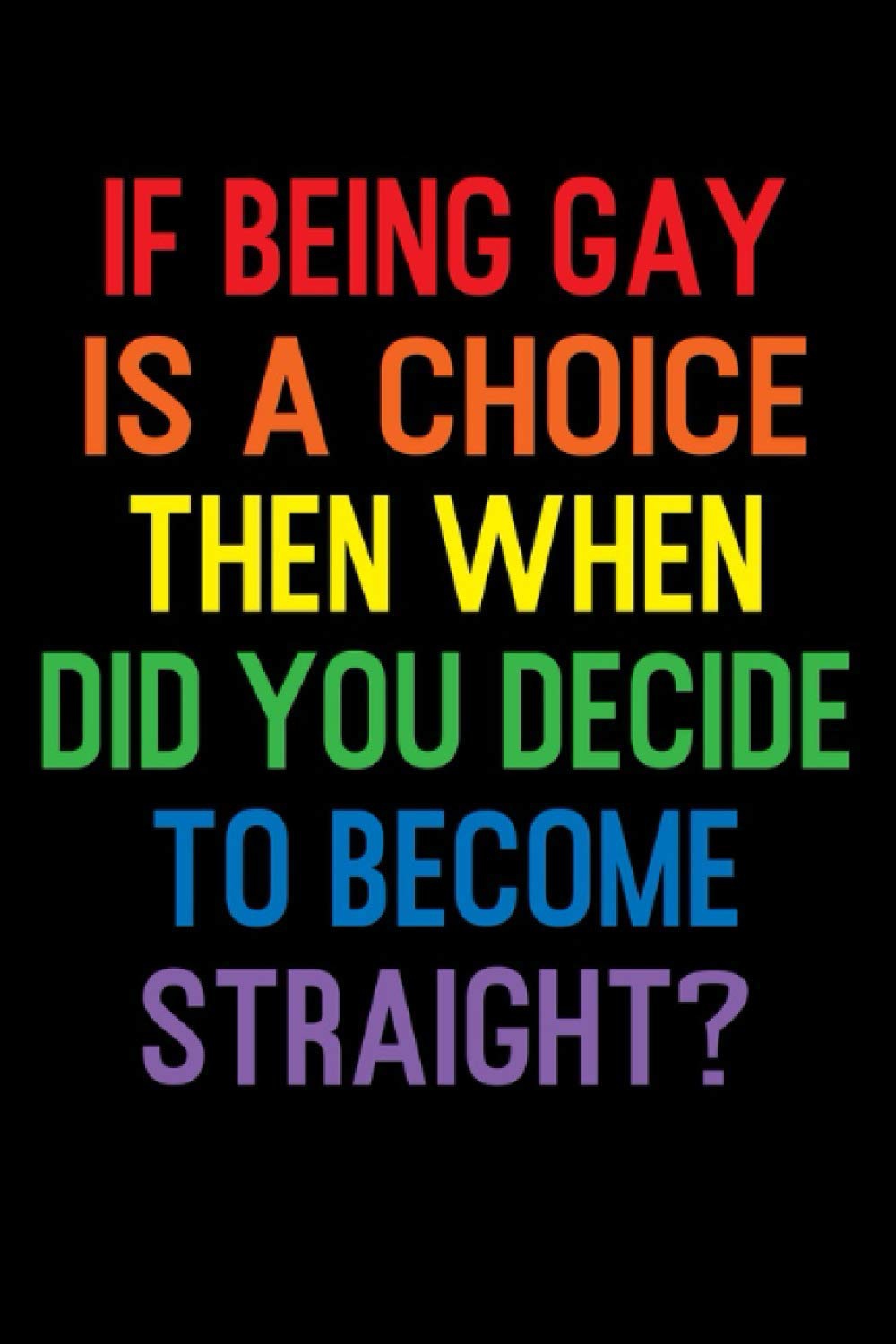
I have long said that if God hates gay people, then He fucked up royally when He had a hand in our creation. He is supposed to know all the past, the present, and the future. So how did we slip through? The answer we always get from the “religious ones” is that we “choose” to be gay. Stop choosing and you’ll be OK. See?
Homosexuality is a natural and a normal expression of human sexuality. It always has been, it always will be, and after all of us, here, are dead – and our existence forgotten – there will still be gay-oriented babies being born on every continent, in every country, and in every culture
Same as it ever was
That’s a little piece of truth they left out of both the Old and the New Testicles.
First, they never think deeply about that and they became str8 the first time they got excited when they caught a glimpse of her panties or her bra straps or big tits, etc.I actually asked a coworker that once, and that is the paraphrased answer he gave me. He became str8 when he first got hot over a girl. It’s so easy. I realized that the thinking was so shallow that further discussion was useless.
So God sat back as gave a 👍🏼 to more than years of slavery and lynchings but he’s super pissed and losing his shit over young LGBTQ kids living their lives? M’kay.
There’s got to be a morning after If we can hold on through the night We have a chance to find the sunshine Let’s keep on lookin’ for the light
Oh, can’t you see the morning after It’s waiting right outside the storm Why don’t we cross the bridge together And find a place that’s safe and warm
It’s not too late, we should be giving Only with love can we climb It’s not too late, not while we’re living Let’s put our hands out in time
There’s got to be a morning after We’re moving closer to the shore I know we’ll be there by tomorrow And we’ll escape the darkness We won’t be searchin’ any more
There’s got to be a morning after (There’s got to be a morning after) There’s got to be a morning after (There’s got to be a morning after) There’s got to be a morning after (There’s got to be a morning after) There’s got to be a morning after (There’s got to be a morning after) There’s got to be a morning after MAUREEN MCGOVERN
Jennifer Pippin says had she known of Rick Wiles’ antisemitic views, she wouldn’t have appeared on his program, but she didn’t apologize for having gone on.
By ANDREW LAPIN/JTAUpdated: NOVEMBER 1, 2023 18:01Books that have been donated to the “Read with Love Book Drive” run by PFLAG Bucks County to help place LGBTQ+ books in Bucks and Montgomery County libraries are placed in a donation box at the Doylestown Bookshop in Doylestown, Pennsylvania, U.S., April 7, 2023.(photo credit: REUTERS/HANNAH BEIER)
A Florida organizer of the right-wing activist group Moms For Liberty who successfully pressed her school district to remove a version of Anne Frank’s diary recently appeared on a livestream banned from YouTube because of its pastor host’s antisemitism.
Jennifer Pippin, who chairs the group’s chapter in Indian River County, Florida, appeared in September on the show TruNews, which is hosted by End Times preacher Rick Wiles. Wiles is a conspiracy theorist who has claimed that Jews and Zionists have “attacked Christian culture” and railed against the “Jewish lobby” and “Kabbalah wizard rabbis.”
Wiles, who is based in the same county as Pippin, has also stated, “That’s the way the Jews work, they are deceivers, they plot, they lie, they do whatever they have to do to accomplish their political agenda.” He has claimed that “Israel” was behind the assassination of President John F. Kennedy. In 2019 he stated, “It’s not Muslims that are going to kill us. It’s the Jews.”
The following year he called the first attempted impeachment of Donald Trump a “Jew coup.” adding that Jews would “kill millions of Christians” after they overthrew the president. The Trump administration credentialed the outlet multiple times, leading to major pushback from Jewish groups. The channel was permanently banned from YouTube in 2020 over Wiles’ antisemitic rants.
Speaking to the Jewish Telegraphic Agency on Monday, Pippin said she had not been aware of Wiles’ antisemitism before she appeared on his show and would not have agreed to it if she’d known.
A Little Free Library, which was designed to look like a prison, invites residents to take books that the library says have been challenged by schools across the state of Texas, in Houston, Texas, U.S. May 3, 2023. (credit: REUTERS/CALLAGHAN O’HARE)
Says she was ignorant of hosts’ views, but doesn’t apologize
“Honestly, I’ve never heard of him before,” she said. “And I wasn’t aware of anything that he said against any organizations or group of people or anything like that.”
Yet when she was asked if she was sorry for appearing on TruNews, Pippin responded, “Absolutely not. No.” She said she did not necessarily endorse the views of everyone she speaks to about her efforts to ensure that school libraries contain only “age-appropriate” material.
“My interview was a representation of me and our work with Moms For Liberty,” she said. “Just because somebody says or does something years ago that I don’t agree with doesn’t mean that just because I did an interview with him, I agree with every single little thing that he said or what his news outlet has put out.”
Although Moms For Liberty has some Jewish members in its leadership, the group borrows much of its rhetoric from Christian nationalist organizations and one local chapter has quoted Hitler in its communications to parents. The “parents’ rights” movement the group represents has largely targeted books about race, gender and sexual identity, but some Jewish and Holocaust books have also been caught in the dragnet.
Public figures call the graphic adaptation ‘pornography’
This spring Pippin’s school district on the state’s Atlantic coast, acting on her challenge, made national headlines when it agreed to pull “Anne Frank’s Diary: The Graphic Adaptation” from high schools. A spokesperson told JTA at the time that the 2018 illustrated reimagining of Frank’s diary was “a fictional novel” and “not age-appropriate.”
Since then, opposition to the book has only grown. A Jewish parent at another Florida school district successfully petitioned for the book’s removal last month, while a middle-school teacher in Texas was recently fired for reportedly assigning and reading aloud passages from the book. Politicians and other public figures have since claimed that the book’s depiction of Frank’s attraction to another girl, and her descriptions of her own genitalia, were “pornography”; a local Florida news outlet claimed Pippin had called the book “sexually explicit” in her own challenge.
Pippin told JTA that the quote attributed to her was incorrect and that she did not object to the book’s sexual content, which she recognized came from Frank’s original diary. “I didn’t challenge it for the sexually explicit content because this was actually what she wrote,” she said. “This is what she was thinking in her teenage years, during the Holocaust.”
She instead said she objected to the book’s presence in her high school for a different reason: that it was a highly abridged version of the diary’s original text, and she and a local Holocaust education group jointly believed high school students should be expected to be able to read the original instead.
“They agreed that this one book, the graphic adaptation, should be permanently removed because they felt that children in high school should be reading the true diary of Anne Frank, and not the graphic adaptation, to get the actual, factual information from the diary,” Pippin said, adding that she supported “age-appropriate” Holocaust education in schools.
Wiles: ‘Marxist Communists are waging war against America’s innocent children’
Pippin said Wiles had reached out to her to ask about her challenge to the Anne Frank book specifically, although she said she did not think his questions about the book were antisemitic in nature and the two did not discuss the book in their live conversation.
Wearing a Moms For Liberty T-shirt, Pippin spoke to Wiles for around 30 minutes on his show, chiefly promoting the work of her group, which Wiles said he fully supported. “I will do everything I can to help you,” he told her. “I will help raise money, I will help organize, I will help you get a lawsuit against the school board.”
Wiles introduced his interview with Pippin by stating, “Marxist Communists are waging war against America’s innocent children in almost every state in the USA. They have infiltrated our nation’s local school districts and public libraries.” He concluded it by comparing Moms For Liberty’s battles with school boards to the French Revolution, adding, “If we don’t stop it really soon, none of us are going to survive over the next 10 years, because these people are violent. … They’re going after our children now.”
Pippin told JTA she did not agree with Wiles’ characterization of her activism and had tried to steer the conversation back to books.
TruNews has broadcast in various forms for more than two decades, and Wiles has taken aim at Muslims and LGBTQ individuals as well as Jews over time. In recent weeks, since his broadcast with Pippin and Hamas’ attack on Israel on Oct. 7, Wiles has posted almost exclusively content targeting “godless, atheistic, antichrist Zionism” on social media and called on the Israeli government to “stop the Palestinian pogrom.”