Suggestions for Resources, Actions

Building an open web that protects us from harm

We live in a world where right-wing nationalism is on the rise and many governments, including the incoming Trump administration, are promising mass deportations. Trump in particular has discussed building camps as part of mass deportations. This question used to feel more hypothetical than it does today.

Faced with this reality, it’s worth asking: who would stand by you if this kind of authoritarianism took hold in your life?

You can break allyship down into several key areas of life:

  • Who in your personal life is an ally? (Your friends, acquaintances, and extended family.)
  • Who in your professional life is an ally? (People you work with, people in partner organizations, and your industry.)
  • Who in civic life is an ally? (Your representatives, government workers, individual members of law enforcement, healthcare workers, and so on.)
  • Which service providers are allies? (The people you depend on for goods and services — including stores, delivery services, and internet services.)

And in turn, can be broken down further:

  • Who will actively help you evade an authoritarian regime?
  • Who will refuse to collaborate with a regime’s demands?

These two things are different. There’s also a third option — non-collaboration but non-refusal — which I would argue does not constitute allyship at all. This might look like passively complying with authoritarian demands when legally compelled, without taking steps to resist or protect the vulnerable. While this might not seem overtly harmful, it leaves those at risk exposed. As Naomi Shulman points out, the most dangerous complicity often comes from those who quietly comply. Nice people made the best Nazis.

For the remainder of this post, I will focus on the roles of internet service vendors and protocol authors in shaping allyship and resisting authoritarianism.

For these groups, refusing to collaborate means that you’re not capitulating to active demands by an authoritarian regime, but you might not be actively considering how to help people who are vulnerable. The people who are actively helping, on the other hand, are actively considering how to prevent someone from being tracked, identified, and rounded up by a regime, and are putting preventative measures in place. (These might include implementing encryption at rest, minimizing data collection, and ensuring anonymity in user interactions.)

If we consider an employer, refusing to collaborate means that you won’t actively hand over someone’s details on request. Actively helping might mean aiding someone in hiding or escaping to another jurisdiction.

These questions of allyship apply not just to individuals and organizations, but also to the systems we design and the technologies we champion. Those of us who are involved in movements to liberate social software from centralized corporations need to consider our roles. Is decentralization enough? Should we be allies? What kind of allies?

This responsibility extends beyond individual actions to the frameworks we build and the partnerships we form within open ecosystems. While building an open protocol that makes all content public and allows indefinite tracking of user activity without consent may not amount to collusion, it is also far from allyship. Partnering with companies that collaborate with an authoritarian regime, for example by removing support for specific vulnerable communities and enabling the spread of hate speech, may also not constitute allyship. Even if it furthers your immediate stated technical and business goals to have that partner on board, it may undermine your stated social goals. Short-term compromises for technical or business gains may seem pragmatic but risk undermining the ethics that underpin open and decentralized systems.

Obviously, the point of an open protocol is that anyone can use it. But we should avoid enabling entities that collude with authoritarian regimes to become significant contributors to or influencers of open protocols and platforms. While open protocols can be used by anyone, we must distinguish between passive use and active collaboration. Enabling authoritarian-aligned entities to shape the direction or governance of these protocols undermines their potential for liberation.

In light of Mark Zuckerberg’s clear acquiescence to the incoming Trump administration (for example by rolling back DEI, allowing hate speech, and making a series of bizarre statements designed to placate Trump himself), I now believe Threads should not be allowed to be an active collaborator to open protocols unless it can attest that it will not collude, and that it will protect vulnerable groups using its platforms from harm. I also think Bluesky’s AT Protocol decision to make content and user blocks completely open and discoverable should be revisited. I also believe there should be an ethical bill of rights for users on open social media protocols that authors should sign, which includes the right to privacy, freedom from surveillance, safeguards against hate speech, and strong protections for vulnerable communities.

As builders, users, and advocates of open systems, we must demand transparency, accountability, and ethical commitments from all contributors to open protocols. Without these safeguards, we risk creating tools that enable oppression rather than resisting it. Allyship demands more than neutrality — it demands action.

https://werd.io/2025/building-an-open-web-that-protects-us-from-harm

Well, hell’s bells. I wasn’t going to add more of this sort of thing, but it’s important, so here it is.

Read in full here: https://www.platformer.news/meta-new-trans-guidelines-hate-speech/

Snippet:

Earlier this week, Meta announced a sweeping set of changes intended to reduce the amount of content it moderates and align its speech policies more closely with the incoming Trump administration. On Thursday, employees and contractors working on trust and safety began to learn what this would mean in practice.

One change Meta made this week was to eliminate restrictions on some attacks on immigrants, women, and transgender people. Specifically, its hateful conduct policy now allows “allegations of mental illness or abnormality when based on gender or sexual orientation, given political and religious discourse about transgenderism and homosexuality and common non-serious usage of words like ‘weird.’”

Meta has long supplemented its public community standards with nonpublic guidelines that it shares with employees and contractors charged with enforcing its policies. The guidelines give moderators examples of what is and is not allowed.

Today, Platformer is sharing some of those guidelines.

In an answer to the question “Do insults about mental illness and abnormality violate when targeting people on the basis of gender or sexual orientation?” Meta now answers “no.” It gave the following examples of posts that do not violate its policies:

Non-violating: “Boys are weird.”
Non-violating: “Trans people aren’t real. They’re mentally ill.”
Non-violating: “Gays are not normal.”
Non-violating: “Women are crazy.”
Non-violating: “Trans people are freaks.”

And in a follow-up questions about whether denying that a protected class violates the hateful content policy, Meta also answers no. It gave these as examples of posts that are now allowed on Facebook and Instagram: (snip-MORE. This is from the guy who left Substack a while back. I don’t want to steal from him. It’s free to read.)

So About Meta

Personally, I don’t think it’s surrender on the part of Meta, nor any of the other media moguls. It’s all of one piece-they’re all in it together with the new 47th president. I’ve read this from others, too, both last night and this morning. We the people are not part of the club. Anyway, here is this.

Meta surrenders to the right on speech

“I really think this a precursor for genocide,” a former employee tells Platformer

Casey Newton

Jan 7, 2025 — 12 min read

Snippet:

I. The past

Donald Trump’s surprising victory in the 2016 US presidential election sparked a backlash against tech platforms in general and against Meta in particular. The company then known as Facebook was battered by revelations that its network dramatically amplified the reach of false stories about Trump and his opponent, Hillary Clinton, and was used as part of a successful effort by Russia to sow division in US politics and tilt the election in favor of Trump.

Chastened by the criticism, Meta set out to shore up its defenses. It hired 40,000 content moderators around the world, invested heavily in building new technology to analyze content for potential harms and flag it for review, and became the world’s leading funder of third-party fact-checking organizations. It spent $280 million to create an independent Oversight Board to adjudicate the most difficult questions about online speech. It disrupted dozens of networks of state-sponsored trolls who sought to use Facebook, Instagram, and WhatsApp to spread propaganda and attack dissenters.

CEO Mark Zuckerberg had expected that these moves would generate goodwill for the company, particularly among the Democrats who would retake power after Trump lost in 2020. Instead, he found that disdain for the company remained strongly bipartisan. Republicans scorned him for policies that disproportionately punished the right, who post more misinformation and hate speech than the left does. Democrats blamed him for the country’s increasingly polarized politics and decaying democracy. And all sides pilloried him for the harms that his apps cause in children — an issue that 42 state attorneys general are now suing him over.

Last summer, the threats against Zuckerberg turned newly personal. In 2020, Zuckerberg and his wife had donated $419.5 million to fund nonpartisan election infrastructure projects. (Another effort that had seemingly generated no goodwill for him or Meta whatsoever.) All that the money had done was to help people vote safely during the pandemic. But Republicans twisted Zuckerberg’s donation into a scandal; Trump — who lost the election handily but insisted it had been stolen from him — accused Zuckerberg of plotting against him. 

“We are watching him closely,” Trump wrote in a coffee-table book published ahead of the 2024 election, “and if he does anything illegal this time he will spend the rest of his life in prison.”

By the end of 2024, Zuckerberg had given up on finding any middle path through the polarized and opposite criticisms leveled against him by Republicans and Democrats. His rival Elon Musk had spent the past year showing how Republican party support can be bought — cheaply. 

In business and in life, Zuckerberg’s motivation has only ever been to win. And a doddering, transactional Trump presented Meta with a rare opportunity for a fresh start.

All they would have to do is whatever Trump wanted them to do.

II. The announcements

On Tuesday, Meta announced the most significant changes to its content moderation policies since the aftermath of the 2016 election. The changes include:

  • Ending its fact-checking program, which funds third-party organizations to check the claims in viral Facebook and Instagram posts and downrank them when they are found to contain falsehoods. It will be replaced with a clone of Community Notes, X’s volunteer fact-checking program.
  • Eliminating restrictions on some forms of speech previously considered harmful, including some criticisms of immigrants, women, and transgender people.
  • Re-calibrating automated content moderation systems to prioritize only high-severity violations of content policy, such as those involving drugs and terrorism, and reviewing lower-severity violations only when reported by users. (This sounds boring but might be the most important change of all, as we’ll get to)
  • Re-introducing discussion of current events, which the company calls “civic content,” into Facebook, Instagram, and Threads.
  • Moving content moderation teams from California to Texas to fight the perception that Meta’s moderation reflects a liberal Californian bias. (Never mind that the company has always had content moderation teams based in Texas, or that it was Zuckerberg and not the moderators who set the company’s policies.)

Zuckerberg announced these changes in an Instagram Reel; Joel Kaplan, a Republican operative and longtime Meta executive who last week replaced Nick Clegg as the company’s president of public policy, discussed the changes in an appearance on “Fox and Friends.” (See transcripts of both here.)

One way to understand these changes is as a marketing exercise, intended to convey a sense of profound change to an audience of one. In this, Meta appears to have succeeded; Trump today called the company’s changes “excellent” and said that the company has “come a long way.” (“Mr. Trump also said Meta’s change was ‘probably’ a result of the threats he had made against the company and Mr. Zuckerberg,” dryly noted the Times’ Mike Isaac and Theodore Schleifer.)

Whether this will be enough to get Trump to end the current antitrust prosecution against Meta, or otherwise advocate for the company in regulatory affairs, remains to be seen. By the cynical calculus of the company’s communications and policy teams, though, one assumes that Trump’s comments inspired a round of high-fives in the company’s Washington, DC offices.

But these changes are likely to substantially increase the amount of harmful speech on Meta’s platforms, according to 10 current and former employees who spoke to Platformer on Tuesday.

Start with the end of Meta’s fact-checking partnerships, which perhaps generated the most headlines of the company’s changes on Tuesday. While the company has been gradually lowering its investment in fact-checking for a couple years now, Meta’s abandonment of the project will have real effects: on the fact-checking organizations for whom Meta was a primary source of revenue, but also in the Facebook and Instagram feeds of which Meta is an increasingly begrudging steward. (snip-MORE. Go read; he left Substack because of the nazis, and made Platformer to get his writing to people. It’s free to read, and you don’t have to subscribe, either.)

Must Read

Billions of people to benefit from technology breakthrough that ensures freshwater for the world

https://www.unisa.edu.au/media-centre/Releases/2024/billions-of-people-to-benefit-from-technology-breakthrough-that-ensures-freshwater-for-the-world/

The news below is grand news for the planet and the people everywhere.  Water is going to be a desperately needed highly valuable necessity.  Also I have another doctor’s appointment this morning.  Hugs

——————————————————————————————————

04 December 2024

freshwater streaming into cupped hands.jpgA novel approach to make seawater evaporate faster than freshwater has been hailed as a significant breakthrough in desalination technology that will benefit billions of people worldwide.
Up to 36% of the world’s eight billion people currently suffer from severe freshwater shortages for at least four months of the year, and this could potentially increase to 75% by 2050, threatening the survival of humans.

Seawater desalination is one of the most effective strategies to alleviate the impending scarcity, but existing processes consume massive amounts of energy, leaving a large carbon footprint.

Researchers from the University of South Australia (UniSA) have already demonstrated the potential of interfacial solar-powered evaporation as an energy-efficient, sustainable alternative to current desalination methods, but they are still limited by a lower evaporation rate for seawater compared to pure water due to the negative effect of salt ions on water evaporation.

UniSA materials science researcher Professor Haolan Xu has now collaborated with researchers from China on a project to develop a simple yet effective strategy to reverse this limitation.

By introducing inexpensive and common clay minerals into a floating photothermal hydrogel evaporator, the team achieved seawater evaporation rates that were 18.8% higher than pure water. This is a significant breakthrough since previous studies all found seawater evaporation rates were around 8% lower than pure water.

“The key to this breakthrough lies in the ion exchange process at the air-water interface,” Prof Xu says.

“The minerals selectively enrich magnesium and calcium ions from seawater to the evaporation surfaces, which boosts the evaporation rate of seawater. This ion exchange process occurs spontaneously during solar evaporation, making it highly convenient and cost-effective.”

Considering the global desalination market – which numbers around 17,000 operational plants worldwide – even small declines in desalination performance can result in the loss of tens of millions of tons of clean water.

“This new strategy, which could be easily integrated into existing evaporation-based desalination systems, will provide additional access to massive amounts of clean water, benefitting billions of people worldwide,” Prof Xu says.

The researchers say the hydrogel evaporator maintained its performance even after months of immersion in seawater.

The next steps will involve exploring more strategies that can make seawater evaporation faster pure water evaporation and apply them into practical seawater desalination.

The findings have been published in the journal Advanced Materials.

Notes for editors

Making Interfacial Solar Evaporation of Seawater Faster than Freshwater” is authored by researchers from the University of South Australia, Shenzhen Institute of Advanced Technology, Jinan University, Tianjin University, University of New South Wales, University of Adelaide, Shanghai Jiao Tong University and Nanjing Forestry University. DOI: 10.1002/adma.202414045

The mineral materials used in the process included halloysite nanotubes (HNTs), bentonite (BN), zeolite (ZL), and montmorillonite (MN) in combination with carbon nanotubes (CNTs) and sodium alginate (SA) to form a photothermal hydrogel.


…………………………………………………………………………………………………………………………


Media contact: Candy Gibson M: +61 434 605 142 E: candy.gibson@unisa.edu.au
Research contacts: Professor Haolan Xu E: haolan.xu@unisa.edu.au; Dr Gary Owens
E: gary.owens@unisa.edu.au

Let’s talk about Trump vs Republican AGs over TikTok….

5th person confirmed to be cured of HIV

https://abcnews.go.com/Health/5th-person-confirmed-cured-hiv/story?id=97323361

https://abcnews.go.com/US/video/researchers-5th-person-cured-hiv-after-groundbreaking-treatment-97339336

The Dusseldorf patient is latest to be rid of HIV with no signs of return.

February 20, 2023, 11:01 AM


Researchers are announcing that a 53-year-old man in Germany has been cured of HIV.

Referred to as “the Dusseldorf patient” to protect his privacy, researchers said he is the fifth confirmed case of an HIV cure. Although the details of his successful treatment were first announced at a conference in 2019, researchers could not confirm he had been officially cured at that time.

Today, researchers announced the Dusseldorf patient still has no detectable virus in his body, even after stopping his HIV medication four years ago.


MORE: Man apparently cured of HIV


“It’s really cure, and not just, you know, long term remission,” said Dr. Bjorn-Erik Ole Jensen, who presented details of the case in a new publication in “Nature Medicine.”

“This obviously positive symbol makes hope, but there’s a lot of work to do,” Jensen said


For most people, HIV is a lifelong infection, and the virus is never fully eradicated. Thanks to modern medication, people with HIV can live long and healthy lives.

The Dusseldorf patient joins a small group of people who have been cured under extreme circumstances after a stem cell transplant, typically only performed in cancer patients who don’t have any other options. A stem cell transplant is a high-risk procedure that effectively replaces a person’s immune system. The primary goal is to cure someone’s cancer, but the procedure has also led to an HIV cure in a handful of cases.

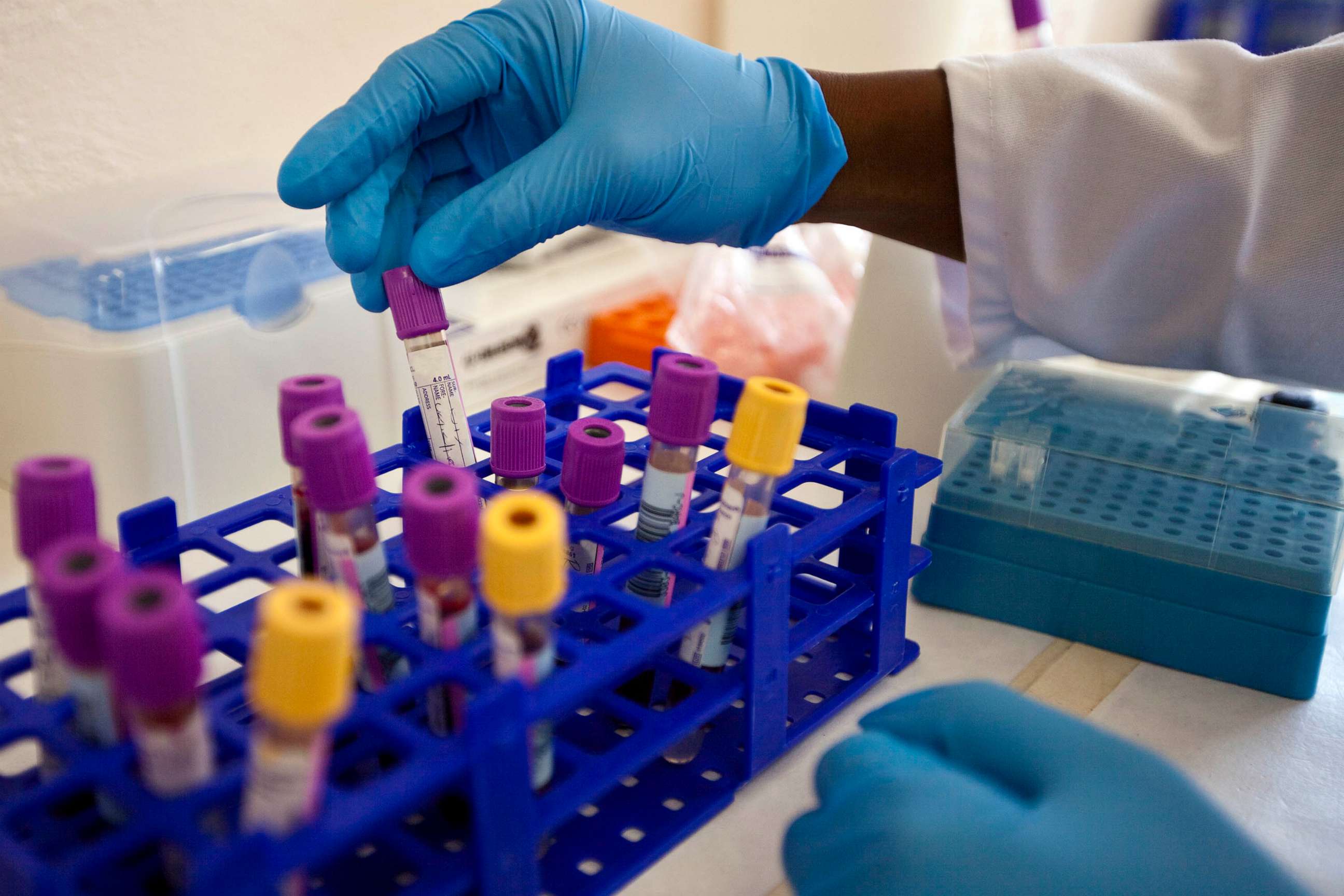
Blood samples are seen in a lab.
STOCK PHOTO/ Manuel Romaris/Getty Images

HIV, or human immunodeficiency virus, enters and destroys the cells of the immune system. Without treatment, the continued damage can lead to AIDS, or acquired immunodeficiency syndrome, where a person cannot fight even a small infection.

With about 38.4 million people globally living with HIV, treatments have come a long way. Modern medication can keep the virus at bay, and studies looking into preventing HIV infection with a vaccine are also underway.

The first person with HIV cure was Timothy Ray Brown. Researchers published his case as the Berlin patient in 2009. That was followed by the London patient published in 2019. Most recently, The City of Hope and New York patients were published in 2022.


“I think we can get a lot of insights from this patient and from these similar cases of HIV cure,” Jensen said. “These insights give us some hints where we could go to make the strategy safer.”


MORE: Breakthrough treatment cures woman of HIV


All four of these patients had undergone stem cell transplants for their blood cancer treatment. Their donors also had the same HIV-resistant mutation that deletes a protein called CCR5, which HIV normally uses to enter the cell. Only 1% of the total population carries this genetic mutation that makes them resistant to HIV.

“When you hear about these HIV cure, it’s obviously, you know, incredible, given how challenging it’s been. But, it still remains the exception to the rule,” said Dr. Todd Ellerin, director of infectious disease at South Shore Health.

The stem cell transplantation is a complicated procedure that comes with many risks, and it is too risky to offer it as a cure for everyone with HIV.

However, scientists are hopeful. Each time they cure a new patient, they gain valuable research insights that help them understand what it would take to find a cure for everyone.


“It is obviously a step forward in advancing the science and having us sort of understanding, in some ways, what it takes to cure HIV,” Ellerin said.

Kaviya Sathyakumar, M.D., M.B.A., is a family medicine resident physician at Ocala Regional Medical Center in Florida and member of ABC News Medical Unit.

“This is some of what we must do to reform our dysfunctional healthcare system”

Bernie Sanders

We are the wealthiest nation on Earth. There is no rational reason as to why we are not the healthiest nation on Earth

Over the past year, I’ve had the privilege of serving as chair of the US Senate committee on health, education, labor and pensions (Help). As I leave that position, let me reflect upon where I think our country should be going in healthcare, and the obstacles we face.

We are the wealthiest nation on Earth. There is no rational reason as to why we are not the healthiest nation on Earth. We should be leading the world in terms of life expectancy, disease prevention, low infant and maternal mortality, quality of life and human happiness. Sadly, study after study shows just the opposite. Despite spending almost twice as much per capita on healthcare, we trail most wealthy nations in all these areas.

If we’re going to reform our broken and dysfunctional healthcare system and “Make America healthy again”, this is some of what we must do.

Medicare for All

Healthcare is a human right. The function of a rational healthcare system is to guarantee quality healthcare to all, not huge profits for the insurance industry. The United States cannot continue to be the only wealthy nation that does not provide universal healthcare. It is not acceptable that, while spending almost 18% of our GDP on healthcare, millions of Americans delay going to the doctor and 60,000 Americans die each year because they can’t afford the care they need.

Lower the cost of prescription drugs

As Americans, we should not be paying, by far, the highest prices in the world for life-saving medications. It is absurd that while the pharmaceutical industry enjoys huge profits and benefits from US taxpayer research, one out of four Americans cannot afford to purchase the prescription drugs their doctors prescribe. We must cut prescription drug prices in half by making sure that we pay no more for medicine than the Europeans or Canadians.

Workers should not have to go to work when they are sick. Mothers and fathers should have ample time to stay home with their newborn babies. A parent should not get fired when they stay home with a sick child. We must guarantee at least 12 weeks of paid family and medical leave to every worker in America.

Reform the food industry

Large food corporations should not make record-breaking profits making children addicted to processed foods, which make them overweight and prone to diabetes and other diseases. As a start, we must ban junk-food ads targeted to kids and put strong warning labels on products high in sugar, salt and saturated fat. Longer term, we can rebuild rural America with family farms that are producing healthy, nutritious food.

Raise the minimum wage to a living wage

Millions of workers should not have to worry about how they’ll pay the rent or buy food for their kids. Working-class Americans live far shorter lives than the rich because of the stress of trying to survive on a paycheck-to-paycheck existence. Stress kills. Stress makes us sick. We must raise the minimum wage to at least $17 an hour.

Lower the work week to 32 hours with no loss of pay

People will live longer and healthier lives if they can spend more time with family and friends and have the opportunity to enjoy their leisure time. Advancements in technology, automation and artificial intelligence must benefit workers, not just billionaires on Wall Street or in Silicon Valley.

Combat the epidemic of loneliness, isolation and mental illness

Too many Americans are struggling with intense anxiety and “diseases of despair” – alcoholism, drug addiction and even suicide. Not only do we need to greatly increase access to mental healthcare, we must rebuild our sense of community and create a culture in which we better enjoy and appreciate each other as human beings. We must also take a very hard look at the impact smartphones and social media are having on our mental and physical health.

Address the climate and environmental crisis

Every American is affected when the Earth’s temperature rises and the air we breathe is polluted. Climate crisis and extreme weather disturbances will cause more widespread suffering and disease, economic disruptions and population dislocation. Air pollution is a major risk factor for respiratory and heart disease, cancer and other health problems. The fossil-fuel industry cannot be allowed to continue making us sick, shortening our lives and destroying the planet.

Create a high-quality public education system

Life-long education is a human right and should be obtainable for all in a wealthy nation like ours. Health, life expectancy and economic wellbeing are often tied to educational attainment. Instead of spending $1tn a year on the military we should make certain that all Americans, from childcare to graduate school, are able to enjoy free, high-quality education and job training.

Let’s be clear. The way forward to creating a healthy society is not radical or complicated. Many of the components that I’ve outlined already exist, in one form or another, in numerous countries throughout the world.

Our real problem is not so much a healthcare crisis as it is a political and economic one. We need to end the unprecedented level of corporate greed we are experiencing. We need to create a government and economy that works for all and not just the wealthy and powerful few.

  • Bernie Sanders is a US senator, and chair of the health education labor and pensions committee. He represents the state of Vermont, and is the longest-serving independent in the history of Congress

https://www.theguardian.com/commentisfree/2024/dec/31/bernie-sanders-healthcare-reform-opinion

It’s Topical Entertainment!

New Year’s Twilight Zone Marathons (we’ve got 3 separate ones here, on lifeline cable, even! -A.)

The weather outside is frightful, but The Twilight Zone is… also frightful.

By Josh Weiss Dec 27, 2024, 1:24 PM ET

The weather outside is frightful, but The Twilight Zone is… well, also pretty frightful on occasion. But we can’t think of a better way to ring in 2025 than with SYFY‘s annual New Year’s marathon featuring three uninterrupted days of back-to-back episodes from Rod Serling‘s classic and groundbreaking anthology series between December 31 and January 2.

“It’s interesting, because The Twilight Zone has never been off [the air]. It’s always been there. It’s never died,” Rod’s elder daughter, Jodi Serling, told SYFY WIRE while speaking about her father’s lasting impact. “It’s because the message that he’s sending is so apparent today. Everything that he predictively wrote about is coming back to us. It’s just an honor to know that his legacy will continue to live on forever. He was such a humble kind of guy, I don’t think he realized what an impact that he was going to make on our society.”

“When the original Star Trek debuted, when I was 10, I recorded it on reel-to-reel audio tape in case it never aired again. You couldn’t watch a show whenever you wanted to. There was no way to revisit the shows you loved unless they were in syndication and then they’d be cut up,” adds Marc Scott Zicree, author of The Twilight Zone Companion, during a separate conversation. “We live in a blessed age where you can watch anything you want, anytime you want. I really love these marathons, because I’ve heard from so many people that they just leave the TV on and glance over. It’s like, ‘Oh yeah, that’s the one with Talky Tina! That’s The Howling Man!’ The great thing about Twilight Zone, is that it’s also a family show. You can literally sit down with your kids, and it may scare them, but you know that they’re not going to see something inappropriate. They know what they’re signing up for. I really love the fact that there are Twilight Zone marathons. I think it’s terrific.”

For More on The Twilight Zone (snip)

https://www.syfy.com/syfy-wire/syfy-the-twilight-zone-new-years-marathon-2024-25-how-to-watch

BEST OF 2024: Dr. Peter J. Hotez – MR Live | 12/31/24

This is a must watch video.  It totally destroys the anti-vaccine groups and the Idea that vaccines cause autism.   This is a medial Scientist researcher with the greatest knowledge in the field of study and he has an autistic daughter.   He knocks down and shows proof of the lies of the anti-vaccine people.  He explains how it all became a political issue and power, and how it is killing people.   Hugs