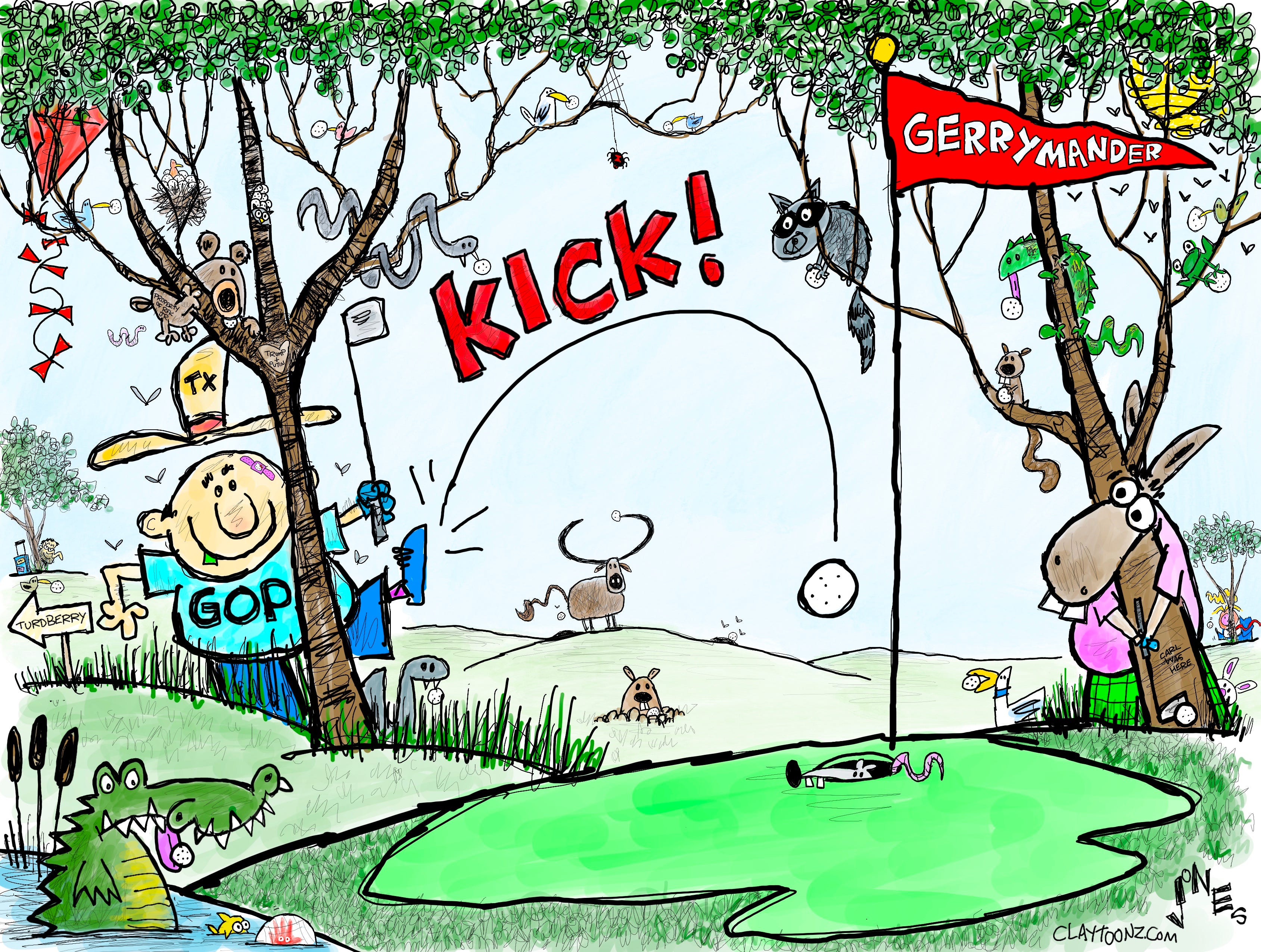
So Needed!

with added thanks to MDavis. 💖

Busy Day in Peace & Justice History on 5/17, Including Outrage & Rebellion in Seattle, a Wedding in MA, & a SCOTUS Decision Desegregating Public Schools; So Much More-

May 17, 1919
The Women’s International League for Peace and Freedom (WILPF) was formally established in Zurich, Switzerland.
May 17, 1954
In a major civil rights victory, the U.S. Supreme Court handed down a unanimous decision in Brown v. Board of Education, ruling “separate but equal” public education to be unconstitutional under the 14th Amendment, which guarantees equal treatment under the law.
The historic decision, bringing an end to federal tolerance of racial segregation, specifically dealt with Linda Brown, a young African American girl denied admission to her local elementary school in Topeka, Kansas, because of the color of her skin.

Read more and more
 
Above: Nettie Hunt and her daughter Nickie on the steps of the U.S. Supreme Court, 1954.
   
George E. C. Hayes, Thurgood Marshall and James M. Nabrit (left to right), the successful legal team, celebrate the Brown decision. . .
three years later . . .
May 17, 1957
Martin Luther King, Jr. led 30,00 on a Prayer Pilgrimage to Washington, D.C. to mark the third anniversary of Brown vs. Board of Education decision in which the Supreme Court declared racial segregation in education unconstitutional.
May 17, 1968
A group of anti-war activists who came to be known as the “Catonsville Nine,” including Philip and Daniel Berrigan, broke into the Catonsville, Maryland, draft board center and burned over 600 draft files.

The Catonsville Nine in a picture taken in the police station minutes after the action.
From left to right (standing) George Mische, Philip Berrigan, Daniel Berrigan, Tom Lewis. From left to right (seated) David Darst, Mary Moylan, John Hogan, Marjorie Melville, Tom Melville.  photo Jean Walsh
Read more about the Catonsville Nine 
May 17, 1970
 
100 protesters staged a silent “die-in” at Fifth Avenue and Pine Street in downtown Seattle to protest shipment through their city of Army nerve gas being transported from Okinawa, Japan, to the Umatilla Army Depot in eastern Oregon.
Outrage and Rebellion 
May 17, 1973
In Washington, D.C., the Senate Select Committee on Presidential Campaign Activities, headed by Senator Sam Ervin of North Carolina, began televised hearings on the escalating Watergate affair. One week later, Harvard Law Professor Archibald Cox was sworn in as Watergate special prosecutor.
Flashback: On June 17, 1972, five men were arrested for breaking into the Democratic National Committee headquarters in the Watergate complex in Washington, D.C. with the intent to set up wiretaps. One of the suspects, James W. McCord, Jr., was revealed to be the salaried security coordinator for President Richard Nixon’s reelection committee.
May 17, 2004

Marcia Kadish, 56, and Tanya McCloskey, 52, of Malden, Massachusetts, were married at Cambridge City Hall in Massachusetts, becoming the first legally married same-sex partners in the United States. Over the course of the day, 77 other such couples tied the knot across the state, and hundreds more applied for marriage licenses.
The day was characterized by much celebration and only a few of the expected protests materialized.
Read more 

https://www.peacebuttons.info/E-News/peacehistorymay.htm#may17

Sooner or Later, There Turns Out to Be A Reason For Everything

I have bitterly wondered why people wouldn’t just go vote for whoever they had to, but to just vote, especially in the 2024 election. I’ve had a hard time with the non-voters. But, turns out, some of them have legitimate reasons (I’ve spoken with none,) but it turns out that not all the non-voters are asses. -A

Political tension and fears of violence may have depressed voter turnout in 2024

This story was originally reported by Grace Panetta of The 19th. Meet Grace and read more of her reporting on gender, politics and policy.

Women and gender-nonconforming people were more likely than men to fear violence and harassment while voting in the 2024 election, and those who expressed concerns about safety were more likely not to vote at all, new research shows. 

The study, released Monday and shared first with The 19th, was conducted by States United Democracy Center, a nonpartisan organization focused on promoting fair and secure elections and upholding the rule of law.

“Tens of millions of Americans ultimately cast their ballots in 2024 without incident,” the report said. “But voting was not straightforward and safe for all Americans. Many were harassed, and a limited number were subjected to physical violence.”

The study found that the 2024 election was, as a whole, safe, fair and securely conducted, with voters overwhelmingly reporting feeling safe at the polls and confident in the safety and security of the election. But rising incidents of political violence, heightened political polarization and gender-based harassment had a measurable impact on how women and gender-noncomforming people especially viewed the safety of voting in the 2024 election — and whether they turned out to vote at all, the study says.

Researchers surveyed voters before and after the 2024 election in partnership with research data and analytics group YouGov and held a series of seven focus groups before the election — with three groups of White women, three groups of women of color and one made up of gender-nonconforming participants. They also fielded surveys of state lawmakers, election administrators and law enforcement officials in partnership with the nonprofit CivicPulse. The study is also one of the first of its kind to study the voting experiences of gender-nonconforming voters, who are subject to gender-based discrimination and harassment at the polls. 

Women, people of color and gender-nonconforming people were more likely to have perceived the election environment as being unsafe, reported experiencing higher rates of voting-related harassment and were more likely to take precautionary measures when going to the polls. The study also compared pre-election survey responses to voting records and found that higher expectations of experiencing violence or harassment at the polls was correlated with lower voting rates.  

“Concerns about violence or harassment depressed turnout, likely turning millions of voters into non-voters,” the report said. 

The pre-election survey, conducted September 23 to 30, 2024, surveyed 4,016 American adults with a margin of error of plus or minus 1.7 points. The post-election survey, conducted November 7 to 19, surveyed a separate group of 4,017 registered voters with a margin of error of plus or minus 1.6 points. The researchers asked a series of questions to identify gender-nonconforming respondents in its surveys with YouGov, resulting in a sample of 81 gender-nonconforming voters in the pre-election survey and 103 in the post-election survey.  

To measure fears of harassment and violence, researchers asked respondents how likely they thought it was to experience events ranging from verbal or written harassment to property damage and acts of physical violence. While all gender groups provided average responses of “somewhat unlikely” across all five, gender-nonconforming respondents had a higher expected likelihood of harassment or violence. 

Overall, 91 percent of men, 89 percent of women and 73 percent of gender-nonconforming respondents said in the post-election survey that they felt safe voting. But respondents’ perceptions and feelings of safety varied by race among women and gender-nonconforming people. In the post-election survey, 92 percent of White respondents said they felt completely or mostly safe voting, compared with 85 percent of Black voters and 84 percent of Hispanic voters.

In pre-election surveys, women and voters of color were more likely than men and White respondents to view voting as unsafe and to say they were taking precautions as a result. Among women, the most common safety precaution respondents said they were likely to take was not bringing their children to the polls (32 percent), while the most common safety precaution for gender-nonconforming people was not interacting with others at the polls (46 percent). About a quarter of women and gender-nonconforming respondents said they were likely to vote by mail.   

Several women voters in focus groups cited the potential of gun violence as a concern. 

“I don’t go to the polls, because you never know what you will encounter there,” said a White independent woman voter who participated in one of the focus groups. “It seems like everybody in Arizona has a gun. We vote by mail, because it’s safer. Everybody has an opinion; you get in line, and you hear it all. You never know, if they don’t agree with you, they’ll shoot you. People are crazy.”

Others spoke to the heightened political climate and general political tensions around the election as a reason they feared threats, harassment and even heated conversations in line. 

“I go early, or late, when I won’t run into anybody I know, and there won’t be any conversation,” said a Black Republican woman focus group participant. “I don’t want to deal with the emotional, ‘Who did you vote for?’ And me saying, ‘I don’t want to discuss it.’ So there are no issues, fighting, cussing, yelling. Save my peace of mind.” 

People who feared violence and harassment at higher levels were less likely to vote, researchers found by comparing survey responses to verified voting records. When controlling for turnout differences based on demographic considerations, the study still found an average three percentage point decline in the likelihood of voting. 

“For context, differences in voter behavior based on education level, one of the strongest predictors of turnout, are only half as large as differences explained by expectations of violence or harassment,” the report said. “Put another way, generalizing our results to the nationwide electorate, roughly 6 million Americans may have decided not to vote in 2024 because of concerns about violence or harassment.”

Gender-nonconforming voters face particularly unique challenges and barriers when it comes to voting. 

A rise in anti-transgender political rhetoric from the right has been accompanied by a slew of laws targeting transgender people in Republican-controlled states. Some of these laws have sought to create strict definitions of gender and bar transgender individuals from changing the sex listed on their official identification to align with their gender identity. In states that require voters to show photo identification at the polls, that could open up transgender and gender-nonconforming individuals to scrutiny and potential harassment. In the pre-election survey, a third of gender-nonconforming voters said they were likely to dress differently at the polls.

“I’ve been a registered voter for decades. When I attempted to vote last time, they had a hard time ‘finding’ my registration,” said a gender-nonconforming Black independent who participated in a focus group. “I could tell I was being judged. The attitude of the person looking at your information to give you the voting packet can be intimidating. My documents have been submitted, I have my ID, what’s the problem? I felt there was judgment as far as was my information correct or was it fraudulent.”

In the post-election survey, over half of gender-nonconforming respondents said they took at least one safety precaution when voting, compared with about a third of men and women who said they took at least one precaution. Thirteen percent of gender-nonconforming respondents reported experiencing verbal harassment, intimidation and threats compared to 5.2 percent of men and 4.8 percent of women. In all, 18 percent of gender-nonconforming voters reported experiencing violence or harassment during the 2024 election season. 

“I am obviously queer when you look at me, and I’ve been harassed for it,” said another focus group participant, an Asian-American Democratic voter. “Depending on how I do my hair or what I wear [on election] day, it’s a higher chance I’ll get harassed. If I was girly, I would be afraid someone could see through that and do me harm.”

This story has been updated to clarify support and funding for the report.

Here’s A Useful Tool

from the Center for American Progress (remember them?) This gives us the info by congressional district, including the congresscritter’s names so we know just who to call about our concerns. There are options for pagination or a table.

The Upcoming Republican Tax Bill

This is long, but the material is useful for lobbying at town halls, etc., and when writing to our congresscritters.

Ten Questions on House Republicans’ Upcoming Tax Bill

May 8, 2025

| By Chuck MarrSamantha Jacoby and Kris Cox

As the House Ways and Means Committee prepares to mark up a major tax bill, it is important to step back and consider which priorities it will reflect — whether it will prioritize tax policies that help families meet basic needs, require corporations and the wealthy to pay a fairer share of tax, and strengthen the nation’s fiscal outlook to allow us to meet existing commitments and make high-value investments.

Numerous independent analyses have shown that the 2017 tax law, which the bill is expected to extend, was skewed to the rich, drove up deficits and debt, and failed to deliver on its economic promises.[1] It also has proved unpopular with the public.[2] The 2025 bill should be held to a much higher standard than the 2017 bill, given its poor record of achievement, the higher risks the country now faces due to higher levels of debt, and the more uncertain economic outlook.

President Trump’s extreme and chaotic tariff policies pose a major threat of recession and are already raising consumer prices.[3] The President’s attacks on the rule of law, scientific and medical research, top universities and law firms, and the functioning of the federal government — including its ability to collect revenue and deliver core services — pose large additional economic risks, over both the short and long term.

Any forthcoming Ways and Means bill should respond to the current economic moment and the growing risks that families face: rising costs, increasing risks of job loss, and high uncertainty about their future financial stability. The bill also must be examined in connection with the other central pieces of the Republican economic agenda: massive cuts in health coverage, food assistance, and other forms of help for families and communities to partially offset the cost of the bill’s tax cuts.[4]

The answers to the following ten questions will illuminate what House Republicans prioritized as they put together their signature tax bill.

Prioritizing Tax Policies That Help Families Meet Basic Needs

1. Do House Republicans block the President’s reckless global tariffs to protect their constituents and stop a potential recession?

The tariffs’ impact on consumers and the economy is already impossible to ignore. Importantly, the Ways and Means Committee has jurisdiction not only over tax policy but also over Congress’ constitutional trade policy authority.[5] Thus, the committee can and should respond to the President’s destructive tariff policy.

Unless they are stopped, tax increases due to the tariffs are likely to more than erase any forthcoming tax cuts for households in all income groups except the top 10 percent, whose incomes are above $317,000. (See Figure 1.) Moreover, while the 2017 tax cuts won’t expire until the end of this year, households and businesses are already feeling the impact of the tariffs on prices, supply chains, and business viability.[6]

Tax Cuts For Households in the Bottom 90 Percent Would Be More Than Erased Under Trump's Destructive Tariff Policy, Low- and Middle-Income Households Bear Highest Burden
Figure 1

Soon after President Trump imposed the highest tariffs since the Smoot-Hawley tariffs of the 1930s on more than 100 countries, a number of states and businesses filed lawsuits challenging his legal authority.[7] Yet House Republicans, despite their constitutional responsibility over tariff policy and the obvious risks the tariffs pose to their constituents, have failed to act. Meanwhile, the tariffs and the frequent shifts in the Administration’s tariff policies are paralyzing businesses, raising costs on consumers, and sharply increasing the risk of recession, which could lead to a rise in unemployment and the number of people who need help to afford the basics, just as those supports are slated for cuts.

A major question for the committee markup is whether House Republicans will, in parallel with the tax bill, assert their constitutional trade policy authority to stop these destructive policies and protect the country from a potential self-inflicted recession.

Furthermore, as Figure 1 shows, these historic tariffs represent major tax increases on households with low or moderate incomes.[8] Given that extending the 2017 tax law would give the biggest benefits to high-income households, it will be important to see if Republicans modify the upcoming bill to reflect the current economic situation, including through measures discussed below.

2. Do House Republicans extend enhanced premium tax credits for marketplace health coverage to protect millions of people, including many small business owners, from sharp premium increases?

While the Ways and Means bill is expected to extend many other expiring tax provisions, it may not extend the premium tax credit enhancements, which are critical to making health coverage in the Affordable Care Act (ACA) marketplace more affordable.

Failing to extend them would drive up health care premiums by an average of 79 percent for over 20 million people, including 3 million small business owners.[9] (Figure 2 shows the average premium increases nationally for a family of four at different income levels; in some states the increases would be far higher.)[10] Roughly 4 million people would then be expected to lose their health insurance as its cost rose to unaffordable levels.[11] As a result, they would be more likely to forgo necessary care or to incur medical debt.

Families Would Face High Premium Increases if Tax Credit Enhancements Expired
Figure 2

3. Do House Republicans expand the Child Tax Credit for children in working families who get less than the full credit, whom 169 House Republicans voted to help last year?

Under the Child Tax Credit now in place, 17 million children receive less than the full credit, or none at all, because their families’ earnings are too low; the large majority of these children live in families with earnings.[12] Last year, Ways and Means Chair Jason Smith negotiated and championed legislation to expand the credit for the vast majority of these children. The bill, which passed the House, would have corrected many (but not all) key flaws in the credit’s design.[13]

First, the bill would have improved how the credit phases in with earnings. As it stands now, higher-income families get a $2,000 credit for each child, but because of the way the phase-in works for low-income families, many families with two or three children receive roughly the same total credit as a family with one child at the same earnings level. Not allowing lower-income families to claim the credit on a per-child basis harms the roughly three-quarters of children in lower-income families who live in a family with more than one child.

Second, the bill would have treated families with low or moderate incomes the same as higher-income families when it comes to the maximum credit they can receive. Currently, these families are restricted to a smaller maximum credit. The lower maximum credit for families who don’t owe income taxes means that when they are able to increase their earnings, they often receive no additional Child Tax Credit, as they remain stuck at the lower maximum credit. This is seemingly at odds with Republicans’ rhetorical focus on increasing returns to work.

If Republicans simply increase the $2,000 maximum credit, or index it for inflation, not one of the 17 million children or their families would benefit from the change. The children who wouldn’t benefit include an estimated 650,000 children in veterans’ families, as well as millions of children whose parents work important jobs for low pay, such as truck drivers, cooks and waiters, nursing assistants, home health aides, construction workers, cashiers, and others. These children should be the top priority, not the lowest.

Some prior Republican proposals to expand the Child Tax Credit would offset the cost by cutting the Earned Income Tax Credit (EITC) for families with children and eliminating the head-of-household filing status for single parents.[14] In effect, this would increase income support for single parents with one hand while taking away part or all of that added support with the other. The Ways and Means bill should boost the incomes of single parents, an economically precarious group — not take away support.

4. Do House Republicans prevent low-paid working adults not raising children in their homes from being taxed into poverty?

More than 6 million working adults aged 19 and older who aren’t raising children at home will be taxed into, or deeper into, poverty by federal income and payroll taxes in 2026 if House Republicans do not improve the very limited EITC for this group.[15]

Republicans should increase the paltry size of their EITC, expand the income range for people to qualify, and expand the age range (currently 25-64) to include anyone aged 19 or older. This would help young adults entering the workforce, who currently do not qualify for any EITC, and adults aged 65 and over, many of whom continue to work but aren’t eligible for any EITC. And it would provide a larger credit for currently eligible adults aged 25 to 64.

These changes would also be consistent with the President’s attention during the campaign to the economic circumstances of young men, especially those who don’t go to college.

5. Do House Republicans protect energy tax credits that help families lower their utility bills and create economic opportunities for struggling communities?

Tax credits for investments in clean, affordable energy have spurred tremendous growth in the solar, wind, and geothermal energy industries, and they are bringing new economic opportunities to areas of the country facing underinvestment and hardship, including many rural areas.[16] But House Republicans are reportedly considering large cuts to energy tax credits, which risks upending this progress.[17]

Repealing these credits would result in higher utility bills for households and businesses (increases of 7 percent and 10 percent, respectively)[18] at a time when consumers already face higher costs from the President’s tariffs. Repeal could also add up to $49 billion in annual health care costs and lost productivity.[19]

Requiring Corporations and Wealthy Households to Pay a Fairer Share of Tax

6. Do House Republicans end costly tax cuts targeted to high-income households?

Extending the expiring individual income and estate tax provisions of the 2017 law would benefit households with considerable wealth and high incomes far more than households with low or moderate incomes. Roughly half the cost of extending the expiring tax cuts would flow to households with incomes in the top 5 percent (those with incomes over around $320,000).[20]

This tilt to the top reflects several costly provisions that primarily benefit the most well-off:

  • Lower top rate. The 2017 law cut the top individual income tax rate, which now applies to taxable incomes over roughly $730,000 for married couples, from 39.6 percent to 37 percent. Some House Republicans have reportedly considered including a higher top rate in their bill — such as 40 percent for people with taxable incomes over $1 million — but President Trump and House Speaker Mike Johnson have both rejected the idea.[21]Allowing the top rate to revert to 39.6 percent while extending all of the 2017 law’s other expiring provisions would still give households in the top 1 percent a $40,000 average annual tax cut, according to the Tax Policy Center.[22] That’s because most high-income households receive large tax cuts from the law’s other provisions, like the pass-through deduction (see below), and also benefit from the law’s rate cuts that apply to the lower tax brackets. Still, even this modest change would be a welcome departure from the failed “trickle-down” approach to tax policy.
  • Pass-through deduction. The 2017 law adopted a special 20 percent deduction for certain income that owners of pass-through businesses (partnerships, S corporations, and sole proprietorships) report on their individual tax returns. Over half of the benefits go to 200,000 business owners with incomes over $1 million, who now face a lower top rate (29.6 percent) than their employees (37 percent).[23] Research finds the deduction had no trickle-down benefits for workers’ wages or business investment.[24]At a minimum, Republicans can follow through on their rhetorical support for small business owners by letting the deduction expire for millionaires, which would reduce the deduction’s cost by over $350 billion from 2025-2034, and instead extending enhanced premium tax credits that help 3 million business owners (see above) for a somewhat lower cost.[25]
  • Tax break for large estates. The 2017 law doubled the estate tax exemption to $22 million per couple and indexed it for inflation going forward; today a couple can pass on an estate worth up to $28 million tax free. Extending this generous exemption amounts to a $5.7 million tax cut for the wealthiest 1 in 1,000 estates, whose value consists largely of unrealized capital gains income that has never been taxed.House Republicans may double down on this costly estate tax break, with some even calling for permanently repealing the estate tax altogether.[26] Providing tax breaks to multi-million-dollar estates would be especially egregious given that Republicans also appear poised to steeply cut vital health care and food assistance, while the President’s sweeping tariffs will cost families with low or moderate incomes hundreds if not thousands of dollars a year and drive up the likelihood of a recession.

7. Do House Republicans revisit the 2017 law’s permanent and steep cut in the corporate tax rate?

The centerpiece of the 2017 law was a deep, permanent cut in the corporate tax rate — from 35 percent to 21 percent — that cost $1.3 trillion from 2018-2027 and is tilted even more heavily toward wealthy people than the expiring individual tax cuts.[27] (See Figure 3.) Rigorous research shows that the corporate rate cut did not produce the promised economic benefits: a study by economists from the Joint Committee on Taxation and the Federal Reserve Board found that workers in the bottom 90th percentile of their firm’s income scale saw no change in earnings from the rate cut.[28]

Rather than revisit this costly, skewed rate cut, which was even deeper than corporate lobbyists had expected to achieve in the 2017 law,[29] House Republicans are likely to go in the opposite direction: reverse scheduled business tax increases that Congress added to the 2017 law to partially offset the cost of the corporate rate cut. Reversing these increases without a corresponding increase in the corporate rate would amount to hundreds of billions in additional tax cuts for corporations.[30]

figure 3

8. Do House Republicans reject additional unwise tax cuts?

The House-passed budget resolution calls for $4.5 trillion of tax cuts over fiscal years 2025-2034, which leaves room for $1.2 trillion in additional tax cuts on top of extending the 2017 individual and estate tax cuts. In addition to the likely business tax cuts discussed above, House Republicans may include some costly new tax cuts that disproportionately benefit high-income households.

Notably, Republicans appear poised to weaken the 2017 law’s $10,000 cap on deductions for state and local taxes (SALT). The SALT cap has received outsized public attention, potentially creating the mistaken impression that the affected filers fared relatively poorly under the 2017 law. Even with the SALT cap, the 2017 law delivered the biggest average tax cut, measured as a share of pre-tax income, to households with incomes in the 95-99th percentiles, a group making roughly between $400,000 and $1 million.

These households would also be the biggest winners from most proposals to expand the SALT cap. For example, increasing the cap to $25,000 for married couples would mean an additional $5,550 to high-income couples, or 12 times as much as households with incomes in the bottom 60 percent would receive from extending the entire 2017 law.

The Ways and Means bill also will likely include other tax cuts President Trump proposed during the campaign, such as exempting Social Security income and tips from income taxes. But these policies would do little for households with low incomes and would add significantly to the cost.

For example, repealing the taxation of Social Security benefits would weaken the financing of Social Security and Medicare and make the Social Security system less progressive.[31] About half of Social Security beneficiaries already pay no tax on their benefits, primarily because their incomes fall below the specified thresholds. Similar proposals, like retaining the tax on benefits but fully offsetting it with an equal income tax credit, would still dig a large and growing hole in the federal budget (costing well over $1 trillion over ten years) without benefiting low-income seniors.[32]

The President’s proposal to eliminate taxes on tips would help only a small minority of low-paid workers and barely add to the tax cuts going to families with low and moderate incomes.[33] It also could open up significant tax gaming opportunities as people with high incomes seek to reclassify their income as tips to avoid tax.

Strengthening the Fiscal Outlook to Meet Existing Commitments and Make High-Value Investments

9. Do House Republicans offset the cost of their tax cuts with sound revenue proposals?

Despite rising needs due to the aging of the baby boom generation and underinvestment in public services and the economy, policymakers have enacted tax cuts in the past two decades that have eroded the revenue base.[34] This has undermined investments and driven up deficits and debt, increasing future risks to the economy.

Instead of raising revenues, many congressional Republicans have used the increase in debt to push for deep cuts in Medicaid and SNAP even as they seek to extend costly tax cuts and add a trillion dollars or more in new cuts on top.

Republicans could cut the cost of extending the 2017 law by more than half, from $4.2 trillion to $1.8 trillion over 2026-2035, by reversing the tax cuts for anyone with income above $400,000.[35] Moreover, sound tax policies are readily available for Republicans to pay for the tax cuts they want to extend.[36]

10. Do House Republicans avoid gimmicks and timing shifts that prior tax bills (such as the 2017 law) have used to hide their true cost?

The 2017 law relied on budget tricks such as making many tax cuts temporary or having tax increases phase in later to make its tax cuts appear less costly, which allowed Republican lawmakers to squeeze in a larger corporate rate cut. They may do so again this year, despite authorizing an even more costly bill than the original 2017 law.

For example, House Republicans are reportedly considering limiting any new tax cuts — that is, those other than extensions of the 2017 law, such as eliminating tax on tips — to just four years.[37] This would lower the bill’s official cost relative to permanent new tax cuts but would mask the true cost of those provisions, because lawmakers could be expected to push for their extension later, likely without offsetting the cost. An even more egregious gimmick would be for House Republicans to copy Senate Republicans in adopting a “current policy” baseline, where the expiring tax cuts are simply assumed to continue after 2025 and thus that they would have zero cost.[38]

Copy link

Copy link

Copy link

Topics: 

Federal TaxPersonal TaxesBusiness TaxesTax Credits for Individuals and Families

Share


 PDF of this report (12 pp.)

More on this topic

Report

The 2017 Trump Tax Law Was Skewed to the Rich, Expensive, and Failed to Deliver on Its Promises

June 13, 2024

Report

Republican Agenda’s “Triple Threat” to Low- and Moderate-Income Family Well-Being

April 17, 2025

Report

Premium Tax Credit Improvements Must Be Extended to Prevent Steep Rise in Health Care Costs

November 14, 2024

Policy Basics
Federal Tax

End Notes

[1] Chuck Marr, Samantha Jacoby, and George Fenton, “The 2017 Trump Tax Law Was Skewed to the Rich, Expensive, and Failed to Deliver on Its Promises,” CBPP, updated June 13, 2024, https://www.cbpp.org/research/federal-tax/the-2017-trump-tax-law-was-skewed-to-the-rich-expensive-and-failed-to-deliver; Gbenga Ajilore, “The 2017 Tax Law Did Not Boost the Economy,” CBPP, April 8, 2025, https://www.cbpp.org/blog/the-2017-tax-law-did-not-boost-the-economy.

[2] Navigator Research, November 2019, https://navigatorresearch.org/wp-content/uploads/2019/11/Navigator-Taxes-Final-2.pdf; Hart Research, “Voters Overwhelmingly Oppose Extending Tax Cuts for Wealthy Individuals and Corporations,” February 24, 2025, https://www.familiesoverbillionaires.org/wp-content/uploads/2025/02/ME-14964-Families-Over-Billionaires-02-24-25.pdf.

[3] Alberto Cavallo, Paola Llamas, and Franco Vazuez, “Tracking the Short-Run Price Impact of U.S. Tariffs,” May 5, 2025, https://pricinglab-rw7gfm.s3.us-east-1.amazonaws.com/tariffs/TrackingTariffs_Cavallo_Llamas_Vazquez.pdf

[4] Brendan Duke and Gbenga Ajilore, “Republican Agenda’s ‘Triple Threat’ to Low- and Moderate-Income Family Well-Being,” CBPP, April 17, 2025, https://www.cbpp.org/research/federal-tax/republican-agendas-triple-threat-to-low-and-moderate-income-family-well-being.

[5] The House Ways and Means Committee has jurisdiction over “Revenue measures generally,” including tariffs. See Clause 1(t)(3) of House Rule X. Other committees, including the House Foreign Affairs Committee, have jurisdiction over export controls.

[6] Cavallo, Llamas, and Vazuez; Paul Berger, “Cargo Shipments from China to U.S. Slide Toward a Standstill,” Wall Street Journal, April 25, 2025, https://www.wsj.com/business/logistics/cargo-shipments-from-china-to-the-u-s-dwindle-9877596a.

[7] “Complaint: Three-Judge Court Requested,” State of Oregon et al., v. Trump et al., Case No. 1:25-cv-00077-N/A, April 23, 2025, https://www.doj.state.or.us/wp-content/uploads/2025/04/Multistate-Tariffs-0077-PLD-Complaint-4.23.25.pdf; “Complaint for Declaratory and Injunctive Relief,” State of California et al. v. Trump et al., Case 3:25-cv-03372, April 16, 2025, https://www.gov.ca.gov/wp-content/uploads/2025/04/FILE_8502.pdf; “Complaint,” V.O.S. Selections, Inc. et al. v. Trump et al., Case No. 25-00066, April 14, 2025, https://libertyjusticecenter.org/wp-content/uploads/002-VOS-Selections-v.-Trump-Compl-2025.04.14-1.pdf.

[8] Duke and Ajilore.

[9] Jared Ortaliza et al., “Inflation Reduction Act Health Insurance Subsidies: What is Their Impact and What Would Happen if They Expire?” KFF, July 26, 2024, https://www.kff.org/affordable-care-act/issue-brief/inflation-reduction-act-health-insurance-subsidies-what-is-their-impact-and-what-would-happen-if-they-expire/; Treasury Department, “U.S. Department of the Treasury Releases New Data Showing 3.3 Million Small Business Owners and Self-Employed Workers Covered by Affordable Care Act Marketplaces in 2022,” September 25, 2024, https://home.treasury.gov/news/press-releases/jy2608.

[10] Gideon Lukens and Elizabeth Zhang, “Premium Tax Credit Improvements Must Be Extended to Prevent Steep Rise in Health Care Costs,” CBPP, November 14, 2024, https://www.cbpp.org/research/health/premium-tax-credit-improvements-must-be-extended-to-prevent-steep-rise-in-health.

[11] Both the Urban Institute and the Congressional Budget Office estimate around 4 million people becoming uninsured. See Jessica Banthin et al., “Who Benefits from Enhanced Premium Tax Credits in the Marketplace?” Urban Institute, June 17, 2024, https://www.urban.org/research/publication/who-benefits-enhanced-premium-tax-credits-marketplace; Congressional Budget Office, letter from Phillip L. Swagel to Chairman Wyden, Ranking Member Neal, Senator Shaheen, and Congresswoman Underwood, December 5, 2024, https://www.cbo.gov/system/files/2024-12/59230-ARPA.pdf.

[12] Kris Cox and Stephanie Hingtgen, “Policymakers Should Expand the Child Tax Credit for the 17 Million Children Currently Left Out of the Full Credit,” CBPP, February 5, 2025, https://www.cbpp.org/blog/policymakers-should-expand-the-child-tax-credit-for-the-17-million-children-currently-left-out.

[13] For details on the legislation, see Kris Cox et al., “About 16 Million Children in Low-Income Families Would Gain in First Year of Bipartisan Child Tax Credit Expansion,” CBPP, updated January 22, 2024, https://www.cbpp.org/research/federal-tax/about-16-million-children-in-low-income-families-would-gain-in-first-year-of.

[14] Rep. Blake Moore, Family First Act, H. R. 353, January 13, 2025, https://www.congress.gov/bill/119th-congress/house-bill/353/text/ih; Chuck Marr et al., “Romney Child Tax Credit Proposal Is Step Forward But Falls Short, Targets Low-Income Families to Pay for It,” CBPP, updated July 6, 2022, https://www.cbpp.org/research/federal-tax/romney-child-tax-credit-proposal-is-step-forward-but-falls-short-targets-low.

[15] Chuck Marr et al., “What a Better Tax Bill Would Look Like,” CBPP, April 23, 2025, https://www.cbpp.org/research/federal-tax/what-a-better-tax-bill-would-look-like.

[16] U.S. Department of Energy, “How Tax Credits Are Driving Clean Energy Growth Two Years into Inflation Reduction Act,” August 16, 2024, https://www.energy.gov/policy/articles/how-tax-credits-are-driving-clean-energy-growth-two-years-inflation-reduction-act.

[17] Kelsey Brugger and Andres Picon, “Republicans Scramble on Tax Credits, Climate Cuts,” E&E News, May 2, 2025, https://www.eenews.net/articles/republicans-scramble-on-tax-credits-climate-cuts/.

[18] Sugandha Taludhar et al., “Electricity Price Impacts of Technology-Neutral Tax Incentives With Incremental Electricity Demand from Data Centers,” NERA, February 10, 2025, https://cebuyers.org/wp-content/uploads/2025/02/CEBA_Electricity-Price-Impacts-of-Technology-Neutral-Tax-Incentives-With-Incremental-Electricity-Demand-From-Data-Centers_February-2025.pdf.

[19] Jeremy Proville, “The Economic Case for Preserving Clean Energy Tax Incentives,” Environmental Defense Fund, May 1, 2025, https://blogs.edf.org/markets/2025/05/01/the-economic-case-for-preserving-clean-energy-tax-incentives/.

[20] Department of the Treasury, Office of Tax Analysis, “The Cost and Distribution of Extending Expiring Provisions of the Tax Cuts and Jobs Act of 2017,” January 10, 2025, https://home.treasury.gov/system/files/131/The-Cost-and-Distribution-of-Extending-Expiring-Provisions-of-TCJA-01102025.pdf.

[21] Ed Kilgore, “Trump Slams Door on Higher Tax Rate for the Rich,” New York Magazine, April 24, 2025, https://nymag.com/intelligencer/article/trump-slams-door-on-higher-tax-rate-for-the-rich.html.

[22] Tax Policy Center, “T25-0023: Retain Current Law Top Individual Income Tax Rate of 39.6 Percent, Distribution of Federal Tax Change by ECI Percentile, 2026,” February 25, 2025, https://taxpolicycenter.org/model-estimates/t25-0023-retain-current-law-top-individual-income-tax-rate-396-percent-distribution.

[23] Joint Committee on Taxation, “Tables Related to the Federal Tax System as in Effect 2017 through 2026,” JCX-32r-18, April 24, 2018, https://www.jct.gov/publications/2018/jcx-32r-18/.

[24] Lucas Goodman et al., “How Do Business Owners Respond to a Tax Cut? Examining the 199A Deduction for Pass-through Firms,” NBER Working Paper 28680, revised January 2024, https://www.nber.org/system/files/working_papers/w28680/w28680.pdf.

[25] Samantha Jacoby, “Congress Should End Pass-Through Tax Break for Millionaire Business Owners, Extend Tax Credit That Helps Small Businesses Buy Health Coverage,” CBPP, March 28, 2025, https://www.cbpp.org/blog/congress-should-end-pass-through-tax-break-for-millionaire-business-owners-extend-tax-credit.

[26] Chuck Marr, “Yet Another Estate Tax Cut on Massive Inheritances Is a Poor Choice,” CBPP, March 11, 2025, https://www.cbpp.org/blog/yet-another-estate-tax-cut-on-massive-inheritances-is-a-poor-choice.

[27] CBO, “The Distribution of Household Income, 2018,” August 4, 2021, https://www.cbo.gov/publication/57061.

[28] Patrick J. Kennedy et al., “The Efficiency-Equity Tradeoff of the Corporate Income Tax: Evidence from the Tax Cuts and Jobs Act,” March 21, 2024, https://patrick-kennedy.github.io/files/TCJA_KDLM_2024.pdf.

[29] Prior to the debate around the 2017 tax law, business groups supported a 25 percent corporate tax rate — in line with the OECD average. See Laura Tyson, “Modernizing Corporate Taxation,” Alliance for Competitive Taxation, June 26, 2013, https://actontaxreform.com/media-center/archived-news/posts/modernizing-corporate-taxation/.

[30] Chuck Marr and Samantha Jacoby, “Policymakers Should Focus on the True Cost of an Item on Corporate Lobby’s Tax Break Wish List,” CBPP, November 7, 2023, https://www.cbpp.org/blog/policymakers-should-focus-on-the-true-cost-of-an-item-on-corporate-lobbys-tax-break-wish-list; Chuck Marr and Samantha Jacoby, “Corporate Lobby’s New Math Doesn’t Add Up for Kids,” CBPP, December 8, 2022, https://www.cbpp.org/research/federal-tax/corporate-lobbys-new-math-doesnt-add-up-for-kids.

[31] Paul Van de Water, “Eliminating Taxation of Social Security Benefits Would Be Unwise,” CBPP, February 27, 2025, https://www.cbpp.org/blog/eliminating-taxation-of-social-security-benefits-would-be-unwise/.

[32] Penn Wharton Budget Model, “Eliminating Income Taxes on Social Security Benefits,” February 10, 2025, https://budgetmodel.wharton.upenn.edu/issues/2025/2/10/eliminating-income-taxes-on-social-security-benefits.

[33] Chuck Marr, 10:50 a.m., March 12, 2025, https://x.com/ChuckCBPP/status/1899835459598983416.

[34] Richard Kogan et al., “More Revenue Is Required to Meet the Nation’s Commitments, Needs, and Challenges,” CBPP, June 17, 2024, https://www.cbpp.org/research/federal-budget/more-revenue-is-required-to-meet-the-nations-commitments-needs-and.

[35] Treasury, “The Cost and Distribution of Extending Expiring Provisions.” Treasury’s analysis reflects the Biden Administration’s pledge not to raise taxes for people making up to $400,000 a year. Its estimates of reversing the tax cuts for people with incomes above $400,000 include certain tax changes that would modestly increase tax rates for households in the top 1 percent (those with incomes over $743,247) relative to allowing all the tax cuts to fully expire. For example, the 2017 tax law’s revenue-raising provisions are assumed to be extended for all income levels rather than being allowed to expire.

[36] Chuck Marr and Samantha Jacoby, “Principles for the 2025 Tax Debate: End High-Income Tax Cuts, Raise Revenues to Finance Any Extensions or New Investments,” CBPP, September 25, 2024, https://www.cbpp.org/research/federal-tax/principles-for-the-2025-tax-debate-end-high-income-tax-cuts-raise-revenues-to.

[37] Nicholas Ballasy, “GOP leaders mull 4-year sunset provisions for Trump tax benefits in reconciliation bill,” Just the News, April 27, 2025, https://justthenews.com/government/congress/gop-leaders-mull-4-year-sunset-provisions-trump-tax-benefits-reconciliation.

[38] Sharon Parrott, “New Budget Resolution Is Upside Down, Hurting Families the President Pledged to Serve to Shower Tax Cuts on the Wealthy and Powerful,” CBPP, April 2, 2025, https://www.cbpp.org/press/statements/new-budget-resolution-is-upside-down-hurting-families-the-president-pledged-to.

Peace & Justice History for 5/7

May 7, 1954
The battle at Vietnam’s Dien Bien Phu ended after 55 days with Viet Minh insurgents overrunning French colonial forces, and forcing their surrender. An agreement for complete French withdrawal was negotiated within two months in Geneva, Switzerland.
The battle began in March, when a force of 40,000 Vietnamese troops armed with heavy artillery surrounded 15,000 French soldiers holding the French position under siege. The Viet Minh guerrillas had been fighting a long and bloody war against French colonial control of Vietnam since 1946.

French prisoners being marched by Viet Minh out of Dien Bien Phu, May 7, 1954
May 7, 1955
The Reverend George Lee, one of the first black people registered to vote in Humphreys County, Mississippi, and who used his pulpit and his printing press to urge others to vote, was murdered in his hometown of Belzoni.

Rev George Lee
The county sheriff had initially refused to accept Reverend Lee’s poll tax (a tax collected before someone was allowed to vote, which became unconstitutional in 1964), but he was later allowed to vote after contacting federal authorities. That, and the subsequent registration of 92 other negro citizens he helped register, angered some white residents of the county.
His assailants were never caught, and Reverend Lee is considered the first martyr of the civil rights movement. 
More on Reverend Lee 
May 7, 1984

American veterans of the Vietnam War reached a $180-million out-of-court settlement with seven chemical companies in a class-action suit relating to use of the herbicide Agent Orange in Vietnam. The veterans charged they had suffered injury and illness from exposure to the defoliant used widely in the war to eliminate jungle cover for Vietnamese forces opposing the U.S. military presence.
Book review about the ongoing effects of Agent Orange 
May 7, 1996
15,000 protesters demonstrated against the import of French nuclear waste to Gorleben, Germany. Water cannons were used to disperse the crowd.

https://www.peacebuttons.info/E-News/peacehistorymay.htm#may7

Two From Werd.io: About An EV, And More

 The $20,000 American-made electric pickup with no paint, no stereo, and no touchscreen

[Tim Stevens at The Verge]

It’s rare these days that I see a new product and think, this is really cool, but seriously, this is really cool:

“Meet the Slate Truck, a sub-$20,000 (after federal incentives) electric vehicle that enters production next year. It only seats two yet has a bed big enough to hold a sheet of plywood. It only does 150 miles on a charge, only comes in gray, and the only way to listen to music while driving is if you bring along your phone and a Bluetooth speaker. It is the bare minimum of what a modern car can be, and yet it’s taken three years of development to get to this point.”

So far, so bland, but it’s designed to be customized. So while it doesn’t itself come with a screen, or, you know, paint, you can add one yourself, wrap it in whatever color you want, and pick from a bunch of aftermarket devices to soup it up. It’s the IBM PC approach to electric vehicles instead of the highly-curated Apple approach. I’m into it, with one caveat: I want to hear more about how safe it is.

It sounds like that might be okay:

“Slate’s head of engineering, Eric Keipper, says they’re targeting a 5-Star Safety Rating from the federal government’s New Car Assessment Program. Slate is also aiming for a Top Safety Pick from the Insurance Institute for Highway Safety.”

I want more of this. EVs are often twice the price or more, keeping them out of reach of regular people. I’ve driven one for several years, and they’re genuinely better cars: more performant, easier to maintain, with a smaller environmental footprint. Bringing the price down while increasing the number of options feels like an exciting way to shake up the market, and exactly the kind of thing I’d want to buy into.

Of course, the proof of the pudding is in the eating – so let’s see what happens when it hits the road next year.

#Technology

[Link]

=====================

 Trump ‘Alarmists’ Were Right. We Should Say So.

[Toby Buckle at LiberalCurrents]

This resonates for me too.

About the Tea Party, the direction the Republican Party took during the Obama administration, and then of Trump first riding down the escalator to announce his candidacy:

“If you saw in any of this a threat to liberal democracy writ large, much less one that could actually succeed, you were looked at with the kind of caution usually reserved for the guy screaming about aliens on the subway.”

And yet, of course, it got a lot worse.

The proposal here is simple:

“I propose we promote a simple rule for these uncertain times: Those who saw the danger coming should be listened to, those who dismissed us should be dismissed. Which is to say that those of us who were right should actively highlight that fact as part of our argument for our perspective. People just starting to pay attention now will not have the bandwidth to parse a dozen frameworks, or work backwards through a decade of bitter tit-for-tat arguments. What they might ask—what would be very sensible and reasonable of them to ask—is who saw this coming?”

Because you could see it coming, and it was even easy to see, if you shook yourself out of a complacent view that America’s institutions were impermeable, that its ideals were real and enduring, and that there was no way to overcome the norms, checks, and balances that had been in place for generations.

What this piece doesn’t quite mention but is also worth talking about: there are communities for whom those norms, checks, and balances have never worked, and they were sounding the alarm more clearly than anyone else. They could see it. Of course they could see it. So it’s not just about listening to leftists and activists and people who have been considered to be on the political fringe, but also people of color, queer communities, and the historically oppressed. They know this all rather well.

#Democracy

[Link]

Sharing A Letter

This Substack writer followed me, for some reason, so I followed him back on the free plan. He’s a heck of an author! Here is this that came out today. Just click on the Read on Substack hyperlink to get the whole piece. It’s a worthy click.

Canadian 🇨🇦 Speaking with American 🇺🇸 of Goodwill by Dr. Richard Francis Hogan
Read on Substack

Canada K1R 7X1 Tuesday April 29, 2025 17:39 My dear American friend,

As a Canadian—rooted in the North’s enduring landscapes, shaped by the intellectual rigor of Princeton, Harvard, and Alistair—the perspective I bring carries both the weight of my country’s values and the lens of scholarship. Canada itself is a testament to resilience: vast, unyielding, and profoundly ethical, it stands as a quiet lodestar amid a fractured Western Alliance.

The Alliance, once a cathedral of shared ideals—its pillars of democracy, its arches of trust, and its foundation of justice—has weathered quakes of greed and waves of corruption. Criminal actors, conspiring in darkness, have sought to erode these sacred stones, testing the integrity of the principles that bind nations and people alike. Yet Canada, like the glacier’s edge cutting through stone, does not yield. It understands that sovereignty is not merely a possession, but a responsibility—a covenant to protect truth and justice, not only for itself but for all who look to it as a beacon.

Ethically, Canada reflects what true kinship should embody: colleagues whose integrity is a bridge over tumultuous waters; partners who root themselves in mutual respect, like the intertwining roots of the great boreal forests; and friendships, which are the wildflowers that flourish even in the harshest tundra, bringing color and life to the frostiest of divides. To betray these values, through complicity or complacency, is to allow darkness to encroach upon what light remains. (snip-MORE)

Indeed, Why Not? Makes Good Sense To Me!

AOC 2028: Because Why The Hell Not? by Oliver Willis

Just Do It Read on Substack

I think Rep. Alexandria Ocasio-Cortez should run for president in 2028. Honestly, it is hard to look at the turnout for her “Fight Oligarchy” tour with Sen. Bernie Sanders and the extremely slick videos her campaign is pushing out and come away thinking she isn’t running. This doesn’t feel like someone merely running for another term in Congress or even as a challenger for Sen. Chuck Schumer’s Senate seat. This feels like something more on the level of the 2007-2008 Obama campaign, or even Barry Goldwater’s 1964 crusade.

Personally, I think Ocasio-Cortez should run because the Democratic Party and America overall needs it to happen. Right now, under Donald Trump we are in the vice grips of a racist, authoritarian cult. But Trump didn’t come out of nowhere. Trump’s actions are built on decades of conservative groundwork, from the aforementioned Goldwater campaign to the Reagan presidency, to the Bush presidency, and yes – including the Romney and McCain campaigns. All of it.

In response to this multi-decade assault facilitated via operations like Fox News, Democrats have been tepid at best. The party simply does not know how to fight, and it constantly promotes from the ranks of the “don’t fight” caucus. Just a few weeks ago, still coasting from his attachment to Bill Clinton in a campaign that was conducted nearly four decades ago, James Carville told Democrats to lie down and play dead in a New York Times op-ed. Carville’s world view is not an outlier. Democrats have been playing dead for most of my adult life and I’m just a few years short of fifty.

Coming off of the Clinton 2016 and Harris 2024 losses, the party needs a come to Jesus moment, a full-throated fight to determine what, if anything, it stands for and how it intends to conduct itself in the future. The recent DNC chair race solved none of this, because DNC chair is not an ideological position – it’s all about basic party function. The ideology of the party is still determined by leaders like Schumer, former Speaker Nancy Pelosi, and Minority Leader Hakeem Jeffries. Right now that ideology is – to be blunt – weak shit.

Ocasio-Cortez is a progressive and to be sure that is why I like her, but what I like about her even more is that she isn’t afraid of it. I’m tired of liberalism that is afraid to say what it is out loud, or that insists that every celebration of liberal ideology has to be balanced by some mealy-mouthed statement acknowledging the purported legitimacy of the conservative world view. It isn’t legitimate and more Democrats need to act that way.

The arguments against Ocasio-Cortez running for president don’t feel very compelling to me.

She’s a woman. This is the weakest counterargument and the most un-American. America is all about doing the big thing that hasn’t been done before and fighting for it. Simply because two women lost the election after getting the nomination, we’re just supposed to stop? If, after a robust primary process the voters within the Democratic Party decide that a woman is the best person to do the job, then she deserves the nomination – but we can’t simply let misogyny win out again because we are unwilling to fight.

She’s a progressive/socialist. The Democratic Party has been nominating centrists for decades. If political ideology was all about matching the candidate to the country, we would be discussing the easy presidential wins from former Presidents Gore, Kerry, Clinton, and Harris. Democrats should pick the best candidate who appeals to the world they believe in – because that kind of pure belief is far better than playing fantasy campaign manager, selecting a nominee based on what you think is most acceptable to some mythical middle America voter.

She needs more experience. This is a really ridiculous one. Back in 2007 when Obama was first debating entering the race, I prayed he would do it because I fear what the Senate does to the mind of a human being. Look at Kerry and his Republican counterpart in terminal Senate brain, John McCain. I look at the Senate as a zombie that sucks the charisma out of people and turns them into near-automatons spouting nonsense about an amendment they offered in committee and other things normal people don’t understand.

Ocasio-Cortez understands the inner workings of the government far more than the average person. Several years of getting stifled by the Senate won’t change that. Similarly, I don’t see the logic in letting her linger in the House, even if she eventually ends up in a senior leadership position like Speaker.

To use a sports analogy, in the past NFL teams would draft a quarterback and let them sit on the sidelines, purportedly learning the ropes from a veteran signal caller. But in the modern NFL, a guy is drafted and immediately thrown into the deep end to see if they can sink or swim. To be certain, many times that leads to a spectacular bust – or, like in the case of my favorite team the Washington Commanders – a rookie takes you to within one game of the Super Bowl in his first year.

Both Obama and Trump jumped into their races when they had grassroots momentum. They both beat back the establishment candidate (Clinton for Obama, Jeb! for Trump). The rallies, along with years of well received rhetoric and attacks from the right-wing machine say to me that Ocasio-Cortez has that “juice” and it would be a shame to let it wither.

I’m not arguing that she would win the nomination or even the general election. Who even knows if we can have free and fair elections anymore? But the fact that this cornerstone of American democracy is even in question at this point sort of makes the case that the same old, same old cannot continue to be the answer.

Something more needs to be done, and as Ocasio-Cortez keeps saying “a better world is possible.” So maybe let’s try it. (snip-MORE + photo of the cutest dachshund doggy ever)

Good morning, Scottie’s Playtime!

From jeff tiedrich: