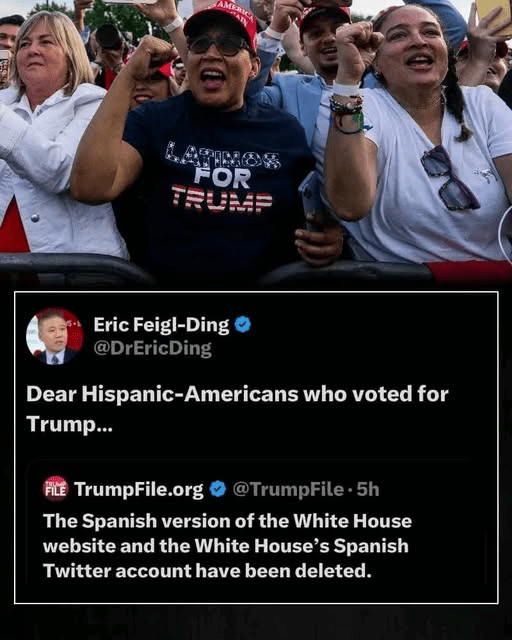
On this issue, at least. The other senator from KS can be read toward the end of the article, and he’s just a maga nut, so read at your own discretion. I’m wondering if he’s beginning dementia, or else how he earned an MD. Anyway, here’s this. Sen. Moran can usually get an R coalition happening, and KS is not the only ag state who stands to not only lose, but to literally watch crops rot waiting to be shipped to people who need to eat. Wasting food is a cardinal sin, IMO.
TOPEKA — U.S. Sen. Jerry Moran of Kansas said a freeze on federal funding and change at the U.S. Agency for International Development left $340 million in lifesaving food grown in the United States sitting at domestic ports awaiting delivery to locations around the world where people were starving.
On Friday, President Donald Trump said he wanted to shut down USAID, which served as the federal government’s primary provider of development and humanitarian aid worldwide. Much of USAID’s funding has been frozen. Thousands of USAID employees expect to be indefinitely suspended or laid off as the Trump administration, in collaboration with billionaire Elon Musk, worked to gut an agency the president said was operated by “radical lunatics.”
Moran, among farm-state senators on the Senate Agriculture Committee, said he encouraged Marco Rubio, the U.S. secretary of state and acting administrator of USAID, to make certain U.S.-grown commodities were promptly shipped and distributed to people in need.
The World Food Programme estimated $340 million in U.S. food aid was idled at domestic ports by order of the Trump administration. In total, $566 million in U.S.-grown commodities designated for humanitarian purposes was locked down in warehouses throughout the world.
“Time is running out before this lifesaving aid perishes,” Moran said. “Food stability is essential to political stability, and our food aid programs help feed the hungry, bolster our national security and provide an important market for our farmers, especially when commodity prices are low.”
Moran said there was a “moral component to food aid,” but he understood administrative issues with U.S. aid programs had to be addressed. That reform, he said, must go beyond presidential directives so Congress could be “involved in making the decision of what this should look like.”
Rep. Tracey Mann, the Kansas Republican on the House Agriculture Committee, has led relaunch of the bipartisan House Hunger Caucus dedicated to international and domestic hunger and food insecurity. He said in a previous statement that growing up on a Kansas farm taught him the sacred responsibility of feeding people.
“Hunger destabilizes countries, starts wars, eliminates markets and causes human suffering. America benefits on multiple levels from making investments that address it,” Mann said. “America is the leader of the free world, which comes with certain responsibilities. Addressing global hunger is both the morally right and strategically wise thing do to.”
‘Irresponsibility’
U.S. Rep. Sharice Davids, a Kansas Democrat also on the House Agriculture Committee, said dismantling USAID would have ramifications in terms of world hunger and the future of Kansas agriculture.
“Elon Musk’s reckless and illegal shutdown of USAID isn’t lowering prices as promised — it’s hurting our economy, national security and hardworking Kansans,” Davids said. “My team has heard from many who have lost their jobs, small businesses facing bankruptcy and Kansas farmers struggling to sell their crops. This level of irresponsibility cannot go unchecked.”
USAID’s website said at midnight Friday all USAID direct-hire personnel would be “placed on administrative leave globally, with the exception of designated personnel responsible for mission-critical functions, core leadership and specially designated programs.”
The U.S. Department of Agriculture has facilitated the purchase of U.S. commodities funneled into the USAID pipeline. USAID has been responsible for booking cargo ships to deliver food aid and to coordinate distribution of assistance in various countries.
USDA paused the purchase of food for USAID purposes in response to Trump’s executive order establishing a 90-day freeze on funding. Rubio issued a temporary waiver for food and other lifesaving assistance, but there was confusion about what qualified for the exemption. U.S.-grown agriculture products in domestic ports included wheat, sorghum, rice, lentils, peas as well as vegetable or sunflower oils.
USAID, with a staff of approximately 10,000, also has oversight of U.S. disaster relief and health initiatives in over 100 countries. (snip-MORE. The next graf is our insane senator explaining that he thought he saw awful things happening, meanwhile literal food is actually spoiling while he tells us of his hallucinations. I’d have to take the puter to the carwash to get the stupid off if I copy it to paste here. However, a few of the farmers who grow this food also have cogent commentary, so it’s worth clicking through to finish the article. Everyone but Marshall and Estes are aware of the national security element of this stupidity.)
Illustration by Erin Aulov/POLITICO (source image via Getty)
By James Romoser James Romoser is POLITICO’s legal editor.
Less than two weeks have passed since the last presidential inauguration, but try to imagine the next one.
It’s Jan. 20, 2029. The nation has weathered another tumultuous four years under Donald Trump. Democrats are desperate for the Trump era, at long last, to be over. Republicans have relished it.
Now, imagine this: The chief justice begins to deliver the oath of office. The next president raises his right hand and says:
“I, Donald John Trump, do solemnly swear…”
It’s the stuff of liberal nightmares and MAGA dreams: a third Trump term.
But it can’t happen, right? After all, the Constitution imposes an explicit two-term limit on the presidency — even if those two terms, like Trump’s, are non-consecutive. “No person shall be elected to the office of the President more than twice,” the 22nd Amendment mandates.
Even Trump, notorious for bending norms and breaking laws, couldn’t possibly circumvent that clear constitutional stricture, right?
Don’t be so sure.
Around the globe, when rulers consolidate power through a cult of personality, they do not tend to surrender it willingly, even in the face of constitutional limits. And Trump, of course, already has a track record of trying to remain in office beyond his lawful tenure.
“Anyone who says that obviously the 22nd Amendment will deter Trump from trying for a third term has been living on a different planet than the one I’ve been living on,” says Ian Bassin, who was an associate White House counsel for President Barack Obama and is now the executive director of the nonprofit advocacy group Protect Democracy.
If Trump decided he wanted to hold onto power past 2028, there are at least four paths he could try:
He could generate a movement to repeal the 22nd Amendment directly.
He could exploit a little-noticed loophole in the amendment that might allow him to run for vice president and then immediately ascend back to the presidency.
He could run for president again on the bet that a pliant Supreme Court won’t stop him.
Or he could simply refuse to leave — and put a formal end to America’s democratic experiment.
Each path would face serious political, legal and practical impediments. But the prospect of a third Trump term shouldn’t be dismissed with a hand wave.
Trump, after all, is definitely not dismissing the prospect. He’s been openly floating it for years.
In August 2020, he told supporters: “We are going to win four more years. And then after that, we’ll go for another four years.”
On Nov. 13, 2024, a week after winning his second term, he told House Republicans: “I suspect I won’t be running again unless you say, ‘He’s so good we’ve got to figure something else out.’”
And just last weekend, he said: “It will be the greatest honor of my life to serve not once but twice — or three or four times,” before quickly adding, “Nah, it will be to serve twice.”
Perhaps it’s all just a big joke to Trump. Perhaps he’s baiting the media. But the fact that he keeps talking about it shows that it’s on his mind. It’s time to take the prospect literally — and seriously.
Why Trump Might Do It
There are a couple of threshold objections to this thought experiment, and they’re not constitutional but physical and psychological: Would Trump, who will be 82 at the end of his second term, be healthy and fit enough to serve a third? And if so, would he even want one?
Maybe. But if he has the capacity to continue in office, Trump might have strong incentives to try to retain the powers and privileges of the presidency.
Consider a key reason he ran in 2024: the desire to elude his criminal cases. That strategy worked. The two federal cases against him had to be shut down after his victory due to the Justice Department’s longstanding position that a sitting president cannot be prosecuted. His election further doomed the already faltering case against him in Georgia as well. And in the New York hush money case, the only one of the four to reach trial and result in a conviction, Trump’s victory ensured that he got away with a sentence of “unconditional discharge” — even less than a slap on the wrist.
Still, Trump may not be entirely free of all his legal problems at the end of his second term. When special counsel Jack Smith reluctantly dismissed his federal charges against Trump last month, he explicitly reserved the ability for a future Justice Department to revive and refile the charges after Trump leaves office. If a Democrat seems well positioned to win the 2028 election, Trump may fear that those charges might come back to life.
And who knows what Trump might do in the next four years that could trigger new criminal liability? The Supreme Court’s sweeping immunity decision last year would be an obstacle to charging him for anything he does while president, but it wouldn’t be an insurmountable one. If there are serious calls to prosecute Trump again after his second term, it is not hard to imagine him concluding that the best way to stave off those efforts is to simply remain president.
Aside from using the office as a legal force field, Trump may be propelled by another, more basic motive: raw power. This is the raison d’etre for autocratically minded leaders around the world, especially those who erode democratic institutions and engage in quasi-messianic rhetoric.
“Presidents tend to like their jobs, and there have been many attempts for them to overstay,” says Mila Versteeg, a law professor at the University of Virginia.
Versteeg co-authored a 2020 study that examined 234 heads of state in 106 countries in the 21st century. She found that one-third of them sought to circumvent legally imposed term limits. Many of them succeeded — typically not by directly disobeying the law, but rather by exploiting gaps and weaknesses in their constitutional systems or by convincing meek courts to bless their consolidation of power.
“In the countries where this has happened, the rule of law is much weaker than in the United States,” Versteeg says. “But we shouldn’t dismiss it as impossible or unimaginable. It has happened around the world.”
How Trump Might Do It
Assuming Trump wanted to make it happen here, could he succeed?
At first blush, the 22nd Amendment appears to be an absolute barrier. It was ratified in 1951 in response to Franklin Delano Roosevelt’s four-term presidency. Before Roosevelt, no president had ever run for reelection after serving two terms — a norm that dated back to George Washington.
Critically for Trump’s purposes, the amendment is not restricted to consecutive terms. Virtually every constitutional scholar agrees that the two-term limit applies to any two terms by a single person, even if those terms are not back-to-back.
But that is not the end of the matter. The rules in the Constitution are only as durable as the institutions that preserve and protect them. And Trump could chip away at them, or even try to defy them completely, through both legal and extralegal means. He is already seeking to transform the birthright citizenship provision of the 14th Amendment. Is there any reason to think he wouldn’t try something similar with the term limits provision of the 22nd?
Here are four things he could try.
Option 1
Change the Constitution
The most obvious route would be for Trump to persuade Americans to simply repeal the 22nd Amendment’s two-term limit. It’s perfectly permissible to repeal an amendment: We’ve already done it before, when we repealed the 18th Amendment’s prohibition on the sale of alcohol.
A formal repeal, though, would require a landslide of popular support that is far-fetched in today’s polarized nation. Two-thirds of both chambers of Congress would have to propose a new amendment, or two-thirds of the states would have to call for a constitutional convention to propose one. Then three-fourths of the states would have to ratify the proposed amendment. Even if Trump remains popular among Republicans, it’s hard to imagine him garnering the supermajorities needed.
And The American Conservative began laying the groundwork for the idea even before Trump won last year. Back in March, it published a piece arguing that, if Trump were to secure a second term, the 22nd Amendment should be repealed to allow him to seek a third.
“If, by 2028, voters feel Trump has done a poor job, they can pick another candidate; but if they feel he has delivered on his promises, why should they be denied the freedom to choose him once more?” wrote Peter Tonguette, a contributing editor at the magazine.
Some Democrats, meanwhile, are not taking any chances. Rep. Dan Goldman of New York proposed a resolution last fall reiterating that the 22nd Amendment applies to non-consecutive terms.
And a few blue states are trying to revoke their long-dormant requests for a constitutional convention. They fear Republicans could use those requests — which in some cases were made decades or even centuries ago — to trigger a convention and propose a slew of unpredictable amendments. One prominent Trump ally in Congress, House Budget Chair Jodey Arrington of Texas, believes the required threshold — requests from two-thirds of the states — has already been met to spark a convention.
Trump himself has not explicitly endorsed an amendment push. But on Monday, he shared a social media post from Texas Lt. Gov. Dan Patrick lauding Trump’s first week in office. “People are already talking about changing the 22nd Amendment so he can serve a third term,” Patrick wrote. “If this pace and success keeps up for 4 years, and there is no reason it won’t, most Americans really won’t want him to leave.”
Option 2
Sidestep the Constitution
If formally amending the two-term limit is off the table, another option is to find a loophole. As it turns out, the 22nd Amendment has a big one.
The text bars anyone from being “elected” to a third presidential term. It says nothing about a person becoming president for a third term by some other legal avenue — for instance, by being elected vice president and then ascending back to the presidency through the death, resignation or removal of the person at the top of the ticket.
This technicality seems to permit a shrewd scenario. Imagine that, near the end of Trump’s second term, some other person — call him JD Vance — wins the Republican nomination for 2028. Vance chooses Trump as his vice-presidential running mate — and pledges that, if he wins, he will resign on Day 1 and hand the presidency back to Trump.
The campaign slogan writes itself: “Vote Vance to Make Trump President Again.”
It might seem like a far-fetched parlor trick. Or it could be seen as the most artful deal Trump ever struck. Either way, if it’s 2028 and Trump retains the grip on the Republican Party that he had in 2016, 2020 and 2024, it is not hard to picture the idea gaining traction. And if Vance wouldn’t agree to cooperate, Trump could find some other lackey who would.
The gambit, of course, would carry some risk to Trump. He would have to trust Vance or his hand-picked placeholder to follow through on the promise to step down from the presidency immediately and allow Trump to re-ascend to the office. In theory, that person could renege on the deal after the election and keep the presidency. But if the ticket had run on an explicit pledge that Trump would be the one in the Oval Office, the political pressure to honor the deal (and honor the will of the voters) would be enormous. And if Vance or some other politician wants a future in the GOP and a real shot at the White House in the future, maintaining support from Trump would be paramount.
Trump, who revels in public expressions of fealty from his subordinates, might find the whole arrangement enticing.
“It would not be surprising — if the president were interested in the presidency again — that he would seek to go down this path,” says Bruce Peabody, a law professor at Fairleigh Dickinson University.
Peabody foreshadowed the possibility long before Trump emerged on the political scene. In a 1999 law review article (and in a 2016 follow-up), he explored the potential for a twice-elected president to serve in other high-ranking government roles that might allow them to become president again. Peabody concluded that the scenario is not only constitutional, but politically plausible.
You might even call it the Putin-Medvedev scenario. When, in 2008, term limits barred Putin from continuing to rule Russia, he served for a time as “prime minister” under President Dmitry Medvedev. Of course, Putin continued to pull the strings, and he eventually returned to power formally.
Here in the U.S., a different part of the Constitution arguably complicates the loophole. The 12th Amendment, ratified in 1804, says that no one “constitutionally ineligible to the office of President shall be eligible to that of Vice President.” So if Trump were disqualified from serving a third presidential term under the 22nd Amendment, then he also wouldn’t seem to be eligible to become vice president under the 12th — and in that case, the loophole wouldn’t work.
But that’s just the thing: The 22nd Amendment doesn’t say Trump would be ineligible to serve as president for a third term. It just says he is ineligible to run for a third term (or, more precisely, to be elected to a third term). So the 12th Amendment’s eligibility provision doesn’t seem to foreclose Trump using the loophole.
“You could make a case that it’s pretty clear that a twice-elected president is still eligible,” Peabody says. “You could also make a case that it’s murky. But I don’t find the argument terribly convincing that it’s a slam dunk that he isn’t eligible.”
Option 3
Ignore the Constitution
If the first two options are too difficult or too convoluted, Trump could try something even bolder, and far more Trumpian. He could simply run for a third term and see if anyone stops him.
The question of who would do so, and how, is surprisingly difficult. Would the Republican National Committee block him from seeking the party’s nomination for 2028? Surely not, if he still dominates the GOP. Would states refuse to put him on their ballots? Some certainly would, but that would spark litigation. The issue would then wind up at the Supreme Court — a court that is already quite sympathetic to Trump’s interests and, in four years, may be populated with even more Trump appointees than it has today.
Still, would the high court really green-light a flagrant violation of the 22nd Amendment? It sounds implausible now, even for this very conservative court. But it’s important to consider the context in which such a case would be heard.
It would be the middle of the 2028 election season. Trump would be out on the campaign trail, acting like a candidate, insisting he is running again for the good of the country. The RNC would have proudly proclaimed him its nominee. Imagine half of Americans continue to support him unconditionally.
It does not take a Supreme Court cynic to see that, in such a climate, declaring Trump ineligible to run would take immense political courage from the justices.
“All you need is a court that is willing to be your faithful helper,” Versteeg says, adding that she believes it’s unlikely — though not impossible — that the current court would fall in line for Trump.
Bassin, of Protect Democracy, is more blunt.
“The court’s gonna tell the Republican Party that they can’t run their candidate?” he asks. “I don’t think so.”
In fact, the country and the court have already experienced a similar conundrum.
Many legal scholars believe Trump was constitutionally ineligible to run in 2024 because the 14th Amendment bars anyone from holding federal office if they previously engaged in an insurrection. But when Colorado sought to enforce that provision, citing Trump’s conduct on Jan. 6, 2021, and removed Trump from its ballot, the Supreme Court swiftly stepped in. Only Congress, not states, can enforce the insurrection ban, the court declared — even though the 14th Amendment itself contains no such limitation.
That ruling was widely seen as being at least partially results-driven: Whatever the legal arguments, the justices simply were never going to let individual states kick the leading Republican candidate off their ballots. The same calculus might apply if Trump tried to run again in 2028.
One might respond that the 22nd Amendment’s command (“No person shall be elected” as president “more than twice”) is far clearer than the 14th Amendment’s abstruse language about insurrections. But litigation has a way of muddying even the most crystal-clear language, and pro-Trump lawyers will have plenty of opportunities to make the two-term limit seem ambiguous.
Perhaps they’ll find some originalist argument for why the two-term limit doesn’t mean what it seems.
Perhaps they’ll find some reason that the amendment’s ratification was procedurally improper. Versteeg points out that such procedural arguments are common tactics to erode constitutional term limits abroad.
Or perhaps they’ll argue that some other, more fundamental provision of the Constitution supersedes the 22nd Amendment’s term limit. For instance, maybe Trump has a due process right to run for president, or maybe voters have a due process right to vote for their preferred candidate, regardless of what the 22nd Amendment says.
None of these arguments is legally strong. Virtually all constitutional scholars would reject them today. But simply by advancing the arguments in court, and in the public sphere, Trump’s lawyers can make the issue seem debatable. And, as the legal scholar Jack Balkin has shown, that process of normalization can transform outlandish constitutional claims into formal doctrine adopted by the Supreme Court.
Option 4
Defy the Constitution
There is one final way Trump could try to hold onto power. This last option would not involve amending the Constitution. It would not require a deal with a running mate willing to hand the presidency back to Trump using a technicality. It would not even require Trump to go through the trouble of running again.
He could simply refuse to leave office.
It’s hard to predict what that would look like (though Trump’s attempts to cling to power after the 2020 election might offer some clues). One obvious move in the autocrat’s playbook is to cancel an election by declaring some sort of national emergency. The president, of course, has no legal authority to call off or postpone elections, but that doesn’t mean Trump wouldn’t try it anyway — perhaps by seizing on a natural disaster or even starting a war. Alternatively, perhaps Trump would allow the 2028 election to take place with other candidates but declare the outcome rigged and decide to stay in power himself.
The last time Trump tried to cling to the presidency, he used lies about election fraud to undermine the 2020 results and then encouraged his supporters to go “wild” in Washington the day his defeat was certified. Four years from now, could he pursue a power grab even more brazen and lawless? It’s an extraordinary thing to contemplate. And scholars of authoritarianism point out that, when norms like term limits die, the culprit is usually not a single and obvious coup. Rather, the erosion happens slowly, often with the acquiescence of people and institutions within the constitutional system.
On Jan. 20, 2021, after his myriad efforts to overthrow Joe Biden’s victory failed, Trump did leave office. Power was transferred, and the nation’s democratic institutions survived.
If he threatens the transfer of power again, there is no guarantee American democracy will survive again.
One thing, though, is clear: The words of the 22nd Amendment alone will not be enough.
After Senate President Ben Albritton and House Speaker Daniel Perez rejected his immigration proposals earlier in the day and put forward one of their own, DeSantis slammed their plan as “weak” and claimed they were “gutting” his proposal to require all law enforcement officials in the state to work with federal immigration enforcement officials. (snip-this was the newest update at 8 PM when I set this up. There could be more by now!)
President Donald Trump made only a smattering of false claims in his inaugural address on Monday, mostly sticking to vague rhetoric, subjective assertions and uncheckable promises of action.
But then he embarked on a lying spree.
In an unscripted second speech on Monday, to supporters who had gathered in the US Capitol Visitor Center’s Emancipation Hall, Trump made false claims about elections, immigration and the Capitol riot on January 6, 2021, among other subjects. He then made additional false claims in a freewheeling third speech at Washington’s Capital One Arena and again while speaking to reporters as he signed executive orders in the Oval Office.
Here is a fact check of some of his Monday claims.
Economy
Trump’s tariffs on China: In the Oval Office, Trump repeated his false claim that the US has “taken in hundreds of billions of dollars from China”through the tariffs he imposed during his first presidency. US importers make the tariff payments, not China, and study after studyhas found that Americans bore the overwhelming majority of the cost of Trump’s tariffs on China; it’s easy to find specific examples of companies that passed along the cost of the tariffs to US consumers.
Previous presidents and tariffs on China: Trump repeated his frequent false claim that no previous president had imposed tariffs on Chinese imports, saying that “until I came along, China never paid 10 cents to this country.” Aside from the fact that US importers pay the tariffs, the US was actually generating billions per year in revenue from tariffs on Chinese imports before Trump took office; in fact, the US has had tariffs on Chinese imports since 1789. Trump’s predecessor, Barack Obama, imposed additional tariffs on Chinese goods.
Tariffs: In his inaugural address, Trump said, “Instead of taxing our citizens to enrich other countries, we will tariff and tax foreign countries to enrich our citizens.” But this description of tariffs is false. Tariffs imposed by the US government are paid by US importers, not foreign countries.
Inflation rates: Trump falsely claimed during his inaugural address that the US experienced “record inflation” during the Biden administration. Trump could fairly say the US inflation rate hit a 40-year high in June 2022, when it was 9.1%, but that was not close to the all-time record of 23.7%, set in 1920. (And the rate has since plummeted. The most recent available inflation rate at the time Trump spoke here was 2.9% in December.)
Trade with the European Union: In the Oval Office, Trump repeated his false claims that the European Union doesn’t “take” farm products, cars or “almost anything” from the US.
While the EU certainly has some trade barriers that make it harder for US companies to export products there, it’s a massive exaggeration to categorically declare it doesn’t accept “almost anything.” The US exported more than $639 billion worth of goods and services to the EU in 2023.
The US government says the EU bought $12.3 billion worth of US agricultural exports in the 2023 fiscal year, making it the fourth-largest export market for US agricultural and related products behind China, Mexico and Canada.
And while US automakers have often struggled to succeed in Europe, according to a December 2023 report from the European Automobile Manufacturers’ Association, the EU is the second-largest market for US vehicle exports — importing 271,476 US vehicles in 2022, valued at nearly 9 billion euro. (Some of these are vehicles made by European automakers at plants in the US.)
Immigration and the border
Prisons and mental institutions: Trump spoke in all three speeches of migrants having come from foreign prisons and mental institutions into the US under President Joe Biden, a frequent refrain during his 2024 campaign. In the first speech, he said “many” Biden-era migrants have come from such facilities; in the second speech, he said, “We don’t want the jails of every country in the world virtually being deposited into the United States”; in the third, he said, “All over the world they’re emptying their prisons into our country; they’re emptying their mental institutions into our country.”
Related articleTrump’s inaugural address, annotated and fact-checked
All of this is uncorroborated. Trump and his presidential campaign have never corroborated the claim that “many” Biden-era migrants have come from prisons or mental institutions, though it’s of course possible that some migrants spent time in such facilities. And Trump’s campaign could not substantiate hisstories about numerous foreign countries supposedly opening up such facilities to somehow bring the people in them into the US.
The president has sometimes tried to support his narrative by asserting the global prison population is down. But that’s incorrect. The recorded global prison population increased from October 2021 to April 2024, from about 10.77 million people to about 10.99 million people, according to the World Prison Population List compiled by experts in the United Kingdom.
“I do a daily news search to see what’s going on in prisons around the world and have seen absolutely no evidence that any country is emptying its prisons and sending them all to the US,” Helen Fair, co-author of the prison population list and research fellow at the Institute for Crime & Justice Policy Research at Birkbeck, University of London, said in June.
Venezuela and migration: Trump spoke in the arena speech about gang members being “taken off the streets of Venezuela and deposited into our country,” claiming crime in Venezuela has plummeted “because they took their criminals and gave them to us through an open border policy of the previous administration.”
Trump has never corroborated his claims about Venezuela’s supposed practice of somehow intentionally bringing its unwanted criminals into the US under Biden, and experts have told CNN, PolitiFact and FactCheck.org that they know of no evidence for them.
Border wall construction: Trump repeated his false claim in his post-inaugural speech that he had “571 miles of wall” built on the southern border during his first administration. That’s a significant exaggeration; official government data shows 458 miles were built under Trump — including both wall built where no barriers had existed before and wall built to replace previous barriers.
Birthright citizenship: In the Oval Office, Trump repeated his false claim that the US is “the only country in the world” with birthright citizenship. CNN and various other outlets debunked the claim when Trump made it during his presidential campaign in 2015, during his first presidency in 2018 and during his presidential transition in 2024. About three dozen countries provide automatic citizenship to people born on their soil, including US neighbors Canada and Mexico and the majority of South American countries.
Elections and January 6, 2021
Pelosi and January 6, 2021: In the post-inaugural speech, Trump repeated his false claims that former House Speaker Nancy Pelosi rejected his offer of 10,000 National Guard troops to protect the Capitol on January 6, 2021, and that Pelosi “admitted it on tape, that her daughter made.” He reprised the claim later in the Oval Office.
There is no evidence Pelosi turned down such an offer — and it is the president, not the speaker, who is in charge of the District of Columbia National Guard, so Pelosi wouldn’t have had the power to reject the offer even if it had been made to her, which Pelosi says it wasn’t. In addition, Pelosi is not on tape admitting that Trump’s story is correct.
In a video recorded by her filmmaker daughter, Alexandra Pelosi, on January 6 and later obtained by House Republicans, who posted a 42-second snippet on social media in June, Pelosi was shown expressing frustration at the inadequate security at the Capitol, and she said at one point, “I take responsibility for not having them just prepare for more.” But that general statement is clearly not a specific admission that she had rejected a Trump offer of 10,000 troops.
In fact, another part of the video appears to undermine Trump’s frequent claims that Pelosi was the person who turned down a National Guard presence in advance of January 6. She said, “Why weren’t the National Guard there to begin with?”
After Trump began referencing this video in June, Pelosi spokesperson Aaron Bennett said in an email to CNN: “Numerous independent fact-checkers have confirmed again and again that Speaker Pelosi did not plan her own assassination on January 6th. Cherry-picked, out-of-context clips do not change the fact that the Speaker of the House is not in charge of the security of the Capitol Complex — on January 6th or any other day of the week.”
The Capitol rioters: Trump said in the Oval Office that he believes that “in many cases” January 6 rioters were “outside agitators,” suggesting they weren’t actual Trump supporters. (He added a note of humility, saying, “What do I know, right?” but then reiterated, “But I think they were.”)
Trump’s belief is baseless. While one man convicted for his role in the riot admitted that his goal was to rile up Trump supporters, there is no evidence there were “many” such people in the crowd, nor for the Trump-promoted conspiracy theory that left-wing Antifa members were responsible for the attack.Almost all of the more than 1,500 people charged over the riot were fervent Trump devotees.
The January 6 committee and documents: In his post-inaugural speech, Trump spoke of the House select committee that investigated the January 6 attack on the Capitol, whose members Biden pardoned in one of his last acts as president. Trump falsely claimed that “they destroyed and deleted all of the information, all of the hearings, practically not a thing left.” He returned to the subject later in the Oval Office, falsely claiming that “they destroyed all of the documents, they deleted all of the information, there’s no information.”
There has been a long-running dispute between Republicans and Democrats over the status of certain committee records that Republicans said should have been archived and that Democratic committee chair Bennie Thompson argued did not have to be archived, such asbecause they were not useful to the committee’s investigation. But there’s no basis for Trump’s claim that “all” information and documents were discarded.
As FactCheck.org reported on Monday, the January 6 committee released not only a final report that more than 800 pages long, but also transcripts of interviews with more than 140 witnesses – and, according to Thompson, the committee’s staff worked with the National Archives and Records Administration and other government bodies “in preparing the Select Committee’s more than 1 million records for publication and archiving.”
The legitimacy of the 2020 election: In his post-inaugural speech to supporters, Trump returned to his lie that the 2020 election “was totally rigged”; he made the “rigged” claim again in the arena speech. Trump legitimately lost a free and fair election to Biden.
Democrats and the 2024 election: Trump falsely claimed in his post-inaugural speech that unspecified opponents “tried” to rig the 2024 election but were unable to do so. This is nonsense, too; Trump beat former Vice President Kamala Harris in a free and fair election.
California and the 2024 election: In the post-inaugural speech, Trump said, “I think we would’ve won the state of California” if the state had stronger voter identification laws. There is simply no basis for the claim; there is no sign of mass fraud in California, and Trump lost to Harris thereby more than 3 million votes.
Trump’s margin of victory in Alabama: In the post-inaugural speech, Trump falsely claimed, “We won Alabama by 48 points.” Trump did win the conservative state by a large margin, but not as large as he claimed; he beat Harris there by about 30.5 percentage points.
Trump and “the youth vote”: As he did the day before the inauguration, Trump falsely claimed in his arena speech Monday that “we won the youth vote by 36 points” in the 2024 election. He didn’t say how he was defining “the youth vote” — his transition team didn’t respond to CNN’s Sunday request for clarification — but there’s no basis for his claim by any reasonable definition.
While young voters, particularly young men, did shift toward Trump compared with the 2020 election, exit poll data published by CNN found that Harris beat Trump 54% to 43% among voters ages 18-24, 53% to 45% among voters ages 25-29, and 51% to 45% among voters ages 30-39. Even if Harris’ actual margins were smaller — exit poll data is often flawed — there is simply no sign that Trump dominated Harris with young voters.
Foreign affairs
China and the Panama Canal: Trump vowed in his inaugural address that the US will take back the Panama Canal — and falsely claimed that “above all, China is operating the Panama Canal.” He added in the Oval Office that “China controls the Panama Canal.”
Related articleTrump commutes sentences of Proud Boys and Oath Keepers leaders as he pardons over 1,000 January 6 US Capitol rioters
The vast majority of its employees are Panamanian. It is Panama that decides which companies get awarded the contracts to run the ports on the canal. And other canal ports are operated by companies that are not Chinese — including one run by an American-Panamanian joint venture.
“The Canal is and will continue to be Panama’s and its administration will continue to be under Panamanian control with respect to its permanent neutrality,” Panamanian President José Raúl Mulino said in a statement Monday. Without mentioning China directly, Mulino also appeared to reject Trump’s claim that China is operating the canal, saying, “There is no presence of any nation in the world that interferes with our administration.”
China’s oil purchases from Iran: In the arena speech, Trump repeated his false story about how he supposedly pressured China into stopping its purchases of oil from Iran during his first presidency. China’s oil imports from Iran did briefly plummet under Trump in 2019, the year the Trump administration made a concerted effort to deter such purchases, but they never stopped — and then they rose sharply again while Trump was still president. “The claim is untrue because Chinese crude imports from Iran haven’t stopped at all,” Matt Smith, lead oil analyst for the Americas at Kpler, a market intelligence firm, told CNN in 2023.
China’s official statistics recorded no purchases of Iranian crude in Trump’s last partial month in office, January 2021, and also none in most of Biden’s first year as president. But that doesn’t mean China’s imports actually ceased; industry experts say it is widely known that China has used a variety of tactics to mask its continued imports from Iran.
Kpler found that China imported about 511,000 barrels per day of Iranian crude in December 2020, Trump’s last full month in office. The low point under Trump was March 2020, when global oil demand crashed because of Covid-19. Even then, China imported about 87,000 barrels per day, Kpler found. (Since data on Iranian oil exports is based on cargo tracking by various companies and groups, other entities may have different data.)
Iran and terror groups: In the arena speech, Trump repeated his inaccurate boast that Iran “didn’t have money for Hamas” and “didn’t have money for Hezbollah” during his presidency. He emphasized in the Oval Office that Iran had “no money” for the two groups. Iran’s funding for these groups diddecline in the second half of his presidency, in large part because his sanctions on Iran had a major negative impact on the Iranian economy, but the funding never stopped entirely, as four experts told CNN in 2024. In fact, Trump’s own administration said in 2020 that Iran was continuing to fund terror groups including Hezbollah. You can read a longer fact checkhere.
Spain and BRICS: Trump falsely claimed in the Oval Office that Spain is a member of the international organization known as BRICS, telling a reporter, “They’re a BRICS nation, Spain. You know what a BRICS nation is? You’ll figure it out.” Spain is not a member of BRICS; the “S” is for South Africa, which joined the group previously known as BRIC — Brazil, Russia, India and China — in 2010.
This story and headline have been updated to include additional information.
CNN’s Bryan Mena, Alicia Wallace, Phil Mattingly, Michael Rios and Elizabeth González contributed to this report.
Trump’s inauguration is just days away. It didn’t have to be this way. In fact, Bernie Sanders warned the Democratic Party that Americans would fall for a far right demagogue if their material needs weren’t addressed. Hacks in the Democratic Party and mainstream media are finally admitting Bernie Sanders was right. In this video we explain why his theory of change was 100% correct and look back at how Democratic Party elites sabotaged the very movement that could’ve saved us all from Trump’s rise.
A new discovery adds to the mystery of the source of fast radio bursts.
Fast radio bursts (FRBs) are extremely energetic pulses of radio-frequency light which travels across the universe that last just a few seconds or even milliseconds.
Canadian Hydrogen Intensity Mapping Experiment (CHIME). Credit: CHIME, Andre Renard, Dunlap Institute for Astronomy & Astrophysics, University of Toronto.
More than 1,000 FRBs have been reported since the first was discovered in 2007. (snip-More; click the title see it all.)
The City Council of Tulsa, Oklahoma — faced with the choice of upsetting Christian Republican legislators or making non-Christian community members feel like they didn’t belong — voted 8-0 (with one abstaining) this week to eliminate the practice of starting each meeting with a prayer invocation.
Now, instead of invocations, there will be a moment of silence, so that everyone will have to sit there and feel uncomfortable instead of just those whose religion is not represented by the opening prayer.
As Hemant Mehta of Friendly Atheist reports, this all started last year after the invocation was delivered by Amy Hardy-McAdams, co-owner and creator of the Strawberry Moon Herbal Apothecary & Ritual Center in Broken Arrow. Hardy-McAdams, who described herself as “a Third-Degree High Priestess of the Artemisian Faerie Faith Tradition of Witchcraft” (which I’m sure is a real thing), was invited by retiring City Councilmember Crista Patrick, who also happened to be a Pagan and wished to see her faith represented at the meeting just as Christianity had been. (snip-More; the statements from the Gov and Schools Supt. are worth the click by themselves, but the entire thing is gold!)