
Tag: Art
Peace & Justice History for 10/16:
It is World Food Day. (Among other things; this is a busy date!)
| October 16, 1649 The British colony of Maine granted religious freedom to all citizens the same year that King Charles I was excommunicated from the Roman Catholic church. |
| October 16, 1859 Abolitionist John Brown led a group of 21 other men, five black and sixteen white, in a raid on the U.S. arsenal at Harper’s Ferry, Virginia. They had hoped to set off a slave revolt — throughout the south — with the weapons they had planned to seize.  John Brown John BrownVirtually all his compatriots were killed or captured by General Robert E. Lee’s troops; Brown was wounded and arrested, and hanged for treason within two months. Read more  The Tragic Prelude (John Brown)mural by John Steuart Curry (1937-1942) Former slave and abolitionist leader Frederick Douglass said of Brown that he was a white man “in sympathy a black man, as deeply interested in our cause as though his own soul had been pierced with the iron of slavery.” |
October 16, 1901 President Theodore Roosevelt President Theodore RooseveltPresident Theodore Roosevelt invited Booker T. Washington, founder of the Tuskegee Institute and the most prominent African American of his time, to a meeting in the White House. The meeting went long and the president asked Washington to stay for dinner, the first black person ever to do so. Newspapers in the both the South and North were critical, but the South with more venom. The Memphis “Scimiter” said that it was “the most damnable outrage that has ever been perpetrated by any citizen of the United States.” Roosevelt claimed he had invited a friend to dinner with his family and it was no one else’s business.  Booker T. Washington Booker T. Washington |
| October 16, 1934 Dick Sheppard, who volunteered and joined the Army as a chaplain in World War I, started the Peace Pledge Union in England. In a letter published in The Guardian newspaper and elsewhere, Sheppard, a well-known priest in the Church of England, invited those who would be willing to join a public demonstration against war to send him a postcard. Within a few weeks he had received 30,000 replies. Members of the Peace Pledge Union vowed to “renounce war and never again to support another.”   Reverend Sheppard had been the first ever to broadcast religious services on the radio and, when Vicar of St. Martin-in-the Fields, Trafalgar Square, he had opened the building to the homeless of London.“Up to now the peace movement has received its main support from women, but it seems high time now that men should throw their weight into the scales against war.” -Dick Sheppard Read more about the Peace Pledge Union |
| October 16, 1964 China detonated its first atomic bomb, becoming the fifth nuclear-armed nation. The 20-kiloton fission device (equivalent to 20,000 tons of TNT) was detonated in the vicinity of Lop Nor, a lake in a remote region of the Central Asian province of Sinkiang. ” To defend oneself is the inalienable right of every sovereign State. And to safeguard world peace is the common task of all peace-loving countries. China cannot remain idle and do nothing in the face of the ever-increasing nuclear threat posed by the United States.China is forced to conduct nuclear tests and develop nuclear weapons . . . In developing nuclear weapons, China’s aim is to break the nuclear monopoly of the nuclear Powers and to eliminate nuclear weapons.” Chou En-lai, the Chinese Prime Minister, sent messages to all heads of government for a world summit conference on nuclear disarmament. U.S. Secretary of State Dean Rusk told a news conference that the United States did not regard Communist China’s proposal “as having any practical value.”  Deng Jiaxian. The father of the chinese bomb. Deng Jiaxian. The father of the chinese bomb.TRINITY AND BEYOND™ (The Atomic Bomb Movie), a documentary by Peter Kuran |
October 16, 1967 Joan Baez the day after the arrest Folksinger Joan Baez was arrested in a peace demonstration as rallies took place across America during “Stop the Draft Week.” 1158 young men returned their draft cards in eighteen U.S. cities. Baez was among 122 anti-draft protesters arrested for sitting down at the entrance of the Armed Forces Induction Center in Oakland, California; she was sentenced to 10 days in prison. Read more |
| October 16, 1968 During medal presentations at the 1968 Summer Olympic Games in Mexico City, winning sprinters Tommie Smith (Gold) and John Carlos (Bronze) raised their black-gloved fists while the U.S. national anthem was played. They were suspended from the team at the insistence of the International Olympic Committee, and expelled from the Games two days later. Smith later told the media that he raised his right fist in the air to represent black power in America while Carlos’s left fist represented unity in black America. They were wearing just socks to represent world poverty.  Peter Norman (silver medalist, left) from Australia also wears an OPHR (Olympic Project for Human Rights) badge in solidarity with Smith and Carlos. He was castigated upon return to Australia and throughout his life for his support of these two brave athletes. Read more |
October 16, 1973 Henry Kissinger Henry KissingerU.S. Secretary of State Henry Kissinger, though accused of war crimes by some for the massive bombing of Laos and Cambodia, was awarded the Nobel Peace Prize jointly with North Vietnam’s Le Duc Tho (who refused the honor) for the cease-fire agreement they had negotiated. This occurred just a month after the bloody military coup, fully supported by the Nixon administration and aided by the CIA, that overturned the democratically elected government of Chile, and installed General Augusto Pinochet as military dictator for the next 17 years. |
October 16, 1984 Desmond Tutu, the archbishop of South Africa, was awarded the Nobel Peace Prize for his work in fighting apartheid. He has gone on to be a relentless advocate for justice around the world. Desmond Tutu – Nobel peace prize recipient |
| October 16, 1998 In a human rights and international law breakthrough, British authorities, after receiving an extradition request from Spanish Judge Baltasar Garzon, placed former Chilean dictator, and senator-for-life, General Augusto Pinochet under arrest for “crimes of genocide and terrorism that include murder.” Augusto Pinochet and Margaret Thatcher  Chronology of Pinochet’s rule |
| October 16th every year United Nations’ World Food Day is recognized every year. About the annual day of hunger awareness |
https://www.peacebuttons.info/E-News/peacehistoryoctober.htm#october16
Lay Lines by Carol Lay
I enjoy this artist’s comics every week. This one is particularly topical; the ones I see more often are in regard to mental health. I guess this one is, in its fashion, also. Enjoy! If you go to the comic page, you can go back through the other work, too.
Lay Lines by Carol Lay for October 14, 2024

Separation of Church and Trump by Clay Jones
Oklahoma school officials worship at the altar of Trump Read on Substack
(Some blue language within.)
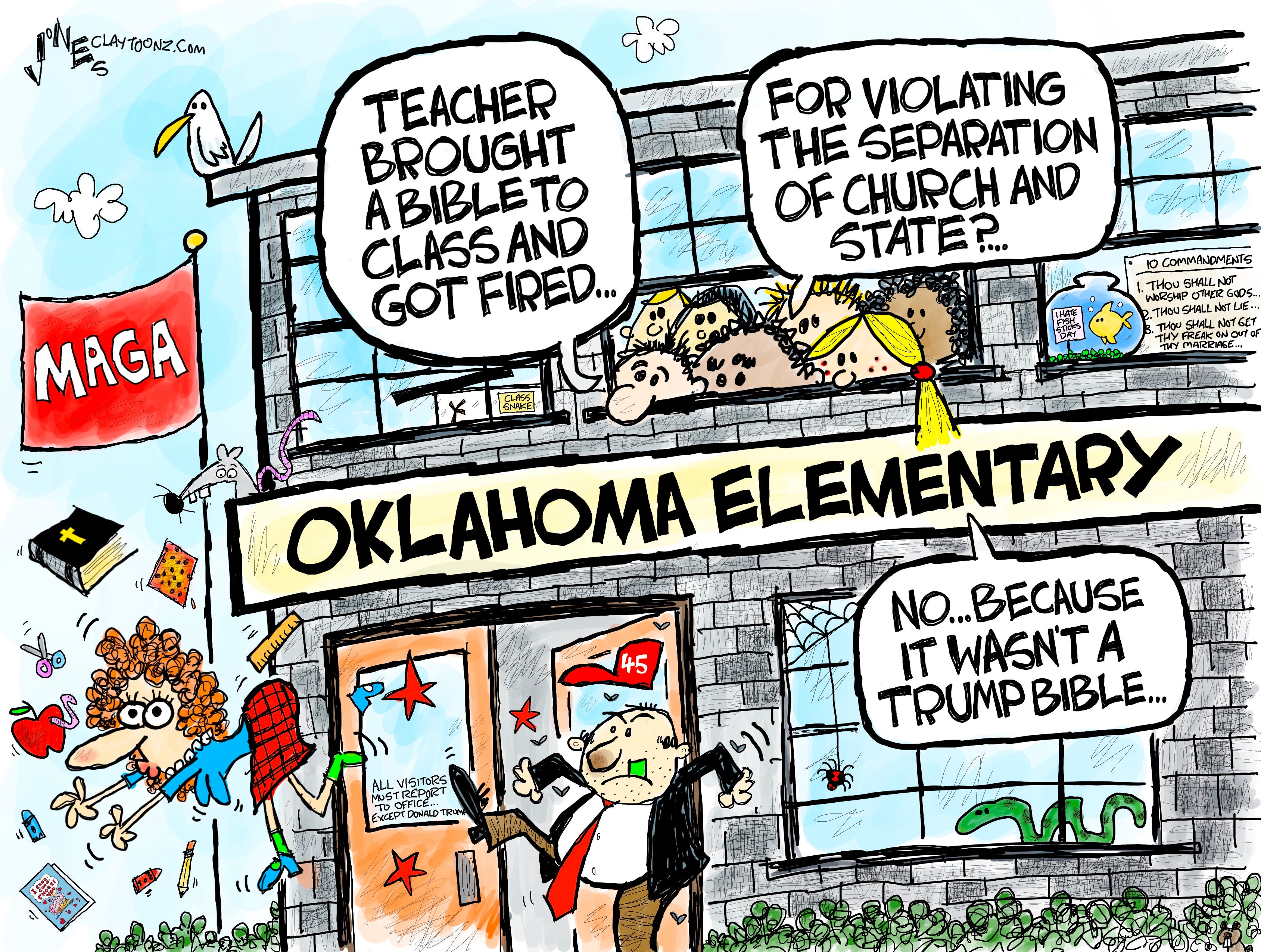
Yes. This is happening.
A knuckle-dragging religious troglodyte Trump cultist in Oklohama disguised as the state superintendent of schools has made Bibles in the classroom a statewide requirement. Oh, it gets worse. Initially, when the requirement was made, only one Bible fit the requirement. I’ll let you guess which one.
The initial requirement was that the Bibles be bound in “leather or leather-like material for durability,” and include the United States Constitution, the Bill of Rights, the Declaration of Independence, and the Pledge of Allegiance. The only Bible that fits that requirements cost $59.99 and puts the profits directly into the wallet of one Donald J. Trump.
Fortunately for Donald Trump, while the requirement was that the Bibles purchased for schools with state money contain the U.S. documents, there isn’t a requirement that they not be made in a factory using child labor in China.
Fun fact: The “God Bless the USA” Bibles, as they’re called and selling for $59.99, are only made at the cost of $3, and again, in China…the nation Trump claims is bribing President Joe Biden.
I never read the entire Bible but because of a mostly-Southern childhood where I was forced to attend church, Bible school, revivals, a Baptist Halloween, and even a Baptist private school against my will, I am pretty damn familiar with it. I know there’s no mention in the Bible of the Declaration of Independence, the United States Constitution, the United States, or Donald Trump. Also, how was I forced to attend all that Baptist stuff when I was born Catholic? Why?
What fucknut Ryan Walters is trying to do is force his religion on the children of Oklahoma while making a broad appeal to Donald Trump.
Donald Trump is the easiest politician to manipulate because he’s a corrupt narcissist. It’s why Republicans and foreign governments rented his hotel rooms while he was president (sic), even when they didn’t stay at his hotels. There are many ways to purchase Trump’s affection.
William Barr once rented the ballroom at Trump’s Washington hotel. Who the hell goes to a William Barr party? That sounds brutal. You could run into a Cory Lewandowsky or a Stephen Miller at one of those. Scott Pruitt, a member of Trump’s cabinet needed a new mattress and instead of buying a new one at an actual business that sells mattresses, tried to purchase a used one from Trump’s DC Hotel. Why would you want to buy a used mattress that thousands of people got funky on and could possibly contain bedbugs instead of, oh, I don’t know, purchasing a brand new one nobody’s ever shagged on? A mattress that MAGAts got busy on is the worst.
Here, Walters is appealing to Trump’s narcissism and corruption, possibly to win a spot in his administration. Bribing someone is so much easier than working to charm them. And here, Walters, who probably has zero charm, is bribing Trump with taxpayer money.
Just as Louisiana is forcing the Ten Commandments to be displayed in every public classroom in the state despite its abysmal literacy rate, Oklahoma is forcing Bibles in its classrooms when 45 percent of its fourth graders are below the basic reading level. That’s not OK (see what I did there?).
Maybe Oklahoma should use the textbooks it has now to teach its children how to read before sticking unnecessary zealotry bullshit on its walls that they can’t read.
It’s too bad “thou shall not grift,” “thou shall not bribe,” and “thou shall not force its religious fuckery on thy schoolchildren” aren’t part of the Commandments.
Also, Bibles should NOT be in any public school classrooms. The Bible should not be taught in schools. What should be taught in school is math, reading, and history. Maybe if we do a better job at teaching history, we’ll stop being so stupid to repeat it. Current events should also be taught in classrooms as well (not what Beyonce is wearing but news) so people in Oklahoma and Louisiana can see that their Republican officials are trying to turn their states into the Taliban. Don’t do that. Taliban bad.
Because of pressure, the state is backtracking and adjusting the requirements for the Bibles, which they’re taking bids for now. The Constitution, Declaration of Independence, etc, etc, don’t have to be a part of the Bible now, they just gotta come with it. They’ve also adjusted the requirements for Fruity Pebbles to be sold in Oklahoma as the Ten Commandments no longer have to be printed on the label and can now be the toy surprise inside. It’s gotta suck to be a kid in Oklahoma. I’d Sooner live in a blue state. See what I did there? Never mind.
Walters is upset about having to change the requirement and said, “The left-wing media hates Donald Trump so much, and they hate the Bible so much, they will lie and go to any means necessary to stop this initiative from happening.”
Hmmm….if it didn’t have anything to do with Donald Trump, then why are you bringing him up? Walters is having great difficulty in hiding that this was all about buying 55,000 Trump Bibles at $55.99 each.
But, you don’t have to hate Donald Trump or the Bible, which Trump has never read, to not want Bibles in public schools.
Instead of requiring that Bibles and the Ten Commandments be placed in schools, require that the Constitution be placed in schools. Or better yet, before you become the State Superintendent of schools, especially in a yee-haw state, there should be a requirement that you READ the Constitution…and take a test on it.
Ryan Walters would flunk on the First Amendment as it says, “Congress shall make no law respecting an establishment of religion or prohibiting the free exercise thereof.” Now, I know Walters is not Congress but I’m pretty sure the Constitution forbids any government from establishing a religion, which is what Walters is trying to do. He’s not trying to force the Koran or Torah in classrooms.
And by the way, is Walters requiring math and history books to be leather-bound or just the school’s Bibles? Maybe could they use that cheap “leather-like” material the $59.99 Trump Bibles come with.
Hey, shitweasels… When you guys pull this kind of crap, can you find a way to make it appear that it serves the betterment of society, the public, and the greater good instead of just serving Donald Trump and yourself? Hmmm?
Music note: I jammed to Verbena while coloring. (snip)
Better News
Pearls Before Swine by Stephan Pastis for October 11, 2024

Peace & Justice History for 10/11:
It’s National Coming Out Day!

| October 11, 1987 More than half a million people flooded Washington, D.C., demanding civil rights for gay and lesbian Americans, now celebrated each year as National Coming Out Day. Many of the marchers objected to the government’s response to the AIDS crisis, as well as the Supreme Court’s 1986 decision to uphold sodomy laws in Bowers v. Hardwick.   The AIDS quilt, first displayed in 1987 in Washington, DC The NAMES Project AIDS Memorial Quilt was first displayed there, bringing national attention to the impact of AIDS on gay communities, a tapestry of nearly two thousand fabric panels each a tribute to the life of one who had been lost in the pandemic. |
| Brief history of National Coming Out Day https://www.advocate.com/exclusives/2019/10/11/coming-out-day-brief-history |
https://www.peacebuttons.info/E-News/peacehistoryoctober.htm#october11
OT Distraction Stuff About A Good Human/Genius I Admire
Such Beauty!!
I’ve seen Bee comment and like here on Playtime, so I follow The Bee Writes, and am rewarded every time I read there!
I bet Da Vinci had this same problem with cats. by Jenny Lawson (thebloggess)
(Quick, off topic, except for cats, distraction. Medieval art is part of this post, NSFW. But not gratuitous.)
Jenny Lawson (thebloggess) Oct 07, 2024 Read on Substack
This week I started a drawing that was all vines and flowers and it was fine, but a little boring and so I decided to add Hunter S. Thomcat to it because he’s always trying to add himself to drawings anyway. Exhibit A:
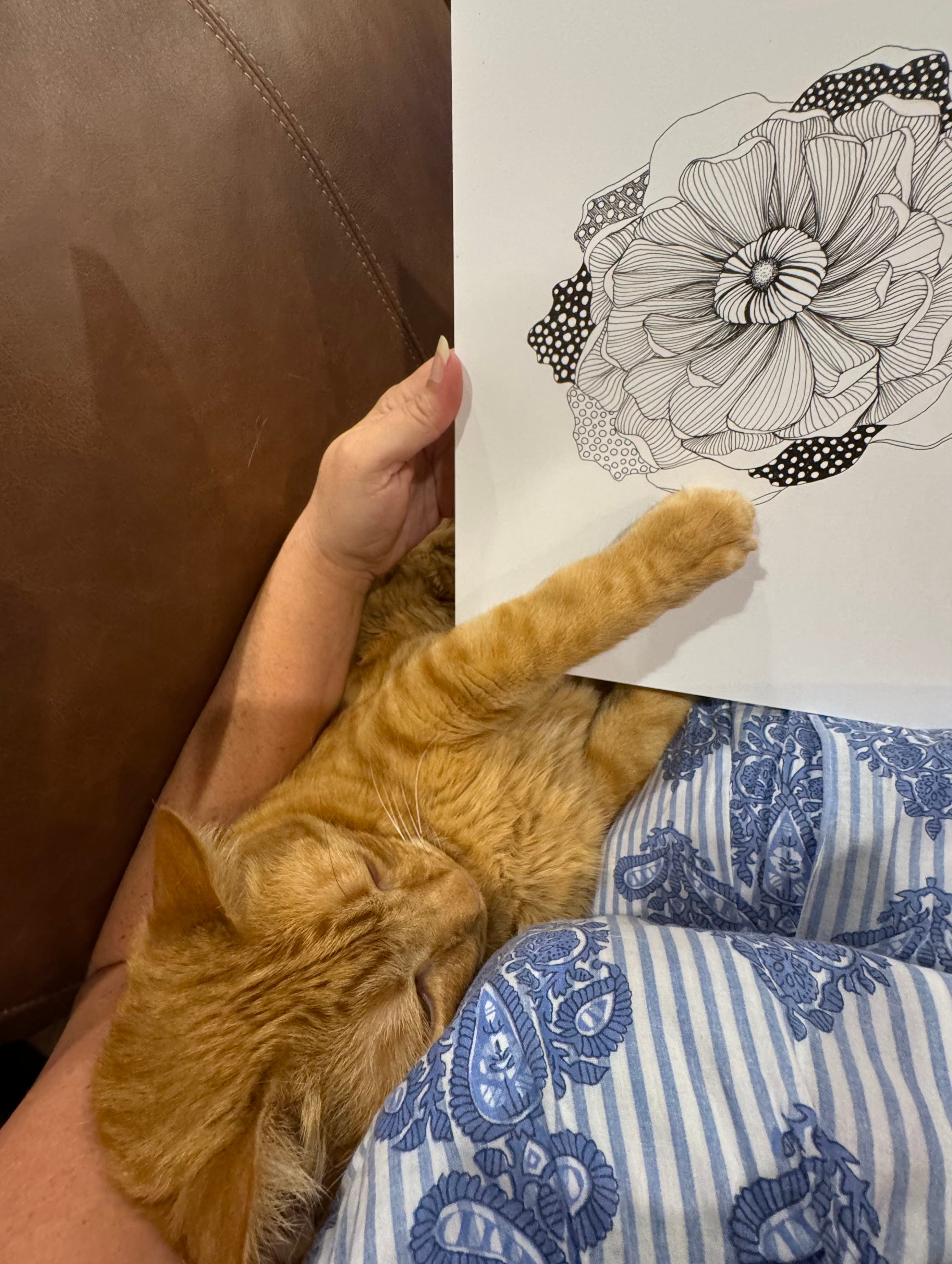
And it was a very good idea in theory but somehow it turned…weird? And I kept trying to fix it and it kept getting worse and I would like this to be one of those stories that ends with, “AND EMBRACING THE FLAWS MADE IT EVEN BETTER” but that did not happen because, well…look:
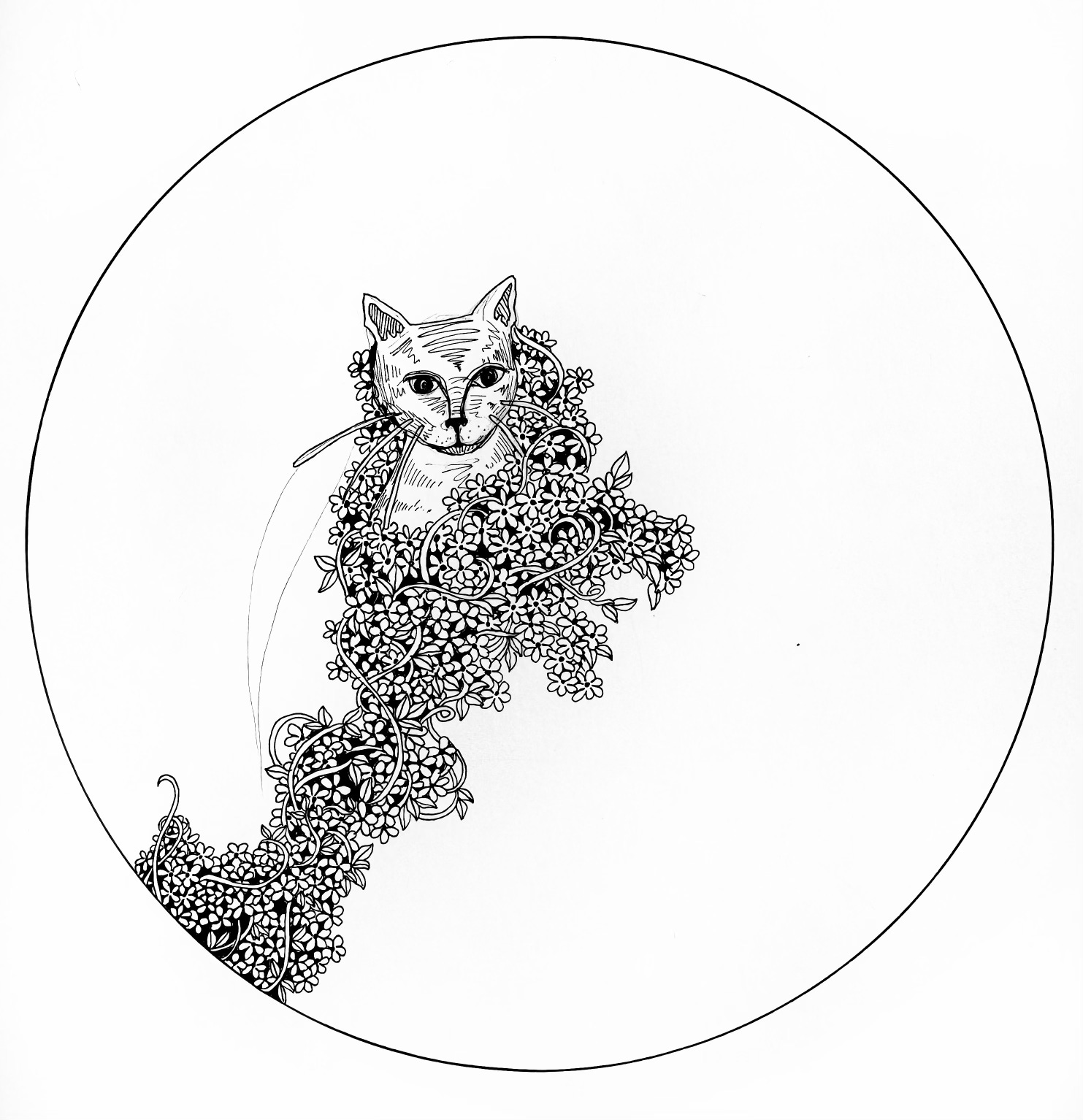
Why does he look vaguely human?
Anyway, I gave up and started another drawing but I’m not finished with it yet and I was feeling a little disappointed in my myself until I saw this collection of medieval cat paintings:
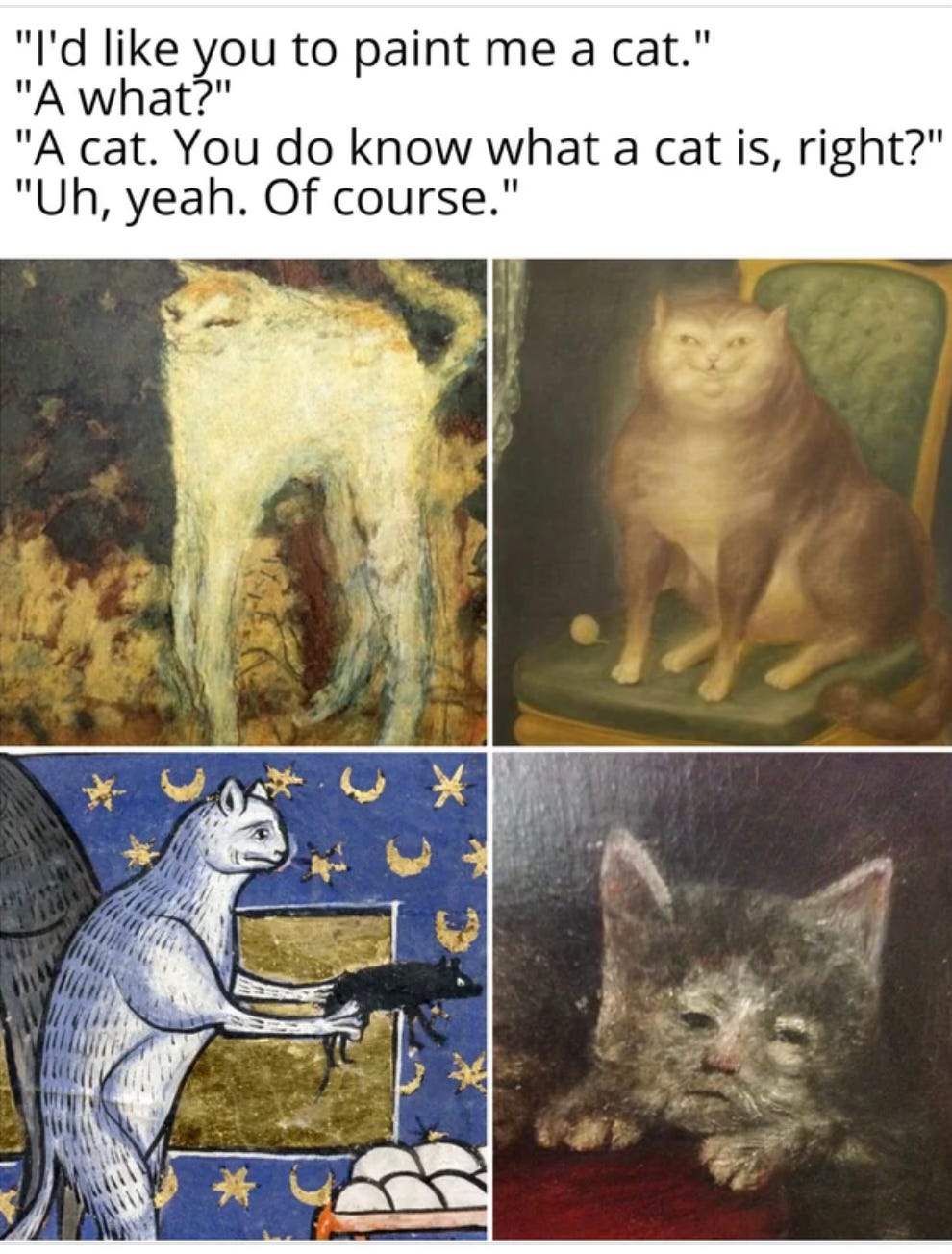
Turns out cats have been fucking up art for centuries because they are enigmatic and mysterious:
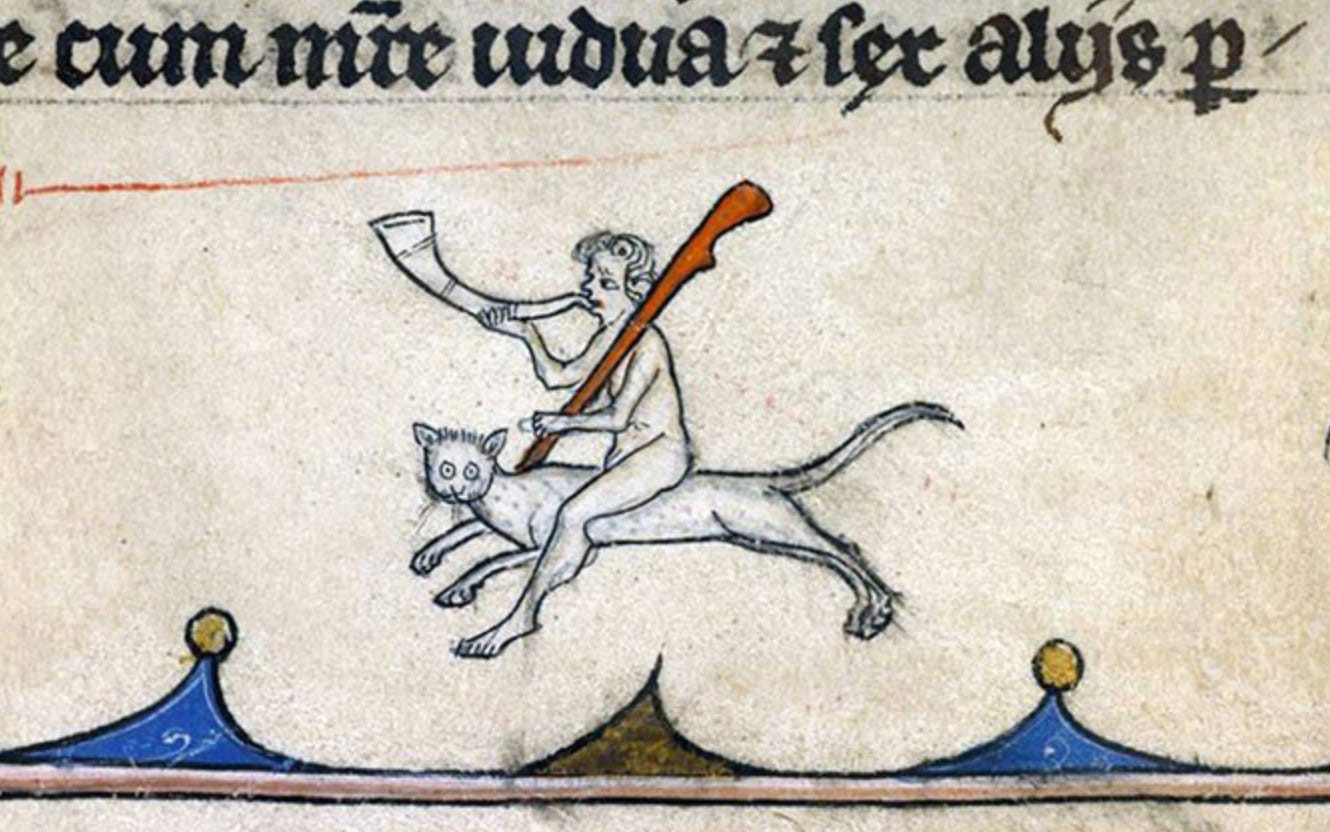
And comparatively, my cat drawing became slightly less unnerving.
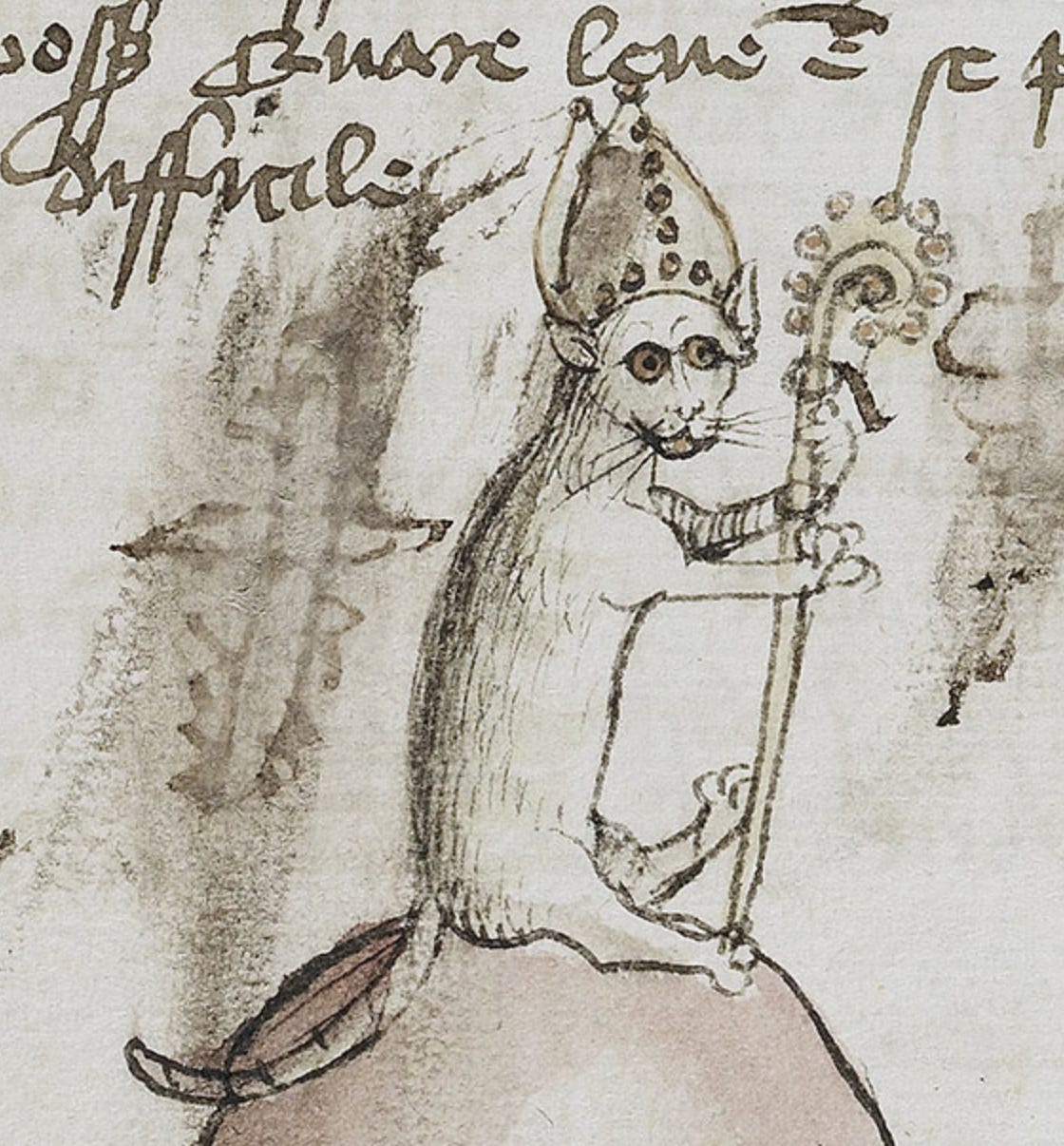
It important to remember…they’re not all going to be winners.
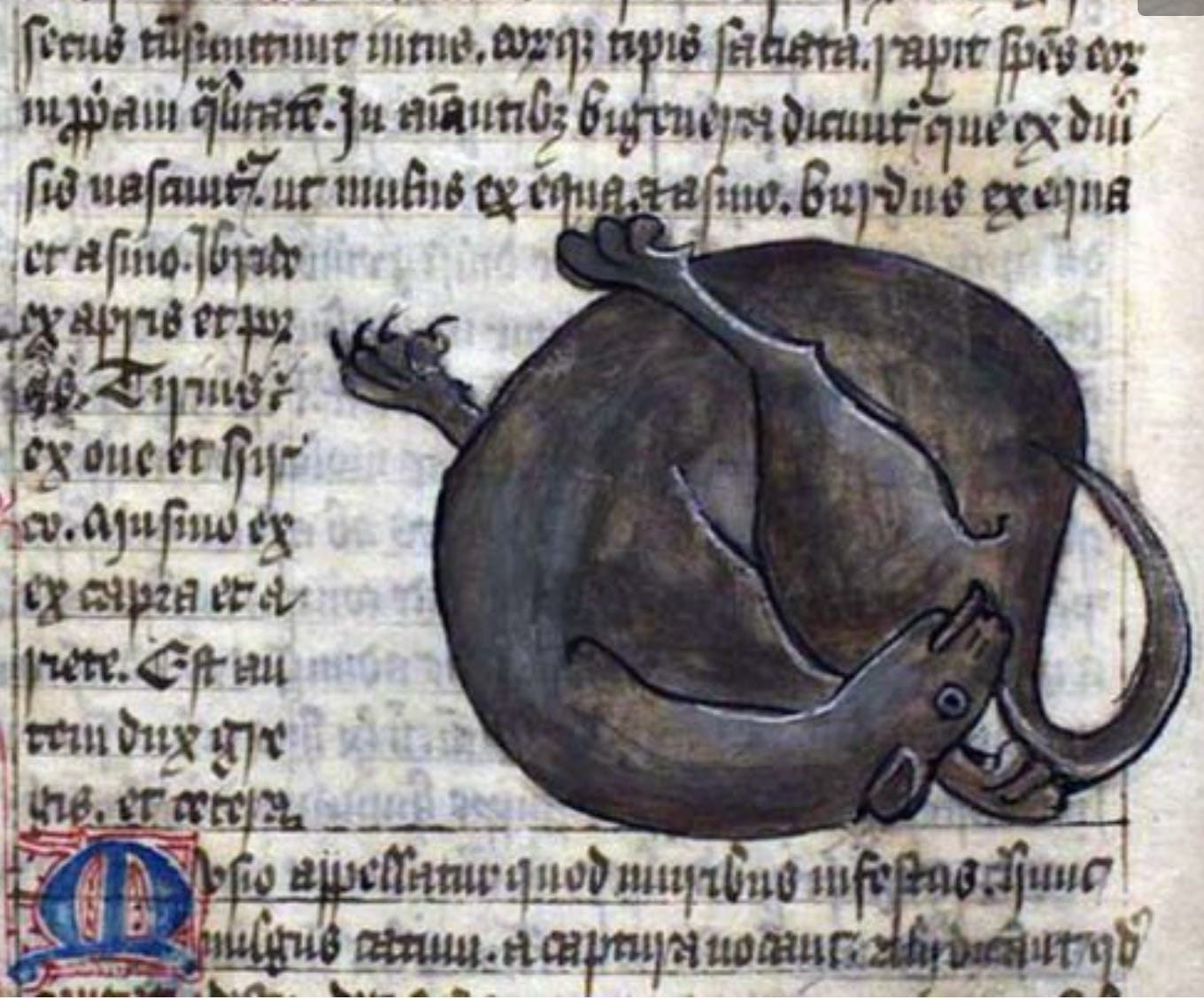
Or…you know…always make sense?
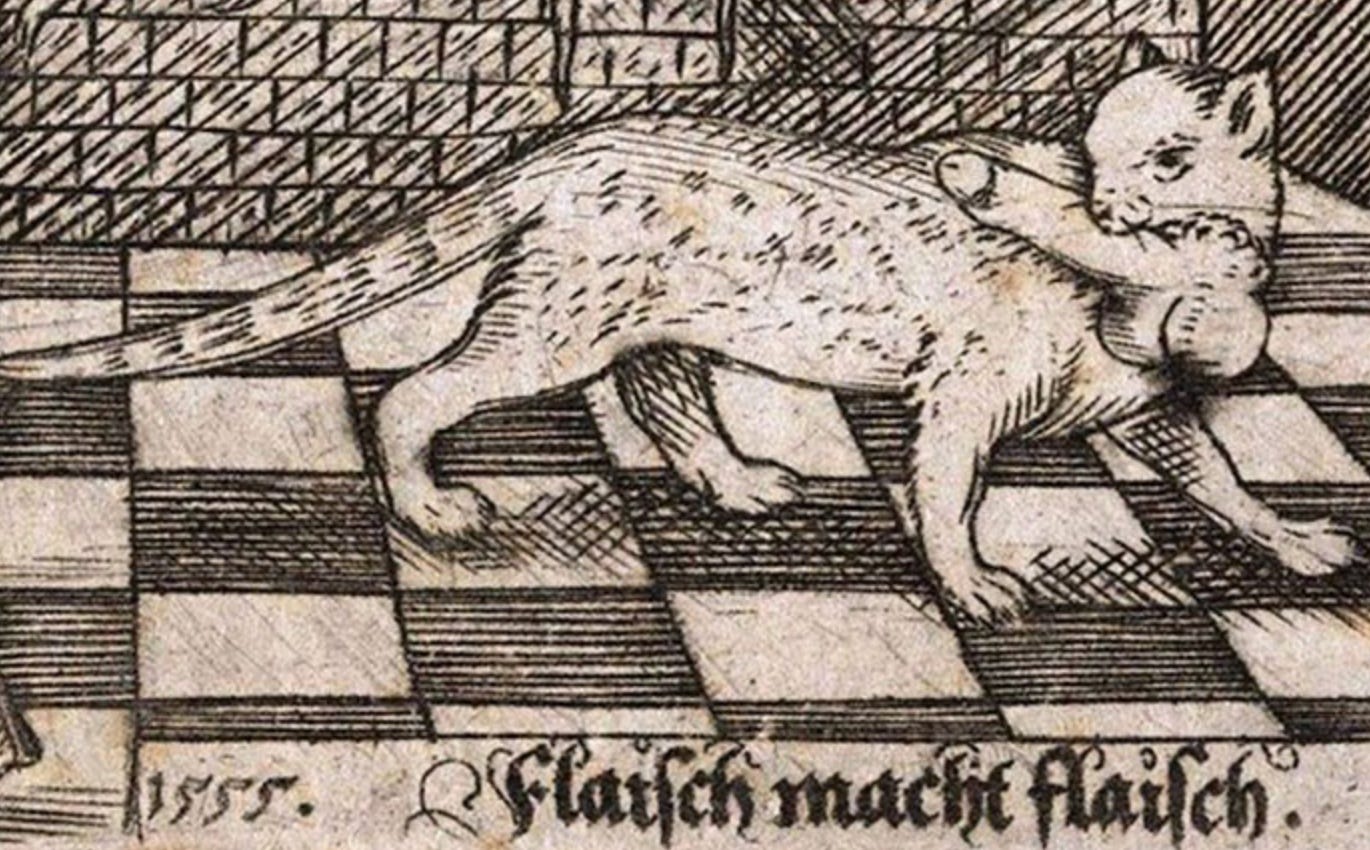
But since I don’t have a finished drawing I do have this for you…a drawing a did awhile ago that I added color to before I realized that I’m actually not that great at color combinations.
It’s no medieval cat eating a dismembered penis, but then again…what is?
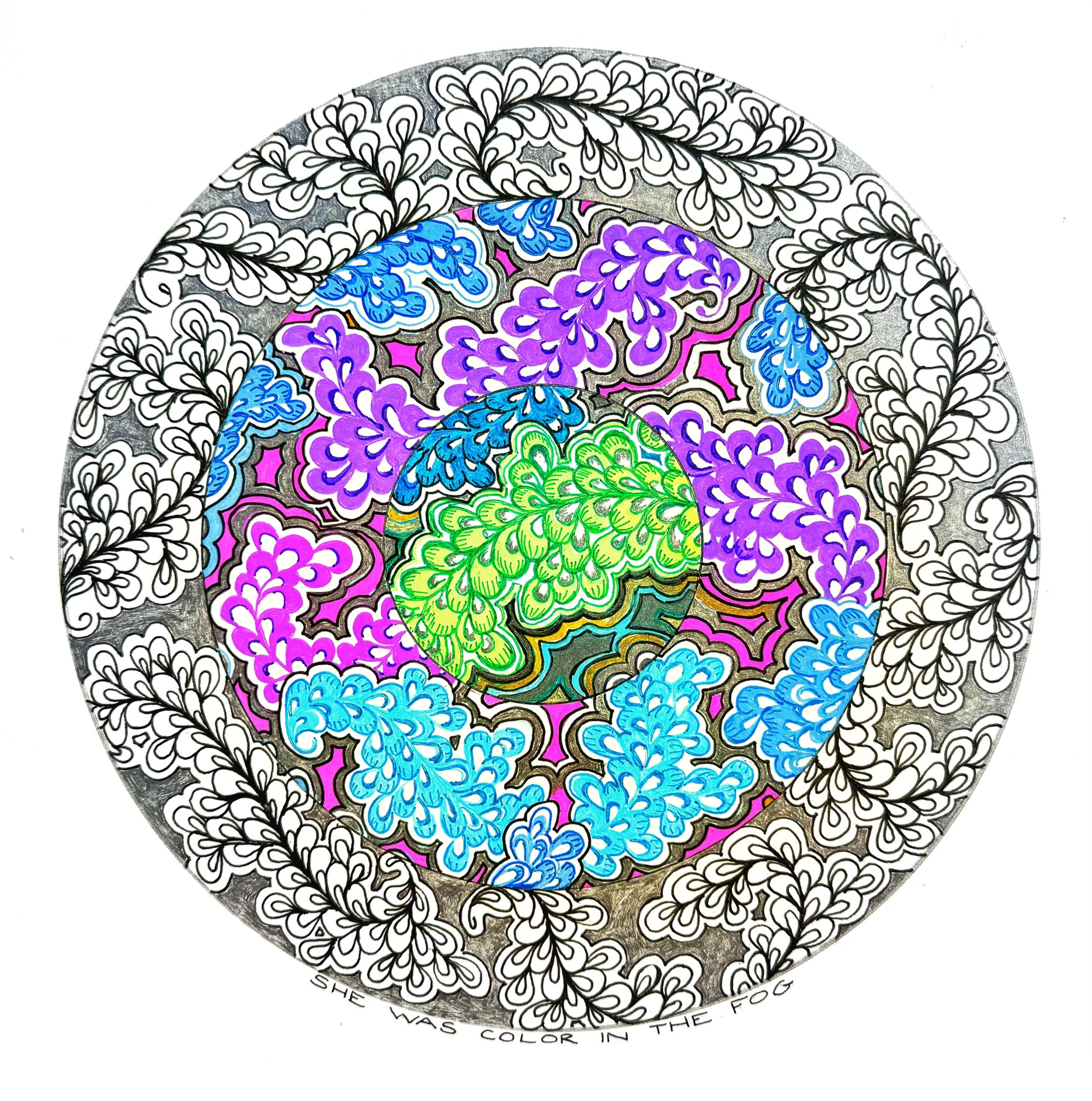
Hugs, sweet friends.
~me

