Yum.
I double-dog dare them, too!
This is one of the ones that has hilarious captions, along with excellent information about the subject.

Yum.
I double-dog dare them, too!
This is one of the ones that has hilarious captions, along with excellent information about the subject.
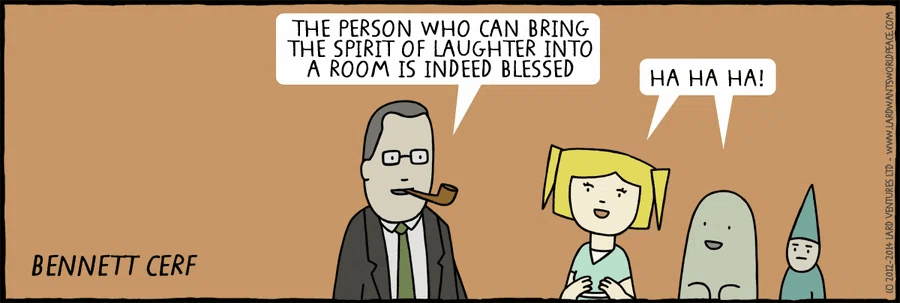
https://www.gocomics.com/lards-world-peace-tips
All these creators are indeed blessed!
(I did not verify this one; I simply enjoyed the jam.)
(A comic, and some shorts. I thought I had more comics!) Some current event related, some simple humor, some both. And dancing!

There were a lot of reasons to fire Pam Bondi as United States Attorney General, but Donald Trump picked a bad one.
Bondi was never qualified for the job, which was the second choice after Matt Gaetz, who would have been another ridiculous choice. Bondi made it clear after the 2020 election that she didn’t need evidence to make legal claims, as she declared that Donald Trump was cheated out of that race. She had been in his pocket ever since he bribed her in the 2000s not to investigate Trump University in Florida, when she was the state’s Attorney General.
After Bondi misled the country about her initial disclosures in the Jeffrey Epstein case, Congress responded by passing a law forcing the Justice Department to release its files on the pedophile and his allies. (snip-MORE; click on the title above)
They’re greedy and they’re dummies
Drumpf’s face looks like a mummy’s
The opposite of yummy
The Drumpfy Family
Don Junior loves his cocaine
And Eric is a no-brain
They’re syphillitic, insane
The Drumpfy Family
Chum
Numb
And dumb
So hide beneath the covers
And find yourself a lover
Don’t be a MAGA sucker
The Drumpfy Family!
(snip)
All the usual device protection protocols should be in place.
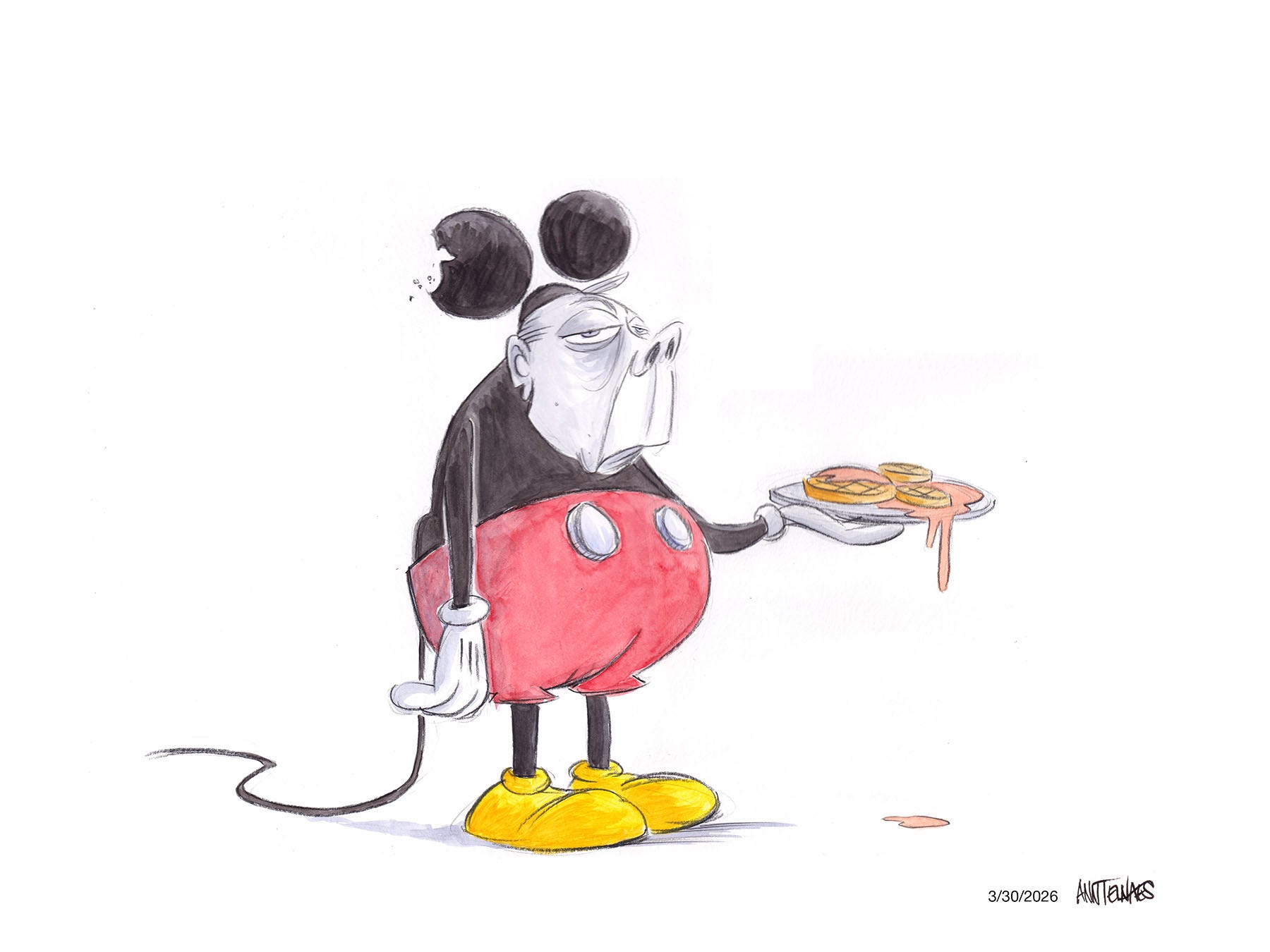
Ann Telnaes Mar 30, 2026
Trump’s war cheerleader chows down breakfast at Chef Mickey’s.
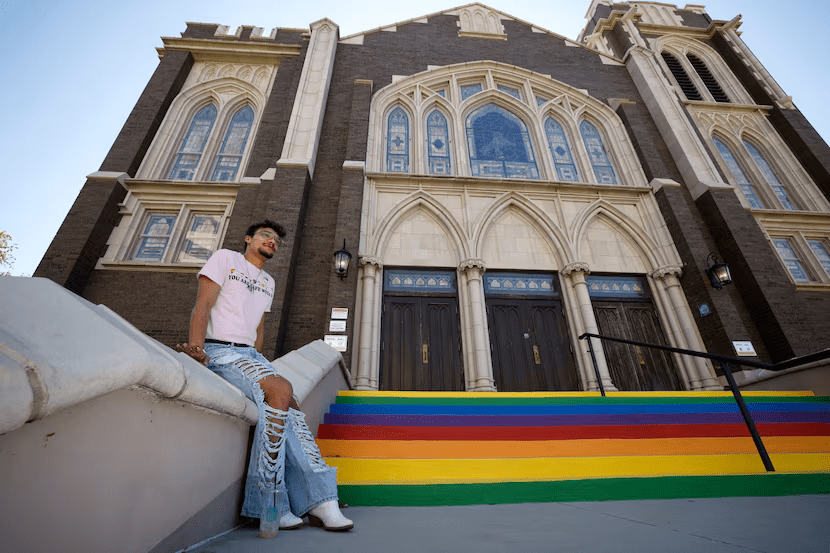
Mason Whiteside of Carrollton poses for a photo in front of the Oak Lawn United Methodist Church, Tuesday, March 24, 2026, in Dallas. Chitose Suzuki / Staff Photographer
It was already dark when Mason Whiteside finished his workday at a Deep Ellum brewery. By the time he was done cleaning and closing up, it was nearing midnight, but there was another job to do.
Whiteside, 25, called a Waymo to take him to Oak Lawn, where he’d lugged a backpack full of chalk and spray paint: red, orange, yellow, green, blue and purple.
“Does anyone want to color with me?” Whiteside asked as people walked by.
No one stopped. He didn’t need them to.
Over the course of three and a half hours, Whiteside alone repainted more than a dozen crosswalks, what he considered a vibrant act of defiance less than 24 hours after the city began stripping the roads of their color. Dallas is among several Texas cities complying with a state directive to remove “political ideologies” from public roadways.
“I wasn’t hurting anybody,” Whiteside, who is queer, told The Dallas Morning News Tuesday. “I didn’t damage anything. I literally just put back the same things that had been there.” (snip-a bit MORE; click the title)
Off the coast of Sierra Leone, the actor and model are fighting against tourists traps with their own vision: a tropical “eco-city” of the future.
Sherbro Island, a tropical outpost of farmers and fishermen nestled in the crook of Sierra Leone’s arcing Atlantic coastline, is about the size of Chicago, but its population of 40,000 wouldn’t even fill Wrigley Field. Electrical power and wireless internet are scarce. Fishermen can’t refrigerate their catches long enough to sell them on the mainland, and farmers often lack the expertise and equipment to harvest much more than they need to survive. But Sherbro Island has some enviable resources, including miles of unblemished beaches and lagoons, as well as an abundance of replenishable fresh water.
One other invaluable asset: the support of Golden Globe–winning British actor Idris Elba and his wife, Canadian model Sabrina Elba. The couple see an opportunity there to marry ecological sustainability with economic growth in a way they hope can be a template for development projects across Africa—and perhaps help rewrite a whole continent’s narrative. Idris’s father is from Sierra Leone, Sabrina’s mother is from Somalia, and growing up, Sabrina says, “there were particular stigmas attached with being African.” She remembers seeing ads that seemed to show abject people waiting for a handout. “We wanted to see Africa represented the way that we knew it to be,” she says. “We wanted to change the storytelling.”
Her husband—known for the baritone potency he brings to prestige TV dramas like Luther and The Wire, along with films like last year’s critically acclaimed thriller A House of Dynamite—first heard about Sherbro Island years ago. A close family friend had tried to convince him it could become a world-class holiday destination. “At that juncture, I was just like, Oh, OK, that sounds interesting,” says Idris, 53, who co-owns a wine bar in London’s King’s Cross neighborhood. “Like, maybe I’ll build a nightclub, maybe build some tourism.” He made a mental note to visit someday.
He got the opportunity in 2019, while he and Sabrina, now 37, were in Sierra Leone touring small family farms as part of their ambassadorial roles with the International Fund for Agricultural Development (IFAD). It was during that trip, Idris says, that he had something of an epiphany. He’d been venturing into philanthropy as his celebrity grew: supporting childhood education and hunger-relief programs in Africa, as well as campaigning on behalf of at-risk youths in the United Kingdom (work for which he was recently knighted). But on that trip, the Elbas saw an opportunity to build something more enduring and meaningful than a fancy vacation spot—and “to reframe the conversation,” Sabrina says, “[from] one of aid to one of investment.” (snip-a little more on the page; click through on the title, please)

(Clay Jones writes commentary with his comics; click through on the title to read this one)
(My ophthalmologist referred me to this site one time, because I always have a dog. It’s a hoot most of the time on its own, but recalling that an ophthalmologist subscribes makes it kinda funnier!)
Gah-this one won’t embed, and it’s hilarious!! It’s about POTUS’s failed businesses. Do click; it’s great!
https://youtube.com/shorts/Kcol2OLmmko?si=jbo2a_Rarb8s-rsO
Dear friend,
This week I’ve been struggling a little with the fact that I can’t do all of the things that I want to. My book comes out next week (you’re in it!) and I feel so excited and lucky but also terrified and filled with dread. I worry people won’t like it…that no one will show up to the book tour…that I’m failing my publisher because I can’t do some of the things that most authors would jump at because I just don’t have the energy or mental strength to say yes to everything without making myself sick. I even felt a little bad about drawing this week when I probably should be doing author stuff.
But then I reminded myself that I need this quiet drawing time (is it considered “quiet” when I’m doing it while binging Dexter? I say yes.) to keep myself sane and to replenish my energy and to remind myself that I am more than just my work, and that it’s okay to not work yourself to exhaustion even if it’s for something you love.
I suspect we all struggle with this. Perhaps as parents or partners or in our career…the urge to try to be more than our bodies and minds allow, but not being able to because you are…human. It’s so easy to put ourselves last when it’s for something else that you care about.
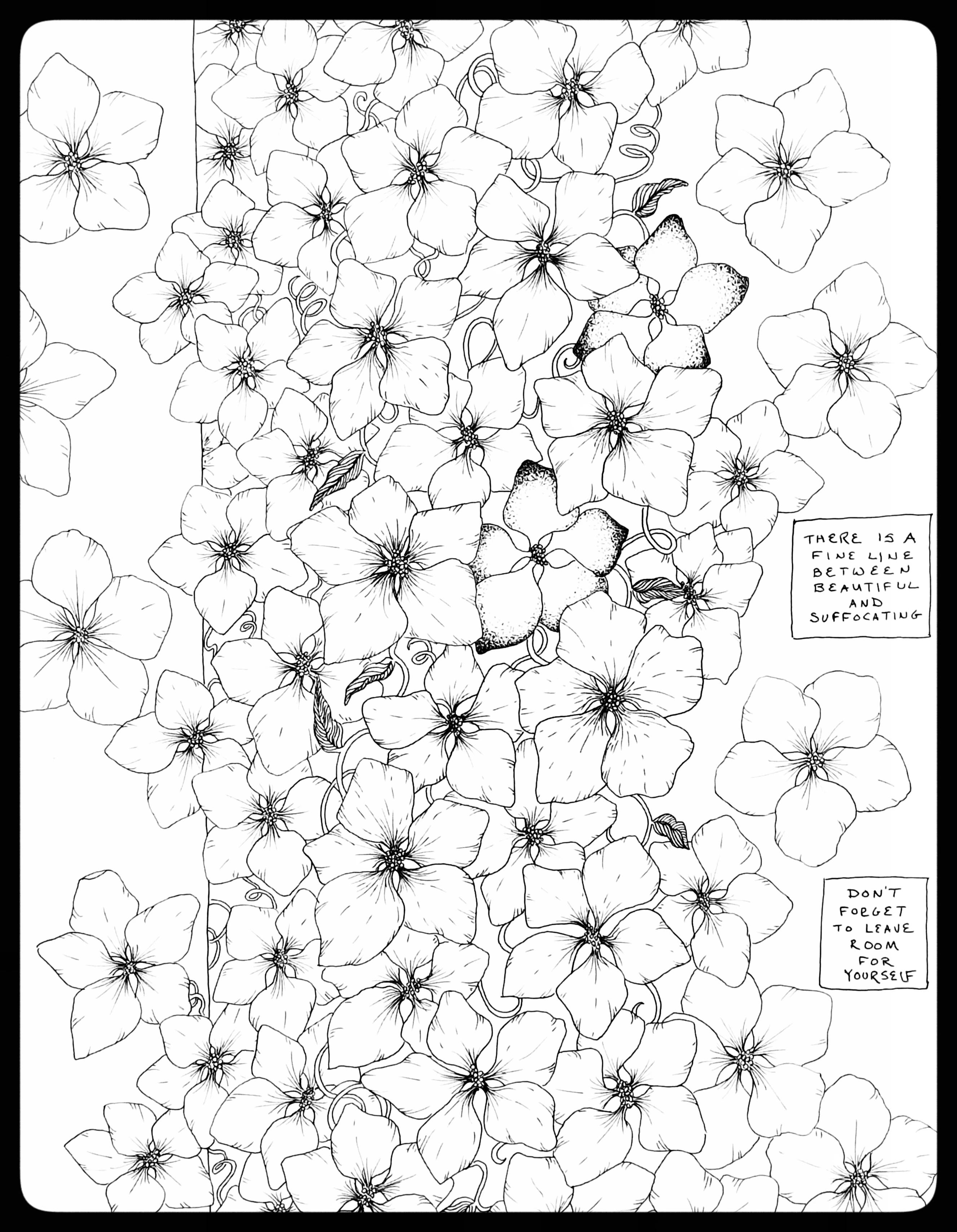
“There is a fine line between beautiful and suffocating. Don’t forget to leave room for yourself.”
So this is a reminder from me to you to make time for yourself if you can. To rest. To create. To refill your cup. There is so much beauty in what we do for others, for our work and for our passions…but there is also a necessary beauty in what we do for ourselves…a beauty we often forget.
Sending love (and quiet moments of calm repose even when watching serial killer shows)
~me
This morning I was in New York filming the Today Show where I managed to talk about explosive diarrhea, fears of my foot falling off, apologized for using my hands too much, sat on them, promptly pulled my hands back out bc I can’t talk without them and then made all the anchors put pencils in their mouths…all within about 4 minutes. By this afternoon I was in Amish country in Pennsylvania where I met some very nice “fancy Amish” people (this is a real thing) and did not pet a horse even though I really wanted to. Tomorrow afternoon I’ll be in Lancaster for my first tour stop and signing even though technically my book doesn’t officially come out until Tuesday. Then it’s back to NYC, and then a stop in New Hampshire for another reading and signing and then I get to go home for a week to rest for the next round. I’m feeling tired, happy, lucky, scared, excited, embarrassed…all of the things. Oh, and did I mention my first book got banned from a Texas high school after a senate bill deemed it obscene and profane? It’s been a busy week. I would link to everything but I can’t figure out how to do this with my phone
I should have written all this before I left but i was overwhelmed with packing all the wrong things and so instead I’m writing this tonight, on the eve of my first new book event in over half a decade, to distract myself from the fear and from the incredibly loud but very happy drunken wedding taking place two rooms down from mine. It feels like you’re here, in a weird way. I know that’s strange, but it’s comforting.
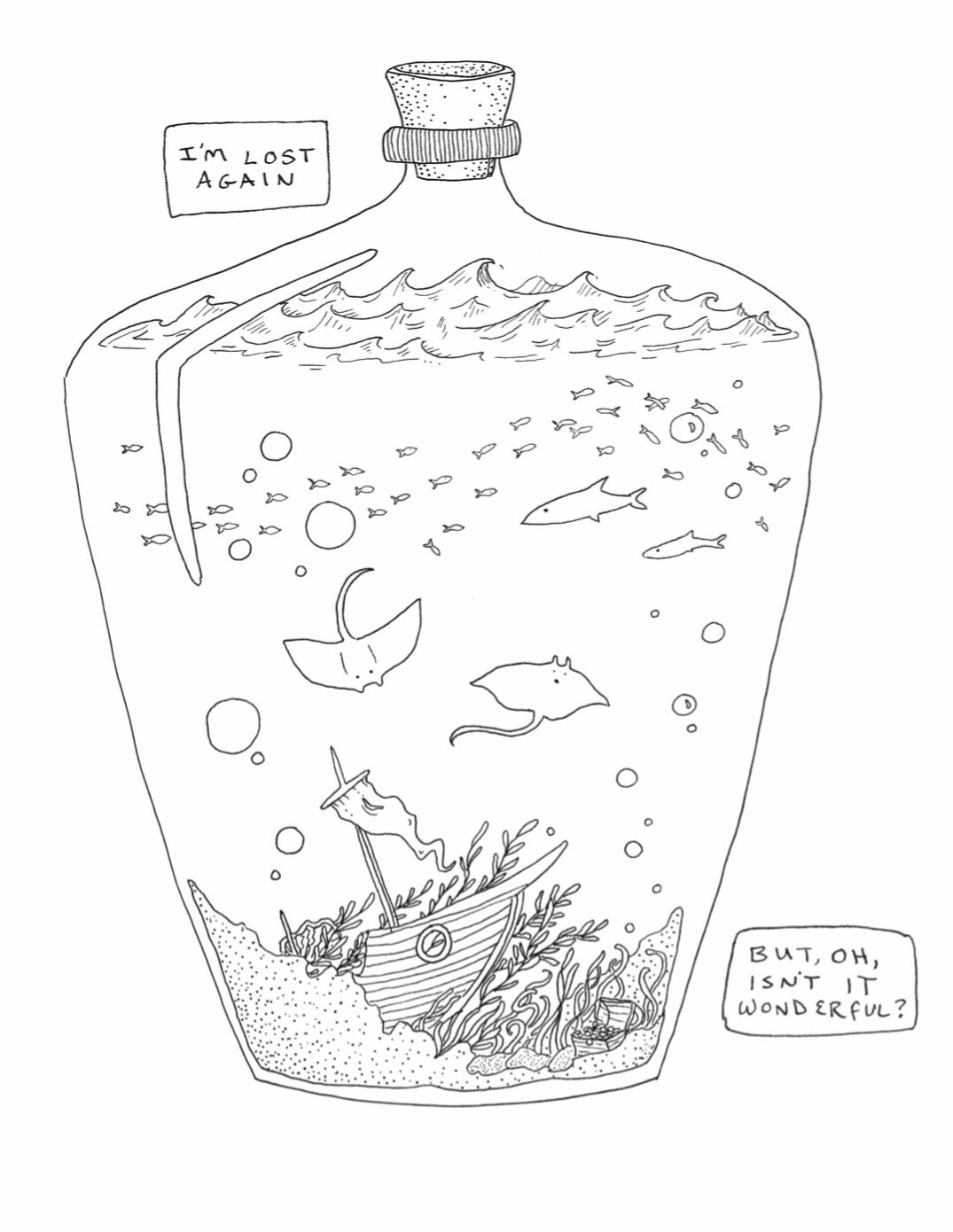
I’ve drawn in planes and cars and green rooms to keep my hands and mind busy but it’s a jerky mess so instead I’m sharing a drawing from my new book, because it seems fitting while I’m traveling so much in spite of the fact that I never know where I am. It’s an adventure, after all, if I look at it with the right kind of eyes.
I super crazy love you,
Jenny

