I’ve been remiss about Black History Month this past week and a few days. I remember last year, I either did, or almost did, one post every day of the month. I was trying for once a week this year. Anyway, I almost did, but here is a post for February 28th.
I chose these two boxers for today. I don’t know why; various reminiscences, I guess. Earlier, it popped into my head that way back in high school, a guy needed help, asking me to write his book report. I had to read the book first, of course. It was a history of boxing, going almost to that current year. It was a small book, though. Anyway, though I didn’t and still don’t care about boxing itself (it reminded me of beauty pageants for women), I do enjoy learning about the people, thanks to writing that book report way back.
Joe Frazier was the world heavyweight-boxing champion from 1970 – 1973. Frazier is perhaps best remembered for his fearless 15-round match against Muhammad Ali at Madison Square Garden, known as the Fight of the Century, where he knocked out Ali. In 2011, Frazier passed away from his final fight of liver cancer.
(snip)
He moved to New York City to live with an older brother and find work. Employment, however, was hard to come by, and to put cash in his pocket he started stealing cars and selling them to a junkyard in Brooklyn. But Frazier harbored dreams of doing something with his life. Many of those dreams were built around boxing. As a younger kid, back in South Carolina, he had dreamed of becoming the next Joe Louis, airing out punches at burlap bags he’d filled with leaves and moss. Up north Frazier’s love for boxing didn’t subside.
After moving to Philadelphia, Frazier found work at a slaughterhouse, where he routinely punched sides of beef stored in a refrigerated room. That scene later inspired Sylvester Stallone for his 1976 film, Rocky. It wasn’t until 1961, though, that Frazier entered the ring and actually began to box. He was rough and undisciplined, but his unpolished talent caught the eye of trainer Yank Durham.
Professional Career
Under the direction of Durham, who shortened Frazier’s punches and added power to his devastating left hook, the young boxer quickly found success. For three straight years, he was the Middle Atlantic Golden Gloves Champion, and he captured the gold medal at the 1964 Summer Olympics in Tokyo. He turned pro in 1965 and in just under a year had compiled an 11-0 record. In March 1968 he was crowned heavyweight champion where he kept the title until 1973.
Frazier eventually retired from boxing in 1976 to become a community leader and advocate for the youth by opening up a boxing gym to keep the youth off the streets of Philadelphia.
(snip-there is lots of diverse info on the page, linked in the title above)
I’m sorry; we have to click on “Watch on YouTube” to see Joe Frazier sing on (I think?) Merv Griffin.
==========
We know from some of my previous posts that I’m an Ali fan. I enjoyed his celebrity bravado and even his boxing. But this man, too, has done things to make the world brighter and more just; he served time and lost his title for being a conscientious objector to fighting in Vietnam, and was vilified and harassed for other peace-mongering efforts he made with his platform. Later, of course, he continued to demonstrate for peace and justice, and also for Parkinson’s. He raised good children, as well.
Muhammad Ali(born January 17, 1942, Louisville, Kentucky, U.S.—died June 3, 2016, Scottsdale, Arizona) was an American professional boxer and social activist. Considered one of the greatest boxers in history, Ali was the first fighter to win the world heavyweight championship on three separate occasions; he successfully defended this title 19 times. (snip)
By: Start TV Staff Posted: January 14, 2026, 1:17PM
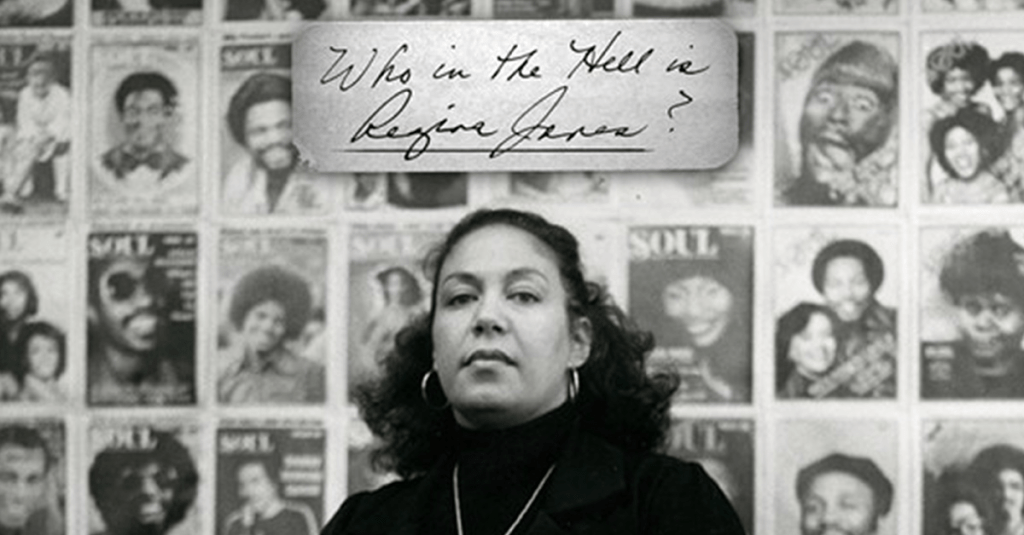
Start TV is set to premiere the award-winning documentary, Who in the Hell is Regina Jones?, on Monday, February 16 at 8P | 7C with a special encore immediately after at 10P | 9C.
The stellar production from Weigel Productions Corp. shines a light on legendary journalist Regina Jones. The documentary, which won the Outstanding Documentary Feature Award at the Greater Cleveland Urban Film Festival, turns a lens on Jones’ historical journey – the invisible labor, turmoil, struggle, and joy of a modern-day Black woman, who emerged as publisher and founder of the groundbreaking SOUL newspaper. On this nationwide platform, Black artists could get coverage long before other publications entered the arena.
Pregnant and married at 15, Regina Jones experienced the Watts Rebellion of 1965, raised five children, stepped into places where she was not wanted, and navigated a world that offered her no favors. SOUL was the first publication devoted specifically to Black musicians and perspectives in music, published from 1966 to 1982. During its run, the publication profiled some of the era’s most prominent Black artists, including Aretha Franklin, James Brown, Diana Ross, Gladys Knight, and Stevie Wonder.
Who in the Hell is Regina Jones? was produced by Weigel Productions Corp and directed by Soraya Sélène and Billy Miossi, edited by Nancy Novack A.C.E., co-edited by Alisa Selman, produced by Alissa Shapiro, and executive produced by Academy Award nominee Sam Pollard.
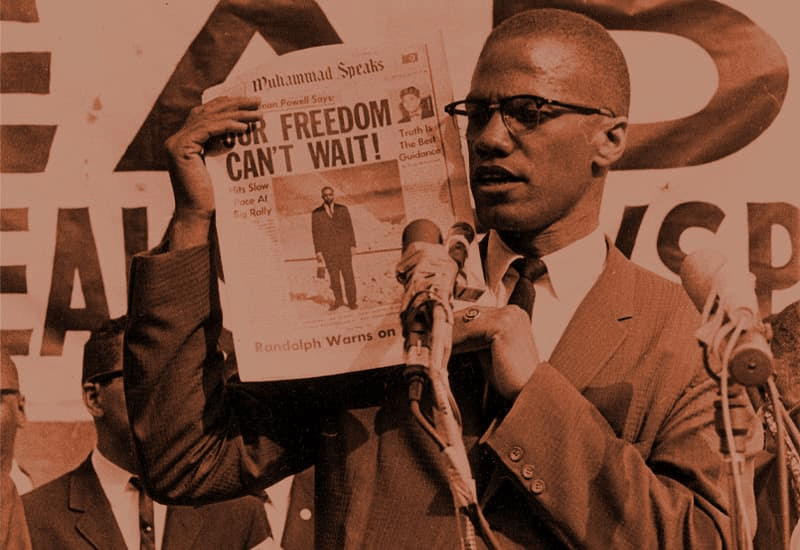
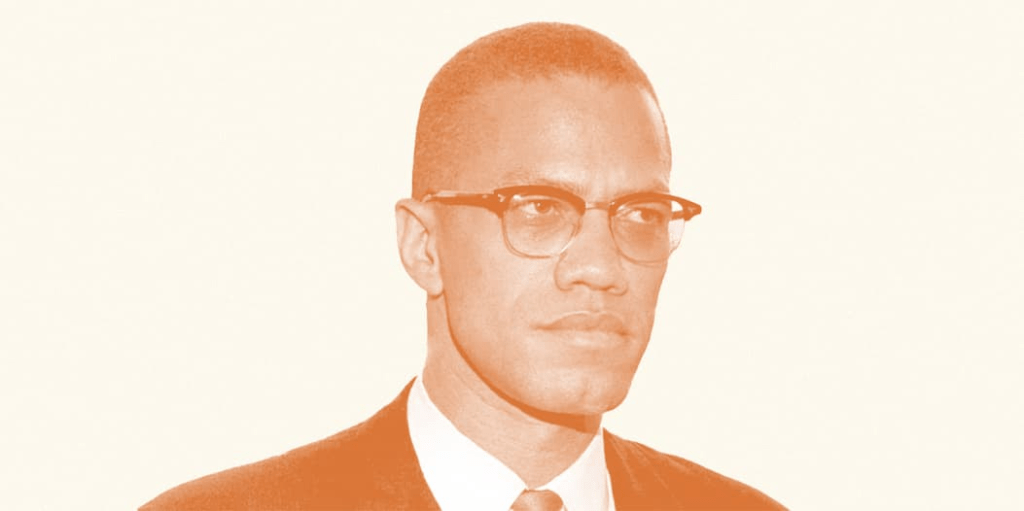
On Sunday, February 21, 1965, a little after 3pm, as he was preparing to address his Organization of Afro-American Unity in New York’s Audubon Ballroom, the controversial civil rights leader and revolutionary Malcolm X was shot dead by members of the Nation of Islam, the religious group X had broken from the year before. He was 39.
“In the aftermath, rivers of ink spilled across New York City’s many newspapers,” wrote Ted Hamm. The legendary journalist Jimmy Breslin was callous and dismissive; Langston Hughes “somewhat cryptic.”
James Baldwin, who was in London at the time, famously shouted at the reporters who found him after X’s death: “You did it! It is because of you—the men that created this white supremacy—that this man is dead. You are not guilty, but you did it. … Your mills, your cities, your rape of a continent started all this.”
Later, Baldwin told the story this way:
“There we were, at the table, all dressed up, and we’d ordered everything, and we were having a very nice time with each other. The headwaiter came, and said there was a phone call for me, and Gloria rose to take it. She was very strange when she came back—she didn’t say anything, and I began to be afraid to ask her anything. Then, nibbling at something she obviously wasn’t tasting, she said, ‘Well, I’ve got to tell you because the press is on its way over here. They’ve just killed Malcolm X.’ The British press said that I accused innocent people of this murder. What I tried to say then, and will try to repeat now, is that whatever hand pulled the trigger did not buy the bullet. That bullet was forged in the crucible of the West, that death was dictated by the most successful conspiracy in the history of the world, and its name is white supremacy.”
“I was certainly saddened by the shocking and tragic assassination of your husband,” Martin Luther King, Jr. wrote to Betty Shabazz, X’s wife, after the murder.
“While we did not always see eye to eye on methods to solve the race problem, I always had a deep affection for Malcolm and felt that he had a great ability to put his finger on the existence and root of the problem. He was an eloquent spokesman for his point of view and no one can honestly doubt that Malcolm had a great concern for the problems that we face as a race.”
More than sixty years later, some details about the assassination remain unclear. But Malcolm X has endured as a cultural icon, death being, in the end, not quite enough to silence him.
EVERGREEN QUOTE:“You’re not supposed to be so blind with patriotism that you can’t face reality. Wrong is wrong no matter who does it or who says it.”–Malcolm X
circa 1925: Portrait of American-born singer and dancer Josephine Baker (1906 – 1975) lying on a tiger rug in a silk evening gown and diamond earrings. (Photo by Hulton Archive/Getty Images)
When most people think of history’s American spies, they imagine a sleuthy white man, tracking troop movements, planting bugs and obtaining secrets under the radar of the enemy. What’s rarely imagined, let alone taught, is the role Black Americans played in espionage from the Revolutionary War through modern times.
Enslaved and free Black men and women slipped into rooms they weren’t meant to enter, cozied up to marks who underestimated them and quietly ran intelligence networks that relied on invisibility in plain sight. Here are Black spies whose intelligence work shaped history.
Mary Elizabeth Bowser
Screenshot: YouTube “Mary Elizabeth Bowser: Unsung Heroes of the Civil War | Ancestral Finding Postcard”
Dubbed the “baddest bitch in history” by Comedy Central, Bowser became known as one of the Union’s most daring Civil War spies. Literate and underestimated, Bowser worked as an undercover agent from inside the Confederacy’s most vulnerable locations — Confederate President Jefferson Davis’s home, according to African American Registry.
Masking her intelligence by pretending to be bat sh*t crazy, “Crazy Bet,” as she was known, used a rumored photographic memory to collect important military information and pass it on to Ulysses S. Grant.
James Armistead Lafayette
Fascimile of the Marquis de Lafayette’s original certificate commending James Armistead for his revolutionary war service, 1784. From the New York Public Library. (Photo by Smith Collection/Gado/Getty Images).
James Armistead Lafayette was born enslaved but became a master of deception during the American Revolution. According to America’s Army Museum, he disguised himself as a runaway, infiltrated British camps, delivered key intelligence to the Marquis de Lafayette and fed false information to the enemy. His double agent work was crucial at Yorktown in 1781.
With Marquis de Lafayette’s support, he later won his freedom and dropped his enslaver’s name.
Josephine Baker
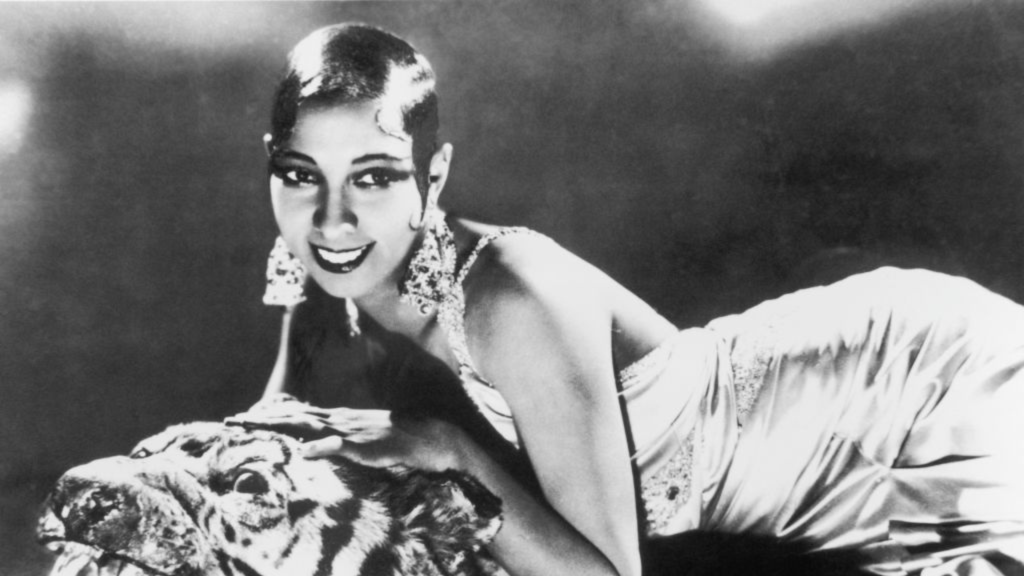
circa 1925: Portrait of American-born singer and dancer Josephine Baker (1906 – 1975) lying on a tiger rug in a silk evening gown and diamond earrings. (Photo by Hulton Archive/Getty Images)
Josephine Baker was a known boundary-breaking dancer, singer and international icon, but few knew she was also a World War II spy for the French Resistance. Though she spied on behalf of France rather than the U.S., Baker belongs in this conversation about Black espionage.
At the height of her fame, Baker used her celebrity to move through elite European society and collect information on Nazi Germany and other Axis powers, according to History.com. Baker hid intelligence in invisible ink on sheet music and pinned notes inside her clothing, later explaining, “nobody would think I was a spy.”
Her bravery earned her France’s highest military honors.
Debra Evans Smith
Screenshot: YouTube
While working in Records Management, Debra Evans Smith attended the FBI Academy after gaining nine pounds to meet the minimum weight requirement.
When only one percent of Black women were spies, Smith was drawn to counterintelligence. She volunteered for surveillance, learned Russian, and spent four years handling Russian counterintelligence in Los Angeles, conducting interviews and investigations in the language, according to the FBI. For her, the work was never about individual cases—it was about serving the country.
If you’ve never heard of Abraham Gallaway, that’s no accident. According to historian Dr. David Cecelski, Gallaway may have been the most important Southern war hero, but his legacy was erased when North Carolina rewrote its own history in the late 1800s, depicting enslaved people as “docile.” Gallaway’s story did not fit their narrative.
Born enslaved in 1837 near Wilmington, N.C., he escaped at 19. Gallaway became a “master spy” for the Union Army during the Civil War, providing military intelligence from within the South and establishing a spy network. He also became a state senator, according to 6 ABC. Today, his story is preserved at the North Carolina Museum of History.
Mary Louvestre
Mary Louvestre (sometimes spelled Touvestre) was a free Black woman who would not take no for an answer. Working as a seamstress in Virginia, she stole documents about troop movements and walked to deliver them to Union officials in Washington, D.C. When officers brushed her off, hesitating to meet with her, she kept going back until they listened.
Darrell M. Blocker
Darrell M. Blocker spent 32 years in U.S. intelligence, retiring in 2018 as the most senior Black officer in the CIA’s Directorate of Operations and earning the Distinguished Career Intelligence Medal. A second-generation intelligence professional, Blocker’s work took him to dangerous territory in places like Iran and North Korea, according to the International Spy Museum.
Having lived in 10 foreign countries, he has held titles including Deputy Director of the Counterterrorism Center and managed the CIA’s Ebola response.
A portrait of Harriet Tubman, African-American abolitionist and a Union spy during the American Civil War, circa 1870. (Photo by HB Lindsey/Underwood Archives/Getty Images)
Harriet Tubman was more than the Underground Railroad’s “Moses.” She made power moves in the Union Army, using her reputation to recruit Black scouts. Tubman gathered intel no one else could. According to Brandeis University, she became the first woman to lead a U.S. military raid in 1863, which freed 750 people and sealed her acumen as a true strategist.
George E. Hocker, Jr.
YouTube: “2025 Mary’s Woods MLK Jr Celebration”
George E. Hocker, Jr., a Washington, D.C. native, joined the CIA in 1957 while studying at Howard University. Working as a file clerk to fund his education, he stopped short of aspirations to work as a spy because CIA leaders told him Black people were not intelligent enough or able to “blend in.”
He believed them … until the 1963 March on Washington inspired him to pursue his dream despite racism. During the Cold War, Hocker gathered intelligence in Africa and later went to Latin America, risking his life on dangerous assignments. Hoker never lost sight of the fight at home, stating, “While I was fighting for my country’s interests abroad, my fellow Black Americans were facing war zones of their own at home,” as quoted in Newsweek.
Robert Smalls
Robert Smalls, 1887. African-American politician, publisher, businessman and maritime pilot. Born into slavery, he escaped, and commandeered and piloted a Confederate transport ship which became a Union warship. His example and persuasion helped convince President Abraham Lincoln to accept African-American soldiers into the Union Army. From “Men of Mark: Eminent, Progressive and Rising” by William J. Simmons. Creator: Unknown. (Photo by Heritage Art/Heritage Images via Getty Images)
Born into slavery in 1839 in Beaufort, South Carolina, Robert Smalls rose to become a skilled pilot on the Confederate transport CSS Planter by his early twenties. In a bold act of courage in 1862, he seized the ship, picked up his family, and navigated past Confederate forts under the guise of a captain, delivering the vessel safely to Union forces. Smalls went on to become the first African American to command a U.S. naval vessel, and after the war, he purchased his former enslaver’s house, reclaiming a space that had once symbolized his bondage.
In November 1973, 10 Black models helped put American fashion on the map in an epic runway face-off with well-known French designers. In honor of the start of New York Fashion Week, here’s their story!
Models dressed in midriff-bearing tops and oversized bottoms of solids, stripes and plaids worn with headresses during the fashion show to benefit the restoration of the Chateau of Versailles, five American designers matching talents with five French couturiers at the Versailles Palace on November 28, 1973 in Versailles, France…Article title:’One night and pouf! It’s gone! (Photo by Fairchild Archive/Penske Media via Getty Images)
We know that for most people, February is all about the Super Bowl, Valentine’s Day and Black History Month. But if you love style, you know it’s also about New York Fashion Week – a time for some of the hottest designers to showcase the latest trends — kicking off Wednesday (Feb. 11).
While we’re going to be all over covering what’s new from Sergio Hudson and Public School, we thought this week was also a perfect time to show some love to the Black designers and models who paved the way for future generations.
We’re kicking things off with the story of 1973’s Battle of Versailles fashion show –an epic stand-off between French and American designers in Paris. The highly-hyped event not only put American fashion designers on the map, but it also put a spotlight on a group of 10 Black models who shut down the red carpet and showed the rest of the world the beauty in having a diverse runway that looked more like the rest of the world.
A Palace in Need of Repair
Fragment of golden entrance gates to the Versailles Palace (Chāteau de Versailles) on a sunny summer day. The Versailles is a Royal Palace in Versailles which is a suburb of Paris, some 20 kilometres southwest of the French capital.
The Palace of Versailles is an iconic French landmark. The stunning estate became the official royal residence in 1682. But while it has been a tourist destination for quite some time, in the early 1970s, the 17th century palace was in desperate need of a $60 million glow-up to repair years of damage.
A Fabulous Fundraiser
American Fashion co-ordinator, Miss Eleanor Lambert (Mrs Berkson) who arrived by Qantas today to finalise arrangements for a major all-American fashion show in Sydney and Melbourne later this year. May 25, 1967. (Photo by Trevor James Robert Dallen/Fairfax Media via Getty Images).
American fashion publicist Eleanor Lambert knew $60 million dollars wasn’t small change, so she proposed the idea of a fashion show to raise money for the Versailles repair project. Working with the palace curator, Gerald Van der Kemp, she wanted to invite some of the wealthiest elites from around the world to view collections from fashion designers from France and the United States. Lambert believed the ticket sales would help bring in much-needed funds for the palace project and give American designers a chance to prove their talent on the world stage.
The French Designers
Fashion designer Pierre Cardin stands in his studio surrounded by models. (Photo by Pierre Vauthey/Sygma/Sygma via Getty Images)
Lambert’s idea got the green light, and the date was set for Nov. 28, 1973. The French assembled an all-star lineup of designers, including Hubert de Givenchy, Yves Saint Laurent, Pierre Cardin, Marc Bohan (Creative Director for Christian Dior) and Emmanuel Ungaro. Ready to show the international audience that Paris was the fashion capital of the world, they planned more than an ordinary runway show, but a production that featured live music, dance and an extraordinary set.
The American Designers
NEW YORK, NY – JANUARY 24: Designer Stephen Burrows attends the Tribute To The Models Of Versailles 1973 at The Metropolitan Museum Of Art on January 24, 2011 in New York City. (Photo by Stephen Lovekin/Getty Images)
The American team accepted the challenge and built a roster that included designers Oscar de la Renta, Halston and Bill Blass. Unlike the French, Team USA brought a little more diversity to the event, with the only woman designer, Anne Klein, and Stephen Burrows, a Black graduate of New York’s Fashion Institute of Technology, who made a name for himself with his colorful, lightweight knit designs and signature lettuce hem.
News of the show got lots of press in both the United States and France. John Fairchild, who was the editor of Women’s Wear Daily at the time, helped add to the hype, billing the event “The Battle of Versailles.”
Choosing Models
Norma Jean Darden, Bethann Hardison, Billie Blair (Getty Images)
The budget for the event was tight, causing some of the more well-known models of the time — like Jerry Hall and Lauren Hutton — to turn down the $300 job. But their decision left the door open for a group of talented and beautiful Black models who were happy to step in and help bring the designer’s clothing to life. In the end, the American show featured 10 Black models – Billie Blair, Bethann Hardison, Pat Cleveland, Amina Warsuma, Charlene Dash, Ramona Saunders, Norma Jean Darden, Barbara Jackson, Alva Chinn and Jennifer Brice – making it one of the most diverse runways the fashion industry had ever seen at a major show.
Americans in Paris
Models Bethann Hardison and Armina Warsuma arrive in Marseille, Paris. (Photo by Michel Maurou/Reginald Gray/WWD/Penske Media via Getty Images)
Although they weren’t paid much for the gig, many of the Black American models chosen for the show jumped at the chance to participate in a high-profile international event. Pat Cleveland remembers how excited many of the models were when they first set foot on French soil.
“They got out of the bus and kissed the ground, they were so happy,” she said.
A Not-So-Warm Welcome
Model Pat Cleveland eats a sandwich backstage during the Battle of Versailles fashion show to benefit the restoration of the Chateau of Versailles on November 28, 1973. The Battle of Versailles featured the top five American designers matching their talents with five French couturiers. The Americans triumphed. (Photo by Reginald Gray/WWD/Penske Media via Getty Images)
Although the city of lights was beautiful, the American designers and models did not feel the love in France. Designer Stephen Burrows confirmed that their accommodations were far from five-star.
“There was no toilet paper in the bathroom. It was terrible,” Burrows said. “They had the girls there working all day long and didn’t feed them.”
Rehearsal Drama
Oscar de la Renta watches American team model Billie Blair practicing in a breakout rehearsal space within the palace complex. (Photo by Michel Maurou/WWD/Penske Media via Getty Images)
The French weren’t any more gracious when it came to the rehearsal time, using up most of the days leading up to the show to run through their performance –leaving the American team to make the most of the middle of the night.
A Star-Studded Guest List
Marisa Berenson, Roy Halston, Liza Minnelli and friends attend the fashion show to benefit the restoration of the Chateau of Versailles, five American designers matching talents with five French couturiers at the Versailles Palace on November 28, 1973 in Versailles, France. (Photo by Fairchild Archive/Penske Media via Getty Images)
The idea of a showcase featuring some of the best in American and French fashion attracted a who’s who of high-profile stars, including Elizabeth Taylor, Liza Minelli (who took the stage during the American show) and Andy Warhol.
The French Performance Was a Production
American born-French entertainer Josephine Baker in costume rehearses on stage before her performance during the “Battle of Versailles” fashion competition in Paris on November 29, 1973. (Photo by Reginald Gray/WWD/Penske Media via Getty Images)
On the night of the show, the French took the stage first, with a 40-piece orchestra, more than $30,000 worth of props and performances from well-known Soviet ballet dancer Rudolf Nureyev and legendary performer Josephine Baker along with their designer’s collections. American model Bethann Hardison remembered the French designer’s elaborate presentation that lasted for more than 2.5 hours.
“They had everything. You just couldn’t believe all the entertainment they had,” she said. “It was like a circus. The only thing they didn’t do was shoot a man out of a cannon.”
The Americans Met the Moment
After the French showcase, it was Team USA’s turn to take the stage. Although they walked to music on a cassette tape instead of a live orchestra, they met the moment, with the Black models showing off their rhythm as they floated down the runway. Although their show was only 35 minutes, they left the audience – who gave them a standing ovation – wanting more.
Making Fashion Ready-to-Wear
Battle of Versailles (Photo by Reginald Gray/WWD/Penske Media via Getty Images)
While the French showcased classically tailored clothing conceived with a wealthy client in mind, the American designers were looking toward the future and embracing a growing shift towards ready-to-wear pieces that were accessible to a wider audience. The designers weren’t afraid to add color and pattern to a collection that was made for time.
The Power of Diversity
Models dressed in gowns take the stage during the fashion show to benefit the restoration of the Chateau of Versailles, five American designers matching talents with five French couturiers at the Versailles Palace on November 28, 1973 in Versailles, France…Article title: ‘One night and pouf! It’s gone! (Photo by Fairchild Archive/Penske Media via Getty Images)
Filmmaker Deborah Riley Draper captured the magic of the Battle of Versailles in the documentary, “Versailles ’73: American Runway Revolution.” In an interview with CBS, she emphasized the importance of this groundbreaking moment in fashion history.
“What America was able to do was to demonstrate that diversity and inclusion on the stage was the most powerful weapon they could have,” she told CBS in an interview.
From The Root. This ended up being a really long post, especially for me. But as I posted the music, each is so good I couldn’t stop or omit, as you’ll see while you scroll through to look.
There’s no better time for music with a message than Black History Month! Black artists have channeled their pain, frustration and hope into their music for decades. And whether they’re telling us to say it loud, fight the power or f**** the police, their songs make powerful statements, inspiring us to stand up for what we believe in and look forward to better days ahead.
As we celebrate Black History Month, we’ve rounded up some of the songs we’ve got on repeat.
James Brown’s 1968 hit “Say it Loud (I’m Black and I’m Proud)“ was recorded four months after Dr. Martin Luther King Jr.’s assassination and quickly became an anthem of the Black Power Movement. People still love the positive message of Black pride and dope beat today, which is probably why it’s been sampled over 250 times.
Marvin Gaye – “Inner City Blues (Make Me Wanna Holler)”
After dropping hits like “I Heard it Through the Grapevine” and “Ain’t Nothing Like the Real Thing” in the late 1960s, Marvin Gaye took his sound in a completely new direction with his 1971 album “What’s Going On.” The song “Inner City Blues” painted a vivid picture of life in America’s inner cities at the time and is still relevant today.
Grandmaster Flash and The Furious Five – “The Message”
Before Public Enemy told us to “Fight the Power,” there was Grandmaster Flash and the Furious Five’s “The Message.” While most hip-hop hits at the time talked about partying, this 1982 track kept it real about life in the streets.
Public Enemy – “Fight the Power”
A song written for Spike Lee’s “Do the Right Thing” soundtrack, Public Enemy’s “Fight the Power,” called for people to stand up to racial inequality and injustice. It was a huge success, climbing to number one on Billboard’s Hot Rap Singles and 20 on the Hot R&B chart. Rolling Stone named it number two on its 500 Greatest Songs of All Time.
Gil Scott-Heron – “The Revolution Will Not Be Televised”
“You will not be able to stay home, brother. You will not be able to plug in, turn on and cop out,” Gil Scott-Heron warns us in “The Revolution Will Not Be Televised.” The 1971 poem is a call to action for Black people, telling them that rather than waiting for corporations and the media to save us from injustice, we’ll have to save ourselves.
India Arie – “I Am Not My Hair”
India.Arie’s 2006 single “I Am Not My Hair” is a love letter to Black hair in all its forms. She tells her audience not to allow themselves to be defined by Eurocentric standards of beauty but to feel comfortable in the skin they’re in.
“I am not my hair, I am not this skin, I am a soul that lives within,”she sings.
Common ft. John Legend – “Glory”
Common and John Legend joined forces on 2015’s “Glory,” a song for the soundtrack of the movie “Selma.” The song, with lyrics that are hopeful of better days, won the pair a GRAMMY and an Academy Award for their performance.
McFadden and Whitehead – Ain’t No Stopping Us Now”
Without a doubt, McFadden & Whitehead’s “Ain’t No Stopping Us Now” is a classic disco song that makes you want to dance. But the 1979 hit is also putting the rest of the world on notice that “We’re on the move.”
Solange Knowles – “Don’t Touch My Hair”
In “Don’t Touch My Hair” Solange Knowles is putting folks on notice that Black hair is a source of our strength. It is our crown, and it is not to be touched.
N.W.A.- “F* The Police”
Rapper and producer Dr. Dre (Andre Romelle Young), Laylaw (Larry Goodman) of Above The Law, (rear) MC Ren (Lorenzo Jerald Patterson), Eazy-E (Eric Lynn Wright), Ice Cube (O’Shea Jackson) and DJ Yella (Antoine Carraby) of N.W.A. poses for photos with rapper The D.O.C. (Tracy Lynn Curry) (front) after their performances during the ‘Straight Outta Compton’ tour at the Mecca Arena in Milwaukee, Wisconsin in June 1989. Photo: Getty Images Raymond Boyd
Compton rappers N.W.A. call out racial disparities in policing in their 1988 hit, “F* the Police.” Although the song is over 25 years old, unfortunately, the message still resonates. After the 2020 murder of George Floyd at the hands of a police officer, streams of the song grew 14 times according to data from last.fm.
Donny Hathaway – “Someday We’ll All Be Free”
“Hang on to the world as it spins around. Just don’t let the spin get you down, Donny Hathaway sings in “Someday We’ll All Be Free.” The song, while beautiful, did not land a spot on the charts. But it is beloved by many and has been covered by artists, including Aretha Franklin, Bobby Womack and Take 6.
Run-D.M.C. – “Proud to Be Black”
Run-D.M.C.’s “Proud to Be Black” is a track from their 1986 “Raising Hell” album and a dope declaration of self-love.
Sam Cooke – “A Change is Gonna Come”
It’s hard not to be moved when you hear Sam Cooke’s “A Change is Gonna Come.” He was inspired to write the 1964 song that looks forward to a world without discrimination and hate after being denied access to a white-only hotel in Louisiana and hearing Bob Dylan’s protest song “Blowing in the Wind.”
Mary Mary – “Walking”
In “Walking,” gospel duo Mary Mary reminds us that even when times are hard, when you are walking with God, you’re never alone.
Boogie Down Productions – “You Must Learn”
KRS One lets us know what we’re being taught in school leaves out a whole lot of important Black history in the 1989 hip-hop hit “You Must Learn.”
Queen Latifah – “U.N.I.T.Y.”
Legendary female rapper Queen Latifah spoke out against disrespect and called on everyone to give Black women the appreciation they deserve in her 1993 hit, “U.N.I.T.Y.”
Nas – “I Can”
Not many people can make Beethoven sound hot. But Nas flipped “Für Elise” into a positive affirmation record, letting kids know they can do anything they set their minds to on his 2002 hit song “I Can.”
Kendrick Lamar – “Alright”
While James Brown and Nina Simone songs were part of the soundtrack of the Civil Rights Movement, Kendrick Lamar’s “Alright” was one of the songs that defined the Black Lives Matter Movement.
The Impressions – “People Get Ready”
Written by the legendary Curtis Mayfield, the Impressions “People Get Ready” is as much gospel as it is soul. The song offers hope in the afterlife for people living with injustice and discrimination.
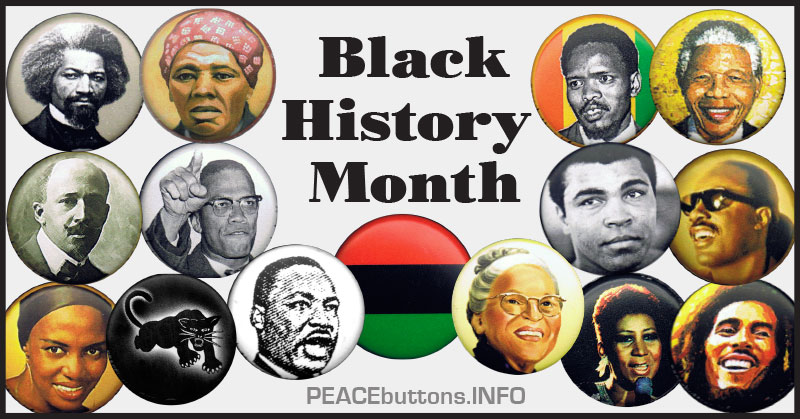
So far, it’s not illegal for us to acknowledge that February is Black History Month, so here we are, doing just that. Ha! There is even some Black History for this very date in Peace and Justice History:
February 1, 1960 Greensboro first day: Ezell A. Blair, Jr. (now Jibreel Khazan), Franklin E. McCain, Joseph A. McNeil, and David L. Richmond leave the Woolworth store after the first sit-in on February 1, 1960. Four black college students sat down at the Woolworth’s lunch counter in Greensboro, North Carolina, and were refused service because of their race. To protest the segregation of the eating facilities, they remained and sat-in at the lunch counter until the store closed. Four students returned the next day, and the same thing happened. Similar protests subsequently took place all over the South and in some northern communities. By September 1961, more than 70,000 students, both white and black, had participated, with many arrested, during sit-ins. On the second day of the Greensboro sit-in, Joseph A. McNeil and Franklin E. McCain are joined by William Smith and Clarence Henderson at the Woolworth lunch counter in Greensboro, North Carolina.
February 1, 1961 On the first anniversary of the Greensboro sit-in, there were demonstrations all across the south, including a Nashville movie theater desegregation campaign (which sparked similar tactics in 10 other cities). Nine students were arrested at a lunch counter in Rock Hill, South Carolina, and chose to take 30 days hard labor on a road gang. The next week, four other students repeated the sit-in, also chose jail.
In light of current events, I thought it’d be good to review how Black History Month came to be. Below is a bit on its beginnings.
Black History Month was first observed as Negro History Week in February 1926, but the inspiration for the commemoration began over a decade earlier through a steady stream of electrifying events, discoveries, and other celebrations of Black excellence. In 1915, American historian Dr. Carter G. Woodson attended the national celebration of the fiftieth anniversary of emancipation in Washington D.C. This event was widely attended and proved to be profoundly inspiring for Dr. Woodson who, later that year, joined forces with A. L. Jackson, William B. Hartgrove, George Cleveland Hall, and James E. Stamps to establish the Association for the Study of Negro Life and History, known today as the Association for the Study of African American Life and History (ASALH 2024). ASALH had the ambitious goal of educating the public about the achievements, inventions, and progress made by Black Americans, and though the Association’s intellectual efforts were remarkable – they began to publish The Journal of Negro History in 1916 and founded Negro History and Literature Week in 1924 – Dr. Woodson had a wider vision of his mission. Wishing to continue to discover and celebrate the history of the Black past, Dr. Woodson announced the celebration of Negro History Week through a press release.
Accounts of the contributions of Black Americans were notably absent from history books, credited to white men, or omitted altogether. Progressive communities and schools were ripe for the rich history that Negro History Week offered. Matching the popularity of the week, Woodson and the Association established an annual theme for the celebration to guide and inspire educators. Weary of those simply wishing to capitalize on a popular event, “Woodson warned teachers not to invite speakers who had less knowledge than the students themselves” (ASALH 2024). Additionally, ASALH expanded their offerings to provide study materials: pictures, lessons for teachers, plays for historical performances, and posters of important dates and people. This cemented the celebration of Black history in schools and communities, and Negro History Week grew in popularity throughout the following decades, with mayors across the United States endorsing it as a holiday.
Negro History Week grew into Black History Month in 1970 under the leadership of Black educators and students at Kent State University and would become a federally recognized event six years later. President Gerald Ford recognized Black History Month in 1976 during the celebration of the United States Bicentennial. He urged Americans to “seize the opportunity to honor the too-often neglected accomplishments of Black Americans in every area of endeavor throughout our history” (Franklin 2022). Today, nearly one hundred years after that initial celebration, it is prudent to reflect on the designed purpose of Black History Month and discover that after all this time, these lessons are still relevant, inspiring, and necessary. As Dr. Woodson said, “Real education means to inspire people to live more abundantly, to learn to begin with life as they find it and make it better” (Woodson 1933).
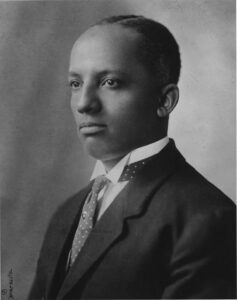
Pictured: Dr. Carter G. Woodson, The “father of Black history”
Photo Credit: Addison Norton Scurlock, Public domain, via Wikimedia Commons
ASALH. 2024. Carter G. Woodson Timeline: ASALH – the Founders of Black History Month. December 19. Accessed January 16, 2025. asalh.org/carter-g-woodson-timeline/.
Woodson, Carter G. 1933. The Mis-Education of the Negro. Trenton: Africa World Press.
==========
All right! So, we see that Black History Week then Month has been around for at least 20 years longer than our current POTUS, who seems to be ignoring the month’s existence. But, there’s no reason any of the rest of we the people have to! Including all history makes the US so much richer in knowledge. Most local historical and cultural organizations are going to have commemorations this month. What fun it will be, and how community-unifying for each of us to find an activity near us, and join in!






 Scottie's Playtime