Things to Remind People in the Grocery Line

or wherever mentions of prices, and whatever else has improved since Pres. Biden took office. I post this because my own US Rep is campaigning about how bad everything is, with facts from the Don’s admin when they’re facts at all. I’m certain he’s not the only “safe” (I voted for the Dem-we actually have a Dem running!) Republican running for the US House, as they’re all up for election every two years. Anyway, he makes the claims that things are bad under Biden-Harris, and how he’s just focusing on improving those very things that have improved thanks to Biden-Harris and the legislators who managed to get things passed (most Republicans are not among those legislators, btw.) Anyway, here’s Heather Cox Richardson:

October 17, 2024

Heather Cox Richardson

Oct 18, 2024

In a new rule released yesterday, the Federal Trade Commission requires sellers to make it as easy to cancel a subscription to a gym or a service as it is to sign up for one. In a statement, FTC chair Lina Khan explained the reasoning behind the “click-to-cancel” rule: “Too often, businesses make people jump through endless hoops just to cancel a subscription,” she said. “Nobody should be stuck paying for a service they no longer want.” Although most of the new requirements won’t take effect for about six months, David Dayen of The American Prospect noted that the stock price of Planet Fitness fell 8% after the announcement. 

When he took office in January 2021, with democracy under siege from autocratic governments abroad and an authoritarian movement at home, President Joe Biden set out to prove that democracy could deliver for the ordinary people who had lost faith in it. The click-to-cancel rule is an illustration of an obvious and long-overdue protection, but it is only one of many ways—$35 insulin, new bridges, loan forgiveness, higher wages, good jobs—in which policies designed to benefit ordinary people have demonstrated that a democratic government can improve lives.

When Secretary of the Treasury Janet Yellen spoke to the Council on Foreign Relations yesterday, she noted that the administration “has driven a historic economic recovery” with strong growth, very low unemployment rates, and inflation returning to normal. Now it is focused on lowering costs for families and expanding the economy while reducing inequality. That strong economy at home is helping to power the global economy, Yellen noted, and the U.S. has been working to strengthen that economy by reinforcing global policies, investments, and institutions that reinforce economic stability. 

“Over the past four years, the world has been through a lot,” Yellen said, “from a once-in-a-century pandemic, to the largest land war in Europe since World War II, to increasingly frequent and severe climate disasters. This has only underlined that we are all in it together. America’s economic well-being depends on the world’s, and America’s economic leadership is key to global prosperity and security.” She warned against isolationism that would undermine such prosperity both at home and abroad.

The numbers behind the proven experience that government protection of ordinary people is good for economic growth got the blessing of the Royal Swedish Academy of Sciences on Monday, when it awarded the Nobel Memorial Prize in Economic Sciences to Daron Acemoglu and Simon Johnson, both of the Massachusetts Institute of Technology, and to James Robinson of the University of Chicago. Their research explains why “[s]ocieties with a poor rule of law and institutions that exploit the population do not generate growth or change for the better,” while democracies do.   

Although democracy has been delivering for Americans, Donald Trump and MAGAs rose to power by convincing those left behind by 40 years of supply-side economics that their problem was not the people in charge of the government, but rather the government itself. 

Trump wants to get rid of the current government so that he can enrich himself, do whatever he wants to his enemies, and avoid answering to the law. The Christian nationalists who wrote Project 2025 want to destroy the federal government so they can put in place an authoritarian who will force Americans to live under religious rule. Tech elites like Elon Musk and Peter Thiel want to get rid of the federal government so they can control the future without having to worry about regulations. 

In place of what they insist is a democratic system that has failed, they are offering a strongman who, they claim, will take care of people more efficiently than a democratic government can. The focus on masculinity and portrayals of Trump as a muscled hero‚ much as Russian president Vladimir Putin portrays himself, fit the mold of an authoritarian leader.

But the argument that Americans need a strongman depends on the argument that democracy does not work. In the last three-and-a-half years, Biden, Vice President Kamala Harris, and the Democrats have proved that it can, so long as it operates with the best interests of ordinary people in mind. Trump and Vance’s outlandish lies about the federal response to Hurricane Helene are designed to override the reality of a competent administration addressing a crisis with all the tools it has. In its place, the lies provide a false narrative of federal officials ignoring people and trying to steal their property.  

Their attack on democracy has another problem, as well. In addition to the reality that democracy has been delivering for Americans for more than three years now—and pretty dramatically—Trump is no longer a strongman. Vice President Kamala Harris is outperforming  him in the theater of political dominance. And as she does so, his image is crumbling.

In an article in US News and World Report yesterday, NBC’s former chief marketer John D. Miller apologized to America for helping to “create a monster.” Miller led the team that marketed The Apprentice, the reality TV show that made Trump a household name. “To sell the show,” Miller wrote, “we created the narrative that Trump was a super-successful businessman who lived like royalty.” But the truth was that he declared bankruptcy six times, and “[t]he imposing board room where he famously fired contestants was a set, because his real boardroom was too old and shabby for TV,” Miller wrote. While Trump loved the attention the show provided, “more successful CEOs were too busy to get involved in reality TV.” 

Miller says they “promoted the show relentlessly,” blanketing the country with a “highly exaggerated” image of Trump as a successful businessman “like a heavy snowstorm.” “[W]e…did irreparable harm by creating the false image of Trump as a successful leader,” Miller wrote. “I deeply regret that. And I regret that it has taken me so long to go public.” 

Speaking as a “born-and-bred Republican,” Miller warned: “If you believe that Trump will be better for you or better for the country, that is an illusion, much like The Apprentice was.” He strongly urged people to vote for Kamala Harris. “The country will be better off and so will you.” 

A new video shown last night on Jimmy Kimmel Live even more powerfully illustrated the collapse of Trump’s tough guy image. Written by Jesse Joyce of Comedy Central, the two-minute video featured actor and retired professional wrestler Dave Bautista dominating his sparring partner in a boxing ring and then telling those who think Trump is “some sort of tough guy” that “he’s not.” 

Working out in a gym, Bautista insults Trump’s heavy makeup, out-of-shape body, draft dodging, and physical weakness, and notes that “he sells imaginary baseball cards pretending to be a cowboy fireman” when “he’s barely strong enough to hold an umbrella.” Bautista says Trump’s two-handed method of drinking water looks “like a little pink chickadee,” and goes on to make a raunchy observation about Trump’s stage dancing. “He’s moody, he pouts, he throws tantrums,” Bautista goes on. “He’s cattier on social media than a middle-school mean girl.”

Bautista ends by listing Trump’s fears of rain, dogs, windmills…and being laughed at.” “And mostly,” Bautista concludes, “he’s terrified that real, red-blooded American men will find out that he’s a weak, tubby toddler.” Calling Trump a “whiny b*tch,” Bautista walks away from the camera. 

The sketch was billed as comedy, but it was deadly serious in its takedown of the key element of Trump’s political power.

And he seems vulnerable. Forbes and Newsweek have recently questioned his mental health; yesterday the Boston Globe ran an op-ed saying, “Trump’s decline is too dangerous to ignore. We can see the decline in the former president’s ability to hold a train of thought, speak coherently, or demonstrate a command of the English language, to say nothing of policy.” 

Trump’s Fox News Channel town hall yesterday got 2.9 million viewers; Harris’s interview got 7.1 million. Today, Trump canceled yet another appearance, this one with the National Rifle Association in Savannah, Georgia, scheduled for October 22, where he was supposed to be the keynote speaker.

Meanwhile, Vice President Harris today held rallies in Milwaukee, Green Bay, and La Crosse, Wisconsin. In La Crosse, MAGA hecklers tried to interrupt her while she was speaking about the centrality of the three Trump-appointed Supreme Court justices to the overturning of the 1973 Roe v. Wade decision that recognized the constitutional right to abortion. 

“Oh, you guys are at the wrong rally,” Harris called to them with a smile and a wave. As the crowd roared with approval, she added: “No, I think you meant to go to the smaller one down the street.” 

Notes:

https://www.npr.org/2024/10/16/nx-s1-5154814/click-to-cancel-subscriptions-memberships-ftc-rule

https://www.ftc.gov/news-events/news/press-releases/2024/10/federal-trade-commission-announces-final-click-cancel-rule-making-it-easier-consumers-end-recurring

https://www.msnbc.com/the-reidout/reidout-blog/dave-bautista-trump-jimmy-kimmel-masculinity-rcna175963

https://home.treasury.gov/news/press-releases/jy2654

https://www.whitehouse.gov/briefing-room/speeches-remarks/2023/03/29/remarks-by-president-biden-at-the-summit-for-democracy-virtual-plenary-on-democracy-delivering-on-global-challenges/

https://www.nobelprize.org/prizes/economic-sciences/2024/press-release/

https://www.nobelprize.org/prizes/economic-sciences/2024/popular-information/

https://www.newsweek.com/donald-trump-ditches-nra-event-latest-cancellation-1970902

https://www.usnews.com/opinion/articles/2024-10-16/we-created-a-tv-illusion-for-the-apprentice-but-the-real-trump-threatens-america

https://www.newsweek.com/kamala-harris-fox-news-interview-ratings-donald-trump-1970906

https://www.bostonglobe.com/2024/10/16/opinion/trump-cognitive-decline-press-republicans/

https://www.forbes.com/sites/saradorn/2024/10/16/trumps-unwieldy-speeches-raise-questions-about-his-mental-acuity/

https://www.newsweek.com/dancing-donald-trump-clearly-steep-decline-opinion-1969551

X:

ddayen/status/1846991070309101761

ddayen/status/1847011806587634007

carlquintanilla/status/1847051458618736920

KamalaHQ/status/1847026957407449361

YouTube:

watch?v=rn-Dw2JUVmo&t=910s (video starts at 15.23)

Not many this week, but a few good ones. Hugs

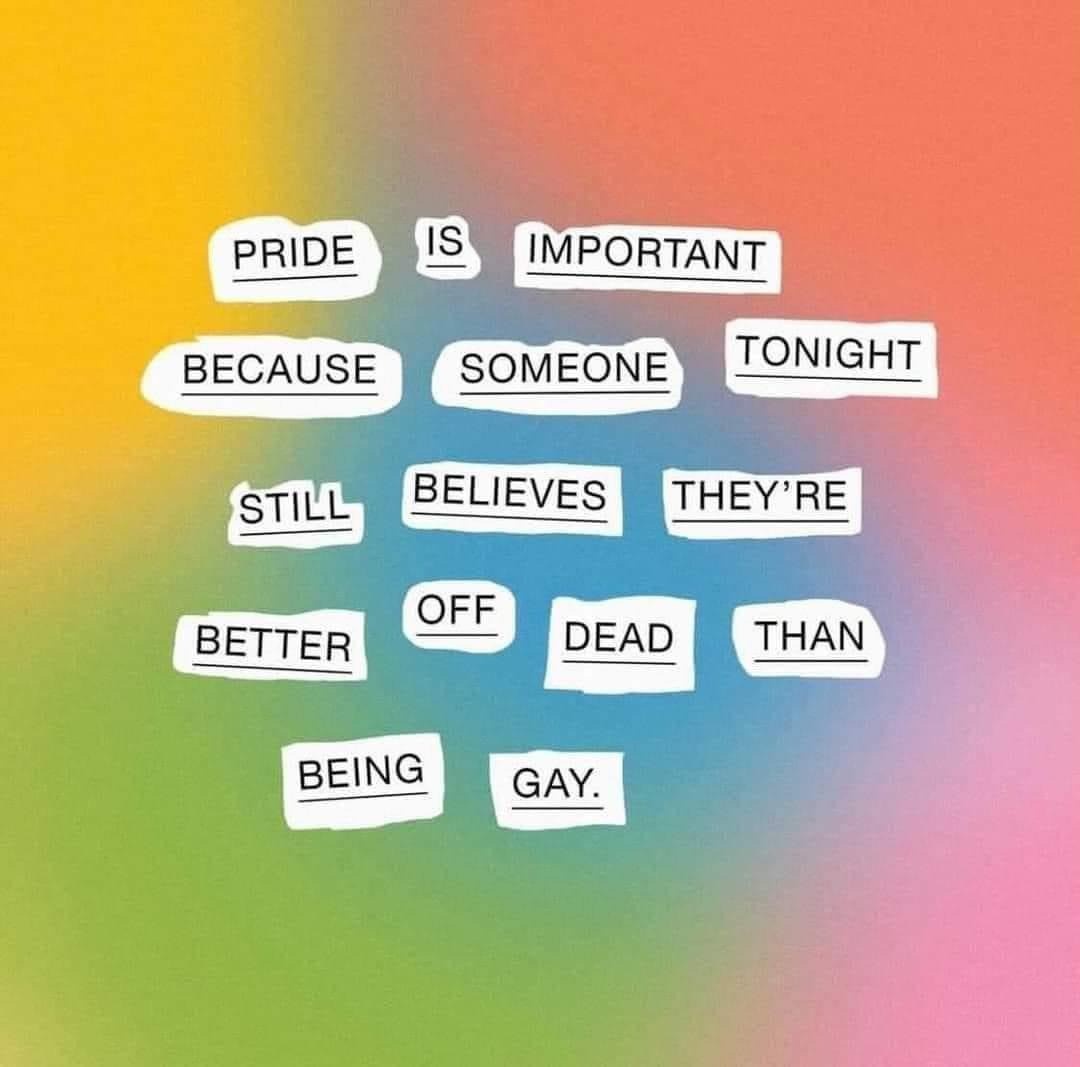
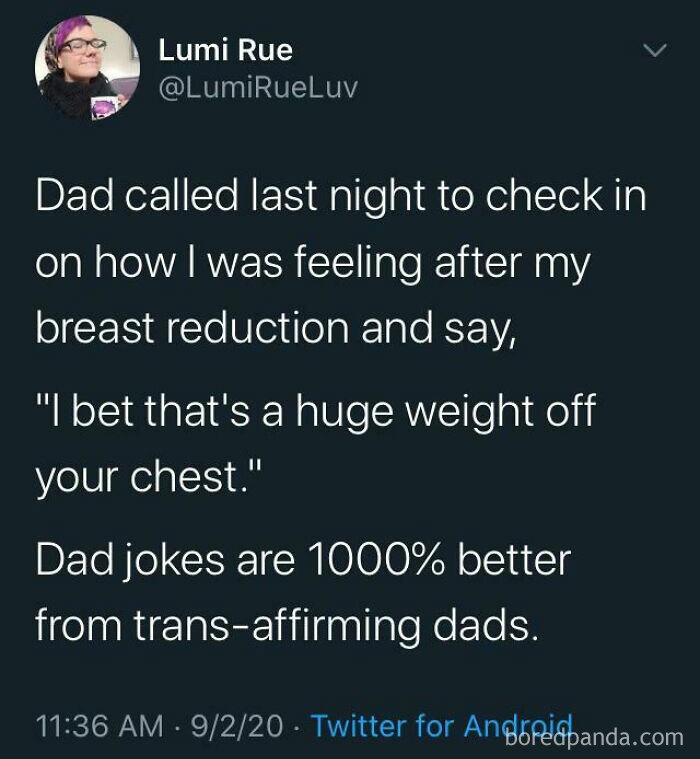
Trans Dad Jokes Are The Best

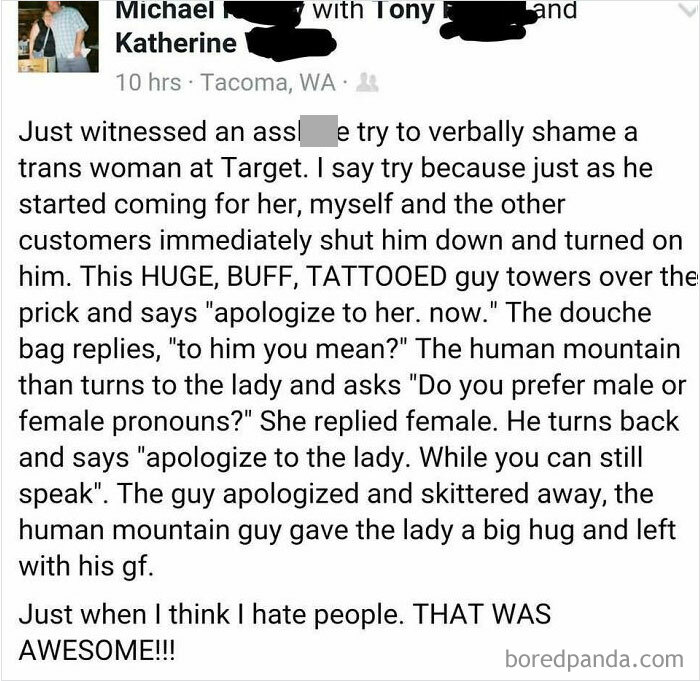
Hail Human Mountain Friend

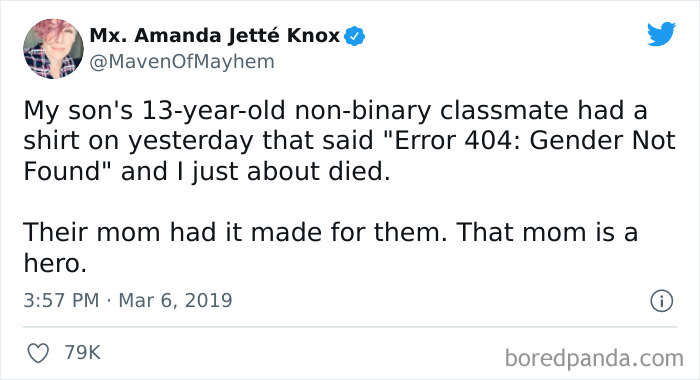
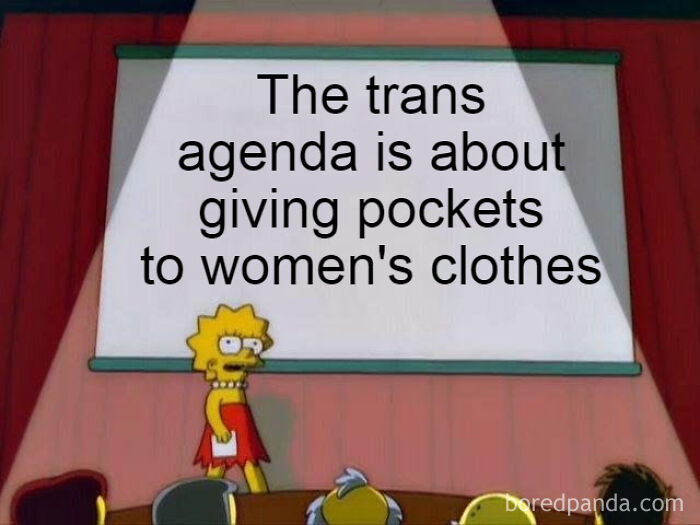
"So What's In Your Pa-" 401 Unauthorized. Content Forbidden

This Is The Way To Rule The World

Be Gay, Do Crime

Have You Ever

Trans Rights Are Human Rights

Priorities In The USA

To All My Hot Girls Out There!

(Place Title Here)

Texas AG sues doctor who allegedly provided transgender care to 21 minors

(I guess I’m confused as to why he’s suing, and not charging this doctor. Is it a hunt for evidence to use in charges? This is not normally how that is done, but TX is TX. -A)

The suit is the first by an attorney general against an individual doctor for allegedly violating a restriction on gender-affirming care for minors.

By Matt Lavietes and Jo Yurcaba

Texas Attorney General Ken Paxton sued a Dallas doctor Thursday accusing her of providing transition-related care to nearly two dozen minors in violation of state law.

Paxton alleged that Dr. May Chi Lau, who specializes in adolescent medicine, provided hormone replacement therapy to 21 minors between October 2023 and August for the purpose of transitioning genders. In 2023, Texas enacted a law, Senate Bill 14, banning hormone replacement therapy and other forms of gender-affirming care for minors.

“Texas passed a law to protect children from these dangerous unscientific medical interventions that have irreversible and damaging effects,” Paxton said in a statement Thursday. “Doctors who continue to provide these harmful ‘gender transition’ drugs and treatments will be prosecuted to the full extent of the law.”

The statement issued by Paxton’s office alleged that Lau used “false diagnoses and billing codes” in order to mask “unlawful prescriptions.”

Neither Lau nor her employer, the University of Texas Southwestern Medical Center, immediately returned requests for comment.

If found to be in violation of the law, Lau could have her medical license revoked and face a financial penalty of hundreds of thousands of dollars.

Paxton’s suit is the first in the nation by an attorney general against an individual doctor for allegedly violating a restriction on transition-related care for minors.

Texas’ law includes a provision that allows physicians to continue to prescribe puberty blockers and hormone therapy to patients who began treatment prior to June 1, 2023, in order to wean them off of the medications “over a period of time and in a manner that is safe and medically appropriate and that minimizes the risk of complications,” according to Paxton’s suit. Minors are required to have attended at least 12 mental health counseling or psychotherapy sessions for at least six months prior to starting treatment. It’s unclear whether Lau’s treatment of the minors could fall under that provision.

https://www.nbcnews.com/nbc-out/out-politics-and-policy/texas-ag-sues-doctor-allegedly-provided-transgender-care-21-minors-rcna175988

Pre-Op Celebration Time! Good Health News Within 🥂 🌹

Peace & Justice History for 10/16:

It is World Food Day. (Among other things; this is a busy date!)

October 16, 1649
The British colony of Maine granted religious freedom to all citizens the same year that King Charles I was excommunicated from the Roman Catholic church.
October 16, 1859
Abolitionist John Brown led a group of 21 other men, five black and sixteen white, in a raid on the U.S. arsenal at Harper’s Ferry, Virginia.
They had hoped to set off a slave revolt — throughout the south — with the weapons they had planned to seize.

 John Brown
Virtually all his compatriots were killed or captured by General Robert E. Lee’s troops; Brown was wounded and arrested, and hanged for treason within two months.
Read more
  
The Tragic Prelude (John Brown)mural by John Steuart Curry (1937-1942)
Former slave and abolitionist leader Frederick Douglass said of Brown that he was a white man “in sympathy a black man, as deeply interested in our cause as though his own soul had been pierced with the iron of slavery.”
October 16, 1901
President Theodore Roosevelt
President Theodore Roosevelt invited Booker T. Washington, founder of the Tuskegee Institute and the most prominent African American of his time, to a meeting in the White House. The meeting went long and the president asked Washington to stay for dinner, the first black person ever to do so. Newspapers in the both the South and North were critical, but the South with more venom. The Memphis “Scimiter” said that it was “the most damnable outrage that has ever been perpetrated by any citizen of the United States.” Roosevelt claimed he had invited a friend to dinner with his family and it was no one else’s business.
Booker T. Washington
October 16, 1934
Dick Sheppard, who volunteered and joined the Army as a chaplain in World War I, started the Peace Pledge Union in England. In a letter published in The Guardian newspaper and elsewhere, Sheppard, a well-known priest in the Church of England, invited those who would be willing to join a public demonstration against war to send him a postcard. Within a few weeks he had received 30,000 replies. Members of the Peace Pledge Union vowed to “renounce war and never again to support another.”

Reverend Sheppard had been the first ever to broadcast religious services on the radio and, when Vicar of St. Martin-in-the Fields, Trafalgar Square, he had opened the building to the homeless of London.“Up to now the peace movement has received its main support from women, but it seems high time now that men should throw their weight into the scales against war.” -Dick Sheppard
Read more about the Peace Pledge Union 
October 16, 1964
China detonated its first atomic bomb, becoming the fifth nuclear-armed nation. The 20-kiloton fission device (equivalent to 20,000 tons of TNT) was detonated in the vicinity of Lop Nor, a lake in a remote region of the Central Asian province of Sinkiang.
” To defend oneself is the inalienable right of every sovereign State. And to safeguard world peace is the common task of all peace-loving countries. China cannot remain idle and do nothing in the face of the ever-increasing nuclear threat posed by the United States.China is forced to conduct nuclear tests and develop nuclear weapons . . . In developing nuclear weapons, China’s aim is to break the nuclear monopoly of the nuclear Powers and to eliminate nuclear weapons.”
Chou En-lai, the Chinese Prime Minister, sent messages to all heads of government for a world summit conference on nuclear disarmament. U.S. Secretary of State Dean Rusk told a news conference that the United States did not regard Communist China’s proposal “as having any practical value.”
Deng Jiaxian. The father of the chinese bomb.
TRINITY AND BEYOND™ (The Atomic Bomb Movie), a documentary by Peter Kuran
October 16, 1967

Joan Baez the day after the arrest
Folksinger Joan Baez was arrested in a peace demonstration as rallies took place across America during “Stop the Draft Week.” 1158 young men returned their draft cards in eighteen U.S. cities. Baez was among 122 anti-draft protesters arrested for sitting down at the entrance of the Armed Forces Induction Center in Oakland, California; she was sentenced to 10 days in prison.
Read more 
October 16, 1968
During medal presentations at the 1968 Summer Olympic Games in Mexico City, winning sprinters Tommie Smith (Gold) and John Carlos (Bronze) raised their black-gloved fists while the U.S. national anthem was played. They were suspended from the team at the insistence of the International Olympic Committee, and expelled from the Games two days later.
Smith later told the media that he raised his right fist in the air to represent black power in America while Carlos’s left fist represented unity in black America.

They were wearing just socks to represent
world poverty.


Peter Norman (silver medalist, left) from Australia also wears an OPHR (Olympic Project for Human Rights) badge in solidarity with Smith and Carlos. He was castigated upon return to Australia and throughout his life for his support of these two brave athletes.
Read more 
October 16, 1973
Henry Kissinger
U.S. Secretary of State Henry Kissinger, though accused of war crimes by some for the massive bombing of Laos and Cambodia, was awarded the Nobel Peace Prize jointly with North Vietnam’s Le Duc Tho (who refused the honor) for the cease-fire agreement they had negotiated. This occurred just a month after the bloody military coup, fully supported by the Nixon administration and aided by the CIA, that overturned the democratically elected government of Chile, and installed General Augusto Pinochet as military dictator for the next 17 years.
October 16, 1984

Desmond Tutu, the archbishop of South Africa, was awarded the Nobel Peace Prize for his work in fighting apartheid. He has gone on to be a relentless advocate for justice around the world.
Desmond Tutu – Nobel peace prize recipient 
October 16, 1998
In a human rights and international law breakthrough, British authorities, after receiving an extradition request from Spanish Judge Baltasar Garzon, placed former Chilean dictator, and senator-for-life, General Augusto Pinochet under arrest for “crimes of genocide and terrorism that include murder.”
Augusto Pinochet and Margaret Thatcher
Chronology of Pinochet’s rule 
October 16th every year
United Nations’ World Food Day is recognized every year.
About the annual day of hunger awareness

https://www.peacebuttons.info/E-News/peacehistoryoctober.htm#october16

Bye-Bye, Russian Gas!

A funny bit; I pasted in the link to see if it would embed the story, and it did! Sort of. It put the title as a hyperlink, as you can see below. I was sorely tempted to just leave it there like that, because what a witty title on its own! Then everyone could either be curious enough to click (it’s not too long to read,) or go ahead and post it all.

Here’s a snippet, because the photo should be seen on the page, and JSTOR is generous and deserves a click now and then:

By: Aissa Dearing and Michaela Rychetska October 10, 2024 4 minutes

Russia’s invasion of Ukraine has fundamentally altered Europe’s geopolitical landscape, with profound implications for its energy security. The invasion exposed Europe’s vulnerabilities, particularly its heavy reliance on Russian oil and natural gas. This has repositioned energy security as a central concern, with Russia seen as a significant threat to the stability and reliability of Europe’s energy supply chains. In response, Europe has taken decisive action to reduce its energy imports from Russia. In May 2022, the European Council agreed to ban almost 90 percent of Russian oil imports—with the notable exception of pipeline crude oil—complemented by stringent sanctions aimed at weakening Russia’s economic leverage. Does this shift suggest that the European Union’s transition to renewable energy is accelerating, not solely for climate reasons, but to achieve energy sovereignty amidst a geopolitical crisis?

The ongoing conflict in Ukraine has indeed catalyzed a unified European reassessment of energy dependence on Russia, prompting collective efforts to diversify energy sources and bolster energy security. As security studies scholar Marc Ozawa notes, Western European countries historically framed their reliance on Russian energy within the context of market transactions and economic interests, a legacy of the oil shocks during the 1970s OPEC crisis. In this light, reliance on Russian energy was, in some respects, a strategic response to earlier crises. (snip)

The transition to an energy sovereign economy cannot solely focus on implementing renewable energy—it requires more than technological advancements—it necessitates profound socioeconomic shifts and a reevaluation of the traditional monopolistic energy business model. A just transition, as scholars Elianor Gerrard and Peter Westoby emphasize, is “the idea that the burdens of decarbonization—such as job losses from the closing of the fossil fuel industry or the high costs of clean technologies—should not unfairly impact any one group.” Achieving this transition involves developing policies that are both pragmatic and ethically sound, ensuring that the shift to a low-carbon economy goes beyond labor market adjustments. At its core, a just transition seeks to reconcile environmental protection with the need to protect vulnerable communities long reliant on fossil fuels. The decarbonization process cannot succeed without prioritizing these communities, providing workforce development for fossil fuel workers, and supporting decentralized, community-owned renewable technologies with adequate storage capacities. Existing electric technologies and grid infrastructure shouldn’t become stranded in this process but be retrofitted to ensure efficiency and multilateral grid cooperation.

Work to focus on engaging communities during the energy transition

(It can’t hurt to put bits like this out into the universe. Somebody’s working on this, and more people ought to. So a nice little discussion of what’s working is appropriate. -A)

October 11, 2024 ARC Laureate Fellows

This Cosmos series on Australian Research Council Laureate Fellows 2024 reflects excellence from world class researchers in Australia.

Chris Gibson is a Senior Professor in the School of Geography and Sustainable Communities at the University of Wollongong. For his ARC Fellowship, he is investigating how decarbonisation impacts Australian regions.

Professor Chris Gibson: finding a truce in the climate wars.

Decarbonisation and energy transition are at the sharp edge of a hot political battle. There is a lot of dispute over new technologies like offshore wind, and exactly what mix of energy we need. It’s like a second iteration of the climate wars. But after a decade of stalled policy on climate, we have to embrace the decarbonised future, whether we like it or not. It’s an issue that needs to transcend the political divide.

But we’re faced with a dilemma: we need urgent change, but urgent change rarely occurs, if ever, in a way that is fair. The burdens and benefits of change are not distributed equally across society. And the quicker the change, the more risks there are. Regions can be all too easily left behind.

Geographers think about how substantial change, like this energy transition, affects communities. We think of ourselves as an integrative discipline. We bring together expertise from across environmental science, economics, social geography, legal geography, and from experts who are good on governing transitions. By stitching together insights from all directions, we try to see the bigger picture.

My ARC project is aiming to put together a systematic understanding of what’s happening in decarbonisation, both from the top down, with a nationwide view, and from the ground up, about how people in different regions are responding to change.

We’re putting together a team to look at how decarbonisation hits the ground in different regions, and how it affects different workers, different industries, what kinds of opportunities come out of that, what kinds of changes are needed, how communities and households are responding to the decarbonisation challenge, and how a First Nations’ perspective can lead the way.

Community responses have to be taken seriously. It’s too easy and too convenient to cast aside sceptics as “nimbies” (Not In My Backyard) or selfish or ignorant. If you take the time to hear the diversity of opinions that come from communities, you’ll often find that people are worried about real issues, with valid concerns. Local communities are very knowledgeable about their patch, and have a capacity to understand what kinds of changes are needed. If we can forge a more inclusive process that brings regional perspectives, skills and experience to the forefront, we reduce the risk that regions are left behind. And governments might actually see regional communities as an opportunity rather than a hindrance to change.

A good example is here in the Illawarra, (Coastal New South Wales) where offshore wind has been very controversial in the last year. One of the lessons to be had is to not underestimate the community’s ability to understand what an energy transition means, and not to underestimate the degree of attachment people have to their local places.

The community here is highly knowledgeable about energy. The Illawarra has a workforce with a long history in heavy industry – the number of electricians per capita in the Illawarra must be as high as anywhere in Australia. And people have opinions – it’s not a passive region that knows nothing about the change that’s coming. The task is not purely to convince local people that this is a good thing, but to have a mature conversation with them about the pros and cons.

Who benefits in the energy transition?

There are all kinds of philosophical questions about who benefits, how those benefits are shared, what it means to turn our oceans into a space for energy generation. Some members of the community are asking for a proper conversation, because they don’t feel like they’ve been part of the story so far.

People react unpredictably to change that they see is imposed upon them. Let’s say it’s closing down a coal-fired power station in the Hunter Valley in New South Wales, or proposing a green hydrogen hub in South Australia – people don’t necessarily assess these as singular proposals that exist outside of everything else in their region or in their lives. People make sense of change in relation to their place, their community, their household, their family.

My work is about putting those people and their households first, and looking at it from their point of view. How does structural change look when we take into account the pressures of cost of living, on housing, on employment? People are grappling with these issues in their everyday lives.

There’s also a real risk in introducing changes that are presented to communities as if they have arrived from elsewhere, as a fait accompli. The direction of the flow of ideas and proposals, how they hit the ground, are a very important part of the process. If a proposal seems to arrive in their backyard from the top down – from a government or a corporation provider – you can get a community offside from the outset.

My work is about setting up different kinds of approaches that recognise that these communities have their own capacities and their own perspectives to offer. What we hope to do in the five years of the ARC Laureate program is develop an evidence base so that we can craft better models of how to manage this change. We’re looking at some of the implementations that have already occurred, tracing where those decarbonisation initiatives are hitting the ground, and looking at different kinds of community reactions – what sorts of processes work better than others in terms of building that relationship with community, as well as what happens when things end up in a more antagonistic situation.

Geography is the study of the relationship between humans and our environment. It has always occupied a slightly slippery position in universities and in public life, because we’re both a science and a social science, because we do this work of integrating perspectives from different areas of knowledge. In fact, we call ourselves all sorts of different things: we’re also environmental managers and coastal managers, policy officers and sustainability experts. It’s a discipline that connects, that fills the gaps. We often find solutions to problems by putting knowledge together from those different perspectives. It’s making these connections that can make a big difference.

As told to Graem Sims

https://cosmosmagazine.com/energise/engaging-communities-during-energy-transition/

‘It’s very powerful’: New Hampshire ruling protects trans kids from being outed

Nico Romeri, 17, joined an amicus brief supporting a policy that bars school personnel from disclosing students’ gender identities – and won

When Nico Romeri came out as transgender at 14 years old, he first shared the news with his closest friends and a therapist. The private conversations he had outside of the home helped him feel more comfortable to then approach his parents, who supported his transition. If anyone else had revealed his gender identity to his family on his behalf, he said it would have been disruptive to his coming out process.

“I really wanted to have a one-on-one discussion with them, where they knew I trusted them and they trusted me,” Romeri said. “Having that break of trust before you’re confident enough to tell other people is a huge deal.”

A recent ruling helps ensure that other trans students will have the protection to come out to their families when they’re ready. The case came about in May 2022 after a New Hampshire mother inadvertently learned from a teacher that her child used a different name and pronouns in school. The parent argued that the school policy, which advises school personnel not to disclose a student’s transgender status, infringed upon her ability to raise her child as she sees fit. Along with his mother, Heather, Romeri joined an amicus brief in support of the school policy.

In August, the New Hampshire supreme court upheld a lower court’s ruling on the school district policy, affirming trans and gender nonconforming students’ rights to privacy concerning their gender identities and presentation at school. The decision is the first such ruling to come out of a state supreme court, and according to Chris Erchull, senior staff attorney at GLBTQ Legal Advocates & Defenders, the ruling could set guidance for other states and federal courts fighting similar cases.

“When there’s no US supreme court precedent, federal courts have to look around at what other courts are saying for precedent,” said Erchull. “So it is going to be very powerful and persuasive.”

Erchull, who filed an amicus brief in the case, said it was critical for students to have a supportive framework that allows them to explore their gender identity in school.

Hearing that [my children are trans] from someone else would have been not good for our relationship

Heather Romeri

“It’s not a public school teacher or administrator’s place to make a decision about how and when to talk to families about these really intimate, sensitive matters,” he said. “It is in the best interest of everyone if the information comes from the student when the student is ready, on the student’s own terms.”

Policies on LGBTQ+ students’ right to privacy varies by school district throughout the nation. In 2015, the New Hampshire school board association issued a model policy to protect the privacy of trans students and to prevent discrimination, which was adopted by 48 of 196 school districts and charter schools, according to a 2020 ACLU New Hampshire report.

The policy was rescinded in 2022 due to conservative pushback, but some school districts, including Manchester, the largest in the state, continue to advise school personnel not to share a trans or gender nonconforming student’s identity to others without the child’s consent. In July, California became the first state to ban school district policies that require staff to notify parents when a child changes their name or pronouns.

Revealing a child’s gender identity or sexual orientation to their family when they’re not ready can lead to suicide and the child getting kicked out of their home, he added. LGBTQ+ youth are 120% more likely to experience homelessness than their cisgender and heterosexual counterparts.

For Heather Romeri, it is crucial that students make their own choices about who they disclose their gender identity to and when. “Two of my children are both trans, so they have both been able to come to me at their own time when they were ready to disclose the information they needed to,” she said. “Hearing that from someone else would have been not good for our relationship, not good for … our children [being able to come] out safely and happily.”

Nico Romeri has trans friends who haven’t shared their gender identity with their parents because they fear for their safety, Heather said. “They really believe they will be hurt or they will be kicked out of their house,” she explained. “They have [seen] others who have tried to come out to their parents, and it’s had negative repercussions to them emotionally.” She sees the victory of the New Hampshire ruling as a prime example for other states considering policies for LGBTQ+ students’ rights.

Now 17, Romeri said that he joined the amicus brief to support his friends who don’t have the same supportive environment to transition. “It’s really important to represent the people that can’t voice [their identity fully] and to keep the laws in place.”

https://www.theguardian.com/world/2024/oct/03/new-hampshire-trans-identities-outing

Busy Reading All These Articles

so reblogging Ten Bears’s page here-this one’s a doozy!

Anti-Trans Campaigner Outed As Having Forged Evidence – WPATH Files

I love Ethel’s videos and I have learned a lot about trans people from her.  She often does videos with herself in them but also sometimes does them with the drawn figures.   She has been very open with her transitioning journey, and I have followed her since she was a teen before she transitioned.   Her videos are remarkable for the detail and receipts she brings to them.   She does a lot of research, especially on trans women in sports issues.  She documents everything for the viewers to check in the about section and encourages fact checking her. 

In this video she sets up the fact that the anti-trans activist that falsely made claims about the WPATH files has a history of lying to try to push their issues.  I love watching her videos and if you are interested in trans issues and ways to debunk what the trans haters say, she is worth looking at her back work.   Her take down of the entire WPATH Cass report was wonderful and showed how totally false and misleading the report was.  The Cass report has now been totally debunked now in part to Ethel’s work.  Hugs.  Scottie

Today’s video returns to the #WPATHFiles which alleged malpractice by medical institutions who support the scientific legitimacy of gender affirming care, exposing the Files’ fatal flaws and its publisher’s sordid history of forging evidence. Hi, welcome to Essence of Thought with me, Ethel Thurston, as your host.