Uterus transplant trial ends with bundles of joy

August 18, 2024 Ellen Phiddian

https://cosmosmagazine.com/health/medicine/uterus-transplant-trial-dallas/

(This piqued my interest for a number of reasons. It also made me think of Sen. Vance, very briefly. But it is news-y.)

A US study of 20 people who received uterus transplants has found the process feasible, with 14 recipients going on to have live births.

Researchers said there were no abnormalities in the children born via transplanted uterus, but they highlight risks from surgery that affected both recipients and donors.

The study, which is published in the Journal of the American Medical Association, reports on a clinical trial run at the Baylor University Medical Center in Dallas, USA.

Since the first successful uterus transplant in 2011, there have been about 100 transplants worldwide, from both living and deceased donors.

Recipients are generally women with “absolute uterine infertility” – that is, problems with their uterus that make them unable to have a successful pregnancy.

In the USA, there have been 48 uterus transplants since they began in 2016, with 33 of the recipients going on to have live births.

In this trial, researchers enrolled 20 people, aged between 20-36 years old, all of whom had absolute uterine infertility but at least 1 working ovary.

Participants received uterus transplants from 18 living and 2 deceased donors between 2016 and 2019.

Of the 20 participants, 6 had graft failures within a fortnight and lost the transplanted organ.

“During the study period, the technical success of graft survival improved with time and experience,” write the researchers in their paper.

All 14 of the successful transplant recipients went on to become pregnant via IVF, and give birth via caesarean.

Two of the recipients gave birth twice, resulting in 16 total live births. Some of the recipients had miscarriages, mostly early in their pregnancy, as well as having full-term pregnancies.

None of the 16 babies had congenital abnormalities, and none show any notable developmental delays to date (the oldest child the researchers have followed up with is 6). One child was diagnosed with autism at age 2 after missing communication milestones, and the researchers note his younger sister shows no signs of developmental delays.

Transplanted uteruses are typically removed again after 1 or 2 successful pregnancies, and this is the case with these 14 recipients. At the moment, 13 have had hysterectomies, while 1 still has the transplanted uterus in place for a second pregnancy.

Some of the surgeries in the trial – transplant donation, transplant reception, caesarean section, and graft hysterectomy – had complications.

Four of the living uterus donors had grade 3 complications – that is, they required surgery to fix – but none of them had experienced any long-term illness when they were followed up roughly 4 years later.

None of the successful graft recipients had severe complications from their transplant surgery, and while graft loss is a grade 3 complication, none of the 6 unsuccessful recipients had experienced long-term effects when they were followed up.

The researchers also point out that all recipients needed immunosuppression treatment to accept the donated organs, and the “long-term impact of immunosuppression in these otherwise healthy women remains unknown”.

In their paper, the researchers conclude that uterus transplants are technically feasible, but the surgeries involved carry risks for donors and recipients.

“The live birth success rate in this study suggests that a successfully transplanted uterus is capable of functioning at least on par with a native, in situ uterus,” they write.

But they also point out that the “currently prohibitive cost of uterus transplant” makes it difficult to tell how generalisable their results are.

Scientists saved crocs from cane toads by making them sick

August 17, 2024 Imma Perfetto

https://cosmosmagazine.com/australia/scientists-saved-crocs-from-cane-toads-by-making-them-sick/

(I know cane toads are an abhorrent, invasive species, being moved [by humans!] from their original place on the planet to another place, to try to control another species. However, there is a YA novel about cane toads that ended up being a “banned book” one year. The then-kid was really into banned books, so we bought it, and it was a bit of a tear-jerker and I have a tiny soft spot for them, since it wasn’t their faults they got transplanted; they were only doing the best they could. Anyway, here’s this.)

Scientists have successfully saved freshwater crocodiles from toxic cane toads invading northern Australia with an unusual new tactic – doctored cane toad carcases.

By teaching freshwater crocodiles (Crocodylus johnstoni) to associate cane toads (Rhinella marina) with a bout of food poisoning, they reduced death rates by at least 95%.

Across the dry season (May to October) between 2019 and 2022, Macquarie University scientists worked on the project with Bunuba Indigenous rangers and the Department of Biodiversity, Conservation and Attractions (DBCA) in Western Australia.

They collected cane toads, removed the poisonous parts, and injected the bodies with a nausea-inducing chemical that caused the crocs eating them to feel temporarily sick.

A black and white photograph of a crocodile sticking its head out of the water. It is about to eat a piece of meat hanging from a stick next to the shoreline
Freshwater crocodile taking doctored cane toad bait. Credit: Georgia Ward-Fear

It’s a behavioural ecology method known as conditioned taste aversion, and it worked remarkably well.

“The first three days we noticed the crocodiles were taking the cane toads, then they would go away,” says Bunuba ranger coordinator Paul Bin Busu, whose team set up hundreds of bait stations across 4 large gorge systems in the Kimberley region of north-western Australia.

The doctored cane toads were deployed alongside chicken meat control baits to monitor the effectiveness of the training.

“Then we noticed they would smell the cane toad before eating, and on the last day we noticed that it was mostly the chicken necks getting eaten,” says Bin Busu.

The team used nocturnal ‘spotlighting’ surveys and remotely triggered wildlife cameras to monitor crocodile and toad numbers following the intervention.

“Our baiting completely prevented deaths in areas where cane toads were arriving and decreased deaths by 95% in areas where toads had been for a couple of years,” says Macquarie’s Dr Georgia Ward-Fear, who is lead author of the report detailing the findings in Proceedings of the Royal Society B.

A black and white photograph of a crocodile sticking its head out of the water. It is about to eat a piece of meat hanging from a stick next to the shoreline
Freshwater crocodile taking doctored cane toad bait. Credit: Georgia Ward-Fear

Ward-Fear says these effects continued in the years following.

Some populations of freshwater crocodiles in tropical Australia have fallen by more than 70% due to ingesting cane toads.

“Freshwater crocs can be heavily impacted as their river systems dry out during the late dry season,” says Ward-Fear.

“They end up congregating in large numbers with very little food, and as toads begin to use these waterbodies for rehydration, the two come into contact and we see large numbers of crocodile deaths over a few months.”

Now, conditioned taste aversion interventions can be planned both ahead of and behind the cane toad invasion front in areas with similar ecology.

Starry, Starry Nights at Dark Sky Preserves

Dark sky tourism is on the rise as travelers head to remote destinations to catch a glimpse of the dazzling night sky.

Crai S. Bower

Some time ago, many animals, including saber-toothed tiger and woolly mammoth, failed in their attempts to rid the community of grizzly bear, whose mean-spirited behavior had upset nature’s balance. That is until the birds, led by robin, pierced grizzly’s heart. Grizzly’s blood reddened the robin’s breast and, as he shook in pain, cloaked the autumn leaves in red and orange.

“The Creator placed the grizzly bear constellation in the night sky to remind us that bullying others carries consequences,” says Matricia Bauer, an Indigenous Knowledge Keeper from Sturgeon Lake Cree Nation. “Our creation story also tells of the star woman falling from the sky to become our people.”

It’s a brisk March evening, and I’m sitting with Bauer by the fire beside Beauvert Lake in Jasper, Alberta, waiting for the gunmetal-colored sky to darken and reveal a palette of seemingly infinite stars. I’m visiting to explore the most accessible and second-largest Dark Sky Reserve in the world.

Shining star: Matricia Bauer, Indigenous Knowledge Keeper from Sturgeon Lake Cree Nation, leads Warrior Women, a collective presenting cultural education through drum and song. (Courtesy Tourism Jasper)

“An elder taught me that when you used to look at the night sky and see all the stars, the Creator also looked down on Earth and saw our fires in reflection. Today, instead of fires sparkling across the landscape, our continents are outlined by the glare of artificial light. People must travel to find the night sky.” (snip-MORE )

Gene linked to life-threatening respiratory viral infections

August 13, 2024 Imma Perfetto

https://cosmosmagazine.com/australia/gene-linked-to-life-threatening-respiratory-viral-infections/

Doctors may soon be able to predict whether your influenza infection will become life-threatening, or if you’ll recover quickly.

Scientists have identified a gene associated with whether patients hospitalised with respiratory viral infections experience mild disease or life-threatening complications.

According to the new study published in Cell, expression levels of the gene, OLAH, is critical in determining disease severity.

The University of Melbourne’s Dr Brendon Chua, a viral and translational immunologist at the Doherty Institute for Infection and Immunity and co-senior author of the paper, says: “Our first ‘aha’ moment occurred during our analysis of patients hospitalised with A(H7N9) [avian] influenza, where we discovered a consistent association between high expression levels of OLAH and fatal outcomes.

“Conversely, patients who recovered exhibited very low OLAH expression throughout their hospital stay.

Patients severely infected with seasonal influenza virus, SARS-CoV-2, respiratory syncytial virus (RSV) and children experiencing multisystem inflammatory syndrome, a rare but serious complication of COVID-19, also show elevated levels of OLAH expression.

A graphical abstract of the study showing that decreased olah expression results in mild disease and increased olah expression results in greater disease severity,
Credit: Jia XX, et al. High expression of oleoyl-ACP-hydrolase underpins life-threatening respiratory viral diseases. Cell (2024). DOI: https://doi.org/10.1016/j.cell.2024.07.026

The OLAH gene encodes an enzyme, oleoyl-acyl-carrier-protein hydrolase (OLAH), which mediates the production of a fatty acid. Higher expression of the gene results in higher levels of fatty acids, which exacerbates viral infections.

“Further investigation using animal models and cell cultures revealed that OLAH is pivotal in driving life-threatening inflammation associated with respiratory viruses,” says Chua.

“What’s interesting is that we all have this gene, but its expression varies during the early phases of a respiratory infection, which is why some of us recover faster while others experience severe complications.”

The research team is now working to develop OLAH-based diagnostic methods to screen hospitalised patients. They are also exploring how OLAH can inform the development of therapeutic treatments for viral pathogens.

The University of Melbourne’s Professor Katherine Kedzierska, head of the Human T cell Laboratory at the Doherty Institute and co-senior author of the paper, says: “We’re really excited about the potential of the OLAH gene to serve as a universal indicator of disease severity across different respiratory infections.

“Imagine if your doctor could predict whether your respiratory infection will become life-threatening or if you’ll recover quickly? Our findings suggest that OLAH expression levels could be used as a cutting-edge tool in assessing patients’ prognosis, empowering clinicians with crucial insights for early risk assessment and personalised treatment strategies.”

Well It happened again.

Hi all.  For two days I have worked on a couple posts.  Never seeming able to get to the end of them.  I get up at 2 or early and work on the Male Survivor site, then I have an hour or more long audio call with a fellow survivor, then I go to Joe My God to collect memes and see if there are stories I should post.  In between there is the morning walk with Ron, feeding and cleaning up after cats, and doing home stuff.  After showering I notice most of the morning is gone.  During The Majority Report which comes on at noon and runs for 2 or 3 hours, I turn the monitor around and put on headphones and do the dishes, a job that takes me about two hours.  Then another check in with the person I had the audio call with.  Then supper.  I realize the day went by without me being able to check my blog, without reading what Ali and Randy posted, not even time to reply to comments before I am struggling to stay awake and end up going to bed. That doesn’t include the days my pain or exhaustion doesn’t require me to go lay down.   Get up far too early only to do it all again.  

So last night before going to bed I put all the comments I could find in open tabs.  I am going to work on them now.  But I know some passed the last few days I did not see.  If you had something you wanted to say to me and I did not reply, please send it again even on a different thing I post.   Remember I do not see comments on Ali’s or Randy’s posts unless I go to the post page.  I do care about the blog, I do love the comments.  I am simply severely trying to do too much and deal with personal issues also.  I have to cut something and concentrate on what is important, which is Ron, the blog, and you all.  As I have taken to saying lately, far more than I ever thought I would, I care about you, I care for you.  Ron wants me to watch more movies and TV shows like Piccard, wants us to go out to eat, wants us to spend more time together.  All of these will eat into my online time.  I have some thinking to do, and right now thinking is sometimes hard for me.   Best wishes.  Hugs. Scottie

A reality check on the ‘Tampon Tim’ meme

https://www.startribune.com/a-reality-check-on-the-tampon-tim-meme/600965646

Here is why the right / republicans are panicking.   It is an attack on trans boys.  This who line of they are putting them in the boy’s bathroom is really a way to say Walz supports trans kids.  The truth is the bill doesn’t require the products be in any bathroom, just they be available to menstruating students and that includes trans boys.  Ron and I off the top of our head thought of dozens of places in a school that they could be put instead of the bathrooms.  Just a few, nurses stations, main offices, teachers could keep them in their rooms, a storage closet open to students, dispensers on doors or in hallways, student activity rooms, the rooms used for the gay straight clubs, so on.  But even if they were in the boy’s bathrooms, what is the problem with that, other than the made up issue the right has with trans boys?  That boys will see tampons and pads.  Do these boys not have mothers or sisters?  Have they never been in a store?  Do they help unpack grocery bags?   If boys do not know what these items are for, then they should be taught. It need not be a deep mystery and a shame for girls and women.   It won’t turn them gay or trans, it won’t cause their spines to break. Below I post the important quote then the article.  Hugs.  Scottie

But the law’s actual language provides considerable flexibility for school districts to implement it, according to Deb Henton, the executive director of the Minnesota Association of School Administrators.

That might mean making these products available for free in various locations for all who need them, such as unisex bathrooms, girls’ bathrooms, the school nurse or the front office, but not necessarily in boys’ bathrooms. Henton, in an interview, lauded the “local control” the law provides for implementation, and said she’s fielded no concerns about its rollout.

At Anoka-Hennepin, the state’s largest school district, the free products are not found in traditional male-only bathrooms, a spokesman said. But they are provided for free to all in “nongendered bathrooms,” girls’ bathrooms or from health staffers.

A smart, compassionate new state law is spurring misinformed attacks on Minnesota’s latest vice presidential contender: Gov. Tim Walz.

By Editorial Board

Star Tribune

AUGUST 8, 2024 AT 8:14PM
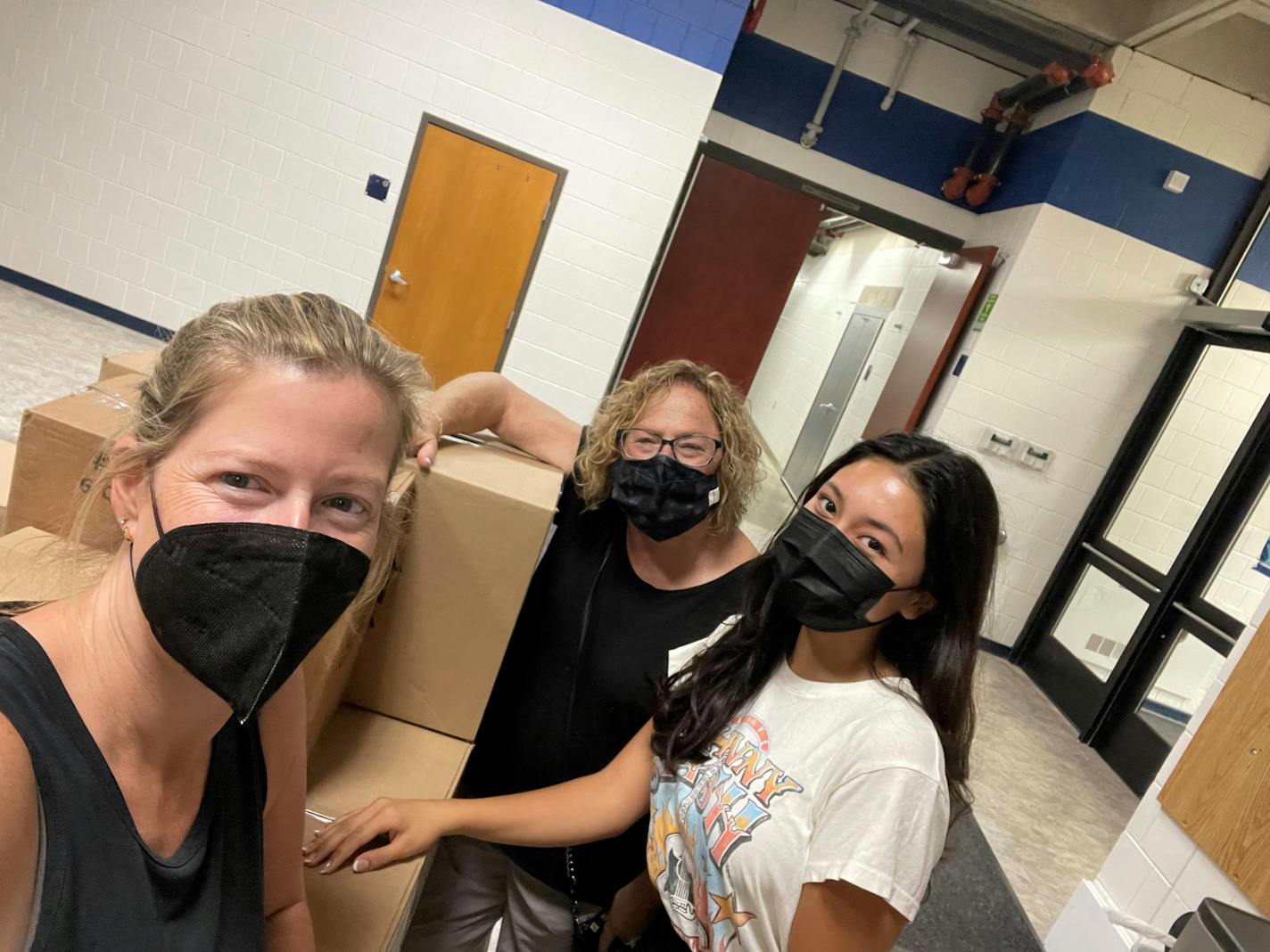
Kristy Wesson and Margie Solomon of the National Council of Jewish Women Minnesota and student Elif Ozturk delivered menstrual products to Hopkins High School in 2022. Ozturk and community advocates were pushing for a bill, subsequently made law, to require public schools to provide such products.
 

Opinion editor’s note: Editorials represent the opinions of the Star Tribune Editorial Board, which operates independently from the newsroom.

•••

On Tuesday, Democratic presidential nominee Kamala Harris tapped Minnesota Gov. Tim Walz as her running mate. By Wednesday, the opposition had mobilized with lightning speed for its one of its first political attacks, dubbing Walz “Tampon Tim” in reference to a new state law providing free menstrual products to school students.

The nickname was trending nationally this week on Twitter, an indicator of its political currency. Chaya Raichik, whose scurrilous “Libs of TikTok” account on X (formerly Twitter) has more than 3 million followers, was one of the first to amplify it. Former Fox News host Megyn Kelly added to the momentum, endorsing the nickname via tweet. Former First Lady Hillary Clinton weighed in from a different angle, with a tweet supporting the Minnesota measure.

Social-media users swiftly took sides as well, and as usual, facts and context were missing, especially from those who see the new law as evidence of a radical Minnesota under Walz’s leadership. But a closer, more informed look at the issue should yield a different conclusion. This is good and necessary policy. Providing free menstrual products is a practical, compassionate remedy to address an under-the-radar reason for student absenteeism. Some families can’t afford menstrual products, and when that happens students stay home instead of going to class, falling behind as they do.

There’s a lot of talk about closing educational achievement gaps in Minnesota and elsewhere, particularly for low-income students. The new state law, which has a price tag of about $2 million a year, is an actual solution to help address this, one that’s relatively low-cost. And there’s real-world data to back it up. New York City schools reported a 2.4% increase in attendance after a state law went into effect requiring free period products for students, according to the advocacy group Alliance for Period Supplies.

Minnesota is far from alone in providing this type of assistance. More than half of the nation’s 50 states have taken steps to help students who struggle to afford tampons and pads. Ohio, led by Republican Gov. Mike DeWine, now requires period products in schools and has provided $5 million in funding for this, the Alliance for Period Supplies reports. Alabama and Georgia provide grants for schools to make free products available.

Other states, such as Washington, Nevada, Illinois and Utah, require schools to provide these products, though they didn’t fund them. To Minnesota’s legislators’ credit, the new law provides dollars to schools and is not an unfunded mandate.


Other background information is also useful as the dubious online debate continues.

The new law went into effect in January and applies to students in grades four through 12. The legislation itself was passed during the 2023 session as part of a broader educational bill, which Walz then signed. Rep. Sandra Feist, DFL-New Brighton, was the bill’s chief author in the Minnesota House. Sen. Steve Cwodzinski, a retired teacher and DFLer from Eden Prairie, championed the measure in Minnesota Senate.

But the most powerful advocates for it came from outside the State Capitol. Young Minnesotans reached out to Feist about this issue. After Feist introduced it, these students testified on its behalf as the legislation made its way through various committees. Among them was Elif Ozturk of Golden Valley, who is now 18 and will attend Columbia University this fall.


In an interview, Ozturk told an editorial writer she got involved after seeing other students struggle to afford these products in junior high. She spoke to counselors and was told that some students had to leave class or couldn’t attend because they lacked pads or tampons. Ozturk dug into the issue and discovered that other states had taken steps to help students’ access these products. She thought Minnesota should do the same.

“If we don’t talk about it, it’ll never be fixed. These people who are in power, predominantly old men, have no clue what young girls go through every single day,“ Ozturk said.

Other advocates for the law’s passage: school nurses, who testified movingly about how students struggle to afford these products and the educational and emotional consequences when they can’t.


specific but ill-informed attack on the new Minnesota law is in dire need of a reality check. Critics contend, wrongly, that it mandates menstrual products in boys’ bathrooms. This has unfortunately been used to stoke ongoing culture wars over transgender individuals.

But the law’s actual language provides considerable flexibility for school districts to implement it, according to Deb Henton, the executive director of the Minnesota Association of School Administrators.

That might mean making these products available for free in various locations for all who need them, such as unisex bathrooms, girls’ bathrooms, the school nurse or the front office, but not necessarily in boys’ bathrooms. Henton, in an interview, lauded the “local control” the law provides for implementation, and said she’s fielded no concerns about its rollout.

At Anoka-Hennepin, the state’s largest school district, the free products are not found in traditional male-only bathrooms, a spokesman said. But they are provided for free to all in “nongendered bathrooms,” girls’ bathrooms or from health staffers.

There’s nothing radical about Minnesota’s new law. Instead it’s a smart, low-cost measure to address educational achievement gaps, one that many states are embracing. Weaponizing this measure is laughably out of touch and likely to backfire not only with women, but all who care about them.

US Athletes Discover Joys Of Universal Healthcare In Olympic Village by Rebecca Schoenkopf

This is one of those feel-good stories that is actually very depressing when you think about it! Read on Substack

Snippets:

Wikimedia Commons

There’s a lot of money to be made on the Olympics — though not necessarily by the people participating in them (or most people who live in the host cities). Those athletes who participate don’t get paid (unless they get sponsorship deals) and, as a result, many of them go into poverty while trying to go for the gold. Training costs are huge and so, often, are the medical bills.

But not when they’re at the Olympic Village!

Ariana Ramsey, who won a bronze medal as part of the US female rugby team has been going viral on TikTok, talking about how amazing it’s been getting free healthcare at the Olympic Village — and in the days following her victory, she was able to celebrate by going to the gynecologist, dentist and an ophthalmologist, where she was able to get free glasses as well.

Via Sports Illustrated:

Ramsey came to Paris as a rugby player. She is leaving as a healthcare influencer. More than 135,000 people have watched her initial TikTok, and another of the half-dozen follow-up videos she has made has pulled in more than 570 views. That is fine with her. The more she thinks about it, the more frustrated she is that she’s so astonished by the concept. 

“That’s just America and their privatized healthcare system,” she laments in an interview, adding, “I’ll fight for universal healthcare.”

The idea has gone viral in France: American discovers healthcare. “A lot of people are kind of making a joke about it,” she says. “Like, welcome to France.” (snip)

Every other country has figured out that it makes far, far more sense (and is far, far more economically sane) for health care to be seen as a public good, but we’re still out here making insurance company CEOs obscenely rich for who knows what reason.

Many American athletes do have access to the United States Olympic and Paralympic Committee’s health insurance policy. But their eligibility for the program is up to their sport’s governing body, and an independent commission appointed by Congress found that “some of the most talented competitors under our flag go to sleep at night under the roof of a car or without sufficient food or adequate health insurance.” More than a quarter of U.S. athletes report earning less than $15,000 per year, and more than 40% said they paid out of pocket for healthcare, with an average cost of $9,200 per person. Only 16% said they’d been reimbursed.

Meanwhile, in 2022, the US Olympic and Paralympic Committee had a net revenue of 61 million dollars and paid their CEO a salary of $1.1 million.

Also meanwhile, NBCUniversal sold $1.2 billion in advertising ahead of the last Olympic Summer Games in Tokyo and say that they have surpassed that number this year (though an exact figure has not been given). (snip)

On the bright-ish side, because of Ramsey’s videos, hundreds of other Olympic athletes have taken advantage of the free healthcare at Olympic Village that they might not otherwise get at home. So that’s nice for them!

A couple of bits from Cosmos

for science!

Lithium-ion batteries made from wastewater phosphorus

Good news for some sustainability. Here’s a snippet:

“Engineers have found a way to turn phosphorus from city wastewater into parts for lithium-ion batteries.

“The Chinese researchers say that their method could be used to supply 35% of the phosphorus demand for their national lithium-ion battery industry.

“They’ve published their findings in Engineering.

“Phosphorus is a common component in the cathodes of lithium-ion batteries – specifically, lithium iron phosphate batteries, which represent about 60% of the lithium-ion market according to the researchers.

“As an important ingredient in fertilisers and industrial chemicals, mineral phosphorus is in high demand. Mining stocks of phosphorus are expected to be depleted in the next 50-100 years.

“But, point out the researchers, more than 250,000 tonnes of phosphorus pollutes Chinese wastewater every year, coming from food consumption and chemical waste. This is more phosphorus than the amount consumed each year to make batteries.” (snip)

“The researchers used their wastewater-derived mixture to build small lithium-ion batteries in the lab. These batteries could charge and discharge at the rates needed for electric vehicles and large-scale storage systems, and they kept 99.2% of their capacity after being charged and discharged 100 times.

“Batteries made with higher doses of the wastewater material performed better than batteries made with lower doses. The researchers believe that impurities from the sludge helped to stabilise the batteries, allowing them to perform better.

“’The amount of phosphorus recovered from municipal wastewater is projected to be sufficient to meet up to 35% of the phosphorus demand by the lithium-ion battery industry in China, enhancing the cost-effectiveness of phosphorus recovery and alleviating the global shortage of phosphorus resources to achieve both clean energy and sustainable development,’ conclude the researchers in their paper.”

=====

When it rains, it pours! This old idea looks set to be Australia’s future

“In the last few years, Australia has faced both flooding rains and some of the lowest rainfall on record. Now, researchers from the Chinese Academy of Sciences have the data that explains why rain in Australia has seemed so unpredictable.

“The researchers have shown that human-induced climate warming is driving increases in rainfall variability over 75% of the Earth’s land, and they say the effects are especially prominent in Australia.

“The study looked at increases in rainfall variability, which can mean wetter wet periods and drier dry periods. They found that daily variability has increased by 1.2% per decade globally, and that humans are largely to blame.

“’The increase in rainfall variability is mainly due to anthropogenic greenhouse gas emissions, which have led to a warmer and more humid atmosphere,’ said Dr Zhang Wenxia, lead author of the study. 

“’This means that even if the atmospheric circulation remains the same, the additional moisture in the air leads to more intense rain events and more drastic fluctuations between them.’

“Professor Steven Sherwood at the UNSW Climate Change Research Centre, who was not involved in the study, told the AusSMC that this means rainier rainy periods and drier dry periods. 

“’This is going to increase as global warming continues, enhancing the chances of droughts and/or floods.’

“The paper identified Australia as being a particular hotspot for rainfall variability. Dr Milton Speer from the University of Technology Sydney said the paper’s findings are significant, and that other recent studies have had similar conclusions.” (snip-More)

Rafah’s health crisis

rawgod brought this up, also, and I’m running with it here, because the Don is dominating the news (it’s all he can dominate) and there’s no reason to cover him these days. Anyway, here is some info from 2 sources regarding the spiralling health catastrophe in Rafah.

Rafah water facility demolition raises health risks in Gaza, UN says

July 30, 2024 1:10 PM By Lisa Schlein

GENEVA — 

U.N. agencies warn that the demolition of a critical water facility in Rafah in the southern Gaza Strip increases the risk of infectious diseases as people are forced to drink unsafe water while sanitary conditions continue to deteriorate.

“Until recently, that reservoir served thousands and thousands of internally displaced people who had sought refuge in Rafah in the area,” James Elder, UNICEF spokesperson, told journalists at a briefing in Geneva on Tuesday.

“Now without it, vulnerable children and families are likely to be forced again increasingly to resort to unsafe water, so putting them again at all those risks that we see time after time, day after day in Gaza — dehydration, malnutrition, diseases,” he said.

The Israeli daily Haaretz reported Monday that the troops blew up the central reservoir “on the orders of the brigade commanders” but without receiving permission from the senior level of the Southern Command. It added that the incident was being investigated by Israel’s Military Police as “a suspected violation of international law.”

Infections spreading

Elder said the destruction of the Canada Well reservoir “is yet another grim reminder of the assaults on families who already are in desperate need of water.”

“We have seen spikes in diarrhea, in skin infections — all due to a lack of access to hygiene and a lack of access to water,” he said, noting that people in emergencies require a minimum of 15 liters (almost 4 gallons) of water per person per day.

Now, the range of water availability in Gaza has been reduced to between 2 and 9 liters per person, per day, and some people are getting just a fraction of that, Elder said.

“Somehow, people are holding on, but of course, we are now in that deathly cycle whereby children are very malnourished. There is immense heat. There is [a] lack of water. There is a horrendous lack of sanitation, and that is the cycle,” he said.

The World Health Organization reports a surge in infectious diseases in the Gaza Strip. As of July 7, it has recorded nearly 1 million cases of acute respiratory infections, 577,000 cases of acute watery diarrhea, 107,000 of acute jaundice syndrome and 12,000 of bloody diarrhea. It also has recorded nearly 200,000 cases of scabies, lice, skin rashes, chicken pox and other illnesses.

Polio threat

The recent identification of circulating vaccine-derived poliovirus type 2 in Gaza’s sewage system is of particular concern. Under prevailing conditions in Gaza, there is a high risk of spread of this paralytic, deadly disease within the Palestinian enclave and across borders.

“Having a vaccine-derived polio virus in the sewage very likely means that it is out there somewhere in people,” WHO spokesperson Christian Lindmeier said. “It most likely is in the population, but that does not necessarily mean that we see an outbreak of cases.

“But of course, we need to be prepared. We need to be utterly prepared. And we need vaccinations, and we need vaccination campaigns,” he said. (snip-More)

Inside Rafah’s Deteriorating Health Crisis

Health conditions are rapidly deteriorating in Rafah as a possible ground offensive nears. Project HOPE reports that 1 in 5 children under age two showed signs of malnutrition in an underserved displacement camp in Rafah.

This week, the Israeli Government announced plans to move forward with a ground offensive in Rafah despite concerns from the international community about the severe impact it would have on civilian lives. As the threat of forced evacuation or an escalation of violence looms, the health of people living in Rafah is rapidly deteriorating. Inhumane and crowded living conditions, limited access to clean water and food, and inadequate hygiene facilities have led to an increase in cases of hepatitis A, upper respiratory tract infections, tonsillitis, and urinary tract infections.

Malnutrition rates are on the rise due to limited availability, loss of income, and soaring food prices linked to the destruction of Gaza’s food system. At Project HOPE’s clinic in Jaafar Al-Tayyar, an underserved displacement camp in Rafah, 1 in 5 children under the age of two exhibited signs of malnutrition over the last month. The camp has turned into a breeding ground for disease and illness. Over 100,000 people are crammed into one area. Project HOPE’s team reports that it is common for 20-30 people to live in just one tent and hundreds share access to one toilet and shower, which not only creates serious hygiene and disease concerns but poses protection risks for women, children, and others.

Rafah was home to 280,000 people before the war. Today, over one million people seek refuge in the small city. Families live in overcrowded tents, homes, and makeshift shelters with limited access to the necessities to survive. Project HOPE calls upon all parties involved to implement an immediate and sustained ceasefire to prevent the loss of more innocent lives.

Dr. Nour Al-Din Khaled Alamassi, Physician for Project HOPE, said:
“Everywhere around me, people are hungry. It is inevitable here, especially for children, pregnant women, and people with chronic illnesses. In our clinic, we constantly see people who are sick, uncomfortable, and hungry. Children’s bodies are deteriorating. Food is way too expensive and fresh foods like chicken or vegetables are impossible to find. We cannot rely on aid shipments for regular meals.

I recently met Nafisa Al-Dakakheneh, a 67-year-old, who moved from Gaza City to Rafah. She told me, ‘We had no food, no water, nothing – we’re tired. We were starving so we had no choice but to leave our home and come to Rafah.’ Nafisha has no home in Rafah. She sleeps on the hard ground under blankets hanging in the air as cover because she can’t afford a tent. Her grandchild tragically died in the hands of his mother due to lack of food and severe dehydration. Nafisa is terrified of dying. I resonated with her words, ‘We really need to feel like we’re human again.’

Naifsa’s story is not unique. If we do not die from violence, we could die from disease or hunger. More violence in Rafah would be devastating. The last safe haven in Gaza would be destroyed. Every day, I fear what might happen. I worry about having to be displaced constantly. We are living in a nightmare.” (snip-More)

Staying Cool: Helpful Hints From History

Take a look back at how others have survived—and thought about—the high heat of summer.

By: Matthew Wills  July 28, 2024

In an episode of The Twilight Zone called “The Midnight Sun,” first broadcast in November 1961, the apocalyptic temperature of an Earth getting ever closer to the Sun is represented by a thermometer bursting at…130°F. On July 5, 2024, Palm Springs, California, reached 124°F, while the next day, Death Valley hit 128°F, amidst a shattering of triple-digit temperature records across the American West.

Benchmarks have shifted. In 1961, the amount of carbon dioxide (CO2) in the atmosphere was 318 parts per million by volume (ppmv). CO2 is a greenhouse gas, acting as atmospheric insulation, preventing heat radiation from dissipating into space. Last year, 2023, the amount of CO2 in the atmosphere was 421 ppmv. It continues to increase, not least as we battle the resulting heat by burning fossil fuels to stay cool. We’re in a global greenhouse, and the doors seem to be locked as we paradoxically produce more CO2 to stay cool in the face of heating caused by the production of more CO2.

Humans have long worked to beat the heat, especially in the tropics and in deserts. Their perfectly rational strategies—stay out of the midday sun, live underground, cover up completely—may once have been criticized by those from temperate zones, sometimes in racist terms, but more and more parts of the world are having to learn the lesson of those strategies.

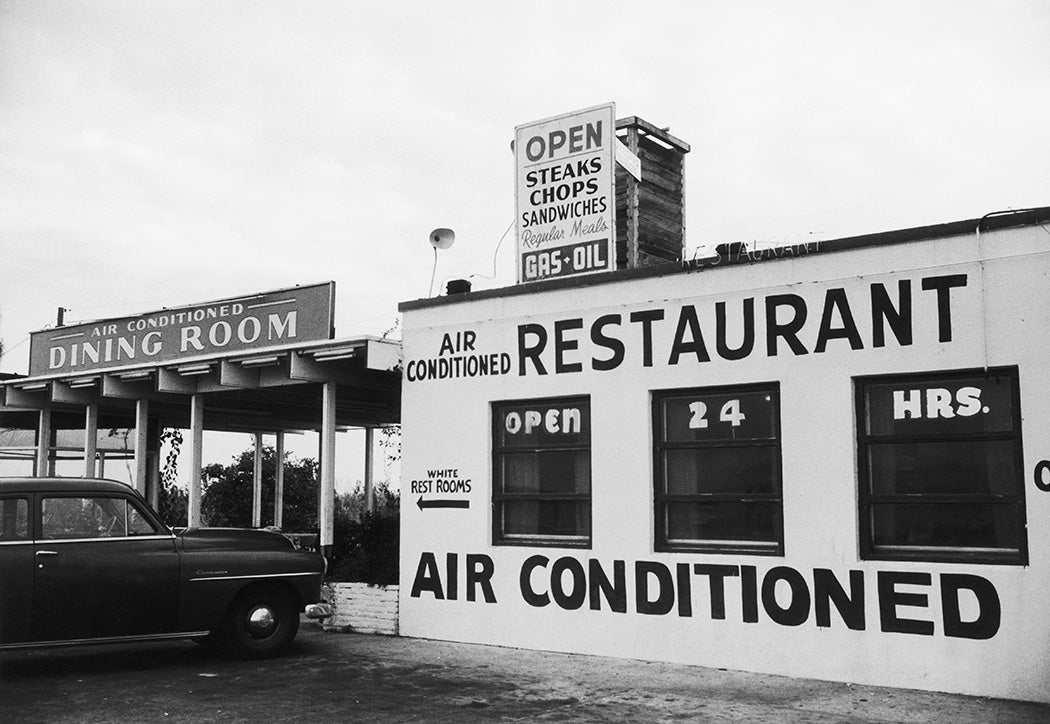
A sign outside an air conditioned American restaurant points to the 'White Rest Rooms', in a clear indication of racial segregation, circa 1960.
A sign outside an air-conditioned American restaurant points to the “White Rest Rooms,” in a clear indication of racial segregation, circa 1960. Getty

What, after all, would it be like without air conditioning? Take a look at this Before Air-Conditioning piece in Scientific American’s “Hints for Keeping Cool.” Published in July 1858, the piece begins with a dietary suggestion: eat “fruits, vegetables, and farinaceous food, and the lighter kinds of meat.” In 1858, the amount of CO2 in the atmosphere was 286 ppmv. Seven years earlier, Dr. John Gorrie, striving to cool down his malaria and yellow fever patients in Florida, patented the first ice-making machine (1851, 285 ppmv).

The first modern, electrical air condition system dates to 1902 (297 ppmv), when inventor Willis Carrier cooled and dehumidified the Sackett-Wilhelms Lithographic & Publishing Company in Brooklyn, New York. The publishing company was most concerned about humidity warping their paper supplies. Carrier is still a going concern.

A little over a century after Scientific American’s helpful hints, The Science News-Letter’s “Keeping Cool in Summer Heat” (1961: 318 ppmv) wasn’t so very different.

“If you suffer from heat frustration when the mercury hits the 90’s, a little scientific knowledge of summer heat can help your body temperature and state of mind remain well within the comfort zone,” the editors claim.

These hints were essential for those without air conditioning, that wonder of the twentieth century. Try to imagine cars, theaters, restaurants, the suburbs, office towers, apartment blocks, malls, et cetera, without A/C. The post-World War II population growth across the Sun Belt, stretching from Southern California to North Carolina, would most likely not have been possible without it.

In his exploration of how A/C transformed the South, Raymond Arsenault quotes a Floridian circa 1982 (341 ppmv).

“I hate air conditioning,” the woman confirmed. “It’s a damnfool invention of the Yankees. If they don’t like it hot, they can move back up North where they belong.”

But most people—in the South and elsewhere—welcomed A/C with a passion. Arsenault notes that historians tended to shy away from writing about the transformative power of air-conditioning on the South because they were leery of falling into an old climate-is-destiny paradigm. In the first three decades of the twentieth century, the South’s climate was held responsible for everything from the Southern drawl to plantation slavery. Climate determinism faded by mid-century (1950: 311 ppmv), as the “long hot summers” of the Civil Rights years transitioned into the “New South,” supposedly post-racial but definitely all indoor-cooled.