


https://www.peacebuttons.info/E-News/peacehistoryjuly.htm#july26
Tag: Human Rights
Interesting-
Not class warfare, just wondering. It’s Upworthiest, after all; no controversy here.
If the total amount of money held by Americans was distributed evenly, how much would you get?
What if you got an equal slice of the country’s wealth?
Snippets:
The United States has more money held by private citizens than any other country in the world. According to the Federal Reserve, U.S. households hold a total of $160.35 trillion, which is the value of each person’s assets minus their liabilities. However, many Americans are perplexed by the fact that, in a country with such wealth, so many people still struggle to make ends meet.
Although Americans hold the largest amount of privately held wealth in the world, many of us still struggle with financial stress. A recent report found that 68% don’t have enough money to retire, 56% are struggling to keep up with the cost of living, and 45% are worried about their debt levels. A significant reason is that a small number of people hold a large portion of the privately held wealth in the U.S..
Nearly two-thirds of America’s private wealth is held by the top 10% of people, leaving the remaining one-third to be divided among 90% of the population. (snip)
With so many people struggling in America, while a few at the top are unbelievably wealthy, what would happen if the money were magically divided evenly among the 340 million people who live in the United States? If everyone received a truly equal share of the American pie, every person would receive approximately $471,465. That’s $942,930 per couple and $1.89 million for those with two kids. (snip)
However, such a drastic redistribution of wealth would be cataclysmic for the economy, as people would have to liquidate their investments to give their assets to others. The sudden increase in wealth for many, without a corresponding increase in goods and services, would lead to incredibly high inflation. The dramatic reconfiguring of the economy would also disincentivize some from working and others from innovating. Some posit that if everyone were equal, in just a few months, those with wealth-generating skills would immediately begin rising to the top again, while others would fall behind. (snip)
Although it seems that a massive redistribution of wealth isn’t in the cards for many reasons, we do have some evidence from recent history on how programs that give people money can help lift them out of poverty. Government stimulus programs during the COVID-19 pandemic brought the U.S. poverty level to a record low of 7.8% in 2021. Child poverty was also helped by the American Rescue Plan’s Child Tax credit expansion, which drove child poverty to an all-time low of 5.2%. It’s also worth noting that the trillions in government stimulus had a downside, as it was partially responsible for a historic rise in inflation. (Note from A.: The hyperlink takes you to CNBC, which hastens to report this: “But the widespread rise in prices was mostly “a supply-side phenomenon” caused by the Covid-19 pandemic itself, Yellen told CNBC in an exit interview.”) (snip-a little MORE)
Opinions, Please?
(I just read this beautiful substack; his stuff is always beautiful, but this one struck me as one I want to share here. -A.)
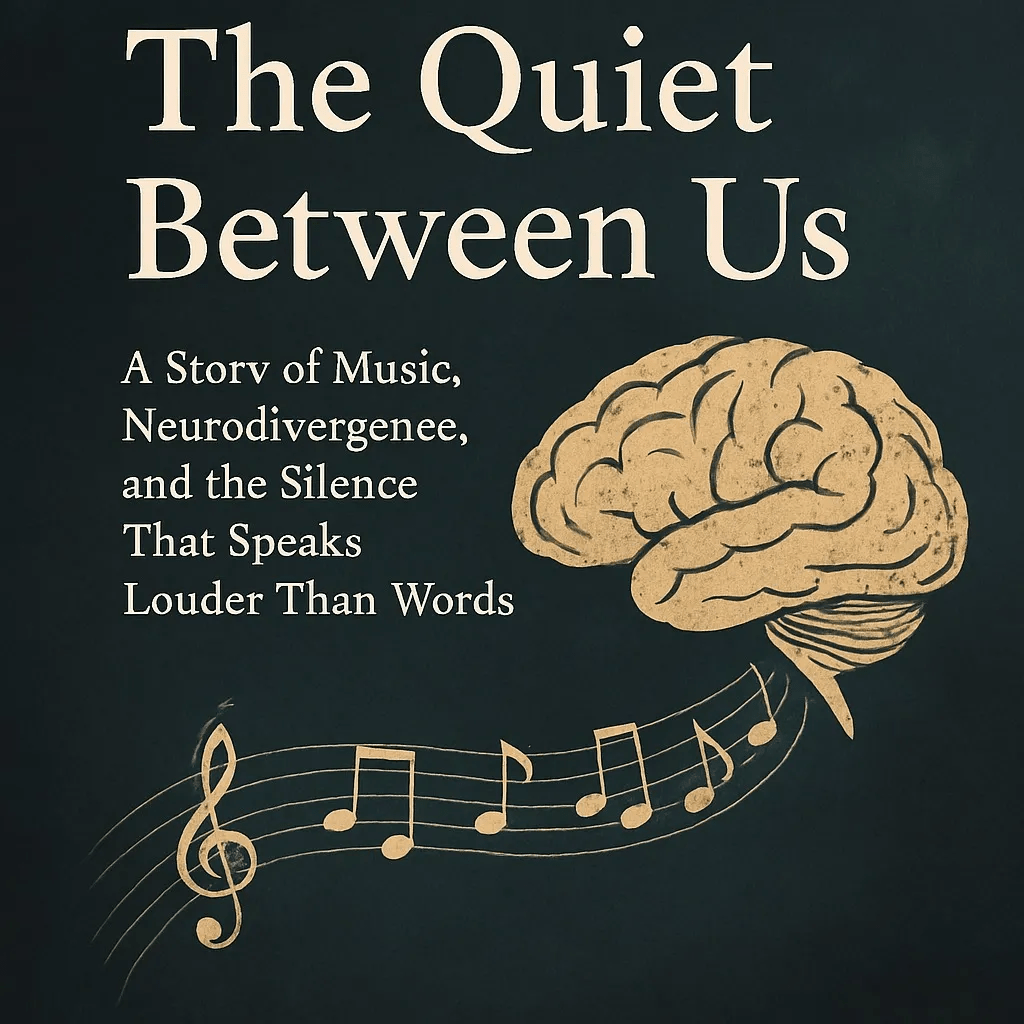
The Bridge of Quiet Things: How a Family Found Each Other in the Stillness by Richard Hogan, MD, PhD(2), DBA
null Read on Substack
📖 A Lived Truth
This is not a work of fiction. It’s from my clinical notes, drawn from the quiet corners of a family learning how to listen, how to see, and how to love. What follows is Maya’s story—and ours too. It began with misunderstanding and grew into music. It was shaped by silence, and strengthened by learning how to hear what was never said out loud.
—
🧠 Main Characters
• Maya (17) – A brilliant, autistic teen who expresses herself through music but struggles with verbal communication and sensory overload. Her inner world is rich, but rarely understood.
• Daniel (45) – Her father, a pragmatic man who misinterpreted Maya’s behavior as defiance. He’s emotionally shut down but carries deep guilt.
• Leah (43) – Her mother, who tried to advocate for Maya but became isolated in the process. She’s exhausted, but still hopeful.
• Eli (15) – Maya’s younger brother, who felt invisible growing up. He’s witty, sarcastic, and secretly protective of Maya.
—
I. The Fracture
The house had grown quiet over the years—not the peaceful kind, but the kind that echoed with things unsaid. Leah sat at the kitchen table, her fingers wrapped around a chipped mug, staring at the steam like it held answers. Upstairs, Maya rocked gently in her chair, headphones on, fingers twitching over her keyboard. Her music was her voice now.
Eli moved through the house like a ghost. He didn’t slam doors or raise his voice. He just existed in the spaces between tension. And Daniel—he hadn’t been home in months. He lived alone now, in a small apartment filled with regrets and unopened letters.
Maya had always been different. Brilliant, but misunderstood. Her silence wasn’t emptiness—it was survival. Her meltdowns weren’t tantrums—they were overload. But Daniel never saw that. He saw defiance. He saw rebellion. And slowly, the family unraveled.
—
II. The Breaking Point
It happened at school. Maya, overwhelmed by noise and light and chaos, collapsed in the hallway. Hands over her ears, rocking, humming. Someone filmed it. Of course they did.
Eli found the video first. He didn’t speak. Just slid his phone across the table to Leah and walked out.
That night, Leah called Daniel.
“She was screaming,” she said. “And no one heard her.”
Daniel arrived the next morning. He stood in the doorway like a stranger. Eli didn’t look up. Maya didn’t come down. Leah didn’t cry. Not anymore.
“She doesn’t talk much,” Leah said. “But she plays.”
Daniel didn’t understand. Not yet.
—
III. The Song
Eli knocked on Maya’s door. “Can I record you?” he asked.
She didn’t answer, but she didn’t say no.
He sat on the floor, phone in hand, and watched as Maya’s fingers danced across the keys. The melody was aching, defiant, beautiful. It was everything she couldn’t say.
He uploaded it that night. The Quiet Between Us.
The video spread. Comments poured in. People who felt seen. People who understood.
Daniel watched it on repeat, tears streaking his face.
“I didn’t know she could feel like that,” he said.
“She always did,” Leah replied. “You just didn’t know how to listen.”
—
IV. The Shift
Daniel knocked on Maya’s door. She didn’t look up, but she didn’t turn away.
“I heard your song,” he said. “I’m sorry I didn’t hear you sooner.”
Maya reached for her keyboard. Played a single note. Then another.
Daniel sat beside her, silent. Listening.
Leah watched from the hallway, hand over her heart.
Eli uploaded another video: The Quiet Between Us – Live.
They began to change. Slowly. Imperfectly.
Daniel stopped trying to fix. He started trying to understand.
Leah stopped carrying everything alone. She let herself be held.
Eli stopped disappearing. He became the bridge.
And Maya? She kept playing.
—
V. The Reconnection
They sat together in the living room. Maya played. Eli recorded. Leah smiled. Daniel closed his eyes and listened.
No one spoke. But everything was said.
They weren’t perfect. But they were real.
And in the quiet between them, they found something louder than words.
They found each other.
🎵 Epilogue: The Song That Speaks (Follows graphic)
—
🎵 Epilogue: The Song That Speaks
Maya’s music became a language for others.
Eli started a podcast for neurodivergent families.
Daniel and Leah spoke at workshops. Not as experts—but as learners.
Their story wasn’t about fixing.
It was about listening.
About loving each other—not in spite of difference,
but with it.
Because love isn’t always loud.
Sometimes, it’s quiet.
And sometimes, the quiet is where love begins.
This is more than a story. It’s a lived truth. Signed not with ink—but with the quiet strength of love, survival, and rediscovery.

Republican Crime In Peace & Justice History for 7/24
| July 24, 1974 The United States Supreme Court (U.S. v. Nixon) unanimously ordered President Richard Nixon to surrender tape recordings of White House conversations regarding the Watergate affair. Speaking for the Supreme Court in front of a packed and hushed courtroom, Chief Justice Warren E. Burger (a Nixon appointee) rejected President Nixon’s claims of executive privilege (virtually total confidentiality for the White House) because the need for fair administration of criminal justice must prevail.   The White House feared review of the recordings by a U.S. district judge would reveal, among other crimes, impeachable offenses. Listen to the tapes online (It’s a YouTube playlist!) |
| July 24, 1983 Canadians and Americans spanned the international border at Thousand Islands Bridge, linking New York and Ontario, to protest nuclear weapons and border harassment of peace activists.  Thousand Islands Bridge |
| July 24, 1983 Women tagged a U.S. warplane with anti-nuclear graffiti at Greenham Common, an air base in England. The Greenham Common Women’s Peace Camp had been set up just outside the perimeter of the base in 1981 to get U.S. Cruise missiles, some of which were deployed at the base, out of their country. Other tactics included disrupting construction work at the base, blockading the entrance, and cutting down parts of the fence.  Read more about The Greenham Common Women’s Peace Camp |
https://www.peacebuttons.info/E-News/peacehistoryjuly.htm#july24
A Few Bits I’ve Run Across This Week
Cohesive only in that each is about people. Enjoy as you will.
The stranger in the mirror: how will a hotter earth change humanity?

Mesopithecus pentelicus thrived in the rainforests of the late Miocene, 7 million years ago. Credit: Mauricio Antón
Small, slender and short-lived, with broad noses, big, dark-adapted eyes, living underground, and in the shadows of a shattered, steamy, chaotic world. Richard Musgrove asks: will this be us in 10,000 years?
Climate change is the greatest challenge in human history – current trends could have us eventually approaching extremes not seen on our planet for 15 million years. Will a destabilised global climate wreak economic havoc, leading to societal collapse, mass mortalities, even extinction? Or will we pull ourselves out of this spectacular self-imposed nose-dive?
Which raises the question – what if we don’t? How will humanity change on a much hotter Earth?
Numbers matter
Uncharted territory approaches as we nudge the Paris Agreement’s 1.5°C above preindustrial levels, on track for a potentially catastrophic 2.7°C by 2100. What about 2200, or 3200?
Globally, days above 50°C have doubled since the 1980s – in Australia, Pakistan, India and the Persian Gulf – with the ‘feels-like’ temperature often higher. Even immediately reduced carbon emissions will still mean lingering planet-wide heating and associated effects for many thousands of years.
Our adaptability has led us this far, but what does evolution have in store for our species if we don’t rise to face our greatest challenge? The answer is unlikely to be in the mirror.
Nothing sweats like us (snip-MORE)
===========
Medicaid ‘gamers’ are the new ‘welfare queens’ by Aaron Rupar
Republicans are taking strawman arguments to absurd extremes. Read on Substack
Earlier this month, Donald Trump and congressional Republicans passed a grotesque budget bill that (partially) funds massive tax breaks for the wealthy and a ramped-up ICE goon squad by cutting cutting $1.1 trillion from Medicaid and an additional $185 billion from federal food assistance programs, all while adding $2.8 trillion to the deficit.
Not surprisingly, the bill is massively unpopular. As a result, Republicans are gaslighting Americans about its impact, particularly regarding the cuts to Medicaid, which are expected to cost 10 million Americans their health coverage.
The Medicaid cuts could result in more than 16,000 extra deaths per year, researchers say. Republicans have tried to distract from that reality with a combination of blatant lies and misdirecting rhetoric. To hear them tell it, they’re only cutting supposed waste, fraud, and abuse. So when you lose benefits, they’re here to explain why it’s probably your own damn fault.
The lazy gamer myth
Republican messaging surrounding Medicaid cuts borrows heavily from Ronald Reagan’s playbook. (snip- MORE)
======================
What Does the Bible Say About Gender?
The Bible has a lot to say about gender.
Of course, there are innumerable instances when the Bible has historically been used to enforce the idea that gender is a divinely ordained binary, with male and female genders that are distinct, complementary, and assigned at birth.
But by going back to the original languages of the Bible and examining modern translations more closely a much more complex spectrum of biblical gender is revealed. At some rabbinical colleges, scholars have identified as many as eight genders represented in the original Hebrew.
Indeed, the Bible’s general attitude toward gender is expansive, with verses exploring God’s focus on the interior over the exterior, the distinction between sex and gender, the role of eunuchs in scripture, and more.
Here are 10 Bible verses that show a biblical approach to gender that is as varied as the colors in a rainbow.
Genesis 1:27
So God created humans in his image, in the image of God he created them; male and female he created them.
Day and night. Water and dry land. Male and female. The creation poem might sound like it’s dealing in binaries, but we know that all of these things have transitional elements. Day and night contain transitions at dawn and dusk; the spectrum of water and dry land includes tidal plains and coral reefs; and people who are intersex, genderqueer, nonbinary, and more can be found between “male and female”.
Genesis 25:27
When the boys grew up, Esau was a skillful hunter, a man of the field, while Jacob was a quiet man, living in tents.
Jacob is described as “smooth” (Genesis 27:11) and stays in the tent where he cooks – traditional female attributes in the ancient world. Yet he is chosen over his “hairy” brother Esau, a skilled hunter, to lead God’s people, showing that God does not place value on traditional gender norms.
Isaiah 56:4-5
For thus says the Lord: To the eunuchs who keep my Sabbaths, who choose the things that please me and hold fast my covenant, I will give, in my house and within my walls, a monument and a name better than sons and daughters; I will give them an everlasting name that shall not be cut off.
Eunuchs were men who had been castrated, especially those employed to guard the women’s living areas. They represent clear historical examples outside of the gender binary in the Bible and are welcomed into the temple and to the community of worship.
Matthew 19:11-12
But [Jesus] said to them, “Not everyone can accept this teaching, but only those to whom it is given. For there are eunuchs who have been so from birth, and there are eunuchs who have been made eunuchs by others, and there are eunuchs who have made themselves eunuchs for the sake of the kingdom of heaven. Let anyone accept this who can.”
The disciples ask Jesus to clarify the explanation of gender in Genesis 1 as it relates to divorce. In answering them, Jesus offers this non-judgmental example of eunuchs that invokes a range of genders. This indicates the law should be flexible enough to allow for this range, instead of being too narrow to recognize its existence.
Galatians 3:27-28
As many of you as were baptized into Christ have clothed yourselves with Christ. There is no longer Jew or Greek; there is no longer slave or free; there is no longer male and female, for all of you are one in Christ Jesus.
The apostle Paul explains that unity in Christ is what’s important, superseding the concept of gender and other identity markers.
Mark 11:17
[Jesus] was teaching and saying, “Is it not written, ‘My house shall be called a house of prayer for all the nations’? But you have made it a den of robbers.”
In this verse, Jesus is referencing Isaiah 56, when eunuchs are welcomed into the community at temple. He prioritizes welcoming all people, regardless of gender.
Acts 8:38-39
He commanded the chariot to stop, and both of them, Philip and the eunuch, went down into the water, and Philip baptized him. When they came up out of the water, the Spirit of the Lord snatched Philip away; the eunuch saw him no more and went on his way rejoicing.
The baptismal inclusion by Philip of the Ethiopian eunuch in the early church echoes the affirmation of eunuchs who are welcomed to the temple in Isaiah 56. “In neither case [both in Isaiah and Acts] is change required of them before they can join the community in worship,” writes Robyn J. Whitaker for The Conversation.
1 Samuel 16:7
But the Lord said to Samuel, “Do not look on his appearance or on the height of his stature, because I have rejected him, for the Lord does not see as mortals see; they look on the outward appearance, but the Lord looks on the heart.”
When the prophet Samuel was charged by God to look for a new king, David didn’t seem as king-like as the other options presented to Samuel — but he was still the right choice. Once again, we see that God does not share the human preoccupation with external biological features. Our physical bodies do not determine deeper matters of our identity.
Romans 2:29
Rather, a person is a Jew who is one inwardly, and circumcision is a matter of the heart, by the Spirit, not the written code. Such a person receives praise not from humans but from God.
As with the example of God choosing David because of what was in his heart, here the Bible says that physical alteration (like being circumcised) isn’t what matters to God — it’s what’s in the heart.
Genesis 16:13
So [Hagar] named the Lord who spoke to her, “You are El-roi,” for she said, “Have I really seen God and remained alive after seeing him?”
Hagar changes the name she uses for God, reflecting a change in how she recognizes who God is — not a change in God’s own identity, but an uncovering that leads to a fuller understanding and affirmation of God’s identity. Similarly, someone may choose to change the gender (and the name that goes with it) that they identify with as a reflection of a greater understanding and affirmation of who they are, out of a desire that the world may better know and understand them, too.
Heather Brady Heather Brady is the audience engagement manager at Sojourners.
H.D. Thoreau Protests; Detroiters, Too, This Date In Peace & Justice History
| July 23, 1846 Author Henry David Thoreau was jailed for refusing to pay the poll tax as a protest against the Mexican war, which in turn led to his writing “Civil Disobedience.” This essay became a source of inspiration for Leo Tolstoy, Mahatma Gandhi, and Martin Luther King, Jr. From Thoreau’s essay: “Unjust laws exist: shall we be content to obey them, or shall we endeavor to amend them, and obey them until we have succeeded, or shall we transgress them at once?”  Daguerreotype of Henry David Thoreau Out of Thoreau’s jailing grew a legend: The great American philosopher Ralph Waldo Emerson visited Thoreau in jail. Emerson asked, “Henry, why are you here?” Thoreau replied, “Why are you not here? Under a government which imprisons unjustly, the true place for a just man is also a prison.” Thoreau was not alone in his opposition: Thomas Corwin of Ohio denounced the war as merely the latest example of American injustice to Mexico: “If I were a Mexican I would tell you, ‘Have you not room enough in your own country to bury your dead.’” Henry Clay [former speaker of the House and presidential candidate] declared, “This is no war of defense, but one of unnecessary and offensive aggression.” Abraham Lincoln also opposed the war, and lost his seat in Congress as a result. The entire essay (in annotated form) |
| July 23, 1967 Detroiters angry at loss of jobs and, especially, at the abusive and virtually all-white police department, started rioting in what became known as the Detroit Rebellion. The intitiating incident was an early-morning raid on a blind pig (Detroit for after-hours drinking club) on 12th Street. The violence spread elsewhere in the city, and led to President Lyndon Johnson’s calling out 8000 members of the National Guard. Order was not restored for six days.  In the end, there were 43 known dead, 347 injured, 3800 arrested, 1000 families homeless. Thirteen hundred buildings burned to the ground and twenty-seven hundred businesses were looted. Online documentary on all aspects of what happened, “Ashes to Hope” The Rebellion from a 40-year perspective |
https://www.peacebuttons.info/E-News/peacehistoryjuly.htm#july23
Making minor young girls have babies for the state benefit
“A reminder that LGBTQ+ people have always been here, creating beauty even in the darkest circumstances.” (Language NSFW)
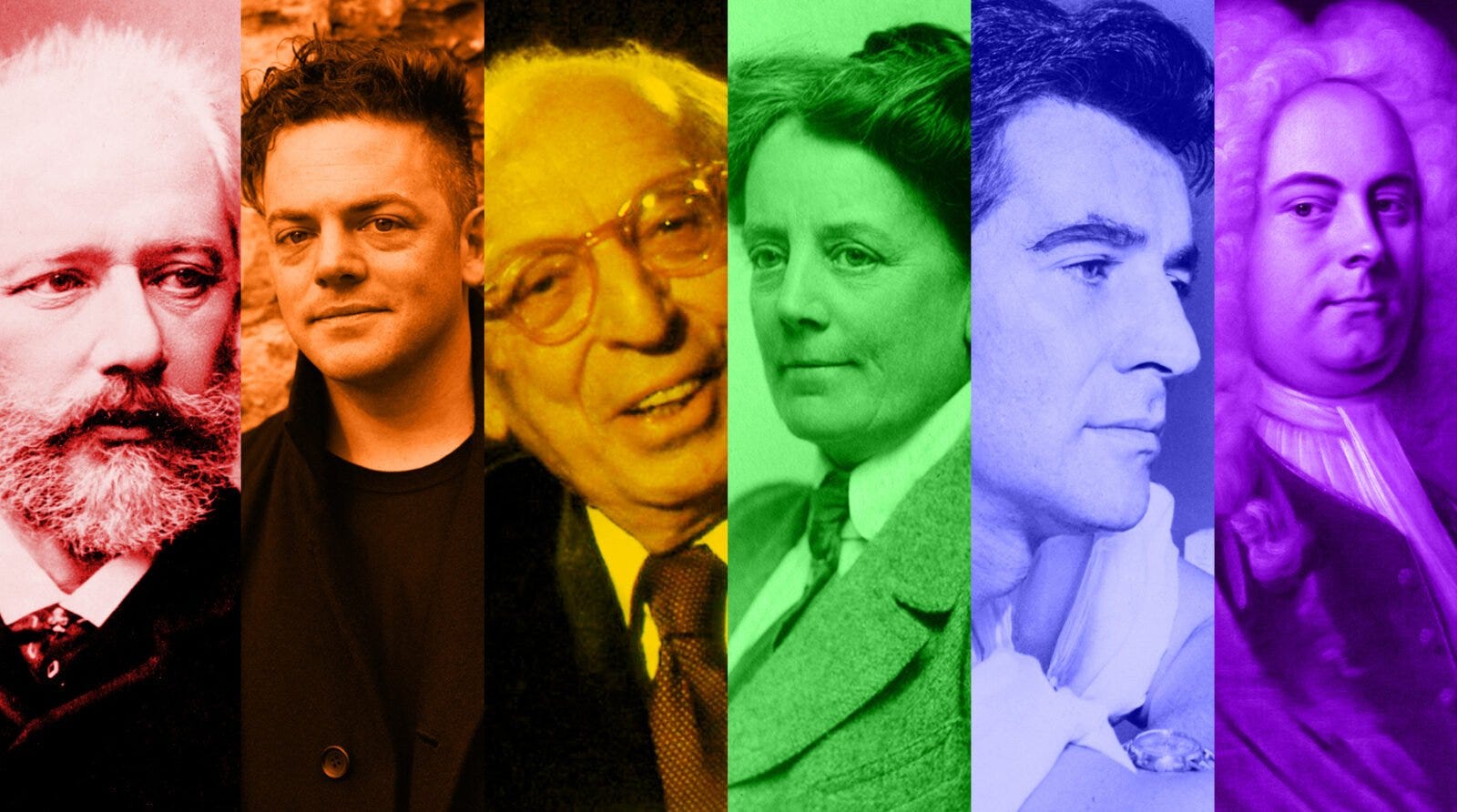
Queer History 947: Guess What, Pyotr Ilyich Tchaikovsky Was GAY AS FUCK by Wendy🏳️⚧️🏳️🌈🌈
Read on Substack
The year was 1877, and Pyotr Ilyich Tchaikovsky was drowning. Not in the Moscow River, though he’d fucking consider it soon enough, but in the suffocating heteronormative bullshit of Imperial Russia. Here was a man whose soul screamed in B-flat minor, whose heart pounded in 4/4 time, and whose sexual identity was buried so deep beneath layers of social expectation that it would take historians over a century to dig through the wreckage and find the truth: Tchaikovsky was gay as a fucking rainbow, and it nearly destroyed him.
I literally played the youtube video musical all through writing this shit. Thats how fucking awesome this is.
Tchaikovsy, how I love you.
The Tortured Genius Behind the Swan Lake
Let’s cut through the academic ass-kissing and get to the brutal reality. Pyotr Ilyich Tchaikovsky, born in 1840 in Votkinsk, Russia, was a man caught between two worlds: the soaring heights of musical genius and the crushing depths of societal homophobia. This wasn’t some gentle “product of his time” situation—this was a death sentence with a fucking bow tie.
In 19th-century Russia, being gay wasn’t just socially unacceptable; it was literally illegal and punishable by exile to Siberia or worse. The Orthodox Church considered homosexuality a mortal sin, the state considered it a criminal act, and society considered it grounds for complete social annihilation. Tchaikovsky knew this shit intimately, and it carved holes in his psyche that would bleed beautiful, agonizing music for the rest of his life.
The evidence of Tchaikovsky’s sexuality isn’t hidden in some dusty archive—it’s splattered across his correspondence like blood on a battlefield. His letters to men, particularly to his nephew Vladimir “Bob” Davydov, drip with passion that no amount of Victorian-era emotional repression can disguise. These weren’t your typical “Dear Friend” pleasantries; these were love letters disguised as family correspondence, each word carefully chosen to dance around the truth that could have killed him.
The Marriage That Nearly Killed Him
Enter Antonina Miliukova, a woman whose timing was about as good as a heart attack during a symphony performance. In 1877, this aspiring opera singer decided to confess her love to Tchaikovsky through a series of increasingly desperate letters. Most gay men throughout history have developed sophisticated avoidance techniques for such situations, but Tchaikovsky was operating under a particularly cruel form of internalized homophobia mixed with genuine terror.
The composer’s response? He fucking married her. On July 18, 1877, Pyotr Ilyich Tchaikovsky walked down the aisle like a man walking to his execution, because that’s essentially what it was. The marriage was a disaster from day one—a psychological horror show that lasted all of nine weeks before Tchaikovsky fled like his ass was on fire.
But those nine weeks? They nearly broke him completely. Tchaikovsky’s mental health, already fragile from years of sexual repression and social anxiety, shattered like a champagne flute hitting concrete. He attempted suicide by walking into the Moscow River in October 1877, hoping to catch pneumonia and die “naturally” rather than face the shame of admitting his marriage was a lie. The water was too fucking cold, and he survived, but the psychological damage was done.
The Brother Who Lived Free
While Pyotr was busy torturing himself with heteronormative performance art, his younger brother Modest was living his truth with the kind of balls that would make a bull jealous. Modest Tchaikovsky was openly gay in a time when that shit could get you killed, and he gave exactly zero fucks about what society thought.
Modest became a prominent playwright and librettist, penning the libretto for Pyotr’s “Queen of Spades” among other works. Their artistic collaboration flowed from deep fraternal understanding and shared sensibilities—two gay brothers finding ways to create beauty in a world that wanted them dead. But the difference between them was stark: Modest embraced his identity and lived authentically, while Pyotr remained trapped in a cage of his own making.
The psychological impact of watching his brother live freely while he remained closeted must have been excruciating. Modest’s existence was living proof that authenticity was possible, even in Imperial Russia, but Pyotr’s internalized shame and terror kept him locked away from his own truth.
The Music That Bled Truth
Here’s where Tchaikovsky’s genius becomes both heartbreaking and historically significant: he couldn’t live his truth, so he composed it. Every note, every crescendo, every heart-wrenching melody was a piece of his closeted soul screaming for recognition. The “Pathétique” Symphony, his final masterpiece, isn’t just music—it’s a fucking suicide note written in B minor.
Listen to the 1812 Overture and try to tell me that’s the work of a heterosexual man. The dramatic tension, the explosive release, the way it builds to an almost unbearable climax—this is the musical equivalent of a man who’s been sexually and emotionally repressed his entire life finally finding a way to express what he can’t say out loud.
Swan Lake, The Nutcracker, Sleeping Beauty—these aren’t just ballets, they’re coded messages from a gay man who couldn’t be gay. The tragic heroines, the impossible love stories, the themes of transformation and hidden identity—Tchaikovsky was writing his own story in every goddamn note, and the world was too busy enjoying the pretty music to notice the pain behind it.
The Psychological Massacre of the Closet
The psychological effects of Tchaikovsky’s forced closeting weren’t just personal—they were epidemic. Here was one of the world’s greatest composers, a man whose music would outlive empires, reduced to a trembling, suicidal wreck because he couldn’t love who he wanted to love. The internalized homophobia didn’t just damage him; it robbed the world of the person he could have been if he’d been free to live authentically.
Tchaikovsky’s diaries and letters reveal a man in constant psychological torment. He described his sexuality as a “curse” and spent his life trying to cure himself of feelings that were as natural as breathing. The self-hatred was so profound that it affected every aspect of his existence—his relationships, his work, his health, even his death.
The composer died in 1893, officially of cholera, but the circumstances were suspicious enough that many historians believe he committed suicide. Whether he died by disease or by his own hand, the cause was the same: a society that killed its own children rather than let them love freely.
The Ripple Effect on LGBTQ+ History
Tchaikovsky’s story isn’t just about one tortured genius—it’s about the systematic destruction of queer lives throughout history. Every note he wrote in anguish represents thousands of LGBTQ+ people who were crushed by the same forces that nearly destroyed him. His music became a sanctuary for queer people who recognized their own pain in his melodies, a coded language that said “you are not alone” to generations of closeted individuals.
The philosophical implications are staggering. Here was a man whose gifts to humanity were immeasurable, whose music brought joy to millions, whose artistic legacy is literally priceless—and society nearly destroyed him because of who he loved. How many other Tchaikovskys did we lose? How many symphonies were never written because their composers were too busy trying to survive in a world that wanted them dead?
The Social Impact of Closeted Genius
Tchaikovsky’s forced closeting had massive social implications that ripple through history. His marriage to Antonina became a cautionary tale about the dangers of forced heteronormative performance, but it also demonstrated how society’s homophobia damages everyone involved. Antonina became a victim too, trapped in a marriage with a man who could never love her the way she deserved.
The composer’s patroness, Nadezhda von Meck, provided him with financial support for thirteen years on the condition that they never meet in person. This relationship, conducted entirely through letters, became one of the most important in his life precisely because it was free from the sexual and social expectations that tormented him elsewhere. Von Meck understood, perhaps intuitively, that Tchaikovsky needed space to be himself—even if she never knew exactly what that meant.
The Philosophical Questions That Haunt Us
Tchaikovsky’s life raises philosophical questions that should make every thinking person’s blood boil. What is the moral cost of forcing human beings to deny their fundamental nature? How do we measure the artistic and social contributions we lost when we systemically oppressed LGBTQ+ people? What masterpieces were never created because their potential creators were too busy fighting for survival?
The composer’s struggle with his identity wasn’t just personal—it was a reflection of humanity’s broader failure to accept and celebrate diversity. His music became a form of resistance, a way of smuggling queer sensibility into mainstream culture without triggering the violent backlash that open authenticity would have provoked.
The Legacy That Survives
Despite the psychological torture he endured, Tchaikovsky’s music survives as a testament to the resilience of the human spirit. His compositions continue to move audiences to tears, to inspire dancers and musicians, to provide soundtrack for some of humanity’s most beautiful moments. The Swan Lake pas de deux has become synonymous with romantic love, performed by countless couples who have no idea they’re dancing to the work of a closeted gay man.
This is the ultimate irony: the music that emerged from Tchaikovsky’s repression has become the soundtrack for heterosexual romance across the globe. His pain became everyone’s pleasure, his torment became the world’s joy. It’s both beautiful and heartbreaking—a reminder that LGBTQ+ people have always been here, creating beauty even in the darkest circumstances.
The Modern Relevance
Tchaikovsky’s story remains devastatingly relevant because homophobia didn’t die with the 19th century. In Putin’s Russia, being openly gay is still dangerous. In dozens of countries around the world, LGBTQ+ people face imprisonment, violence, or death for being authentic. The composer’s struggle continues in the lives of countless individuals who still can’t live their truth without fear.
But his story also demonstrates the power of art to transcend oppression. Tchaikovsky couldn’t be openly gay, but his music queered the world anyway. Every performance of Swan Lake is a small act of resistance, every rendition of the Nutcracker Suite is a celebration of queer creativity, every tear shed during the Pathétique Symphony is a recognition of the pain caused by forcing people to hide who they are.
The Psychological Impact on Modern LGBTQ+ Communities
For modern LGBTQ+ people, Tchaikovsky’s story serves as both inspiration and warning. His music provides comfort and validation—proof that queer people have always existed, have always created beauty, have always found ways to express their truth even under impossible circumstances. But his psychological torture also serves as a reminder of what happens when society forces people to deny their authentic selves.
The composer’s internalized homophobia mirrors the struggles many LGBTQ+ people face today. The self-hatred, the attempts to “cure” himself, the desperate conformity to heteronormative expectations—these patterns persist in communities where acceptance is still lacking. Tchaikovsky’s story helps modern queer people understand that their struggles are part of a larger historical pattern, that they’re not alone in their pain.
The Fucking Truth We Can’t Ignore
Here’s the bottom line: Pyotr Ilyich Tchaikovsky was gay as a fucking rainbow, and society nearly destroyed one of history’s greatest musical geniuses because of it. His story isn’t just about one man’s struggle—it’s about the systematic oppression of LGBTQ+ people throughout history and the incalculable cost of that oppression.
Every time someone tries to deny or diminish Tchaikovsky’s sexuality, they’re participating in the same erasure that tortured him during his lifetime. Every time someone argues that his personal life doesn’t matter, they’re missing the point entirely. His sexuality wasn’t separate from his music—it was the source of his music, the pain that created beauty, the truth that couldn’t be spoken but had to be expressed.
The evidence is there for anyone willing to look: the passionate letters, the disastrous marriage, the psychological torment, the coded themes in his compositions. Tchaikovsky was a gay man living in a world that wanted him dead, and he survived by bleeding music instead of truth. His story deserves to be told honestly, completely, and without the sanitizing bullshit that has obscured it for too long.
We owe it to Tchaikovsky, to his brother Modest, to every LGBTQ+ person who has ever had to hide their truth, to tell this story with the visceral honesty it deserves. Because in the end, the music was never just about entertainment—it was about survival, resistance, and the unbreakable human spirit that creates beauty even in the darkest fucking circumstances.
Tchaikovsky’s legacy isn’t just musical—it’s a testament to the fact that LGBTQ+ people have always been here, creating the culture that defines human civilization, even when that same civilization tried to destroy them. His story is our story, his pain is our pain, and his music is our victory song—a reminder that love, in all its forms, will always find a way to express itself, even when the world tries to silence it.
Citations:
- Suchet J. 2019 “Tchaikovsky: The Man Revealed”
- Poznansky, K. 2014 “Tchaikovsky: The Quest for the Inner Man “
An Interview With One of My Favorite Legislators
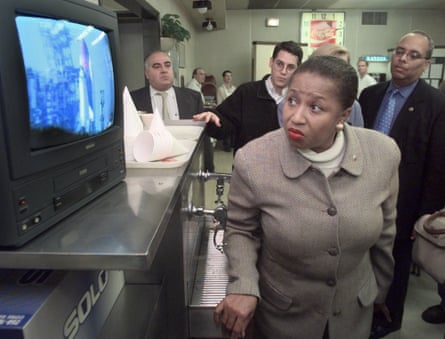
Carol Moseley Braun, first black female senator: ’Sexism is harder to change than racism’
David Smith in Washington
Trailblazing Illinois Democrat reflects on political career and says party is ‘in a daze’ about how to combat Trump

Carol Moseley Braun speaks after Rahm Emanuel wins Chicago’s mayoral race in February 2011. Photograph: Nam Y Huh/AP
“Oh, I wish I was in the land of cotton … ”
Carol Moseley Braun was riding a lift in the US Capitol building when she heard Dixie, the unofficial anthem of the slave-owning Confederacy during the civil war. “The sound was not very loud, yet it pierced my ears with the intensity of a dog whistle,” Moseley Braun writes in her new memoir, Trailblazer. “Indeed, that is what it was in a sense.”
The first African American woman in the Senate soon realised that “Dixie” was being sung by Jesse Helms, a Republican senator from North Carolina. He looked over his spectacles at Moseley Braun and grinned. Then he told a fellow senator in the lift: “I’m going to make her cry. I’m going to sing Dixie until she cries.”
But clearly, Moseley Braun notes, the senator had never tangled with a Black woman raised on the south side of Chicago. She told him calmly: “Senator Helms, your singing would make me cry even if you sang Rock of Ages.”
Moseley Braun was the sole African American in the Senate during her tenure between 1993 and 1999, taking on legislative initiatives that included advocating for farmers, civil rights and domestic violence survivors, and went on to run for president and serve as US ambassador to New Zealand.
In a wide-ranging interview with the Guardian from her home in Chicago, she recalls her history-making spell in office, argues that sexism is tougher to crack than racism and warns that the Democratic party is “walking around in a daze” as it struggles to combat Donald Trump.
As for that incident with Helms, she looks back now and says: “I had been accustomed to what we now call microaggressions, so I just thought he was being a jerk.”
Moseley Braun was born in the late 1940s in the post-war baby boom. Her birth certificate listed her as “white” due to her mother’s light complexion and the hospital’s racial segregation, a detail she later officially corrected. She survived domestic abuse from her father, who could be “a loving advocate one minute, and an absolute monster the next”, and has been guided by her religious faith.
In 1966, at the age of 19, she joined a civil rights protest led by Martin Luther King. She recalls by phone: “He was a powerful personality. You felt drawn into him because of who he was. I had no idea he was being made into a modern saint but I was happy to be there and be supportive.
“When it got violent, they put the women and children close to Dr King in concentric circles and so I was close enough to touch him. I had no idea at the time it was going to be an extraordinary point in my life but it really was.”
Moseley Braun was the first in her family to graduate from college and one of few women and Black students in her law school class, where she met her future husband. In the 1970s she won a longshot election to the Illinois general assembly and became the first African American woman to serve as its assistant majority leader.
But when she planned a historic run for the Senate, Moseley Braun met widespread scepticism. “Have you lost all your mind? Why are you doing this? But it made sense to me at the time and I followed my guiding light. You do things that seem like the right thing to do and, if it make sense to you, you go for it.”
Moseley Braun’s campaign team included a young political consultant called David Axelrod, who would go on to be a chief strategist and senior adviser to Obama. She came from behind to win the Democratic primary, rattling the party establishment, then beat Republican Richard Williamson in the general election.
She was the first Black woman elected to the Senate and only the fourth Black senator in history. When Moseley Braun arrived for her first day at work in January 1993, there was a brutal reminder of how far the US still had to travel: a uniformed guard outside the US Capitol told her, “Ma’am, you can’t go any further,” and gestured towards a side-entrance for visitors.
At the time she did not feel that her trailblazing status conferred a special responsibility, however. “I wish I had. I didn’t. I was going to work. I was going to do what I do and then show up to vote on things and be part of the legislative process. I had been a legislator for a decade before in the state legislature so I didn’t at the time see it as being all that different from what I’d been doing before. I was looking forward to it and it turned out to be all that I expected and more.”
But it was not to last. Moseley Braun served only one term before being defeated by Peter Fitzgerald, a young Republican who was heir to a family banking fortune and an arch conservative on issues such as abortion rights. But that did not deter her from running in the Democratic primary election for president in 2004.
“It was terrible,” she recalls. “I couldn’t raise the money to begin with and so I was staying on people’s couches and in airports. It was a hard campaign and the fact it was so physically demanding was a function of the fact that I didn’t have the campaign organisation or the money to do a proper campaign for president.
“I was being derided by any commentator who was like, ‘Look, this girl has lost her mind,’ and so they kind of rolled me off and that made it hard to raise money, hard to get the acceptance in the political class. But I got past that. My ego was not so fragile that that it hurt my feelings to make me stop. I kept plugging away.”
Eventually Moseley Braun dropped out and endorsed Howard Dean four days before the opening contest, the Iowa caucuses. Again, she had been the only Black woman in the field, challenging long-held assumptions of what a commander-in-chief might look like.
“That had been part and parcel of my entire political career. People saying: ‘What are you doing here? Why are you here? Don’t run, you can’t possibly win because you’re not part of the show and the ways won’t open for you because you’re Black and because you’re a woman.’ I ran into that every step of the way in my political career.”
Since then, four Black women have followed in her footsteps to the Senate: Kamala Harris and Laphonza Butler of California, Angela Alsobrooks of Maryland and Lisa Blunt Rochester of Delaware.
Moseley Braun says: “I was happy of that because I was determined not to be the last of the Black women in the Senate. The first but not the last. That was a good thing, and so far the progress has been moving forward. But then we got Donald Trump and that trumped everything.”
Harris left the Senate to become the first woman of colour to serve as vice-president, then stepped in as Democrats’ presidential nominee after Joe Biden abandoned his bid for re-election.
Moseley Braun comments: “I thought she did as good a job as she could have. I supported her as much as I knew how to do and I’m sorry she got treated so badly and she lost like she did. You had a lot of sub rosa discussions of race and gender that she should have been prepared for but she wasn’t.”
Trump exploited the “manosphere” of podcasters and influencers and won 55% of men in 2024, up from 50% of men in 2020, according to Pew Research. Moseley Braun believes that, while the country has made strides on race, including the election of Obama as its first Black president in 2008, it still lags on gender.
“I got into trouble for saying this but it’s true: sexism is a harder thing to change than racism. I had travelled fairly extensively and most of the world is accustomed to brown people being in positions of power. But not here in the United States. We haven’t gotten there yet and so that’s something we’ve got to keep working on.”
Does she expect to see a female president in her lifetime? “I certainly hope so. I told my little grandniece that she could be president if she wanted to. She looked at me like I lost my mind. ‘But Auntie Carol, all the presidents are boys.’”
Still, Trump has not been slow to weaponise race over the past decade, launching his foray into politics with a mix of false conspiracy theories about Obama’s birthplace and promises to build a border wall and drive out criminal illegal immigrants.
Moseley Braun recalls: “It was racial, cultural, ethnic, et cetera, backlash. He made a big deal out of the immigration issue, which was racism itself and people are still being mistreated on that score.
“They’ve been arresting people for no good reason, just because they look Hispanic. The sad thing about it is that they get to pick and choose who they want to mess with and then they do. It’s too destructive of people’s lives in very negative ways.”
Yet her fellow Democrats have still not found an effective way to counter Trump, she argues. “The Democratic party doesn’t know what to do. It’s walking around in a daze. The sad thing about it is that we do need a more focused and more specific response to lawlessness.”
Five years after the police murder of George Floyd and death of Congressman John Lewis, there are fears that many of the gains of the civil rights movement are being reversed.
Over the past six months Trump has issued executive orders that aim to restrict or eliminate diversity, equity and inclusion (DEI) initiatives. He baselessly blamed DEI for undermining air safety after an army helicopter pilot was involved in a deadly midair collision with a commercial airliner. Meanwhile, Washington DC dismantled Black Lives Matter Plaza in response to pressure from Republicans in Congress.
None of it surprises Moseley Braun. “It should have been expected. He basically ran on a platform of: ‘I’m going to be take it back to the 1800s. Enough of this pandering and coddling of Black people.’”
But she has seen enough to take the long view of history. “This is normal. The pendulum swings both ways. We have to put up with that fact and recognise that this is the normal reaction to the progress we’ve made. There’s bound to be some backsliding.
More than 30 years have passed since Moseley Braun, wearing a peach business suit and clutching her Bible, was sworn into the Senate by the vice-president, Dan Quayle. Despite what can seem like baby steps forward and giant leaps back, she has faith that Americans will resist authoritarianism.
“I’m very optimistic, because people value democracy,” he says. “If they get back to the values undergirding our democracy, we’ll be fine. I hope that people don’t lose heart and don’t get so discouraged with what this guy’s doing.
“If they haven’t gotten there already, the people in the heartland will soon recognise this is a blatant power grab that’s all about him and making a fortune for himself and his family and has nothing to do with the common good. That’s what public life is supposed to be about. It’s public service.”
Priorities
(This is here in part because clicking through to read on Substack for free is good for her numbers, and she deserves all the numbers. -A)
My Thoughts on the ‘Gen Z Stare’ by Charlotte Clymer
And I do have thoughts. Read on Substack
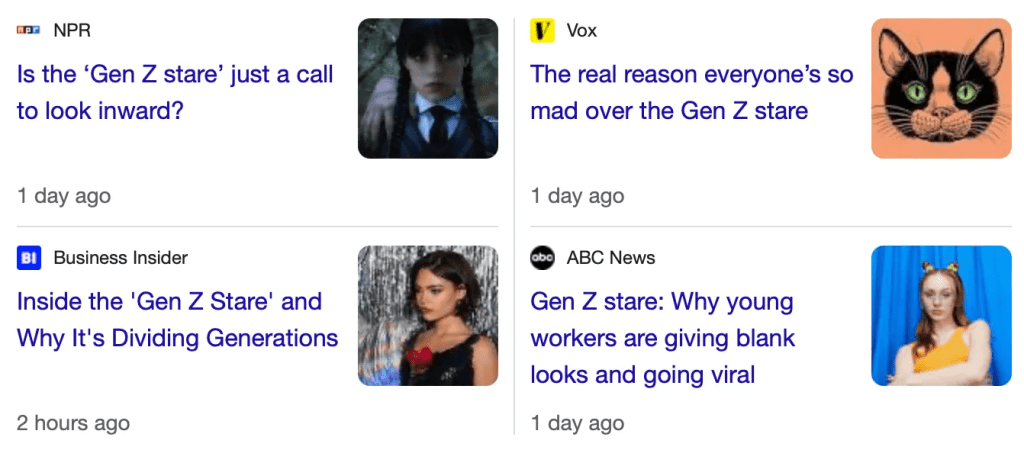
Legacy media is very concerned with the ‘Gen Z Stare’
In the past week, there’s been robust discourse in legacy media about the so-called ‘Gen Z Stare’ and the bursts of generational conflict it reportedly captures.
It’s gotten write-ups by The New York Times, The Washington Post, USA Today, The Boston Globe, NBC News, ABC News, CNBC, Newsweek, Indy100, Axios, Fortune, Vox, Vice, Business Insider, The Independent, Forbes, Buzzfeed, Slate, HuffPost, Glamour, People, and Marie Claire, among others.
As a millennial, I am apparently urged to be concerned about this phenomenon of Gen Z folks supposedly failing to appropriately interact with me through sufficiently pleasant facial expressions, so I thought it might be helpful to offer my thoughts:
The sitting president of the United States is currently covering up a massive sex trafficking operation that targeted children and likely implicates a number of powerful people who are currently out in the world and free to continue preying on children.
The sitting president of the United States just successfully pressured Paramount and CBS to cancel the #1 late-night talk show on broadcast television as part of what appears to be a blatant bribery deal because the host has been critical of him.
The sitting president of the United States just got the extremist Republican majority in Congress to strip 11 million Americans of health care coverage by the end of 2026 and upwards of 17 million Americans when you account for new federal work requirements. (snip-MORE; it’s succinct and quick, and it’s all good facts for grocery/other places lines, for discussion.)
 Scottie's Playtime