It’s A Big Flag!

Largest Human Pride Flag Ever Made by Mexican LGBTQ Activists Sets Global Record

The colorful formation draped the historic Plaza de la Constitución, capturing global attention and shattering previous records.

Matias Civita / Published Jun 23 2025, 5:03 PM EDT

Rodrigo Oropeza/AFP via Getty Images.

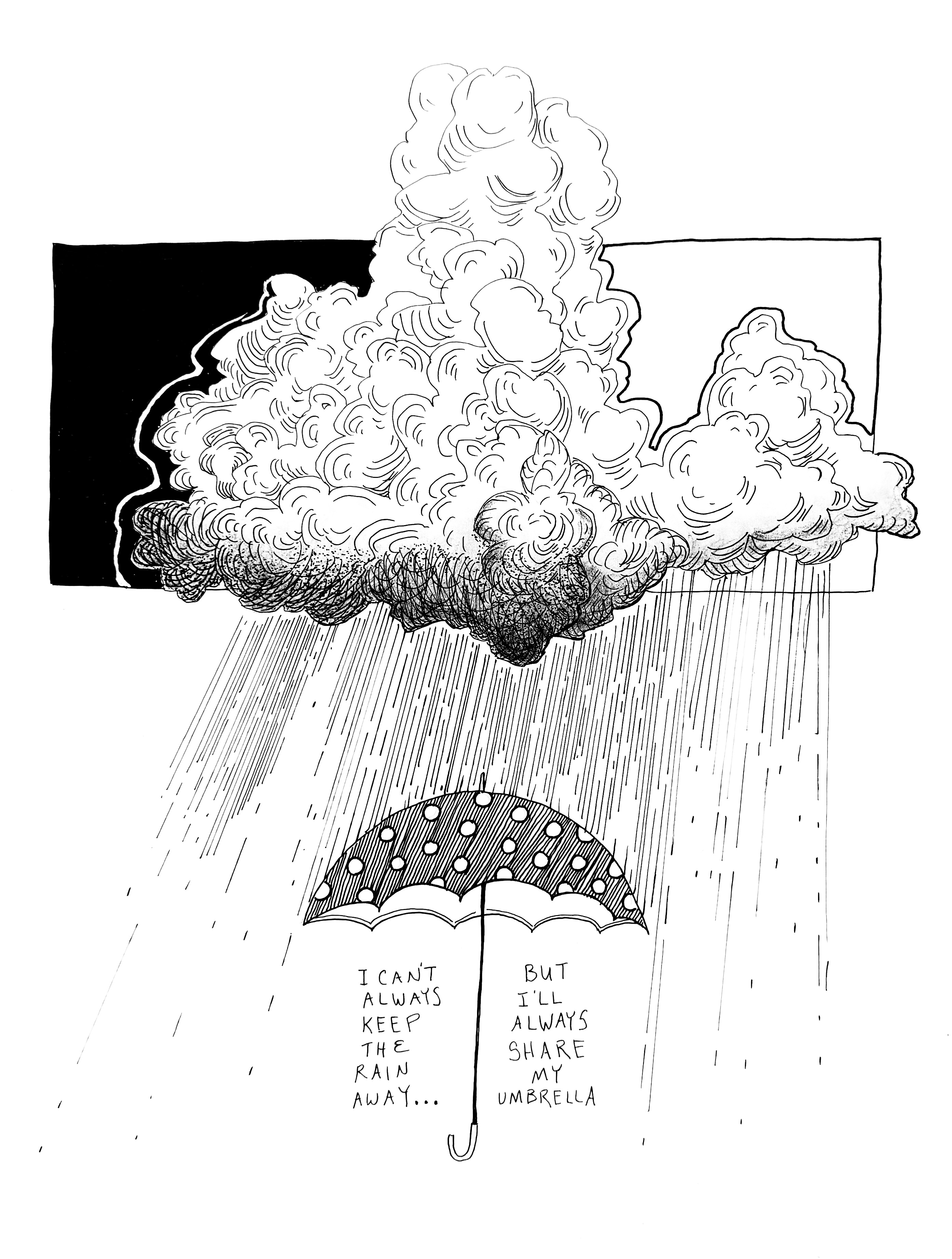
In celebration of Pride Week, more than five thousand LGBTQ+ activists converged on Mexico City’s Zócalo to form the world’s largest human LGBT flag. Under a shower of rain and brandishing vibrant umbrellas, the colorful formation draped the historic Plaza de la Constitución, capturing global attention and shattering previous records.

Mexico City Mayor Clara Brugada joined the crowd led the choreography. She said during the event that “Mexico City is and will continue to be the city of rights and freedoms. This monumental image we draw with our bodies and colors will be a powerful message to the country and the world. Mexico City is the capital of pride, diversity, peace, and transformation.”

(snip-see MORE on the page)

It’s Just Nice; No Doubt Each of Us Can Do This- 🍵

(My cup emoji is not yellow. sigh)

Peace

Abhijit reads his poem on video (on the page.) It’s good to hear!

From The Smart Ones:

Snippet:

There is a free printable PDF or PNG at their KoFi, along with a pre-order for stickers and tshirts, which will ship later in June.

More than 1800 NO KINGS rallies are planned for this Saturday, June 14, as counter programming to the most embarrassing example of fascist onanism ever.

And, since June is Pride month, there are a lot of Pride activities going on that date, too. Perhaps yours also overlap, and this sign will work for you, too!

Thanks to Chris for permission to share – this design is so great, I had to share it.

Stay safe out there, and wherever you are, please know that you are loved exactly as you are. Whether you can live your life openly or keep parts of yourself hidden, you’re seen and welcomed and loved.”

Intersectionality

“Her insistence that the rights of women, people in poverty, people of color, and immigrants all be upheld within the political Left, as well as without it, left a legacy of intersectionality that was ahead of its time.”

It’s In My Naked Pastor Email-

Love Is The Answer

Queer History from Wendy The Druid

(https://www.peacebuttons.info/)

Some bits from each one since the last time. Still NSFW. Tissue alert for some.

Queer History 128: The Day The Initiative Died by Wendy🏳️‍⚧️🏳️‍🌈🌈

Also The Day California Told Bigots to Go Fuck Themselves Read on Substack

How Teachers, Ronald Reagan, and Harvey Milk Crushed the Most Dangerous Anti-Gay Ballot Measure in American History

Picture this: It’s 1978, and a conservative state legislator from Orange County wants to ban every gay and lesbian teacher in California. Not just fire the ones who are out—he wants to hunt down anyone who might be gay, anyone who supports gay rights, anyone who so much as suggests that maybe gay people deserve basic human dignity. This wasn’t just about removing teachers. This was about erasing an entire community from public life.

Harvey Milk's last fight: Found photos from landmark debate over gay  teachers

John Briggs thought he had the perfect plan. Fresh off Anita Bryant’s homophobic “Save Our Children” crusade in Florida, he figured California would be easy pickings. He was dead fucking wrong. On November 7, 1978, California voters didn’t just reject Proposition 6—they obliterated it. The Briggs Initiative went down by more than a million votes, losing even in Briggs’s own conservative Orange County stronghold.

Behind that victory was one of the most unlikely coalitions in American political history: a martyred gay supervisor, a future Republican president, grassroots activists, Catholic bishops, and thousands of teachers who refused to let fear win. This is the story of how they did it—and why it matters more than ever today. (snip-MORE)

Queer History 131: Michelangelo by Wendy🏳️‍⚧️🏳️‍🌈🌈

The Divine Cock: Why Michelangelo Was Almost Certainly Gay as Hell Read on Substack

You think you know Michelangelo? The guy who painted the Sistine Chapel ceiling and carved David from a massive chunk of marble? Here’s what they don’t teach you in art history class: the Renaissance master was probably queer as a three-dollar bill, and the evidence is splattered all over his life’s work like paint on a studio floor.

michelangelo

For nearly 250 years, Michelangelo’s own family censored his love letters and poems, changing every masculine pronoun to feminine ones to hide the uncomfortable truth that the “divine one” was divinely attracted to other men. When scholars finally uncovered the original texts in the 1890s, they found a treasure trove of homoerotic passion that would make even modern romance novels blush. (snip-MORE-do go read it!)

Queer History & Culture 127: Alan Turing by Wendy🏳️‍⚧️🏳️‍🌈🌈

A tortured genius whose code-breaking saved millions, only to be destroyed by the very society he protected Read on Substack

The bastards killed him. Not with bullets or blades, but with something far more insidious—the slow, methodical destruction of a man’s soul through legal persecution, chemical castration, and the systematic erasure of his humanity. Alan Mathison Turing didn’t just die on June 7, 1954; he was murdered by a society so goddamn backward that it chose to destroy one of the greatest minds in human history rather than accept that he loved men.

Alan Turing: A Strong Legacy That Powers Modern AI | AI Magazine

(snip)

The Making of a Revolutionary Mind

Born in 1912 to a British colonial family, Turing’s brilliance blazed early and fierce. At Sherborne School, while other boys were playing cricket and learning to be proper English gentlemen, young Alan was already wrestling with mathematical concepts that would have made university professors weep. His first love affair wasn’t with numbers, though—it was with Christopher Morcom, a fellow student whose death from tuberculosis would haunt Turing for the rest of his tragically short life.

That early loss carved something deep into Turing’s psyche. Here was a boy-genius, already grappling with his sexuality in an era when homosexuality was not just taboo but literally criminal, watching the person he loved waste away and die. The philosophical implications would torment him: if consciousness could be snuffed out so easily, what made it real in the first place? This question would drive his later work on artificial intelligence, but it also planted the seeds of a profound existential loneliness that would follow him like a shadow.

At King’s College, Cambridge, Turing found his intellectual home among the mathematical elite, but he also found something else: a community of gay men who lived in the shadows, speaking in codes, loving in secret. The irony is fucking brutal—here was a man who would become history’s greatest codebreaker, learning his first lessons in cryptography from the necessity of hiding his own identity. (snip-MORE, it should be known)

Queer History 129: The Genital Mutilation of the 1880s by Wendy🏳️‍⚧️🏳️‍🌈🌈

Read on Substack

In the fucking darkness of the 1880s, American medicine—that supposed bastion of healing and hope—turned into a goddamn chamber of horrors for LGBTQIA+ people. What began as medical “curiosity” quickly devolved into systematic torture disguised as treatment, launching over a century of medical persecution that would destroy countless lives and shatter the trust between queer people and healthcare forever.

The medical establishment, drunk on its newfound authority and desperate to appear scientific, decided that love between same-sex individuals was a disease to be cured. These weren’t healers—they were executioners in white coats, armed with instruments of torture and backed by the full weight of societal approval. The brutality that followed would make the Inquisition blush. (snip-MORE)

Queer History 130: The Lavender Scare by Wendy🏳️‍⚧️🏳️‍🌈🌈

When Joe McCarthy Declared War on America’s LGBTQIA+ Read on Substack

n 1950, Senator Joseph McCarthy stood before a crowd in Wheeling, West Virginia, and launched what would become the most sustained attack on LGBTQIA+ Americans in the nation’s history. While his speech focused on supposed Communist infiltration of the State Department, McCarthy’s paranoid rantings about “security risks” would soon expand into a full-scale witch hunt against homosexual federal employees. This wasn’t just political theater—this was the birth of the Lavender Scare, a systematic campaign of terror that would destroy thousands of lives and poison American democracy for decades.

The Lavender Scare: the shocking true story of an anti-LGBT witch-hunt |  Documentary films | The Guardian

McCarthy didn’t just stumble upon anti-gay persecution as a political tool—he weaponized it with surgical precision. The bastard understood that while Americans might eventually get tired of hunting Communists, they would never tire of persecuting queers. Homophobia was the gift that kept on giving, a renewable resource of hatred that could fuel his political ambitions indefinitely. What began as anti-Communist hysteria quickly metastasized into something far more insidious: the systematic elimination of LGBTQIA+ people from American public life. (snip-MORE)

A Good One From Sojo

Queerness Is a Calling Every Person Should Aspire To

By Brandan Robertson

“Queer” is not about who you’re having sex with (that can be a dimension of it), but “queer” as being about the self that is at odds with everything around it and has to invent and create and find a place to speak and to thrive and to live.”
—bell hooks

I’ve always been queer, but it took me a while to realize it. Even after coming out as gay, I still struggled with the language of “queer” because I grew up hearing it used as a slur. In many places, it still is. I remember the shocked look on the faces of a lecture audience in rural England when I said “queer” — as if I had uttered a curse word.

This is how the word sits with many people — even within the LGBTQIA+ community. But over the years, as I’ve wrestled with my identity, learned the history of LGBTQIA+ liberation, and developed my beliefs, I’ve come to resonate deeply with being queer, just as much as with being Christian.

In fact, for me, to be an authentic Christian — one who seeks to follow the life and teachings of Jesus — is to be queer. Let me explain.

To be queer generally means one of two things. First, it’s a catch-all phrase for the LGBTQIA+ community — those who embrace a non-heterosexual orientation and/or non-cisgender identity. Second, queer also means to disrupt arbitrary norms, making space for diverse, often marginalized, expressions to flourish.

To be queer means resisting the repression of our true selves and the forces that demand we conform to others’ ideas of who we should be. It’s a declaration of our commitment to live authentically — who God created us to be — not who society or religion says we must become.

In this sense, queerness is holy. It affirms that God doesn’t make mistakes — that our unique expression reflects God’s creativity — and refuses to blaspheme the Creator by suppressing that divine image. When seen this way, queerness is a calling every person should aspire to.

To follow Jesus is to refuse conformity, as Paul wrote: “[to] be transformed by the renewing of your mind” (Romans 12:2). This means shifting how we see ourselves and others — removing the masks we were taught to wear, the roles we were conditioned to play. In this way, queerness is deeply aligned with the way of Jesus.

bell hooks defines queerness as “being at odds with everything around it.” That feels exactly right. We live in a world shaped by systems built to benefit particular people. What’s considered “normal” is often an invention — crafted to maintain control and marginalize difference. Nothing has always been the way it is, and it shouldn’t remain the same.

Today, there’s a rising awareness of the value of diversity and pluralism by many in society (while diversity is also demonized by many). More people are becoming suspicious of those who demonize difference and cling to the status quo. The past century has shown us that the status quo is often built on lies that lead to oppression.

Our society was set up by people who established norms to benefit themselves. But as the world grows more connected and aware of diverse ways of being, movements of resistance have chipped away at this conformity and demanded a new, inclusive path. These movements are “queering” society — questioning and resisting what’s been called normal — and they’ve made the world more just and diverse.

One of the most resistant institutions to queering has been Christianity. This isn’t surprising. Religion resists change, and Christian institutions have fought nearly every cultural shift from desegregation to women’s voting rights to rock music. Those willing to reform are often labeled heretics and excluded from church power. But every so often, resistance sparks reform in the church. The Protestant Reformation, the abolitionist movement, and the fight for women’s rights have all queered Christianity by disrupting norms and pushing forward new expressions of faith.

The inclusion of queer people in Christianity is another such movement. Today, nearly every mainline Protestant denomination in the U.S. officially affirms queer people. We can serve as clergy, marry, and be fully embraced. While there are many local congregations in each denomination that resist these changes, the movement for inclusion is well underway. This is a remarkable shift.

Just last year, Pope Francis announced that Catholic priests may bless same-sex couples. A few months before, he said transgender people could be baptized and serve as godparents. Though these don’t change Catholic doctrine, they marked major steps forward that made many lay queer Catholics feel more included in their churches.

Still, there is much work to do. The truth remains that most Christians worldwide still uphold anti-queer theology. Many still preach that homosexuality is an abomination. Many still teach that women must submit to men and cannot lead.

Progressive Christians sometimes believe the church is rapidly changing, but that’s often just the view from our bubble. Most Christians still cling to rigid, patriarchal theology. And I’ve come to believe that the only way to challenge that resistance is through queering.

Not every LGBTQIA+ Christian agrees with this strategy. There are many queer Christians who would prefer to simply shift the church’s understanding of the six clobber passages and be accepted into the traditional Christian institution with its traditional sexual ethics, understanding of relationships, and devotion to conservative theology otherwise. I understand that desire; I once had it too. But I’ve come to believe it’s actually counterproductive to our flourishing as queer people.

The more I’ve studied Scripture and listened to queer stories, the more convinced I’ve become: The issue isn’t a few misinterpreted Bible verses — it’s that Christianity was institutionalized. A few hundred years after Jesus, his radical movement was merged with the Roman Empire and transformed into rules, dogma, and rigid orthodoxy.

Other perspectives were labeled heresy, punished, and driven underground. What remained became dominant: a version of Christianity that, frankly, looks nothing like Jesus.

When I became a Christian, it was because I wanted to follow Jesus — not an institution. But I was quickly taught that faithfulness to Jesus meant faithfulness to the church. I learned the doctrines and ethics of my church and saw that the more I conformed, the more I was accepted — and even celebrated.

From adopting the politics of my pastors to unquestioningly espousing conservative theology, to even dressing in ways that mirrored the evangelical subculture, I learned that through conforming and contorting myself to look, believe, vote, and act like what was seen as normative for evangelical Christians, my inclusion would be solidified.

I gained status and privilege. I was affirmed by my church and I believed that this meant I was close to God. But I felt uneasy, even early on. As I read Scripture, I struggled to see our theology or ethics reflected in Jesus’ life. Jesus lived on the margins of religious and political power. He constantly challenged the status quo and resisted exclusionary doctrine.

I came to see that neither I nor my church looked like Jesus. That realization was unsettling. Eventually, it led me to believe that queering Christianity wasn’t just permissible — it was necessary. Not only for LGBTQIA+ inclusion, but for everything and everyone.

Rather than blindly accepting church authority, I began to pursue truth wherever it led and invited others to do the same. My ministry became about queering Christianity, not just including queer people in the traditional frameworks of the church.

That meant challenging every theology and ethic that doesn’t reflect Jesus’ ethic of love. It meant reimagining how we follow Jesus — beyond traditional Christianity.

This is, I believe, the most faithful path. But it’s also the hardest. It requires us to stop seeking the affirmation of and inclusion in the old structures and instead focus on building subversive, queerly spiritual communities that reflect the Spirit of Christ.

It means being open to truth from everywhere and everyone — because all truth is God’s truth — and letting it shape our spiritual journeys.

It means getting used to being called heretics. Excluded even from some so-called affirming churches that find our vision too radical. But our goal isn’t to be welcomed because we conform — it’s to create a community that welcomes all expressions and beliefs, grounded in the love and example of Jesus in whatever form that takes.

Our goal isn’t even to be “Christians,” really. Jesus never used that word. Never spoke a Christian doctrine. Never stepped inside a Christian church. So inclusion in the traditional institutions of Christianity isn’t the point.

The point is a truly queer revolution of faith that liberates us all to show up authentically, that remains open to the voice of our still-speaking God in the most unlikely people and places, and that understands that the Kingdom of God that Jesus preached and embodied can never be contained in the rigid boundaries of any institution, but is found among the diversity, complexity, and beauty of all of our human experiences.

Editor’s note: This essay is an adaptation from Queer & Christian: Reclaiming the Bible, Our Faith, and Our Place at the Table. It has been adapted with the permission of St. Martin’s Essentials.

Reblog of Janet’s Reblog-

don’t miss it, it’s multi-faceted!