Music was a haven for me when I was young living in my parents’s house. Much of what I’ve heard and enjoyed throughout my life has had Quincy Jones’s hand involved. May he rest in power. This is sad.
You cannot write the history of Black music and entertainment without Quincy Jones. During his 70 year artistic career as a musician, producer and composer, his impact has been felt throughout our culture. According to a statement from his family, Jones died Sunday night at the age of 91, at his home in Bel Air, Calif. (snip-much MORE; tissue alert)
OK, so it didn’t take me this long to eat lunch; I’ve had some other things to do, and wanted to let the first post settle a bit. Since I got that all out, some of my urgency has abated, though I still want to tie the subject up, until/unless there are comments where we can discuss and enjoy however long we want.
Lunch was brunch. My plate was frambled eggs with toast. I know I said it wasn’t a cooking post, and look what I’m doing. When I make frambled eggs, I cook the eggs as if for over-easy (yolks runny, whites cooked.) Turn the eggs when it’s time, let them get a bit of heat on that side, then gently drag your spatula through, to break the yolk and drag the white through the yolk. My personal goal is not a hard-cooked yolk, but what I guess they call a jammy yolk; you get a bit of liquid, even, but it’s not drippy. You just keep gently lifting and turning until you like the consistency of the eggs. I had whole wheat toast, and oatmeal that I apple-pie spiced, and sweetened with honey. We’ve been having a rain “event,” so I’d got the laundry to the laundry room to run and to dry between/before rains.
Our laundry room is at the front of our front carport, front being the direction the front end of the car points; we park in front of the laundry room. Our house is a whole post in and of itself, but not quite as Scottie’s and Ron’s house; they may run theirs by crisis and we rarely have a crisis, but their house is nicer and more modern than ours. Also, while Sat. and Sunday are fitness rest days, I still do 10 min. every hour on the rebounder to get my steps. So, lunch hour took a little while. It’s a rest day! 😎 And the first day of Standard time, so everything’s a little later because our bio clocks are still running on Saving time. 🕰
I wonder if everybody has that one or two commercials that the last time it airs cannot come too soon. For me, right now, (and I know the winter holidays commercials are coming…) it’s that Wegovy commercial. I just want it to stop. Interestingly, while I’m not a big fan of Big Pharma, one of the ads I enjoy, all its versions, is the Jardiance ad! It makes me dance. Well, the newest one’s tempo is too slow for fun dancing, but it’s still a nice ad. This is neither a plug for or against either drug. Those have their place and may be discussed with a person’s doctor. This is just about the ads. The ones that use music from my youth especially tick me off, so I just ignore them and dance to their background music. I hate that King Harvest’s “Dancin’ in the Moonlight” is one that’s been appropriated. It’s been one of my top favorites forever, and they can’t take it away from me!
I turned all the clocks back last night, except one. But our son came out, noticed, and said, “Aren’t we supposed to turn the clocks back? The bathroom clock is an hour fast.” Truly, I’d turned the clocks up. I find the semi-annual time change abhorrent and stupid, but I disdain Saving time the most, because there goes another hour of my life, every year, that doesn’t come back, not really, so I guess changing the clock put me in a negative mindset and I went the wrong way. Anyway, it’s been enough years of my life now that I don’t care which we have, we simply need to pick one and be done. I don’t change the analog clock in the kitchen; it’s over the kitchen table, and I can’t reach it unless I stand on the kitchen table. Some day there could be a reason for me to stand on the kitchen table, but I’m not doin’ it to change the damn clock. The guys will get tired of it sooner or later, and I have the stove clock. And my Fitwitch on my wrist.
Well, that’s a sort of round up of trivia and drift. I hope readers have enjoyed it, at least smiled or giggled, and maybe feel a little better.
We can do this stuff. It’s still way too early to let Republicanism mess with our mental health.
(You may not like them all, or any of them. Listen to what you like; that’s what I’m doing. All the commentary is good. I saw this last night in my Women for KS newsletter, and wanted to share. Enjoy! -A)
October 20, 1947 The House Un-American Activities Committee (HUAC) opened public hearings into alleged Communist influence in Hollywood. To counter what they claimed were reckless attacks by HUAC, a group of motion picture industry luminaries, led by actor Humphrey Bogart and his wife, Lauren Bacall, John Huston, William Wyler, Gene Kelly and others, established the Committee for the First Amendment (CFA).Read more =================
October 20, 1962 A folk music album, “Peter, Paul and Mary,” hit No. 1 on U.S. record sales charts. The group’s music addressed real issues – war, civil rights, poverty – and became popular across the United States. The trio’s version of “If I Had A Hammer” (originally recorded by The Weavers, which included the song’s composers, Pete Seeger and Lee Hays) was not only a popular single, but was also embraced as an anthem by the civil rights movement. About Peter, Paul and Mary ================== October 20, 1967 The biggest demonstration to date against American involvement in the Vietnamese War took place in Oakland, California. An estimated 5,000-10,000 people poured onto the streets to demonstrate in a fifth day of massive protests against the conscription of soldiers to serve in the war. [see October 16, 1967]Read more ================ October 20, 1973 In what was immediately called the “Saturday Night Massacre,” President Richard Nixon’s Press Secretary, Ron Ziegler, announced that Special Watergate Prosecutor Archibald Cox had been dismissed. Cox had been investigating Nixon, his administration and re-election campaign. Nixon had demanded that he rescind his subpoena for White House recordings. Archibald Cox Richard Nixon Earlier in the day, Attorney General Elliot Richardson had resigned, and Deputy Attorney General William Ruckelshaus had been fired, both for refusing to dismiss Cox. Solicitor General Robert Bork, filling the vacuum left by the departure of his two Justice Department superiors, fired Cox at the president’s direction.
Full confession; this is an article from Sojourners Magazine. I subscribe, and I brought the whole piece here, for those who may wish to read it but don’t want to go on a Christian site. I did not see anything besides that to warn about; there is discussion of church but not of bad happenings. However, if I missed something, I am so sorry; if you would be able to let me know in comments, that helps me learn what I should look for. This article struck me as something that should be at Scottie’s Playtime.
This interview is part of The Reconstruct, a weekly newsletter from Sojourners. In a world where so much needs to change, Mitchell Atencio and Josiah R. Daniels interview people who have faith in a new future and are working toward repair. Subscribe here.
Flamy Grant called in to her morning interview after participating in a day-long silent retreat. Well, not a silent retreat exactly — it was a vocal rest.
After spending the last year touring the U.S. off the success of her album, Grant, who prefers to use her stage name in interviews, needed to rest her voice. Since her rise to Christian music stardom — or infamy, depending on how one feels about a drag queen topping the Christian charts — she has performed in bars, clubs, and churches spreading the good news in glitter.
Since then, Grant has collaborated with artists like Semler, Derek Webb, and Jennifer Knapp. And she has spoken out for LGBTQ+ rights, joining a lawsuit against the state of Tennessee in 2023.
A few weeks before the release of her second album, CHURCH, Grant and I spoke about her time touring the country, writing songs in drag, leaving the church but still going to churches weekly, and more.
Coincidentally, as the interview ended, Amy Grant’s “Lucky One” began playing over the hotel lobby’s speakers.
[Editor’s note: This interview was performed before Hurricane Helene devastated many regions in the South, including Flamy Grant’s hometown of Asheville, N.C. Grant and her team canceled shows in North Carolina, but continue touring in Georgia and Nashville this week before touring the West Coast.]
This interview has been edited for length and clarity.
Mitchell Atencio: How is touring? What have you heard from folks while on the road?
Flamy Grant: I feel like I’ve been on tour pretty much nonstop for the past year. A year ago I quit my day job and moved back to Asheville, N.C., where I was born and raised. And honestly, this is not even an exaggeration, I’ve spent more time on the road than I have in my bedroom at home.
This [tour], though, is very different. I’m on a tour with two other acts and a full band. Mostly, I’ve just been solo on the road, which I love in a lot of ways because I’m actually very much an introvert.
We’re only in our second week right now of the “No More Trauma” tour, and the response has been amazing so far. Now that I’m a year in, there have been people who’ve come up to me to say hello afterwards, and [they say], “This is our third or fourth time seeing you!” And I’m like, I’ve really only been doing this full-time for a year. What do you mean the third or fourth time? It is really cool to know that there’s this community and fan loyalty.
My favorite moment on tour so far was in St. Louis. We were getting ready, there was no green room at the venue, so I was literally just painting my face in front of the windows, right outside where the line was forming to get in. There was this family — a mother and a little girl, around 7-9 years old. She had a sign, painted in full rainbow lettering, that said, “This is my first concert!” And she was just holding it up to the window. So I popped out to say hello, and they had driven two hours to St. Louis to come to this show. Her name was Claire, and I’m her favorite artist, and I’m her first concert.
That was wild because it just threw me back to when I was that age and excited about music and wanting to go to concerts for the first time. Everybody always asks that question, “What was your first concert?” throughout your entire life. And now Claire is always going to say, “I saw a drag queen in St. Louis.”
Now I’m curious what your first concert was.
Clay Crosse. He had quite a big hit with that song “I Surrender All” in the ’90s. I just loved him. I probably had a crush on him, if we’re being honest. He had that classic jawline, that beautiful blonde hair, and yeah, I was obsessed with him. My parents couldn’t take me, so I roped one of my friends from church and got his dad to drive us down to this show. What I remember most about it was that Jaci Velasquez opened and she was so good. She was phenomenal.
Mine, for fairness, was the Newsboys back when Peter Furler was still leading them. Speaking of touring, I noticed you have a different booking process for churches and for “traditional venues” like bars and clubs. Why is that?
That’s been interesting to navigate. I feel like I’m definitely straddling two worlds. I very much want to be taken seriously as a musician and songwriter. The drag can sometimes be a little bit of a barrier to that, because people tend to see drag and think it’s a gimmick or, they just immediately associate it with Sunday drag brunch or weekend clubs.
I have done a fair bit of that, especially early on, but I’m a singer-songwriter and I write my own original music, and I happen to perform in drag. It’s been a challenge to convey that as we’re booking and marketing shows. My booking agent is fantastic, and she’s been really good at helping people understand that they’re booking a singer-songwriter who needs an extra hour in the green room to get ready.
What happened last year, with “Good Day” hitting number one, so many churches reached out and the first question was, “Can we do ‘Good Day’ in Sunday worship?” And I’m like, of course you can, just make sure they know it’s written by a drag queen. The next question was, “How do we get you to come?” Either on a Sunday morning or to do a special concert on an evening.
Because I know the church world and was a worship leader for 22 years, it just makes more sense for me to book those myself. I don’t generally go out seeking church bookings, those really do come to me, and that’s a gift in so many ways.
I’ve played in over 50 churches in the last year. Some want to integrate me into their Sunday morning service, I’ll be part of the service planning, and we’ll have a song during communion or the offertory. Others want to bring me in on a Saturday night and have me come sing to their congregation and community.
I have officially left the church myself. The last church I was involved in was in San Diego, I was a worship leader there for 8-and-a-half years and it closed down after the pandemic. I have not sought out a new church home since then, but I’m still in churches a lot.
You’re in churches about once a week — that’s more than many church members. What makes writing music as Flamy Grant feel different? How does one write songs in drag?
In some ways, there’s no difference at all. At the end of the day, I’m just writing about my experiences. Derek Webb says the artist’s role is just to look at the world and speak about it. That’s so much of what I’ve done since I was 9 years old when I wrote my first song. That process of songwriting doesn’t necessarily feel all that different.
And yet, there is this shift in the tone and subject matter of what I write about, because my life has changed so dramatically. And drag is a huge part of that change.
Flamy Grant poses for a photo. Photo by Ash Perlberg/Courtesy Flamy Grant
It’s been really fun to feel like I’m excavating parts of myself that have been dormant or suppressed for so long. [Drag] definitely changes the subject matter of what I’m writing about.
And it’s been there all along, I just haven’t allowed myself the pleasure and joy of exploring the range of my own gender identity, even the range of my physical voice. Being able to play with how I sing a song or a lyric, it’s opened up a world of songwriting to me. There are times now, when I’m writing, where I do think about what this is going to look and feel like on stage, in drag, in a big wig with sequins and glitter on my face and all of this.
I still love to write a gut-punch ballad; that’s one of my specialties. And I love doing that because that’s not really a thing you tend to associate with drag too much. That tends to be a more surprising moment for people in my concerts, when I get serious. People expect the fierceness and sass and qualities of drag that they’re used to.
Mostly it’s just a lot of fun. I really enjoy the opportunity to play with music in new ways.
It sounds like part of what you’re saying is that it offers an added element of creativity to a songwriting process, even in the “constraint” of writing as Flamy Grant.
That’s absolutely right, there is a constraining piece to it. Whatever music I put out, it’s going to be out under that name, Flamy Grant, and I know it’s going to be associated with drag.
In some ways it’s obviously pushing the boundaries of Christian music, but it’s also pushing the boundaries of what people might consider drag to be.
What has the response been like from the drag community?
I just got a message from a drag queen back in San Diego. Her drag name is Nadya Symone. I love this queen. She’s just one of the people I look up to. She’s a Southern queen who lives in San Diego now. She was there at my very first drag show; I was nervous, and she could tell. And she just said, “Baby, whatever happens, the show goes on. You make a mistake, you forget a lyric, you forget a line, your wig falls off, whatever — the show goes on.”
I just felt so taken in, included, and welcomed. And that’s never changed. The people who get [Flamy] the quickest are other drag performers. I don’t have to explain much to them. They’re like, “Oh you’re just bringing yourself to drag, which is what we all do.”
Anyway, the message that Symone sent me just yesterday was just, “I’m so proud of you, baby.” I don’t know what she had seen, but she’s still there and cheering me on. I had a lot of anxiety coming into this and a lot of imposter syndrome. Am I a real drag queen? Do I really belong in this community if what I want to do is write my own folk songs and sing them? And that has all been laid to rest by interacting with other performers.
Is there anything that you wanted to do differently between your first album, Bible Belt Baby, and your second album, CHURCH?
I’m so proud of Bible Belt Baby, but it did come together circumstantially and without a lot of intention. My initial conversation with my producer, Ben, who was my housemate in San Diego at the time, was, I think I want to sing in drag. And we were going to put together a five-song EP. I ran a Kickstarter, and we raised more than I expected. And it just continued to blossom and grow until it was a full album.
And in order to make it a full album, I was pulling from songs that predated Flamy. What was really cool about that was discovering that Flamy has been there all along, right?
But with CHURCH, I had the opportunity to really, for the first time, think about crafting a complete narrative. Thinking about themes that would all be contained on one record and writing, for the first time, a full album in Flamy’s voice intentionally.
The second thing was having the resources to go to Nashville and make a Nashville record with Nashville players. That was a really exciting prospect for me.
We sent them all the demos in advance. I, [pauses] I don’t know that they listened to them, but they didn’t need to. They heard the song one time, took a couple notes, went to their instruments, and five, six, seven takes later we had what we needed. It was wild to watch how, at the skill level of those musicians, they brought the songs to life in ways I could have only hoped for.
I really wanted a sound that was in this Nashville vein, but we also talked about how to make it still a drag record. How do we pull in some of this country disco feel? How do we make sure it stands on par with anything coming out of Nashville, but also uniquely Flamy. They did a phenomenal job.
[Lastly], with Bible Belt Baby, I didn’t know, up until a couple months before releasing it, whether I would even put it out as a Christian record. It wasn’t until we finished it that I was like, yeah, this absolutely belongs in the Christian genre.
Now, Christian music is largely worship music, which I personally don’t care for. I like music that tells someone’s story. I want to hear what an individual person has gone through in their life and how they got to where they are.
And that’s why I loved artists like Margaret Becker, or Jennifer Knapp, Caedmon’s Call, and folks famous for writing really personal. What’s that thing people say? We find the universal in the specific — that’s what I love about singer songwriters. I don’t know if I’ll continue to make Christian music forever or what the next album will look like yet, but for this album, I [wanted] to be really intentional with the messaging. I think the tagline for the Kickstarter was “Flamy Grant’s Big Gay Christian Record.”
Yesterday I was reading about somebody else in the Guardian, and saw Kris Kristofferson’s name with “was” next to it, so I knew then. I preferred his talent in movies, but can easily tolerate the music.
Linda Ronstadt: Not *Just* The Inspiration For Every Haircut I’ve Ever Had, But For Other Things As Well! by Rebecca Schoenkopf Read on Substack
In case you didn’t hear the good news yesterday — Linda Ronstadt is not very happy about Donald Trump holding a rally last night at a (2200-person capacity) building named for her in Tucson, Arizona! She is so unhappy about it, in fact, that she wrote a letter forcefully denouncing him and officially endorsing Kamala Harris. This is actually a pretty big deal for a few reasons. One, she hasn’t been in the public eye much in recent years, and two that her endorsement could possibly sway some fence-sitting Baby Boomers.
I mean, I love Linda Ronstadt, she is an icon and a musical/sartorial inspiration to me, but I don’t think I love Linda Ronstadt in quite the same way that men of a certain age love Linda Ronstadt. This is a tendency I have been made especially privy to, as a lady who some people think looks somewhat like Linda Ronstadt. (To be fair, I have had most of her haircuts at this point.)
She wrote:
Donald Trump is holding a rally on Thursday in a rented hall in my hometown, Tucson. I would prefer to ignore that sad fact. But since the building has my name on it, I need to say something.
It saddens me to see the former President bring his hate show to Tucson, a town with deep Mexican-American roots and a joyful, tolerant spirit.
I don’t just deplore his toxic politics, his hatred of women, immigrants and people of color, his criminality, dishonesty and ignorance — although there’s that.
For me it comes down to this: In Nogales and across the southern border, the Trump Administration systematically ripped apart migrant families seeking asylum. Family separation made orphans of thousands of little children and babies, and brutalized their desperate mothers and fathers. It remains a humanitarian catastrophe that Physicians for Human Rights said met the criteria for torture.
There is no forgiving or forgetting the heartbreak he caused.
Trump first ran for President warning about rapists coming in from Mexico. I’m worried about keeping the rapist out of the White House.
Linda Ronstadt
P.S. to J.D. Vance:
I raised two adopted children in Tucson as a single mom. They are both grown and living in their own houses. I live with a cat. Am I half a childless cat lady because I’m unmarried and didn’t give birth to my kids? Call me what you want, but this cat lady will be voting proudly in November for Kamala Harris and Tim Walz.
Ronstadt can’t sing anymore due to Parkinson’s (I cannot think too much about this or I will cry), but clearly she is still able to make her voice heard. (AW) (Snip-Much MORE, with music videos, too!)


 Archibald Cox
  Richard Nixon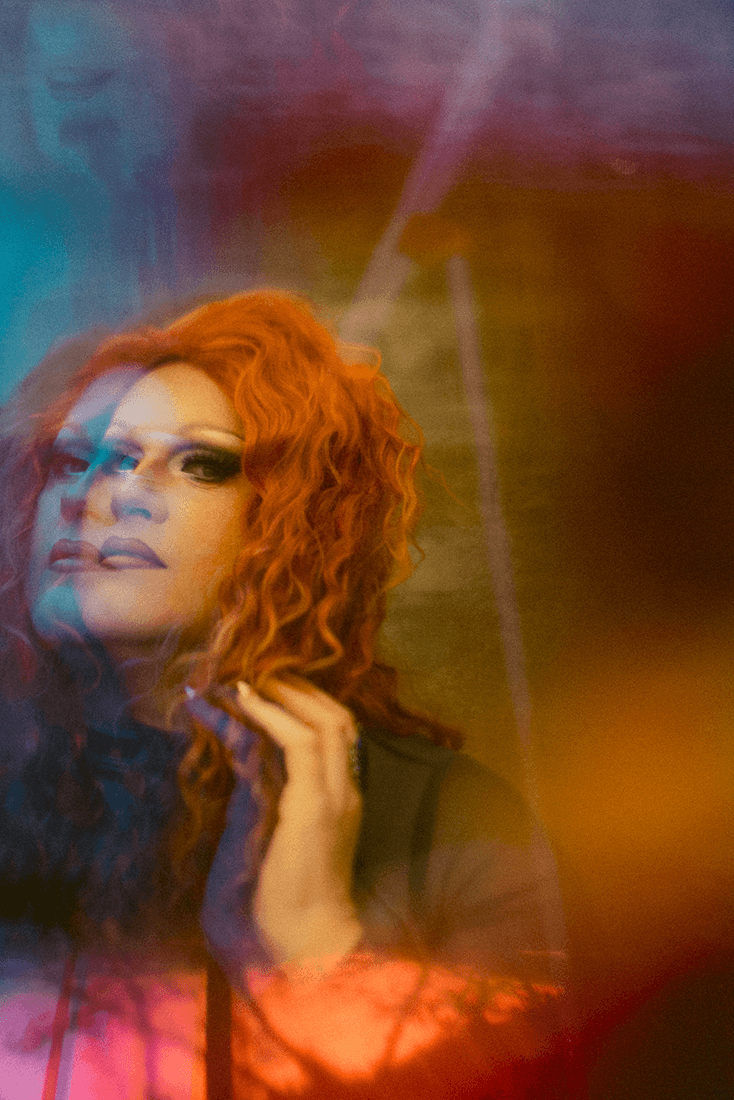

 Scottie's Playtime