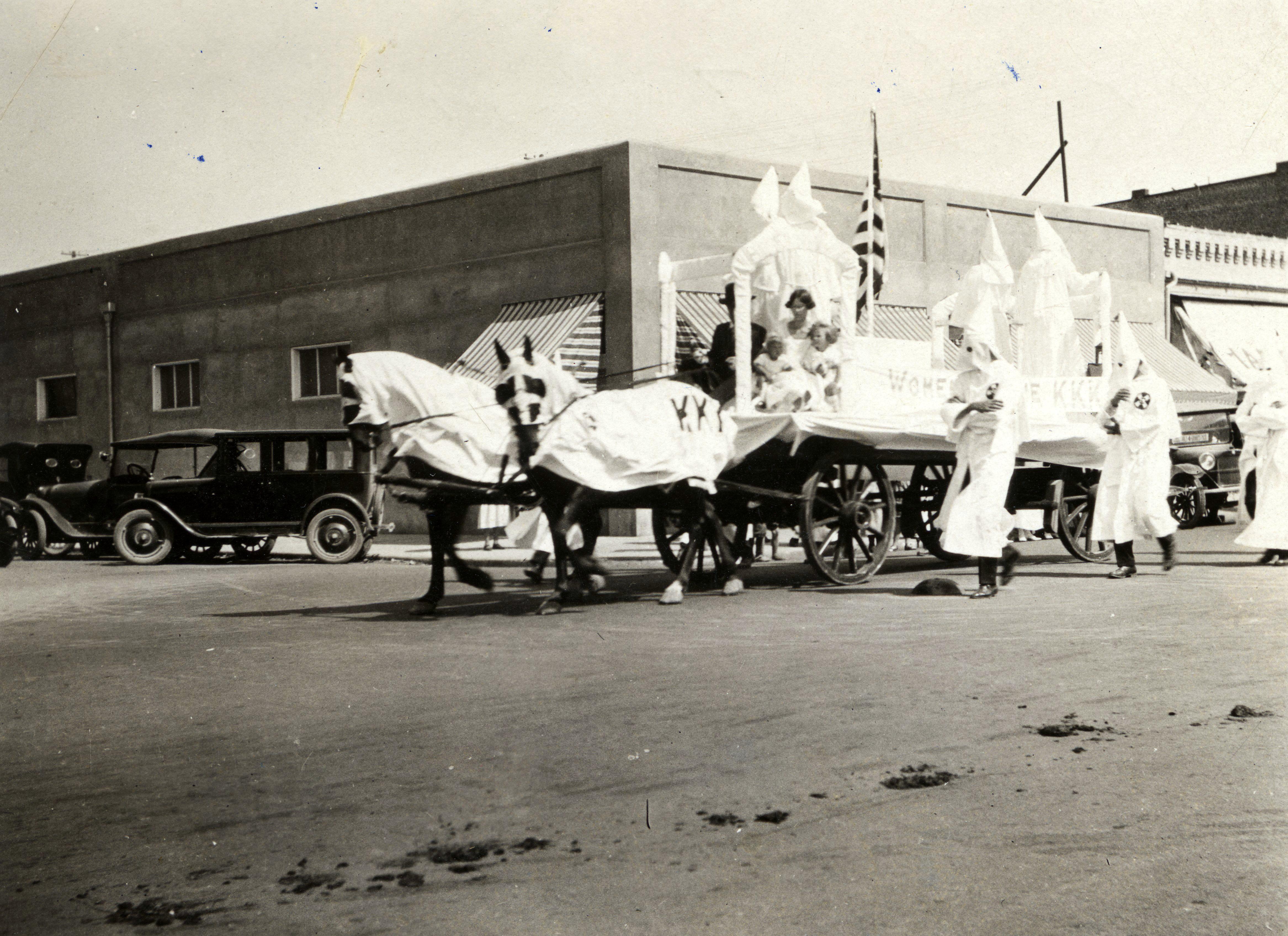
A group of KKK members parades down the streets of Grants Pass, Ore., in the 1920s. The KKK had a strong presence across the state in the early 1900s, with Oregon Klan leaders claiming 35,000 active members in 1923.
Lloyd Smith Collection
These conversations are happening here in Oregon, too, a state that — no matter which way you cut it — has deep roots in racism.
Walidah Imarishais a writer, educator, public scholar and spoken word artist.
Pete Shaw
“[These] laws point to the fact that Oregon was founded as a racist white utopia,” said Walidah Imarisha, a Black studies educator and writer based in Oregon. “The idea was that white folks would come here and build the perfect white society.”
In 1844, when Oregon was still a territory, it passed its first Black exclusionary law. It banned slavery, but it also prohibited Black people from living in the territory for more than three years. If a Black person broke this law, the consequence was 39 lashes, every six months, until they left.
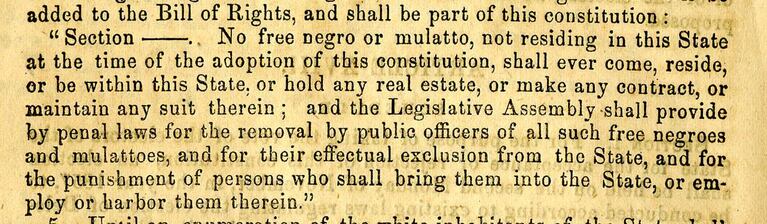
The final exclusion measure made it into the Oregon Constitution as a clause when the territory became a state 10 years later in 1859. This clause went further than the territory’s second law by also prohibiting Black people from owning property and making contracts.
“It speaks very clearly to the ways that this place was founded to center whiteness, not only at the exclusion of folks of color but at the brutalization of folks of color,” said Imarisha.
These laws were rarely enforced but they did the job they were created to do: establish Oregon as a majority white state. And it’s why Portland, the state’s most populous city, is still known as the whitest big city in the United States.
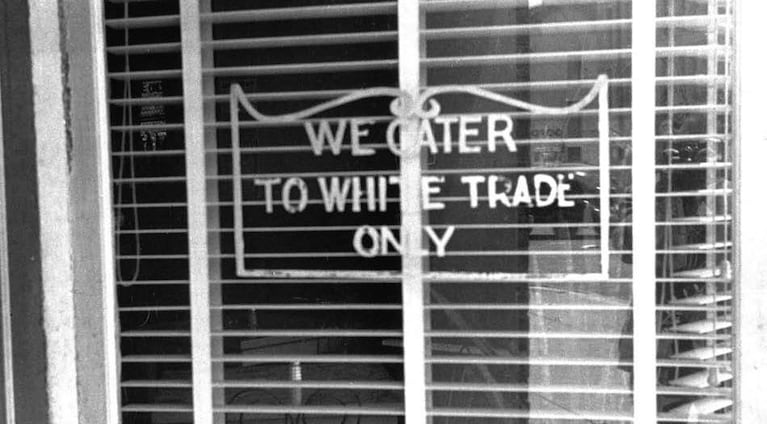
Sign in the window of a Portland restaurant circa 1943
Photo Courtesy of Oregon Historical Society, CN 0034
In 1859, Oregon was the only state admitted to the Union with an Exclusion Clause in its constitution.
Oregon State Archives
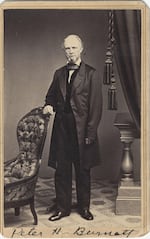
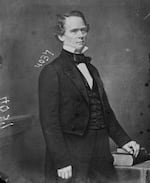
Peter Burnett was the author of the first exclusion law banning blacks in Oregon Territory.
Shew, W. M., photographer. Photo Courtesy of Oregon Historical Society, Orhi 13424
Oregon’s First Territorial Governor, Joseph Lane, supported slavery. In 1860, he was a candidate for vice president against Abraham Lincoln
Photo Courtesy of Library of Congress
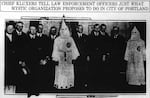
The Portland Telegram published this images of the KKK meeting with Portland leaders in 1921. Included are the city Chief of Police, Captain of Police, the District Attorney and a sheriff
Photo Courtesy of Oregon Historical Society, ba021814
“This is an ideology that is not only alive, it’s serving as the foundation for the institutions of Oregon,” said Imarisha. “Oregon is a useful case study for the rest of the nation because the only thing unique about Oregon is [it] was bold enough to write it down. The same policies, practices and ideologies that shaped Oregon, shaped the nation as a whole.”
“This movement, which is led by Black youth, is incredibly inspiring,” said Imarisha. “I just really want to say thank you to the leadership who have created this movement.”
Ultimately, Imarisha believes this movement and the conversations we’re all experiencing now can bring about profound societal changes for Black people and other people of color.
“If you believe in freedom, if you believe in justice, if you believe in liberation — now is the time to act,” said Imarisha.
Hear the full conversation with Walidah Imarisha in the audio player above.



 Scottie's Playtime