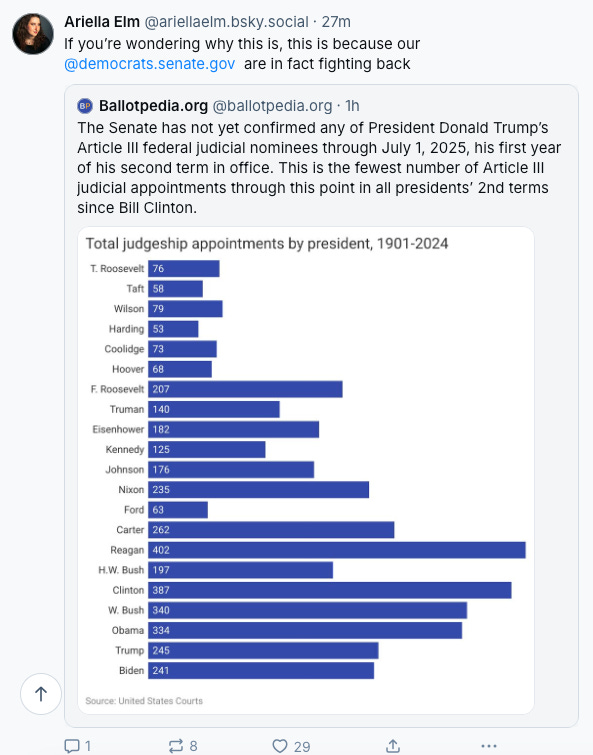
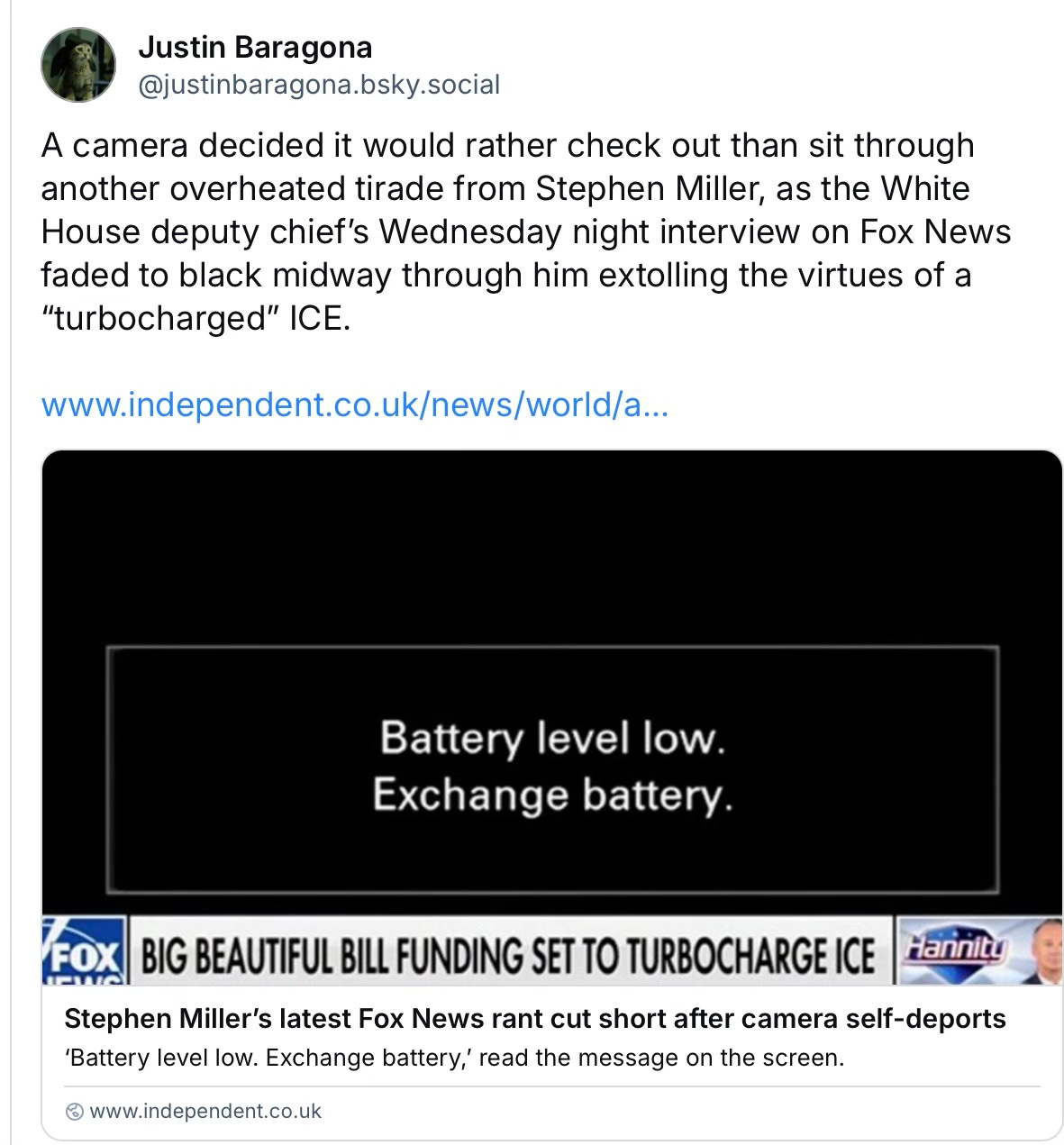
I just ran across this in my SBTB email. It belongs here. Doesn’t look like it embedded (it didn’t on SBTB, either,) so click through on “View this post…” and make sure the sound is on. A very worthy click.
Tag: Peace
Baby Strikers, Barbara Gittings, & More in Peace & Justice History, 7/3, 7/4

| July 3, 1835 Children employed in the silk mills at Paterson, New Jersey, went on strike for an eleven-hour workday and a six-day workweek rather than 12-14 hour days. With the help of adults, they won a compromise settlement of a 69-hour week. More on the Baby Strikers |
| July 3, 1966 4000 Britons chanting, “Hands off Vietnam,” demonstrated in London against escalation of the Vietnam War. U.S. warplanes had recently bombed the North Vietnamese capital of Hanoi as well as the port city of Haiphong. Police moved in after scuffles broke out at the demonstration outside the U.S. Embassy in Grosvenor Square; 31 were arrested. ![]() Actress Vanessa Redgrave joins 25,000 two years later at Anti-Vietnam war protest, Grosvenor Square. Read more |
| July 3, 1974 At the Moscow Summit talks between President Richard Nixon and President Leonid Brezhnev, the United States and the Soviet Union agreed to hold bilateral talks on the prohibition of chemical weapons. |
July 4, 1776![]() The United States declared its independence from King George III and Great Britain, thus beginning the first successful anti-imperial revolution in world history. Signed in Philadelphia by 56 British subjects who lived and owned property in thirteen of the American colonies, the document asserted the right of a people to create its own form of government. The signers of the Declaration of Independence were members of the 2nd Continental Congress which had voted two days earlier to separate from the British crown. Read the Declaration see some quotes on nationalism and patriotism |
| July 4, 1827 Slavery was outlawed in New York State as the result of the Gradual Emancipation law passed ten years earlier. This freedom applied only to those who had been 18 at the time of its passage. Enslaved children born during the subsequent ten-year period were not be freed until they reached the age of 21. At the urging of Reverend William Hamilton, a freedman and carpenter, and others, the end of slavery was celebrated in churches. The Fourth of July had in the past been marred by young white men attacking black Americans.More on William Hamilton and others |
| July 4, 1829 Speaking at Boston’s Park Street Church, newspaper editor and abolitionist William Lloyd Garrison gave a seminal speech on “Dangers to the Nation.” Though Massachusetts had banned slavery in 1781 and there was strong anti-slavery sentiment, most understood that a national ban of slavery would threaten the union of the states. Compensation to slaveholders and return of the enslaved to Africa was considered the best solution. Garrison, on the other hand, called attention to the hypocrisy of celebrating the the day the document was signed declaring, “All men are created equal” while two million were in bondage. He proposed four propositions that day to guide the abolitionist movement: 1. Above all others, slaves in America deserve “the prayers, and sympathies, and charities of the American people.” 2. Non-slave-holding states are “constitutionally involved in the guilt of slavery,” and are obligated “to assist in its overthrow.” 3. There is no valid legal or religious justification for the preservation of slavery. 4. The “colored population” of America should be freed, given an education, and accepted as equal citizens with whites. ![]() William Lloyd Garrison |
| July 4, 1894 The Republic of Hawaii was proclaimed with Sanford B. Dole as president. It was recognized immediately by the United States government under President Grover Cleveland. This was the result of the successful overthrow of the Hawaiian monarchy, then held by Queen Lydia Liliuokalani, and the support by white Americans involved in the sugar trade on the islands for annexation by the United States. Shortly after she had come to office, she had promulgated a new constitution which increased the power of the monarchy and that of native Hawaiians. |
July 4, 1965![]() Barbara Gittings at the Philadelphia picket The first of an annual picket in front of Philadelphia’s Independence Hall was held by gay and Lesbian Americans. Jack Nichols and Frank Kameny and members of the New York and Washington Mattachine Society and the Daughters of Bilitis had earlier demonstrated in Washington, and wished to change the general perception that homosexuals were perverted or sick. “By those protesters coming out publicly, and placing themselves very strategically in front of the building that evoked the Declaration of Independence and the idea that all men are created equal, it suggested it [gay rights] was no longer a moral or national security or psychiatric issue … it was a civil-rights issues,” David K. Johnson wrote in The Lavender Scare: The Cold War Persecution of Gays and Lesbians in the Federal Government. ![]() |
| July 4, 1966 The Freedom of Information Act, P.L. 89-487, became law. It established the right of Americans to know what their government is doing by outlining procedures for getting access to internal documents. |
July 4, 1969![]() “Give Peace a Chance” by the Plastic Ono Band was released in the United Kingdom. The song was recorded May 31, 1969, during the “Bed-In” John Lennon and Yoko Ono staged at the Queen Elizabeth Hotel in Montreal as part of their honeymoon. John and Yoko stayed in bed for 8 days, beginning May 26, in an effort to promote world peace. Some of the people in the hotel room who sang on this were Tommy Smothers, Timothy Leary, Allen Ginsberg, and Petula Clark. Smothers also played guitar. This event promoting peace received a great deal of media attention.“All we are saying . . .” watch & listen – give it a chance |
| July 4, 1969 A national anti-war conference in Cleveland, Ohio, mapped out activities against the Vietnam War and resulted in the founding of New Mobe (mobilization). More about the Mobes |
| July 4, 1983 The Women’s Encampment for a Future of Peace and Justice began an eight week stay on a farm just outside the Seneca Army Depot near Romulus, New York. The purpose of the gathering was for the women to learn about and together protest the escalation of militarism and the weapons build-up being led at the time by the Reagan administration. visit PeaCe eNCaMPeNT HeRSToRy PRoJeCT ![]() |
| July 4, 2007 The first of several Peace Caravans (Caravanes de Paix) set out from South Kivu and traveled across Africa’s Great Lakes region, including the Democratic Republic of the Congo, Burundi and Rwanda. The Scout Associations of the countries in the violence-ridden area trained hundreds of young people in conflict resolution through their focus on education for peace. ![]() Members of the Caravan for Peace in Burundi The classes and the caravans included hundreds of young people in Scouts and Girl Guides from many ethnic groups (often with a history of mutual hostility) who act as community mediators. |
| https://www.peacebuttons.info/E-News/peacehistoryjuly.htm#july3 |
Hi, All!
I didn’t get any posts set up last night for today. Ollie got a little overheated yesterday during our walk, and I wanted to watch over and care for him to make sure he’s all right. I just didn’t get to setting up posts. (I feel as if that will be a relief for eyes on the blog! But anyway.) He is fine; he’s not taking the fireworks real well, and for some reason doesn’t want his morning walk today, either, which is different, but I’m letting him lead on that. Fireworks don’t begin until 10AM here, so so far, so good on that. Anyway, that’s what’s up here. I hope all are managing to stay healthily cool enough, and taking good care to hydrate well, and screen the UV rays. And that the fireworks aren’t irritating! 🎆
NJ, VT Get With The Program Again, & More, in Peace & Justice History for 7/2
| July 2, 1776 New Jersey became the first British colony in America to grant partial women’s suffrage. The new constitution (temporary if there were a reconciliation with Great Britain) granted the vote to all those “of full age, who are worth fifty pounds proclamation money,” including non-whites and widows; married women were not able to own property under common law. |
| July 2, 1777 Vermont became the first of the United States to abolish slavery. |
| July 2, 1809 Alarmed by the growing encroachment of whites squatting on Native American lands, the Shawnee Chief Tecumseh called on all Indians to unite and resist. By 1810, he had organized the Ohio Valley Confederacy, which united Indians from the Shawnee, Potawatomi, Kickapoo, Winnebago, Menominee, Ottawa, and Wyandotte nations. For several years, Tecumseh’s Indian Confederacy successfully delayed further white settlement in the region. ![]() Chief Tecumseh Tecumseh’s efforts |
July 2, 1839![]() Slave ship Early in the morning, captive Africans on the Cuban slave ship Amistad, led by Joseph Cinquè (a Mende from what is now Sierra Leone), mutinied against their captors, killing the captain and the cook, and seized control of the schooner. Jose Ruiz, a Spaniard and planter from Puerto Principe, Cuba, had bought the 49 adult males on the ship, paying $450 each, as slaves for his sugar plantation. More about Amistad ![]() Joseph Cinquè |
July 2, 1964![]() Jobs and Freedom march April 28, 1963, Washington DC U.S. President Lyndon B. Johnson signed the Civil Rights Act of 1964 into law, thus barring discrimination in public accommodations (restaurants, stores, theatres, etc.), employment, and voting. The law had survived an 83-day filibuster in the U.S. Senate by 21 members from southern states. ![]() “I think we just delivered the South to the Republican party for a long time to come,” said President Johnson to his press secretary, Bill Moyers later that day. He anticipated a shift in white southern voting from the Democratic to the Republican party in response to the law. Massive demonstrations a year earlier ensured passage of the Act. |
| July 2, 1992 President George H.W. Bush (the elder) announced that the United States had completed the worldwide withdrawals of all its ground- and sea-launched tactical nuclear weapons [see September 27, 1991]. |
https://www.peacebuttons.info/E-News/peacehistoryjuly.htm#july2
Resource & Information for Grief Processing
Several of us have/have had older pets. Maybe this can come in handy. From the MUTTS blog.

Losing a pet is a unique kind of heartbreak, one that can feel both profound and invisible. To help bring comfort, we spoke with Patricia Denys, MFA, a compassionate voice in the world of pet grief and healing.

Patricia is an artist, animal activist, creative director of Animal Culture magazine, educator, yogi, vegan, and an interfaith, interspecies animal chaplain ordained by the Compassion Consortium. She’s also a great friend of MUTTS.
In this conversation, Patricia shares her perspective as an animal chaplain on navigating loss, offering support, and finding gentle ways to honor the journey. Whether your pet recently crossed the Rainbow Bridge or you’re reflecting on a loss from long ago, we hope this conversation brings you some clarity, comfort, and connection.
Understanding the Role of an Animal Chaplain
Can you explain what an animal chaplain does?
An animal chaplain helps animals live their fullest lives and helps them transition when it is time. They offer help to animal parents, animal care workers, and animal people in general, navigate stress, grief, and compassion fatigue. Animal chaplains also encourage stronger human-animal (interspecies) bonds, individually and communally. Animal chaplains offer help with end-of-life care, decisions and rituals (interfaith), and bereavement support. An animal chaplain is also there for celebrations and victories for all animals and our planet!
How did you become an animal chaplain, and what drew you to this work?
Our magazine, Animal Culture, interviewed Reverend Sarah Bowen, co-founder of Compassion Consortium and Executive Director of their Animal Chaplaincy Training Program. The program is interfaith, interspiritual, and interspecies, which was important to me. Sarah was a wonderful interviewee, and I became quite interested in the program after connecting with her. It seemed intriguing and intelligent, and an organic next step on my path of a lifetime working with animals. It was quite a commitment of study and well worth it. My fellow students were amazing, compassionate people. It was a very positive experience.
What kinds of support do you offer to people who are grieving the loss of a pet?
The first thing is listening, while being a calming presence for different needs from different people. Using gentle questioning to see what arises for someone. Reminding people that laughter is good and healthy, and part of healing. And, working on realizing that one does not stop loving someone after the transition.
Hospice and Palliative Care for Companion Animals, edited by Amir Shanan, Jessica Pierce, and Tamara Shearer, is an excellent book. In one of the essays, the writer calls mourning, “…a transition from loving in presence to loving in absence.” We work on that as animal chaplains.
Why Saying ‘Goodbye’ to a Pet Is So Painful
Why do we often feel that losing a pet is just as painful — if not more so — than losing a human loved one?
Those of us who have experienced the pain of the loss of a companion animal, or any animal, know this pain all too well. Humans have intense bonds with an animal they love or one that is a part of their lives somehow. Animals’ lives are shorter than humans’. The shock of that short life being over can be very hard to process.
Companion animals also demonstrate stability and routine. A big void is created when these things come to an end. Animals are sentient. They are aware. We see that time and time again. We want to be with them and protect them; they are our family.
How can we respond to people who say, “It was just an animal” or who don’t understand pet grief?
It is very disappointing to hear, “It was just an animal,” from anyone, especially someone you respect or that is close to you. It is the last thing anyone wants to hear since it is so insensitive to one’s feelings and to the memory of the one who has passed. What someone grieving needs is validation that their feelings of loss for such a profound bond with an animal, are understandable and real. You may choose to say that or not.
What are some healthy ways to process and express grief after losing a pet?
Definitely seek support from friends, family, your veterinarian, and/or an animal chaplain. Animal grief is in our mainstream now. There is no shame in asking for help, ever. One needs to talk about the loss. It’s real.
Consider taking a workshop on animal loss or creating a shrine, memorial, art piece, or photo book. Volunteering is also a great, healthy way to heal.
Do you have any advice for someone who feels stuck in their grief or like they should have “moved on” by now?
“Moving on” is a very individual thing. There is no time limit on processing through one’s grief. Accepting the loss and adjusting one’s life accordingly takes time. You need to take your time. If you feel that you are experiencing symptoms of prolonged grief, a therapist can be of help.
Helpful Ways to Honor a Pet’s Memory
How can rituals or memorials help with healing? Do you have any suggestions for meaningful ways to honor a pet’s memory?
Oh, there are so many wonderful things you can do! Humans have always embraced rituals. It is a way to connect to something. A ritual may be something within your religious practices, your own spirituality that you find comforting, or the daily ritual of taking a walk with your dog. That is a ritual for both of you!
A memorial can be a powerful took for healing. It is a coping tool. It is a way to process. Creating an altar on a table for the one you have lost that includes photographs, something that was meaningful for that animal such as a toy, or adding flowers can be a positive expression of your feelings of loss. Re-wilding a small garden that encourages other animals to visit, or creating a small shrine you can carry with you are other ideas. Keeping a journal of your thoughts or sketches can also have a profound effect on healing. The simple act of writing to your loved one — what they meant to you, how much they are missed, what you enjoyed most about them, for example, is often a comfort.
As an artist and a teacher of art, I know creating art can be cathartic and healing, I conduct art workshops on loss and celebration of animals and the planet. They are for non-artists especially. It has been an incredible experience to see what people can create as a way to work out their feelings, and usually, how anxious they are to share with each other. It is a bonding experience about the power of love.
(snip-a bit MORE; click through on the title above)
The US Ratifies The 26th, Spain Got With The Program, & More, in Peace & Justice History for 6/30

Also, to commemorate the final day of PRIDE month 2025, here’s an historic dance music video to celebrate. No matter what, we should never not dance again! 🎶 🌈 🎶 🫶

| June 30, 1966 The first GIs—known as the Fort Hood Three, U.S. Army Privates James Johnson, Dennis Mora and David Samas—refused to be sent to Vietnam. All were members of the 142nd Signal Battalion, 2nd Armored Division stationed at Fort Hood, Texas. The three were from working-class families, and had denounced the war as “immoral, illegal and unjust.” They were arrested, court-martialed and imprisoned. The Pentagon reported 503,926 “incidents of desertion” between 1966 and 1971. 1961-1973: GI resistance in the Vietnam War View their pamphlet Ballad of The Fort Hood Three Pete Seeger |
| June 30, 1971 The 26th Amendment to the U.S. Constitution, lowering the minimum voting age to 18 in all elections, was ratified after ¾ of the 50 state legislatures had agreed to it, a mere 100 days after its passage by Congress. |
| June 30, 1974 The Selective Service law, authorizing the draft, expired, marking the official end of conscription in the U.S. and the beginning of the all-volunteer armed forces. |
| June 30, 2005 Spain legalized same-sex marriage by a vote of 187-147 in parliament. Such couples were also granted the right to adopt and receive inheritances. Prime Minister Jose Luis Rodriguez Zapatero spoke in support of the bill, “We are expanding the opportunities for happiness of our neighbors, our colleagues, our friends and our relatives. At the same time, we are building a more decent society. ![]() Read more |
Peace & Justice History for 6/29

| June 29, 1925 The South African parliament passed a bill excluding black, coloured (mixed race) and Indian people from all skilled or semi-skilled jobs. |
| June 29, 1963 A mass “walk-on” (trespass) was organized at a chemical and biological warfare facility in Porton Down, England. These weaponized agents had been researched and produced there since 1916; it’s now known as the Defence Science and Technology Laboratory. ![]() Protesters demand an end to germ warfare in 1963 at Porton Down (Getty) Unconscionable activities at Porton Down (From 2004) |
PRIDE In An Anniversary & More, in Peace & Justice History for 6/28


| June 28, 1916 A one-day strike by 50,000 German workers was organized to free Socialist anti-war leader Karl Liebknecht, charged with sedition for his criticism of the government and the war later known as World War I. He was the first ever to be expelled from the Reichstag, the German parliament, voted out for his opposition to Germany’s role in the war. ——————————————————————————————————— June 28, 1969 Patrons at the Stonewall Inn, a gay bar in New York City’s Greenwich Village, being subjected to routine anti-homosexual harassment by the New York City police raiding the bar, spontaneously fought back in an incident considered to be the birth of the gay rights movement. Riot veteran and gay rights activist Craig Rodwell said: “A number of incidents were happening simultaneously. There was no one thing that happened or one person, there was just . . . a flash of group, of mass anger.” About Craig Rodwell A group of drag queens, who had been mourning the death earlier in the week of Judy Garland, mocked the police and threw things at them, and police were forced to retreat into the bar as the crowd of supporters grew; disturbances continued for days. The bar is now on the National Register of Historic Places. ![]() Stonewall and all it has inspired —————————————————————————————————- June 28, 1987 The Iranian Kurdish town of Sardasht was attacked by Iraqi aircraft with chemical weapons during the Iran-Iraq War. Saddam Hussein had started the war expecting an easy victory against the new Shiite Islamic republic, even though Iran had three times the population. ![]() Victims of the mustard gas attack on Sarsasht, Iran ——————————————————————————————————- June 28, 2005 Seen in New York City on June 28, 2005 ![]() |
https://www.peacebuttons.info/E-News/peacehistoryjune.htm#june28
“Polylepis Specialist”
IWW & So Much Republican Crime in Peace & Justice History for 6/27
| June 27, 1905 The IWW (Industral Workers of the World) was founded in Chicago. ![]() |
| June 27, 1954 The first atomic power plant opened at Obninsk, Russia, near Moscow, and could generate up to 5 megawatts. The plant was ordered by Josef Stalin and—being graphite-moderated and water-cooled—could be switched to plutonium production in case it was needed. The facility was shut down in 2002. |
| June 27, 1954 Military action directed and funded by the CIA (Operation PBSUCCESS) forced the resignation of the Guatemalan President, Jacobo Arbenz Guzman. Winner of the country’s first election under universal suffrage, and having taken office in the country’s first peaceful transition of governments, he was accused by the U.S. of Communist influence. Following the coup d’etat, hundreds of Guatemalans were rounded up and killed. ![]() Jacobo Arbenz Guzman Between 1954 and 1990, human rights groups estimate, the security forces of successive military regimes murdered more than 100,000 civilians, including genocide against Guatemalan native peoples. More about Arbenz The CIA’s own documents on the action |
| June 27, 1973 President Nixon’s former White House counsel, John W. Dean, III, told the Senate Watergate Committee about Nixon’s “enemies list.”He released a 1971 memo, written by presidential advisor (now Rev.) Charles Colson, proposing the use of “available federal machinery to screw our political enemies.” ![]() John Dean Twenty persons were to be subjected to IRS audits, litigation, prosecution, or denial of federal grants, and an additional list contained 200 names of other individuals and organizations considered enemies of the administration. The complete Enemies List and memos from Colson The president’s misuse of government agencies and powers, in pursuing those he saw as his political enemies, was the basis for one of the articles of impeachment that forced Nixon from office. |
| June 27, 1978 Seven citizens of the Soviet Union sought refuge in the American Embassy in Moscow as escape from government oppression of religious minorities. The Pentecostal Christians, known as the Siberian Seven, from two families, the Vashchenkos and Chmykhalovs, spent months in the basement of the embassy awaiting permission for all family members to emigrate to the U.S. ![]() One of their sons was already in prison for defying the military draft, and another was about to reach conscription age. Recently released from prison, Baptist Pyotr Vins was twice assaulted by police after trying to arrange his family’s emigration. His father Georgi, national leader of dissident Baptists, though due for release from a labor camp, faced five additional years of Siberian “exile.” The leader of a breakaway Seventh-day Adventist group was sentenced to five years of hard labor at age 83. |
| June 27, 1980 President Jimmy Carter signed a measure that required approximately 4 million U.S. men age 18 to 25 to register for the military draft, and all 18-year-old males thereafter. If there were to be a crisis, registered men would be inducted as determined by age and a random lottery. |
| June 27, 1986 The International Court of Justice (“World Court”) decided that the United States violated international law as well as its bilateral Treaty of Friendship, Commerce and Amity with Nicaragua through its use of force against the Central American country. This included a trade embargo, the mining of harbors and bombing of airfields, as well as furnishing financial, military and logistical support to the so-called Contra insurgents. The Contras’ goal was to overthrow Nicaragua’s popular left-wing government. The Court also ruled that the U.S. should compensate the country financially.The Reagan administration had originally contested the standing of the Court to rule on such an issue, and it had walked out of Court after losing the ruling on jurisdiction, despite its treaty obligation to appear. The Court’s judgment to act had been decided 11-3 on almost all counts, those voting for the U.S. position being an American, a British and a Japanese judge. THE WORLD COURT IN ACTION by Howard N. Meyer More about the Court’s decision |


At the urging of Reverend William Hamilton, a freedman and carpenter, and others, the end of slavery was celebrated in churches. The Fourth of July had in the past been marred by young white men attacking black Americans.