March 19, 1911 The first International Women’s Day was held in Germany, Austria, Denmark, and some other European countries. This date was chosen by German women because, on that date in 1848 the Prussian king, faced with an armed uprising, had promised many reforms, including an unfulfilled one of votes for women. A million leaflets calling for action on the right to vote were distributed throughout Germany.
March 19, 1963 The blacklisting of Pete Seeger (and other members of The Weavers) from the folk music television show “Hootenanny” prompted a boycott by 50 folk artists (The Kingston Trio, Bob Dylan, Joan Baez and Peter, Paul & Mary, among others). Seeger had become a cultural hero through his outspoken and joyful commitment to the anti-war and civil rights movements, and helped popularize the anthemic “We Shall Overcome.” Pete Seeger bio from Encyclopedia of the American Left Pete singing and talking about the music with Hugh Hefner on TV in the early ‘60s
March 19, 1978 50,000 marched in Amsterdam to protest U.S. deployment of the neutron bomb in Europe. The neutron bomb was a tactical (artillery shell) enhanced-radiation weapon. It killed people with a neutron flux that penetrated armor but was effective only over a limited area, leaving little fallout or residual radiation. It did minimal damage, however, to physical structures. More about the Neutron Bomb
March 19, 2003 U.S. and coalition forces launched missiles and bombs at targets in Iraq including a “decapitation attack” aimed at Iraqi President Saddam Hussein and other top members of the country’s leadership.
Baghdad, Iraq under attack There were nearly 300,000 American, British and other troops at the border. President George W. Bush warned Americans that the conflict “could be longer and more difficult than some predict.” He assured the nation that “this will not be a campaign of half-measures, and we will accept no outcome except victory.” Read about the cost of this war
March 19, 2011 In response to widespread peaceful demonstrations for political change in Syria, the government sealed off the city of Deraa. Syrian President Bashar Al-Assad claimed his country would not be affected by the movement for more democracy across the Arab world that had already toppled governments in Tunisia and Egypt. His regime was composed almost entirely of ethnic Allawites in a country more than 80% Sunni. Mourners at the funerals for five shot dead by security forces in Deraa chanted, “God, Syria and freedom only.” Demonstrations had been held in at least five cities, including the capital of Damascus.
Not about diversity; they have only a little to connect them other than I saw them and thought we’d be interested. I don’t know if I’m still recovering from DST, or if have come down with a weak little something, but I’ve been tired the past few days, and have some upcoming commitments, so will be taking things a little easier for a few days. Enjoy!
The United States Postal Service is under federal scrutiny. It’s not the first time.
A United States Postal Service mail handler works to unload her mail truck at the Processing and Distribution Center in Miami, Florida. Getty
Though the Postal Service might not come to mind as a great factor in the long march toward social equity in the United States, its policies have had a serious impact on the rights of marginalized Americans since its inception in 1775. Activism, civil rights, and politics are ingrained—at least implicitly—in postal history.
Benjamin Franklin worked for the colonial postal service, controlled by the British, for years before he helped establish the independent American Post Office. Back in 1737, he ran the Philadelphia Post Office where he was focused more on the logistics of such a large operation than on how the institution might affect different demographic groups. Still, his work left a legacy of social transformation.
Many of these letters were delivered by enslaved African Americans, some of whom were forced in the years before emancipation to serve as messengers going relatively short distances between plantations and towns.
“If the inhabitants … should deem their letters safe with a faithful black, I should not refuse him,” Postmaster General Timothy Pickering wrote in 1794 regarding a mail route in Maryland. “I suppose the planters entrust more valuable things to some of their blacks.”
Yet this trust was soon eroded as slave rebellions increased throughout the Americas, and, in 1802, Black Americans were banned from carrying mail until Reconstruction.
The Post Office Department, like the rest of the federal government, updated its policies to become more inclusive in its hiring practices over the centuries. But the Post Office was unique in hiring Black Americans and white women beginning in significant numbers in the 1860s—before either group had been granted the right to vote nationwide (white women got it in 1920; Black men in 1870). Postal jobs were generally desirable. They were salaried and safe. (snip-MORE, and it’s good; not tl, dr)
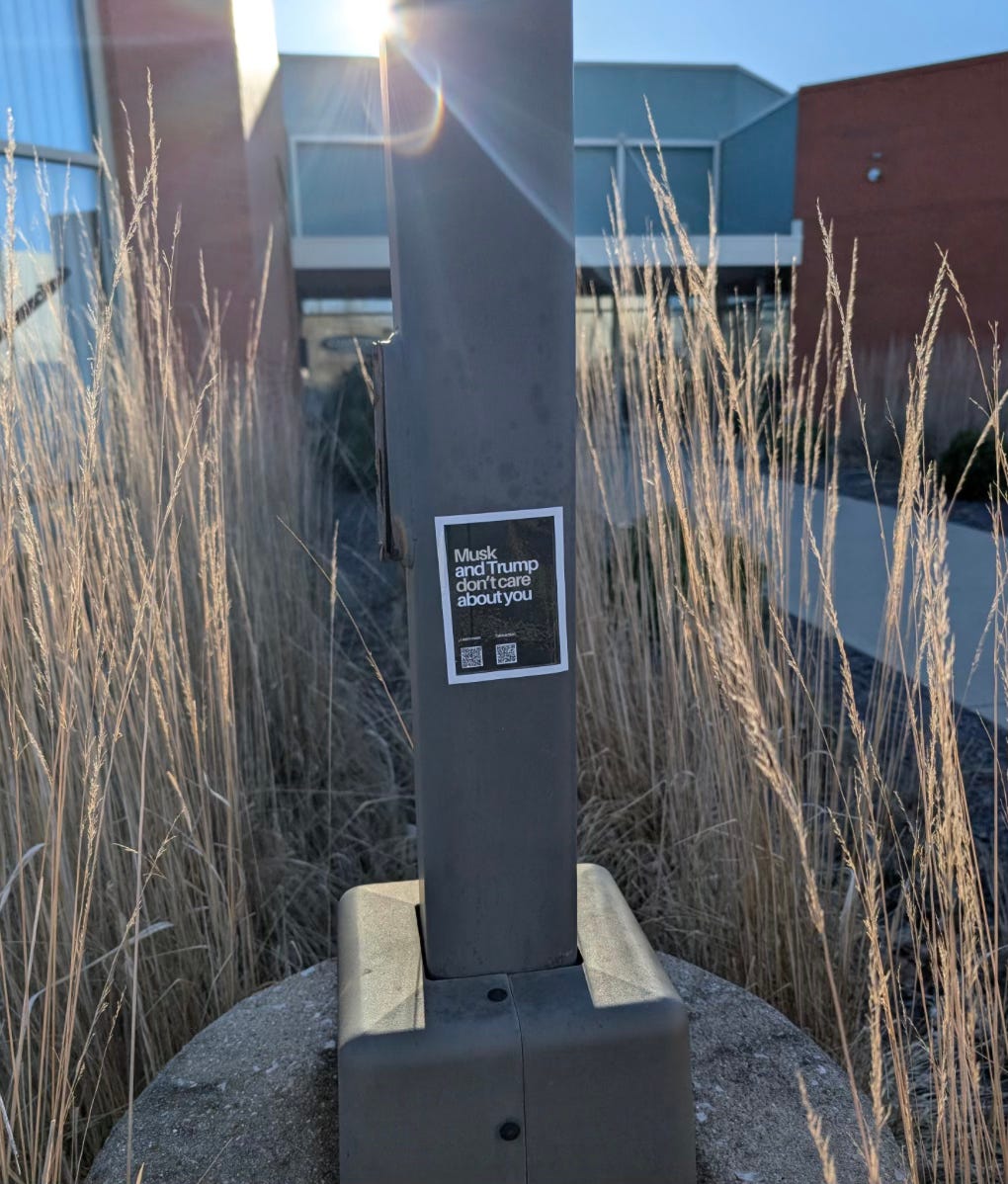
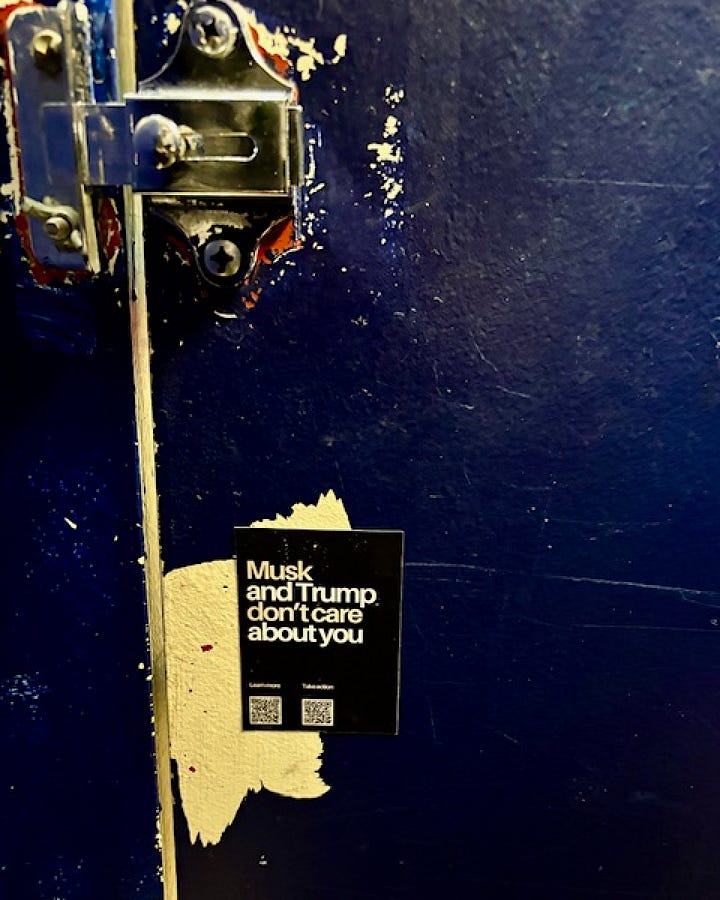
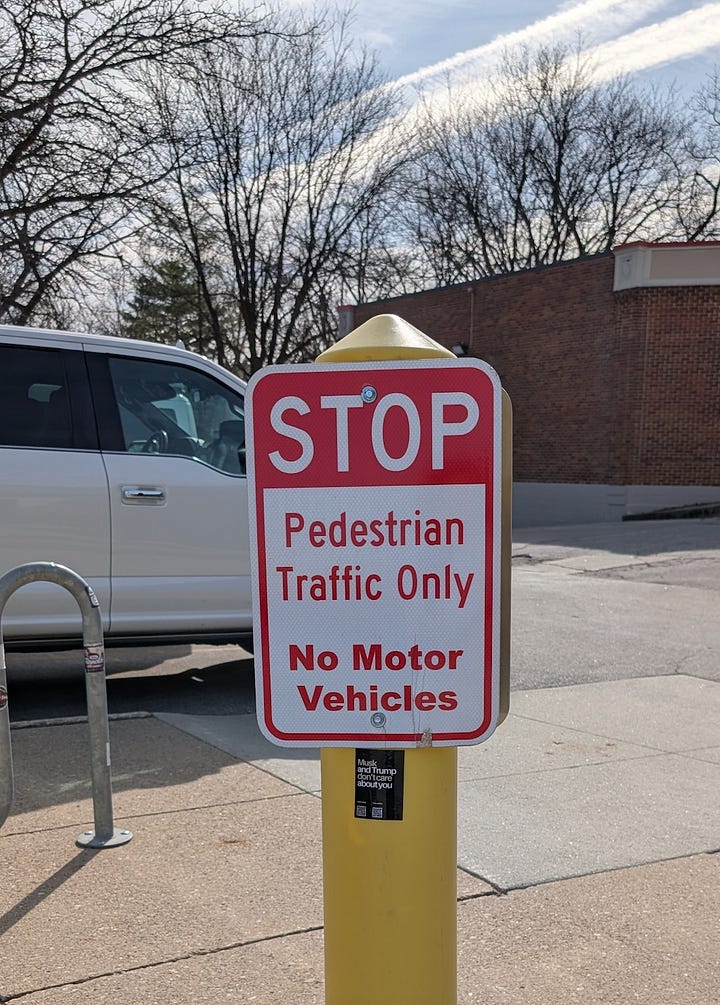
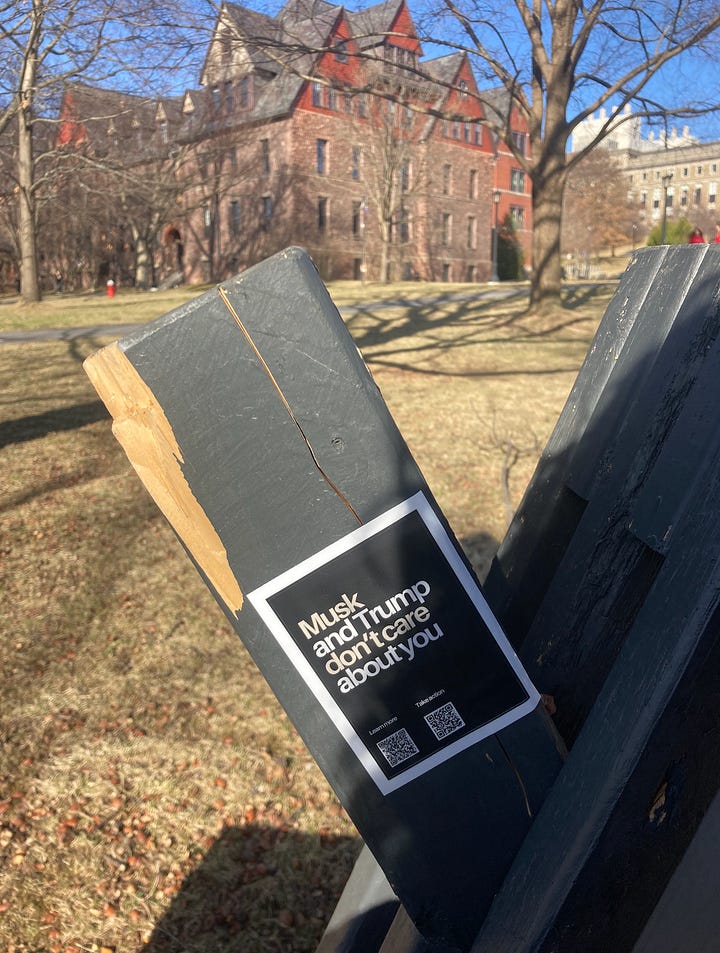
Republicans, with the help of a few Democrats, voted to keep the government open so they can keep destroying it.
It’s not like Republicans voted to keep the government open so they can do their jobs. They didn’t keep it open to provide oversight. They didn’t keep it open so they can serve as the third branch of the federal government. They didn’t even keep it open to do their job of restraining Elon Musk and DOGE.
DOGE is not an official agency of the government, meaning what it’s doing is not legal. A lot of lawsuits have been fired against the Trump administration over all the bullshit DOGE is doing, but there should be a lawsuit questioning DOGE’s existent.
The President can NOT create agencies or departments. Article 1, Section 1 of the United States Constitution gives that power to Congress. Donald Trump should not be able to create a new department and have it cut budgets and fire government employees. Not only is Congress allowing this happen, but they won’t even talk to Elon Musk about it in public.
Republicans in Congress have had a lunch with Elon but behind closed doors. Neither the Republican-controlled House nor the Republican-controlled Senate will even subpoena Elon. What’s even worse is that Elon is conducting all this business in secret. Saying you’re transparent doesn’t make you transparent.
It astounds me that there are so many Republicans who trust that DOGE is transparent just because Elon says it is. Don’t they have eyes? Haven’t they noticed they’re not seeing anything?
Trump and Republicans even use unelected bureaucrats to justify giving carte blanche to Elon, an unelected bureaucrat. You don’t replace a swamp with a bigger swamp.
Even while Elon is destroying our government and the lives of federal workers, Trump is building sympathy for him. You may have lost your job, but at least Trump got a brand new Tesla.
I can’t tell you how much sleep I’ve lost worrying about Elon’s finances. At least Germany only had ONE Hitler.
America, this is the beginning of the end.
Creative note: I started on this idea, but I wasn’t feeling great about it, so I started on another idea, finished drawing most of it, and realized I wasn’t loving it either. So, I came back to this, started feeling it, and the next thing I knew, it was after 5 p.m. on a Saturday. That’s why you got a short blog. I need food.
I’m punching out until tomorrow, when you will get TWO cartoons and blogs. I’m not reading any emails until Monday. I get 20 from readers on a slow day (though several of them are from the same readers).
March 17, 1966 Cesar Chavez and the National Farm Workers Association left Delano for Sacramento, the capital of California, a 340-mile march which would take three weeks. They were calling public attention to the plight of farm workers and for their struggle for the right to organize a union.
March 17, 1968 In London’s Trafalgar Square, at the largest anti-Vietnam War protest in Britain to date, 25,000 people marched. They were demonstrating against American action in Vietnam and British support for the United States policy. Some then attempted to storm the U.S. Embassy, resulting in 200 arrests and fifty taken to hospital, nearly half police officers.
March 17, 1978 The oil supertanker Amoco Cadiz ran aground and, in the worst oil spill ever, lost its entire cargo of 1,619,048 barrels (223,000 tons).A slick 18 miles wide and 80 miles long polluted approximately 200 miles of France’s Brittany coastline. The Amoco Cadiz disaster was the first marine environmental catastrophe to be covered by the world’s media in real time. one of the victims Read more
March 17, 2003 President George W. Bush warned U.N. weapons inspectors to leave the Iraq within 48 hours. They were in country searching for weapons of mass destruction (WMD), conducting 900 inspections at 500 locations in four months.Bush had given Saddam Hussein the same amount of time to step down from power or suffer the consequences of the planned invasion. Hans Blix, the chief weapons inspector, and Mohamed El Baradei, head of the International Atomic Energy Agency, and the inspectors had found no WMDs, or any evidence of a renewed Iraqi nuclear weapons program. Despite increasing cooperation from Iraqi authorities relenting to international pressure, the inspectors were unable to complete their work due to the American threat of war. U.N. weapons inspectors in Iraq before they were forced to leave by President George W. Bush Hans Blix’s report to the UN Security Council just ten days earlier
March 15 is a crucially important day in U.S. history As the man who taught me to use a chainsaw said, it is immortalized by Shakespeare’s famous warning: “Cedar! Beware the adze of March!”
He put it that way because the importance of March 15 is, of course, that it is the day in 1820 that Maine, the Pine Tree State, joined the Union.
Maine statehood had national repercussions. The inhabitants of this northern part of Massachusetts had asked for statehood in 1819, but their petition was stopped dead by southerners who refused to permit a free state—one that did not permit human enslavement—to enter the Union without a corresponding “slave state.” The explosive growth of the northern states had already given free states control of the House of Representatives, but the South held its own in the Senate, where each state got two votes. The admission of Maine would give the North the advantage, and southerners insisted that Maine’s admission be balanced with the admission of a southern slave state lest those opposed to slavery use their power in the federal government to restrict enslavement in the South.
They demanded the admission of Missouri to counteract Maine’s two “free” Senate votes.
But this “Missouri Compromise” infuriated northerners, especially those who lived in Maine. They swamped Congress with petitions against admitting Missouri as a slave state, resenting that slave owners in the Senate could hold the state of Maine hostage until they got their way. Tempers rose high enough that Thomas Jefferson wrote to Massachusetts—and later Maine—senator John Holmes that he had for a long time been content with the direction of the country, but that the Missouri question “like a fire bell in the night, awakened and filled me with terror. I considered it at once as the knell of the Union. It is hushed indeed for the moment, but this is a reprieve only, not a final sentence.”
Congress passed the Missouri Compromise, but Jefferson was right to see it as nothing more than a reprieve.
The petition drive that had begun as an effort to keep the admission of Maine from being tied to the admission of Missouri continued as a movement to get Congress to whittle away at slavery where it could—by, for example, outlawing slave sales in the nation’s capital—and would become a key point of friction between the North and the South.
There was also another powerful way in which the conditions of the state’s entry into the Union would affect American history. Mainers were angry that their statehood had been tied to the demands of far distant slave owners, and that anger worked its way into the state’s popular culture. The opening of the Erie Canal in 1825 meant that Maine men, who grew up steeped in that anger, could spread west.
And so they did.
In 1837, Elijah P. Lovejoy, who had moved to Alton, Illinois, from Albion, Maine, to begin a newspaper dedicated to the abolition of human enslavement, was murdered by a pro-slavery mob, who threw his printing press into the Mississippi River.
Elijah Lovejoy’s younger brother, Owen, had also moved west from Maine. Owen saw Elijah shot and swore his allegiance to the cause of abolition. “I shall never forsake the cause that has been sprinkled with my brother’s blood,” he declared. He turned to politics, and in 1854 he was elected to the Illinois state legislature. His increasing prominence brought him political friends, including an up-and-coming lawyer who had arrived in Illinois from Kentucky, Abraham Lincoln.
Lovejoy and Lincoln were also friends with another Maine man gone to Illinois. Elihu Washburne had been born in Livermore, Maine, in 1816, when Maine was still part of Massachusetts. He was one of seven brothers, and one by one, his brothers had all left home, most of them to move west. Israel Washburn Jr., the oldest, stayed in Maine, but Cadwallader moved to Wisconsin, and William Drew would follow, going to Minnesota. (Elihu was the only brother who spelled his last name with an e).
Israel and Elihu were both serving in Congress in 1854 when Congress passed the Kansas-Nebraska Act, overturning the Missouri Compromise and permitting the spread of slavery to the West. Furious, Israel called a meeting of 30 congressmen in May to figure out how they could come together to stand against the Slave Power that had commandeered the government to spread the South’s system of human enslavement. They met in the rooms of Representative Edward Dickinson, of Massachusetts—whose talented daughter Emily was already writing poems—and while they came to the meeting from all different political parties, they left with one sole principle: to stop the Slave Power that was turning the government into an oligarchy.
The men scattered for the summer back to their homes across the North, sharing their conviction that a new party must rise to stand against the Slave Power. In the fall, those calling themselves “anti-Nebraska” candidates were sweeping into office—Cadwallader Washburn would be elected from Wisconsin in 1854 and Owen Lovejoy from Illinois in 1856—and they would, indeed, create a new political party: the Republicans. The new party took deep root in Maine, flipping the state from Democratic to Republican in 1856, the first time it fielded a presidential candidate.
In 1859, Abraham Lincoln would articulate an ideology for the party, defining it as the party of ordinary Americans standing together against the oligarchs of slavery, and when he ran for president in 1860, he knew it was imperative that he get the momentum of Maine men on his side. In those days Maine voted for state and local offices in September, rather than November, so a party’s win in Maine could start a wave. “As Maine goes, so goes the nation,” the saying went.
So Lincoln turned for his vice president to Hannibal Hamlin, who represented Maine in the Senate (and whose father had built the house in which the Washburns grew up). Lincoln won 62% of the vote in Maine in 1860, taking all eight of the state’s electoral votes, and went on to win the election. When he arrived in Washington quietly in late February to take office the following March, Elihu Washburne was at the railroad station to greet him.
I was not a great student in college. I liked learning, but not on someone else’s timetable. It was this story that woke me up and made me a scholar. I found it fascinating that a group of ordinary people from country towns who shared a fear that they were losing their democracy could figure out how to work together to reclaim it.
March 15, 1869 The first proposed amendment to the constitution guaranteeing women’s suffrage was introduced in the U.S. Congress.
March 15, 1942 Over 1300 Norwegian teachers were arrested by the German Nazi-installed government run by Vidkun Quisling after 12,000 of 14,000 nationwide had refused to join the new teachers’ association and resisted nazification of the curriculum. Half were held in a concentration camp outside the capital of Oslo. The rest were shipped to the Arctic for forced labor alongside Russian prisoners of war. The loss of the arrested teachers forced a school shutdown for several weeks. Each day the imprisoned teachers were marched to their job of unloading supply ships, citizens stood respectfully by as they passed. When the teachers returned home later in the year, they were treated as heroes. Hitler and Quisling Following Germany’s defeat, Quisling was tried for treason, convicted and sentenced to death. Quisling is now considered a synonym for traitor. Vidkun Quisling – ‘The Hitler of Norway’
March 15, 1963 Students from South Carolina State and Claflin College organized to integrate the lunch counter at Kresge 5&10 in Orangeburg, South Carolina. Though their efforts were disciplined and peaceful, 400 were attacked by police then herded behind fences in the largest mass arrest of the civil rights movement. More than a 1000 students marched peacefully to integrate lunch counters in Orangeburg, South Carolina. Convicted of “Breach of the Peace,” the U.S. Supreme Court later overturned those convictions because those arrested were petitioning for redress of grievances within the protection of the 1st Amendment. More on the Orangeburg action
March 15, 1965 Less than a week after the Bloody Sunday police attacks on peaceful marchers at the Edmund Pettus Bridge in Selma, Alabama, President Lyndon Johnson addressed the American people before a televised Joint Session of Congress. He said, “There is no issue of States rights or national rights. There is only the struggle for human rights . . . We have already waited a hundred years and more, and the time for waiting is gone . . . .” Watch video or read the text of his speech
March 15, 1993 The United Nations Commission on the Truth for El Salvador concluded that most of the murder and human rights abuses during its civil war had been committed by the U.S.-backed Salvadoran government through its various military, security and allied paramilitary organizations. Truth Commission: El Salvador, U.S. Institute of Peace
March 13, 1830 The term “rat,” referring to a worker who betrays the interests of fellow workers, first appeared in print. The New York Daily Sentinel reported on replacement workers who had agreed to work for two-thirds of the going rate. “ . . . [many printers are out of work, others are being paid about 2/3 the regular pay; they should join in cooperative associations, ‘as we have done’] “ [While] the master printers [fill] their offices with boys and two-thirds men, alias ‘rats,’ it will be difficult to find a remedy.”
March 13, 1864 The first contingent of 14,030 Navajo reached Fort Sumner, New Mexico. Men, women and children had been forced to march almost 400 miles from northeastern Arizona and northwestern New Mexico to Bosque Redondo, a desolate tract on the Pecos River in eastern New Mexico. Traveling in harsh winter conditions for almost two months, about 200 Navajo died of cold and starvation along the way. More died after they arrived at the barren reservation. The forced march, led by Kit Carson, an Indian agent and military leader in both the Mexican and Civil Wars, became known by the Navajos as the “Long Walk.” A grueling 400-mile march to imprisonment in a sterile land. More on The Long Walk
March 13, 1945 Pax Christi, an international Catholic peace organization, was founded in France. From their website: “Pax Christi is a ground up organization – it began with a few committed people who spoke out, prayed and worked for reconciliation at the end of the second world war, and is now active in more than 60 countries and five continents, with more than 60,000 members worldwide.” Pax Christi history
March 13, 1968 Clouds of nerve gas drifted outside the Army’s Dugway Proving Grounds in Utah, poisoning 6,400 sheep in nearby Skull Valley. Sign near Dugway: Warning Hazardous Area: This area may contain Chemical, Biological and Radiological contaminated material and explosives . . . Read more about Dugway – the home of Amerian WMD
The very first execution of a Conscientious Objector, and more in today’s items.
March 12, 295 Maximilian of Thebeste (near Carthage in North Africa) was beheaded by Romans after refusing military service because he said his Christian beliefs did not permit him to become a soldier.
March 12, 1912 Workers led by the Industrial Workers of the World (IWW) won the Lawrence, Massachusetts, “Bread & Roses” textile strike after 32,000 workers (mostly young female immigrants who spoke 25 different languages, half between the ages of 14 and 18) stayed out for nine weeks. They were striking for a wage increase, double time for overtime and safer working conditions: the equipment was dangerous and the air quality caused lung disease in about one-third of the workers before the age of twenty-five. IWW organizer Elizabeth Gurley Flynn addresses a strike rally Background “Bread and Roses” became the strikers slogan and inspired a poem by by the same name. Bread & Roses victory parade
March 12, 1930 Gandhi’s Salt March began from Ahmadabad, India, with 76 followers to protest the salt tax. Great Britain’s Salt Acts prohibited Indians from collecting or selling salt, a staple of the Indian diet. Gandhi leading the Salt March Citizens were forced to buy it from the British, who, in addition to exercising a monopoly over the manufacture and sale of salt, also exerted a heavy salt tax. Defying the Salt Acts, Gandhi reasoned, would be a simple way for many Indians to break an unjust law nonviolently (civil disobedience), increasing the pressure for independence from the British Empire. By the time Gandhi had covered the 241 miles to the coastal city of Dandi on the Arabian Sea, the number of marchers had grown into the thousands. More on the Salt March
March 12, 1978 150,000 demonstrated against construction of a nuclear power plant in Lemoniz, Spain, part of the Basque region. No fewer than a dozen plants were planned in a relatively small, densely populated area, Lemoniz being only 12 km (5 miles) from Bilbao, a city of a million. The opposition was concerned about the possibility of accidents. Lemoniz protest
March 12, 1990 Sixteen disability-rights activists from ADAPT (American Disabled for Accessible Public Transit)were arrested at the U.S. Capitol demanding passage of what would become the Americans With Disabilities Act. The Capitol Crawl
March 11, 1988 Ten days of protest and direct action ensued demanding an end to nuclear testing at the Nevada Test Site. The site, larger than the state of Rhode Island, is an outdoor laboratory and national experimental center for testing nuclear weapons. The actions resulted in over 2,200 arrests, the largest number of arrests in U.S. history for a political protest outside Washington, D.C.
March 11, 2011 More than 85,000 Wisconsin citizens rallied outside the Capitol in Madison to welcome the return to the state of fourteen Democratic state senators. Known as the Wisconsin 14, they had left the state to deny the senate a quorum, thus delaying passage of legislation which took away public employees right to collectively bargain and restricting other rights of union members. State Senate Minority Leader Mark Miller remarked about the gathering, “This is what democracy looks like!” The Wisconsin 14
March 10, 1968 Cesar Chavez ended a 23-day fast for U.S. farm workers in a Delano, California, public park with 4000 supporters at his side, including Senator Robert Kennedy (D-New York). Cesar Chavez led the effort to organize farm workers into a union for better pay, working and living conditions.
March 10, 1969 James Earl Ray was sentenced to prison for 99 years by a court in Memphis, Tennessee, after admitting he murdered American civil rights leader Dr. Martin Luther King, Jr. King, who preached and practiced nonviolence, was shot dead by a sniper in Memphis as he stood on the balcony of the Lorraine Motel. The building now houses the National Civil Rights Museum. Witnesses pointing toward the source of the shot that killed King. National Civil Rights Museum at the Lorraine Motel
March 10, 2006 Turkish conscientious objector (CO) Mehmet Tarhan was released unexpectedly from a military prison after being held for having refused service in the army. A court decided that he had already been held longer (23 months) than any possible sentence for the crime. Mehmet TarhanMehmet Tarhan’s supporters He was ordered, however, to present himself again for military service and thus be subject to re-arrest for the same offense.