On the plains and in the vales of Oklahoma, Grew a flower of the Tyrian hue, The color that is loved by the Redman, That tells him light and life, And love are true.
Long ago it flamed in beauty on the prairies, Lighting reaching vistas with its glow; Ere advent of the whiteman and his fences, Told the care-free, roving hunter He must go.
The throng, the herd, and greed have madly trampled Prairie, woodland, valley, and the height; Crushed the feath’ry flower and rudely blighted Its pride and life and beauty, And its light.
Today ’tis found in silent glades and meadows Where by twos and threes it greets the May. Like the scattered braves who loved its color, It has passed, been trodden out Along the way.
As the oriflamme it flaunted through past ages Went to gladden the fairness of the earth; So the greatness of the Indian will linger In the land that loves them both And gave them birth.
This poem is in the public domain. Published in Poem-a-Day on November 10, 2024, by the Academy of American Poets.
November 13, 1933 The first recorded “sit-down” strike in the U.S. was staged by workers at the Hormel Packing Company in Austin, Minnesota. When the Independent Union of All Workers (IUAW) went on strike, the company tried to bring in scab (strike-breaking) workers.
“ Four hundred men, many of them armed with clubs, sticks and rocks, crashed through the plant entrance, shattering the glass doors and sweeping the guards before them. The strikers quickly ran throughout the plant to chase out non-union workers. One . . . group crashed through the doors of a conference room where Jay Hormel and five company executives were meeting and declared “We’re taking possession. So move out!” (Larry Engelmann, “We Were the Poor — The Hormel Strike of 1933,” Labor History, Fall, 1974.) The tactic worked: within four days Hormel agreed to submit wage demands to binding arbitration. The success of this strike reinvigorated the labor movement, which had been in decline throughout the 1920s.
November 13, 1956 The U.S. Supreme Court ruled segregation unconstitutional in public transportation. The case, Browder v. Gayle, was brought by four women, Aurelia Browder, Susie McDonald, Claudette Colvin and Mary Louise Smith, who had refused to surrender their bus seats to whites in Montgomery (months before Rosa Parks had done so), and had been arrested for violating Alabama law which required segregation on public buses.They challenged the law and the Court agreed, finding the law under which they were arrested in violation of the due process and equal protection clauses of the Fourteenth Amendment to the U.S. Constitution. Aurelia Browder A roadside monument was dedicated in 2004 to the four plantiffs in the Browder v. Gayle case. Colvin, a 15-year-old student at Booker T. Washington High School, boarded a bus in 1955 and refused to give up her seat to a white man. She was handcuffed, arrested and forcibly removed from the bus, as she screamed that her constitutional rights were being violated. More on Browder v. Gayle
November 13, 1960 Over 1000 Quakers (members of the Society of Friends) surrounded the Pentagon for a silent vigil to commemorate the 300th anniversary of the first Quaker Peace Testimony issued to King Charles II in 1660. From the original Peace Testimony: “We utterly deny all outward wars and strife and fightings with outward weapons, for any end or under any pretence whatsoever. And this is our testimony to the whole world….” The complete text of the 1660 Declaration
November 13, 1974 Karen Silkwood, a technician and union activist (Oil, Chemical, and Atomic Workers’ Union) at the Kerr-McGee Cimarron plutonium fuels production plant near Crescent, Oklahoma, was killed in a one-car crash. Read more about her story
November 13, 1982 Maya Ying Lin The Vietnam Veterans Memorial was dedicated in Washington, D.C. Carved into black granite are the 58,260 names of those Americans who died in Vietnam. The designer, Maya Ying Lin of Athens, Ohio, a 21-year-old architecture student at Yale University, was the winner of the competition that drew 1,421 design entries: “. . . this memorial is for those who have died, and for us to remember them.” Eventually, the Memorial included three elements, the Wall of names, the Three Servicemen Statue and Flagpole, and the Vietnam Women’s Memorial. The Wall of Names, the Three Servicemen Statue and Flagpole, and the Vietnam Women’s Memorial
November 12, 1969 Seymour Hersh, an independent investigative journalist, in a cable filed through Dispatch News Service and picked up by more than 30 newspapers, revealed the extent of the U.S. Army’s charges against 1st Lieutenant William L. Calley at My Lai, a Vietnamese village.Hersh wrote: “The Army says he [Calley] deliberately murdered at least 109 Vietnamese civilians during a search-and-destroy mission in March 1968, in an alleged Viet Cong stronghold known as ‘Pinkville.'” The same Seymour Hersh first wrote about abuses of Iraqis held in Abu Ghraib prison by Americans in 2004. Seymour Hersh
November 12, 1982 The Polish government freed the leader of the outlawed Solidarity union movement, Lech Walesa, after 11 months of internment. His release came only two days after riot police used tear gas, water cannon and phosphorous rockets to disperse large pro-Solidarity demonstrations in Warsaw and other cities. Read more
November 12, 1989 Tens of thousands of Americans joined “Mobilize for Women’s Lives” in more than 150 cities and towns nationwide. They sought protection of women’s rights to reproductive choice, including abortion. Their focus was on state legislatures in their own states where laws were being introduced to put limits of a woman’s right to choose when she should bear children. More than 2500 defenders of legalized abortion gathered at the First Parish Unitarian Church in Kennebunkport, Maine, just a few miles from President George H. W. Bush’s summer home, to hold a candlelight vigil. Watch Helen Reddy lead “I am Woman” at the D.C. rally National Abortion Rights Action League / Pro Choice America
From Mabry: This guy is suffering from sliding bicep syndrome, plus his forearm seems to be stolen from a 7 foot tall basketball player. And then there’s the nipple that’s trying to leave the scene altogether.
He also looks like one of the Property Brothers.
Sarah: Ok the proportions and perspective here are really weird to the point I feel like I should give everyone a warning. Like, uncanny valley vaguely nauseous proportions.
The ARM. the size of the head! his neck! I’m queasy now.
Lara: They must have used a funhouse mirror filter of some kind.
Sarah: Did he get stung by something?
From Jen: Awkward wolf placement. Is he a wolf shifter? Or is he banging this wolf? The wolf appears to be complaining about the dude behind him.
Lara: Oh that is some champion poor placement! Worst/best I’ve seen!
Sarah: Please stop making covers where it looks like some indifferent dude is about to hump an animal.
Amanda: Isn’t the saying, “In this world, nothing is certain except death and taxes and bad animal placement on shifter romance covers”?
From Susan: Blow it up for best effect. Lots here to play with.
Sarah: Wood.
Elyse: WHAT COULD ALL THE WOOD REPRESENT.
Sarah: Honestly I have no idea. What could it be?
From lils: Well “something” is burning! Is it love or an effect of the mess hall?
Sarah: This is a visual representation of what some of my headaches feel like!
Amanda: What in the J.J. Abrams is with all the lens flare?
November 11, 1942 The U.S. Congress approved lowering the draft age to 18 and raising the upper limit to 37 less than a year after having declared war on Japan, Germany and Italy. In September 1940, Congress, by wide margins in both houses, had passed the Burke-Wadsworth Act, the first peacetime draft (though war raged in Europe and Asia, the U.S. was not yet directly involved) imposed in the history of the United States. The good war and those who refused to fight it
November 11, 1972 The U.S. Army turned over its massive military base at Long Binh to the South Vietnamese army, symbolizing the end of direct U.S. military involvement in the Vietnam War. The last American forces, however, did not leave until 1974. U.S. military leaving the Long Binh base
My top-line thought for the week ahead: Don’t give up!
If you want to plan a protest, plan it. If you want to knit in public at a lecture, do it. Don’t let anyone else make the rules for you. You get to set your own vision for what it means to be persistently pro-democracy as we prepare to face what’s ahead.
For me, it means resisting the language of division that brought us here and working to maintain the big tent that helped us win the fight for four more years of democracy in 2020. People are down right now; none of us are at our best. So, give people a lot of space and understanding. But don’t be afraid to act on your own or enlist like-minded friends to come along with your plans. Don’t let anyone tell you that your way of expressing your love for country and Constitution isn’t the right way. There is a lot of that going around, as many people with good intentions are struggling.
If you’re looking for inspiration and have the concentration for a longer piece, read the words of Czech leader Václav Havel, who wrote The Power of the Powerlessin 1978, ten years after the Soviet Union crushed Prague Spring. Havel explored the idea that individuals who might normally be seen as powerless can make common cause in dissidence against a repressive political structure. The Czechs did not have the centuries-long history of democracy like we do, nor did they have a Constitution in place that guaranteed rights like our does. Still, Havel pointed the way for them to resist a totalitarian system. Although the story of our coming struggle is likely to be very different from theirs, you may still take heart reading Havel, knowing that his people struggled free from a dictatorial regime and created a republic.
The outcome of this election has been incredibly hard to come to terms with. In my heart, I feared Donald Trump would win—I live in a state where many people support him and their numbers were strong—but I hoped and even dared to believe it wouldn’t happen. And of course, I was wrong.
We are in for tough times, and they will not be times to give up in. Lawyers are already preparing to do important work. They have the experience of 2016 to guide them. Project 2025 and Trump’s Agenda 47 vision are dark. But they are not self-executing; they will have to do the work to put them in place, and we need to be there every step of the way, pushing back. Never underestimate the value of the public voice.
But do take time to refresh your understanding of the policies this administration has rallied around in advance. I have not forgotten that in early July, Heritage Foundation President Kevin Roberts commented that the coming revolution could be “bloodless if the left allows it to be.”
This interview with States United CEO Joanna Lydgate is an overview of Project 2025
This piece talks about the impact of mass deportations
This piece linked Trump to Project 2025 after he disclaimed knowledge of it
This is an index of the columns I wrote about Project 2025 prior to last July
We have a long history and tradition of democracy in this country. We have local governments and organizations where we can run for office and use our power to make things better, even if Trump is trying to make them worse at the national level. We are still a constitutional democracy, and if we want to keep the Republic, we are going to have to fight to hold onto as many of our norms as we can.
But not all this week.
This week we are going to have to endure the winding down of the criminal cases against Donald Trump. That’s a gut punch for those of us who believed that accountability was possible and that Donald Trump wasn’t above the law.
Tuesday in Manhattan, Judge Juan Merchan is expected to rule on whether the Supreme Court’s presidential immunity decision impacts Trump’s conviction in the New York case. If the convictions survive, and they should, or at least some of them, expect a rocket of an appellate case going off, as Trump tries to avoid being sentenced later this month. He may succeed given the politics of the moment, but legally, there is no reason he can’t be sentenced, although, and I’m sorry to be the bearer of bad news, I expect that even if he receives a custodial sentence, he will not serve it because of the Supremacy Clause of the Constitution. It’s an entirely unsatisfactory conclusion to one of the worst-ever violations of American democratic principles.
I don’t expect normal times ahead. I believe Trump when he tells us who he is. I believe MAGA when they tell us who they are. This wasn’t just a campaign where the winner takes office and we all move on happily together, shoring up our disappointment. We have to be prepared for that reality, and not get sucked into a “business as usual” version of what Trump’s time in office will look like.
We haven’t begun to fight yet, but as we get over the shock of the election, we can begin to get ready. As President Biden says, you can’t love your country only when you win. I’d add to that, you can’t be willing to fight for democracy only when it’s easy.
November 9-10, 1938 Nazis looted and burned synagogues and Jewish-owned stores and homes, and beat and murdered Jewish men, women, and children across Germany and Austria. Known as Kristallnacht, it was a night of organized violence against Jews marking the beginning of the Holocaust with the killing of 91 and the deportation of 30,000 to concentration camps. The German word translates to “the Night of Broken Glass,” so called because of the vast number of broken windows in Jewish shops, 5 million marks worth ($1,250,000). Read more
November 9, 1965 At the first draft-card burning [see November 6, 1965], a heckler shouted that they should burn themselves, not their draft cards. Three days later Roger LaPorte, a student of religion and a Catholic Worker volunteer, poured gasoline on himself and struck a match to it in front of the United Nations headquarters in New York. Police managed to douse the flames. Roger LaPorte On his way to the hospital he said, “I’m a Catholic Worker. I’m against war, all wars. I did this as a religious action.” He died 33 hours later. Dorothy Day, founder of the Catholic Worker movement and a speaker on the 15th, wrote that she believed that LaPorte knew it was wrong to take his own life. But she explained his desire to end the Vietnam War; in the previous few days, six massive air strikes had made it the deadliest week since the war began. Read more
November 9, 1984 U.S. peace activists sailed a shrimp boat into the Port of Corinto to confront U.S. warships threatening Nicaragua. The U.S. had mined the harbor in violation of international law, and had invaded Nicaragua through this port in 1896 and 1910.
November 9, 1989 For the first time since World War II, free travel between East and West Germany was allowed. The Berlin Wall, built to stop the exodus from the Communist-controlled East in 1961, was opened in response to nonviolent popular action.
November 9, 2002 Somewhere between 450,000 and a million Europeans in Florence, Italy, peacefully protested the threatened U.S. invasion of Iraq. Florence, Italy 11.9.2002 The inaugural meeting of the European Social Forum had just concluded there.It was a regional part of the framework established at the World Social Forum which had met in Porto Alegre, Brazil, first in 2001. Read more about this protest The Forum is a citizens’ movement exploring alternatives to globalization and the inhumane consequences of the changing world order. They focus on sustainable development, social and economic justice. Those who were part of the Forum come from a broad range of civil society, including: pacifists; environmentalists; those in nonprofit, volunteer and non-governmental organizations; representatives of religious and lay groups; those in the anti-globalization and anti-capitalist movements; and, for the first time in Florence (Firenze), significant involvement of the labor movement, notably the European Trade Union Confederation (ETUC), and trade unions or national confederations from nine European countries, including Russia.

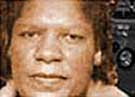 Aurelia Browder

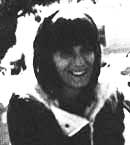
 Maya Ying Lin




 Florence, Italy 11.9.2002

