“The phrase “cute winter boots” is not about footwear. It’s a code phrase being used to discuss resistance to Trump and how to fight back against the draconian immigration policies his administration is enacting. Users talking about “cute winter boots” keeping people safe from “ice,” are referencing U.S. Immigration and Customs Enforcement. “Cute winter boots” is just the latest example of algospeak, coded phrases and words aimed at subverting algorithmic filters.”
The reason is a perceived idea – which may well have basis in fact – that actual discussion of how to combat ICE raids and so on will be demoted by the platform’s content algorithm. It’s also clearly a way of trying to avoid scrutiny from authorities. But it also reveals a strong knowledge of what the TikTok algorithm likes to promote:
“The videos discussing “cute winter boots” leverage the TikTok algorithm’s preference for product-focused content to amplify their reach. “What the algorithm likes is products,” said Diana, the admin of @/citiesbydiana, a TikTok account about urban planning. “It’s a way to talk about resisting the federal government in a way that will actually reach people.””
This is absolutely dystopian police state stuff, but at the same time, it shows a ton of initiative, and illustrates that people aren’t going to take any of this lying down. Power to them.
Longest. January. Ever. But it’s also Fred Korematsu Day-Woot!
January 30, 1948 Mohandas K. Gandhi was killed in Delhi by an assassin, a fellow Hindu, who fired three shots from a pistol at a range of three feet. An American reporter who saw it happen
January 30, 1956 As Martin Luther King, Jr. stood at the pulpit, leading a mass meeting during the Montgomery, Alab ama, bus boycott, his home was bombed. King’s wife and 10-week-old baby escaped unharmed. Later in the evening, as thousands of angry African Americans assembled on King’s lawn, he appeared on his front porch, and told them: “If you have weapons, take them home . . . We cannot solve this problem through retaliatory violence . . . We must love our white brothers, no matter what they do to us.” Martin Luther King, Jr. and wife Coretta Scott, 1960
January 30, 1968 The Tet (lunar new year) Offensive began as North Vietnamese and Viet Cong forces launched surprise attacks against major cities, provincial and district capitals in South Vietnam. Though an attack had been anticipated, half of the South’s ARVN troops (Army of the Republic of Vietnam) were on leave because of the holiday. There were attacks in Saigon (the South’s capital) on the Independence Palace (the residence of the president), the radio station, the ARVN’s joint General Staff Compound, Tan Son Nhut airfield, and the United States embassy, causing considerable damage and throwing the city into turmoil.
January 30, 1972 In Londonderry (aka Derry), Northern Ireland, unarmed civil rights demonstrators were shot dead by British Army paratroopers in an event that became known as “Bloody Sunday.” The protesters, all Catholics, had been marching in protest of the British policy of internment without trial of suspected Irish nationalists. British authorities had ordered the march banned, and sent troops to confront the demonstrators when it went ahead. The soldiers fired indiscriminately into the crowd of protesters, ultimately killing 14 and wounding 17. By the end of the year 323 civilians and 144 military and paramilitary personnel would be dead. Mural: Bloody Sunday martyrs Eyewitness accounts
January 30, 2010 Thousands of protesters from across Japan marched in central Tokyo to protest the U.S. military presence on Okinawa. Some 47,000 U.S. troops are stationed in Japan, with more than half on the southern island of Okinawa. Residents have complained for years about noise, pollution and crime around the bases. News about the protest (This link is to the 2016 protest; P&J’s link for the 2010 protest links to Not Found.)
January 30, since 2011Fred Korematsu Day Fred Korematsu Fred Korematsu, was born in Oakland, California, to a Japanese-American family. When World War II broke out Japanese-American citizens were subject to curfews and, following an executive order from Pres. Roosevelt, were sent to internment camps. Fred Korematsu refused to go and was convicted and sent to a camp. He challenged the constitutionality of Executive Order 9066 all the way to the Supreme Court. In 1944 the Supreme court ruled against him. Finally in 1983, a Federal court in San Francisco overturned the original conviction. In 1988 Congress passed legislation apologizing for the internments and awarded each survivor $20,000. The “Fred Korematsu Day of Civil Liberties and the Constitution” is observed every January 30th and in an increasing number of states. “Protest, but not with violence. Don’t be afraid to speak up. One person can make a difference, even if it takes 40 years…” – Fred Korematsu More aboutFred Korematsu
January 26, 1784 Benjamin Franklin, noting the bald eagle was “a bird of bad moral character” who lived “by sharping and robbing,” expressed regret it had been selected to be the U.S. national symbol. Benjamin Franklin Franklin proposed the wild turkey, “a much more respectable Bird and a true original Native of America.” He said the eastern wild turkey, known for its intelligence, cunning and boldness, was a far better symbol of the United States. In a 1775 letter published in a magazine, Franklin made a good case for the rattlesnake as an appropriate symbol of “the temper and conduct of America.“ How the bald eagle became our national bird (Interestingly, the link on the P&J History page leads to “Forbidden.” I thought I oughta make a note of it. The link here is on History.com, not forbidden when I posted.) Frankin’s letter on the rattlesnake
January 26, 1930 Mohandas Gandhi, Jawaharlal Nehru and other leaders of the anti-colonial movement in India pledged to achieve complete independence, or Purna Swaraj, from Great Britain. Nehru said: “The British Government in India has not only deprived the Indian people of their freedom but has based itself on the exploitation of the masses, and has ruined India economically, politically, culturally and spiritually . . . We hold it to be a crime against men and God to submit any longer to a rule that has caused this fourfold disaster to our country.”
January 26, 1950 The Indian Constitution became law and India proclaimed itself a republic. The new president replaced the King of England as head of state after nearly 100 years of British colonial rule. The Republic of India considered its sovereignty derived from the people, becoming the most populous democracy in the world. The day is now celebrated as Republic Day. The new President, Dr. Rajendra Prasad, after taking the oath of office: “Today, for the first time in our long and chequered history, we find the whole of this vast land . . . brought together under the jurisdiction of one constitution and one union which takes over responsibility for the welfare of more than 320 million men and women who inhabit it.” More About Republic Day
January 26, 1956 The Reverend Martin Luther King, Jr. was arrested for the first time, for driving 30 mph (48 kph) in a 25 mph (40 kph) zone in Montgomery, Alabama. This occurred shortly after the beginning of the citywide bus boycott he had helped organize. His home was bombed a few days later.
January 26, 1962 Bishop Joseph A. Burke of the Buffalo, New York, Catholic Diocese banned a new song and dance, “The Twist,” by Chubby Checker. It couldn’t be danced, sung, or listened to in any Catholic school, parish, or youth event. Later in the year, the Twist was banned from community center dances in Tampa, Florida, as well. It was claimed the Twist was actually a pagan fertility dance. “The Twist” by its originator
January 26, 1969 Police wielding truncheons and firing tear gas from pressure canisters broke up a march by hundreds of demonstrators in central Prague. Jan Palach The violence erupted as officers tried to disperse the crowd gathered at the foot of the Wenceslas Statue to pay tribute to Jan Palach, the student who burned himself to death in protest at the Soviet invasion the previous summer, and their ongoing occupation of Czechoslovakia. More about Jan Palach
January 26, 1991 Germans protested their country’s membership in the coalition prosecuting the first Gulf War against Saddam Hussein’s Iraq after he invaded Kuwait. Rallying out in many cities, the largest turnout brought 200,000 to Bonn. The number of those claiming conscientious objector status jumped 35% in that month to 30,000.
Vermont Freedom To Marry Passes, and more on this date:
December 20, 1946 The morning after Viet Minh forces under Ho Chi Minh launched a nighttime revolt in the Vietnamese capital of Hanoi, French colonial troops cracked down on the communist rebels.Ho and his soldiers immediately fled the city to regroup in the countryside. That evening, the communist leader issued a proclamation that read: Ho Chi Minh, Paris 1946
“All the Vietnamese must stand up to fight the French colonials to save the fatherland. Those who have rifles will use their rifles; those who have swords will use their swords; those who have no swords will use spades, hoes, or sticks. Everyone must endeavor to oppose the colonialists and save this country. Even if we have to endure hardship in the resistance war, with the determination to make sacrifices, victory will surely be ours.” The first Indochina War thus began.
December 20, 1960 North Vietnam announced the formation of the National Front for the Liberation of the South (usually known as the National Liberation Front or NLF), designed to replicate the success of the Viet Minh, the umbrella nationalist organization that successfully liberated Vietnam from French colonial rule. National Liberation Front flag Ho Chi Minh biography(two separate links.)
December 20, 1990 Kansas reservist Dr. Yolanda Huet-Vaughn refused orders to serve in the first Gulf War (Desert Storm) and was later sentenced to prison. The Kansas medical board withdrew her hospital privileges. “The issue was not whether I belonged in the military but whether the military belonged in the Middle East waging war. I did not want to focus on the personal decision. I was trying to focus on the decision for which each and every American would have to be responsible.” — Yolanda Huet-Vaughn What if they gave a war and nobody came?
December 20, 1994 100,000 Chechnyan civilians linked hands in a 65 km-long human chain (40 miles) to protest the Russian invasion of their country and attack on their capital, Grozny. Read moreOR TRY HERE if you don’t have an account with the NYWT.
December 20, 1999 The Vermont Supreme Court rulled in Baker v. State of Vermont that homosexual couples were entitled to the same benefits and protections as wedded couples of the opposite sex. History of the Freedom to Marry
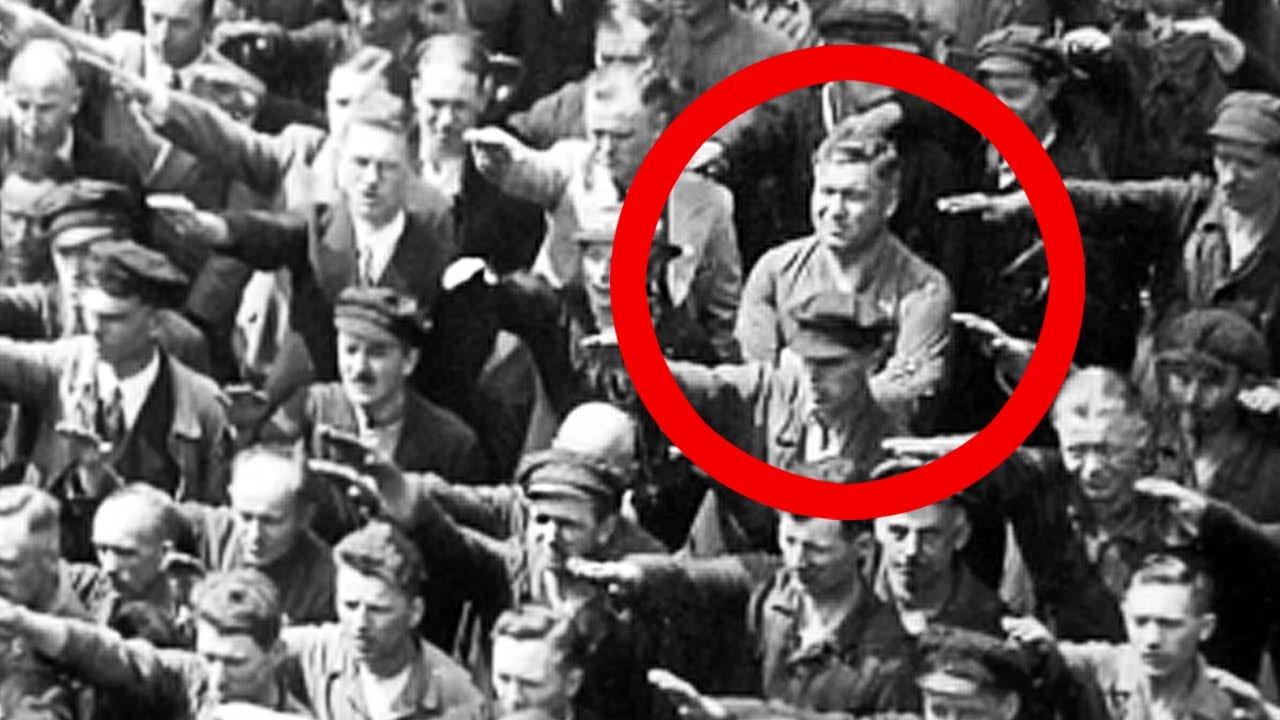
“Most of the power of authoritarianism is freely given. In times like these, individuals think ahead about what a more repressive government will want, and then offer themselves without being asked. A citizen who adapts in this way is teaching power what it can do.”
obeying in advance is how fascism wins.
just last month, we saw Dick-Rocket Czar Jeff Bezos — owner of the Washington Post — preemptively kowtow to Donny Convict.
‘please sir, don’t hit me. look, look, I’ve told my editor at the Post not to endorse Kamala. they had one all written, and I told them to shitcan it. see, sir? can we be friends now?’
today, lets check in on some leaders who are already saying no to the coming reign of King Fuckface the First.
Donny Convict hates the shit out of California — and, by extension, he hates its Governor, Gavin Newsom. look at this handsome fucker, with his square jaw and his thick head of hair. he makes Donny seem like a misshapen garden gnome by comparison — and Donny knows it.
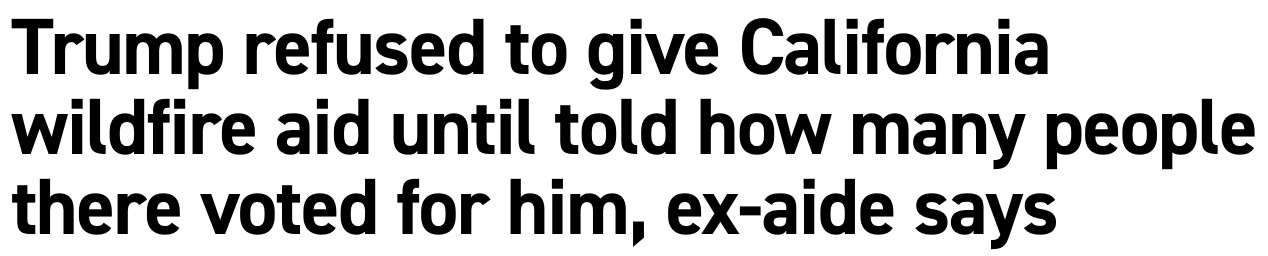
inside Donny’s childish, ignorant brain, California is entirely populated by chardonnay-sipping hippie elites who hate his guts — and so when disaster strikes, he’s inclined to deny them federal aid.
Donny somehow believes that all of California’s water comes from a massive faucet in Canada. this faucet is so ungodly ginormous that it takes an entire day to turn it. I wish I were making this up — but no, our incoming 47th president actually imagines that the reason California experiences droughts is because Gavin Newsom keeps that big-ass faucet under lock and key and won’t let anyone open it.
oh god oh god oh god he’s so fucking stupid. it hurt my brain just to type that last paragraph.
can we just pause to reflect for a moment on just how insane it is for a country to have a chief executive who believes in such a fever-swamp hallucination? this is a man who will once again be in charge of a nuclear arsenal — and he’s wandering about, babbling incoherently about giant spigots. holy shit.
Donny’s already threatening to inflict preemptive retribution on California as part of his Day One Dictatoring — and Governor Newsom has a message for Donny:
California’s Democratic Gov. Gavin Newsom, a fierce critic of former President Donald Trump, on Thursday called for lawmakers to convene a special session ahead of another Trump presidency to safeguard the state’s progressive policies. Meanwhile, attorneys general in blue states across the country announced they were also gearing up for a legal fight.
Newsom’s office told The Associated Press that the governor and lawmakers are ready to “Trump-proof” California’s state laws.
no word from Newsom on if he’s ever going to open that big fucking faucet.
In Illinois, Gov. JB Pritzker said on Thursday he would ask his state’s legislators, possibly as soon as next week, to address potential threats from a second Trump term. “You come for my people,” Mr. Pritzker said at a news conference, “you come through me.”
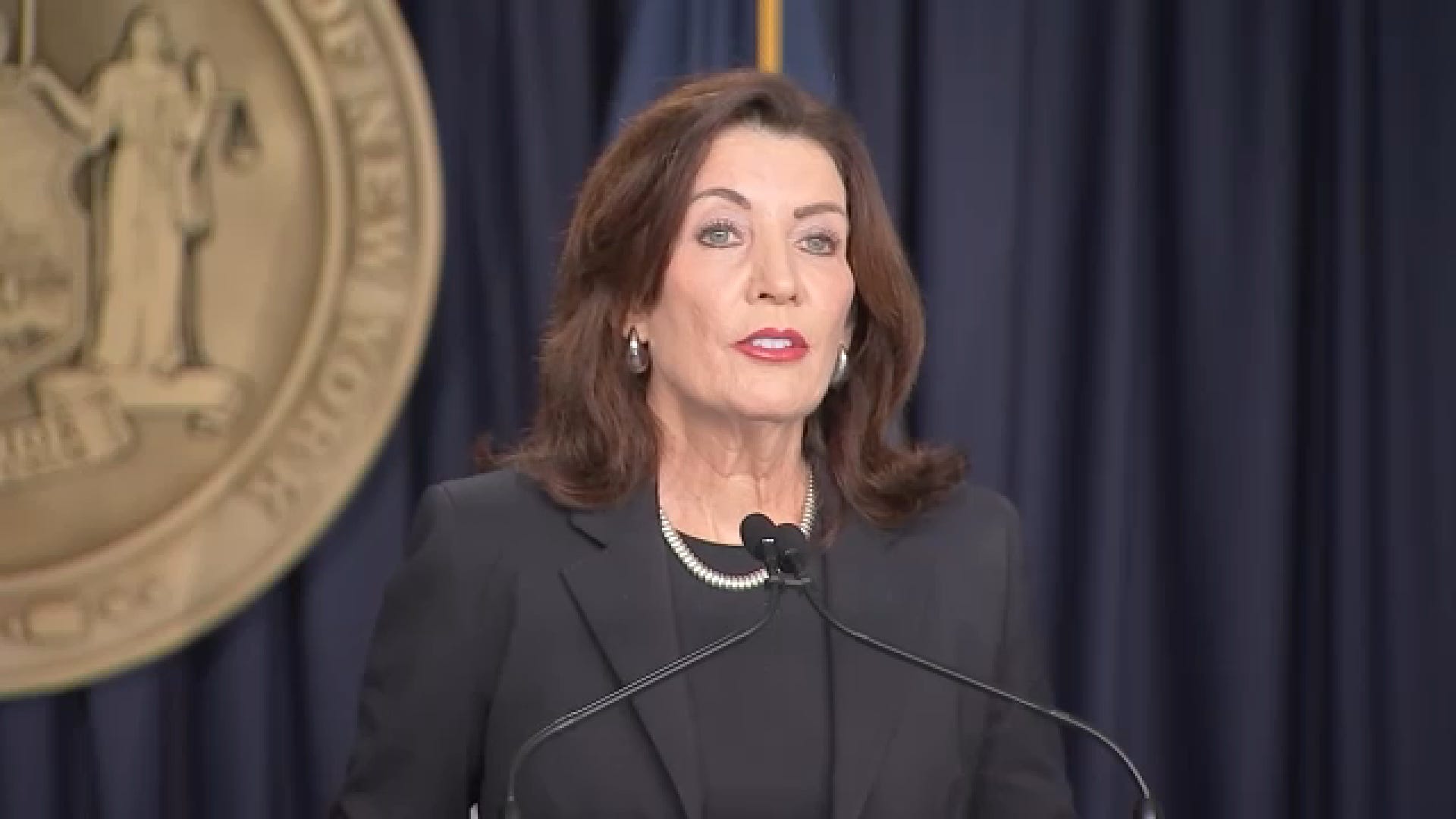
here’s New York’s Governor Kathy Hochul:
The announcements echoed a vow on Wednesday by Gov. Kathy Hochul of New York to “honor” the election results and to try to work with Mr. Trump, but also to fight any efforts to curtail reproductive freedoms, expand gun rights or curb environmental regulations.
At a news conference, Ms. Hochul addressed Mr. Trump directly: “If you try to harm New Yorkers or roll back their rights, I will fight you every step of the way.”
“If possible, we will work with his administration, but we will not compromise our values or our integrity, our principles,” she said. “We did not expect this result, but we are prepared to respond to this result, and my office has been preparing for several months, because we’ve been here before, we’ve faced this challenge before, and we use the rule of law to fight back.”
Donny’s plan to round up million of immigrants and disappear them into detention camps hinges on using each state’s local law enforcement to do the rounding-up. Massachusetts Governor Maura Healy say that Donny can stick that plan where the sun don’t shine.
However, plans for using local law enforcement and the National Guard could face roadblocks in states led by Democrats.
Massachusetts Governor Maura Healey told MSNBC that she would “absolutely not” allow state police to assist in mass deportations if the Trump administration requested it.
Federal Reserve Chair Jerome Powell has a message for Donny, who has threatened to fire him: go ahead, make my day. (Snip-go see it)
n the quaint district of Milho Verde, it’s impossible to go without hearing about Geralda Francisca dos Santos and her biscoito de polvilho (a cassava flour and cheese puff). At 81, Dona Geralda is one of the region’s traditional cooks of quitanda, pastries typical of Brazil’s food culture, especially in the state of Minas Gerais.
Ahead of festivities like the Three Kings’ Day and the Feast of Our Lady of the Rosary, her daughters and granddaughters — even those living in other districts — join her in the kitchen, surrounding the termite mound, clay, and tile shard oven that Dona Geralda built. They aim to help the matriarch meet the extraordinary demand, but these gatherings always mean something else.
“When my mother and I cook around her oven, she tells me stories of Milho Verde and our family that I didn’t know about,” Silvana Aparecida Santos, 38, who learned the quitanda alchemy from a very young age by watching and listening to her mother, tells Refinery29 Somos. “When we cook quitanda together, we shorten distances between us.”
“Quitanda goes beyond the kitchen. Before the dish became a local culinary symbol, it helped fuel a resistance movement.”
BEATRIZ MIRANDA
For many women like Aparecida Santos and Dona Geralda, quitanda goes beyond the kitchen. Before the dish became a local culinary symbol, it helped fuel a resistance movement. The tradition of cooking these pastries has crossed generations of women workers (predominantly in Minas Gerais), with the food continuing to represent the means to a better living. Quitanda is the technology through which artisanal cooks build their self-esteem, identity, community belonging, financial autonomy, and female networks of mutual support.
According to scholar Juliana Bonomo, quitanda originated in the 18th century when lords sent women enslaved workers to the nearest urban centers to generate complementary income. The word “quitanda” derives from the Kimbundu language, alluding to the tray where one sells food. But back in those days, it referred, as Bonomo explains, “to everything from haberdashery items to snacks.”
PHOTO: NEREU JR.
To this day, despite industrialization, most quintandeiras use no artificial ingredients. These snacks blended local ingredients (such as coconut, corn, peanuts, and cassava) with Portuguese recipes (cakes, biscuits, and pastries) and African techniques, rites, and beliefs. “Quitanda is a multicultural food,” Bonomo adds. “Pastry would often be prepared in silence. One couldn’t hit the pan with the spoon because it would bring bad luck.”
But it’s this move from the private to the public sphere that transformed this slave lord-run business into something revolutionary.
“As these women left their lords’ houses to work on the streets, they started learning and sharing ideas about freedom with other quitandeiras and their own customers — many of them also enslaved workers,” the researcher says, pointing to Luiza Mahin, a quitandeira from Bahia State who played a pivotal role in the Revolta dos Malês (1835), the biggest uprising of enslaved workers in Brazil. Once authorities perceived them as a threat to the slavery system, the first quitandeiras faced persecution.
“As these women left their lords’ houses to work on the streets, they started learning and sharing ideas about freedom with other quitandeiras and their own customers — many of them also enslaved workers.”
JULIANA BONOMO
However, quitandas ultimately emancipated many women. “By finding a way to sell quitanda, they were able to buy manumission for themselves and their relatives,” Bonomo says. The food ensured dignity for women in the 18th and 19th centuries, something that resonates in the lives of quitandeiras even today.
“The selling of quitanda helped me raise my 10 children,” says Dona Geralda, who grew up in the Ausente quilombo, a community that descends from enslaved workers who fought the system. Even though Aparecida Santos runs a bar in Milho Verde, she cites quitanda as a major source of income.
PHOTO: MARCELO RAMOS.
In the historical village of Congonhas (home to Minas Gerais’s biggest quitanda festival), Raquel Ramalho tenderly recalls her first memories with the pastries. “When I close my eyes, I can visualize my grandmother making biscoito de polvilho for us in the wood-burning stove before we went to school,” she says.
While quitanda has always been intrinsic to her identity, Ramalho’s life changed 15 years ago when she established herself as a professional quitandeira. “I used to be a housewife and felt excluded from social life. As I started working with quitanda, I started traveling to promote my work in other places, meeting new people, and conquering my own space,” she says. “It raised my self-esteem and gave me autonomy.” The 47-year-old now has a dedicated YouTube channel to share her quitanda knowledge with the world.“
“By finding a way to sell quitanda, they were able to buy manumission for themselves and their relatives.”
JULIANA BONOMO
Quitanda is also a protagonist in the life of 60-year-old Angela Resende, who wakes up every day at 4 a.m. to cook. In the last 20 years, she has spent many of her mornings preparing quitanda in the Minas Gerais city of Paracatu, where she serves customers a homemade breakfast in her yard. In spite of the hard work, Resende asserts she wouldn’t choose any other profession.
“People used to think that we were quitandeiras because we had no option because we didn’t go to university,” she says. “There used to be this prejudice.”
For Bonomo, this misunderstanding of quitandeiras stems from the patriarchal work division that prevails in society. “Professions that have historically been connected to domestic work (like cooking) are still seen as not real work,” she says, pointing out how empowering the role is. “[With her income], the quitandeira is responsible for buying her son’s school uniform, for example, or helping pay the family’s food expenses.”
PHOTO: MARCELO RAMOS.
Being a quitandeira can also be a lifeline. “When my grandfather became physically disabled, my grandmother became the breadwinner,” says Mariana Gontijo, 40, a culinary school professor born in Moema. “By selling quitanda and washing and ironing clothes, she provided for a family of seven people.”
After years of working as a lawyer, Gontijo returned to her roots. “My first source of research was my mother’s cookbook, where I reconnected to recipes that have accompanied me through my whole life,” Gontijo says. An advocate of local traditional cooking, she now runs O Tacho, a food consultancy company, and Roça Grande, a restaurant in the capital of Minas Gerais that celebrates the food of her land.
For Gontijo, quitanda is a tradition that has long represented a means of survival and emancipation for many women. Or simply put, “quitanda is an act of resistance.”
“Quitanda is an act of resistance.”
MARIANA GONTIJO
It also requires a profound knowledge of nature and themselves. “By using corn flour, banana tree leaves, and even their own arms to measure the temperature of the wood-burning stove, they ensure the food preparation is on point,” she says. “These are purely empirical and poetic techniques that shouldn’t be taken for granted.
Gontijo continues: “Before we look to international cuisine, we need to understand, respect, and value what we have here — like the quitanda culture. If you don’t know where you come from, you don’t know where to go.”
at least, Target stores believes it. I just saw a back to school ad for Target. A boy was explaining that if it isn’t sharks it isn’t for him. It struck me as a resistance statement, because the Don has no love for sharks. I wanted to mention it, because that gives me a great giggle on the first evening of the Republicans’s dratted convention. Back to school with sharks!
(I looked for it on YouTube, but probably it needs another day or two to be there. I’m sorry about that, but I knew I’d forget if I didn’t post now, right after I saw it. It’ll be around.)









 Scottie's Playtime