I was reading this on MPS; clicked through on the Blueshy link, read those photos, then saw “Capitol Protest”, which led to the above Substack note, which is actually pertinent to our interests, especially after reading this on MPS.
I enjoy this man’s commentary. He’s always seemed to know whereof he speaks. Every weekend I intend to post this newsletter, and every weekend gets by me without me getting it done. This is a copy-paste of my newsletter; I receive it in email from “The Nation” magazine. All links within are live.
A retirement for the ages Illinois Senator Dick Durbin, who has been in Congress or the Senate for nearly my entire life, has announced that he will not seek reelection in 2026. The 80-year-old’s retirement will touch off a firestorm of a Democratic primary in Illinois, and I’m already dreading the prospect of a heap of progressives jumping into the race, cannibalizing each other, and clearing the path for the wealthiest available moderate white man to buy the nomination. If progressives could just coalesce around one candidate and stick together, they’d win this thing. Then again, if I had wheels, I’d be a wagon. In any event, Durbin’s long overdue retirement is more important to what I cover than the primary, because Durbin is the ranking member of the Senate Judiciary Committee, which controls the judicial nomination process. He was the head of the committee during Joe Biden’s presidency—a job he got by literally pulling rank over the guy who was best suited for the post (according to me), Senator Sheldon Whitehouse. The last four Democratic leaders on Judiciary have been, pretty much, a disaster. Durbin was preceded by Diane Feinstein, who was preceded by Patrick Leahy, who was preceded by Joe Biden. All four of these people were establishment moderates who were more concerned with formalities and courtesies than fighting for control of the courts. It was during their watch that the Federalist Society was able to overrun the judiciary with Republican judges who have literally taken away constitutional rights and redefined the law as a tool of the Republican political agenda. The Judiciary Committee desperately needs new, energetic leadership, to say nothing of a fighting spirit. I can only hope that Durbin’s retirement marks the end of the era of Democrats’ getting punked on judicial nominations.
The Bad and The Ugly SCOTUSblog, a popular website that reports on the Supreme Court, has been acquired by the right-wing media outlet The Dispatch. The acquisition likely marks the end of one of the few nonpartisan sources of information about the Supreme Court and plunges yet another independent outlet into the dark morass of the white-wing media ecosystem. I have a ton of respect for the website’s senior editor, Amy Howe, and I know she will fight like hell to retain the site’s nonpartisan independence. But this ain’t no fairy tale. When you lie down with dogs, you wake up with fleas.The number of young people who are incarcerated is going down, but the racial disparities among the children we put behind bars are “the highest in decades.” Black and Native American children are getting the worst of it, according to NPR. Pope Francis died. Francis was from Argentina. He was the first pope from Latin America, the first pope from the Southern Hemisphere, the first Jesuit pope, and the first pope born and raised outside of Europe since the 8th century. He was also one of the most progressive popes in the history of that office, though admittedly that’s a bit like saying he was the least fungal fungus. For my lapsed-Catholic part, I liked him. I hope the next pope is the second pope who can claim to be most of these things. Secretary of Defense Pete Hegseth has been caught up in yet more Signal-inspired controversy. I know I’m supposed to care, but I don’t. They put a Fox News host in charge of the American military; what the hell did people think was going to happen? Decency? Competence? A group of bigoted parents went before the Supreme Court this week and asked the justices to allow them to object to books in school that mention gay people. The Republican justices on the court fell all over themselves to agree with the parents. I am once again asking bigoted religious wing nuts to homeschool their children and leave the rest of us who want to live in a society alone.
Inspired Takes In The Nation, my colleague Joan Walsh took on the Trump administration’s ridiculous and sexist obsession with white birth rates. For my part, I am willing to help the administration accomplish its goals: If it really wants white birth rates to go up, all it has to do is make most white people poor again. The lesson from literally all today’s high-income societies is that birth rates go down as economic prosperity goes up, so the solution is actually pretty simple. Maybe that’s the real reason behind Trump’s tariffs? Contraband Camp has put out a “Trump Administration Discrimination Database.” So now, whenever your MAGA uncle says, “Point to one thing Trump has done that is racist,” you have a reference source. I used to feed my dog a “raw food” diet. It made sense to me, in an unthinking way (dog = wolf = murderous carnivore = “Aww… who’s the good girl who wants to feast on the raw viscera of your slain enemies?”). The fru-fru suburban veterinarian I go to didn’t immediately tell me it was a bad idea. But then, I happened to run into my old, hardscrabble city veterinarian and she basically said, “What the fuck? Don’t do that. I thought you were a smart person?” She then gave me some research. Now, we’re back to kibble. For people who don’t have the benefit of knowing a frank-talking vet, Emmet Frazier explains in The Nation why your fully domesticated dog doesn’t need to be eating rabbit liver.
Worst Argument of the Week This isn’t really an argument, but I read a story in Gothamist that almost made me cry. The Trump administration has largely cut off funding for legal aid programs that would provide lawyers to immigrant children sent here without their parents or legal guardians. That has forced thousands of children in New York City to go through the court process—which can lead to their deportation (among other things)—with no legal representation. We’re talking about children as young as 4 being hauled into a courtroom without a lawyer. I do not know what kind of sick fucks think this is OK. I cannot fathom the base, racist, cruelty and inhumanity you have to be comfortable with to think that Trump is right to cut this funding. I cannot conceive of the argument one might make to support this. All I know is that whatever argument one has for making this OK is wrong.
What I Wrote I was not prepared to engage with a Supreme Court decision at 1 o’clock on Saturday morning, but I’m very glad the court was still working. It issued a ruling that prevented Trump from deporting another group of immigrants, and in so doing, probably saved some of their lives. The Harvard lawsuit against the Trump administration over his illegal and unconstitutional freeze of the university’s research funding is very strong. Harvard should win, if winning in court still matters.
In News Unrelated to the Ongoing Chaos You should watch Andor. The first episode of its second season just came out and, trust me, you should just watch it. Forget that it’s part of the Star Wars franchise. Forget that it’s another Disney-owned media property looking to milk that franchise for all its worth. This show is about fighting fascism. It is the most relevant piece of dramatic fiction of this era.
April 27, 1936 The UAW (United Automobile, Aerospace, and Agricultural Implement Workers of America), gained autonomy from the AFL (American Federation of Labor), becoming the first democratic, independent labor union concerned with the rights of unskilled and semi-skilled laborers.
April 27, 1937 The Social Security Administration began operation by making its first payment to an American protected under the law, principally the elderly, and children who’ve lost their parents.
April 27, 1942 Sixteen pacifists, including Evan Thomas and A.J. Muste, refused to register for the World War II draft. Muste was a Quaker activist, founder of the Fellowship of Reconciliation, and author of two pamphlets that same year, War is the Enemy and Wage Peace Now. A.J. Muste still working for peace 25 years later with Dorothy Day, leader of the Catholic Worker movement. Read about War is the Enemy
April 27, 1974 Ten thousand marched in Washington, D.C., calling for impeachment of President Richard M. Nixon.
April 27, 1987 Central Intelligence Agency headquarters in Langley, Virginia, was blockaded by people protesting U.S. policies in Central America and Southern Africa. 700 were arrested.
April 27, 1989 Thousands of Chinese students took to the streets in Beijing to protest government policies and issued a call for greater democracy in the communist People’s Republic of China. The protests grew until the Chinese government ruthlessly suppressed them in June during what came to be known as the Tiananmen Square Massacre. Ignoring government warnings of violent suppression of any mass demonstration, students from more than 40 universities began a march to Tiananmen this day. The students were joined by workers, intellectuals, and civil servants and, by mid-May, more than a million people filled the square.
April 27, 1994 Nelson Mandela casting his first vote South Africa held its first multiracial elections and chose anti-apartheid leader Nelson Mandela (with more than 62% of the vote) to head a new coalition government that included his African National Congress Party. More on that historic election
I read a theory on Facebook yesterday, which means there was heavy research behind it (sarcasm), that Trump only hired morons because they would provide distractions from all the Trump Fuckery he’s implementing. I think that might be a bonus, but I don’t agree with it.
I think Trump only hires morons, not because they’re morons, but because they’re all sycophants and none will challenge his Trump Fuckery. For the love of God, Kristi Noem even got the Melania hairstyle. I’m kinda shocked JD Vance didn’t get it too.
We’ve gone over the idiot picked from Fox & Friends in the Defense Department, Pete Hegseth, inadvertently leaking classified intel, so let’s discuss the puppy-murdering idiot at Homeland Security.
Kristi Noem had her purse snatched while at Capital Burger in Washington, DC. Surveillance footage showed the suspect purposefully moving close to Noem as he zeroed in on her Gucci bag near her feet.
A source said the thief, dressed in dark clothing, sat down at an empty table next to Noem with his back facing her and used his left foot to slide the bag away. He surveyed the restaurant before eventually picking up the bag, covering it with his jacket, and leaving.
He was a smooth criminal, but ya ain’t gotta be that smooth to steal from a Trump dummy.
Country mouse still has a lot to learn about living in the big city (knock on wood since I’m still in Chicago), and one of the things you should know is to keep your bag in your vision. For example: My backpack, which my iPad, passport, keys, and other items is in right now, is sitting on the chair right across from me in this Starbucks while I write this.
See? No one’s gonna steal my Mocha Frappe either.
So Kristi doesn’t know how to traverse the big city, but what’s her detail’s excuse? While Noem was dining with her family, who still hasn’t alienated her despite the puppy killing, the Secret Service inside the restaurant keeping an eye on things. Well, most things.
The thief managed to swipe Noem’s purse right in from of her, the Secret Service, and every member of those yee-haw fuckers she calls her family. This must be a criminal mastermind. If the government catches him, I suggest they hire him. He can teach the Secret Service how thieves steal from MAGA morons.
But what’s interesting is what was inside Noem’s Gucci bag, as it included a Louis Vuitton Clemence wallet, her driver’s license, medication, apartment keys, passport, DHS access badge, makeup bag, blank checks, and about $3,000 in cash.
Ya know, if a Russian, North Korean, or Chinese spy wanted to access our government, they don’t have to do none of that Tom Cruise Mission Impossible crap. They would just need to snatch Kristi Noem’s purse…or just wait for Pete Hegseth to share classified intel on a chat app, or for Trump to Tweet it or hand it to Russians in the Oval Office.
But what was Kristi doing with $3,000 in cash? Did the thief also steal her pager? Paging Director Dumbass! A DHS spokesgoon said, “Her entire family was in town, including her children and grandchildren – she was using the withdrawal to treat her family to dinner, activities, and Easter gifts.”
Hey, country mouse. Have you ever heard of a bank card? Even the food trucks in DC take them. Try the Venezuelan food truck by the L’Enfant Metro station. It’s amazeballs.
Sure, we should all keep some cash on us, because you never know, but $3,000 is a bit much. And why is she carrying blank checks? Hardly anyone takes checks anymore, and everyone should be advised not to take checks from Trumpers. Elon’s probably still waiting for Trump’s check to clear for the Tesla he purchased on the White House lawn.
Jonathan Wackrow, a CNN law enforcement analyst and former Secret Service agent, said, “If necessary, the Secret Service will need to make operational changes on how they deal with these types of private events moving forward.” If anything, it’ll be necessary for the Secret Service to adjust and realize they’re guarding very stupid people now, people who aren’t smart enough to keep their stuff in their sight.
Wackrow also said Noem remains “at higher risk for targeted threats, both by foreign and domestic actors, and just her public profile alone makes her a symbolic target.”
Well, she’s a higher target now that everyone knows how stupid she is.
Chicago note: After my deadlines were met yesterday, I was free to go exploring. I got a meatloaf sandwich at a place where the waiters insult you.
This year presents an opportunity to enact tax policy changes that would ease the strain on household budgets that people in low-paid jobs and their families face and allow them to invest in their future, while ensuring that the nation’s wealthiest pay more of their fair share in taxes. Expiration is approaching for a number of provisions in the 2017 tax law[1] — which showered expensive tax cuts on the wealthy and failed to deliver on promised benefits for economic growth and workers’ earnings — so the time is ripe for a new direction.
But the economic agenda the Trump Administration and congressional Republicans are pursuing would double down on the 2017 law’s flaws by extending its skewed taxed cuts, which would further balloon deficits and deliver another trickle-down failure. And to help pay for those tax cuts, House and Senate Republicans are planning massive cuts that would take health care and food assistance away from, and make college less affordable for, millions of people with low and middle incomes.[2]
Republicans should instead pursue one of the paths they campaigned on, as articulated by Senator Josh Hawley in January: “for every Republican who has hailed the new working-class coalition that President Trump has assembled, this is the time to deliver.”[3]
A better tax bill would:
Not take health care and food assistance away from millions of people or make it harder to afford college or pay energy bills.
Prioritize tax credits that help people make ends meet as they face rising costs for groceries, clothes and other retail goods, health care, and other items:
expand the Child Tax Credit in a way that prioritizes the 17 million children in families who get less than the full credit because their families’ incomes are too low;
permanently extend the larger premium tax credits that are helping people afford health coverage;
and expand the Earned Income Tax Credit (EITC) for adults in low-paid jobs not raising children at home, including young adults just starting out who may be struggling.
Require corporations and the wealthy to pay a fairer share of tax, which will also help offset any of these tax cuts. This includes ending tax cuts for high-income people on schedule, raising taxes on very wealthy people and corporations that receive enormous breaks under the current tax code, and building an IRS capable of collecting more of the taxes that are already legally owed.
And whether as part of the tax bill or separately, Republicans in the majority should also assert Congress’ constitutional power and responsibility over trade policy and turn off the destructive tariffs the Trump Administration has imposed and threatened. Separate bills introduced by Republican and Democratic Senators and Democratic House members are a step in the right direction.[4] The Administration’s tariffs will hit low- and middle-income families particularly hard at grocery and retail stores while risking a global recession, with all the human suffering that entails.
Don’t Take Away Health Care, Food Assistance, and College Support
One easy course correction toward crafting a better tax bill would be for Republicans to simply not harm the low- and middle-income people they campaigned on helping. But the Republican budget resolution includes instructions to House committees to make $1.4 trillion in cuts to programs in their jurisdiction that could potentially harm low- and middle-income people.[5] These include instructions to the committee with jurisdiction over Medicaid to cut at least $880 billion over ten years, the committee with jurisdiction over food assistance through SNAP to cut $230 billion, and the committee with jurisdiction over student loans to cut $330 billion. These programs serve tens of millions of people: Medicaid provides health coverage that 72 million people count on; SNAP helps over 40 million people put food on the table each month; and student loans make higher education more affordable for millions of people.[6] The Republican budget resolution may also assume cuts to energy tax credits and other climate investments, which would increase utility bills, imperil energy reliability, and threaten jobs and investment nationwide.[7]
Even cuts that are a fraction of the size of the potential $880 billion cut to Medicaid and $230 billion cut to SNAP in the House instructions would cause serious harm. They would still increase costs for strapped families and leave more people uninsured and unable to afford food. And it is possible the cuts will be deeper or cover more areas, as some House and Senate members press for far larger cuts.
These cuts are all designed to help offset the cost for wasteful, $1.8 trillion tax cuts for people in the top 5 percent of incomes. (See Figure 1.)
Figure 1
At the same time the Republican agenda would raise costs for families and leave more people uninsured, the Trump Administration’s tariffs threaten volatility and price increases — and a significantly increased risk of recession and higher unemployment — that will land hardest on people who can least afford it.
Expand the Child Tax Credit and EITC, Extend Enhanced Premium Tax Credit
The 2017 tax law included some structural improvements: it doubled the standard deduction and the maximum Child Tax Credit amount while eliminating the personal exemption. These changes cut taxes for most people with low and moderate incomes, though only modestly, while simplifying the tax returns of millions of taxpayers as they reduced the number of those who need to itemize their deductions. But these changes provide only modest help to many low- and moderate-income families and more is needed in a tax bill to help families afford the basics, including the cost of health care.
Child Tax Credit
The Child Tax Credit is key in helping millions of families afford the essentials, and lifted 3.6 million people, including 2.0 million children, above the poverty line in 2023.[8] But one of its greatest design flaws is that under the 2017 tax law, it leaves 17 million children, or roughly 1 in 4 children, out of receiving the full credit because their parents’ incomes are too low. While most of the children left out of the full credit receive a partial credit, children in families without income in a given year, for reasons including job loss, health, and caregiving responsibilities, don’t receive any credit at all.
While the 2017 tax law doubled the maximum Child Tax Credit amount from $1,000 to $2,000, millions of children in families with low and moderate incomes — those who would most benefit from an increase — didn’t receive that full increase the way that children in families with higher incomes did. In fact, millions received a Child Tax Credit increase of just $75 or less from the 2017 tax law, far below the $1,000-per-child increase that higher income families received.[9]
A better tax bill would fix these flaws. The best and simplest way to do that is to provide the full Child Tax Credit amount to all children in families with low and moderate incomes. This is often called making the credit “fully refundable,” because families whose credit exceeds their income tax liability receive the full credit as a refund. As one example, the American Family Act, recently reintroduced in the House by Rep. Rosa DeLauro and others and in the Senate by Sen. Michael Bennet and others, would do just that, while also increasing the maximum credit, paying it on a monthly basis, and providing a larger amount during the first year of a child’s life, among other changes.[10]
Making the credit fully refundable would have important benefits for children in families with lower incomes. When this feature and other key expansions, including a larger maximum credit and advance monthly payments, were in effect for the credit in 2021, low-income families used the money to pay for necessities like food and housing, as well as expanding educational opportunities for their children, like through tuition and after-school programs.[11]
And the 2021 expansion, together with other pandemic relief, helped drive down the number of children experiencing poverty to a historic low in 2021. Black, Latino, and American Indian and Alaska Native children, whose families face structural racism in the nation’s economic, housing, and educational systems that depresses their earnings, experienced particularly large decreases in child poverty. But when the credit’s temporary expansions and other pandemic-era assistance expired, child poverty rates rose back up. (See Figure 2.)
Figure 2
If Republicans fail to make the full credit available to the 17 million children in families whose earnings would otherwise be too low to qualify for it, they should, at minimum, expand the credit for the millions of children who receive some but not all of the credit, similar to the approach taken by the bipartisan bill from January 2024. Fully 169 House Republicans voted for that legislation, which was negotiated and championed by House Ways and Means Chair Jason Smith. In its first year, the bill would have expanded the Child Tax Credit for more than 80 percent of the children left out of the full credit, boosting the credit for children in working families. When fully in effect, it would have reduced the number of children experiencing poverty by 500,000.[12] The expansion would have helped parents across the country who work in important occupations for low pay. (See Table 1.)
One critical reform in that legislation — which should be a top priority in the upcoming tax bill — would have allowed families with low and moderate incomes to receive the same-sized credit for each of their children. As it stands, higher-income families get the same credit amount per child; lower-income families do not. The bill would have changed this by providing the credit on a per-child basis for families with low and moderate incomes just as it is presently provided per child for higher-income families, providing substantial help to the three-quarters of children left out of the full credit who live in a family with more than one child.[13] The bill also would have increased and eventually eliminated the lower maximum credit amount that applies to families with lower incomes, often called the “refundability cap.” This improvement would allow eligible parents to receive an increase in their credit for any increase in their work earnings, which is inexplicably denied in current law.[14] Policymakers could improve on these bill changes by also phasing in the credit from the first dollar of a family’s earnings, as many Republicans have proposed in the past.[15]
TABLE 1
Bipartisan Child Tax Credit Expansion Would Have Benefited Millions of Workers and Their Families Selected occupations of parents or other caregivers who would have benefited from the expansion in the first year
Occupation
Parents or caregivers in occupation who would have benefited
Cashiers
411,000
Maids and housekeeping cleaners
343,000
Cooks
340,000
Personal care and home health aides
339,000
Janitors and building cleaners
282,000
Construction laborers
267,000
Nursing assistants
252,000
Waiters and waitresses
239,000
Truck and delivery drivers
233,000
Laborers and hand freight, stock, and material movers
215,000
Customer service representatives
212,000
Landscaping and groundskeeping workers
199,000
Retail salespeople
194,000
First-line supervisors of retail sales workers
172,000
Other agricultural workers
165,000
Carpenters
146,000
Stockers and order fillers
141,000
Childcare workers
140,000
Teaching assistants
126,000
Food preparation workers
118,000
Miscellaneous production workers, including equipment operators and tenders
116,000
Secretaries and administrative assistants, except legal, medical, and executive
101,000
Receptionists and information clerks
100,000
Notes: Parents or caregivers who would have benefited are tax filers and/or their spouses who are at least age 18, worked at least one week in the year, and reported an occupation. “Personal care and home health aides” combines nearly 238,000 personal care aides (such as escorts for the elderly or those with disabilities) with nearly 102,000 home health aides (such as in-home hospice attendants). Table shows all occupations with at least 100,000 workers estimated to benefit from the expansion. Estimates reflect a pre-pandemic economy and tax year 2023 tax rules.
Source: CBPP analysis of 2015 IRS Statistics of Income Public Use File, allocated by occupation based on CBPP analysis of the American Community Survey (ACS) for 2017-2019
Enhanced Premium Tax Credits
Another tax policy key to working families that is missing from Republicans’ current agenda is extending the enhanced premium tax credits (PTCs). The enhanced credits are critical to making health coverage in the Affordable Care Act (ACA) marketplace more affordable to millions of people — and small business owners — across the country. The enhanced PTCs spurred record enrollment in ACA marketplace insurance and contributed to record low uninsured rates. (See Figure 3.) If Congress fails to extend them, health care premiums are going to surge by an average of 79 percent for over 20 million people.[16]
Figure 3
For example:
A single individual making $32,000 (212 percent of the poverty level) would see their monthly marketplace premium more than double, from $66 to $163 — an annual increase of $1,162.[17]
A family of four making $65,000 (208 percent of the poverty level) would see their monthly marketplace premium increase from $126 to $324 — an annual increase of about $2,400. (See Figure 4 for the premium increases that a family of four would experience at different income levels.)
Figure 4
Facing dramatic spikes in their premiums, families would be forced to make hard decisions about their health coverage. Roughly 4 million people would become uninsured.[18] As a result, they would be more likely to forgo necessary care or to incur medical debt.[19]
When it comes to small businesses, the contrast between readily available policy options is stark. On the one hand is House Republicans’ focus on extending the 20 percent pass-through deduction and the estate tax exemption at its current very high level; both are billed as helping small businesses but in reality overwhelmingly benefit the wealthy.[20] Extending the enhanced PTCs, meanwhile, would prevent 2.7 million small business owners who get coverage through the ACA marketplaces from facing a steep hike in health coverage costs.[21] A better tax bill would match the rhetoric to the reality and extend the enhanced PTCs.
Earned Income Tax Credit
Then-candidate Trump’s campaign focused attention on the economic circumstances of young men, especially those who don’t go to college. But neither President Trump nor Republican members of Congress have advanced policies to date that would meaningfully help them. If Republicans truly want to help young adults, there is an easy opportunity for them to seize. Young adults in lower paying jobs who aren’t raising children at home are one of the groups largely left out of the policy success of the Earned Income Tax Credit (EITC), a policy that has intellectual origins with conservative economist Milton Friedman. These young adults do not qualify for any EITC until they turn 25, which means they miss out on critical support as they are trying to get a toe-hold in the labor market, often in low-paying, entry-level jobs. This also disproportionately harms Black and Indigenous young people, who are more likely to work in low-paying jobs due to past and present hiring discrimination, inequities in educational and housing opportunities, and other sources of inequality.[22]
But just making these young adults eligible for the EITC isn’t enough, because the maximum credit amount for adults without children at home who are currently eligible is very small, and the income range for people to qualify is too limited. Under the current EITC, more than 6 million working adults age 19 and older who aren’t raising children at home will be taxed into, or deeper into, poverty by federal income and payroll taxes in 2026 if these changes aren’t made.[23] Republicans should change the qualifying age range to include young people as well as adults aged 65 and older, increase the current paltry maximum credit amount for these adults not raising children, and expand the income range for people to qualify. These changes were made temporarily in 2021, and if they had been continued in 2026, they would increase the credit for an estimated 14.5 million adults working in various occupations for low pay, including an estimated 529,000 cooks, 358,000 truck and delivery drivers, and 269,000 construction workers. (See Table 2.)
TABLE 2
Reinstating 2021 EITC Expansion for Workers Without Children Would Benefit More Than 14 Million Workers Selected occupations of workers who would benefit in 2026
Occupation
Workers who would benefit
Cashiers
772,000
Retail salespeople
584,000
Cooks
529,000
Janitors and building cleaners
498,000
Laborers and freight, stock, and material movers, by hand
470,000
Waiters and waitresses
446,000
Customer service representatives
373,000
Stockers and order fillers
359,000
Truck and delivery drivers
358,000
Personal care aides
326,000
Maids and housekeeping cleaners
314,000
Construction laborers
269,000
Food preparation workers
250,000
Landscaping and groundskeeping workers
245,000
Childcare workers
241,000
First-line supervisors of retail sales workers
203,000
Nursing assistants
182,000
Teaching assistants
166,000
Receptionists and information clerks
164,000
Secretaries and administrative assistants, except legal, medical, and executive
161,000
Security guards and gambling surveillance officers
155,000
Elementary and middle school teachers
143,000
Miscellaneous production workers, including equipment operators and tenders
142,000
Note: Those counted as benefiting are those aged 19 and older (excluding dependents and ineligible students under age 24) who would receive a larger credit if the 2021 expansion to the EITC resumed in 2026, assuming the parameters were indexed for inflation from 2021, compared to current law. Figures are rounded to the nearest 1,000 and may not sum to totals due to rounding. See end note 23 for details on how we project 2026 tax parameters and adjust incomes to 2026 levels.
Source: CBPP analysis of March 2024 Current Population Survey (for national total) allocated by occupation based on CBPP analysis of American Community Survey (ACS) for 2017-2019, and CBO inflation projections from “Tax Parameters and Effective Marginal Tax Rates” and “Economic Projections” data files in the Budget and Economic Outlook: 2025 to 2035, January 17, 2025, https://www.cbo.gov/publication/60870.
Pay for the Tax Cuts by Requiring the Wealthy and Corporations to Pay a Fairer Share
The 2017 tax law was skewed in favor of wealthy people, failed to deliver on its economic promises, and was extremely costly. Combined with other failed trickle-down tax cuts that preceded it, first enacted under President George W. Bush, the erosion in revenue has been severe. Revenue as a share of GDP fell from about 19.5 percent in the years immediately preceding the Bush tax cuts to just 16.3 percent in the years following the Trump tax cuts, though the Congressional Budget Office (CBO) expects revenue to rise modestly to 17.1 percent of GDP in 2025.[24] In dollar terms, the difference is stark: revenues would be roughly $700 billion higher in 2025 if they were still at 19.5 percent of GDP, as in the years before the Bush tax cuts. Policymakers who support lowering deficits should seek to raise revenues as part of a sound approach to address them.
Instead of addressing this revenue erosion, the Republican budget resolution puts the upcoming tax bill on a track to compound these fiscal policy mistakes. Two steps they are taking stand out in their fiscal irresponsibility. First, the Senate would adopt, for the first time ever, a “current policy” baseline which would pretend $3.8 trillion of tax cuts do not exist. Budget law generally requires that the cost of bills that change tax and entitlement laws be evaluated by comparing revenues and costs under the legislation to their costs under the law if the legislation were not enacted. Under current law these trillions of dollars in tax cuts will expire, so extending them will cost that amount. But congressional Republicans are assuming these tax cuts will be continued and that therefore they cost nothing, fooling nobody.
Second, the Senate reconciliation instructions allow the Finance Committee to write a tax bill that adds $1.5 trillion to the underlying $3.8 trillion cost. In other words, the instructions effectively add $5.3 trillion to deficits over the nine-year period 2026-2034 (the 2017 tax cuts do not expire until the end of 2025). This would be even more fiscally irresponsible than the original 2017 tax law. (The House bill allows the Ways and Means Committee to write a bill that adds $4.5 trillion to deficits, assuming a current law baseline.)
A better tax bill would instead be fiscally responsible. It would measure the true costs of the bill using the always-used-before current-law baseline and it would be fully paid for. This should be accomplished in two steps. First, tax cuts for high-income people, who did not need them in 2017 and don’t need them now, would expire on schedule. Second, the costs of expansions in tax credits for people with low and middle incomes, and any extensions of the 2017 tax cuts for people who aren’t wealthy, would be paid for by having wealthy people and corporations pay a fairer share of tax, including taxes that are legally owed yet go uncollected.
By taking these two steps, a better tax bill would result in much lower budget deficits than the upcoming reconciliation bill prescribed under the Republican budget resolution. Achieving more fiscal responsibility in this way is also far preferable to taking away people’s health care and food assistance, increasing the cost of college, and imposing substantial tariffs (effectively tax increases), which are all changes that would fall most heavily on low- and middle-income families.
Let the Tax Cuts for Wealthy People Expire
Our country has large budget deficits and glaring unmet needs, and has experienced decades of lopsided economic growth.[25] People with incomes in the top 10 percent now account for about half of overall consumption, and wealth is highly concentrated at the very top.[26] Wealthy people do not need more large tax cuts.
Instead Republicans should reverse the tax cuts for wealthy people and allow the individual and estate tax cuts to expire as scheduled.[27] If the tax cuts were reversed for anyone with income above $400,000, for example, it would more than halve their cost, dropping it from $4.2 trillion to $1.8 trillion over ten years (2026-2035), according to estimates from the Treasury Department.[28] (See Figure 5.)
Figure 5
This is a far better approach for reducing the cost of a tax bill than the main offsets the Trump Administration and congressional Republicans are planning to rely on for their wasteful, regressive tax cuts: large cuts to programs that help people afford food and medical care, as well as enormous, sweeping tariffs on imported goods. The tariffs Trump announced through April 15 would offset a roughly similar percentage of the cost of extending the tax cuts (65 percent) as reversing the tax cuts for households making over $400,000 (57 percent), but would leave most families worse off, while preserving large tax cuts for the wealthy.[29] (See Figure 6.)
Figure 6
Provisions to Raise Revenue and Promote Fairness
Moreover, sound tax policies are readily available for Republicans to pay for tax cuts. That is true even when including the $1.8 trillion ten-year cost of extending the tax cuts for people making under $400,000,[30] and the roughly $600 billion ten-year cost for the following: changing key features of the House-passed expansion of the Child Tax Credit,[31] extending the enhanced PTCs, and expanding the EITC for working adults not raising children.[32]
Revenue should come from three main sources:
Scaling back the 2017 law’s corporate tax cuts and strengthening the international tax regime. The centerpiece of the 2017 tax law was a deep, permanent cut in the corporate tax rate from 35 percent to 21 percent[33] — a deeper cut than what the corporate community had even lobbied for.[34] The promised economic benefits of that rate cut failed to materialize and the revenue raisers were flawed; policymakers should revisit both in a better tax bill. Raising the corporate rate to 28 percent — halfway between the current rate and the pre-2017 rate — as the Biden Administration proposed would make the tax code more progressive while raising around $1 trillion over ten years (2025-2034).[35]Relatedly, Republicans reportedly want to reverse certain corporate provisions[36] in the 2017 law that were specifically designed to raise revenue to offset some of the cost of that law’s deep corporate rate cut. The provisions are often mischaracterized as “extenders.” Any effort to reverse these corporate tax increases is another reason to simultaneously reverse the corporate tax rate cut they were designed to offset.The 2017 law’s international tax rules also require reforms to better deter costly profit shifting and to better align with the global minimum tax agreement that the United States and more than 130 other nations signed in 2021.[37] The 2017 law exempted certain foreign income of U.S. multinationals from U.S. tax and added a minimum tax on certain foreign profits to try to limit incentives for foreign profit shifting. The 2017 law’s international provisions have serious design flaws, however, and leave significant room for multinationals to avoid taxes by shifting their profits to low-tax countries.[38] The Biden Administration proposed reforms to international tax rules that would address these flaws and would raise around $600 billion over ten years (2025-2034) from large multinational corporations, according to the Treasury Department.[39]
Requiring the wealthiest people to pay some annual income tax and reducing some of the special tax breaks they enjoy. To a great degree, the federal income tax is essentially voluntary for the nation’s richest people. Much of their income comes in the form of gains in the value of their stocks and other assets, and they can avoid taxes on those gains simply by holding onto their assets rather than selling them. In addition to watching their untaxed incomes grow, they can use this income to finance their lifestyles by borrowing large sums against their unrealized capital gains, without generating taxable income. And under a tax code provision known as “stepped-up basis,” when they die any income tax owed on asset gains is erased, and their heirs inherit them tax free — and indeed may never pay tax on them if they keep the cycle going. This dynamic exacerbates income and wealth inequality across generations. It also widens racial income and wealth inequalities given that the wealthiest 10 percent of white households own more than 60 percent of the country’s wealth.[40]A better tax bill would ensure that wealthy people pay some tax on the income they earn. This should be accomplished by imposing an annual minimum tax on all of their income, including unrealized capital gains. At a minimum, the tax code should not simply “erase” the tax liability of wealthy people when they die. Stepped-up basis should be eliminated.In addition to making sure that wealthy people pay some tax on all their income, a better tax bill would reduce some of the special tax breaks they get when they do pay taxes. For example, realized capital gains and dividends, which disproportionately flow to wealthy people, are generally taxed at a rate of 20 percent,[41] far below the 37 percent top rate in place in 2025 (scheduled to rise to 39.6 percent in 2026) on wages and salaries. Capital gains and dividends should be taxed at the same rate as wages and salaries.Taxing capital gains and dividends at ordinary rates for households with more than $1 million in income, combined with ending the stepped-up basis loophole, would raise about $300 billion from 2025-2034, the Treasury Department estimates.[42]Other important reforms to reduce the special tax breaks wealthy people enjoy include closing a loophole that allows certain pass-through business owners to avoid a 3.8 percent Medicare tax that others pay; ending the “carried interest” loophole, which lets private equity executives treat their compensation as capital gains in order to benefit from lower rates; and repealing the “like-kind” exchange tax break, which lets real estate developers avoid capital gains tax even when they sell buildings and receive profits. Combined, these proposals would raise another $400 billion over ten years (2025-2034), according to Treasury.[43]Policymakers could also increase the 1 percent excise tax on stock buybacks, enacted in the 2022 Inflation Reduction Act (IRA), to 4 percent, as the Biden Administration proposed. This would have the effect of treating stock buybacks more like dividends, which are the other basic way corporations distribute profits to shareholders. Increasing the rate to 4 percent would raise $165 billion over ten years (2025-2034), according to Treasury.[44]
Protecting the IRS from debilitating cuts, and replenishing and extending mandatory IRS funding to reduce the tax gap. After a decade of budget cuts severely undermined the IRS’s ability to enforce the nation’s tax laws and serve taxpayers,[45] the IRA created an $80 billion, ten-year stream of mandatory funding — that is, funding provided directly in authorizing law rather than through the annual appropriations process — to provide stable funding that the IRS could count on over a longer period. This funding has increased tax collections primarily from high-income households, while also improving customer service for all tax filers.[46] For example, the IRS recovered $1.3 billion from high-income, high-wealth individuals through efforts targeting wealthy non-filers and millionaires with delinquent tax debt.[47] But all of this rebuilding is now at grave risk. Through rescissions in the Fiscal Responsibility Act, and the appropriations bills for fiscal years 2024 and 2025, congressional Republicans eliminated virtually all the enforcement money that was part of the $80 billion in mandatory funding (of the initial $45.6 billion, $1.6 billion was obligated, $2.2 billion is still available, and the remainder was rescinded.)[48]The “Department of Government Efficiency” (DOGE) and the second Trump Administration have led a myriad of attacks on the IRS, targeting staff, enforcement funding, customer service for filers, and data privacy.[49] The Administration reportedly has an end goal of cutting the agency workforce by up to 40 percent.[50] It has made significant progress toward that aim, having fired over 7,000 IRS employees,[51] and a stunning 25 percent of IRS civil servants have reportedly taken the option to retire, provided as part of DOGE’s cutback efforts.[52]Because every dollar spent on IRS enforcement raises multiple dollars in revenue from increased tax collections, these cuts to IRS funding and staff increase deficits. Recent research found that every $1 the IRS spends auditing a very high-income taxpayer yields over $6 in revenue from audit collections, and yields $12 when revenue from increased voluntary compliance is taken into account.[53] Staff cuts on the scale the Administration is considering could severely undermine voluntary tax compliance, and revenue losses could be measured in hundreds of billions or trillions of dollars over time, if not reversed.[54] These attacks on the IRS are the exact opposite of DOGE’s claimed goals;[55] they will lose substantial revenue and encourage more tax fraud. This is unfair to honest taxpayers.Instead of decimating the IRS, policymakers should be rebuilding it so that it can perform its basic function of government, including by fully restoring the cut IRS funding first enacted in the IRA and making the mandatory funding stream permanent. The Treasury Department estimated that restoring and extending the mandatory funding would raise a net $236.7 billion over ten years by ensuring that high-income and high-wealth households pay more of the tax they already owe under current law but are failing to pay.[56]
Free IRS Tax Filing Program Should Be Built On — Not Eliminated
A better tax bill would also build on IRS efforts to make it easier for people with simple tax circumstances to file their taxes, by funding the successful new Direct File program and ensuring its permanency. Now available in 25 states, Direct File is the first electronic tax filing tool designed completely by the IRS that provides taxpayers with a no-cost option to file their taxes directly through the agency, instead of using outside tax preparation software or paying a private tax preparer.
Users report high satisfaction, increased trust in the IRS, and in many cases filing times of less than one hour.a The Treasury Department estimates that Direct File is saving users millions in filing costs.b
Yet the “Department of Government Efficiency” (DOGE) reportedly cut Direct File staff at the IRS by 30 percent, and there have been reports that the Trump Administration plans to eliminate it entirely.c Building on, rather than cutting, Direct File would be a meaningful way to reduce filing costs and improve people’s experience filing taxes.
[6] Centers for Medicare & Medicaid Services November 2024 Medicaid enrollment data, U.S. Department of Agriculture FY2024 SNAP caseload data, and U.S. Department of Education Federal Student Loan Portfolio.
[8] CBPP analysis of the March 2024 Current Population Survey, using the Supplemental Poverty Measure and counting both the refundable and non-refundable portions of the Child Tax Credit.
[12] Kris Cox et al., “About 16 Million Children in Low-Income Families Would Gain in First Year of Bipartisan Child Tax Credit Expansion,” CBPP, updated January 22, 2024, https://www.cbpp.org/research/federal-tax/about-16-million-children-in-low-income-families-would-gain-in-first-year-of. The bipartisan legislation proposed staggered improvements over three years: 2023, 2024, and 2025. We estimated that more than 80 percent of children left out of the full credit would have seen their credit rise in the first year of the expansion, and that 500,000 children would have seen their families’ incomes rise above the poverty line when the proposal was fully in effect in 2025.
[21] Treasury Department, “U.S. Department of the Treasury Releases New Data Showing 3.3 Million Small Business Owners and Self-Employed Workers Covered by Affordable Care Act Marketplaces in 2022,” September 25, 2024, https://home.treasury.gov/news/press-releases/jy2608.
[23] CBPP analysis of March 2024 Current Population Survey, using 2026 tax parameters and incomes adjusted to 2026 levels. Estimate excludes dependents. We project 2026 tax parameters using Bureau of Labor Statistics (BLS) data on the consumer price index (CPI-U) and chained consumer price index (C-CPI-U), and Congressional Budget Office (CBO) projections of the C-CPI-U. We adjust incomes to 2026 levels in several ways: we assume earnings grow at the rate of wages and salaries plus proprietors’ income per employed person aged 16 and over in Bureau of Economic Analysis (BEA) income data through 2024, BLS employment data through 2024, and CBO income and employment projections for 2026; we assume rental, interest, and dividend income grow at their rate of growth per person aged 16 and over in BEA income data through 2024 and CBO income and population projections for 2026; and we adjust all other income for changes in the CPI-U using BLS data through 2024 and CBO projections for 2026.
[27] Marr, “Yet Another Estate Tax Cut on Massive Inheritances Is a Poor Choice,” op. cit., and Jacoby, op. cit.
[28] Department of the Treasury, Office of Tax Analysis, “The Cost and Distribution of Extending Expiring Provisions of the Tax Cuts and Jobs Act of 2017,” January 10, 2025, https://home.treasury.gov/system/files/131/The-Cost-and-Distribution-of-Extending-Expiring-Provisions-of-TCJA-01102025.pdf. Treasury’s analysis reflects the Biden Administration’s pledge not to raise taxes for people making up to $400,000 a year. Its estimates of reversing the tax cuts for people with incomes above $400,000 include certain tax changes that would modestly increase tax rates for households in the top 1 percent (those with incomes over $743,247) relative to allowing all the tax cuts to fully expire. For example, the 2017 tax law’s revenue-raising provisions are assumed to be extended for all income levels rather than being allowed to expire.
[31] The January 2024 House-passed expansion of the Child Tax Credit included provisions that would have made the credit more available to children in families with low and moderate incomes — providing the credit on a per-child basis and eventually eliminating the refundability cap. (See “Child Tax Credit” section above for details.) We estimate the marginal cost of implementing these provisions for ten years (2026-2035), assuming that the extension of the 2017 tax law changes to the Child Tax Credit would be accounted for elsewhere, using the 2015 IRS Statistics of Income Public Use File. The January 2024 expansion also included a provision to index the maximum credit and refundability cap amounts to inflation, which would add roughly $190 billion over ten years.
[32] The estimate of an extension of enhanced Premium Tax Credits is from Congressional Budget Office, “Budgetary Outcomes Under Alternative Assumptions About Spending and Revenues,” May 8, 2024, https://www.cbo.gov/publication/60114; the estimate of the EITC is from Department of Treasury, “General Explanations of the Administration’s Fiscal Year 2025 Revenue Proposals,” March 11, 2024, https://home.treasury.gov/system/files/131/General-Explanations-FY2025.pdf. All estimates are for 2026-2035.
[35] Treasury Department, “General Explanations of the Administration’s Fiscal Year 2025 Revenue Proposals,” ; Joint Committee on Taxation, “Description of the Revenue Proposals Contained in the President’s Fiscal Year 2025 Budget Proposal,” JCS-1-24, November 22, 2024, https://www.jct.gov/publications/2024/jcs-1-24/. For proposals in the Biden-Harris Administration’s fiscal year 2025 budget, revenue estimates are for the decade from 2025-2034.
[41] High-income taxpayers are also subject to a 3.8 percent surtax (known as the net investment income tax) on capital gains and certain other forms of unearned income.
[42] Treasury Department, “General Explanations of the Administration’s Fiscal Year 2025 Revenue Proposals.”
[56] The Biden-Harris Administration’s 2025 budget would provide an additional $104.3 billion in mandatory funding for the IRS in 2025-2034. Treasury estimates this would increase federal revenues by $341 billion over the same period, for a net revenue increase of $236.7 billion.
“We’re going to miss you, Pete,” is a phrase no one will be saying Read on Substack
Let it be known that just because you might look and sound good on TV, it doesn’t qualify you to be Defense Secretary (and you didn’t look or sound good on TV or anywhere else, Pete). Nobody wants Alan Alda to conduct surgery on them because he played a convincing Hawkeye on M.A.S.H. Though, I’m sure Alan Alda would make a better Secretary of Defense than Pete Hegseth.
For that matter, Michael Douglas, Martin Sheen, Morgan Freeman, Harrison Ford, Bill Pullman, Terry Crews, and Tommy Lister would all make a better president than our current one (sic).
Remember when a journalist was added to a Pete Hegseth-led government group chat containing classified information about an upcoming strike against Houthi rebels in Yemen? Pete did it twice.
Minutes before American fighter jets took off to begin strikes against the Iranian-backed rebels in Yemen last month, Army Gen. Michael Erik Kurilla, who leads U.S. Central Command, used a secure U.S. government system to send detailed information about the operation to Hegseth.
The material Kurilla sent included details about when US fighters would take off and when they would hit their targets. These were the kind of details that if they fell into the wrong hands, could put the pilots’ lives at severe risk. But this is what the general was supposed to do, provide his superior (oh, dear god), with information he needed to know and using a system specifically designed to safely transmit sensitive and classified information. So what did Pete do with this information? He shared it with the wrong people. (snip-MORE)
============================
Trump’s tattoos by Ann Telnaes
Trump shows a doctored photo of Kilmar Abrego Garcia’s Read on Substack
I think Rep. Alexandria Ocasio-Cortez should run for president in 2028. Honestly, it is hard to look at the turnout for her “Fight Oligarchy” tour with Sen. Bernie Sanders and the extremely slick videos her campaign is pushing out and come away thinking she isn’t running. This doesn’t feel like someone merely running for another term in Congress or even as a challenger for Sen. Chuck Schumer’s Senate seat. This feels like something more on the level of the 2007-2008 Obama campaign, or even Barry Goldwater’s 1964 crusade.
Personally, I think Ocasio-Cortez should run because the Democratic Party and America overall needs it to happen. Right now, under Donald Trump we are in the vice grips of a racist, authoritarian cult. But Trump didn’t come out of nowhere. Trump’s actions are built on decades of conservative groundwork, from the aforementioned Goldwater campaign to the Reagan presidency, to the Bush presidency, and yes – including the Romney and McCain campaigns. All of it.
In response to this multi-decade assault facilitated via operations like Fox News, Democrats have been tepid at best. The party simply does not know how to fight, and it constantly promotes from the ranks of the “don’t fight” caucus. Just a few weeks ago, still coasting from his attachment to Bill Clinton in a campaign that was conducted nearly four decades ago, James Carville told Democrats to lie down and play dead in a New York Times op-ed. Carville’s world view is not an outlier. Democrats have been playing dead for most of my adult life and I’m just a few years short of fifty.
Coming off of the Clinton 2016 and Harris 2024 losses, the party needs a come to Jesus moment, a full-throated fight to determine what, if anything, it stands for and how it intends to conduct itself in the future. The recent DNC chair race solved none of this, because DNC chair is not an ideological position – it’s all about basic party function. The ideology of the party is still determined by leaders like Schumer, former Speaker Nancy Pelosi, and Minority Leader Hakeem Jeffries. Right now that ideology is – to be blunt – weak shit.
Ocasio-Cortez is a progressive and to be sure that is why I like her, but what I like about her even more is that she isn’t afraid of it. I’m tired of liberalism that is afraid to say what it is out loud, or that insists that every celebration of liberal ideology has to be balanced by some mealy-mouthed statement acknowledging the purported legitimacy of the conservative world view. It isn’t legitimate and more Democrats need to act that way.
The arguments against Ocasio-Cortez running for president don’t feel very compelling to me.
She’s a woman. This is the weakest counterargument and the most un-American. America is all about doing the big thing that hasn’t been done before and fighting for it. Simply because two women lost the election after getting the nomination, we’re just supposed to stop? If, after a robust primary process the voters within the Democratic Party decide that a woman is the best person to do the job, then she deserves the nomination – but we can’t simply let misogyny win out again because we are unwilling to fight.
She’s a progressive/socialist. The Democratic Party has been nominating centrists for decades. If political ideology was all about matching the candidate to the country, we would be discussing the easy presidential wins from former Presidents Gore, Kerry, Clinton, and Harris. Democrats should pick the best candidate who appeals to the world they believe in – because that kind of pure belief is far better than playing fantasy campaign manager, selecting a nominee based on what you think is most acceptable to some mythical middle America voter.
She needs more experience. This is a really ridiculous one. Back in 2007 when Obama was first debating entering the race, I prayed he would do it because I fear what the Senate does to the mind of a human being. Look at Kerry and his Republican counterpart in terminal Senate brain, John McCain. I look at the Senate as a zombie that sucks the charisma out of people and turns them into near-automatons spouting nonsense about an amendment they offered in committee and other things normal people don’t understand.
Ocasio-Cortez understands the inner workings of the government far more than the average person. Several years of getting stifled by the Senate won’t change that. Similarly, I don’t see the logic in letting her linger in the House, even if she eventually ends up in a senior leadership position like Speaker.
To use a sports analogy, in the past NFL teams would draft a quarterback and let them sit on the sidelines, purportedly learning the ropes from a veteran signal caller. But in the modern NFL, a guy is drafted and immediately thrown into the deep end to see if they can sink or swim. To be certain, many times that leads to a spectacular bust – or, like in the case of my favorite team the Washington Commanders – a rookie takes you to within one game of the Super Bowl in his first year.
Both Obama and Trump jumped into their races when they had grassroots momentum. They both beat back the establishment candidate (Clinton for Obama, Jeb! for Trump). The rallies, along with years of well received rhetoric and attacks from the right-wing machine say to me that Ocasio-Cortez has that “juice” and it would be a shame to let it wither.
I’m not arguing that she would win the nomination or even the general election. Who even knows if we can have free and fair elections anymore? But the fact that this cornerstone of American democracy is even in question at this point sort of makes the case that the same old, same old cannot continue to be the answer.
Something more needs to be done, and as Ocasio-Cortez keeps saying “a better world is possible.” So maybe let’s try it. (snip-MORE + photo of the cutest dachshund doggy ever)
April 17, 1959 22 were arrested in New York City for refusing to take shelter during a civil defense drill.
April 17, 1960 Inspired by the Greensboro sit-in of four black college students at an all-white lunch counter, nearly 150 black students from nine states formed the Student Nonviolent Coordinating Committee (SNCC). Meeting in Raleigh, North Carolina, with Ella Baker, James Lawson and Martin Luther King, Jr., the founders set SNCC’s initial goals as overturning segregation in the South. They also considered it important to give young blacks a stronger voice in the civil rights movement, as many had participated in sit-ins that had proliferated to dozens of cities over the previous three months. At the Raleigh conference Guy Carawan sang a new version of “We Shall Overcome,” an adaptation of an old labor song. This song would become the national anthem of the civil rights movement. People joined hands and gently swayed in time singing “black and white together,” repeating over and over, “Deep in my heart, I do believe, we shall overcome some day.” History of SNCC (It’s a Stanford.edu page, which “cannot be reached.” Take from that what you will. I’ve decided to note these things when they happen.) What SNCC did to make change happen (This page is good.)
April 17, 1961 Cuban leader Fidel Castro during the Bay of Pigs invasion. An army of 1500 anti-Castro Cuban exiles, mercenaries equipped and trained at a secret Guatemala base by the CIA, landed at Bahia de Cochinos (Bay of Pigs) in an attempt to “liberate” Cuba from Communist rule. Within three days, the invasion proved disastrous with nearly 1200 members of Brigade 2506 (who had been trained in the U.S.) taken prisoner. Known as Operation Zapata, it was conceived by Vice President Nixon, planned and approved by the Eisenhower administration, and executed shortly after President John Kennedy’s inauguration. President Kennedy receives the Brigade 2506 flag in Miami in 1962 and declares: “I promise to return this flag in a free Havana.”
Soviet General Secretary Nikita Kruschev sent a telegram to President Kennedy: “Mr. President, I send you this message in an hour of alarm, fraught with danger for the peace of the whole world. Armed aggression has begun against Cuba. It is a secret to no one that the armed bands invading this country were trained, equipped and armed in the United States of America. The planes which are bombing Cuban cities belong to the United States of America, the bombs they are dropping are being supplied by the American Government . . . .” What actually happened
April 17, 1965 The first national demonstration against the Vietnam War took place in the nation’s capital. Students for a Democratic Society (SDS), the organizers, had expected about 2000 marchers; the actual count was 15,000–25,000. This was the largest anti-war protest ever to have been held in Washington, D.C. up to that time. The number of marchers approximately equaled the number of U.S. soldiers in Vietnam. Several hundred students in the protest broke away from the main march and conducted a brief sit-in at the U.S. Capitol’s door. An exam prepared by SDS about the Vietnam War (answers available)
April 17, 1965 Gay rights advocate Jack Nichols The first demonstration promoting equal treatment of homosexuals, Jack Nichols, Barbara Gittings and others picketed in front of the White House. There were no media present.. Read more
April 17, 1986 Reverend Jesse Jackson, future congresswoman Maxine Waters and others co-founded the Rainbow Coalition, initially intended as a progressive public-policy think tank within the Democratic Party. Representative Maxine Waters, Harry Belafonte, John Sweeney, President of the AFL-CIO, Reverend Jesse Jackson, and Willie Nelson August 6, 2005-Atlanta, Georgia. Brief history of Rainbow Push Coalition
April 17, 1992 On Good Friday morning, about 50 people accompanied Fr. Carl Kabat and Carol Carson to Missile Silo Site N5 at Whiteman Air Force Base in Missouri, the same silo that Carl and other members of the Silo Pruning Hooks (see below) disarmed in 1984. They cut through a fence and, once inside, Carol used a sledgehammer on the concrete lid of the silo while Carl performed a rite of exorcism. Eventually, the police arrived and arrested Carl and Carol. They were jailed and held until their court appearance. At that time, they made a preliminary agreement with federal prosecutors wherein they would plead “no contest” to trespass in exchange for the property destruction charge being dropped; they were sentenced to six and three months, respectively, in a halfway house. Carl Kabat A History of Direct Disarmament Actions About the Silo Pruning Hooks action
Also, a belated Chag Sameach to everyone who celebrated Passover yesterday.
I know it’s been a super tough week—it’s all the more reason that a pause for good news is important. So here’s everything I could find that went right in the last seven days. As always, there was a lot more of it than you might have thought.
Enjoy reading this list. And please share. Lots of folks need a morale boost—I’m sure you know a few of them.
And if you notice that I forgot something please drop it in the comments! Like everything in this newsletter, they’re open to everyone.
OK, my friends. Have a great rest of your day. Tomorrow we get back to the fight.
Read This 📖
Rebecca’ Solnit’spost about the Hands Off protests, which includes the speech she made at the one she attended, is an absolute must-read.
Celebrate This! 🎉
In an unexpected win for antitrust, one of the Republican commissioners remaining on the Federal Trade Commission will save the agency’s investigation into pharmacy benefit managers by unrecusing himself from the case.
Sen. Richard Blumenthal announced that he plans to place a hold on ALL Trump nominees going forward.
Sen. Brian Schatz is placing holds on over 50 Trump nominees. He has also placed holds on all nominations at the State Department, bringing his total to over 300 positions. Bravo!
The American Library Association, the largest library association in the world, and the American Federation of State, County and Municipal Employees, the largest union representing museum and library workers, are suing the Trump administration over its gutting of the Institute of Museum and Library Services.
A federal judge in Texas (appointed by Trump) has issued a ruling blocking the removal of individuals under the Alien Enemies Act, citing concerns raised in the Supreme Court’s recent decision and the controversial Abrego Garcia case.
A Delaware judge ruled that Newsmax’s coverage of Dominion Voting Systems was false and defamatory.
Senator Adam Schiff called on Congress to investigate whether President Donald Trump engaged in insider trading or market manipulation when he abruptly paused a sweeping set of tariffs, a move that sent stock prices skyrocketing.
Indiana lawmakers in the state’s Republican-led senate are looking to take on pharma’s price-gouging middlemen known as pharmacy benefit managers by creating a public system.
The Government Accountability Office (GAO) is auditing DOGE.
A federal court ordered multiple government agencies to provide additional details about their use of Signal for official government business.
A coalition of more than 240 pastors, Christian faith leaders, and faith-based nonprofit organizations across Tennessee have come together to oppose a bill that could allow public schools there to deny enrollment for migrant children without legal status.
American Oversight secured a significant legal victory after a Georgia court denied State Election Board member Janice Johnston’s motion to dismiss in its ongoing transparency lawsuit against the Georgia State Election Board.
Maine officials sued the Trump administration to try to stop the government from freezing federal money in the wake of a dispute over transgender athletes in sports.
The Supreme Court told the Trump administration to seek the return of a migrant mistakenly sent to a Salvadoran prison, rebuffing government claims that it need do nothing to remedy its error.
In Wisconsin, former state Supreme Court Justice Michael Gableman agreed to surrender his law license following a disciplinary complaint related to his conduct during his investigation of the 2020 presidential election.
Two groups representing Harvard professors sued the Trump administration, saying that its threat to cut billions in federal funding for the university violates free speech and other First Amendment rights
After local residents organized a 1000-person march past Tom Homan’s house in rural upstate NY, the Sackets Harbor Superintendent announced that an ICE-abducted family—including 3 small children—would be returning home. Amazing!
Solar energy in New York got a big boost with the announcement of a $950 million contract to construct the state’s largest solar farm, and the program has now broken ground.
A first-of-its-kind pilot to electrify homes on Cape Cod and Martha’s Vineyard is set to finish construction in the coming weeks — and it could offer a blueprint for decarbonizing low- and moderate-income households in Massachusetts and beyond.
Initial analysis of the Wisconsin elections on April 5 shows that relative to 2024’s presidential race, every single county in Wisconsin moved left. Wow!
A federal judge rejected Johnson & Johnson’s third attempt to use a controversial legal maneuver to settle tens of thousands of lawsuits claiming its baby powder and other products were tainted with toxic asbestos and caused cancer.
A Mississippi judge on April 4 dismissed former governor Phil Bryant’s (R) defamation suit against a nonprofit newsroom for exposing potential corruption in his administration.
Some House Freedom Caucus members are apparently warming to the idea of a new 40% tax bracket for those earning $1 million or more to offset some new tax cuts. YEs, you read that right.
Alabama legislators unanimously passed a bill that would expedite access to Medicaid for pregnant women.
Former New Hampshire Gov. Chris Sununu (R) told the Pulse of New Hampshire that he will not run for the U.S. Senate, a setback for Republicans’ hopes to flip the open seat.
The Senate parliamentarian ruled that Republicans in Congress cannot use an obscure legislative maneuver to stop California’s ban on the sale of new gasoline-powered cars by 2035.
The Wisconsin Supreme Court dismissed a challenge last week that sought to limit municipalities’ authority to set early voting locations and prevent the future use of a mobile voting van.
Maryland lawmakers passed a package of energy bills that includes provisions for fast-tracking some community solar project approvals and prohibiting counties from banning solar development in hopes of curbing power rates.
Republican senators, led by Sens. Bill Cassidy of Louisiana and Lindsey Graham of South Carolina, unveiled a bill Tuesday that would slap penalties on countries that generate high levels of manufacturing pollution. Yes, really.
The world used clean power sources to meet more than 40% of its electricity demand last year for the first time since the 1940s, figures show.
Jeff Bezos is funding a secretive EV startup based in Michigan called Slate Auto that could start production as soon as next year. Slate Auto is tackling a big goal: an affordable two-seat electric pickup truck for around $25,000.
36K people attended Bernie Sanders’ and AOC’s “Fighting Oligarchy” event in Los Angeles.
Federal agents attempted to enter two Los Angeles Unified elementary schools this week. The principals of each school denied the agents entry and contacted legal support; the agents left. Let’s give a round of applause to the LAUSD community members and activists—some of whom I know—who “went deep on proper warrants for entry,” as soon as Trump was elected. Because of them, these schools were prepared and disaster was averted!
In Coeur d’Alene, Idaho, police have recommended criminal charges—including battery and false imprisonment—against the security team who brutally dragged Dr. Teresa Borrenpohl out of a town hall in February.
A federal judge in New York also blocked the Trump administration from continuing to deport people under the Alien Enemies Act.
A federal judge has rejected President Trump ‘s effort to dismiss a defamation lawsuit against him filed by the men formerly known as the Central Park Five
It’s official: The Tesla Cybertruck is a flop. (snip-a bit more)
Five days after President Donald Trump declared “gender ideology” to be “one of the most prevalent forms of child abuse,” Montana’s Republican-controlled House of Representatives killed a bill that would have enshrined much the same idea into state law by criminalizing parents and medical providers.
Montana Senate Bill 164 would have made it a felony for any adult to help transgender children under 16 to gain access to gender-affirming medical care—including hormones, puberty blockers, and surgeries—classifying such help as child endangerment. On Tuesday, House lawmakers voted 58-40 to reject the proposed law, with 17 Republicans joining Democrats to block the bill from advancing to its final reading.
“I think it’s overly broad,” the lone Republican to speak against the bill, Rep. Brad Barker, said Tuesday. Barker said that while he generally opposes gender-affirming care for trans youth, SB164 was “the wrong approach.”
“I don’t like the thought of criminalizing parents,” Barker said, entreating fellow Republicans to “vote with your conscience.”
The bill carried penalties of up to five years in prison and $10,000 in fines for any adults, including parents and doctors, who provided children with surgery, puberty blockers, or hormone replacement therapy for the purpose of “altering the appearance” of the child or affirming the child’s gender. If “serious bodily injury” occurred, the maximum punishment was 10 years imprisonment and $25,000 in fines.
“Turning parents and doctors into felons is absolutely not the approach that best serves this state,” Democratic Rep. SJ Howell, the first non-binary person to be elected to the Montana legislature, said on the House floor.
The bill cleared the Senate in February, 30-20, with two Republicans voting against it. In that floor debate, the legislation’s sponsor, Republican Sen. John Fuller, called it a “simple bill” to protect Montana’s children. “The state does have a compelling interest, a very compelling interest, to avoid the sterilization and sexual mutilation of children,” he said. In 2023, Fuller sponsored a law that threatened medical providers’ licensing if they offered gender-affirming care to minors, a law that courtshave blocked while litigation proceeds.
Tuesday’s vote was the second time this year a large swath of Republicans crossed party lines to block an anti-trans bill.
“This bill is not about politics, it’s about safeguarding the health and innocence of Montana youth,” one of SB164’s House supporters, Republican Rep. Braxton Mitchell, said Tuesday. But more than a quarter of members of his own party disagreed, suggesting a potential turning point for the Montana legislature, at least on trans issues.
Tuesday’s vote was the second time this year a large swath of Republicans crossed party lines to block an anti-trans bill. Last year, Montana’s first openly transgender lawmaker, Rep. Zooey Zephyr, said her Republican colleagues often privately bemoan the transphobic culture wars and apologize to her for their votes on anti-LGBTQ legislation.
Even so, Republican Gov. Greg Gianforte signed two anti-trans bills into law last month—a bathroom ban and a law prohibiting trans girls and women from playing on women’s sports teams from kindergarten through college. The bathroom ban has been temporarily blocked. A state law that prohibited trans women from participating in female collegiate sports was ruled unconstitutional in 2022.
The right to privacy is enshrined in the Montana constitution, and state courts have strongly affirmed its application to healthcare laws. Last December, the Montana Supreme Court upheld a lower court’s preliminary injunction on a law that would have made gender-affirming medical care providers vulnerable to licensing board disciplinary proceedings. And last summer, it ruled that a parental consent law for minors seeking abortion was unconstitutional. (In January, Montana Attorney General Austin Knudsen asked the U.S. Supreme Court to declare that ruling an unconstitutional infringement on parental rights. The Supreme Court has not decided whether to hear the case.)
If it had passed, SB164 would have become the first law in the country defining gender-affirming care as a form of felony child endangerment. (Child endangerment and abuse fall under different statutes, but both evoke the same myth that gender-affirming care is dangerous for youth.)
Montana, however, wouldn’t have been the first state to direct child welfare workers to investigate families of trans children. In 2022, Texas Republican Gov. Greg Abbott ordered the state’s Department of Family and Protective Services to open child abuse investigations into parents who seek gender-affirming care for their children. That directive remains partially blocked after families of trans children and the LGBTQ advocacy group PFLAG sued.

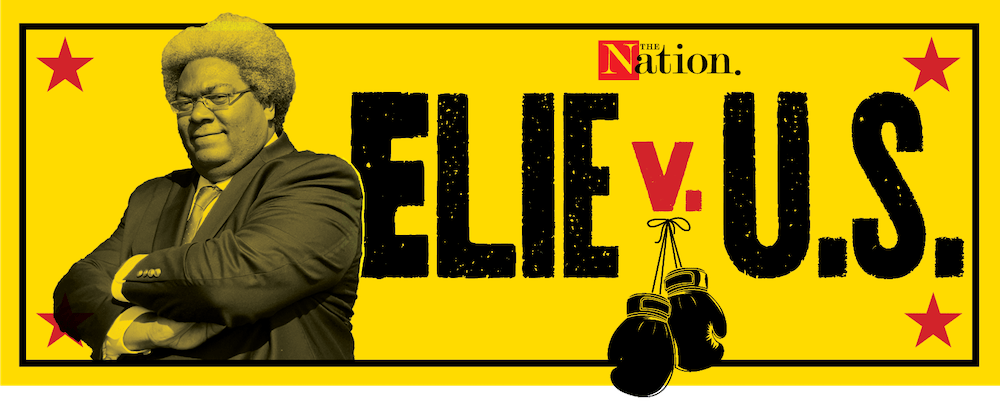










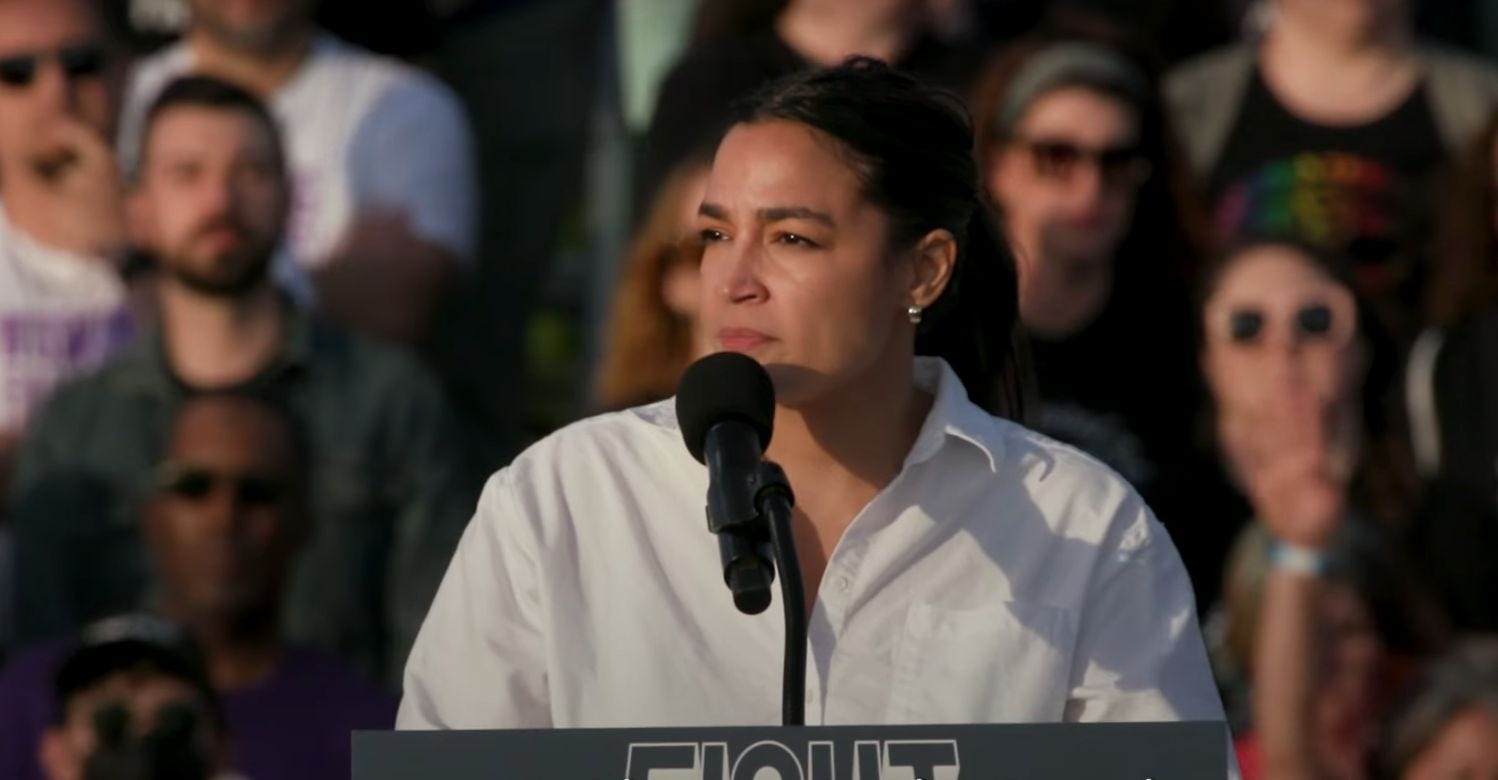



 Scottie's Playtime