March 3, 1863 In the midst of the Civil War, President Abraham Lincoln signed a conscription act that created the first draft lottery of American citizens. The act called for registration of all males between the ages of 20 and 35, and unmarried men up to 45, including aliens with the intention of becoming citizens, by April 1. Exemptions from the draft could be bought for $300 or by finding a substitute draftee. Many objected to this provision describing the war as a “rich man’s war, but poor man’s fight.” Black Americans were also not eligible for the draft because they weren’t considered citizens. Bounties for New York military “volunteers” during the Civil War
March 3, 1913 The day before Woodrow Wilson’s inauguration as president, 8000 from the National American Woman Suffrage Association (NAWSA), representing every state, marched in Washington, D.C. to call for a constitutional amendment granting women the right to vote. Organized by Alice Paul and Lucy Burns, who had been inspired by the parades, pickets and speeches of the British suffragists, the march drew hundreds of thousands of spectators. Though some of the marchers were attacked by onlookers, the march focused attention on the suffrage issue. [see March 4, 1917 ] More about Alice Paul
March 3, 1961 The village council in the Inupiat Eskimo town of Point Hope, Alaska, formally protested, in a letter to President Kennedy, the proposed chain explosion of three atomic bombs in the nearby above-ground “Project Chariot” tests. The project entailed using atomic explosions to create a harbor near Point Hope, above the Arctic Circle in northwest Alaska. The excavation never happened due to public opposition and inspired native peoples in Alaska to assert their rights and legitimate land claims. Edward Teller “Father of the hydrogen bomb” arrives to promote plans for Project Chariot. Read more about Project Chariot
March 3, 2003 In the first-ever worldwide theatrical act of dissent, there were at least 1029 stagings of Lysistrata, the 2400-year-old anti-war comedy by Greek playwright Aristophanes. Conceived and organized in just two months by Kathryn Blume and Sharron Bower, the performances all occurred on the same day to express opposition to the U.S. invasion of Iraq. Staged in 59 countries (including Iraq), the bawdy play tells of Athenian and Spartan women who unite to deny their lovers sex in order to stop the 22-year-long Peloponnesian War between the two city-states. Desperate for intimacy, the men finally agree to lay down their swords and see their way to achieving peace through diplomacy. More about how it happened
Yes I am desperately trying to get things done so I can work on my own video posts. Ron has been sleeping for nearly 3 hours. So enjoy this informative post while I try to finish the few dishes we managed to dirt last night. Damn my back aches. Standing at the sink seems to be the worst. Hugs.
Surprise surprise, the GOP is trying to railroad millions of regular Americans for rich-dragon-people-hoarding-tax-gold purposes. Ain’t that just the way.
Reviewing a directive from DCPAS Director Daniel J. Hester. This applies to DOD civilian personnel. On Friday the 28th, they “must terminate the employment of all individuals who are currently serving probationary or trial periods in the DOD.” The document lists categories of exception: positions “designated mission critical,” “political appointees.” There are a few other technical exception categories. Document signed yesterday.
Yesterday I saw a video from VA Secretary Doug Collins (former member of Congress from Georgia) bragging about how they were cutting $2 billion worth of what were clearly, in his estimation, worthless and stupid contracts. They were in fact almost one thousand different contracts tied to everything from medical and burial services to cancer prevention and doctor recruiting programs. I’ve posted that video below. This afternoon I received this email from a longtime reader …
I’m a contractor working for a service-disabled veteran-owned small business (SDVOSB) for 15 years. I’ve worked on projects with the Veterans Benefit Administration and the Veterans Health Administration. During that time, I’ve run marketing campaigns to get veterans to enroll in healthcare, conducted program evaluations and process improvement efforts, and provided strategic communications support.
I’ve been very proud of my work and the VA mission. But today I’m devastated. My contract was one of more than 800 that were canceled last night. The cancellations were not based on any evaluation. DOGE appears to have simply identified all professional services contracts and canceled them.
The cancellations will not only have a terrible impact on VHA healthcare, it will destroy hundreds of SDVOSBs because a great deal of VA contracts go to SDVOSBs. I don’t know how Republicans in Congress can let this destruction continue when so many of them profess to care deeply about veterans.
This afternoon, VA appears to have reversed course, now saying their going to review and potentially reverse at least some of the cancellations. “Under pressure, VA halts contract cancellations in major reversal” reads the WaPo headline. It goes on: “Records show the 875 contracts at issue included support for medical and burial services, cancer programs, and efforts to recruit doctors for critical vacancies.”
“I don’t have a lot of hope that they’ll reverse many,” the TPM Reader followed up.
The last Trump administration might not have introduced the concept of disinformation, but 2.0 has taken propaganda to a new dangerous level. Are we better equipped to combat it this time around?
But I have some ideas that might help. Here is what I have learned from my work as a debunker and a cross-border reporter with a background in breaking news, where you have to learn to protect yourself and your information:
Limit the time you spend consuming news. The news cycle is being deliberately weaponized to make you feel hopeless in ways that many journalists are unable or unwilling to understand and mitigate at the moment.
Limit your time on social media unless you can have trusted private networks. And even then don’t talk about anything unlawful. Save those conversations for face-to-face meetings.
Embrace physical media. Write things down. Send letters to each other. No, really.
It’s possible to step up and help when others won’t. We can learn from previous disasters and do better, if we work together.
Find and form trusted mutual aid networks.
Support your local libraries.
Do not waste your time appealing to authority that has demonstrated they are unwilling to fight for you. Fact-checking is always important, but it is only effective on its own in a healthy democracy. We are not in a healthy democracy.
Learn your regional history, particularly unresolved crimes against humanity such as slavery and genocide. Learn about vulnerable groups and how they are treated. Often, those painful histories are leveraged in the service of disinformation campaigns. Listen to marginalized people.
Follow people online who you have already observed having integrity. Give people the benefit of the doubt if you hear rumors. Do not give them the benefit of the doubt if you observe them engaging in bad behavior.
Toss toxic people out of your trusted networks.
Keep a journal. Write a few words in it every day, if you can; it doesn’t need to be a long letter to yourself. Writing down your thoughts will help you remember what you want to remember, and it will also provide you with a bulwark against weapons-grade gaslighting.
Take breaks and find joy somehow. This is going to really suck. Find or make a haven for yourself if you possibly can.
Take care of your health. Don’t forget to rest, eat, and hydrate. Find a place you can retreat and shut out the rest of the world if you have to.
Spend time with your loved ones.
Stand up for each other, even when it’s hard. (And it will be hard.)
We can get through this. But in order to do so, we all have to work together to debunk poisonous lies and preserve our memories and our thoughts, because that’s how we build resilience, real resilience, the type that gives us what we need in order to bounce back from the heartbreak and tragedies of the last few years and whatever is to come. We can do that if we work together, and the time to do so is now.
Fox host and loyal Trump ally Sean Hannity told a listener who was pleading for the jobs of military vets in the federal government that “there will be other opportunities.” The caller elaborated on their experience: “One of our tenants just recently got laid off from the USDA, and he’s a stable vet, multiple deployments overseas. And yeah, the guy is without a job now, and I’m just afraid that, you know, stuff like this is going to get out there.” The caller noted Hannity’s “soft spot for military and police and EMS and all those guys” and said that it’s “just a little concerning that we don’t let these guys, you know, fall off the wagon here and get neglected, because they’ve done so much for our country.” [Premiere Radio Networks’ The Sean Hannity Show, 2/21/25]
Another caller to Hannity’s show asked him to stand up for “rank and file” agents: “This appears to be a misstep in the wrong direction.” Hannity responded by saying, “There are going to have to be hard questions for rank and file members in terms of their priority and whether or not they challenged some of the higher-ups.” [Premiere Radio Networks’ The Sean Hannity Show, 2/5/25]
A listener called into The Clay Travis and Buck Sexton Show to say that they are “not happy with his [Trump’s] recent comments on Ukraine.” Travis appeared to cut the caller off, asking of Russia’s war with Ukraine, “How do you think this should end?” [OutKick, The Clay Travis and Buck Sexton Show, 2/21/25]
A caller into Hannity’s show who described themselves as a “strong supporter of this administration” pleaded for advice with the firings: “How do you make life decisions?” Hannity responded by saying, “The main focus is going to be on limiting the bureaucracy. How many of these jobs are redundant? … Just make yourself as essential as possible.” The caller elaborated: “Mr. Musk talks about cutting, you know, $2 trillion. Well, that’s beyond what the entire discretionary budget every year is, you know, roughly 1.7, 1.8 for discretionary. You would have to eliminate everything, the entire federal government to hit that.” [Premiere Radio Networks’ The Sean Hannity Show, 2/6/25]
A caller to The Alex Jones Show accused Trump of “lying” about birthright citizenship: “If they want to pass this, we’re going to get rid of 150 million U.S. citizens.” Jones responded by asking the caller if they like the “Chinese flying here one week before they have their baby, getting all their health care paid for?” The caller expressed that their “concern is I was born in this country.” [Infowars, The Alex Jones Show, 2/20/25]
A Canadian listener called into Hannity’s radio show to discuss boycotts there against the U.S.: “You’ve disrespected us to this point, and we have to respond.” The caller told Hannity that Canadians are “buying Canadian” and are not going to Florida for vacation, concluding that the “boycott’s already begun.” Hannity retorted: “Who would be hurt worse by” a “boycott war” between the U.S. and Canada? [Premier Radio Networks, The Sean Hannity Show, 2/25/25]
A caller told Hannity, “I cannot agree with you on the Gaza situation.” They continued, “As far as making those people leave their land and not being able to return, that’s just totally wrong.” Hannity defended Trump’s plan as “rebuilding Gaza, creating jobs, [and] building innovation,” to which the caller responded “that’s not innovative. That’s racist,” because “the president said those people cannot return” and “most of these people don’t have anything to do with Hamas.” When Hannity claimed that “the people in Gaza voted in Hamas’ leadership,” the caller told him that “what you’re saying is that everybody there is a terrorist, and that’s racist.” [Premiere Radio Networks, The Sean Hannity Show, 2/13/25]
A listener called into Hannity’s show to discuss their child’s cancer diagnosis and advocate for cancer research funding: “With the lack of funding, basically, all you get is parents like me who have had a kid with this, starting organizations and coming up with money to carry on the research for them. So that’s why I wanted to call and … advocate for research.” Hannity responded by arguing that “most of the solutions for cancer are going to be found in the private sector, not with public money.” The caller noted that “with such a small number of kids getting this [cancer diagnosis], yeah, it’s definitely something that doesn’t get looked at as much.” Hannity responded that “even if the government spent … $300 million on this particular cancer tomorrow, it’s not going to be your answer.” [Premiere Radio Networks, The Sean Hannity Show, 2/12/25]
Chris Stigall, host of The Chris Stigall Podcast, noted that he’s received “quite a bit of outreach from you federal workers.” He read one email from a listener who remarked that “it’s difficult to get beyond your disrespect and disregard for federal employees.” Stigall noted that the email is “not the only one of these that I got on both X and in email.” Stigall responded to the reader’s email: “I’m going to talk to you like an adult here for a minute. Grow up. Grow up. If you work for the federal government, you need to grow up, respectfully.” [The Chris Stigall Podcast, 2/24/25]
A caller to Fox host Brian Kilmeade’s radio show accused Trump of trying to “bribe” people with DOGE dividends. The caller noted, “The last tax break that Trump gave was $1.9 trillion and 65% with the people making over a $130,000 a year. … If you’re going to get after the excess spending, you have to go after a military waste and the rich — make the rich pay. Instead, he’s trying out for a $5,000 bribe to people.” [Fox News Radio, Brian Kilmeade Show, 2/21/25]
A caller to Fox host Mark Levin’s radio show makes impassioned plea concerning the legal status of his fiancé: “We’ve been planning on getting married now for a few months. And it seems like I’ve read on the news now that, if you were paroled into the United States, you can’t file any forms, for immigration.” The caller also expressed concern with people turning against Ukraine, where his fiancé and her family are from. [Westwood One, The Mark Levin Show, 2/19/25]
It’s interesting because these shows have screeners so I assume they wanted their audiences to hear these complaints so that the hosts could knock them down. I don’t think they actually did. Those retorts are lame and I would guess that a lot of listeners get that.
The best way to make people understand what’s going on is to relay real stories of real people being affected by this chaotic purge. I’m surprised they are even letting them on the air. They have to realize that even allowing them to voice their pain is a mistake but it’s entirely possible they are so filled with bravado and hubris that they think their lame rationales will be convincing. And in fairness, they probably are to quite a few of their listeners. But I doubt it’s convincing to everyone.
House Republicans are becoming weary and wary of in-person town hall meetings after a number of lawmakers have faced hometown crowds angry about the Trump administration’s push to slash government programs and staffing.
Party leaders suggest that if lawmakers feel the need to hold such events, they do tele-town halls or at least vet attendees to avoid scenes that become viral clips, according to GOP sources.
A GOP aide said House Republican leaders are urging lawmakers to stop engaging in them altogether.
The town halls, and the rash of negative headlines, have been the first bit of public blowback for members who face voters next year. And the new reluctance to hold them indicates there are bubbling concerns about the impact the cuts could have on the GOP’s chances of holding its thin majority in the House next year.
The viral nature of video clips spreading from one district to another means a bad confrontation in safe Republican territory could influence voters in battlegrounds.
Good luck with that. Pissed off people are not going to be silenced. They should know that having been the beneficiaries of the Tea Party back in 2010.
By the way, in that mid-term, the Democrats lost 53 House seats and six Senate seats. That was after Obama had won by a huge margin compared to Trump last November. I don’t know that such a landslide can be possible in these days but you never know. I certainly wouldn’t bet on them holding their majority in any case. (snip)
February 25, 1941 A general strike was called in Amsterdam to protest Nazi persecution of Jews under the German Nazi occupation. The previous weekend 425 Jewish men and boys had been imprisoned (only two survived the war). Truck drivers, dock and metal workers, civil servants and factory employees — Christians, Liberals, Social Democrats and Communists — answered the call and brought the city to a standstill. The work stoppages spread to Zaanstreek, Kennemerland and Utrecht. Two days later the strike was called off: nine people were dead, 50 injured and another 200 arrested, some of whom were to die in the concentration camps. “The Dokwerker” is a statue by sculptor Mari Andriessen in Amsterdam’s Jonas Daniel Meyer Square commemorating the February 1941 strike. It is frequently the rallying point for demonstrations against racism. Read more (pdf)
February 25, 1968 Discussing the war capacity of North Vietnam, a country that had been fighting for its independence for 23 years and had just staged the massive, successful Tet Offensive, U.S. General William C. Westmoreland stated, “I do not believe Hanoi can hold up under a long war.” He was replaced as commander in Vietnam less than four months later. Vietnam commander General William Westmoreland meeting with President Lyndon Johnson Westmoreland’s life and career (It’s NYT’s obit.)
February 25, 1971 Legislation was introduced in both houses of Congress to forbid U.S. military support of any South Vietnamese invasion of North Vietnam without prior congressional approval. This bill was a result of the controversy that arose following the invasion of Laos by South Vietnamese forces. On February 8, the Army of the Republic of Vietnam had launched a major cross-border operation into Laos to interdict activity along the Ho Chi Minh Trail and destroy the North Vietnamese supply dumps in the area. The Ho Chi Minh Trail, named for the leader of North Vietnam, was an informal network of jungle trails down which supplies came from the north, supplying insurgents and troops in the south.
February 25, 1986 The newly elected Philippine president, Corazón Aquino, was sworn in, bringing to an end years of dictatorship under Ferdinand Marcos. In the face of massive demonstrations against his rule, President Ferdinand Marcos and his entourage had been airlifted from the presidential palace in Manila by U.S. helicopters.
February 25, 2011 A Day of Rage saw demonstrations across the Middle East. Protesters in Iraq, Yemen, Egypt, Tunisia, Jordan, and Bahrain showed their support variously for an end to corruption and income inequality, political reform and better public services, and the replacement of long-running dictatorships with democratic regimes. Day of Rage in Taiz, Yemen Reports from throughout the region
From George Orwell to Hannah Arendt and John le Carré, thousands of blacklisted books flooded into Poland during the cold war, as publishers and printers risked their lives for literature
The volume’s glossy dust jacket shows a 1970s computer room, where high priests of the information age, dressed in kipper ties and flares, tap instructions into the terminals of some ancient mainframe. The only words on the front read “Master Operating Station”, “Subsidiary Operating Station” and “Free Standing Display”. Is any publication less appetising than an out-of-date technical manual?
Turn inside, however, and the book reveals a secret. It isn’t a computer manual at all, but a Polish language edition of Nineteen Eighty-Four, George Orwell’s famous anti-totalitarian novel, which was banned for decades by communist censors in the eastern bloc.
This copy lives now in the library of Warsaw University, but for much of the cold war it belonged to the Polish writer and dissident Teresa Bogucka. It was Teresa’s father, the art critic Janusz Bogucki, who first brought it to Poland. In 1957, during a window of liberalisation that opened after Stalin’s death, Janusz picked up the Orwell translation from a Polish bookshop in Paris, smuggled it back through the border and gave it to his daughter. Teresa was only 10 or 11 years old then, but she was a precocious reader, and recognised the ways in which communist Poland mirrored Orwell’s fictional dystopian state: “It absolutely traumatised me,” she remembered.
Years later, in 1976, when Bogucka joined the emerging Polish opposition movement, she decided to create a library of books that had bypassed the state censor, and donated her own small collection, including this Nineteen Eighty-Four. The SB security service, Poland’s KGB, kept continual watch on her, eavesdropping on her conversations, arresting her and searching her apartment, so she asked neighbours to store the forbidden books. Much of the time, though, they would be circulating among readers, since this would be a “Flying Library”, which rarely touched the ground.
Bogucka’s system of covert lending ran through a network of coordinators, each of whom was responsible for their own tight group of readers. She sorted the books into categories – politics, economics, history, literature – and divided them into packages of 10, before allocating each coordinator a particular day to pick up their parcel, which they carried away in a rucksack. The coordinator would drop the books back the following month at a different address, before picking up a new set.
The demand for Bogucka’s books was such that soon she needed more, and these could only come from the west. Activist friends passed word to London, where émigré publishers arranged shipments of 30 or 40 volumes at a time, smuggling them through the iron curtain aboard the sleeper trains that shuttled back and forth between Paris and Moscow, stopping in Poland along the way. By 1978, Teresa Bogucka’s Flying Library had a stock of 500 prohibited titles.
How many people read her copy of Orwell’s book in those crucial cold war years? Hundreds, probably thousands. And this was just one of millions of titles that arrived illegally in Poland at that time. As well as via trains, books arrived by every possible conveyance: aboard yachts; in secret compartments built into vans and trucks; by balloon; in the post. Mini-editions were slipped into the sheet music of touring musicians, or packed into food tins or Tampax boxes. In one instance, a copy of Aleksandr Solzhenitsyn’s The Gulag Archipelago was carried on a flight to Warsaw hidden in a baby’s nappy.
What some in the east suspected, but very few knew for sure, was that the uncensored literature flooding the country wasn’t reaching Poles by chance. It was sent as part of a decades-long US intelligence operation, known in Washington as the “CIA book program”, designed, in the words of the programme’s leader, George Minden, to assault the eastern bloc with an “offensive of free, honest thinking”. Minden believed that “truth is contagious”, and if they could only deliver it to the oppressed peoples of the Soviet zone, it was certain to have an effect.
From today’s vantage point, when disinformation threatens western liberal democracy as never before, and censorship and book bans are once again turning schools and libraries into ideological battlegrounds, the CIA literary programmes appear almost quaint. Although they had political goals, they must rank among the most highbrow of psychological warfare operations. Along with copies of the Manchester Guardian Weekly and the New York Review of Books, the CIA sent works by blacklisted authors such as Boris Pasternak, Czesław Miłosz and Joseph Brodsky, anti-totalitarian writings by Hannah Arendt and Albert Camus, literary fiction from Philip Roth and Kurt Vonnegut, writing advice from Virginia Woolf, the plays of Václav Havel and Bertolt Brecht, and the spy thrillers of John le Carré.
Later, as well as smuggling books, the CIA would fund and ship presses and printing equipment into Poland, so that the banned titles could be reproduced in huge quantities by underground printers in situ. Few individuals were more central to these latter operations than the dissident publisher Mirosław Chojecki, known to the CIA by the cryptonym QRGUIDE.
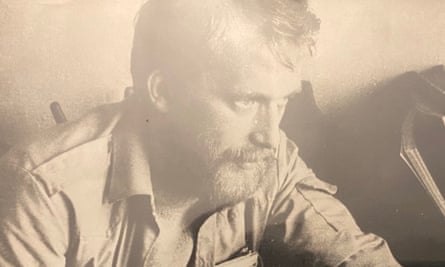
On a Tuesday evening in March 1980, the police came to arrest Chojecki for the 43rd time. Chojecki was 30 years old that night – a tall man, with a mane of red-brown hair. He lived with his family in a third-floor apartment in Żoliborz, a suburb of northern Warsaw, and was cooking dinner for his young son and talking to his father-in-law when they heard the door. There were three men outside, a local cop in the jackboots and grey tunic of the citizen’s militia, and two plainclothes SB agents. They flashed their badges and told him to get his coat. There was no explanation. He had just enough time to calm his crying son, grab a toothbrush and a pack of cigarettes, then they clapped handcuffs on his wrists and took him down to the police Fiat waiting on the road below.
They brought him to Mokotów jail, a house of terror to rival the KGB’s Lubyanka headquarters in Moscow, and put him in block III, a wing reserved for political prisoners. He had been here before, once for “vilifying the Polish People’s Republic” and again for “organising a criminal group with the aim of distributing illegal publications” – at least then he had known the reason for his detention. As the days dripped by, he and his cellmates talked politics and played chess with a set made from heavy black prison bread. He wasn’t allowed a lawyer.
At Easter, when he had been locked up for 10 days without being summoned to court or allowed to contact his family, he decided to take the path chosen by political prisoners everywhere: he would go on a hunger strike. Eight days later, when he had lost 8kg (17lb), the prison doctor announced that they would force-feed him. They inserted a hose into his mouth, pushing it in deep so that it scratched his oesophagus and made him gag, and poured in a sweet, fatty mush. Tears ran down his face, of helplessness, rage, revulsion. When the food was gone, the doctor whipped out the tube and left without a word.
Chojecki had not yet recovered when the guards returned and forced him to climb three landings to an interrogation room, where an intelligence officer was waiting. It was Lieutenant Chernyshevsky, an old sparring partner.
How was he feeling, Chernyshevsky asked?
“Bad.”
“Do you know that there is a printing house on Reymonta Street?”
Chojecki didn’t answer.
“Do you have Jan Nowak’s book Courier from Warsaw? If so, where, when and how did you come into possession of it and what is your relationship with the author?”
There were more questions in this vein, all about the underground press. Chojecki gave the same response to each: as long as he didn’t know what the evidence was against him, they had nothing to discuss.
Realising the interrogation was pointless, Chernyshevsky brought it to an end. He offered the prisoner a cigarette, then the guards took Chojecki back to his cell.
Of course he knew all about Nowak’s outlawed text. His publishing house had just printed it. It was, he said later, one of the best books they had ever produced.
Unlike the Nazis, who burned books as a public ritual, in the Soviet system the destruction of literature was designed to be invisible. The lists of banned titles sent round to libraries and bookstores every year were secret. Works were pulped covertly. Allusions to censorship were not allowed. A list of prohibited publications from 1951 details 2,482 items, including 238 works of “outdated” sociopolitical literature and 562 books for children. Mostly these were proscribed for ideological reasons, but some rulings made little sense even within the bizarre logic of the party: a book about growing carrots was destroyed for implying that vegetables could sprout in individuals’ gardens, as well as in those run by collectives.
Chojecki was introduced to the idea of uncensored literature by Krystyna Starczewska, a teacher at his high school. “She got me interested,” he remembered. “She got me reading.” It wasn’t hard for Chojecki to find banned books, as his parents – war heroes who fought against the Nazis – were already plugged into dissident intellectual circles. He was never allowed much time with these publications as they had to be passed on to other readers. But the fragments he read, often overnight, were enough to sow the seeds of dissent.
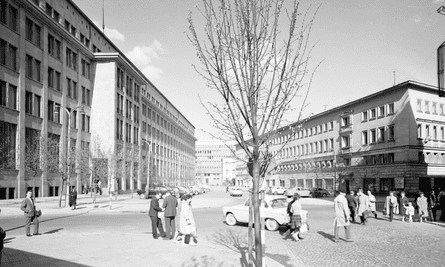
The Main Office for the Control of the Press, Publications and Public Performances in Warsaw. Photograph: Zbyszko Siemaszko/National Digital Archive
In 1976, when the government announced drastic increases in the state-controlled prices of food, workers went on strike, and the party responded as it always did, with violence. One victim recalled waking up from a beating with a broken nose and no teeth; another remembered seeing men beat a pregnant woman. The 1976 events turned a group of bookish young graduates into hardened opposition activists, and it didn’t take them long to realise they needed a public voice.
In spring 1977, Chojecki decided to focus on underground publishing. He wasn’t the only pioneer of illicit printing techniques, but the operation he led, the Independent Publishing House NOWa, grew to be the biggest and most successful in the underground. By Christmas they had published short runs of half a dozen books by blacklisted writers in Poland. Crucially, they also began to reprint editions of titles that were arriving from the west. The same books that were actively pushed by the CIA.
By the third week of his hunger strike, Chojecki’s body was shutting down. On 27 April 1980, the warden came to see him. This was a first: he had never heard of the head of the prison visiting an inmate in their cell before.
“How’s the starvation?” the warden asked.
“Very well.”
“Do you intend to starve for a long time?”
“Until I leave prison.”
“That’s five years.”
“Less.”
“Four and a half years?”
“A few days, Citizen Warden.”
The warden was wrong, as it turned out. Two weeks later, on Saturday 10 May, the order came through that Chojecki was to be released. He had been arrested in the snow; now the season had turned. As he squinted out from the shadow cast by the prison wall at the sunshine blazing down, he could pick out green shoots on the branches of the trees.
He had no appetite, but he knew he needed to eat. He struggled round the corner to a cafe, where he bought a small coffee and two doughnuts, and sat at a window table. He ate very slowly, savouring the sweet pastry with absolute delight. People passed by on the other side of the glass.
“They think they are free,” he thought.
The regime might have released him, but it was still determined to prosecute Chojecki. As he prepared for his moment in the dock, it was more important than ever for the dissidents to show that underground publishing operations would not be stopped. Five days before the court date, two young NOWa printers set out on a job that would turn into a cat-and-mouse game with the secret police.
The night before leaving for work, Jan Walc went through his pockets. In this line of business, you had to assume you would be caught, searched and interrogated, and he couldn’t be found with anything that would incriminate him or his friends. Next he packed a few essentials and took a long bath, knowing it would be his last for some time.
He knew where to meet his partner, Zenek Pałka. The only extra piece of information he needed was the time, and Pałka had given him that over the phone. Without saying his name, he had announced that they should get together at 11am on Monday 9 June. Walc recognised the voice. He also knew what the wiretap sergeant listening in didn’t: namely, that he had to subtract two from everything, so the rendezvous was set for 9am on Saturday 7 June. That morning, he said goodbye to his wife and young son and walked out into a humid Warsaw day.
Dissident publisher Mirosław Chojecki. Photograph: Chojecki family
Leaving the building, Walc discreetly scanned the street. As a rule the secret police liked to watch your apartment or place of work and follow you from there, so if you didn’t pick up a tail right away, the prospects of avoiding one were good. All the same, he kept checking until he reached the cafe. Soon Pałka, a giant of a man with frizzy red hair, was settling into the seat next to him.
“Is the place far away?” Walc asked. Pałka took a paper serviette and wrote down an address before burning through the words with his cigarette. Then he passed on a few more details. Water came from a well, but they would need a week’s worth of food, since they couldn’t risk leaving the job to go shopping. The printing machine was a mimeograph made by AB Dick of Chicago. It had already been delivered to the house, along with a tonne and a half of paper, six full carloads. The job was to print several thousand copies of the civil society newsletter Information Bulletin, plus some pages for NOWa’s literary journal Pulse. They would need to buy 10 bottles of turpentine to run and clean the press.
By the time they’d packed all the food, they had no room for the solvent, so they stopped by at a friend’s place to borrow an extra bag. They didn’t realise he was under surveillance, and when they left his building they spotted a boxy grey Fiat saloon with three men inside which shadowed them as they walked along the road.
Reaching a tram stop, they saw the Fiat pull into a side road and park illegally, a sure sign it was the secret police, and when the tram arrived and the printers boarded, two plainclothes agents jumped out of the car and ran across the street, climbing up behind them. All four men now sat in the same streetcar as it rattled towards Zawisza Square. The Fiat kept pace alongside.
How to get rid of them? As they reached a stop, the printers saw the Fiat was boxed in at the traffic lights, and they took their chance, leaving the tram at the last minute. When the lights changed and the unmarked car had to pull away, Walc and Pałka were hurrying in a different direction, towards the railway station. A part of their tail was lost, but the other two agents had been alert and were keeping pace behind them as they ran down the station platform.
The agents were close as they boarded a train for Warsaw Central. Walc made a show of placing his bags on the luggage rack, but as the doors closed Pałka jammed his leg between them and slipped out. Walc now had the two remaining agents to himself. His job was to drag them around long enough for Pałka to prepare the next move. The men were behind him as he left the train at Warsaw Central and ducked into the warren of passages beneath the station. He knew police radios wouldn’t work down here. He ordered a Coke at a bar, bought some cigarettes, browsed the shops. When 20 minutes had passed, he emerged and headed for the taxi rank. He could see one of the men talking into his lapel as he climbed into a cab.
Warsaw’s Poniatowski Bbridge is as much a viaduct as a river crossing, the roadway linked to the streets below by a series of stone staircases. Speeding east, Walc gave the driver his instructions. Midway along the viaduct, the taxi came to a sudden halt, and the printer dived out and ran down the steps to the street below.
The chasing agents pulled up behind and raced down in pursuit, but as they reached the lower level Walc was already climbing into another cab, where Pałka was waiting. The policemen watched as their quarry pulled away. Knowing they would now be radioing in the cab’s licence plate, a few hundred yards up the road the printers swapped into another taxi. They transferred their bags, left a generous tip and gave the new driver an address on the far side of the city.
Around 3pm, they caught the train to Rembertów The place looked ideal. It was set back from the street, at the far end of a large, overgrown garden. The printing machine and the paper were hidden in an outhouse, 500 reams stacked almost to the roof. The paper was damp, which was far from ideal, but they would make it work somehow.
By evening their small room was filled with the fumes of cigarettes and turpentine, and the sound of the duplicating machine beating out its regular, soporific rhythm, bad-dum bad-dum bad-dum bad-dum. Underground printing was filthy, exhausting work. The duplicators were old and the paper was poor. Bibula, the Polish word for uncensored publications, means “blotting paper”, which reflected the stock they had to work with, which had to be hand-fed into the machine, three pages a second, hour upon hour. This meant they worked round the clock, in shifts, for days, until the job was done.
Pałka had brought along a transistor. They tuned it to Radio Free Europe, which maintained a regular commentary on Chojecki’s upcoming trial. American printers and British lawyers were protesting at what they called a show trial. Amnesty International was sending a legal representative. “A great day is coming,” Walc thought, “and we are stuck in a printing shop!” If they hurried the job, they might still be able to get to court.
Early on Thursday morning they had 20 reams left to print. By 8pm, Pałka was finishing the last stencil and Walc was burning misprints in the garden. Before leaving they had to strip down the machine, wash all the parts and lubricate them.
At last, carrying 50 copies of the Bulletin, they found a taxi and gave the driver the address of the apartment where they had been told to collect their pay. They arrived around 11pm. It was crowded with people, including half the Bulletin’s editors. Walc asked about the trial. He was astonished to hear it was already over. The sentence had been read an hour ago. One of the editors had just come back from the court, where they saw Chojecki deliver an excoriating indictment of the communist system. He told the court that his flat had been searched 17 times in the past four years, on a litany of pretexts: they were looking for a murderer, they had said, or a poisoner or a thief, but all they ever took away for evidence were books, typewriters and manuscripts.
“Why are such accusations levelled against people who fight against the pillaging of our culture? Officially, half of our recent history is erased from textbooks, studies, encyclopedias,” said Chojecki. It was the same in literature, where the state gave itself a “monopoly of thought” and a “monopoly of the word”. The lists of banned authors contained some of world’s best writers, he said. That was why he and his colleagues had set up NOWa, to fill the silences and correct the falsification.
Reaching a rousing finale, Chojecki announced that the trial was not about the accused at all, but about “free speech and thought, about Polish culture, about the dignity of society”.
Of course, none of this would change the verdict. The court duly convicted Chojecki and his co-defendants of theft of state property. He was sentenced to 18 months in prison, suspended for three years. But to everyone gathered in the editors’ apartment, this was a tremendous victory and Chojecki was a hero.
“Everybody around us rejoices,” Walc wrote in his account of that week’s events, which would be published in the following month’s Bulletin.
Someone pressed a cold beer into his hand. It was midnight.
Chojecki’s parents had fought for Polish independence with guns and bullets. He continued the struggle through literature and publishing. At times, his father, Jerzy was sceptical of his son’s tactics. “Do you think, Mirek, that you’ll be able to bring down the communist system with your little books?” he would ask. “Do you think your little words will make a difference?”
In fact, the impact of the CIA-sponsored literary tide was huge. By the mid-1980s the so-called “second circulation” of illicit literature in Poland grew so large that the system of communist censorship began to break down. Poland was the most crucial of eastern bloc nations: when communism collapsed in 1989, this was the first domino to fall. As the leading Polish dissident Adam Michnik put it: “It was books that were victorious in the fight. A book is like a reservoir of freedom, of independent thought, a reservoir of human dignity. A book was like fresh air. We should build a monument to books … they allowed us to survive and not go mad.”
Teresa Bogucka didn’t know for sure who was paying for the literature she received from the west, but she was aware that the Polish regime claimed that American intelligence supported émigré publishers, and the idea didn’t concern her at all.
“I thought, wow, a secret service supporting books,” she said. “That’s fantastic.”
This is an edited extract from The CIA Book Club: The Best Kept Secret of the Cold War by Charlie English, published by William Collins on 13 March.
TOPEKA (KSNT) – Kansas’ attorney general and the Kansas Bureau of Investigation (KBI) have signed a deal to assist federal immigration forces in the Sunflower State.
Danedri Herbert with the Kansas Office of the Attorney General said in a press release on Monday, Feb. 17 that Attorney General Kris Kobach and the KBI have signed an agreement with the U.S. Department of Homeland Security (DHS). This will allow KBI agents to work alongside Immigrations and Customs Enforcement (ICE) to remove immigrants who are residing in Kansas illegally.
A limited number of KBI agents will receive ICE training that authorizes the agents to arrest immigrants who are in the U.S. illegally, serve and execute warrants for some immigration violations and issue immigration detainers, according to the press release. Herbert said a section of the Immigration and Nationality Act authorizes states and political subdivisions of a state to enter into agreements like this. (snip-MORE)
February 18, 1688 Francis Daniel Pastorius and three other Pennsylvania Quakers (members of the Society of Friends) made the first formal protest against slavery in the new world. At the Thones Kunders House in Germantown (now part of Philadelphia) they signed a proclamation denouncing the importation, sale, and ownership of slaves: “. . . we shall doe [sic] to all men like as we will be done ourselves; making no difference of what generation, descent or colour they are.” More on Germantown Society of Friends
February 18, 1961 above: Bertrand Russell and Edith Russell watching the actress Vanessa Redgrave address the Committee of 100 meeting in Trafalgar Square, which preceded the anti-Polaris “sit-in” outside the Ministry of Defence on February 18, 1961. In London, Sir Bertrand Russell, 88, led a march of 20,000 and sit-down of 5,000 in an anti-nuke rally outside the U.K. Defense Ministry, and was jailed for seven days. It was the first public demonstration organized by the Committee of 100, the direct action wing of the Committee for Nuclear Disarmament. Early CND demonstrator The CND today
February 18, 1970 Five of the “Chicago Seven” (Rennie Davis, David Dellinger, Tom Hayden, Abbie Hoffman, and Jerry Rubin) were found guilty of crossing state lines to incite a riot during the 1968 Democratic convention. The Chicago Seven John Froines and Lee Weiner had both been charged with making incendiary devices (stink bombs) but were found not guilty of all charges. None of the seven were found guilty of conspiracy. Attorneys William Kunstler and Leonard Weinglass and defendants Weiner and Dellinger were sentenced for contempt of court, except for Weiner for more than a year. All appealed. More on the group Summary of the legal issues
You can scroll down 3 grafs to get to the tools if you don’t care to read the words. I don’t want to lose the purpose within my words, like trees in a forest.
I consider myself a superlative networker. I can find people/things/articles/whatever and bring to them others who can use them. Scottie needed some help a few months back and gave me some space on his platform, and mostly, instead of writing my opinions about things which so many of us share already and read in lots of places, I’ve tried to go in the direction of supporting mental health, and things we can do to keep (or, these days, try to keep) our democracy (healthy) and fix things for people’s greater good. So, it’s true, other than a few comments and some original post titles, I don’t write much here; I network information. This post is from me, though.
We all know that I’m big on civic duties, having been practically brought up to do them, and believing in the rule of law and being loyal opposition when opposition supports the most people. So, when I do write things, typically it is with hopes of motivating or reminding others that we still have these duties and the rights to perform them; that letting these duties slide has helped bring us where we are; and, especially now, if we don’t use our rights and perform our duties, we lose the rights and can no longer perform the duties.
Which brings me to some tools. I’ve read EPI for years and years, and use their tools to help me lobby my legislators about issues that matter to most people. EPI has created a new set of tools, so I’m sharing them here in this post. I hope you managed to read through the previous grafs to get here, because this is important, and will be helpful to all of us as we do our work preserving democracy.
EPI Action is the home page. From here, you can scroll and click around to see what you want to see, and gain the tools to make your work easier. Yes, “EPI” stands for Economic Policy Institute (I think; they’ve been EPI now for so long, I may have messed that up.) And, yes, maybe someone thinks, “Hey, I only want to work on this, that, or the other, but not on economics.” Well, you can do that from here. EPI has information and tools to work with:
Learning About Wages, Jobs, and Inequality listing numerous items of data to peruse, including “Union membership rates and the union wage premium, Annual wages for select groups, including the top 1% and bottom 90% of wage earners, Racial and gender wage gaps, Unemployment rates, including by state, Poverty rates, Inflation rates”.
EPI has fact sheets you can use when you go to legislator town halls/forums, if that’s your thing, or to give away at a booth or a table if that’s your thing, or just to consult while you’re writing up a letter or email, or a script for calling, your legislators. Whatever your thing. If your thing is filing to run for office, EPI is a great information resource for use while campaigning and forming policy.






 Scottie's Playtime