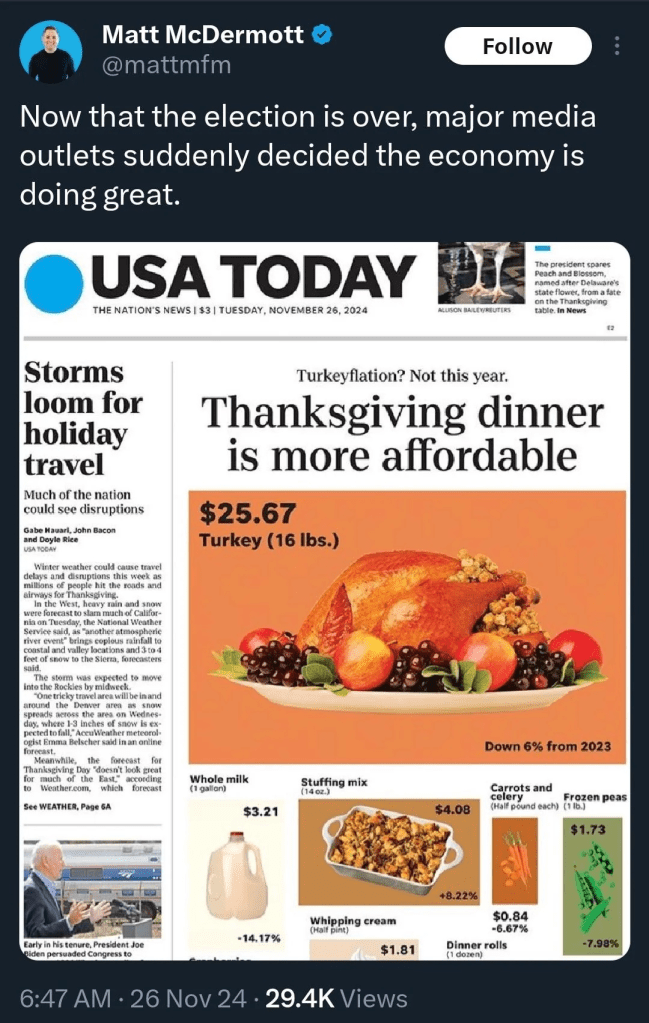
Now they mention it

https://www.texastribune.org/2024/11/25/abortion-texas-pills-controlled-substance/
Credit: REUTERS/Evelyn HocksteinA Louisiana law that reclassified abortion-inducing drugs as controlled substances has made it more difficult for doctors to treat a wide range of gynecological conditions, doctors say.
Now, a similar proposal has been filed in Texas.
Texas Rep. Pat Curry, a freshman Republican from Waco, said the intent of House Bill 1339 is to make it harder for people, especially teenagers, to order mifepristone and misoprostol online to terminate their pregnancies. Doctors in Louisiana say the measure has done little to strengthen the state’s near-total abortion ban, but has increased fear and confusion among doctors, pharmacists and patients.
“There’s no sense in it,” said Dr. Nicole Freehill, an OB/GYN in New Orleans. “Even though we kept trying to tell them how often [these medications] are used for other things and how safe they are, it didn’t matter. It’s just a backdoor way of restricting abortion more.”
These medications are often used to empty the uterus after a patient has a miscarriage, and are commonly prescribed ahead of inserting an intrauterine device. Misoprostol is also often the best treatment for obstetric hemorrhages, a potentially life-threatening condition in which women can bleed to death in minutes. Since the Louisiana law went into effect, hospitals have taken the medication off their obstetrics carts and put them in locked, password-protected central storage.
One hospital has been running drills to practice getting the medications to patients in time, and reported, on average, a two minute delay from before the law went into effect, the Louisiana Illuminator reported.
“In obstetrics and gynecology, minutes or even seconds can be the difference between life and death,” Dr. Stella Dantas, president of the American College of Obstetrics and Gynecologists, said in a statement after the Louisiana law passed. “Forcing a clinician to jump through administrative hurdles in order to access a safe, effective medicine is not medically justified and is, quite simply, dangerous.”
Curry said these restrictions won’t stop doctors from prescribing these medications when necessary, but will stop the “wide misuse” of the drugs to circumvent the state’s near-total abortion ban.
Curry said he consulted with the author of the Louisiana law, as well as OB/GYNs in Texas to draft the bill. He said the doctors who have criticized the legislation are raising these concerns as a “smokescreen” because they don’t want more restrictions.
“I understand that. We don’t need or want all kinds of regulations,” he said. “Especially as Republicans, regulations should not be high on our list, but in this case it’s a necessary evil given the situation.”
Texas roots for a Louisiana law
In March 2022, Mason Herring, a Houston attorney, spiked his wife’s water with misoprostol to force her to have an abortion. Catherine Herring was pregnant with the couple’s third child, a daughter who was born 10 weeks premature. She survived, but has significant developmental delays, according to the Associated Press.
Mason Herring was charged with felony assault to induce abortion, and pled guilty to injury to a child and assault to a pregnant person. He was sentenced to 180 days in jail and 10 years of probation.
Catherine Herring’s experience led her brother, Louisiana state Rep. Thomas Pressly, to file a bill that would have made it a crime to coerce someone into having an abortion.
But at the last minute, the bill was amended to also reclassify abortion-inducing drugs as controlled substances, according to the Louisiana Illuminator, leaving hospitals and doctors scrambling to comply with the new restrictions. The state health department advised storing the medication in a locked area on the crash cart, which at least some hospitals have said is not feasible.
“We had to rework how we utilize misoprostol across our hospital systems,” Freehill said. “Labor and delivery, pharmacy, nursing staff, you name it, they were all involved with figuring out how to stay within the law but still use these medications that we need access to.”
It’s rare for a state to decide on its own to classify a drug as a controlled substance. Most commonly, the federal government decides which medications should be “scheduled,” based on their medical usefulness and the potential for abuse. Schedule I drugs, like heroin, have no medical use and are often used recreationally; Schedule IV and V are medications that are useful but have a potential for abuse, like Xanax or Valium.
There are enhanced penalties for having a controlled substance without a prescription, and increased restrictions on how doctors can dispense them. Pharmacists must report any prescriptions for controlled substances to the state Prescription Monitoring Program, and doctors are required to check the database before prescribing certain controlled substances. Law enforcement also has access to that database.
Prescription monitoring has been key to combating the opioid epidemic by identifying doctors who were overprescribing and patients who were getting prescriptions from multiple providers. But with so much political attention on mifepristone and misoprostol as abortion-inducing drugs, doctors are worried about scrutiny for frequently prescribing these common medications.
“We had to fix a problem that wasn’t broken,” said Freehill. “There’s no reason for it to be Schedule IV. It’s not something people abuse. It’s not something people can become addicted to. It’s extremely safe.”
A group of Louisiana health care providers recently filed a lawsuit arguing the law discriminates against people who need mifepristone and misoprostol for other conditions, and challenging whether the last minute amendments to the bill were proper. Louisiana Attorney General Liz Murrill has said the new restrictions are clear and should not delay care. Those who “have attempted to sow confusion and doubt,” she said in a statement, “profit from misinformation.”
When the law first went into effect, Anna Legreid Dopp, senior director of government relations for the American Society of Health-System Pharmacists, told CNN that the group expected other states to consider similar measures.
“Almost immediately, our members raised concern that if this is being done in one state, it can easily be a template for other states to use it,” Dopp said.
Restrictions on medication
Curry, who recently won a special election to fill the seat long held by Republican Rep. Doc Anderson, said Pressly and Herring have offered to come testify in support of his bill this session. He anticipates it getting wide support from his fellow lawmakers.
Since the overturn of Roe v. Wade, conservative groups have turned their attention to restricting access to abortion-inducing medications. A group of anti-abortion doctors filed a lawsuit to revoke the Food and Drug Administration’s approval of mifepristone, which the U.S. Supreme Court ultimately rejected.
Curry said there are reasons to keep these medications on the market beyond abortion, but they need tighter restrictions.
“You can lie about your age, you can lie about your name, you can lie about your address, there’s no verification whatsoever,” he said, referring to online prescribers. “And it gets shipped to a 15-year-old girl, a 13-year-old girl.”
It is already a crime to mail abortion-inducing medications in Texas, and many of the online pharmacies operate in a legal gray area outside U.S jurisdiction. Others are working in states that have “shield laws” that protect doctors’ ability to prescribe and mail pills into states that have banned abortion. None of these interstate and international legal questions have been tested in court with regards to abortion.
Freehill said she would encourage Texas doctors to learn from what has happened in Louisiana as they prepare to advocate against this bill this session.
“There’s a lot of education that needs to be done surrounding what this means and what these drugs are really used for,” she said. “I don’t know that we would have been able to sway people, even with more time, but we can at least educate on why this is completely inappropriate and really governmental overreach.”
Ten Bears has made me Jealous. I wish I had found this first. But to give credit I think he can do more with it. If you don’t know ask him his work out regiment. If anyone who claims to be male thinks their bigotry can out male his actual being … I hope they never tell that to him face to face. I was in the military and even in my best fitness I don’t think I could have kept up with his regimen. Hugs
The Home of the Sacred Ofelia Zepeda
Sublime landscapes were those rare places on earth where one had more chance than elsewhere to glimpse the face of God. —“The Trouble with Wilderness; or, Getting Back to the Wrong Nature,” by William Cronon
The “sublime landscape” is not a place to catch a glimpse.
These places are where the creators, Gods, deities and powerful beings live.
At Waw Giwulig I’itoi’s home is found.
O’odham climb the peak to be in the goodness of the Creator.
At Mauna Kea the Goddess Pele resides.
Hawaiians climb a volcano and humble themselves there.
At San Francisco Peaks near Flagstaff Kachinas and Ye’ii Bi Cheii
spirits live.
They climb down the mountain blessed with songs and prayers
when Navajo and Hopi call them.
In the Grand Canyon many Gods, deities, and
powerful beings stay in these rock walls and cliffs
holding vigil for their people.
In this powerful place are all the sacred beings.
The Hualapai, Havasupai, Zuni, Hopi, Navajo and others know they
are there. The people simply don’t “catch a glimpse” of holy beings
they sing them; they pray them in these places.
Copyright © 2024 by Ofelia Zepeda. Originally published in Poem-a-Day on November 26, 2024, by the Academy of American Poets.
See (and hear!) more about this poet, and this poem on this page.
Mexican President’s Harsh Takedown of Trump Exposes an Ugly MAGA Scam
Claudia Sheinbaum’s response to Trump’s threat of tariffs revealed truths that the president-elect doesn’t want Americans to know.
Read in The New Republic: https://apple.news/AACVfAgVNTWOGKW9p-W4jrg
Shared from Apple News
Best Wishes and Hugs,Scottie
What could get more expensive if Trump launches a new trade war with Mexico and Canada
During President-elect Donald Trump’s first term, America launched an all-out trade war with China to boost US manufacturing, secure US national security interests and resolve what Trump believed was an extremely out-of-balance trade relationship.
Read in CNN: https://apple.news/Avn4v0XeLRYO6vFvJyQ6tIw
Shared from Apple News
Best Wishes and Hugs,Scottie
Air is an overlooked source of nutrients
You know that feeling you get when you take a breath of fresh air in nature? There may be more to it than a simple lack of pollution.
When we think of nutrients, we think of things we obtain from our diet. But a careful look at the scientific literature shows there is strong evidence humans can also absorb some nutrients from the air.
In a new perspective article published in Advances in Nutrition, we call these inhaled nutrients “aeronutrients” – to differentiate them from the “gastronutrients” that are absorbed by the gut.
We propose that breathing supplements our diet with essential nutrients such as iodine, zinc, manganese and some vitamins. This idea is strongly supported by published data. So, why haven’t you heard about this until now?
We breathe in about 9,000 litres of air a day and 438 million litres in a lifetime. Unlike eating, breathing never stops. Our exposure to the components of air, even in very small concentrations, adds up over time.
To date, much of the research around the health effects of air has been centred on pollution. The focus is on filtering out what’s bad, rather than what could be beneficial. Also, because a single breath contains minuscule quantities of nutrients, it hasn’t seemed meaningful.
For millennia, different cultures have valued nature and fresh air as healthful. Our concept of aeronutrients shows these views are underpinned by science. Oxygen, for example, is technically a nutrient – a chemical substance “required by the body to sustain basic functions”.
We just don’t tend to refer to it that way because we breathe it, rather than eat it.
Aeronutrients enter our body by being absorbed through networks of tiny blood vessels in the nose, lungs, olfactory epithelium (the area where smell is detected) and the oropharynx (the back of the throat).
The lungs can absorb far larger molecules than the gut – 260 times larger, to be exact. These molecules are absorbed intact into the bloodstream and brain.
Drugs that can be inhaled (such as cocaine, nicotine and anaesthetics, to name a few) will enter the body within seconds. They are effective at far lower concentrations than would be needed if they were being consumed by mouth.
In comparison, the gut breaks substances down into their smallest parts with enzymes and acids. Once these enter the bloodstream, they are metabolised and detoxified by the liver.
The gut is great at taking up starches, sugars and amino acids, but it’s not so great at taking up certain classes of drugs. In fact, scientists are continuously working to improve medicines so we can effectively take them by mouth.
Many of the scientific ideas that are obvious in retrospect have been beneath our noses all along. Research from the 1960s found that laundry workers exposed to iodine in the air had higher iodine levels in their blood and urine.
More recently, researchers in Ireland studied schoolchildren living near seaweed-rich coastal areas, where atmospheric iodine gas levels were much higher. These children had significantly more iodine in their urine and were less likely to be iodine-deficient than those living in lower-seaweed coastal areas or rural areas. There were no differences in iodine in their diet.
This suggests that airborne iodine – especially in places with lots of seaweed – could help supplement dietary iodine. That makes it an aeronutrient our bodies might absorb through breathing.
Manganese and zinc can enter the brain through the neurons that sense smell in the nose. Manganese is an essential nutrient, but too much of it can harm the brain. This is seen in welders, who are exposed to high levels from air and have harmful levels of manganese buildup.
The cilia (hair-like structures) in the olfactory and respiratory system have special receptors that can bind to a range of other potential aeronutrients. These include nutrients like choline, vitamin C, calcium, manganese, magnesium, iron and even amino acids.
Research published over 70 years ago has shown that aerosolised vitamin B12 can treat vitamin B12 deficiency. This is super important for people who have high B12 deficiency rates, such as vegans, older people, those with diabetes and those with excessive alcohol intake.
There are still a lot of unknowns. First, we need to find out what components of air are beneficial for health in natural settings like green spaces, forests, the ocean and the mountains. To date, research has predominantly focused on toxins, particulate matter and allergens like pollen.
Next, we would need to determine which of these components can be classified as aeronutrients.
Given that vitamin B12 in aerosol form is already shown to be safe and effective , further research could explore whether turning other micronutrients, like vitamin D, into aerosols could help combat widespread nutrient deficiencies.
We need to study these potential aeronutrients in controlled experiments to determine dose, safety and contribution to the diet. This is particularly relevant in places where air is highly filtered, like airplanes, hospitals, submarines and even space stations.
Perhaps we will discover that aeronutrients help prevent some of the modern diseases of urbanisation. One day, nutrition guidelines may recommend inhaling nutrients. Or that we spend enough time breathing in nature to obtain aeronutrients in addition to eating a healthy, balanced diet.
Flávia Fayet-Moore, Adjunct Lecturer, School of Environmental and Life Sciences, University of Newcastle and Stephen R. Robinson, Professor in Psychology, Research, RMIT University
This article is republished from The Conversation under a Creative Commons license. Read the original article.
| November 27, 1095 Pope Urban II called on all Christians to liberate Jerusalem from the Muslims and reclaim the Holy Land: “Deus vult (God wills it)!” What is currently called the Middle East was then in control of the Turks who frequently barred Christian pilgrims entrance to the city. At the Council of Clermont in France, the pope promised absolution and remission of sins for all who died in the service of Christ. The mobilization of 60,000 to 100,000 Christians throughout Europe in this effort became known as the First Crusade. |
| November 27, 1914 The No-Conscription Fellowship (NCF) was founded by two English pacifists, Clifford Allen and Fenner Brockway. They opposed the Military Service Act which introduced conscription, and then mounted a vigorous campaign against the punishment and imprisonment of conscientious objectors. They were consistently opposed to the war in Europe.  Early Fellowship members  Fellowship members at a recent protest Read more about Clifford Allen, Fenner Brockway and No-Conscription Fellowship More on the No-Conscription Fellowship from the Swarthmore College Peace Collection |
| November 27, 1957 Jawaharlal Nehru, India’s first Prime Minister, made an impassioned speech appealing to the United States and the Soviet Union (Union of Soviet Socialist Republics) to end testing and begin nuclear disarmament. The two superpowers were the only nations with atomic weapons at the time. Nehru had fought to free his country from British colonial authority through acts of nonviolent passive resistance with Ghandi, and they achieved independence. He stressed the urgency for the U.S. and U.S.S.R. to “save humanity from the ultimate disaster.”Nehru’s Congress Party government nevertheless pursued an aggressive nuclear program, starting in 1948, publicly committed to peaceful purposes exclusively. Nehru acknowledged that the possession of fissionable materials and growing expertise could readily be directed toward production of such weapons. In the absence of universal nuclear disarmament, he feared acquisition of such weapons by potential adversaries. In particular for India, this meant Pakistan or China.  India’s first prime minister, Jawaharlal Nehru Nuclear India – a short history |
| November 27, 1965 In Washington D.C., 35,000 anti-war protesters circled the White House then marched on to the Washington Monument for a rally against the war in Vietnam. |
| November 27, 1967 Reverend Martin Luther King, Jr. announced the Southern Christian Leadership Conference’s Poor People’s Campaign, a movement to broadly address economic inequalities with nonviolent direct action. “It must not be just black people,” argued King, “it must be all poor people. We must include American Indians, Puerto Ricans, Mexicans, and even poor whites.”  Why a Poor People’s Campaign? |
| November 27, 1969 Over one hundred members of the U.S. 71st Evacuation Hospital and the 44th Medical Detachment at Pleiku, Vietnam, organized a Thanksgiving protest fast called the “John Turkey movement.” In Home before Morning, nurse Lynda Van Devanter recalled her change in attitude.  Nurse Lynda Van Devanter “Earlier in my tour, when I had heard about the war protesters, I had felt angry at them for not supporting us. Now I wished I could march with them . . . Most others in Pleiku felt the same way . . . We even held our own Thanksgiving Day fast—the John Turkey movement — as a show of support for those who were trying to end the war through protests and moratoriums. We heard that the fast had spread to units all over Vietnam.” The fast received considerable media coverage when Denise Murray, a nurse at Pleiku and daughter of a distinguished admiral, made antiwar statements to the press. |
https://www.peacebuttons.info/E-News/peacehistorynovember.htm#november27
/https://static.texastribune.org/media/files/fb7ca36d07ff3d7950072cb9fcc7dbe2/Mifeprex%20REUTERS.jpg)

 Scottie's Playtime