
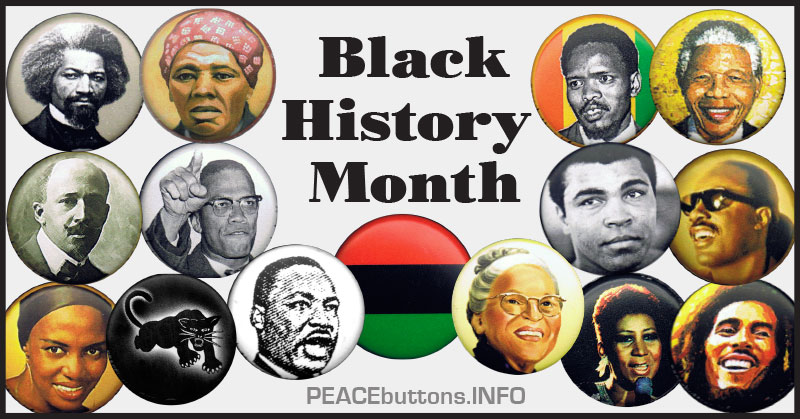
So far, it’s not illegal for us to acknowledge that February is Black History Month, so here we are, doing just that. Ha! There is even some Black History for this very date in Peace and Justice History:
February 1, 1960 Greensboro first day: Ezell A. Blair, Jr. (now Jibreel Khazan), Franklin E. McCain, Joseph A. McNeil, and David L. Richmond leave the Woolworth store after the first sit-in on February 1, 1960. Four black college students sat down at the Woolworth’s lunch counter in Greensboro, North Carolina, and were refused service because of their race. To protest the segregation of the eating facilities, they remained and sat-in at the lunch counter until the store closed. Four students returned the next day, and the same thing happened. Similar protests subsequently took place all over the South and in some northern communities. By September 1961, more than 70,000 students, both white and black, had participated, with many arrested, during sit-ins.  On the second day of the Greensboro sit-in, Joseph A. McNeil and Franklin E. McCain are joined by William Smith and Clarence Henderson at the Woolworth lunch counter in Greensboro, North Carolina. “Segregation makes me feel that I’m unwanted,” Joseph McNeil, one of the four, said later in an interview, “I don’t want my children exposed to it.“ Listen to Franklin McCain’s account of what happened |
| February 1, 1961 On the first anniversary of the Greensboro sit-in, there were demonstrations all across the south, including a Nashville movie theater desegregation campaign (which sparked similar tactics in 10 other cities). Nine students were arrested at a lunch counter in Rock Hill, South Carolina, and chose to take 30 days hard labor on a road gang. The next week, four other students repeated the sit-in, also chose jail. |
In light of current events, I thought it’d be good to review how Black History Month came to be. Below is a bit on its beginnings.
The History of Black History Month
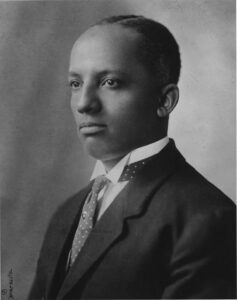
Black History Month was first observed as Negro History Week in February 1926, but the inspiration for the commemoration began over a decade earlier through a steady stream of electrifying events, discoveries, and other celebrations of Black excellence. In 1915, American historian Dr. Carter G. Woodson attended the national celebration of the fiftieth anniversary of emancipation in Washington D.C. This event was widely attended and proved to be profoundly inspiring for Dr. Woodson who, later that year, joined forces with A. L. Jackson, William B. Hartgrove, George Cleveland Hall, and James E. Stamps to establish the Association for the Study of Negro Life and History, known today as the Association for the Study of African American Life and History (ASALH 2024). ASALH had the ambitious goal of educating the public about the achievements, inventions, and progress made by Black Americans, and though the Association’s intellectual efforts were remarkable – they began to publish The Journal of Negro History in 1916 and founded Negro History and Literature Week in 1924 – Dr. Woodson had a wider vision of his mission. Wishing to continue to discover and celebrate the history of the Black past, Dr. Woodson announced the celebration of Negro History Week through a press release.
Accounts of the contributions of Black Americans were notably absent from history books, credited to white men, or omitted altogether. Progressive communities and schools were ripe for the rich history that Negro History Week offered. Matching the popularity of the week, Woodson and the Association established an annual theme for the celebration to guide and inspire educators. Weary of those simply wishing to capitalize on a popular event, “Woodson warned teachers not to invite speakers who had less knowledge than the students themselves” (ASALH 2024). Additionally, ASALH expanded their offerings to provide study materials: pictures, lessons for teachers, plays for historical performances, and posters of important dates and people. This cemented the celebration of Black history in schools and communities, and Negro History Week grew in popularity throughout the following decades, with mayors across the United States endorsing it as a holiday.
Negro History Week grew into Black History Month in 1970 under the leadership of Black educators and students at Kent State University and would become a federally recognized event six years later. President Gerald Ford recognized Black History Month in 1976 during the celebration of the United States Bicentennial. He urged Americans to “seize the opportunity to honor the too-often neglected accomplishments of Black Americans in every area of endeavor throughout our history” (Franklin 2022). Today, nearly one hundred years after that initial celebration, it is prudent to reflect on the designed purpose of Black History Month and discover that after all this time, these lessons are still relevant, inspiring, and necessary. As Dr. Woodson said, “Real education means to inspire people to live more abundantly, to learn to begin with life as they find it and make it better” (Woodson 1933).
Pictured: Dr. Carter G. Woodson, The “father of Black history”
Photo Credit: Addison Norton Scurlock, Public domain, via Wikimedia Commons
Bibliography
ASALH. 2024. The Founders of Black History Month: The Origins of Black History Month. December 18. Accessed January 16, 2025. asalh.org/about-us/origins-of-black-history-month/.
ASALH. 2024. Carter G. Woodson Timeline: ASALH – the Founders of Black History Month. December 19. Accessed January 16, 2025. asalh.org/carter-g-woodson-timeline/.
Franklin, Jonathan. 2022. Here’s the Story behind Black History Month – and Why It’s Celebrated in February. February 1. Accessed January 16, 2025. www.npr.org/2022/02/01/1075623826/why-is-february-black-history-month.
Woodson, Carter G. 1933. The Mis-Education of the Negro. Trenton: Africa World Press.
==========
All right! So, we see that Black History Week then Month has been around for at least 20 years longer than our current POTUS, who seems to be ignoring the month’s existence. But, there’s no reason any of the rest of we the people have to! Including all history makes the US so much richer in knowledge. Most local historical and cultural organizations are going to have commemorations this month. What fun it will be, and how community-unifying for each of us to find an activity near us, and join in!

 Scottie's Playtime
Thanks for sharing about the history 🥰
LikeLiked by 1 person
Thank you for visiting, Bee! I hope to sprinkle some more in throughout February.
LikeLiked by 1 person
I am sure you will. I always find somethi g efucational in your and Scotties posts 🤗
LikeLiked by 1 person