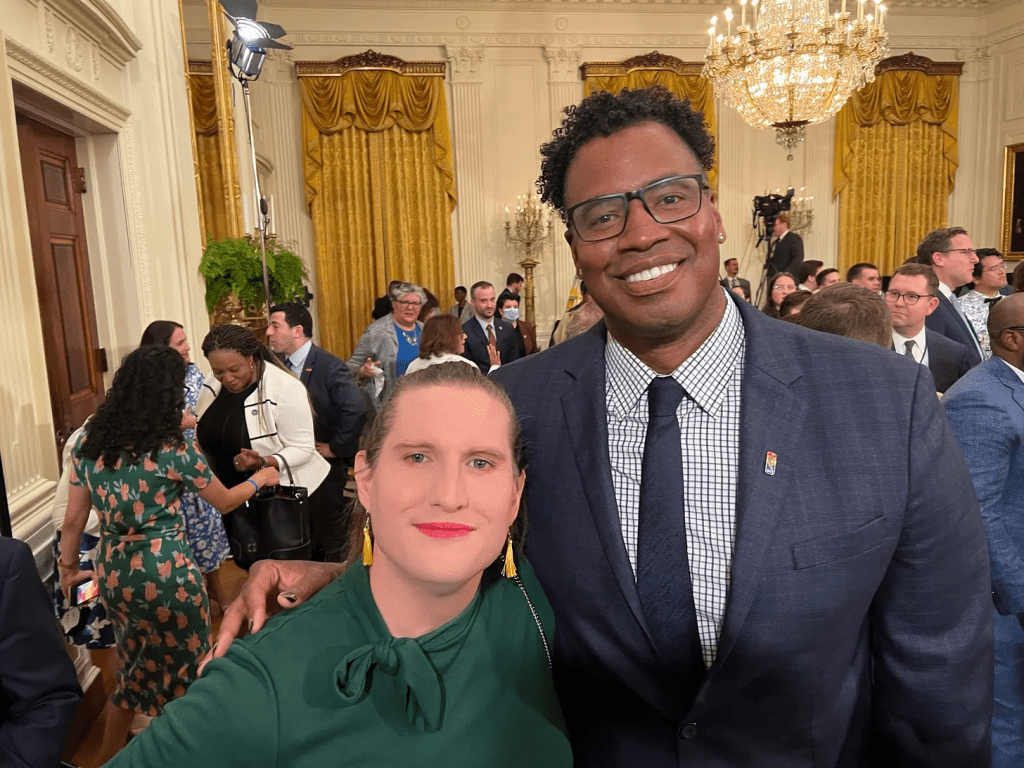
I love dogs and people. I want living creatures to thrive. I love to cook, and share the food, but ya gotta get in line in front of the dog, and greatest good luck with that!
When Kash Patel visited Hawaii last summer, he participated in what government officials described as a “VIP snorkel” around the USS Arizona, the battleship that sits at the bottom of Pearl Harbor as a memorial, in an outing coordinated by the military. The battleship sunk at the battle of Pearl Harbor by the Japanese Empire entombs more than 900 sailors and Marines.
The swim, revealed in government emails obtained by The Associated Press, comes to light amid criticism of Patel’s use of an FBI plane and his global travels, which have blurred professional responsibilities with leisure activities. Patel has chosen to live in Las Vegas for a reason.
When the Patel made the visit to Hawaii, the FBI took pains to note the director was not on vacation, highlighting his walking tour of the bureau’s Honolulu field office and meetings with local law enforcement. But what they left out was the swim. If Kash, who prefers to spell his first name as “Ka$h,” wasn’t doing anything wrong or suspicious, then why did they leave it out?
The USS Arizona is considered one of the most hallowed sites in the United States. With few exceptions, snorkeling and diving are off-limits around the battleship. Marine archaeologists and crews from the National Park Service make occasional dives at the memorial to survey the condition of the wreck. Other dives have been conducted to inter the remains of Arizona survivors who wanted to rest eternally with their former shipmates. (snip-MORE)
We were eight, nine, ten-years-old, and we called it “Smear the Queer.”
The game went like this: there were a group of kids—nearly always all boys—and a football. The pigskin got tossed up, a boy would grab it, the rest of us would chase and tackle him, and either he would surrender the ball or one of us would take it, and the chasing and tackling would start all over again.
That was the whole game. It was basically freeform rugby with no points, but this was Central Texas in the mid-90s and none of us were aware of rugby, so we thought of it as reverse tag with violence.
We called it “Smear the Queer” because that’s what the older boys called it. They called it that because the boys older than them called it that. Or that’s what their older brothers called it. Or that’s what their fathers and uncles called it.
At that age, I don’t think there was any discussion on the etymology of the word “queer” or why the ball carrier was called “the queer.” That was just the name of the game, and if you had a group of young boys and a football and enough interest, a kid might say “Smear the Queer?” and the game would start.
We were conditioned to think of being gay as a bad thing before we knew what it meant to be gay. By the time we got to middle school, it was made crystal clear to us that there were two things it was absolutely wrong for a boy to be: either gay or a girl.
If another boy called you gay or a girl, it was either because they were being “friendly” (or what passed for “friendly” among boys then) and playfully teasing you with the easiest insult — or they really didn’t like you and were going for the jugular with the worst insult. The intent was based on context, but at the end of the day, being gay or being a girl were not good things.
By that age, homophobic and sexist language had seeped into casual conversations among most of our peers. “That’s gay” was the most common way of saying a situation sucked.
“Wanna come over and play video games after school?”
“Can’t. Got detention.”
“That’s gay.”
“Yeah.”
At the close of the ‘90s, the words “faggot” and “pussy” were at the center of teenage boy lexicon. And a lot of the teenage girls used them, too. These terms flew freely in the hallways of middle school and sometimes in the classroom. Some teachers and parents might put a stop to it, and some teachers and parents willfully ignored it.
I got called “faggot” so many times in those years that I was pretty much resigned to it long before high school.
I was called a faggot for being in choir. I was called a faggot for getting good grades. I was called a faggot for reading. I was called a faggot for listening to Mariah Carey. I was called a faggot for my girlish laugh. I was called a faggot for my mannerisms. I was called a faggot if I did something nice. I was called a faggot for being smaller than the other boys. I was called a faggot for not wearing the right clothing. I was called a faggot for the way I walked. I was called a faggot for the way I talked. I was called a faggot if I followed the rules. I was called a faggot because a boy just didn’t like me. I was called a faggot because a boy in my grade might just feel like saying “faggot” and I was conveniently there.
I never said “faggot” or “that’s gay” myself because it felt wrong. I had a gay uncle. He had a boyfriend. They would come over and hang out and drink and smoke with my mother and stepfather. They were always welcome. The four of them would have a grand ole time.
This did not stop my mother and stepfather from asking my uncle and his boyfriend to sit me down when I was nine or so and make it clear that I needed to act like a boy and never act like a girl because everyone could see the writing on the wall and they wanted to prevent me from getting my ass kicked by other boys.
I didn’t understand their intent at the time. I felt very confused. I thought I had been acting like a boy. Apparently not enough. I needed to try harder. I had no idea what “try harder” meant.
What I remember most is my uncle’s boyfriend giving me a serious look and saying the following: “Don’t be a faggot, kid.”
The world that was supposedly the opposite of “being gay” was professional sports. Football, basketball, baseball. Emmitt Smith, Troy Aikman, Michael Jordan, Kobe Bryant, Allen Iverson, Barry Bonds, Mark McGwire, etc.
These men were considered the opposite of gay. They were big and strong and famous and talented and handsome and all the girls loved them and all the boys wanted to be them.
At least where I grew up, the thought of gay men in professional sports was so far removed from rationality that it never came up in conversation. Male celebrities in music, film, and television? All fair game for speculation. But not sports. There was no way a man could be gay if he were a pro athlete. Impossible.
When Jason Collins came out 13 years ago this spring, you could have knocked me over with a feather. My peers and I had grown up, and the world had rapidly changed in such a short time. And yet, it was still a jarring, welcome surprise.
By then, homophobic language was largely frowned upon, even by many conservatives who opposed LGBTQ rights. It felt like everyone personally knew someone in their lives who were openly gay. And the vast majority of folks, regardless of politics, were then enjoying entertainment made by openly-gay celebs.
“Don’t Ask, Don’t Tell” had recently been repealed, which meant gay, lesbian, and bisexual folks could serve openly in the military. Tammy Baldwin had recently become the first openly-LGBTQ person elected to the U.S. Senate in Wisconsin, and she had seven openly-LGBTQ colleagues in the House, not including Barney Frank, who had retired from Congress on the same day she was sworn-in.
It felt at the time like same-sex marriage could possibly be legalized nationwide within the decade but maybe not. It wasn’t anywhere near certain. Possible, yes, but no guarantee. Yet, just that it was possible felt incredible.
But male sports? Many years away, it was assumed. Americans could accept gay and bisexual male soldiers dying on their behalf but openly-gay men in the NFL, NBA, MLB, and NHL? Not for a long time to come.
It wasn’t that most of us thought there weren’t closeted gay men in the leagues. We assumed there were. Statistically, how could there not be closeted gay men playing pro sports?
But they weren’t going to come out while still playing. Nope, not for a long time. Pro sports were (and remain) the last cultural bastion of American masculinity, the sole extracurricular distraction of tens of millions of American men who don’t want anything uncomfortable messing up their entertainment.
Make music. Make movies. Serve in the military. Run for office. Get married. Go be gay and live your life. Just stay away from male sports.
It mattered little to them that Sue Wicks and Sheryl Swoopes and other women had come out in the WNBA by then. It mattered little to them that lesbian and bisexual women were, by 2013, out in every major pro women’s sports league. All were courageous, all were leaders, all faced discrimination, and yet, a strange misogyny permitted Americans—particularly men—to have an uneasy, conditional acceptance of openly-gay women in major pro sports but not openly-gay men.
This was the environment in which Jason Collins came out. Everything about it astonished me. The cover of Sports Illustrated? Doing so while a free agent after the season had ended and making a huge gamble on his career? Doing so as a Black man in a country with a long history of diminishing and dehumanizing Black masculinity?
I was in awe of him. I remain in awe of him.
No teams signed him in the offseason. Maybe it was his production on the court. Maybe there were no teams who thought he’d be a good fit for their needs. Maybe—just maybe—even with the general support he received, it was because he was now an openly-gay man and no teams wanted that controversy.
Even with NBA superstars like LeBron James, Kobe Bryant, Dwayne Wade, Steve Nash, and many others praising his courage and saying all that mattered was the game itself and meeting the standard of excellence, he still got passed over.
It was ten months later when, finally, the Brooklyn Nets signed Mr. Collins to a ten-day contract. February 23rd, 2014. Jason Kidd—the coach of the Nets and a former teammate and good friend of Mr. Collins—pushed for the contract. He played that night for 11 minutes against the Lakers. The first openly-gay man to compete in any of the four major male pro sports leagues in North America.
He would eventually be signed for the remainder of the season with the Nets and retired from pro basketball that November.
But here’s what really gets me about Jason Collins: he never rested on his laurels, nor did he decide coming out while an active gay male pro athlete was enough, even though, I would argue, he’d have been well within his right to do so.
Jason Collins had that quality inherent in all great leaders: a heart for service. He always thought about others. He always wanted to lift up others.
It was only revealed after he came out that he had worn No. 98 on his jersey while with the Celtics and Wizards—when he was still closeted—in honor of Matthew Shepard, the 21-year-old, openly-gay man who was beaten, tortured, and murdered in Laramie, Wyoming in 1998.
He returned to No. 98 after coming out and signing with the Nets. It became the highest-selling jersey in the NBA for a time. He had that level of impact with his courage.
He consistently supported others in the broader LGBTQ community, even when he had no personal connection to us.
Several times over the years, Jason Collins—the retired NBA pro—reached out to me—a little-known trans woman political writer— over social media just to offer words of encouragement and make sure I felt supported and loved — because he saw the vile hatred trans folks were experiencing.
He would tell me he was proud of me. He would remind me that I should keep my chin up and be proud of myself. I remember one random occasion in 2020, as tired and stressed as I was during the presidential campaign, when I opened a DM from Jason that simply read: “Sending you a big hug today.”
Jason Collins went out of his way to be a big brother to queer folks he didn’t know just because he wanted to ensure we didn’t feel alone in tough moments. He felt protective of us because he knew, more than just about anyone, that sharp pang of loneliness in the public arena.
Many of us received an email this past Monday evening from Jason’s husband, Brunson Green, informing us that Jason was headed to hospice care and requesting we record a video offering words of love and what he means to us.
I cried after the reading the email and got to writing. It didn’t feel like enough. How do I tell this man how much he’s meant to me, meant to all of us? I decided to rewrite it (yet again) and film it and send it by the following evening. I wanted to do it right. He deserved at least that. He deserved way more than what I could offer.
Jason passed the next day before I could send it. I will forever regret not telling him all this, even though he likely wouldn’t have seen it in the mountain of videos his family received from countless people who loved and admired him.
What gives me comfort is knowing he was surrounded by those who loved him most, supported by millions who have thought about him this week, said a prayer for him, acknowledged his greatness and his humanity, given thanks for his selflessness and public service.
I’ve seen countless memes about the Trump phone over the past week or so. You may have seen these yourself. Heck, you may have even shared them. I found them to be very annoying. Why did I find them annoying? Because they weren’t true. Well, they weren’t entirely true. (snip)
But what really annoyed me about these memes is what annoys me with social media in general. People shared them without fact-checking the claims in the memes. People were using the memes as a news source. I even saw a prize-winning colleague of mine share one of these memes. And if I were to go into the comments and point out the falsehoods in the meme, people would accuse me of defending Trump and of being one of his kool-Aid-drinking cultists.
When it comes to spreading bullshit, liberals can be just as bad as MAGAts, just so long as they want to believe the bullshit. How many fake photos have you seen that someone was claiming were from the Epstein files? I rest my case. (snip-MORE)
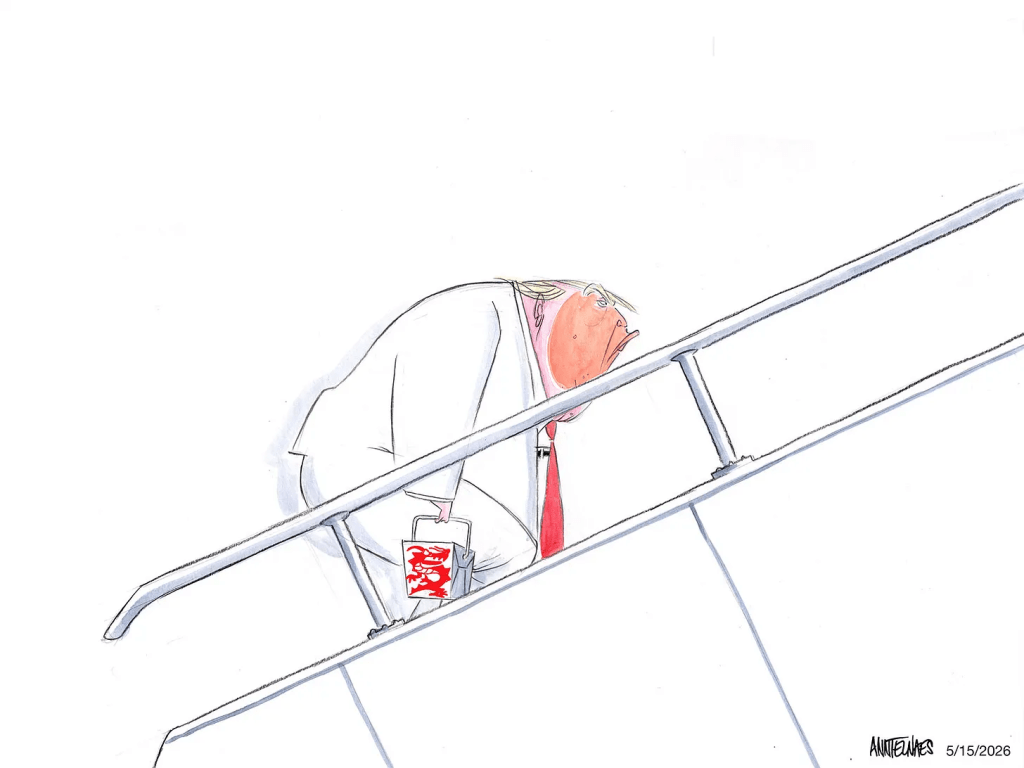
Trump is in China, where he is not thinking about our finances, but of the finances of the 17 megarich executives and Eric, who took the trip with him.
Trump landed in China on Wednesday night, where he was greeted at the airport by the vice president, Han Zheng, whose position is a ceremonial role. He was also sent to Trump’s inauguration. He is not a member of the elite Politburo Standing Committee, the apex of power in China’s ruling Communist Party. Zheng has little influence over policymaking.
Trump was also welcomed by a military band, an honor guard, and hundreds of Chinese youth waving flags. Experts on China believe the communist nation is sending a message to Donald Trump by sending a ceremonial figure to greet him and that they are choosing symbolism over substance. (snip-MORE)
Though relatively common over much of its range, the Mourning Warbler is secretive and notoriously hard to observe. These birds mostly stay close to the ground in dense thickets and brush where they forage and nest. Outside of the breeding season, Mourning Warblers are also fairly quiet and can easily go unnoticed. As a result, very little is known of this bird’s life history outside of the breeding season. In fact, there are sizable gaps in our understanding of its breeding biology as well — for instance, no researchers have documented the courtship behavior of this species.
However, one thing we do know is that these birds are fairly particular about their habitat requirements. Mourning Warblers are reliant on thick, brushy second-growth forest, the result of big ecological disturbances, such as fire or major storms, that kill numerous trees and open up gaps in the canopy. Following such a disturbance, habitat becomes acceptable after about two or three years. After another seven or eight years, the forest will have grown back enough that Mourning Warblers will no longer use it. This means that breeding areas for this species are constantly shifting, as one forest regrows and a new opening is (hopefully) created elsewhere. Sometimes referred to as a “fugitive species,” Mourning Warbler populations are frequently “on the run,” fleeing the regenerating forest and searching for another suitable opening.
Fortunately, these birds are not terribly picky about exactly what kind of disturbance creates this ideal habitat. Drought, disease, insect outbreaks, and especially fire are natural disturbances that this species probably relied on historically. In the current day, large forest fires are far less common, but for the Mourning Warblers, human activities seem to work just as well. These birds are commonly found in old clearcuts, abandoned agricultural areas, along logging roads, and even mining and oil well sites. While these heavily disturbed areas do not benefit most species, the Mourning Warbler makes it work. (snip-see MORE here)
WASHINGTON D.C. —Today, U.S. Senator Alex Padilla (D-Calif.), Ranking Member of the Senate Judiciary Immigration Subcommittee, Senate Democratic Whip Dick Durbin (D-Ill.), Ranking Member of the Senate Judiciary Committee and lead author of the Dream Act, and Senator Mark Kelly (D-Ariz.), joined immigration experts and advocates at a press conference and spotlight forum to highlight examples and implications of the growing threats to Dreamers, including Deferred Action for Childhood Arrivals (DACA) processing delays and detention and deportation concerns.
At the press conference, speakers highlighted examples of DACA recipients being unable to work and live safely in the United States due to the Trump Administration’s unjustified processing delays on their renewal applications, including a San Francisco-based DACA recipient who is at risk of losing her job. Held directly before the DACA spotlight forum, Padilla and his Democratic colleagues uplifted Dreamers’ stories and called attention to the devastating impact of unnecessary processing delays. Padilla emphasized the importance of passing the Dream Act and the urgent need for a permanent legislative fix that creates a pathway to citizenship to support our Dreamers who significantly contribute to our communities and economy.
“We hear cases of both DACA participants, and Dreamers more broadly, being detained and deported. Many DACA recipients just simply waiting for what used to be, and should be, a routine renewal of their status,” saidSenator Padilla. “We’ve heard reports of the Justice Department’s handpicked panel of judges saying that DACA protections, ‘don’t actually protect dreamers from deportation.’ Why the change? This is the entire point of the DACA program – to recognize that young people who are contributing to our country and have no criminal record, who were brough here as children, should not be deported. They deserve protections.”
“Since the beginning of this year, my office alone has seen an increase in requests for help from hundreds of people dealing with delays in getting their renewals and bureaucratic chaos. Let me tell you about one woman named Ariel – a nurse in San Francisco who has lived in the United States since she was just two years old,” continuedPadilla. “Ariel filed her renewal paperwork at the beginning of the year, 135 days before her expiration date. She followed every rule. She did everything she was supposed to do just like she always does, every two years like clockwork. But Ariel’s DACA status expired in April, and to this day her renewal status still hasn’t been processed. That’s not her fault! Yet she’s about to lose her job caring for sick people and the promotion she was working towards, because of the failures and cruelty of the Trump Administration. And here’s the thing that they don’t seem to understand in the gilded Oval Office: it’s not just Dreamers who are hurting because of these actions. It’s all of us.”
Following the press conference, Padilla and his Democratic colleagues participated in a spotlight forum on protecting Dreamers, hosted by Senator Durbin, to further highlight the contributions of DACA recipients and Dreamers in our communities, the threats that the Trump Administration has inflicted on DACA recipients, and the importance of a pathway to citizenship for Dreamers.
Padilla discussed the impacts of wrongful detention and deportation exercised by the Trump Administration, highlighting testimony from Maria de Jesus Estrada Juarez, a DACA recipient who was wrongfully detained at her green card interview and quickly deported, and who Padilla met with earlier this year. As countless stories of wrongful detention and deportation of DACA recipients under this Administration increase, Padilla emphasized the need for permanent protections and immigration reform.
“DACA is so much more than a work permit. It’s a promise. A promise to young people […] who proudly contribute so much to their families, their communities, and their countries,” said Senator Padilla. “A promise that if you come out of the shadows and you work hard and follow the rules, you will be protected. Because this is your home and you belong here. But tragically we’ve seen, in recent months, this administration doing everything they can to break that promise.”
Padilla further discussed the administration’s wrongful targeting of DACA recipients in its mass deportation campaign. In 2025, 261 DACA recipients were detained and at least 86 deported, despite having active DACA protections. DACA renewal processing times have skyrocketed; Padilla highlighted the growing number of Californians who have reached out to his office for assistance. Padilla emphasized the need for DACA and Dreamer protections from detention and deportation and criticized President Trump’s cruel attempt to cease DACA application processing.
Padilla has long championed permanent protections for Dreamers and DACA recipients and has been a leading voice in Congress for providing long-term undocumented immigrants with pathways to citizenship. In 2025, Padilla joined U.S. Senators Lisa Murkowski (R-Alaska) and Durbin in introducing the Dream Act of 2025 to provide permanent protections for Dreamers and DACA recipients. The legislation would allow noncitizens without lawful status who were brought to the United States as children and meet certain education, military service, or work requirements to earn lawful permanent residence and a pathway to citizenship. Padilla and his Democratic colleagues have joined immigration experts and advocates to renew their urgent call for the passage of the Dream Act to provide a permanent pathway to citizenship.
Earlier this year, Padilla and his Democratic colleagues demanded that former Department of Homeland Security Secretary Kristi Noem and U.S. Citizenship and Immigration Services (USCIS) Director Joseph Edlow reduce the severe delays in processing DACA renewal applications. In February, Padilla, Durbin, and Senator Kelly blasted DHS for wrongfully targeting and removing DACA recipients in a joint statement. Padilla has called attention to the increased risk of detention and deportation faced by DACA recipients when their renewal applications are not processed before their status expires. He emphasized that these long-term residents — who were brought to the country as children — have been working, studying, and living legally in the United States since 2012 and are vital members of American communities.
Padilla’s remarks at the press conference are available here.
Padilla’s remarks at the spotlight forum are available here.
I receive a couple of weekly emails from Friends Committee on National Legislation. I began working with them back when the US invaded Afghanistan. I’m copy-pasting today’s letter, which includes links for more info, and some even for taking a little action if someone cares to do it.Either way, it’s good to be informed.
After a months-long political standoff over immigration enforcement funding, congressional Republicans continue to push forward a $72 billion proposal, without measures to hold these rogue agencies accountable.
A ruling by the Senate parliamentarian Thursday set back the proposal for now. But we must continue the struggle against a blank check for more lawless, cruel enforcement.
One of the most impactful ways we can push back is by lifting up stories of the toll of these policies on our communities.
On Wednesday, a group of senators held a hearing spotlighting how immigrants brought to the U.S. as children are facing detention and deportation after being promised protections.
Stephanie Villarreal shared a story about her husband Juan, a DACA recipient who has lived in the U.S. for more than 25 years. On Feb. 18, Juan was driving to deliver breast milk to their newborn baby in the neonatal intensive care unit. He never arrived. On his way, Juan was seized by ICE agents as Stephanie listened on the phone helplessly. He has been in detention ever since, separated from his wife, his baby, and his other children.
“He did everything he was asked to,” Stephanie said. “But that didn’t matter.”
We were also moved by the story of Deiver Henao, a nine-year-old boy held in ICE detention.
“I don’t wanna be here anymore,” he said. “I want to be [in school] to be happy … I wish I could leave before the spelling bee.”
Thankfully, Deiver and his family were released after his case received media attention. But many other children like him remain detained.
These stories are not are exceptional: they are far too common. How we treat people like Juan and Deiver is a test of who are as a nation. We all deserve to be treated with dignity, love, and respect. It is up to us, as people of faith and conscience, to speak out against these heartbreaking injustices and demand better from our government.
“Congressional action depends on local, personal stories from the communities they represent,” FCNL’s Anika Forrest explained.“Let’s make sure that Congress can’t look away.”
Elsewhere
War Powers Resolution on Iran barely falls short Public pressure to end war on Iran is moving Congress. Just this week, we saw resolutions to end the war almost pass – falling only one vote short in the House and two votes short in the Senate.
Public opposition to the war is bipartisan and fierce, and growing in Congress. Let’s keep up the momentum and get this over the finish line!
As Trump visits China, cries for cooperation multiply President Trump visited China this week, meeting with Chinese President Xi Jinping, talking about trade, Taiwan, and other issues. FCNL joined a broad coalition of organizations in calling for a peaceful, cooperative relationship between China and the U.S.As our letter to Congress puts it,
“At a time when so many domestic needs are going unmet, a confrontational posture toward China is costing untold billions.” Every dollar spent on war or preparing for war takes away from the desperate needs we have at home and abroad to build the world we seek.
Members of Congress call on U.S. to stop Ecuador operations The U.S. military is supporting Ecuadorian forces to violently crack down on accused drug traffickers. Twenty members of Congress sent a letter to Secretary of Defense Pete Hegseth demanding that the U.S. stop and investigate serious accusations of human rights abuses: “The United States cannot continue to be complicit in abuses abroad. There must be accountability.”
The path to abolishing the Selective Service Plans for automatic draft registration were announced about a month ago, fulfilling the mandate from 2025’s defense bill. Just yesterday, a bipartisan group of senators introduced legislation which would end the Selective Service entirely.
FCNL’s Priya Moran explained what’s going on and what the future might hold, calling on Congress to “focus on preventing war, instead of maintaining a system designed to force young people to engage in it.” Call for Congress to act!
In peace, Bryan Bowman Social Media and Communications Strategist
I am two days late on sending this because I was stuck in a depression and it ate all of my extra energy. I started and stopped several drawings because I’m not sure if I didn’t like them or if I just didn’t like me very much. My dr recommended sun and exercise and other things that sound very easy when you are not depressed and it reminded me of a poem my mom read to me so often I’d almost memorized it. (All of A.A. Milne’s poems are the songs of my childhood.) If you hate poetry, skip this part.
The poem always made me feel both cozy and sad at the same time, which was a confusing thing for a small child but also a combination that my brain would grow to specialize in.
It reminded me that recently I’d read that tiny harvest mice have been found asleep in flower beds and so I decided to draw that:
“Sometimes harvest mice will crawl into flowers to feast on the pollen and stamens and will fall asleep inside.”
The drawing is simple and plain and fairly unimpressive, but it made me feel warm inside my heart and that is a very special sort of magic.
This is all a very long way of saying that whimsy and comfort and coziness and nostalgia and joy are all worth more than we give them credit for…whether in drawing mice or reading poems from childhood or eating nectar and drunkenly falling asleep inside flowers.
This is in regard to Kevin Hart’s roast show on Netflix. Over the past couple of years, I’ve read comments that Kevin Hart can be, um, problematic, by being, let’s say, careless how he speaks, or doesn’t call out others’s speech. I don’t go looking to see more about why, though, because it has read as celeb clickbait. I ran across this, and thought I’d share; it’s not celeb clickbait.So, if someone has watched or will watch Kevin Hart’s show, please let us know a counterpoint, or confirm!
If you haven’t pressed play on Kevin Hart’s Netflix roast yet, consider yourself warned. As more people check out Kevin Hart’s celebrity “G.O.A.T. Roast” that recently aired on Netflix, they are failing to find the humor due to the overwhelming amount of racist jokes that were lobbed across the stage from a myriad of white comics. And now, Pastor Jamal Bryant is calling Hart onto the carpet for letting it happen in the first place.
As we previously told you, the event was home to a plethora of shocking racial and stereotypical jokes targeted towards Hart and other Black comedians who were present. The “punchlines” were wide-ranging, from calling Hart a monkey, a slave, a crack baby, and burnt, to likening comedian Sheryl Underwood to a donkey and more. There was even an egregious George Floyd “joke” that was spoken, which soon prompted multiple members of his family to speak out in protest of it.
And all the while, Hart stood by laughing through it all, never once attempting to say when the jokes had gone too far.
Since then, fellow comedians like Michael Che and Lil Rel Howery have shared their two cents of disappointment with what took place. And now, Bryant is also airing out Hart and the other white comics for behaving the way they did.
Writing in a post to Threads, Bryant said of the event: “The Kevin Hart roast wasn’t comedy it was disrespect dressed as jokes. In this climate for it to go unchecked is to give consent.”
In the comment section, many couldn’t help but side with the New Birth Missionary Baptist Church leader and activist.
“I’ve watched Roasts before but this was outside of a roast, it went way over the line in racism period,” said one user.
“Yeah I missed the joke!!! To mock George Floyd was beyond racist! It was disgusting and when we laugh we allow them’ to think it’s ok!!!,” said another.
One other user agreed, adding: “We need to make it known that its unacceptable. I’m tired of Black ppl’s pain being the butt of jokes. I remember hugging my father so tightly after watching George Floyd’s unaliving. To know that the country we live in is ok with treating Black Men in such a manner will never sit right with me.”
Noted another person, “I think they went way too far! For the love of money !!”