
Category: Animals / Insects / Water Life / Plants / Nature
Peace & Justice History for 3/1
| March 1, 1943 A huge rally in New York City’s Madison Square called on the U.S. government to reconsider its refusal to offer sanctuary to Jewish refugees of Nazi Germany. |
| March 1, 1954 Nuclear Free and Independent Pacific Day, or Bikini Day, marks the anniversary of the explosion of the largest-ever U.S. nuclear weapon which contaminated major parts of the Marshall Islands [see February 28, 1954].  The land and people of the south Pacific have been exposed to numerous nuclear bomb tests and their radioactive aftermath. In addition to the 67 atmospheric U.S. tests at Bikini and Eniwetok Atolls, France tested 193 weapons in French Polynesia, 46 in theatmosphere. The U.K. exploded 34 devices on Malden and Christmas Islands.The day is also intended to call attention to the potential danger of the increasing trans-oceanic shipment of hazardous nuclear materials, and the need of nuclear and shipping nations to consider the rights and health of the indigenous peoples of the region. The proposed South Pacific Nuclear-Free Zone Treaty |
| March 1, 1956 The University of Alabama permanently expelled Autherine Lucy, the first African-American person ever admitted to the University (following a federal court’s ordering her admission).She was met with rioting by thousands of students (none of whom were disciplined) and others. She charged in court that University officials had been complicit in allowing the disorder, as a means of avoiding compliance with the court order. The trustees expelled her for making such “ baseless, outrageous and unfounded charges of misconduct on the part of the university officials.”  Burning desegregation litgerature at the University of Alabama. Students, adults and even groups from outside of Alabama shouted racial epithets, threw eggs, sticks and rocks, and generally attempted to block her way.  Autherine Lucy Foster receives her master’s degree from University of Alabama in 1992. Autherine Lucy Foster ultimately received her master’s degree from the University of Alabama in library science in 1991, the same year her daughter, Grazia, earned her undergraduate degree. The University now grants an endowed scholarship annually in Lucy Foster’s name. |
March 1, 1961 President John F. Kennedy issued Executive Order 10924 establishing the Peace Corps as a new agency within the Department of State. The same day, he sent a message to Congress asking for permanent funding for the agency, which would send trained American men and women to foreign nations to assist in development efforts. The Peace Corps captured the imagination of the U.S. public, and during the week following its creation, thousands of letters poured into Washington from young Americans hoping to volunteer. What is the Peace Corps today? (A happy surprise; the website is still up and functioning at 7:54 PM 2/28/25. -A) |
| March 1, 1974 Former top Nixon White House aides H.R. Haldeman and John D. Ehrlichman, and former Attorney General John Mitchell, were indicted on obstruction of justice charges related to the Watergate break-in. |
| March 1, 1981 Irish Republican Army member Bobby Sands began a hunger strike at the Maze Prison in Northern Ireland; he died 65 days later. He had dedicated his life to freeing Northern Ireland from British rule.  Read more “Hunger,” a film about Bobby Sands by director Steve McQueen (“Shame”) with Michael Fassbender Watch the trailer |
https://www.peacebuttons.info/E-News/peacehistorymarch.htm#march1
Some Science on Thursday
Earliest evidence of humans in rainforests leads to surprises about how we evolved
February 27, 2025 Evrim Yazgin
The earliest evidence that humans inhabited rainforests has been found in Africa, a surprising find which pushes human settlement in these habitats much further back than previously thought.
Modern humans, Homo sapiens, evolved about 300,000 years ago in Africa. The ecological and environmental circumstances in which our species evolved are still not well understood.
It is likely that our ape-like ancestors millions of years ago did live in dense rainforests. But the retreat of Africa’s forests and the spread of savannah and grasslands as Earth’s climate dried is usually linked to the evolution of bipedalism in early human ancestors as far back as 7 million years ago.
As a result, rainforests have often been overlooked as important habitats in the evolution of early modern humans.
New research published in Nature has put a dent in this assumption.
The evidence comes from a site which dates to 150,000 years ago in present-day Côte d’Ivoire on the southern coast of West Africa.
“Before our study, the oldest secure evidence for inhabitation in African rainforests was around 18,000 years ago and the oldest evidence of rainforest inhabitation anywhere came from southeast Asia at about 70,000 years ago,” says lead author Eslem Ben Arous, from Spain’s National Centre for Human Evolution Research (CENIEH) and the Max Planck Institute of Geoanthropology in Germany.
The site was first investigated in the 1980s when ancient stone tools were discovered. But the age of the tools and the ancient ecology couldn’t be determined with the technology of the day.

Today, Côte d’Ivoire has roughly 9% forest cover which has dropped from nearly 50% in the 1960s due to agriculture from nearly 50% in the 1960s.
“Several recent climate models suggested the area could have been a rainforest refuge in the past as well, even during dry periods of forest fragmentation,” says senior author Eleanor Scerri, from the Max Planck Institute of Geoanthropology. “We knew the site presented the best possible chance for us to find out how far back rainforest inhabitation extended.”
The anthropologists used several dating techniques including optically stimulated luminescence and electron-spin resonance to determine the stone tools were 150,000 years old.

Sediment samples also showed the region was heavily wooded, with pollen and leaf waxes typically found in humid West African rainforests. Low levels of grass pollen show it wasn’t a narrow strip of forest either, but in a dense woodland.
This evidence suggests that some early modern humans lived in rainforests while others stuck to their grassland and savannah homes.
“Convergent evidence shows beyond doubt that ecological diversity sits at the heart of our species,” says Scerri. “This reflects a complex history of population subdivision, in which different populations lived in different regions and habitat types.
“We now need to ask how these early human niche expansions impacted the plants and animals that shared the same niche-space with humans. In other words, how far back does human alteration of pristine natural habitats go?”
“This exciting discovery is the first of a long list as there are other Ivorian sites waiting to be investigated to study the human presence associated with rainforest,” says Guédé.
The site which yielded these stone tools has since been destroyed by mining.
A Kitty Name Poem, with A Mule, Too
The Naming of Cats by Worriedman
T. S. Eliot Read on Substack
The Naming of Cats is a difficult matter,
It isn’t just one of your holiday games;

You may think at first I’m as mad as a hatter
When I tell you, a cat must have THREE DIFFERENT NAMES.
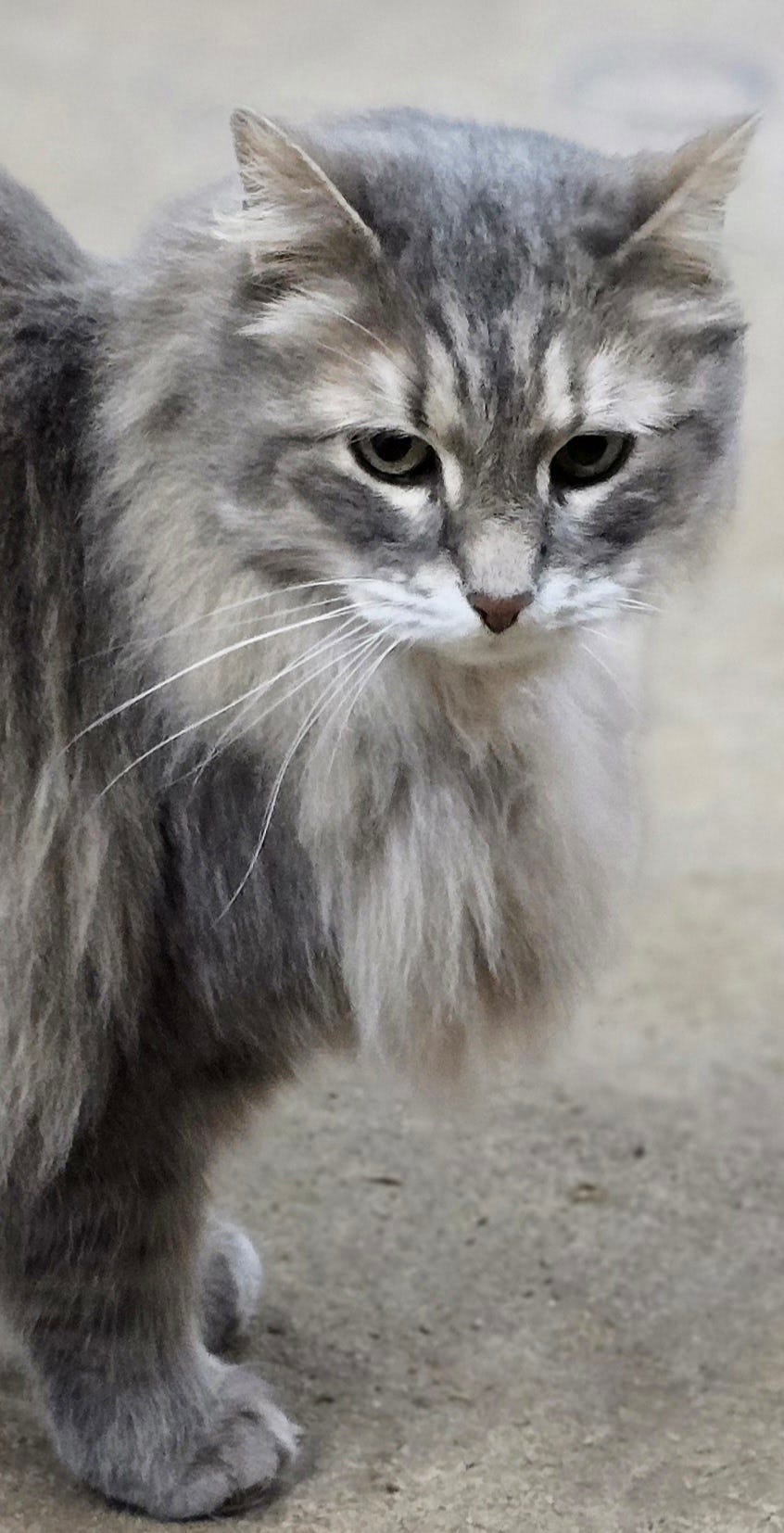
First of all, there’s the name that the family use daily,
Such as Peter, Augustus, Alonzo, or James,
Such as Victor or Jonathan, George or Bill Bailey—
All of them sensible everyday names.

There are fancier names if you think they sound sweeter,
Some for the gentlemen, some for the dames:

Such as Plato, Admetus, Electra, Demeter—
But all of them sensible everyday names,
But I tell you, a cat needs a name that’s particular,
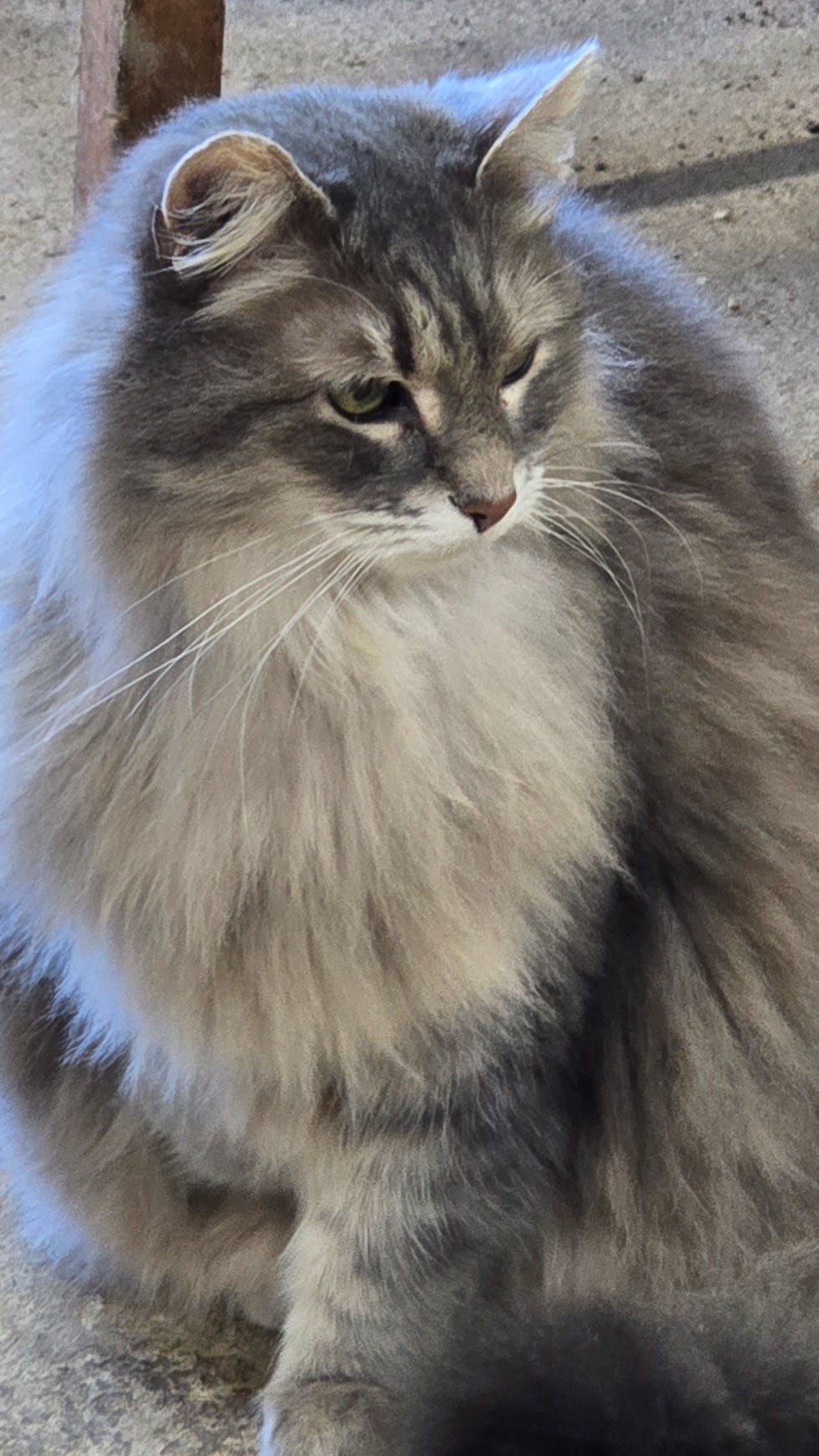
A name that’s peculiar, and more dignified,
Else how can he keep up his tail perpendicular,
Or spread out his whiskers, or cherish his pride?

Of names of this kind, I can give you a quorum,
Such as Munkustrap, Quaxo, or Coricopat,
Such as Bombalurina, or else Jellylorum— Names that never belong to more than one cat.

But above and beyond there’s still one name left over,
And that is the name that you never will guess;
The name that no human research can discover—
But THE CAT HIMSELF KNOWS, and will never confess.
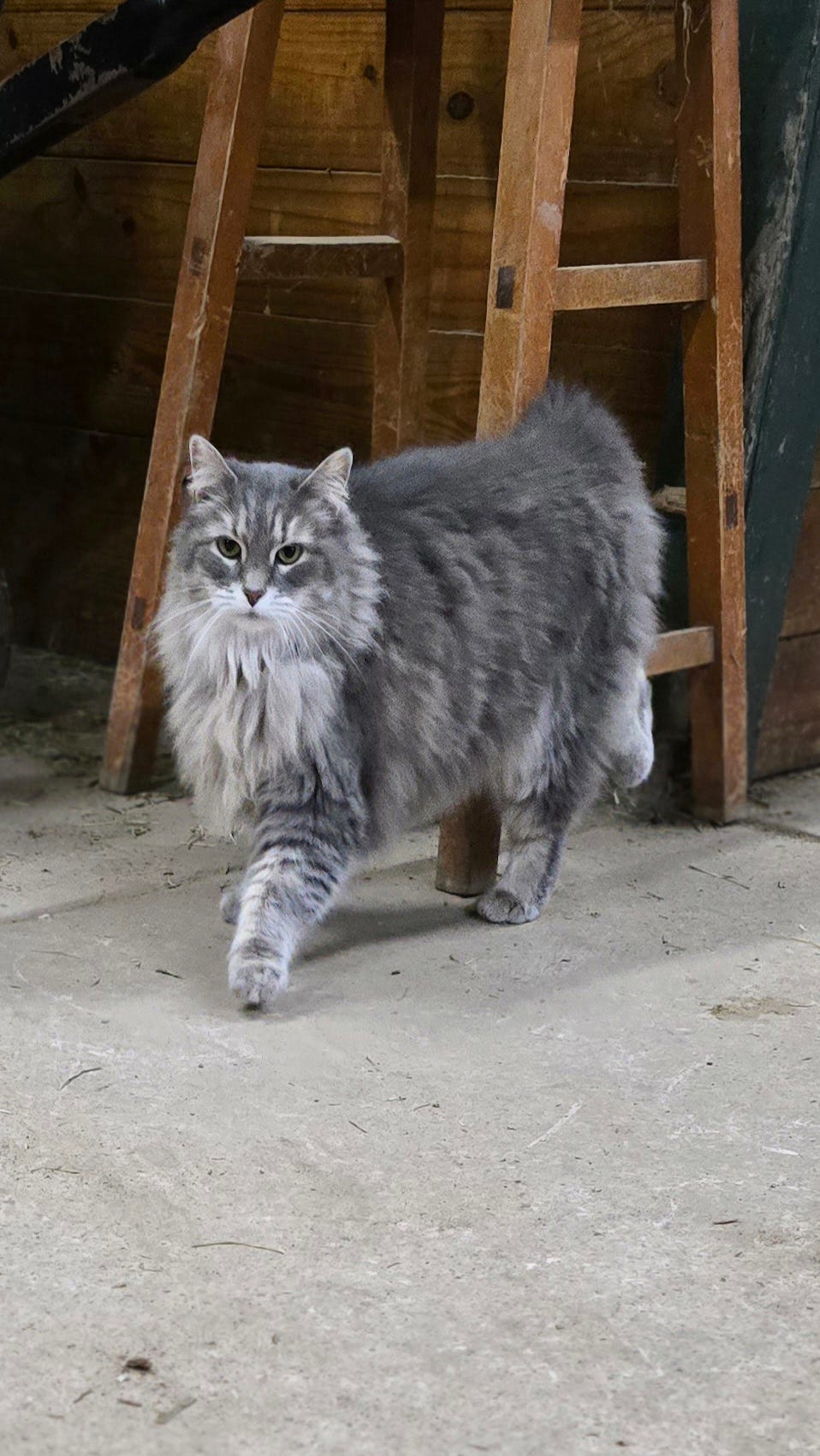
When you notice a cat in profound meditation,
The reason, I tell you, is always the same:
His mind is engaged in a rapt contemplation
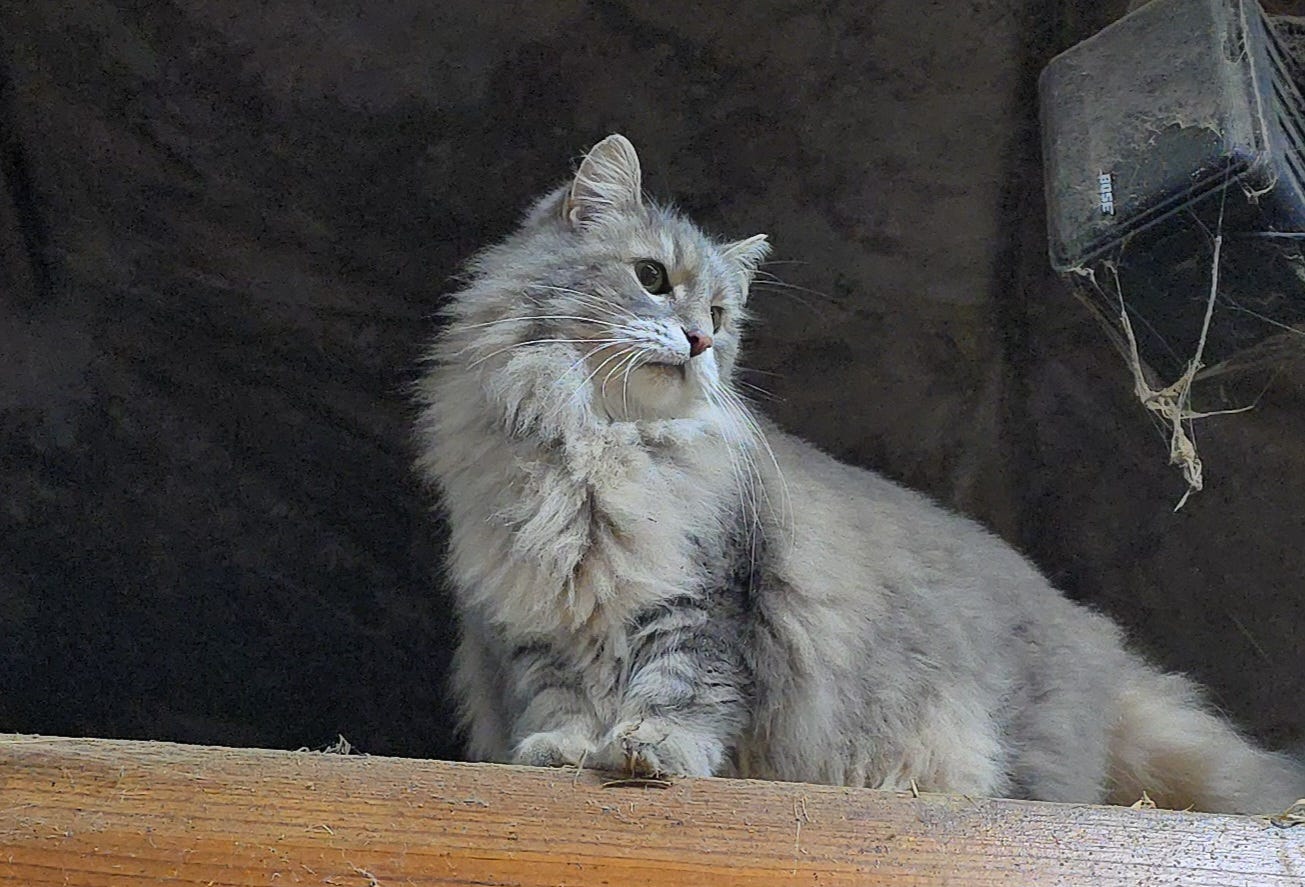
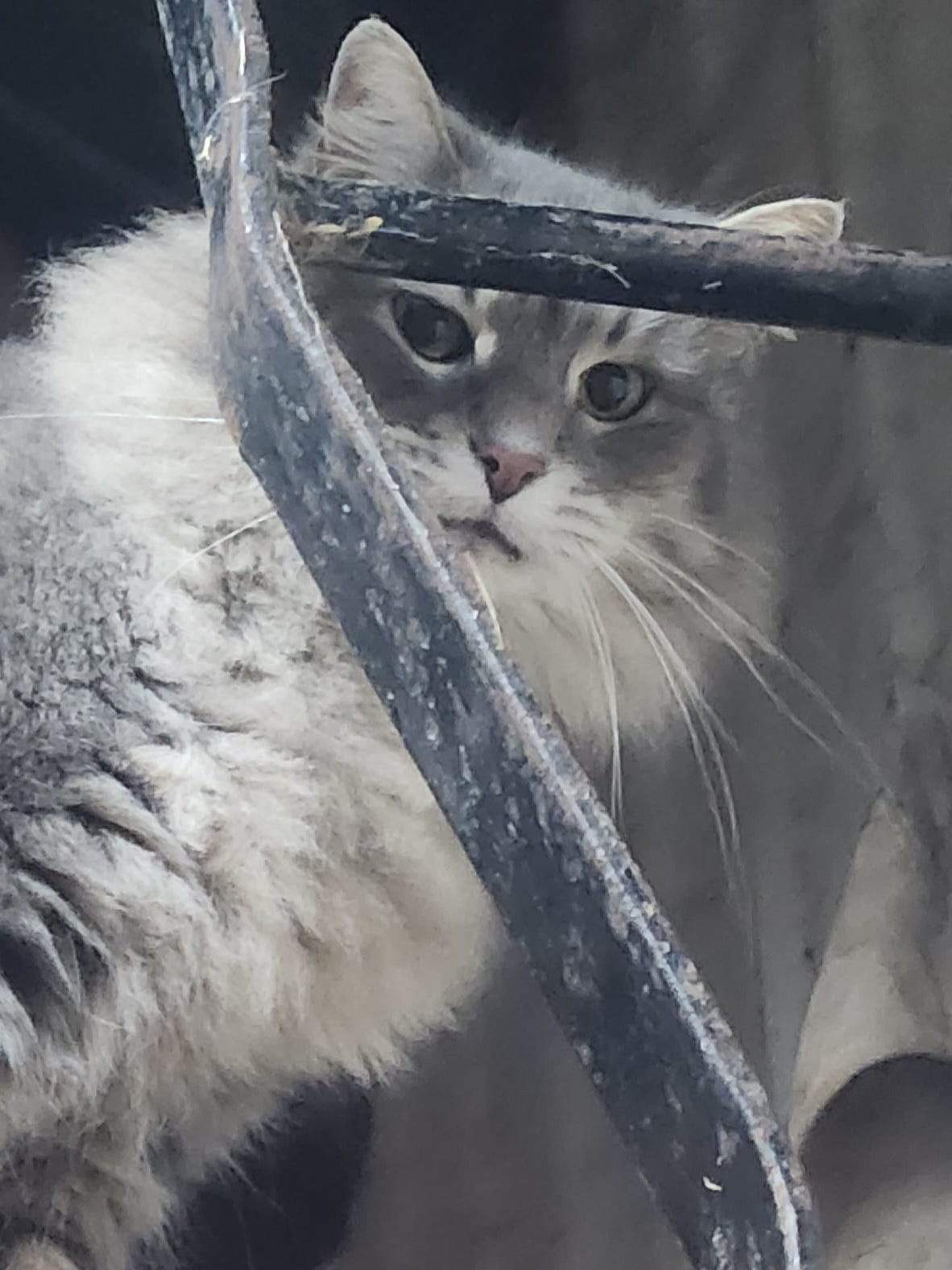
Of the thought, of the thought, of the thought of his name:
His ineffable effable
Effanineffable
Deep and inscrutable singular name.
Barn cat is a righteous little storm of constant movement. I have to take four pictures to everyone I can use – sometimes more. Here’s the first nine pictures I took for this session.

It’s always worth the patience!
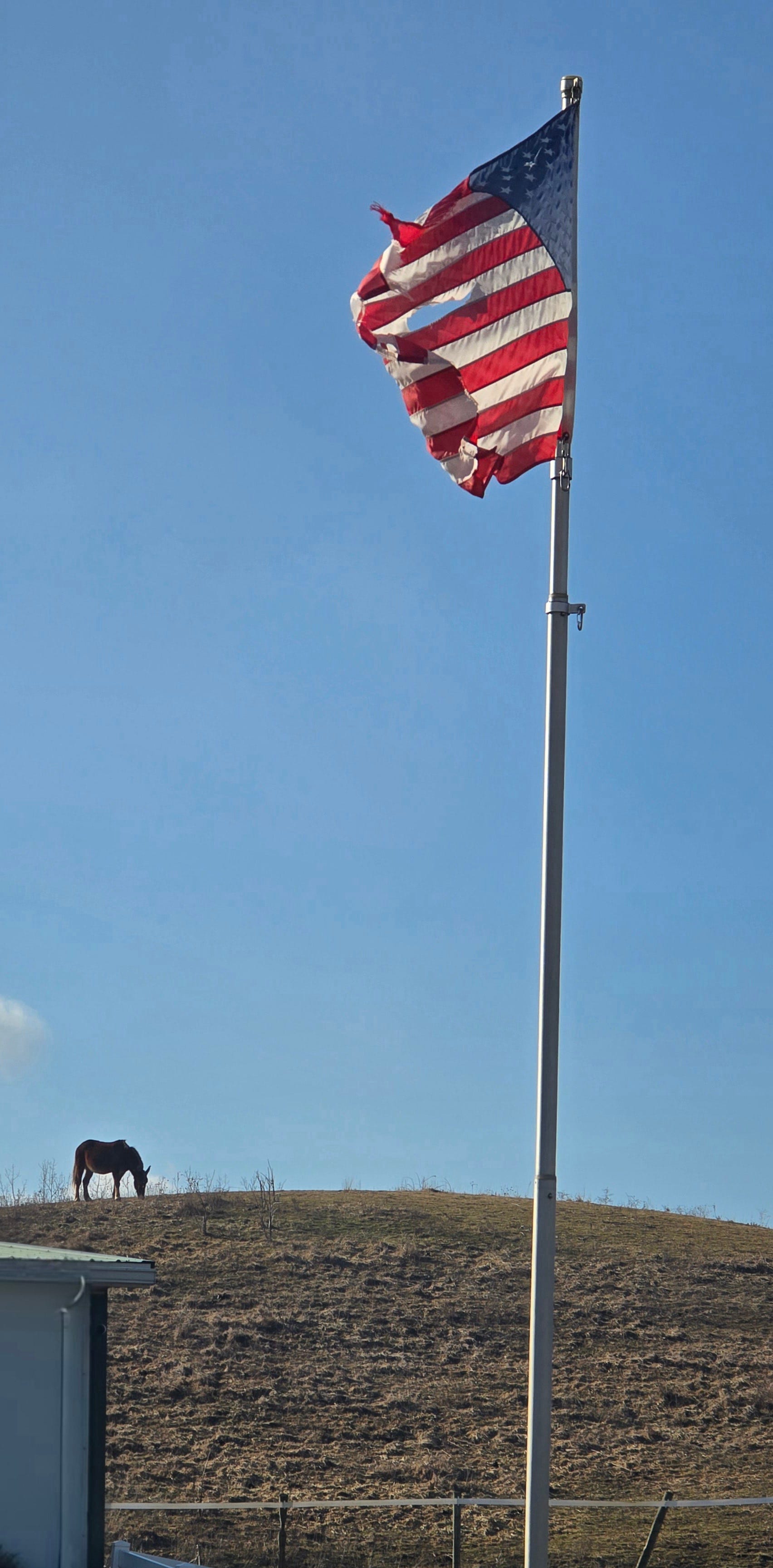
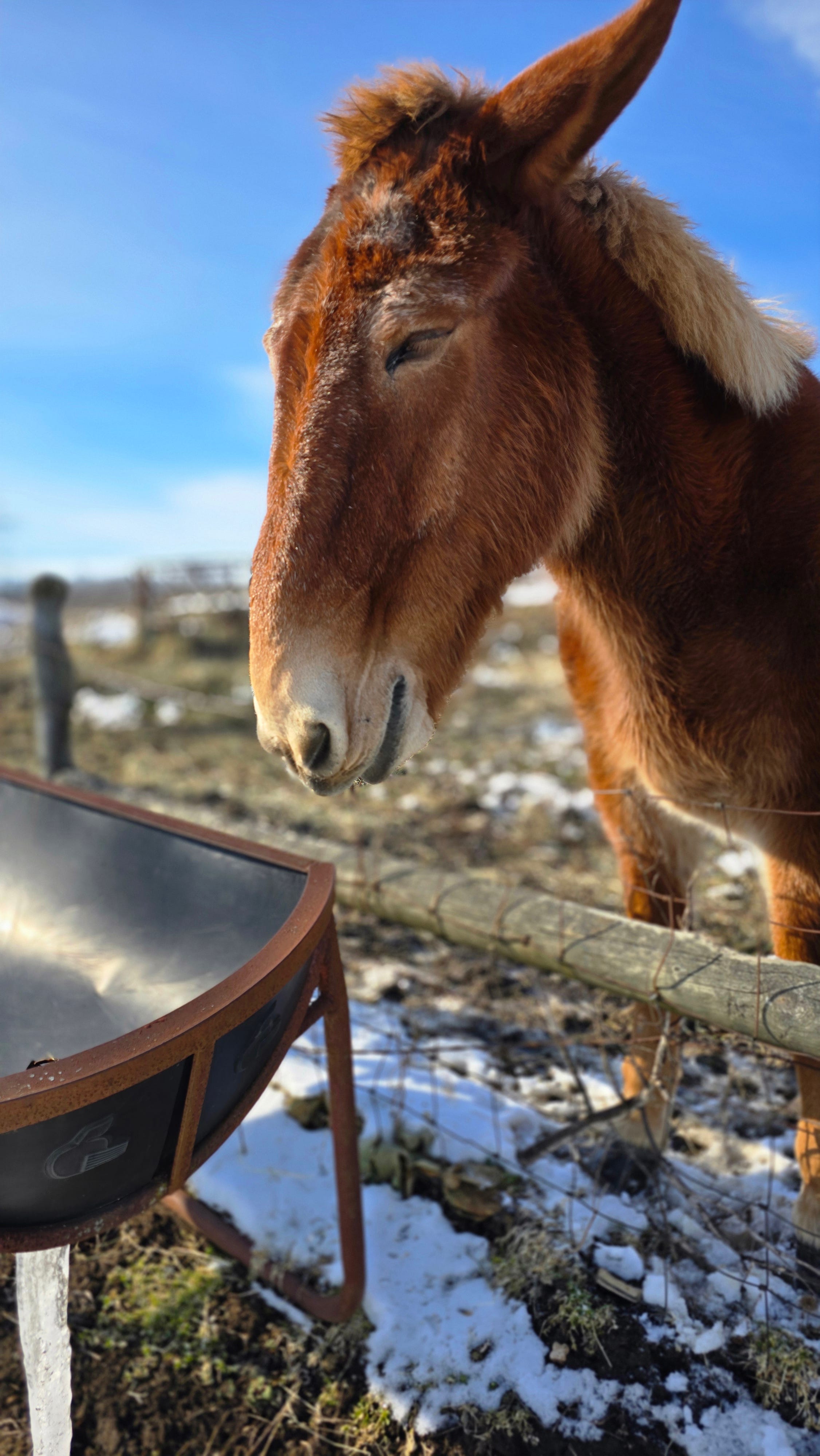
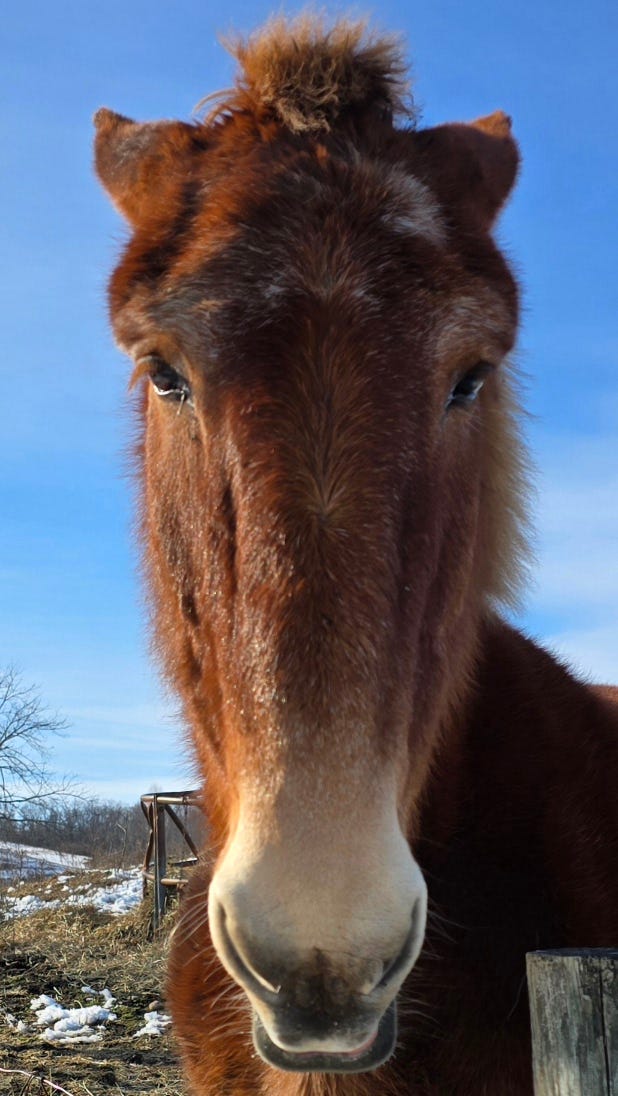
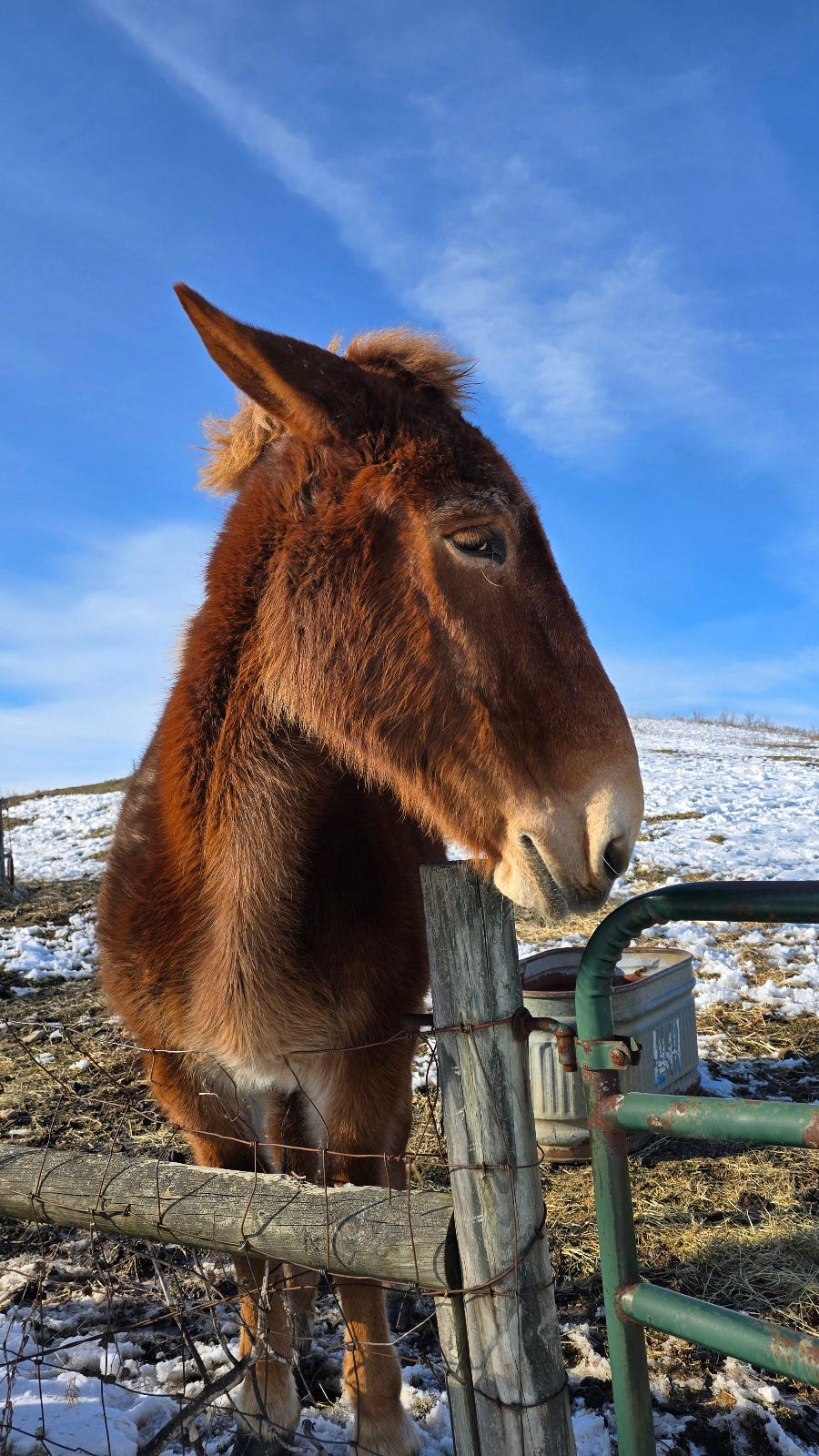
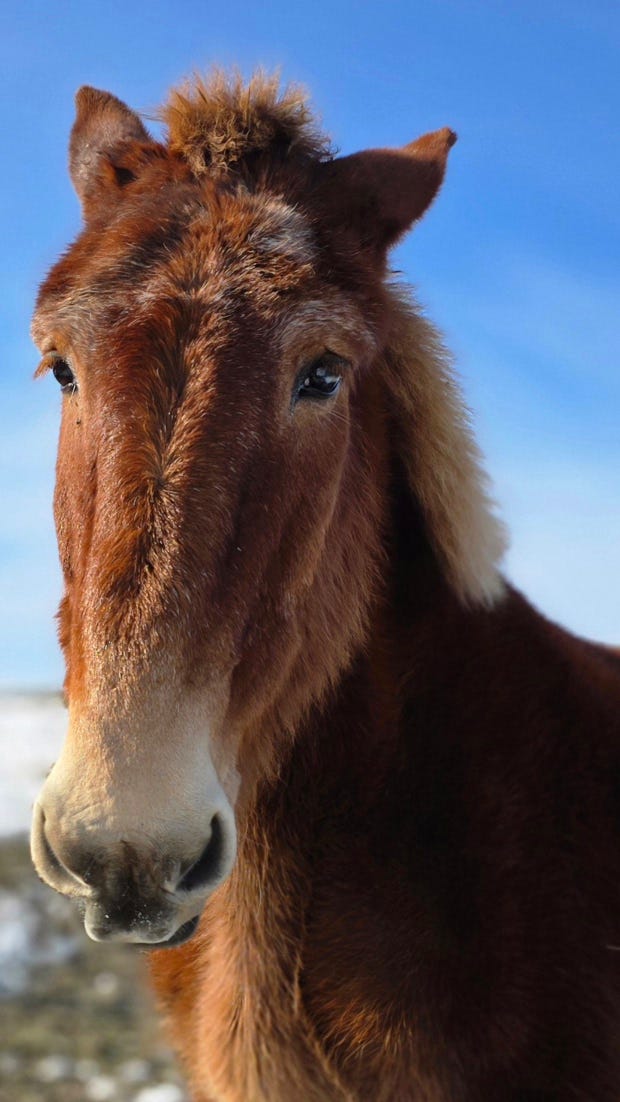
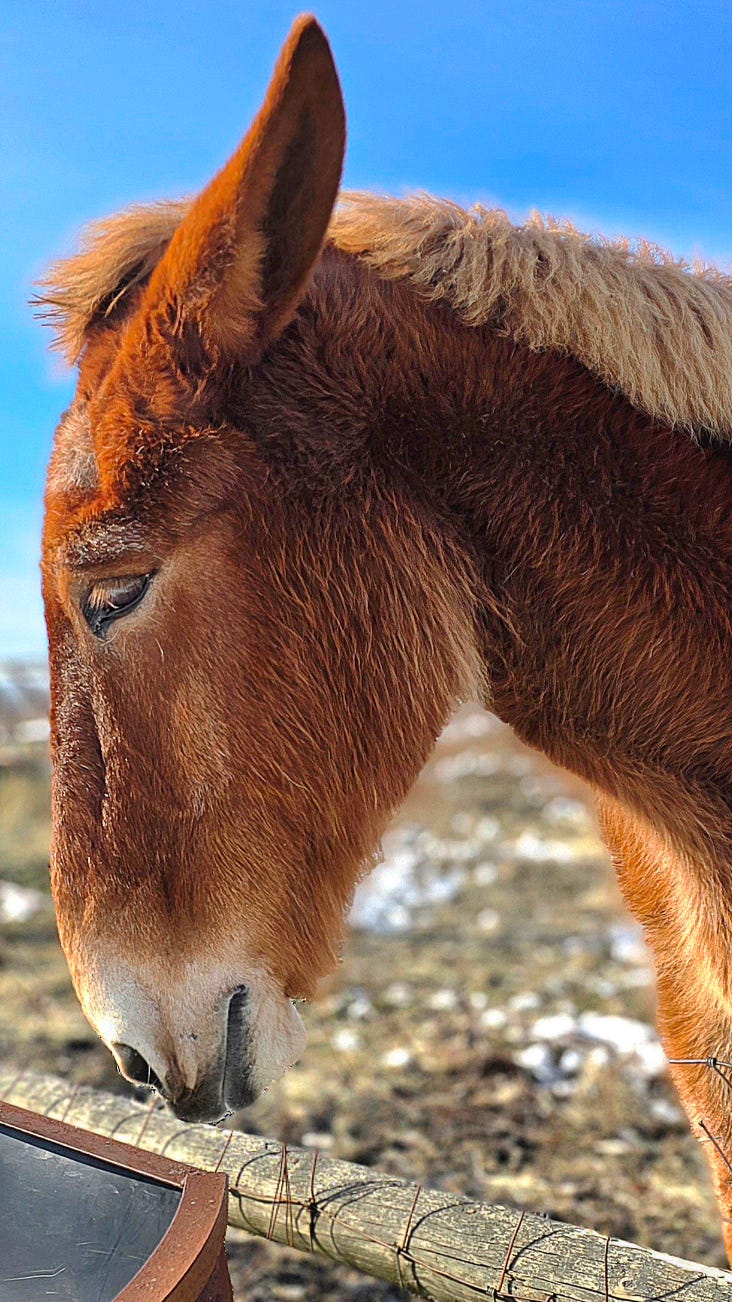
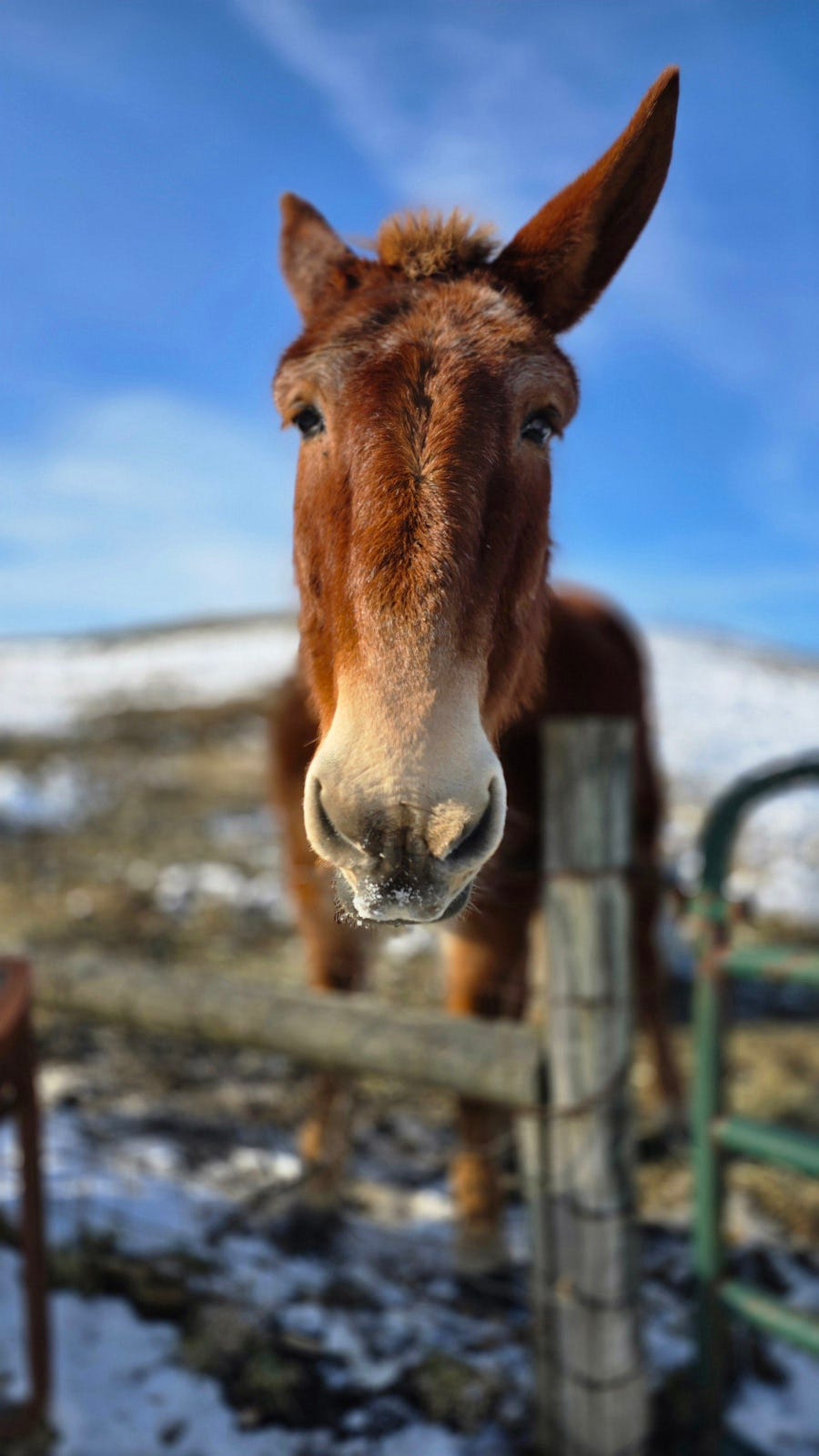
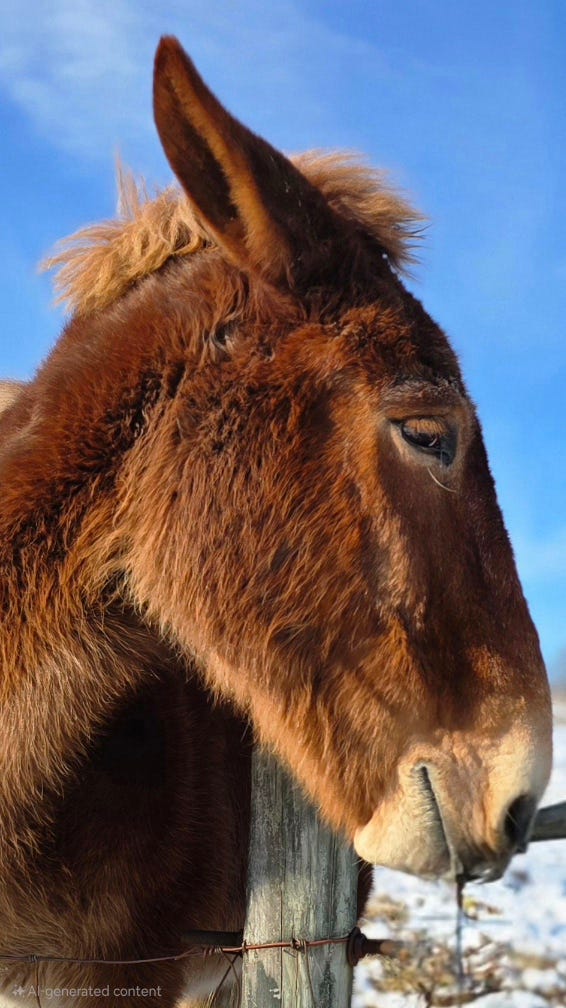
The Mule was on the Top of the Hill.
All is well
!
(snip)
Amaryllis, and More!
Lady finger, dipped in moonlight /Writing “What for?” across the morning sky/ Sunlight splatters, dawn with answer/ Darkness shrugs and bids the day goodbye by Worriedman
J Garcia, R Hunter – ” St Stephen” Read on Substack
A very fine version of “St Stephen” from 1978.
Some sunrises-
Home –

Work –


I realized I had a enough unused pictures to do yet, another substack page .
And here we are!
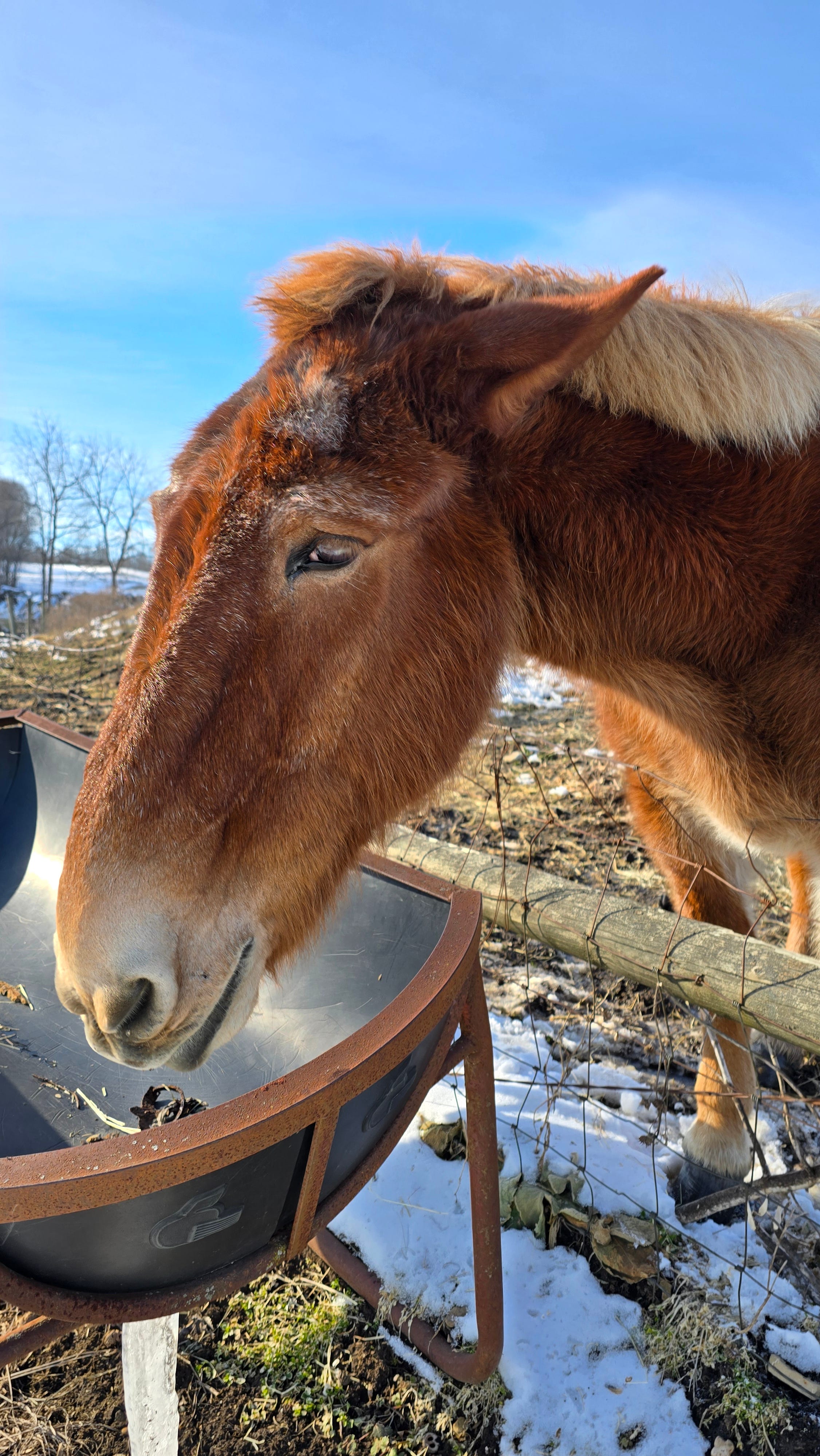
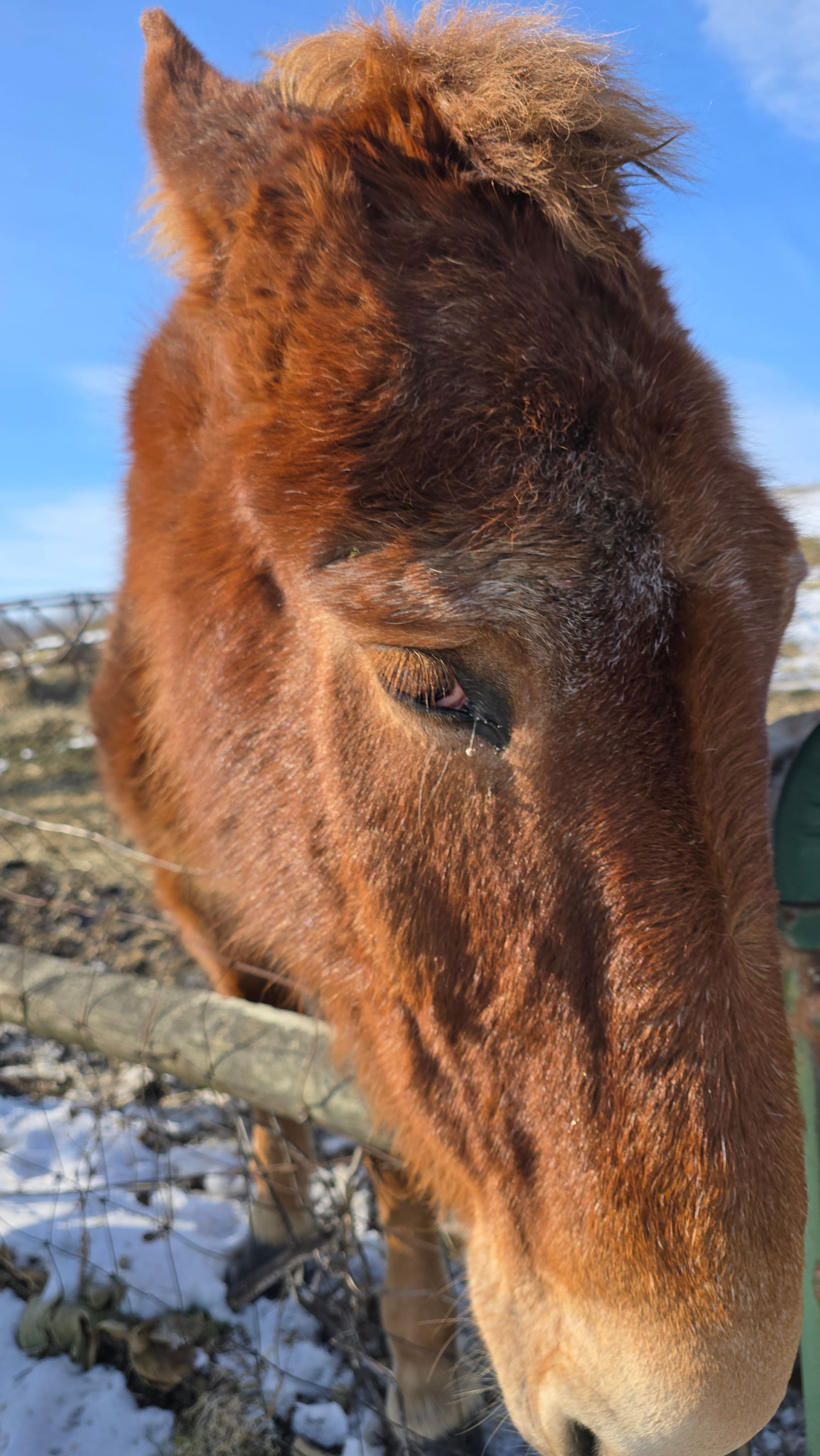
More Mule on the Hill !

More Barncat!


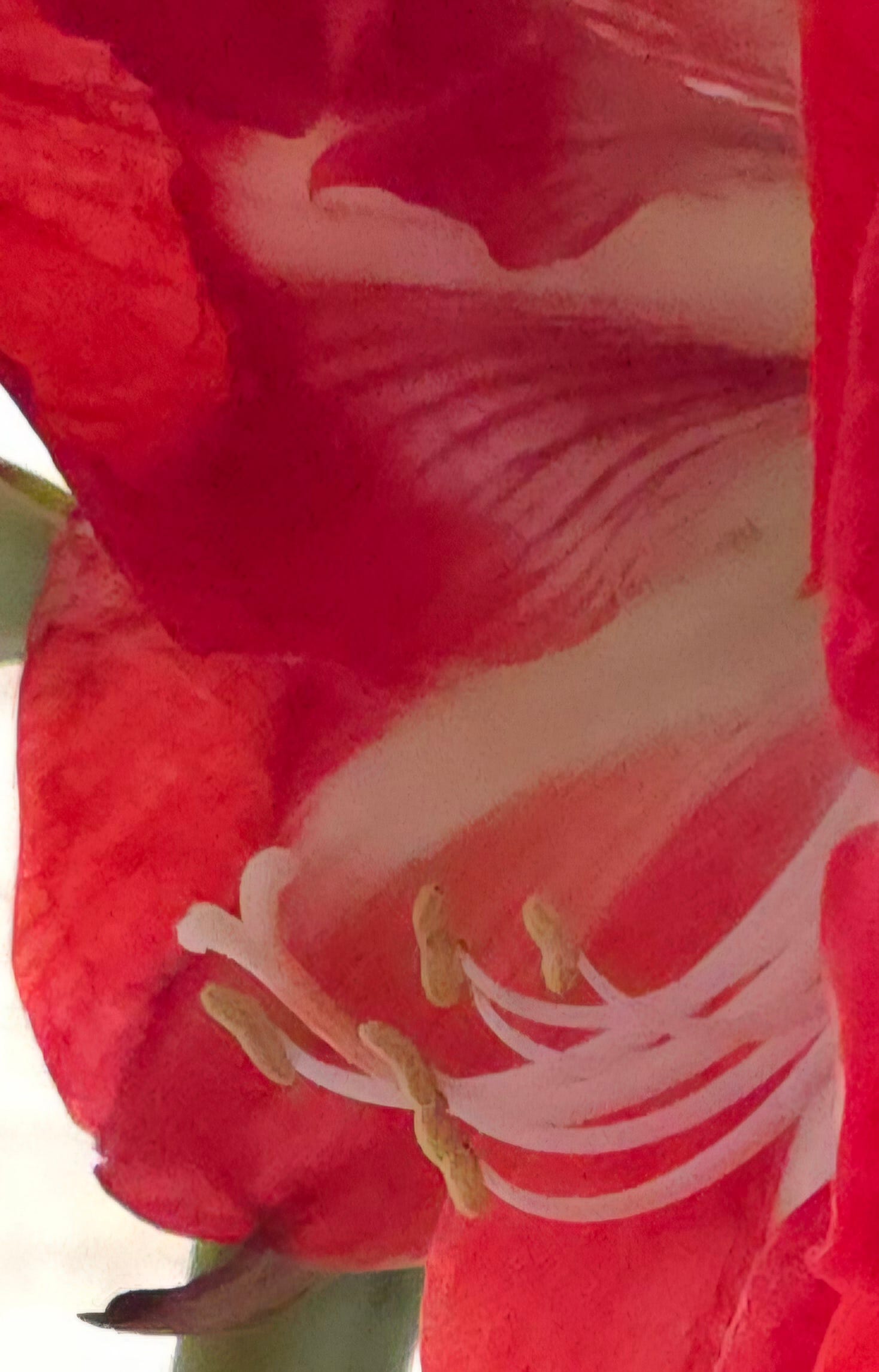
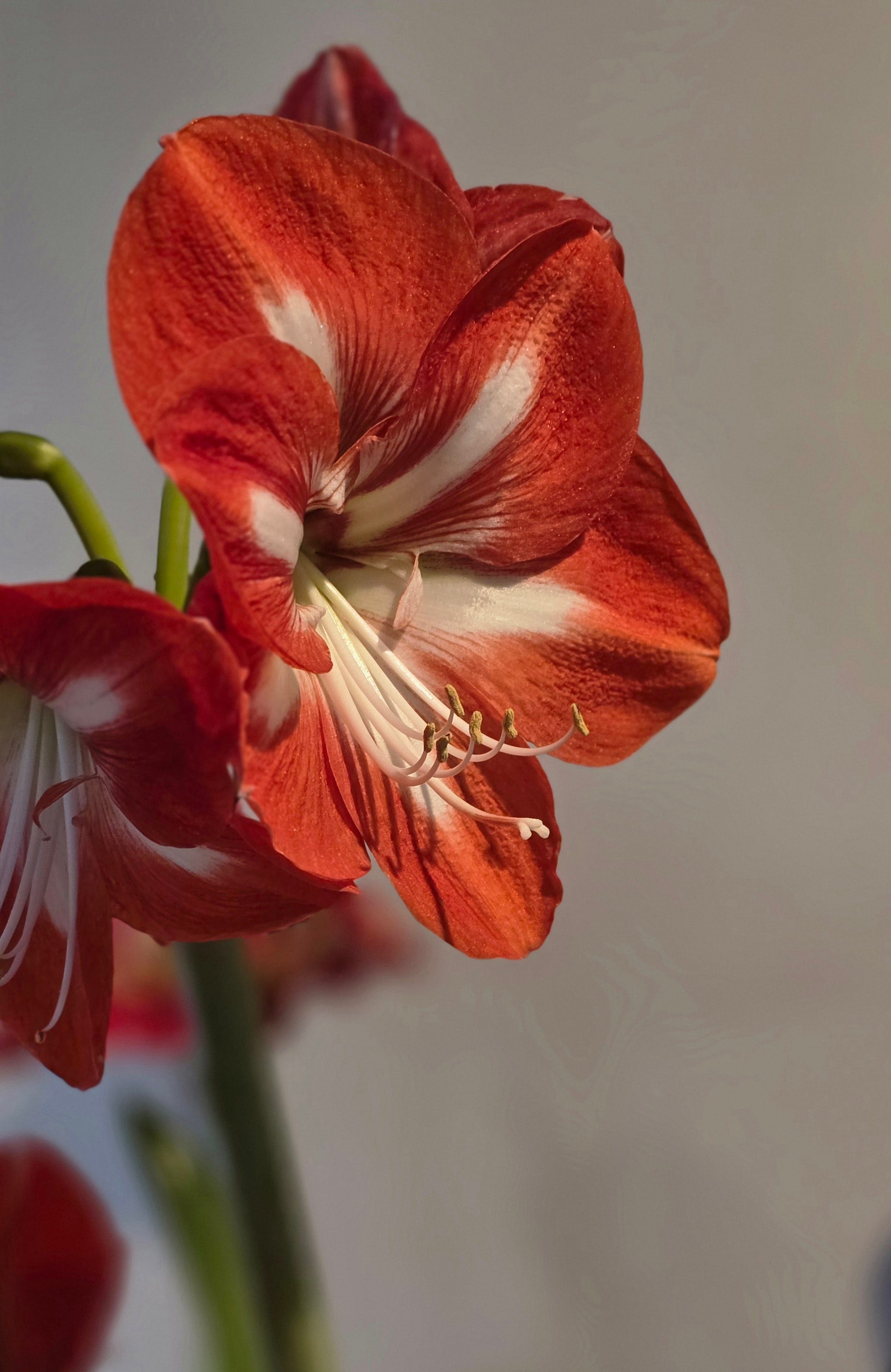
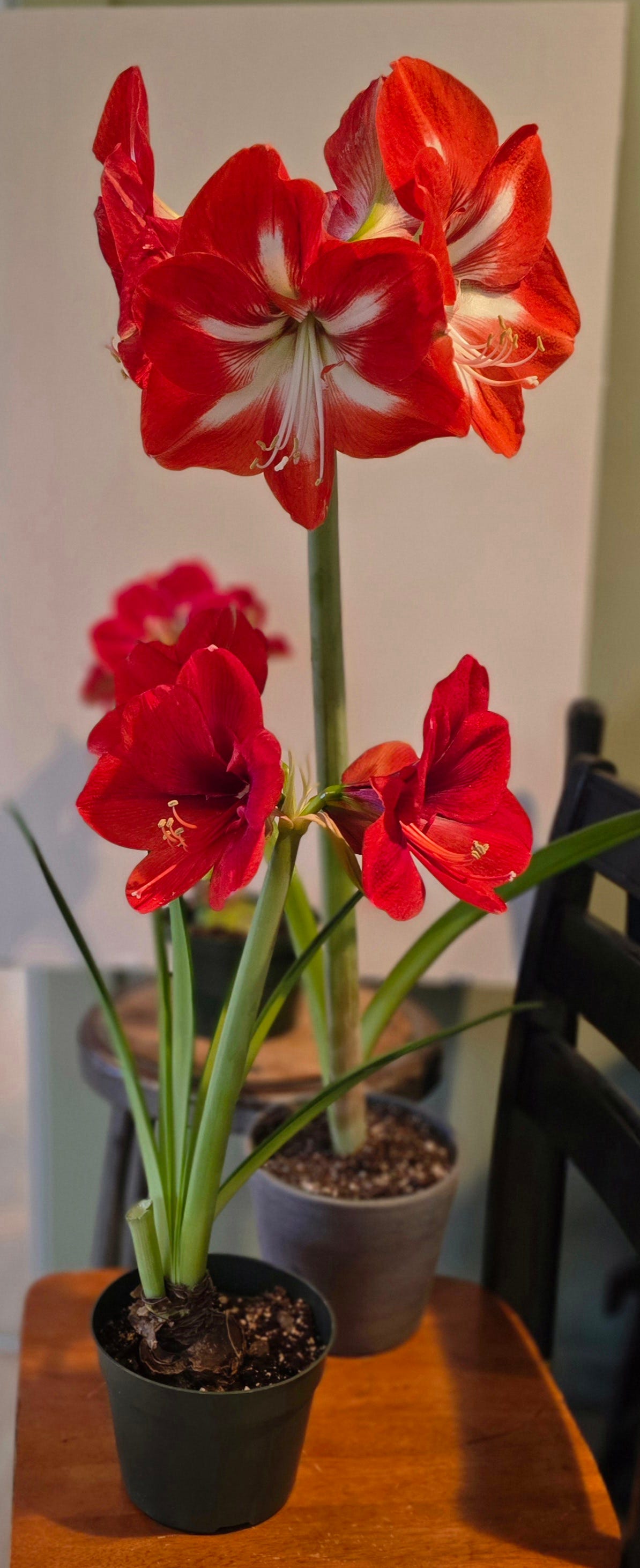
More Amaryllis!

That’s all I got room for – Thanks for dropping by! (snip)
I Have Been Remiss
with the Worriedman farm/garden posts. I apologize, but the weather is warming, Ollie can go out, and we like to play in the backyard, which also runs off stress for both of us. So I did that yesterday, and plan to do it some more later on today, but here’s a nice post right quick:
Amongst the flowers I am alone with my pot of wine drinking by myself; then lifting my cup I asked the moon to drink with me – by Worriedman
Li Po- Alone and Drinking Under the Moon Read on Substack
The rest of the poem- it’s fine! You should go read it.
I considered rewriting this – I was going to call it Alone and Smoking Under The Moon – After a Poem By Li Po (Amongst the flowers I am alone with my pot, smoking by myself; then, lifting my pipe I asked the moon to smoke with me -) I didn’t though. Li Po was a badass. His life would make a good novel.
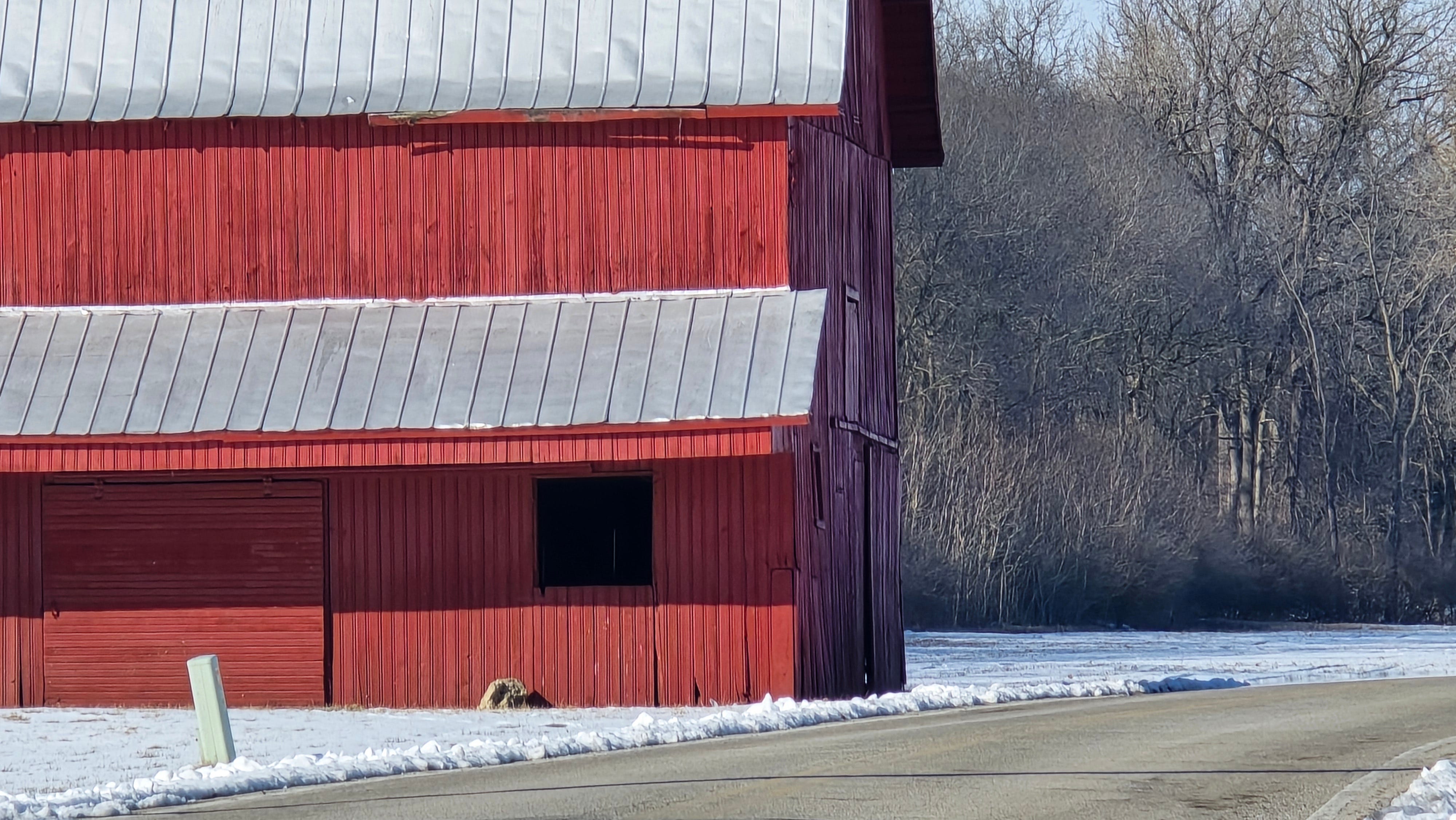
On the way out to feed the horse – if Hopper has painted Ohio barns.

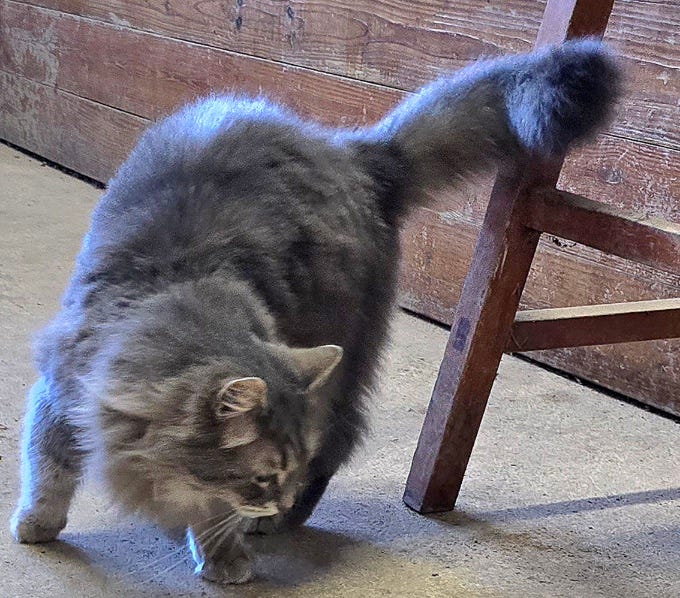
Barncat came down from the hayloft.

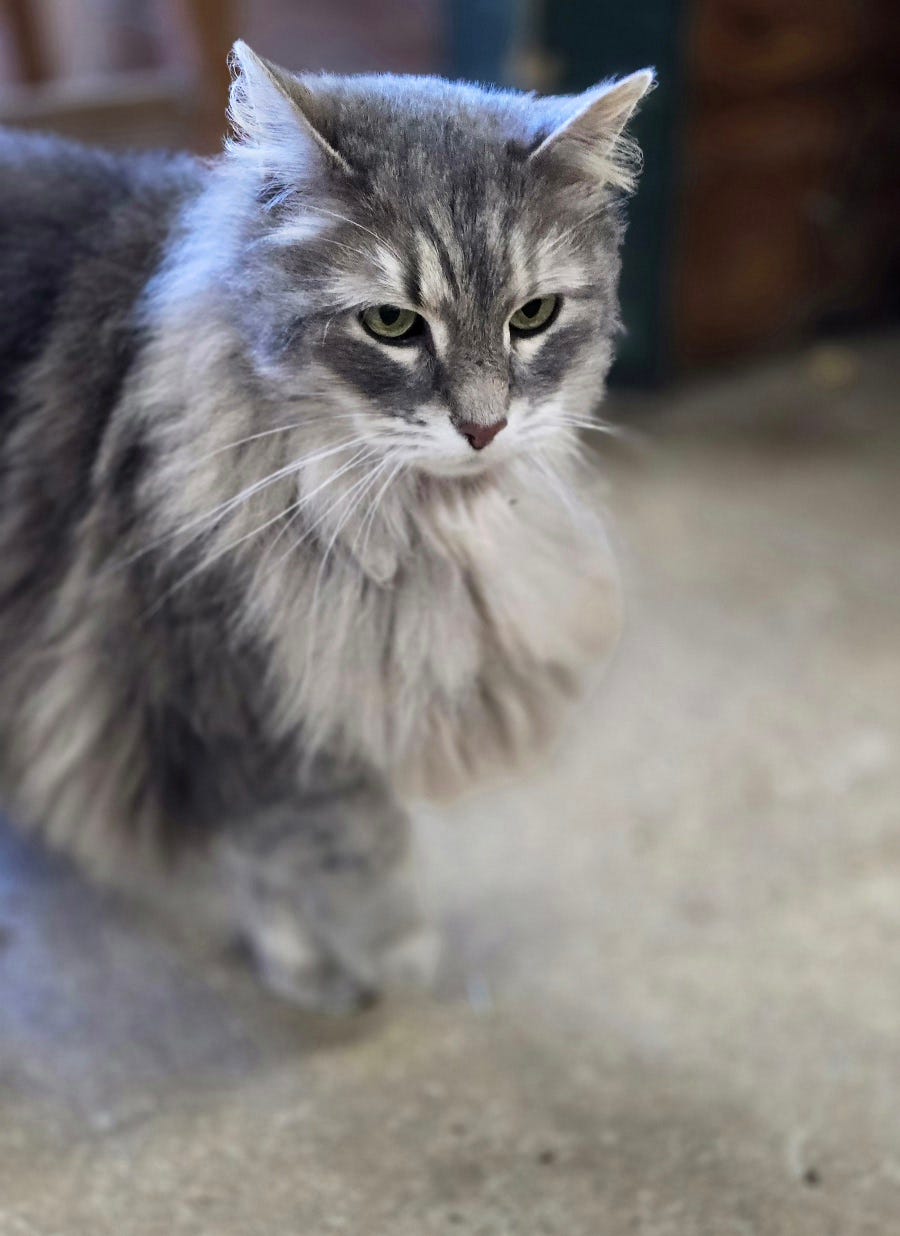

Amos !
Huck demonstrates his boundary issues.

That’s all I have room for – thanks for dropping by!
It Could Be Some Consolation …
It’s The End Of The World If We’re Lucky by Clay Jones
And I feel fine. Read on Substack
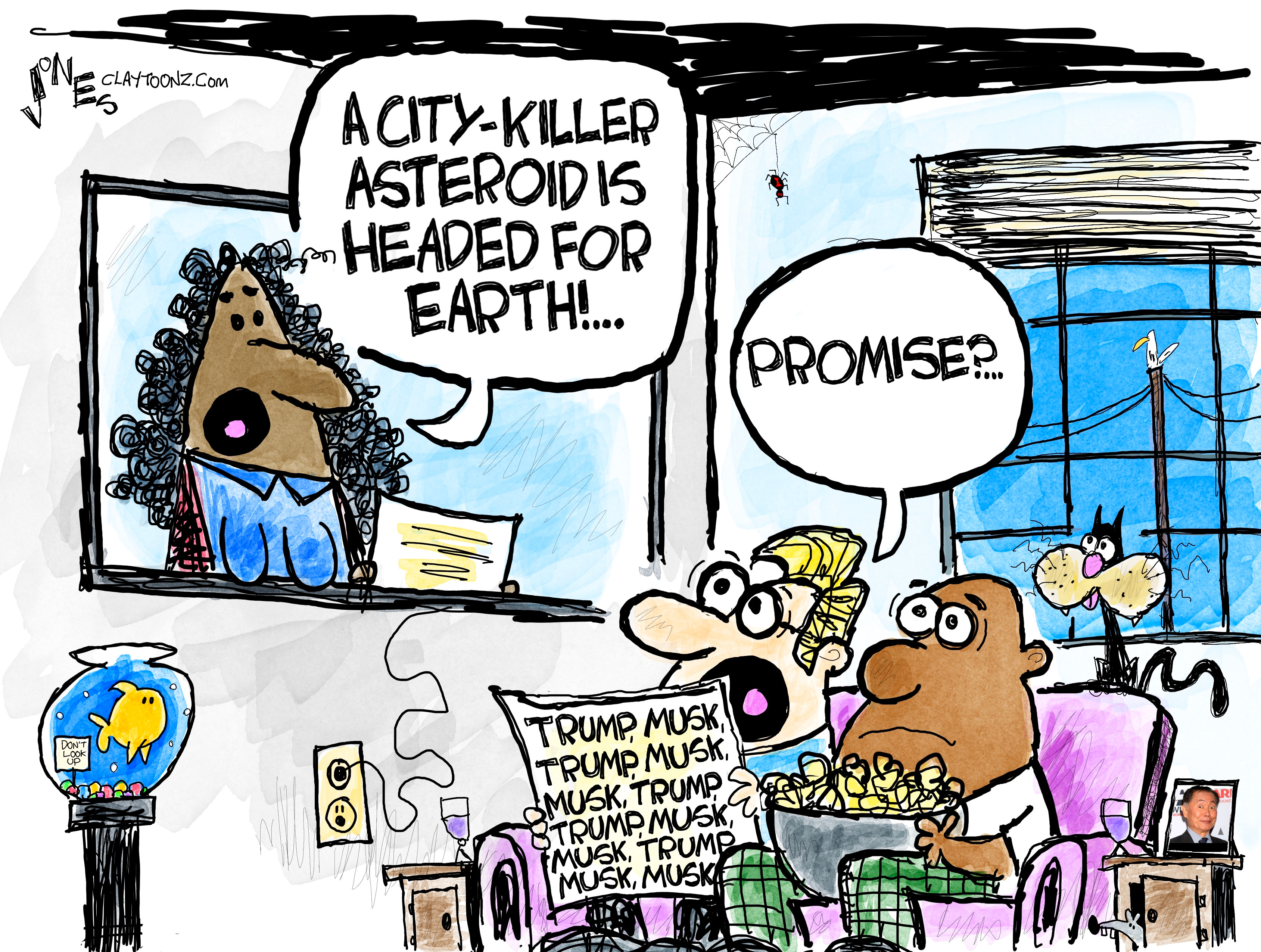
The bad news is that the “city-killing” asteroid currently headed our way probably won’t hit us. Even if it does, it won’t be here until 2032 which gives Donald Trump, who probably thinks you destroy an asteroid with Preparation-H, and Elon plenty of time to destroy this world first. It looks like they’re going to reach Fort Knox (because they want to make sure it’s still there) before the asteroid does.
Asteroid Schmasteroid…we have MAGA.
The asteroid, 2024 YR4, is 180 feet wide which is about as close as you can get to Donald Trump before you get a whiff of his diaper. 180 feet is also plenty of room for Bruce Willis and Ben Affleck to land a space shuttle and drill a giant hole into which a nuclear device would be placed. The film Armageddon was based on sound science, right? I refuse to believe Billy Bob Thornton would allow himself to be cast in a junk science movie. Steve Buscemi, maybe, but not Billy Bob. And I’d trust Bad Santa over Bad Batman any day.
George Clooney was the George W. Bush of Batmans. We all hated Clooney but wanted him back after seeing Affleck do it…just like we wanted W back after Trump came along.
And what’s the deal with the name? Why do asteroids get shit like “YRV” and hurricanes get names like Laura (see what I did there?)? Even pets get more respect than asteroids. I knew a cat named Don Cheadle. Since asteroids can destroy our planet, which I’m assuming most of us will hate, let’s name them after actors we hate.
Asteroid Seth Rogan was given 1-32 odds of blasting into us and with the right amount of luck, it’d hit MAGA-Lardo. Then, Seth Rogen’s odds dropped to 1-67. It’s OK to use Seth Rogen here. If he gets lost in space, we’ll be just fine because we still have Jonah Hill who’s basically the same person but with an Oscar. We don’t need two Seth Rogens. Also, Michael Cera and Jesse Eisenberg, same person.
Now, the odds of city-killing Seth Rogen slamming into the planet are 1-360, which are a lot slimmer odds than Seth Rogen’s The Interview destroying the planet because it really pissed off nuke-loving Kim Jong Un. And if there is a city-killing asteroid headed this way, why couldn’t it have arrived before I saw Seth Rogen’s Green Hornet? Oh, the humanity!
Say what you will about the Cats! movie but it didn’t nearly destroy the planet.
Asteroid Seth Rogen has a 0.28% chance of destroying us all. The next city-killer headed our way is Asteroid 1950 DA or as I like to call it, Asteroid Kevin Hart (and if you think he’s annoying now, go watch his Peacock talk show), which has a 0.039% chance of impacting Earth in 2880.
These asteroids can’t get here soon enough to wipe out Trump, Musk, Seth Rogen, Kevin Hart, Nickelback, or DJs. You know how DJs put new beats into songs, making them even worse than they started. Last night, a friend dragged me to a bar where a DJ was making a Nickelback song even more torturous, which I didn’t think was possible. I once broke up with a girl because she believed DJs were musicians. DJs are musicians about as much as Gary Varvel is a journalist.
Since these unreliable asteroids aren’t cooperating, it’s up to us to save our nation from MuskTrump.
I bet MAGA-Lardo has a DJ.
Creative note: I was planning to do this cartoon yesterday but decided Kash Patel should come first.
Drawn in 30 seconds: (snip-go see)
“Colorful Commander”
Donkey and Minions and Flowers, Oh, My!
And now that the rage of thy rapture is satiate with revel and ravin and spoil of the snow, And the branches it brightened are broken, and shattered the tree-tops that only thy wrath could lay low, Algernon Charles Swinburne – “March: An Ode”
by Worriedman Read on Substack
I’ll be honest, I’m not really sure yet what that poem is trying to say – I just know that ”-satiate with revel and ravin and spoil of the snow,” is just a badass phrase. The kind of phrase I hope I’m smart enough to understand someday!
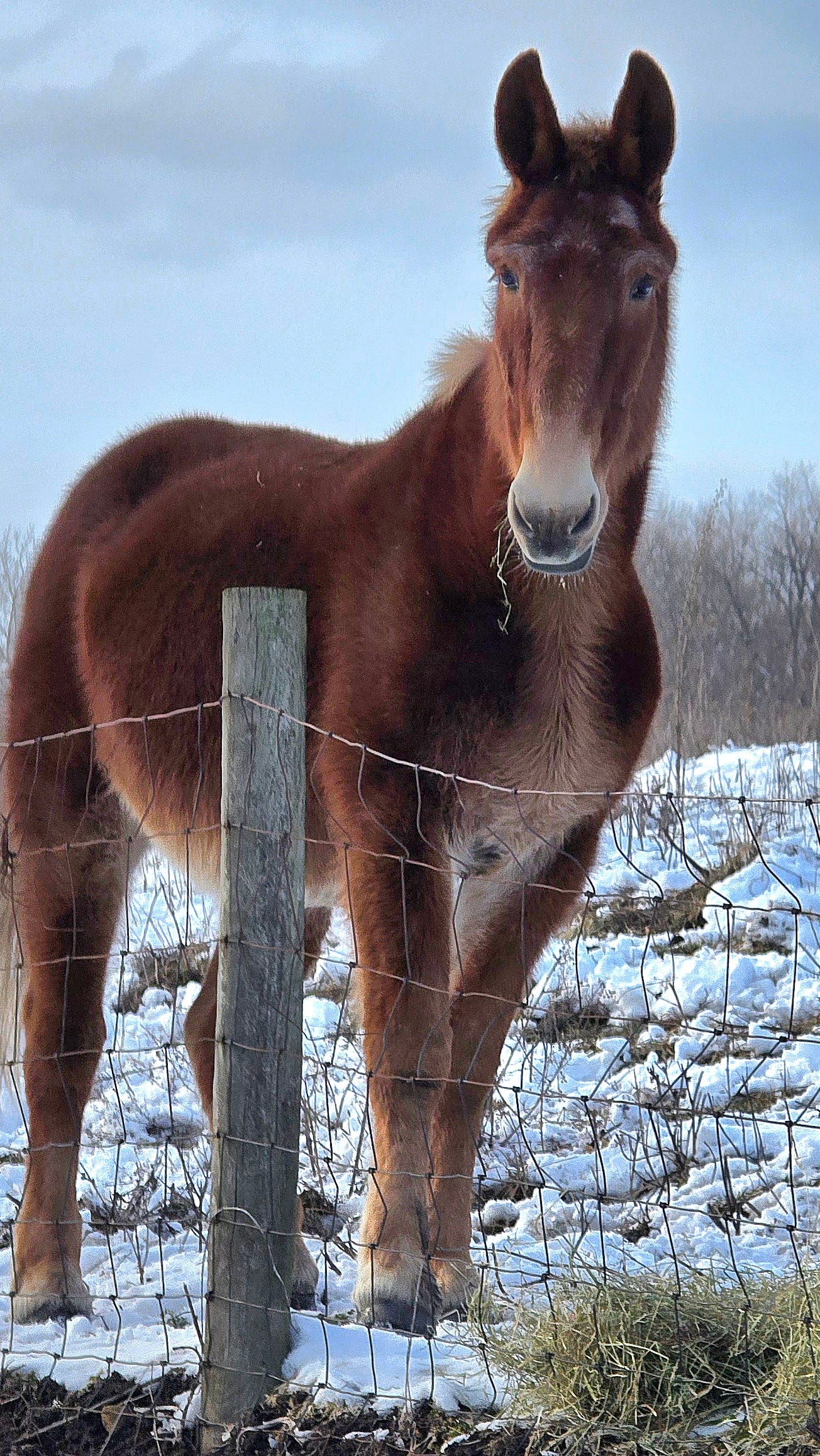
Today is going to be really good pictures of flowers and really good pictures of a mule and some donkeys. What can I say? It’s what I’m good at and I’m lucky to have found my calling.
It was cold when I took these pictures yesterday. 14° with a dozen mile an hour wind. The wind chill was somewhere around “cold as hell” verging on “What the F*#k?!” I couldn’t wear gloves and still work the camera so I took pictures until my fingers hurt.
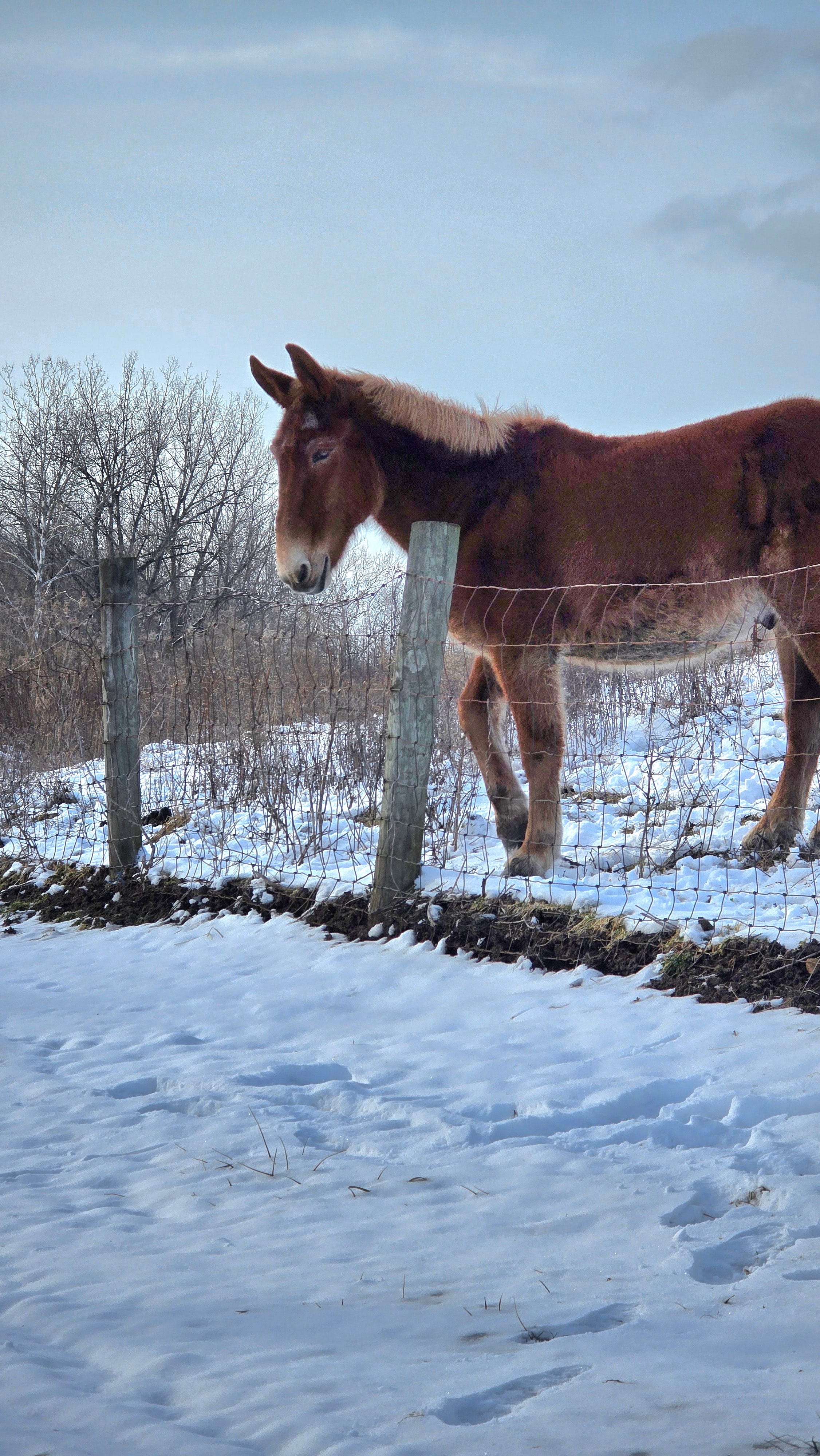
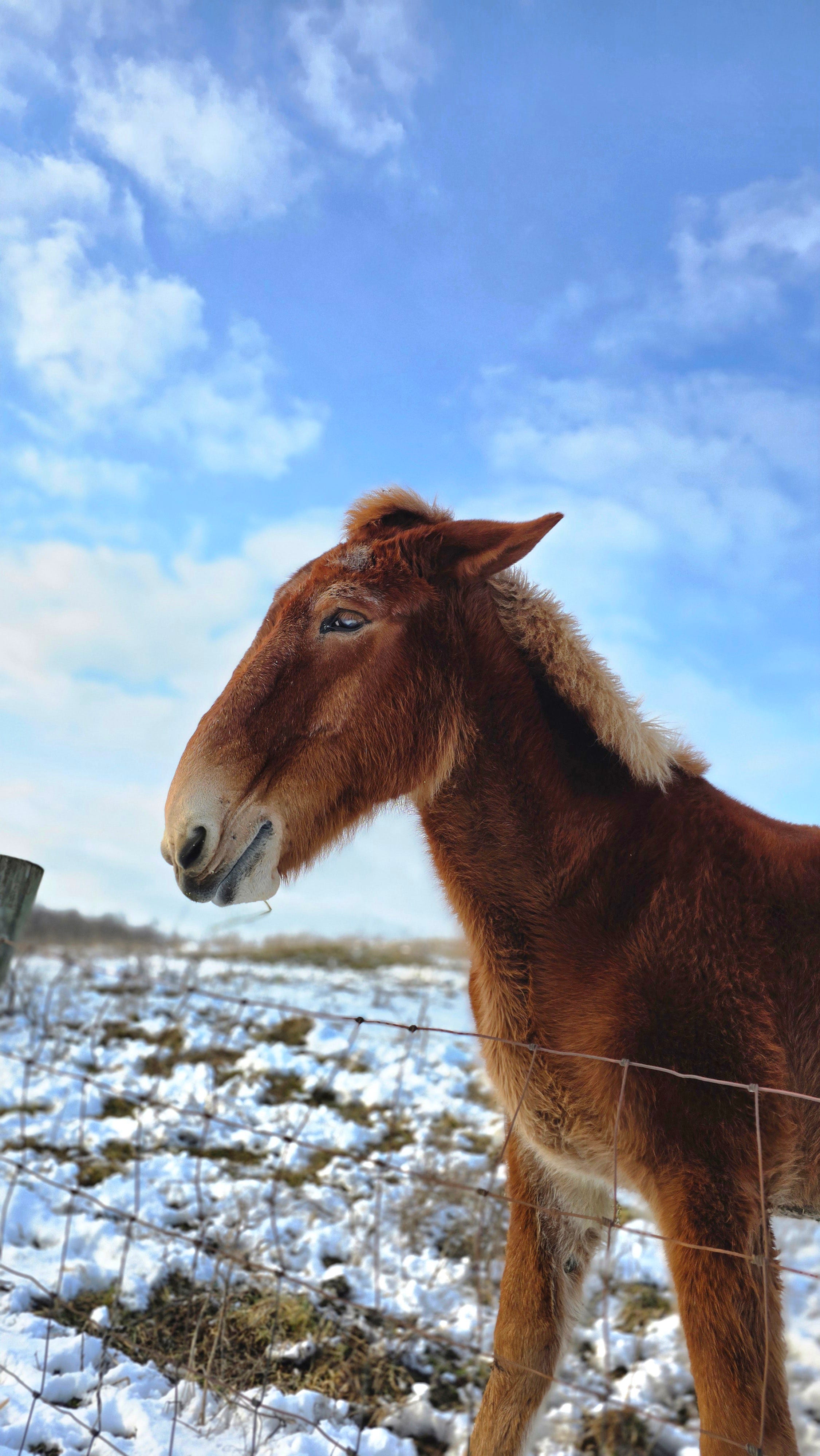
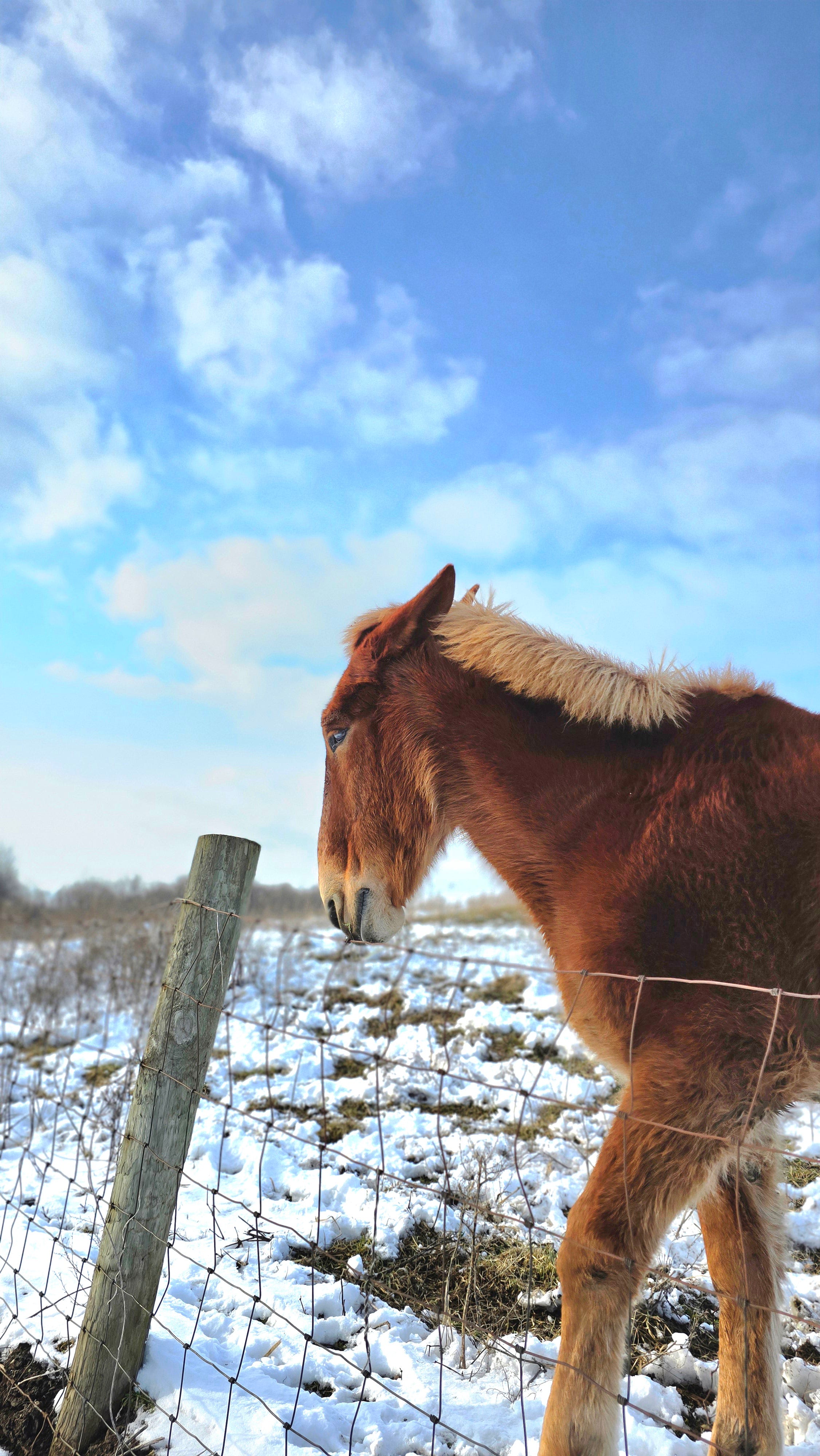
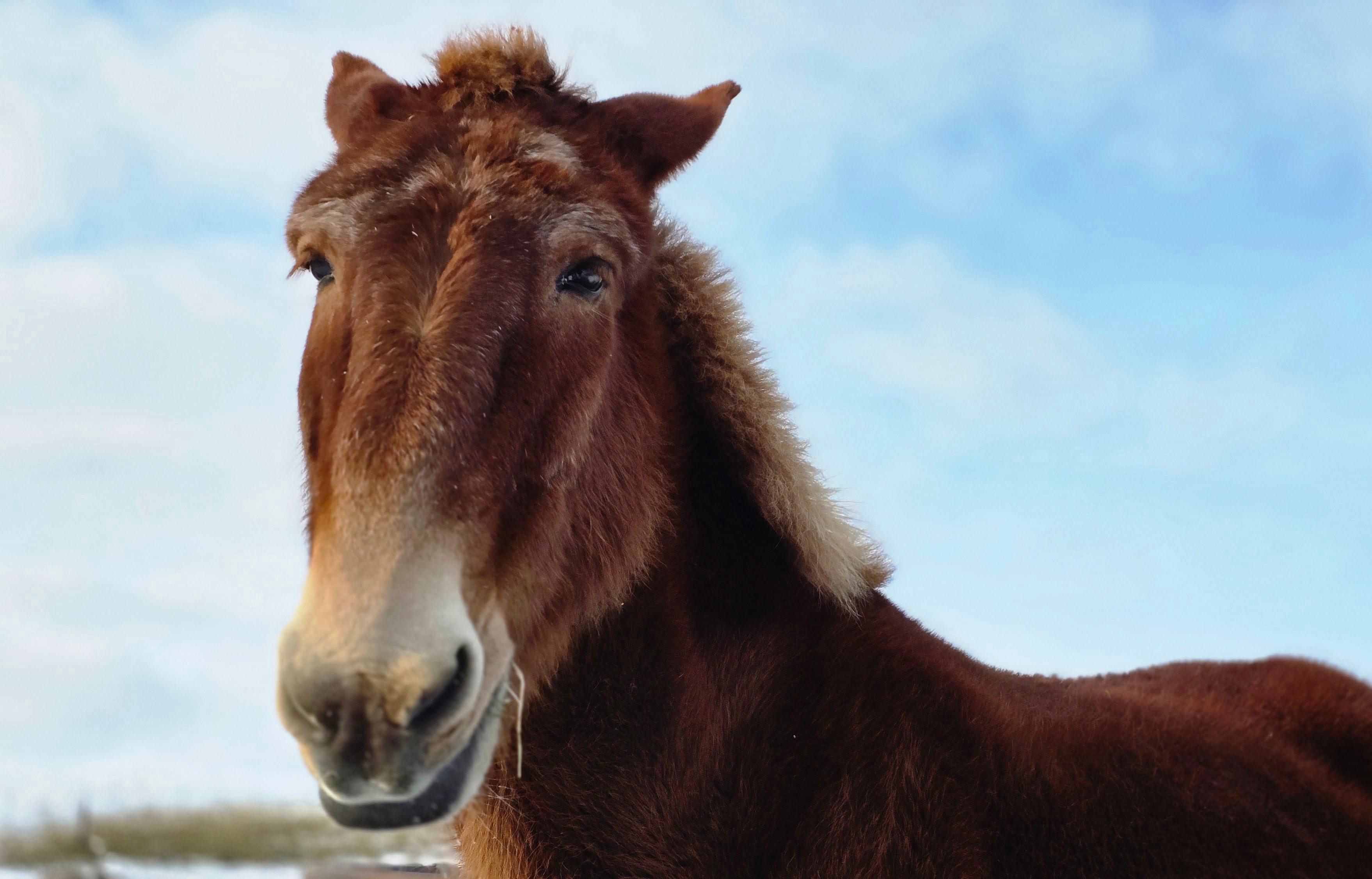
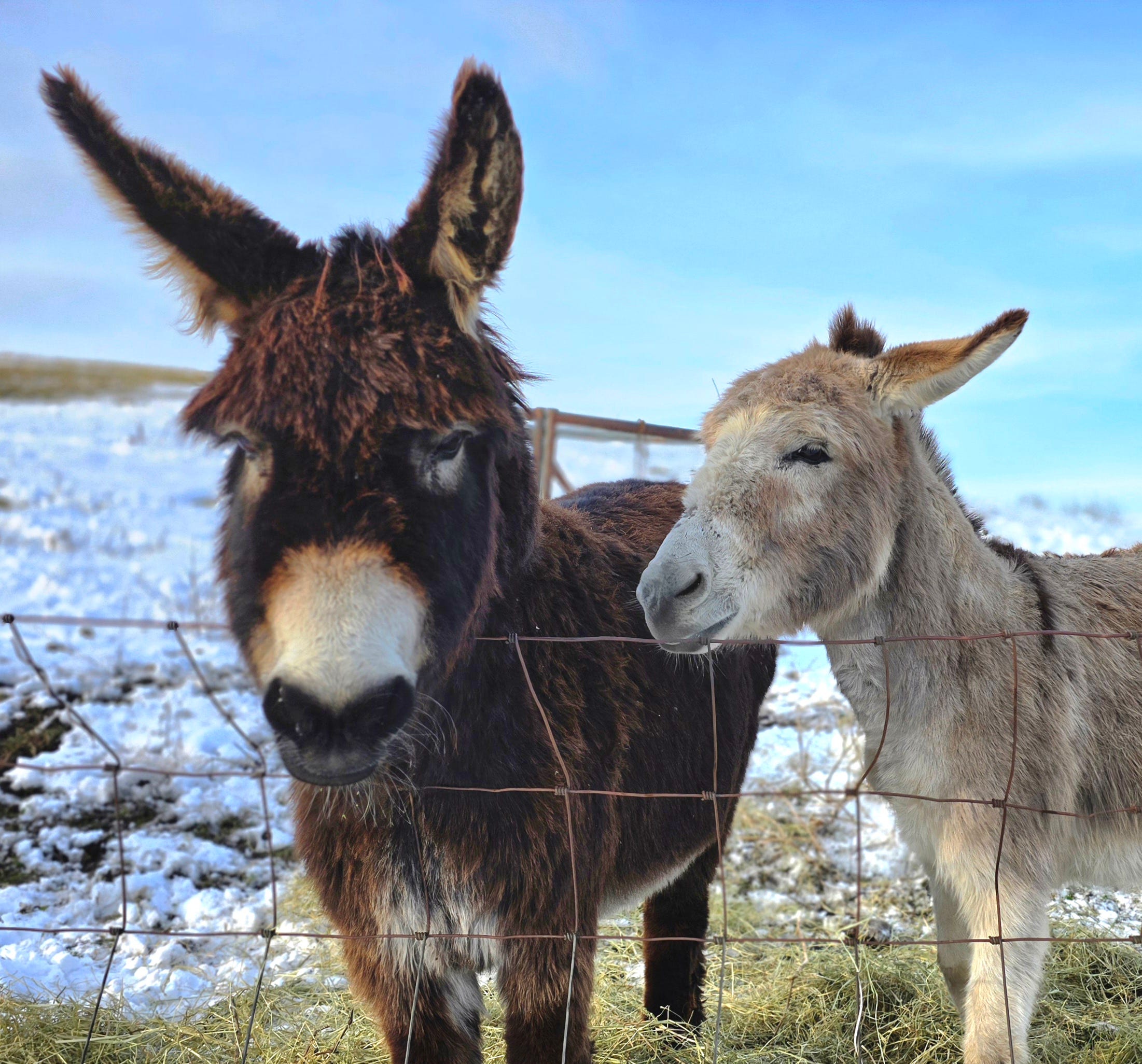
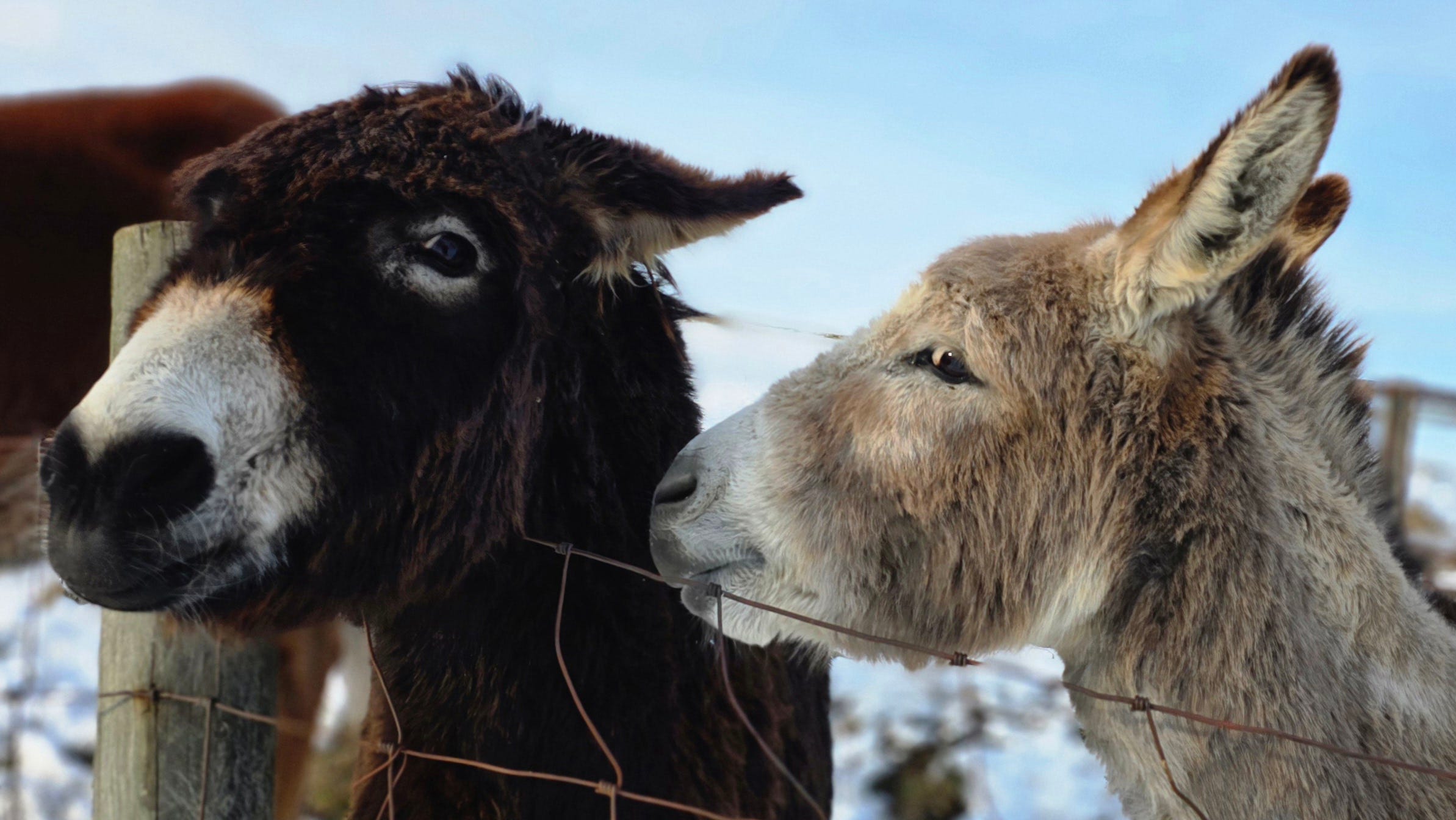
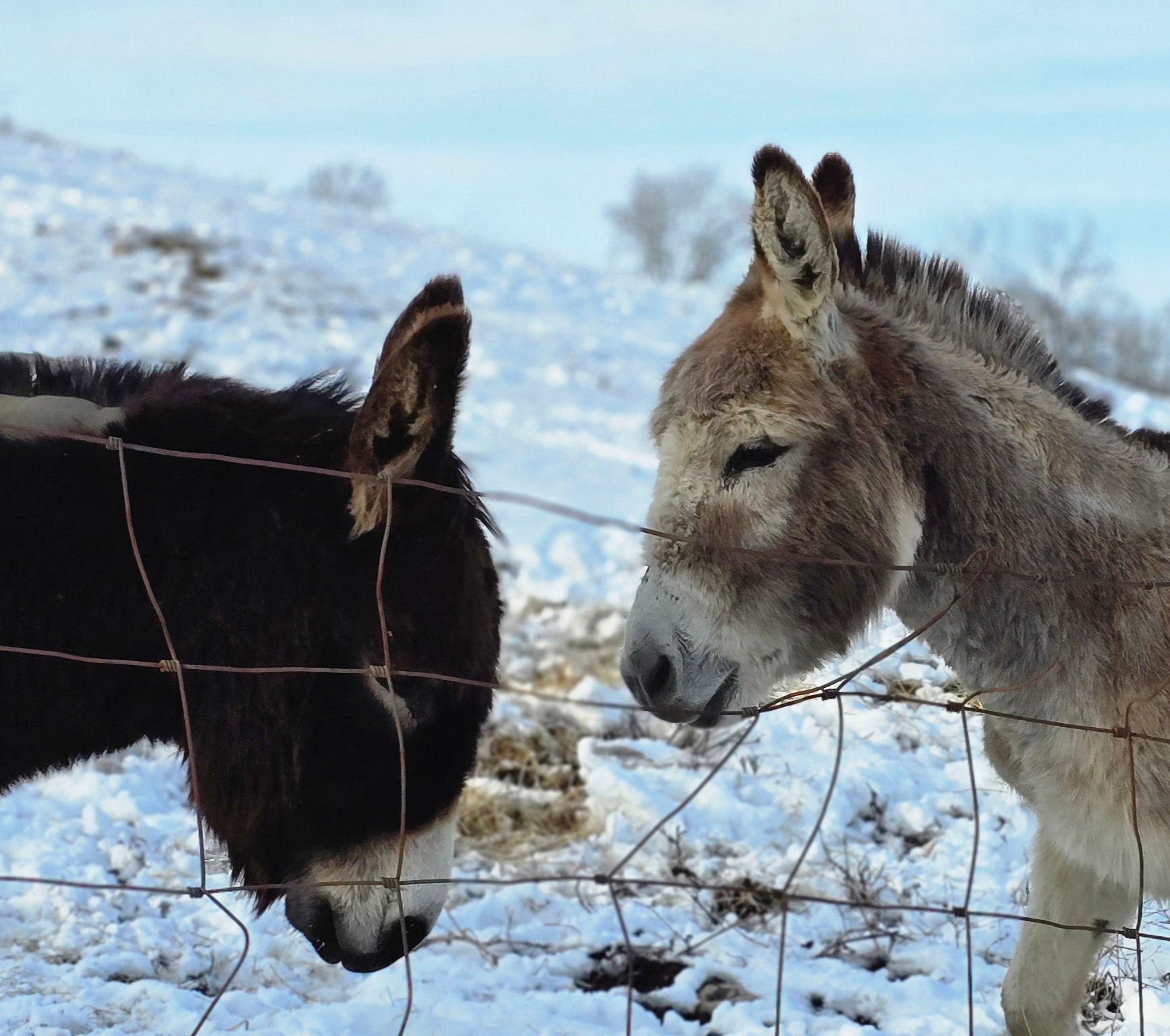
I’m going to have to work until I die so I have an inexhaustible source of amaryllis.


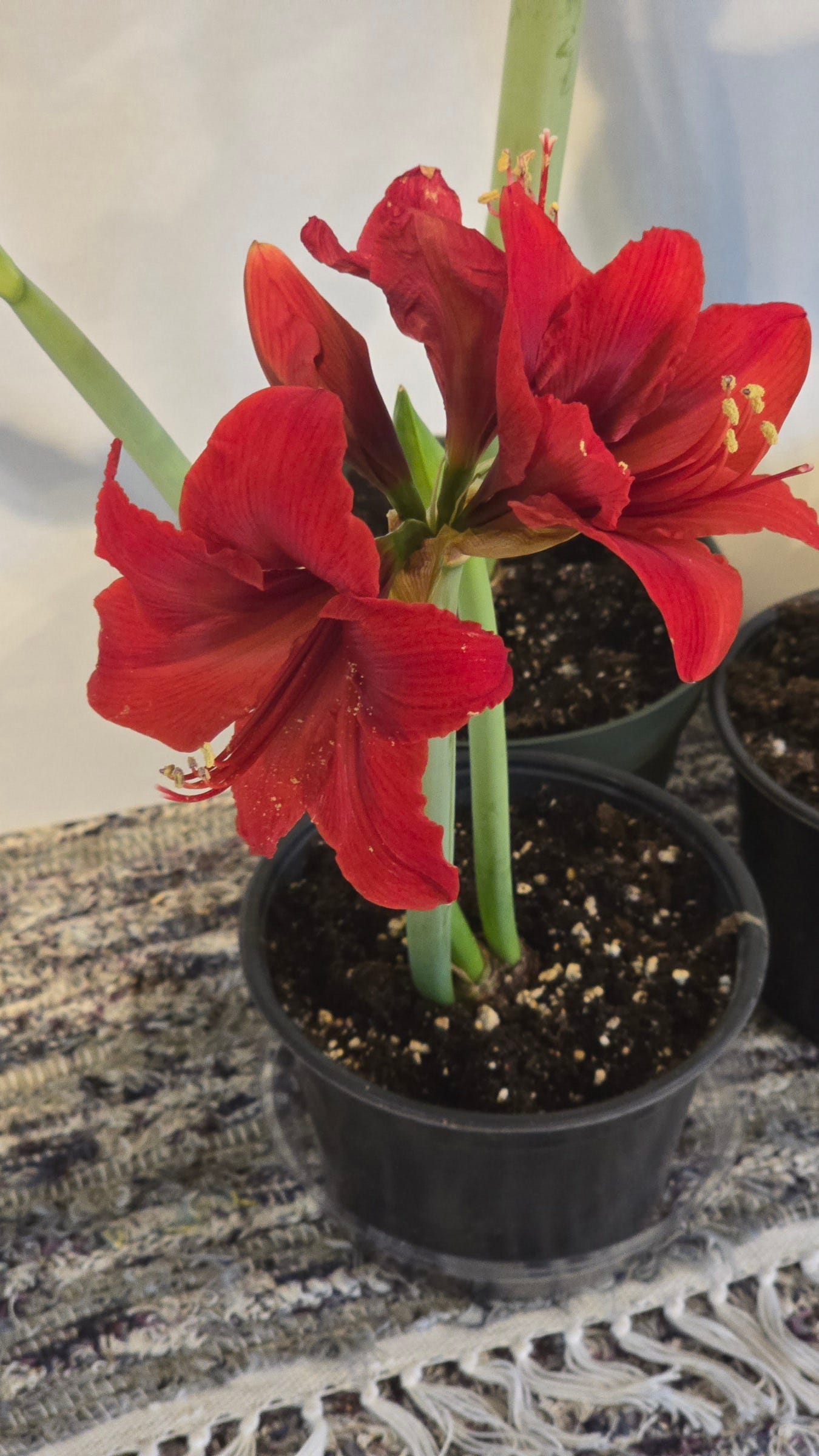
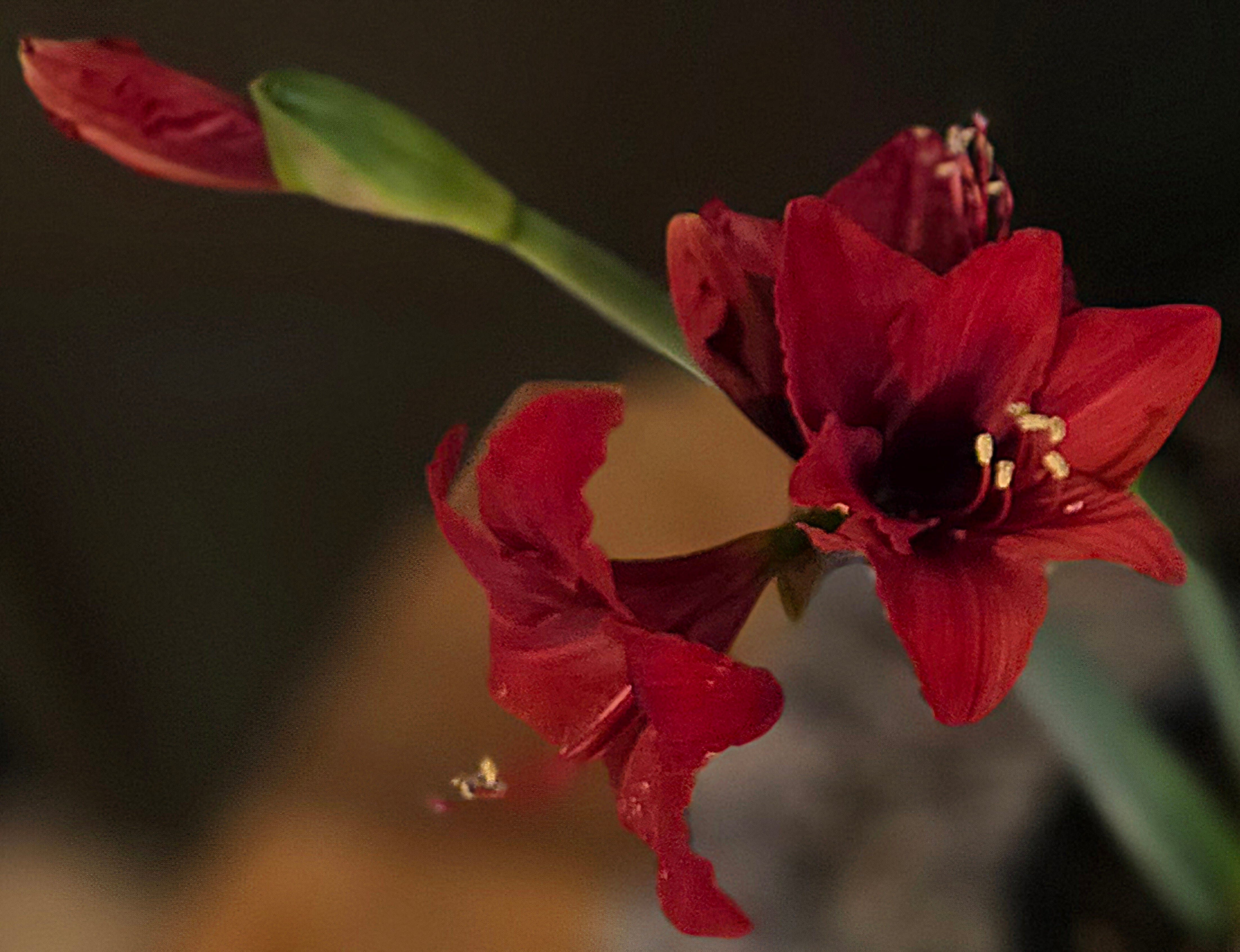

That’s all I got room for – Thanks for dropping by! (snip)
There Are Good Things Happening-
I love reading The Bee’s blog. It’s so refreshing! These posts are especially comforting.

