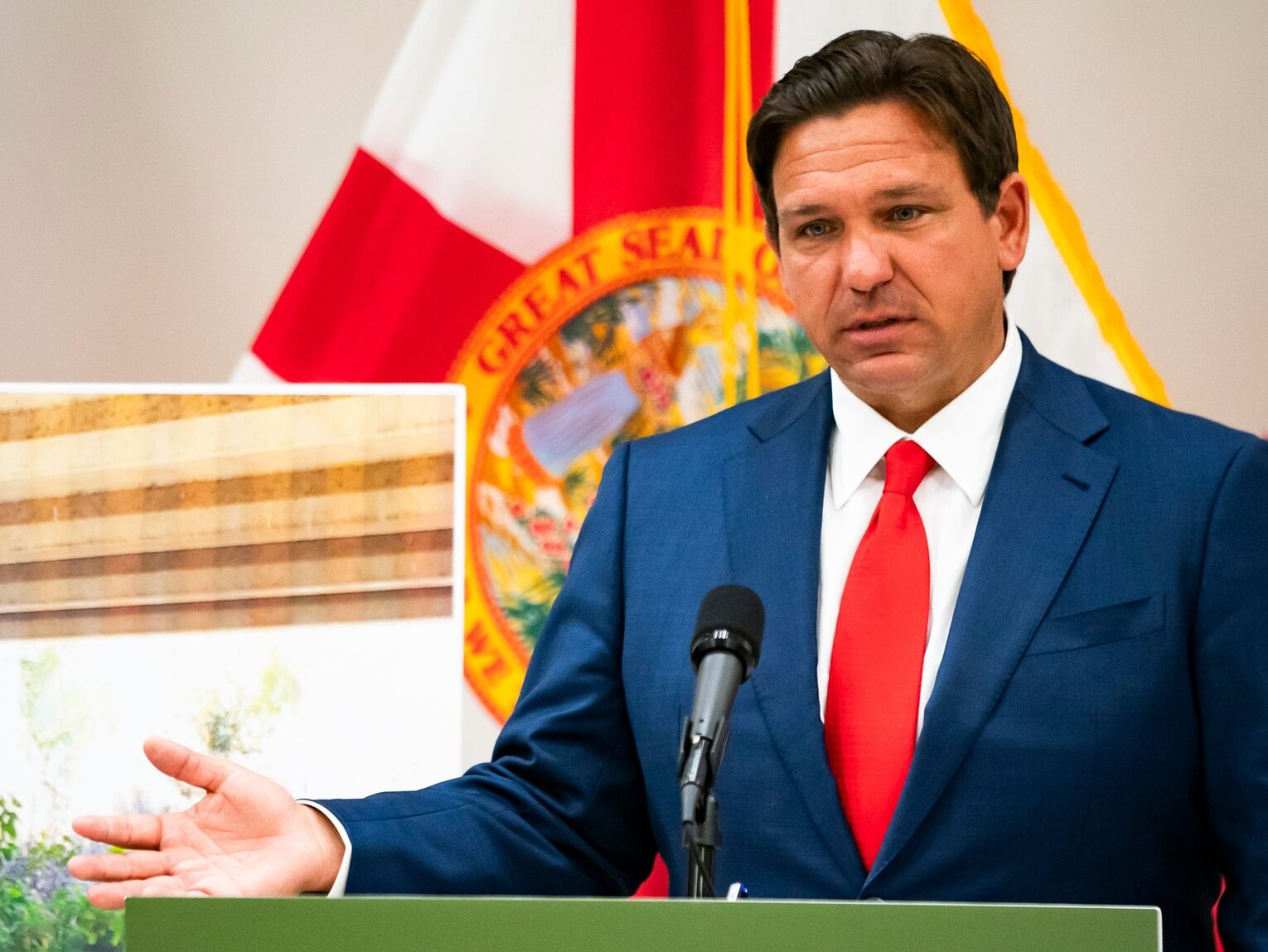
Gov. Ron DeSantis speaks during a press conference at the FGCU Kapnick Education and Research Center in Naples on Tuesday, April 23, 2024.Photo: Jonah Hinebaugh/Naples Daily News/USA Today Network-Florida / USA TODAY NETWORK
While Republican lawmakers have repeatedly failed to pass legislation to prevent transgender people from updating their birth certificates to reflect their gender identity, the state has nonetheless been denying requests from both trans adults and minors to do so for the past year.
According to The 19th, since last year, trans minors and adults in the state have received letters from the Florida Department of Health’s Bureau of Vital Statistics denying their requests for amended birth certificates even when all their other government-issued ID documents reflect their gender identity and despite the fact that they have provided documentation of their gender transition that has previously been accepted.
In one March 2024 letter reviewed by the outlet, the agency said that documentary evidence provided by the applicant “does not establish that the sex identifier on the birth record contains a misstatement, error, or omission.”
Another from August 2023 said that for trans minors, “documentary evidence established prior to the child’s seventh birthday is required,” while a separate letter says that trans adults must provide documentation “established prior to the registrant’s 18th birthday.” As The 19th notes, for many trans people who were either unaware of or still figuring out their gender identity or were unable to access gender-affirming care as children, either requirement would be nearly impossible to provide.
Simone Chriss, an attorney with Florida-based Southern Legal Counsel (SLC), told The 19th that of the around 80 clients she has worked with since August 2023 who have appealed the agency’s denials, none have been able to obtain an amended birth certificate reflecting their gender identity. Most of her clients’ appeals, she said, “are just being ignored.”
“I’ve filed many,” said Chriss, who is also the director of SLC’s transgender rights initiative. “There’s at least five that I have pending at this moment that the department hasn’t responded to.”
Since 2018, trans Floridians have been able to provide documentation from a doctor showing that they have received gender-affirming care in order to get their birth certificates updated to reflect their gender identity. Before that, only trans people who could provide proof of gender-affirming surgery could qualify for an amended document.
In 2023, Florida Republicans tried to pass a bill that would have banned the state from changing gender markers on birth certificates. Another bill, introduced earlier this year, would have required state IDs and licenses to reflect a person’s sex assigned at birth. Both pieces of legislation failed to pass.
But that has not stopped state agencies from denying trans people updated documents. In a January letter, Florida Department of Highway Safety and Motor Vehicles (FHSMV) deputy executive director Robert Kynoch rescinded the agency’s previous policy allowing individuals to correct the gender markers on their driver’s licenses after transitioning.
“The term ‘gender’… does not refer to a person’s internal sense of his or her gender role of identification, but has historically and commonly been understood as a synonym for ‘sex,’ which is determined by innate and immutable biological and genetic characteristics,” Kynoch’s letter read in part. Allowing people to alter their licenses based on gender identity, he wrote, “undermines the purpose of an identification record and can frustrate the state’s ability to enforce its laws.”
“Misrepresenting one’s gender, understood as sex, on a driver license constitutes fraud,” the letter continued, “and subjects an offender to criminal and civil penalties, including cancellation, suspension, or revocation of his or her driver license.”
As The 19th notes, the department’s rule was not prompted by any legislation. Similarly, the Florida health department’s Bureau of Vital Statistics’ denials of trans people’s requests for amended birth certificates do not reflect any new state law, and have resulted in trans Floridians spending hundreds of dollars to obtain previously accepted documentation only to have their requests denied.
As Human Rights Campaign President Kelley Robinson noted in a statement following Kynoch’s January letter, policies denying trans people documents that reflect their gender identity result in their being outed “anywhere they use a driver’s license or identification document,” potentially subjecting them to harassment, discrimination, or worse.
Southern Legal Counsel’s Chriss told The 19th that the organization plans to challenge the state’s birth certificate policy in federal court.
Erin In The Morning is a reader-supported publication. To receive new posts and support my work, consider becoming a subscriber.
Subscribe
On the first day of the Republican National Convention, prominent Republicans used their national platform to target transgender people. This signals that the party is not abandoning its efforts to curtail transgender and LGBTQ+ rights if they gain power in the next election. This comes after the vice presidential running mate pick of JD Vance, the lead author of a Senate bill that would institute a national ban on transgender youth care and bar all medical schools from teaching about transgender care, including adult trans care.
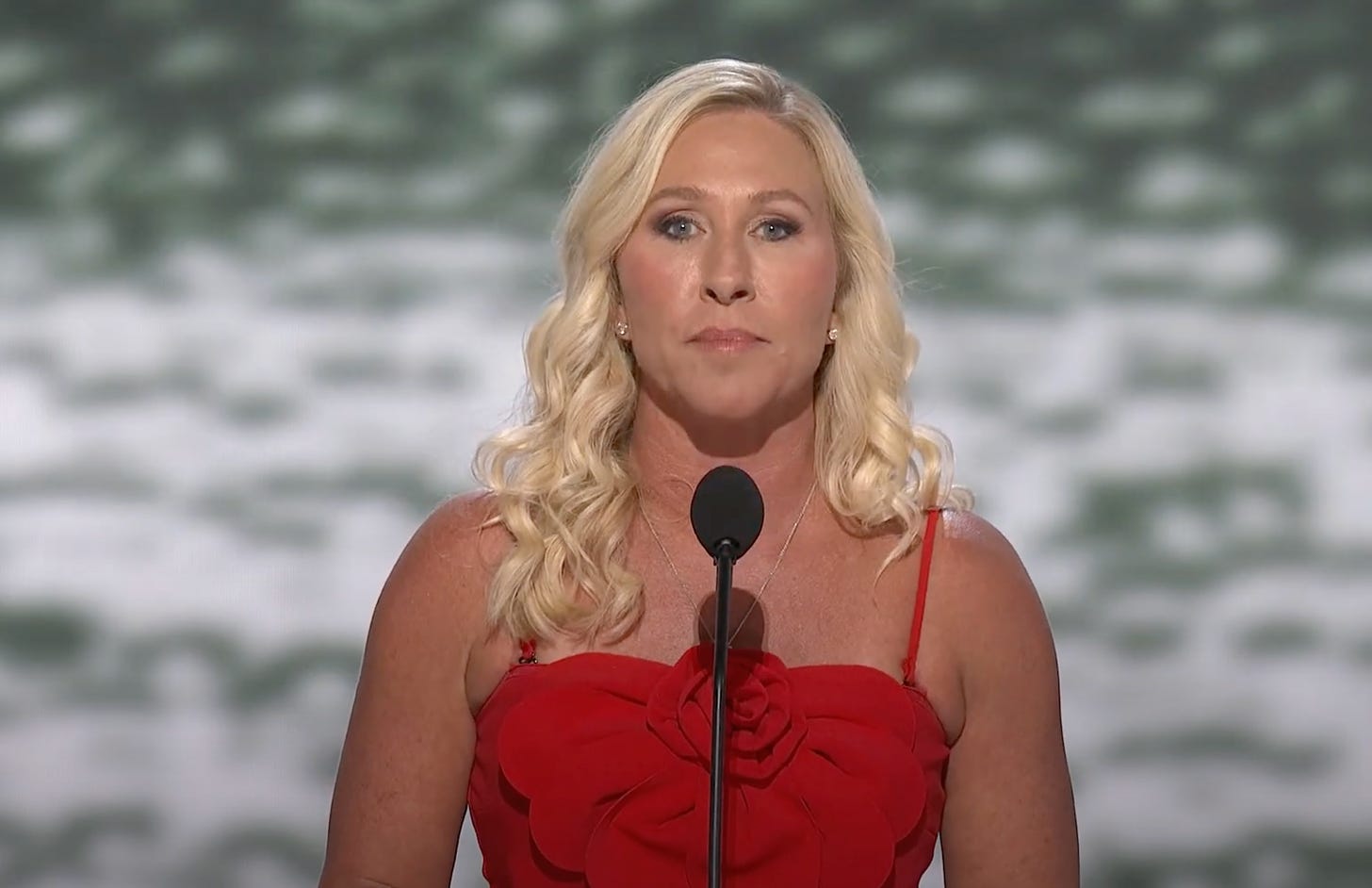
The most prominent figure to use her platform to attack transgender people was Representative Marjorie Taylor Greene. Greene criticized Transgender Day of Visibility for falling on the same day as Easter Sunday in 2024. Notably, Easter Sunday is a moving holiday, while Transgender Day of Visibility has always been held on March 31. There have been more Transgender Days of Visibility on that date than Easter Sundays since America was founded.
“They promised normalcy and gave us Transgender Visibility Day on Easter Sunday,” Greene said to raucous boos. “And let me state this clearly: There are only two genders, and we are made in God’s image,” she continued.
Video at link above
Many on X (formerly Twitter) questioned the statement and its implications for the nature of God’s gender. Vinny Thomas, a user on the platform, pointed out, “‘There are only two genders and we are made in God’s image’ is so fascinating because what exactly are you saying about God’s gender?”
Representative John James from Michigan also joined in, using some of his time to target transgender women in sports and changing rooms. “Our daughters were sold on hope, and now they are being forced onto the playing fields and into the changing rooms of biological males. America was sold on hope, and now the world is on fire,” Rep. James continued.
Senator Ron Johnson joined in with his speech, calling LGBTQ+ inclusive education, sports participation, and inclusion “sexual indoctrination,” and stating that it was an attack on American values. “This fringe agenda includes biological males competing against girls and the sexualization and indoctrination of our children,” he said to boos. He continued, “Today’s Democrat agenda, their policies, are a clear and present danger to our institutions, our values, and our people.”
Video at link above
One of the “everyday Americans” chosen to speak at the Republican National Convention, Linda Fornos, was the last to target transgender people. In a speech that fell rather flat with little reaction, she questioned children learning pronouns in schools. Many correctly pointed out that pronouns have always been part of an English education.
Video at link above
The willingness to lean into anti-LGBTQ+ policies on the first day of the Republican National Convention may seem puzzling. Attacks on LGBTQ+ people have faltered in 2024 compared with 2023, with far fewer laws passing. Several states that had targeted trans people in previous years, such as Florida, Georgia, West Virginia, and Kansas, failed to pass anti-LGBTQ+ policies this year, despite over 80 bills proposed in those states targeting the community. In many elections where anti-trans policies were a major issue, the Republican Party suffered setbacks: 70% of Moms for Liberty and Project 1776 candidates lost their races in 2023. Other losses Republicans have suffered on this issue occurred in the Virginia legislature elections, the Arizona Governor’s race, the Michigan legislature elections, the Wisconsin Supreme Court election, the Walker-Warnock Senate race, and in dozens more places. Furthermore, recent polling from Gallup, Navigator, and the LA Times indicates fading public support for such laws, with huge majorities of respondents seeing them as a distraction and opposing bans on trans youth care.
Still, Trump’s selection of Senator JD Vance as his running mate indicates that he and the Republican Party have not backed off from this issue. Vance notably was the primary sponsor of a Senate bill to bar all trans care for trans youth nationwide. His bill would also bar secondary educational institutions, including medical schools, from teaching gender-affirming care for any age. Trump himself has called for investigations of hormone therapy manufacturers, bans on LGBTQ+ inclusive policies in schools, and targeting transgender people “at any age.”
As the Republican National Convention unfolds, the stage is set for a parade of speakers with deep-rooted anti-trans and anti-LGBTQ+ records. For LGBTQ+ people, these are not just rhetorical threats but a potential harbinger of laws that could be passed over the next four years. LGBTQ+ people will therefore likely be especially tuned in over the remaining nights.
Erin In The Morning is a reader-supported publication. To receive new posts and support my work, consider becoming a subscriber.
This week is the first I’ve heard of this, but I am old, so of course I would have missed it before. However, it’s out here now, and looks kind of exciting, as to GOTV.
The internet has entered its Kamala Harris ‘coconut tree’ era
To many young people on X and TikTok, the vice president is unironically funny and all too easy to meme.
Democrats may soon nominate a presidential candidate capable of rivaling GOP nominee Donald Trump in memeability.
After President Joe Biden announced his decision to forfeit re–election, a tidal wave of memes about Vice President Kamala Harris — whom Biden backed as the Democratic presidential candidate — flooded the internet.
On platforms like TikTok and X, the mood felt celebratory as many left-leaning accounts posted upbeat fan edits of Harris and made memes out of her more memorable lines from speeches. On Sunday, British pop artist Charli XCX appeared to back Harris, calling her a “brat,” a reference to her new album, which has become the Gen Z theme of the summer.
Some political strategists say the memes are helping Harris generate a level of organic social media clout among Gen Z that Biden has struggled to cultivate, amplified by the spotlight of a possible presidential nomination.
“She doesn’t take herself too seriously. She knows how to have fun, and she’s somebody that is willing to be a little bit less stuffy than a traditional presidential candidate would be, and I think that’s a good thing in this election cycle,” said Marianna Pecora, the communications director for the Gen Z-run political advocacy group Voters of Tomorrow.
But Pecora said the viral moments aren’t just for laughs — they also indicate broader support for Harris, particularly among young people who have at times felt disenchanted by presidential candidates.
“I don’t think that anyone is going to necessarily meme their way to the presidency,” said Pecora, 20, a student at George Washington University. “But I do think that being able to make this election something bright and fun and exciting and something that’s infiltrating people’s feeds and therefore their everyday lives is only a good thing.”
Part of Harris’ frequent virality comes from her tendency to show off her seemingly authentic personality online. It’s why many of her vocal online supporters — who call themselves the KHive — have staunchly defended her since her first presidential run in 2020.
“My mother used to, she would give us a hard time sometimes and she would say to us, ‘I don’t know what’s wrong with you young people. You think you just fell out of a coconut tree?’” Harris said in the speech. “‘You exist in the context of all in which you live and what came before you.’”
Humanitarian groups are considering a mass vaccination campaign for Palestinians in the Gaza Strip after traces of variant poliovirus type 2 were found in water sources in the war-torn territory. The disease was detected in six locations in Gaza, the World Health Organization said.
Geneva-based WHO said it was working with partners – including UNICEF and United Nations Relief and Works Agency for Palestine Refugees in the Near East (UNRWA) – to conduct a risk assessment. Polio vaccination rates in Gaza before the war were “optimal,” according to the organization.
Israel on Sunday confirmed the resurgence of the virus, which can be spread by contaminated water and direct person-to-person contact, and said it would offer booster shots to its soldiers operating in and around the Gaza Strip.
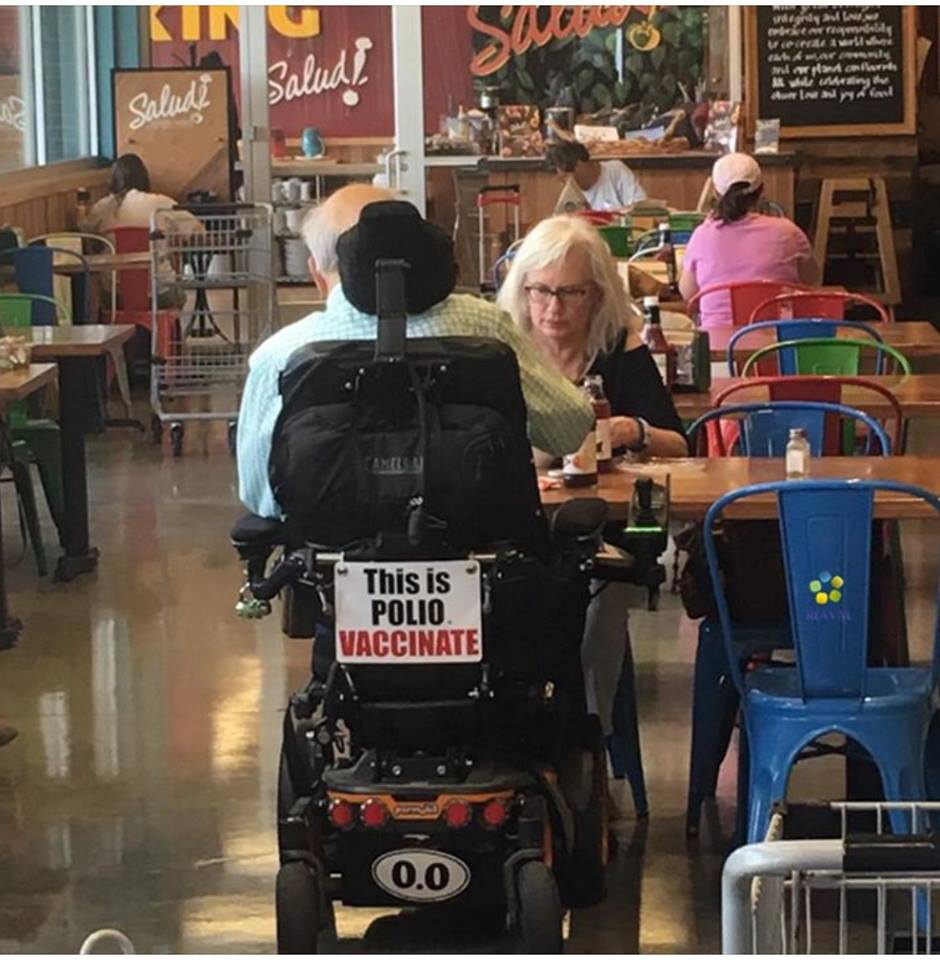
Poliovirus has been detected in samples of sewage water in Gaza, placing “thousands” of Palestinians at risk of contracting the highly infectious disease that can cause paralysis https://t.co/foPyQihGcPpic.twitter.com/oWv6n9GPqc
This is what terrifies the fundamentalist and republicans. That is why the attacks on LGBTQ+ kids in schools, it is an attempt to stop this acceptance of people different, of people not straight or cis. This is what it is about. They are terrified their outdated unreasonable hates and moral superiority of straight people is going away. So like the people who hated equality for black people, they created Jim Crow laws for gay or trans people. Hopefully we can beat back this attack on liberty and rights. Hugs. Scottie
Madeline Monroe/iStock
Story at a glance
Roughly 1.6 percent of American adults are now transgender or nonbinary, according to a 2022 survey.
That number is higher still among young adults, with 5 percent of people under 30 now identifying their gender as different from the one assigned them at birth.
The growing visibility of transgender and nonbinary people comes amid rising societal acceptance and new efforts to count the populations.
One young adult in 20 is now nonbinary or transgender, communities that society barely recognized and seldom counted until a few years ago.
Those populations are not new. Only recently, though, have survey-takers thought to ask people about gender identity, invoking terminology that did not exist for prior generations. The word “nonbinary” did not appear in The New York Times until 2014.
The rising visibility of nonbinary and transgender people reflects the nation’s growing acceptance of gender fluidity, especially among the young. One landmark study found 1.2 million nonbinary people in the 18-60 age group. Of that total, three-quarters were under 30, which suggests Generation Z has explored gender identity to an extent that older Americans have not.
“We have a world in which we are finally counting these groups,” said Kay Simon, 28, an assistant professor at the University of Minnesota who studies the experiences of queer youth and their families. “You can’t identify as something if you don’t know what the word is.”
Simon grew up in Florida and Texas. “From a very young age, I kind of realized I was gay,” they said. “At the time, I probably could have told you that I felt different about my gender, but I didn’t have a word for it.”
The word was nonbinary, denoting a person who identifies with neither the male nor female gender.
Simon remembers when the academic community introduced he-she-they pronouns on faculty pages and email salutations, during their grad-school years. Even now, teaching about sexuality and gender identity in the presumptively safe space of a college campus, Simon must decide “kind of regularly” whether to correct someone who refers to them with the wrong pronoun.
“I’ve had students misgender me,” they said. “And it becomes this joke of, A, you’re referring to your professor wrong, and, B, you didn’t read the syllabus. So, we have two problems.”
The population of young nonbinary and transgender people is clearly large and probably growing.
A 2022 report from the Williams Institute, a research center at the University of California, Los Angeles, estimates that 1.3 percent of adults ages 18-24 and 1.4 percent of 13- to 17-year-olds are transgender, with a gender identity different than the one assigned at birth. Teens and young adults are much more likely to be transgender than older adults.
Five years earlier, in a 2017 report, the Williams Institute had found roughly half as many young transgender people. But the earlier analysis used different methods and drew on comparatively sparse data, so it’s hard to know how much of the increase is real.
Is the transgender population exploding, or are researchers simply counting better? That is a common quandary, researchers say, in studies of the nonbinary and transgender communities.
“I would argue, actually, it is not an increase,” said Russ Toomey, a professor of family studies and human development at the University of Arizona. “We are seeing the numbers of people disclosing nonbinary and trans identity on a survey because we are asking people in more inclusive ways about their gender.”
Perhaps the most expansive tally to date of transgender and nonbinary people comes from the Pew Research Center. In a 2022 survey, Pew found that 1.6 percent of U.S. adults reported a gender different from the one assigned to them at birth.
Pew, too, found that the nonbinary and transgender populations skewed young. Three percent of adults ages 18-29 said they were nonbinary and 2 percent said they were transgender. In the 50-plus population, by contrast, only 0.3 percent of respondents identified themselves as transgender or nonbinary.
“I think that Gen-Z individuals are not alone in this, but they are kind of leading the charge,” said Rachel Farr, an associate professor of developmental psychology at the University of Kentucky.
Today’s young adults have grown up in a society that is gradually recognizing the rights of the LGBTQ community. In 2010, the Senate voted to repeal the Clinton-era “Don’t Ask, Don’t Tell” policy, allowing LGBTQ people to serve openly in the military. In 2015, the Supreme Court recognized a legal right for same-sex couples to marry.
“It’s not that there are more people. It’s that there are more people who are open and who are out,” said Shoshana Goldberg, director of public education and research at Human Rights Campaign, the LGBTQ rights group. “The reality is that when you talk to the average person on the street, they’re going to be more accepting and more affirming than they’ve ever been.”
Within Generation Z, polling suggests the LGBTQ population doubled in just four years, from 10.5 percent in 2017 to 20.8 percent in 2021.
Bisexuals, and especially bisexual women, populate the majority of the Gen-Z queer community, according to research from Gallup and others. Transgender and nonbinary people constitute a smaller but significant share.
Researchers say social media played a defining role in helping transgender and nonbinary young people define themselves.
Landon Richie, 20, grew up in Texas and came out as transgender at 11. “But since I was two,” he said, “really as early as I could think and express myself with some sort of agency, I understood that I did not fit into the role that I was assigned as a girl.”
Richie couldn’t fully process his identity until around age 10, when he “gained larger access to the internet and saw people who were transgender and who talked about their experiences,” he said. “And I was able to see myself reflected in their stories and their experiences.”
Now that the transgender and nonbinary communities have been identified and counted, researchers say, they need society’s support.
Both groups face a heightened risk of physical, emotional and sexual abuse in both childhood and adulthood, the UCLA study found. Depression and suicidal ideation are alarmingly common.
Transgender and nonbinary people often feel under attack, and with good reason. Research shows queer people face a heightened risk of being victims of violent crime. Transgender and nonbinary individuals also face higher rates of workplace harassment and discrimination.
The communities also face legislative attack. GLAAD, an LGBTQ media advocacy group, tracked more than 300 anti-LGBTQ bills across the nation in 2022, many of them targeting transgender persons by seeking to bar them from equal access to sports, restrooms or health care.
“Almost for as long as I’ve been out, there’s been a target placed by the Texas legislature on my back,” said Richie, who has been politically active in his state for several years.
Some faith-based and socially conservative groups have argued that influential Instagram posters and overzealous educators seed gender confusion in young people.
Advocates for the queer community counter that social media and progressive curricula help transgender and nonbinary people discover their identities, rather than create them.
Friends and loved ones can play a crucial role, researchers say, simply by honoring the name and pronoun requested by a transgender or nonbinary person.
“I think the first thing is just to accept them and listen to them,” said Allison Eliscu, M.D., medical director of the adolescent LGBTQ* Care Program at Stony Brook Medicine in Stony Brook, N.Y.
“If you make a mistake, because we all do, apologize, say it correctly and then try to do better.”
This is what terrifies the fundamentalist and republicans. That is why the attacks on LGBTQ+ kids in schools, it is an attempt to stop this acceptance of people different, of people not straight or cis. This is what it is about. They are terrified their outdated unreasonable hates and moral superiority of straight people is going away. So like the people who hated equality for black people, they created Jim Crow laws for gay or trans people. Hopefully we can beat back this attack on liberty and rights. Hugs. Scottie
Anew survey confirms that a record number—nearly half—of Gen Z youth are identifying with a sexual orientation other than “fully straight.” The survey joins a growing number of studies demonstrating the rising acceptance of LGBTQ+ identities and willingness to be out and proud at younger ages.
Commissioned by condom and sex toy brand Durex, the Global Sex Survey interviewed 29,000 adults across 36 countries. 44% of survey participants aged 18 to 24 identified as “not fully straight.”
Coinciding with the growing number of out LGBTQ+ people, support for same-sex relationships has increased as well. The number of survey respondents who say that it’s acceptable to have a same-sex partner has gone up 34% since 2006.
Breaking that number down by country, however, shows that there’s still room to grow. 69% of respondents in the Netherlands and Spain support same-sex relationships, whereas only 66% of UK respondents do.
The fact that Gen Z is not only more likely to accept queer people but to be queer themselves has been demonstrated time and again. Earlier this year, a survey from the Public Religion Research Institute found that Gen Z were more likely to be queer than Republican. Specifically, 28% of Gen Z identify along the LGBTQ+ spectrum whereas only 21% identify as Republican.
As for which letter of the alphabet mafia is the most prevalent, a survey by Gallup found that—in America, at least—most LGBTQ+ people identify as bisexual. Overall, the percentage of people identifying as LGBTQ+ has more than doubled since Gallup began the survey in 2012.
While the rise in out queer people is a promising sign of progress, that increased visibility has also given bigots a target. A recent poll from YouGov found that nearly half of LGBTQ+ ages 16 to 24 have experienced bullying over their sexual orientation and 25% over their gender identity.
In this sense, Gen Z might not represent the haven for equality and acceptance we’re all hoping for. But it speaks to the resilience of queer youth today that they keep coming out in record numbers in spite of the bullying and hatred.
Hi, welcome to Essence of Thought with me, Ethel Thurston, as your host.
Today’s video explores the Cold War’s impact on the West, namely how the Red Scare laid down the groundwork for the modern anti-trans panic in sports. From the media’s open misogyny to literally cartoonish fearmongering, there’s a lot to unpack.
@EssenceOfThought7 hours ago Today’s video explores the Cold War’s impact on the West, namely how the Red Scare laid down the groundwork for the modern anti-trans panic in sports. From the media’s open misogyny to literally cartoonish fearmongering, there’s a lot to unpack.
When I first posted this it was from my phone in bed. I am sorry I did not check but no link or story posted. Thankfully wonderful Ali jumped to the rescue and added the link. Thank you Ali. Hugs. Scottie

 Gov. Ron DeSantis speaks during a press conference at the FGCU Kapnick Education and Research Center in Naples on Tuesday, April 23, 2024.Photo: Jonah Hinebaugh/Naples Daily News/USA Today Network-Florida / USA TODAY NETWORK



 Scottie's Playtime