
Category: Climate / Environment
Peace & Justice History for 1/18
An example of actual “cancel culture” within, plus more.
| January 18, 1919 The peace conference to negotiate the end of the Great War (now know as World War I) opened in Paris, France. President Woodrow Wilson spent several months in Europe personally negotiating details of what became the Treaty of Versailles with heads of the allied powers or their foreign ministers. |
| January 18, 1962 The U.S. began spraying herbicides on foliage in Vietnam to eliminate jungle canopy cover for Viet Cong guerrillas (a policy known as “territory denial”).The U.S. ultimately dropped more than 20 million gallons of such defoliants, sparking charges the United States was violating international treaties against using chemical weapons. Many of the herbicides, particularly Agent Orange, manufactured by Dow Chemical, Monsanto and others, were later found to cause birth defects and rare forms of cancer in humans.  Agent Orange: An Ongoing Atrocity |
| January 18, 1968 Invited to a Women Doers luncheon at the Johnson White House, Eartha Kitt, singer and actor, spoke out about the effect of the Vietnam War on America’s youth. Lady Bird Johnson had convened 50 whites and Negroes to discuss President Lyndon Johnson’s anti-crime proposals. Ms. Kitt first asked the President, “what do you do about delinquent parents, those who have to work and are too busy to look after their children?” He said that there was Social Security money for day care, and the group should discuss such issues. Later, she told the women that young Americans were “angry because their parents are angry . . . because there is a war going on that they don’t understand . . . You send the best of this country off to be shot and maimed. They rebel in the street. They will take pot . . . and they will get high. They don’t want to go to school because they’re going to be snatched off from their mothers to be shot in Vietnam.”  Eartha Kitt and Lady Bird Johnson Eartha Kitt’s career took a severe downturn after this; for years afterward, Kitt performed almost exclusively overseas, while being investigated by several federal agencies. “The thing that hurts, that became anger, was when I realized that if you tell the truth – in a country that says you’re entitled to tell the truth – you get your face slapped and you get put out of work,” Kitt told Essence magazine two decades later. |
| January 18, 1971 In a televised speech, Senator George S. McGovern (D-South Dakota) began his anti-war campaign for the 1972 Democratic presidential nomination. He vowed to bring home all U.S. soldiers from Vietnam if elected. McGovern had served in the Army Air Corps during World War II, earning the Silver Star and the Distinguished Flying Cross.  George McGovern “. . . we must have the courage to admit that however sincere our motives, we made a dreadful mistake in trying to settle the affairs of the Vietnamese people with American troops and bombers . . . . “ But while our problems are great, certain steps can be taken to recover the confidence of the nation. The greatness of our nation is not confined to the past, but beckons us to the future. |
| January 18, 1985 Though a member of the World Court since 1946, the United States walked out during a case. The Court had charged the U.S. was in violation of international law through its support of paramilitary (Contra) activities against the Nicaraguan government. Efforts to undermine the Sandinista government in Nicaragua had been a keystone of Pres. Reagan’s anti-communist foreign policy from its inception. Congressman Michael Barnes (D-Maryland) said he was “shocked and saddened that the Reagan Administration had so little confidence in its own policies that it chose not even to defend them [in the World Court].” The Court still heard Nicaragua’s case and decided against the United States, and ordered it to pay reparations to Nicaragua in June 1986. |
| January 18, 1996 The Zapatista National Liberation Army (EZLN) and the Mexican government reached an agreement in San Andres to recognize and guarantee the constitutional, political, social, cultural, and economic rights of indigenous peoples in Mexico. Treated as second-class citizens since the first colonial entry into their country, the document guaranteed the autonomy and right to self-determination of native communities within the pluricultural Mexican nation. The Zapatistas took their name from Emilano Zapata who played a major role in the Mexican Revolution early in the 20th century.When they began their revolt in Chiapas state on New Year’s Day of 1994, They wrote: “We have nothing to lose, absolutely nothing, no decent roof over our heads, no land, no work, poor health, no food, no education, no right to freely and democratically choose our leaders, no independence from foreign interests, and no justice for ourselves or our children. But we say enough is enough! We are the descendants of those who truly built this nation, we are millions of dispossessed, and we call upon all our brethren to join our crusade, the only option to avoid dying of starvation!” The Mexican government, despite their signature on the agreement, refused later to implement it.  More background on the Zapatistas |
January 18, 2003 In frigid temperatures, 500,000 converged on Washington, D.C. There were also joined by many more elsewhere around the world to oppose the threatened U.S. war on Iraq.  Anti-war protesters march past the U.S. Capitol during the start of an anti-war protest that will culminate by a march to the Washington Naval Yard.Egyptian riot police and anti-war demonstrators face off in Cairo, Egypt. Banners at top read, ” Iraq . . . Another war for oil and American supremacy. “This was the largest U.S. peace demonstration since the Vietnam era.   < Pakistani peace activists hold a rally in Karachi. > Crowds estimated at 80,000 fill the civic center of San Francisco, California |
https://www.peacebuttons.info/E-News/peacehistoryjanuary.htm#january18
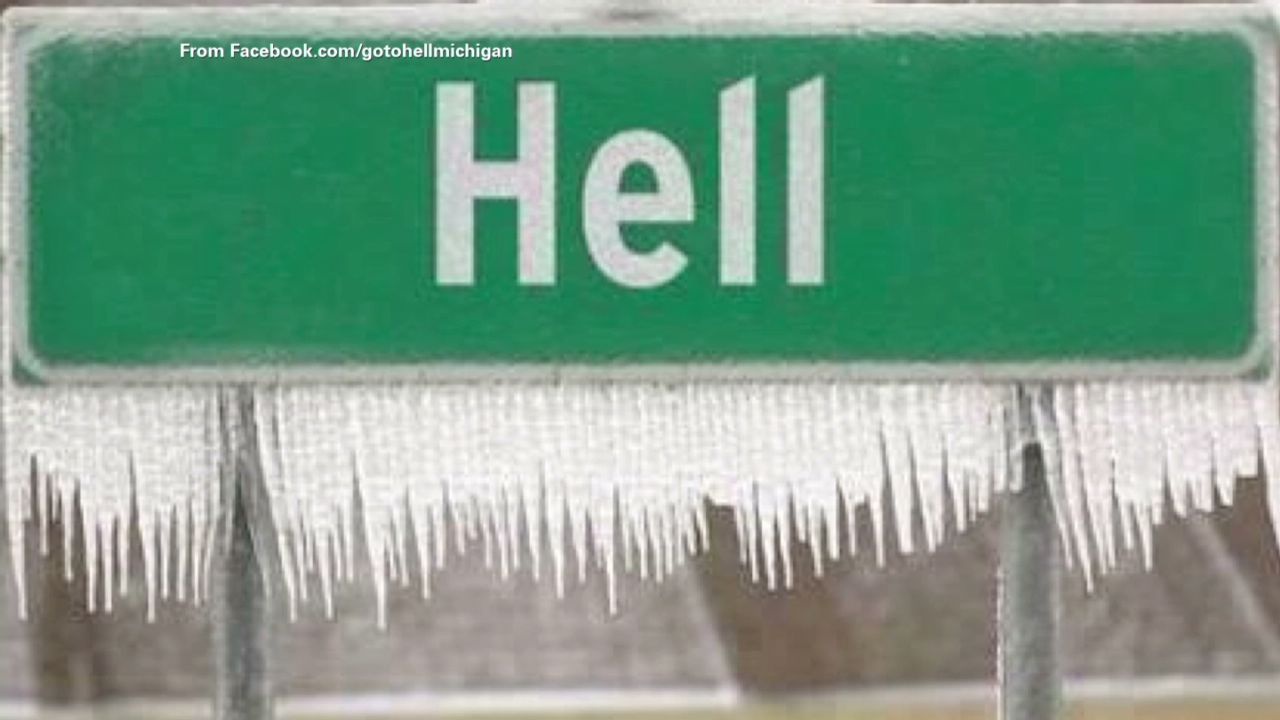
Arctic Blast: Inauguration Day To Be Coldest In Decades
So fitting for what is coming to the US and maybe the world. Hugs.
==================================================================
Axios reports:
A powerful Arctic outbreak tied in part to the polar vortex is set to send temperatures by next week tumbling down to as cold as 25 to 35 degrees Fahrenheit below average for mid-January, forecasts show. The hazardous cold could endanger public health, stress electricity grids, damage crops and make for a frigid Inauguration Day.
Mother Nature’s refrigerator door looks to open, with cold air spilling southward out of northern Canada beginning Friday night and lasting for at least a week. Through Sunday, about 81 million people are predicted to see temperatures plunge to below-zero Fahrenheit, and the number affected will increase from there.
Read the full article. In 1985, Reagan’s inauguration parade was canceled and the ceremony was moved inside when wind chills were as low as -20 degrees.


Grrr; US Media Suck
Wonkette does this better than I.
Politico Demands Karen Bass Explain How She’ll Make Politico Stop Smearing Her
Oh, the balls on these assholes. The BALLS!

Tuesday afternoon, Politico ran a very good story about media and political attacks against Los Angeles Mayor Karen Bass and her response to the ongoing wildfires. The piece, by reporter Melanie Mason, points out that much of the criticism has been unfair and often baldface lies. It also notes that Bass’s public persona as a detail-oriented consensus builder has in part led to the perception that she’s not an action-oriented take-charge leader in this crisis. It’s one of the better discussion of Bass and the wildfires we’ve read, in addition of course to our own, ahem.
The money quote for the story comes from Rob Quan, an organizer with good-government nonprofit Unrig LA. Says Quan,
“Nationally, there’s just a pile-on. […] If you look at her replies [on social media] now, she could be posting a video of her literally running into a burning building and taking a child out of there, and people would still be replying ‘resign!’”
Mason’s piece is a smart, thoughtful look at how an accomplished politician is being dragged in the media, and how her own political instincts and strengths aren’t proving to be much help in countering the overwhelmingly negative coverage. Kind of like having a municipal water system that’s perfectly capable of handling building fires, but not designed to contain a fire hurricane made far more catastrophic by climate change. By all means, you should read it!
But because we are doing a Doktor of Rhetoric post today, we’re only going to discuss Mason’s very good reporting and analysis in the context of how Politico distorted its own goddamn coverage for the sake of adding more cheap shots to the shitstorm of belligerent bellyaching with which Bass is contending.
Later yesterday afternoon, Politico’s “California PM Playbook” column took Mason’s thoughtful, nuanced reporting and ran it through a bullshit filter, resulting in a column that mentions the pile-on of disinformation that Bass has faced, but ultimately paints Bass as responsible for her own unfair coverage, darn her.
California Playbook editor Lindsay Holden quotes and paraphrases Mason liberally, but hypes up the negatives almost to the exclusion of all else, leaving the reader with the impression that Bass, as Holden’s headline puts it, “has lost the plot.”
Mason depicts Bass as a competent leader whose substance-over-style political instincts aren’t necessarily a great match for a crisis where cable news and rightwing social media are driving the narrative:
Bass has also been hampered by instincts she honed as a deal-making legislator and coalition-building community activist. Never someone to actively seek the spotlight, her unflashy demeanor now comes off as uninspiring for people seeking a leader projecting command.
An unnamed Democratic consultant says that right now, LA needs a media hero, “someone to stand up in the middle of the Pacific Palisades or the middle of Sylmar or the middle of Hollywood every day and say, ‘This is our community, and we will rebuild.’”
The consultant added, “I want her to show some emotion, that she’s tapping into the fear and anxiety that so many people feel, and not reflect this soft brand of optimism that she’s been known for.”
Soft optimism bad, Henry V filtered through Independence Day good. But Mason also notes that after the widespread devastation of the first horrible hours, when high winds kept water bombers grounded and blew the fires out of control,
firefighters have been remarkably successful in halting additional damage — despite new fires cropping up throughout the week.
“All of those could have been massive conflagrations had they expanded, and they didn’t,” said Doug Herman, a Democratic strategist who works with Bass.
That note doesn’t make it into Holden’s version, which instead seems to be cheering on style, and the hell with substance. After noting that Elon Musk’s attacks on Bass are “often half-baked or outright false,” Holden adds in an anecdote that wasn’t in Mason’s piece, bizarrely framing a dishonest video clip as somehow one more example of Bass’s “painfully poor messaging strategy” (a phrase Mason does not use):
The latest example came Tuesday afternoon, when CBS News sent out a misleading tweet suggesting its reporter asked Bass whether she “regrets” taking an overseas trip while the wildfires erupted. The accompanying video clip showed Bass answering “No.”
In fact, CBS’ Jonathan Vigliotti asked Bass whether, looking back, she still would’ve taken the diplomatic trip to Ghana.
CBS News subsequently revised the tweet to get the question right, and added a note to clarify that Bass was saying no, on reflection she wouldn’t have taken the trip. For all the good it did.
Here’s where we lost our patience with the Playbook piece: Holden went right ahead and insisted that Bass had fucked up:
The episode served as a mini illustration of Bass’ problems — specious information, followed by her own unwillingness to provide a fuller explanation, let alone a broader acknowledgement of her mistake. The narrative about her trip might have been put to bed last week, but Bass’ resistance to engage on it has allowed her enemies to continue painting her as an absent and ineffective leader.
Apparently, Bass should have anticipated that CBS would send a tweet distorting what she said, and she should have pre-debunked it, too. Shame on her! She really has lost the plot, all right.
Perhaps Mason should update her own piece with a close look at how her own outlet indulged in the kind of bullshit she was analyzing, but that might be a little too meta. And god knows Meta has enshittified itself plenty already.
Good Environmental News, Too!
(Not to take away from the Love good news post.)
How Plankton Poop Could Hold the Key to Slowing Climate Change
December 19, 2024 · Written by Matthew Russell
In the fight against climate change, every small action counts. From renewable energy to forest conservation, many solutions are on the table, but one of the most unexpected contributors could be plankton poop. This tiny marine byproduct, aided by a unique natural process, could help the world combat rising carbon dioxide levels in the atmosphere.
The concept hinges on the “biological carbon pump,” a natural process in the ocean where microscopic marine life absorbs carbon dioxide and stores it in the deep sea. However, much of this carbon is returned to the atmosphere before it can reach the ocean floor, where it could remain sequestered for centuries. But what if we could enhance this process?

Photo: Pexels
Plankton poop could significantly enhance carbon sequestration in the ocean.
The Role of Plankton in Carbon Sequestration
Phytoplankton, tiny organisms that float in the ocean, are responsible for capturing a significant portion of atmospheric carbon dioxide through photosynthesis. As NASA Earth Observatory points out, these organisms form the base of the marine food chain, feeding zooplankton, small fish, and other sea life. As phytoplankton die or are consumed, some of their carbon sinks into the ocean, but a large portion of it is recycled by marine bacteria, eventually returning as CO2. This cycle presents a challenge in efficiently storing carbon in the ocean’s depths.
However, researchers from Dartmouth College and other institutions are exploring how to enhance the efficiency of this biological pump. Their solution involves adding clay dust to the surface of the ocean. This seemingly simple intervention could significantly boost carbon sequestration by aiding the formation of dense particles that sink rapidly, carrying carbon along with them.

Photo: Pexels
Adding clay dust to ocean waters can help carbon-rich particles sink deeper.
Clay as a Catalyst for Faster Carbon Sequestration
The Dartmouth team’s experiments demonstrated that when clay minerals are added to the ocean’s surface, they bond with organic carbon, forming sticky balls known as “flocs.” These flocs are irresistible to zooplankton, which feed on them, The Debrief, reports. As zooplankton ingest the flocs, they excrete carbon-laden feces, which sink deeper into the ocean. This process not only prevents carbon from escaping back into the atmosphere but also speeds up the ocean’s natural carbon sequestration process.
This enhancement could have profound implications. By accelerating the process by which carbon is transported from the ocean surface to the depths, this method offers a new, scalable approach to mitigate climate change. The addition of clay to phytoplankton blooms could significantly boost the amount of carbon trapped in the ocean, as demonstrated by the increased concentration of sticky organic particles—up to ten times more than usual—following the clay treatment.

Photo: Pexels
The biological carbon pump is the ocean’s natural system for removing CO2.
How Plankton Poop Becomes a Climate Solution
Plankton poop might seem like an unlikely hero in the climate crisis, but its potential is undeniable. Zooplankton, the tiny creatures that feed on plankton, play a crucial role in the ocean’s carbon cycle. Normally, only a small fraction of the carbon captured by phytoplankton makes it into the deep ocean for long-term storage. However, by feeding on clay-enhanced carbon particulates, zooplankton can create fecal pellets that sink faster, ensuring that the carbon is stored more effectively in the ocean’s depths.
The use of clay dust to enhance this process could be a game-changer. According to Oceanographic Magazine, the addition of clay allowed carbon to be captured in feces and sequestered at depths where it can stay for millennia, potentially reducing atmospheric CO2 levels significantly.

Photo: Pexels
Zooplankton ingest carbon-laden particles, trapping CO2 in their feces.
The Promise of Clay in the Fight Against Climate Change
As scientists continue to explore this technique, there’s growing optimism about its potential. The use of clay is particularly promising because of its low cost and abundance. Unlike other carbon capture methods that rely on expensive technology, clay dust is a natural material that could be dispersed across ocean regions with phytoplankton blooms.
The team is currently focused on identifying the best regions for applying this method, particularly areas with high primary production, such as the California Current and the Mediterranean Sea.
Looking Ahead: A Sustainable Solution?
Though the technique is still in its early stages, it holds promise as a sustainable and scalable solution for reducing atmospheric CO2 levels. The process, which relies on the ocean’s natural mechanisms, could complement other climate mitigation strategies, such as reforestation and direct air capture. Moreover, by enhancing the biological carbon pump with a simple addition of clay dust, the oceans could play an even greater role in addressing the climate crisis.
The next steps involve testing the method in real-world ocean settings. If successful, this approach could become an essential tool in the global effort to combat climate change, one tiny poop at a time.
https://shop.freetheocean.com/blogs/news/plankton-poo-climate-change
Boy republicans and wealthy simply don’t stop do they
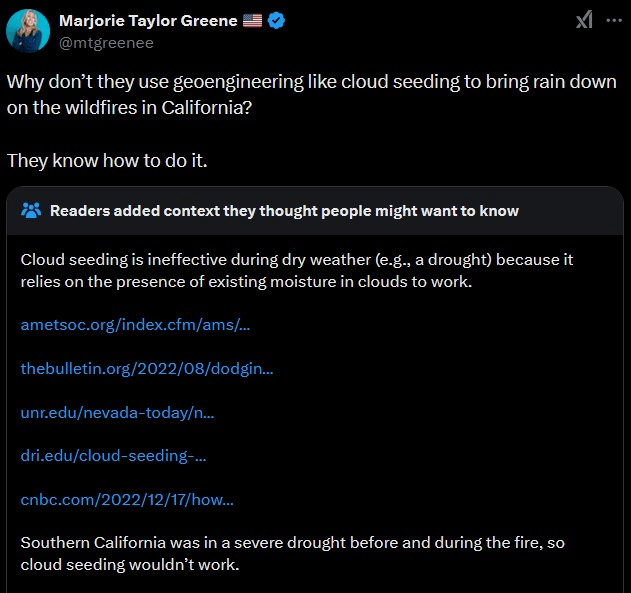
“But I don’t know. I can make all kinds of horrible theories up in my head, conspiracy theories and everything else, but it just seemed a little convenient that there was no water and that the wind conditions were right and that there are people ready and willing and able to start fires.
“And are they commissioned to do so or just acting on their own volition?” – Mel “Horse Paste Cures Cancer” Gibson, last night on Laura Ingraham’s show.
The QAnon nutbags are applauding.



Ogles last appeared here in August 2024 when the FBI raided his home over allegedly fraudulent campaign finance reports.
Weeks earlier, he appeared here when he filed articles of impeachment against Kamala Harris hours after she formally announced her bid for president.
Also last year, he introduced a bill that would ban gag orders for all federal defendants.
Shortly after he was elected, Ogles was found to have lied about his education and background, drawing comparisons to George Santos.
Recent federal disaster aid to Texas, Florida, North Carolina, Tennessee, Louisiana, and Georgia contained no conditions or “strings attached.”
Lucky the above guy who destroyed expensive public property did not get caught buying weed or being a doctor saving a woman’s life by giving them a needed abortion. Hugs

Despite the action noted above, the cult – led by Libs Of TikTok – is now attacking Lara for being gay.

Let’s talk about no drill baby drilling in Alaska, Biden, and a question….
Snow in Florida
(The title is the link to the poem, to find out more about it and the poet.)
Florida Snow P. Scott Cunningham
The Everglades are burning. I’m fifteen.
I open the window, knock out the screen
and crawl up the tiles to the apex of the roof.
Overhead the black clouds march on hooves
from the sunset to the ocean. It’s rare for the wind
to carry the sugar burns in my direction.
I assume the purpose of the fires is to make
the sugar sweeter, but besides covering the state
in smoke, all they do is make the harvest cheaper.
Some men spent a fortune to drain the river
but the cost was all up front. The stalks get so dry some-
times a piece of lightning starts the fire for them
and what’s left behind can’t help becoming tinder.
I think the land will tire of not being water soon.
Tonight the air is cold and smells like winter.
Ashes fall around me like pieces of the moon.
Copyright © 2025 by P. Scott Cunningham. Originally published in Poem-a-Day on January 7, 2025, by the Academy of American Poets.
Difficult To ‘Like’ This One,
but it’s nothing but truth. There is no place to get away. Adaptation and caring for our neighbors is necessary.
Suggestions for Resources, Actions
Building an open web that protects us from harm
We live in a world where right-wing nationalism is on the rise and many governments, including the incoming Trump administration, are promising mass deportations. Trump in particular has discussed building camps as part of mass deportations. This question used to feel more hypothetical than it does today.
Faced with this reality, it’s worth asking: who would stand by you if this kind of authoritarianism took hold in your life?
You can break allyship down into several key areas of life:
- Who in your personal life is an ally? (Your friends, acquaintances, and extended family.)
- Who in your professional life is an ally? (People you work with, people in partner organizations, and your industry.)
- Who in civic life is an ally? (Your representatives, government workers, individual members of law enforcement, healthcare workers, and so on.)
- Which service providers are allies? (The people you depend on for goods and services — including stores, delivery services, and internet services.)
And in turn, can be broken down further:
- Who will actively help you evade an authoritarian regime?
- Who will refuse to collaborate with a regime’s demands?
These two things are different. There’s also a third option — non-collaboration but non-refusal — which I would argue does not constitute allyship at all. This might look like passively complying with authoritarian demands when legally compelled, without taking steps to resist or protect the vulnerable. While this might not seem overtly harmful, it leaves those at risk exposed. As Naomi Shulman points out, the most dangerous complicity often comes from those who quietly comply. Nice people made the best Nazis.
For the remainder of this post, I will focus on the roles of internet service vendors and protocol authors in shaping allyship and resisting authoritarianism.
For these groups, refusing to collaborate means that you’re not capitulating to active demands by an authoritarian regime, but you might not be actively considering how to help people who are vulnerable. The people who are actively helping, on the other hand, are actively considering how to prevent someone from being tracked, identified, and rounded up by a regime, and are putting preventative measures in place. (These might include implementing encryption at rest, minimizing data collection, and ensuring anonymity in user interactions.)
If we consider an employer, refusing to collaborate means that you won’t actively hand over someone’s details on request. Actively helping might mean aiding someone in hiding or escaping to another jurisdiction.
These questions of allyship apply not just to individuals and organizations, but also to the systems we design and the technologies we champion. Those of us who are involved in movements to liberate social software from centralized corporations need to consider our roles. Is decentralization enough? Should we be allies? What kind of allies?
This responsibility extends beyond individual actions to the frameworks we build and the partnerships we form within open ecosystems. While building an open protocol that makes all content public and allows indefinite tracking of user activity without consent may not amount to collusion, it is also far from allyship. Partnering with companies that collaborate with an authoritarian regime, for example by removing support for specific vulnerable communities and enabling the spread of hate speech, may also not constitute allyship. Even if it furthers your immediate stated technical and business goals to have that partner on board, it may undermine your stated social goals. Short-term compromises for technical or business gains may seem pragmatic but risk undermining the ethics that underpin open and decentralized systems.
Obviously, the point of an open protocol is that anyone can use it. But we should avoid enabling entities that collude with authoritarian regimes to become significant contributors to or influencers of open protocols and platforms. While open protocols can be used by anyone, we must distinguish between passive use and active collaboration. Enabling authoritarian-aligned entities to shape the direction or governance of these protocols undermines their potential for liberation.
In light of Mark Zuckerberg’s clear acquiescence to the incoming Trump administration (for example by rolling back DEI, allowing hate speech, and making a series of bizarre statements designed to placate Trump himself), I now believe Threads should not be allowed to be an active collaborator to open protocols unless it can attest that it will not collude, and that it will protect vulnerable groups using its platforms from harm. I also think Bluesky’s AT Protocol decision to make content and user blocks completely open and discoverable should be revisited. I also believe there should be an ethical bill of rights for users on open social media protocols that authors should sign, which includes the right to privacy, freedom from surveillance, safeguards against hate speech, and strong protections for vulnerable communities.
As builders, users, and advocates of open systems, we must demand transparency, accountability, and ethical commitments from all contributors to open protocols. Without these safeguards, we risk creating tools that enable oppression rather than resisting it. Allyship demands more than neutrality — it demands action.
https://werd.io/2025/building-an-open-web-that-protects-us-from-harm

