
Category: Courts / Laws / legal
News coverage 1 8 28 2024
Trump charged in superseding indictment in election interference case following SCOTUS ruling
The new indictment adjusts the charges to the Supreme Court’s immunity ruling.
ByAlexander Mallin, Katherine Faulders, and Peter Charalambous
Special counsel Jack Smith has charged former President Donald Trump in a superseding indictment in his federal election interference case that charges him with the same offenses in the original indictment, but is adjusted to the Supreme Court’s recent presidential immunity ruling.
“The superseding indictment, which was presented to a new grand jury that had not previously heard evidence in this case, reflects the Government’s efforts to respect and implement the Supreme Court’s holdings and remand instructions,” a Justice Department spokesperson said Tuesday.
Trump last August pleaded not guilty to federal charges of undertaking a “criminal scheme” to overturn the results of the 2020 election to remain in power. Last month, in a blockbuster decision, the U.S. Supreme Court ruled that Trump is entitled to immunity from criminal prosecution for official acts undertaken while in office, and sent the case back to the trial court to sort out which charges against him can stand.
In a separate filing Tuesday, the special counsel said he does not oppose waiving Trump’s appearance for an arraignment on the superseding indictment.
While the original indictment laid out five ways Trump allegedly obstructed the function of the federal government — having state election officials change electoral votes, arranging fraudulent slates of electors, using the Department of Justice to conduct “sham” investigations, enlisting the Vice President to obstruct the certification of the election, and exploiting the chaos of the Jan. 6 riot — the new indictment removes mention of his use of the Department of Justice, which was explicitly mentioned in the Supreme Court’s ruling as falling within his official duties.
While the original indictment mentions the Justice Department on over 30 occasions, the new indictment makes no mention of the DOJ.
It also reframes the portion of the original indictment outlining that Trump allegedly knew his claims of election fraud were false. (snip)
In multiple places, Smith’s new indictment adds clarifying language to state when he believes Trump was clearly acting outside of his official duties, saying, for instance, that Trump “had no official responsibilities related to any state’s certification of the election results” and highlighting when Trump was allegedly acting “not as President but in his capacity as a candidate for office.”
The superseding indictment also removes key allegations about Trump’s refusal to act as rioters stormed the Capitol.
The new indictment no longer includes allegations that Trump refused advisers’ requests to send a message calling off rioters and that Trump later refused to withdraw his objections to the certification despite the plea of his White House counsel.
The new indictment is 36 pages, while the original indictment was 45.
It comes just days after Smith, in a filing, urged the Eleventh Circuit Court of Appeals to reverse a federal judge’s surprise dismissal of Trump’s classified documents case, which Smith is also overseeing.
GA Gov Seeks To Oust Cultist Election Board Members
Talk about needing to stop the steal! Republicans are so desperate to be rulers over the public, to tank democracy they are willing to do anything to win. They don’t want anyone but white male straight cis republican men to vote. Everyone else they see as inferior and needing to be treated like a servant, who have no rights but to do as they republican leaders tell them. They want to be the royalty below king tRump. Hugs. Scottie
From the office of Georgia Gov. Brian Kemp:
This office has received Senator Nabilah Islam Parkes and other’s letters alleging ethics violations by members of the State Elections Board. Due to uncertainty regarding whether this office has authority to act under Code Section 45-10-4 in response to these complaints, we have sought the Attorney General’s advice regarding the application of the statute to the letters. We will respond following receipt of this advice and further evaluation of the letters.
An ex-Atlanta Journal-Constitution reporter writes:
They are passing a series of last-minute, unnecessary, unrealistic and in some cases illegal rule changes in how elections are conducted. They have done so despite clear warnings from local election officials that they are “setting up 159 counties for failure.”
According to the Georgia Association of Voter Registration and Election Officials, those changes will “create unnecessary confusion among both the public and the dedicated poll workers and election officials who are critical to ensuring a smooth and efficient voting process.”
If those warnings prove valid, if county election officials have indeed been set up for failure through rules they cannot realistically honor, then Trump will have the excuse he needs to challenge the election outcome and delay or halt certification.
Two weeks ago Trump called out all three cultist election board members by name at a Georgia rally. Last week he posted praise of Kemp in an attempt to make peace.
Last month the board voted to allow private citizens to file challenges to voter registrations, resulting in an immediate challenge to Rep. Marjorie Taylor Greene’s registration. They also voted to allow county officials to refuse to certify election results.
CO2 pipeline setback: South Dakota Supreme Court rules in landowners’ favor
by Skylar Tallal Fri, August 23rd 2024 at 10:30 PM
DES MOINES, Iowa — Summit Carbon Solutions is facing a set back in its proposed CO2 pipeline project, as the South Dakota Supreme Court ruled in favor of landowners who sued to keep Summit from surveying their land.
It’s a reversal of a lower court decision, with the state’s high court now claiming it’s premature to categorize Summit as a ‘common carrier’ for public utility. It’s something Summit needs to be able to prove before it can use eminent domain.
“One of our main arguments is that Summit’s not a common carrier,” Jess Mazour the conservation program coordinator with the Sierra Club Iowa Chapter said. “So it really does change the game here in Iowa as well.”
Summit can’t start building its pipelines in Iowa until it gets approval in North and South Dakota.
The Sierra Club Iowa Chapter calls the decision a victory for landowners. Even though the Iowa Utilities Commission isn’t taking up the club’s reconsideration request, the club is moving forward with its plan to take the fight to court.
“We now have precedent on our side and we’re going to have a strong base for when we file our appeal in district court,” Mazour said.
A similar court case is already on the books in Iowa, with Iowa’s highest court set to hear oral arguments October 8 at the state capitol.
“A landowner in Hardin County, Kent, he was sued for denying Summit access to his land and we are fighting that and also challenging Iowa’s survey law,” Mazour said.
Eminent Domain has been a major issue in Iowa over the last few years. Some Iowa lawmakers joined the pipeline opposition but haven’t been successful in their efforts to change state laws.
The topic is also coming up on the campaign trail, specifically in Iowa’s congressional races.
Congressional Rep. Mariannette Miller-Meeks (R) Iowa said carbon capture pipelines make sense for Iowa.
“So the carbon capture pipeline is only meant to lower the carbon intensity score of ethanol which makes it competitive globally,” Rep. Miller-Meeks said.
She said while eminent domain is a state issue, she hopes there will only be a limited number of landowners who don’t sign on voluntarily.
“Farmers and property owners need to look at the why the rationale and then determine if it’s in their best interest,” Rep. Miller-Meeks said. “Companies that are acquiring easements are looking at how do you make the land whole. How do you ensure farmers that you can grow crops in the near future?”
Iowa’s News Now did reach out to Summit for comment didn’t hear back.
Women’s Equality Day!
(Some references, and resources for the day, and every day to come!
Thanks and h/t to Women for Kansas -A)
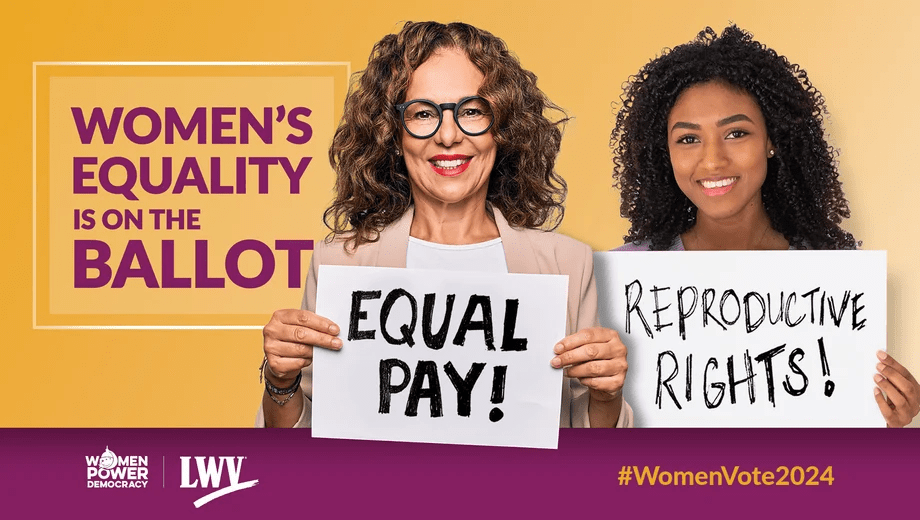
August 26, otherwise known as Women’s Equality Day, marks the anniversary of the certification of the 19th Amendment, which granted some women the right to vote.
Yet today, women have fewer rights than they’d had in decades. To recognize this, we acknowledge Women’s Inequality Day.
Empowering Women Voters in 2024
Women still aren’t equal under the law.
Inequality impacts our health: although women pay $15 million more each year for health care than men, we spend more of our lives in poor health. Those who may experience pregnancy no longer have reproductive freedom; and when we do give birth, we (particularly women of color) face high rates of maternal mortality.
It impacts our work: we’re paid less than our male counterparts and are underrepresented in leadership roles. We also deal with workplace harassment, insufficient maternal leave, and disproportionate caretaking responsibilities that affect our ability to work.
It impacts our representation: women are severely underrepresented in politics, making up only 25% of the Senate, 29% of the House, and 31.9% of statewide elective executives.
How can we make policies that protect and serve women without more women in office? And in an age where our basic freedoms and bodily autonomy are under fire, how can we ensure our rights aren’t degraded further?
The 2024 federal election is a critical moment in the fight for our equality.
The people we elect in November will be in charge of our rights – including the right to reproductive freedom – for the next four years.
So when you cast your vote in 2024, will you vote for someone who defends those rights? Or someone who wants to take them away?
Our 2024 campaign centers around empowering women to make their voices heard at the ballot box by equipping them with essential voter information. We’re highlighting our free, bilingual one-stop-shop for nonpartisan election information, VOTE411.org.
This year’s Women’s Inequality “Day” campaign will take place from August 26-30, with unique calls to action engaging voters every day! Get involved by sharing content via our social toolkit.
=====
International Women’s Day 2024 campaign theme is ‘Inspire Inclusion’
The campaign theme for International Women’s Day 2024 was Inspire Inclusion.
When we inspire others to understand and value women’s inclusion, we forge a better world.
And when women themselves are inspired to be included, there’s a sense of belonging, relevance, and empowerment.
Collectively, let’s forge a more inclusive world for women.
Read more about a definition of what it means to inspire inclusion here.
https://www.internationalwomensday.com/Theme
=====
BAD ROMANCE: WOMEN’S SUFFRAGE
Soomo, youtube.com
“Bad Romance: Women’s Suffrage is a parody music video paying homage to Alice Paul and the generations of brave women who joined together in the fight to pass the 19th Amendment, giving women the right to vote in 1920.” Watch here.
=====
| WOMEN’S PROGRESS THROUGH THE YEARS… |
| Prior to 1918 Doctor’s weren’t allowed to advise married patients about birth control. Prior to 1920 Women couldn’t vote in all elections until 19th Amendment was ratified. Prior to WWII Female teachers couldn’t be married. During 1950’s Domestic abuse was not considered a crime but a’family matter’. Prior to 1963 Equitable wages for the same work, regardless of race, color, religion, national origin, or sex of the workers were not promised until passage of Equal Pay Act. Prior to 1964 Discrimination on the basis of race, color, religion, national origin, or sex was not prohibited until passage ofthe Civil Rights Act. Prior to 1965 State laws could prohibit the prescription or use of contraceptives by married couples. In some states, the woman needed her husband’s permission to purchase contraceptives. Prior to 1969 Yale and Princeton didn’t accept female students. Prior to 1969 Women couldn’t work at jobs that had been for men only. Prior to 1971 Women with a law degree could be denied the right to plead a client’s case in court. Prior to 1971 Private employers could refuse to hire women with pre-school children. Prior to 1972 The Boston Marathon was an all-male event. There was no Women’s Division. Prior to 1972 The right to privacy didn’t encompass an unmarried person’s right to use contraceptives. Prior to 1972 Title IX of the Education Amendment didn’t exist. Schools that received Federal support didn’t need to provide the same programs to women as they did men. | Prior to 1973 Abortions weren’t legal in the entire U.S. until Roe v. Wade decision by Supreme Court declared the U.S. Constitution protected a woman’s right to terminate an early pregnancy. Prior to 1974 Housing discrimination on the basis of sex and credit discrimination against women existed. Prior to 1974 It was legal to force pregnant women to take maternity leave on the assumption they were incapable of working in their physical condition. Prior to 1974 Single, widowed, or divorced women had to bring a man along to open a bank account or to cosign any credit application. Married women couldn’t open a bank account without their husband’s permission. Prior to 1975 Women were excluded from serving on juries. Prior to 1976 West Point Academy didn’t admit female students. Prior to 1977 Harvard didn’t admit female students. Prior to 1978 There was no ban on discrimination against women on the basis of pregnancy, childbirth, or related medical issues. Prior to 1984 Women were not allowed to join all-male organizations (Jaycees, Kiwanis, Rotary, Lions) Prior to 1994 There were no funded services for victims of rape or domestic violence. Prior to 2013 Women in the military were banned from combat positions. Prior to 2022 Since the 1973 Supreme Court decision (Roe v. Wade), a woman’s right to terminate a pregnancy was protected by the U.S. Constitution. This decision was reverse by the current U.S. Supreme Court in 2022. Information provided by Soroptimist site. Learn more about Soroptimist’s by visiting their site here. |
LEARN MORE ABOUT THE HISTORY OF WOMEN’S EQUALITY DAY
National Women’s History Alliance
Read more here.
The Shinbone Star
I read these whenever I get ’em. I think everyone should, so give it a try when you get a few minutes. Well, unless you already did; I’m a few days late reading this one! 🌞
Still haven’t seen that coffee, but this is a most excellent blog post:
Yesterday in the news. Thanks to Joe My God for the posts I linked to here. This was my morning reading.

Read the full article. Watch all of the LOL clips.
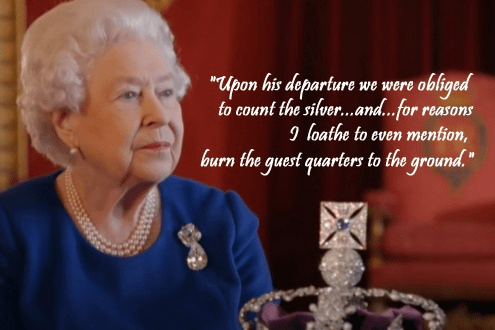
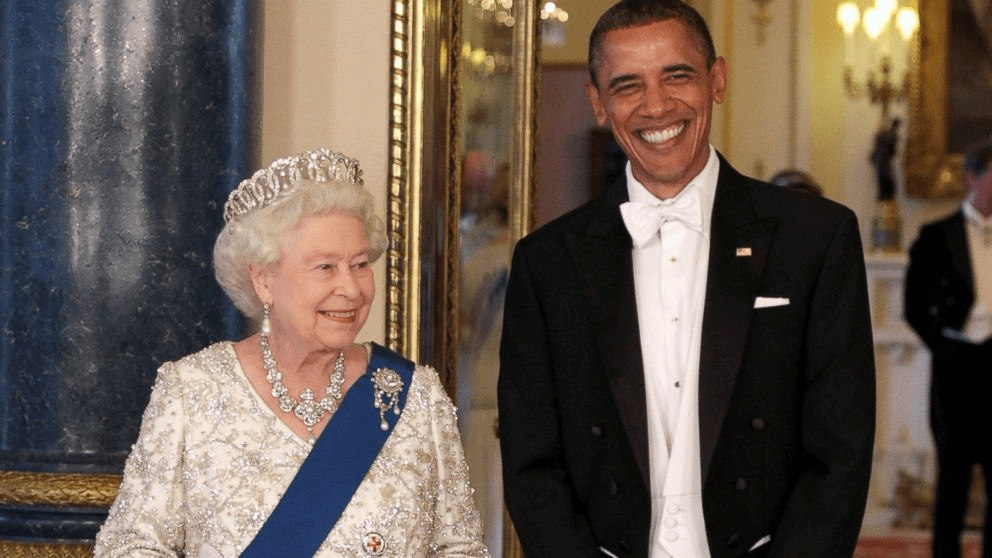
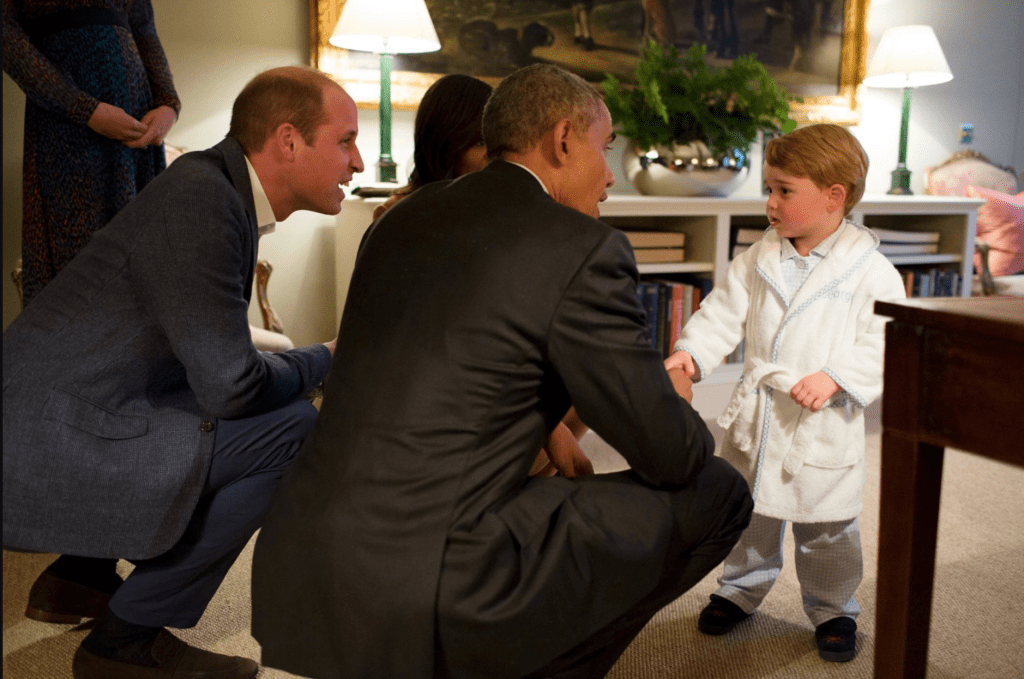
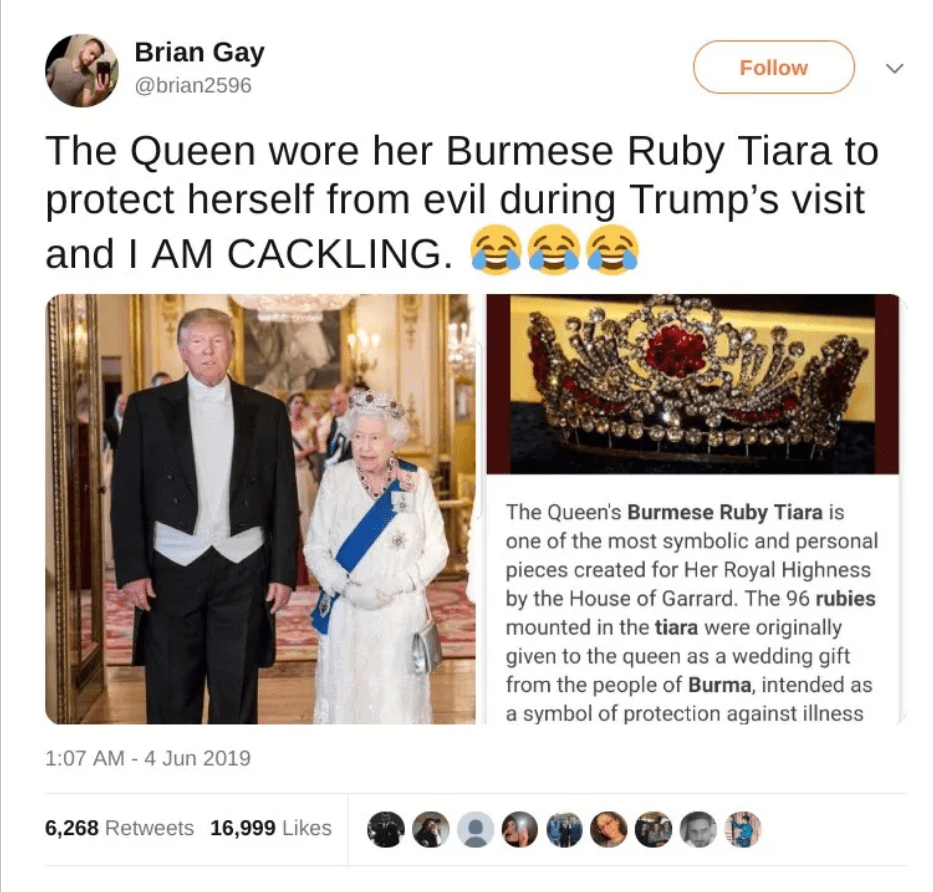
The book further claims that the Queen believed that Trump and Melania must have “some kind of special arrangement,” considering his flagrant serial adultery.

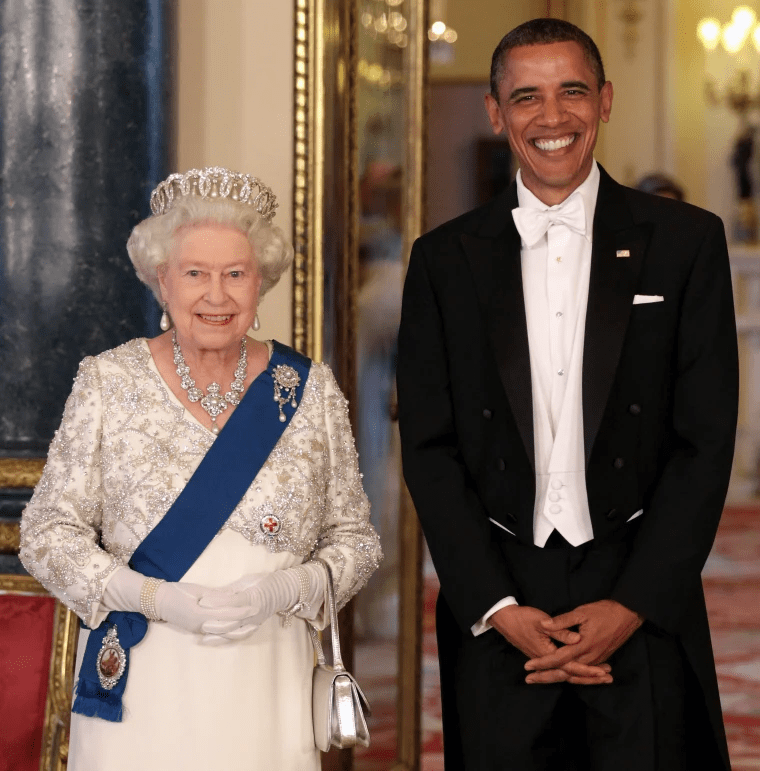
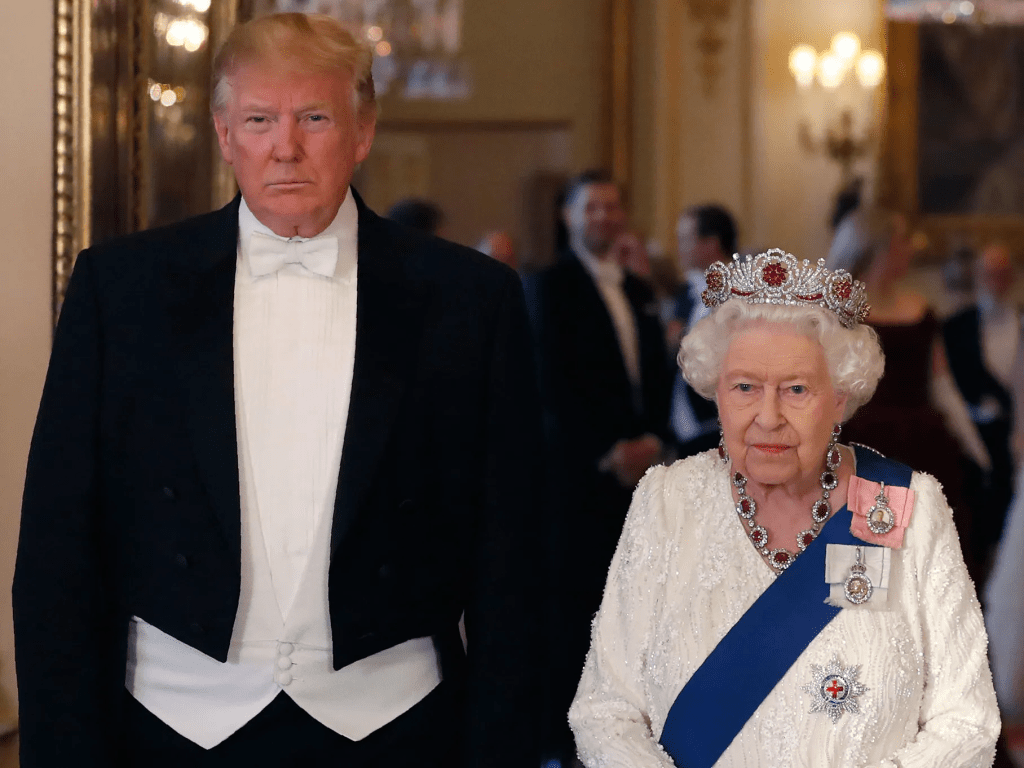
Sentencing will be determined next week.
As you can see below, Reimer’s first arrest last year resulted in a money beg from a major right wing Canadian outlet.
Reimer’s previous non-drag related convictions resulted in sentences totally nearly three years.
As I said last month, it appears that the office of Secretary of State John Thurston [photo] deliberately withheld the above-cited rule about petition bundling. Thurston was a pastor before entering politics.
Arkansas Supreme Court upholds rejection of petitions to let voters decide on abortion access
By ANDREW DEMILLO Updated 1:09 PM CDT, August 22, 2024
LITTLE ROCK, Ark. (AP) — The Arkansas Supreme Court upheld the state’s rejection of signed petitions for an abortion rights ballot initiative on Thursday, keeping the proposal from going before voters in November.
The ruling dashed the organizers’ hopes of getting the constitutional amendment measure onto the ballot in the predominantly Republican state, where many top leaders promote their opposition to abortion.
Election officials said Arkansans for Limited Government failed to comply with state law primarily because it submitted documentation regarding paid signature gatherers separately and not in a single bundle. The group argued that it should have been given more time to provide any additional documents needed.
“We find that the Secretary correctly refused to count the signatures collected by paid canvassers because the sponsor failed to file the paid canvasser training certification” in the way the law requires, Justice Rhonda Wood wrote for the 4-3 majority.
A dissenting justice wrote that the decision strips Arkansans’ of their rights and effectively changes the state’s initiative law.
“Why are the respondent and the majority determined to keep this particular vote from the people?” wrote Justice Karen Baker, who is running against Wood for chief justice. “The majority has succeeded in its efforts to change the law in order to deprive the voters of the opportunity to vote on this issue, which is not the proper role of this court.”
Following the U.S. Supreme Court’s 2022 decision removing the nationwide right to abortion, there has been a push to have voters decide the matter state by state. Montana on Tuesday became the eighth state to put an abortion issue before voters this fall.
Abortion supporters have won in all seven states that have put abortion questions before voters since Roe v. Wade was overturned.
Arkansans for Limited Government emailed a statement calling the ruling “a dark day in Arkansas.”
https://apnews.com/article/abortion-ballot-arkansas-supreme-court-48c208d49d82b467fbcc4b9c2724617a

