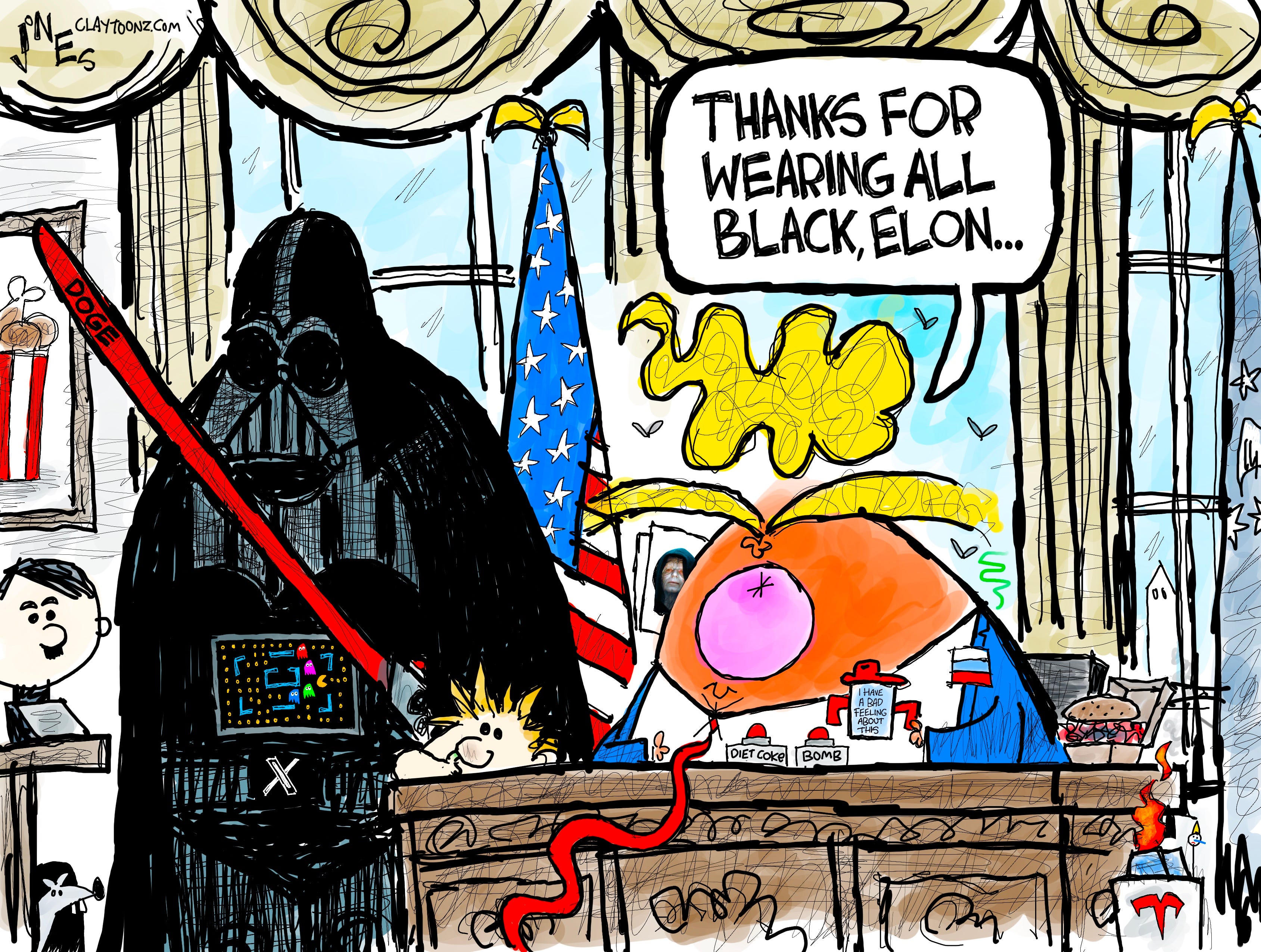
Thank you, Ten Bears! I keep pointing out that Project 2024, Agenda 47, and the Republican National Party Platform are all cut from the same whole cloth. It’s important to be aware, even though one need not read each document separately.
Category: Economics / Economy / Income / Financial
Peace & Justice History for 10/19:
| October 19, 1923 The War Resisters League was founded in New York City. WRL history ![]() Above: One of the founders, Jessie Wallace Hughan (r), 1942 photo: WRL/Swarthmore Peace Collection The War Resisters League home |
October 19, 1960![]() Martin Luther King, Jr., and 36 others were jailed after being arrested during a sit-in at the snack bar of Atlanta’s Rich’s department store where they requested service and were refused on account of their race. More about this arrest |
| October 19, 1980 J.P. Stevens & Co. was forced to sign its first contract with a union after a 17-year struggle in North Carolina and other southern states. The workers, organized by the Amalgamated Clothing & Textile Workers Union, were supported by a widespread boycott of Stevens products by labor, progressive and religious organizations. ![]() Read more about the struggle and the movie “Norma Rae” |
https://www.peacebuttons.info/E-News/peacehistoryoctober.htm#october19
This Is Very Seriously A Big Deal: Pro-Trump dark money network tied to Elon Musk behind fake pro-Harris campaign scheme
An initiative called Progress 2028 that purports to be Kamala Harris’ liberal counter to the conservative Heritage Foundation’s Project 2025 is actually run by a dark money network supporting former President Donald Trump.
Building America’s Future, the dark money group at the helm of the network, has steered money to a constellation of groups and initiatives boosting Trump’s agenda and spreading messaging aimed at chipping away voters from Harris. The dark money group reportedly received over $100 million in funding from billionaire Elon Musk, along with other donors, the New York Times recently reported.
The newest effort to benefit from their largesse is Progress 2028. Building America’s Future registered to use Progress 2028 as a fictitious name on Sept. 23 and the website was created three days later, OpenSecrets’ analysis of corporate filings and DNS records found.
The Progress 2028 site appears to be created by IMGE LLC, a firm run by Republican political operatives that the New York Times described as the “hidden hand” behind Building America’s Future, and a page on the Progress 2028 site includes the firm’s sizzle reel.
IMGE LLC has also done work for Elon Musk’s America PAC and several other Republican political committees, including a super PAC funded by America’s Future Fund named Future Coalition PAC, as first pointed out by Brendan Fischer, Deputy Executive Director of Documented, an investigative watchdog and journalism project.
The Progress 2028 manifesto draws clear parallels to Project 2025, a controversial blueprint for restructuring the executive branch under the next Republican administration. The Project 2025 blueprint was developed by the Heritage Foundation and written by many conservatives who worked in or with Trump’s administration. Project 2025 has drawn intense criticism, and the former president has said it does not reflect his own priorities should he return to the White House.
Some of the policies listed in Progress 2028 highlight disproven and misleading claims about Harris’ positions. Policies listed include “Empowering Undocumented Immigrants, Building Our Future” and “Expanding Medicaid to Undocumented Immigrants.”
“Undocumented immigrants are the backbone of our country, and by removing barriers, we unlock incredible potential,” the document states. “Kamala Harris believes that every person, no matter their immigration status, deserves access to basic healthcare.”
Harris expressed support for allowing immigrants residing in the U.S. to obtain health insurance with her 2019 Medicare for All plan but did not indicate whether there would be a cost. Her 2024 running mate, Minnesota Gov. Tim Walz, recently said that Harris does not currently support programs for undocumented immigrants to qualify for free government health care, free tuition at state universities or driver’s licenses.
The document claims Harris will “support policies that protect minors’ access to gender-affirming care and ensure that schools provide comprehensive LGBTQIA education.”
“She’s committed to banning fracking, phasing out internal combustion engines, and rolling out the most progressive Green New Deal yet,” another section of the Progress 2028 plan reads. Harris has explicitly stated that she won’t ban fracking natural gas but her campaign has sent mixed signals about her own position on regulation of gas-powered cars.
Some individuals have received text messages directing them to the Progress 2028 page.
“Kamala Harris will support a nationwide gun buy-back program that will take dangerous weapons off our streets,” one text message reads, noting, “A mandatory buy-back is the only way to keep our streets safe.” Harris expressed support for a mandatory buyback of military assault weapons in 2019 but has expressed a more lenient stance in 2024, highlighting her own gun ownership.
(snip-graphics on the page)
Digital advertisement featuring Kamala Harris paid for by Progress 2028 (Screenshot from Meta Ad Library)
Progress 2028 has also started pouring money into digital advertising. Since Oct. 11, several digital ads on Facebook and Instagram have included the disclaimer “paid for by Progress 2028” — totaling over $36,000 in ad buys over just five days.
While the ads appear to include pro-Harris messaging, they lean into contentious issues listed on the Progress 2028 site that have created friction among different divisions of the party.
“Let’s remove barriers for undocumented immigrants who are undocumented!” one ad states, adding, “Access to affordable housing, driver licenses, and fair wages creates a stronger America for everyone.”
Another ad reads, “A national, mandatory buy-back program means fewer guns & fewer tragedies. Kamala Harris gets it!”
Operating under a shroud of aliases, Building America’s Future has funneled tens of millions of dollars in dark money from anonymous sources into campaigns boosting Trump ahead of the 2024 election. The dark money network also has a history of fueling initiatives impersonating and parodying Democrats.
Building America’s Future is the top funder of Citizens for Sanity, a dark money group that bankrolled inflammatory ads mocking Democrats and progressive policies in battleground states ahead of 2022 midterms, tax returns show. The Wall Street Journal recently reported that Elon Musk secretly steered tens of millions of dollars through Building America’s Future to help fund the effort.
Citizens for Sanity spent over $90 million on messaging pitting minority communities against each other and chipping away at traditionally Democratic voting blocs.
Similar to Progress 2028, the ads hit on contentious issues such as LGBTQ+ rights, immigration and criminal justice reform. The ads have been accused of trying to suppress voting among minority communities.
(snip-embed video on the page)
Citizens for Sanity does not disclose its donors but other groups were legally required to report money they gave to it. That includes $43 million from Building AmerIca’s Future as well as $28.7 million from Freedom’s Future Fund, a sister group of Building America’s Future, and $13.4 million from American Commitment.
The many faces of Building America’s Future
Building America’s Future has also fueled other pro-Trump groups and was the sole funder of the Future Coalition PAC, new Federal Election Commission records filed Oct. 15 show.
The super PAC that has run ads targeting Harris in Michigan by highlighting her positions that are pro-Israel and the Jewish faith of her spouse, Doug Emhoff. The ads are reported to be pro-Harris but have been criticized as featuring antisemitic dog whistles. The PAC has been accused of attempting to use the conflict in the Middle East as a wedge issue to depress turnout for Harris in Michigan, a state with a significant Muslim and Arab American population.
Future Coalition PAC reported receiving $3 million from Building America’s Future through the end of September.
Another $16 million was steered through Building America’s Future to Duty to America PAC, according to new FEC disclosures filed Oct. 15. The super PAC has targeted young male voters and Black voters trying to persuade them to vote for Trump.
Building America’s Future was also the top funder of Stand For Us PAC, OpenSecrets’ analysis of FEC reports filed Oct. 15 found. The super PAC received at least $3.8 million from the dark money group and has spent over $15 million on ads attacking Republican primary candidates in Ohio with divisive messaging tying a prescription drug program to immigration and transgender rights.
In addition to funding a cluster of political groups, Building America’s Future operates under several fictitious names such as Americans for Consumer Protection.
In August, Americans for Consumer Protection launched an ad campaign criticizing the White House’s proposal to ban menthol cigarettes. CNBC reported that the effort was intended to chip away at Harris’ key base of Black voter support in swing states including Arizona, Georgia, Michigan, North Carolina and Wisconsin.
Building America’s Future reportedly raised and spent more than $100 million over the last four years, the New York Times reported.
Building America’s Future is not legally required to report its finances, vendor payments or outgoing grants for 2023 until after Election Day and, even then, will not be required to disclose its donors.
OpenSecrets’ requests for comment to Building America’s Future and Progress 2028 were not returned prior to publication.
Feel free to distribute or cite this material, but please credit OpenSecrets.
For permission to reprint for commercial uses, such as textbooks, contact OpenSecrets: info@opensecrets.org
Things to Remind People in the Grocery Line
or wherever mentions of prices, and whatever else has improved since Pres. Biden took office. I post this because my own US Rep is campaigning about how bad everything is, with facts from the Don’s admin when they’re facts at all. I’m certain he’s not the only “safe” (I voted for the Dem-we actually have a Dem running!) Republican running for the US House, as they’re all up for election every two years. Anyway, he makes the claims that things are bad under Biden-Harris, and how he’s just focusing on improving those very things that have improved thanks to Biden-Harris and the legislators who managed to get things passed (most Republicans are not among those legislators, btw.) Anyway, here’s Heather Cox Richardson:
October 17, 2024
Oct 18, 2024
In a new rule released yesterday, the Federal Trade Commission requires sellers to make it as easy to cancel a subscription to a gym or a service as it is to sign up for one. In a statement, FTC chair Lina Khan explained the reasoning behind the “click-to-cancel” rule: “Too often, businesses make people jump through endless hoops just to cancel a subscription,” she said. “Nobody should be stuck paying for a service they no longer want.” Although most of the new requirements won’t take effect for about six months, David Dayen of The American Prospect noted that the stock price of Planet Fitness fell 8% after the announcement.
When he took office in January 2021, with democracy under siege from autocratic governments abroad and an authoritarian movement at home, President Joe Biden set out to prove that democracy could deliver for the ordinary people who had lost faith in it. The click-to-cancel rule is an illustration of an obvious and long-overdue protection, but it is only one of many ways—$35 insulin, new bridges, loan forgiveness, higher wages, good jobs—in which policies designed to benefit ordinary people have demonstrated that a democratic government can improve lives.
When Secretary of the Treasury Janet Yellen spoke to the Council on Foreign Relations yesterday, she noted that the administration “has driven a historic economic recovery” with strong growth, very low unemployment rates, and inflation returning to normal. Now it is focused on lowering costs for families and expanding the economy while reducing inequality. That strong economy at home is helping to power the global economy, Yellen noted, and the U.S. has been working to strengthen that economy by reinforcing global policies, investments, and institutions that reinforce economic stability.
“Over the past four years, the world has been through a lot,” Yellen said, “from a once-in-a-century pandemic, to the largest land war in Europe since World War II, to increasingly frequent and severe climate disasters. This has only underlined that we are all in it together. America’s economic well-being depends on the world’s, and America’s economic leadership is key to global prosperity and security.” She warned against isolationism that would undermine such prosperity both at home and abroad.
The numbers behind the proven experience that government protection of ordinary people is good for economic growth got the blessing of the Royal Swedish Academy of Sciences on Monday, when it awarded the Nobel Memorial Prize in Economic Sciences to Daron Acemoglu and Simon Johnson, both of the Massachusetts Institute of Technology, and to James Robinson of the University of Chicago. Their research explains why “[s]ocieties with a poor rule of law and institutions that exploit the population do not generate growth or change for the better,” while democracies do.
Although democracy has been delivering for Americans, Donald Trump and MAGAs rose to power by convincing those left behind by 40 years of supply-side economics that their problem was not the people in charge of the government, but rather the government itself.
Trump wants to get rid of the current government so that he can enrich himself, do whatever he wants to his enemies, and avoid answering to the law. The Christian nationalists who wrote Project 2025 want to destroy the federal government so they can put in place an authoritarian who will force Americans to live under religious rule. Tech elites like Elon Musk and Peter Thiel want to get rid of the federal government so they can control the future without having to worry about regulations.
In place of what they insist is a democratic system that has failed, they are offering a strongman who, they claim, will take care of people more efficiently than a democratic government can. The focus on masculinity and portrayals of Trump as a muscled hero‚ much as Russian president Vladimir Putin portrays himself, fit the mold of an authoritarian leader.
But the argument that Americans need a strongman depends on the argument that democracy does not work. In the last three-and-a-half years, Biden, Vice President Kamala Harris, and the Democrats have proved that it can, so long as it operates with the best interests of ordinary people in mind. Trump and Vance’s outlandish lies about the federal response to Hurricane Helene are designed to override the reality of a competent administration addressing a crisis with all the tools it has. In its place, the lies provide a false narrative of federal officials ignoring people and trying to steal their property.
Their attack on democracy has another problem, as well. In addition to the reality that democracy has been delivering for Americans for more than three years now—and pretty dramatically—Trump is no longer a strongman. Vice President Kamala Harris is outperforming him in the theater of political dominance. And as she does so, his image is crumbling.
In an article in US News and World Report yesterday, NBC’s former chief marketer John D. Miller apologized to America for helping to “create a monster.” Miller led the team that marketed The Apprentice, the reality TV show that made Trump a household name. “To sell the show,” Miller wrote, “we created the narrative that Trump was a super-successful businessman who lived like royalty.” But the truth was that he declared bankruptcy six times, and “[t]he imposing board room where he famously fired contestants was a set, because his real boardroom was too old and shabby for TV,” Miller wrote. While Trump loved the attention the show provided, “more successful CEOs were too busy to get involved in reality TV.”
Miller says they “promoted the show relentlessly,” blanketing the country with a “highly exaggerated” image of Trump as a successful businessman “like a heavy snowstorm.” “[W]e…did irreparable harm by creating the false image of Trump as a successful leader,” Miller wrote. “I deeply regret that. And I regret that it has taken me so long to go public.”
Speaking as a “born-and-bred Republican,” Miller warned: “If you believe that Trump will be better for you or better for the country, that is an illusion, much like The Apprentice was.” He strongly urged people to vote for Kamala Harris. “The country will be better off and so will you.”
A new video shown last night on Jimmy Kimmel Live even more powerfully illustrated the collapse of Trump’s tough guy image. Written by Jesse Joyce of Comedy Central, the two-minute video featured actor and retired professional wrestler Dave Bautista dominating his sparring partner in a boxing ring and then telling those who think Trump is “some sort of tough guy” that “he’s not.”
Working out in a gym, Bautista insults Trump’s heavy makeup, out-of-shape body, draft dodging, and physical weakness, and notes that “he sells imaginary baseball cards pretending to be a cowboy fireman” when “he’s barely strong enough to hold an umbrella.” Bautista says Trump’s two-handed method of drinking water looks “like a little pink chickadee,” and goes on to make a raunchy observation about Trump’s stage dancing. “He’s moody, he pouts, he throws tantrums,” Bautista goes on. “He’s cattier on social media than a middle-school mean girl.”
Bautista ends by listing Trump’s fears of rain, dogs, windmills…and being laughed at.” “And mostly,” Bautista concludes, “he’s terrified that real, red-blooded American men will find out that he’s a weak, tubby toddler.” Calling Trump a “whiny b*tch,” Bautista walks away from the camera.
The sketch was billed as comedy, but it was deadly serious in its takedown of the key element of Trump’s political power.
And he seems vulnerable. Forbes and Newsweek have recently questioned his mental health; yesterday the Boston Globe ran an op-ed saying, “Trump’s decline is too dangerous to ignore. We can see the decline in the former president’s ability to hold a train of thought, speak coherently, or demonstrate a command of the English language, to say nothing of policy.”
Trump’s Fox News Channel town hall yesterday got 2.9 million viewers; Harris’s interview got 7.1 million. Today, Trump canceled yet another appearance, this one with the National Rifle Association in Savannah, Georgia, scheduled for October 22, where he was supposed to be the keynote speaker.
Meanwhile, Vice President Harris today held rallies in Milwaukee, Green Bay, and La Crosse, Wisconsin. In La Crosse, MAGA hecklers tried to interrupt her while she was speaking about the centrality of the three Trump-appointed Supreme Court justices to the overturning of the 1973 Roe v. Wade decision that recognized the constitutional right to abortion.
“Oh, you guys are at the wrong rally,” Harris called to them with a smile and a wave. As the crowd roared with approval, she added: “No, I think you meant to go to the smaller one down the street.”
—
Notes:
https://www.npr.org/2024/10/16/nx-s1-5154814/click-to-cancel-subscriptions-memberships-ftc-rule
https://home.treasury.gov/news/press-releases/jy2654
https://www.nobelprize.org/prizes/economic-sciences/2024/press-release/
https://www.nobelprize.org/prizes/economic-sciences/2024/popular-information/
https://www.newsweek.com/donald-trump-ditches-nra-event-latest-cancellation-1970902
https://www.newsweek.com/kamala-harris-fox-news-interview-ratings-donald-trump-1970906
https://www.bostonglobe.com/2024/10/16/opinion/trump-cognitive-decline-press-republicans/
https://www.newsweek.com/dancing-donald-trump-clearly-steep-decline-opinion-1969551
X:
ddayen/status/1846991070309101761
ddayen/status/1847011806587634007
carlquintanilla/status/1847051458618736920
KamalaHQ/status/1847026957407449361
YouTube:
watch?v=rn-Dw2JUVmo&t=910s (video starts at 15.23)
Not many this week, but a few good ones. Hugs


Please click on through-
-turns out FOX News viewers got a goodly dose of truth from our VP.
Trump requests military aircraft and vehicles amid Iran threat
Talk of delusions, he still thinks he is president. He is asking for military planes, Military vehicles, and even missiles. Without eveidence tRump is pushign the narritive he is so importaint that everyone wants to kill him. Like all maga they claim to be Alpha people but at the same time the always victim. This was not about tRump security but about the visual and importance he sees himself as. This story doesn’t include what I read in other reports about tRump requested military ground vehcials and even missiles. Also think of this, tRump pays for none of his security and demands ever more costly thing. Think of when he was president and charged the government a huge amount far above normal rates to guard him at his own places. That put taxpayers money in his pocket. Hugs. Scottie
There is no evidence tying Iran to two recent assassination attempts, but officials told the campaign that Iran is still plotting
Former president Donald Trump arrives to speak at a campaign event in Butler, Pa., on Oct. 5. By Josh DawseyandThe requests are extraordinary and unprecedented — no nominee in recent history has been ferried around in military planes ahead of an election. But the requests came after Trump’s campaign advisers received briefings in which the government said Iran is still actively plotting to kill him, according to the emails reviewed by The Post and the people familiar with the matter, who spoke on the condition of anonymity to describe sensitive discussions. Trump advisers have grown concerned about drones and missiles, according to the people.
In the emails over the past two weeks from campaign manager Susie Wiles to Ronald L. Rowe Jr., the head of the Secret Service, she expressed displeasure with the Secret Service and said the campaign recently had to cancel a public event at the last minute because of a “lack of personnel” from the Secret Service — instead only putting Trump in a small room with reporters. Wiles said Trump’s campaign is being hampered in its planning because of threats, and expects to hold far more events in the final weeks of the campaign.
She also wrote that the U.S. government has not been able to provide what the campaign views as an extensive enough plan to protect Trump. Rep. Michael Waltz (R-Fla.), a Trump ally who is on the House Intelligence Committee and the Butler assassination inquiry, wrote a letter to the Secret Service asking for military aircraft or additional protection for Trump’s private plane, according to a copy of the letter reviewed by The Post.
Danielle Alvarez, a spokeswoman for Trump, declined to comment.
Secret Service officials did not answer specific questions about the discussions with the Trump campaign, but spokesman Anthony Guglielmi said in a statement that Trump is receiving “the highest levels of protection.” In a letter to the campaign, Rowe said the government is assessing what can be provided.
“Assistance from the Department of Defense is regularly provided for the former president’s protection, to include explosive ordnance disposal, canine units, and airlift transportation,” Guglielmi said. The Secret Service is also imposing temporary flight restrictions “over the former president’s residence and when he travels,” he added. “Additionally, the former president is receiving the highest level of technical security assets which include unmanned aerial vehicles, counter unmanned aerial surveillance systems, ballistics and other advanced technology systems.”
Senior U.S. officials said it was unlikely the Trump campaign would be provided military planes based on the current intelligence.
One official said the other requests are being considered, but there are limitations on how many places the Secret Service can have bullet-resistant glass positioned at one time, and that glass is already being provided for his rallies.
“We are doing everything we can do to take on the threats that are actionable and real,” the official said.
The official said the U.S. government was frustrated by the Trump campaign releasing statements that they felt politicized the briefings the campaign was given on Iran.
The requests were first reported Friday by the New York Times.
Former U.S. officials said they were unaware of any presidential nominee getting a military jet. One person who has served under multiple Republican administrations in senior roles said it would be “extraordinary” for the Secret Service to grant such a request.
Trump’s opponent, Vice President Kamala Harris, receives protection from the U.S. Marines as vice president and flies on Air Force Two, which is a military airplane.
The Republican nominee has already started traveling with additional planes, and officials are also taking the precaution of dividing his motorcade at times and putting Trump in nondescript planes that do not have his name on the side instead of his longtime 757 jet.
The requests escalate a months-long battle between Trump’s team and the Secret Service, which has heightened after two assassination attempts on the former president. Granting such requests for a presidential candidate would be unprecedented, particularly a military plane to transport Trump. If the administration granted such assets, it would give Trump a distinct look in the final months that no challenger has ever had — and would remind voters visually, every day, that he is under threat.
Trump and his team have grown frustrated with the Secret Service in recent months, even as they praise Trump’s own security detail. The Secret Service has repeatedly escalated Trump’s security, but not to levels the campaign wants, the people said.
There is no evidence tying Iran to either of the recent assassination attempts, the people said, but the FBI has not ruled out the possibility of a connection. U.S. spies have determined that Iran’s leaders are seeking to take revenge on U.S. officials including Trump whom they hold responsible for a strike that killed Iranian Maj. Gen. Qasem Soleimani in 2020, but Iran’s ability to strike within the United States is limited, according to people briefed on the intelligence.
The FBI declined to comment on ongoing investigations.
Trump has asked campaign advisers and U.S. government officials repeatedly whether Iran was behind the two gunmen who separately attempted to assassinate him on July 13 in Butler, Pa., and on Sept. 15 at Trump’s golf course in West Palm Beach, Fla., according to people familiar with the briefing. Several of Trump’s advisers have become convinced — even without evidence — that Iran was behind previous threats.
In June, undercover FBI agents met with a Pakistani man in Brooklyn who was seeking to hire hit men to assassinate an American politician on Iran’s behalf, according to charges unsealed in August. The foiled plot prompted national security officials to alert the Secret Service about unspecified Iranian threats to Trump. Authorities arrested the Pakistani man, Asif Merchant, 46, on July 12, the day before Trump’s Butler rally.
Investigators have not established a motive for the Butler shooter, Thomas Matthew Crooks, 20, who opened fire from a nearby roof, grazing Trump’s ear and killing one rallygoer before he was killed at the scene by a Secret Service countersniper. Crooks was a registered Republican, made a small donation to a liberal PAC, researched past assassinations and had photos of Trump and President Joe Biden on his phone.
People briefed on the Butler investigation said there is no evidence pointing to foreign ties.
The Trump campaign is also dealing with the fallout from Iranian hackers who stole sensitive campaign documents and tried to release them through the media or share them with the Biden campaign, according to federal prosecutors. An indictment released Sept. 27 of three Iranian nationals alleged a wide-ranging, years-long effort that included targeting one of Trump’s lawyers, former CIA officials and a former U.S. ambassador. In recent days, more campaign employees have been told they were targeted by the Iranians.
Trump’s late-September visit to a college football game in Tuscaloosa, Ala., entailed the most protection he has had since leaving office, with bullet-resistant glass and 150 metal detectors deployed to the stadium, according to one of the people. For his return to Butler on Oct. 5, a row of shipping containers lined the perimeter of the venue to block the view from a passing road. The security forces on-site included drones, helicopters, undercover officers, snipers and tactical teams.
Iran makes no secret of its intention to seek to kill Trump, analysts note. An animated video showing a drone firing on Trump playing golf has resurfaced recently. The video was posted to Supreme Leader Ali Khamenei’s website on Jan. 14, 2022.
At the same time, notes former CIA official Norman Roule, “Iran is challenged by the fact that it lacks an extensive presence in the United States and is also under extensive scrutiny by U.S. law enforcement and intelligence services and their foreign partners.”
Unable to easily insert their own personnel into the United States, the Iranians have had to resort to “third country nationals and criminals” to try to carry out assassinations, he said.
Iran has likely felt able to threaten the former president based in part, he said, “on the lack of serious consequences by the West for its lethal operations” against former U.S. officials, activists and journalists in the United States and Britain, Roule said.
Sen. Richard Blumenthal (D-Conn.), a member of the Homeland Security and Governmental Affairs committee, said the available evidence on Crooks and the golf course suspect appears to more closely match the profile of homegrown violent extremists whom the FBI has identified as a rising domestic terrorism threat.
“There was intelligence about a potential threat from Iran, but the shooter on July 13th had no connection,” Blumenthal said. “I’m aware of no evidence at this time that the apparent would-be assassin in Florida had any tie to any other country.”
Iran’s desire for revenge is not new. Secretary of State Antony Blinken told Congress in 2022 that his predecessor, Mike Pompeo, was still receiving round-the-clock government security.
Biden directed the National Security Council to warn Iran’s government to stop plotting against Trump and former U.S. officials, adding that the United States would view any attempts on Trump’s life as an act of war.
A White House official said Biden’s strategy to address Iran’s lethal plots includes protective measures as well as disrupting threats through law enforcement actions. Biden has directed “every resource” for Trump’s protection and for agencies to provide threat information to his security detail, according to Security Council spokesman Sean Savett.
“We consider this a national and homeland security matter of the highest priority, and we strongly condemn Iran for these brazen threats,” Savett said in a statement. “Should Iran attack any of our citizens, including those who continue to serve the United States or those who formerly served, Iran will face severe consequences.”
Trump has started referencing the threats in settings such as news conferences and interviews.
“You’re in danger right now because of them and their challenge to me,” Trump told reporters at an Oct. 1 news conference in Milwaukee. Reflecting on going back to Butler, he recounted how the bullet that grazed his ear might have done more damage had he not been turning his head to look at a screen.
“Had I not made that turn, I would not be speaking to you people today,” Trump said.
Abigail Hauslohner and Ellen Nakashima contributed to this report.
WSJ: Neo-Nazis Are Infiltrating Hurricane Relief Crews
Sorry I can not post the original. It is behind a sign-up to read wall for me. Maybe you can. Hugs. This with the other stuff I posted on guns from news stories (I lay awake most of the night trying to sleep but not getting there, due to steroid shots and worry about my friend) we see a rise in gang thug behavior by a minority of the right driven by maga and tRump driving fear of the other, fear of legal immigrants
The Wall Street Journal reports:
These weren’t typical disaster-relief volunteers. They were members of Patriot Front, an organization branded by the Anti-Defamation League as a white-supremacist group. Neo-Nazi groups aggressively escalating their activity in recent months across the U.S. have seized upon a potent new recruiting tool: the surging tide of misinformation surrounding hurricanes.
Exploiting public confusion, grief and communication breakdowns, white supremacist groups are now showing up in vulnerable storm-ravaged communities in Florida and North Carolina.
They blend in among the many legitimate church or other charity workers that have rushed in to help. But these militia groups offer aid while filming propaganda videos that both amplify falsehoods about the government response and help the groups remake their image as patriotic civic organizations for men.
Read the full article. No paywall. Excellent reporting. Below is a sample of the screaming by the cult.
Bob Woodward’s New Book EXPOSES Trump | Christopher Titus | Armageddon Update
Kamala Harris Has a Great Plan for Rural America by Charlotte Clymer
And you should know it. Read on Substack

This morning, the Harris-Walz campaign announced an extensive economic plan for rural communities. It’s a deeply impressive vision for working class families in these parts of the country.
Given that much—perhaps, most—of political media will not adequately report on this and inform voters of what Vice President Harris plans to do for Rural America, I’m gonna take the rare step of publishing her plan, in full, as a blog post.
I’m doing this because Lord knows we’re all more likely to see an intellectually dishonest column in The New York Times about Vice President Harris ignoring rural voters than we are to see significant reporting and analysis on her proposed policies for rural voters.
So, here it is. Just to confirm, all of the below text was written by the campaign. Please share with your friends and family in rural areas of the country:
FOR IMMEDIATE RELEASE
October 15, 2024
Vice President Harris and Governor Walz’s Plan for Rural Communities
New Initiative Will Strengthen Rural Health Care by Adding 10,000 Health Care Professionals, Expanding Telemedicine, Cutting the Number of Ambulance Deserts in Half, and Keeping Rural Hospitals and Pharmacies Open
Supporting the Next Generation of Small- and Mid-sized Farmers and Ranchers
Strengthening the Backbone of the Rural Economy with Investments in Housing, Child Care, and Senior Care
Vice President Harris and Governor Walz believe in rural communities and understand that supporting locally led solutions is key to rural prosperity. Their administration will make it a priority to equip the nearly 50 million rural Americans with the tools and resources they need not just to get by, but get ahead.
Today, Vice President Harris and Governor Walz are announcing a plan for rural America. The key elements will:
- Increase access to affordable and high-quality health care in rural communities—by adding 10,000 health care professionals, expanding telemedicine, cutting the number of ambulance deserts in half.
- Support the sandwich generation to care for elders at home, lowering the cost of childcare and increasing the number of providers, and expanding the Child Tax Credit to provide tax cuts up to $6,000 for families with newborns.
- Lower the costs of buying a home, starting and expanding a business, and raising a family—by sparking the construction of 3 million new housing units, providing up to $25,000 in down payment assistance for first-time homebuyers, increasing the small business tax deduction for startup expenses 10-fold to $50,000.
- Invest in the future of American agriculture by boosting access to credit, land, and markets, building new markets and streams of income for small- and mid-sized farmers and producers, and supporting the rise of the next generation of American farmers and ranchers.
Donald Trump will turn back the hard-earned progress that rural communities are making. As President, he tried to repeal the Affordable Care Act and vows to terminate it if reelected, stripping protections from people with pre-existing conditions and devastating rural hospitals and care services. He will ban abortion nationwide, threaten access to contraception and IVF, and force states to monitor women’s pregnancies and report women’s miscarriages and abortions to the federal government.
He already took overtime pay away from millions of Americans while giving tax breaks to billionaires and big corporations – at the same time that he tried to cut funding that supports rural housing and creates rural jobs. If Trump returns to office, he promises to give more tax cuts to the super-rich and big corporations while hiking taxes on rural families by $4,000 a year – as estimated by the conservative leaning American Action Forum, and putting Social Security and Medicare on the chopping block.
Independent analysis from Goldman Sachs, Moody’s Analytics, and other top economists – including those surveyed by the Financial Times and Wall Street Journal – and more also agree that Vice President Harris’ plans are better for the U.S. economy than Donald Trump’s. For example, an analysis by Moody’s Analytics shows that, under a Harris presidency, more than a million new jobs would be added to the economy than under a second Trump Administration. Meanwhile, Moody’s finds that Trump’s plan would cause a recession by mid-2025, cost 3.2 million jobs, and add over 1 percent to inflation. And, a survey of nearly 40 top economists by the Financial Times and University of Chicago found that 70 percent agree that Vice President Harris would be better on the deficit than Trump, while only 11 percent believe that Trump would be better on the deficit than Harris.
Trump’s Project 2025 agenda will slash the federal crop insurance program, gut protections for clean water and air, and repeal the Bipartisan Infrastructure Law and Inflation Reduction Act, which will roll back historic investments in small businesses and rural infrastructure including broadband, and clean energy. Under a Harris-Walz administration, rural America is not going back.
EXPANDING RURAL HEALTH CARE
Vice President Harris and Governor Walz believe quality health care is a right, not a privilege. That’s why they are announcing new initiatives to improve and expand affordable health care in rural areas. Their plan will recruit 10,000 additional rural health care professionals and protect and expand access to care from telemedicine to local independent pharmacies.
- Recruiting 10,000 Rural Health Care Professionals, including doctors, nurses, community health workers, and EMS professionals to provide health services to Americans in rural and tribal areas—while working to protect our health workforce from burnout. This initiative will include:
- Expanding Scholarships, Loan Forgiveness, and Other Pipeline Programs for Doctors and Nurses Who Will Provide Health Care in Rural and Tribal Areas: They will expand funding to recruit and retain doctors, nurses, pharmacists, public health professionals, and other health care providers through scholarships, loan repayment programs including the National Health Service Corps Loan Repayment Program, the Indian Health Service Loan Repayment Program, and the Public Service Loan Forgiveness Programs. Their plan to build 3 million new homes nationwide, including in rural and tribal areas, and to provide $25,000 in downpayment assistance will further lower costs of buying a home in rural America, creating incentives for health professionals to buy homes and stay in rural America. They will invest in programs that introduce rural youth to careers in medicine, and provide the necessary support for them to pursue that career path. This plan builds on Vice President Harris’s leadership in investing in programs to train more nurses and doctors who will live and work in rural and underserved communities, including funding an additional 1,000 residency slots in hospitals. When a provider trains in a rural area, they’re more likely to remain, living and working there.
- Providing a Major Grant Program To Train and Fund Rural Community Health Workers: They will launch a new permanent grant program to train and fund Rural Community Health Workers; make it easier for Medicaid to cover Community Health Workers; and expand grants to Community Health Centers and Rural Health Centers.
- Expanding Rural Telehealth Services: Americans living in rural areas are around 17 times more likely to use telehealth than those in cities, but half of all people living in rural areas lack access to the broadband speeds needed to support telehealth.
- Permanently extend Medicare coverage of telemedicine benefits, currently set to expire, by working with Congress to pass the Preserving Telehealth, Hospital, and Ambulance Act.
- Double federal funding for telehealth equipment and technologies. They will double the U.S. Department of Agriculture’s (USDA) Distance Learning and Telemedicine Grant Program for Rural Communities to $120 million. This will give rural and tribal communities more resources for telehealth equipment—including at rural health clinics, hospitals, and schools–and support innovative new technologies like tele-medically equipped ambulances.
- Slashing the Number of Ambulance Deserts in Half: At least 2.3 million rural Americans live in ambulance deserts—meaning they live at least 25 minutes away from an ambulance—and in 14 states more than 10% of the population lives in such an area. Volunteer squads—which provide the majority of rural EMS staff—struggle to survive due to a lack of sustainable funding sources and difficulty recruiting new volunteers. Vice President Harris and Governor Walz will take action to cut the number of rural Americans in ambulance deserts in half by the end of the decade:
- Expanding EMTs and Paramedics in Rural Areas: They will dramatically increase financial and technical support to rural and tribal communities to train, equip, and employ first responders, and provide resources for ambulances, lifesaving equipment, and the construction and maintenance of first responder stations.
- Increasing Funding and Support for Volunteer EMS Programs: They will provide grants to small volunteer ambulance and EMS programs to help them survive and thrive. These extra resources will support innovative uses of technology like telehealth and explore solutions to low reimbursement levels for both public and private insurers.
- Keep Independent Pharmacies Open and Increase the Number by 3,000. Independent pharmacies make up more than three-quarters of pharmacies in rural areas, and their pharmacists are a critical and trusted health care resource. But nationally the number of independent pharmacies has decreased—by nearly 50% since 1980, leveling off at about 20,000 locations, with 1 in 10 independent retail pharmacies in rural America closing over the last decade.
- A Harris-Walz Administration will set a goal of enabling 23,000 independent pharmacies to either launch or stay open by working to enact legislation that would prevent pharmaceutical middlemen known as pharmacy benefit managers from shortchanging rural independent pharmacies and steering orders of the most profitable drugs away from independent rural pharmacies and to chains. This would be a 15% increase in the number of independent pharmacies – restoring the rural independent pharmacies that have closed over the last decade and increasing their number by 5%.
- Keeping Rural Hospital Doors Open To Ensure Access to Emergency Services. Since 2010, nearly 150 rural hospitals have either shuttered or ceased providing inpatient hospital services. A Harris-Walz Administration will work to strengthen Medicare’s Rural Emergency Hospital Designation – which helps facilities offer medical services in areas that may not be able to sustain a full-service hospital, while protecting the Affordable Care Act and supporting Medicaid expansion, which has helped to reduce uncompensated care in expansion states and improves the financial health of rural hospitals. This will also help support improvement in maternal health, which Vice President Harris has long advocated for, by increasing access to options for obstetric care.
- Lowering Health Care Costs. Vice President Harris and Governor Walz will also lower health care and prescription drug costs for Americans. They will work to cap the cost of insulin at $35 and out-of-pocket expenses for prescription drugs at $2,000 for everyone. They will also fight to keep helping millions of Americans save $800 a year on their health insurance and accelerate Medicare negotiations over prescription drugs to help bring drug prices down more quickly and cover more drugs.
- Restoring and Protecting Reproductive Freedoms. They will also keep fighting for womens’ rights to make decisions about their own bodies. The Vice President will, if elected, never allow a national abortion ban to become law. And when Congress passes a bill to restore reproductive freedom nationwide, she will sign it.
- Supporting Veterinary Care in Rural Areas and address the increasing shortage of veterinarians by encouraging providers to work in areas with too few veterinarians by strengthening USDA’s Veterinary Medicine Loan Repayment Program, which reduces debt for physicians working in high-need areas for the food supply, and increasing grants for starting and expanding veterinary practices in critical areas.
Trump meanwhile tried to end the Affordable Care Act and has promised to terminate it if reelected — over 500 rural hospitals at risk of closure could close. He sought to make significant cuts to both Medicare and Medicaid in every single one of his budgets. His Project 2025 agenda will reverse the caps on insulin and other prescription drugs, raising the prices on life-saving Medications.
A HISTORIC PLAN TO EXPAND ACCESS TO CARE AND SUPPORT THE SANDWICH GENERATION
Vice President Harris cared for her aging mother and knows that when families cannot find affordable care for their elderly parents or children, it is not just a big financial strain, but also a source of severe emotional stress that takes a big toll on families. Nearly a quarter of American adults are part of the sandwich generation providing intergenerational care to both their children and a parent or a loved one with disabilities.
- Protect and Strengthen Medicare, Help Rural Seniors Live Independently, and Support Family Caregivers. Vice President Harris and Governor Walz will protect Medicare and strengthen it with a historic Medicare at Home plan, which will cover robust home care for seniors under Medicare for the first time ever. This will help both seniors and their caregivers, who often shoulder the financial and emotional burden of caring for aging loved ones. Vice President Harris and Governor Walz will also expand Medicare to cover hearing and vision benefits to support the millions of seniors who rely on glasses and hearing aids.
These plans are common sense. They can help family caregivers work and save both families and the federal government money by allowing seniors to stay in their homes instead of being sent to nursing homes, which are often more expensive. Medicare at Home will also reduce hospitalizations. These new benefits will be fully paid for and extend the life of the Medicare Trust Fund by expanding Medicare drug price negotiations and more.
- Make Quality, Affordable Child Care Accessible and Expand the Child Tax Credit. Vice President Harris and Governor Walz know that millions of Americans are balancing both care for their children and care for aging loved ones. Too many rural families struggle to access affordable child care near them. One survey found that only 38 percent of rural parents could easily find childcare within their budget, compared to over half of urban parents. Vice President Harris and Governor Walz will bring down child care costs for American families to help save thousands of dollars on child care and expand access to good child care options by building a robust child care supply. Vice President Harris is also proposing to expand and make permanent the Child Tax Credit, including giving families with newborns a tax cut of $6,000 per child. This will help families cover expenses early on in life. After Vice President Harris cast the tie-breaking vote on the legislation that temporarily expanded the Child Tax Credit in 2021, it helped the families of over 9 million children in rural areas.
As president, Trump tried to cut Medicare and Medicaid in every single one of his budgets, has called for raising the retirement age to 70, and said privatizing Medicare will create a “stronger system.” He denied millions of families the full child tax credit and tried to cut federal child care funding by nearly $100 million. His Project 2025 agenda will actually raise costs on families by $4,000 a year.
STRENGTHENING THE BACKBONE OF THE RURAL ECONOMY
Vice President Harris and Governor Walz are committed to helping rural communities grow and thrive economically. They are fighting to lower prices for Americans including through tax cuts for 100 million working and middle-class families and policies to lower the price of housing, groceries, and health care. They are also supporting small businesses by cutting red tape and proposing a ten-fold increase in the tax deduction for new businesses starting up.
Vice President Harris has fought for landmark investments in rural communities: high-speed internet access to every corner of rural and tribal America, as well as projects to build and fix roads and bridges in rural and tribal communities across America, and to support transit vehicles and infrastructure for thousands of rural and tribal transit systems. Rural communities stand to benefit from up to 45% of the total funding—or more than $450 billion—provided by the Bipartisan Infrastructure Law, the Inflation Reduction Act, and the CHIPS and Science Act is, and almost 30% of the IRA funding announced so far will flow to rural communities. Governor Walz has long championed rural communities. He spent 12 years representing a rural district in Congress, and as Governor, he spearheaded the largest single investment in broadband infrastructure in state history to help thousands of Minnesotans—including those in rural areas—connect to jobs, education, health care, and their communities.
But they know it is not enough—too many rural communities still do not have the tools they need to get ahead.
- Supporting Small Businesses by Increasing Capital and Access to Resources. Vice President Harris has set an ambitious goal of 25 million new business applications by the end of her first term. She plans to encourage businesses to start and grow by increasing the small business deduction 10-fold to $50,000, providing low- to zero-interest loans to small businesses that grow and create jobs, allocating one-third of federal contract dollars to small businesses, and providing other financing for rural and tribal entrepreneurs through the Treasury Department’s State Small Business Credit Initiative—which lifts up entrepreneurs and founders in rural America, middle America, and underserved communities.
- Create New Jobs and Opportunities Through:
- New America Forward Tax Credits to promote investment in the industries of the future, including greater credits for companies investing in agricultural, manufacturing, and energy communities. This includes modernizing steel and iron production, developing biotechnology, building new data centers for AI and supporting AI innovation, further developing clean energy manufacturing, revitalizing America’s semiconductor industry, and investing in aerospace, autos, and other forms of transportation. These tax credits will provide significant additional benefits to investments made in longstanding manufacturing, energy, and agricultural communities and reward companies that work with unions and communities to support workers and protect jobs.
- New Opportunities for Those Without Four-Year College Degrees including promoting meaningful pathways for those without college degrees to federal jobs and working with businesses to do the same in the private sector. Vice President Harris and Governor Walz have also set a goal of doubling the number of registered apprenticeships during their first term. This will include partnerships with community colleges on high-quality, evidence-based training programs.
- Cutting Red Tape so that America Can Build More Housing, Manufacturing, and Energy Projects Faster while also ensuring community engagement and adequate protections for the environment and public health. This will build Vice President Harris’s work through the Inflation Reduction Act to speed permitting review, and her work to finalize a rule to modernize environmental reviews.
- Keeping Rural Schools Open and Thriving. Vice President Harris knows that a great teacher can have a life-long impact on children. But teacher shortages disproportionately impact rural communities throughout the country. That’s why she will double down on programs that prepare and train teachers in rural and tribal areas in an effort to support new teachers and increase retention rates in rural communities—all of which will improve student outcomes like academic achievement and high school graduation rates, resulting in higher long-term earnings, job creation, and a boost to the economy. She will also build on federal transportation programs that help get children to school where bus routes or vehicle maintenance costs put additional strain on already limited budgets.
- Protect and Strengthen Social Security while Making the Super Wealthy Pay their Fair Share. Vice President Harris and Governor Walz will protect and strengthen Social Security and Medicare by making the super-wealthy pay their fair share. Trump, by contrast, once called for raising the retirement age to 70, and he tried to cut Social Security and Medicare every year of his presidency. Now, on the campaign trail, Trump is continuing to talk up cuts to Social Security and Medicare, saying “there is a lot you can do…in terms of cutting.”
- Lowering Costs:
- Lower Costs of Buying and Renting a Home Across Rural America by sparking the construction of 3 million new affordable rental and owner-occupied homes, providing up to $25,000 in down payment assistance for first-time homebuyers, and cracking down on predatory investors. Vice President Harris and Governor Walz will also work to strengthen USDA’s programs for rural and tribal communities, especially in housing, and as part of their proposal to strengthen the Low Income Housing Tax Credit program to create more homes that are affordable for renters, they will work to ensure that rural states receive a fair allocation of these credits to address the unique challenges that rural communities face when dealing with housing challenges, including higher construction costs and lower housing density.
- Providing Rural and Tribal Families with Reliable, Low-Cost Internet Access, by reenacting the Affordable Connectivity Program. The Bipartisan Infrastructure Law’s Affordable Connectivity Program provided 23 million households with up to $30 off of their monthly internet bills and a one-time discount of up to $100 to buy a laptop, desktop computer, or tablet. Over 3 million people who benefited from ACP live in rural and tribal areas. Vice President Harris will reenact this popular program, which ended in June of this year, to ensure that rural and tribal families can connect to the internet and obtain the financial, educational, and health opportunities that come from reliable internet access. She will also take common-sense steps to speed up the construction of new internet for rural and tribal communities.
- Provide Funding and Support to Local Communities, Tailored to Address Local Needs.
- Vice President Harris and Governor Walz will work with Congress to pass the bipartisan Rural Partnership and Prosperity Act, led by Senators Casey and Fischer. This will provide new grants to every state that will support locally led solutions to address rural and tribal communities’ needs—including for child care, housing, job training, and economic development.
- Vice President Harris and Governor Walz will expand the Rural Partners Network nationwide by partnering with rural communities to help them navigate and access existing federal funding opportunities.
Trump neglected rural communities. He failed to address the housing supply crisis during this presidency, and now his Project 2025 agenda will increase mortgage premiums on federally backed loans, and drive up mortgage rates by around $1,200 by privatizing Fannie Mae and Freddie Mac. He also tried to eliminate the Economic Development Administration, and wants to repeal investments in infrastructure, clean energy, and more that have been strengthening the economies of rural communities. He will also raise costs by nearly $4,000 per family with a “Trump Sales Tax” on imported items that families rely on.
He also has no plan to support families and seniors. He has called for raising the retirement age to 70 years old. His Project 2025 agenda would slash funding for child care, abolish Head Start, and cut more than $20 billion in federal support for the nation’s most vulnerable students.
HARVESTING THE FUTURE OF AMERICAN AGRICULTURE
Vice President Harris and Governor Walz know that America’s farmers, farmworkers, and ranchers feed our nation, drive our economic growth, and enhance our security and resilience. That’s why Vice President Harris helped secure nearly $20 billion in investments to help hundreds of thousands of farmers and ranchers adopt voluntary innovative conservation practices, promote sustainable agriculture, and increase resilience against extreme weather. She also directed $1 billion to increase meat and poultry processing capacity, up to $900 million to boost domestic fertilizer production, and funding to strengthen food supply chains and give farmers more choices. Governor Walz—who grew up spending time on the family farm—has stood by farmers and ranchers throughout his time in public service. In Congress, Governor Walz worked across the aisle to pass three Farm Bills to expand veterans’ access to crop insurance, farm education, and job training and enacted legislation to improve veterans’ health care. And as Governor, he championed efforts to support new farmers and to build new markets and revenue streams.
But Vice President Harris and Governor Walz know that today too many small farmers and ranchers still face barriers to success or are getting ripped off by big corporations. Vice President Harris and Governor Walz have a plan to invest in the future of America’s agricultural industry. They will combat consolidation and other barriers that make it more difficult for small farmers to get ahead, and support the next generation of American farming by:
- Making it Easier for Beginning Farmers and Ranchers to Get Started by improving access to credit for beginning farmers—including by reducing barriers to receive USDA’s farm ownership and operating loans—and supporting training and technical assistance including for military veterans and young farmers. This builds on Vice President Harris and Governor Walz’s proposals to provide one million forgivable loans to entrepreneurs who have historically faced barriers to accessing credit as well as low- to zero-interest loans to small businesses that create jobs.
- Expanding Farmland Protection Programs including supporting working farm easements that ensure farmland remains farmland and isn’t lost to non-agricultural buyers.
- Doubling Down on Partnerships with Farmers and Producers to Build New Markets and Streams of Incomes. That’s why Vice President Harris fought tirelessly for the Inflation Reduction Act, which included a $20 billion investment to help the agricultural community voluntarily adopt and expand conservation and climate smart agricultural strategies—all while saving money, creating new income streams, ensuring the wealthy pay their fair share in taxes, and increasing productivity. If elected, Vice President Harris and Governor Walz will double down on this work.
- Ensuring America’s Farmers Have the Right to Repair Their Equipment. Currently, equipment manufacturers put in place restrictions, such as software blocks on tractors and other farm equipment, that make it difficult if not impossible for farmers to repair their own equipment. Vice President Harris and Governor Walz will require manufacturers of electronics-enabled agricultural equipment to share documents, parts, software, and tools with owners and independent repair shops by working with Congress to enact the Agricultural Right to Repair Act.
- Boost Competition to Create Opportunities for Small Farmers and Ranchers. Vice President Harris and Governor Walz will support small businesses in the agricultural industry, including continuing successful efforts to block excessive consolidation by working with Congress to pass bipartisan legislation to increase antitrust enforcement in agriculture and help ensure poultry growers and ranchers get a fair price. They will also focus on expanding production among new suppliers and small farms, growers, and processors to create broad-based, resilient local and regional food supply chains and spur competition with large conglomerates.
- Ensuring Crop Insurance Works for All Farmers and Ranchers. Vice President Harris and Governor Walz will strengthen the Federal Crop Insurance Program by directing the USDA to study whether the program should cover additional crops and working with Congress to ensure the program protects against more threats like natural disasters and extreme climate events – risks that raise costs and disrupt supply chains.
- Growing Opportunities and Small and Mid-Size Farms and Small Businesses in Rural and Tribal Communities to Sell to Customers Around the Globe. Research shows that agricultural export losses due to retaliatory tariffs from Trump’s trade wars totaled more than $27 billion in 2018 and 2019. The impact on small farmers and rural communities was devastating: agricultural jobs fell, U.S. farm bankruptcies surged, and net farm income plummeted. Vice President Harris and Governor Walz will provide technical assistance to small and mid-sized farmers and businesses so that they have more opportunity to sell their products.
Donald Trump will make the challenges that American farmers face worse. As President, he bailed out the largest 10% of farmers, while sacrificing smaller family farms in his trade wars. Between September 2018 and September 2019, farm bankruptcy filings rose 24% nationally. He also enabled big meatpackers and agribusinesses to run family farms out of business. As his own Secretary of Agriculture said, “In America, the big get bigger and the small go out.” Now, if Trump is elected again, his Project 2025 agenda will hurt rural America, including making crop insurance for family farmers even more expensive and risking another slew of retaliatory tariffs.
Vice President Harris and Governor Walz believe in rural America and pledge to support rural Americans to create a New Way Forward.