
I watched this late in the evening yesterday (it was a hard day,) and it was just what I needed while I was watching. I hope everyone enjoys it, too.
Category: Health / Healthcare / Illness / Vaccines
Peace & Justice History for 9/27:
| September 27, 1962 Rachel Carson’s book indicting the pesticide industry, Silent Spring, was published.  The scientist (17 years with the U.S. Fish and Wildlife Service) and writer demonstrated the connection between the excessive and ubiquitous use of DDT and its long-term effect on plants and animals.  Rachel Carson at work c. 1936 The impact of her book proved seminal to a new ecological awareness. But even 30 years later, Carson was denounced for “preservationist hysteria” and “bad science.” But she had said when the book was published: “We do not ask that all chemicals be abandoned. We ask moderation. We ask the use of other methods less harmful to our environment.“ Rachel Carson, her Silent Spring and its impact |
| September 27, 1967 An advertisement headed “A Call To Resist Illegitimate Authority,” signed by over 320 influential people (professors, writers, ministers, and other professional people), appeared in the New Republic and the New York Review of Books, asking for funds to help youths resist the draft. |
| September 27, 1990 The last U.S. Pershing II tactical nuclear missiles were removed from Germany, fewer than ten years after their installation provoked a massive anti-nuclear movement across Europe.The range and accuracy of the Pershing II pushed the Soviet Union to negotiate the Treaty on Intermediate Range Nuclear Forces (INF) which completely eliminated all nuclear-armed ground-launched ballistic and cruise missiles with ranges between 500 and 5,500 kilometers (about 300 to 3400 miles) and their infrastructure. The INF Treaty was the first nuclear arms control agreement to actually reduce nuclear arms, and the signatories destroyed almost 2700 nuclear weapons (including 234 Pershing II) by May of 1991. |
| September 27, 1991 President George H.W. Bush announced a major unilateral withdrawal of U.S. tactical nuclear weapons: “I am . . . directing that the United States eliminate its entire worldwide inventory of ground-launched short-range, that is, theater, nuclear weapons. We will bring home and destroy all of our nuclear artillery shells and short-range ballistic missile warheads. We will, of course, insure that we preserve an effective air-delivered nuclear capability in Europe. “In turn, I have asked the Soviets . . . to destroy their entire inventory of ground-launched theater nuclear weapons . . . . “Recognizing further the major changes in the international military landscape, the United States will withdraw all tactical nuclear weapons from its surface ships, attack submarines, as well as those nuclear weapons associated with our land-based naval aircraft. This means removing all nuclear Tomahawk cruise missiles from U.S. ships and submarines, as well as nuclear bombs aboard aircraft carriers.” |
https://www.peacebuttons.info/E-News/peacehistoryseptember.htm#september27
Well, this is a big deal-
Former Sen. Kassebaum-Baker made one brief statement about the changing Republican and political climate when she retired; that’s pretty much what she said: that it was changing. She retired, as did Bob Dole, with the first wave of Tea Partiers (though a couple of years apart.) Since then, she’s been even more discreet, mostly concentrating on land and habitat conservation. This endorsement is a Big Deal. (I’ll copy it in here so you don’t have to take your computer to the carwash to get the stupid off.)
EXCLUSIVE: Three more Republicans are crossing the aisle to endorse Vice President Kamala Harris for the White House.
Former U.S. Sen. Nancy Kassebaum, R-Kan., former Kansas state senator and Insurance Commissioner Sandy Praeger and Deanell Reece Tacha, a retired federal judge, condemned the current state of the GOP in a statement shared with Fox News Digital Thursday.
“This election presents a stark choice that is not easy for any of us. The Republican Party of Dwight D. Eisenhower, Bob Dole, Frank Carlson, Jan Meyers, and generations of Kansas leaders does not exist within the current Republican Party,” the former officials wrote.
“But, it requires Republicans speaking out and putting country over party when those values are at stake.”
They added that the race between Harris and former President Trump presented a “stark choice,” but not an easy one.
“No candidate is perfect, and we do not pretend that we subscribe to all the policy positions taken either by the national parties or any individual candidates,” they wrote.
“However, we fervently believe that we must do our part to try to build a brighter future, which is why we will be voting for Kamala Harris and [Minnesota Gov. Tim Walz] in this election. We believe they most closely align with the aspirations of Kansans and reflect our rich history of working together ‘to the stars through difficulty.’”
All three have backed Democrats in recent elections, however.
Kassebaum, who now goes by Nancy Kassebaum Baker, served in the U.S. Senate from December 1978 through January 1997.
She was the first woman elected to represent Kansas in the chamber, and her career included a stint as chair of the Senate Labor Committee.
Tacha was nominated to the U.S. Court of Appeals for the Tenth Circuit by former President Reagan in 1985 and served as chief judge from 2001 until 2008.
Praeger served as the Kansas Insurance commissioner from 2003 to 2015.
Harris’ campaign has made a point of courting Republicans in a bid to widen her appeal and cast Trump as an extreme and polarizing choice.
A majority of Republicans, particularly those still in elected office, do support Trump.
The vice president has scored support from several notable GOP figures, however. Former Rep. Liz Cheney, R-Wyo., former Vice President Dick Cheney and former Trump administration aides Stephanie Grisham and Olivia Troye have all publicly stated support for Harris.
Troye is one of several people who headlined a Republicans for Harris event Thursday alongside former representatives Barbara Comstock, R-Va., and Denver Riggleman, R-Va.
A new Marist College poll found Harris and Trump neck and neck in three critical states.
(Snip-skipping blah-blah race tied crap to the final graf, which is satisfying:)
The Trump campaign said of the Harris endorsement, “Nobody knows who these people are, and nobody cares.”
The Joys of US Health Insurance
Lots of info here. Take a minute when you have one, and take a good look-
Clark State security finds suspicious package on campus, rules out threat
(I clicked on a Springfield New-Sun article the other day; they let you read everything if you start an account or register or whatever; email address, user name, and a password. Anyway, it’s a very polite paper, and the work, so far as I’ve seen, is exemplary. If you click through to the page, take a look at their headlines to see how things are going in Springfield, thanks to the Republican ticket. Some of it is good news for residents; there is balance.)
News By Brooke Spurlock 3 hours ago
Clark State is investigating after officials found a suspicious package this morning on the College’s Springfield campus.
The college’s security found the package around 8 a.m. on the Leffel Lane campus and immediately contacted police, according to a statement on the college’s website.
“Police responded quickly and determined that the package was not of concern and no threat exists,” the statement said.
Administrators and police searched the buildings and campus before the Springfield Police Division said the campus was safe at 11:12 a.m.
Clark State closed all of its campuses this week and moved to remote classes through Friday as a result of two email threats of a potential bombing and shooting from last weekend.
The post I lost and the last three days
I talk about my weekend and reasons for not going to the MS site anymore, the fact I wrote a long heartfelt post on WordPress and due to one mistake lost the entire thing, and how I plan computer upgrades before continuing to post more videos. Best wishes, and Hugs
Some Decent News from Kentucky
By BRUCE SCHREINERUpdated 2:32 PM CDT, September 18, 2024Share
FRANKFORT, Ky. (AP) — Democratic Gov. Andy Beshear banned the use of “conversion therapy” on minors in Kentucky on Wednesday, calling his executive order a necessary step to protect children from a widely discredited practice that tries to change a person’s sexual orientation or gender identity through counseling.
The governor used his executive powers after Republicans who control the state legislature repeatedly blocked efforts to enact a state law banning the practice. Beshear said he would no longer wait for others to “do what’s right.”
“My faith teaches me that all children are children of God,” Beshear said during the signing ceremony at the Kentucky Capitol. “And where practices are endangering and even harming those children, we must act. The practice of so-called ‘conversion therapy’ hurts our children.”
It was the latest action in a national debate over conversion therapy and the rights of LGBTQ+ children and their families. (snip-MORE)
https://apnews.com/article/kentucky-conversion-therapy-andy-beshear-93a07354cd0ed2e7fc09c15f204f75c0
This is perfect.
‘Voting feels like a battle’: In Mississippi, a group of Black women is reimagining voter turnout
The Mississippi Black Women’s Roundtable has traveled around the state for “boot camps” aimed at better mobilizing Black women to get out the vote. They face roadblocks in a state with a deep history of voter suppression.
Originally published by The 19th
This article is part of U.S. Democracy Day, a nationwide collaborative on September 15, the International Day of Democracy, in which news organizations cover how democracy works and the threats it faces. To learn more, visit usdemocracyday.org.
SOUTHAVEN, MISSISSIPPI — The training in northwest Mississippi that Cassandra Welchlin led was focused on get-out-the-vote efforts, but the longtime community organizer wanted to make space to sing.
Ain’t gonna let nobody turn me around, turn me around …
“Come on, y’all!” Welchlin told the crowd of nearly 100, who joined in on the next verse. Turn me around …
Ain’t gonna let nobody turn me around. I’m gonna keep on walking, keep on talking, marching up to freedom lane …
“I am so happy to have y’all in the house,” she said at one point. “If y’all could see what I see.”
What Welchlin saw that August morning were the faces of Black women — and a lot of them. Their interests, varied and historically overlooked, are at the center of a new kind of intentional voter engagement training.
“Black women mobilize their communities,” she told The 19th. “They are the catalyst.”
Welchlin is executive director of the Mississippi Black Women’s Roundtable, a civic engagement and policy advocacy organization whose members, all of them Black women, have traveled the state for months to host trainings called the “Power of the Sister Vote Boot Camp.”
On paper, their goal with the boot camps is an increase in voter turnout among Black women in the Mississippi counties where they visit. They also want to create a years-in-the-making pipeline to better mobilize Black women, whom Welchin views as the glue holding together democracy, especially in a state and region that continues to be impacted by policies that have historically suppressed Black voters.
“I was raised in a house of Black women — my aunties, my grandma, and then the neighborhood of elders,” she said. “I know the power of Black women taking care of Black women, and taking care of the community.”
At the trainings, Welchlin and her staff dress in military fatigues — a “boot camp” theme that has manifested into the advertisement the group uses to promote the events and the T-shirts they distribute to attendees. But there is a deeper significance.
“Voting feels like a battle in Mississippi,” she explained.
Mississippi is one of just three states that does not offer early voting to all residents, and one of eight states that does not offer online voter registration. The 12-hour window that many residents have to cast a ballot on Election Day can be difficult for people with irregular work shifts, child care responsibilities and challenges to accessing transportation.
Welchlin said she knows Black women overwhelmingly run their households. They also take on the added responsibility of getting their communities to the ballot box.
Yet Black women in Mississippi are the largest group of women in low-wage jobs, face one of the highest rates of poverty in the country and rank among the lowest in elected representation at the statehouse.
“I wanted to do something a little bit more strategic and formal that would bring excitement,” Welchlin said. “I just kind of sat with the idea of, ‘What would make people want to come?’”
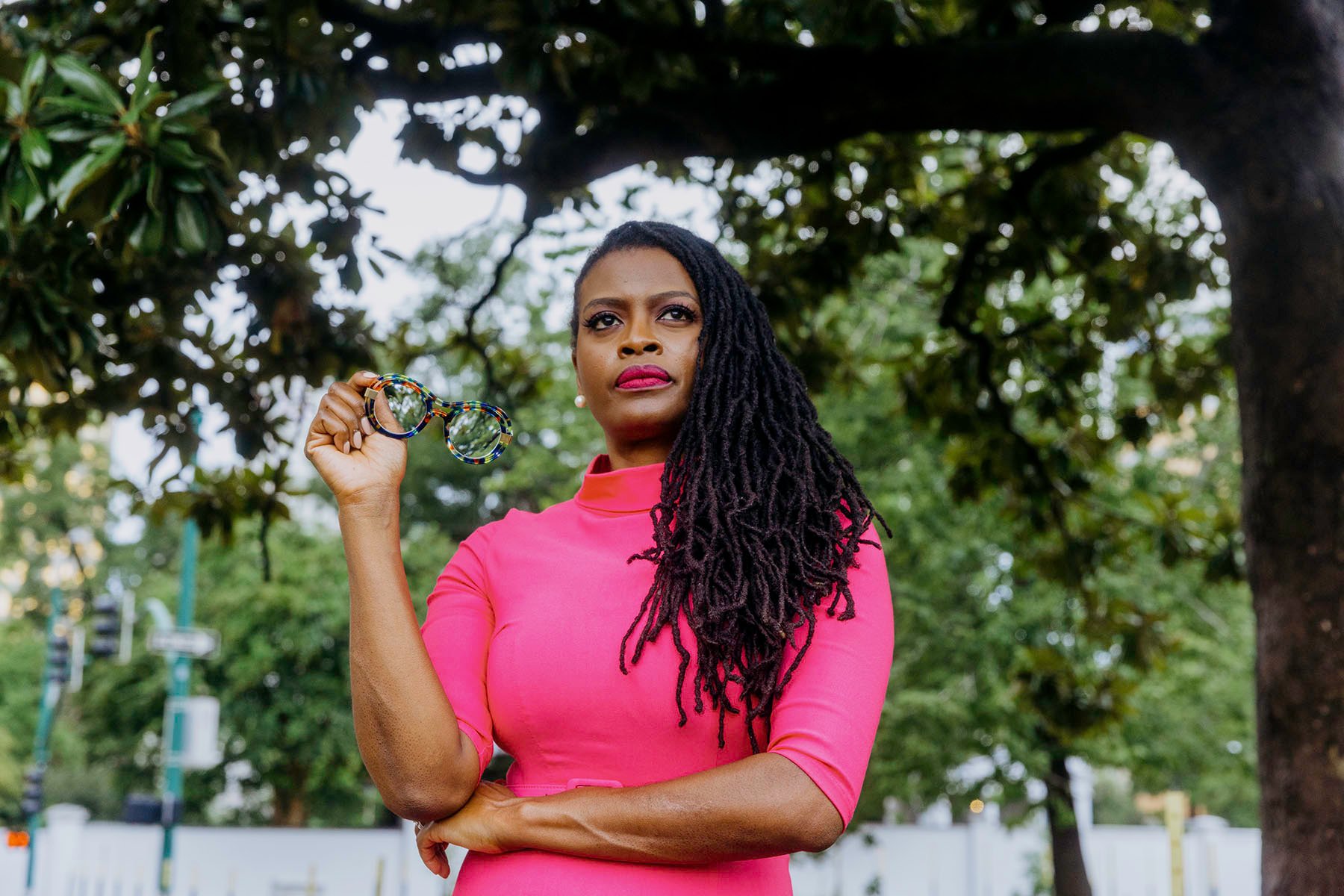
The Mississippi Black Women’s Roundtable, which has long made issues like equal pay, Medicaid expansion and paid family and medical leave a priority in their work, is an affiliate of the National Coalition on Black Civic Participation. The organization has programming focused on Black women’s civic participation, including a “Sistervote” initiative.
Melanie Campbell, president and CEO of the National Coalition on Black Civic Participation, and convener of the national Black Women’s Roundtable programming, credited Welchlin for designing a training theme that not only has the potential to turn out more voters, but could lead to more Black women becoming leaders who run for office. She added that Welchlin is taking their political power “to another level.”
“Having a Cassandra Welchlin in leadership, who’s doing unique things — there could be more Black elected officials in the state of Mississippi, because the demographics are there. But when you talk statewide, it’s not reached its full potential,” she said.
There are about 1.9 million registered voters in Mississippi, where the governor’s office, Senate and House of Representatives are controlled by Republicans. Welchlin’s group estimates that more than 123,000 Black women in the state did not vote in the past three election cycles. The group’s goal is to increase voter participation among these women by 10 percent this November. Black women voters in the counties the group has targeted for boot camps are among those who have voted most infrequently since 2021.
It’s part of why Allytra Perryman, deputy director of the Mississippi State Conference of the NAACP, which has partnered to help host some boot camps, also sees such potential in mobilizing them.
“When you train a Black woman on how to do anything, you train a community,” she said.
On the morning of the boot camp, Velvet Scott seemed to be everywhere.
As director of civic engagement and voting rights for the Mississippi Black Women’s Roundtable, she was ready to help roll out attendee tables and chairs; she was there to open boxes and hand materials to roundtable staff. She and Welchlin made sure the check-in table had updated registration lists, lunch was ordered and the child care in a nearby room was set up.
“Today we’re going to go through, of course, important information, but we’re going to have fun while doing it,” Scott told the women, many already wearing the matching boot camp T-shirts.
Their meeting space was attached to a church on a hill — New Hope Missionary Baptist Church — nestled along a road filled with so many churches it’s called Church Road. Among the permanent signage adorning the room were Biblical-themed messages of hope: “We will not fail nor be discouraged, till our mission is complete….”
“We welcome you today to be energized and to be educated,” said Pamela Helton, a leader within New Hope and the wife of the church pastor, in opening remarks.
Earlier, Welchlin seemed determined to shake the hands of every person who walked through the doors. For those she knew, she offered a hug. “So glad to see so many beautiful Black women,” she said at one point. “We comin’.”
When Welchlin helped host the first boot camp ahead of last year’ gubernatorial race, her organization did not collect data about the trainings. Anecdotal feedback showed a clear interest in organizing Black women around voter turnout, but the full scope of the programming’s reach in its pilot run is unclear.
“We realized that we had a gap,” Welchlin said. “But part of it had to do with capacity on our end to collect that data and do the follow-up.”
Scott, who joined the Mississippi Black Women’s Roundtable late last year, has committed to doing things differently. She honed a data mindset while first working in insurance, a job that brought her into the homes of Black and Brown people who increasingly sought her guidance about available social services. In 2018, Scott began volunteering at a youth-focused civic engagement organization and then joined the staff full-time.
At the Mississippi Black Women’s Roundtable, Scott tries to capture more information about the organization’s approach to community programming. That’s meant more of a focus on spreadsheets, more surveys and more individual follow-ups to ensure attendees have support afterward.
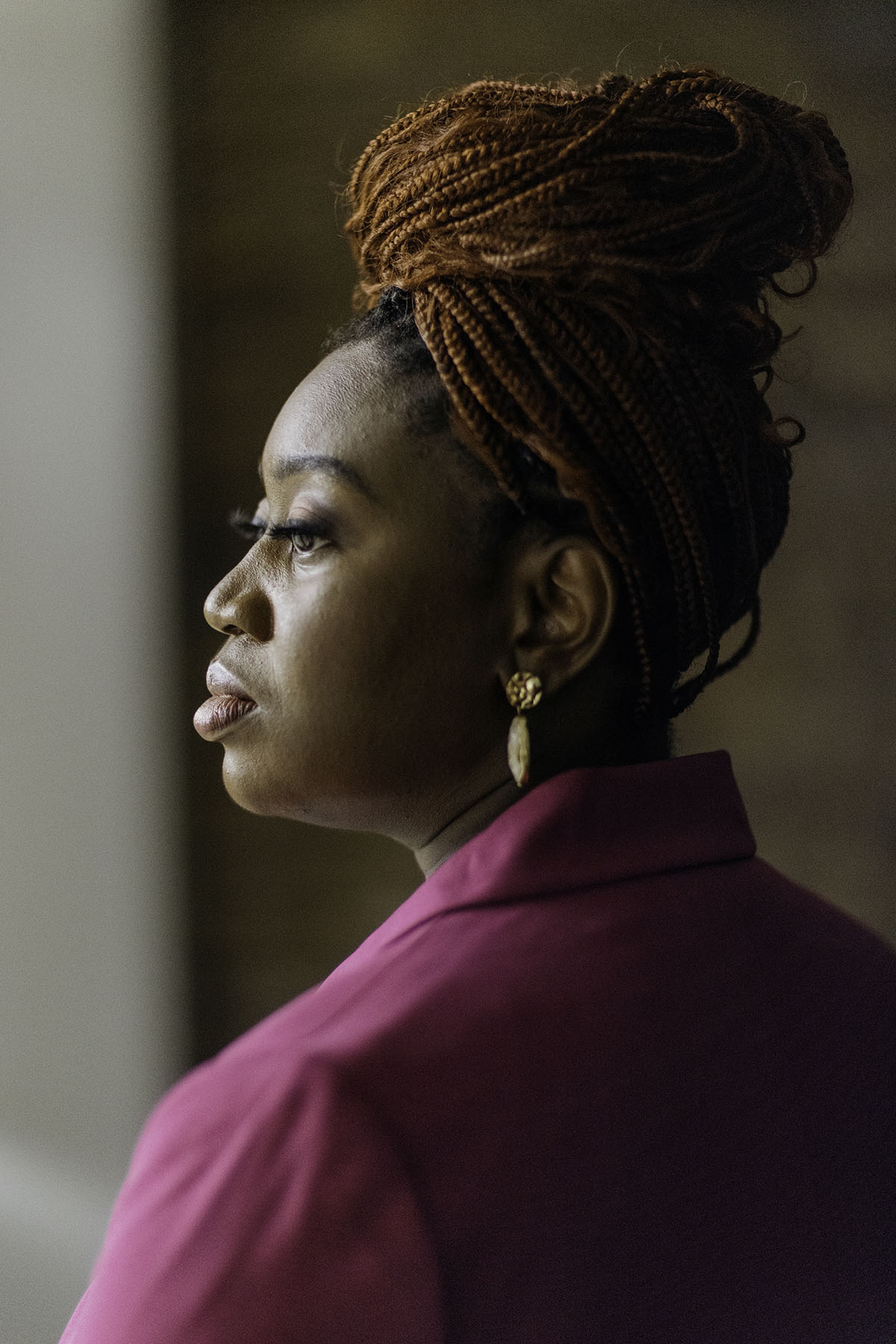
Scott has tweaked the boot camps since they launched in April in order to make them more accessible. She’s made some trainings available on weeknights instead of Saturdays, when people tend to be most busy with family responsibilities. She has sometimes shortened the hours of programming to see if a tighter agenda keeps up engagement. She recently helped organize a virtual training.
As a mother to a newly walking toddler, she tries to think about what the attendees might need. She, like Welchlin, feels strongly about onsite child care. (During the Southaven training, Scott stepped away to breastfeed her child.) She ensures that a meal is provided during the trainings, as well as a gift card. The group set aside roughly $50,000 to run the program this election cycle, according to Scott. They’ve been under budget thanks to partnerships with other civic engagement groups.
Scott believes strongly in the power of Black women organizing their communities.
“We don’t live single-issue lives,” she said. “So to uplift Black women in the room is to say, ‘Hey, I see you. We’re going to work on this together, we’re going to be in community together, and we’re going to be in fellowship together.’”
Scott also wants to find the balance in her work. She’s tried to move away from an unspoken expectation in community organizing that she must be go-go-go. She doesn’t want to burn out, and she wants to be present with her family.
“Rest is resistance,” Scott said, who referenced research on the topic. “And advocates deserve joy.”
When Jessica Orey hears Welchlin’s singing, she perks up. Orey is attending alone, and the music comforts her.
As a young adult, Orey jumped into organizing through a local NAACP chapter. Those meetings also made space for “freedom songs” used at the height of the Civil Rights Movement. It’s why Orey was impressed by its emphasis in Southaven.
“She’s kind of bringing back the old school type-feel of it,” Orey said of Welchlin. “Like, hey, we’re going to sing our way through. This is what’s going to push us to the next level.”
Welchlin said her mentor, Hollis Watkins, the late civil rights activist who founded the voting rights organization Southern Echo, taught her the freedom songs that he once sang at mass organizing meetings.
“It’s teaching a new generation about what the meaning of song is, and what these words mean,” she said. “And so it’s a history lesson, while it’s also a spiritual blessing to our souls.”
Sheneka Bell is also in the room alone, listening along.
At 45, Bell is a longtime voter but has not been active in voter turnout efforts. But politics continues to seep into her life — from the national debate about reproductive rights, to local property rezoning. Last year, Bell joined the local county chapter of the NAACP.
“I have a responsibility to understand what’s going on in my neighborhood and beyond,” she said.
In some ways, Orey felt compelled to be at the boot camp: Her grandmother is Delores Orey, a longtime civil rights activist who worked alongside key leaders of the Civil Rights Movement.
“This is all I know. This is what Big Mama taught us,” said the 36-year-old, referring to her grandmother. “This is what Big Mama pushed for. So if any injustice is around me, it’s like, ‘What would Big Mama do?’ A lot of this stuff is ingrained. It’s a part of my DNA.”
After her grandmother died in 2014, Orey stepped back from community organizing. But she wants to get involved again, and she felt like the boot camp was a first step. Orey has since signed up for roundtable updates and alerts from several civic engagement groups. She recently participated in a GOTV event in Jackson.
“I know it’s time for me as a former advocate,” she said. “I need to get my shoes back in the game. There’s work to be done.”
Since the boot camp, Bell has looked into signing up to be a poll worker. She is open to phone banking, and recently showed her nieces how to check their voter registration statuses.
“I’m new to this space,” she said. “I’ve never done any of this before.”
Welchlin is not surprised that women like Orey and Bell are drawn to these endeavors in Mississippi, a state that played a key role in the long fight for universal voting rights. It is home to historic voter registration drives like Freedom Summer, and it is the birthplace of activists like Fannie Lou Hamer.
Civic engagement groups say the struggles continue.
In July, a federal court ordered Mississippi policymakers to redraw some state legislative maps that they established in 2022, after the court concluded that the maps illegally diluted the political power of Black residents.
Among the areas impacted by the racial gerrymandering is DeSoto County, which includes Southaven, the site of the August boot camp.
Some noted a recent state law over the voters rolls and technical issues at precincts during last year’s close governor’s race. Some polling precincts in Hinds County, home to the capital city of Jackson, ran out of ballots. Long lines were reported and some people were seen leaving polling locations without voting. More than 80 percent of Jackson residents are Black.
The state also has one of the most restrictive disenfranchisement bans in the nation, taking away voting rights from people who are convicted of certain felonies, including nonviolent crimes.
Welchlin cautioned against ignoring inequity around the ballot box in Mississippi, especially as Republican lawmakers advance voting restrictions around the country. They have increasingly claimed without proof that there is widespread voter fraud, and such policies often appear in states with large Black and Brown populations.
“Mississippi is part of the fabric of the struggles in the South,” Welchlin said. “We have a history, and a muscle, and a foundation in which we have built.”
As the boot camps in Mississippi wrap up this election cycle, its ripple effect is coming into focus. A state lawmaker recently expressed interest in running a boot camp. At least one organization is now trying to offer similar programming targeting Black men. And the umbrella organization’s Michigan affiliate has reached out about replicating some of boot camp programming.
“We know that their data is going to look different, but we’re giving them the template to adjust it the way they need,” she said. “It’s a model, and Michigan is going to be testing it.”
Welchin has tried to lean into the joy of the work ahead, despite the obvious obstacles. With Black women by her side, she feels empowered to find a way.
“Good things do come from the South, and we know that Black women have been a part of making that happen,” she said.
To check your voter registration status or to get more information about registering to vote, text 19thnews to 26797.
 Scottie's Playtime