September 7, 1948 3,000 attended a rally to publicly launch the Peace Council in Melbourne, Australia.
September 7, 1957 Barbara Gittings leading a picket in the ’60s Barbara Gittings organized the first New York meeting held for the Daughters of Bilitis, a pioneer lesbian organization. The group was founded two years earlier in San Francisco. Barbara Gittings: Mother of the Gay Rights Movement (This link requires a sign-in on Medium, so I’m going to post it in another entry on its own.)
Cover from their magazine “The Ladder”, October,1968
September 7, 1990 Two British peace activists, Stephen Hancock and Mike Hutchinson known as the Upper Heyford Plowshares were sentenced to 15 months in prison for disabling an F-111 bomber in Oxford, England. A brief History of Direct Disarmament Actions
September 7, 1992 South African troops killed at least 24 people and injured 150 more at an African National Congress (ANC) rally on the border of Ciskei, in South Africa. 50,000 ANC supporters had turned out to demand Ciskei’s re-absorption into South Africa. Ciskei was one of ten black “homelands,” so designated to keep blacks from claiming citizenship in South Africa itself. They were a legal fiction, not recognized by any other country, that was part of the racially separatist apartheid regime. News at the time BBC
September 7, 1996 Two women were arrested for trespass at the Norfolk (Virginia) Naval Base after walking into the base with a banner reading, “Love Your Enemies.”
Since 2016, I’ve felt sort of hyperaware about the potentiality of Russian disinfo because obviously, WikiLeaks and the IRA. Per the Senate Intelligence Committee, in multiple volumes, this was anything but a hoax. The claim Trump didn’t welcome it and appreciate it is more than answered by his campaign’s silence about it and even attempted cover-up. Money was funneled through Facebook and Twitter ads and RW-pressure groups like NRA. I joke that we are still living in 2016 because we are still finding out how that election was, well, weird.
I deleted a post about how weird it was that Benny Johnson was a dupe to launder Russian talking points in the Tenet exploit because I realized that his basic dopiness and right-wing credulity is a whole fucking bigger mood than I was handling at the moment. We get that RW dopey incendiaries are out here–and they are pretty well-funded domestically as it is. Like, you pick a random concern-trolling “Liberty” “Freedom” “Heritage” or “Family”-labelled group from the last 100 years, and it was probably founded by some freaky Christian billionaire bigot family like the DeVos, Wilkes, Prince, Mellon, Coors, Koch, Busch, etc. The family-tree of theocratic and Bircher-light think tankitude has been incestuous and generously endowed since forever.
But where there is money and batshit, you have a real problem–people who love the hell out of money and don’t care what degree of batshit they spew. If you wanted useful idiots for foreign actors, this is one way you could open up a path for useful idiots to wrongfully mobilize people by playing on their fears and so on. Propaganda is cheap and effective. Even when we try to sanction the fuck out of the players to try and make it prohibitively costly to shit in the US litterbox–someone will try it.
Part of the reason why is we have a great big permission-structure to lie on the GOP side of things. We talk about it, but I don’t think we talk about it as much as we need to. The media is in part at fault, but also, money has generated a whole right-wing puke funnel, just feeding viewers like baby birds. And the results of the propaganda: fear and anger–short circuit logical critical thinking pathways. Well-fed ducklings become sitting ducks.
The internet influencer thing though, is even more perverse. There’s no reason to believe these people are anything but cons. I’ve thought of it as the “Triumph of the Swill”, because it’s propaganda without even artistry or competence. It relies on people being poorly educated or getting hopped-up on the idea that contrarianism is “independent thinking”–because you are a super genius of rare qualities, you can see through Big Atmosphere’s lies since Joseph Priestly and reject climate change, or see where that shill Jenner was headed with his vaccination/germ theory nonsense. You have clearly beat the mentality of Darwin and Le Compte de Buffon regarding that evolution jazz, too.
Conspiracy theories proliferate and why not? Anything might be true once anything can be called false.
Why not DARVO Russia and Ukraine? Why not introduce a little Holocaust denial? Why not suggest civil wars are actually good and healthy, or that secession could be beneficial to a large US State?
Harmful, wrongheaded views can be pimped out to attractive or engaging morons, who speak down to controversy-curious people without the tools to resist. They’ll even have you believing education itself is a problem and suggest you do away with it.
I think it’s good it’s being addressed, but the right wing is super-great at trying to say their free speech right are denied whenever they get told to stop being shills for utter bullshit. I get the feeling the pool of people who have been Russian-cash injected and super-bullshit charged will widen. And yes to people maybe being made examples of, because the shit has to stop.
But we clearly have a problem with toxic “elements” in our political environment. Some remediation feels like a good thing. Geting people to realize and care that one side has been enabling foreign propaganda to influence us and to recognize it as a national security threat is very important–that we haven’t been screaming about it enough since 2016 feels like a failure.
Also the Feds need to do Posobiec and Flynn. because I can’t believe those asses aren’t being handled from elsewhere.
August 6, 1890 At Auburn Prison in New York state, William Kemmler became the first person to be executed in the electric chair, developed by the Medico-Legal Society and Harold Brown, a colleague of Thomas Edison.William Kemmler received two applications of 1,300 volts of alternating current. The first lasted for only 17 seconds because a leather belt was about to fall off one of the second-hand Westinghouse generators. Kemmler was still alive. The second jolt lasted until the smell of burning flesh filled the room, about four minutes.
As soon as his charred body stopped smoldering, Kemmler was pronounced dead.
August 6th, 1945 – 8:15 AM Anniversary of Hiroshima
The United States dropped the first atomic bomb used in warfare on Hiroshima, Japan. Hiroshima ruins An estimated 140,000 died from the immediate effects of this bomb and tens of thousands more died in subsequent years from burns and other injuries, and radiation-related illnesses. President Harry Truman ordered the use of the weapon in hopes of avoiding an invasion of Japan to end the war, and the presumed casualties likely to be suffered by invading American troops. The weapon, “Little Boy,” was delivered by a B-29 Superfortress nicknamed the Enola Gay, based on the island of Tinian, and piloted by Colonel Paul W. Tibbets.Voices of the Hibakusha, those injured in the bombings Hiroshima survivor Found watch stopped at the time of explosion Documents related to the decision to drop the atomic bomb On August 6, 1995, up to 50,000 people attended a memorial service commemorating Hiroshima Peace Day on the 50th anniversary of the first atomic bombing.
August 6, 1957 Eleven activists from the Committee for Nonviolent Action (CNVA) were arrested attempting to enter the atomic testing grounds at Camp Mercury, Nevada, the first of what eventually became many thousands of arrests at the Nevada test site.
August 6, 1965 The Voting Rights Act of 1965 was signed by President Johnson, making illegal century-old practices aimed at preventing African Americans from exercising their constitutional right to vote. It created federal oversight of election laws in six Southern states (Alabama, Georgia, Louisiana, Mississippi, South Carolina, and Virginia) and in many counties of North Carolina where black voter turnout was very low. Black voter registration rates were as low as 7% in Mississippi prior to passage of the law; today voter registration rates are comparable for both blacks and whites in these states. The laws has been re-authorized by Congress four times. Introduction to the Voting Rights Act
August 6, 1990 George Galloway The U.S. imposed trade sanctions on Iraq. As a result, the lack of much-needed medicines, water purification equipment and other items led to the death of many innocent Iraqis. According to British Member of Parliament George Galloway in his testimony to a committee of the U.S. Congress on May 17, 2005, these sanctions“ . . . killed one million Iraqis, most of them children, most of them died before they even knew that they were Iraqis, but they died for no other reason other than that they were Iraqis with the misfortune to be born at that time . . . .” When asked on U.S. television if she thought that the death of half a million Iraqi children (due to sanctions on Iraq) was a price worth paying, then U.S. Secretary of State Madeline Albright replied: “This is a very hard choice, but we think the price is worth it.” -60 Minutes (5/12/96) Were Sanctions Worth the Price? by Christopher Hayes
August 6, 1998 Nearly 50,000 people attended a memorial service commemorating Hiroshima Peace Day on the 50th anniversary of the first atomic bombing which killed nearly 200,000 Japanese with a single weapon. The headlines when it happened
August 6, 1998 Calling themselves the Minuteman III Plowshares, two peace activists, Daniel Sicken [pronounced seekin], 56, of Brattleboro, Vermont and Sachio Ko-Yin, 25, of Ridgewood, N.J entered silo N7 in Weld County [near Greeley] in Colorado operated by Warren AFB, Cheyenne, Wyoming. With hammers and their own blood, they symbolically disarmed structures on the launching pad of a Minuteman III nuclear missile silo.
The amount of grift, graft, and corruption during his time as president is stunning. His entire con is to deny reality and repeat the lies so much that people will believe it. He accuses others like President Biden of dealing with China when he was renting an entire floor of one of his properties to the Chinese when he was president. He makes his money scamming people and working with corrupt governments. He made more money easier as president than ever in his life, and he wan’ts that money mill back again. We must not let him. Hugs. Scottie
Paul Robeson, scholar, athlete, musician and leader, defying a racist and red-baiting mob, sang to 15,000 at a Labor Day gathering in Peekskill, New York.
Paul Robeson (at microphone) singing to the Labor Day gathering in Peekskill, New York
September 4, 1954 The Peace Pledge Union (PPU) organized a demonstration against the H-Bomb in London’s Trafalgar Square. The PPU dates back to October 1934. Young Peace Pledge Union members today. The PPU today
September 4, 1957 Elizabeth Eckford and eight other young Negroes were blocked from becoming the first black student at Central High School in Little Rock, Arkansas. Governor Orval Faubus had called out the National Guard to prevent the court-ordered integration of the public schools in the state’s capital. President Dwight Eisenhower eventually sent in federal troops to guarantee the law was enforced. Elizabeth Eckford Read moreElizabeth Eckford followed and taunted by mob, 1957. A very interesting related story:
September 4, 1970 Vietnam Veterans Against the War (VVAW) began Operation RAW (Rapid American Withdrawal). Over the following three days more than 200 veterans, assisted by the Philadelphia Guerilla Theater, staged a march from Morristown, New Jersey, to Valley Forge, Pennsylvania, reenacting the invasion of small rural hamlets along the way. Operation Rapid American Withdrawal 1970-2005: An Exhibition:
September 4, 1978 Simultaneous demonstrations in Moscow’s Red Square and in front of the White House in Washington, D.C. were organized by the War Resisters League, calling for nuclear disarmament.
Last night the Boston Globe published a leaked email from a top volunteer with the Trump campaign, former Massachusetts Republican Party vice chair Tom Mountain, telling volunteers that the Trump campaign “no longer thinks New Hampshire is winnable” and is “pulling back” from that important swing state. He urged volunteers to turn their attention instead to Pennsylvania. After the story dropped, the Trump campaign cut ties with Mountain.
Stephen Collinson of CNN and Isaac Arnsdorf, Josh Dawsey, and Marianne LeVine of the Washington Post reported today that Trump’s team has given up on trying to get Trump to talk about the economy and other issues voters care about. The former president has decided to spend the rest of the campaign attacking Vice President Harris to destroy her popularity and drive voters away from her, rather than trying to attract them to himself. The Washington Post reporters noted that likely voters view Trump unfavorably and his team has concluded that while he can’t improve his own standing, he can damage hers.
Collinson dubbed Trump’s plans a “feral political offensive.”
It is not clear that this will work. As Collinson notes, Harris has refused to get dragged into the gutter with Trump, and Sarah Longwell of The Bulwark, who studies focus groups, notes that voters appear to want to put the nastiness of the past several years behind them. Still, the media-tracking company AdImpact reported that between August 23 and August 29, 57% of the total television spending for political ads was on Republican attacks on Harris.
Trump also continues to demand that Republicans support his attempt to suppress voting. Having failed to pass any of the necessary appropriations bills before going on August recess, Congress will be in a rush when it comes back into session next week. It needs to fund the government before the end of the fiscal year on September 30 in order to prevent a partial shutdown. Last Thursday, Trump told right-wing podcast host Monica Crowley that he would “shut down the government in a heartbeat” unless the government funding package includes the Safeguard American Voter Eligibility (SAVE) Act—which would give credence to the idea that noncitizens are voting in national elections despite the fact it is already illegal—and a bill restricting legal immigration.
Zeeshan Aleem of MSNBC today took public notice of Trump’s “deteriorating ability to clearly communicate.” His speeches “seem to be growing more discursive and difficult to comprehend by the day,” Aleem wrote. “Those speeches are making it hard, if not impossible, for people listening to them to understand what he wants to do with his power in office, and they’re reportedly turning off voters.” A reporter for The Guardian pointed out that attendees at Trump’s rallies are leaving as he rambles for nearly two hours, and complaining that he is “babbling.”
For his part, Trump says his wandering speech is deliberate. He calls it “the weave.” I’ll talk about, like, nine different things, and they all come back brilliantly together, and it’s like, and friends of mine that are, like, English professors, they say, ‘It’s the most brilliant thing I’ve ever seen.’”
Aleem notes that this less-focused, less-capable Trump would be exceptionally dangerous in office a second time. And yet, he was dangerous enough the first time. Today Adam Klasfeld and Ryan Goodman of Just Security released a study showing at least twelve times that Trump used the power of the presidency to retaliate against his political enemies. They note that there is no evidence that President Joe Biden or anyone else at the Biden White House ever took similar actions.
John McCain’s son Jimmy today announced that he has switched his voter registration from Republican to Democrat and will work to elect Vice President Harris and Minnesota governor Tim Walz in 2024. The younger McCain enlisted in the Marine Corps at 17 and is now an intelligence officer in the 158th Infantry Regiment of the Arizona Army National Guard. He said he is speaking out because Trump’s conduct at Arlington National Cemetery was a “violation.”
Last Friday, just before the long weekend, Trump announced that he would vote against a Florida ballot measure that would essentially enshrine in the Florida state constitution the abortion rights formerly protected by the 1973 Roe v. Wade decision. When Trump had bowed to popular support for abortion rights and expressed uneasiness at the state’s current six-week ban—a cutoff reached before most women know they’re pregnant—antiabortion activists launched fierce attacks on him. So, on Friday, Trump switched his position and announced he would vote against restoring access to abortion in Florida.
That announcement has given wings to the Democrats’ messaging about Republicans’ determination to end abortion rights. It did not help the Republicans that more videos have been unearthed in which Republican vice presidential nominee J.D. Vance said that “a childless elite” is ruling the country. He went on to excoriate this elite for what he claimed was their pride that they didn’t have children and that they had abortions, and said “they look down on people who invest their time and their future in their children. And that is a dangerous place to live as a country.” Even a right-wing Newsmax interviewer suggested that he was “painting this group with perhaps a broad brush?”
On October 1, in Louisiana, a law will go into effect that reclassified the drug misoprostol as a controlled dangerous substance. Misoprostol can be used for abortion. It is also used for routine reproductive care and during medical emergencies to treat postpartum hemorrhage. It is on the World Health Organization’s list of essential medications, a list containing those medications that are the most effective and safe to meet a health care system’s most important needs. After antiabortion activists targeted the drug, Louisiana governor Jeff Landry signed a law reclassifying it as a controlled dangerous substance. The reclassification means that the drug will no longer be easily available on obstetric hemorrhage carts.
“Take it off the carts?” one doctor said to Lorena O’Neil of the Louisiana Illuminator. “That’s death. That’s a matter of life or death.”
The Harris campaign said: “Let’s be clear: Donald Trump is the reason Louisiana women who are suffering from miscarriages or bleeding out after birth can no longer receive the critical care they would have received before Trump overturned Roe. Because of Trump, doctors are scrambling to find solutions to save their patients and are left at the whims of politicians who think they know better. Trump is proud of what he’s done. He brags about it. And if he wins, he will threaten to bring the crisis he created for Louisiana women to all 50 states.”
Vice President Harris’s campaign started its “Fighting for Reproductive Freedom” bus tour today in Palm Beach, Florida, where it drove past the Trump Organization’s Mar-a-Lago club. The bus will make at least 50 stops across the country.
Pollster Tom Bonier today continued his examination of new registrants to vote. This time his focus was North Carolina. The pattern he has found across the country continues: “surges in registration are being driven by women.” In North Carolina, he writes, the number of registrants was almost 50% higher during the week of July 21 than in the same week in 2020, and the gender gap was +12 women, compared to +6 women in 2020. The new registrants were +6 Democratic, and 43% were younger than 30.
The Harris-Walz campaign today joined the Democratic National Committee in announcing a transfer of nearly $25 million to support Democratic candidates in down-ballot state and federal races. The Democratic Congressional Campaign Committee and the Democratic Senatorial Campaign Committee will get $10 million each in hopes of supporting a Democratic majority in each chamber of Congress in the new administration.
The Democratic Legislative Campaign Committee, the organization devoted to winning state legislatures, will receive $2.5 million. The Democratic Governors Association and the Democratic Attorneys General Association will get $1 million each.
Finally, today, a federal judge issued a preliminary injunction to stop the Trump campaign from playing the song he likes to dance to at his rallies: “Hold On, I’m Coming.” The estate of Isaac Hayes Jr., the artist who co-wrote the song, filed a copyright infringement lawsuit against Trump, his campaign, and a number of his allies, noting that they have never obtained a public performance license for the song although they have used it at least 133 times.
Happy Labor Day! Let’s Talk About Some Awesome Ladies Of The Labor Movement by Rebecca SchoenkopfRead on Substack
Because it was not actually just a bunch of flannel-wearing white dudes.
A version of this article was initially published on May 1, 2019. Happy Labor Day, we’re taking the day off!
When we talk about the history of feminism, we tend to think about the causes and struggles of middle class white women. When we talk about labor history, we tend to think about the causes and struggles of white working class men.
And that is some absolute bullshit.
Working class women, very often women of color and immigrant women, were, are and always have been the backbone of the labor movement. They were working and organizing well before Second Wave Feminism “made it possible” for women to enter the workforce. They’re the ones who first fought for equal pay, and they’re the ones who were doing the bulk of feminist work and activism during the years in between getting the right to vote and The Feminine Mystique. They are still fighting today.
So, since it’s Labor Day, let’s celebrate the hell out of them, starting with the woman who started it all.
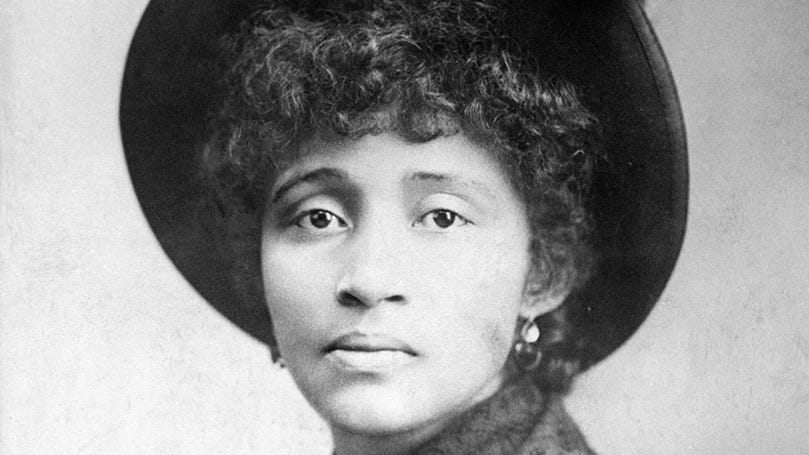
Lucy Parsons
‘Governments never lead; they follow progress. When the prison, stake or scaffold can no longer silence the voice of the protesting minority, progress moves on a step, but not until then.’
“More dangerous than a thousand rioters,” anarchist Lucy Eldine Gonzalez Parsons was a writer, orator, one of the founders of the Industrial Workers of the World, and tireless campaigner for the rights of people of color, all women, and all workers. Her husband, Albert Parsons, was one of the Haymarket martyrs.
We, the women of this country, have no ballot even if we wished to use it … but we have our labor. We are exploited more ruthlessly than men. Wherever wages are to be reduced, the capitalist class uses women to reduce them, and if there is anything that you men should do in the future, it is to organize the women.
Though Parsons and Emma Goldman were widely regarded as the most prominent female anarchists of the day, they very notably did not get along so well. Parsons believed that oppression based on gender and race was a function of capitalism and would be eliminated when capitalism was eliminated, whereas Goldman believed such oppression was inherent in all things. Parsons was all class struggle all the time, and felt that the “intellectual anarchists” like Goldman spent too much time bothering with appealing to the middle class.
One of her most important contributions to the labor movement was the concept of factory takeovers.
“My conception of the strike of the future is not to strike and go out and starve, but to strike and remain in, and take possession of the necessary property of production.”
Parsons is best known for being the woman who really started the celebration of May Day as a day for workers’ rights — leading a parade to commemorate the anniversary of the Haymarket Affair. Soon, nearly every other country in the world followed suit and proclaimed this day International Worker’s Day. Alas, here in America, we go with the less radical and more picnic-y Labor Day that we are celebrating today, because Grover Cleveland thought a federal holiday commemorating the Haymarket Affair would encourage people to become anarchists and socialists, and no thank you, he did not want that.
Anna LoPizzo
‘Hearts starve as well as bodies, give us bread but give us roses too’
Not much is known about Anna LoPizzo, other than that she was a 34-year-old mill worker who was murdered by police officer Oscar Benoit during the 1912 Lawrence Textile Strike — also known as the Bread and Roses Strike. Initially, police tried to charge two IWW organizers who were miles away for her murder, even though literally everyone there had seen Benoit shoot her.
The reason for the strike in the first place was that the textile mills of Lawrence, Massachusetts, cut worker pay after the state cut the number of hours women could legally work from 56 down to 54. The Industrial Workers of the World, led by Elizabeth Gurley Flynn (we’ll get to her in a minute), organized more than 20,000 workers of more than 40 different nationalities to demand they get their fair wages. One of the primary tactics used in the strike was sending the starving families of the mill workers on a tour to New York City so that people there could see for themselves what these low wages were doing to children. Between that and LoPizzo’s death, sympathy was on the side of the workers. Congressional hearings into the conditions of the mills were held, and the mills themselves ended up settling the strike by giving all workers across New England a 20 percent raise.
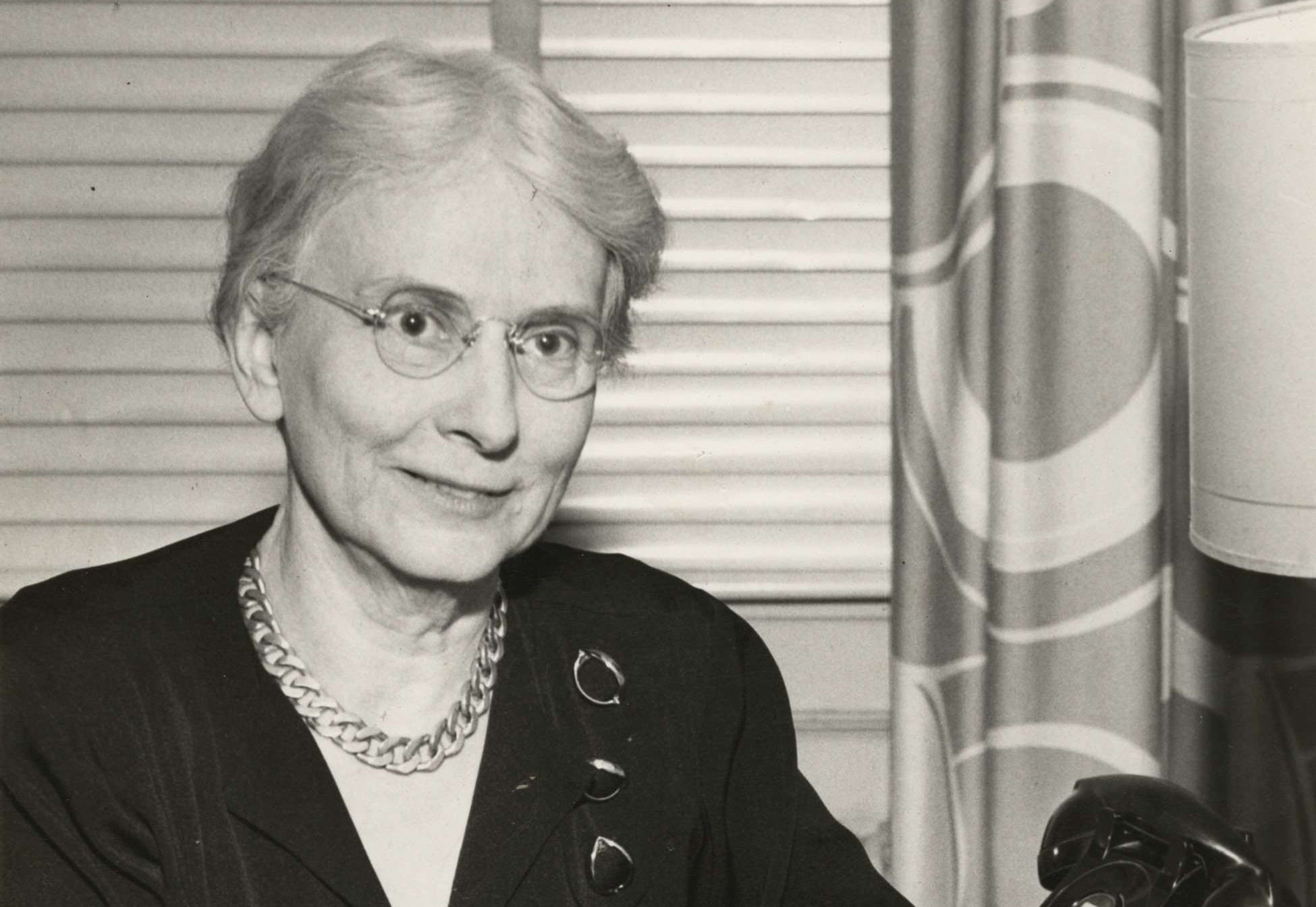
Lillian Wald
‘Human interest and passion for human progress break down barriers centuries old.’
Susan B. Anthony isn’t the only important feminist buried in the Mount Hope Cemetery in my hometown of Rochester, New York. There is another. Her name was Lillian Wald, and she was a total fucking bad ass. She wasn’t just a suffragist — she was also an early advocate for healthcare for all people regardless of economic class or citizenship, a founding member of the NAACP, lobbied against child labor, advocated for the rights of immigrants, helped to found the Women’s Trade Union League, and was an anti-war activist. Wald also founded the Henry Street Settlement House in New York City, which provides — to this day — social services, education, and health care to the impoverished. And she was active in the ACLU.
WHY THE HELL IS SHE NOT MORE FAMOUS? I am legitimately bothered by this and bring it up often.
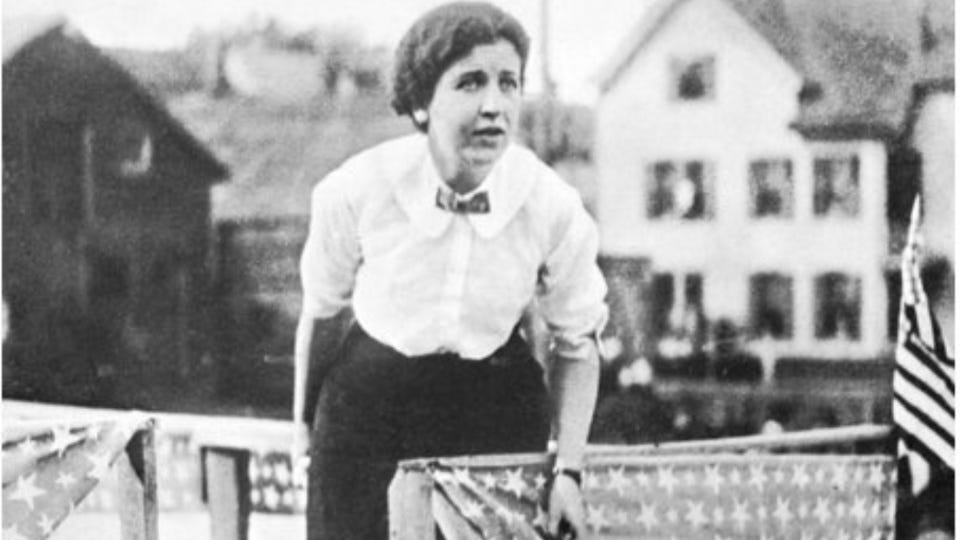
Elizabeth Gurley Flynn
‘The IWW has been accused of pushing women to the front. This is not true. Rather, the women have not been kept in back, and so they have naturally moved to the front.’
Hey! You know who was super freaking awesome? Elizabeth Gurley Flynn. As previously mentioned, she was an organizer with Industrial Workers of the World who helped organize the Lawrence Textile Strike. She also organized a hell of a lot of other strikes across the country, helped found the ACLU, and was known for the creative tactics she used to elicit sympathy and support for the American worker.
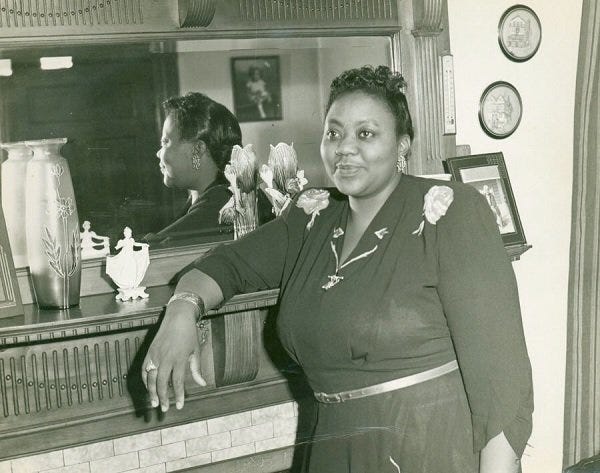
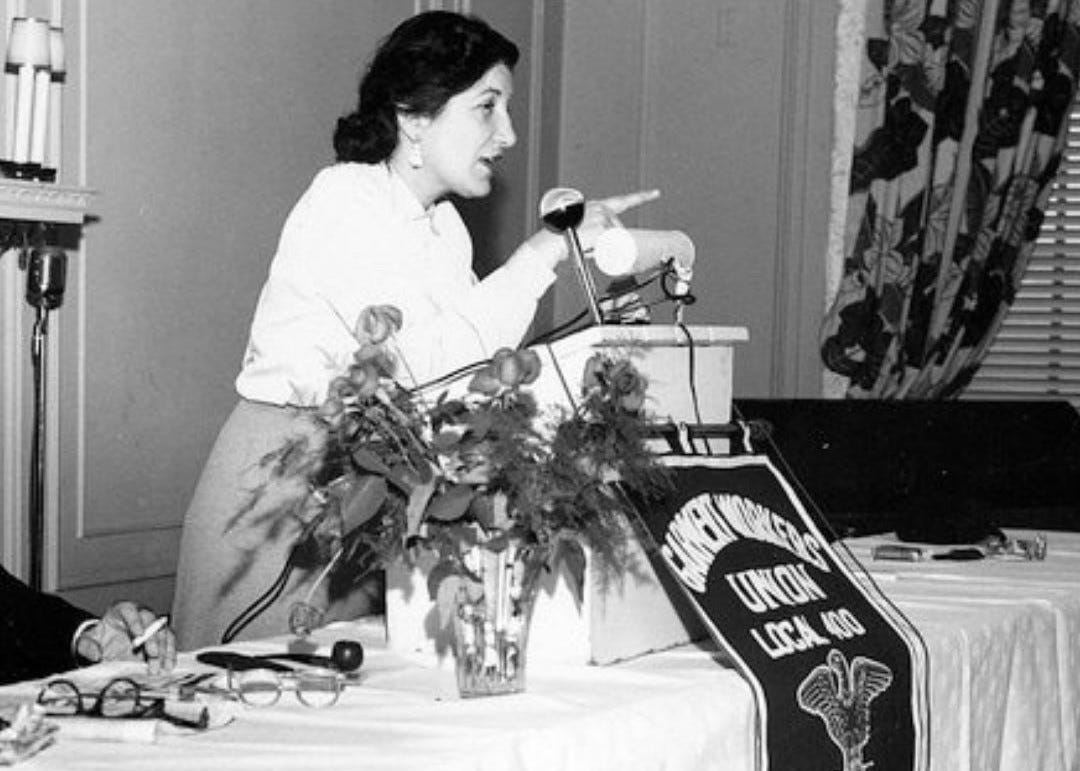
Hattie Canty
’Coming from Alabama, this seemed like the civil rights struggle … the labor movement and the civil rights movement, you cannot separate the two of them.’
When Hattie Canty’s husband died in 1972, she found herself supporting eight children on her own. She found work as a maid at a Las Vegas hotel where she joined the Las Vegas Hotel and Culinary Workers Union Local 226. By 1990, she was president of that union, leading one of the longest strikes in American history — a six year strike of hospitality workers which, happily, ended in victory.
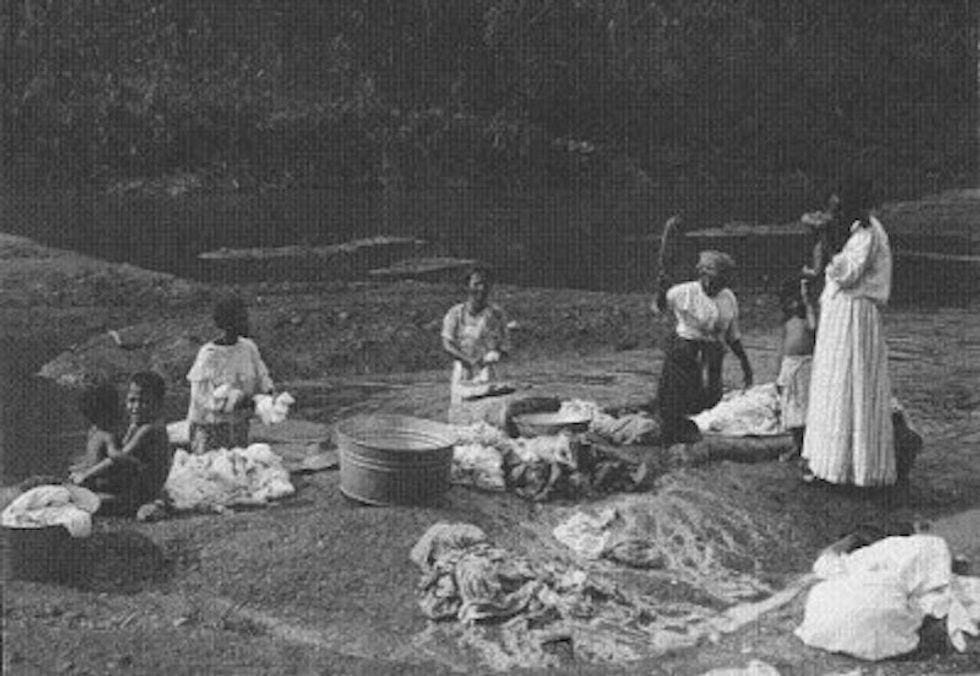
The Women of The Atlanta Washerwomen’s Strike
We mean business this week or no washing!
Back in the 1880s, only two decades after the Civil War ended, the most common occupation for Black women was as laundresses — this was largely because if poor white families were going to hire anyone to do chores for them at all, they were going to hire someone to do their laundry. These women were independent workers, often working from their own homes and making their own soap, and they only made about $4 a month. (Average non-Black-woman laborers earned about $35 a month in 1880.)
One day in 1881, about 20 of them got together and decided that $4 a month was some bullshit for all the work they were doing and decided to go on strike and demand wages of $1 for every 12 pounds of washing. Three weeks later, 3,000 other women joined them. Unsurprisingly, the city freaked out. They fined any participants $25 — which was a lot of money when you only made $4 a month — and they offered tax breaks to any corporation that would come down there to start a commercial steam cleaning business. Still, the women did not back down.
Eventually, people got really sick of doing their own laundry, and the city decided to back down on the fines, and accede to their demands for fear that the unrest would spread to other industries.
Dolores Huerta
‘Every minute a chance to change the world.’
Dolores Huerta, along with Cesar Chavez, helped to organize the National Farmworkers Association, which later became United Farm Workers. She wasn’t a farmworker herself — rather, she was an elementary school teacher who was tired of seeing the children she taught living in poverty because their parents were not making enough money as farmworkers.
I couldn’t tolerate seeing kids come to class hungry and needing shoes. I thought I could do more by organizing farm workers than by trying to teach their hungry children.
Together with Chavez, Huerta organized the successful Delano Grape Strike (or as your mom calls it, “that time we couldn’t eat grapes for five years” or as Rebecca’s mom calls it “serious people don’t care if a boycott ‘ends'”), which led to better wages and working conditions for farmworkers, and she has continued working as an activist and an organizer ever since.
Angela Bambace
‘We did it with fear.’
Though she’s not as well known as some of the other women on here, Angela Bambace, an organizer for the International Ladies Garment Worker’s Union who started unionizing her fellow shirtwaist factory workers at age 18, is a personal hero of mine, along with her sister Maria. Angela was known to punch strikebreakers in the nose, which was pretty freaking badass.
She also left her husband and a traditional marriage in which she was confined to “making tomato sauce and homemade gnocchi” — and lost her parental rights in doing so, because back then, women didn’t have any — to fight for workers’ rights on the front lines. She was the first woman woman elected Vice-President of the ILGWU, which previously only had male leadership, where she worked from 1936 until 1972.
May Chen
’The Chinatown community then had more and more small garment factories and the Chinese employers thought they could play on ethnic loyalties to get the workers to turn away from the union. They were very, very badly mistaken.’
May Chen, also of the International Ladies Garment Worker’s Union, led the New York Chinatown strike of 1982 — 20,000 workers strong and one of the largest strikes in American history. As a result of the strike, employers cut back on wage cuts, gave workers time off for holidays and hired bilingual interpreters in order to accommodate the needs of immigrant workers.
Lucy Randolph Mason
‘When I came South I had no idea of the frequency of attacks on people peacefully pursuing legitimate purposes, I am appalled at the disregard of the most common civil rights and the dangers of bodily harm to which organizers often are exposed”‘
Lucy Randolph Mason was an interesting one. She was a well-off Southern lady from Virginia, related to George Mason (author of the Virginia Declaration of Rights), Supreme Court Justice John Marshall, and, uh, Robert E. Lee. So, you know, you might have an idea in your head about what her deal might be. And you would be so wrong.
So, despite being from this very fancy family, Lucy goes and gets a job as a secretary for the YWCA at 20. In 1918, she gets into the whole suffragette thing. Women get the vote, but Lucy’s not done. She starts organizing for labor rights and integration and ending white supremacy in the South. She organizes interfaith, integrated unions in the South, which you can imagine was a pretty big deal at that time. She does it through the YWCA. She writes a pamphlet telling consumers to boycott companies that don’t treat their workers well. Eventually, she becomes the CIO’s ambassador to the South and spends the next 16 years of her life going to all these small towns where bad things would happen to anyone who tried to unionize, and explaining workers’ rights and why integration is good and racism is bad to pretty much anyone with any kind of power. Neat!
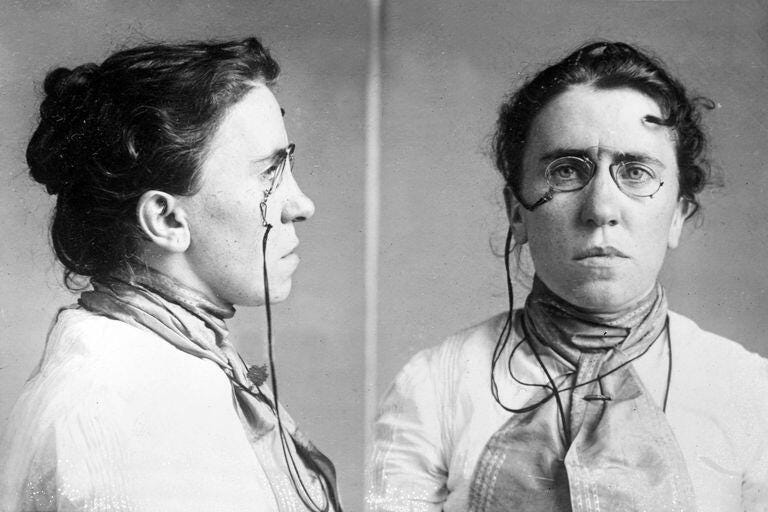
Emma Goldman
‘Ask for work, if they do not give you work, ask for bread, if they will not give you bread, steal bread.’
Though not a union organizer by trade, anarcha-feminist Emma Goldman’s advocacy for workers’ rights and human dignity and freedom empowered workers and organizers throughout the country, and motivated them to stand up for their own rights. She was considered the most dangerous woman in America for a reason.
She was a feminist, an anti-racist, an atheist, an advocate of free love, an opposer of the institution of marriage and — very unusually for the time (she pretty much started right after Haymarket, which was 1886, and continued until her death in 1940) — one of the first advocates of gay rights.
“It is a tragedy, I feel, that people of a different sexual type are caught in a world which shows so little understanding for homosexuals and is so crassly indifferent to the various gradations and variations of gender and their great significance in life.”
I could probably go on about Emma Goldman forever, but I have to get to other people and also this is not my sophomore year in college.
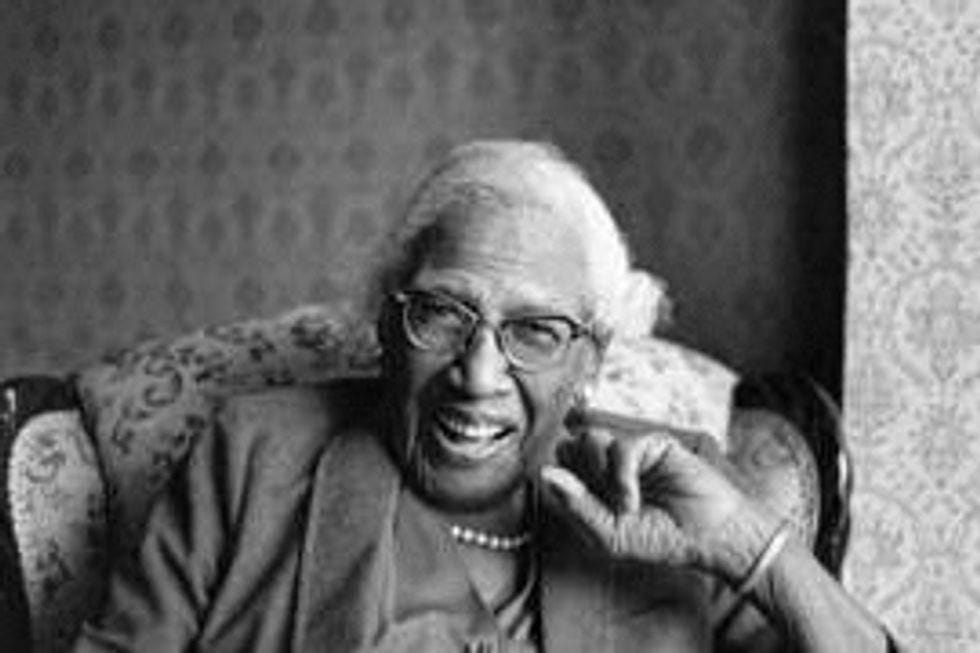
Rosina Tucker
‘I looked him right in the eye and banged on his desk and told him I was not employed by the Pullman company and that my husband had nothing to do with any activity I was engaged in … I said, ‘I want you to take care of this situation or I will be back.’ He must have been afraid … because a black woman didn’t speak to a white man in this manner. My husband was put back on his run.’
Rosina Tucker is best-known for helping to organize the first Black labor union, The Brotherhood of Sleeping Car Porters, started by A. Philip Randolph in 1925. A Brotherhood? But she was a woman, you say! Well, the Pullman porters wanted to organize, but they were afraid of losing their jobs — with good reason, because their bosses kept trying to fire them for trying to unionize. So Rosina and other wives of the porters got together and started the Ladies Auxiliary of the Brotherhood of Sleeping Car Porters in order to raise funds to start the union.
In 1963, along with A. Philip Randolph of the BSCP, she helped organize the March on Washington for Jobs and Freedom, and continued to be active in civil rights and labor rights until she passed away in 1987, at the age of 105.
The women on this list, along with the many others who also fought for labor rights in this country and others, didn’t only fight a fight for workers. They fought a feminist fight, they fought for civil rights, they fought for human rights — they understood the interconnectedness of it all, they understood that without economic justice there is no social justice and without social justice there is no economic justice. They understood the way that the labor movement could be used as a catalyst for making social change possible at a time when they didn’t have any political support or power — and that’s a thing we could all do well to remember ourselves.

 Barbara Gittings leading a picket in the ’60s


 Hiroshima survivor

 George Galloway
 Sachio Ko-Yin and Daniel Sicken
 Young Peace Pledge Union members today.
 Elizabeth Eckford