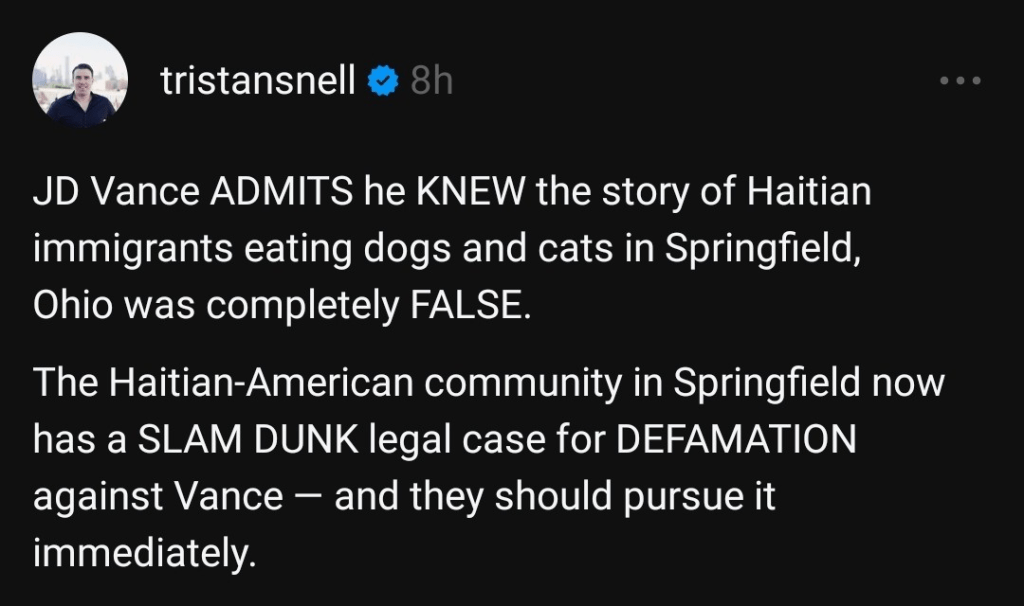
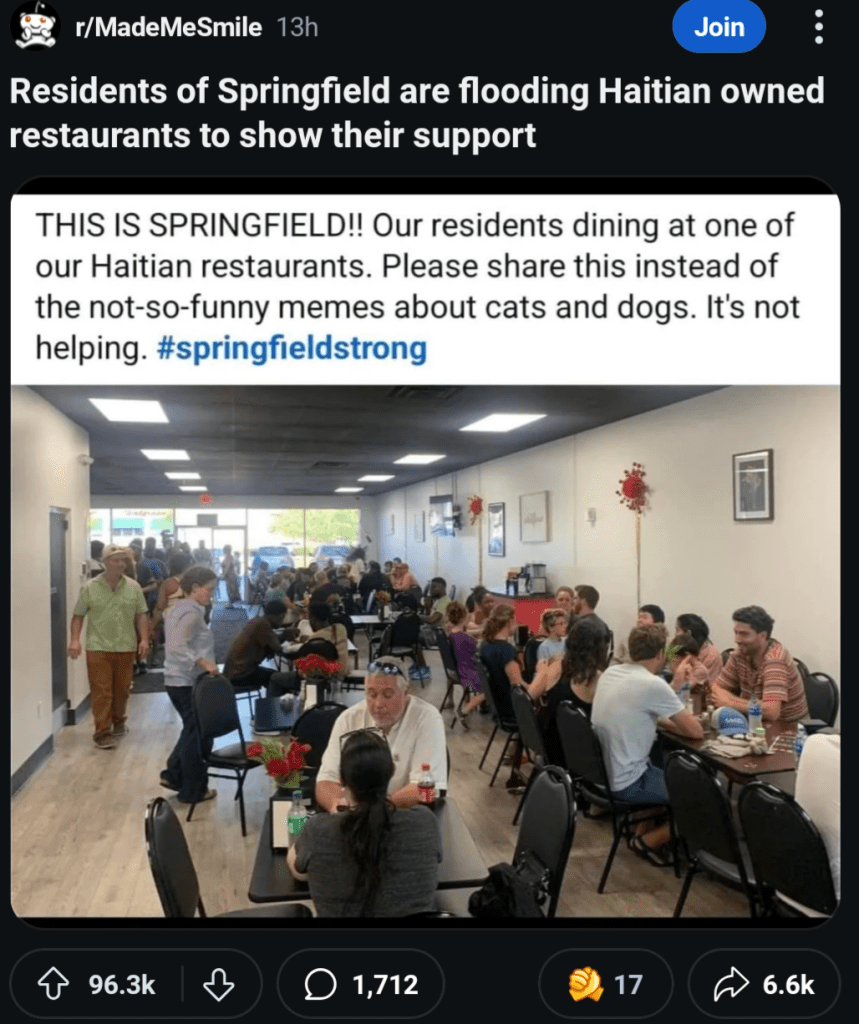
Let’s talk about Trump, Vance, vetoes, and a lack of discussion….

Monday at the Movies on Tuesday

reblog from hecatedemeter:

Barbara Gittings: Mother of the Gay Rights Movement

(From the link on Peace History.)

Day 2 of the Pride 30 Project for Pride Month, 2018.

Jeffry J. Iovannone published in Queer History For the People Jun 2, 2018

Barbara Gittings was a lover of books. She realized, from a young age, that she also loved girls. So when, in 1949, she left Wilmington, Delaware to attend Northwestern University, she did what any bookish young lesbian would do: research homosexuality in the school’s library. What Gittings found was not comforting. The vast majority of sources were written by medical professionals and described homosexuality as an illness or a perversion. She became so consumed with spending time in various Chicago libraries that she neglected her coursework and flunked out of school. But as a result of the discouraging information she found, an activist was born. With passion, determination, and what she would come to refer to as “gay gumption,” Gittings would spend the rest of her life working, in various ways, to correct those lies she found in the pages of books and scientific journals on the library shelves.

Gittings moved to Philadelphia in 1950 and supported herself with part-time clerical work. She continued to read everything she could find on homosexuality and, as part of her search, discovered Donald Webster Cory’s The Homosexual in America: A Subjective Approach, originally published in 1951. Gittings was particularly impressed with Cory’s arguments that gays and lesbians constituted a large unrecognized minority who deserved civil rights and his attempts to cultivate empathy in his readers by outlining the difficulties faced by American homosexuals. She wrote to Cory’s publisher and discovered he lived in New York City. The two met on several occasions, and Cory informed Gittings of a newly-formed gay organization in Los Angeles: the Mattachine Society, founded in 1950 by Harry Hay.

In the summer of 1956, when she was on vacation from her office job, Gittings boarded a plane to Los Angeles and visited the office of ONE, Inc., a homophile organization who had amicably split from the Mattachine Society in 1952. The members of ONE, Inc. informed her of the existence of a San Francisco-based organization for lesbians, the Daughters of Bilitis (DOB), founded in 1955 by lesbian partners Del Martin and Phyllis Lyon.

Gittings once again boarded a plane, this time bound for San Francisco. The DOB were, fatefully, having a meeting that very evening in a member’s apartment. The meeting was the first time in her life Gittings would interact with a group of lesbians outside of a bar setting. Two years later, in 1958, Gittings officially joined the DOB and was tapped by Martin and Lyon to start an East Coast chapter of the organization based in New York City. With her co-founder, Marion Glass, Gittings built the chapter into the largest in the country.

In 1963, Gittings, whose enthusiasm and knowledge of literature left an impression on Martin and Lyon, was tapped to be the editor of The Ladder, the DOB’s national magazine for gay women. Gittings transformed The Ladder from what was essentially a newsletter to a national magazine respected within gay circles. With the help of her partner, Kay “Tobin” Lahusen, whom she met in 1961 at a DOB picnic in Rhode Island, Gittings replaced the amateurish illustrations that typically adorned the cover of The Ladder with photographs taken by Lahusen of actual lesbians who appeared confident and happy.

Gittings began to take The Ladder in an increasingly militant direction, reporting on protests, questioning the merits of various activist strategies such as picketing, and engaging in debates with so-called “experts,” arguing that homosexuality was a social and cultural problem, not a psychological problem. The activist bent of The Ladder under Gittings’ editorship alarmed the West Coast leadership of the DOB. When Gittings, amidst her many activities on behalf of gay rights, was late with the August 1966 issue, Martin and Lyon used her tardiness as an excuse to oust her as editor.

Gittings would also find a kindred spirit in Frank Kameny, who she credited as the first person to articulate a fully coherent philosophy of gay rights. She and Lahusen partnered with Mattachine Washington, of which Kameny was a co-founder, working alongside other lesbians and gay men to directly challenge the federal government. Gittings participated in the first picket of the White House for homosexual rights on April 17th of 1965.

Gittings worked with Kameny and other activists to lobby the American Psychiatric Association (APA) to remove homosexuality as a diagnostic category from the Diagnostic and Statistical Manual (DSM). At the APA’s 1972 conference, held in Dallas, Texas, Gittings, Kameny, and Lahusen created a display entitled “Gay, Proud, and Healthy: The Homosexual Community Speaks.” The exhibit, which featured photographs of gay couples taken by Lahusen, was adorned with the word “LOVE” in bold letters and portrayed gay people as healthy and happy, not as patients who were tormented and in need of a cure. In December of 1973, the APA board of trustees voted to pass a resolution to remove homosexuality from the DSM, effectively declassifying it as a mental illness.

Gittings was a lifelong bibliophile, and though she recognized the importance of taking on the federal government and institutions such as the APA, she never lost sight of the “lies in the libraries” she discovered as a college freshman and the importance of gay representation. In 1970, she joined the American Library Association’s (ALA) newly-formed Task Force on Gay Liberation (TFGL). The TFGL, whose mission was to provide support for gay librarians within the profession and increase gay representation in libraries, was glad to have a veteran activist like Gittings join their ranks.

With the help of Israel Fishman, the first coordinator of the TFGL, Gittings organized a gay kissing booth — titled “Hug-a-Homosexual: Free Kisses” — for the 1971 ALA conference in Dallas, Texas. While the group could have created a nice display featuring gay books, periodicals, and their bibliography, they instead decided to make their presence known by showing gay love live. The publicity was better than Gittings and the TFGL could have imagined, and continued to spark discussions within the ALA over the next year.

In 1999, in honor of her contributions to create more visibility for gays and lesbians in libraries and in the profession, Gittings was awarded a lifetime membership at the annual ALA conference, held that year in New Orleans, Louisiana. The ALA also named an award after Gittings as part of their Stonewall Book Awards, sponsored by the Gay, Lesbian, Bisexual, and Transgender Round Table (GLBTRT), the contemporary iteration of the TFGL. The Stonewall Book Award-Barbara Gittings Literature Award is given annually for works of fiction that exhibit “exceptional merit relating to the LGBT experience.”

Barbara Gittings died on February 18th, 2007 at the age of 74 after a long battle with breast cancer. In a 1999 interview with American Libraries magazine, she summarized her career as a gay activist with the wit and wisdom she was known for:

“As a teenager, I had to struggle alone to learn about myself and what it meant to be gay. Now for 48 years I’ve had the satisfaction of working with other gay people all across the country to get the bigots off our backs, to oil the closet door hinges, to change prejudiced hearts and minds, and to show that gay love is good for us and for the rest of the world too. It’s hard work — but it’s vital, and it’s gratifying, and it’s often fun!”

Trump deputy campaign manager identified in Arlington National Cemetery dustup

September 5, 20246:47 PM ET By Stephen Fowler, Quil Lawrence, Tom Bowman

One of two staffers involved in the altercation at Arlington National Cemetery is a deputy campaign manager for Donald Trump’s reelection bid, NPR has learned. The former president insisted this week the incident did not happen, highlighting a growing disconnect between the messaging of the candidate and his campaign. NPR is identifying both staffers after the campaign’s conflicting responses to the incident last week outside Section 60 of the cemetery, where many casualties of Iraq and Afghanistan are buried.

The two staffers, according to a source with knowledge of the incident, are deputy campaign manager Justin Caporale and Michel Picard, a member of Trump’s advance team.

Caporale is a one time aide to former first lady Melania Trump who left the White House to work for Florida Gov. Ron DeSantis before returning to the Trump campaign. He was also listed as the on-site contact and project manager for the Women for America First rally in Washington, D.C. on Jan. 6, 2021 where Trump urged the crowd to “stop the steal” before some of them stormed the U.S. Capitol.

After Trump participated in a wreath laying ceremony on the third anniversary of the deadly bombing at Abbey Gate in Afghanistan that killed 13 U.S. service members, Trump visited Section 60 at the invitation of some family members and friends of the fallen soldiers.

ANC rules, that had been made clear to the Trump campaign in advance, say that only an official Arlington photographer can take pictures or film in Section 60. When an ANC employee tried to enforce the rules, she was verbally abused by the two Trump campaign operatives, according to a source with knowledge of the incident. Picard then pushed her out of the way according to two Pentagon officials. (snip-More)

https://www.npr.org/2024/09/05/nx-s1-5101991/trump-campaign-arlington-national-cemetery-staff-debate

Some Awesome Ladies Of The Labor Movement

Happy Labor Day! Let’s Talk About Some Awesome Ladies Of The Labor Movement by Rebecca Schoenkopf Read on Substack

Because it was not actually just a bunch of flannel-wearing white dudes.

A version of this article was initially published on May 1, 2019. Happy Labor Day, we’re taking the day off! 

When we talk about the history of feminism, we tend to think about the causes and struggles of middle class white women. When we talk about labor history, we tend to think about the causes and struggles of white working class men.

And that is some absolute bullshit.

Working class women, very often women of color and immigrant women, were, are and always have been the backbone of the labor movement. They were working and organizing well before Second Wave Feminism “made it possible” for women to enter the workforce. They’re the ones who first fought for equal pay, and they’re the ones who were doing the bulk of feminist work and activism during the years in between getting the right to vote and The Feminine Mystique. They are still fighting today.

So, since it’s Labor Day, let’s celebrate the hell out of them, starting with the woman who started it all.

Lucy Parsons

‘Governments never lead; they follow progress. When the prison, stake or scaffold can no longer silence the voice of the protesting minority, progress moves on a step, but not until then.’  

“More dangerous than a thousand rioters,” anarchist Lucy Eldine Gonzalez Parsons was a writer, orator, one of the founders of the Industrial Workers of the World, and tireless campaigner for the rights of people of color, all women, and all workers. Her husband, Albert Parsons, was one of the Haymarket martyrs.

We, the women of this country, have no ballot even if we wished to use it … but we have our labor. We are exploited more ruthlessly than men. Wherever wages are to be reduced, the capitalist class uses women to reduce them, and if there is anything that you men should do in the future, it is to organize the women.

Though Parsons and Emma Goldman were widely regarded as the most prominent female anarchists of the day, they very notably did not get along so well. Parsons believed that oppression based on gender and race was a function of capitalism and would be eliminated when capitalism was eliminated, whereas Goldman believed such oppression was inherent in all things. Parsons was all class struggle all the time, and felt that the “intellectual anarchists” like Goldman spent too much time bothering with appealing to the middle class.

One of her most important contributions to the labor movement was the concept of factory takeovers. 

“My conception of the strike of the future is not to strike and go out and starve, but to strike and remain in, and take possession of the necessary property of production.”

Parsons is best known for being the woman who really started the celebration of May Day as a day for workers’ rights — leading a parade to commemorate the anniversary of the Haymarket Affair. Soon, nearly every other country in the world followed suit and proclaimed this day International Worker’s Day. Alas, here in America, we go with the less radical and more picnic-y Labor Day that we are celebrating today, because Grover Cleveland thought a federal holiday commemorating the Haymarket Affair would encourage people to become anarchists and socialists, and no thank you, he did not want that.

Anna LoPizzo

‘Hearts starve as well as bodies, give us bread but give us roses too’  

Not much is known about Anna LoPizzo, other than that she was a 34-year-old mill worker who was murdered by police officer Oscar Benoit during the 1912 Lawrence Textile Strike — also known as the Bread and Roses Strike. Initially, police tried to charge two IWW organizers who were miles away for her murder, even though literally everyone there had seen Benoit shoot her.

The reason for the strike in the first place was that the textile mills of Lawrence, Massachusetts, cut worker pay after the state cut the number of hours women could legally work from 56 down to 54. The Industrial Workers of the World, led by Elizabeth Gurley Flynn (we’ll get to her in a minute), organized more than 20,000 workers of more than 40 different nationalities to demand they get their fair wages. One of the primary tactics used in the strike was sending the starving families of the mill workers on a tour to New York City so that people there could see for themselves what these low wages were doing to children. Between that and LoPizzo’s death, sympathy was on the side of the workers. Congressional hearings into the conditions of the mills were held, and the mills themselves ended up settling the strike by giving all workers across New England a 20 percent raise.

Lillian Wald

‘Human interest and passion for human progress break down barriers centuries old.’

Susan B. Anthony isn’t the only important feminist buried in the Mount Hope Cemetery in my hometown of Rochester, New York. There is another. Her name was Lillian Wald, and she was a total fucking bad ass. She wasn’t just a suffragist — she was also an early advocate for healthcare for all people regardless of economic class or citizenship, a founding member of the NAACP, lobbied against child labor, advocated for the rights of immigrants, helped to found the Women’s Trade Union League, and was an anti-war activist. Wald also founded the Henry Street Settlement House in New York City, which provides — to this day — social services, education, and health care to the impoverished. And she was active in the ACLU.

WHY THE HELL IS SHE NOT MORE FAMOUS? I am legitimately bothered by this and bring it up often.

Elizabeth Gurley Flynn

‘The IWW has been accused of pushing women to the front. This is not true. Rather, the women have not been kept in back, and so they have naturally moved to the front.’

Hey! You know who was super freaking awesome? Elizabeth Gurley Flynn. As previously mentioned, she was an organizer with Industrial Workers of the World who helped organize the Lawrence Textile Strike. She also organized a hell of a lot of other strikes across the country, helped found the ACLU, and was known for the creative tactics she used to elicit sympathy and support for the American worker.

Hattie Canty

’Coming from Alabama, this seemed like the civil rights struggle … the labor movement and the civil rights movement, you cannot separate the two of them.’ 

 When Hattie Canty’s husband died in 1972, she found herself supporting eight children on her own. She found work as a maid at a Las Vegas hotel where she joined the Las Vegas Hotel and Culinary Workers Union Local 226. By 1990, she was president of that union, leading one of the longest strikes in American history — a six year strike of hospitality workers which, happily, ended in victory.

The Women of The Atlanta Washerwomen’s Strike

We mean business this week or no washing!  

Back in the 1880s, only two decades after the Civil War ended, the most common occupation for Black women was as laundresses — this was largely because if poor white families were going to hire anyone to do chores for them at all, they were going to hire someone to do their laundry. These women were independent workers, often working from their own homes and making their own soap, and they only made about $4 a month. (Average non-Black-woman laborers earned about $35 a month in 1880.)

One day in 1881, about 20 of them got together and decided that $4 a month was some bullshit for all the work they were doing and decided to go on strike and demand wages of $1 for every 12 pounds of washing. Three weeks later, 3,000 other women joined them. Unsurprisingly, the city freaked out. They fined any participants $25 — which was a lot of money when you only made $4 a month — and they offered tax breaks to any corporation that would come down there to start a commercial steam cleaning business. Still, the women did not back down.

Eventually, people got really sick of doing their own laundry, and the city decided to back down on the fines, and accede to their demands for fear that the unrest would spread to other industries.

Dolores Huerta

‘Every minute a chance to change the world.’

Dolores Huerta, along with Cesar Chavez, helped to organize the National Farmworkers Association, which later became United Farm Workers. She wasn’t a farmworker herself — rather, she was an elementary school teacher who was tired of seeing the children she taught living in poverty because their parents were not making enough money as farmworkers.

I couldn’t tolerate seeing kids come to class hungry and needing shoes. I thought I could do more by organizing farm workers than by trying to teach their hungry children.

Together with Chavez, Huerta organized the successful Delano Grape Strike (or as your mom calls it, “that time we couldn’t eat grapes for five years” or as Rebecca’s mom calls it “serious people don’t care if a boycott ‘ends'”), which led to better wages and working conditions for farmworkers, and she has continued working as an activist and an organizer ever since.

Angela Bambace

‘We did it with fear.’

Though she’s not as well known as some of the other women on here, Angela Bambace, an organizer for the International Ladies Garment Worker’s Union who started unionizing her fellow shirtwaist factory workers at age 18, is a personal hero of mine, along with her sister Maria. Angela was known to punch strikebreakers in the nose, which was pretty freaking badass.

She also left her husband and a traditional marriage in which she was confined to “making tomato sauce and homemade gnocchi” — and lost her parental rights in doing so, because back then, women didn’t have any — to fight for workers’ rights on the front lines. She was the first woman woman elected Vice-President of the ILGWU, which previously only had male leadership, where she worked from 1936 until 1972.

May Chen

’The Chinatown community then had more and more small garment factories and the Chinese employers thought they could play on ethnic loyalties to get the workers to turn away from the union. They were very, very badly mistaken.’ 

May Chen, also of the International Ladies Garment Worker’s Union, led the New York Chinatown strike of 1982 — 20,000 workers strong and one of the largest strikes in American history. As a result of the strike, employers cut back on wage cuts, gave workers time off for holidays and hired bilingual interpreters in order to accommodate the needs of immigrant workers.

Lucy Randolph Mason

‘When I came South I had no idea of the frequency of attacks on people peacefully pursuing legitimate purposes, I am appalled at the disregard of the most common civil rights and the dangers of bodily harm to which organizers often are exposed”‘

Lucy Randolph Mason was an interesting one. She was a well-off Southern lady from Virginia, related to George Mason (author of the Virginia Declaration of Rights), Supreme Court Justice John Marshall, and, uh, Robert E. Lee. So, you know, you might have an idea in your head about what her deal might be. And you would be so wrong. 

So, despite being from this very fancy family, Lucy goes and gets a job as a secretary for the YWCA at 20. In 1918, she gets into the whole suffragette thing. Women get the vote, but Lucy’s not done. She starts organizing for labor rights and integration and ending white supremacy in the South. She organizes interfaith, integrated unions in the South, which you can imagine was a pretty big deal at that time. She does it through the YWCA. She writes a pamphlet telling consumers to boycott companies that don’t treat their workers well. Eventually, she becomes the CIO’s ambassador to the South and spends the next 16 years of her life going to all these small towns where bad things would happen to anyone who tried to unionize, and explaining workers’ rights and why integration is good and racism is bad to pretty much anyone with any kind of power. Neat!

Emma Goldman

‘Ask for work, if they do not give you work, ask for bread, if they will not give you bread, steal bread.’

 Though not a union organizer by trade, anarcha-feminist Emma Goldman’s advocacy for workers’ rights and human dignity and freedom empowered workers and organizers throughout the country, and motivated them to stand up for their own rights. She was considered the most dangerous woman in America for a reason.

She was a feminist, an anti-racist, an atheist, an advocate of free love, an opposer of the institution of marriage and — very unusually for the time (she pretty much started right after Haymarket, which was 1886, and continued until her death in 1940) — one of the first advocates of gay rights.

“It is a tragedy, I feel, that people of a different sexual type are caught in a world which shows so little understanding for homosexuals and is so crassly indifferent to the various gradations and variations of gender and their great significance in life.”

I could probably go on about Emma Goldman forever, but I have to get to other people and also this is not my sophomore year in college.

Rosina Tucker

 ‘I looked him right in the eye and banged on his desk and told him I was not employed by the Pullman company and that my husband had nothing to do with any activity I was engaged in … I said, ‘I want you to take care of this situation or I will be back.’ He must have been afraid … because a black woman didn’t speak to a white man in this manner. My husband was put back on his run.’

Rosina Tucker is best-known for helping to organize the first Black labor union, The Brotherhood of Sleeping Car Porters, started by A. Philip Randolph in 1925. A Brotherhood? But she was a woman, you say! Well, the Pullman porters wanted to organize, but they were afraid of losing their jobs — with good reason, because their bosses kept trying to fire them for trying to unionize. So Rosina and other wives of the porters got together and started the Ladies Auxiliary of the Brotherhood of Sleeping Car Porters in order to raise funds to start the union.

In 1963, along with A. Philip Randolph of the BSCP, she helped organize the March on Washington for Jobs and Freedom, and continued to be active in civil rights and labor rights until she passed away in 1987, at the age of 105.

The women on this list, along with the many others who also fought for labor rights in this country and others, didn’t only fight a fight for workers. They fought a feminist fight, they fought for civil rights, they fought for human rights — they understood the interconnectedness of it all, they understood that without economic justice there is no social justice and without social justice there is no economic justice. They understood the way that the labor movement could be used as a catalyst for making social change possible at a time when they didn’t have any political support or power — and that’s a thing we could all do well to remember ourselves.

Happy Labor Day!

The News Out of TX from Janet

Kansas women rally adjacent to J.D. Vance fundraiser, with vulnerable plea for reproductive rights

By: Grace Hills – August 24, 2024 8:28 am

First some content warning; the article has a warning that it references rape. The article is below, but I’ll leave some space here; the first mention is in the first sentence beneath their warning. The article will be beneath the Xs; I can’t get formatting to leave space. Also, Sen. Marshall lies like a Trump.

Amber Dickinson spoke on reproductive rights at the "Kansas Women for Harris" rally Aug. 22. (Grace Hills/Kansas Reflector)

 Amber Dickinson speaks on reproductive rights at the “Kansas Women for Harris” rally Aug. 22, 2024, in Leawood. (Grace Hills/Kansas Reflector)

xxxxxxxxxxxxxxxxxxxxxxxxxxxxxxxxxxxxxxxxxxxxxxxxxxxxxxxxxxxxxxxxxxxxxxxxxxxxxxxxxxxxxxxxxxxxxxxxxxxxxxxxxxxxxxxxxxxxxxxxxxxxxxxxxxxxxxxxxxxxxxxxxxxxxxxxxxxxxxxxxxxxxxxxxxxxxxxxxxxxxxxxxxxxxxxxxxxxxxxxxxxxxxxxxxxxxxxxxxxxxxxxxxxxxxxxxxxxxxxxxxxxxxxxxxxxxxxxxxxxxxxxxxxxxxxxxxxxxxxxxxxxxxxxxxxxxxxxxxxxxxxxxxxxxxxxxxxxxxxxxxxxxxxxxxxxxxxxxxxxxxxxxxxxxxxxxxxxxxxxxxxxxxxxxxxxxxxxxxxxxxxxxxxxxxxxxxxxxxxxxxxxxxxxxxxxxxxxxxxxxxxxxxxxxxxxxxxxxxxxxxxxxxxxxxxxxxxxxxxxxxxxxxxxxxxxxxxxxxxxxxxxxxxxxxxxxxxxxxxxxxxxxxxxxxxxxxxxxxxxxxxxxxxxxxxxxxxxxxxxxxxxxxxxxxxxxxxxxxxxxxxxxxxxxxxxxxxxxxxxxxxxxxxxxxxxxxxxxxxxxxxxxxxxxxxxxxxxxxxxxxxxxxxxxxxxxxxxxxxxxxxxxxxxxxxxxxxxxxxxxxxxxxxxxxxxxxxxxxxxxxxxxxxxxxxxxxxxxxxxxxxxxxxxxxxxxxxxxxxxxxxxxxxxxxxxxxxxxxxxxxxxxxxxxxxxxxxxxxxxxxxxxxxxxxxxxxxxxxxxxxxxxxxxxxxxxxxxxxxxxxxxxxxxxxxxxxxxxxxxxxxxxxxxxxxxxxxxxxxxxxxxxxxxxxxxxxxxxxxxxxxxxxxxxxxxxxxxxxxxxxxxxxxxxxxxxxxxxxxxxxxxxxxxxxxxxxxxxxxxxxxxxxxxxxxxxxxxxxxxxxxxxxxxxxxxxxxxxxxx

Trigger warning: This story references rape. 

Help is available

LEAWOOD — Amber Dickinson took a personal and vulnerable stand for reproductive freedom as she talked publicly for the first time about being raped.

Before her speech Thursday in Leawood at a rally of “Kansas Women for Kamala Harris,” only a handful of people knew she is a survivor. Through tears, she explained that she was worried she would stand in front of strangers and cry, when she was supposed to be strong.

“But whose definition of strong are we obligated to adhere to? It is time that women create their own definition of strength,” Dickinson said. “Because strength is not sexually abusing women like Donald Trump. Strength is not belittling women like J.D. Vance.”

Dickinson, a political science professor at Washburn University who has written opinion columns for Kansas Reflector, joined speakers who highlighted the ways Harris’ and former President Donald Trump’s policies affect Kansans. The rally was a counter-protest to Vance’s nearby fundraiser, where Republicans claimed he raised $1.5 million.

Dickinson spoke on reproductive rights, highlighting experiences of women in Oklahoma, a neighboring state with a total abortion ban. She spoke of a fetus found in an Oklahoma college residence hall bathroom. She said this is what the future looks like “if you allow wicked men like J.D. Vance and Donald Trump get what they want from us.”

After Dickinson spoke on reproductive rights, other women spoke on gun safety and funding in public schools. 

Kristen Blackton, a former middle school teacher and part of Moms Demand Action for Gun Sense in America, said she witnessed the rise of mass shootings in schools, resulting in her students asking her: “Can you protect us?”

“In our state, in Kansas, the rate of gun deaths has increased 48% from 2013 to 2022 and gun violence also disproportionately affects communities of color, with Black people in Kansas being over two times more likely to die by guns than white people in Kansas,” Blackton said. “This is not normal.”

Child paints a "we're with her" sign at the "Kansas Women for Kamala Harris" rally on Aug. 22. (Grace Hills/Kansas Reflector)
 A child paints a “we’re with her” sign at the “Kansas Women for Kamala Harris” rally on Aug. 22, 2024, in Leawood. (Grace Hills/Kansas Reflector)

She talked about legislation introduced by Rep. Linda Featherston, D-Overland Park, that would make safe storage of firearms a requirement. Blackton and other Moms from the group pushed for the bill, which failed to advance.

“Do you know why? We currently have a Republican supermajority in Topeka,” Blackton said. “This means that Republican lawmakers often act like they have no need to listen to their constituents and work across the aisle to improve the lives of Kansans.”

Rep. Mari-Lynn Poskin, D-Leawood, spoke about Moms for Liberty, a group that is known for challenging books in public schools.

Poskin praised Ruby Bridges, the first Black child to attend formerly a whites-only school after Brown v. Board, as a Civil Rights icon. Poskin said she donated copies of “Ruby Bridges’ Walk to School,” a children’s book written by Bridges, to local elementary schools.

“Moms for Liberty attempted to ban this sweet book from the second and third grade curriculums in the state of Tennessee,” Poskin said. “And if you don’t think it’s coming here, you’re wrong.”

Ten miles away from the Democratic women rally, at Indian Hills Country Club in Mission Hills, Republican vice presidential nominee J.D. Vance dined with donors who paid $5,000 to $50,000 to attend. Former U.S Secretary of State Mike Pompeo, Kansas U.S. Sen. Roger Marshall and Oklahoma U.S. Senator Markwayne Mullin also were part of the fundraiser.

Mike Brown, chairman for the Kansas Republican Party, called the dinner a “huge success” in the party’s weekly newsletter Friday. Brown said more than 300 people attended, and raised $1.5 million.

On Tuesday, Marshall told KWCH, a radio station in Wichita, that he has heard from Kansans whose top concerns are inflation, border security, and government overregulation.

Women’s Equality Day!

(Some references, and resources for the day, and every day to come!

Thanks and h/t to Women for Kansas -A)

August 26, otherwise known as Women’s Equality Day, marks the anniversary of the certification of the 19th Amendment, which granted some women the right to vote.

Yet today, women have fewer rights than they’d had in decades. To recognize this, we acknowledge Women’s Inequality Day.

Empowering Women Voters in 2024

Women still aren’t equal under the law. 

2024 Social Toolkit

Inequality impacts our health: although women pay $15 million more each year for health care than men, we spend more of our lives in poor health. Those who may experience pregnancy no longer have reproductive freedom; and when we do give birth, we (particularly women of color) face high rates of maternal mortality. 

It impacts our work: we’re paid less than our male counterparts and are underrepresented in leadership roles. We also deal with workplace harassment, insufficient maternal leave, and disproportionate caretaking responsibilities that affect our ability to work. 

It impacts our representation: women are severely underrepresented in politics, making up only 25% of the Senate, 29% of the House, and 31.9% of statewide elective executives.  

How can we make policies that protect and serve women without more women in office? And in an age where our basic freedoms and bodily autonomy are under fire, how can we ensure our rights aren’t degraded further? 

The 2024 federal election is a critical moment in the fight for our equality. 

The people we elect in November will be in charge of our rights – including the right to reproductive freedom – for the next four years. 

So when you cast your vote in 2024, will you vote for someone who defends those rights? Or someone who wants to take them away? 

Our 2024 campaign centers around empowering women to make their voices heard at the ballot box by equipping them with essential voter information. We’re highlighting our free, bilingual one-stop-shop for nonpartisan election information, VOTE411.org.

This year’s Women’s Inequality “Day” campaign will take place from August 26-30, with unique calls to action engaging voters every day! Get involved by sharing content via our social toolkit.

https://www.lwv.org/WID

=====

International Women’s Day 2024 campaign theme is ‘Inspire Inclusion’

The campaign theme for International Women’s Day 2024 was Inspire Inclusion.

When we inspire others to understand and value women’s inclusion, we forge a better world.

And when women themselves are inspired to be included, there’s a sense of belonging, relevance, and empowerment.

Collectively, let’s forge a more inclusive world for women.

Read more about a definition of what it means to inspire inclusion here.

https://www.internationalwomensday.com/Theme

=====

BAD ROMANCE: WOMEN’S SUFFRAGE

Soomo, youtube.com

“Bad Romance: Women’s Suffrage is a parody music video paying homage to Alice Paul and the generations of brave women who joined together in the fight to pass the 19th Amendment, giving women the right to vote in 1920.” Watch here.

=====

WOMEN’S PROGRESS THROUGH THE YEARS…
Prior to 1918
Doctor’s weren’t allowed to advise married patients about birth control.
Prior to 1920
Women couldn’t vote in all elections until 19th Amendment was ratified.
Prior to WWII
Female teachers couldn’t be married.
During 1950’s
Domestic abuse was not considered a crime but a’family matter’.
Prior to 1963
Equitable wages for the same work, regardless of race, color, religion, national origin, or sex of the workers were not promised until passage of Equal Pay Act.
Prior to 1964
Discrimination on the basis of race, color, religion, national origin, or sex was not prohibited until passage ofthe Civil Rights Act.
Prior to 1965
State laws could prohibit the prescription or use of contraceptives by married couples. In some states, the woman needed her husband’s permission to purchase contraceptives.
Prior to 1969
Yale and Princeton didn’t accept female students.
Prior to 1969
Women couldn’t work at jobs that had been for men only.
Prior to 1971
Women with a law degree could be denied the right to plead a client’s case in court.
Prior to 1971
Private employers could refuse to hire women with pre-school children.
Prior to 1972
The Boston Marathon was an all-male event. There was no Women’s Division.
Prior to 1972
The right to privacy didn’t encompass an unmarried person’s right to use contraceptives.
Prior to 1972
Title IX of the Education Amendment didn’t exist. Schools that received Federal support didn’t need to provide the same programs to women as they did men.
Prior to 1973
Abortions weren’t legal in the entire U.S. until Roe v. Wade decision by Supreme Court declared the U.S. Constitution protected a woman’s right to terminate an early pregnancy.
Prior to 1974
Housing discrimination on the basis of sex and credit discrimination against women existed.
Prior to 1974
It was legal to force pregnant women to take maternity leave on the assumption they were incapable of working in their physical condition.
Prior to 1974
Single, widowed, or divorced women had to bring a man along to open a bank account or to cosign any credit application. Married women couldn’t open a bank account without their husband’s permission.
Prior to 1975
Women were excluded from serving on juries.
Prior to 1976
West Point Academy didn’t admit female students.
Prior to 1977
Harvard didn’t admit female students.
Prior to 1978
There was no ban on discrimination against women on the basis of pregnancy, childbirth, or related medical issues.
Prior to 1984
Women were not allowed to join all-male organizations (Jaycees, Kiwanis, Rotary, Lions)
Prior to 1994
There were no funded services for victims of rape or domestic violence.
Prior to 2013
Women in the military were banned from combat positions.
Prior to 2022
Since the 1973 Supreme Court decision (Roe v. Wade), a woman’s right to terminate a pregnancy was protected by the U.S. Constitution. This decision was reverse by the current U.S. Supreme Court in 2022.
Information provided by Soroptimist site. Learn more about Soroptimist’s by visiting their site here.

LEARN MORE ABOUT THE HISTORY OF WOMEN’S EQUALITY DAY

National Women’s History Alliance

Read more here.

Yesterday in the news. Thanks to Joe My God for the posts I linked to here. This was my morning reading.

Read the full article. Arizona has the largest Hispanic population of any battleground state
Lindell has been spotted at the United Center wandering around in a fedora to “investigate” gender-neutral bathrooms and peddle his baseless election conspiracy theories. On Wednesday, the pillowmonger got into a verbal altercation with Knowa De Brasco, a 12-year-old activist who was there supporting Kamala Harris.
Read the full article. Watch all of the LOL clips.
Read the full article. Almost all voters register using the state form. As of last month, only 42,000 Arizonans are registered to vote via the federal form.
According to a coming biography, Queen Elizabeth told others that she found Trump “very rude” and that he always seemed to be looking over her shoulder “as if he was looking for someone more interesting.”

The book further claims that the Queen believed that Trump and Melania must have “some kind of special arrangement,” considering his flagrant serial adultery.
Read the full article.
Sentencing will be determined next week.
As you can see below, Reimer’s first arrest last year resulted in a money beg from a major right wing Canadian outlet.
Reimer’s previous non-drag related convictions resulted in sentences totally nearly three years.
Election officials said Arkansans for Limited Government failed to comply with state law primarily because it submitted documentation regarding paid signature gatherers separately and not in a single bundle.

As I said last month, it appears that the office of Secretary of State John Thurston [photo] deliberately withheld the above-cited rule about petition bundling. Thurston was a pastor before entering politics.
I knew he’d knock it out of the park.
“I got a message for the Republicans and the justices of the United States Supreme Court. You can pry this wedding band from my cold, dead, gay, hand. And I’m retaining a lot of water, so good luck with that.” – Michigan AG Dana Nessel, last night.

Arkansas Supreme Court upholds rejection of petitions to let voters decide on abortion access

By  ANDREW DEMILLO Updated 1:09 PM CDT, August 22, 2024

LITTLE ROCK, Ark. (AP) — The Arkansas Supreme Court upheld the state’s rejection of signed petitions for an abortion rights ballot initiative on Thursday, keeping the proposal from going before voters in November.

The ruling dashed the organizers’ hopes of getting the constitutional amendment measure onto the ballot in the predominantly Republican state, where many top leaders promote their opposition to abortion.

Election officials said Arkansans for Limited Government failed to comply with state law primarily because it submitted documentation regarding paid signature gatherers separately and not in a single bundle. The group argued that it should have been given more time to provide any additional documents needed.

“We find that the Secretary correctly refused to count the signatures collected by paid canvassers because the sponsor failed to file the paid canvasser training certification” in the way the law requires, Justice Rhonda Wood wrote for the 4-3 majority.

A dissenting justice wrote that the decision strips Arkansans’ of their rights and effectively changes the state’s initiative law.

“Why are the respondent and the majority determined to keep this particular vote from the people?” wrote Justice Karen Baker, who is running against Wood for chief justice. “The majority has succeeded in its efforts to change the law in order to deprive the voters of the opportunity to vote on this issue, which is not the proper role of this court.”

Following the U.S. Supreme Court’s 2022 decision removing the nationwide right to abortion, there has been a push to have voters decide the matter state by state. Montana on Tuesday became the eighth state to put an abortion issue before voters this fall.

Abortion supporters have won in all seven states that have put abortion questions before voters since Roe v. Wade was overturned.

Arkansans for Limited Government emailed a statement calling the ruling “a dark day in Arkansas.”

https://apnews.com/article/abortion-ballot-arkansas-supreme-court-48c208d49d82b467fbcc4b9c2724617a