November 26, 1968 U.N. General Assembly passed a resolution against capital punishment following an official report which said, “Examination of the number of murders before and after the abolition of the death penalty does not support the theory that capital punishment has a unique deterrent effect.” More on capital punishment and homicide
November 26, 1970 American Indian activists marked Thanksgiving with a National Day of Mourning for Native Americans by occupying Plymouth Rock in Massachusetts, the alleged landing spot of the Pilgrims’ arrival in Massachusetts colony. Led by Wamsutta Frank James, an Aquinnah Wampanoag elder and music teacher, over 200 Indians seized the Mayflower II and painted Plymouth Rock red. Day of Mourning demo in downtown Plymouth James had refused to speak at a state dinner the night before commemorating the 350th anniversary of the landing, and went on to organize United American Indians of New England. Wamsutta Frank James’ suppressed speech video footage 2022 National Day of Mourning
November 26, 1983 President Ronald Reagan ordered military assistance to Iraq in the war Saddam Hussein had begun by invading Iran. To prevent an Iraqi military collapse, the Reagan administration supplied battlefield intelligence on Iranian troop buildups to the Iraqis, sometimes through third parties such as Saudi Arabia. National Security Decision Directive 114, signed on that day, stated that the United States would do “whatever was necessary and legal” to prevent Iraq from losing the war with Iran. It called for heightened regional military cooperation to defend oil facilities, and measures to improve U.S. military capabilities in the Persian Gulf. The assistance was granted despite frequent and consistent reports of Iraqi use of chemical weapons, a clear violation of the 1925 Geneva Protocol. Mustard gas had been used against Iranian troops and against “human wave” attacks by thousands of Basij (Popular Mobilization Army or People’s Army) volunteers. The full story on U.S.-Iraq relations at that time The Geneva Protocol
49% of the US voted for a man who needs constant validation of being a good boy who is loved like a sick toddler. How child like this little boy mind in a man’s body who will be making the decisions that effect all our lives. How did out country become this way, come to this point? We used to have standards for president, until Grover Norquist famously said We don’t need someone who can think. We need someone with enough digits to hold a pen. We are trying to change the tones in the state capitals, and turn them toward bitter nastiness and partisanship.Hugs
I just read that Arab leadership in Michigan and other states that voted for tRump as a protest vote against Harris are upset with tRump’s anti-Arab pro-Israel cabinet picks. What the hell did they think. tRump and all of us told them that tRump has long wanted the Palestinians gone and the West Bank and Gaza returned to the full Israeli country. He talked about resorts on the ocean of Gaza. We warned these people but they had to make a stand against Harris for not saying harder stuff against Israel when tRump was busy telling Bib to just go get the job done. They joined the leopard eat people face party and are upset the leopard is eating their face now. Hugs
Natalie Harp, a 33-year-old former anchor on a right-wing cable show, is poised to become the gatekeeper for information to and from the president.
Natalie Harp, little known outside President-elect Donald J. Trump’s immediate orbit, has become one of his closest aides.Credit…Doug Mills/The New York Times
Maggie Haberman and Jonathan Swan have covered Donald Trump for many years. They reported from Washington.
President-elect Donald J. Trump has always demanded loyalty from his aides, but few have answered the call quite like Natalie Harp.
A 33-year-old former far-right cable host, Ms. Harp is nearly always at Mr. Trump’s side. She has written him a series of devotional letters, including one that said, “You are all that matters to me.” Once, when Mr. Trump was playing golf in Scotland, she ran behind his cart to keep him up to date with positive stories and social media posts.
Little known beyond Mr. Trump’s immediate orbit, Ms. Harp is now poised to play a potentially influential role in his White House, sitting right outside the Oval Office and acting as the conduit for a largely unsupervised flow of information to and from the president and helping him with his social media feed.
She has no official title, but during the campaign, colleagues referred to her as the “human printer” because she followed Mr. Trump around with a portable printer and a battery pack to charge it, so she could hand him information in hard copy, as he prefers.
But Ms. Harp also established herself at the center of a fast-moving carousel of text messages, articles and tidbits directed at Mr. Trump. This has generated concern among other aides who feel she has been far too willing to serve as a funnel for conspiratorial information at a moment when Mr. Trump appears more contemptuous than ever of attempts to manage or control him. One of her go-to news sources, people who have observed her say, is the website Gateway Pundit, which frequently disseminates conspiracy theories embraced by the far right.
Image
Ms. Harp shares text messages, articles and gossip with Mr. Trump that often ends up mirrored on his social media accounts.Credit…Doug Mills/The New York Times
In recent weeks, people with knowledge of her performance say, she has been more willing to operate within the transition team’s chain of command. Still, her role over most of the past three years speaks to Mr. Trump’s desire to maintain open channels to a wide assortment of people and unvetted sources of information. And it underscores his tendency to surround himself with people who tell him what he wants to hear. A top adviser to Mr. Trump used to say he would ask 49 people what they thought of something, stopping only at 50 if the last person told him what he wanted to hear.
Ms. Harp fits well inside those patterns, people who work with Mr. Trump have said. They have described her as a conduit, rather than a filter, and an instant enabler of his impulses. She types up his thoughts as he dictates them and she quickly dispatches them onto social media. She has sometimes arranged media interviews for him without the knowledge of Mr. Trump’s press team.
The Trump transition team declined to make Ms. Harp available for an interview.
‘Trusted and Valued’
Mr. Trump has dismissed concerns about Ms. Harp, whom he calls “sweetie” and treats like a daughter, according to people close to him. They say he appreciates Ms. Harp in part because she was among the few aides working for him when he was still something of a political outcast, after he was voted out of office and after the Jan. 6 attack on the Capitol.
Steven Cheung, Mr. Trump’s spokesman, said Ms. Harp was “trusted and valued” and credited her “work ethic and dedication” for helping Mr. Trump win the election.
In response to a request for comment for this article, the Trump campaign also asked several allies to provide character references. Senator Lindsey Graham of South Carolina described Ms. Harp as professional and dedicated. Representative Ronny Jackson of Texas said she had a “bubbly, outgoing attitude” that helped keep Mr. Trump in high spirits.
But her direct relationship with Mr. Trump means that she has often operated largely outside the supervision of more senior aides, a situation that has at times raised alarms among some members of his inner circle who would like to see tighter control of what information he is receiving. When people seeking influence with Mr. Trump want to turn him against their rivals, they send damaging clips to Ms. Harp, knowing she will pass them along, unvetted.
Image
Mr. Trump and Ms. Harp during a tournament at Mr. Trump’s golf course in Bedminster, N.J.Credit…Doug Mills/The New York Times
She is omnipresent in images of Mr. Trump on the campaign trail and in the days since he won the election. A Trump campaign documentary produced by Tucker Carlson showed Ms. Harp stationed next to Mr. Trump, taking dictation for Truth Social posts.
When Mr. Trump sent angry text messages to the billionaire donor Miriam Adelson over the summer, it was Ms. Harp who pressed send, according to two people with knowledge of the incident. The texts almost cost Mr. Trump the support of one of his party’s biggest donors, before intermediaries worked to repair the relationship.
Ms. Harp provided Mr. Trump an article that had an illustration of him wielding a baseball bat next to the head of Manhattan’s district attorney, Alvin L. Bragg, who was on the verge of indicting him. Mr. Trump quickly posted it to social media but deleted it after his lawyers pleaded with him to do so.
She was by Mr. Trump’s side at Mar-a-Lago, taking dictation for his social media diatribe of more than 40 posts against E. Jean Carroll, whom he had been found liable for sexually abusing. Other Trump aides who were not at the club at the time were helpless to stop him.
The most recent incident was a sign of the higher stakes as Mr. Trump returns to the White House. Ms. Harp posted what was supposed to be a private message to Mr. Trump from President Volodymyr Zelensky of Ukraine for all to see, shortly before the two leaders met in person for the first time in five years.
‘I Want to Bring You Joy’
Ms. Harp, a devout Christian who grew up in California, first caught the attention of Mr. Trump in 2019 when she appeared on Fox News and credited him with saving her life.
She had bone cancer, she said, and legislation that Mr. Trump signed in 2018, the Right to Try law, saved her by giving her access to experimental treatments. It is unclear what drugs she was referring to.
Mr. Trump loved the story and invited her to speak on his behalf at the 2020 Republican National Convention. She joined his staff in 2022, after leaving her job as an anchor at the far-right One America News Network, where she further endeared herself to Mr. Trump by endorsing his baseless claims about the 2020 election being stolen.
Mr. Trump once remarked, while angry after his arraignment in Fulton County, Ga., in 2023, that Ms. Harp was the only member of his staff who cared about him, according to two people familiar with the comment.
Image
Ms. Harp with one of Mr. Trump’s lawyers during his criminal trial in New York this year.Credit…Pool photo by Charly Triballeau
In 2023, Ms. Harp sent a series of letters to Mr. Trump that unnerved people around him, according to a half-dozen people with knowledge of them.
“You are all that matters to me,” she wrote in one of the letters, which were seen by The New York Times. The letters’ authenticity was confirmed by two people with direct knowledge of them.
“I don’t ever want to let you down,” Ms. Harp wrote, thanking Mr. Trump for being her “Guardian and Protector in this Life.”
In another letter, she told Mr. Trump that she wanted to get back to “that synergy” she used to have with him, where “we’d talk about everything and nothing.”
“I want to bring you joy,” she wrote, “to feel like we can get through a day without ever having to talk ‘work.’”
At the White House, Ms. Harp is likely to serve a role unlike any presidential adviser in modern history.
While the incoming staff secretary, Will Scharf, will be tasked with managing the paper flow in and out of the president’s office, those who have worked closely with Mr. Trump know that as long as Ms. Harp is around there will inevitably be an entirely separate stream of information to his desk.
That is a change from Mr. Trump’s first four years in office, when the staff members who controlled his social media feed usually alerted higher-ups of potentially problematic posts, like dismissals of significant advisers.
Ms. Harp, by contrast, has mostly run her own program.
Maggie Haberman is a senior political correspondent reporting on the 2024 presidential campaign, down ballot races across the country and the investigations into former President Donald J. Trump.More about Maggie Haberman
The bible lessons were pushed by Jonathan Covey [photo], head of the anti-LGBTQ hate group Texas Values, which has appeared here multiple times in the past. In February 2015, on the tenth anniversary of the Texas state ban on same-sex marriage, Texas Values held a “banniversary” celebration complete with a cake-cutting ceremony. The actual tenth “banniversary” wasn’t until November 2015, but Texas Values held their little party months early because they rightly feared what the Supreme Court would ultimately rule in June of that year.
I had a classmate tell me that Dems would do better if we dropped the “whole bathroom thing.” I educated him that this was not a fight we chose and that trans people have been around for decades using the bathrooms they fit in best. It was Republicans that made it a “thing.”
All of the “hot button social issues” are issues created and kept alive by Republicans. People are just trying to live their lives, and the GQP decides they’re doing it wrong.
Look, I genuinely don’t care who is in the bathroom with me, but the law you’re proposing says the person on the left should use the women’s bathroom and the person on the right should use the men’s bathroom https://t.co/isL1hCofbIpic.twitter.com/drWWVnSyIL
A Trump supporting, anti-trans, anti-gay Republican was elected commissioner of the county where I grew up. He won despite being in jail on election night for a sexual assault in Vegas. It’s now come out that the woman he assaulted was his daughter. fox59.com/news/indycri…
Three wives, adultery with an employee, and an alleged sexual assault is what Jesus would want.
Appearing on a Christian nationalist podcast last night, Pete Hegseth said he's creating a system of "classical Christian schools" to provide recruits for an underground army that will eventually launch an "educational insurgency" across the nation. https://t.co/OnW3oNXoDfpic.twitter.com/dSb0RB8Y5Q
Failure to provide anything close to real, immediate funding for Helene recovery is appalling. Instead, the GOP legislature used financial crumbs to cover for massive power grabs.https://t.co/dsAwcASthH
I spent today with local leaders, business owners, and volunteers in western North Carolina. Many people and communities are hurting and need our help. But instead of stepping up, the Republicans in the General Assembly are grabbing power and exacting political retribution. How…
I saw the email come in and I wondered why I wasn’t blocked from their list.
It was addressed to me from Americans for Prosperity, a group founded and funded by the Koch brothers. Kansas billionaires who changed the American political landscape with their wealth. Kansas brothers who have made this country worse.
There is only one Koch brother still living, Charles, and he continues with the mission of breaking the government. He is anti-union. Anti-public education. Anti-social safety nets. Anti-climate justice.
He is a committed libertarian.
Since the 1980s, the Koch brothers have steadily ramped up their political involvement and have constructed a vast network of organizations that pool hundreds of millions of dollars from their own pockets and other wealthy donors each year in support of the conservative idea generation, leadership training, election campaigning, and policy advocacy. Yet for all the groups the Kochs have created and funded, there is just one group that sits at the center of their network: Americans for Prosperity.
The email I received included an invitation to a local coffee shop about 25 minutes from home. Americans for Prosperity (AFP) was in town looking to connect with like-minded people who value freedom and community.
Free people. Free Missouri. Free coffee.
I decided I would go because if I love anything, it’s freedom. I can afford to buy my own coffee.
You probably already know this, but I don’t mind stirring the pot. I like to cause good trouble when I can. I like to be a burr under the saddle of those in power — a constant annoyance. I like to take up space and get in the way. I do this by giving no quarter and no space to the bourgeoisie who plan to plunder the resources of communities like mine.
I show up.
I knew I wasn’t the first to the meeting at the coffee shop that morning because I saw a car with a dented and battered Missouri license plate — a plate with a Gadsden flag. I knew a libertarian must be in close proximity. I was right.
I saw him sitting in the comfortable leather seat at the front of the coffee shop. I knew he was with Americans for Prosperity because it said so on his green hoodie. The color of money.
I smiled at him as I walked to the back to order my coffee. He smiled back…he looked familiar. He said, “Hi, Jess.”
Ope.
I was caught red-handed. Not that I was trying to attend the meeting incognito, but I didn’t plan on one of the Directors of the Americans for Prosperity calling me by name. My infamy precedes me…actually it’s my big mouth and my propensity for calling out Missouri Republicans. So be it.
I kept walking to the counter in the back.
I never know what to order at a coffee shop and I get a little anxious with a big menu. I drink most of my coffee at home because I am plain like that…steaming hot coffee from my old Bunn, poured into my old Lake Superior mug. I don’t take sugar, but I do mix in a couple of teaspoons of Walmart powdered creamer. Yes, I know.
Poor folks have poor ways.
I decided on a chai at the counter — the barista said she could make it a dirty chai. Who doesn’t like tea with espresso?
I returned to the front of the building to wait for the meeting to start. The AFP Director was on his phone. I noticed another local Democrat walk in. We chatted for a minute and my Democratic friend sat down next to me. We kept looking for folks to come in. They never appeared.
Not one person came to the meeting except the AFP Director and two Nodaway County Democrats.
I asked the AFP Director if I could pepper him with a few questions since there would not be a meeting. He kindly obliged.
He told me his name and I then realized why he looked familiar. He is familiar. He is from a town just west of mine. We know the same people.
He is a small town libertarian.
AFP is a libertarian organization that actually funds the GOP agenda in Missouri. They consistently endorse GOP candidates in races across the state. They also fund some of the most extreme Republicans running for office. Many of the candidates they endorse believe in abortion bans. They believe in book bans. They are anti-union and pro-privatization of institutions like public schools.
That is where I started.
Why do you want to defund public schools? He told me that defunding was not the goal, but that every parent should have a “choice” about where their kid attends school and that a voucher is useful for funding that choice.
I asked him where that choice was in Nodaway County. He didn’t have an answer, but I do. There is no choice. There is a K-8 private Catholic school in Maryville. It does not offer a high school or a non-religious curriculum. They also don’t offer Special Education classes.
There is no school choice in Nodaway County and the libertarian goal of school vouchers would be a death sentence to several rural schools in our county. Rural schools that support all kids, including those with a disability.
The small town libertarian listened politely as I spoke and I listened politely as he spoke. I pointed to a particular habit of speech he consistently used when speaking of public schools: He called them “government schools.” I asked him why he doesn’t refer to private schools who receive taxpayer money as “government schools” and his answer shocked me…
He said private schools receiving taxpayer money are not “government schools” because they don’t follow state standards for schools.
Oh my god.
They don’t have to answer to anybody. They don’t have to take standardized tests and they don’t have to produce results. If they are good, parents will flock. If they are bad, parents will find another school. It’s the market, stupid.
I had to think about closing my mouth. My jaw hung open in horror.
Market solutions do not work in education. Kids aren’t coffee. Or blueberries.
If they attend a bad school that closes, they just lost a year of education. It isn’t a minor flaw in the school choice design. It’s part of the scam. Make money with choice schools…find a community and open a fly-by-night school in an old Pizza Hut or in a church basement. Accept the taxpayer dollars, produce no results, close the school, and then run out of town with the money.
This wasn’t the only topic of our conversation. The small town libertarian relied heavily on philosophers to make his points. He asked me often if I had read this philosopher or that one and I noticed that we actually agreed on several topics.
I was at the coffee shop for nearly an hour. On my way home, the scene played out in my head. I am an overthinker. I came to a very quick conclusion about the reason the libertarian and I had disagreements — libertarians have no plan for poverty. Or disability. Or women. Or any community that is oppressed or marginalized.
The ideal libertarian comes across as selfish. And privileged. They would likely deny both.
I know the only way out of our current political position is to be in our communities. To physically meet folks — to look them in the eye and talk about our shared and common needs.
But, it’s not easy when I know I can’t change their minds — at least not in just one encounter. Maybe I can make them think, though? Maybe I can put a thought or two in their head? Maybe I can also learn not to be so rigid in my own ideas?
The first rule is “do not obey in advance” and in my mind, it looks like showing up and pushing back.
I don’t know that I changed anything with my meeting with the small town libertarian, but I know it didn’t hurt.
A global survey has found that shipping traffic overlaps with almost the entire range of all whale species but only 7% of the areas with the highest risk of whale-ship collisions have protection measures in place for the whales.
“Whale-ship collisions have typically only been studied at a local or regional level … and patterns of risk remain unknown for large areas,” says lead author Anna Nisi, a postdoctoral researcher at the University of Washington in the US. “Our study is an attempt to fill those knowledge gaps and understand the risk of ship strikes on a global level.”
Credit: Nisi AC et al. Science. Nov. 22, 2024 print edition. DOI: 10.1126/science.adp1950
The research, published in Science, focused on 4 species: blue, fin, humpback and sperm whales.
It found that the highest risk areas lay along the coasts of the Americas, southern Africa and parts of Asia.
The team found mandatory measures to reduce whale-ship collisions were very rare. These overlapped with just 0.54% of blue whale hotspots and 0.27% of humpback hotspots. Such measures had no overlap with any fin or sperm whale hotspots.
The findings are “timely” and “not surprising”, according to Vanessa Pirotta, a researcher at Sydney’s Macquarie University who was not involved in the study. (snip-MORE)
November 23, 1170 BCE The first recorded strike took place in Egypt when necropolis workers who had not been paid for their work in more than two months sat down and refused to work until they were paid and able to eat. More about this 1st strike
November 23, 1887 Black Louisiana sugarcane workers, in cooperation with the racially integrated Knights of Labor, had gone on strike at the beginning of the month over their meager pay issued in script (not cash). The script was redeemable only at the company store where excessive prices were charged. When the first freeze of the season arrived and damaged the crop, the plantation owners were angered. The Louisiana Militia, aided by bands of “prominent citizens,” shot and killed at least 35 unarmed black sugar workers striking to gain a dollar-per-day wage, and lynched two strike leaders in what became known as the Thibodaux Massacre. More on the Thibodaux Massacre
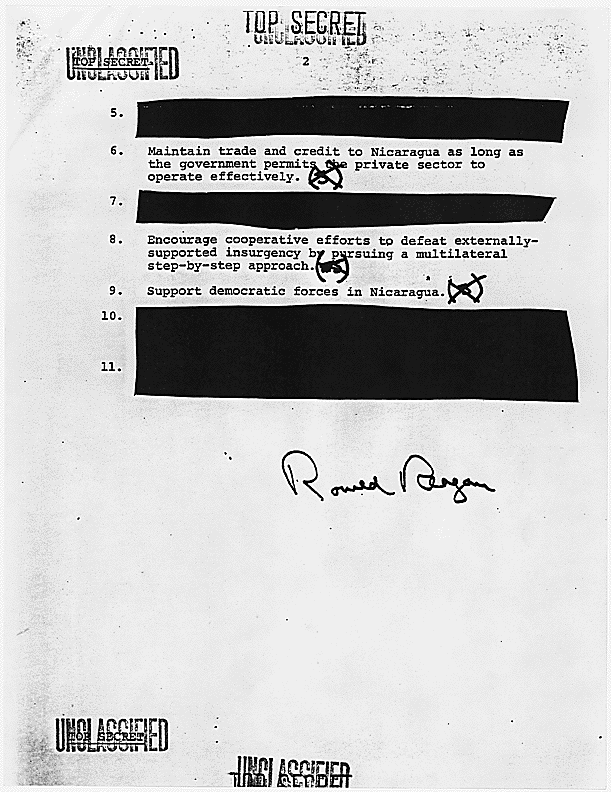
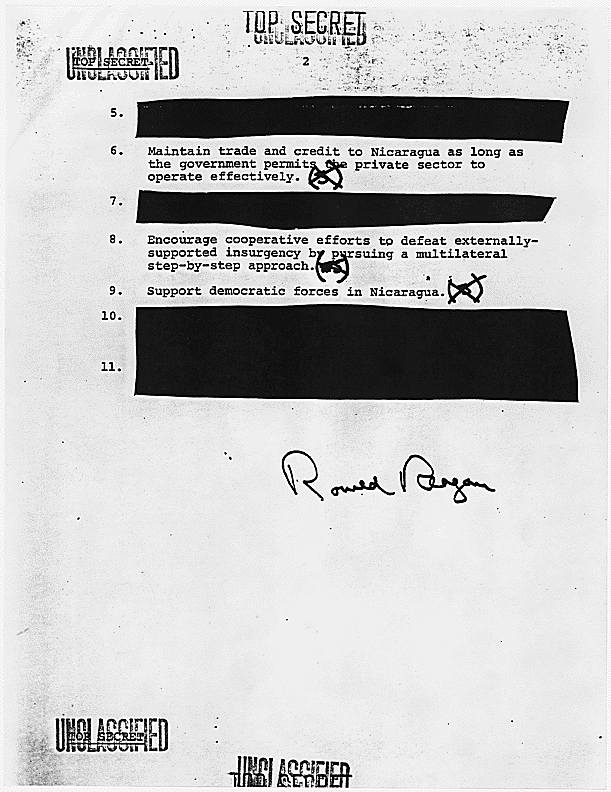
November 23, 1981 President Ronald Reagan signed off on a top secret document, National Security Decision Directive 17 (NSDD-17), which gave the Central Intelligence Agency a budget of $19 million to recruit and support a 500-man force of Nicaraguan insurgents to conduct covert actions against the leftist Sandinista elected government. This marked the beginning of official U.S. support for the so-called contras in their war against the Nicaraguans. Read (most of) the memo More on the Reagan policy
Russian ballet star Vladimir Shklyarov is dead after falling from the fifth-floor balcony of a building.
(snip)
(I’ll say it; it is to wonder how someone capable of his work could simply fall out of a window. Some of the comments on Lique’s Substack go there, as well.)
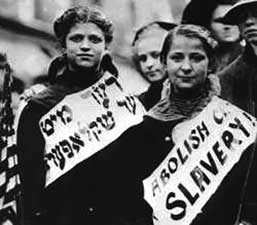
November 22, 1909 In New York City, the International Ladies Garment Workers Union went on strike against sweatshop conditions in what became known as the “Uprising of the 20,000” and the “Girl’s Revolt.” The strikers won the support of other workers and the women’s suffrage movement for their persistence and unity in the face of police brutality and biased courts. A judge told arrested pickets: “You are on strike against God.” This was the first mass strike by women in the U.S. ILGWU timeline
November 22, 1963 President John F. Kennedy was shot dead in Dallas during a motorcade. Vice President Lyndon Johnson was sworn in as president within hours.
November 22, 1968 What is believed to be the first interracial kiss on U.S. broadcast television occurred in an episode of Star Trek between William Shatner and Nichelle Nichols. More about this kiss
November 22, 1998 7,000 marched on the U.S. Army’s School of the Americas (SOA) at Fort Benning, outside Columbus, Georgia.They were protesting the school’s training of Latin American soldiers and other security personnel who return to their countries and are involved in violence and oppression of their populations. 2,319 people were arrested for trespassing. Protests at the School of the Americas, organized by SOA Watch, occur every November. The school is now known by the U.S. Army as the Western Hemisphere Institute for Security Cooperation. 2002 protest at SOA Visit School of the Americas watch.