A dark week for Ukrainian journalism by Anastasiia Lapatina

And, the Ramstein meeting gets postponed because of Hurricane Milton.

Read on Substack

This week was a dark one for Ukrainian journalism. 

On Oct. 9, Ukraineโ€™s leading news outlet Ukrainska Pravda (UP) said the Presidentโ€™s Office was threatening their work by exerting โ€œlong-term and systemic pressureโ€ against the newsroom. 

UP said Zelenskyโ€™s office was blocking government officials from talking to the outlet or taking part in its events, as well as pressuring businesses to stop advertising collaborations with the outlet. 

โ€œThese and other non-public signals indicate attempts to influence our editorial policy. It is especially outrageous to realize this at the time of Russia’s full-scale invasion of Ukraine, when our joint struggle for both survival and democratic values โ€‹โ€‹is extremely necessary,โ€ UP said in a statement.

The statement also referenced the outright disrespectful exchange between Zelensky and UPโ€™s star political reporter Roman Kravets during a press conference in late August. The President was visibly annoyed with Kravets, interrupted him, and eventually accused the outlet of having a secret agenda to undermine him with negative coverage. 

Itโ€™s worth noting that all governments, even democratic ones, try to control media narratives and restrict access to journalists. All those anonymous American officials giving comments to journalists without authorization risk getting fired when doing it, for example. 

However, what is happening to UP is worse than just normal politics. Pressuring businesses to stop collaborating with the outlet directly undermines UPโ€™s ability to stay afloat, at a time when advertising already plunged because of the war. 

To be frank, apart from being objectively worrying, this situation is also quite embarrassing. Every public-facing Ukrainian spends countless hours persuading the world that Ukraine is a democratic country thatโ€™s defending European values and is worth the worldโ€™s help. Why the Ukrainian government would shoot itself in the foot when the worldโ€™s patience and money for Ukraine are running out is a mystery to me. 

Yet this wasnโ€™t even the worst piece of news. On the next day, we learned that Ukrainian journalist Viktoriia Roshchyna died in Russian captivity.
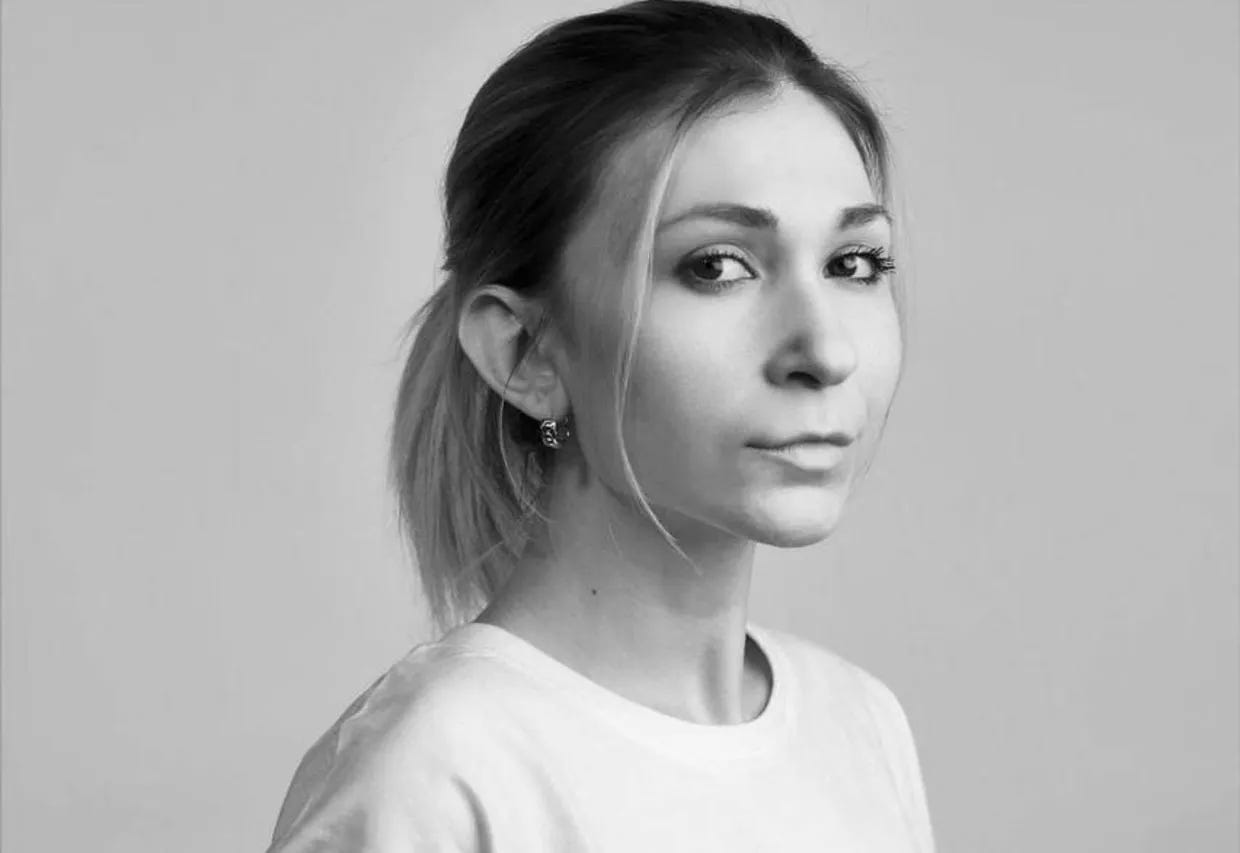
She was only 27, and was supposed to be included in the upcoming prisoner exchange, the government said. She was reportedly held in a brutal detention facility in the Russian city of Taganrok, known for its torture of prisoners. 

I never met Viktoria, but her former colleagues say she was the embodiment of her profession โ€“ brave and determined, always the first one at every scene, working and bothering editors about her work 24/7. 

She was taken captive while reporting from Russian-occupied territories in August 2023. But that wasnโ€™t her first time in Russian captivity. 

Viktoria was first detained by the Russian Federal Security Services (FSB) for 10 days in March of 2022. To the dismay of her colleagues, she was trying to get into occupied Mariupol, which was being obliterated by Russian fighter jets back then. 

โ€œNothing could stop Vika if an idea was born in her head. Nothing was more important to her than journalism,โ€ her former colleague Yevheniia Motorevska wrote on Facebook. โ€œShe was a force of nature that we failed to tame.โ€

On the geopolitical front, Ukrainians were disappointed with the postponement of the Ramstein group meeting because of Joe Bidenโ€™s preoccupation with Hurricane Milton.

The Ramstein groupโ€”which is called the Ukraine Defense Contact Group but steals the name from Germanyโ€™s Ramstein Air Base, where its meetings happenโ€”is a coalition of more than 50 states who militarily support Ukraine in its war against Russia. 

The group was scheduled to meet this Saturday, Oct. 12, at the level of state leaders, for the first time ever. Zelensky hyped up the meeting beforehand, saying it would be โ€œspecialโ€, while the media reported that President Biden may even be ready to advance Ukraineโ€™s NATO bid before he leaves office, perhaps making significant decisions during the Ramstein.  Biden was supposed to chair the meeting. But it didnโ€™t happen: The US President had canceled to stay in the US and deal with the hurricane.

With Ramstein postponed indefinitely, Zelensky went on a European tour with his โ€œvictory planโ€, presenting it to leaders of France, the UK, and NATO.

Presidential Office advisor Mykhailo Podoliak said on Saturday that the President might reveal the plan to the Ukrainian public within days. Iโ€™ll keep you updated as soon as that happens.

That will be it for today. Iโ€™ll be back next week,

Cheers, and Glory to Ukraine

โ€” Yours Ukrainian

Peace & Justice History for 10/12:

October 13, 1934
The American Federation of Labor (AFL) voted to boycott all German-made products as a protest against Nazi antagonism to organized labor within Germany.
Watch The U.S. and the Holocaustย ย 2022, A new documentary by Ken Burns, Lynn Novick and Sarah Botstein

https://www.peacebuttons.info/E-News/peacehistoryoctober.htm#october13

Work to focus on engaging communities during the energy transition

(It can’t hurt to put bits like this out into the universe. Somebody’s working on this, and more people ought to. So a nice little discussion of what’s working is appropriate. -A)

October 11, 2024 ARC Laureate Fellows

This Cosmos series on Australian Research Council Laureate Fellows 2024 reflects excellence from world class researchers in Australia.

Chris Gibson is a Senior Professor in the School of Geography and Sustainable Communities at the University of Wollongong. For his ARC Fellowship, he is investigating how decarbonisation impacts Australian regions.

Professor Chris Gibson: finding a truce in the climate wars.

Decarbonisation and energy transition are at the sharp edge of a hot political battle. There is a lot of dispute over new technologies like offshore wind, and exactly what mix of energy we need. Itโ€™s like a second iteration of the climate wars. But after a decade of stalled policy on climate, we have to embrace the decarbonised future, whether we like it or not. Itโ€™s an issue that needs to transcend the political divide.

But weโ€™re faced with a dilemma: we need urgent change, but urgent change rarely occurs, if ever, in a way that is fair. The burdens and benefits of change are not distributed equally across society. And the quicker the change, the more risks there are. Regions can be all too easily left behind.

Geographers think about how substantial change, like this energy transition, affects communities. We think of ourselves as an integrative discipline. We bring together expertise from across environmental science, economics, social geography, legal geography, and from experts who are good on governing transitions. By stitching together insights from all directions, we try to see the bigger picture.

My ARC project is aiming to put together a systematic understanding of whatโ€™s happening in decarbonisation, both from the top down, with a nationwide view, and from the ground up, about how people in different regions are responding to change.

Weโ€™re putting together a team to look at how decarbonisation hits the ground in different regions, and how it affects different workers, different industries, what kinds of opportunities come out of that, what kinds of changes are needed, how communities and households are responding to the decarbonisation challenge, and how a First Nationsโ€™ perspective can lead the way.

Community responses have to be taken seriously. Itโ€™s too easy and too convenient to cast aside sceptics as โ€œnimbiesโ€ (Not In My Backyard) or selfish or ignorant. If you take the time to hear the diversity of opinions that come from communities, youโ€™ll often find that people are worried about real issues, with valid concerns. Local communities are very knowledgeable about their patch, and have a capacity to understand what kinds of changes are needed. If we can forge a more inclusive process that brings regional perspectives, skills and experience to the forefront, we reduce the risk that regions are left behind. And governments might actually see regional communities as an opportunity rather than a hindrance to change.

A good example is here in the Illawarra, (Coastal New South Wales) where offshore wind has been very controversial in the last year. One of the lessons to be had is to not underestimate the communityโ€™s ability to understand what an energy transition means, and not to underestimate the degree of attachment people have to their local places.

The community here is highly knowledgeable about energy. The Illawarra has a workforce with a long history in heavy industry โ€“ the number of electricians per capita in the Illawarra must be as high as anywhere in Australia. And people have opinions โ€“ itโ€™s not a passive region that knows nothing about the change thatโ€™s coming. The task is not purely to convince local people that this is a good thing, but to have a mature conversation with them about the pros and cons.

Who benefits in the energy transition?

There are all kinds of philosophical questions about who benefits, how those benefits are shared, what it means to turn our oceans into a space for energy generation. Some members of the community are asking for a proper conversation, because they donโ€™t feel like theyโ€™ve been part of the story so far.

People react unpredictably to change that they see is imposed upon them. Letโ€™s say itโ€™s closing down a coal-fired power station in the Hunter Valley in New South Wales, or proposing a green hydrogen hub in South Australia โ€“ people donโ€™t necessarily assess these as singular proposals that exist outside of everything else in their region or in their lives. People make sense of change in relation to their place, their community, their household, their family.

My work is about putting those people and their households first, and looking at it from their point of view. How does structural change look when we take into account the pressures of cost of living, on housing, on employment? People are grappling with these issues in their everyday lives.

Thereโ€™s also a real risk in introducing changes that are presented to communities as if they have arrived from elsewhere, as a fait accompli. The direction of the flow of ideas and proposals, how they hit the ground, are a very important part of the process. If a proposal seems to arrive in their backyard from the top down โ€“ from a government or a corporation provider โ€“ you can get a community offside from the outset.

My work is about setting up different kinds of approaches that recognise that these communities have their own capacities and their own perspectives to offer. What we hope to do in the five years of the ARC Laureate program is develop an evidence base so that we can craft better models of how to manage this change. Weโ€™re looking at some of the implementations that have already occurred, tracing where those decarbonisation initiatives are hitting the ground, and looking at different kinds of community reactions โ€“ what sorts of processes work better than others in terms of building that relationship with community, as well as what happens when things end up in a more antagonistic situation.

Geography is the study of the relationship between humans and our environment. It has always occupied a slightly slippery position in universities and in public life, because weโ€™re both a science and a social science, because we do this work of integrating perspectives from different areas of knowledge. In fact, we call ourselves all sorts of different things: weโ€™re also environmental managers and coastal managers, policy officers and sustainability experts. Itโ€™s a discipline that connects, that fills the gaps. We often find solutions to problems by putting knowledge together from those different perspectives. Itโ€™s making these connections that can make a big difference.

As told to Graem Sims

https://cosmosmagazine.com/energise/engaging-communities-during-energy-transition/

Interesting!

Misinformation: how the printing press fuelled witch trials

October 11, 2024 Ellen Phiddian

Book opening page illustrating witch titled 'the discovery of witches'
A 1647 witch-finder pamphlet. Via Wikimedia Commons

The printing press โ€“ and a particular manual it printed โ€“ played a big role in early modern witch trials, according to a fascinating new study.

Between 1450 and 1750, some 90,000 people were put on trial for being witches across Europe.  About 45,000 of these people were executed.

Reasons for the fervour of this โ€œwitch crazeโ€ are murky. People had believed in witches for centuries, but brutal witch-hunts werenโ€™t nearly as common until the 15th Century.

A study published in Theory and Society uses data on witch trials and witch-hunting publications to suggest that manuals may have been a big contributor.

In particular, they believe the Malleus maleficarum, which was first published in 1487, could explain a lot of the uptick โ€“ alongside trials in neighbouring cities.

Malleus maleficarum front page
Frontpiece for a 1576 edition of the Malleus maleficarum. Via Wikimedia Commons

โ€œCities werenโ€™t making these decisions in isolation,โ€ says lead author Dr Kerice Doten-Snitker, a postdoctoral fellow at the Santa Fe Institute, USA.

โ€œThey were watching what their neighbours were doing and learning from those examples. The combination of new ideas from books and the influence of nearby trials created the perfect conditions for these persecutions to spread.โ€

The researchers tracked the โ€œideational diffusionโ€ โ€“ the spread of an idea, and behaviours linked to it โ€“ of witchcraft by looking at trial data and publication data from 553 cities in Central Europe.

They looked specifically for the publication of witch-hunting manuals, like the Malleus maleficarum.

This book contained a detailed explanation of โ€œdemonologyโ€ โ€“ the theory of witchcraft โ€“ as well as practical advice on finding and convicting witches.

โ€œAt the time of its appearance, there was only a shaky consensus among learned authorities on the crucial questions of who witches were, what they did, and why they had supernatural powers,โ€ write the researchers in their paper.

โ€œThe willingness of [author Heinrich] Kramer to expound confidently on these questions is part of what made Malleus so influential.โ€

Each new edition of the Malleus maleficarum was linked to an increase in witch trials in the city where it was printed.

โ€œThe printing press did not cause the inception of the elaborated theory of witchcraft, but our results show that it fostered its spread,โ€ write the researchers.

The team believes this ideational diffusion can be seen in many other areas.

โ€œThe process of adopting witch trials is not unlike how modern governments adopt new policies today,โ€ says Doten-Snitker.

โ€œIt often starts with a change in ideas, which are reinforced through social networks. Over time, these ideas take root and change the behaviour of entire societies.โ€

Originally published byย Cosmosย asย Misinformation: how the printing press fuelled witch trials

https://cosmosmagazine.com/people/social-sciences/printing-press-witch-trials/

Peace & Justice History for 10/12:

October 12, 1492

Natives of islands off the Atlantic shore of North America came upon Italian explorer Christopher Columbus, who was searching for a water route to India for Spanish Queen Isabella.
October 12, 1945
Pfc. Desmond Doss became the first conscientious objector ever to be awarded the Congressional Medal of Honor. Doss, a Seventh Day Adventist, enlisted in 1942 but refused to carry a rifle or train on Saturdays. On the island of Okinawa, under heavy Japanese fire, he saved the lives of 75 sick and wounded soldiers by lowering them, one by one, down a 400-foot cliff.

The guest house at Walter Reed Army Medical Center is Doss Memorial Hall in his honor.
Read more (includes movie trailer)
October 12, 1958
A Reform Jewish Temple in Atlanta (the cityโ€™s oldest) was firebombed with fifty sticks of dynamite in retaliation for Jewish support of local black civil rights activists. The Templeโ€™s Rabbi, Jacob Rothschild, was outspoken in his support of civil rights and integration, and was a friend of Reverend Martin Luther King, Jr. before he became well known nationally.

From Georgia PBSย 
October 12, 1967
British zoologist Desmond Morris stunned the world with his book, โ€œThe Naked Ape,โ€ a frank study of human behavior from a zoologist’s perspective. Morris had earlier studied the artistic abilities of apes and was appointed Curator of Mammals at the London Zoo.

Read moreย 
October 12, 1967
“A Call to Resist Illegitimate Authority” appeared in The Nation and the New York Review of Books. 20,000 signed it, including academics, clergymen, writers. It urged โ€œthat every free man has a legal right and a moral duty to exert every effort to end this war [Vietnam], to avoid collusion with it, and to encourage others to do the same.โ€
This document became the main basis for the federal government’s criminal prosecution (for encouraging draft evasion) of five of the signers: Dr. Benjamin Spock, Marcus Raskin, Mitchell Goodman, Michael Ferber, and the Reverend William Sloane Coffin.

Read the Callย 
October 12, 1970
Lt. William Calley was court-martialled for the massacre of 102 civilians in the Vietnamese village of My Lai; far more actually died during the incident.
ย 
The full sad storyย 

ย ย ย 
Lt. Calley
October 12, 1977
โ€œRegents of the University of California v. Bakke” was argued in front of the U.S. Supreme Court. The question: Did the University of California violate the Fourteenth Amendment’s equal protection clause, and the Civil Rights Act of 1964, by practicing an affirmative action policy that resulted in the repeated rejection of Bakke’s application for admission to its medical school?
Read moreย 

https://www.peacebuttons.info/E-News/peacehistoryoctober.htm#october12

ABC’s Bird Libraryย 

Rock Wren

“Pebbled Pathways”

A Jewish Harvard student hung Yom Kippur protest posters. Campus Hillel called the cops.

Emotions are high in the wake of the Oct. 7th anniversary. But will this create a chilling effect on young Jews looking to engage?

Marisa Kabas October 11, 2024

A poster created by Halachic Left

Monday marked the one year anniversary of the October 7th massacre in Israel, and at sundown Friday, the Jewish day of atonementโ€”Yom Kippurโ€”begins. Itโ€™s the holiest day of the Hebrew calendar, saddled with even more gravity given the past year of intra and inter-community turmoil. Itโ€™s meant to be observed with deep self-reflection. 

Rabbi Jason Rubenstein, Executive Director of Harvard Universityโ€™s Hillel (an international Jewish student organization) endeavored to do just that with a searching letter posted to his chapterโ€™s website Thursday evening. The nearly 2,600 word missive was published in response to a fairly confusing fracas on campus earlier this week. The details are important, so Iโ€™ll break it down for you:

  • On Monday, October 7, 2024, a student affiliated with JStreet U, the university arm ofย the liberal pro-Israel Jewish nonprofit JStreet, allegedly used the printing resources of the campus Hillel to produce copies of posters without permission. The student was later identified in a self-published statement as Meredith W. B. Zielonka.
  • The printable posters were produced byย Halachic Left, a grassroots Jewish organization. They featured a variety of images depicting death and suffering in Gaza over the past year juxtaposed with Hebrew and English translations ofย the โ€œAl Chet,โ€ย a list and confession of sins recited throughout Yom Kippur services.
  • These posters were hung outside the campus Hillel center and discovered by staffers early Tuesday morning. The staffers then called the Cambridge Police Department because, according to a statement, โ€œthe flyers contained graphic content they felt was meant to be intimidating.โ€
  • The Crimson, Harvardโ€™s student newspaper,ย reported Tuesdayย that Harvard Hillel โ€œtemporarily suspendedโ€ JStreet U because of their actions, though it remains unclear from what they were suspended and what authority Hillel has over JStreet U.
  • I reached out to JStreetโ€™s national organization Wednesday, who informed me the following day that they no longer have an official chapter at Harvard and that a studentโ€”now identified as Zielonkaโ€”who had been affiliated with them in the past was the one who printed the posters. They said she โ€œengaged in activity that was in violation of both Hillel’s affiliate agreement and J Street U’s own standards for our campus chapters.โ€ I asked JStreet for specifics as to how Zielonka violated their standards, but they declined to comment further.
  • JStreet also shared with me a letter their president and directors sent to Rabbi Rubenstein profusely apologizing for Zielonkaโ€™s actions. โ€œWe are committed to developing genuine J Street U leadership on campus that represents our values and mission, specifically providing a safe space for students to hold nuanced views without compromising their pro-Israel values,โ€ they wrote.
  • Thursday evening Rubenstein publishedย his letterย in response to the situation. He likened the posters to antisemitic propagandaโ€”both historic and recentโ€”that depicts Jews as dangerous vermin who should be met with violence. In his view, the posters โ€œstigmatizeโ€ a type of Jew (IDF soldiers enacting violence in Gaza) and even if theyโ€™re not necessarily an attack, create โ€œthe potential to engender conflict between different elements of our communityโ€. He wrote: โ€œThe saturation of public spaces, and the minds of an increasing number of Americans, with images of Jews as heinous, is real, and dangerous, and requires – just like testing and masking during COVID – that we curtail some public freedoms to protect one another.โ€
  • Shortly after, Zielonkaย published a statement. She wrote that she put up the posters to โ€œprotest Israelโ€™s conduct in Gaza and underscore my genuine moral and religious concerns for Palestinian lives,โ€ and added, โ€œWhile I stand by my beliefs, I regret the misunderstandings that overshadowed our message.โ€
  • Zileonka explained: โ€œI received permission to spend funds to print the posters as a Hillel affiliated group, but I should have preemptively shown Hillel the content given their rules precluding the use of their funds for controversial matters. Out of respect for Hillel and their mission, I have already donated the $41 back to the organization.โ€

Another poster from Halachic Left

Iโ€™d like to share some additional language from Rubensteinโ€™s letter so that my criticism makes sense. He writes that the poster images from Gaza, โ€œdepict, in ways that are painful to confront, effects of the IDFโ€™s campaign against Hamas there on Palestinian civilians. It is vital that we, as Jews, not evade the effects of the Jewish stateโ€™s armyโ€™s actions on others.โ€

The framing in that first sentence feels especially important. Itโ€™s a reminder that from a Zionist perspective, Israelโ€™s government and army have killed tens of thousands of people in Gaza for a reason: to eradicate Hamas. The Palestinian civilians are simply bystanders caught up in war, and while their pain should cause us pain, it doesnโ€™t mean that all Jews should have to repent for it. 

I as much as anyone have consistently made it clear that the conflation of Zionism with Judaism is dangerous and harmful. The trouble is, however, that from the perspective of the world, the atrocities being committed against Palestinians are being done in our nameโ€“therefore, weโ€™ve become part of the story, whether we agree with the premise or not. And so from my perspective, the posters are not trying to say that every Jew should atone this Yom Kippur for the sins of the IDF, but that we should atone for what is seen as violence carried out to protect our religion. After all, โ€œnot in our nameโ€ is a phrase that has been used by Jews long before, but especially since, October 7, 2023. 

But whatโ€™s perhaps even more troubling on a micro level is the involvement of law enforcement and the idea that certain freedoms be curtailed in the name of safety. 

โ€œJewish institutions have a tremendous amount of power, and it hurts my heart that they so often use it to gate-keep and exclude rather than enfranchise,โ€ Rabbi and author Danya Ruttenberg, who publishes the newsletter Life is a Sacred Text, told me. โ€œThat Harvard Hillel decided to engage law enforcement on a matter of…postering (never mind that they were posters with…our sacred liturgy? Inviting us to collective moral reflection?) speaks to just how profoundly some corners of our institutional life have lost the thread here.โ€

A Jewish Harvard student I spoke with Friday morning, whose name Iโ€™m not sharing to protect their privacy, pointed out that the situation could have turned out even worse had the JStreet U-affiliated student been a person of color. They felt that involving the cops rapidly escalated the situation, when it could have easily been an opportunity for community building handled privately between groups. 

And, as Ruttenberg pointed out, there was no actual crime was committed.

The impact of Hillelโ€™s rush to suspend and punish JStreet U, another Jewish student organizationโ€”never mind the fact that they didnโ€™t have an active chapter on campus or that Hillel doesnโ€™t have any apparent authority over other student organizationsโ€”goes beyond this one incident. The student told me how they feel this represents something larger about how Hillel views left of center Israel activism, and that even the actions of an organization as close to the center as JStreet is unacceptable.

Harvard has been no stranger to controversy (legitimate and manufactured) since last October, which is why this seemingly niche story captured my interest. While one elite university campus is not representative of the country or world at large, much like Judaism and Zionism, the schoolโ€™s experience and reality have been conflated. And so even a relatively small event looms large. 

โ€œHow ready are our institutions to criminalize young people who simply seek to engage about horrific moral questions with the community, and with those in power?โ€ Ruttenberg wondered. โ€œThis was a moment for communal conversation, for drawing in and speaking to. Is this who we want to be?โ€

If youโ€™re observing Yom Kippur, I hope that however you choose to observe is meaningful to you. I will be attending a Yizkor service tomorrow organized by Rabbis for Ceasefire. And, in keeping with Jewish tradition, I want to apologize to anyone I may have hurt by my words or actions this past year. I hope you can accept my sincere forgiveness.

https://www.thehandbasket.co/p/harvard-student-posters-yom-kippur-hillel-cops

Better News

Pearls Before Swine by Stephan Pastis for October 11, 2024

Pearls Before Swine Comic Strip for October 11, 2024

https://www.gocomics.com/pearlsbeforeswine/2024/10/11

Update on OK Sup’t Ryan Walters (because I promised)

Superintendent Ryan Walters’ legal fees surpass $100,000 amid multiple lawsuits


byย Tanya Modersitzki Thu, October 10th 2024 at 12:51 PM

Updated Thu, October 10th 2024 at 4:13 PM

OKLAHOMA CITY, OKLA โ€” As Superintendent Ryan Walters sees the inside of a courtroom more with recent court dates piling up, he’s also racked up more than $100,000 in attorney fees in a five-month time span.

On Oklahoma State Court Network’s website, since last year, he’s named in eight lawsuits, not including the one involved with the State Grand Jury on alleged misspent pandemic money, and others related to the Oklahoma State Department of Education.

State Representative Mark McBride said he’s concerned how much Walters’ legal fees are costing taxpayers.

“I’m pretty confident there’s another investigation going on by the feds in the Department of Education. I think he’s 12 or 14 lawsuits,” McBride said.
Walters most recent lawsuit came from the Bixby Public Schools Superintendent for alleged defamatory remarks.

From March of this year until July, records we received from Oklahoma Management and Enterprise Services show Walters averaging roughly $20,000 a month in lawyer fees.
In March, OSDE paid an attorney invoice for more than $28,000.

In May, multiple invoices came out to cost more than $19,000.

In June, OSDE paid nearly another $28,000 for attorneys.

In that timespan, Walters’ attorneys cost the state more than $104,000.
McBride said this is all at the cost of constituents.

“These things I think he’s going to lose at the end of the day and taxpayers foot the bill,” he said.

These totals don’t reflect charges for August, September, and October. NewsChannel 8 is working to get those numbers.
Walters’ office did not respond for a comment.

https://ktul.com/news/local/superintendent-ryan-walters-legal-fees-surpass-100000-amid-multiple-lawsuits-and-that-number-is-growing-it-more-days-in-court-ahead-state-representative-mark-mcbride-taxpayers-oklahoma-state-department-education-lawyer-fees

OT Distraction Stuff About A Good Human/Genius I Admire