Trump says there’s ‘no price tag’ for his mass deportation plan

https://www.nbcnews.com/politics/2024-election/trump-says-no-price-tag-mass-

deportation-plan-rcna179178

Why is it only the southern border that the right is concerned with?  Most undocumented people in the US are here on visas and flew into the country legally.  They just never then went home when the visa ended.  Why is it only some country the right whines about immigrating to the US?  Racism and bigotry is the answer.  Think about it.  The right is terrified that white people will be replaced by non-white people.  Elon Musk is always claiming white people need to have more babies.  But only white people.  Also the right fails to understand that Puerto Rico is part of the US and the Puerto Ricoian people are US citizens.   But remember how tRump wanted to sell the island because it was full of … those brown people.   Hugs

—————————————————————————————————————

In an exclusive interview with NBC News, Trump talked about his campaign promise to carry out the largest mass deportation of immigrants in U.S. history.

Video at link above

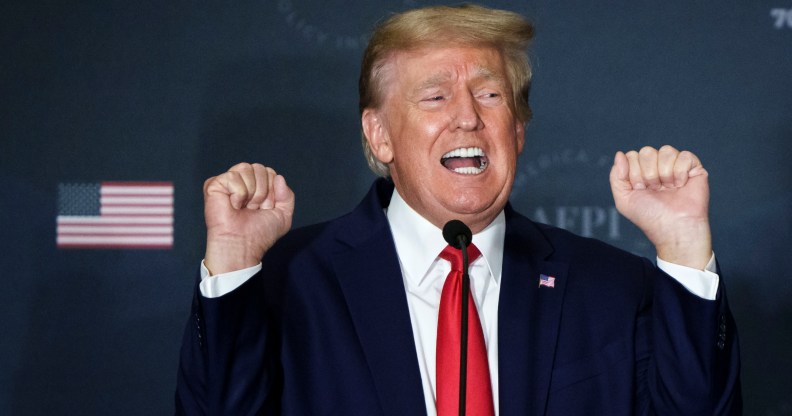
President-elect Donald Trump told NBC News on Thursday that one of his first priorities upon taking office in January would be to make the border “strong and powerful.” When questioned about his campaign promise of mass deportations, Trump said his administration would have “no choice” but to carry them out.

Trump said he considers his sweeping victory over Vice President Kamala Harris a mandate “to bring common sense” to the country.


“We obviously have to make the border strong and powerful and, and we have to — at the same time, we want people to come into our country,” he said. “And you know, I’m not somebody that says, ‘No, you can’t come in.’ We want people to come in.”

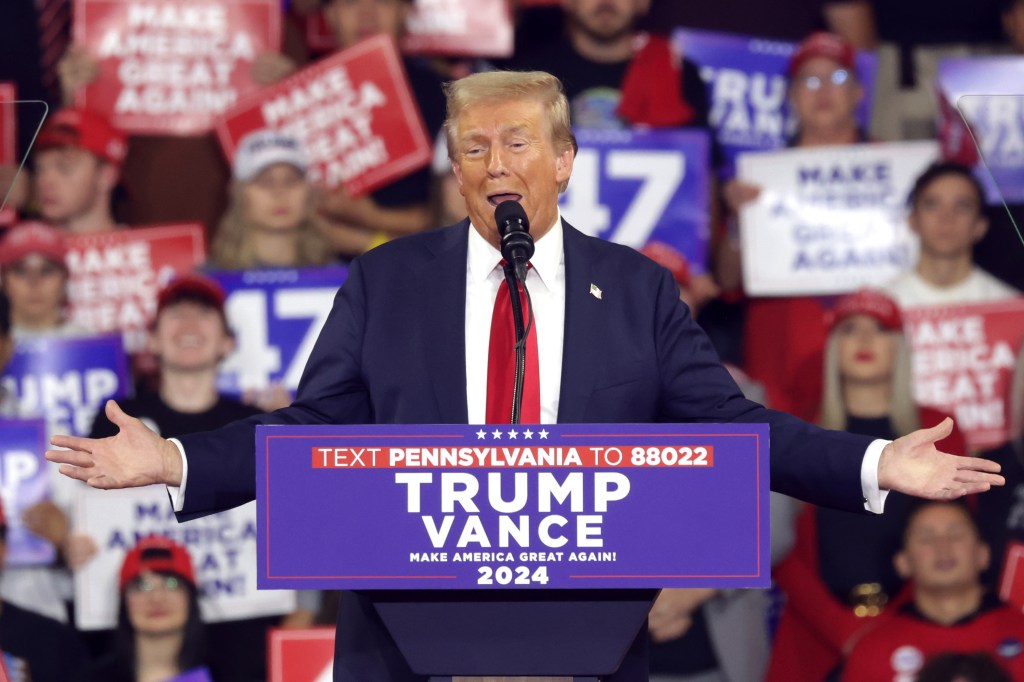
As a candidate, Trump had repeatedly vowed to carry out the “largest deportation effort in American history.” Asked about the cost of his plan, he said, “It’s not a question of a price tag. It’s not — really, we have no choice. When people have killed and murdered, when drug lords have destroyed countries, and now they’re going to go back to those countries because they’re not staying here. There is no price tag.”

It’s unclear how many undocumented immigrants there are in the U.S., but acting ICE Director Patrick J. Lechleitner told NBC News in July that a mass deportation effort would be a huge logistical and financial challenge. Two former Trump administration officials involved in immigration during his first term told NBC News that the effort would require cooperation among a number of federal agencies, including the Justice Department and the Pentagon.

Trump’s win included record gains among Latino voters, who Democrats had tried to capture by pointing to Trump’s rhetoric on immigrants and a pro-Trump comedian’s racist joke about Puerto Rico.

In Thursday’s phone interview, he partially credited his message on immigration as a reason he won the race, saying, “They want to have borders, and they like people coming in, but they have to come in with love for the country. They have to come in legally.”

Trump also noted the diverse coalition of voters he attracted, pointing to gains he made among Latino voters, young voters, women and Asian American voters from 2020. 

“I started to see realignment could happen because the Democrats are not in line with the thinking of the country,” the president-elect said. “You can’t have defund the police, these kind of things. They don’t want to give up and they don’t work, and the people understand that.”

Trump also spoke about his phone calls with Harris and President Joe Biden since the election.

“Very nice calls, very respectful both ways,” Trump said, describing the conversations, adding that Harris “talked about transition, and she said she’d like it to be smooth as can be, which I agree with, of course.”

In her concession speech at Howard University on Wednesday, Harris said she told Trump, “We will help him and his team with their transition and that we will engage in a peaceful transfer of power.”

Biden, addressing the nation in remarks from the White House on Thursday morning, urged voters to “accept the choice the country made” in re-electing Trump.

Trump also said that he and Biden on the phone agreed to have lunch together “very shortly.”

He also said he’s spoken to “probably” 70 world leaders since Wednesday morning, including Israeli Prime Minister Benjamin Netanyahu, which the president-elect described as “a very good talk.”

Trump also said that he spoken with Ukrainian President Volodymyr Zelenskyy, but didn’t divulge details about that conversation.

He added that he had not yet spoken with Russian President Vladimir Putin, but “I think we’ll speak.”

Over the course of the campaign, Trump promised to end Russia’s war with Ukraine if elected, saying in September that he would negotiate a deal “that’s good for both sides.“

Donald Trump’s grim LGBTQ+ views explored – could he reverse hard-won civil rights?

https://www.thepinknews.com/2024/11/06/project-2025-donald-trump-lgbtq/

Donald Trump

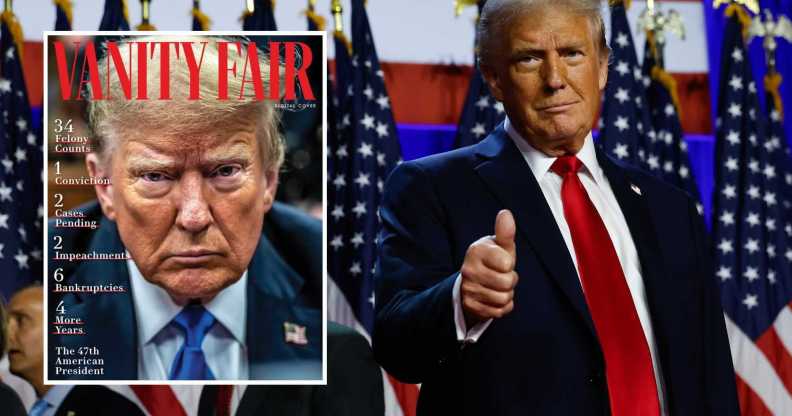
‘34 felony counts… four more years’: Vanity Fair’s scathing Donald Trump cover goes viral

https://www.thepinknews.com/2024/11/07/vanity-fair-donald-trump-cover-election-us/

And here we are … from liberals are cool https://liberalsarecool.com

image

Little boys model their behavior from many things, but the adults in their lives have a big influence.

Republicans became Trump. The abuser and rapist is now a role model.

I hope these kids using rape culture misogynist language are exposed to some decent people so they don’t grow up to be MAGA.

Children deserve better.


image

Going to keep posting about 2024 turnout until I hear a good explanation.

What happened to Roevember?

Every election/special election leading up to the 2024 Presidential election had massive progressive wins.

I have a hard time believing so many Democratic voters checked out on such a consequential election.


image

One thing I have to process more is how the incompatibilities are being manufactured and manipulated by corporate media, both legacy and digital.

The divide needs bad faith for which I have no use, yet bad faith is the currency of MAGA.


image

It’s not conspiracy to follow up on mismatches.


image

Misogyny and racism shape our politics.


image

Painful truth about misogyny in our culture.


image

Welcome to Russia.


image


image

Late stage capitalism won. What’s the antidote?


image

Does this smell right?

All I heard about was record-setting early voting and voter enthusiasm.

15 million fewer Democratic votes seems very odd. Trump did not grow his base, btw.

Another post:

image

Uninformed voters supported tRump and hurt themselves

What We Know About How Trump Will Approach LGBTQ+ Rights, Abortion, and Other Issues

https://www.them.us/story/donald-trump-second-term-policy-plans-lgbtq-issues

What We Know About How Trump Will Approach LGBTQ+ Rights, Abortion, and Other Issues

Much is still unknown about how Trump will carry out some of his big promises on issues like the economy and immigration, or how he may curb abortion access and LGBTQ+ rights. Project 2025 and what he’s said so far offer some clues.

 
Residents in New York watch Donald Trump's speech on a screen as the vote counting continued in the election between...
 

This article originally appeared on The 19th.

Sign up for The Agenda — Them’s news and politics newsletter, delivered to your inbox every Thursday.

Throughout his campaign, President-elect Donald Trump has made big promises on issues of enormous consequence to Americans, from the economy to reproductive health care — but offered few details on how he would see those promises through.

What he’s said in his campaign and what he did during his first term offer some clues, as does Project 2025, the blueprint for a second Trump term written by the conservative Heritage Foundation. Though Trump has distanced himself from Project 2025, saying he has “no idea who is behind it” and that he has not read it, six of his former cabinet secretaries contributed to it in some form and much of what is in the 920-page document aligns directly with statements Trump has made this year.

Though there are still many unknowns, here is what we know so far about how a second Trump term will approach reproductive rights, LGBTQ+ rights, the economy, education, immigration and aging and disability care.

Abortion

Throughout his campaign, Trump has repeatedly taken credit for the fall of Roe v. Wade. He appointed three of the Supreme Court justices who helped overturn the decades-old case protecting federal abortion rights. His stance on abortion access has wobbled over time between a national ban and state-by-state laws.

Though Trump has said he would not support a federal abortion ban and he’s called restrictive abortion laws like Florida’s six-week ban “a terrible mistake,” it’s unclear how much he will stick to those statements: A day after he said people needed “more time” than six weeks, he said he would vote to uphold the ban in Florida, where he lives. About 57 percent of Floridians voted in favor of an amendment to undo the six-week regulation, but it fell short of the 60 percent threshold it needed to pass.

The biggest question mark heading into the election was his support of a federal ban. During the presidential debate in September, Trump said “there’s no reason to sign a ban, because we’ve gotten what everybody wanted, Democrats, Republicans and everybody else, and every legal scholar wanted it to be brought back into the states,” meaning the issue had been returned to the states. A majority of Americans disapproved of the Supreme Court decision that led to a patchwork of abortion decisions, according to polling from the nonpartisan Pew Research Center.

What Trump will ultimately do will likely come down to who he appoints — and listens to — in his administration. Some of his closest supporters, including Vice President-elect JD Vance, have said they support a national ban on abortion, though during the vice presidential debate in October, Vance acknowledged that his position is not popular with “a lot of Americans.”

Trump has also said he’s open to limiting whether mifepristone, one of the pills used in medication abortions, can be sent by mail.

Economy

Much of Trump’s win Tuesday was likely due to Americans’ view on how he could improve the economy — and particularly their own personal finances. Early exit polls show that the economy was a lead motivator for many after record inflation during the Biden administration brought on by a confluence of factors, including supply chain issues, Russia’s war in Ukraine and coronavirus stimulus checks.

In the end, the reason for the inflation — and how much of it was Biden’s doing — didn’t matter. Trump presented himself as the person to “fix” the economic troubles that have plagued Americans over the past four years, and it appears to have been a salient message.

Trump inherits an economy in repair: Inflation is back down to 2.1 percent from 9 percent, hovering at the Federal Reserve’s 2 percent goal. And the country has been adding jobs consistently for months, though the most recent report shows fewer jobs added in October than expected. Still, the unemployment rate is down to about 4.1 percent from 6.3 percent when Trump left office in January 2021.

The biggest economic showdown of a second Trump term will likely come next year, when parts of Trump’s 2017 tax bill expire. Among those provisions is the child tax credit, which was expanded in 2017 to $2,000 per child. Trump has expressed support for the credit, but has not said what he’d do with it in 2025. Vance has floated increasing the credit further to $5,000 per child. Trump has also called for further lowering the corporate tax rate, which he brought down from 35 to 21 percent in 2017, to 15 percent.

The president-elect has also proposed several tax breaks — on tips, Social Security and overtime pay — but it’s unclear how he would pursue those aims.

If Trump also eliminates payroll taxes on tips, most workers would see some impact, but could also see their Social Security benefits diminish (payroll taxes fund Social Security and Medicare). The same would happen if taxes are cut on overtime pay, though it’s also unclear what the impact of that would be. Trump has offered no details on how he would approach the policy.

Trump has also called for eliminating taxes on Social Security benefits, a proposal that would impact about half of recipients, most of them higher income, who currently pay taxes. But that proposal alone could make Social Security insolvent three years earlier than predicted, by fiscal year 2031, rather than 2034, according to the Committee for a Responsible Federal Budget, a nonpartisan nonprofit organization.

LGBTQ+ rights

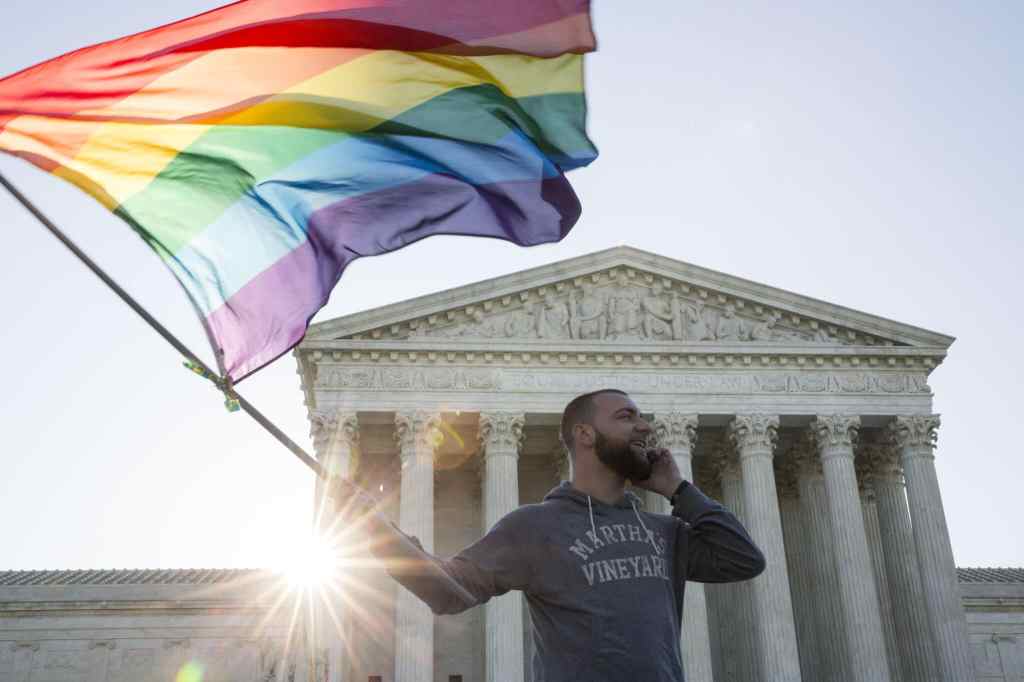
Trump’s first term has been characterized as one of the most hostile towards LGBTQ+ rights in modern history. LGBTQ+ advocates expect his second term to be worse. A lynchpin of Trump’s 2024 campaign has been depicting trans people as dangerous or harmful to society, while his campaign proposals offer more extreme policies than LGBTQ+ Americans saw in his first term.

It is likely that the second Trump administration will vigorously pursue curbing the rights of trans Americans. Trump’s campaign has proposed terminating Medicare and Medicaid funding for hospitals that provide gender-affirming care to trans youth, attempting to charge teachers with sex discrimination for affirming students’ gender identities and ordering federal agencies to “cease all programs that promote the concept of sex and gender transition at any age.” Trump has also pledged to ask Congress to halt the use of federal funds to promote or pay for gender-affirming care, without distinguishing between care for adults or minors.

Leading up to the election, Trump falsely claimed that schools were performing gender-affirming surgeries on children without parental knowledge or consent — a claim divorced from reality that marked a particularly bizarre moment in a campaign littered with anti-trans misinformation. At an October 28 rally, as Trump did at multiple rallies on the tail end of his campaign, he doubled down on framing anti-trans policies as key to his vision for the Republican party, saying: “We’re the party of common sense. That means no open borders, and no transgender operations.”

In October, about 41 percent of the campaign’s ad spending was focused on messaging around trans people, particularly trans athletes and children receiving gender-affirming care.

When polled, most Americans do not rank trans issues highly compared to issues like the economy or abortion rights. It is currently unclear if these ads motivated Trump voters to turn out in 2024 or if they were incidental to issues that voters rank more highly.

Education

Trump has called repeatedly for an end to the Department of Education and presented himself as a champion for school choice, a position that will likely take center stage in a second term.

That stance aligns with details in Project 2025, which also supports eliminating the agency, as well as gutting protections for LGBTQ+ students and what he sees as progressive curriculum. Trump has vowed to cut federal funding for schools that teach lessons related to race or that teach “gender ideology.” Much of the impact will be on trans students, especially in sports.

Under his previous administration, then-Education Secretary Betsy DeVos worked to limit trans women’s participation in women’s sports, arguing it violated the anti-discrimination law Title IX.

DeVos also sparked outrage by revising Title IX regulations to make it harder for sexual misconduct survivors on college campuses to hold perpetrators accountable.

Earlier this year, the Biden administration reversed these controversial DeVos-era regulations and offered protections for LGBTQ+ students in schools, but the incoming Trump administration will almost certainly introduce their own updates to this federal law. Specifically, Trump is expected to go further by defining “sex” to exclude transgender students from playing on teams or experiencing school generally in ways that align with their gender identity.

Gutting the Department of Education would also have a major negative impact on disabled students, who rely on federal enforcement of civil rights laws to protect them from discrimination, lack of access to appropriate education, unnecessary segregation and abuse.

Immigration

Some of Trump’s most divisive rhetoric during his campaign was toward Latinx people and immigrants, who he blamed as the reason for many of the country’s challenges, from safety to job loss to affordable housing. In the final days of his campaign, at a Trump rally in Madison Square Garden, comedian Tony Hinchcliffe called Puerto Rico “a floating island of garbage.”

Throughout his campaign, Trump has called immigrants “the enemy from within,” saying undocumented immigrants are “poisoning the blood of our country.”

His response as president, he said, would be to mount the “largest deportation in the history of our country,” but he has offered very little information on how that would happen, who would be targeted and with what resources.

Much of what Project 2025 has to say about immigration overlaps with Trump’s campaign promises. The document discusses reinstating “every rule related to immigration that was issued” during Trump’s first term, and the president-elect has specifically called for putting back into place his “Remain in Mexico” policy, by which some asylum seekers had to wait out the outcomes of their U.S. immigration cases in Mexico.

Plans laid out in Project 2025 would also make it even more difficult for undocumented students to attend college. It calls for the Department of Education to deny loan access to students who aren’t in the country with authorization and for loan access to be denied to students at schools that offer in-state tuition to the undocumented population. Nearly 20 states, including California, Texas and New York, offer in-state tuition to undocumented students.

Disability and aging

During the presidential debate in September, Trump indicated that he had “concepts of a plan” for replacing the Affordable Care Act, which protects disabled, chronically ill and older Americans from being excluded from standard health insurance coverage.

Opposition to the Affordable Care Act was a centerpiece of Trump’s 2016 campaign, and his first year in office was characterized by a failed, widely unpopular attempt to repeal and replace it, in addition to cutting Medicaid funding. Medicaid, a federal poverty program, funds the majority of long-term care for disabled and older adults in the United States. 

Republican House Speaker Mike Johnson has indicated that he is willing to commit to dismantling the Affordable Care Act during a Trump presidency. While Trump promises on his website not to cut Medicare, which provides health insurance for Americans over 65, he has made no such promises about Medicaid.

Affordable drug pricing may also take a hit during a second Trump term. The Biden administration vigorously pursued Medicare price negotiation to lower the cost of some particularly expensive prescription drugs for older adults. While Trump promised to pursue a similar policy during the 2016 race, he never implemented that promise.


Both Vance and Trump have promised a tax credit for family caregivers of older and disabled adults between $5,000 to $6,000 per year. The average cost of home care in the United States, per the most recent data from the Federal Long Term Care Insurance Program, is $42,120 per year. The average cost of a shared room in a nursing home is $100,740 per year.

Nadra Nittle and Orion Rummler contributed to this reporting.

Poetry for Thursday

Wednesday, November 6, 2024

Stars

 It is dark and I’m seeing stars–

of course I am!

I’ve been hit in the face,

my jaw awry and the taste

of blood in my mouth,

but when things go south

crouch low,

and aim for the middle,

then straight the fuck up.

The only way out

is through and fast,

and that’s really all

I know.

Posted by Vixen Strangely at 8:32 PM 

https://strangelyworded.blogspot.com/2024/11/stars.html

And the threats start already

Yet the felon won the state … so is the election wrong and need redoing

“There has to be as many traitors executed as he has days in office,” urged another Gab post. “Build the gallows, restore the REPUBLIC.”  “Many many many executions are warranted,” someone wrote on Truth Social.  One viral meme that was shared widely across platforms on Wednesday had the caption “RELEASE THE PROJECT 2025 HANDMAIDS TALE RAPE SQUADS.”

Read the full article. Other posts and memes call for executing Nancy Pelosi, Alejandro Mayorkas, and Kamala Harris. A Proud Boys account depicts Harris as “Whore Of The Year.” Hit the link for more.

In a follow-up post, Davis said the following: “Here’s my current mood: I want to drag their dead political bodies through the streets, burn them, and throw them off the wall. (Legally, politically, and financially, of course.)”

Read the full article.

In August 2024, Davis appeared here when he threatened to sue any publication or social media user who referred to Trump as a “convicted felon.”

In April 2024, he appeared here when he vowed to imprison Trump’s critics and prosecute Barack Obama for murder.

In February 2024, we heard from him when he declared, “What’s so bad about Christian nationalism?”

His first appearance here came last year when he threatened to “arrest and deport” journalist Mehdi Hasan and throw gay reporter Tim Miller in a women’s prison.

And he could be the nation’s next Attorney General.

Trump’s win could lead companies to push up prices. Here’s why.

https://www.cbsnews.com/news/trump-victory-china-tariffs-taxes-inflation/

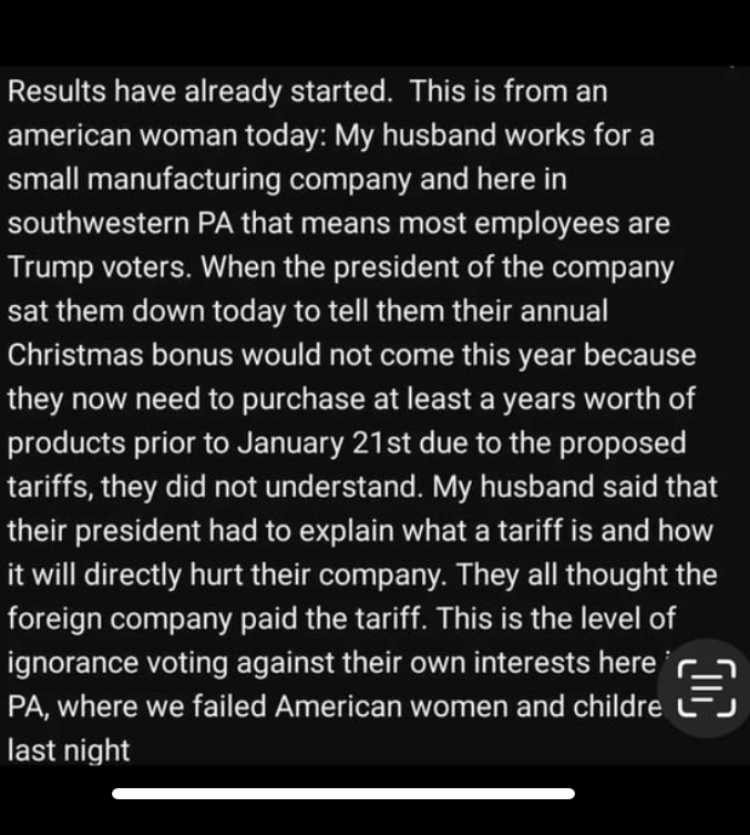
One of the reasons given by people that voted for tRump, that he would lower prices of stuff.   Yup that was dumb.  They also claim that he speaks like they do so they understand him.  I ask why do you speak as hateful as him?  They also think he cares about them, a man who was a born millionaire and who lives in golden penthouses is just a man of the people?  A man who thinks money is the most important thing in life doesn’t care if poor people live or die.   Hugs

As President-elect Donald Trump readies to return to the Oval Office, U.S. retailers that depend on foreign suppliers are prepared to pass along the cost of his proposed import tariffs to consumers, potentially leading to higher prices for a range of products.

Americans stand to lose between $46 billion and $78 billion in spending power each year on products including apparel, toys, furniture, household appliances, footwear and travel goods due to the new tariffs, the National Retail Federation stated in findings released Monday. 

“Retailers rely heavily on imported products and manufacturing components so that they can offer their customers a variety of products at affordable prices,” NRF Vice President of Supply Chain and Customs Policy Jonathan Gold said in a statement. “A tariff is a tax paid by the U.S. importer, not a foreign country or the exporter. This tax ultimately comes out of consumers’ pockets through higher prices.”

For example, a $40 toaster oven would retail for $48 to $52 after the tariffs, while a $50 pair of running shoes would jump to to $59 to $64, according to the industry trade group. A $2,000 mattress and box spring set would cost $2,128 to $2,190, the NRF said.

During President-elect Trump’s first term in office, his administration imposed tariffs of up to 25% on more than $360 billion in products from China. President Joe Biden’s White House kept most of those tariffs and added more onto goods including Chinese electric cars and microchips. 

Now, Trump has said he plans to impose a 60% tax on goods from China and a 10% to 20% levy on all of the $3 trillion in foreign goods the U.S. imports annually. Such sweeping tariffs would reignite inflation, as they would mostly be paid by U.S. consumers, Treasury Secretary Janet Yellen has warned, offering a general view widely shared by other economists on both sides of the political aisle.

“A consistent theoretical and empirical finding in economics is that domestic consumers and domestic firms bear the burden of a tariff, not the foreign country,” the nonpartisan Budget Lab at Yale University stated in an analysis published in mid-October. 

Trump has repeatedly contended that foreign companies would foot the bill, telling a gathering last month at the Economic Club of Chicago that “the countries will pay” the tariffs. In reality, American importers pay the tariffs to the U.S. Customs and Border Protection agency when their goods cross the border.

“These policy steps would amount to regressive tax cuts, only partially paid for by regressive tax increases,” and cost a typical middle-income household about $1,700 in increased taxes a year,” according to economists at the Peterson Institute for International Economics. The proposed tariffs would shift tax burdens from the well-off to lower-income Americans, the nonprofit also stated in a policy brief published in August.

For now, it is unclear when the new Trump regime could seek to stiffen tariffs. The process to complete legislation required to raise the levies could take nearly a year, so any adverse impact might not be felt until 2026, according to Oxford Economics.


Harvard University professor and former U.S. Treasury Secretary Lawrence Summers questioned the wisdom of taxing imports, noting the potential impact on prices. “For parents, we’re coming up on the holiday season and most of our toys are imported from China,” Summers tweeted on Thanksgiving Day. 

Trump has argued that tariffs compel American companies to make goods on U.S. soil rather than purchasing from foreign suppliers. 

But some companies have other plans. 

“If we get tariffs, we will pass those tariff costs back to the consumer,” Philip Daniele, CEO of vehicle parts supplier AutoZone, told Wall Street analysts in an earnings call in late September. “We’ll generally raise prices ahead of — we know what the tariffs will be — we generally raise prices ahead of that,” Daniele said. 

Major suppliers to AutoZone include companies based in China, India and Germany, according to the company.


Stanley Black & Decker CEO Donald Allan Jr. said last week his tool-producing company has been planning for the possibility of additional tariffs on imports since the spring. “Obviously, coming out of the gate, there would be price increases associated with tariffs that we [would] put into the market.” 

Allan downplayed the idea of moving manufacturing back to the U.S., saying it would not be cost-effective. The company’s options could include “moving production and aspects of the supply chain to different parts of the world,” including from China to other parts of Asia and possibly Mexico, the executive said.

Such a shift has already been made by Shelton, Connecticut-based Acme United, which now has its Westcott brand products like rulers made in Thailand and the Philippines, avoiding the tariffs targeting China, CEO Walter Johnsen said in an October earnings call.

Acme has switched production of certain medical products to India, Egypt and U.S. plants in Florida, North Carolina and Washington state, the executive said.

Businesses have also stocked up, placing bigger-than-usual import orders ahead of new tariffs taking hold, as the U.S. imported 11% more Chinese products in July and August than they did during the same two-month period a year ago, according to the Census Bureau.

Peace & Justice History for 11/7:

Getting on with it.

November 7, 1837
Abolitionist, clergyman and editor Elijah P. Lovejoy, 34, was murdered by a pro-slavery mob in Alton, Illinois, as he defended his newly delivered printing press. 
 
Elijah P. Lovejoy

He had lost two other presses to mob attacks, but refused to surrender this one, which had been contributed by the Ohio Anti-Slavery Society. For this he was shot five times in the fatal attack. Lovejoy had moved 20 miles to Alton from St. Louis where, after denouncing the lynching and burning of a black man, a mob tore down his office.
 
Warehouse with Lovejoy’s press set ablaze by mob;
“We must stand by the Constitution and laws, or all is gone.” Elijah Lovejoy, The Observer
Read more 
November 7, 1862
1700 members of the Dakota Sioux, mostly women, children and the eldersly, were force-marched 150 miles (240 km) to a concentration camp at Fort Snelling in Minnesota. The four-mile-long (6.5 km) procession was subject to physical abuse by white residents of towns along the way. Governor Alexander Ramsey had committed himself to ridding the state of all the Dakota, raising the bounty on an Indian scalp to $200.
One of the prisoners at Fort Snelling
Simultaneously, 300 Dakota men were tried summarily (as many as 40 cases in a single day) and marched to another camp in Mankato.
They had surrendered to the U.S. Army at the end of the Dakota War, expecting to treated as prisoners of war.

Little War on the Prairie  (This American Life)
More on this forced march 
November 7, 1916
Jeannette Rankin, a Republican from Missoula, Montana, became the first woman elected to the U.S. Congress. American women in 19 states had no voting rights whatsoever until passage of the 19th amendment four years later. Female Montanans had full voting rights even before statehood (in 1889). 
 Read more 
November 7, 1919
Hundreds, presumed to be members of the Union of Russian Workers, were arrested in New York and other cities across the country on the second anniversary of the Russian Revolution. President Woodrow Wilson’s attorney general, A. Mitchell Palmer, and Intelligence Division chief, John Edgar Hoover, used the Sedition and Espionage Acts to thwart what they saw as a Communist plot to overthrow the government.
This was but one many assaults on radicals in what was known as the Palmer Raids. Thousands were arrested and thousands deported. It had been a year of significant labor unrest including steel, coal, and Boston police strikes, and a Seattle general strike. There was high unemployment in the wake of the demobilization after World War I. Around May Day there had been dozens of mail bombs, most of them intercepted, and a suicide bomber died outside Palmer’s Washington residence.
 
The Palmer Raids 
The first mass arrest of immigrant workers 
Attorney General Mitchell’s view 
November 7, 1973
New Jersey became the first state to allow girls to play Little League Baseball.

https://www.peacebuttons.info/E-News/peacehistorynovember.htm#november7