HERE IS ME, NOAHFINNCE, ANSWERING ALL THOSE UNCOMFORTABLE TRANS QUESTIONS THAT NOBODY WANTS TO ASK!! INVASIVE QUESTIONS! UNCOMFORTABLE QUESTIONS! TRANSGENDEREDLY ANSWERED!
I love this 23 / 24 year person. He is so open and honest. His personality is so energetic and engaging. There are days I can hardly focus yet his videos entertain me while educating me.
One of the reasons I am posting this video is when he talks about his body and sex along with how the person imagines themself or realizes them self during sex. Cis people don’t have to face this. People of any orientation who have not been abused or raped don’t have to deal with this. I do.
I am a gay man. I was abused during my childhood sexually and physically. How to reconcile my desire for being loved by men while fighting the horror of my abuse is something I dealt with not just most of my life but still today. How to take and enjoy the feelings of an act I want and agree with without triggering the memories of fear and horrible pain that it seems I can never forget. How to do the act that was used to hurt me in a loving way with a consenting partner is a mental struggle even now. Ron tells me I don’t have to keep asking if he is OK but in my head I am struggling with what is good or what is bad. AM I ABUSING THE ONE I LOVE LIKE I WAS ABUSED! Now Ron can touch me in bed when I am asleep without me reacting violently, but we are on our 33rd year as a couple. It is strange our cats could get all over me and I wouldn’t react but let Ron walk into the room or even while we are sleeping touch me and I reacted violently. I will soon be 60 and that past is a long time ago in history / terms of years but present far too often in my dreams even today. Last night I dreamed of my abusers and them hurting my cat to force me to agree to their demands. That was over kill on their part as they could have forced me anyway, they simply wanted to show they could take away anything I valued or loved.
Sorry this went far beyond where I wanted it to go. I enjoy this young man and his energy. I hope you will also. Plus he explains a lot of things that some cis people need to understand. Hugs
I would love to leave comments open on this post as I think many people will enjoy what Noah is presenting. Sadly, I don’t have the energy right now to monitor them and I know haters will want to argue debunked fringe shit. There was a time I loved that argument but right now my health won’t let me engage. I am getting better right now my heart rate is down from the high 140s to running in the 100s to 120s. I still am having a struggle with breathing but it maybe asthma or allergies, I still need a doctor to help me out with it. Right now the heart doctors have not responded, and the allergist appointment is late May. So much for health care in the wealthiest nation that just proposed another huge boost in military spending. I am like a wounded warrior going out to battle already deadly wounded. So I am going to again shut comments off. Trust me, I don’t like it. But I have had this video in the cue to post for a while. Notice the date of posting. I am really trying to bring as much information as I can, but I admit I am failing. Thank you. Hugs
A new list shows dozens and dozens of books have been removed from library shelves in the Martin County School District. This comes as the state puts in new requirements for school librarians to review reading material, and districts must have a process allowing community members to challenge books.
Books by well known authors like James Patterson, Toni Morrison, and Jodi Picoult are now off the shelves in Martin County schools.
“99% of the books we have filed challenges on are highly sexually explicit books,” said Julie Marshall, who leads Moms For Liberty in Martin County and filed many of the objections. Jennifer Pippin, a fellow Moms For Liberty activist in Indian River County, said they share lists and work together.
The removal list includes Picoult’s novel “The Storyteller” about the granddaughter of a Holocaust survivor who meets an elderly former SS officer. It contains some violent scenes told in flashbacks from World War II and an assisted suicide.
“Banning ‘The Storyteller’ is shocking, as it is about the Holocaust and has never been banned before,” Picoult told us in an email.
“Martin County is the first to ban twenty of my books at once,” Picoult said, slamming such bans as “a shocking breach of freedom of speech and freedom of information.” Picoult said she’s puzzled by the ban, because she does not “write adult romance,” as objections filed against her books claimed.
Insane: Under Ron DeSantis's book crackdown, 20 books by Jodi Picoult just got banned at one county's schools.
One of them is "The Storyteller," about the granddaughter of a Holocaust survivor.
Virtually all the objections that resulted in dozens of books getting removed were filed by one person, according to documents supplied to @FLFreedomRead and to us.
The vagueness of DeSantis's directives appears deliberately designed to create a climate of fear and rampant snitching. It encourages teachers to censor themselves and invites parents/activists to become despotic little commissars of local book purging:https://t.co/y0tKdxz6Wspic.twitter.com/RqKtJYW9ub
We have updated the piece with a response from the local Moms For Liberty leader. As we reported, this one person was the primary objector to dozens and dozens of books, leading to their removal:https://t.co/y0tKdxz6Wspic.twitter.com/hWieaL0fAW
This is the point I always make. You ask these people to show you the “pornographic” books and whoopsy-poopsy it’s a bunch of books about the Holocaust, slavery, Jim Crow America, on and on and on….
I would be really happy if one of them were to ever hold up a copy of a “pornographic” book at one of their rant rallies, because it means I would get to alert the cops to a crazy person displaying / distributing pornography to the public.
Why are only right wing wackos challenging books? A gutsy liberal could challenge the bible. Of course they’d need 24/7 security, bulletproof windows and and armored vehicle to travel in because Florida is filled with dangerous raging cultists.
Let’s hope you’re right! Right now he seems to be steamrolling right along in creating not a bastion of “liberty” for moms and kids and dads and other adults, but a SLAVE STATE.
a fellow Moms For Liberty activist in Indian River County, said they share lists and work together.
So none of them have a goddamn clue what is even in the books they find so offensive, and if pressed on why they want to ban any particular book they would be unable to really explain it.
At what point do majority of the Americans and the rest of the world realize we are repeating history again? Until millions of people shove into the oven? Or until it get so uncontrollable that nations need to set off multiple nuclear bombs in the US to make blowing up Hiroshima looks like popping a balloon?
Anything they can do to force a regressive return to a time before progressive civil rights and a progressive society that valued people for who they were including women, minorities, ethnic groups, and the LGBTQ+. Look all those groups / people have been around and part of us since the dawn of man, but the ability of those people to live openly in equality as they are, to live normal lives in society is something new in the last 80 years. That is something the wealthy barons, the religious fundamentalists, and those unable to accept the changes in society are desperate to deny and reverse.
I am sorry, I wish I could do more to promote this story. I simply am not up to it. Don’t just stop at the article I post, go to the story. Things are changing fast and badly in Florida. This is vitally important to what is happening in Florida due to the republicans under the direction of DerSantis. It is a story of not allowing the majority to prevent the minority from forcing an ideology, a ridged ideological regressive conservative rule on a public that doesn’t want it. This a group of ideologs that got a little authority and gerrymandered / voter suppressed it into a majority party win, and each time they gained more power they did everything they could even as their party shrank to increase their lock on power. This is about big corporation money to force a government into office that will allow them to disregard human life while increasing profit. Profit is king and greed is good. But having ideas that support the importance of people or the government using its power to assist or support the public interferes with profit. That cannot be allowed. So in Florida they managed to get a few republican state legislature wind even using illegal means that still let the illegally elected person stay in office, then trump managed to get a failing far behind candidate for governor elected and the minority part who did not have a majority of the state’s votes changed everything to give themselves great advantages meaning large wins. The situation in Florida is the public is 50/50 or even leaning blue but the republicans have made it almost impossible for a democrat to win in a lot of places and even if a democrat looks to win in at least three documented elections republicans violated laws to make sure the democrats cannot win. Republicans want a one party rule which equals a dictatorship, just look at the governments around the world they support. So to stop any free thought or kids getting the idea that there is any other way than republican ideology they make it illegal to teach it, to mention it, to disagree with the grand republican party and its minority rule will not be tolerated in the schools, in higher education facilities and now not even in the press or media. Is this what the US wants? Don’t you see examples of this in history? Sorry I must go lay down. Hugs
Comments are disabled as most posts going forward will be. Due to health reasons. Hugs. Scottie
This is the republican view of governance, using the powers of the government to enforce their minority views on the public who disagrees with the party and to enrich themselves off the public treasury / legal bribery called lobbying. Hugs
Matt Gaetz: “We either get this government back on our side, or we defund and get rid of, abolish the FBI, CDC, ATF, DOJ, every last one of ’em if they do not come to heel.” pic.twitter.com/es25HODy0E
— Republican Accountability (@AccountableGOP) March 3, 2023
BREAKING: Matt Gatez just threatened to abolish the DOJ, FBI, CDC, DHS and ATF, with dangerous rhetoric, before he goes on to claim that Republicans have FBI whistleblowers who are testifying.
Jon Stewart easily lures a pro-gun/anti-drag queen Republican into a trap…and then blasts him over his blatant, shameless hypocrisy.pic.twitter.com/xbdzbGqf1f
— TrumpsTaxes (@TrumpsTaxes on Post and Mast*don) (@TrumpsTaxes) March 3, 2023
This last one is to counteract all the crazy cruel crap and republican shit above. Enjoy with amazement at the skill of both of these two performers. Hugs
Aron Ra was answering questions from a right wing troll who demanded he answer a question of gender and biological / assigned at birth sex. Ra brings in an expert that points out the medical science as we know it now. The part runs until about 22:15 at which point the guy asks questions about morals I also found interesting. But the main part I wanted everyone to see is the debunking of the idea that biological sex can be determined by looking and is strictly binary, because both of those ideas are just wrong medically. Biologists and medical science clearly show that sex is a spectrum and that gender is not tied to if it dangles or not. Also I have decided to shut off comments as I cannot moderate the misinformation at this time.
If you want to talk about the post and your feelings while admitting the science the majority of medical organizations agree with, just email me. I will read it even if you don’t get a reply. If you want to argue conspiracies or weird claims based on faulty studies or fringe doctors / Florida Health Department crazies, then don’t bother emailing me. I won’t read it, won’t bother responding. Right now I am done trying to show the anti-trans anti-progressive social policies how they are wrong. They cannot deal with reality and I cannot help them at this point. Time has moved forward; social progress has been made and they cannot deal with it for whatever reason. So they want everyone to go back to the time they were comfortable with the way things were. Traditionalist. It was good enough in the old times, why not good enough now? The simple answer is we know more now than we did then. Hugs Email is Scottiestoybox@gmail.com
I tried to group these articles in some sort of order. But you can see the goals of the right just from the titles. The eradication of transpeople at any age from society. The removal of any gay rights with the goal of eradicating gay people from society. The enforcement of stereotypical gender roles and the returning to the days when women were dependent on men, and few had authority or independence on their own. They want tyranny and dictatorship of one party rule with no restraint on their activities even to the point of attempting the overthrow of the US constitution / government and the celebration of those that committed the illegal acts in the coup attempt. Republicans want to rule not govern, they want to have the people afraid to disagree with them or dare to speak against their rule. Just like the countries of China, North Korea, and their beloved Russia. Please notice the attempt is to return the US to the regressive oppressive times before the New Deal that empowered the public. They want 1910 to 1920. We had better join together to stop them or we won’t be able to. DerSantis is shopping the campaign slogan “Make America Florida”. Is that not enough of a threat to the country? Has the trump years not shown how quickly the right can move if given power to destroy all norms and rights to enforce their minority rule. McConnell even said that while republicans will lose elections the democrats couldn’t stop a republican stacked court system from enforcing republican goals for decades. He was correct. Mitch McConnell said, “My goal is to do everything we can for as long as we can to transform the federal judiciary, because everything else we do is transitory.” Hugs
Read the comments on this to see how things used to be for families and kids before labor laws and government assistance were created.Kids younger than five working a full day in the farm fields. Is this the grand vision of the future the country needs or wants? Think of every movie of the future that has a great working society and they are progressive but the ones with dystopian unfair or dangerous future and it is regressive oppressive hellish places were greed is king with businesses in charge killing any regulation that prevents profit. Hugs
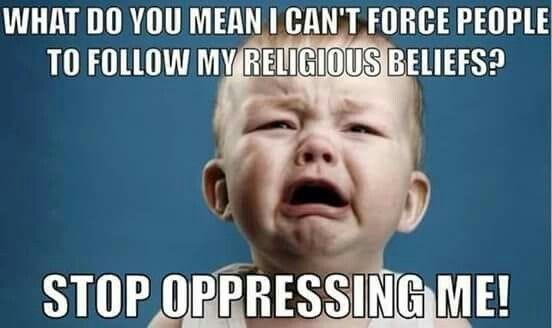
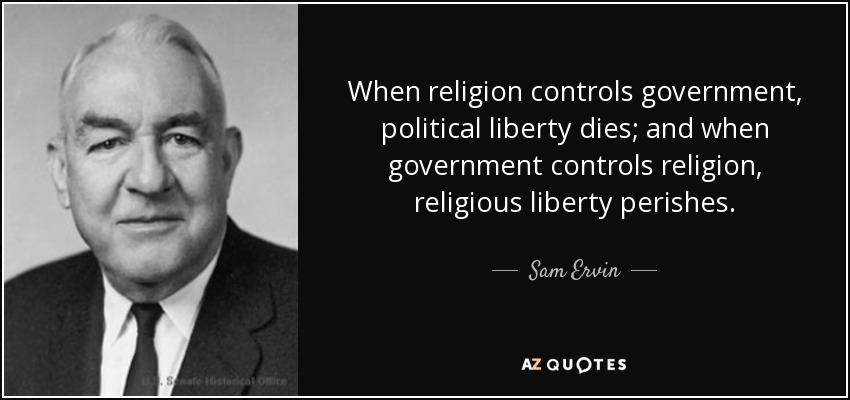
Again these bills are a way Christians can force their moral views on everyone, a way they get to rule on how every person gets to live their lives. It gives these rabid fundamentalists Christian republican groups the right to tell everyone else what they can do, regulating what everyone can watch / read in order to conform to a strict religious view of morality written 2,500 years ago. It ignores all medical, scientific, and social advances done in the years since their holy books were written and mistranslated. Society has advanced as human understandings have, yet these oppressive regressive people want to ignore all that. Would they also like to go back to the medical understandings in the 1600s, 1700s, or even what was known medically in 1900. That was 28 years before penicillin was discovered. 21 years before insulin was discovered. Tell me if their holy book written knew everything about morals why did it support slavery? Do we return to that also to please Christian fascists? This is an attempt to enshrine a religious morality over everyone regardless of if you belong to that or any religion. Again it is not about these people being able to live and act as they wish, it is about forcing everyone else to live by their church rules / doctrines. Hugs
Bills are part of religious right’s post-Roe strategy, with most prevalent ones relating to age verification of sex-related websites
A wave of proposed legislation pushed by Republicans across the US at the state level is aimed at outlawing aspects of sexuality that could have a huge impact on Americans’ private lives and businesses.
Opponents to the laws before legislatures in various states say the planned new legislation could spawn prosecution of breast-pump companies in Texas for nipples on advertising, or a bookstore might be banned from selling romance novels in West Virginia, or South Carolina could imprison standup comics if a risqué joke is heard by a young person.
The bills are part of a post-Roe nationwide strategy by the religious wing of the Republican party, now that federal abortion rights have fallen. They range from banning all businesses that sell sex-related goods to anti-drag queen bills. Tyler Dees, an Arkansas state senator who wrote an anti-porn bill said: “I would love to outlaw it all,” referring to porn.
The most prevalent bills relate to age verification of sex-related websites. Seventeen states drafted porn age-verification bills, many inspired by Louisiana’s law that went into effect in January. Louisiana’s law requires websites featuring 33.33% or more pornographic content to check government-issued ID to verify users are 18 and older. Websites that don’t comply face civil penalties. Parents can sue the site if kids access it.
In Texas, a new bill requiring age verification on websites with pornographic content defines images of the female breast “below the top of the areola” as porn, potentially hitting at business advertisements. In West Virginia, a bill outlawing all sexually oriented businesses is on the docket, with a definition that includes art studios with nude models and wrestling arenas. In South Carolina a bill would criminalize using “profane language” related to “sexual or excretory organs or activities” in front of minors during performances. The punishment? Up to a decade in prison.
Some bills define porn so broadly that anatomy textbooks or sex education websites would meet them.
“I don’t think such laws for the internet are constitutional,” said Eugene Volokh, a professor of Law at UCLA.
Laurie Schlegel, a Republican state senator who drafted the Louisiana law, is a sex-addiction therapist educated at Baptist seminary, who opposed transgender students from being on sports teams that align with their gender. Schlegel’s anti-LGBTQ+ views fit with the broader goal of the laws, according to Carolyn Bronstein, a professor of media studies at DePaul University.
“These laws are really not about controlling minors’ access to violent pornography … In the conservative world view, pornography is information about LGBTQ identity, abortion, gay marriage,” said Bronstein.
Eight states have justified their actions by saying that porn is “creating a public health crisis”. Louisiana’s bill claims that pornography “may lead to low self-esteem, body image disorders, an increase in problematic sexual activity at younger ages … impact brain development … shape deviant sexual arousal, and lead to difficulty in forming or maintaining positive, intimate relationships, as well as promoting problematic or harmful sexual behaviors and addiction.”
Historian Whitney Strub, an associate professor of history at Rutgers University, doesn’t think these ideas are well-founded. “Framing pornography as a public health crisis is not driven by serious engagement with the social scientific literature,” he said. “They’ve even got fake peer-reviewed journals that give the imprimatur of scholarship … It’s been a very smart rebranding of evangelical Christian conservatism.”
Why are all these bills being proposed now? Strub thinks it’s partly because of the overturning of Roe v Wade. “Abortion gave a certain coherence to conservative politics in the United States. And it certainly still does … but they’re in the position of Ahab if he slayed the white whale … I mean, there’s no more Moby-Dick.”
There is hypocrisy on display also.
In many of the states where the anti-porn bills are being put forth, minors can legally have sex and get married. “In Louisiana, you can have sex when you’re 17 with a person in their 30s, but you can’t watch porn,” said Jason Kelley, associate director of digital strategy for the Electronic Frontier Foundation.
In Mississippi, Arkansas and Louisiana, the age of consent is 16. With parental permission, Mississippi allows 15-year-olds to marry, Louisiana 16-year-olds, Arkansas 17-year-olds, and West Virginia kids of any age.
Dees, who wrote Arkansas’s age verification bill, a copycat of Louisiana’s, said porn causes depression and anxiety, divorce and “permissive sexual attitudes” and infidelity. “When I think about the children … I want to protect their innocence,” Dees said.
Strub said this is an old trope: “The political figure of the innocent and imperiled child just has a never-ending purchase on American politics … [it] essentially shuts down debate because it immediately creates a binary in which anybody who disagrees with you is [a] perverted groomer.”
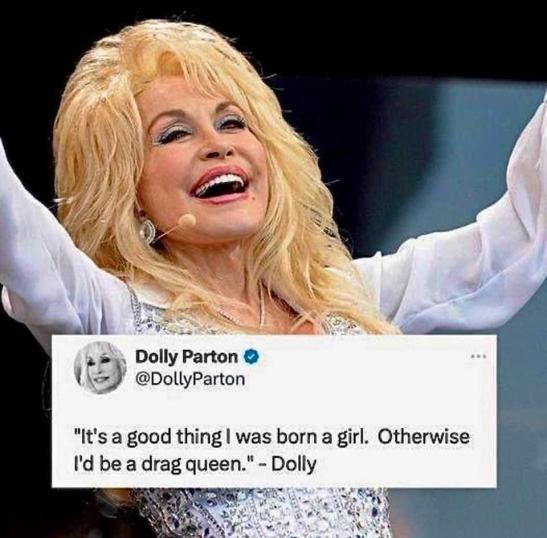
Dees is also the co-author of anti-drag queen legislation in Arkansas, that classifies drag performances as the same category as pornography. “It’s not really a meaningful distinction to [conservatives]. They’re both sexual degeneracy in its different guises,” Strub said.
Dees claimed that his porn verification law “doesn’t have anything to do with any political messaging. It has to do with exposure to material that is harmful, period … There’s a clear enemy in the smut-peddling garbage that’s online.”
But measures already exist to prevent children accessing porn. “There’s a really easy way to keep kids from accessing adult content. And that’s a device-level filter” on mobile phones that block adult websites that are registered as Restricted to Adults, said Mike Stabile of the Free Speech Coalition, which advocates for the rights of sex workers.
These laws, according to Stabile, aren’t going to stop kids from looking at porn. “Even if they were to block all sites, you’re still going to have adult content on Twitter and Reddit … kids will get VPNs,” he said.
Stabile thinks we’ll see up to two dozen age-verification bills introduced by the end of the year.
Dees hopes he is right and has eyes beyond the state level eventually. “My prayer is that enough states continue to push for this measure, and that we send a loud enough message where federal law can be put into place,” he said.
I have been reporting on this for years now as the article says “…describes the current political landscape as a “war against LGBTQ people in America and their very right and ability to openly exist.” These laws have nothing to do with protecting children as they claim but instead are attempts to force regressive religious morality on the entire country by a minority who don’t feel comfortable with “those people” and want them removed from public view / discussion. With every push to return the country to the society of 100 years ago which rolls back every advancement in civil rights that have been achieved, these people are emboldened to push harder to oppress more people into living the way that maga Christian minority insists they have a right to force everyone else to live as. It is not enough for them to live as they wish, they insist you live the way they do also, that you believe as they do, that you follow the moral dictates written 2,500 years ago for a culture long gone. But it is not enough for these people and never will be until they are in charge of and get to rule over every aspect of your life. Allies of the LGBTQ+ we need to you stand up and add your voice to protect the rights of minorities, women, and the LGBTQ+. Hugs
Today’s heart rate readings have seen an improvement. The lowest it has been is 95 the highest sustained was 136 with the average so far of 126 bpm. So I am getting better. Still no call from the heart doctor’s office so Monday I will call them. This has been going on for too long and too dangerous, not to mention causing me to struggle to function. Hugs
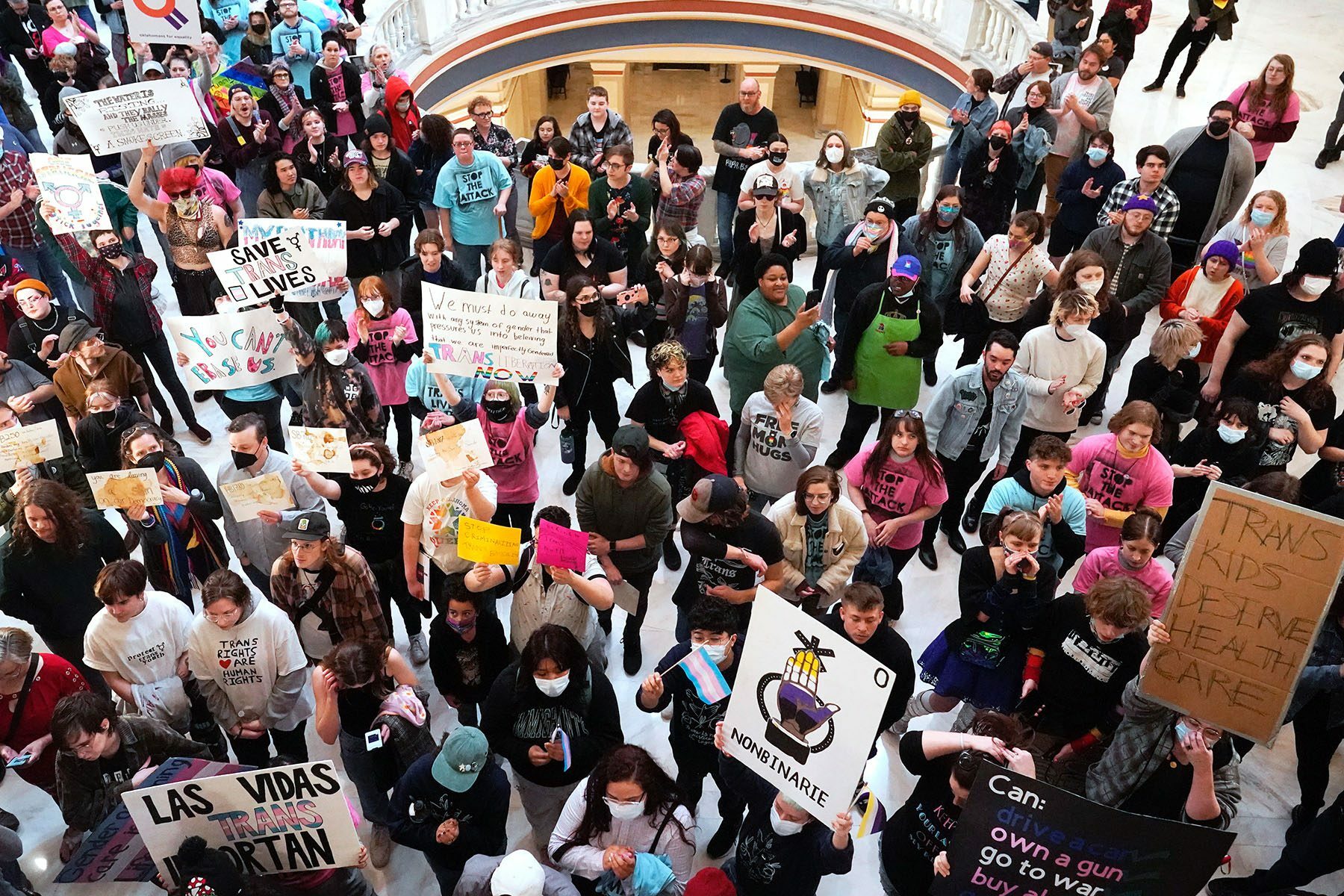
Trans-rights activists protest outside the House chamber at the Oklahoma State Capitol on Feb. 6, 2023. (SUE OGROCKI/AP)
From bills in legislatures to restrictions in schools and health care, growing rhetoric throughout the US is part of a “full-out attack” against LGBTQ+ people, advocates say.
The volume and speed of anti-LGBTQ+ bills advancing through state legislatures has already defined 2023 as a historically challenging and frightening year, advocates say.
In a new report, the Movement Advancement Project (MAP), which tracks LGBTQ+ policy, describes the current political landscape as a “war against LGBTQ people in America and their very right and ability to openly exist.” It is a culmination of efforts: gender-affirming care bans for trans youth becoming law in states where such bills were previously blocked, growing efforts to restrict how students learn about LGBTQ+ subjects in schools, an increase in dehumanizing rhetoric that could lead to harassment or violence.
“I’ve been working in the movement for 15 years,” said Naomi Goldberg, deputy director and LGBTQ program director at MAP. “To me, this is a different moment. … It is hard to see this as anything but a full-out attack and full-out war on LGBTQ+ people when you look at all of the areas of life, at all of the parts of our communities that are being attacked.”
The Human Rights Campaign (HRC), the country’s largest LGBTQ+ organization, sounded similar alarm bells earlier in the week. The organization has so far tracked 340 introduced anti-LGBTQ+ bills, including the most anti-transgender bills ever filed that the group has seen.
Those bills include ones that would prohibit students from playing school sports that match their gender identity and bills that would restrict gender-affirming medical care for minors. Over 90 bills targeting medical care for trans youth have been filed so far, according to the HRC’s count. South Dakota and Utah have already signed such bills into law, while states like Tennessee and Mississippi are quickly moving similar bans through their legislatures. Other proposed bills direct school employees to effectively misgender students, mandating that students are referred to with pronouns that match their sex assigned at birth unless a parent intervenes.
“This situation is terrifying. It’s scary and it’s harmful. We know last year was bad. … we anticipate this year being historically bad,” Kelley Robinson, the president of HRC, said on a Tuesday press call with reporters.
Within the past three years, “firsts” in anti-LGBTQ+ bills have piled up, MAP’s analysis finds: the first legislative ban on trans youth playing sports that match their gender identity in Idaho, the first legislative ban on gender-affirming medical care for trans youth in Arkansas, the first state ban on the use of X as a gender marker on identity documents in Oklahoma, and the first “Don’t Say Gay” law passed in 20 years in Florida.
Efforts outside statehouses are another part of what make the current moment unique, per the report — including child abuse investigations ordered by the state of Texas against families seeking gender-affirming care and Florida’s board of medicine moving to restrict such care for trans youth.
Some LGBTQ+ advocates are concerned about the potential for new anti-trans bills to restrict whether families can seek gender-affirming care in other states if their own state bans the care. In Oklahoma, one bill prohibits doctors from making a referral to “any physician or health care professional for gender transition procedures” for patients under 18. The consequences of such a referral would be meted out by the state, which would have jurisdiction over its own doctors. However, since any referrals would have to be for out-of-state care, it still has the potential to limit interstate travel for gender-affirming care, said Logan Casey, senior policy researcher and adviser for MAP, over email.
More bathroom bills, which aim to restrict how trans people are able to use the bathroom that matches their gender identity, are filed this year than in previous years, per the Human Rights Campaign’s count — and fewer bills targeting how trans students can participate in sports are being introduced.
Even when the legislation doesn’t become law, it still causes harm, Olivia Hunt, policy director at the National Center for Transgender Equality, stressed during the call. Hunt pointed to a recent poll that found 86 percent of surveyed trans and nonbinary youth said that debates around state laws restricting LGBTQ+ rights for young people negatively impacted their mental health.
“Trans youth are making their way through an already difficult world, where they’re trying to understand who they are … and on that journey, they’re vulnerable, and they deserve the love, respect and support of their communities. Instead, they’re portrayed as someone to be feared, controlled or erased,” Hunt said.
The Biden administration has vocally supported LGBTQ+ rights, directing federal agencies to roll back Trump-era policies that advocates denounced as discriminatory and prioritizing data collection on LGBTQ+ experiences. Goldberg said she wants to see enforcement of federal protections from the Biden administration. Those include the Department of Health and Human Services’ proposed rule to restore protections for gender identity and sexual orientation under the Affordable Care Act, and Title IX protections proposed by the administration that would apply to trans students. Following Biden’s State of the Union address, HRC called on the administration to finalize both of those rules.
“I think it would be great to have more leadership,” Goldberg said.