Trans women’s bodies have been thrown into the spotlight recently. With a private member’s bill which “seeks to exclude trans girls and trans women from participating in sports” in the Senate being supported by some in government, and fervently denied by others, it’s worth diving into the science behind the issue causing all this furore.
While research in this field is still in its infancy, it’s clearer than some think. Not only do trans women not have advantages over cis women in sport in most cases, but cis women playing sports are overwhelmingly not worried about trans women competing alongside them.
First, let’s start with the science. When a trans woman decides to transition, usually one of the first medical steps they’ll undertake is to go on hormones. These are testosterone blockers (also known as anti-androgen medications) and estrogen, both of which are common medications that can also be prescribed to cis women to treat various ailments.
These hormones have a number of effects on a trans woman’s body – they add and change the way fat is distributed, they lower the levels of red blood cells, and significantly decrease strength, muscle and lean body mass.
“In sports cheating via ‘blood doping’, red blood cells are raised,” wrote Ada Cheung, an endocrinologist from the University of Melbourne, in a Sydney Morning Heraldopinion article. “The opposite occurs in trans women: oxygen-carrying red blood cells drop to female levels. Trans women gain fat mass and lose bone density.
Not only do trans women not have advantages over cis women in sport in most cases, but cis women playing sports are overwhelmingly not worried about trans women competing alongside them.
“Further research is coming. My research group at the University of Melbourne, in collaboration with the Institute for Health and Sport at Victoria University, have started the GAME research study examining how feminizing hormones impact fitness, endurance, physique and gene changes in muscle over time in comparison groups.”
Although hormones will change many facets of a trans woman’s body if they transition as an adult, it won’t change someone’s height; and one study, published in the British Journal of Sports Medicine, suggested that despite strength and muscle decreasing, they may still have a small advantage over the average cis women.
This is where the controversy comes from. Is it “fair” for someone who went through male puberty to be able to play at the elite level with women? Despite the recent coverage, this is not a particularly new issue. In elite sports, many sporting bodies already have codes in place that allow trans women to play if their testosterone level is below 5–10 nanomoles per litre for a number of months.
But in almost all sports, height or a slight strength advantage are not what gives you the leg-up over competitors. The AFL has called the ideas that trans women will “dominate” on the field, or cause a safety concern to their cis teammates, as “myths”.
“Sporting ability is more than just hormones,” they write in their Gender Diversity Policy. “Like other players, gender diverse players are all individuals and may have a range of physical abilities, fitness, skill levels and different strengths and weaknesses in the multi-skilled game of Australian football.
“For example, a cisgender or transgender woman may be taller and/or stronger than other women competitors but may also be slower and/or less agile.”
The results at the Olympics and other major sporting events back this up. For the very few trans women who have competed in sport at the elite level, there’s been no domination over cis women. Trans women may occasionally win, but they have never broken a world record, or won an Olympic event. If anything, trans women seem very much on an even playing field with their cis counterparts.
It’s also worth pointing out that the cohort of trans girls who transitioned before going through male puberty is only going to increase as more transgender people are able to transition earlier. For example, in 2017 in Australia, a law was overturned in the courts that had required all under 18 trans youth to go to court to be able to access puberty blockers or hormones from their doctor. Although there’s still a long way to go, increased access to gender affirming care for kids means that the issue itself is very likely to get smaller over time.
This idea that trans women are naturally better at sport than cis women comes back to the impression that men have an innate advantage over women in every sport, which is not true either. Although we’ve mentioned that men are on average taller and stronger than women, at very long distances in ultra-running, research has shown that women start to outcompete men. This seems to be because women are metabolically better suited for endurance. Then there’s sports like figure skating, which became segregated in 1905 after British woman Madge Syers entered what had previously been an all-male World Championships and won silver.
Madge Syers, British figure skater. Olympic Games, London 1908. Credit: ullstein bild Dtl / Getty
But in the debate on the inclusion of transgender women in sports, we are not just talking about elite sport – this also includes community and children’s sports, both which involve a different range of issues.
The vast majority of sports are played by those who are kids and teenagers, and the highest percentage of people who identify as transgender are people under the age of 18. It’s important to acknowledge that trans women in sport includes trans girls who have never gone through male puberty – and who could benefit from the health and mental wellbeing benefits of sport the most. Unfortunately, the data shows that LGBTQ+ people are under-represented playing sports.
“Sport is a very valuable tool to be used to help boost LGBT kids’ self-esteem and self-worth,” says Erik Denison, the lead researcher at the Sport Inclusion Project at Monash University.
“Everything we know from the Centres for Disease Control and Prevention (CDC), in the US, is that if kids play sport, they’re about half as likely to have attempted suicide in the last year.”
Many community women’s clubs do not have testosterone guidelines and welcome anyone who identifies as a woman. On top of that, research surveys done by Denison have also shown that the majority of women sporting players do not see playing against a trans competitor as an issue.
In his research across six sports and 12 community clubs at Monash University, less than a quarter (24%) of women believed “trans women have an unfair advantage when they play on a female sport team”. Interestingly, when men were asked the same question, that percentage almost doubled (46%). This is similar to other research findings around the world.
Denison understands this. When he first began work in this field, he also assumed that trans women would have an unfair advantage. The research has changed his understanding, but it’s worth noting exactly why this difference exists.
“For [men] playing sport, the number one reason is about competition and winning,” he says. “I’ve never done research where the first thing a guy says is that they like their sport because it’s inclusive or welcoming or friendly,” he says.
“Whereas just about the first thing every woman that I’ve ever interviewed says when you ask them, ‘Why do you like your sport?’ is, ‘Oh, it’s great to meet friends, it’s inclusive, it’s a very friendly club’.”
Transgender, non-binary athlete Quinn with team Canada after winning Olympic gold during the Women’s Football match between Canada and Sweden, Tokyo 2021. Credit: Naomi Baker / Getty
This echoes my own experience playing in a women’s AFL team with trans women playing alongside us. And this inclusive, welcoming aspect goes back all the way to when women’s sports were just beginning to rise in popularity in Australia.
“There are lots of examples where women created their own associations, leagues and competitions because if they didn’t, they simply would not have had the opportunity to play,” explains Kirby Fenwick, co-founder of Siren: A Women in Sport Collective and an expert in the history of women’s sport.
“Men have long dominated sport in Australia and too often resisted creating space or opportunity for women. “Embedded in the fabric of women’s sport is a foundation of community and inclusivity – a desire to bring people in, not look for ways to keep them out.”
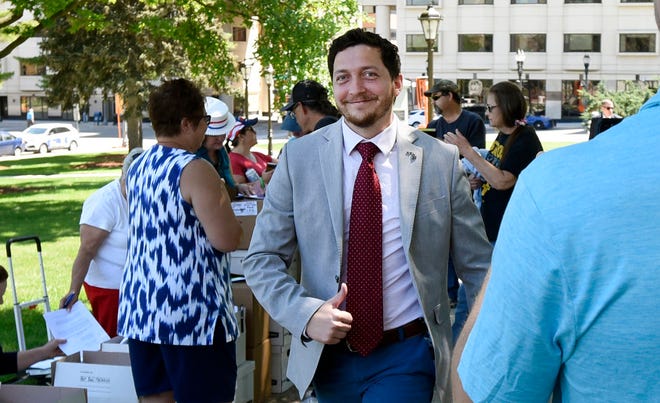
A Michigan Republican lawmaker proposed a resolution Tuesday to declare Jan. 6 as “Remembrance Day,” stating it should be recognized “for the heinous and tyrannical actions levied on society by an unhinged and politically motivated ruling elite.”
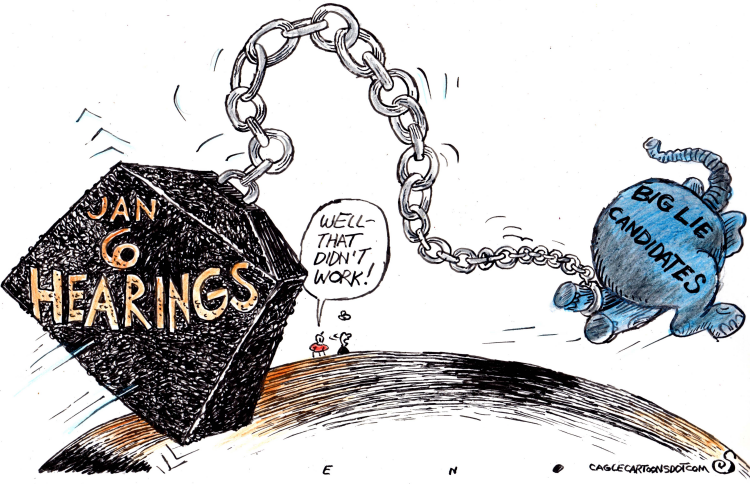
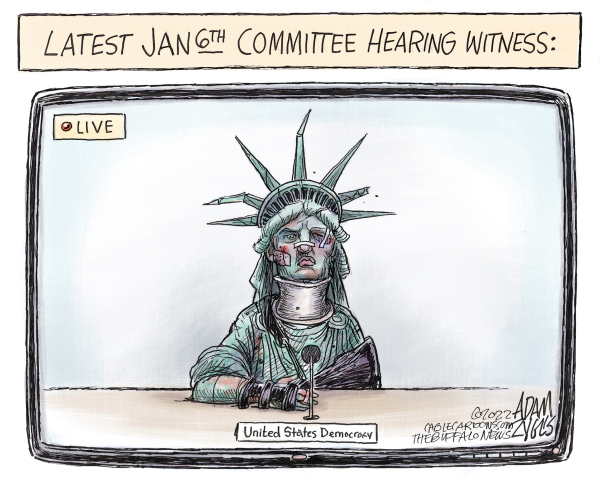
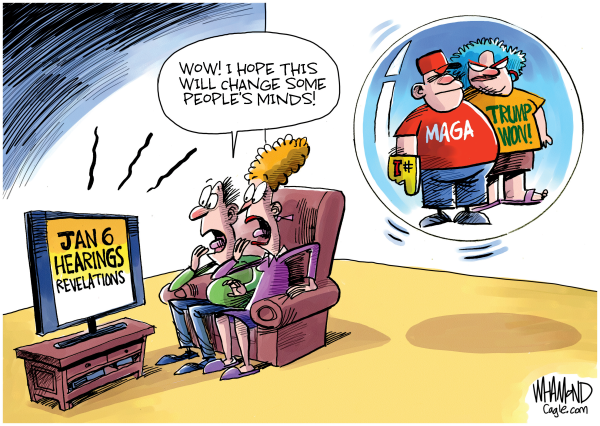
State Rep. Steve Carra, R-Three Rivers, introduced the resolution during Tuesday’s session, when it was referred the House Rules and Competitiveness Committee, where unpopular policy proposals usually stall out. It came as the Democrat-led U.S. House Select Committee to Investigate the January 6th Attack on the United States Capitol is scheduled to continue holding public hearings on what led to the insurrection in Washington, D.C., on Jan. 6, 2021. A fourth hearing was held Tuesday afternoon.
The riot at the Capitol, as Congress met to count electoral votes, “was one of the darkest days of our democracy” and resulted in multiple deaths and physical harm to more than 140 members of law enforcement, according to the select committee.
But the resolution Carra is proposing attempts to tie the events of Jan. 6, 2021, to “the tyrannical actions of the government over the past two years,” including “unconstitutional mandates” connected to the COVID-19 pandemic and parents being “prevented from participating in their children’s education.”
The resolution’s main claim is “blatantly not true,” said state Rep. Joe Tate, D-Detroit. Jan. 6, 2021, led to people dying and was an effort to overthrow democratic institutions, Tate said.
However, Carra’s resolution asks the Republican-controlled House to “blame a few rogue and malicious agitators, a small fraction of passionate individuals from the crowd in attendance for the rally who got caught up in the moment, and most importantly a lack of proper security on-site, for the damage that was done on Jan. 6, 2021.”
The resolution also says the Federal Bureau of Investigation “improperly raided” the home of Republican gubernatorial hopeful Ryan Kelley on June 9. Kelley of Allendale was charged with four misdemeanors tied to his involvement in the riot at the Capitol, including disorderly and disruptive conduct. Kelley has said he didn’t enter the Capitol building.
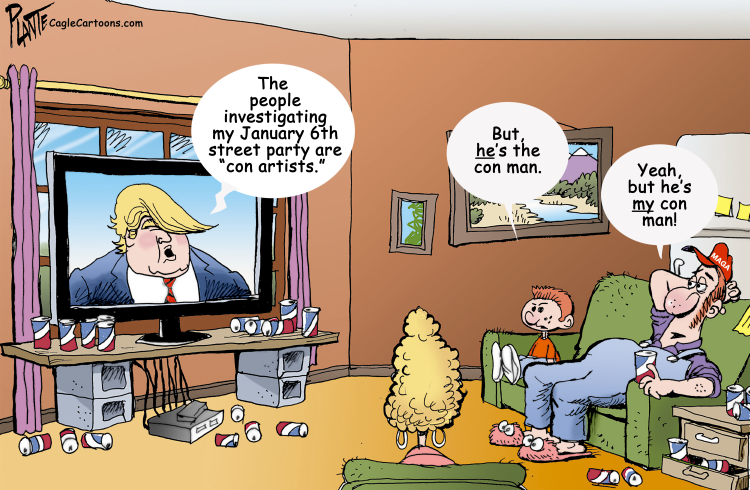
The U.S. House select committee has found the events of Jan. 6, 2021, were part of an attempt by Trump to remain in power after losing the November 2020 presidential election.
Carra, a former staffer at the “Christian/libertarian” Acton Institute think tank, is an anti-vaxxer. He dropped his bid for the US House earlier this year after Trump endorsed someone else.
I wonder if anyone has tried to explain to this dumb fuck that the “ruling elite” on that day were, um, members of his own fucking party! He’s probably to stupid to comprehend thatt.
Laugh now, but if these miscreant Republicans get full control, there will be statues of The Proud Boys standing next to Confederate monuments within 20 years.
The evil is so blatant and so “not in the closet” anymore, it’s amazing.
Sociologists and political scientists must be in awe of what the country is undergoing today. When was the last time in American history they or we saw anything like this?
Some pretty evil shit has happened on US soil – slavery, genocide of Native Americans, Jim Crow, etc. But it really is unprecedented in our history for things to not simply go in reverse like “one step forward, two steps back,” but for a whole one-third or more of the public to embrace full-blown fascism while another large percentage – maybe itself constituting one-third – is ready to let it happen.
Some pretty evil shit has happened on US soil – slavery, genocide of Native Americans, Jim Crow, etc. But it really is unprecedented in our history for things to not simply go in reverse like “one step forward, two steps back,” but for a whole one-third or more of the public to embrace full-blown fascism while another large percentage – maybe itself constituting one-third – is ready to let it happen.
Sen. Ron Johnson (R-Wis.) offered to hand-deliver certificates of fake electors to Vice President Mike Pence as part of the Trump campaign’s broader effort to overturn the 2020 election result, according to evidence released by the House Jan. 6 committee.
In texts obtained by the committee investigating the Jan. 6, 2021, attack on the Capitol, a Johnson staffer approached a top aide to the vice president requesting that Pence and Johnson meet for Johnson to deliver fake electors’ votes for Michigan and Wisconsin, which the Trump campaign had also instructed the fake electors send to the National Archives.
“Do not send that to him,” the Pence aide told the Johnson staffer, rejecting the senator’s request that Pence participate in the ruse to contest the election.
A Sen. Ron Johnson (R-WI) staffer texted a Mike Pence staffer stating Johnson wished to give fake Michigan and Wisconsin electors' votes to Pence on January 6th.
Sen. Ron Johnson (R-Wis.) offered to deliver fake electors to Vice President Pence, House Jan. 6 committee says in video at hearing https://t.co/oYZGFCzDhJ
— The Washington Post (@washingtonpost) June 21, 2022
The taped deposition of Ronna Romney McDaniel, the Republican National Committee chairwoman, was played on Tuesday. (January 6 Committee Interview)
The head of the Republican Party testified to the House select committee that former President Donald Trump called her as part of an effort to use fake electors to support him.
The new detail links Trump directly to efforts to put forward rogue, alternate slates of electors in states that he lost, even though his top lawyers in the White House and the campaign knew the approach wasn’t legally sound.
“Essentially, he turned the call over to Mr. [John] Eastman, who then proceeded to talk about the importance of the RNC helping the campaign gather these contingent electors,” Ronna Romney McDaniel, the Republican National Committee chairwoman, said in her taped deposition. “My understanding is the campaign did take the lead, and we just were helping them in that role.”
She noted that the electors were being pulled together in case Trump legal challenges succeeded in blocking Biden wins.
The campaign wasn’t entirely on board, however.
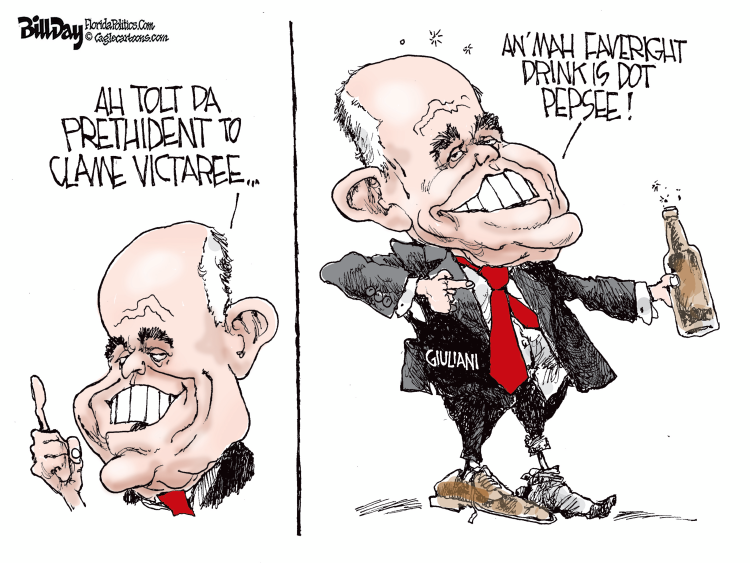
Some of the top officials in the Trump campaign and White House believed the fake electors plan wasn’t legal, and left the push to lawyers like Eastman and Rudy Giuliani who had swarmed after the election, the committee said.
In an interview with the committee, Cassidy Hutchinson, an aide to the White House chief of staff, confirmed to the committee that lawyers with the White House counsel said the plot was not legally sound. She said former White House chief of staff Mark Meadows and Trump’s lawyer Rudy Giuliani were involved in the meeting.
“Nevertheless,” Rep. Adam Schiff said, “the Trump campaign went forward with the scheme anyway.”
Two top campaign lawyers, Matt Morgan and Justin Clark, said in their taped depositions that they told Trump lawyers pushing the fake electors scheme they didn’t want to take part.
“You just get after it. I’m out,” Clark told the House, about a conversation he had with another lawyer who backed the fake electors plan, Kenneth Chesebro. “I don’t think this is appropriate. This isn’t the right thing to do.”
Morgan described directing another campaign official to tell Chesebro: “This is your task. You are responsible for the Electoral College issues moving forward. This was my way of taking that responsibility to zero.”
Before Tuesday, it wasn’t known that Clark had spoken to the House select committee.
A source familiar with Clark’s testimony says he testified “a while back” and that Trump is likely not pleased his former lead campaign attorney is shown saying essentially his campaign didn’t have a case to back up Trump’s lies.
Clark still works with Trump. Last year he directed witnesses the House had subpoenaed to preserve executive privilege, and he represented Trump in his unsuccessful appeal to try to stop the release of White House documents from the National Archives.
Notable-> it happened quickly, but the committee showed RNC Chair Ronna McDaniel acknowledging that former President Trump himself was directly involved in the fake elector plot.
IMPORTANT: RNC Chairwoman Ronna MCDANIEL indicated that Trump *called her* (not the other way around) and connected her to John EAstman to help coordinate false sets of electors. Shows Trump's direct hand in the effort. https://t.co/VRDn6hGjp0
The committee play a clip of Ronna McDaniel's deposition, in which she said Eastman asked the RNC to help with the fake electors scheme pic.twitter.com/GCaupSo5s8
RNC Chair Ronna McDaniel on fake electors scheme, which she called "contingent" electors: "My understanding is the campaign did take the lead and we were just helping." https://t.co/TnjeFtmqQd
NEW: RNC Chairwoman Ronna McDaniel reveals the RNC helped the Trump campaign with their scheme to have fake electors meet and cast votes for Trump in states he had lost. #January6thCommitteeHearingspic.twitter.com/rNQptAlreY
Committee also expected to probe Trump’s pressure on officials in crucial states to corruptly reverse his election defeat
If Donald Trump was involved in the fake electors scheme, the former president may face a criminal investigation. Photograph: Evan Vucci/AP
The House select committee investigating the January 6 Capitol attack is expected to show at its fourth hearing on Tuesday that Donald Trump and top advisers coordinated the scheme to send fake slates of electors as part of an effort to return him to the White House.
The panel is expected to also examine Trump’s campaign to pressure top officials in seven crucial battleground states to corruptly reverse his defeat to Joe Biden in the weeks and months after the 2020 election.
At the afternoon hearing, the select committee is expected to focus heavily on the fake electors scheme, which has played a large part in its nearly year-long investigation into Trump’s effort to overturn the results of the election at the state level.
Liz Cheney’s condemnation of Trump’s lies wins over Democrats
Read more
The panel will show how the fake electors scheme – which may have been illegal – was the underlying basis for Trump’s unlawful strategy to have his vice-president, Mike Pence, refuse to certify Biden’s win in certain states and grant him a second term.
If the 2020 election cycle had been like any other, when the electoral college convened on 14 December 2020 and Democratic electors attested to Biden’s victory over Trump, that would have marked the end of any post-election period conflict.
But that year, after the authorized Democratic electors met at statehouses to formally name Biden as president, in seven battleground states, illegitimate Republican electors arrived too, saying they had come to instead name Trump as president.
The Trump electors were turned away. However, they nonetheless proceeded to sign fake election certificates that declared they were the “duly elected and qualified” electors certifying Trump as the winner of the presidential election in their state.
The fake electors scheme was conceived in an effort to create “dueling” slates of electors that Pence could use to pretend the election was in doubt and refuse to formalize Biden’s win at the congressional certification on 6 January.
And, the select committee will show, the fake election certificates were in part manufactured by the Trump White House, and that the entire fake electors scheme was coordinated by Trump and his top advisers, including former chief of staff Mark Meadows.
“We will show evidence of the president’s involvement in this scheme,” congressman Adam Schiff, the select committee member leading the hearing alongside the panel’s chairman, Bennie Thompson, and vice-chair, Liz Cheney, said on CNN on Sunday.
Members of Trump’s legal team insist this is a distorted characterization of the scheme, saying the so-called alternate slates were put together and signed in case the states did re-certify their election results for Trump and they needed to be sent right away to Congress.
But that explanation is difficult to reconcile given that the Trump lawyer John Eastman admitted in a 19 December 2020 the Trump slates were “dead on arrival” if they were not certified, and yet still pushed Pence to reject Biden’s slates even though Trump slates were still not certified.
The fake electors scheme is important because it could be a crime. The justice department is investigating whether the Republicans who signed as electors for Trump could be charged with falsifying voting documents, mail fraud or conspiracy to defraud the United States.
If Trump was involved in the scheme, and the justice department pursues a case, then the former US president may also have criminal exposure. At least one federal grand jury in Washington is investigating the scheme and the involvement of top Trump election lawyers, including Rudy Giuliani.
The select committee is also set to closely focus on Trump’s pressure campaign on leading Republican state officials in the weeks and months after the election, according to a committee aide who previewed the hearing on a briefing call with reporters.
‘A one-sided witch-hunt’: angry Trump lashes out at January 6 hearings
Read more
Among other key flash points that the panel intends to examine include Trump’s now-infamous 2 January 2021 call with Georgia’s secretary of state, Brad Raffensperger – who will testify live at the hearing – when Trump asked him to “find” votes to make him win the election.
“I just want to find 11,780 votes, which is one more than we have,” Trump said during the conversation, a tape of which was obtained by the Washington Post and House investigators working for the select committee.
The select committee will describe Trump pressuring other state officials to investigate election fraud claims his own White House and campaign lawyers knew were false, relying on testimony from the Arizona house speaker, Rusty Bowers.
And the panel will additionally hear testimony from Shaye Moss, a Georgia election worker in Fulton County, who was falsely accused by Giuliani and others of sneaking in “suitcases” of ballots for Biden – a conspiracy theory debunked by election officials.
Wow, just holy shit wow! People need to read and understand the movement going on and how deeply they have worked themselves both into the Republican party and into the power levels of government. Shit we are so close to this minority of religious zealots taking over the country while the majority sleeps unaware. I just posted about Egypt which was a secular country until an authoritarian leader took over and used religion to stomp out any culture advances and to advance their conservative agenda of returning to a tradition where only they had power. It happened in Russia where democracy got started and the culture was advancing and opening up, only to have an authoritarian take over and use religion to push everything back to a time when he / they had power over the population. We are in danger of not just regressing but becoming an active theocracy where all people will be forced to live under the doctrine and dictates of a religion regardless of if you believe it. You will pay taxes / tithes regardless. Your private life will be scrutinized to make sure you are following the dictates of the church doctrines. Welcome to the Handmaidens tale. Hugs
Lauren Boebert prayed for Biden’s death — and that’s not even close to the craziest item on the GOP wish list
At the tail end of last week, Rep. Lauren Boebert of Colorado took the stage at the Charis Christian Center’s Family Camp Meeting. The event claims that, “you will hear God’s Word shared through speakers who have proven God’s Word,” and follows the speakers’ list with Acts 2:17-18:
And in the last days it shall be, God declares, that I will pour out my Spirit on all flesh, and your sons and your daughters shall prophesy, and your young men shall see visions, and your old men shall dream dreams; even on my male servants and female servants in those days I will pour out my Spirit, and they shall prophesy.
The apocalyptic context notwithstanding, Boebert’s talk made quite a splash because of her invocation of Psalm 109:8 in the context of praying for President Biden — “May his days be few and another take his office” — before laughing at the cheers of the crowd. This is certainly not a new use of that text by the GOP — Sen. David Perdue of Georgia invoked it against Obama in 2016, and it became an anti-Obama slogan featured on bumper stickers. With the passage divorced from its full context, people can laugh — but Psalm 109 is a war psalm, calling for the death of the man in question, with 109:9 reading “Let his children be fatherless, and his wife a widow.” And that’s the point: As with so many aspects of contemporary Christian nationalism, give the line people can nod along to, and hold back the violent context. This is a prayer for the death of the president, and it is one we can honestly say has become normal for Republicans to use about Democratic presidents.
Maybe that’s a big enough problem that we should acknowledge it not just as a fringe phenomenon, but as part of the core problem of the contemporary, MAGA-infused GOP.
Georgia candidate Kandiss Taylor called fellow Republican Brian Kemp “Luciferian” and defined the First Amendment as “our right to worship Jesus freely — that’s why we have a country.”
Kandiss Taylor’s failed Republican gubernatorial primary campaign in Georgia was incredibly instructive on where the GOP now stands. Her campaign bus, which literally had “Jesus, Guns, Babies” emblazoned on the side, was just the most overt aspect of her Christian nationalist campaign. She told followers to pray for good sheriffs and said that corrupt ones would be executed for treason, strongly implying her belief in the extremist “constitutional sheriff” doctrine, which holds sheriffs are arbiters of what the law is in their counties, not enforcers of it. She said at one campaign rally, “We’re gonna do a political rally and we’re gonna honor Jesus. They’re not gonna tell us ‘separation of church and state.’ We are the church! We run this state!” — an aggressively Christian nationalist idea. Taylor called Gov. Brian Kemp’s administration a “Luciferian regime,” said that as governor she would release an executive order against the “Satanic elites,” and vowed to tear down the “Satanic” Georgia Guidestones.
Taylor even championed Native genocide, saying, “The First Amendment right, which is our right to worship Jesus freely — that’s why we have a country. That’s why we have Georgia. That’s why we had our Founding Fathers come over here and destroy American Indians’ homes and their land. They took it.” And, of course, she champions the Big Lie, saying on Twitter, “We are in a spiritual war … it’s God versus Satan. If GA goes down, if we let them steal the election from us .. we’re gonna steal it back if we have to.” That carried over to her own loss — despite losing the primary by 70 points, she refused to concede.
We might well ask: So what? Taylor was defeated by a staggering margin, as were numerous other Christian nationalist candidates. Rep. Madison Cawthorn, for example, lost his primary race in North Carolina after the Republican establishment turned on him. Idaho Lt. Gov. Janice McGeachin embraced extremism, appearing with militia members in photo ops, administering oaths to them reserved for the state military, and appeared on video at the America First PAC meeting, saying, “God calls us to pick up the sword and fight, and Christ will reign in the state of Idaho.” She lost by 20 points. The Republican candidate for secretary of state in California, Rachel Hamm, said she decided to run for office because she was a prophetic dreamer, and because her youngest son, “a seer,” had found Jesus in the closet where she prays, holding a scroll telling her to run. She also lost and then claimed fraud, tweeting, “When you’ve fought the good fight, had an honest contest & lost, that’s when you concede. So, in my case, there will be no concession. Stolen elections=stolen Republic.”
And then there those who are still running. Greg Lopez, a GOP gubernatorial candidate in Colorado, believes in a blanket ban on abortion, rejects climate change, has said that the “educational system has now been converted into state indoctrination centers” and is a proponent of the Big Lie. He appeared, alongside a range of conspiracy theorists and far right figures, at the Western Conservative Summit at the beginning of the month. And he is not shy about his negative views of the LGBTQ community, a common theme among GOP candidates.
Mark Burns in South Carolina, for example, was an early Trump supporter in 2016. He’s an evangelical minister, a conspiracy theorist and pastor at the Harvest Praise & Worship Center. He’s running for Congress in the state’s 4th congressional district, and his platform reads like a grab bag of right-wing ideas:
Our right to bear arms is INHERENT, given to us by God almighty — NOT by any man;
If we don’t fix these elections NOW, America will be lost. Without open, honest, transparent elections, no other issue matters;
Life begins at conception;
Marriage is defined as between one man and one woman;
Critical Race Theory is Communist, anti-white Racism;
Vaccine and mask mandates are medical tyranny, and have no place in America;
The Pelosi budget opens the door wide open to full-blown communism.
And while these may sound like wild ideas, they’re nothing compared to what Burns says. He has called for reviving the House Un-American Activities Committee — yes, the infamous Red-hunters of the 1940s — to investigate LGBTQ “indoctrination,” which he calls a national security threat, saying that anyone engaged in it (or in gun control) should be tried for treason, and executed. Burns is literally calling for reviving the “lavender scare,” which has a certain evil logic because that, in essence, is where Christian nationalists have settled in the culture wars: anti-trans legislation, anti-LGBTQ rallies and attacks, and pushing to re-criminalize sexual minorities.
One South Carolina candidate literally wants to bring back the anti-LGBTQ persecution of the “lavender scare,” which has a certain logic: That’s where Christian nationalists have landed in the culture wars.
The Jesus part is obvious. The guns have been covered, be it Pennsylvania gubernatorial candidate Doug Mastriano’s links to the apocalyptic Rod of Iron Ministries or the marketing of AR-15-style guns as sacred weapons. But babies may be the most important part of it. Attacks on the LGBTQ community must be understood in the context of right-wing ideas about sexual purity and a full-blown mania for forced birth legislation. Anti-abortion laws, attacks on contraception and attacks on sexual minorities are all part of a Christian nationalist assault on the nation. Movements like Quiverfull, taken from Psalm 127, have a number of political aspects alongside a belief system that shuns birth control and believes God will give them the right number of children. They literally believe that whoever has the most babies wins, and see that as the fundamental political and spiritual battle. One Quiverfull-affiliated author has said:
It is the womb that conceives and nourishes the “godly seed” who will come forth to be the light in the darkness and who will destroy the works of Satan in this world. God is looking for an army. … The womb is a powerful weapon against Satan. Some women fear to bring babies into this evil world, but this is one of the greatest reasons for having children — to be the light in this dark world!
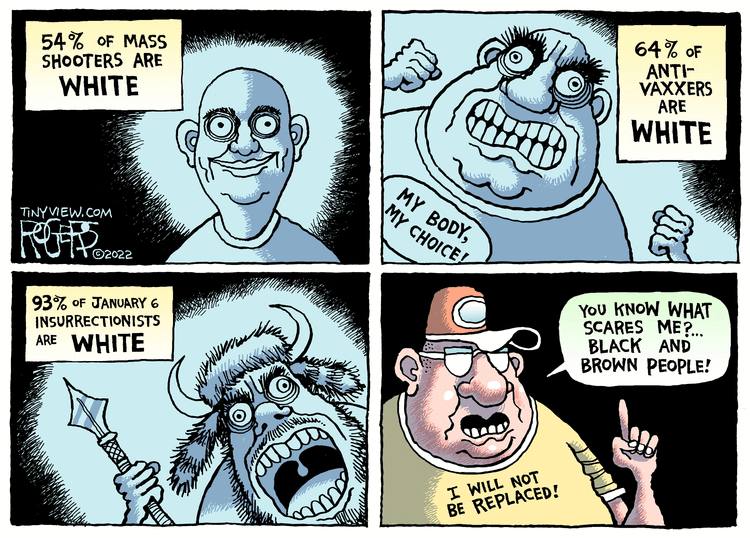
I would also suggest, rather forcefully, that Christian patriarchy and Christian nationalism are linked to the “great replacement” theory, the deeply racist and xenophobic notion that nonwhite people are being brought into Western countries to “replace” white voters, in order to further a specific political agenda, leading to the supposed extinction of white people. As is well understood, this delusional ideology has fueled multiple massacres, including the mass shooting in Buffalo in May and earlier mass shootings in El Paso, Pittsburgh and Christchurch, New Zealand. Forced-birth laws and abortion bans are also part of this perceived demographic war, part and parcel with the spiritual battles Christian nationalists believe they are fighting and the very real stockpiling of arms, association with militia groups and opposition to government. PRRI’s August 2021 survey shows that “great replacement” ideas are growing in evangelical circles, and have only become more mainstream since then.
Religious violence is the bedrock of Christian nationalism, and Christian Nationalism is becoming the bedrock of the contemporary Republican Party. Forced birth laws, anti-LGBTQ legislation and the “great replacement” theory are all forms of violence, and all but certain to fuel the spread of more lethal violence. is violence. “Jesus, Guns and Babies” may seem like a laughable slogan, stripped of context. But it isn’t funny at all.
Read more on Christian nationalism and the far right:
Thomas Lecaque is an associate professor of History at Grand View University in Des Moines, Iowa. He specializes in the nexus of apocalyptic religion and political violence. He has written for the Washington Post, Religion Dispatches, Foreign Policy and The Bulwark, among others. Follow him on Twitter: @tlecaque.
Two district governor’s offices in Istanbul have banned all LGBTI+ Pride Week events, scrapping what would have marked the 30th anniversary of the celebrations in the megacity.
The Beyoğlu and Kadıköy District Governor’s offices announced a ban on all gatherings in both districts, where Pride Week events have traditionally been held, on Monday, Diken news site reported, citing the Law on Demonstrations and Public Meetings.
The ban will be in effect for a period of one week starting on Tuesday, Diken said.
Istanbul’s gay pride parades, which attracted up to 100,000 people from across the region, have been banned since 2014 , with officials citing security reasons for the ban.
Turkey’s LGBTQ groups accuse the government of Recep Tayyip Erdoğan of waging a “hate campaign” against them, encouraging violence against a vulnerable community.
Turkey has ranked second worst country in the European Union for LGBT people, scoring only above Azerbaijan, according the 2022 “Rainbow Europe” ranking compiled by Brussels-based NGO advocating for LGBT rights, ILGA-Europe.
Last month, Turkish police intervened in a Pride march held at Istanbul’s Boğaziçi University, briefly detaining at least 70 students participating in the protest, Evrensel newspaper reported.


















 The taped deposition of Ronna Romney McDaniel, the Republican National Committee chairwoman, was played on Tuesday. (January 6 Committee Interview)