I’m not on Facebook; never have been. I do order from Penzey’s, and because of that, I get their emails, which are awesome. Here is the body of today’s email with links, and another shout-out to any Facebook users who are called to help out with this. And, I think anyone in a position to share in some fashion is welcome to do so!
(Here should be a photo of a veteran who may be the subject of this. I’m sorry it won’t post.)
This really isn’t a standard email, it’s a Facebook post sent by email. But with one week to go and everything seemingly all tied up, sharing a glimpse of our past that’s at risk of becoming our future seems right. Please read and share.Thanks.
October 25, 2024 George Mullins voted. June 6, 1944 George came ashore in Normandy. He voted by mail. He insisted that the ballot needed to be taken to the post office and handed directly to the postal worker. “Can’t take any chances in these times.”
It was LST #311 that brought him 100 yards from the shore of Utah Beach on D-Day. The water was cold and up to his neck. He kept an eye on the shorter soldiers to make sure their heavy packs would not drag them under. Together they all made it ashore. So many of those George went ashore with never made it home.
George Mullins lived through the unfathomable violence it took to face down fascism. He made it home but left so much behind. Forever since he has had to carry a hurt and a loss that thankfully most of us have never known.
His experience has left him with thoughts on this election and about those who would once again intentionally unleash the unspeakable horrors he had hoped were forever in the past.
Two weeks ago George posted his thoughts on his Facebook page for the book he wrote of his WWII experience, Foxhole.
As is the nature of Facebook, and social media, and the times we live in, one of the most valuable pieces that will ever be written about this election now sits there with just 72 likes.
George’s daughter and longtime Penzeys customer, Sheila, wrote hinting that maybe I could bring more attention to his words. Yes. A very big Yes. Coincidentally enough (if there are coincidences) his were exactly the words I was then searching for.
Not eight hours before Sheila’s email arrived I had just finished rewatching Spielberg’s Saving Private Ryan. I’m convinced it is in the unspeakable sacrifice of so many Americans eighty years ago where the key to understanding just how much is at stake on 11.5.24 lives or dies.
But where to find the words? I looked to Saving Private Ryan because Spielberg has good words, and there are good words there but his, like mine, are of an outsider looking in. Where could I find the words I needed? And as fate would have it they arrived all tied neatly with a bow and accompanied by a breathtaking photo.
And I won’t give away all George Mullins’s words, please read all of them for yourself. But in short, today he is deeply troubled by the direction he sees our country heading.
“I didn’t fight in World War II, standing on the front lines of history, so that we could one day find our country on the brink of dictatorship or authoritarian rule. The freedoms I defended, and believe in, the sacrifices my comrades and I made, were for the preservation of democracy—of freedom, fairness, and the right to live without fear of tyranny.”
There’s so much we take for granted, but all that George and those he fought alongside achieved came at a terrible cost. And as much as we know words like fascism, and Nazi, and even freedom, how much do we really understand this is about the difference between living free and having to live in fear of your government?
By 1944 everyone understood, but today it’s something we’ve forgotten, something we take for granted. George Mullins went ashore shoulder to shoulder with men like him willing to give their lives so that others may live free. Let that sink in.
And now the leaders of the Republican party are not only throwing that sacrifice away, they are forcing our children to relive it. Why? Because they don’t have the strength to stand up to Donald Trump’s never-ending need for ever greater power. We must do better. We must share George Mullins’s warning. (snip; an offer I’m not sure is appropriate to include here, but I can put it in comments if someone’s interested. I’m trying to stay on topic, without appearing to advertise, though advertisement is not the author’s intent. -A)
And two outstanding Steven Spielberg words. I’ve seen Saving Private Ryan several times since its release. Each time I’ve seen something new in it. This time I was struck by Tom Hanks’s Captain Miller’s words to Matt Damon’s Ryan. “Earn this.”
This time against the backdrop of this election it hit home more than before that these two words weren’t between two people but between all those who gave so much and all of us who have lived our lives with the gifts their terrible sacrifice brought. Earn this. We truly do owe them that much.
And I did ask George’s daughter Sheila about what was going through his mind as he cast his vote in this election. She asked him over dinner. He told her this: “When I voted I felt happy to place my signature on a ballot against the Dictator. I was hoping more people wake up and check the right box.”
That one of those white men struggling ashore on the 6th of June so many years ago should live to vote for America’s first Black woman President is a testament to this country and to all who serve.
And I admit that at first I felt uncomfortable with George’s word Dictator. It felt over the top. But then it set in that he is the one who knows, not me.
He is the one with the knowledge, and the experience, and the words we all must learn if we are to go through what his generation went through and re-emerge once again as America on the other side.
So much to earn. So much at stake. Please help us help George Mullins’s message reach everyone while it can still make a difference.
And please visit George’s Facebook page and share a like, a hug, or even a heart. He has already earned it and so much more. What a life.
In the last few decades, we have been witness to systematic failures in American life. Time and time again the guardrails we believed existed turned out to be illusions, or at best, guardrails without any teeth. The courts, the financial institutions, the legislators, and especially the media – entrusted as the watchdogs of democracy – have absolutely failed.
There is only one group that, more often than not, has been up to the task: The people. The people keep showing up and at the very least, voting to put people in charge to clean up the messes. Of course, once those people are in office they too often respond with timidity and reluctance and don’t go as far as necessary to exercise the mandate they have been given, but the people did their jobs.
In every presidential election since 1988, with the exception of 2004, a plurality or majority of the public voted for the Democratic candidate. That is a data point you rarely see repeated and I am quite certain that if it was Republicans with such a popular vote winning streak both the party and the media would never shut up about it. That is a triumph of decency. It would be easy for voters to be snowed under by the right’s avalanche of lies and hate, ably amplified by their buck-chasing friends in the press, but the voters keep seeing through it.
To be certain, there are structural barriers. Neither Al Gore nor Hillary Clinton became president even though the will of the American people said they should have been. And the presidencies of Bill Clinton, Obama, and Biden have had too many missed opportunities to push the ball forward, even though all three of these men had mandates to go quite far.
But what matters is that enough voters saw through the haze of absolute bullshit to send a message to do the right thing.
Here we are again. The Republican Party has always glowed bright with a hateful intensity, but Trump has allowed them to move that hate from Mitt Romney’s “quiet rooms” to spotlights like Madison Square Garden. The press and the oligarchs that own it at institutions like The New York Times, the Washington Post, the L.A. Times, CNN and others, are quite happy to make billions of dollars from GOP fueled hate, as long as they can make a buck. They just don’t care about the consequences.
Voters still care. It may be naïve or cringe, or corny, but they believe. Voters have shown us that a majority of them are opposed to hate, opposed to racism, opposed to misogyny, opposed to treating people as second class based on their orientation. And a majority of them are pro-decency.
Yes, most of the pro-decency vote has a liberal ideology but it is more than that. There are people who just don’t like being crude bigots that spend all of their time shoving the faces of the vulnerable into the dirt. There are more of us than there are of them, and they have to effectively cheat or rig the rules to overcome our numbers.
Decency is on the march, but we are at a breaking point, again. Election day or week is not a “fever break” moment. No matter the outcome, but especially if decency is victorious again, we cannot go to sleep. The bad boss at the end of the game has not been defeated. 2004 showed us that. 2008 showed us that. 2012. 2016. 2020. The forces of darkness and depravity do not respect the will of the people and if you retreat, expecting that everyone will finally accept the supremacy of decency – the other side will see that as an opening.
The decent people need to stand up for what they believe in and then keep standing, keep pushing back, until the other people are broken – and then decency most continue to advance and remain forever vigilant.
I voted for decency, and I always will. I know I’m not alone.
If you like this newsletter, please consider becoming a paying subscriber by clicking here to join. I won’t be putting any of my regular columns behind a paywall and they will always be free. Thanks to everyone who has subscribed so far!
(Honestly, the entire Don-Madison Square Garden “event” idea sickened me, but I didn’t think his campaign could afford to do it. Anyway, it happened, and the fact that there was any crowd at all nauseates me. One of my great grandfathers immigrated to the US before the 1st World War, earning his citizenship in part by fighting for the US and allies in that war. The other side of the family immigrated between the wars, as they could see what may have been coming, and did. I’m fairly certain all their spirits, including each and every US veteran in my family living or dead, are also nauseated and maybe angry about this “event.” I’m happy there are people like Heather Cox Richardson, who put sensible light onto historic events. So everybody do all you can to Get Out The Vote! The facts are all on our side. -A)
I stand corrected. I thought this year’s October surprise was the reality that Trump’s mental state had slipped so badly he could not campaign in any coherent way.
It turns out that the 2024 October surprise was the Trump campaign’s fascist rally at Madison Square Garden, a rally so extreme that Republicans running for office have been denouncing it all over social media tonight.
There was never any question that this rally was going to be anything but an attempt to inflame Trump’s base. The plan for a rally at Madison Square Garden itself deliberately evoked its predecessor: a Nazi rally at the old Madison Square Garden on February 20, 1939. About 18,000 people showed up for that “true Americanism” event, held on a stage that featured a huge portrait of George Washington in his Continental Army uniform flanked by swastikas.
Like that earlier event, Trump’s rally was supposed to demonstrate power and inspire his base to violence.
Apparently in anticipation of the rally, Trump on Friday night replaced his signature blue suit and red tie with the black and gold of the neofascist Proud Boys. That extremist group was central to the January 6, 2021, attack on the U.S. Capitol and has been rebuilding to support Trump again in 2024.
On Saturday the Trump campaign released a list of 29 people set to be on the stage at the rally. Notably, the list was all MAGA Republicans, including vice presidential nominee Ohio senator J.D. Vance, House speaker Mike Johnson (LA), Representative Elise Stefanik (NY), Representative Byron Donalds (FL), Trump backer Elon Musk, Trump ally Rudy Giuliani, Robert F. Kennedy Jr., right-wing host Tucker Carlson, Trump sons Don Jr. and Eric, and Eric’s wife, Republican National Committee co-chair Lara Trump.
Libbey Dean of NewsNation noted that none of the seven Republicans running in New York’s competitive House races were on the list. When asked why not, according to Dean, Trump senior advisor Jason Miller said: “The demand, the request for people to speak, is quite extensive.” Asked if the campaign had turned down anyone who asked to speak, Miller said no.
Meanwhile, the decision of the owners of the Los Angeles Times and the Washington Post not to endorse Democratic presidential candidate Vice President Kamala Harris seems to have sparked a backlash. As Will Bunch of the Philadelphia Inquirer noted, “in a strange way the papers did perform a public service: showing American voters what life under a dictator would feel like.”
Early on October 26, the Washington Post itself went after Trump backer billionaire Elon Musk with a major story highlighting the information that Musk, an immigrant from South Africa, had worked illegally when he started his career in the U.S. Musk “did not have the legal right to work” in the U.S. when he started his first successful company. As part of the Trump campaign, Musk has emphasized his opposition to undocumented immigrants.
The New York Times has tended to downplay Trump’s outrageous statements, but on Saturday it ran a round-up of Trump’s threats in the center of the front page, above the fold. It noted that Trump has vowed to expand presidential power, prosecute his political opponents, and crack down on immigration with mass deportations and detention camps. It went on to list his determination to undermine the North Atlantic Treaty Organization (NATO), use the U.S. military against Mexican drug cartels “in potential violation of international law,” and use federal troops against U.S. citizens. It added that he plans to “upend trade” with sweeping new tariffs that will raise consumer prices, and to rein in regulatory agencies.
“To help achieve these and other goals,” the paper concluded, “his advisers are vetting lawyers seen as more likely to embrace aggressive legal theories about the scope of his power.”
On Sunday the front page of the New York Times opinion section read, in giant capital letters: “DONALD TRUMP/ SAYS HE WILL PROSECUTE HIS ENEMIES/ ORDER MASS DEPORTATIONS/ USE SOLDIERS AGAINST CITIZENS/ ABANDON ALLIES/ PLAY POLITICS WITH DISASTERS/ BELIEVE HIM.” And then, inside the section, the paper provided the receipts: Trump’s own words outlining his fascist plans. “BELIEVE HIM,” the paper said.
On CNN’s State of the Union this morning, host Jake Tapper refused to permit Trump’s running mate, Ohio senator J.D. Vance, to gaslight viewers. Vance angrily denied that Trump has repeatedly called for using the U.S. military against Americans, but Tapper came with receipts that proved the very things Vance denied.
Trump’s rally at Madison Square Garden began in the early afternoon. The hateful performances of the early participants set the tone for the rally. Early on, comedian Tony Hinchcliffe, who goes by Kill Tony, delivered a steamingly racist set. He said, for example: “There’s literally a floating island of garbage in the middle of the ocean right now. I think it’s called Puerto Rico.” He went on: “And these Latinos, they love making babies too. Just know that. They do. They do. There’s no pulling out. They don’t do that. They come inside. Just like they did to our country.” Hinchcliffe also talked about Black people carving watermelons instead of pumpkins.
The speakers who followed Hinchcliffe called Vice President Kamala Harris “the Antichrist” and “the devil.” They called former secretary of state Hillary Clinton “a sick son of a b*tch,” and they railed against “f*cking illegals.” They insulted Latinos generally, Black Americans, Palestinians and Jews. Trump advisor Stephen Miller’s claim that “America is for Americans and Americans only” directly echoed the statement of Adolf Hitler that “Germany is for Germans and Germans only.”
Trump took the stage about two hours late, prompting people to stream toward the exits before he finished speaking. He hit his usual highlights, notably undermining Vance’s argument from earlier in the day by saying that, indeed, he believes fellow Americans are “the enemy within.”
But Trump perhaps gave away the game with his inflammatory language and with an aside, seemingly aimed at House speaker Johnson. “I think with our little secret we are gonna do really well with the House, right? Our little secret is having a big impact, he and I have a secret, we will tell you what it is when the race is over,” Trump said.
It seems possible—probable, even—that Trump was alluding to putting in play the plan his people tried in 2020. That plan was to create enough chaos over the certification of electoral votes in the states to throw the election into the House of Representatives. There, each state delegation gets a single vote, so if the Republicans have control of more states than the Democrats, Trump could pull out a victory even if he had dramatically lost the popular vote.
Since he has made virtually no effort to win votes in 2024, this seems his likely plan.
But to do that, he needs at least a plausibly close election, or at least to convince his supporters that the election has been stolen from him. Tonight’s rally badly hurt that plan.
As Hinchcliffe was talking about Puerto Rico as a floating island of garbage, Democratic presidential nominee Vice President Kamala Harris was at a Puerto Rican restaurant in Philadelphia talking about her plan to spread her opportunity economy to Puerto Rico. She has called for strengthening Puerto Rico’s energy grid and making it easier to get permits to build there.
After the “floating island of garbage” comment, Puerto Rican superstar musician Bad Bunny, who has more than 45 million followers on Instagram, posted Harris’s plan for Puerto Rico, and his spokesperson said he is endorsing Harris.
Puerto Rican singer and actor Ricky Martin shared a clip from Hinchcliffe’s set with his 16 million followers. His caption read: “This is what they think of us.” Singer and actress Jennifer Lopez, who has 250 million Instagram followers, posted Harris’s plan. Later, singer-songwriter and actress Ariana Grande posted that she had voted for Harris. Grande has 376 million followers on Instagram. Singer Luis Fonsi, who has 16 million followers, also called out the “constant hate.”
The headlines were brutal. “MAGA speakers unleash ugly rhetoric at Trump’s MSG rally,” read Axios. Politico wrote: “Trump’s New York homecoming sparks backlash over racist and vulgar remarks.” “Racist Remarks and Insults Mark Trump’s Madison Square Garden Rally,” the New York Times announced. “Speakers at Trump rally make racist comments, hurl insults,” read CNN.
But the biggest sign of the damage the rally did was the frantic backpedaling from Republicans in tight elections, who distanced themselves as fast as they could from the insults against Puerto Ricans, especially. The Trump campaign itself tried to distance itself from the “floating island of garbage” quotation, only to be met with comments pointing out that Hinchcliffe’s set had been vetted and uploaded to the teleprompters.
As the clips spread like wildfire, political writer Charlotte Clymer pointed out that almost 6 million Puerto Ricans live in the states—about a million in Florida, half a million in Pennsylvania, 100,000 in Georgia, 100,000 in Michigan, 100,000 in North Carolina, 45,000 in Arizona, and 40,000 in Nevada—and that over half of them voted in 2020.
In 1939, as about 18,000 American Nazis rallied inside Madison Square Garden, newspapers reported that a crowd of about 100,000 anti-Nazis gathered outside to protest. It took 1,700 police officers, the largest number of officers ever before detailed for a single event, to hold them back from storming the venue.
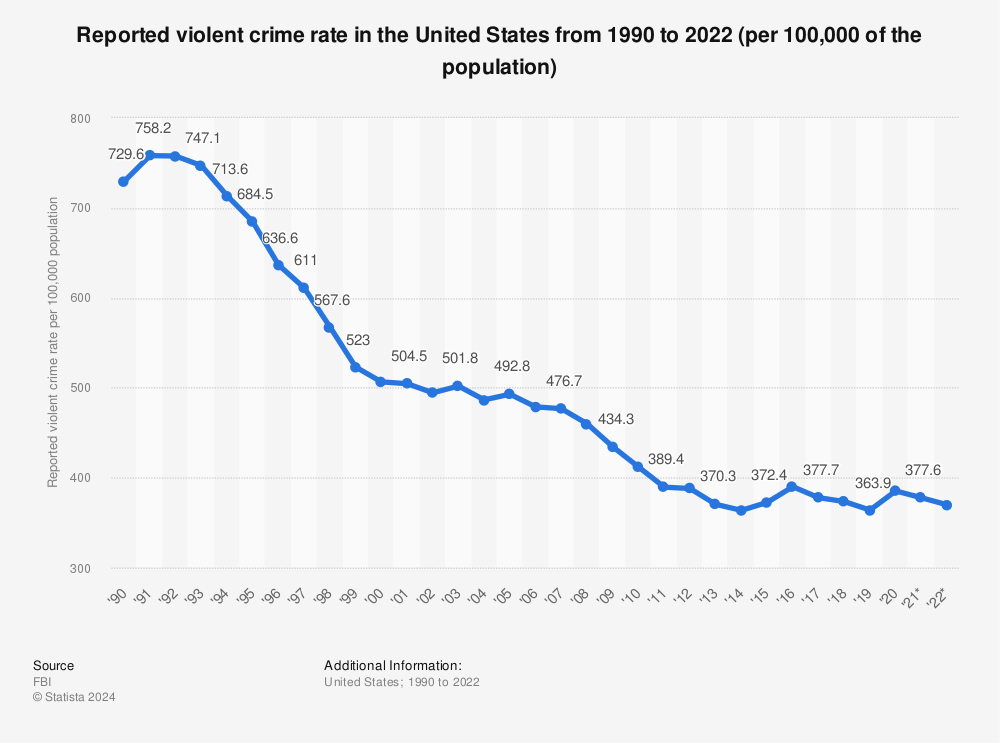
These took several days to wade through. I admit I do it not only for the news but for the memes in the comment sections which are pure gold. But just reading the headlines and blurbs can give you a great idea of how really dangerous and disastrous the right / republicans are. Fox is a totally unhinged media arm of cult tRump. The rest of the right wing media is desperate for their cult ideas of ruling people and having control of their private lives, sexual expressions, and how people simply exist. Please look these over and read the ones that interest you. This shit is serious and real and we have few days left before a direction is chosen for this country. Also notice that why the right claims that crime is up and people are terrified to step outside their homes, crime is way down. Hugs
Harris appeared here in June 2021 when he attempted to bring a loaded and concealed handgun onto the House floor. He then denounced calls for his resignation as “cancel culture.”
In October 2021 he had to be physically separated from Democratic Rep. Collin Allred after an argument over the certification of the 2020 election, which Harris had voted against.
Residents pleaded with the council, arguing that such proposals were divisive, stoked fear among the community, and would further stretch city services. “It is not only unnecessary but also a complete waste of the city’s time, money and resources,” Alexander Ermels, president of PFLAG’s Odessa chapter and a transgender man, said. Mayor Javier Joven [photo], who is up for reelection in November, has said his mission has been to help the city “repent.”
Penalties include a $500 fine and trespassing charges. Odessa, located in west Texas, has a population of 120,000.
For the past 13 months, when a 17-year-old applied for a driver’s license or state ID and marked that they would like to register, the DMV’s system did not transmit their voter registration application to the SEC. As a result, approximately 17,000 young voters were not registered to vote despite indicating a desire to do so. These voters were also not notified that their registrations had been rejected.
(Way to go-run for office! Especially in and as opposition to people like Steve Scalise-A)
A trans nonbinary Louisiana candidate for the U.S. House released a defiant campaign video this week, showing themself injecting testosterone to defend bodily autonomy.
Mel Manuel, who is running to unseat far-right House Majority Leader Steve Scalise, released the video on social media platforms on Tuesday. In the video, Manuel called on voters to “take a stand” while performing a routine testosterone injection.
“I believe that you, not the government, own your own body,” Manuel told viewers, wearing a “My Body My Choice” T-shirt. “LGBTQ+ rights are human rights.”
Manuel, who is running on a platform of abortion rights, universal healthcare, and gun control, highlighted a recent analysis that found Republicans had spent more than $65 million in anti-trans advertisements since the start of August. They also promoted Louisiana’s “Geaux Vote” app, which allows voters to find their polling location and get ballot information.
“To my LGBTQ+ family and our allies… No one is coming to save us,” Manuel wrote in the video description. “We have to show up at the polls for ourselves and for those we love. I’ve spent the last year and a half campaigning because we need to speak up and be represented before it’s too late. You can speak up now with your vote.”
Manuel is the cofounder of Queer Northshore, an LGBTQ+ activist organization based in St. Tammany Parish, and has previously organized against conservative book bans and anti-trans laws in the state. In contrast, Scalise has earned a reputation as a staunchly anti-LGBTQ+ Republican since first taking office in 2008, voting against the Byrd-Shepard Hate Crime Prevention Act, the repeal of Don’t Ask, Don’t Tell, and the Respect for Marriage Act; he is also firmly anti-trans, condemning “the left’s radical gender ideology” in a 2022 statement calling for trans girls to be banned from school sports. Scalise even once described himself as “David Duke without the baggage,” referring to the infamous former leader of the Ku Klux Klan.
Given that Manuel is running in opposition to all that, injecting T on camera is a pretty big flex. Still, that doesn’t necessarily mean they expect to win; as their campaign website notes, Manuel’s goal is simply to get 35% of the vote. “Even if your candidate doesn’t win, if we can move the needle to 35 percent or 40 percent of the vote, that means the next progressive candidate will get more funding,” they explained to The Nation last year. “There’s a very, very small chance at winning, and I understand that, but we can still use the role of candidacy as a platform in and of itself.”
A teacher in Manchester, England, who outed a trans student and posted transphobic messages on social media is now banned “indefinitely” from teaching in England.
Prior to the decision, Camilla Hannan had admitted to posting a series of tweets in which she outed a student of hers as trans and disparaged the trans kids at her own school. Though the panel convened in September, the UK’s Teaching Regulation Agency posted the decision online on Tuesday.
(snip)
“In particular, the panel found that Miss Hannan had a deep-seated attitude, and that, whilst she was entitled to have that attitude and hold the views that she did, it was not acceptable for her to have posted these on social media in a way that was damaging to the profession, the school, pupils and in particular Pupil A,” the report reads.
Hannan will be allowed to appeal the decision in two years, though the panel’s decision did not bode well for any future lifting of the suspension. “It is necessary to impose a prohibition order in order to maintain public confidence in the profession,” the report reads.
This summer, a group of 20 trans teen activists gathered outside the U.K. Department of Education’s London Headquarters in order to demand greater protections for trans students. Activists hoped to underscore the “urgent need for policy changes that respect and protect the rights of trans youth, including their rights to autonomy, safety, trust, respect and inclusion.” One of their demands included protection from transphobic bullying, misgendering, and deadnaming, something that is apparently just as applicable to teachers as fellow students.
Again I wish to thank Janet, whose link I will place below, for showing me the article that had this link. I was in a bit of despair of having to fight all over the same fights I fought as a kid. Not realizing for years my fight was over while hers has continued. I realized how self centered I was being. I am not sure if the links will come through, but if you go to the site linked above they list states where anti-trans attacks have failed. Again thanks Janet. Hugs
Voters have routinely rejected candidates who peddle transphobia and try to control their personal health care decisions, and polling shows widespread American support for equality, Democrats as defenders of young people, and a rejection of anti-transgender rhetoric.
In State After State, Anti-Trans Attacks Have Failed
In Arizona…
In Georgia…
In Kansas…
In Kentucky’s 2023 gubernatorial race…
In Michigan…
In Nevada…
In Ohio…
In Pennsylvania…
In Wisconsin…
In Virginia…
In 2022 Post-Election Polling, Equality Was a Winner and Anti-LGBTQ+ Attacks Were A Dud
Equality Voters delivered huge margins to Democrats at every level of the ballot.
At the U.S. House level, 81 percent of Equality Voters supported the Democratic candidate. Equality Voters delivered similar margins for Democratic U.S. Senate candidates and Democratic candidates for governor.
That number was comparable to the level of support Equality Voters gave Joe Biden in 2020 (also 81 percent) and nearly matched the level of support Black voters delivered this cycle (87 percent).
Among self-identified LGBTQ+ voters, who made up a midterm record 7 percent of the 2022 electorate, fully 80 percent supported U.S. House Democrats. LGBTQ+ voters delivered similar margins for Democratic U.S. Senate candidates and Democratic candidates for governor.
MAGA efforts to spread propaganda about and attack transgender people failed.
In this survey, voters were asked which specific issues motivated them to vote this year. Inflation (52 percent) and abortion (29 percent) ranked first and second on this list. Less than 5 percent identified gender affirming care for transgender youth or transgender participation in sports as issues motivating them to vote – last on this list.
This confirmed extensive research prior to the election that found anti-transgender attacks were only effective in riling up extreme members of the conservative base
While the attacks were ineffective with the general electorate and in fact repelled swing voters, they still caused harm, including increasing stigma, discrimination, and violence against the transgender community.
A Super Majority of Americans Support Equality
New data from Navigator Research shows strong majority support for LGBTQ+ equality, and deep concern over MAGA attacks on fundamental freedoms.
Nearly two-in-three Americans support federal nondiscrimination protections for LGBTQ+ people, including 58% of independents and 42% of Republicans.
61% say they will not support candidates who want to ban health care for transgender people, including 59% of independents and 41% of Republicans.
70% say they are concerned that politicians are attacking gay and transgender youth to divide us, maintain their political power and control, and score political points, a clear indication that the American people see through the MAGA anti-LGBTQ+ agenda.
A majority of Americans agree that parents, mental health professionals, and doctors are best equipped to decide the kind of care a child needs, not politicians.
The vast majority of Americans — 7 in 10 — think that politicians are not informed enough about abortion and gender-affirming care to create fair policies
According to September 2023 polling by The 19th and SurveyMonkey, Americans would prefer that politicians either protect transgender people or not focus on transgender issues at all. Only 17% of Americans, and only 29% of Republicans, say politicians should focus on restricting gender-affirming care.
Americans Believe the Amount of Anti-LGBTQ+ Legislation Is Excessive, Agreeing It Is “Political Theater”
Likely voters across all political parties look at GOP efforts to flood state legislatures with anti-LGBTQ+ legislation as political theater. Polling indicates that 64% of all likely voters, including 72% of Democrats, 65% of Independents, and 55% of Republicans think that there is “too much legislation” aimed at “limiting the rights of transgender and gay people in America” (Data For Progress survey of 1,220 likely voters, 3/24-26, 2023).
This quote from Cuban-American former Republican Congresswoman Ileana Ros-Lehtinen sums it up:
“Intolerance is not a good look on anyone. I remain optimistic that voters will see through this charade and will encourage their elected officials to solve the real problems of America instead of masquerading as Moral Police Officers.”
Majorities Disapprove of Banning LGBTQ+ Content in Schools – and Seem Prepared to Punish Candidates Who Do So
When asked if middle school libraries should include materials related to “gender identity” (57% “should”) and “sexual orientation” (56%), the majority of Americans believe this content should be available. In fact, by a margin of 32 percentage points, Americans are more worried that “materials that could be valuable to students will be removed from school libraries”(62%), than worry that “materials that could be harmful to students will remain in school libraries”(30%).
Yet again, Democrats and Independents are in a different place than their GOP counterparts suggesting headaches for Republicans in the 2024 elections. (Grinnell College National Poll, 3/14-19, 2023)
Indeed, it looks like this issue could be a disqualifier for elected officials who support curriculum censorship and book bans, based on recent polling (Ipsos, 4/24-25, 2023 among 1,005 adults nationwide, the vast majority of whom are registered to vote). More than six in 10 Americans say they would be less likely to back a candidate who “supports policies that ban books in schools and in school libraries on subject matter that deals with sex, sexual orientation, and gender identity”(38% more likely, 62% less likely).
And Americans Trust Democrats to Defend Equality, Youth Wellbeing
The 2024 Navigator Research poll showed that President Biden and the Democratic Party are more trusted than Republicans to safeguard LGBTQ+ equality and protect America’s youth.
60% of those polled say they trust Democrats to protect the LGBTQ+ community, compared to just 19% who say they trust the GOP.
54% say they trust Democrats to protect the rights and freedoms of the community, compared to just 22% who say they trust the GOP.
46% say they trust Democrats to care for children’s wellbeing, compared to just 37% who say they trust the GOP.
OK this is what the right wing regressive movement is all about. A teen happy with who he was and his friend who may or may not be gay as well, both being harassed and threatened for simply being open about themselves. They were harming no one, but some asshole right wing adult took offense and wanted to teach them fear for being different from straight cis folk. This is the right wing / Christian nationalism desire for a 1950s fake culture of only the things they demand be accepted being seen in society. I remember a person I knew who was elderly asking me why we gays just couldn’t stay in the closet and not let anyone know, it was better then. I asked for whom? The answer was those straight cis happy people.
One of the co-founders of the Florida don’t say gay bill that started all this was a hyper fundamentalist Christian who publically said he wrote the bill because he was upset and disgusted that kids were coming out to their peers and being accepted instead of ostracized, humiliated, and beaten up. He hated that students, young kids were not targeted for abuse by other kids and teachers. That stuck with me and burned deeply. The reason is below.
One day I in science class led by a large what today we would call a maga person teacher, after class ended and I gathered my stuff and started to exit the room I was attacked by a very large kid and his friends. I was small, about 60 pounds, not even five foot. I got smashed in the face and body, hit till I fell to the floor. I knew this feeling, I got it at home, so I did what I did then, covered my face already full of blood, curled up tight and took the kicks and blows. Before the bell rang again they moved off and I started to uncurl when the teacher grabbed by my shoulder and wrenched me around to face him. Through tearing blurry eyes I watched as he told me, “This is what you get for being a fagot and I hope they do it again and again” I went to the bathroom and tried to wash up and stop the blood. I sat a few classes in the bathroom. I got marked absent for those classes but no one asked why. This the world this person who wrote the “Don’t say gay” bill wants to bring back, that they are proud of. Hugs. Scottie
WA man accused of tying noose around teen’s neck because he said he was gay
A 38-year-old man was arrested this week in Kitsap County after deputies say he tied a noose around a 14-year-old boy’s neck because the teen said he was gay.
On Monday, Oct. 21, the man overheard his 13-year-old son and his son’s friend talking, and asked if he was gay.
Video at link above
According to the Kitsap County Sheriff’s Office, the teen said, “yes,” and the man wrapped the rope around his throat. The teen managed to escape.
Deputies said the man also lassoed his son with the rope a few minutes later, and he also escaped.
Video at link above
The 14-year-old boy went home and told his mother about the incident, and she reported it to the sheriff’s office.
Deputies arrested the man, and the Kitsap County Sheriff’s Office said he was charged with a hate crime and two counts of second-degree assault.
WA man accused of tying noose around 14-year-old boy who said he was gay
The Kitsap County, Washington man was arrested Oct. 21 and accused of a hate crime. The 38-year-old man is accused of tying a noose around a 14-year-old before lassoing his own 13-year-old son.
The man was arraigned on Tuesday with bail set at $50,000.
A 38-year-old Bremerton man was arrested Monday in connection with an alleged assault involving two boys, including his biological son, according to the Kitsap County Sheriff’s Office. Joseph Sweeney faces multiple charges, including second-degree assault and a hate crime.
The arrest followed allegations that Sweeney assaulted the two boys on October 20. According to the court documents, Sweeney asked his 13-year-old son’s friend if he was gay; when the teen said, “Yes, is it a crime to be gay in this house?” deputies said Sweeney put a noose around his neck and tightened it.
Sweeney allegedly recorded both boys with his cell phone while telling them to kiss each other in an effort to humiliate them, detectives said in the court documents. A search of Sweeney’s residence also led to the discovery of a firearm, which he is prohibited from possessing due to a prior domestic violence protection order issued in Kansas City in 2023.
Just a reminder that when Georgia GOP district chair Kandiss Taylor told Stew Peters that she wanted "extreme accountability" for those who oppose Christian nationalism, she meant public execution. https://t.co/IReOcMx1Hbpic.twitter.com/FwE9xCfBrk
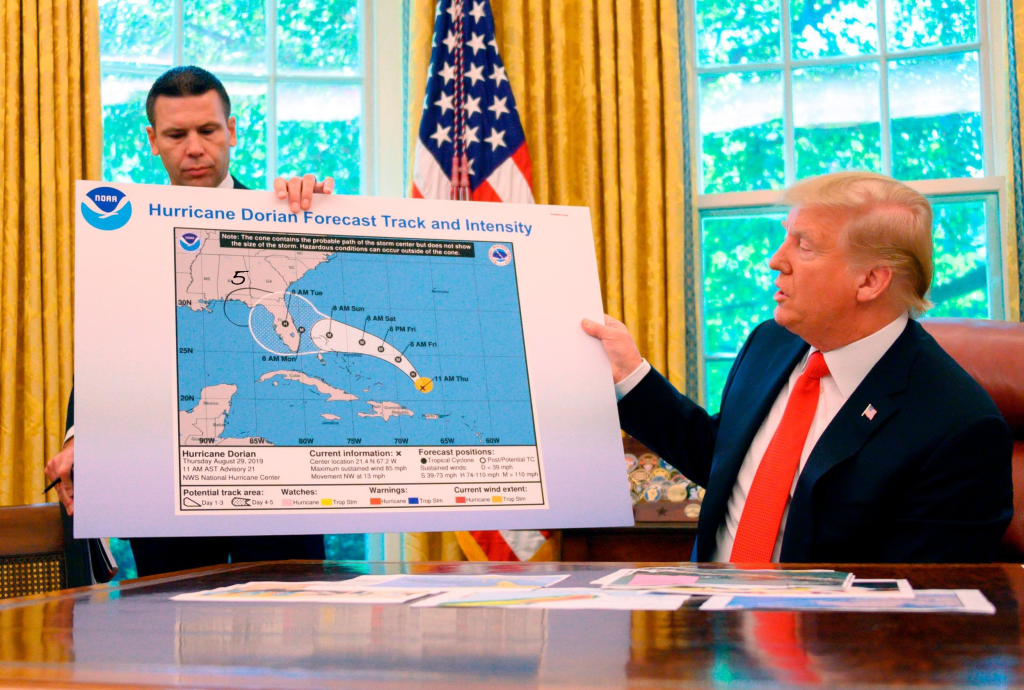
The moron wanted to combat hurricanes with nuclear weapons.
"Since #Trump bought Mar-a-Lago in 1985, there have been 18 Category 5 Atlantic hurricanes. 4 of them made landfall in the US while he was President. Yet today he says he's never heard of there being Cat 5 hurricanes." https://t.co/9snWMO9hwo
For more than half a century, the major party candidates for president have sat down with 60 Minutes. This year, Vice President Kamala Harris and former President Donald Trump accepted our invitation. Unfortunately, last week Trump canceled. https://t.co/7t5jr5nyFJpic.twitter.com/VDJDDNYFab






 Scottie's Playtime